
My friend Ed Meagher, a Vietnam Vet, recently told this story. I asked him if I could clean it up a bit, and post it here on my blog. He readily agreed. As tensions ratchet up between us and Iran, and around the world, I think it’s good to listen to personal stories from our past wars and not just the official histories, or news articles. The voices of those who were there are always worth hearing. Here’s Ed’s story in his own words.
Whenever I hear a helicopter, I stop what I am doing and lookup. Nothing too unusual about that, except I am also hit by a momentary shot of adrenalin, the hair on my arms and neck stand up, and a feeling arises in my chest and gut I have trouble describing. It is quick, and after all these years it fades rapidly. I cover it by trying to identify the type of helicopter and unless it is an old “Huey” or “Chinook”, the whole episode is over before anyone notices. If it is one of those, it is another matter and it brings back memories.
I arrived in Vietnam about 3AM on January 30th, 1968. By coincidence, or poor luck, it was the same day the Tet Offensive started. I was a recently promoted Air Force Staff Sergeant (E-5) radio operator. I was assigned to a Comm Squadron and detailed to a place called “Paris Control” where we coordinated air strikes up and down III Corps. I worked the night shift from 6 PM to 6 AM every day. We would eat breakfast or dinner, depending on your preference, about 6:30 AM and then try to sleep in the hot, noisy barracks before getting up and doing it all again.
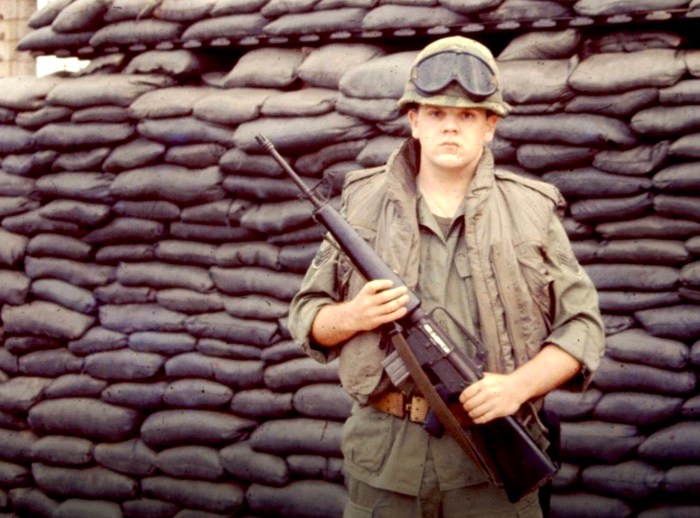
During daytime, they often needed warm bodies for crap details like sandbag filling, or riding shotgun on convoys, or just about any gritty, shitty job you can imagine. They would send a runner to wake you and tell you where to go and when to be there. It was a royal pain in the ass. As an NCO, I usually had to lead the details.
One time around May of ‘68, after being woken, I show up at the head-shed and am told to simply load the assembled troops into two pickup trucks and take them to the mortuary at Ton Son Knut. It is a large aluminum Quonset hut at the end of a taxiway on the northside of the runways, and away from the main base. We arrive at the mortuary and it is hot and miserable and all I am told is to “standby”.
Time passes and a fire truck shows up and they know even less than we do. Finally, over the tower radio, we hear a helicopter being cleared to land near the Quonset hut. It is a big helicopter known as a Chinook. It is a twin-engined, tandem rotor, noisy beast, that throws up dirt, pebbles and small rocks in every direction.
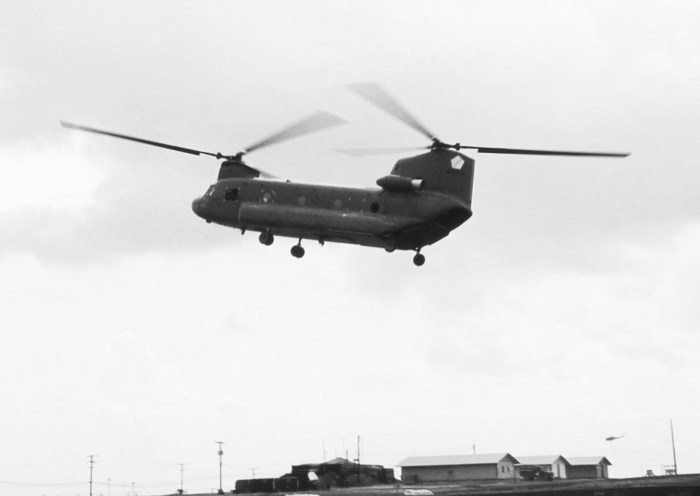
Over the tower radio, we hear a request for the fire engine to move closer to the helicopter. After the fire truck moves, nothing happens for a while as the exhaust fumes from the JP4 fuel mixes with the hot humid air. It can overwhelm you, but strangely I have always loved that smell.
In the military, you learn to do a lot of standing around waiting for your orders. You learn patience and to deal with a lot of ambiguity. Time passes. Finally, and slowly, figures emerge from the Quonset hut a couple at a time. They are dressed in various colored medical scrubs and are all wearing scrub hats and masks. Some have rubber aprons and gloves on. They walk slowly, very slowly. They are not in any hurry to get to where they are going and are in fact meandering. I haven’t been told anything yet and the rest of my little detail knows better than to ask what is going on. We wait some more.
There are small conferences taking place, first with the crew chief, then the fire truck driver and then with the helicopter crew. Still not a clue. Then several of the folk from the Quonset hut wander back to the building at no better than a stroll. It is at least 100 degrees outside. We stand and wait for orders.
Finally, the folk reemerge from the hut pushing wagons and gurneys. The crew chief waves me over to the helicopter. I bend down even though the blades are 20 feet above my head. The noise up close is even worse and the crew chief screams in my ear. Something to do with my men and what is on the helicopter. I give him the classic palms up “what did you say” sign and he registers disgust and grabs me by the arm and takes me to the back of the helicopter.
The Chinook has a very large rear door/ramp. The crew chief is wearing a bulbous helmet and is tethered to the aircraft via a long cord plugged into the helicopter near the front access door. He keys his microphone and talks to the crew in the front, and suddenly the ramp starts to come down. He again grabs me by the arm and pulls me to the side.
I am not prepared for what happens next. Nothing could prepare anyone for what happens next. As the ramp touches the ground, multiple streams of liquid pour off the helicopter into the grass and dirt. I stare at it for a few seconds, before I realize the liquid is a dirty reddish-brown color. It still doesn’t register with me, when the crew chief grabs me again and pulls me further away from the aircraft. Two of the firemen, in full battle rattle, move in with a small hose and start to spray the ramp with a high-pressure stream of water.
The crew chief pantomimes to me to get my detail and bring them over. As I trot over to our pickup trucks, it begins to dawn on me what the red liquid might be. The troops are curious and have questions, but I put on my best “the NCO knows all, and does not need to explain himself to the troops” look, and tell them to just form up and follow me. When we get back, the firemen are exiting down the ramp from inside the helicopter and one of them takes a massive, both feet in the air, pratfall. We all instinctively laugh.
The crew chief grabs me again and screams directly into my ear, “Careful. It’s slippery in there. Just two guys to a bag, one bag at a time“. The guys in scrubs inch closer to the side of the helicopter with their gurneys and carts, but stop short of the back of the helicopter. I return to my waiting crew and not knowing what to say or how to give the order, I grab the first two guys and indicate to the rest to wait where they were. Again in an unneeded crouch, the three of us approach the ramp and start up. There are two corrugated metal tracks running up the ramp and they are wet. The first few steps make it clear there is no traction, so we step onto the inside of the fuselage and there it is only marginally better.
We make our way up the ramp grabbing hold of each other and anything else we can reach. It is comical and the crew chief calls us off and brings the firemen back. There is a long discussion and it is decided they are going to use a bigger hose and mix the water with some fire-retardant foam. There are pros and cons back and forth about the wisdom of this, but they decide to try it. The pressure from the larger hose is truly impressive and maybe the foam helps, or maybe it doesn’t. After 10 minutes, the fireman come out and we go back in.
We reach the top of the ramp and it takes several seconds for our eyes to adapt from the bright sunshine to the dark inside the ship. Then we see the body bags. They are piled like cords of wood on the deck and secured with brightly colored canvas straps connected to pinions in the deck. The crew chief brushes by us and begins to release the straps. The bags settle and spread out as each strap is released. There are probably six or seven bags to a pile, and there are multiple piles.
The three of us just stand there, staring with our mouths agape. The crew chief comes back to me and hits me on the shoulder and indicates I need to get started. My two guys grab the first bag and lift it. The body inside the bag is still warm and flexible and slides into more of a ball, which they have to lift higher. They raise their arms to near shoulder height for the bag to clear the ground. I watch as the two troops, who should have been asleep in bed, slither and stumble down the ramp. The crew chief hits me between the shoulder blades and indicates I am to take the other end of the next bag and we start out of the aircraft.
The first body is hoisted onto one of the gurneys and I get angry none of the folks in scrubs offer to help my guys. They just stand there. When we get close to the next gurney, I am ready to say something, then notice the look in their eyes. It dawns on me they are gearing up for the horror awaiting them, when they have to open these bags inside the Quonset hut. To us, they are still just messy bags, but to them, they would soon become bodies, soldiers, dead people.
I go over to my guys and tell them to follow me. We quickly set up an assembly line of sorts and it becomes clear we have to operate methodically so that every team takes the exact number of turns into the ship, grab the body bag, and then returns down the ramp. One trip for each of us and we became experts at this macabre parade. I wish I kept better track of how many bags we offloaded. My best guess is it was over thirty, but I can’t be sure. Some of the bags were suspiciously light. Was a small soldier inside, or was it just body parts? One of the guys later mentioned he thought one of the bags contained a dog.
It is all over in two hours. No one dismisses us, they all just leave. The firemen go back on the helicopter and spray the inside for a long time. When they are finished, the helicopter simply takes off. The firemen set out a canvas tub about 8 feet across and half-fill it with water and what looks like detergent. They step in it with their rubber boots and invited us to do the same. We step in and stomp around in our canvas jungle boots which immediately soaks our socks. After a few moments, one of the firemen releases a latch and the pool collapsed and empties. They throw it on the top of the truck and off they go.
We are now alone with no one to tell us what to do next. I’m 21 years old and the rest of the guys are about the same age, but I have one or two more stripes, so they looked to me for guidance, for direction, for orders. I have nothing.
We stand there for a few long seconds and then I say something like “who wants to go back to the barracks and who wants to go to the chow hall?”, and we split the two trucks up by destination.
The last thing I remember about the day is that as I prepared to go to work for my 6 PM shift, I took a shower and noticed my feet were pinkish. I had to wear those boots for quite a while before I could get a new pair and no matter how many times, I soaked them, they always seemed to have a stiffness to them.
–
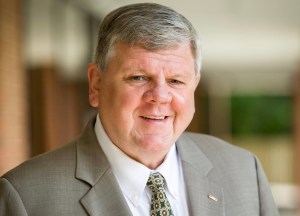
I haven’t shared this story with too many people because it is normally not a place I want to go and it is still is a deep scar on my soul. But recently, because of my criticism of President Trump and my view that he wants to start a “wag the dog” war, a person questioned my love for my country and my unwillingness to support another war in the Middle East. All I know is someone has to stand up for all the PFC’s who will pay the price of old white men’s bloodlust, and who will end up in body bags.
Addendum:
Ed is the real deal. After his time in Vietnam, he eventually went to work for the VA, and helped his fellow veterans there for several years. After leaving the government, he continued to support veterans in other ways. 16 years ago, he and two other Vietnam vets started a charity to support veterans returning from Afghanistan and Iraq. It eventually became the Aleethia Foundation. You can find out more about it, and it’s mission at: https://www.aleethia.org
Feel free to share this blog…… https://mnhallblog.wordpress.com/2020/01/08/after-his-patriotism-is-questioned-a-vietnam-vet-reflects-on-war/
Discover more from Live Life Exuberantly
Subscribe to get the latest posts sent to your email.
 Live Life Exuberantly
WOW that was very powerful. Thank heaven there are people like Ed and Max.
LikeLiked by 2 people
I very tough story to read and tougher still to live through. Thank you for celebrating Ed as a hero to this country. In my opinion, he performed one of the most meaningful jobs he could have for the families of those soldiers… Getting them back home. Thank him for his service and his outstanding patriotism.
LikeLiked by 1 person