
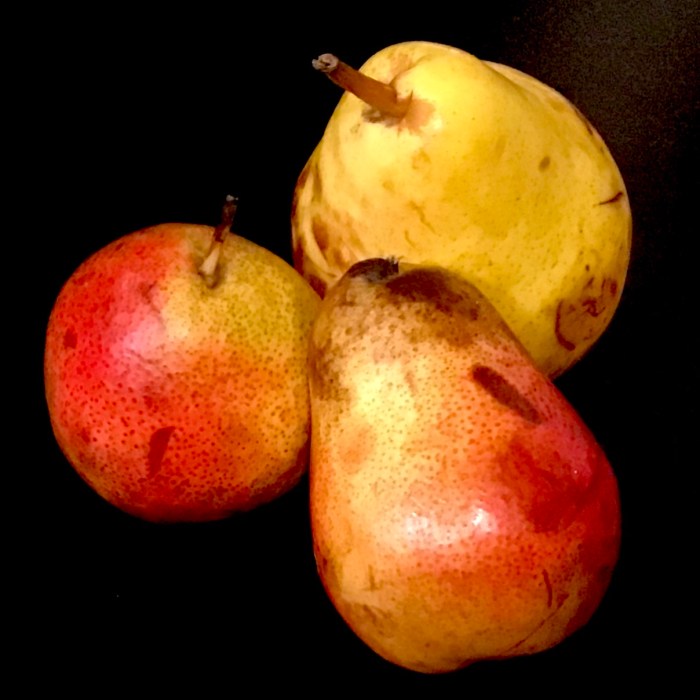
I saw the pears in the grocery store a week ago, and on impulse, bought them. I don’t usually buy fruit out of season, but as I was looking at them, a phrase popped in my brain – “These are perfectly imperfect”, and I put them in my basket. They looked pretty good, although there were some blemishes on them.
At home, I started thinking about the phrase “perfectly imperfect” and what did I mean. And then I thought about “perfectly imperfect” and why did I use that instead of “imperfectly perfect”, and what was the difference. It was time for Google.
Google, of course, had an infinite number of things to say about perfectly imperfect as it pertains to pears, fruit, vegetables, lifestyles, and people. I explored a number of these rabbit holes. It turns out there are companies selling “perfectly imperfect” fruit, appealing to people against food waste, or people looking for a bargain, depending on the ad. There was another blog site titled “perfectlyImperfect”, with the goal of helping people with branding and home decor. These links didn’t seem to get at what I was thinking.
Then came links focused more on people. There was a HuffPost piece about “perfectly imperfect” and self acceptance. Several Psychology Today articles explored the idea, including – “We are designed to be perfectly imperfect.” Music explored the phrase, with John Legend singing “…Love your curves and all your edges, All your perfect imperfections…”. And finally, the Urban Dictionary provided: “when someone has feelings for you, they may tell you you’re “perfectly imperfect”, basically saying they accept your flaws, they like you enough that they see past your faults, a way of saying that you’re perfect to them.”
Now we were getting somewhere and I started thinking about perfectly imperfect more broadly.
I left the internet and looked back at my pears and realized what I really meant was the pears looked real, not artificial or plastic. They had experienced some bumps and bruises in their brief life. They may not look perfect, but they looked the way pears are suppose to look.
I sat there thinking about perfectly imperfect pears and people. I thought about how much time gets wasted looking for perfection, whether in food, friends, or ourselves. New Year’s Eve was almost here, and while I don’t normally make New Year’s resolutions, three immediately popped in my head and I wrote them down.
• First, I will continue to look for the “real”, in life, and try to avoid the artificial.
• Second, I will strive to do better in accepting people as they are, rather than trying to project my view of what “perfection” is on them.
• And finally, I will try and do better in accepting myself the way I am, warts, spreadsheets, to-do lists, and all. I’ll still try to improve, but I’ll also cut myself a bit of slack here and there.
I don’t know how I’ll do with these resolutions, but I’m going to give it my best.
When I first looked at those pears at the supermarket, I didn’t realize they would take me on a small journey of self assessment and awareness, but they did. As we know, insight can come to you from any number of different sources. You just need to be open to it.
All the best for 2020….
Addendum:
I didn’t go into “perfectly imperfect” versus “imperfectly perfect” in this blog. There’s a whole other discussion there. If you have a couple of hours to wander around the internet on a rainy day, go for it.
Discover more from Live Life Exuberantly
Subscribe to get the latest posts sent to your email.
 Live Life Exuberantly
Wonderfully eloquent, in word and spirit.
LikeLiked by 1 person