Since it started last year, I have followed the Buddhist monks’ Walk for Peace. By the time they end in DC next week, they will have walked 2,300 miles. I knew they would pass through Virginia and was determined to see them. A few days ago, near Spotsylvania Courthouse, I did.
Almost everyone knows a group of Theravada Buddhist monks is completing the Walk for Peace across much of America. The journey seeks to raise “awareness of peace, loving kindness, and compassion across America and the world.” Bhikkhu Pannakara, the Buddhist leader of the walk said, “We walk not to protest, but to awaken the peace that already lives within us.” They started in Fort Worth, Texas in October and will finish in DC next week.
I planned to see the monks on their journey, but did not want to do so in the large crowds that were certain to gather in Northern Virginia and Washington DC. Instead, I decided to drive farther south. Starting a few days ago, they would walk in Virginia from Richmond to Ashland, and then Spotsylvania Courthouse and Fredericksburg, before reaching Fairfax. When I saw Spotsylvania, I knew I had found my spot.
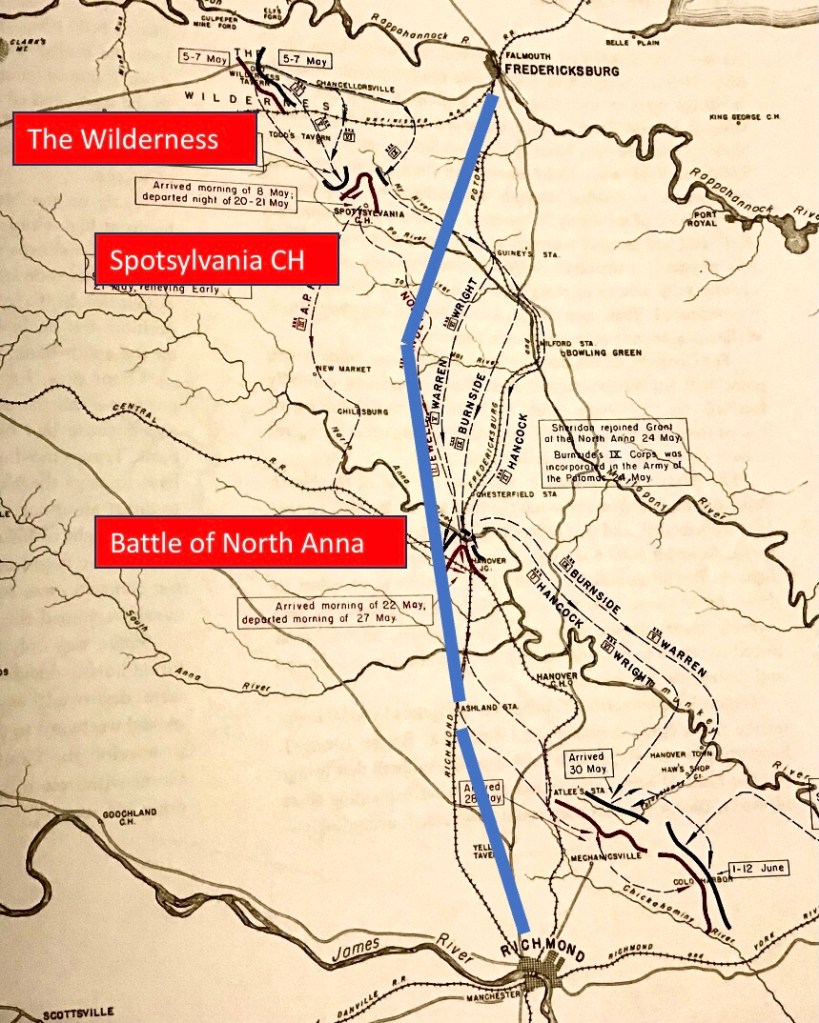
At, or near where the monks would walk, three significant Civil War Battles took place 168 years ago, in May of 1864. These were a part of Grant’s Overland Campaign – the battle of the Wilderness, the battle at Spotsylvania Courthouse, and the battle of The North Anna. Of course, Americans made up both the Northern and Southern sides of that conflict. In those three battles, we Americans did what we sometimes do best – kill, wound, maim, and capture each other. The casualties from the Wilderness Campaign – 29,000 Americans. From the Spotsylvania Campaign – 32,000. From the Battle of North Anna – 4,000. The blood of 65,000 Americans soaked the land on, or near, the monks journey. I wondered if anyone spoke with them about the hallowed ground they would pass. I also wondered if they would sense our American history while walking there, and understand the challenge of promoting “awareness of peace, loving kindness, and compassion across America.”
On Thursday morning, I drove an hour and a half, arriving at the Saint Tikhon Orthodox Church in Ruther Glen, their lunch-stop for the day. A crowd was gathering. I spoke with some of the monk’s team who informed me the monks were still a couple of miles away, so I drove farther south on Route 1. I eventually pulled into the driveway of an industrial park where a few others had gathered. While standing there, I started talking with a fellow sojourner, Hung, who had come from Fairfax. We decided to walk farther south on Route 1, separating ourselves from the growing crowd.
We walked a little over a half mile. When we saw police cars slowly cresting a hill in the distance, we stopped and waited.
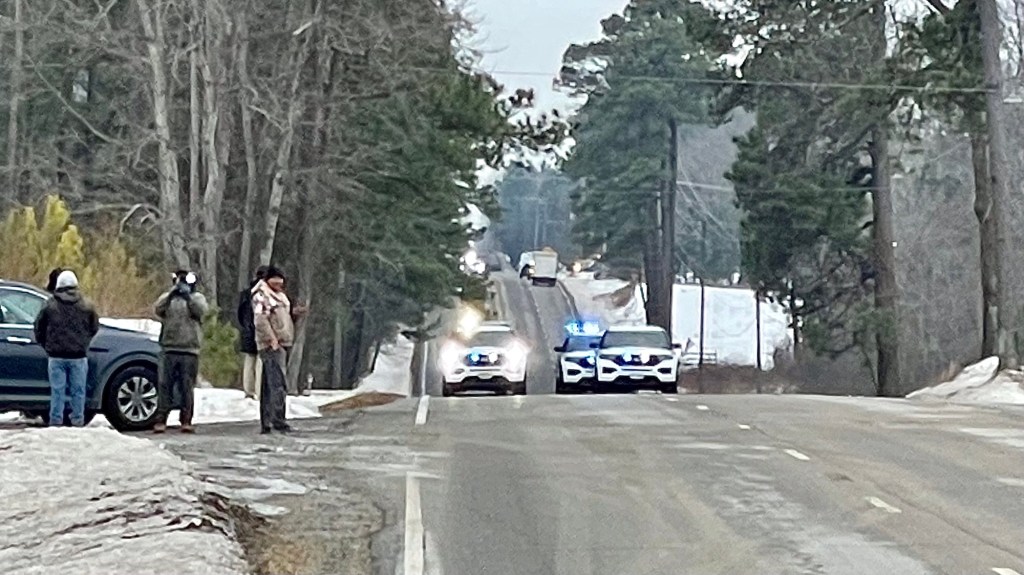
The police cars approached. As the first of them passed, we saw the monks in the distance. They were quickly nearing us.
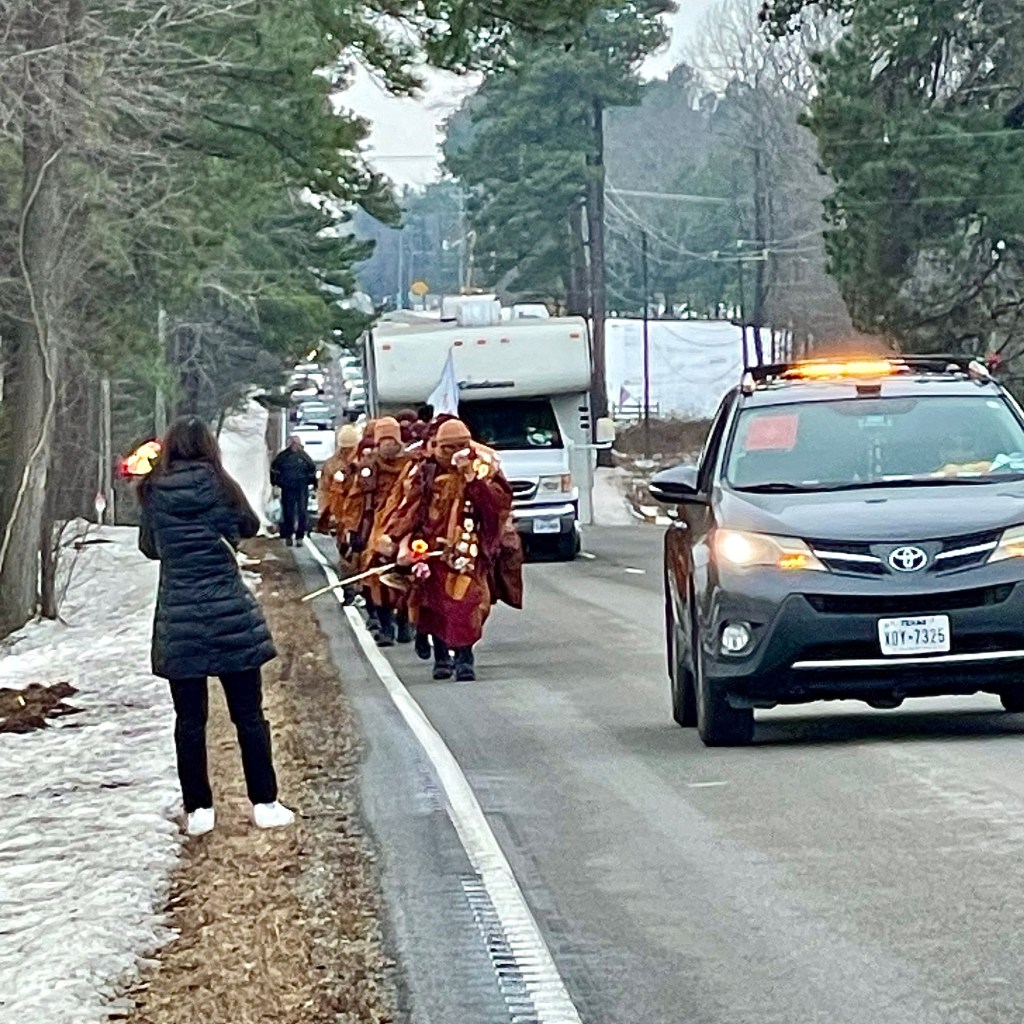
I snapped a couple more photos and then stopped and bowed in prayer as they reached us. I noticed Hung was on his knees and prostrating himself. In just a few seconds they passed and continued up the road.
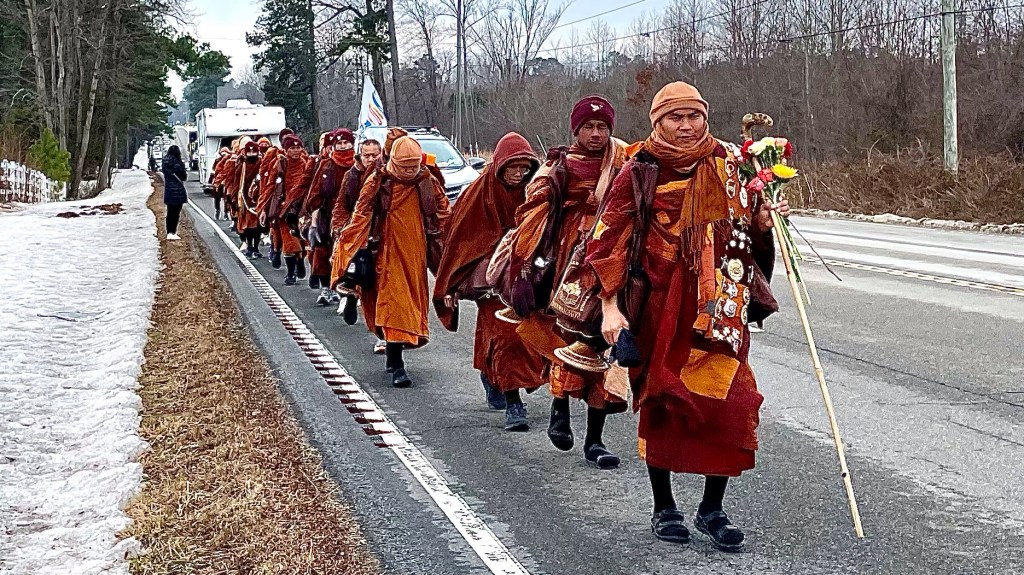
I straightened myself and Hung stood up. We silently walked a short distance behind the monks in a single file with a couple of other people. The monks were walking fast, more rapidly than I expected – I am guessing at a 15 or 16 minute per mile pace. In a brief time, we were back at our parking lot, where a larger crowd had now gathered. There was a lady in a wheelchair holding out flowers. The monks slowed, and a couple of them accepted flowers. And then they were gone.
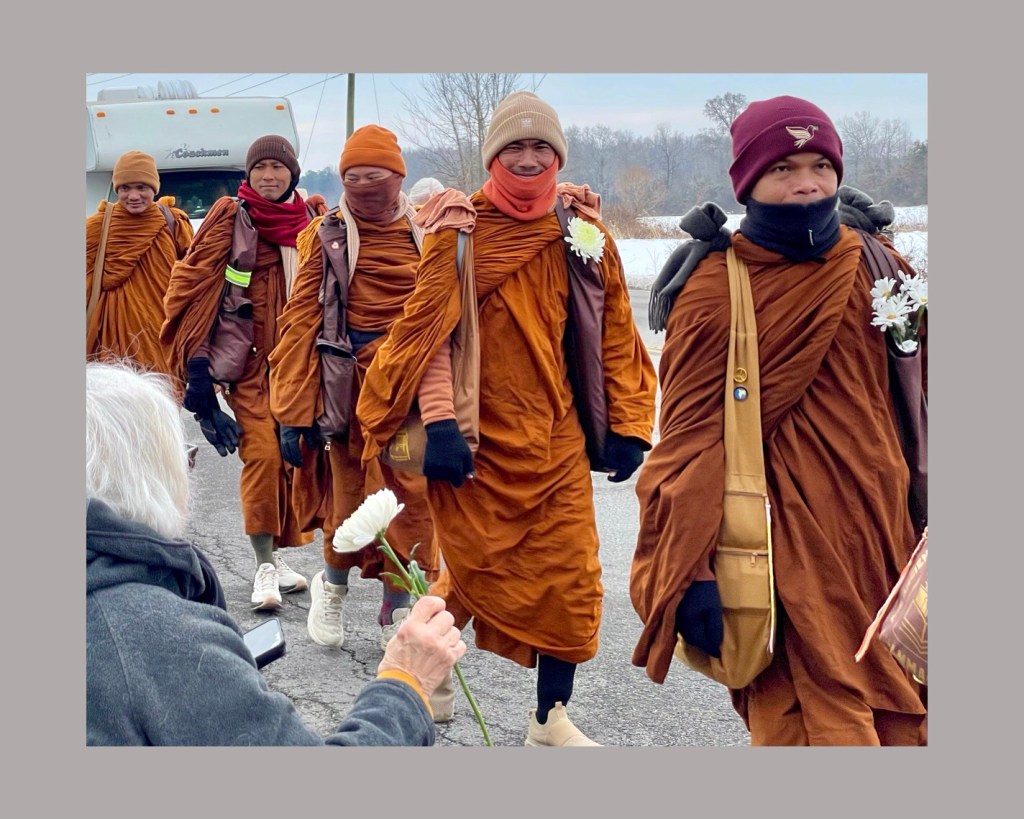
Afterwards, I tried to take in and understand what I felt as the monks passed in front of me, and as I briefly walked with them. A sense of peace? Tranquility? Love? Hope? Faith? Yes, I did feel tranquil and at peace. I also felt love, but there was something else. It took me a bit before I realized what I felt emanating from them was a sense of purpose and determination. I also saw it in some of their eyes and faces.
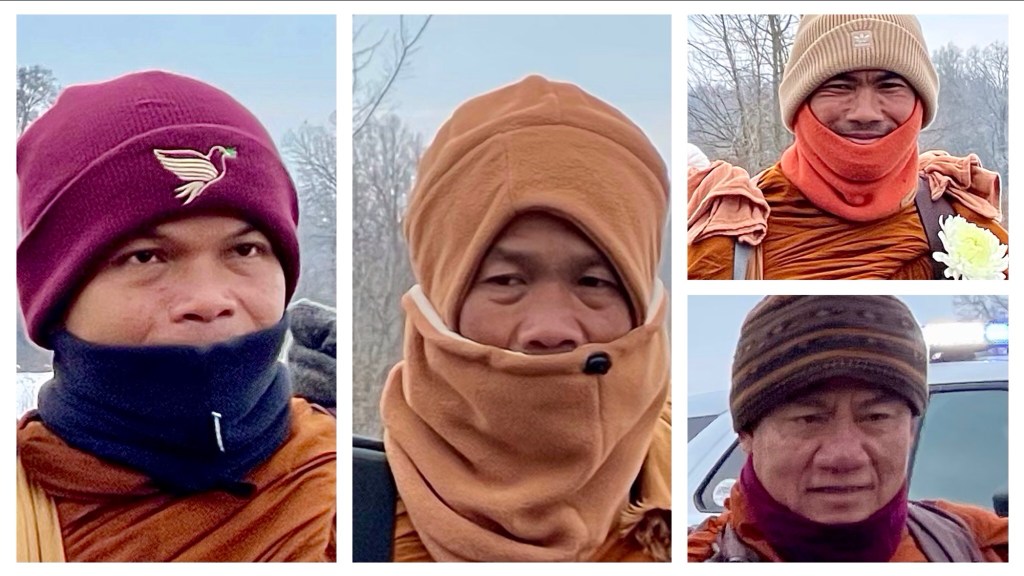
That puzzled me at first. Was I projecting my own feelings or thoughts? Should I have felt more or differently? And then I thought about it. We Americans are contrarians. We are pig-headed. We dig our heels in. We are loud. Sometimes those are good traits. Other times, not so much. In our current world, when compromise is considered a bad word, how do we reach a common goal? When a chunk of the United States considers “loving kindness and compassion” signs of weakness, how do we find commonality? Yes, love and hope and peace are all a part of the monks’ message. But to spread that message on a 2,300 mile walk? The purpose and determination I felt in them made total sense.
Eventually, I climbed back in my car and drove home, my mind a jumble of thoughts – the monks, the Civil War dead, our current problems here in America. I also recalled they would spend the evening up the road at the United Methodist Church in Ladysmith, VA. Many of their stops have occurred at churches of all faiths.
I thought of the church and my own Methodist upbringing. Suddenly a bible verse popped in my mind. In 1 Corinthians 13:13, the apostle Paul tells us, “And now these three remain: faith, hope and love. But the greatest of these is love.”
The greatest of these is love.
Yes, we can all make a difference and try to bring loving kindness and peace to America. With a sense of purpose and determination, we can accomplish remarkable things. I deeply thank the monks for reminding me of all of this.
Addendum:
Like my thoughts driving home, this blog may appear somewhat jumbled, which bothered me at first. Thinking about it, I came to realize the blog accurately fits the time I spent with the monks, and my thoughts afterwards. Sometimes, clarity comes from a muddled start.
Thanks as always to Colleen for her editing support. Also, a special thanks to my old high school friend Reverend Fred Fullerton for his thoughts and support. Fred is also who married Cathy and I.
Discover more from Live Life Exuberantly
Subscribe to get the latest posts sent to your email.


Your experience, and the telling of it, is inspirational.
LikeLiked by 1 person