It’s that time of year. I’ve (we’ve) been waiting for it since sometime last fall when the last tomato came off the vine. Last night we had our first Bacon, Lettuce, and Tomato sandwiches of the year. They were perfect.
Summertime, and the livin’ is easy….
I’m not sure why I like the BLT so much, but I do. They taste of summer I think. They are simple. There’s a finite time when they are in “season” (End of July through early October). And they taste so damned good.
With the BLT, there are, of course, a few choices. You can toast or not toast the bread. What kind of lettuce? What kind of tomato? Thick or thin cut bacon? Those are just the basics. Add some basil? Add a sliced avocado? Maybe a slice of cheese? I suppose there are infinite things you could add. Me? I’m a purist (or boring, depending on your point of view). Bacon, romaine or iceberg, and whatever tomatoes ripen first. Given a choice, I’d take a beefsteak, or some kind of heirloom, but I’m not picky. And, I like the mayo a bit thick, but that’s just me.
My friend Tim says it much better than I ever could: .”Yep, fry up a pound of bacon, get a loaf of bread, keep slicing tomatoes and eat till the bacon is gone. It is not pretty, so do not watch if you are squeamish“.
Summertime is a sandwich. What’s not to like? It’s perfect.
233 years ago, on July 24th, 1797, my friend Mary’s great great great great great Grandfather signed his will. In it, he freed two of his slaves, Sancho and Peter. Sort of. It turns out he added a couple of conditions complicating both of their lives. Let’s be honest and blunt – there never was such a thing as a good slave master. Never. Forget Gone with the Wind, forget revisionist history, forget the teacher or high school friend posting on Facebook about how good the slaves actually had it.
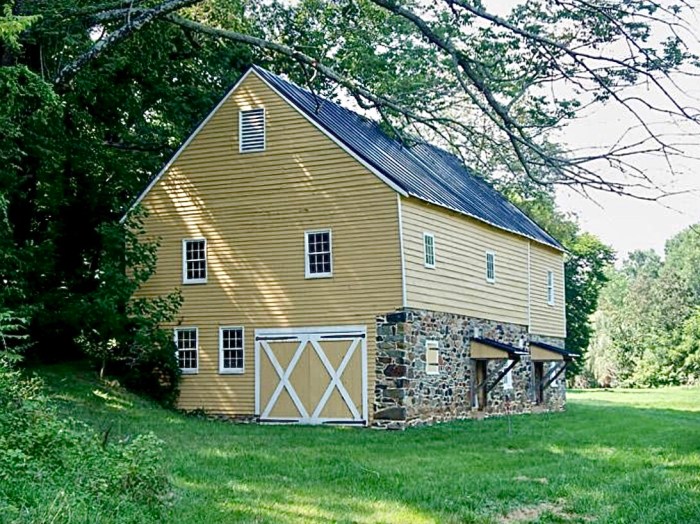
George Nixon owned the Woodburn Estate on Harmony Church Road, just north of us in Loudoun County, Virginia. Parts of the estate still exist and you can view some of the remaining buildings. As you look at the Mill, it’s good to remember it was built by slaves in 1777.
George Nixon’s Mill. Built in 1777, with slave labor.
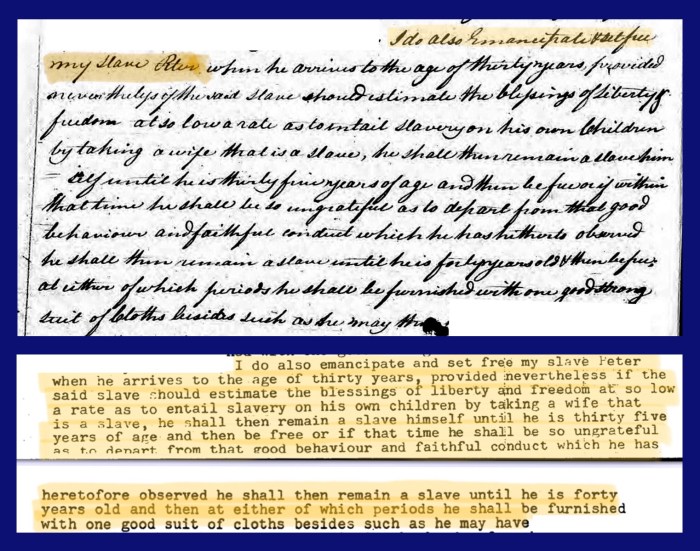
In 1797, George wrote his new will. It was six pages long. In a short paragraph, on the third page, he freed two of his slaves, Sancho and Peter. When George passed away three years later, it was presented for probate on December 8th, 1800. His descendants continued to argue for another 19 years about the will.
It’s worth looking at the stories of Sancho and Peter individually.
For Sancho, the words in the will are quite simple: “I do hereby emancipate and free my slave Sancho: at the expiration of forty days after my death…”.
Sancho gains his freedom, sort of.
Sancho was set free after George’s death and settled in Waterford, Virginia. What’s not mentioned in the will is George didn’t set Sancho’s wife free. The census of 1810 shows Sancho in a “household” of four people: himself, along with his enslaved wife and two enslaved children. In the 1820 census, he and his wife, now both over 45, are shown as emancipated, and his two children still enslaved. He had evidently saved enough money to buy his wife and go through the legal process of emancipating her*, but not yet his children. He had a son under 14 years of age, and a daughter between 14 and 25 years old – both were still slaves.
My friend Mary shared with me that a previously enslaved person could buy their spouse and children, but then obtaining their freedom (emancipation) was a time-consuming and costly process that went through the court system. And, of course, the children born to Sancho and his wife were born enslaved because the status of the child was dependent on the status of the mother.
In 1830, according to the census, Sancho, now over 55, and his family had moved to Leesburg. By then, thirty years after he was set free, we can confirm Sancho’s wife and both children are also emancipated, along with two younger children, also free. It’s unclear if they are his children, or grandchildren.
Think about that. Sancho is set free in 1800, but his wife and children aren’t emancipated until twenty to thirty years later. This is the price of freedom from a “good” slave master.
Peter wasn’t quite as lucky as Sancho. Here’s what George’s will said:
“I do also emancipate and set free my slave, Peter, when he arrives at the age of 30 years provided, nevertheless, of the said slave should he estimate the blessings of liberty and freedom at so low a rate as to entail slavery on his own children by taking a wife that is a slave, he shall remain a slave himself until he is 35 years of age and then be free. If within that time he shall be so ungrateful as to depart from that good behavior and faithful conduct he has hereto observed, he shall remain a slave until he is 40 years of age.”
The blessings of liberty and freedom?
Imagine you are Peter. You are in love with a woman. Your choice? Marry her and add five years of slavery to your life, knowing when you are eventually free, she will still be a slave; or become a free man, perhaps never to see the woman you love again. Oh, and by the way, don’t do anything to upset the master along the way, or you add ten years to your time as a slave.
After George died in 1800, the fate of Peter is unknown. We don’t know if he received his freedom, if he married and remained a slave those five extra years, or if he died while a slave. He simply vanished from history, with no record found anywhere.
Black lives didn’t matter much in Virginia in the eighteenth and nineteenth centuries. They mattered to the extent a white man decided they mattered. If you were lucky, maybe you were given your freedom. If you were more lucky, maybe you could eventually buy the lives of your wife and children. Of course Virginia found a way to complicate things even more. In 1806, a law was passed mandating all former slave people leave the state upon obtaining their freedom. Black lives just didn’t matter.
Today, we of course have the Black Lives Matter (BLM) movement. First established in 2013, BLM has gained broad support, particularly following the killing of George Floyd. As this is America, where imitation is the sincerest form of flattery, we now also have All Lives Matter, Blue Lives Matter, and White Lives Matter. I should point out the “White Lives Matter” slogan was chanted by torch-wielding alt-right protesters during the 2017 Unite the Right rally in Charlottesville, Va that resulted in three deaths. I believe Sancho and Peter would have no problem recognizing that crowd.
If you think BLM in all caps is a socialist inspired/Soros funded/violence propelling organization (it’s not), then try and rethink the issue without the capital letters. This isn’t Virginia, or America of the 1800s. In today’s world, we should all agree black lives matter.
We are making progress. Here in my corner of Virginia, a diverse coalition of The League of Women Voters, the NAACP, and the Virginia Interfaith Center for Public Policy are holding a weekly Vigil for Action in support of Black Lives Matter. These aren’t communist, or violence prone organizations or people. They are part of the fabric of our community. Every Saturday morning at the Courthouse Square in Warrenton, 65 to 100 people meet and hold a prayer vigil with one or two speakers. The mayor and some of the town council members have shown up in support. These vigils will continue every week through Labor Day. As with the vast majority of protests across the country, no stores have been ransacked, no property destroyed, and no people injured. In fact the only disturbance to the area is the honking horns of passing cars in support of the protest.
I think about Sancho and Peter, and wonder what they would make of America in 2020. They would certainly be happy at the elimination of slavery, and show astonishment and then celebrate the country having elected an African American president. They would no doubt take pride in the success of blacks in all walks of life. For all of those successes, I doubt they would show surprise at the racism still existing in America. They would know restricted voting access for the discrimination it is. I’m betting they would recognize the dog whistles from some politicians and shudder. And, despite my personal revulsion with many of the comments I hear, or read online, the fact that a segment of our population still thinks black lives don’t matter much would not shock them, even after the passing of 233 years.
—– Feel free to share this blog —–
ADDENDUM:
* When a slave was purchased, he/she was purchased as a slave–even if they happened to be your spouse or child. As an example, if a husband purchased his wife, she was still a slave until emancipated. Emancipation is the legal process of changing an enslaved person to a free person. In Virginia, prior to 1782, it required a special act by the General Assembly which meant very few people were emancipated. A 1782 law allowed slaveholders to free their slaves by their last wills and testaments or other writings which were to be proved in a county court by two witnesses.
Many thanks to my friend Mary Haak for sharing this story of her distant relations. She has told this and other stories of slave holding relatives here in Virginia and in Maryland. She works constantly to dispel revisionist histories of ‘the old south’. Here’s some additional information from Mary: “In 1860, on the eve of the Civil War, there were 1.2 million people living in Virginia. Of those, over 490,000, more than 40%, were enslaved men, women and children. Culpeper County had an enslaved population of 55.7%; Fauquier 48%; Rappahannock 39.8%; and Loudoun, (where Quakers made up a large portion of the white community), 25%. Various branches of my ancestral family enslaved at least 187 men, women and children in Loudoun county. Although I have relatives that would disagree, I am under no illusion that my ancestors were “good slaveholders.” Such creatures, as with the tooth fairy and unicorns, are myths. To pretend those enslavers were “a product of their time” is to ignore the environment in which they lived. The local Quaker community had objected vigorously to the immorality of slavery for years and abolitionists were outspoken regarding the harshness and inhumanity of the institution”.
Here’s some additional information about the Warrenton, Va. Vigil for Action: “The vigil for Black Lives Matter will be held every Saturday until Labor Day, 10-10:45 AM at Courthouse Square Plaza, Old Town Warrenton. Wearing a mask and keeping physical distance, come stand in solidarity with your neighbors and advocate for understanding and political action to end systemic racism. Homemade signs are encouraged.” The vigil is sponsored by the League of Women Voters, the NAACP and the Virginia Interfaith Center for Public Policy (VICPP). For more information, you can visit: https://www.virginiainterfaithcenter.org/vigil-for-action-black-lives-matter/
I’ve written four other blogs about race relations. You can find them here:
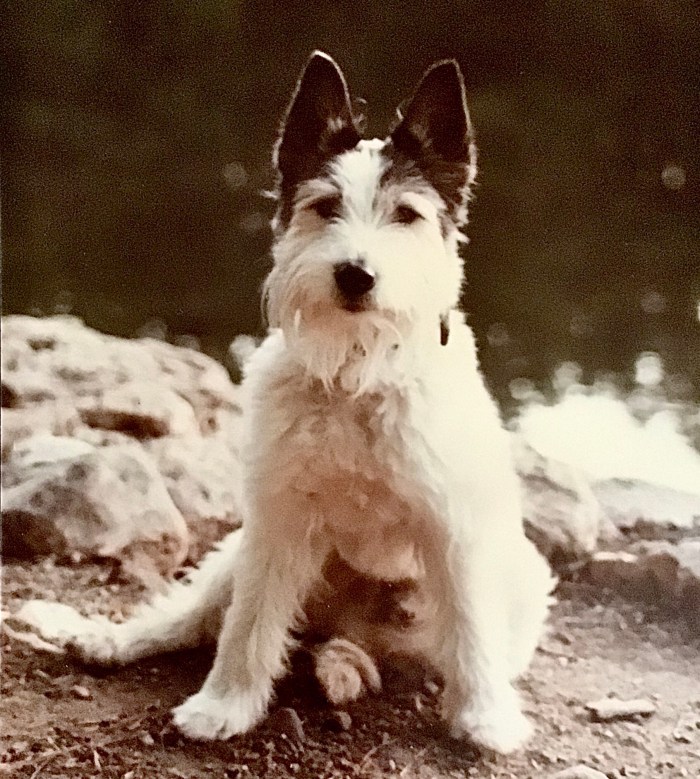
I don’t know if our dog Top could bark in both German and English, but he had a fluent understanding of the two languages.
Cathy and I adopted Top at a dog pound in Würzburg, Germany in 1980. We went to the pound on a Sunday, and knocked on the door. We are both fairly fluent in German, and when the door opened had a conversation that went something like this (in German):
“We want to adopt a dog please”.
“Sorry, we have no dogs”. (We can plainly hear many dogs barking in the background).
“Perhaps I spoke incorrectly. We would like to adopt a dog”.
“We have no dogs”.
We’d previously heard the Germans didn’t always let Americans adopt dogs, because they often left the dogs behind when they returned to the US. We explained to the man we were good people, wanted a dog forever, and it would return to the States with us.
“We have no dogs”.
We saw this was going no where, and dejectedly walked away. We must have looked sad, because the man suddenly said: “Just a minute, I may have one dog”, and told us to stand by an outside cage, which we did. A couple of minutes later, a door to the cage opened and out came the ugliest dog I have ever seen. It didn’t matter, we wanted a dog, and were planning to take it, when the door to the next cage opened and out bounded ‘Topsy’ (Top’s name at the pound). We knew immediately Topsy was our dog. After paying the fees, we took him home, and promptly shortened his name to Top.
Over the next month, we worked with Top and tried to train him. To be honest, he was our first dog, and we didn’t exactly know what we were doing. He knew his name, and he finally responded to “sit”, but that was about it. His face looked inquisitive, as if he wanted to learn, there just wasn’t any follow through. We thought perhaps he was just one of those dogs who didn’t learn as fast.
Top
One Saturday morning, I took Top to the Bäckerei (Bakery) near our home in Helmstadt, and tied him to a post outside, while I went inside to buy bread and some pastries. When I came out, a little old German lady was standing by Top, petting him. I came up and said “Guten Morgen” (good morning), and we had a conversation in German. She said what a pretty dog Top was, and wanted to know if he knew any tricks. I explained we’d only had him about a month, and so far all we’d taught him was how to sit. I then said “sit” and Top sat down. I looked proudly at the lady.
The woman bent down, looked at Top and said “Gib mir deine Pfote” (Give me your paw). As she extended her hand, Top promptly shook hands with the lady. She gave the command a couple of more times, and each time, Top responded. The lady then looked at Top and said “Platz”. Top lay down instantly! She then bent over further and had a small love fest with Top – “Ach, du liebe! Du bist so schön … Du bist en braver hund… ach, so schön…”. (Oh you dear, you are so cute/handsome. You are a good dog, oh, so cute…) Top just lay there, wagging his tail for all he was worth.
It turned out Top wasn’t slow. We were. We’d been speaking with him in the wrong language! We soon found Top understood many commands – they just happened to be in German. He knew, among other phrases:
Setz dich – sit
Platz – lay down
Bleib – stay
Kommst du – come
Nein – no
Braver Hund – good dog
Gib mir deine Pfote – Give me your paw (shake)
After that, we continued to train Top using both German and English. He began to respond to the English commands as well, although if truth be told, for the rest of his life when we needed to get his attention quickly, we spoke in German.
We had many adventures with Top over the next sixteen years. Our German friends, Res and Jim, always said Top was ‘einmalig’, which translates to unique, or one of kind, and I have to agree. In addition to being bilingual, he was incredibly friendly. Living in Europe, he had his own passport. He crossed the Atlantic three times, and also visited France, Austria, Italy, Switzerland, Belgium, Holland and Luxembourg with us. Yes, he was bilingual, but his good nature and personality were understood everywhere. We were lucky to have him in our life.
Addendum:
Top was our first dog, but not our last. When he died in 1997 at seventeen years of age, I think we cried for three days. We still have a book with all of the sympathy cards our friends sent us. If you want to know a bit more about Top, here’s the eulogy we read when we spread his ashes at Tibbet Knob, on the border between Virginia and West Virginia. It captures something of his life. https://mnhallblog.wordpress.com/2017/01/09/top/ .
Thanks to my Uncle, Don Grubaugh, for suggesting this Top story would make a good blog – he was oh so right!
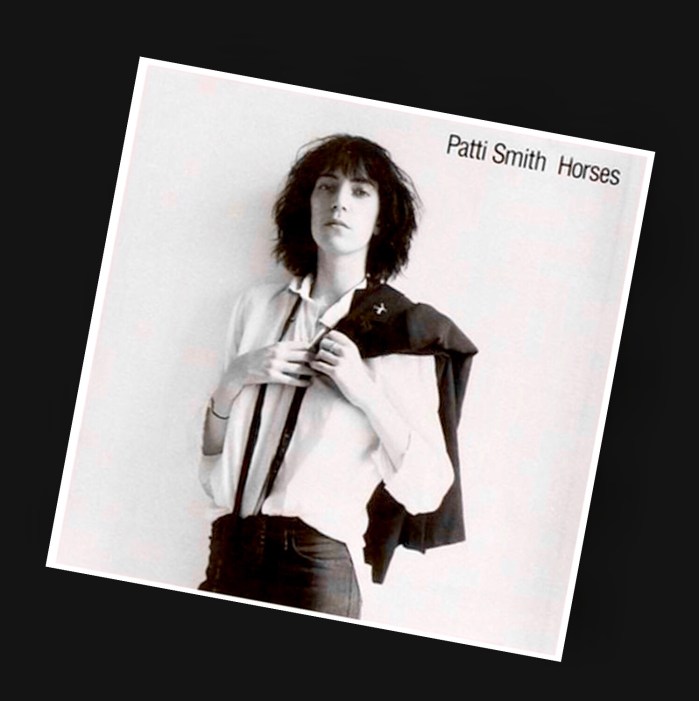
I first heard Patti Smith in the Summer of ‘77. Guzman and I were driving south from West Point on the Jersey Turnpike. We were going to his girlfriend’s house and he may, or may not have been setting me up on a blind date. He put Patty Smith’s “Horses” on the cassette deck and I was blown away at the very first song, GLORIA. Redondo Beach, and Birdland followed. By the time Land/Horses came on, I was hooked, for life as it turned out.
“The words are just Rules and regulations to me…” (From Gloria)
I don’t remember anything eles about the day, except hearing Patti for the first time. I didn’t know what Punk was, but I knew I liked Patti Smith. Forty three years later, I’m still a fan. I find her words, and her music, make me think. Considered one of the founders of the New York Punk scene, over the course of her career she has done much more than that. She has never stayed confined to one definition of who she is and I think that is why I continue enjoying her.
She’s had an interesting life. After having affairs in the early seventies with Robert Mapplethorpe and Sam Shepard, both iconic artists in their own right, she married Fred “Sonic” Smith in 1980 and semi retired. She and her husband raised two children until his unexpected death in 1994. In 1995 she started reentering public life.
Part of what makes her so compelling, is the diversity of her music and her career. In addition to writing her own music and poetry, her covers of some of the classic songs of others are amazing. She makes Buddy Holly’s “Words of Love”, Neil Young’s “After the Gold Rush”, Prince’s “When Doves Cry” and Nirvana’s “Smells Like Teen Spirit” her own. If you haven’t heard her renditions of any of those, I suggest you give them a try.
Anyone who listens to her songs knows she’s an accomplished wordsmith, but it’s more than with just her own music. When Springsteen was stuck while writing the lyrics to “Because the Night“, who completed the job? Patti.
She proved her writing abilities to the rest of the world in 2010 when she published her book “Just Kids” about her time with Maplethorpe. The book later won the National Book Award for Nonfiction and she has since published several other books of poetry and stories.
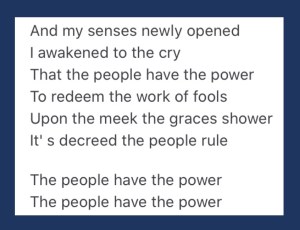
Due to her Punk background, and her opening line in Gloria, “Jesus Died for Somebody’s Sins, but not Mine…” some people formed an anti religious view about her. She dispelled that as well. Pope Francis invited her to sing at the 2014 Vatican Christmas concert. When she accepted, she angered both Catholics and many of her old Punk fans. Her response? “It’s a Christmas concert for the people, and it’s being televised. I like Pope Francis and I’m happy to sing for him. Anyone who would confine me to a line from 40 years ago is a fool!” She sang “O Holy Night” during the concert, and at the Pope’s request, her anthem “People have the Power”. She met with Pope Francis twice, and also sang for the Dalai Lama.
In 2016, who accepted the Nobel Prize for Literature on Bob Dylan’s behalf? Patti Smith, of course. After accepting the prize, she sang “A Hard Rain’s A-Gonna Fall”. She momentarily lost her place in the second verse and stopped singing. Regaining her composure, she asked the orchestra to start over which they did. She received a standing ovation at the end of the song.
I’ve had a few other artists who stopped me dead when I first heard their music – most notably, Nina Simone and Miles Davis. The difference? The careers of Simone and Davis were already well established when I first heard them, and I played catch up going through their old catalogs. With Patti, she was brand new in ‘77 and you didn’t know what was coming next. That has never changed over the course of her career.
I’m not sure why I’ve written this blog about her. It’s a bit outside of my usual musings. I suppose there has been greater use of her song “People have the Power” lately and maybe that made me think more overtly about her. They now call her the “Godmother of Punk”, but that doesn’t seem quite enough. “Godmother of Punk” locks her into one period of her life in the early seventies, and she has done so much more since then.
Patti Smith is 73 now. We are both a little older than we were in the seventies. I still enjoy listening to “Horses“, and particularly the song “Gloria” – for me, they have stood the test of time. Even more, I enjoy new surprises from her, whether through her music, or her writings, including most recently, her books “M Train” and “Year of the Monkey”. I look forward to her continuing evolution as an artist. We should all be so spry at 73.
The People have the Power….
Addendum:
⁃ In 1989, Cathy and I caught Robert Mapplethorpe’s, The Perfect Moment Exhibition at the Washington Project for the Arts, after the Corcoran Gallery backed out of showing the exhibition. There was a huge uproar about the show, due to several controversial pieces. Mapplethorpe had died of AIDS just a few months before. At the time, I wasn’t yet aware of the connection between him and Patti Smith.
⁃ Everyone knows Sam Shepard from his Academy Award nomination for playing Chuck Yeager in “The Right Stuff”. You should take a look at the rest of his career as a playwright and director – he received 10 Obie Awards (most ever for a writer or a director) and also won the Pulitzer Prize for Drama in 1979.
It was May of 1980 and we were stationed in Würzburg, Germany. My company commander, Captain Tom German, called me into his office. With a smile, he said he had a job for me. Our unit, the 123D Signal Battalion was tasked with running the hamburger stand for the upcoming Third Infantry Division (3ID) Bierfest. It would be my job to manage the hamburger stand.
What!?!?!? I was pissed. I hadn’t gone to West Point, joined the Army and deployed to Germany to run some damned hamburger stand. I was there to defend America and fight the Russians. I started arguing with Tom, and he stopped me. Our Battalion Commander, LTC Ben Swedish, had selected me and I had no choice, unless I wanted to discuss it with the Colonel. I sat and didn’t say anything. He looked at me and said “You’d better start. It begins in just a couple of weeks”.
I went to our platoon bay and told my platoon sergeant, SFC Paul Teague, the duty we’d drawn. He laughed and wanted to know if we‘d get free bier. The next day he sent a detail to a warehouse at Division Headquarters to inspect our booth. It was filthy and the paint was worn.
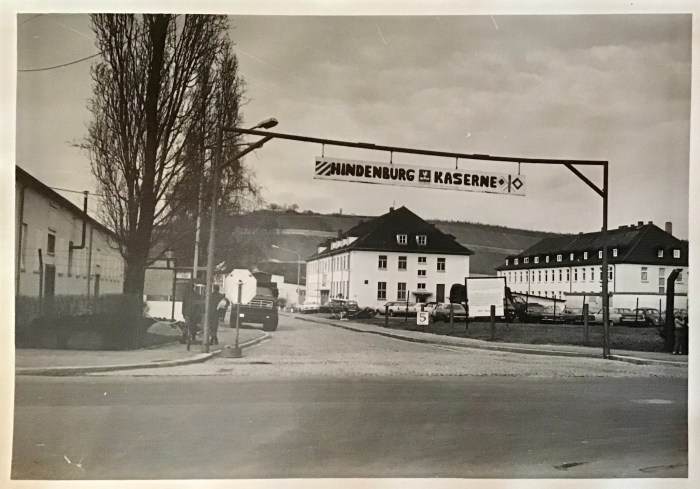
We repainted the booth, but where a big sign said “Hamburgers”, we changed it as something of a joke to “Hindenburgers”. We were stationed at Hindenburg Kaserne (Barracks) in Würzburg. Built in 1935 prior to WWII, the Kaserne was named for Paul von Hindenburg, a WWI German Field Marshall, who was later elected President of the German Reich in 1925. He was known for calling Hitler “the little corporal” *, but was also the German President who appointed Hitler Chancellor in 1933, before dying in 1934. Sergeant Teague and I both thought it was a pretty good joke and double entendre.
The Main Gate at Hindenburg Kaserne
In mid May, the 3ID Bierfest started, and for the next ten days, my duty station was at the Fest. It was crowded with both Germans and Americans, particularly in the evening and on the weekends. In addition to the bier tent, there was a carnival, and numerous food stands, including ice cream, corn on the cob, bratwursts, and of course our Hindenburgers.
At the time, there were no fast food places like McDonalds or Burger King in Germany, and German restaurants didn’t serve an equivalent to a hamburger. In fact, the Germans didn’t really have the concept of an American hamburger. It didn’t matter – the Hindenburgers were a big hit. We served regular Hindenburgers and also Hindenburgers mit Käse (Hamburgers with cheese). There was always a line, and as the night got later, the line grew longer. Based on the jokes from some of the Germans, I think they appreciated the humor of eating Hindenburgers as well.
Over the course of each day we rotated several crews of soldiers through the stand. Sergeant Teague or I were always there supervising, watching the till, and getting more supplies as needed. It was hot work, and we bought the occasional round of bier for the troops as they worked the griddles.
A bier mug from the 3ID Bierfest
Each night about midnight, as we closed and the troops finished cleaning up the grill, I’d make my way to the festival headquarters, and turn in the day’s cash, along with the paperwork covering the inventory used. The accounting was a bit of a pain in the ass, but Sergeant Teague and I were both sticklers ensuring the money and inventory tied out. We didn’t want, or need, any issues at the end of a long day.
After ten days, the fest ended, and I completed the final accounting and paperwork. My troops broke down the stand, and returned it to the warehouse. About a week later, we went on alert and deployed on an exercise to a classified location a few klicks from the Czech border. I was happily back in my element, and promptly forgot about Hindenburgers, and the hamburger stand.
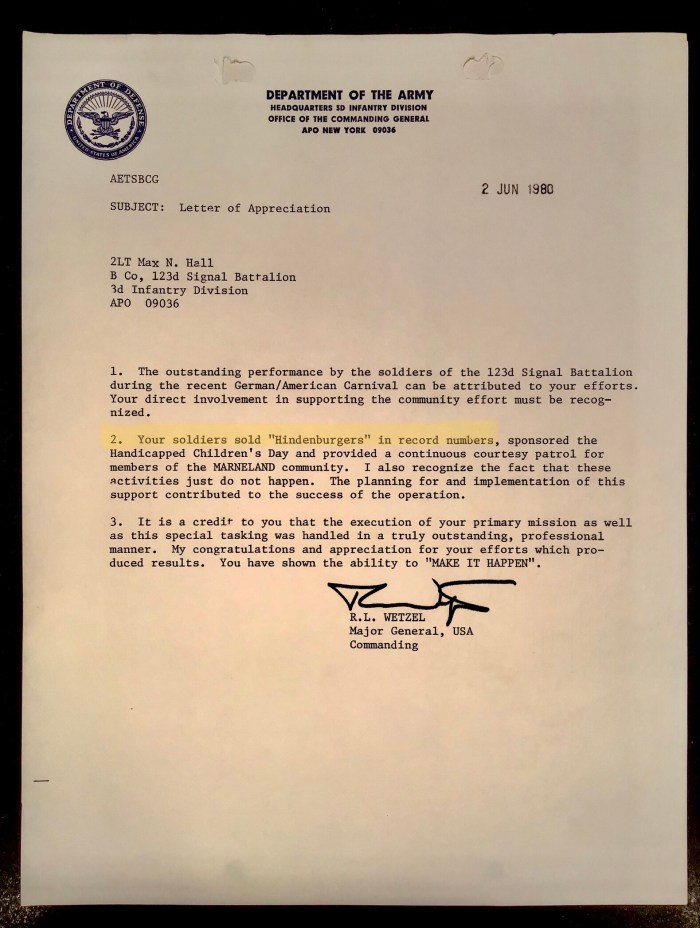
A few days after we returned from the exercise, I was called to LTC Swedish’s office. When I reported, he asked me to take a seat and then pushed a piece of paper across the desk. I looked at the paper – it was a Letter of Appreciation from our Division Commander…. for running the Hamburger stand. I was commended for “selling Hindenburgers in record numbers….” I started laughing, when LTC Swedish held up his hand and said “let me tell you the rest of the story”. It turned out the previous two years the hamburger stand was run by other units in the Division. In both years, inventory and dollars didn’t match up. Money was lost and inventory unaccounted for. Needless to say, there were many unhappy people.
“Your soldiers sold “Hindenburgers” in record numbers….”
Colonel Swedish thanked me for my efforts, and thanked me for keeping him out of hot water as well. We shook hands, and I left his office. That was that… sort of. When I received my final fitness rating from him, it could not have been any better. Coincidence? Maybe.
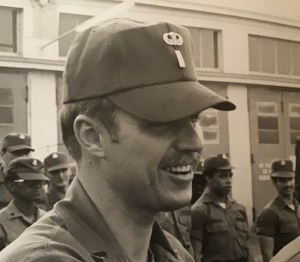
LT Hall, a couple weeks after the Bierfest
I’ve found you learn lessons in many ways throughout your life. I was lucky to learn this one early on. No matter the job you are given, do it well. If you screw up a small job, how can your boss(es) trust you with anything bigger? Do the best you can, no matter the job…even if it’s just running a hamburger stand at a bierfest.
Addendum:
I was lucky to have SFC Teague as my first Platoon Sergeant. I learned a lot from him.
In my business career, as I became a Vice President, and then a Senior Vice President, I would tell this story to new hires and recent college graduates impatient to do bigger, “more important” things than whatever job they were hired for. More than a few came back and thanked me later in their careers.
* At various times it is said that Hindenburg called Hitler, “the Austrian corporal”, “the little corporal”, or “the Bohemian corporal“. I chose to use “the little corporal” here, as there is no doubt that Hindenburg meant the phrase as a slap and a put down to Hitler.
Hindenburg is actually a fascinating person. He had near dictatorial powers for the last couple of years of WWI. He relinquished those at the end of the war, but was elected president of Germany in 1925. In 1932, he was re-elected President, over Adolf Hitler, whom he detested. Unfortunately, in January 1933, he felt compelled to appoint Hitler Chancellor, as Hitler controlled a plurality of the votes in the Reichstag through the Nazi party. The 1932 election was the last free election in Germany until 1949, and the last free election in a unified Germany until 1990. You can learn more about Paul von Hindenburg here: https://en.m.wikipedia.org/wiki/Paul_von_Hindenburg
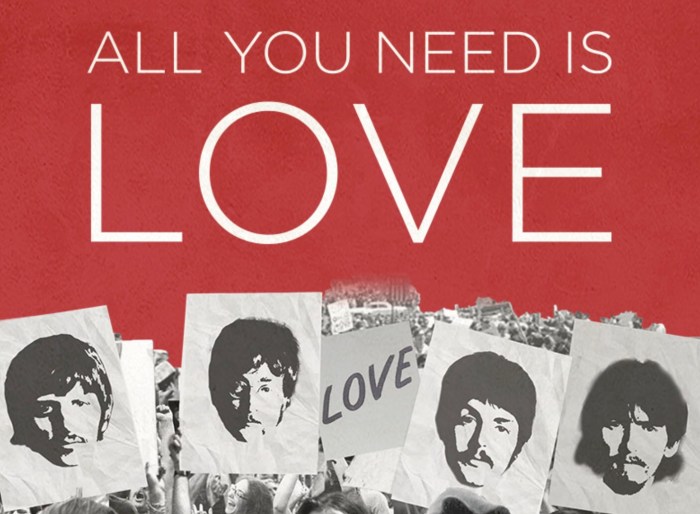
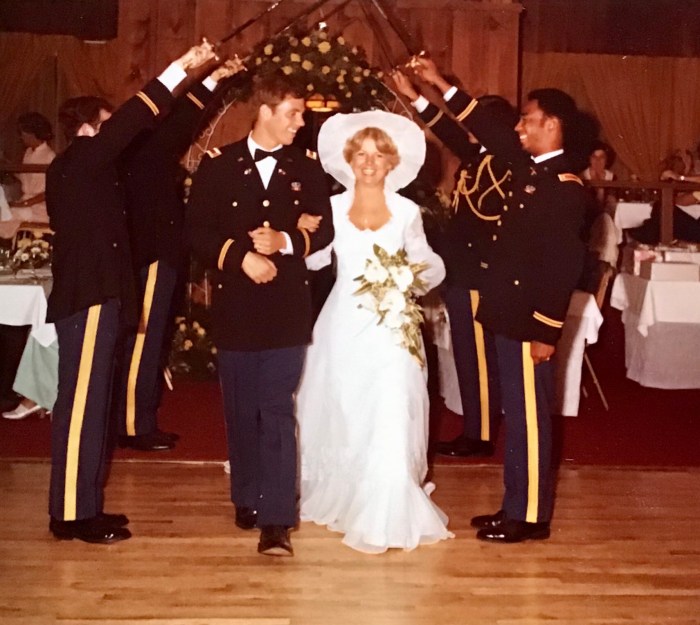
With apologies to John Lennon, The Beatles got it wrong. Love isn’t all you need, at least when it comes to marriage. Cath and I are celebrating 42 years together on June 16th and love remains at the core of our marriage. Having said that, while we all know love is required, it’s not sufficient. Work, forgiveness, communications, growth, and having fun are perhaps less sexy than love, but all are a part of what makes our marriage work.
June 16th, 1978
Like all good things worth sacrificing for, successful marriages take work. Sometimes, one of you works harder than the other, and that’s OK. Over the lifetime of the marriage, it will balance out.
You must be able to forgive your partner and yourself when the inevitable mistakes happen. We are only human, and we all make mistakes, some big, some small. Don’t hold a grudge agains your partner, or yourself.
Marriage doesn’t go far without open and honest communications. You shouldn’t lie and you shouldn’t quibble. As with a house built on a foundation of sand, a marriage built on lies will crumble.
Cath and I aren’t those same youngsters who married at 22 and 23 years of age. We’ve both grown and changed over the years. The world isn’t static, and hopefully you aren’t either. Recognize change is inevitable, and welcome it.
Finally, you need to have fun along the way. If the two of you aren’t enjoying life, and taking advantage of the good times when they happen, what’s the point? It’s OK to smile, it’s OK to laugh, and it’s definitely OK to have fun, even, and maybe especially, when things are tough.
Just another fun day in the Hall household
By the way, this “list” didn’t just magically appear to us on day one. There have been lots of lessons learned since June 16th, 1978, some fun, some easy, some hard, and some painful. They all add up to a lifetime of love together and I wouldn’t trade any of it.
I’ll pass on one more secret – you need to figure out what works for your marriage and make it your own. Love is key to our life, and work, forgiveness, communications, growth and fun are all important for us. My guess is your own list is a bit different. All you need is love, and a few other complementary values…
… Love you hon – here’s to many more years together …
PS…. I do think your salads are better than mine….
Addendum:
“All you Need is Love” was of course about much more than marriage. Here’s some additional info on it’s release, from Wikipedia: “All You Need Is Love was released as a single in July 1967. It was written by John Lennon. The song was the Beatles’s contribution to Our World, the first live global television link, for which the band was filmed performing in London on 25 June. The program was broadcast via satellite and seen by an audience of over 400 million in 25 countries. Lennon’s lyrics were deliberately simplistic, to allow for the show’s international audience, and captured the ideals associated with the Summer of Love.” Of course over the years, it’s become a wedding/couple love tribute, and popularized in such movies as: Love Actually and Moulin Rouge, among others.
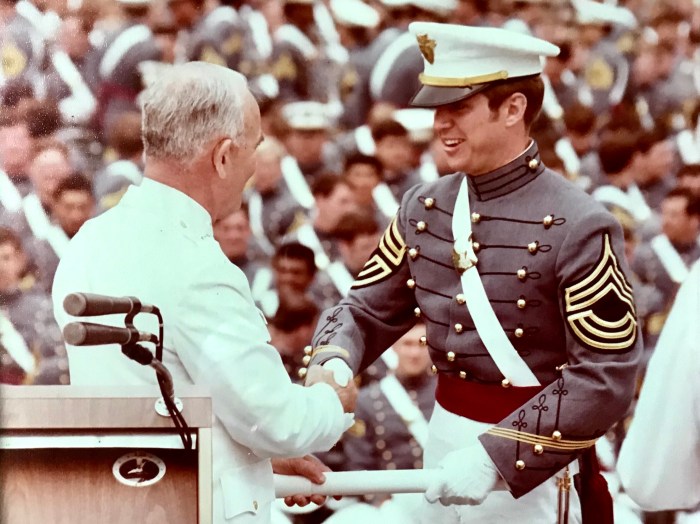
I’ve always believed in the American Dream. June 7th, 2020 is the 42nd anniversary of my graduation from West Point and I often tell the story of how attending the United States Military Academy (USMA) recast my life. Growing up middle class in the American Heartland, I worked hard in high school, and was lucky enough to earn an appointment to the Academy. While there, I was diligent about my studies and graduated in 1978. My persistence paid off, and it literally changed the course of my life, leading to successful military and corporate careers. I was able to achieve my version of The American Dream.
Most people aren’t aware, but every graduate of West Point is assigned a “Cullum Number”. The Cullum Numbering system started in 1802 with the very first graduate, and continued with numbering every single graduate through the years. When I graduated from West Point in 1978, my Cullem Number was 35,591. That is, in the 176 years of the Academy’s existence at the time, I was the 35,591st graduate.
June 7th, 1978. The 35,591st Graduate of West Point.
Prior to 1978, do you know how many African American graduates West Point produced? Fewer than 300. Let that sink in. In 175 years, out of 35,265 graduates (through the class of ‘77), there were fewer than 300 black graduates from USMA.
White Privilege is a real thing. Sometimes, we don’t think about white privilege happening, until well after it actually occurs. Without a doubt, I worked hard to get into West Point, worked hard at the Academy, and continued to work hard after I graduated. That doesn’t mean I wasn’t also the beneficiary of White Privilege. These two things can both be true at the same time. I’m proud of graduating from West Point and happy for the life-path graduation afforded me. As I’ve become older, I’m also more aware of some of the circumstances which enabled my opportunity.
We need to be aware of and confront racism, no matter its guise. Certainly the horrific murders of Ahmaud Arbery and George Floyd are overt examples and must be dealt with. We also need to look at our own lives and gain an awareness of who we are, and how we got to where we are. The American Dream should be something all of us can strive for.
Feel free to share this blog.
Addendum:
⁃ Thanks to my West Point classmates Stan Ford and Chuck Allen for their input and contributions to this blog. Both are teachers – Stan at a Junior High School in Syracuse, NY, and Chuck at the Army War College. They are men I deeply respect.
⁃ If you want to learn more about African American graduates of West Point, Chuck has written a great article. When WWII started, there were only four African American graduates from the Academy, and only two African American active duty line officers in the Army. Here’s the article: https://www.army.mil/article/40763/the_legacy_of_henry_o_flipper_in_the_u_s_army
⁃ I’ve written three other blogs about race relations. I have to say, they don’t appear to do much good. You can find them here:
I fondly remember my First Grade teacher, Mrs Thelma Finkeldey, along with her purple hair. She was an influence I’ve never forgotten, even though First Grade ended fifty eight years ago, in 1962. From grade school through grad school, I had a number of teachers. Many were good, some were bad, and several were forgettable. A few were special. Mrs. Finkeldey was one of the special ones. All teachers should have such a lasting impact on their students.
She was one of a kind for many reasons, but the first thing you noticed was her hair. It was purple, or green, or pink, changing with regularity. It turned out her younger sister was a cosmetologist in Ottawa and dyed Thelma’s hair different colors. It was pretty amazing, and made her stand out among the other teachers, who all seemed staid in comparison. We kids thought it was great, although I don’t know what the other teachers made of it.
More importantly, she made school fun. Learning was always an adventure in her class, no matter the subject. I remember one exercise which went on over several days, or weeks. We made the classroom into a “city” and each of us had a different job. Each of us made our office out of a book cover and set it on our desk. I was the radio broadcaster. My friend Howard was the banker, and cut up the money we could use at Ralph Syverson’s pizza parlor. As the Fire Chief, Leonard kept us all safe. Looking back, I’m sure we learned about math, money, working together, jobs, and any number of other subjects. At the time, it just seemed fun. Amazingly, my mom saved the book cover for ABCD Radio Station and gave it to me several decades later.
ABCD Radio Station was on the air in 1961-1962
We also performed plays in class. Sometimes “live”, sometimes with puppets. Howard and Mooie (Mary) both distinctly remember performing in Sleeping Beauty. Howard was horrified when he learned he needed to kiss Sleeping Beauty (Mooie) to wake her. Seeking help from Mrs Finkeldey, she advised him to fake it. Howard air-kissed Mooie from about a foot away…. 😉
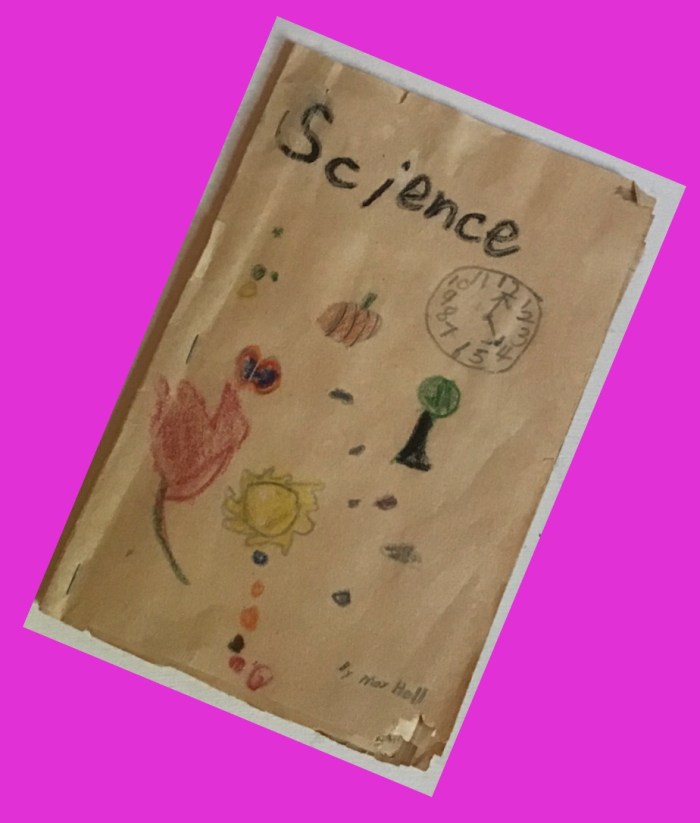
And while we focused on reading, writing, and ‘rithmetic, I also distinctly remember science “classes” in first grade. I think even us kids were aware of the Space Race with the Soviet Union. On February 20th, 1962, a little over halfway through our school year, astronaut John Glenn became the first American to orbit the Earth. Mrs Finkeldey talked about Glenn, and taught us about the solar system and the (then nine) planets. If memory serves me correctly, there was a mobile of the planets hanging in the classroom. Combining current events and science for first graders….who knew?
The “book” on Science I created in First Grade
When I completed First Grade in June of 1962, Mrs. Finkeldey, sent a promotion letter to my parents. You can see in the letter she starts by mentioning “Kieth has made excellent progress…”. I assume since she used my correct name the next four times, I really was promoted. ;-). Joking aside, it amazes me that I have such clear memories of First Grade. I have to believe she is the reason.
Evidently, both Keith and Max were promoted
I moved on to Miss Williams and Second Grade the next year. Mrs Finkeldey moved on as well. Prior to coming to McKinley, she previously taught in Effingham and Rockford, Illinois. She moved back home to Ottawa after her husband passed away, and only taught at McKinley a year or two, before retiring as an Illinois teacher. She left Ottawa after our year, and moved to Gary, Indiana, A few years later, while teaching Third Grade in Gary, she had a student by the name of Michael Jackson. Yes, that Michael Jackson.
Mrs Finkeldey with Marlon and Michael Jackson
Several years later in 1976, Mrs. Finkeldey passed away at the age of seventy. She is now buried in Effingham.
I was recently thinking about Mrs Finkeldey and some of my other “special” teachers over the years. People who were influencers, or motivators, or later, mentors. It seems a bit silly to reminisce about First Grade, and yet, Mrs. Finkeldey has stayed in my memory, while other teachers have faded away. Talking with some of my old classmates, they too remember her, and not just for her colorful hair. People remember math classes, learning to read, and the teaching and singing of Christmas songs as the holidays approached. A couple listed her as one of the influences in becoming a teacher. Other friends became involved in acting. And me? I’ve had a lifelong interest and belief in science. Although never a scientist, I became an engineer, and I can’t help but think Mrs Finkeldey was one of the reasons.
This year, with the CoronaVirus, we all know school ended differently for most kids. Distant learning became necessary, with physical classroom time eliminated. I know most parents carried a heavy load ensuring their children were educated over the last several months. My hope and bet is there were also several Mrs. Finkeldeys keeping school fun and interesting, no matter the circumstances.
Kay Halterman was the younger sister who became a cosmetologist, and colored Thelma’s hair. According to Kay’s daughter, Judy Wunderlich, Kay was entering different styling competitions, and sometimes practiced on Thelma.
Many thanks to my Kindergarten teacher, Charlean Grobe, along with classmates Howard Johnson, Tim Stouffer, Mary “Mooie” Cunningham, Lynn Galley Robinson, Joy Starjak Algate, Leonard Mayberry, and Darlene Burke Vanchura for their memories. While not all were in Mrs Finkeldey’s class, all remembered her hair. It seems purple was a favorite color.
Special thanks to Judy Wunderlich, Thelma Finkeldey’s niece. She provided additional background information on her “Aunt Dorrit” (what they called her), and her mother Kay, the cosmetologist responsible for that colorful hair.
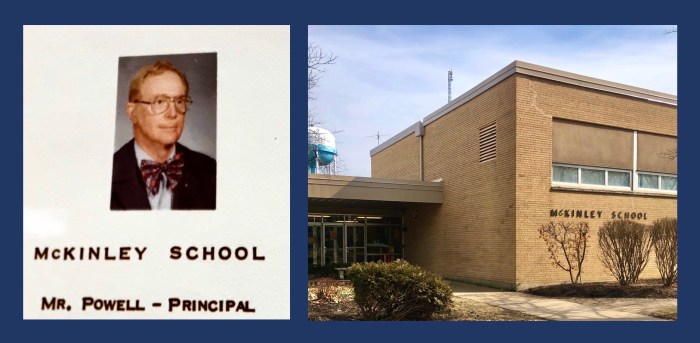
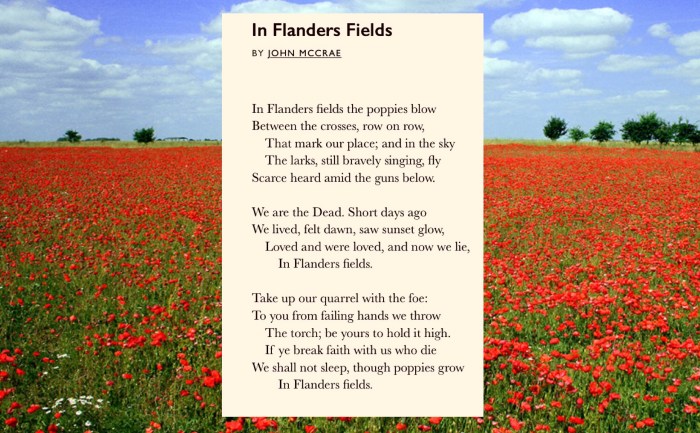
Like the distant echoes of guns firing a salute, the memories of much of my youth are fading. And yet, I clearly remember gathering around the flagpole for Memorial Day ceremonies at McKinley School. Our principal, Mr (Willis) Powell would solemnly read “In Flanders Fields”, as we kids stood listening quietly…
Willis Powell led McKinley School as Principal from 1957-1980
It may just be me, but Memorial Day doesn’t seem to have the same solemnity now, as it did when I was growing up. Moving Memorial Day in 1971 from the 30th of May to the fourth Monday in May, took away some of the recognition and purpose of the day. Maybe the tumult of the Vietnam war changed how people thought in general about war and our dead. Or maybe it’s just a different time and place now, and for better or worse, this is who we have become.
Today, Memorial Day, like Labor Day, President’s Day, and Martin Luther King’s Birthday is just one more three day weekend – an extra day off, or a chance to leave town. On Facebook, we post pictures of dead family members who served in the service. We remember to think about and thank our veterans. Do we think about why we have this most sacred of holidays?
It wasn’t always this way. During my youth in the early 1960s, I remember somber ceremonies for Memorial Day at McKinley Grade School and in the town of Ottawa, Illinois. Mr. Powell, my grade school principal was key for both events.
If you went to McKinley, activities took place on, or about, the 29th of May, the school day closest to Memorial Day. We kids walked in a column of twos, from our classrooms to the flagpole outside the school. There, we formed a U around the pole. Mr. Powell, started the proceedings with a few words, and then Boy Scouts from the school raised the flag, before slowly lowering it to half mast. With hands over our hearts, we recited the Pledge of Allegiance, and sang either The Star Spangled Banner or America the Beautiful. A student would recite a poem or say a few words. My friend Lynne remembers doing this as a fifth grader, although she has long forgotten the words she spoke. Mr. Powell might then recognize student’s family members who were in the service and away from home. Finally, and most clearly, he recited “In Flanders Field”, the WWI poem by John McCrae. To this day, Mr. Powell’s reading of the poem has stayed with me. In my mind, I can still hear his melodious, yet deliberate reading of McCrae’s words.
In Flanders Fields, the Poppies Blow…..
At the end of the ceremony, taps was played by one of the students, including my buddy Tim one year. Afterwards, we walked quietly back to our classrooms. There was no doubt about the solemnity of the day, and it left our young minds with much to think about.
The next day, Memorial Day itself, Ottawa held a parade and ceremony downtown. The event was organized by the Ottawa Memorial Association, of which Mr Powell was a key member. The children from each of Ottawa’s grade schools formed up by school near the Courthouse. Every child was given a small American flag to carry, although my youngest sister, Tanya, also found it useful for poking her older sister in the butt. At 10AM, with the OHS band playing patriotic music, we marched down Columbus street to Washington Park in the center of town. There, we gathered around the Civil War Memorial, each school group in its assigned place.
Following the Pledge, we heard music and speeches from local dignitaries. A child from each school would lay a wreath at the base of the Memorial. Finally, a member of the VFW, or American Legion, read the names of those veterans from the Ottawa area who died the previous year. As he finished, an honor guard fired a twenty one gun salute, followed by a trumpet player from the OHS band playing taps, with another band member echoing in the distance. The ceremony ended at 11, and as people were leaving the park, either by plan, or by happenstance, the bells in the nearby churches were ringing. Garth Powell, Mr. Powell’s son recently said to me, “We all left the park in silence. It was quite a solemn occasion, as it was meant to be.”
It wasn’t by accident that Willis Powell was a key player in both of these events. He was born on October 10th, 1919, a little less than a year after the end of “The Great War”. The First World War was known as “The war to end all wars”, but of course it didn’t. Willis was called up in 1942 at the age of twenty two, and served in the Army for the duration of WWII. After the war, he used the GI Bill to complete his degree. He taught at both Jefferson and McKinley Schools in Ottawa, eventually becoming the full time Principal of McKinley in 1957. He also continued with his military service in the Army Reserves.
He was a patriotic man, and passionate about impressing on both adults and school children the importance of Memorial Day – Not to thank those who served (Veteran’s Day), rather to honor those who gave “their last full measure” while serving our country. The result was the program at McKinley, and his leadership with the Ottawa Memorial Association, a group formed to ensure all citizens understood freedom came at a price. You could almost say he made it his mission to ensure we all knew and understood the importance of Memorial Day.
Mr Powell retired as a Colonel in the Army Reserves in 1980 and retired from McKinley School later that same year. In January, 2004, he passed away. In writing this blog, I spoke and texted with many of his former teachers and students. I can tell you he was universally respected, and left a lasting impression with all. While many different memories were shared about him, all remembered the Memorial Day ceremonies at McKinley or the parade downtown.
As Memorial Day approaches, we typically see veterans, or others, selling small red crepe paper poppies outside of stores, or on street corners. Millions of these poppies are distributed across the country in exchange for donations that assist disabled and hospitalized veterans. I typically buy a few of them over the course of the weekend. And while I think of those who died in the service of our country, I inevitably think back to Mr. Powell reciting “In Flanders Fields” at McKinley School. I recall a man who made a difference in many kid’s lives, including mine. From this former soldier’s perspective, he accomplished his mission.
Addendum:
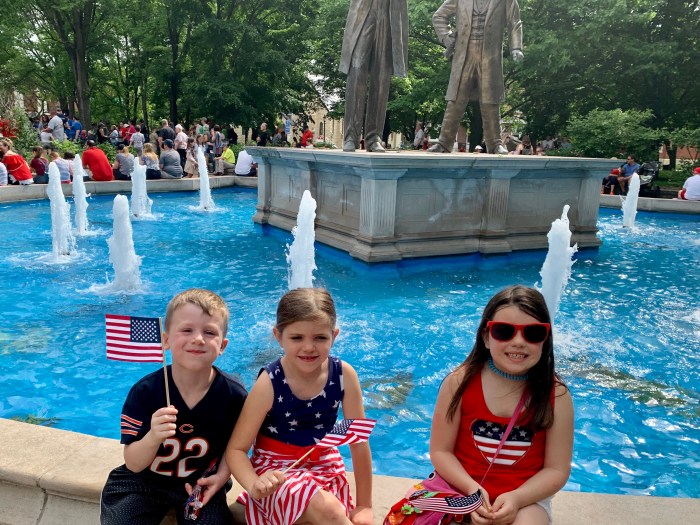
My grand nephew and nieces attending last year’s Memorial Day Ceremony in Ottawa
The Ottawa Memorial Association continues to sponsor Memorial Day and Veterans Day activities in Ottawa. This year’s events are canceled due to the CoronaVirus. The photo above is from last year’s ceremonies, and courtesy of my niece, Ann McCambridge. You can learn more about the Association at: https://ottawamemorial.com/home .
“In Flanders Fields” was written during WWI by Canadian LTC (and doctor) John McCrae. He was inspired to write it on May 3, 1915, after presiding over the funeral of a friend, Lieutenant Alexis Helmer who died in the Second Battle of Ypres. Later, the war wore McCrae down and he contracted pneumonia and came down with cerebral meningitis. On January 28, 1918, he died and was buried in France.
There were many other memories of Mr Powell from his students and teachers at McKinley. Everyone remembered he wore bow ties, which were hand tied for the most part. There were memories of other events, including Veterans Day ceremonies, the Christmas singing program and tree in the gym, and tree give aways for Arbor Day. Two former students had memories of a special ceremony when a student’s father died in Vietnam. As my friend Marsali, who later became a teacher said “Such good memories from McKinley, especially Mr. Powell. I wish all principals and admins could take lessons from a guy like him”.
Thanks to: my sisters, Roberta and Tanya; my niece Ann McCambridge; fellow students Lynne Galley Robinson, Howard Johnson, Tim Stouffer, Joy Starjack and Marsali Classon; and teachers Charlean Grobe, Jean Mikus, and Dona Ostermeyer. All contributed memories of Mr Powell, or the activities surrounding Memorial Day at McKinley School, and in Ottawa.
Special thanks to Garth Powell for personal information about his father, Mr. Willis Powell, and his recollections of Memorial Day ceremonies in downtown Ottawa.
One or both of the following statements are true: 1: My five year old grandnephew, Luke, is a genius. Or, 2: My dad’s spirit is influencing Luke. You see, Luke became a Cardinals baseball fan at four years of age, despite living in a Cubs household. This is seriously good news.