
November 9th marks the 31st anniversary of the fall of the Berlin Wall in 1989. Between 1979 and 1989, I spent 8 1/2 years in Germany. As Veterans Day approaches, I think back to those years. To rephrase Gen Hal Moore*, we were Cold Warriors once, and young.
Had a land war with the Russians happened in Europe, in the ‘80s, it would not have been a particularly fun time. While we would have slowed the East Bloc armies, shear numbers would probably have worn down US and NATO forces. Many of us would have died before reinforcements could arrive. Perhaps tactical nuclear weapons would have been employed. Not a pretty picture.
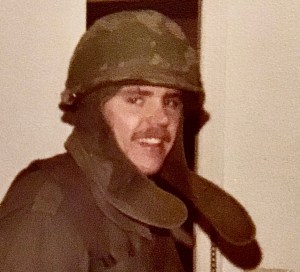
During that decade in Germany, I served in a number of command and staff positions. As a new Lieutenant, during my first assignment I deployed with an Infantry Brigade in the 3rd Infantry Division, just a few kilometers from the Czech border. Towards the end of the decade, I worked in several engineering jobs that affected the United States Army, Europe (USAREUR) Headquarters in Heidelberg, the NATO Headquarters in Mons, Belgium, and the US European Command (EUCOM) Alternate Support Headquarters (ASH)** in High Wycombe, England. ASH was where EUCOM HQ would bug out, if they needed to evacuate from Germany. Over all of those assignments, hung the Cold War threats of both conventional and tactical nuclear warfare in Europe.
And then of course, there was the ultimate symbol of the Cold War in Europe, Berlin.
We would have lost West Berlin almost immediately if a war started. Time has passed and many have forgotten that small bit of history during the Cold War. After WWII, Berlin, located in what became East Germany, was divided between the US, Britain, France and the USSR and remained an “occupied city” until the reunification of Germany in October, 1990. West Berlin was an island surrounded by East Germany. The history of Berlin is cluttered with stories of challenge and heroism during that time.
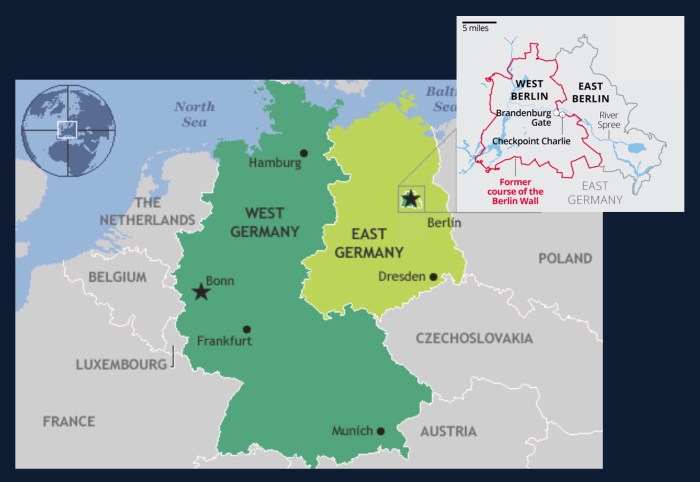
Many of those stories happened when East Germany built the Wall in 1961 to keep people from leaving for the Western sectors. They created a whole new level of aberration – Guard towers, zones of death, dog runs, bunkers and an 87 mile long wall – all to keep people in the Eastern Zone. Over the next 28 years, 5,000 people would escape from East Berlin, while more than 200 were killed trying.
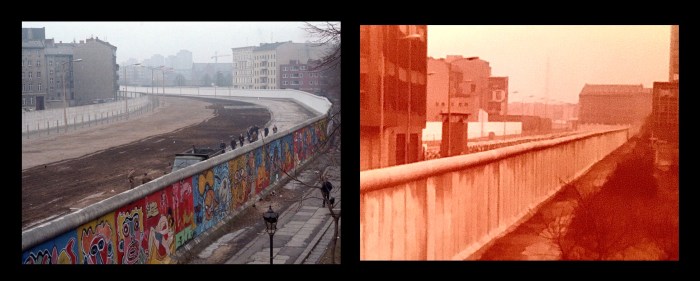
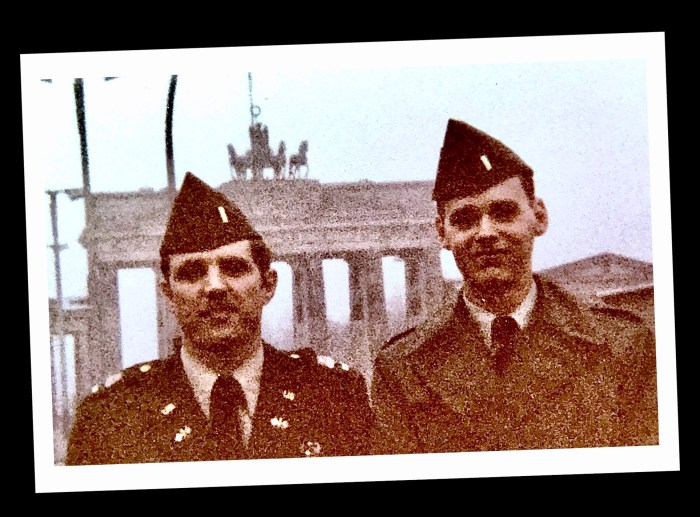
Cath and I made it to West Berlin twice during our time in Europe, once by train through East Germany, and once by plane, flying into Tempelhof. In addition to good food and bier, we of course saw Checkpoint Charlie, the Brandenburg Gate, the Reichstag, the Wall, and many other sites. We also visited East Berlin on one of those trips. As a GI, you needed a special pass and to be in uniform. If not in uniform, you were considered a spy. While there, we saw the Brandenburg Gate again (from the East), some memorials and did a bit of shopping. Parts of East Berlin looked much as it did immediately after WWII, with bullet holes still evident in the walls of homes. Seeing both sides of Berlin provided a huge contrast between the vibrancy of West Berlin and the starkness of the East. It was almost like having a color film suddenly turn black and white.
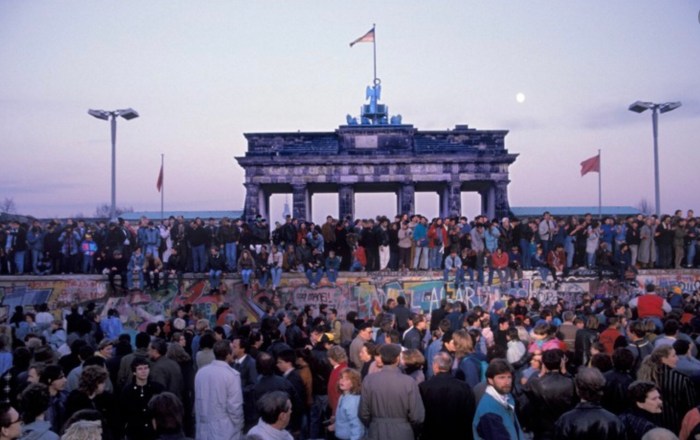
Five months after Cathy and I returned to the States in June of ‘89. the Wall “fell” on November 9th. We watched in wonder, as TV coverage showed people sitting on the wall drinking champagne, while others hit it with sledge hammers. It was a surreal moment because of the cruelty and suppression it represented, and the beginning of the end of the Cold War. We drank a bottle of champagne ourselves that night.
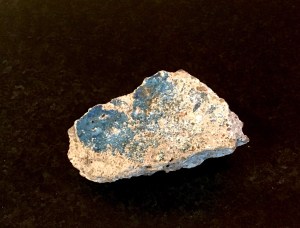
Eight months later, in July of 1990, our friend Dave who was still stationed in Germany, attended the “The Wall – Live in Berlin” concert organized by Roger Waters of Pink Floyd. The concert was held near the Brandenburg Gate in Berlin. While there, Dave collected several pieces of the wall as mementos. Later, he generously gave us one. That small piece of concrete with a smear of blue paint across it now sits in a curio case in our front room.
Glasnost followed over the next couple of years, and the Cold War with the USSR came to an end. I left the Army in 1992 to pursue other opportunities. It seemed the United States, and the world, were on track for more peaceful times.
Of course, we all know what has happened since then.
Looking at the faded pictures of Lieutenant Hall, and the little piece of blue painted concrete now, I remember those times, and the mission we accomplished. Did we gain anything? Yes, but in the end, how much did it matter? The world remains a dangerous place and in the long term, there is always a new risk around the corner. We fight our wars and finish them. Then our soldiers wait, and prepare for the next one. Currently, they are waiting in nearly 150 countries around the world.
Addendum:
- Special thanks to my wife Cathy for help in recollecting memories of our times there, as well as editorial support. Also thanks to Colleen Conroy for her always helpful editorial support.
- * Hal Moore, along with Joe Galloway wrote the book ”We were Soldiers Once, and Young”. The book is a classic and tells the story of the battle in the la Drang Valley in Vietnam in 1965. It was the first large scale combat between US Forces and the North Vietnamese. The movie came later with Mel Gibson. If you get a chance, read the book. It’s much better.
- ** The EUCOM ASH Bunker – The bunker was actually built in 1942 during WWII. In the 1980s, it received a major upgrade and was a designated alternate HQ for the EUCOM, should forces in Europe be overrun. It was built to survive, even in the event of an ElectroMagnetic Pulse (EMP) nuclear attack. I spent quite a bit of time working there between 1986 and 1988. You can read a bit more about the site here. https://www.bucksfreepress.co.uk/news/13486789.wycombe-abbey-school-opens-former-wwii-and-cold-war-bunker-for-one-visit/
- In May of 1980, I had the opportunity to run a hamburger stand at a 3ID Bierfest, and learned a couple of things about leadership. https://mnhallblog.wordpress.com/2020/06/24/selling-hindenburgers/
- In 1980, I was stationed with the 3rd Infantry Division. Here’s a blog about a Battalion Dinner, and one of Cathy’s adventures. https://mnhallblog.wordpress.com/2020/01/15/i-wouldnt-give-a-bean-to-be-a-fancy-pants-marine/
- In 1980, while Duty Officer, I was presented with the opportunity to take a knife away from one of our troops. https://mnhallblog.wordpress.com/2019/09/17/the-knife-fight/
- In October, 1981, there were Nuclear Missile protests in Germany, and a potential threat to Hindenburg Kaserne (Post). Things were interesting for a night or two : https://mnhallblog.wordpress.com/2020/10/07/duty-officer-and-the-nuclear-missile-protests/
And here are a few blogs about some of the more fun times Cathy and I had in Germany.
- In 1986, we found a way to ship a Keg of German bier from a Monastery, home in a transport plane: https://mnhallblog.wordpress.com/2019/10/09/shipping-bier-from-germany/
- In 1987, I had the opportunity to play soccer with a German over 30 team. Read more at: https://mnhallblog.wordpress.com/2020/08/12/die-alte-herren-the-old-men/
- In 1988, at the end of an evening of drinking, my friend Howard and I ate some raw pork in a German Gasthaus. It was delicious. https://mnhallblog.wordpress.com/2018/09/06/eating-raw-pork/
- In 1988, our truck was in a Fasching (Mardi Gras) parade in our village. It was the start of a great day. https://mnhallblog.wordpress.com/2019/02/22/the-fasching-parade-and-party/
- In the late ‘80s, I had pig’s snout for the first time at a local festival. https://mnhallblog.wordpress.com/2019/05/23/das-schlachtfest-und-die-schnute/
Discover more from Live Life Exuberantly
Subscribe to get the latest posts sent to your email.


Hi Max, I am not sure if you remember me. I am Kakali’s husband. She just sent me your blogpost and I wanted to thank you for publishing it. It was a very nice read. Many of the sentiments I can share, myself having been a young reporter for Time magazine and West German publications at the time. I too remember the stark difference between East and West Berlin, the train rides through the “zone” and the grim NVA officers checking passports.
You ask what was gained: As a German who has a lovely American wife who is considering living at least part of our lives in Germany and two daughters who speak both languages fluently and consider Germany their home (Nina has been studying in Heidelberg for the past year now and Maya is thinking about starting her career as an educator here) I want to tell you much has been gained.
For one: a future for my kids in a free and democratic society that the US helped create and that you and your fellow soldiers safeguarded for so long and many still do. This is probably the smallest element. Because there are many Germans that are very aware of the incredible gift that was bestowed on a people not entirely deserving at the time. So this feeling multiplies and it lasts.
Therefore maybe the only thing that really needs to be said here is: Thank you.
LikeLike
I do remember you and the brunch/lunch we had here at the house among other encounters! Thank you so much for your comments here. They have left me humbled and also helped me remember we don’t always do something for gain. We do it because it’s the right thing to do. Good to hear from you and stay safe.
LikeLike