
It was in October, 1981 when Lieutenant Colonel (LTC) Rex Pierson came in my office and asked “Who is the Duty Officer this Sunday?” I checked the roster and said “2LT Smrt”. He answered back “You need to redo the schedule and appoint yourself as Duty Officer. We may have trouble from the Nuclear Missile Protests”.
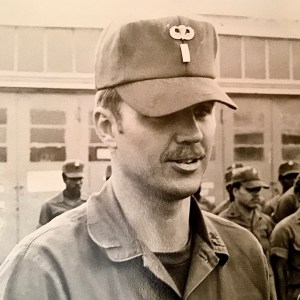
I was a First Lieutenant (promotable)* and the Battalion Adjutant for the 123D Signal Battalion, 3rd Infantry Division. One of my responsibilities was to maintain the Duty Officer roster for the battalion. The Duty Officer was “responsible” for the battalion during non-duty hours, when the officers and senior NCOs were not at work. Since the 123d was isolated at Hindenburg Kaserne (army post) by itself, our Duty Officer was also responsible for all activities on the Kaserne. On weekdays, the Duty Officer served from 5PM to about 6AM the following day. On weekends, your tour went from 8AM to 8AM the following day.
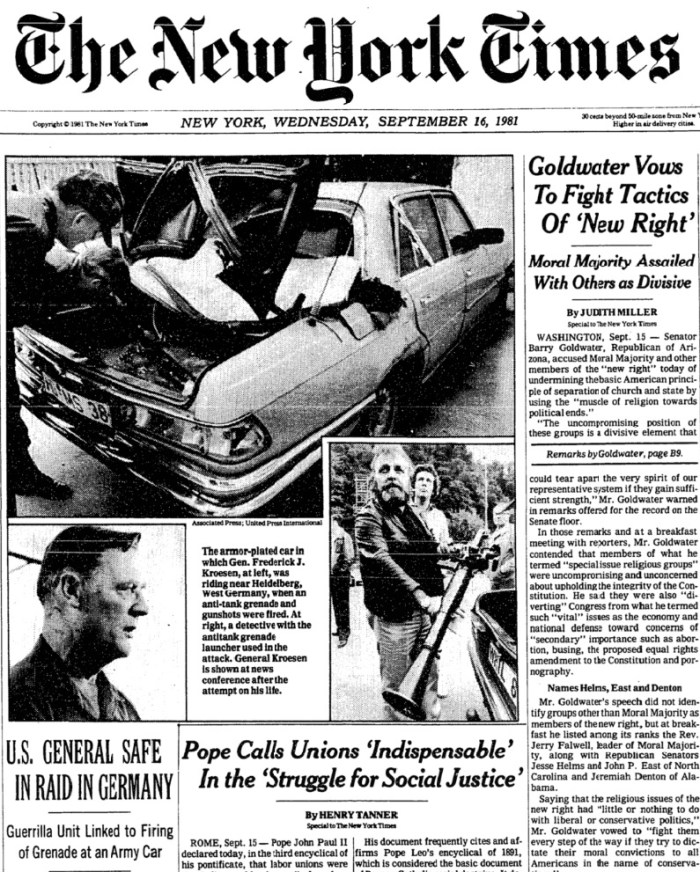
Things were a bit tense in West Germany that Fall. In August, a large car-bomb exploded at Ramstein Airbase, wounding twenty people. Responsibility for the bombing was claimed by the Red Army Faction, also known as the Baader Meinhof gang. In a letter, they declared “we have undertaken a war against imperialist war.” On September 14th, there were violent protests in Berlin, coinciding with a visit by Secretary of State Al Haig. Over 50,000 people took part in the protest. Two days later, on September 16th, the Baader Meinhof gang struck again with an assassination attempt on General Frederick Kroesen, the commander of all United States Army forces in Europe. Using a Soviet made grenade launcher, they severely damaged his car, but the General and his wife were unharmed.
On Sunday, October 11th, a massive protest was scheduled to take place against the deployment of US made medium-range nuclear missiles in West Germany. At the time, the decision to deploy the Pershing II and cruise missiles, which could reach Moscow, was viewed by many as an escalation of the arms race and could put Europe on the brink of nuclear war.
This was all part of the backdrop for LTC Pierson’s visit to my office. The main protest was to be in Bonn, the Capitol of West Germany, while scattered protests were expected in other cities. Based on recent history, concerns were legitimate that things could turn violent, or the Red Army Faction would infiltrate the protests and incite violence against US facilities. As a result of these concerns, not only did Colonel Pierson want me as duty officer, he wanted me armed. Normally, the Duty Officer in the 123D, did not carry a side arm, or ammunition. October 11th would be different. I was to carry my 45 (.45 Caliber pistol) and two clips of ammunition.
October 11th dawned and I was at the Kaserne early that morning. I checked in with our company’s armorer and drew my 45 and the two clips. I strapped the 45 to my hip, while the two clips went in my shirt pocket. I then went to the battalion headquarters and relieved my predecessor.
The Duty Non Commissioned Officer (NCO) and I had taken what precautions we could ahead of time. We agreed to spend more time watching the perimeter of the Kaserne and had drafted a few soldiers from my old platoon to act as observers. They were to notify us immediately of any suspicious activities. Hindenburg Kaserne was only about two or three blocks square, so it wasn’t difficult to view the entire facility from a few locations. The walls surrounding the Kaserne had barbed wire in some locations, but not all. Some of the buildings were directly on the surrounding streets with no wall separating them. The back of the Kaserne bordered a small park, and we had concerns people could slip through the woods in the park and approach us from that direction, so greater surveillance was placed there.

The day passed slowly and quietly. We checked in with the MPs across town, and with 3ID Headquarters on a frequent basis. A small protest took place in our city of Würzburg, but it was peaceful. As day turned to night, Colonel Pierson stopped by. We toured Hindenburg, and he was satisfied with how things looked. After reminding me that other acts of violence had occurred under the cover of darkness, he left, and wished me a peaceful night.
Neither the Duty NCO nor I slept. We patrolled frequently and checked in with our observers regularly. The night passed without incident.
The next morning, we debriefed the commander and Sergeant Major when they arrived. I turned my 45 and ammo back in and went home for a few hours of sleep. The event was a nonevent, at least for Würzburg.
I later learned the protest in Bonn attracted over 250,000 people. At the time, it was the largest demonstration ever in postwar Germany. Two peace groups associated with the united Protestant Church in Germany chartered 3,000 buses and 42 trains to bring protesters from other parts of West Germany and neighboring European countries. With the opportunity to easily join the protest in Bonn, there were actually very few demonstrations elsewhere in Germany. The organizers policed the protest themselves and held the few trouble makers in check. Overall, it was a peaceful event.
In the years since then, I’ve thought about that day and night and what I would have done, if protests had come to our Kaserne, or someone had tried to breach our facility. If we knew a protest was imminent, we certainly would have called the MPs for support and they probably would have arrived in time. If something happened unexpectedly and an intruder (or intruders) gained access to the Kaserne, what would I have done? Called out my old platoon as a quick reaction force? Sure. But what if it happened suddenly and I was alone? Try to talk to them? Fire a warning shot? Shoot the person? I like to think having the clips in my pocket and not locked and loaded would have enabled me to take some time and behave in a reasonable way, but I don’t know that for sure.
Our lives are defined by the events that happen in them, and sometimes by those that don’t. Looking back, I’m glad I never actually had to make a decision that day. Maybe things would have ended well, but maybe, just maybe, they wouldn’t have.
The classic novel, Once an Eagle, by Anton Meyer has a great quote – “if it comes to a choice between being a good soldier and a good human being – try to be a good human being“. On October 11th, 1981, I think I was prepared to be both. We try to prepare for realities, some of which never actually happen. Sometimes, it’s good they don’t.
Addendum:
The violence continued later that year. In December of 1981, Army Brigadier General James Dozier was kidnapped by the Red Brigade in Italy. He was rescued by Italian Police Special Forces, after 42 days of captivity.
* First Lieutenant (promotable) – I was selected for promotion to Captain earlier in the summer of ‘81 and LTC Pierson moved me from an assignment as a Platoon Leader to the Battalion Adjutant position, a Captain’s billet. I was promoted to Captain in January of 1982.
Second Lieutenant Chris Smrt’s name really was Smrt, with no vowels. I believe his family was originally Slavic.
You can find out more about the attack on General Kroesen here: https://www.nytimes.com/1981/09/16/world/us-general-safe-in-raid-in-germany.html
Among attendees at the protest in Bonn, while there were certainly activists, there were also church people, students and some German soldiers. Speakers included politicians, union organizers, clergy, and a Nobel Prize winner. From the US, both Harry Belafonte and Coretta Scott King, the widow of slain civil rights leader Martin Luther King Jr., attended and spoke. You can find out more about the Nuclear Protests on that day here: https://www.washingtonpost.com/archive/politics/1981/10/11/250000-in-bonn-protest-stationing-of-nato-missiles/d37b0ddc-baa7-4df3-88a7-11e94491e47a/
Once an Eagle, by Anton Meyer was first published in 1968 and is a classic novel about warfare and leadership. It has been used at various times by West Point, The Army War College, and the Marine Corps for leadership studies. The book has also been on the Army Chief of Staff’s recommended reading list for professional development, and is currently on the Marine Corps Commandant’s recommended reading list. You can find out more about the book here: https://en.m.wikipedia.org/wiki/Once_an_Eagle
Discover more from Live Life Exuberantly
Subscribe to get the latest posts sent to your email.
 Live Life Exuberantly
I was stationed there during that time, hectic period in Germany. LTC Pierson was a crazy character. He made me take my windshield off my gamma goat because it had a 2 inch crack and when I pointed it out to him he made it it a 8 inch crack with a hammer. It was snowing and he just called an alert.
LikeLiked by 1 person
That sounds about right! I remember you from 2nd Plt of B Co in 79/80 when I was there. Weren’t you the RATT Rig section NCO then?
LikeLike
That sounds about right.Rex F. Pierson.”Ranger Rex”.Kept us on our toes.
LikeLiked by 1 person
Tony – Ranger Rex! Haven’t heard that in a long time. Thanks for sharing. Hope you are doing well.
LikeLike
I had a similar experience but it involved possible riots by US Army personnel. Martin Luther King, Jr was assassinated on April 4, 1968 6:01 CST. I was a First Lieutenant, stationed in Germany at Kilbourne Kaserne.
At 08:45, April 5, 1968 I was called to the Commanding Generals Office and BG Trigg handed me Too Secret document from the Commander of USAEUR, through CG NATO Forces from OPS 3 at the Pentagon.
The message ordered me to first, close and secure our Kaserne. We place concertina wire and locked all gates.
Second, I was to obtain my sniper rifle from the arms room, and obtain 100 rounds of ammunition. The order locked down our command and Kaserne for 72 hours and to wait for further instructions.
Last paragraph of the message instructed me to shoot any one approaching the secured perimeter whether from the inside or outside.
Fortunately everyone remained calm, respected the lock-down and didn’t force me to make a decision about shooting men of my command or men of other commands or civilians.
Next duty assignment was with the Americal Division in Southern I Corp of Vietnam. At least I never forced to shoot a US Army, Marine, Air Force or Navy man during my tour.
LikeLiked by 1 person
Jeez… there’s a story. Thank you for sharing. Glad you didn’t have to be tested….
LikeLike
Another great piece, Max.
Although this country is currently embarking on a multi-decade modernization effort across the nuclear arsenal, the issue of nuclear weapons has largely receded from the public’s attention since the 1980s and 1990s. For context, it was a huge issue in the US also. On June 12, 1982, as many as 1 million people rallied in Central Park New York demanding a nuclear freeze – a halt to further development and deployment of nuclear weapons (theater and strategic). It is considered by many to still be the largest political gathering in NYC history (and roughly comparable to the tailgaiting of an Alabama-Auburn football game!!). Despite the protests, the US did deploy the Pershings II in Europe in response to the Soviet deployment of SS-20 missile. Subsequently, the US and USSR negotiated the Intermediate Range Nuclear Forces Treaty (INF) significantly eliminating such weapons in Europe – one result of which was the famous denunciation of Reagan as “a useful idiot for Soviet propaganda” by American conservatives.
LikeLiked by 1 person
Yep. Most folk have forgotten about the Cold War. Thanks for sharing Phil
LikeLike
Great story! I didn’t know what the term Hindenburg Kaserne meant so I looked it up. As part of the wikipedia description they psoted the following under the heading “Current Use”. After the withdrawal of US forces [1993], the facility has been largely demolished. For several years the area lay fallow, due in part to environmental cleanup efforts. At the beginning of March, 2012, Freistaat Bayern purchased most of this area for use by the Staatliche Feuerwehrschule Würzburg (English: Würzburg City Fire Brigade School). As part of the expansion of the school, several practice areas and buildings have been built. Groundbreaking for this €29.5 million construction project was in the summer of 2013.
In addition to the fire brigade school, portions of the area along Moscheeweg, Weißenburgstraße and Mainaustraße make up part of the Grüne Mitte Zellerau,[4] an outdoor fitness area and green space.
LikeLiked by 1 person
THANKS for sharing. A great update on the facility!
LikeLike