
Crescendo returned from the vet today, after having her left eye removed on Thursday.
It wasn’t an easy decision, and of course these things never are. We think we made the right choice, although we may not know for weeks or months.
‘Schendo has been with us for almost 13 years, and is now 26 years old. She’s a sturdy little Appaloosa that Cathy originally purchased in 2005 for dressage. She developed navicular (a bone problem) not long after we bought her, and her riding days were through. Normally, we would have sold her, or given her to someone at that point, but we decided to keep her.
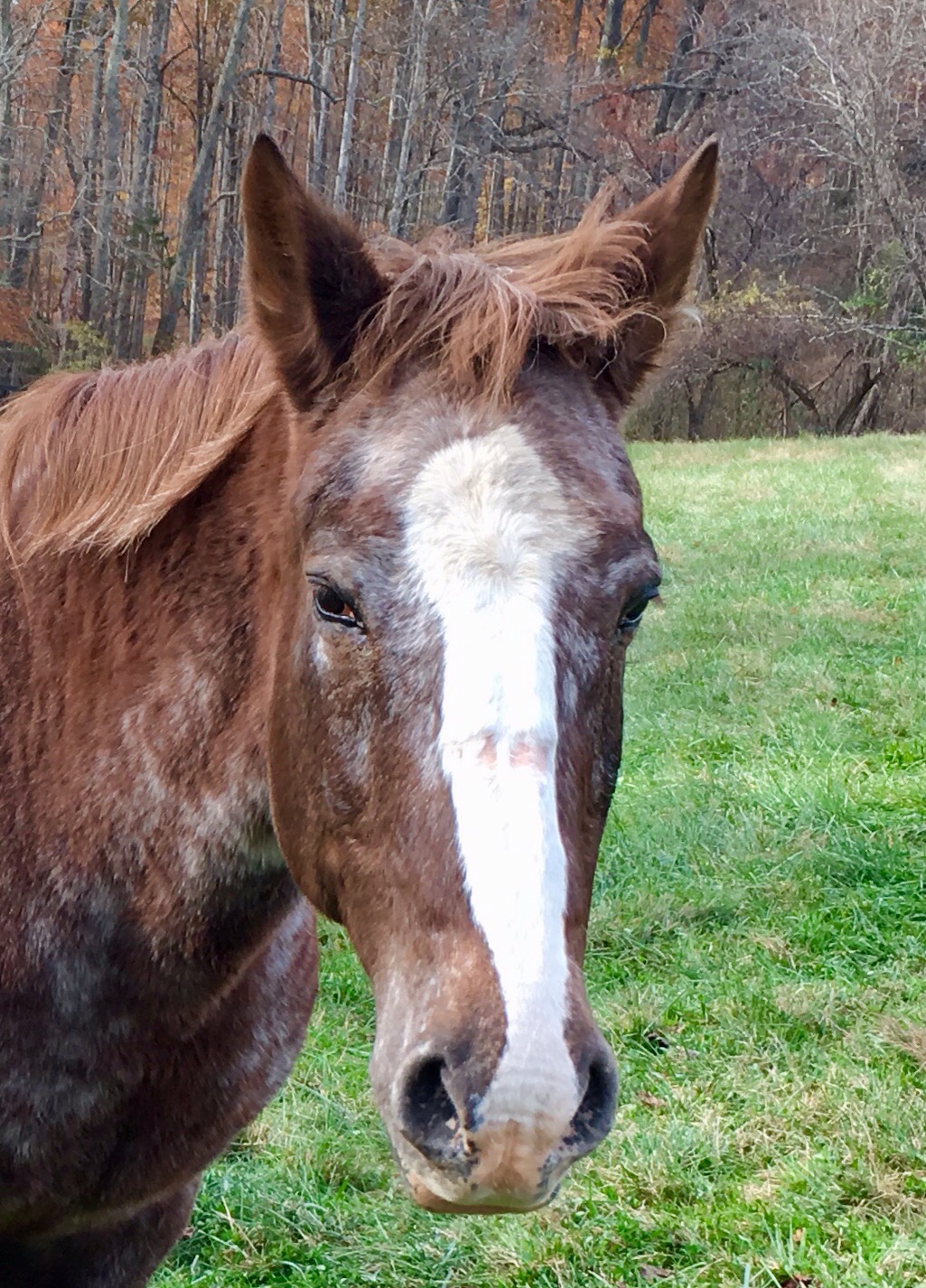
I’m not sure why we decided to keep her at the time. She was pretty, and she was an easy keeper. But she was also the most recessive horse we ever owned. As many of you know, horses are pack animals, and they always have a hierarchy within the herd. In our horse “herds”, whether two animals, or seven, Crescendo was always at the bottom of the pack. The last in line. The last to eat. The one that was always chased away from the hay by the other horses. If this were a Christmas story, she was Rudolf, before the foggy Christmas Eve.
We are a small farm, so all of our animals have to have a role to justify their staying here. As time passed, we didn’t really see a role for Crescendo and thought it might be time to move her on. And then like Rudolf on that foggy Christmas Eve, we discovered her role.
Cathy bought two brood areas and started breeding horses. Now, one of the things you need to do with new foals is wean (separate) them from their dam at about six months of age. It can seem a bit brutal for the foal, but it’s necessary. As to the mares, one of ours didn’t like it, but the other couldn’t wait for her foals to be gone.
And this is when we discovered Crescendo’s job on the farm. She became the babysitter horse for our foals. When we weaned a foal, we put it in a separate pasture, and put Crescendo with it. The foal would be quite agitated for a day or so, but then would start to follow Crescendo around. Crescendo wouldn’t act like mom, but did something much better. She taught the foals horse manners and how to interact with other horses. She was quite the stern taskmaster, and in fact, I think she enjoyed being the lead horse for a change. After six or eight months, we would return them to the main herd, and Crescendo would revert to her old place in the pack. We had six foals, and she performed the babysitter role admirably for all of them.
In the past year, her left eye developed cataracts and also a reoccurring eye infection. Eventually, she lost most of the eyesight in that eye, but even worse, the infections continued and were giving her a great deal of pain. We had the inevitable conversation with the vet – Do nothing (not a fair option to the horse); remove the eye; or put her down.
26 isn’t ancient in horse years, but it’s getting pretty old. We went back and forth between removing the eye, or easing her on to the next world. The right decision? The right business decision would be to put her down. The right decision for her? I’m not sure. The vet assured us the pain would be gone from the eye and she would adjust pretty quickly to having only one eye. How much does sentiment weigh in on a decision like this? How do you know what’s truly right for the horse?
Eventually, we decided to remove the eye, and see how things turn out.
‘Schendo’s been a good horse, and has done her job well here at Rohan Farm. I hope she has a few more seasons of cantering out to the back field with the other horses, even if she is third in line.
Discover more from Live Life Exuberantly
Subscribe to get the latest posts sent to your email.
 Live Life Exuberantly
Such a sweet write up of a family member. Xo Sharon
LikeLiked by 1 person