The Indoor Mile

The Indoor Mile

5:25 … 5:26 … 5:27 … Hall – 5:28 … 5:29 … 5:30 …” I did it! I finished the Plebe indoor mile run in under 5:30! As I slowed, my stomach suddenly double clutched and I ran to a nearby trash can, where I promptly threw up.

During my time at West Point, the Academy frequently talked about developing the “whole man” (with the admission of women in 1976, this changed to the “whole person”). We cadets were always being tested and evaluated. It was true about leadership, about academics, and was certainly true about physical fitness. For most of us, somewhere in all that testing was an Achilles Heel. With some it was a particular academic course, for others, some physical education test or class.

Plebe Year at West Point.

As Plebes, there were four required gym classes: Swimming, Wrestling, Boxing, and Gymnastics. For me, I’d been a swimmer all my life and a lifeguard for a few years, so the swimming class was easy, and I earned the equivalent of an A. Wrestling? I made West Point’s intercollegiate wrestling team as a freshman walk on, so I validated wrestling and took handball as an elective instead. Boxing was a challenge at first, but once I learned the basics, AND learned getting punched in the nose wasn’t a showstopper, I did OK. Gymnastics was a different beast.

The pommel horse, the rings, the vault, parallel bars, the trampoline, mats for tumbling … I forget what other torture devices were there, but it was like I was in a cursed land. My two sisters would tell you I wasn’t particularly coordinated as a kid. As a matter of fact, they would say I was a bit of a klutz. It all came home to roost in Gymnastics class. I was passing, but just barely.

At some point during the class, I learned we would do a timed mile run as a part of the course. Running of course has nothing to do with gymnastics, but those things happened at West Point. Just another chance to excel. Now, I had never been a runner, but since it was wrestling season, I was in great shape. Probably the best shape of my brief life up to that point. I started thinking I might be able to earn a good score on the mile run and improve my overall Gymnastics grade.

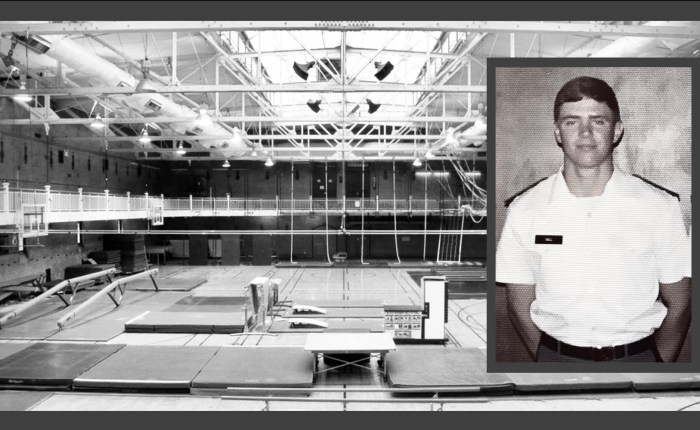
Hayes Gym* is where we practiced Gymnastics. It was “a large open gym with a vaulted ceiling and hardwood floors.” Above the gym floor, an elevated track rings the room. It takes 11.7 laps to run a mile on that track and that’s where we would complete the mile run.
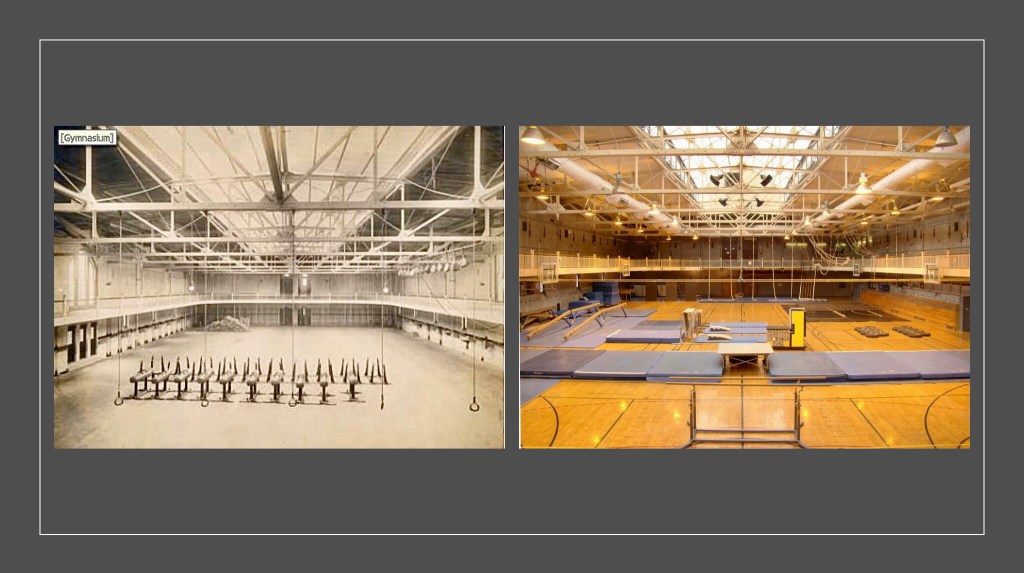
Hayes Gym in 1910, the Year it was Built, and Again in 2009. Note the Elevated Track.

My personal view at the time (and that of at least a few of my classmates) was that many of the instructors in the Department of Physical Education (DPE) had a bit of a sadistic streak in them. One of our instructors was Army’s gymnastic coach, Ned Crossley and some classmates recall his scoring as particularly brutal. Looking back now, I’m pretty sure it wasn’t true. Having said that, all of the DPE instructors had ways of questioning you, challenging you, or prodding you that often seemed to taunt you a bit as well.

The instructor who spoke with us about the mile run was a little like that. To receive a max score, you needed to run under 5:30. The instructor explained what we needed to do to run a 5:30 mile. At 11.7 laps per mile, “all” you needed was to run each lap at a 28 seconds per lap pace, and then run like hell for the last half lap. Simple. Easy Peasy. Any cadet could do it. And so on. Of course the vast majority of us could run no where near that fast.

At the time, I don’t believe I’d ever run a mile (or any other distance) for time. I’d certainly run laps in High School sports, run in formation at West Point for Company morning runs during Beast, and we ran our asses off in wrestling practice. But none of this was ever done for time. That was about to change.

My pea brain went to work. 28 seconds was two seconds less than 30 seconds for each lap. 28 seconds for the first lap… 56 seconds for two laps … 1:24 for three laps … 1:52 for four laps and so on. I’d do the math in my head on the run. As long as I could keep the pace going, I had a shot.

A couple days later, it was my turn to do the run. As I recall, there were a few of us running it at the same time, although I don’t recall exactly how many. What I do remember was taking off when “go” was called. The first lap – 27 seconds! The next couple of laps I was under the pace. After that, I was a bit erratic, with some over and some under, but the average was OK and at the half mile mark, I was on pace. The final few laps? I’m not sure I was really paying attention any longer. The air was stale. The air was acrid. 3/4 of a mile and still on pace. My lungs were burning. I was sucking in as much oxygen as I could. 11 laps done. My legs were lead. It was down to just over half a lap left. I didn’t see anything other than the track in front of me. I don’t know if the other Plebes were in front of me, or behind me. All I know is I ran as hard as could. I rounded the final curve.

5:25 … 5:26 … 5:27 … Hall – 5:28 … 5:29 … 5:30 …” I did it! I beat 5:30. I slowed down and suddenly my stomach double clutched and I ran to a nearby trash can, where I promptly threw up.

Recovery took me a while. I may have heaved a second time, and certainly had the dry heaves. Eventually I made my way to the shower, and then to whatever my next class was that day.

A couple weeks later, I passed gymnastics with some room to spare.

In my remaining years at West Point, I never ran that fast again. Not even close. We had PT tests on an annual basis with a two mile run next to the Hudson River. I never approached anything close to that time, even when adjusted for a slower time due to the extra distance. The two miler was always a challenge for me and I was always nervous about failing it. The thought of maxing out my run score never entered my head.

Years later, I took up running on my own for fun and to stay in shape. I became a decent runner, and clocked several personal bests – an 11:44 two mile ( a sub six minute/mile pace); a 39:58 10K (a sub 6:30/mile pace) and a 68 minute and change 10 mile race (a sub 7 min/mile pace). I remember all of those. The one I still marvel at? The 5:28 mile on the indoor track at West Point. I had no business running that fast. How the hell did I ever do it?

Addendum:

  • * Some info on Hayes Gym from the Academy itself: Hayes Gym was built in 1910. The second level of Hayes is what most cadets and USMA graduates think of as “Hayes Gym”. It is a large open gym with a vaulted ceiling, hardwood floor, and elevated track (11.7 laps to a mile) that rings the room. The Department of Physical Education (DPE), teaches applied gymnastics (now called “Military Movement”) in Hayes, taking advantage of its historical and unusual support structures. The gym has eighteen 21′ vertical ropes and two 60′ horizontal ropes (suspended 12′ from the floor). There are also 10 pull-up bars that are each 5′ wide and are suspended from the ceiling with vertical supports in such a manner that they can be “run across” (with proper technique), as is done during the Indoor Obstacle Course. The gym’s floor space is filled with gymnastic’s apparatus and pads, such as vaults, bars, and rings as well as 1″ and 4″ tumbling mats. Nowadays, the military movement equipment remains in place year-round.
  • The Indoor Obstacle Course is another “fond” memory of Hayes Gym for most West Point Grads, as it was also known to induce retching at it’s completion. I may do a blog on it in the future, but it’s hard to describe to those who haven’t experienced it. To get a flavor for it, here’s a YouTube video of Cadet Elizabeth Bradley completing it just a couple of years ago and breaking the female record while doing so. For all my macho buddies out there, I would love to see you try to beat her time. Good luck on that unlikely event. GO ARMY! https://youtu.be/Dw5rR1yqyp8 .
  • Thanks to classmates Gus Hellzen and Jerome Butler for their contributions to this blog.
End of an Era

End of an Era

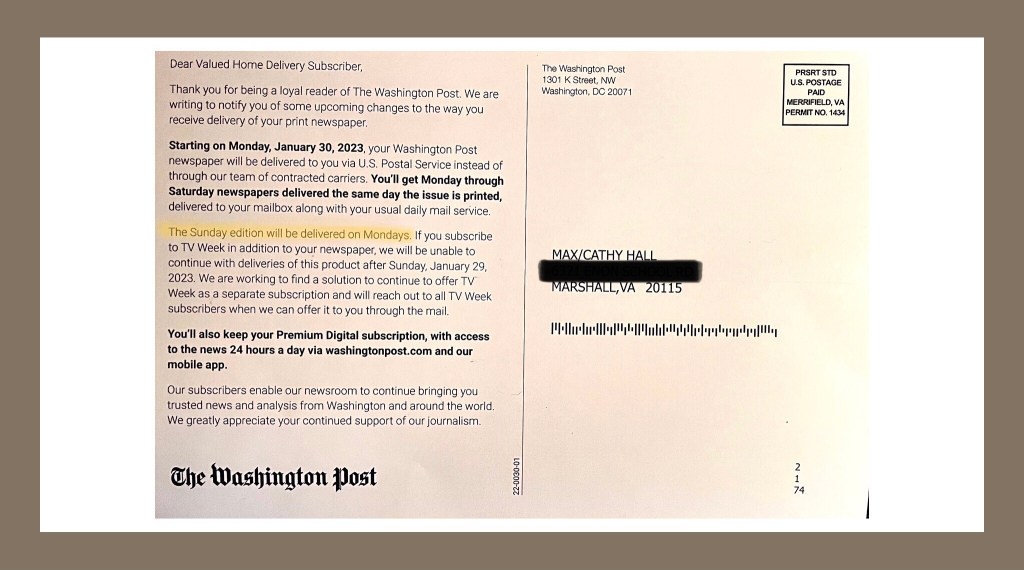
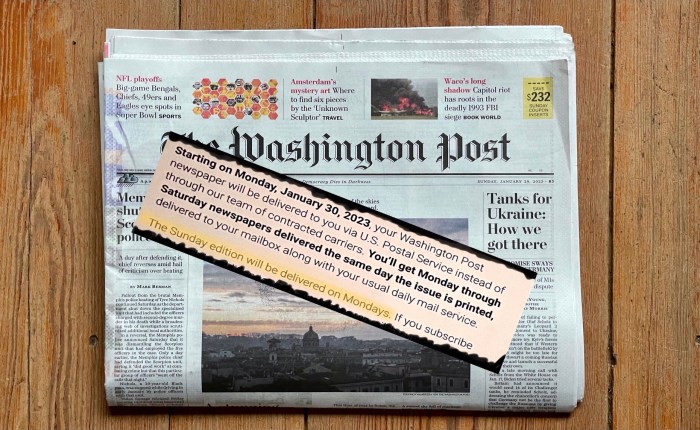
There’s a change coming to my Sundays. Starting this week and going forward, the paper copy of the Washington Post Sunday newspaper will arrive on … wait for it … Monday. Yep, it’s the end of an era for many of us here in rural Fauquier County.

I’ve always read newspapers. Growing up at home, it was the Ottawa Daily Times, and on Sundays, both the Chicago Tribune and Sun Times. At West Point, it was the New York Times (Plebes delivered hard copies to every cadet room). When we lived in Germany in the ‘80s, in addition to the Stars and Stripes, I would buy the International Herald Tribune, at the local book store or snack bar. At the time, The Tribune was a joint publishing effort between the New York Times and the Washington Post. It was a great paper and provided in depth coverage of events in the States and around the world. When Cathy and I returned to the DC area in ‘89, we began our subscription to the Washington Post and have read it ever since – thirty-four years of delivery.

At the time of course, the subscription was only hard copy and delivered daily. In 1999, when we moved to our farm in Fauquier County, our subscription moved with us. During the week, when I left for work around 5:30AM, the paper was already delivered to our home, and I’d pick it up and take it with me.

Home Delivery of the Post for Thirty Four Years

Ahhh, but Sundays were different. After getting up and starting a pot of coffee, I’d dutifully walk up the drive and retrieve the Post from the receptacle next to the mailbox. Big and fat, the Sunday edition was meant for leisurely exploration. I’d always start with the sports section, then move on to the front page. After that, Outlook (the opinion section), Art&Style, Business, Metro, Bookworld, the Comics and finally the Sunday magazine*. It was a great way to while away a couple of hours.

Times change of course. Digital subscriptions started and were included with our home subscription. I found digital great for looking at headlines, along with the updates and alerts that were posted throughout the day. Having said that, I still loved getting ink on my fingers and reading the hardcopy. Some of my younger friends laughed at me and basically told me I needed to get with the times. I’d always argue back about the corollary reading the hardcopy provided – you started reading a front page article which continued on page A15, and on page A15, you would see one or two other smaller articles that you never would have found if just reading digitally.

Then Covid hit, and as with so many things during that time, other changes happened. Remember early on, when folks still weren’t sure how it spread? Wiping down groceries before you brought them into the house? Everyone buying Clorox wipes, or other antiseptics? At the time, we’d let the hardcopy sit in the garage for a day or two before bringing it into the house. Yea, I know it all sounds foolish now, but everyone was concerned (or at least we were).

I started reading a lot more articles online, not just the headlines. “Corollary reading” was lost, but it didn’t seem so important during Covid. Eventually, we canceled our daily subscription – it wasn’t worth it anymore. We did decide to keep the Sunday hardcopy, along with the digital. I still enjoyed working my way through the Sunday paper – it was a form of leisure in it’s own right.

Two weeks ago, our friend Colleen who also lives in Fauquier, posted on FB that she received an email notice that on January 30th, the Post was going to start using the Postal Service to deliver the newspaper. Soooooo, your daily morning paper would now come sometime later in the day, and the Sunday paper would arrive on Mondays. What the heck?!

The Email Colleen Received

Shortly after, we received the same email and a post card via mail. We were on the hit list as well. And just like that, the world changed.

Our Post Card From the Washington Post

We are retired, so we have the time to read the Sunday edition on Monday, but it won’t be the same. For our working friends who subscribe, it actually becomes somewhat untenable. A few of their (printable) comments are here:

  • I MUCH prefer reading print over any form of electronic distrubtion, and this totaly blows my VERY long-standing Sunday routine out of the water.
  • My Sundays will never be the same… Walk the dog, make my coffee, and start reading. Now it will be walk the dog, get in the car and drive to the Exxon station, then…
  • I will miss my daily morning paper. Cut it back to digital. So sad. 😞
  • I emailed and spoke with them yesterday within minutes of having received my notice …

Of course it’s all about economics, and I understand. Home delivery is no longer feasible in rural counties such as ours. With people moving to digital, hardcopy deliveries have dropped in general and for places like Fauquier, there is too much driving for the carriers, increasing their time and cost. It’s an uncorrectable downward spiral.

I called the Post to cancel my Sunday hardcopy, although I planned on retaining the digital subscription. It turns out the cost for Sunday hard copy and digital is virtually the same as just receiving the digital subscription, and so for now, I’m keeping them both. We’ll see what happens in the near term, but my guess is on Mondays, the physical newspaper will go straight from delivery to recycling, and in a month or so, I’ll cancel the hard copy. In the meantime, the nice man I spoke to on the phone promised to convey my complaint and concern to “management”.

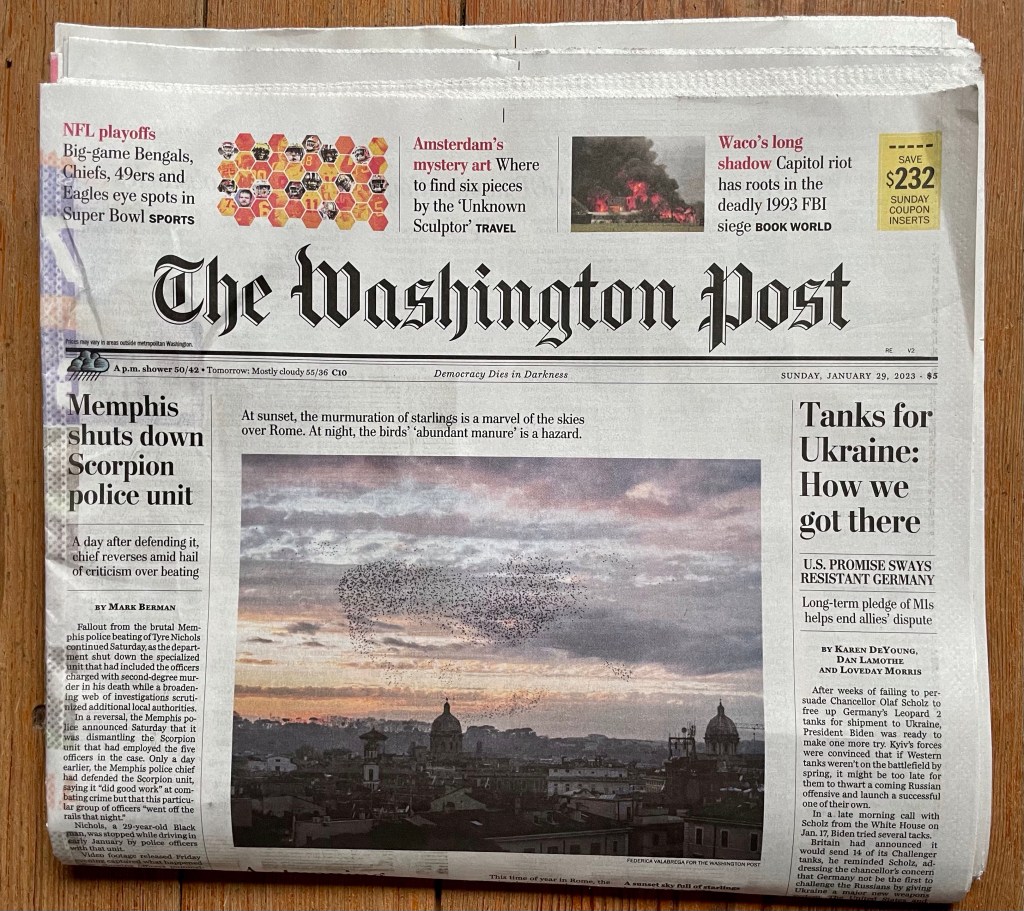
Our Last Copy of the Sunday WaPo that Actually Arrived on a Sunday.

Last week, I received a similar notice from the New York Times. We also receive their Sunday paper hardcopy and have a digital subscription. I’m probably going to cut their Sunday paper soon as well.

That will leave us with digital copies of The Post, the New York Times and the Wall Street Journal, good papers all. I appreciate the daily headlines, their alerts throughout the day and the links I have to any number of special features. Still, I know my world will grow just a little smaller and a little less broad without newspaper ink rubbing off on my fingers.

Addendum:

  • I didn’t touch on it here, but the demise of print newspapers, and local newspapers in general is a real thing, and an unfortunate one. Between 2004 and 2022, over 2,500 local papers have ceased operation, including over 360 that have disappeared just since the start of the pandemic. We are all a little poorer for their disappearance.
  • * There have been changes to the Sunday WaPo over the years. Book World disappeared and later reappeared. Outlook (The Opinion section) moved from a separate section to just a few pages at the end of the main section. And, just before Christmas last year, the Sunday Magazine disappeared all together.

A Plebe Christmas

A Plebe Christmas

I distinctly remember returning to West Point after Christmas my Plebe year. It wasn’t fun. As a matter of fact, the last couple of days at home became bittersweet as I started thinking about returning to West Point as a Beanhead* for another five months.

It wasn’t just returning to the Plebe System (Fourth Class System) that affected me. We had first semester finals two weeks after returning. Also, have you ever visited West Point in winter? In the Fall, West Point is one of the most beautiful places in the country. In the winter? Not so much, unless you have a fondness for the color grey. January to March at West Point is called “Gloom Period”**, with good reason.

If I’m honest with myself, it wasn’t Gloom Period, or finals that brought me down. It was going back as a Plebe for another five months. Before you enter the Academy, you hear all about how tough Plebe year is both mentally and physically. It’s one thing to hear about it. It’s another to experience it for six months, have a break, and then know you are going back for more of the same.

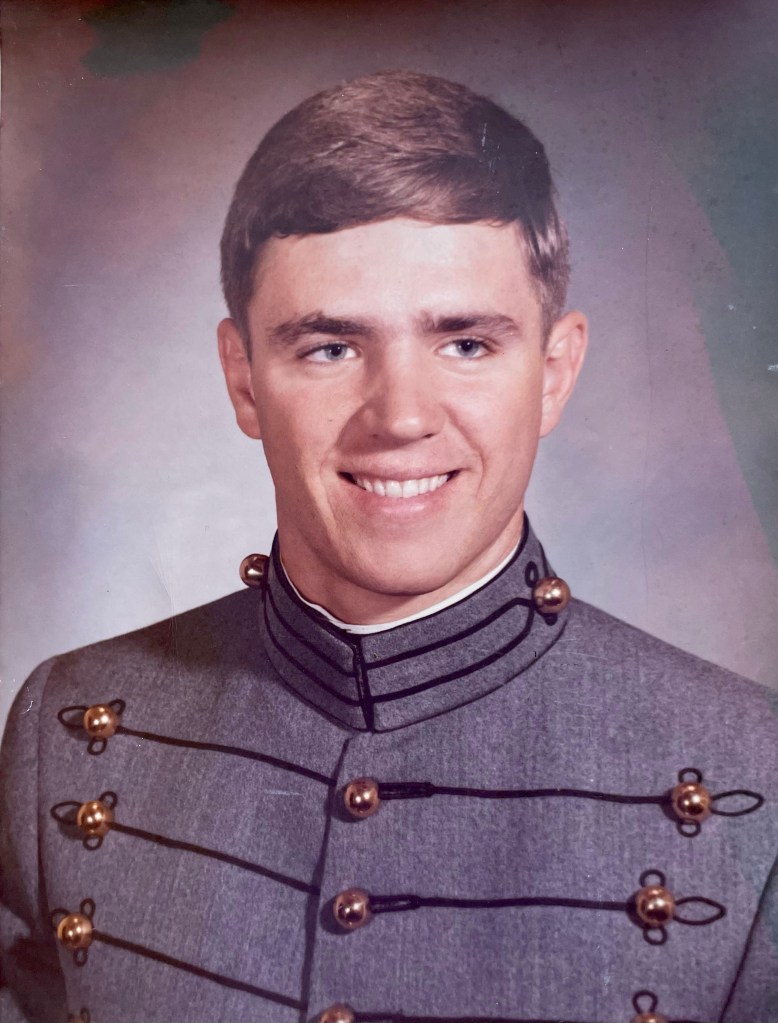
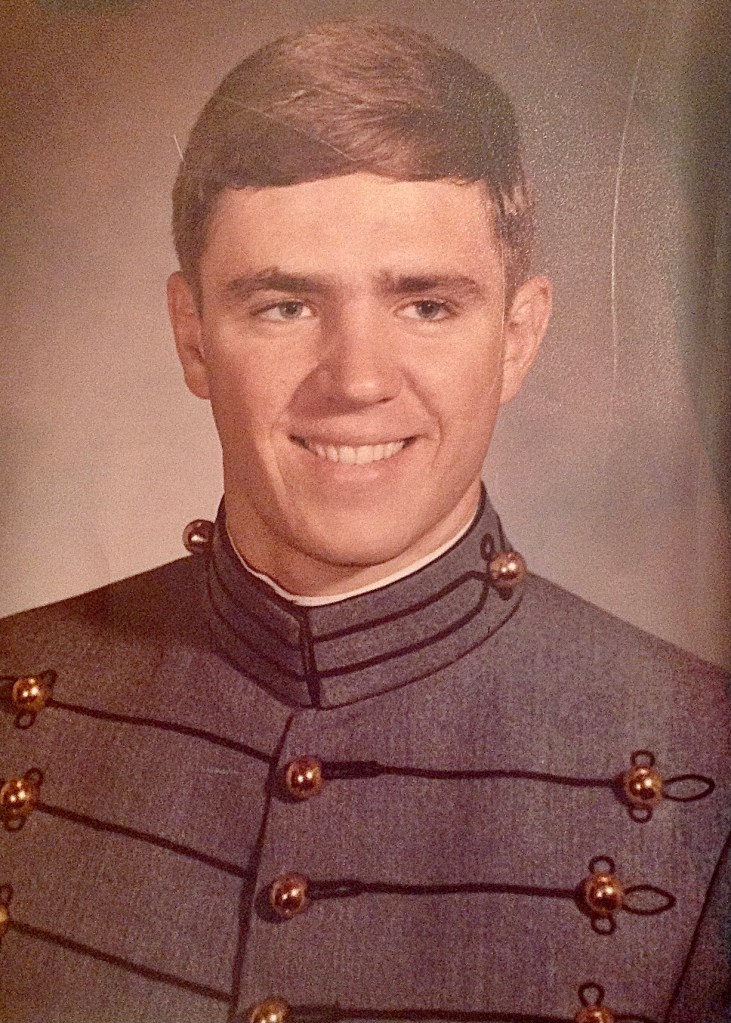
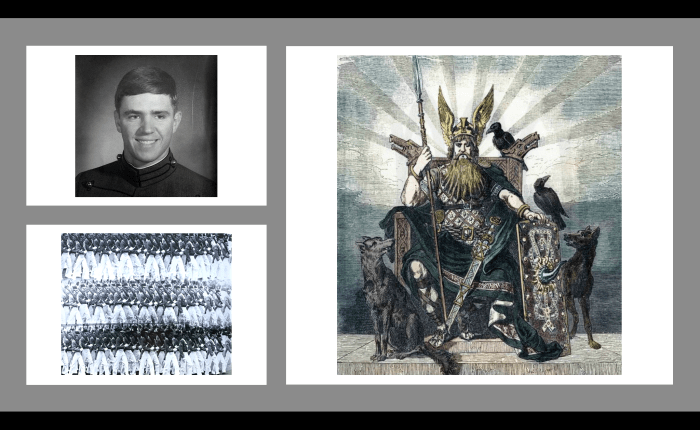
Official Plebe Photo

Coming home to Ottawa that December, Christmas break was great. Being a real person again was even better. Everyone wanted to know how West Point was, and of course I told them the good stuff, while minimizing the actuality of Plebe life. The time at home divided out between family events, dates with Cathy and partying with my friends.

During the day, I spent time at home, or went to see Grandma, various aunts and uncles, and church or family friends. I remember racing around town fitting in as many visits as I could. It was good to catch up with so many people, but also a bit exhausting.

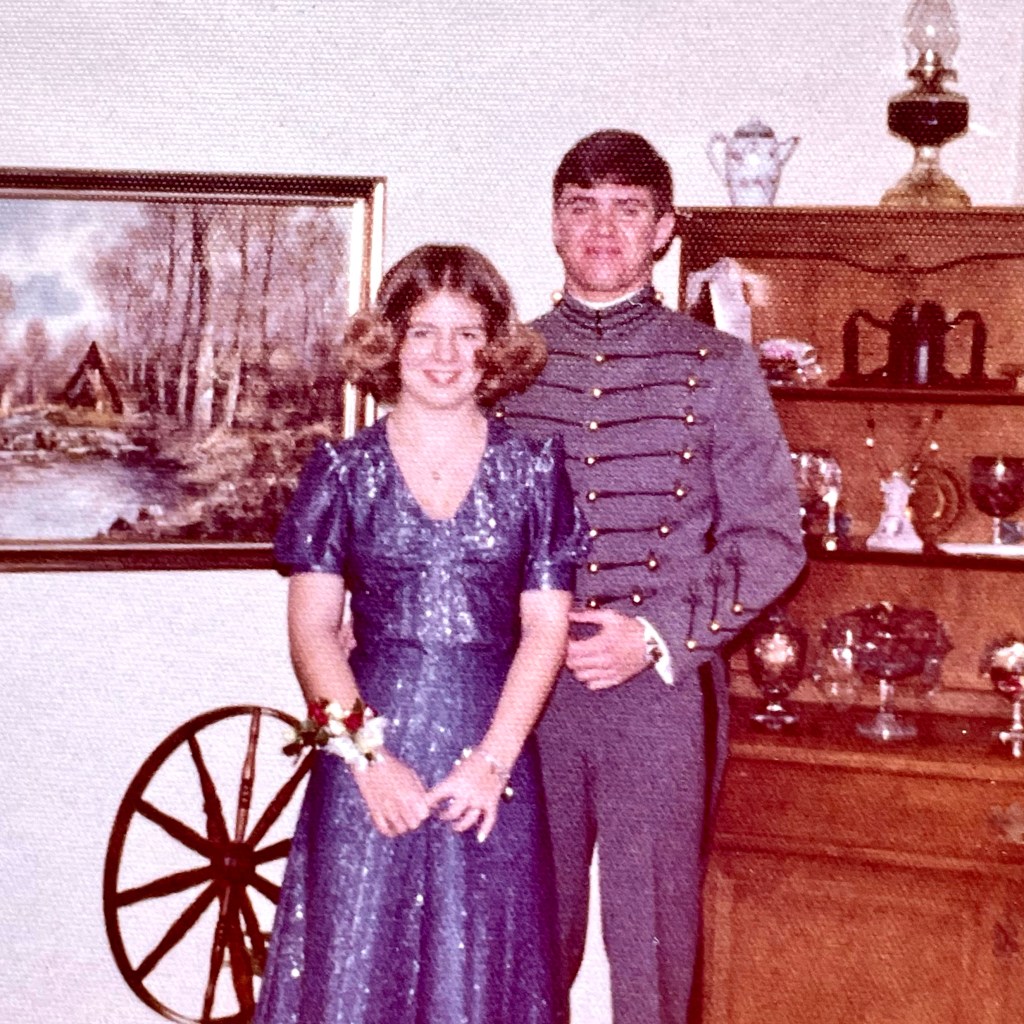
Cath and I went on dates most evenings and tried to make up for lost time. The last we’d seen each other was Labor Day Weekend, when she visited West Point with my folks. In the interim, we’d written so many letters back and forth, I lost count of the actual number. While home, there was even a formal holiday dance at Ottawa High (Cathy was still a senior in high school). I wore my dress uniform, and felt so much older than the high school “kids”, who in reality were only one or two years younger.

At Home Before Going to the OHS Winter Formal

Since she was still in school, Cathy had a curfew most nights. After our dates ended, I often linked up with my buddies Howard, Tim, Mark and others. The drinking age in Illinois was 19 at the time for beer and wine, but nobody really checked. We made the rounds at Berta’s, The Flamingo and Russell’s Tap before finally making it to bed. The next morning I’d wake up and start the cycle all over again. As I recall, sleeping in wasn’t an option.

I’d taken a couple of text books home with me to study over break, but of course I never cracked them. The days and nights raced by.

Finally it was New Year’s Eve and just a couple days before I would return to West Point. I remember going to a party with Cathy at our friend Jack’s home that night. Many of our friends were there. It was a great time, and as the clock struck midnight, there were kisses, handshakes and toasts all around. It was wonderful and things seemed almost perfect.

Maybe an hour later, it hit me. This was all going to end and I would return to the reality of Plebe life. The exhilaration from midnight rapidly disappeared. I crashed and a forlorn feeling took over. I found a quiet spot in an empty room and just sat there thinking. The dread I felt was visceral. Cathy found me a few minutes later and could tell something was wrong. She asked if I was OK and I struggled with words, then just gave up trying to explain. The thing is, she felt it too. We stood there hugging for I don’t know how long.

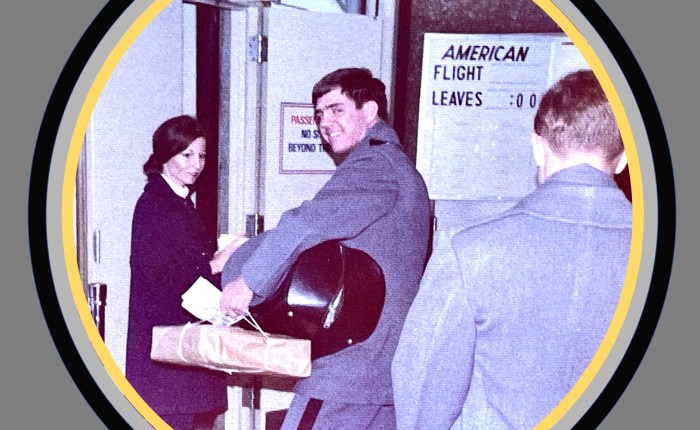
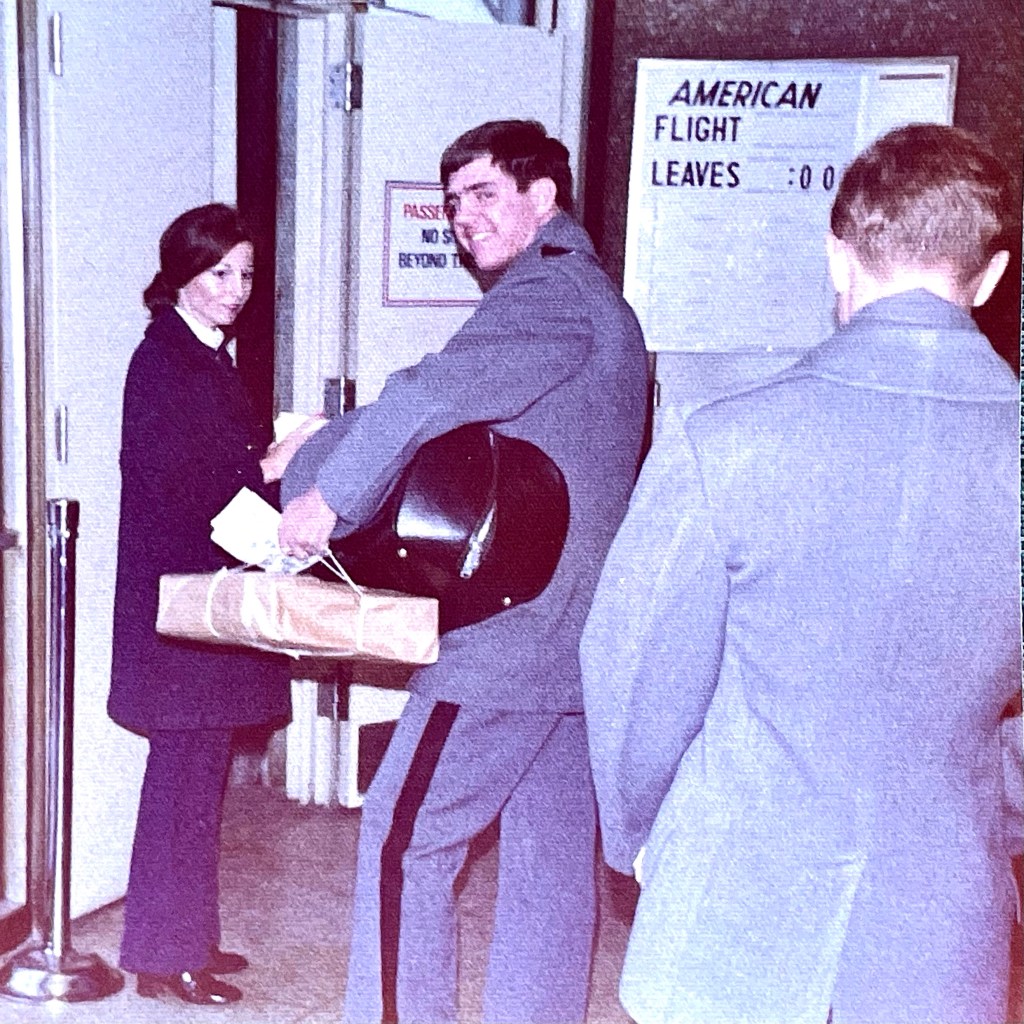
I more-or-less bounced back the next day and enjoyed my last day or two of freedom. Finally, it was time. As a Plebe, I think I was required to travel in uniform, and when Mom, Dad and Cathy drove me to O’Hare, that’s what I wore. Back then everyone could walk all the way to the gate, and that’s where we said our final goodbyes and “I love you’s”. Mom gave me a care package and with a last wave and a smile, I boarded the plane for New York.

A Smile for Mom, Dad and Cathy as I Boarded the Plane to New York.

At the airport in New York (LaGuardia I think), cadets were everywhere. Most of us made our way to buses for the final fifty miles to our Rock Bound Highland Home on the Hudson. The bus I was on was pretty quiet, with Plebes and upperclassmen alike lost in their own thoughts. By now, I’d steeled my mind for the return to school and Plebe life. I was as ready as I was going to be.

And of course it wasn’t as bad as things looked on New Year’s Eve. I made the Dean’s list that first semester, and by late March or early April, Gloom Period was lifting. As for dealing with upperclassmen and the 4th Class System, that too passed. As the Semester wore on, things became easier and and finally, in June, Recognition Day happened. We were no longer Plebes, but full fledged members of the Corps of Cadets.

To this day, I remember that New Year’s Eve and the roller coaster of emotions I felt. Speaking with Cathy, she too distinctly remembers that night. I recently told her I thought I’d write a blog about New Year’s Eve Plebe year. She immediately knew what I was talking about. I laughed a bit and said something like “I didn’t know you remembered”. She quickly answered “How could I forget?”

Addendum:

  • *Beanhead – one of the many less flattering terms upperclassman used for Plebes at the time.
  • ** Gloom Period – If you want to read more about Gloom Period, you can do so here: https://mnhallblog.wordpress.com/2018/01/21/gloom-period/
  • I’ve often thought of that New Year’s Eve over the years and the feelings I experienced that night. I’d contemplated writing a blog about it before, but couldn’t quite wrap my head around it. Then, during Christmas season this year, one of my classmates posted an email on his own feelings about the return to West Point after Christmas. Several others chimed in. Some were worried about academics and getting separated due to grades. Others, like me, thought about the return to the 4th Class System for several more months. Still others talked of the general malaise around our return, with Gloom Period settling in. A few told (now) funny stories about missing flights, late arriving girl friends, and even running into the Dallas Cowboy Cheerleaders during a stopover on the return to the Academy. It’s interesting what binds people together. My classmates and I laugh and now tell stories of those times that seemed so serious back then. Time and distance have brought perspective and a camaraderie that has lasted a lifetime. I feel lucky to be a member of the Proud and Great Class of ‘78. Thanks for the memories, and the continued friendship my brothers.

Making Choices

Making Choices

It’s been a busy couple of weeks for our former president. It’s not every month you get to announce your candidacy for the presidency, have dinner with a couple of racist Hitler fans, and declare the Constitution should be terminated. That’s a full month, even by Trump standards.

I don’t know anyone who was surprised when Trump announced he was going to run for the presidency in 2024. It was all his handlers could do to have him wait until after the midterms to announce. He was expecting a big splash from the midterms themselves, but most of his election denier choices went quietly into the night. Yea, Vance won in Ohio, and Lake is still whining like a mini-Trump in Arizona, but the rest of them? B’bye. None of it slowed down his big announcement though. It was almost as if he was oblivious to anything else happening. And the rest of the Republicans? Perhaps Senator Rubio said it best: “We should not have a Senate GOP leadership vote until we have a clear explanation for why our 2022 campaign efforts failed…”. Ummmm, Senator, I could help you with that…

Of course Mr Trump didn’t slow down. As a matter of fact, in typical fashion, he accelerated. Are any of us surprised he ate dinner with Ye (the former Kanye West) and white nationalist Nick Fuentes? Nothing quite says “there are good people on both sides” like having dinner with a couple of Hitler loving antisemites. It’s never a good sign when Alex Jones is distancing himself from some of your dinner guest’s comments, as Jones later did during his interview with Ye. The Republican response to all of this? Again deafening silence. Senator McConnell managed to say “Let me just say that there is no room in the Republican Party for antisemitism or white supremacy. And anyone meeting with people advocating that point of view, in my judgment, are highly unlikely to ever be elected president of the United States.” The brave Senator couldn’t bring himself to utter the “T” word.

Ye and Fuentes… “I See Good Things About Hitler”

Which of course brings us to Mr Trump’s most recent episode. His blast on the Truth Social network was … interesting. He called for “the termination of all rules, regulations, and articles, even those found in the Constitution,” because he lost the last election for president. He wants to be declared the “RIGHTFUL WINNER,” or “have a NEW ELECTION.” (All CAPS are directly from the Trump quote) Wow. Wanting to terminate the Constitution finally drew some rebuttals from the right, but not from everyone.

Just as the events of Charlottesville, or January 6th, or his continuing election denial caused some people to leave the Trump orbit, another dribble of people are departing after the Ye/Fuentes dinner and the subsequent “termination of the Constitution” comments. The vast majority of his core? Like a married couple, they are there through thick and thin, for better or worse. There will be no divorce. They will follow him to the bitter end, however that turns out.

I’m not really sure why I wrote this blog. It’s not going to change any minds. Having said that, I think we all have a duty to bear witness to what is going on in this country. If we don’t continue to speak out, the future becomes a foregone conclusion. As Edmund Burke (or maybe someone else) famously said “The only thing necessary for the triumph of evil is for good men to do nothing.”
I have a couple of last questions for you. First, if Joe Biden declared he wanted to terminate the Second Amendment, what would the immediate reaction be? And second, does anyone doubt Trump would terminate the Constitution in a heartbeat if he could?

Finally, those of us who served in the military or the government swore an oath that started with these phrases: “I do solemnly swear (or affirm) that I will support and defend the Constitution of the United States against all enemies, foreign and domestic; that I will bear true faith and allegiance to the same;”. For my West Point and former military comrades who still support Mr. Trump, I guess we are finally at that point. Which do you support – Mr Trump, or the Constitution?

**Feel free to share this blog**

In-A-Gadda-Da-Vida

In-A-Gadda-Da-Vida

I was in Warrenton between stops at the dry cleaners and the UPS store when Iron Butterfly’s “In-A-Gadda-Da-Vida” came on the radio. Talk about flashbacks. I don’t think I’d heard it in decades. When I came out of the UPS store several minutes later, it was still playing and my mind drifted back to Plebe year at West Point.

As Plebes (Freshmen), we weren’t allowed to have stereo equipment in our rooms during the first semester. I suppose some sort of depravation challenge for us. Second semester, the restriction was lifted, and many of us went to the Cadet Store to dutifully buy audio equipment of varying quality.

Me, as a Plebe at West Point

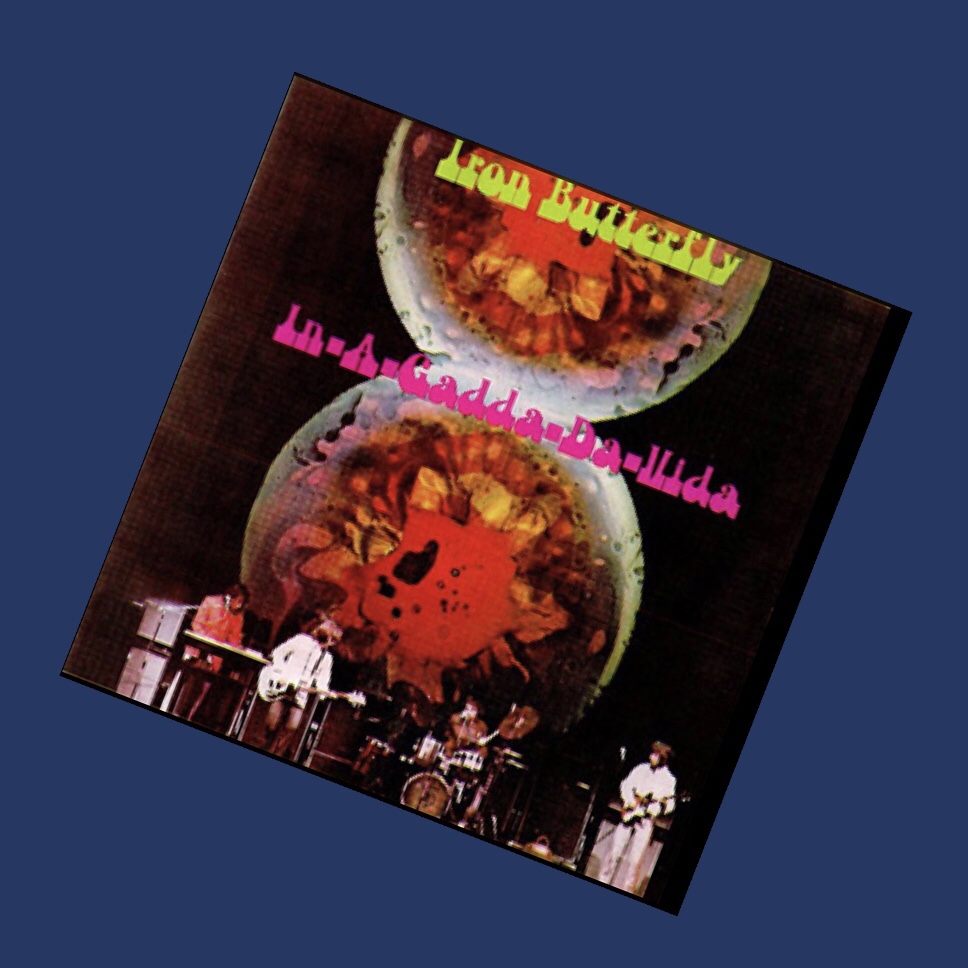
Of course I started buying albums of various types as well. Sometime in the middle of the semester, a friend dropped by and said something like “Have you listened to Iron Butterfly’s In-A-Gadda-Da-Vida?” Now the album was actually released in 1968. Not only had I never heard it, I’d never heard of it. I looked at the album and said “Hey, there’s only one song on this side.” My friend looked at me like I was stupid, and put the album on the turntable.

Full On 1968…

I was blown away. Seventeen minutes for one song. It went on and on and on. The lyrics were simple and repeated. And then somewhere in the middle is that incredible drum solo. I was hooked and bought a copy. For the next month, I hardly played anything else.

The Lyrics were … Simple … and Repeated Over and Over

Eventually, my infatuation faded a bit and it moved into a normal musical rotation. By Firstie (Senior) year, it moved to the back of the albums and was rarely played.

….

Back in my car, the drum solo was pounding and I cranked the volume. I was lost somewhere between nostalgia and thinking to myself “Hmmm, this is still pretty good.”

The drum solo eventually finished, and so too did the song about half way home. When I arrived at our house, I looked through my old albums for Iron Butterfly. It wasn’t there. Somewhere along the way, it evidently didn’t make the cut for our next move. Or maybe someone borrowed it and it never came home.

I know in today’s world, I can call it up online and listen to it anytime I want, and now that I’ve remembered it, maybe I will. Or I could pay Apple and downline the single. I don’t know that I’ll do either, but yesterday was a pretty cool drive home and I enjoyed the trip back in time.

Addendum:

In-A-Gadda-Da-Vida actually started as “In the Garden of Eden” and a reference to Adam and Eve. When one of the band members first wrote down the words from a band mate’s recording that was slurred (due to alcohol consumption), In a gadda da vida is what he heard, and what was written down. The rest is rock history.

Here are two YouTube videos of the song. First one contains a video of the band (very blurry and very ‘60s). Second one is just the album cover, but I think the audio is better.

Classified Claptrap

Classified Claptrap

I have held various security clearances for decades in the past. I spent years working in a Special Compartmented Information Facility (SCIF), both in the military, and as a civilian. I’m not here to judge, but I’d probably be in jail if I’d done what our former President did.

One of the things we learned about classified information early on is that in order to access classified documents, or programs, there are actually two requirements. First, you need the security clearance level required for that information. Second, you must have a “need to know” the information. That is, holding a TOP SECRET* (TS) clearance isn’t a sufficient reason to see a TS document. You also must have a specific need to see the particular information.

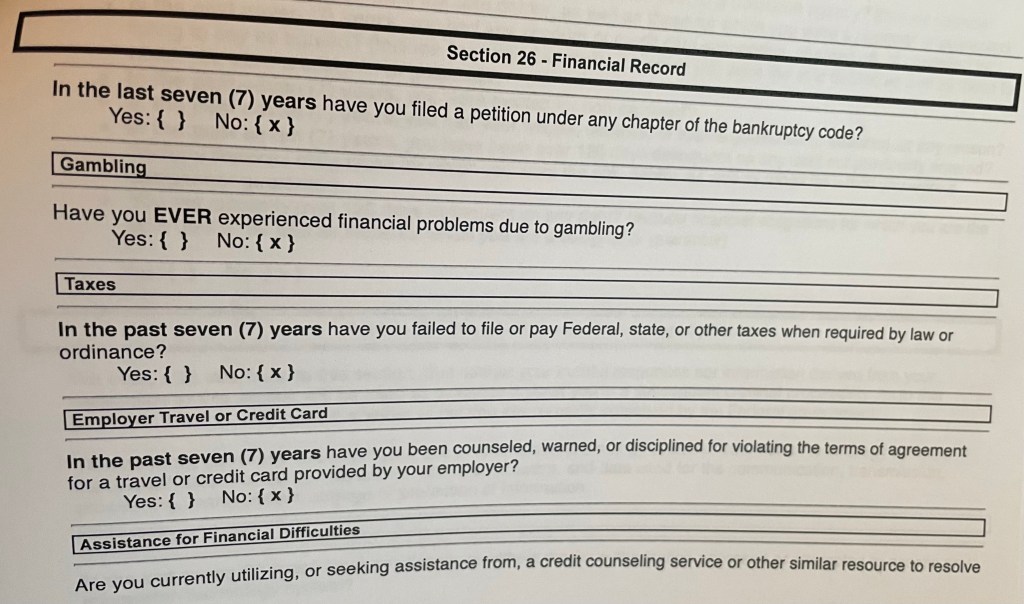
I obtained my first clearance, SECRET, while still at West Point in the seventies. They don’t just give you a SECRET clearance, or any clearance for that matter. You fill out a form answering several pages of questions, they do a background check, interview family and friends and determine whether you are “trustworthy”. The process takes a while. For most folk, unless you have done hard drugs, committed a crime, declared bankruptcy, or declared hostility to the United States, it isn’t too hard to receive a SECRET clearance.

Bankruptcy is One of the Reasons you Can be denied a Clearance.

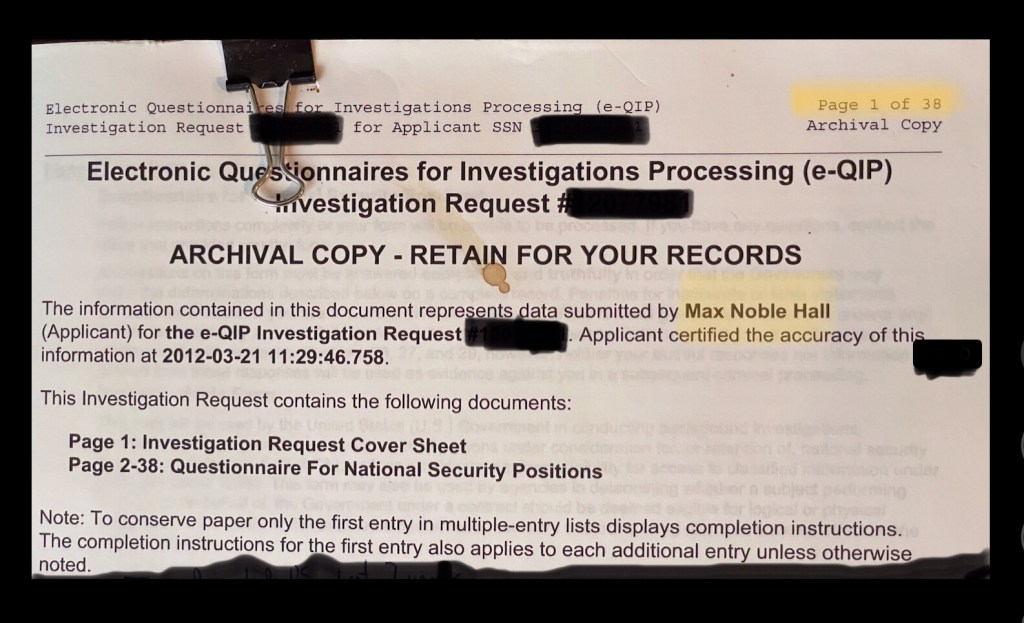
In 1989, we returned from an assignment in Germany to the States and I transferred to a job in the DC area. For that work, I underwent a Special Background Investigation (SBI) in order to receive a TS/SCI/SI/TK (TOP SECRET, Special Compartmented Information, Special Intelligence, Talent Keyhole, clearance). These are a wee bit harder to obtain. Actually, a lot harder. It took months and months for the investigations to take place and for the government to grant my clearance (today, it’s not unusual for the process to take nearly a year). I provided information on where I’d lived over the course of my life, background about my jobs and employers, info on family members and friends, and several references. I documented all overseas travel. I documented any communications I had with East Bloc or communist personnel. In addition to verifying the information I provided, and talking with my references, the government also interviewed neighbors, former bosses, coworkers and family members. They physically went to my prior homes, talked with neighbors and asked about my habits. It’s an intensive and invasive process. When I finally received my clearance, I was also eventually “read in” to a couple of highly classified Special Access Programs (SAPs) further restricting who could access the information.

My TS Renewal in 2012 – All 38 Pages of It.

Everything we did in support of those SAPs was done in a SCIF. To access the SCIF, in addition to the combination lock, there was a retina reader at the outside door, and it was only after your eye was scanned that the door would unlock. Our particular SCIF also required two person access. That is, a person was not allowed in the facility by him or herself. There was a requirement for at least two people to occupy the SCIF, whenever it was opened. This was to prevent someone taking unauthorized information or files out of the SCIF.

The SCIF had intrusion detection systems, and needed to meet a host of other requirements effecting communication systems, the size of duct work and special wiring and HVAC requirements. Cell phones, or any other personal electronic devices weren’t allowed in the SCIF. Inside the facility, all of our classified information was stored in safes which met certain requirements. When you opened the safe, you initialed a form that you opened the safe, and what day and time it was. At the end of the day, when you returned the classified documents to the safe, after locking the safe, you again initialed the form, provided the time you locked it, and the date and time were then verified by a second person.

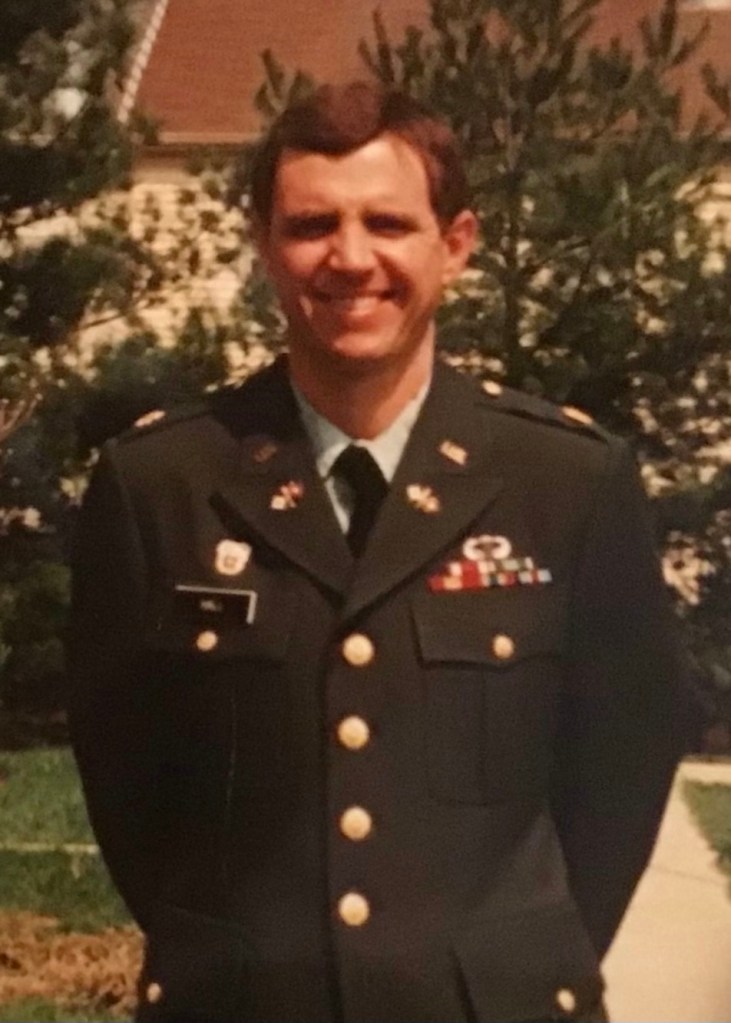
This is me, During the Time I was Working in my First SCIF

If you ever transported classified information outside the SCIF to another location, you needed a special permit. The classified info was double wrapped. You followed a schedule in delivering the information, including the expected arrival time. If there were schedule variances, you notified the authorities.

When I left those SAPs several years later, I was sworn to secrecy, and signed papers indicating I wouldn’t reveal anything about those programs for seventy years.

Honestly, it was all a pain in the ass. BUT, we all understood why it was required, and so we complied without complaining. We understood the security of the nation could be put at risk if there were security compromises, whether intentional or not.

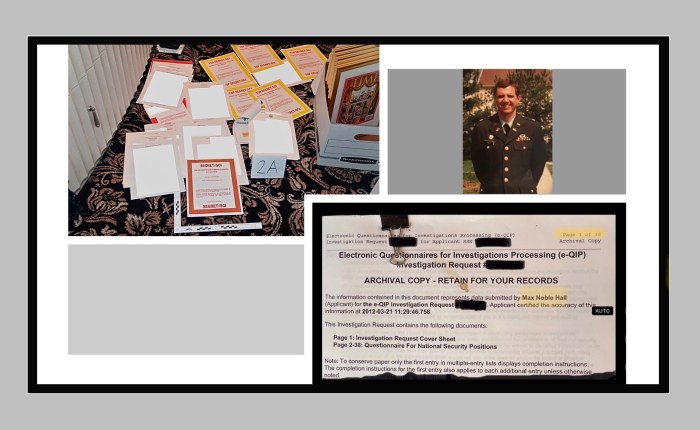
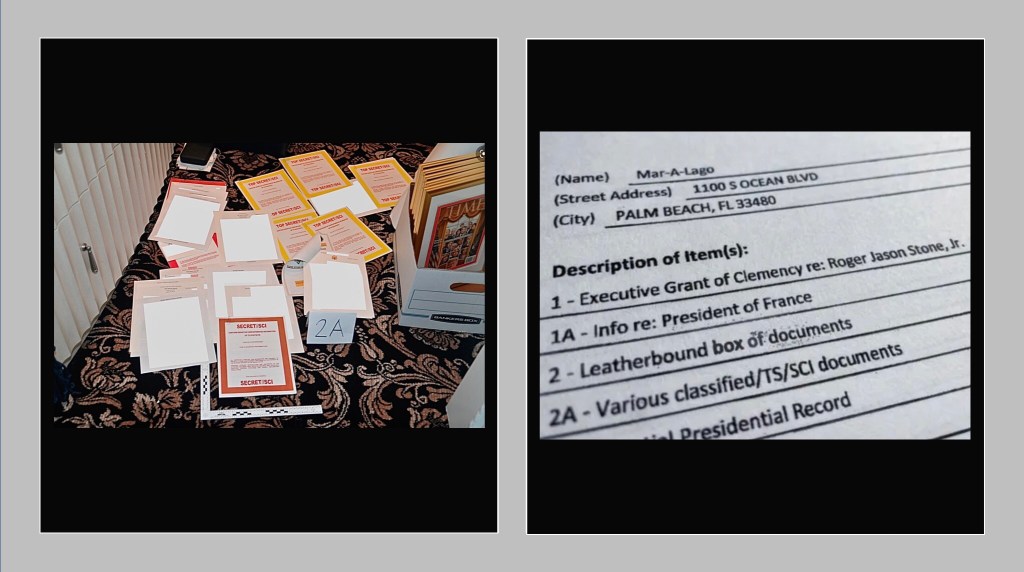
I don’t know what is in the material the former President took to Florida. I also don’t know what he intended to do with it. I doubt we ever will. Based on the covers and documents shown in the now world famous photo, there was TS/SCI material, SECRET/SCI material and other classified information. There were empty SCI folders, with the info, perhaps, stored elsewhere. None of this was stored in a SCIF. As the President was now the former President, there was no longer a “need to know”. The information should not have been at Mar-a-Lago.

Just. Totally. Unbelievable.

Was this a politically motivated search? I don’t know, but given the material found, it’s a moot point. The search was justified. What he did was wrong. Are there always two standards for everything – one for the former President, and one for everyone else? Why do citizens continue to listen to his claptrap**?

Here are some things I do know:

  • The government held constant dialogs with the former President, his staff, and his lawyers about returning the missing information for over a year, as required by the the Presidential Records Act (enacted after the criminal Nixon tried to destroy documents in 1974).
  • The former President’s lawyers apparently lied when they swore in June there was no more classified information stored in Florida.
  • In 2005, former National Security Advisor, Sandy Berger, was convicted of removing, and then destroying five classified documents from the National Archives. He received a $50,000 fine, two years of probation and 100 hours of community service.
  • In 2015, General Petraeus was convicted for mishandling classified information with his lover. He received a $100,000 fine and two years of probation.
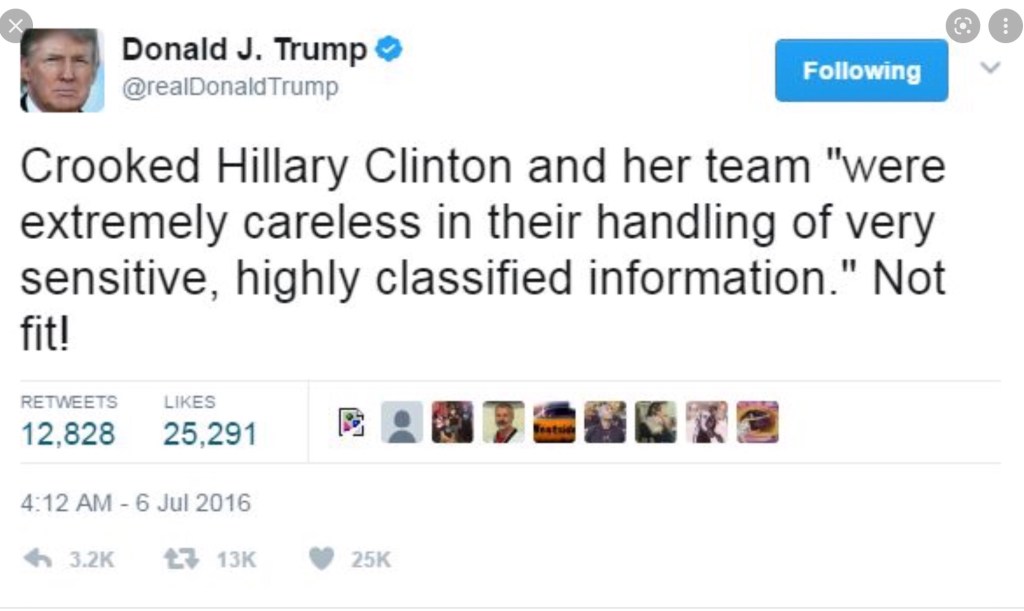
  • When Hilary Clinton was investigated for her server, people were calling for her prosecution and spoke of how she was unfit for office. Many of those same people are now saying what the former President has done is no big deal, and he can do what he wants.
With the former President, there are Always Two Sets of Standards. Always.

The final thing I know is that If I had done anything remotely close to this, I would have been dishonorably discharged if in the military, fired if a civilian, received a huge fine, and very possibly gone to jail. My public life would have been over.

Of course, unlike some people, I couldn’t shoot someone in the middle of 5th Avenue and get away with it either.

Addendum:

  • One of the reasons I published this blog is I became aware that many people have no idea what is required to get a clearance, or what is required for the correct handling of classified information. I thought it might be useful for folk to actually understand why this is a big deal, if you work with classified documents. Feel free to share the blog with others.
  • *TOP SECRET material is defines as something “that would cause exceptionally great damage to US national security and US persons should it reach the eyes of a foreign adversary.”
  • **Claptrap noun – absurd or nonsensical talk or ideas.
  • The Presidential Records Act was enacted in 1978 after President Nixon sought to destroy records relating to his presidential tenure upon his resignation in 1974. The law superseded the policy in effect during Nixon’s tenure that a president’s records were considered private property, making clear that presidential records are owned by the public.
  • More info on SCIFs can be found here: https://www.dni.gov/files/NCSC/documents/Regulations/ICS-705-1.pdf
  • Thanks to my good friend Morgan Johnson for reviewing this blog, providing some editing support and suggesting some additions.

Dad and a Cuppa Joe

Dad and a Cuppa Joe

Sometimes, it’s the little things we remember. With a small assist from Burt Lancaster, I once surprised Dad with a present of WWII mess hall coffee mugs he’d been trying to find in antique shops for years. The gift brought joy to both of us at the time, and continues giving me comfort to this day.

Dad always liked his coffee. From the time we were kids, I remember the role it played in his life. On early weekday mornings, he packed the big thermos with him as he left for work on the railroad. On weekends, there was a pot available all day long on Saturdays, and half the day on Sunday. On Saturday mornings, various uncles or aunts stopped by. They all sat around the kitchen table drinking endless cups of coffee, while telling, or retelling, the stories of their youth, and the war years. We kids often listened in, laughing at the stories we came to know by heart.

I started understanding a bit more about his love for coffee when I was applying to West Point. On a couple of occasions, dad drove me to Fort Sheridan (an Army Post in Illinois that no longer exists) for a physical and a fitness test. As we were walking on the Post, he surprised me by becoming a bit nostalgic for the “good old days” in the Army, and talked about how good the coffee was. I think he may have even joked with one of the folk we interfaced with about reenlisting, if he could have a cup of coffee from the Mess Hall. It’s strange, the things you remember, but I distinctly recall the conversations about Army coffee on those trips. It was about 27 years after World War II and he was 48 at the time.

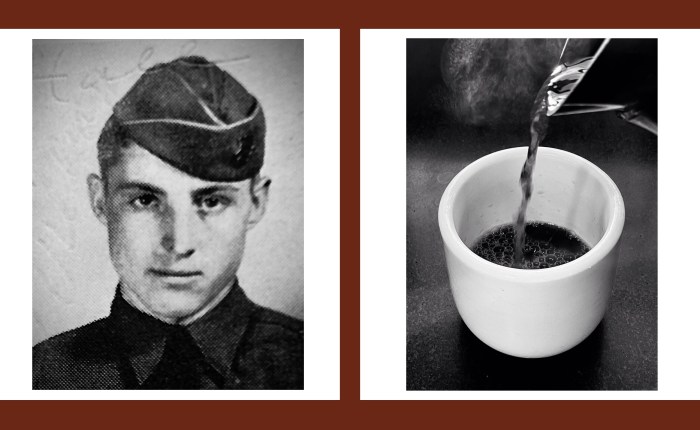
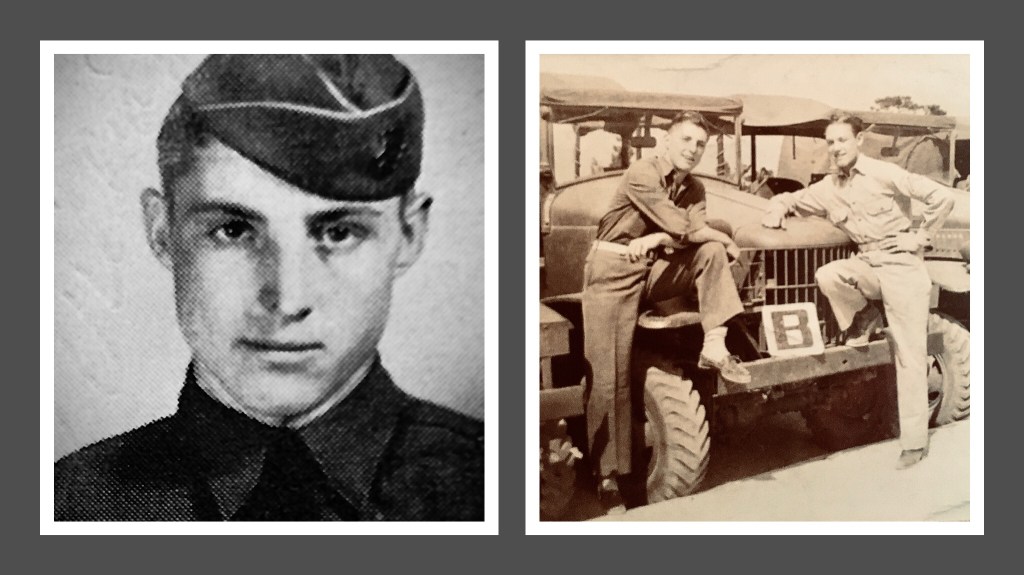
Dad in the “Good Old Days” in 1941, Sometime Before Pearl Harbor

I eventually graduated from West Point and Cath and I were deployed to Germany for most of the ‘80s. We didn’t see Mom and Dad much during our time overseas.

In ‘85, Dad retired from the railroad, and he and mom started traveling more, particularly to jazz concerts around the country. They also managed to visit us in Germany in ‘88. While there, dad talked about their travels. In a side conversation, he mentioned they also typically visited “antique” stores during their trips. He was looking for mess hall coffee mugs from WWII, but hadn’t found any. I was intrigued. What the hell do WWII mess hall coffee mugs look like, and why did he want them?

In Dad’s words, they were thick, heavy white mugs with no handle. You could put both hands around the mug when you took your first sip in the morning, and the mug warmed your hands. He’d used them throughout his time in the Army during the war. I mean, he was waxing poetic about these mugs. I still didn’t quite know what they looked like, but that was OK. During their visit, we stopped in a couple of shops with older items, and Dad would poke around. His thinking was maybe during the occupation of Germany after the war, some mugs made it into the local economy. The looking was to no avail, and no mugs were found.

Dad, Cathy and I at a Winefest on the ‘88 Trip to Germany.

We eventually returned to the States in ‘89, and on a visit at Mom and Dad’s over Christmas, Dad and I were watching TV. The classic WWII movie, From Here to Eternity, was on. You know the movie… Burt Lancaster, Montgomery Clift, Frank Sinatra, Donna Reed, Debora Kerr and Ernest Borgnine. It has the great scene with Lancaster and Kerr kissing on the beach as the waves crash over them.

As we were watching, Dad suddenly shouted out “There’s the coffee mug! Look in Burt’s hand!” What!? I look up, and I’ll be damned. Just as the Japanese are about to attack Pearl Harbor, there’s Burt with a white, thick, handleless coffee mug… which he immediately throws on the ground to go out and confront the attacking Japanese.

Everyone Knows the Scene of Burt and Deborah Kerr on the Beach, but Dad and I Were More Interested in Burt and the Coffee Mug.

I’d completely forgotten about the mugs until Dad’s outburst. Of course I immediately asked him how the hunt was going. He’d visited a lot of shops, but never seen any, or really even met anyone who knew what he was looking for.

At the time, I was involved in a couple of classified Black programs for the military and traveling a fair amount. Cathy couldn’t know where I was going, only the approximate day of my return. On the trips, we could only use cash, and no credit cards were allowed. We often had some spare time, and now that I knew how the mugs looked, I too started poking around in the occasional store.

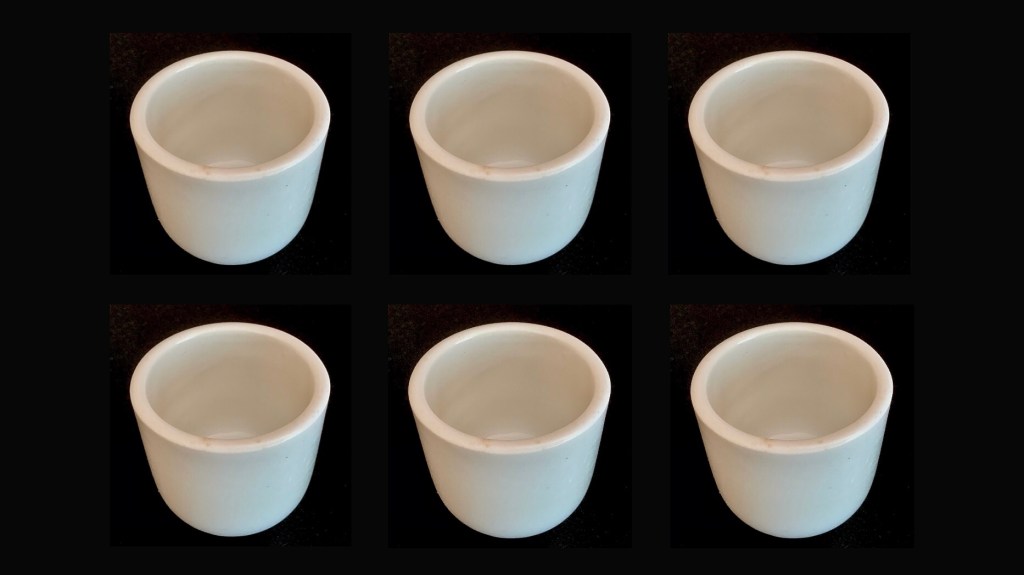
A couple of years went by, and I wasn’t having much luck either. That changed in the spring of ‘93. I was looking around a junk shop in the middle of no where, and there they were – Six of them! Holy hell. Were these really them? I asked the owner what he knew about them, which wasn’t much, only that they were old coffee mugs. It was enough for me. I counted out some cash, bought all six mugs, and returned home with them a week later.

Six Handleless Coffee Mugs, Bought with Cash at an Unnamed Location

Cathy and I thought about giving them to Dad for a Christmas or Birthday present, however those were still a while away. Mom and Dad were coming for a visit in July, and we decided we would give them to him then, with a twist. Rather than just hand them over, we would not say anything, serve soup in them, and see if Dad noticed.

They finally made it to Virginia and the big night arrived. It was a beautiful evening, and we ate dinner in the backyard on the picnic table. Cathy made Gazpacho for a first course, and we served it in the mugs. As she and I brought the soup out, we set a mug in front of each of us.

I could hardly contain myself, I was so excited. We started eating and both Mom and Dad complemented Cath on the soup. There was no word from Dad on the mugs. Were these not the right ones? We continued eating, and all of a sudden Dad paused, and started looking at his mug. He looked more intently, and then, “Say! I … I … I think these are the mess hall coffee mugs!”, at which point I burst out laughing.

Dad verified these were INDEED the mugs. By then, we were all laughing, and I told him the story of how I found them.

We used those mugs for coffee in the morning for the rest of their visit. Dad would use both hands, and bring it up to his mouth and nose to inhale the smell of the fresh brewed coffee, probably the same way he did back in 1940-‘45. When they left, I sent four of the mugs home with them, and kept two for us.

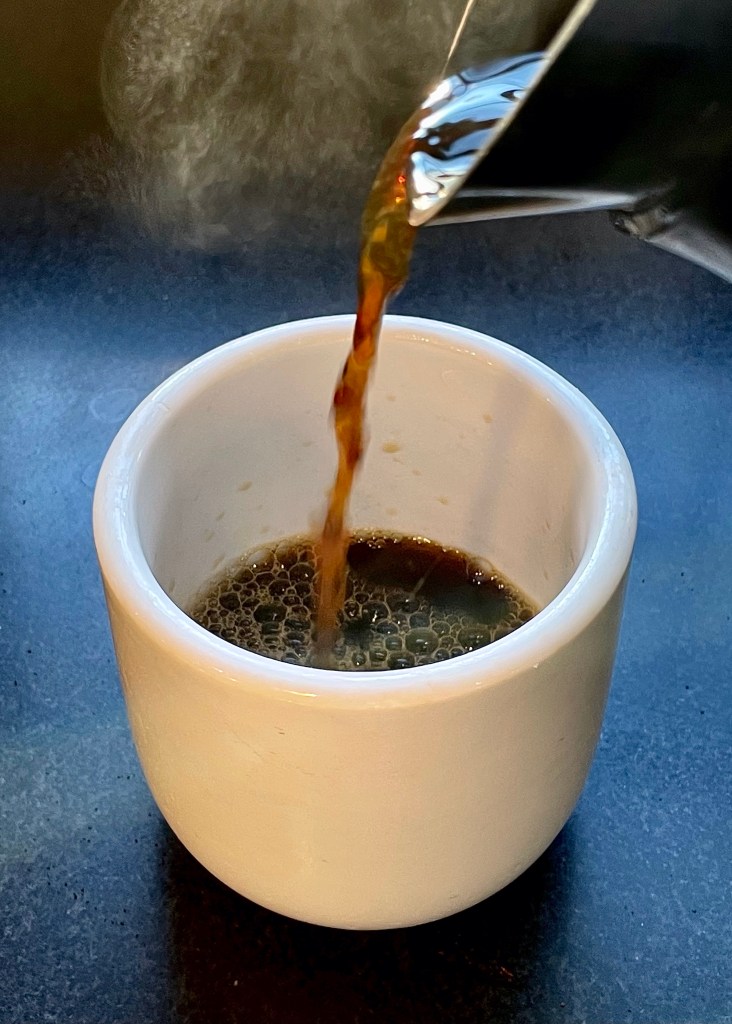
Nostalgia and Coffee. What’s Not to Like?

Eventually, Dad passed away in 2010. At some point in time, mom gave the four mugs back to us. Occasionally, I use one of them for my own Cuppa Joe in the morning. I feel the warmth of the mug in my hands, inhale the smell of the fresh brewed coffee, and think back to Dad – It’s a wonderful way to start the day.

Addendum:

If you want to see the scene of Burt Lancaster with the coffee mug as the Japanese are attacking Pearl Harbor, you can view it here: https://youtu.be/2UxTGH7cR5Y

Odin

Odin

Odin is not only the god called upon in preparation for war, he is the god of poetry, the dead and magic as well. In a little known side gig, he was also petitioned by cadets at West Point to cancel parades with thunderstorms.

One fall day Plebe Year, my company, B-3, along with our entire regiment, was standing in formation in Central Area waiting for the start of yet another weekday afternoon parade. Central Area is out of view of the general public and where we lined up in preparation for parades. While the upperclassmen were more relaxed, we plebes stood there in full dress uniform, our tar buckets on our heads, and our M14 rifles extended at parade rest. The sky was dark with clouds and foretold the possible arrival of an impending storm. Somewhere in the distance, I heard a plaintive chant starting up, but I couldn’t make out what they were saying. Suddenly, it grew louder, closer and more distinct –

OOOOOOOO-DIIIN… OOOOOOOO-DIIIN… OOOOOOOO-DIIIN…

One of our upperclassmen called out – “Beanheads! Take up the chant!!” (Beanhead was one of the less flattering terms the upperclassmen would call us Plebes)

What?!

“Beanheads!! Take up the call to ODIN. Let’s see if we can get this parade canceled!”

The thirty or so of us Plebes in B-3 quickly joined the cacophony.

OOOOOOOO-DIIIN… OOOOOOOO-DIIIN… OOOOOOOO-DIIIN…

Soon, all 300 or so Plebes in the regiment were chanting. I have no idea what it sounded like to anyone in the bleachers on the parade ground itself, but they had to have heard us. We were LOUD and unrelenting. Always the same pace, always the same mournful sound, we continued…

OOOOOOOO-DIIIN… OOOOOOOO-DIIIN… OOOOOOOO-DIIIN…

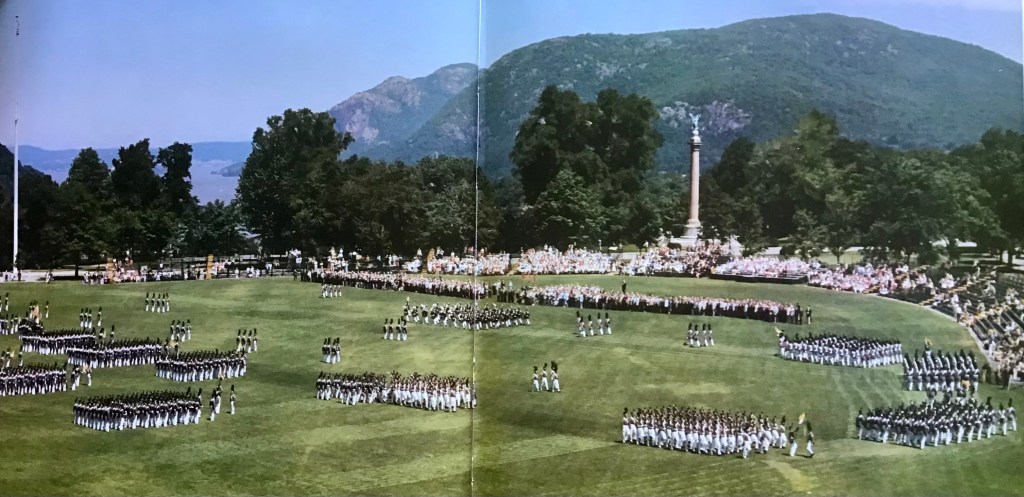
Parades… I never knew anyone at West Point, or in the military for that matter, who actually liked taking part in a parade. The public may enjoy watching them, but the participants? The cadets or soldiers who actually march in the parade? I don’t recall anyone ever saying to me “Wow Max, I am so looking forward to cleaning my weapon, dressing up in uniform, standing around in the hot sun (or freezing cold), and then marching in a review in front of the General. How about you?

At West Point we did a lot of marching, and A LOT of parades, starting the day we arrived. The soundtrack of that first day was the drums from the Hellcats (West Point’s drum and bugle corps, made up of professional soldiers). They beat their drums all day long, as we learned to march and keep in step. That evening? We paraded to our swearing in ceremony, with parents, family, and the general public looking on.

Our last official parade took place the day before graduation in 1978.

In between those two events, we marched in an untold number of parades. Mondays through Thursdays, one of the four regiments would be in a parade for the public virtually every afternoon in the spring and fall. On Football Saturdays, there would be a double-regimental parade for every home game, and on Homecoming, the entire Corps of Cadets would perform in a parade. While we didn’t parade in the winter, the overall schedule resumed in the spring, and graduation provided another parade for the entire Corps. I learned to hate parades.

We Marched in an Untold Number of Parades at West Point

… In Central Area, our petition to Odin continued …

OOOOOOOO-DIIIN… OOOOOOOO-DIIIN… OOOOOOOO-DIIIN…

A few raindrops started to fall. And then, a few more and it turned in to something between a sprinkle and a light shower. Our chant droned on.

OOOOOOOO-DIIIN… OOOOOOOO-DIIIN… OOOOOOOO-DIIIN…

I could see our commander conferring with the Battalion commander nearby. Suddenly, he returned. “COMPANY… ATTENNNSHUN!” We snapped to attention, the chanting stopped and there was silence, except for the sound of the rain hitting our hats and the ground. Would we march, or not?? Our Commander called out: “B-3 …DISMISSED!”

It worked! We all sprinted to our rooms, gaining an extra hour of rack time.

That evening as we assembled for dinner formation, our squad leader informed us that appealing to Odin to cancel a parade was an Old West Point tradition, and advised us to study up on him. He would quiz us later.

We learned Odin was the god of war in Germanic and Norse mythology. He was a protector of heroes, and fallen warriors joined him in Valhalla. In a bit of a juxtaposition, he was also the god of poets. He was associated with healing, death, royalty, knowledge, battle, victory, and sorcery. He gave up one of his eyes to gain wisdom. You will notice no where in that description is there any mention of rain, storms, or weather. Evidently, that skill was buried in history.

Odin… a god with Many Talents

Over my remaining years at West Point, there were many times we appealed to Odin for rain to cancel a parade. The vast majority of the time, he ignored our pleas, and we emerged through the Sally Ports and onto The Plain for our parade before the Great American Public. They say the gods are fickle. Maybe that was the case with Odin.

As I was thinking about writing this blog a couple of months ago, 40-some years after that initial appeal to Odin, I was trading messages with a few classmates. We were discussing how infrequently parades were actually cancelled due to calling Odin, when Leroy Hurt said, “By the way, I finally found out why we chanted to Odin.” What!?

It turns out Leroy is teaching a class on West Point History. In his research for the class, he came across a book called “The West Point Sketchbook”, published in 1976. In the book, the authors state that in 1958, some cadets saw the movie “The Vikings”. It’s a so-so adventure movie, with an all-star cast of Kirk Douglas, Tony Curtis, Ernest Borgnine and Janet Leigh. Throughout the movie, The Vikings make various appeals and chants to Odin, including asking him to effect the weather and bring rain. In the movie, it worked. The cadets brought the Odin chant back to West Point, and the rest, as they say, is history.

Kirk Douglas and Tony Curtis BOTH Appeal to Odin in the Classic Movie, The Vikings

Of course time and history evolve. Another classmate, Pete Eschbach was recently back at West Point and spoke with a few cadets about some of our past traditions. None of the current cadets had ever heard of appealing to Odin to cancel a parade. Not one. For the West Pointers reading this blog, Pete privately speculated to me that “Perhaps both The Corps, and Odin have… (gone to hell)”.* Maybe with the increases in technology, and the weather apps we have today, it’s no longer required. The weather is a foregone conclusion, and an appeal to Odin isn’t going to change things one way or another. Another mystery…

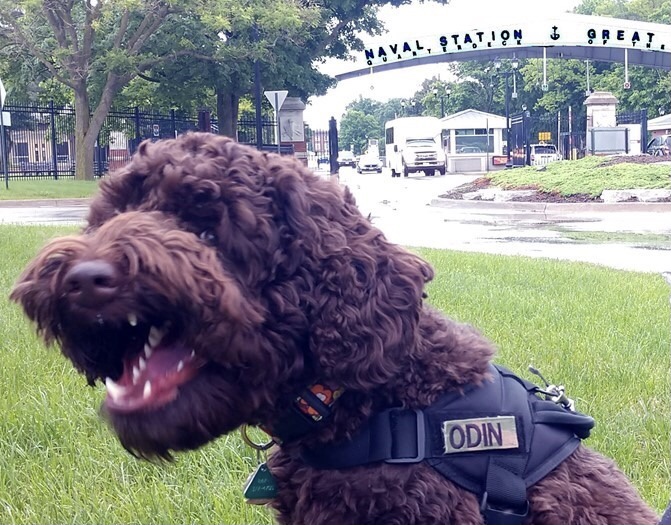
The legend of Odin may have died at West Point, but he remains an item of interest for me and my classmates. Occasionally, one of us still calls on him. Classmate Joe Mislinski even named his dog Odin. Joe lives pretty close to the Great Lakes Naval Station, where Navy basic training is conducted. He likes to occasionally take Odin for a walk outside the station, once a parade has already started. From the look of the slick streets in the photo below, Odin still has the occasional magic touch.

Odin… Bringing Rain to a Navy Parade

Addendum:

⁃ * Pete was making a bit of an inside joke to me about “Perhaps both The Corps, and Odin have… (gone to hell)”. In a tradition probably as old as West Point itself, among old grads you frequently hear the phrase, “The Corps Has…” Every class at West Point believes that the classes who came after them had it easier than they did. Gone to Hell is never stated, but always implied. 😉

⁃ Thanks to classmates Peter Eschbach and Leroy Hurt for their contributions to this blog, and their reviews. They were invaluable. Special Thanks to Joe Mislinksi for suggesting the idea for a blog about Odin, and providing a picture of his dog Odin!

⁃ In The West Point Sketch Book, it is reported that prior to 1958, Plebes would whistle a song called the “Missouri National” to try and bring on rain. Part of the adapted lyrics include: And now the rain drops patter down/ Our hearts fill with delight/ For hear the OD sounding off-/ “There is no parade tonight.”

⁃ The movie, The Vikings, is actually not bad. You might give it a watch sometime when you have nothing to do. In the meantime, here are several of the callouts to Odin, throughout the movie: https://youtu.be/uAM85DFfR24

If you wish to read a few of the previous blogs from my time at West Point, you can find them here:

A Farewell Dinner and a Letter

A Farewell Dinner and a Letter

High School graduation had come and gone, and the month of June was racing by. In just a few days, I would report to West Point. For our last night together, Cathy had the idea for an “adult” farewell dinner at her house. Never mind that we were just kids of 17 and 18.

How she was able to make it all happen, remains a bit of a mystery to me to this day. In addition to planning our dinner she asked her folks if we could have a bottle of wine with the meal. They agreed, and then checked with my folks to make sure they were OK with it. Amazingly, they agreed as well.

It was finally the last night in Ottawa. I arrived at Cathy’s just as her mom and dad were departing, along with her sisters, Cindy and Bonnie. I don’t remember where they went – maybe the movies or a drive in. All I knew is we would have the house to ourselves.

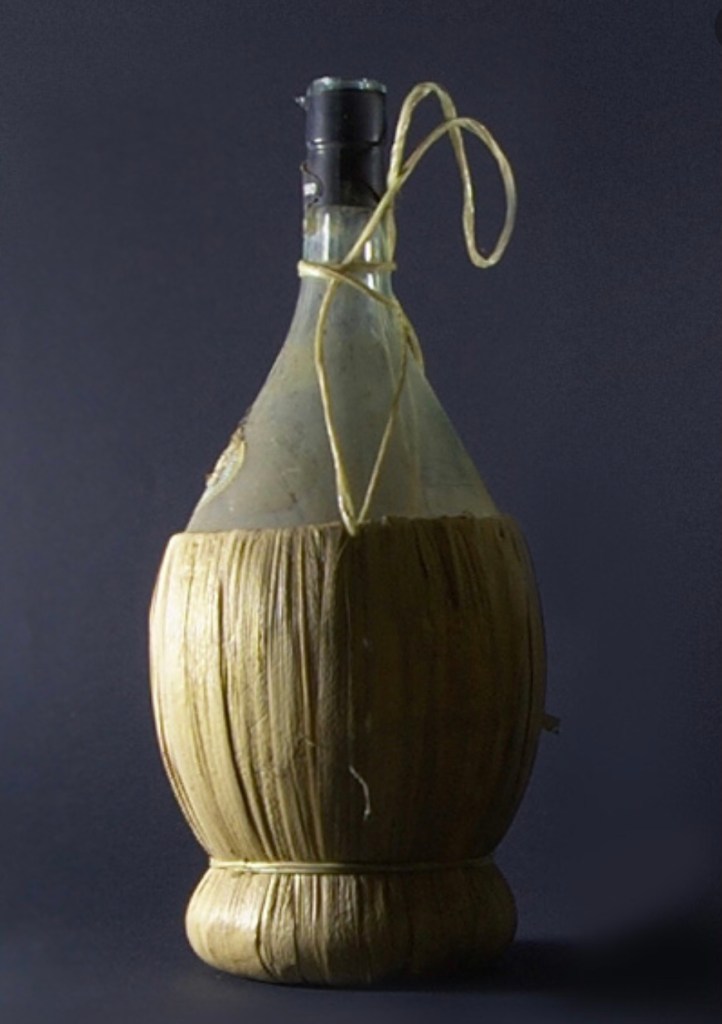
We opened the wine, a straw covered Chianti bottle, and sipped on it as Cathy finished cooking. She was making spaghetti with a meat sauce, a meal of hers I love to this day. As we sat down for dinner, she also brought out a salad.

Dinner was Served, Along With a Nice Chianti

It’s funny, in my minds eye looking back, we were both adults, and also kids playing at being adults. I don’t know if that makes sense, but it’s how I remember the night. It was somber and sad, and fun all at the same time. We finished dinner eventually and continued to sip on the wine until it too was gone. We talked about everything, and nothing. We talked of the future and when we hoped to see each other again. We promised to write… and finally, it was time for me to go home. We said our goodbyes, and then said them again several more times. Finally there was a long hug, a last kiss and I drove off into the night, with a crazy collection of mixed up feelings inside. I didn’t sleep much that night.

The next morning arrived. Normally, Dad would have had us up at oh-dark-thirty to depart, but for whatever reason, he decided to break the trip to New York into two days, so we were leaving around mid morning. We were finishing packing the car when my old buddy Howard showed up. We’d known each other since kindergarten, and he wasn’t going to let me escape without saying goodbye. We too promised we’d write each other when we could.

At this point, mom, dad, my two sisters, Howard and I were all standing in the driveway. As we were getting ready to leave, Cathy came racing up on her bicycle. We all stood there for a bit talking. If you’ve ever seen American Graffiti, it was a little like the final scene at the airport with Richard Dreyfus saying goodbye to family and friends, before he departs on the plane for college.

The Last Few Minutes of my Departure Weren’t Unlike Richard Dreyfus’s Departure at the End of American Graffiti

I hugged my sisters goodbye and shook Howard’s hand. Cathy and I had a final kiss, and as we were hugging, she pressed a letter into my hand. She whispered “Don’t open this ‘til later…” With that, mom, dad and I climbed in the car and with honks and waves, were on our way.

I looked at that envelope for a long time. I believe we were in either Indiana or, maybe, Ohio before I opened it. I probably read the letter about 50 times on the drive east, and another 500 times during my time at West Point. I won’t share the contents here, but know the letter still sits in a drawer on my side of the bed, and I occasionally pull it out and read it.

I Still Occasionally Read that First Letter from Cathy

I think about that dinner, and the letter. We were just kids in so many ways, but we were also adults, or thought we were. The world turned out to not be quite as black and white as we imagined it in those last 24 hours in Ottawa, but here we are, decades later, reminiscing about our past, and still thinking about the future and what it holds for the two of us.

Addendum:

It’s worth noting a couple of things from that pre-Internet era:

  • There are no pictures of that last dinner or the farewell the next day. Why? With no cell phones or iPhones to document the events, we simply lived them. Who’s to say which is better?
  • People actually did write letters to each other back in the day. Particularly that first summer at West Point, the letters that came from Cathy, Howard, mom and dad and others helped sustain me.

Pickerell, The Biltmore, and The Whiskey Tasting

Pickerell, The Biltmore, and The Whiskey Tasting

When Rob Grubbs asked if I would help “host” the whiskey tasting for the West Point Class of ‘78 mini-reunion, I took about a nano-second to respond yes. The evening, if possible, turned out even better than I imagined. It was one of those rare occasions of reality exceeding expectations.

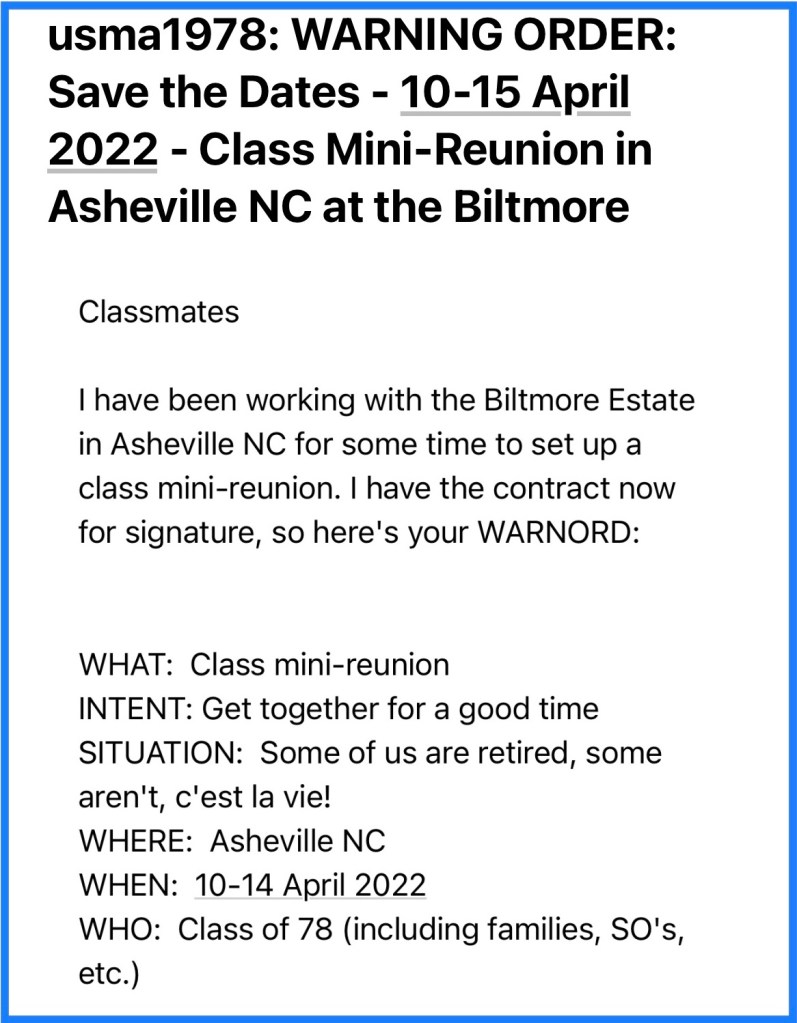
Rob sent the original invitations for the April ‘22 West Point Class of ‘78 mini-reunion, in August of ‘21 in the form of a military Warning Order. The reunion would be at The Biltmore Estate in Asheville,NC, and there was an immediate interest. Ultimately, 129 classmates, significant others, and family members made the trip.

The Original “Warning Order” From Rob Grubbs

The five days of the mini reunion were great fun, with a combination of group events and laid back small get-togethers. Dinners, a picnic, wine tastings, tours, just hanging out… it was nice. For me, a highlight was the Whiskey Tasting on the second night. What originally started as an idea for a bourbon and cigar event, morphed into a bourbon whiskey tasting, and then morphed again into the event it became.

Rob asked Bill Moeller to host and organize the tasting, and they then drafted me to assist Bill. Bill had the brilliant idea of bringing a focus to one of our departed classmates, Dave Pickerell, who later became known as The “Johnny Appleseed” of Craft and Rye Whiskey. The Army, in it’s infinite wisdom, sent Dave to grad school in Chemistry. The rest, as they say, is history.

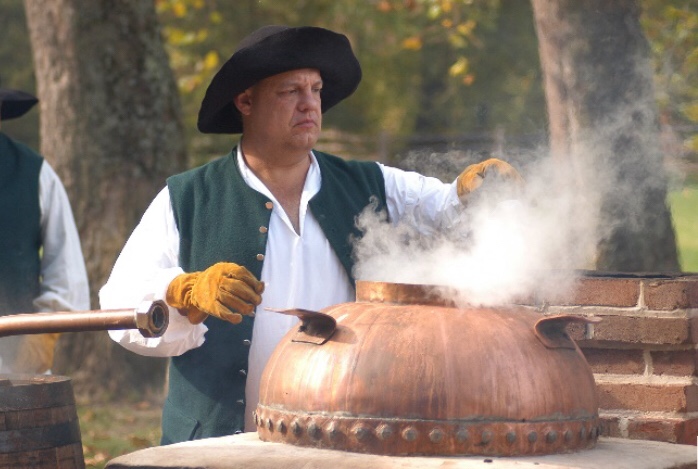
After a stint teaching back at West Point, Dave later left the Army and eventually went to work for bourbon distiller Makers Mark, where he became the Master Distiller and worked for 14 years. After leaving Makers Mark, he struck out on his own. Almost immediately, he was one of the distillers called to Mount Vernon to recreate George Washington’s original Rye Whiskey. Not only did Dave distill rye whiskey using Washington’s recipe, he would dress in colonial period clothes at Mount Vernon for special whiskey social events. This was around 2005, about the time craft distilleries were beginning. Dave ultimately helped over 50 distilleries get off the ground, and consulted with over 50 others.

Dave in Colonial Attire at the Mount Vernon Still

Dave was particularly known for a couple of events. One was the establishment of WhistlePig, a Vermont distillery dedicated to Rye Whiskey – Some people say they make the best Rye Whiskey in the world. The second event was his collaboration with the band Metallica, when they created their whiskey, Blackened. What makes Blackened unique?

Dave was fascinated with the effects of sound – the way an organ can play a note that shakes an entire building. The thought of what sound could do to whiskey at a molecular level stayed with him. As it happened, Metallica and Dave harnessed the vibrations that make a Metallica concert historic. The convergence of these ideas resulted in a sonic-enhancement method utilizing a variation of the band’s song frequencies to disrupt the whiskey inside the barrel, causing increased wood interaction and increasing the wood-flavor characteristics in the whiskey. Sonic-enhancement does not replace traditional aging methods and Blackened is typically aged an average of 7-8 years. Each batch of Blackened has a unique playlist of Metallica songs used to sonically-enhance the whiskey during finishing.

Picture of Dave Pickerell (Center), and Metallica from a Rolling Stone Article About Blackened

After discussions between Bill, Rob and I, it was decided our tasting would focus on whiskeys connected to Dave, and conclude with a toast to him, and our 71 other departed Classmates.

The list for the tasting was as follows:

  • Makers Mark – where Dave worked so long as the Master Distiller
  • Blackened – His collaboration with Metallica
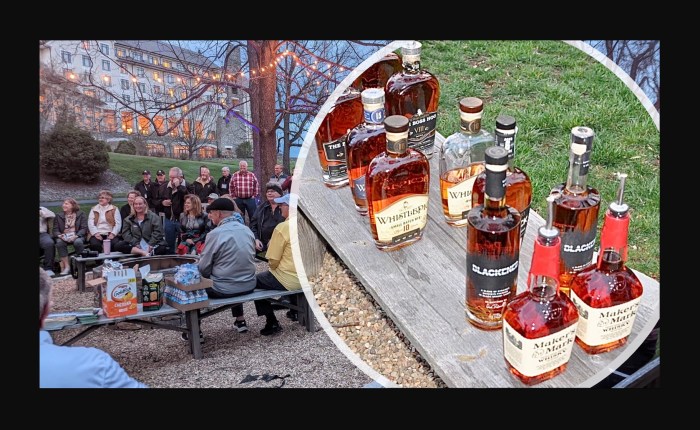
  • Piggyback – A WhistlePig Rye developed for use in Cocktails. Dave passed away just before the release. As a nod to Dave’s legacy, WhistlePig added the dates 1956-2018 (Dave’s birth and death years) to the neck label of each bottle, The WhistlePig pig logo usually includes a top hat, however for Piggyback, the pig wears a Stetson hat which Dave always wore.
  • WhistlePig 10 year old Rye
  • WhistlePig 15 year old Rye
  • The Boss Hog – WhistlePig’s top whiskey, which included final finishing in Philippine Rum barrels.

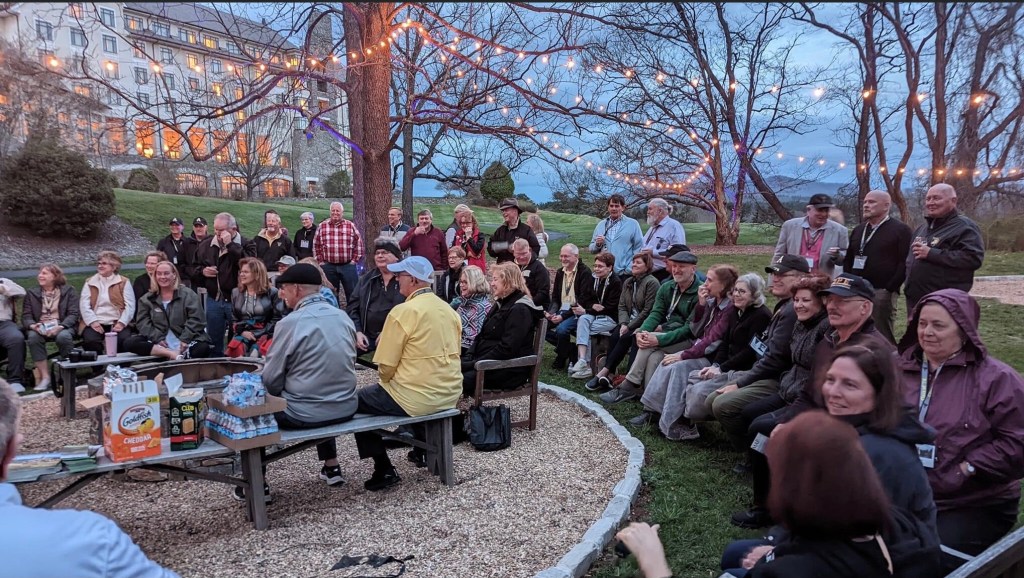
On the Monday of the reunion, approximately 100 classmates, spouses and friends gathered at dusk in a glade just below the Biltmore Inn itself. Seventy were there to taste, and another thirty came for the fellowship. As the sun fell, the overhead string lights came on, adding just a touch of magic to the atmosphere.

Dusk was Falling as we Gathered Below The Biltmore

Bill wrote a script for he and I to introduce the whiskies, while also imparting a bit of history about the interaction of whiskey and the United States Army over the course of our Nation’s History. It is perhaps no coincidence that June 14th is Flag Day, the birthdate of the United States Army in 1775, and National Bourbon Day ;-).

Bill and I Sharing a Laugh Just Before the Start of the Whiskey Tasting

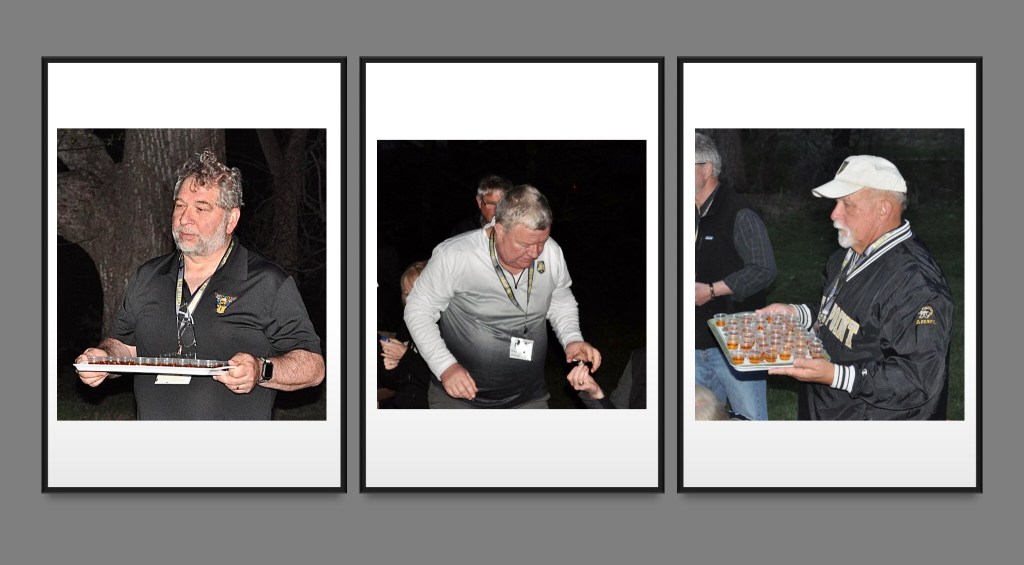
A little after 8PM, we started. Bill and I drafted our wives, Cathy and Bridget, as the official whiskey pourers, and several classmates volunteered to deliver the samples to the crowd.

Bridget and Cathy … Whiskey Pourers, Extraordinaire

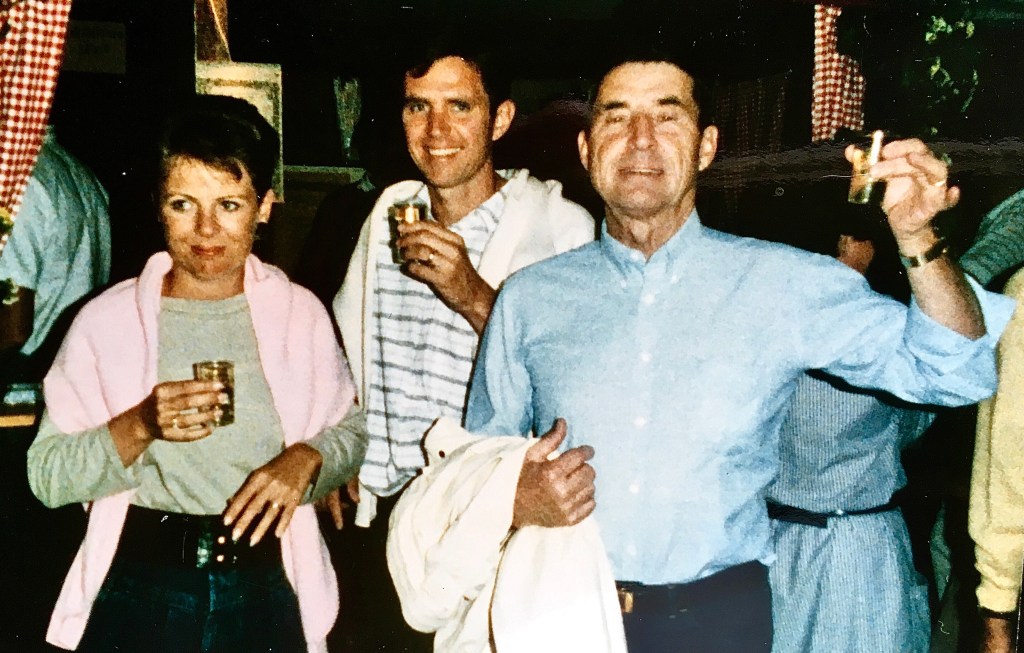
What followed was a lot of living, learning and laughter, with a bit of drinking and history thrown in. Between tastings, Bill and I talked to the crowd about whiskey rations in the Revolutionary War, the Civil War and WWI. We also shared how whiskey was a part of the history between Lewis and Clark, and Lincoln and Grant. Stories were told of Dave Pickerell’s life and his impact on whiskey. As the night wore on, the crowd grew louder and more rambunctious.

Bond, Brent and Gus Delivering the Whiskey

A little after 9PM we were serving the last of the official tastings, The Boss Hog. The light was gone from the sky now and there were only the overhead lights. As the final glasses were served, we raised them in a toast to Dave, and our 71 other departed classmates. Suddenly, Grant Short led us in an impromptu singing of “The Alma Mater”, with it’s refrain of: “And when our work is done, Our course on earth is run, May it be said, “Well done”, Be thou at peace“. I have to admit to feeling a bit of a shiver as we sang, and it wasn’t from the weather – the words seemed extra special that night. Of course as we finished the song, all responded with a vigorous “BEAT NAVY!”

Seventy two of our classmates are gone. They will never be forgotten.

The formal part of the program was over, but the crowd remained. There was still a fair amount of whiskey left and war stories, both literally and figuratively, to be told. The crowd moved around, circled and shifted. Old friends were given hugs, and as always happens at these reunions, new friends were made. Cigars were lit and more whiskey was shared.

The Proud and Great Class of ‘78 Enjoying Life

Eventually, around 1030PM a soft rain started falling. As the crowd thinned, we packed up the remaining bottles, along with the water and snacks and moved back to the Biltmore. Some folks stayed up for a last drink at the bar, while others drifted off to bed. It was a fine night for the Proud and Great Class of ‘78, and our first group whiskey tasting. I hope it isn’t the last.

.. Feel free to forward this blog …..

Addendum:

– Special thanks to:

  • Rob and Jan Grubbs for organizing the mini reunion overall – what a wonderful event.
  • My wife Cathy and Bill’s wife Bridget who served as pourers for the event. We couldn’t have done it with out them. Also, classmates Brent Holmes, Bond Wells and Gus Hellzen who delivered the whiskey samples (in the dark) to all, without spilling a drop.
  • Rob Grubbs and Marion Seaton who took the photos in this blog.
  • Several classmates donated additional bottles of whiskey for tasting and drinking after the “official” tasting. Hats off to: Rob Grubbs, John Kimmel, Brian Keenan, and Joe Spenneberg among others.
– Huge thanks to Bill Moeller, who provided much of the information for this blog, and provided a wonderful history of the interaction of whiskey and the US Army over the course of history. The event would not have been what it was without him.

– You can read the Rolling Stone article about Dave Pickerell and Metallica here: https://www.rollingstone.com/music/music-features/metallica-whiskey-distilling-process-blackened-723508/ . Dave joked that he never made the cover of Rolling Stone, but he did get on the inside… ;-).

– Some of the history of whiskey allotments for the Army in past wars includes:

  • During the Revolutionary War, each soldier was issued a gill (4 ounces) of whiskey per day. Washington directed field commanders to reward valor on the battlefield with additional whiskey rations.
  • During the Civil War, whiskey was used by medics to treat patients, steady the nerves of soldiers, and heavily consumed during breaks in the chaos.
  • During WWI, soldiers on the front line were issued an ounce of whiskey, two times a day, 7 days a week. Resting soldiers received half that amount.