“The lives of courageous American heroes may be lost and we may have casualties. That often happens in war“, said our president about our latest attack on Iran. That often happens in war? THAT OFTEN HAPPENS IN WAR!?!? Could he be more tone deaf?
I received my Top Secret (TS), Special Compartmentalized Information (SCI) clearance in 1989. I was an Army Captain at the time. Before receiving the clearance, I did not know what work I would actually do in my new job. When I was cleared into the program, the first thing Gene, my new boss, asked was “How do you feel about Nuclear War?”
It was December 6th, 1941. Dad, Noble and other men from B Company, 60th Regimental Combat Team of the 9th Infantry Division had weekend passes. They left Fort Bragg, North Carolina that Saturday for nearby Fayetteville. They didn’t know it yet, but the next day their world would change forever.
That weekend, Dad was a little over 18 years old and had been in the Army for about fifteen months. The 9th Infantry Division reactivated in August of 1940, and Dad joined the unit in September of that year, at the age of 16.
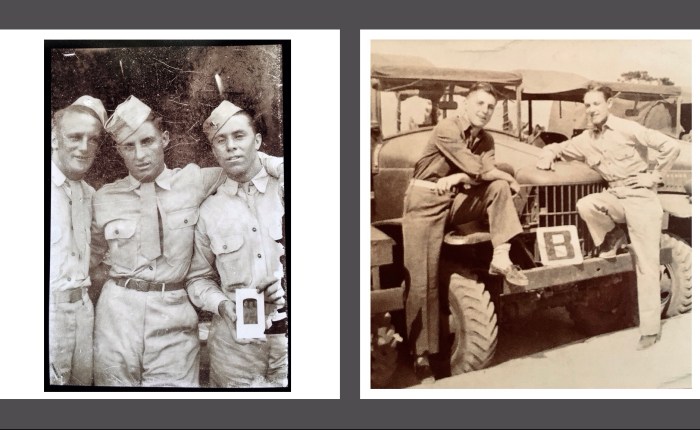
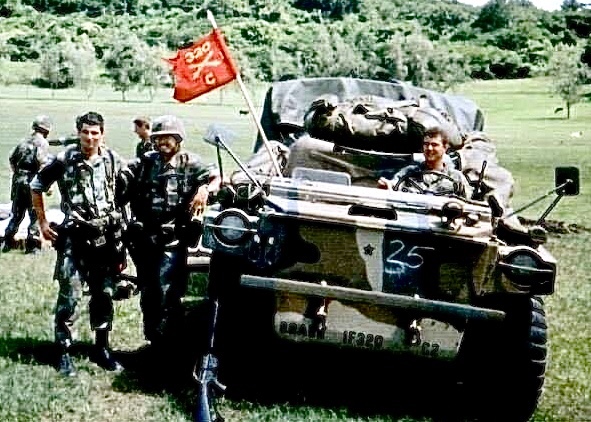
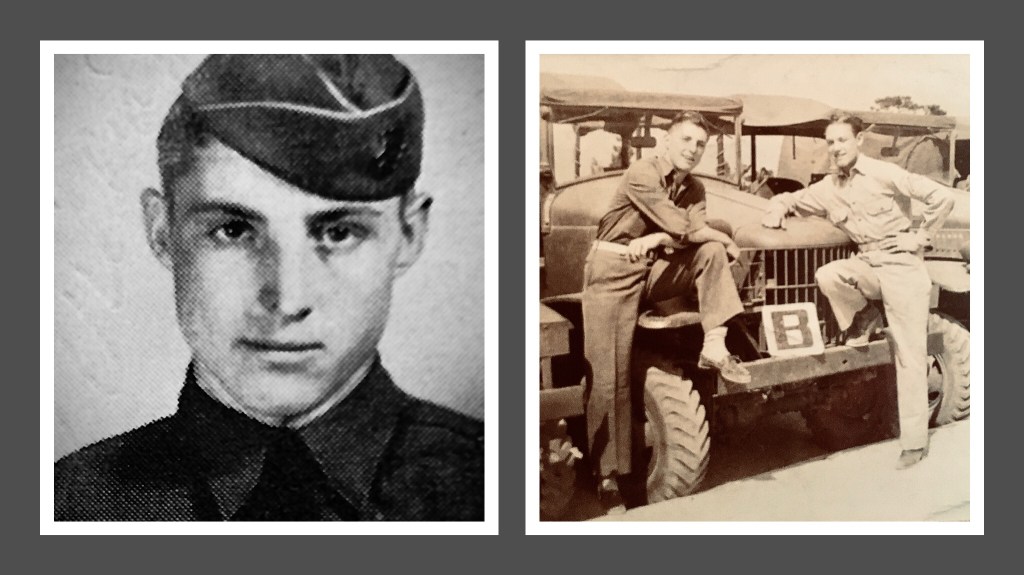
Dad (on the left) in 1941 in the Bravo Company Motor Pool.
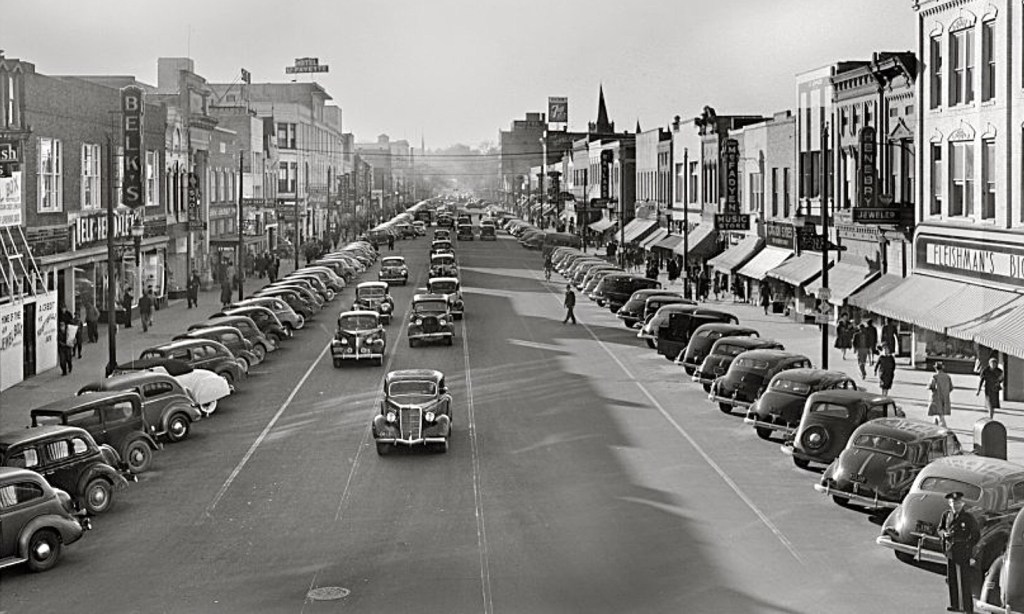
In 1940, the population of Fort Bragg was 5,400. One year later, there were 67,000 troops at Bragg and Fayetteville was on the way to becoming a military town, with bars, clubs, restaurants and everything needed to “entertain” the troops, for better or worse.
Fayetteville, 1941.
Dad and the other boys of Company B received their weekend passes that fateful weekend and probably left Bragg around noon. Typical weekend passes went from noon on Saturday to 6PM on Sunday. They usually rented a room or two to use as a base for their partying. Over the years, he told me about some of those weekend passes. Real food, beer, clubs, blues, jazz, dancing and trying to link up with girls. They’d party into the night, and then the next day, after a big breakfast, party some more until they eventually returned to Post. I heard stories about fun times in North Carolina (Fayetteville and Charlotte) in Tunisia and Algeria, and late in the war back in Washington DC. Let’s just say, Dad knew how to party.
For this particular weekend, he didn’t tell me about any of that. What he talked about was the return to Fort Bragg late Sunday afternoon on December 7th.
Dad and several others were returning to the Post in a cab. I think he said there was a formation at 6PM for accountability purposes, but maybe they just had to sign back in. He and his friend, Noble, had partied it up pretty good and were a bit hungover. As they neared Fort Bragg, two things happened. First, traffic was backed up to drive onto the Post – they were checking IDs or checking IDs more closely than normal. Second – the cab driver turned on the car radio.
By 1940, AM radios were considered a standard feature in automobiles. The stations carried news, some radio shows and music. There weren’t lots of stations, and the programming wasn’t all that varied. This time however, the boys of Company B heard the words that would change their lives. An NBC announcer read the following statement, relayed earlier from station KGU in Hawaii:
BULLETIN: We have witnessed this morning the attack of Pearl Harbor and the severe bombing of Pearl Harbor by army planes that are undoubtedly Japanese. The city of Honolulu has also been attacked and considerable damage done. This battle has been going on for nearly three hours. One of the bombers dropped within fifty feet of Tanti Towers. It’s no joke -it’s a real war. The public of Honolulu has been advised to keep in their homes and away from the army and navy. There has been severe fighting going on in the air and on the sea …(There then was an interruption, followed by this) . . . We have no statement as to how much damage has been done but it has been a very severe attack. The army and the navy, it appears, now has the air and sea under control.
There is a five-hour time difference between Honolulu and the East Coast. The attack on Pearl Harbor started at 8AM and lasted about 90 minutes (not the three hours in the news bulletin). That means the attack ended about 9:30AM Honolulu time, or 2:30PM East Coast time. The Honolulu station was somewhat delayed in reporting the news, and then of course, in the pre-internet age, it took longer for stations in the Continental US to pick up the bulletin and rebroadcast it. My guess is Dad, Noble and the other guys were hearing this news around 4:30PM or so that afternoon.
What did they do at this point? Wait in the cab to drive onto Fort Bragg? Get out of the cab and run onto Fort Bragg? Leave the cab and start talking with the other gathering soldiers? None of those things happened.
Instead, they directed the cabbie to make a U-Turn and drive back to Fayetteville. They were going to hit the bars again, even though they would be Absent Without Leave (AWOL) and miss the evening formation. They knew instantly this was going to be a shooting war, training was going to get tougher and opportunities to leave Post become slimmer. They weren’t going to miss this chance for a last shebang.
Dad and Noble in ‘41 or Early ‘42on a Different Weekend Pass.
And of course, when they returned to Fayetteville, they weren’t alone. Soldiers were everywhere drinking and partying. I think Dad said he thought half his battalion was in town. They joined the crowd and partied into the evening. There was a great deal of talk about when and where they would deploy.
Eventually, they returned to Bragg late that night. According to Dad lots of guys had hangovers at morning formation on Monday, December 8th, but nothing was really done about them missing the evening formation. There was too much work to do.
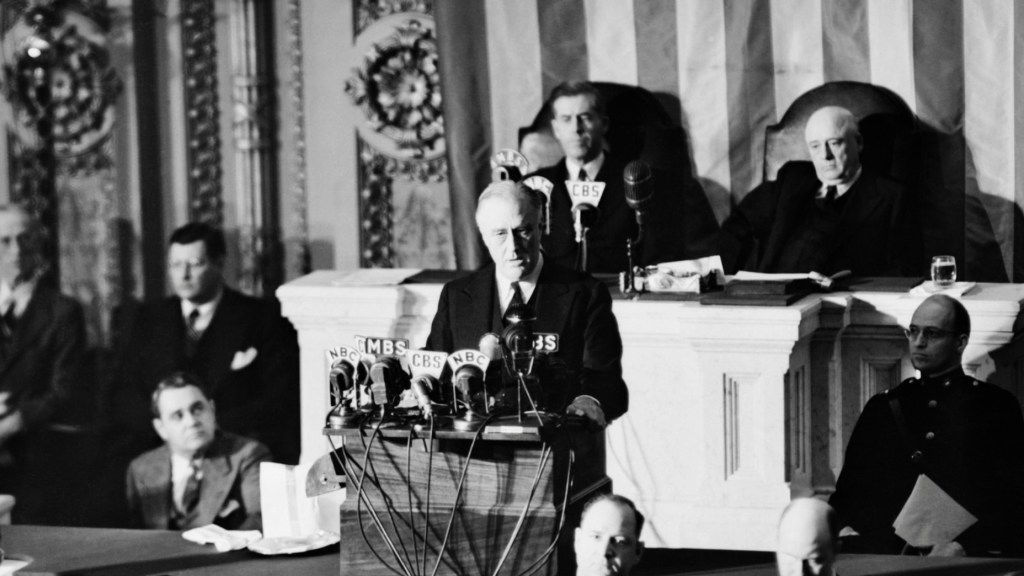
On the evening of the 8th, President Roosevelt gave his famous “A Day which will live in Infamy” speech to a joint session of Congress. The speech was broadcast live by radio and attracted the largest audience in American radio history, with over 80% of Americans allegedly tuning in to hear it.
President Roosevelt Speaking to Congress on Dec 8, 1941.
Eleven months to the day later, on November 8th, 1943, the men of the 60th Regimental Combat Team, including Dad and Noble, landed on the beach under fire in North Africa at Port Lyautey, Morocco as a part of Operation Torch. The counteroffensive had started against the Axis powers in the European Theater of Operations.
When dad joined the Army in 1940, it was for a three-year hitch. It would be 5 years before he was honorably discharged in August of 1945. He took part in the invasions of North Africa and Sicily, where he was wounded and almost died. I think partying several extra hours on the evening of December 7th was probably justified.
— Never Forget —
Addendum:
In 1940, the population of Fort Bragg was 5,400. By the following year, it reached 67,000. Various units trained at Fort Bragg during World War II, including the 9th Infantry Division, the 82D Airborne Division, the 100th Infantry Division, the 2nd Armored Division and various field artillery groups. The population reached a peak of 159,000 during the war years. This past year, Fort Bragg was renamed Fort Liberty.
Here is one other Pearl Harbor blog I’ve done: The plaque is only a small one, over in front of The South Ottawa Town-Hall on 1st Avenue. The Hall is still used for occasional meetings, but 1st Avenue is pretty sleepy in that area, so I don’t know how many people actually ever see the plaque. When I walk by, the words always compel me to stop. And think. And remember … Herman Koeppe was 19 the day he died […] https://mnhallblog.wordpress.com/2016/11/30/never-forget/
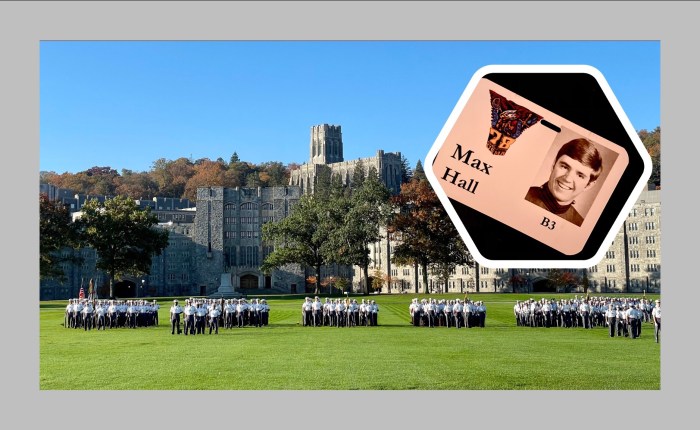
It was raining as I left our West Point 45th reunion last Sunday. I took the longer, slower route home to Virginia rather than drive Interstate 95. Tired and emotionally spent, I didn’t trust myself on a route that would have more traffic. I knew I would be thinking about West Point, the reunion and my classmates.
And of course, that’s what happened. The reunion, mixed with memories of West Point and my time in the Army cycled through my brain. Was it really 45 years since we graduated? It turned out the answer was yes.
Due to health issues, Cathy didn’t make the trip (she’s OK). It was a tough choice for her not to go to this reunion, but it was the right decision. Having dated since high school, and marrying each other right after my graduation from West Point, she too made the journey through my time at the Academy and in the Army. We’ve known many of these folk for nearly fifty years and together we have attended every reunion since the fifteenth. If I were to pass away, she would be welcomed with open arms by my classmates at any event, and they would help her in any way they could.
On October 25th, the day before the official start of our reunion, someone noted online the conditions were a bit nicer than 40 years previously on the same date. That was the day Operation Urgent Fury, the United States intervention in Grenada began at dawn. Several members of our class* were in the 82D Airborne Division and a part of the operation. It was a reminder that although we were “Cold Warriors” against the Russians, many of our classmates spent time in combat around the globe.
CPT Marion Seaton in Grenada. “We Were Soldiers Once, and Young”.
I arrived early Thursday afternoon and the weekend passed in a blur. The reunion hotel was a little over an hour from West Point. With 500+ attendees, there are no hotels at West Point or in the immediate vicinity large enough to host a gathering of our class. As is always the case at these five year reunions, not unlike our days at West Point, they are jammed with activities. We joke about it of course, but it’s true. I’m doubtful many other college reunions have days starting at 6:45AM. ;-).
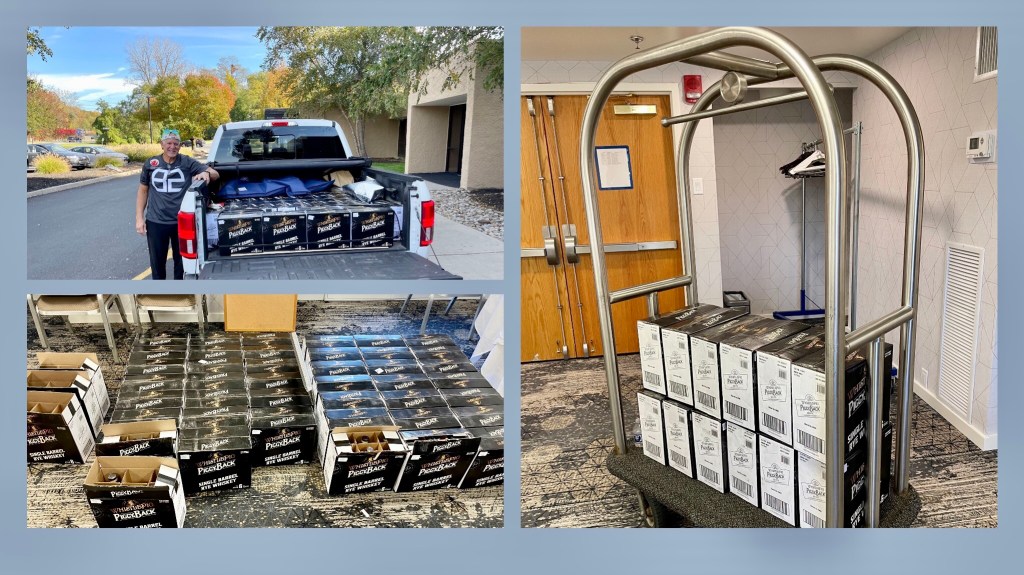
After arriving, I found Tony Matos, who had just arrived from New Hampshire. As importantly, Tony brought the 312 bottles of WhistlePig Whiskey we were going to distribute to classmates. Regular readers of this blog will recall that a group of us did a tasting at WhistlePig in Vermont last spring and bought two barrels (you can read about that tasting and why we did it at the link in the addendum). We dutifully transported the cases of whiskey to our distribution room and classmates started picking up their bottles. All were gone by Sunday morning.
The Successful Conclusion of Operation WhistlePig.
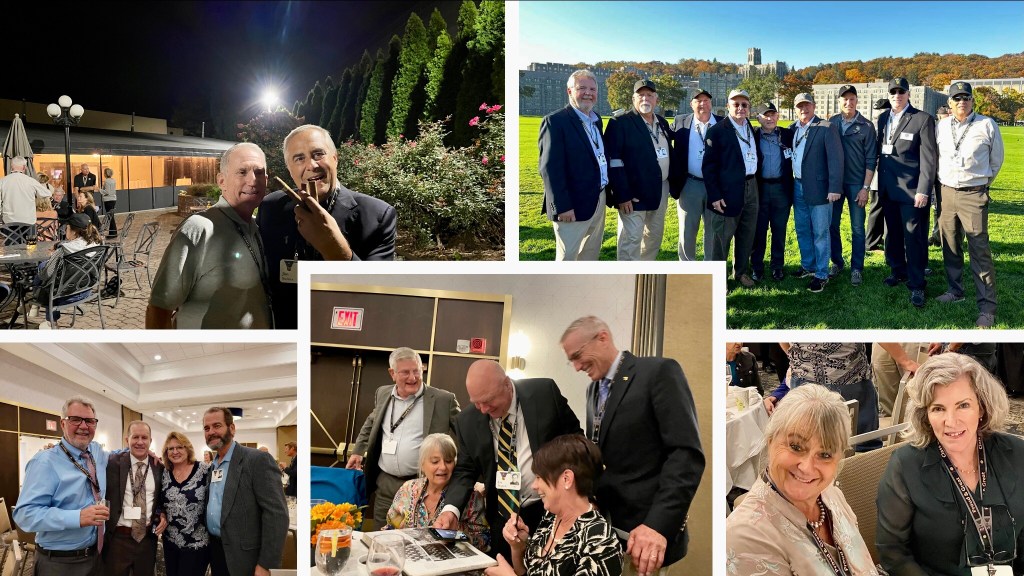
By Thursday night, things were in full swing. Around 300 classmates (about one third of our living class members) along with 250+ spouses, partners and family members were there. Dinner, drinks, and for some of us, cigars ensued. My time was divided between dinner with several of my company mates and then circling the rooms seeking out other old friends. Handshakes, hugs and toasts, along with conversations occurred several times – How are you? … Where’s Cathy – is she OK? … Do you remember … whatever happened to … where are you now … we have to do better at staying in touch … Eventually I made my way to bed and a restless night’s sleep.
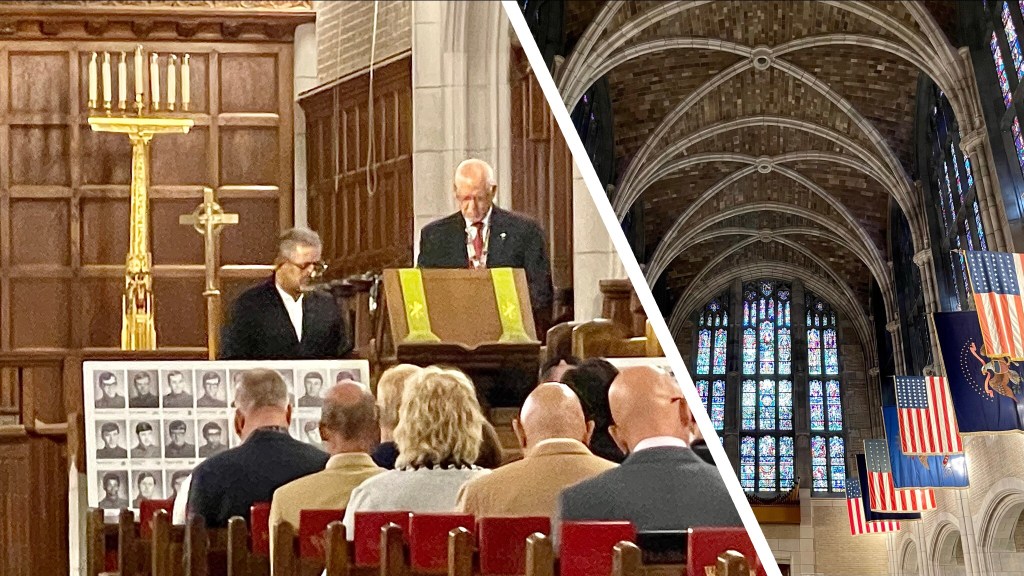
On Friday morning, we boarded buses for West Point. Our destination was the Cadet Chapel. Our first event, and for me one that has grown increasingly important, was a memorial service honoring classmates who have passed away. At our fortieth reunion, 50 classmates were so honored. This time the number was 82, including my company mate Dan Zimmerman. At the fortieth reunion, Dan sat with Cathy and I at the memorial service. This time, his name was one of the 82 called out loud. I thought a lot about Z-Man during the service. I have to say, the meaning of “The Long Grey Line” has changed, grown and become more real with the passage of time.
Memorial Service at the Chapel.
After the service, my buddies Jay, Steve and I, along with many of our classmates, walked the half mile from the Chapel to Ike Hall, although I also noticed there were more classmates taking the provided buses. Age catches up with all of us at some point. At Ike Hall we had lunch, along with a class meeting and a presentation by the Supe (Superintendent), before eventually busing back to the hotel.
At the hotel, Tony, Gus, Bob, Bill and I resumed distributing the remaining WhistlePig bottles. Classmate Al Aycock was distributing bags of coffee – the beans spent time in one of our empty whiskey barrels before bagging. We repeatedly received thanks from classmates for the arduous journey we’d made to Vermont for the WhistlePig tasting the previous spring. ;-).
After a short fifteen minute nap, it was time to get ready for the formal dinner that evening. More good food, drinking, talking and dancing. Perhaps because this was day two, things were slightly slower than the night before. It wasn’t as rushed and more faces were familiar now.
Random Pictures From the Weekend.
Saturday morning came early. We boarded buses for West Point at, wait for it … 6:45AM. Yes, you read that right, 6:45 in the morning. It was for a good reason – Two regiments of the Corps of Cadets were having a parade at 9:00AM, and our entire class was a part of the reviewing party. I remember as a cadet having parades and passing in review for old grads during their reunions. To put things in perspective, in the fall of 1977 our Firstie (Senior) year, the class celebrating their 45th reunion was the Class of 1932. Yikes! Back then, while waiting to pass in review, we made jokes about the OLD GRADS and of course could never see ourselves on the other side of the parade ground in the future. I’m sure the same thing was happening on this Saturday, but I have to say they looked squared away when they marched past us.
The Corps of Cadets, Passing in Review.
The Army football game that afternoon was a forgettable loss, but something happened later that left a strong impression on me. After the game, Clem, one of my company mates and his wife Nancy hosted a post-game tailgate and several of us B3ers stopped by for a beer. Three Yearling (Sophomore) cadets were there as well – members of the Class of 2026. Talking with them and listening to them made me feel good about our future, and the future of this country. If they are any indication of the quality of current West Point cadets, we have nothing to worry about. The United States Army, and our Officer Corps are in good hands.
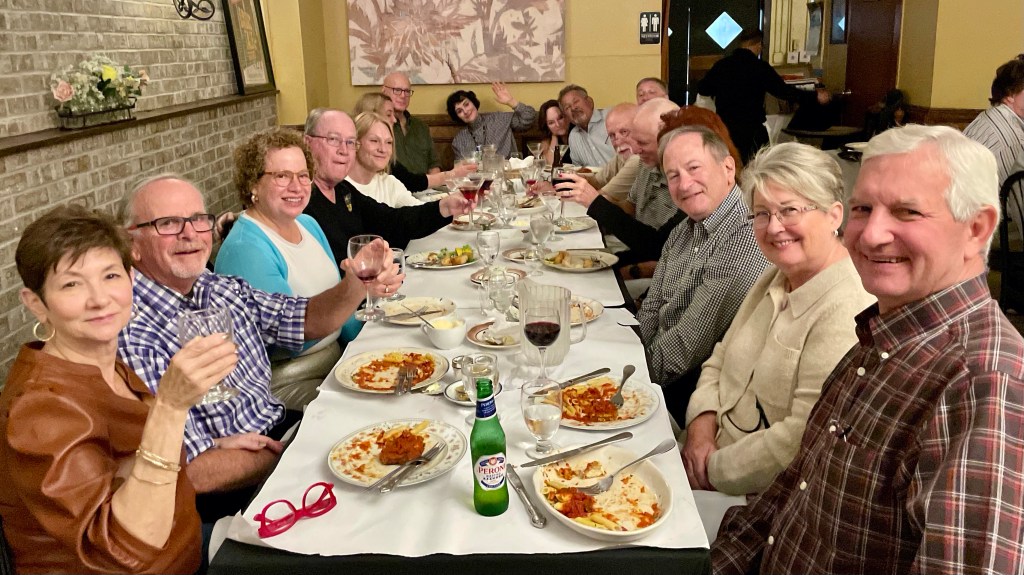
The last evening was special. There was no official event that night, and I was invited out to dinner by Jose Morales, one of the alumni from the Whistle Pig tasting in the spring. There were perhaps 18 of us at the dinner . Some I knew, some I didn’t. It didn’t matter. We were all one big happy family, talking, laughing, telling stories, eating and drinking.
One Big Happy Family at Saturday Night’s Dinner.
The next morning, I left for the drive home around 8AM. I’m not big on long goodbyes and wanted to hit the road. I spent the next six hours driving in the rain and thinking about the weekend. I wasn’t just thinking about the details of the weekend itself, as I recounted here. I was also thinking about this special brotherhood I have the great good fortune to be a member of. As time goes by, I cherish it more and more. I think we all do. It’s hard to explain to others who haven’t been a part of it.
We members of the West Point class of 1978 share a special bond that has only grown stronger with the passing of time. Yes, we still tell the old stories from cadet days, or our time in the Army, but it’s more than that. Those stories only represent the surface of our commonality. We rose to the call of Duty, Honor, Country as cadets and during our time defending this nation. Most of us have found ways to contribute to the greater good, even after our time in service to our nation ended.
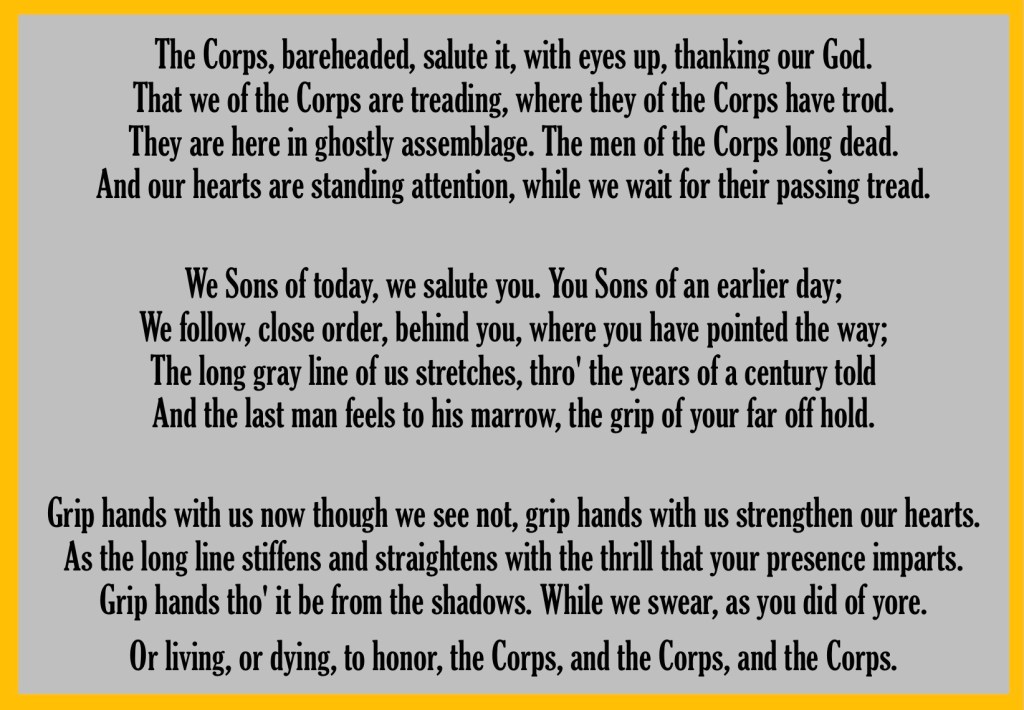
As Plebes, we were required to memorize many things. Some mundane, some of no apparent use, and some that were important. One of those requirements was the song “The Corps”. As I grow older, the song’s lyrics speak to me more directly than when I was a cadet and first memorized them. We all know our time here on Earth is limited and we all need to make the most of the time we have. Grip hands indeed.
The Corps
Addendum:
* Classmate Marion Seaton provided the photo from Grenada. In his words, “Chuck Jacoby, Brent Holmes, Dale Tatarek and I were having the time of our lives on a little spice island 40 years ago this week. We were all part of the 82nd Airborne’s mission to secure the Island of Grenada. I was the C Battery 1/320 (Airborne) Artillery Commander. We were chuted up to parachute with our equipment into Grenada. Our original plan was for the 105 howitzers to be dropped from the C141B on the first pass and we would jump on the second pass over the Drop Zone. The jump would’ve been dangerous, certainly due to the hostile fire, but more importantly, because of the dispersion of the equipment and troops onto the ground. There was a huge body of water to our left and the Ocean to our right. We would’ve lost a lot of jumpers and equipment. Lucky for us, The Rangers jumped the day before from C130s below 400 feet. They secured the Drop Zone, so we were able to fly in rather than jump. Over the course of the battle, Charlie Battery fired 152 rounds in support of the Division and Rangers.”
Marion, A Bit Before his Unit’s Jump into Grenada was Cancelled.
Dale and Jan Hamby were in charge of this reunion overall and did a great job. While a host of people worked with and for them, our class owes them a debt for the wonderful time we enjoyed. Dale’s comments after the reunion were pretty spot on: “Personally, we are determined to do a better job staying in touch with those we were able to reconnect with this weekend. We hope you will too. The reunion reminded us how important these connections are, and life is just too short not to make them a priority. Besides that, it was so great to relive cherished memories that our kids don’t want to hear about for the 50th time!”
Here’s the blog from our whiskey tasting at WhistlePig: “We were on a mission to the WhistlePig Distillery in Vermont. Twelve classmates gathered to taste whiskey from five barrels. We would select two for the West Point Proud and Great, Class of ‘78 45th reunion this coming fall. We didn’t want to let our classmates down” […] Continue here: https://mnhallblog.wordpress.com/2023/05/09/__trashed-2/
As my friend and West Point Classmate Bill Moeller noted, it is perhaps no coincidence that the Birthday of the United States Army, Flag Day and National Bourbon Day are all celebrated each year on the same Date: June 14th. It turns out all three of their stories go back to the late 1700s.
I’ve always thought that understanding our nation’s history was important. When I learned June 14th was shared by the Army, our Flag, and Bourbon, it seemed worth doing some historical digging. Here’s what I learned.
Before there was an American Flag, before there was American Bourbon, the United States Army was around to protect both.
One year prior to declaring our independence from Great Britain, the Continental Congress approved the formation of the Army on 14 June 1775. On that date, they authorized the enlistment of ten companies of riflemen to serve the United Colonies for one year to form the “the American Continental Army.” The next day, Congress issued its first commission by appointing George Washington “General and Commander in chief of the Army of the United Colonies, and of all the forces now raised, or to be raised by them, and of all others who shall voluntarily offer their services, and join the Defense of American liberty, and for repelling every hostile invasion…”
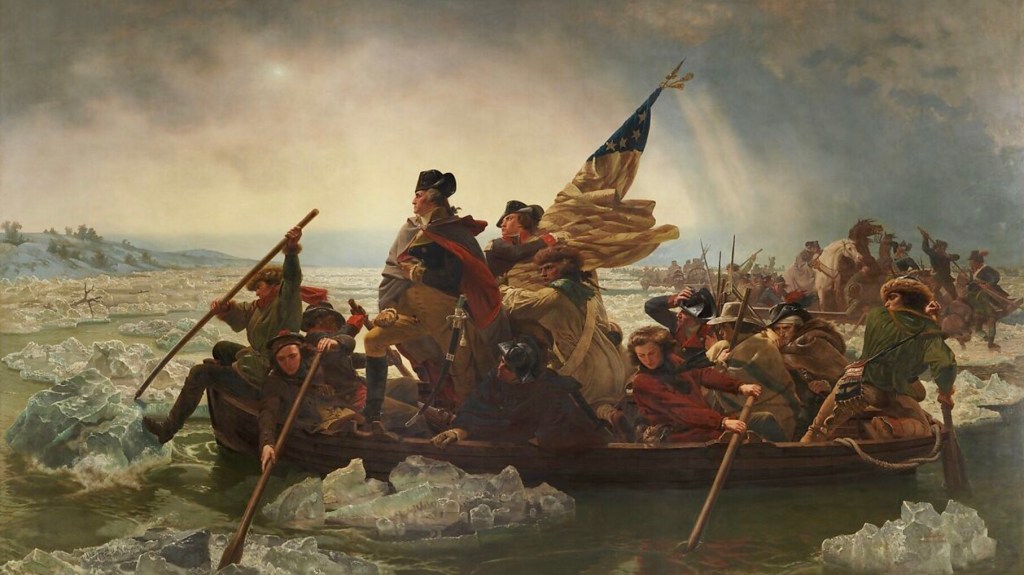
Washington Crossing the Delaware with the Continental Army in December 1776.
While there are some questions about whether Betsy Ross actually sewed the first American flag, there is no doubt about when Congress recognized our first flag. On June 14, 1777, two years after the formation of the Army, Congress passed the Flag Resolution, which stated, “Resolved: that the flag of the United States be made of thirteen stripes, alternate red and white; that the union be thirteen stars, white in a blue field, representing a new Constellation.” In 1916, President Woodrow Wilson issued a proclamation that officially established June 14 as Flag Day and on August 3, 1949, National Flag Day was established by an Act of Congress.
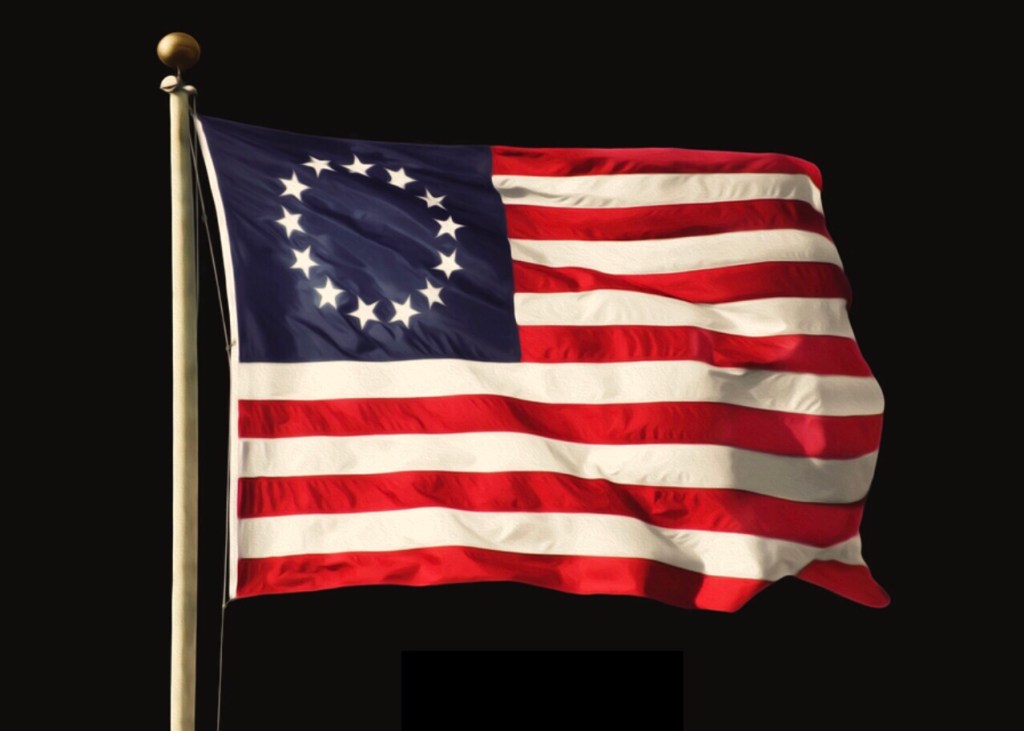
A New Constellation.
The story of National Bourbon Day is, not surprisingly, a bit murkier. One legend has it that bourbon was first produced by Reverend Elijah Craig on June 14th, 1789. In the late 1780s, Craig was allegedly using old fish barrels to store his spirits. Of course, the fish-flavored wood did not help the taste at all, so Craig started conditioning the barrels by charring the inside. He then stamped the barrels with their county of origin (Bourbon County in what was then Virginia and is now Kentucky) and sent them on a 90-day trip to New Orleans. The charred oak and three-month travel time combined to mellow the whiskey some and folks in New Orleanians requested more of “that whiskey from Bourbon.” Yes, I agree the story, or at least the date of June 14th sounds a bit fishy (pun intended), but who am I to judge? There are enough other competing stories that all trace the origin of “bourbon” to the 1780s and make that time period a credible time of origination. As a side note, in 1964, the United States Congress recognized bourbon as a “distinctive product of the United States of America”.
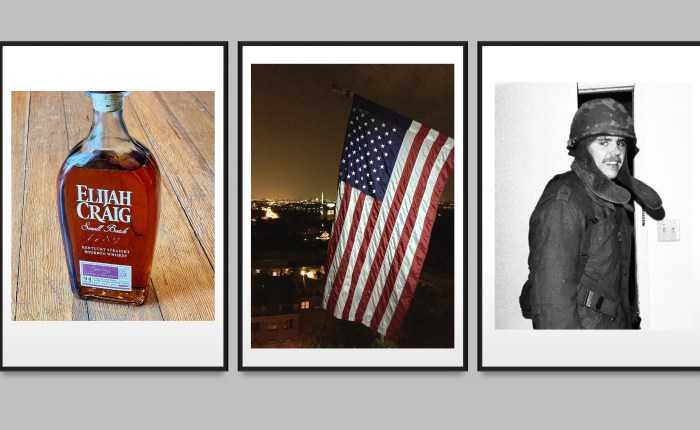
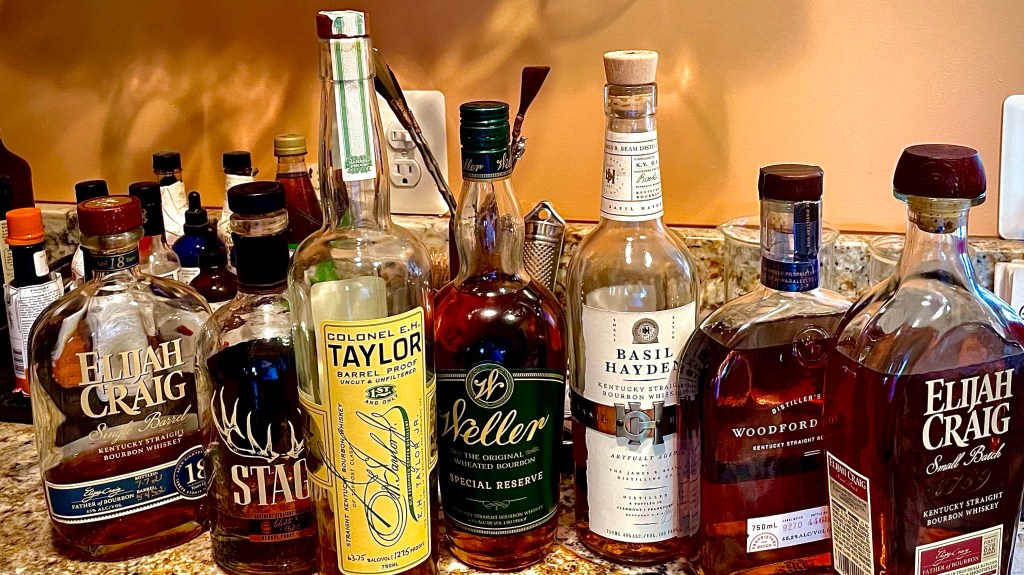
Bourbon Anyone?
So, there you have it, a bit of distinctly American history. As an Army Vet, I know what I’ll be doing on June 14th. I’ll raise a glass of bourbon in a salute to both our Flag, and all of the Army Veterans who have served our country over the years. I hope you will join me. It seems to me the least we can do.
Cheers to All on June 14th From This Veteran…
Addendum:
– For the record, the United States Army is the senior service. The Continental Navy was established on 13 October 1775, and The Continental Marines on 10 November 1775. The Coast Guard traces it’s beginnings to 4 August 1790. The Air Force was established as an independent service on 18 September 1947, and the Space Force (ughhh) was established on 20 December 2019.
– National Bourbon Day – I searched to find out when the first National Bourbon Day occurred, but could find nothing online.
– Here are a couple of other historical facts about bourbon itself:
The Elijah Craig story is a nice one, but there’s no historical proof of it. There were certainly others who were shipping whiskey in barrels in the 1780s.
The Marker’s Mark distillery, which opened in 1805, is the oldest distillery in the country, and has been declared a National Historic Landmark.
In 1834 Doctor James Crow perfected the sour mash process and made what was probably the first “modern” bourbon. He employed the “Sour Mash Method” on a daily basis to give his whiskey consistency.
In 1840, “Bourbon”, by name, was first advertised in a newspaper.
In 1840 bourbon whiskey officially became known as bourbon. Before then, the product carried the name Bourbon County Whiskey or Old Bourbon County Whiskey.
In 1870 Old Forester became “America’s First Bottled Bourbon” when founder George Brown was the first to put Bourbon in a glass bottle. Prior to that, it was only available in barrels.
I recently received another email from my friend Bob in Ukraine: “Last night the air raid alarms went off about 2:30 am. We were hoping the attack was only another wave of the Iranian Shaheed drones, as the defenses are normally stopping 100% of those. But when the text of the warning came to my wife Vita’s phone, it was a major missile attack. The attack was targeting Kyiv directly.”
This is the second blog I’ve written about my friend Bob Pitts who lives near Kyiv, Ukraine. A link to the first blog is in the Addendum.
Bob’s email continued: “Six Kh-47M2 “Kinzhal” missiles were launched from six MiG-31K aircraft. The Kinzhal is Putin’s hypersonic missile that he has bragged about as being unstoppable. Making statements about it as some secret Russian technology America and the West can’t match.
BUT – Every one of them was shot down in the air, so I imagine there is some serious nervousness in the Kremlin right now. Someone has to go and tell Putin his magic hypersonic missiles are no longer effective – and also tell him he just wasted many millions on this attack. (They don’t have many of these left in stock to begin with). Before last night’s attack -> no one had been able to stop the Kinzhal missiles.
In addition to the Kinzhals, 9 Kalibr cruise missiles were launched from ships in the Black Sea, and three land-based missiles (S-400, “Iskander-M”). All of them were destroyed by the air defense forces of Ukraine.
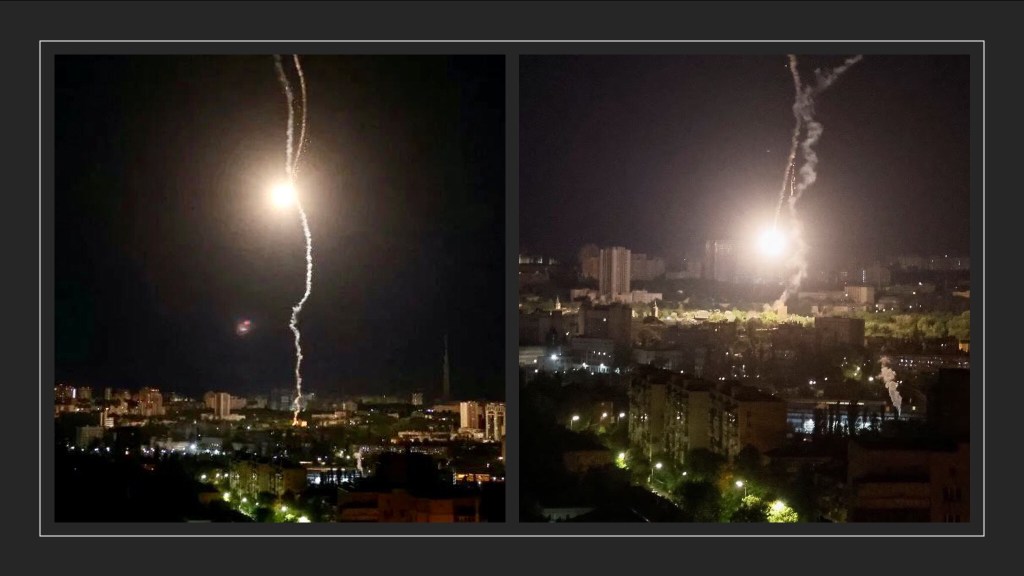
The sound of the missile being hit was deafening- our windows and doors shook. The attack came from the South and so the defenses hit them near our town. Thankfully not directly over us, as there are reports of damage from falling debris.”
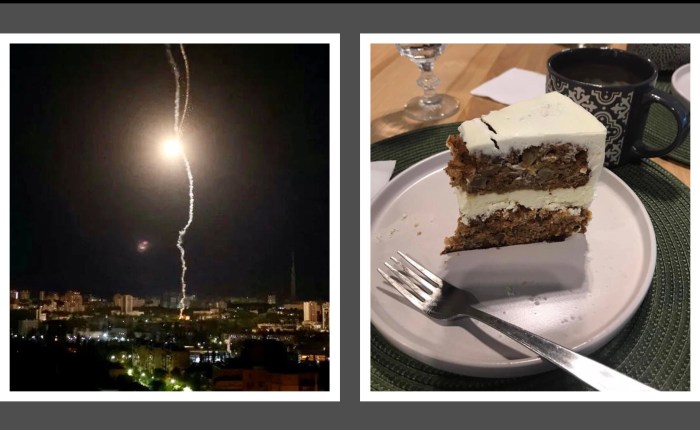
Debris Falling During the Recent Missile Attack on Kyiv.
I can’t quite imagine the heart-pounding you must feel going through an attack like that. And of course, some version of this has been happening for over a year now in Ukraine.
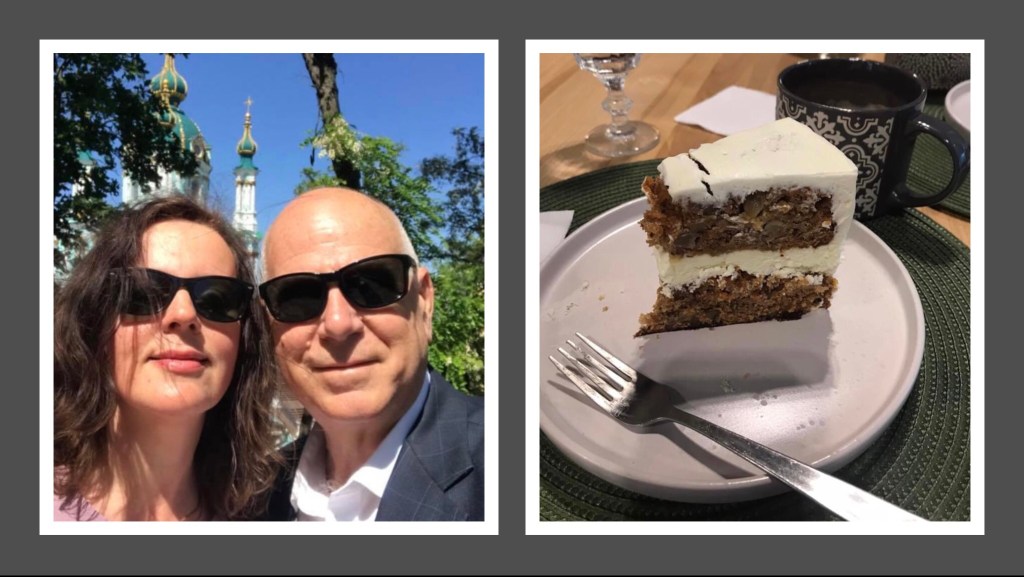
Throughout it all, we need to remember people also live their lives. In Bob and Vita’s case, that included celebrating their eighteenth wedding anniversary about a week after the big attack. They’ve lived in both America and Ukraine during those eighteen years and have been in Ukraine for the past two years.
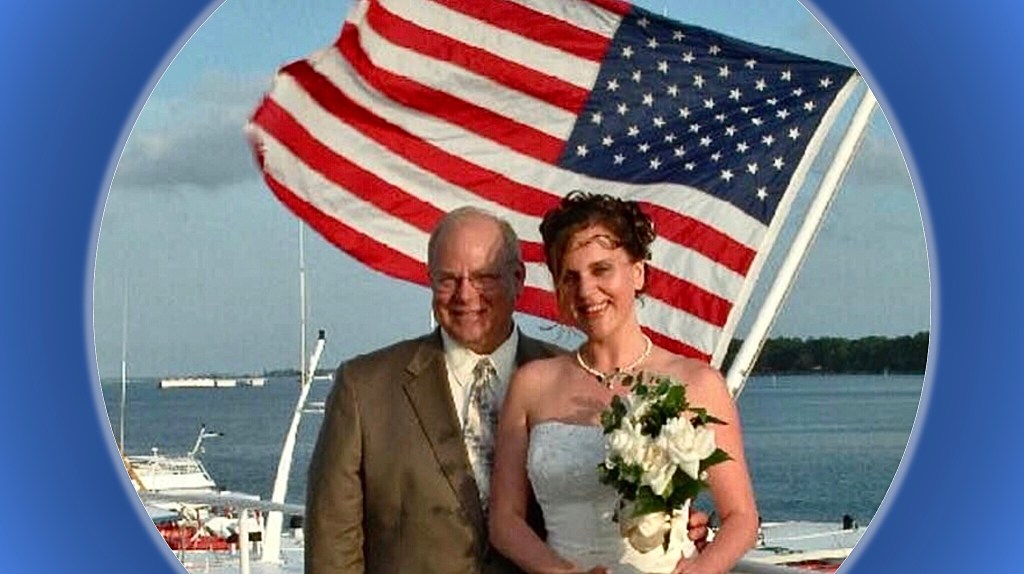
Bob and Vita on Their Wedding Day, Eighteen Years Ago in Florida.
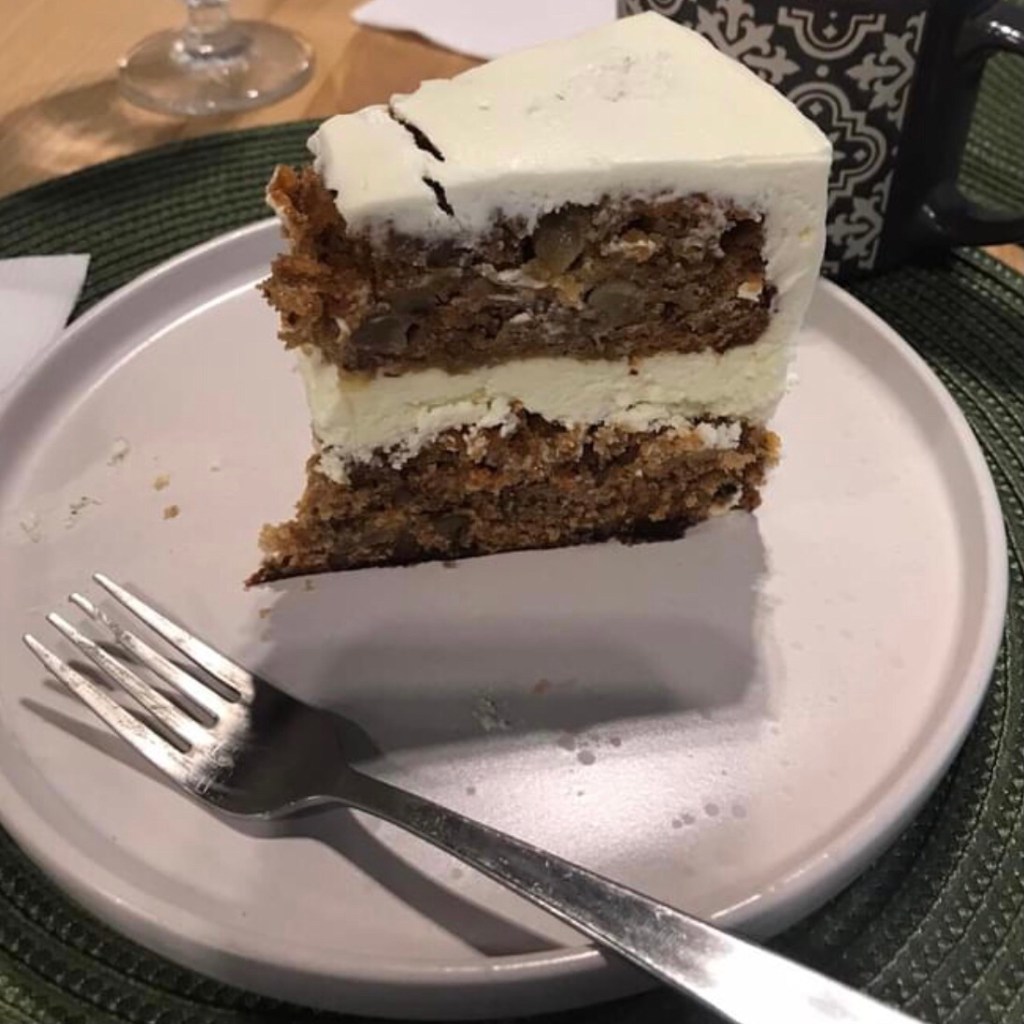
For their anniversary, they celebrated at Cafe’ Mimi in their hometown of Brovary, just outside of Kyiv. Katya, the chef/owner of Cafe’ Mimi made them an American carrot cake using Vita’s recipe – Bob says he has “had carrot cake all over the US and in many other countries and THIS one was the best I have EVER eaten -> better than my grandmother’s.” 😎
Katya’s Carrot Cake – Maybe, Better than Grandma’s?
We see stories of sharing life and love during the dangers of war over and over in both the real world and in fiction. The great novels “Doctor Zhivago” (Pasternak), “For Whom the Bell Tolls” (Hemingway), “A Time to Love and a Time to Die” (Remarque), or “From Here to Eternity” (Jones) showed us those love stories in fiction, but I like to think Bob and Vita’s story in real life gives them a good run for the money. Life goes on, even amid the struggles of wartime. Sometimes, all you really need is to be with the love of your life and enjoy a slice of carrot cake.
Sometimes, All You Really Need is The Love of Your Life, and a Slice of Carrot Cake.
We should all celebrate life as lovingly as Bob and Vita and remember to focus on what is truly important.
Addendum:
I received this email update from Bob yesterday after I’d already written this blog and just 12 hours before posting it:“The Russians have stepped up their missile attacks in the past few days. They appear to be in a panic that Ukraine successfully used the new British StormShadow missile to destroy a large troop and munitions hub just at the border (this had been out of range until now). Reports are that a trainload of 500+ new soldiers were destroyed along with all their armor and munitions … Last night was a massive missile attack – many of the missiles were the hypersonic ones we shot down 37 of 40 missiles and 29 of 35 drones. Then again today around noon another attack again with hypersonic / ballistic missiles. We shot down 11 of 11 … There was damage / injuries from falling debris and there were some deaths in rural areas – an elderly couple was killed when debris crushed the roof of their home … I think that the Russians know that they are in deep trouble. They know that we are about to hand them their butts on a platter very soon. That is why they are stepping up the frequency of attacks and making an all out worldwide propaganda and diplomacy push to push for the west to stop helping Ukraine.”
Thanks to my friend Bob for providing the material for this blog and for helping to edit. I’m so happy we have reconnected.
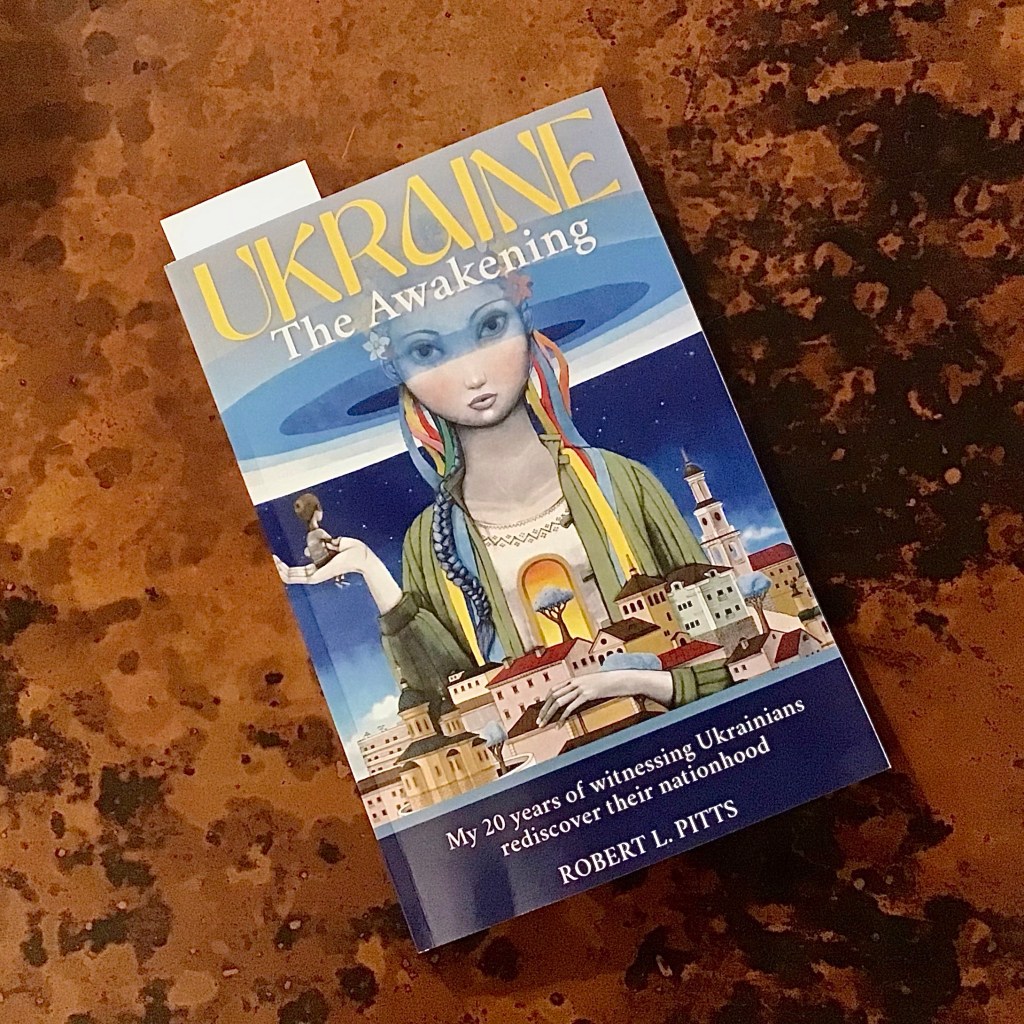
Bob has written a book about Ukraine called UKRAINE: THE AWAKENING: My 20 years of witnessing Ukrainians rediscover their nationhood. When the war began, he became concerned about how little westerners, especially Americans, understand about Ukraine, its people, its history and how the relationship with Russia is misinterpreted in Western media coverage. The book gives readers a view into Ukrainian culture and the beauty of the people. I’ve bought and read the book and recommend it – I’ll publish a short review in a future blog. Here’s a link to the book on Amazon: https://a.co/d/6qUppBU
It was 6:20PM on May 8th DC time, or 1:20AM on May 9th in Kyiv, Ukraine when Bob called. He was in his study, expecting to have to go to their bomb shelter soon. May 9th is a big celebration in Russia for their victory over Nazi Germany in 1945 and there was sure to be an attack. We talked for perhaps twenty minutes, the first time in a couple of years. Things were OK, but it was still tough in Ukraine.
Bob and I worked together at a company called SRA for several years, got along well and were friends. Around twenty years ago, Bob met Vita, the woman who would eventually become his wife. She is Ukrainian by background and still has family there. Over the years, and particularly once Bob retired, they spent time both here in the US and also in Ukraine. They have currently lived in Ukraine for the past two years.
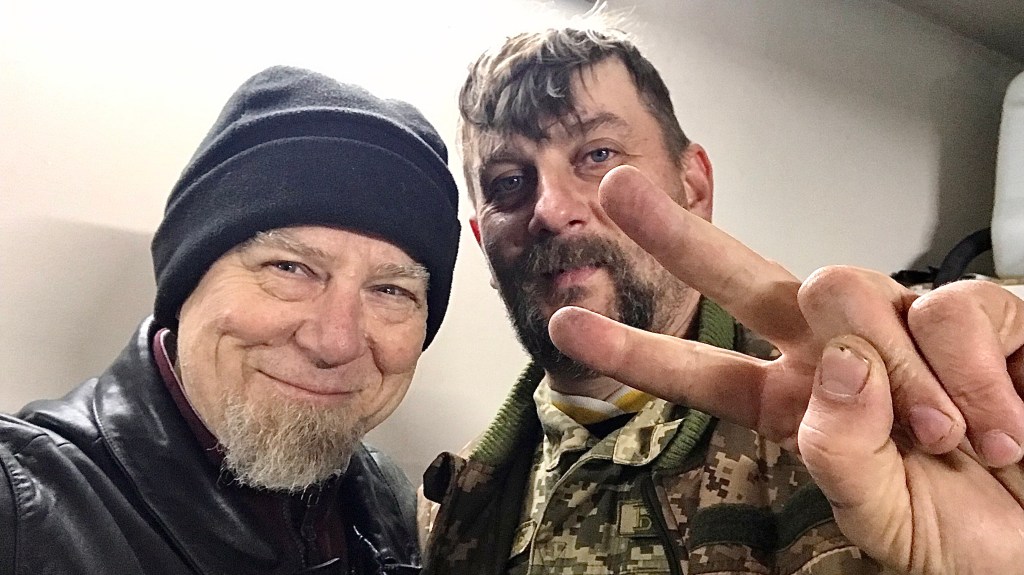
Bob and Vita
He recently sent a text updating me on what has been going on in his life:
“Last year, we decided that we simply couldn’t leave all our family and friends here in Ukraine. So we decided come hell or high water – this was what we needed to do.
We live in a bedroom community of the capital called Brovary. Brovary was in the news a few times at the beginning of the war because they tried to come through here on the major highways to get to Kyiv. We did have some scary times those first few weeks. I never thought I would see the day that I stood in my front yard and could hear (and even feel sometimes) tank and artillery battles. The front came to within about 5 miles of us before the good guys beat them back and they retreated.
These days the front is a couple hundred miles south of us. We continue to have regular missile and drone attacks. These were WAY bad early on, but now the best defense umbrella is over Kyiv and we are in that protected zone. Still, we have a lot of attacks and the air raid sirens go off at 2 and 3 in the morning and we all have to run to the basement/shelter in the barn. That hasn’t been fun and there is a lot of lost sleep that makes everything more difficult. My neighbors and I joke (only partially) that if there is a direct hit on any of our barns, the other neighbors will come and dig us out.
We do all we can to help the army. Donations – we’ve bought uniforms, boots, tents, food and chainsaws, you name it. I even helped my neighbor, Dima, who is a long range mortar specialist to replace the windows in his car that were shot out when he was coming home on leave. The war has gone on so long, they are rotating some of these guys out and giving them a break.
Things are still very bad in some of the smaller towns where the defenses are not as robust. The stories of what has happened to innocent civilians is more than I can say here. There have been real, no bullshit war crimes…”
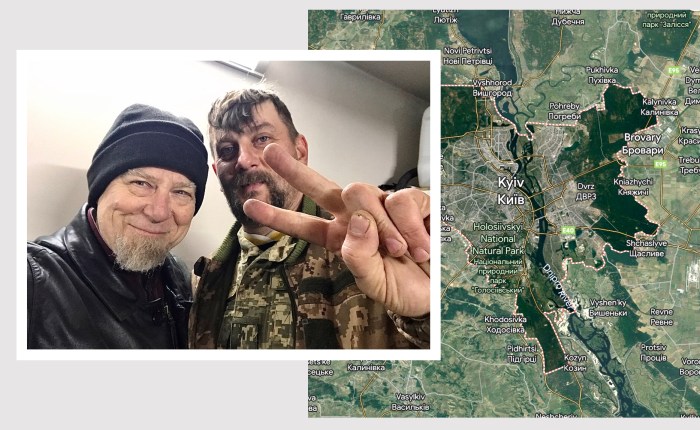
Bob and Dima, While Dima was on Leave
Bob has written a book about Ukraine called UKRAINE: THE AWAKENING: My 20 years of witnessing Ukrainians rediscover their nationhood. He worked over this past winter in Brovary to capture the points he believes are important for westerners to know. When the war began, he became concerned about how little westerners, especially Americans, understand about Ukraine, its people, its history and how the relationship with Russia is badly misinterpreted in Western news media coverage.
The book is intended to give readers a view into Ukrainian culture and the beauty of the people. There is also a bit of the history of Russian relations that is helpful to understand the conflict and to dispel some of the propaganda narratives the Kremlin has been using.
I’ve posted a link to the book in the Addendum. In the meantime, I’ve purchased a copy myself, and promise to give an update on Bob, and the book after I finish reading it.
Bob’s Book – Ukraine, The Awakening.
I asked Bob about posting this info, and whether he was concerned about retaliation. Here was his comment back to me: “ Max, I would fully support your using the material in your blog. My reasoning on writing the book is to get the word out, so this would help a lot I think. As far as security goes – to hell with Putin and his goons. I think he has bigger fish to fry than me, but I am not running or hiding from that son of a bitch.”
On the morning of the 9th, I woke up, and after feeding the horses, made my coffee as usual. When I opened my iPad, this message was waiting for me from Bob: “It was really good speaking with you last night Max. We are all good here after the attacks – they started around 4am. We destroyed 23 out of 25 cruise missiles in the air”.
—I will continue to report on Bob’s story in a couple of future blogs. —
Addendum:
Here is a link to the book at Amazon if you are interested in purchasing it: https://a.co/d/6qUppBU
And, Here is a recent Zoom interview Bob did with Cortney Evans at WMBB 13 ABC in Panama City, Florida: https://youtu.be/GuJoxO8Qi8s
I’ve written one previous blog about Ukraine. You can read it here: Command and Control (C2), along with Command Centers, are phrases you hear concerning the Russians in Ukraine. In my military career, I worked all levels of C2 from Infantry Brigade to Presidential, and I can see the Russians are shockingly missing, or ignoring some C2 fundamentals. […] Continue here: https://mnhallblog.wordpress.com/2022/06/14/russian-command-and-control/
Euromaidan Press (seen at the end of the blog) is a daily English language summation of Ukrainian news and information. If interested, look online and you can subscribe here: https://euromaidanpress.com
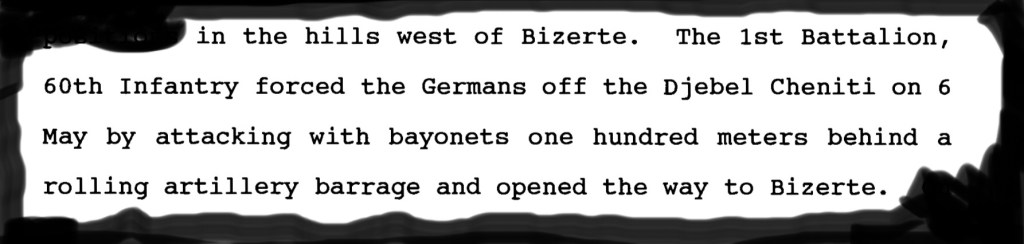
80 years ago on May 6th, 1943, Dad and the other men of 1st Battalion, 60th Regimental Combat Team were given the order to fix bayonets. They were about to attack Djebel Cheniti in Tunisia by direct assault with a bayonet charge. I’ve thought quite a bit about how that attack may have affected Dad and his outlook on life.
A year ago, I was doing research for another blog about dad and the closing days of the North African Campaign in 1943. I was shocked to learn about a battle that dad never mentioned. At the time, his unit had been in continuous combat for two months.
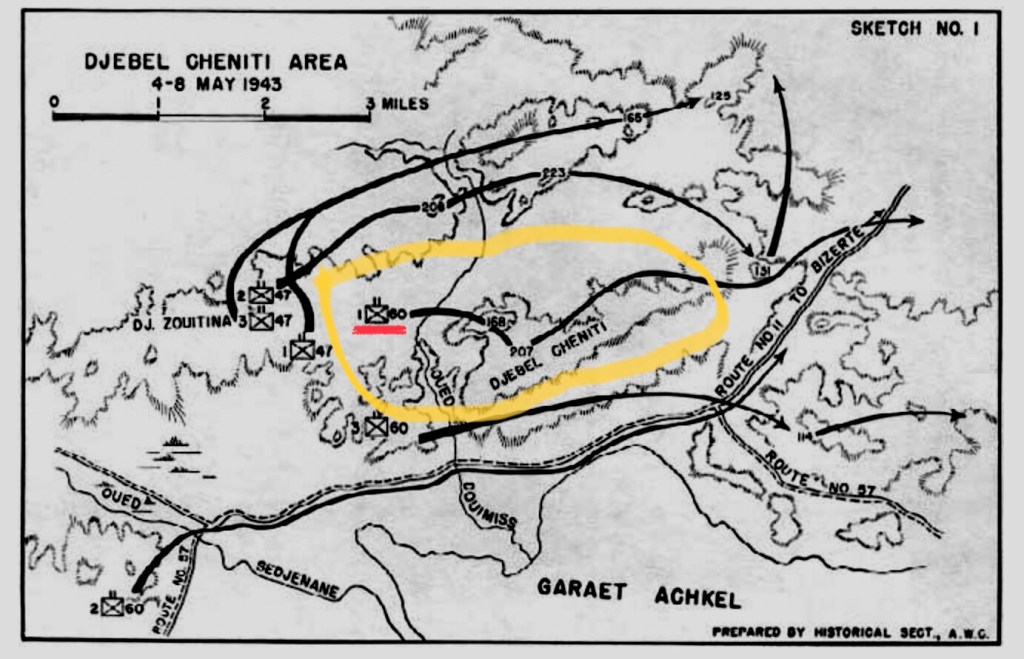
From the history books: “One last ring of rugged hills now remained between the Ninth Infantry Division and Bizerte. The German troops on Djebel Cheniti, the highest point on the 8 mile wide area of the Bizerte Isthmus, halted the advance. To break this bottleneck, General Manton S. Eddy (Commander of the 9th Infantry Division), devised a plan with two parts. The division would mount a flanking maneuver around the hills, while the 1st Battalion of the 60th Regimental Combat Team (dad’s unit – about 500 men) would attack Djebel Cheniti by direct assault with fixed bayonets. They would follow artillery fire that pounded the slopes at 100-yard intervals.”
The 9th Infantry Division Plan of Attack as it Unfolded.
Let’s take a pause in the story for a second. Fix Bayonets is a command that probably goes back as far as the introduction of muskets. What the command literally means is you are attaching your bayonet to the end of your rifle. What it actually means is one of two things – 1) you are preparing to charge the enemy in close-quarters or 2) getting ready to defend yourself from an imminent enemy assault. Either way, it is close-in fighting. With a rifle and a bayonet, you are perhaps three feet away from your enemy. There is no hiding. There is no ducking away. Army Field Manual 23-25 captures it succinctly: “The will to meet and destroy the enemy in hand-to-hand combat is the spirit of the bayonet. It springs from the fighter’s confidence, courage, and grim determination.” In my own bayonet training nearly 50 years ago at West Point, they were even more to the point: “What is the spirit of the bayonet?” “To Kill!”
At that distance, it is kill or be killed. There is no middle ground.
… … …
May 6th 1943 was a slippery, muddy and rainy day. The order was given to fix bayonets around 1PM and behind rolling artillery, the battalion attacked. They moved forward quickly and only 100 yards behind the falling artillery barrage. On the map, it looks like the total distance they needed to cover was a little over a mile. After three hours they took Hill 168. Moving on to Hill 207 they met stronger resistance. An artillery concentration disorganized the enemy and the battalion attacked again before the German troops could recover. By nightfall, they had taken the summit of Hill 207, although there were still Germans on the southeastern slopes. In a war that lasted years, there were only brief mentions of the battle in the history books, but all of them mentioned the fixed bayonets.
Only a Brief Mention in the History Books
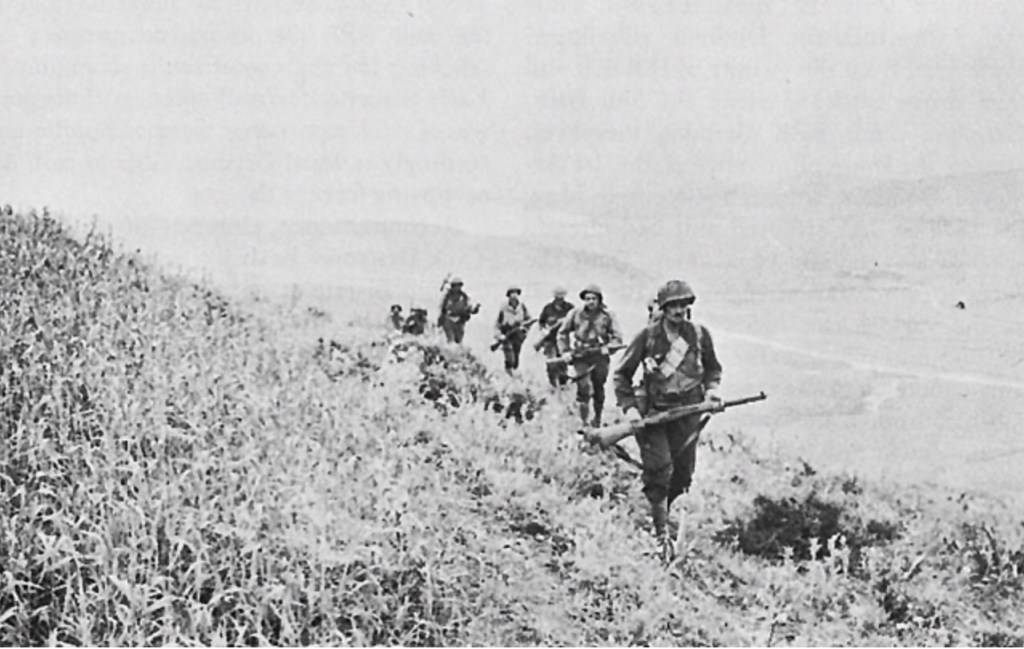
The next morning, May 7th, German machine gun crews began taking off for Bizerte as the division advanced. The 60th moved to cut off the Bizerte road and On May 8th, Bizerte fell. The war in North Africa was over and their immediate mission accomplished.
Men of the 60th Outside Bizerte on May 7th, 1943.
In the words of the 9th Infantry Division Record, “Djebel Cheniti was a brilliant demonstration of Infantry “leaning up against” artillery preparation. One of the strongest positions in the final Axis defense was assaulted by one battalion of Infantry with fixed bayonets, with artillery blasting a shell-strewn pathway for its advance. Another story in the annals of foot soldiers, who do the dirty tasks of warfare”.
Why am I blogging about this now? The story has haunted me since first learning about it. I’ve thought about it quite a bit over the past year. I never heard dad say anything about Djebel Cheniti. I never heard dad say anything about a bayonet charge. Not one damned word. The more I thought about it, the more I thought about how it must have influenced his life.
I have to figure after you’ve been in a bayonet charge, everything else in your life, maybe for the rest of your life, must seem easier. When you are that close to death, and you survive, what else in your life is really going to be a threat to you? Money issues? Work Issues? Mortgage issues? Sickness? Wouldn’t just about everything pale in comparison?
It would explain a lot about dad. His lust for life. His enjoyment of life. His ability to keep everything in perspective, even when things were going badly. His gentleness and tolerance. His quiet firmness in facing down jerks and bullies. Perhaps he already had all of those traits and would have developed into the same man, but I’m not so sure. I think a bayonet charge at the age of 19 might make everything else in life just a wee bit easier to contemplate and to handle. Maybe every day after May 6th, 1943 was a gift not to be squandered. Dad’s gone now. How I wish we had time for one more conversation.
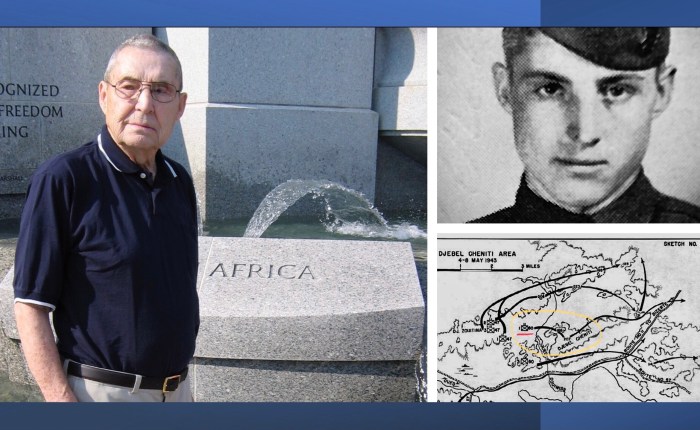
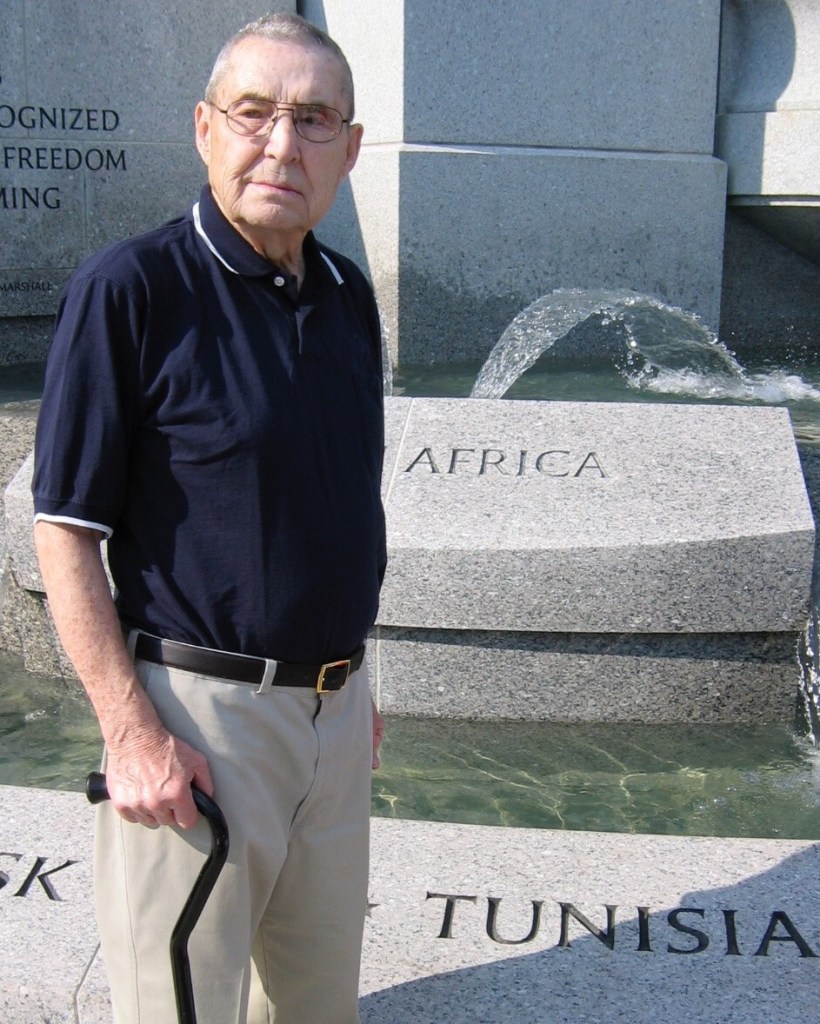
Dad at the WWII Memorial, Two or Three Years Before he Passed Away.
Dad was in almost continual combat from November of ‘42 to August of ‘43 when he was wounded in Sicily. I’m sure all of that combat, and his wounding affected him and changed him, but the bayonet attack is what has stuck in my mind as a singular event, maybe even more than his wounding. He told bits and pieces of different battles over those months, and mostly they involved funny incidents. He even eventually told me the story of how he was wounded, when he was recovering from the stroke he suffered in the ‘90s. The bayonet attack? Not a single word.
The blog I was working on when I found out about the bayonet charge was a funny story about dad and “Al Capone” – “My Dad, then Twenty year old Sergeant Willie I. Hall, looked at the German soldier and said “Chicago”. The German answered “Chicago?” Dad stared back. “Chicago … Al Capone”. Now the German’s eyes’ widened. Everyone knew who” […] continue at: https://mnhallblog.wordpress.com/2022/05/08/dad-and-al-capone/
Historical parts of this blog were derived from these sources: The 9th Division History; Center of Military History: TO BIZERTE WITH THE II CORPS 23 April – 13 May 1943; The US Army in WWIIby George Howe; and The Development of Combat Effective Divisions in the United States Army During WWII, a thesis by Peter R. Mansoor.
Thanks to my sister, Roberta, and niece, Tami, for their thoughts and inputs. And of course thanks as always to Colleen for her editing support.
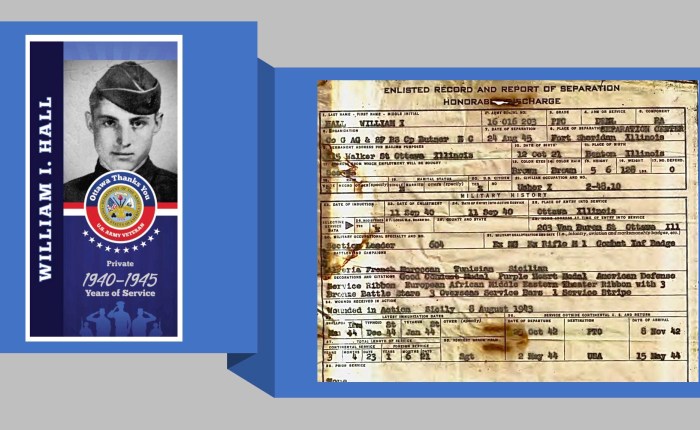
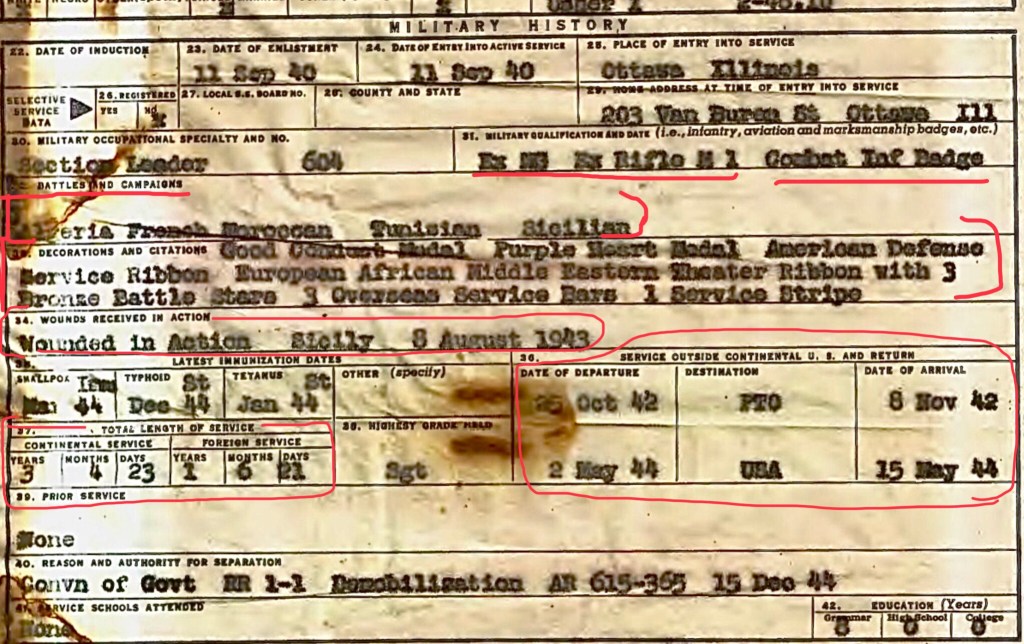
When discharged from the Army on August 24th, 1945, dad was 21 years old and had been in for nearly five years. His WWII service included time in Algeria, Tunisia, French Morocco and lastly, Sicily, where he was wounded. His discharge papers tell the intriguing story of those five years in one page.
This is the second of a two-part blog. Last week, I told the story of how I received dad’s enlistment and discharge paperwork from the National Archives. I then explored several interesting observations from his enlistment form, including the fact that he lied about his age in order to enlist. He claimed he was almost 19 years old, when in fact he was still two months shy of his 17th birthday. You will find a link to the first blog in the Addendum to this one.
Today’s blog explores his discharge paperwork, and briefly tells the story of his five years in the service. Dad was with B Company 1/60th Regimental Combat Team of the 9th Infantry Division from September 1940 until he was wounded and almost died in Sicily in August of 1943. Although his original enlistment in 1940 was for three years, when the war started all enlistments were extended for the duration.
As with his enlistment papers, dad’s discharge paperwork was discolored, creased and yellow, perhaps from the fire at the National Personnel Records Center (NPRC). A few parts were unreadable, but most of it was legible.
Dad’s Honorable Discharge Paperwork – it Suffered in the Fire at the Archives.
I’ll magnify and expand a couple sections to talk about some of the details.
At the top of the form, there are a couple of interesting items.
The Top of the Discharge Form – Magnified
Block 3 confirms his last duty station as Camp Butner, NC. This is where dad returned to the States in 1944 after recovering from his wounds. Camp Butner was both a troop training center, and a Prisoner of War camp. Dad told us stories later about helping train troops there (and about performing KP).
We see in block 4 his actual discharge date is August 24th, 1945. This was two weeks after the atom bomb was dropped on Nagasaki, Japan, and one week before the official surrender of the Japanese on September 2nd. The army was already discharging soldiers as the war was winding down, based on how many “points” they had (more on “points” later).
Block 7 still shows the birth date he lied about to enlist – Oct 12, 1921, as opposed to his real birth date of Oct 22, 1923. And amazingly, dad’s height, 5’ 6” and weight, 128 pounds haven’t changed at all from when he enlisted. Me thinks, someone was probably just copying from other forms to put this info in.
Block 21 shows his civilian employment as “Usher”, so maybe not everything was copied over. His enlistment paperwork showed him as a “Laborer”.
Now we move on to the Middle section of his discharge paper, dad’s “Military History”. This is the meat of the discharge, and paints the real story of his time in the service. I’ve again magnified the view so you can better read the form. In order to tell dad’s history in a linear fashion, I will sometimes go out of order in discussing what is in the blocks in this section.
Dad’s “Military History” in His Discharge Paperwork.
Block 31 shows dad qualified as an expert both on the Machine Gun, and the M1 Garand rifle. It also notes he was awarded the Combat Infantryman Badge. You could only earn the CIB if you were in the Infantry (not in Field Artillery, or Armor, or Signal Corps etc), AND you were in actual active combat with the enemy.
I’m going to skip to block 36 – “Service Outside the Continental United State” for just a minute . Note here that he arrived overseas on November 8th, 1942. What it doesn’t say is he arrived with the 60th Regimental Combat Team of the 9th Infantry Division at around 5AM under gunfire on the beach near Port-Lyautey, French Morocco. This was as a part of Operation Torch, the invasion of North Africa. Torch was (next to D-Day) the second largest amphibious assault ever attempted.
Now back to block 32, where we see in addition to French Morocco, dad also took part in battles in Algeria and Tunisia in North Africa where they defeated Rommel and the Africa Korps. Those battles took place between November 8th of 1942 and May 10th of 1943. Then in July of 1943, dad participated in the invasion of Sicily.
Skipping back down to block 34, we learn dad was wounded on August 8th, 1943. What it doesn’t mention is he was shot three times by the Germans in the mountains of Sicily and it took over a day to evacuate him by hand to an aid station. It also doesn’t say he almost died due to the combination of his wounds and the Malaria he contracted. His time with the 9th Infantry Division ended here.
Returning to block 36, we see dad arrived back in the States on May 15th, 1944, three weeks before D-Day. This was after he recovered from his wounds (he was evacuated to North Africa to fully recover). Due to the severity of those wounds, he didn’t return to combat – the war was over for him, although he remained in the service for another 15 months.
Block 37 “Foreign Service”, shows that of dad’s almost five years in the service, one year, six months and twenty-one days were spent overseas. Approximately eight of those months were in near continuous combat.
Finally, we return to block 33, “Decorations and Citations”. In addition to his Good Conduct Medal and Purple Heart (for being wounded), he was awarded: the American Defense Service Ribbon (awarded to troops on active duty prior to Pearl Harbor); the European African Middle Eastern Theatre Ribbon with three bronze stars (this was for participating in the campaign in French Morocco, and the subsequent campaigns in Algeria, Tunisia and Sicily); three Overseas Service Bars (one for each six month period in a theater of war) and finally a Service Stripe (one for each three year period of service). It’s worth noting dad also earned a Bronze Star (for exemplary conduct in ground combat against an armed enemy), which didn’t catch up with him until after he was already discharged, and is not reflected in this paperwork.
Finally we come to the bottom of the discharge paperwork and block 55. There are three items noted here, although not all are readable.
Block 55 – Points and Other Things
First, dad, along with all other honorably discharged service members, was issued a lapel button to be worn on civilian clothing. At the end of the war, it was particularly useful for those traveling home so they were quickly identified as service members and received priority for buses and trains.
Next we see dad’s ASR score was 95. ASR stood for Adjusted Service Rating and is what was used to determine the priority for discharging soldiers at the end of the war. The rules were simple in principle: “Those who had fought longest and hardest should be returned home and discharged first.” Points were given for length of time in the service, length of time overseas, combat campaigns, combat awards, being wounded and so on. At the time, “the points” required for discharge were 85. Dad, with his nearly five years of service, his 1 1/2 years overseas, his Purple Heart, and his four campaigns was at, or near the top of the heap. His 95 points reflect that, and was why he was discharged so quickly as the war was winding down. If you have ever watched the show “Band of Brothers” there is a great section in the last show focusing on this. Points were on everyone’s mind.
Finally, there’s the cryptic last line “xx days lost under AW 107”. What the hell is that? AW 107 stood for Articles of War (the forerunner of today’s Uniform Code of Military Justice). Article 107 refers to docking the soldier credit for days of active duty that they didn’t earn. Typical examples were for going AWOL, being too drunk to report for duty, or getting in trouble for other minor offenses and confined to the barracks. Since the service member was not performing his or her duties during those periods, they didn’t receive time in grade or retirement credit for those periods. It turns out many/most enlisted soldiers during WWII had AW107 scores higher than zero. During my research, I’ve found cases with numbers from 1 to over 200. I’ve tried like hell to read the smudged number here but can’t quite make it out. It might be a 5? It might be a 3? I don’t think we’ll ever know. What I do know is dad was busted from Sergeant to Private in June of 1943 for getting caught in, and subsequently kicked out of, a walled city twice in one night after missing the last truck back to his unit. Perhaps he was confined for some period of time in conjunction with this “incident”.
After his discharge, dad returned to Ottawa, Illinois in September and lived there for the next 65 years. In Ottawa he met mom, and had us three kids, six grandchildren and 13 great grandchildren. He retired from the railroad in 1985, and passed away in 2010.
For those of you who know me, or who have followed this blog for any length of time, I’m pretty sure you are aware of how much I admired my father. An embodiment of “The Greatest Generation”, dad was always one of my heroes. This was true certainly for his actions during WWII, but also for how he lived his life, and how he took care of our family.
A Banner Honoring Dad in Ottawa, Illinois on Veteran’s Day Last Year.
I’ve probably written more blogs about him than any other subject. The blog last week about his enlistment and this one about his discharge file are special to me. It’s somehow reassuring that his enlistment and discharge paperwork confirm the outline of the oral histories we heard from dad growing up. I wish I had discovered this paperwork while he was still alive, just so we could have one more conversation about it over a coffee or a beer. “Dad, tell me again about the time …”, or “Dad, about those lost AW 107 days…”.
I love him and miss him.
Addendum:
I apologize for the length of this and last week’s blogs, but I was trying to give some context to the cold and straightforward words in the paperwork.
– Here are a selection of other WWII blogs that I’ve alluded to in this blog. There may be some minor discrepancies in them, based on the availability of the new information in his paperwork:
Mar 1943. “Maknassy” – The battle, 79 years ago in March of 1943, was vicious. On the 12th of March, as a part of operations at El Guettar, General Patton detached the 60th Combat Team, Dad’s unit, from the 9th Infantry Division and attached it to […] Continue at: https://mnhallblog.wordpress.com/2019/03/22/the-twenty-days-of-maknassy/
May 1943. It was in May of 1943 in Tunisia, Dad looked at the German soldier and said “Chicago”. The German answered “Chicago?” Dad stared back. “Chicago … Al Capone”. Now the German’s eyes’ widened. Everyone knew who […] continue at: https://mnhallblog.wordpress.com/2022/05/08/dad-and-al-capone/
Sometimes, it’s the little things we remember. With a small assist from Burt Lancaster, I once surprised Dad with a present of WWII mess hall coffee mugs he’d been trying to find in antique shops for years. The gift brought joy to both of us at the time, and continues giving me comfort to this day.
Dad always liked his coffee. From the time we were kids, I remember the role it played in his life. On early weekday mornings, he packed the big thermos with him as he left for work on the railroad. On weekends, there was a pot available all day long on Saturdays, and half the day on Sunday. On Saturday mornings, various uncles or aunts stopped by. They all sat around the kitchen table drinking endless cups of coffee, while telling, or retelling, the stories of their youth, and the war years. We kids often listened in, laughing at the stories we came to know by heart.
I started understanding a bit more about his love for coffee when I was applying to West Point. On a couple of occasions, dad drove me to Fort Sheridan (an Army Post in Illinois that no longer exists) for a physical and a fitness test. As we were walking on the Post, he surprised me by becoming a bit nostalgic for the “good old days” in the Army, and talked about how good the coffee was. I think he may have even joked with one of the folk we interfaced with about reenlisting, if he could have a cup of coffee from the Mess Hall. It’s strange, the things you remember, but I distinctly recall the conversations about Army coffee on those trips. It was about 27 years after World War II and he was 48 at the time.
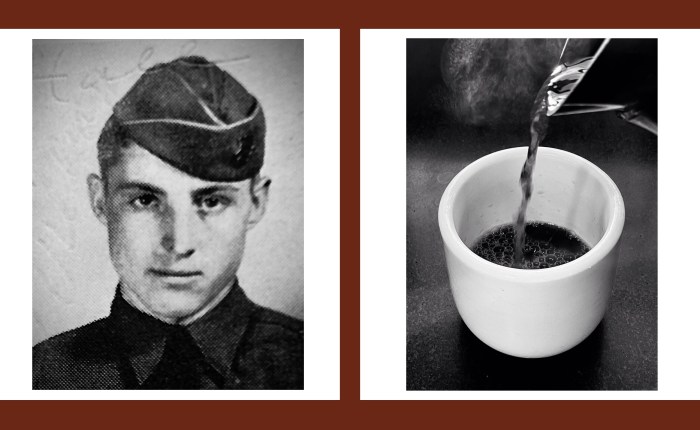
Dad in the “Good Old Days” in 1941, Sometime Before Pearl Harbor
I eventually graduated from West Point and Cath and I were deployed to Germany for most of the ‘80s. We didn’t see Mom and Dad much during our time overseas.
In ‘85, Dad retired from the railroad, and he and mom started traveling more, particularly to jazz concerts around the country. They also managed to visit us in Germany in ‘88. While there, dad talked about their travels. In a side conversation, he mentioned they also typically visited “antique” stores during their trips. He was looking for mess hall coffee mugs from WWII, but hadn’t found any. I was intrigued. What the hell do WWII mess hall coffee mugs look like, and why did he want them?
In Dad’s words, they were thick, heavy white mugs with no handle. You could put both hands around the mug when you took your first sip in the morning, and the mug warmed your hands. He’d used them throughout his time in the Army during the war. I mean, he was waxing poetic about these mugs. I still didn’t quite know what they looked like, but that was OK. During their visit, we stopped in a couple of shops with older items, and Dad would poke around. His thinking was maybe during the occupation of Germany after the war, some mugs made it into the local economy. The looking was to no avail, and no mugs were found.
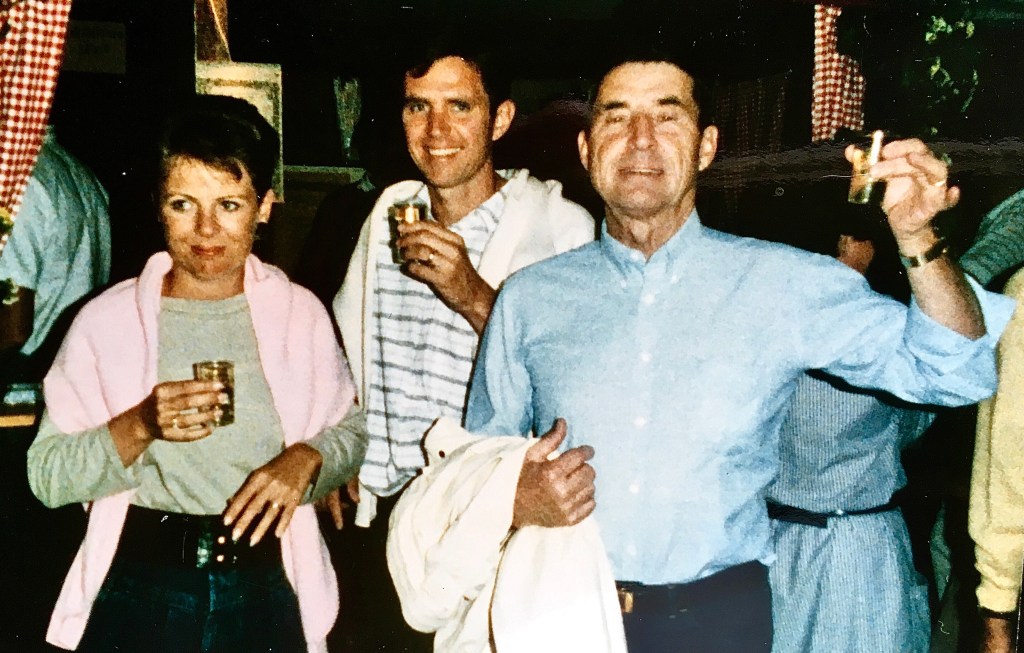
Dad, Cathy and I at a Winefest on the ‘88 Trip to Germany.
We eventually returned to the States in ‘89, and on a visit at Mom and Dad’s over Christmas, Dad and I were watching TV. The classic WWII movie, From Here to Eternity, was on. You know the movie… Burt Lancaster, Montgomery Clift, Frank Sinatra, Donna Reed, Debora Kerr and Ernest Borgnine. It has the great scene with Lancaster and Kerr kissing on the beach as the waves crash over them.
As we were watching, Dad suddenly shouted out “There’s the coffee mug! Look in Burt’s hand!” What!? I look up, and I’ll be damned. Just as the Japanese are about to attack Pearl Harbor, there’s Burt with a white, thick, handleless coffee mug… which he immediately throws on the ground to go out and confront the attacking Japanese.
Everyone Knows the Scene of Burt and Deborah Kerr on the Beach, but Dad and I Were More Interested in Burt and the Coffee Mug.
I’d completely forgotten about the mugs until Dad’s outburst. Of course I immediately asked him how the hunt was going. He’d visited a lot of shops, but never seen any, or really even met anyone who knew what he was looking for.
At the time, I was involved in a couple of classified Black programs for the military and traveling a fair amount. Cathy couldn’t know where I was going, only the approximate day of my return. On the trips, we could only use cash, and no credit cards were allowed. We often had some spare time, and now that I knew how the mugs looked, I too started poking around in the occasional store.
A couple of years went by, and I wasn’t having much luck either. That changed in the spring of ‘93. I was looking around a junk shop in the middle of no where, and there they were – Six of them! Holy hell. Were these really them? I asked the owner what he knew about them, which wasn’t much, only that they were old coffee mugs. It was enough for me. I counted out some cash, bought all six mugs, and returned home with them a week later.
Six Handleless Coffee Mugs, Bought with Cash at an Unnamed Location
Cathy and I thought about giving them to Dad for a Christmas or Birthday present, however those were still a while away. Mom and Dad were coming for a visit in July, and we decided we would give them to him then, with a twist. Rather than just hand them over, we would not say anything, serve soup in them, and see if Dad noticed.
They finally made it to Virginia and the big night arrived. It was a beautiful evening, and we ate dinner in the backyard on the picnic table. Cathy made Gazpacho for a first course, and we served it in the mugs. As she and I brought the soup out, we set a mug in front of each of us.
I could hardly contain myself, I was so excited. We started eating and both Mom and Dad complemented Cath on the soup. There was no word from Dad on the mugs. Were these not the right ones? We continued eating, and all of a sudden Dad paused, and started looking at his mug. He looked more intently, and then, “Say! I … I … I think these are the mess hall coffee mugs!”, at which point I burst out laughing.
Dad verified these were INDEED the mugs. By then, we were all laughing, and I told him the story of how I found them.
We used those mugs for coffee in the morning for the rest of their visit. Dad would use both hands, and bring it up to his mouth and nose to inhale the smell of the fresh brewed coffee, probably the same way he did back in 1940-‘45. When they left, I sent four of the mugs home with them, and kept two for us.
Nostalgia and Coffee. What’s Not to Like?
Eventually, Dad passed away in 2010. At some point in time, mom gave the four mugs back to us. Occasionally, I use one of them for my own Cuppa Joe in the morning. I feel the warmth of the mug in my hands, inhale the smell of the fresh brewed coffee, and think back to Dad – It’s a wonderful way to start the day.
Addendum:
If you want to see the scene of Burt Lancaster with the coffee mug as the Japanese are attacking Pearl Harbor, you can view it here: https://youtu.be/2UxTGH7cR5Y












 Live Life Exuberantly