This write-up is from my friend, Clark Hall (no relation), a Vietnam Veteran. While the words are his, the lessons are for all of us —
60 years ago, on August 3, 1965, an “incident of war” occurred that foreshadowed the human, political and military disaster underscoring the lunacy of the Vietnam War.
Recently, I stopped in at David’s Barbershop for a haircut. My usual barber wasn’t there and instead, Tammy cut my hair. We were making small talk, when I learned she was one of the original boat people* who escaped from Vietnam. She told a fascinating story filled with both sadness and hope.
You know what I mean by barbershop small talk with a new barber – the weather, what’s new in town, whether I was retired… When I asked where she was originally from, she said Ho Chi Minh City, but left as a young girl. I asked her if she was one of the boat people. She looked at me, nodded and started telling her story.
After the fall of Saigon (now Ho Chi Minh City) in 1975, things became tougher in what was then South Vietnam. The North Vietnamese were rooting out “problems” and people who were, perhaps, too close to the previous government in the South. Tammy’s extended family decided that in order to survive, they needed to leave Vietnam.
They considered going overland to Thailand but discarded the idea. The only practical way was via boat as many others were already doing. Tammy’s aunt, her father’s older sister, took on the task of organizing the escape for their family.
Eventually, she found a boat making the trip to the Philippines. The boat held 50 people total and they secured passage. They were told when and where to meet the boat and have the remaining necessary funds with them.
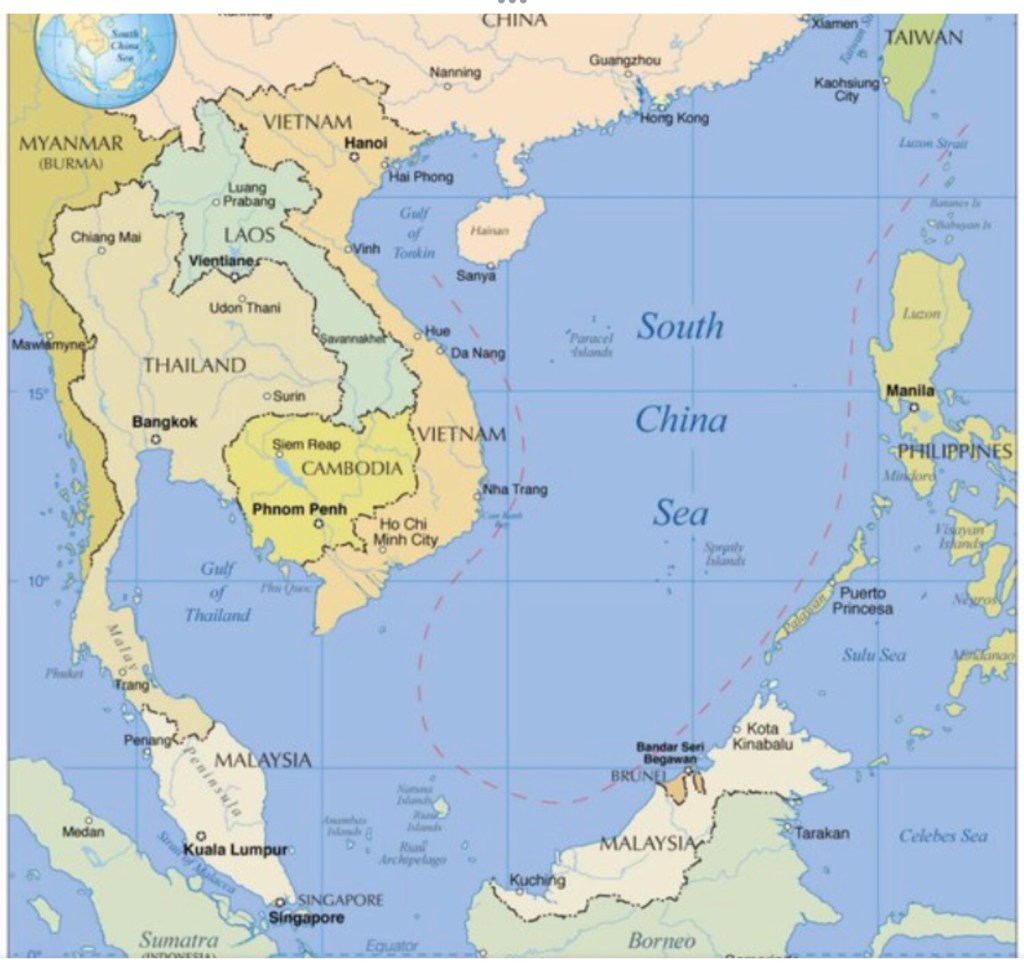
They Would Attempt to Cross the South China Sea, Heading for the Philippines.
On the appointed day, they arrived early at the location and the boat was waiting for them. They made their final payments and boarded. Her father suddenly remembered something he needed from their house. Tammy doesn’t remember exactly what it was, only that it was important. There was plenty of time, so he left the boat and told them he would be back soon.
Time passed. Her father didn’t return. More time passed and her father still hadn’t returned. Finally, it was time for the boat to leave. Tammy’s aunt tried persuading the captain to delay the departure, but it was to no avail and the ship departed. Tammy never saw her father again.
The journey was a perilous one, as they needed to cross the South China Sea to reach the Philippines. They didn’t encounter pirates on their trip, which was sometimes common, however they did face bad weather and rough seas and the ship became lost. Although the captain piloted them back on route, they spent six days without food or water, before eventually landing in the Philippines. 49 people departed Vietnam. Unlike many of the boats evacuating people, all 49 arrived alive at their destination. Her father would have been the 50th person.
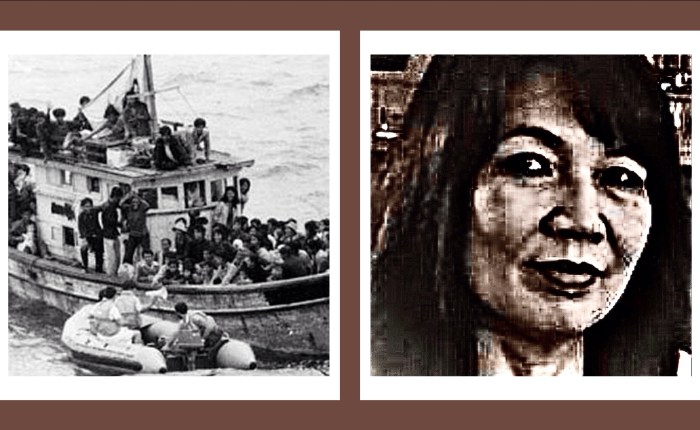
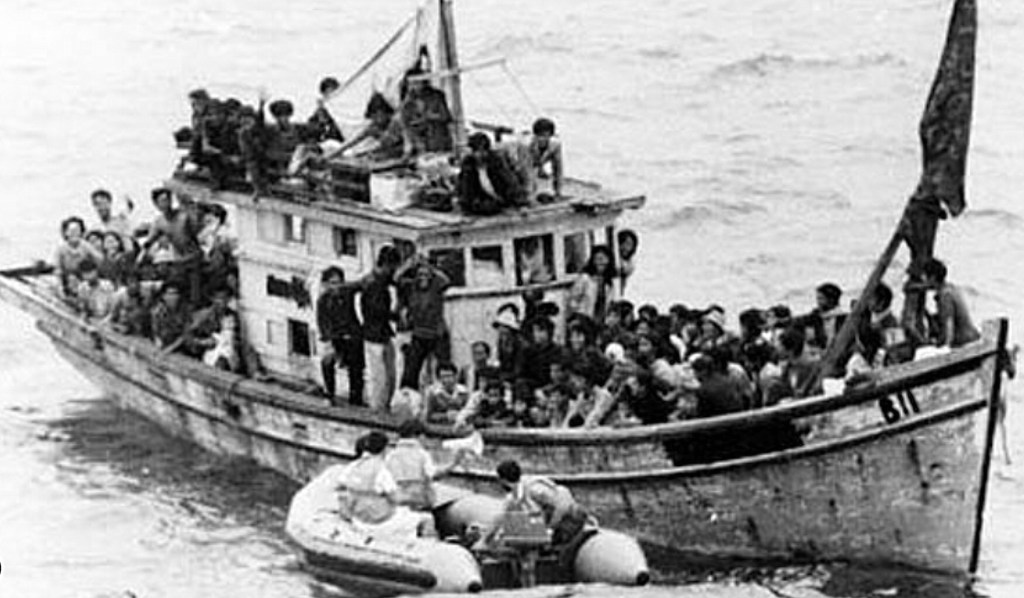
A Boat Similar to the One Tammy and Her Family Used.
Her family spent one or two years in a refugee camp in the Philippines, before eventually relocating to the United States. There she would meet her husband, also a Vietnamese refuge. He became an electrical engineer and eventually worked for the United States government. They raised two sons, one of whom graduated from George Mason with a degree in Cybersecurity, and the other from Virginia Tech with a degree in Software Development.
Tammy finished cutting my hair and I thanked her for the haircut and for sharing her story. I’d gone to the barbershop for a haircut – I also left with a small history lesson.
Tammy.
While driving home, I thought about Tammy, her family and other Vietnamese who came to this country in the aftermath of the Vietnam War. Wikipedia tells us about 2 million people attempted to flee Vietnam by boat. Somewhere between 200,000 and 400,000 people died. Roughly 800,000 were successful in finding a new home. Over 400,000, including Tammy, eventually settled in the United States.
All they wanted was a bit of freedom and a better life than what they saw coming at home. They were willing to risk death or imprisonment. Tammy and her family achieved some version of their dream here in America, although at the price of losing her father. Since then, she has contributed to our country and her children will contribute to our future.
In many ways, her story isn’t so different from the indentured servants, the Puritans, the Irish, the Italians, the Eastern European Jews, the Mexicans or others who have emigrated to America over the course of our history. People left home, often at great peril, to flee persecution, or seek a better life or greater freedom. For many, upon reaching America there was a period of adjustment on their part, and resistance by those already here, before they too were accepted and became a part of the melting pot.
It is a story as old as America itself and regularly repeats over the decades and centuries of our history. Personally, I believe it builds up who we are as a country. They say the strongest steel is forged in the hottest fires. Thank heaven for Tammy and people like her who have faced great adversity and are now a part of America. We need them to continue strengthening the steel of this country.
Addendum:
Some older people may have forgotten the story of the Vietnamese Boat People, and those who are younger may have never heard about them. The short version of the story goes like this: the United States left Vietnam in 1973. In 1975 30 North Vietnamese divisions were involved in the fight to take South Vietnam. A great number of the troops defending South Vietnam were concerned about their own families and deserted. The North Vietnamese moved rapidly through South Vietnam and Saigon fell in April of 1975. After the fall, many South Vietnamese were in fear of their lives under the new government and fled, or tried to flee South Vietnam. This took place between 1975 and the early ‘90s, with the highest period of flight from ’78 – ‘79. While some travelled overland, trying to reach Thailand, most went by boat with destinations of Thailand, the Philippines, Malaysia, Hong Kong and Guam.
Thanks to my friend and West Point Classmate, Ken Bresnahan, for some assistance with this blog.
In June of ‘83, I returned to America after serving 4 1/2 years with the Army in Germany. At the time, the Post-Vietnam dislike of soldiers was still alive, a decade after the war. Returning to the States, I had a good experience at the airport that still gives me shivers today.
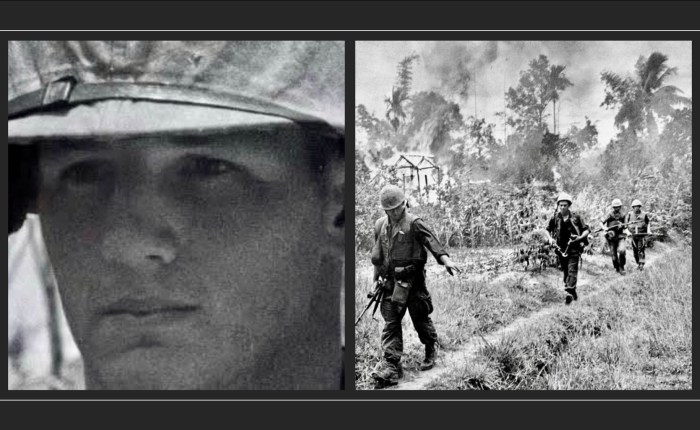
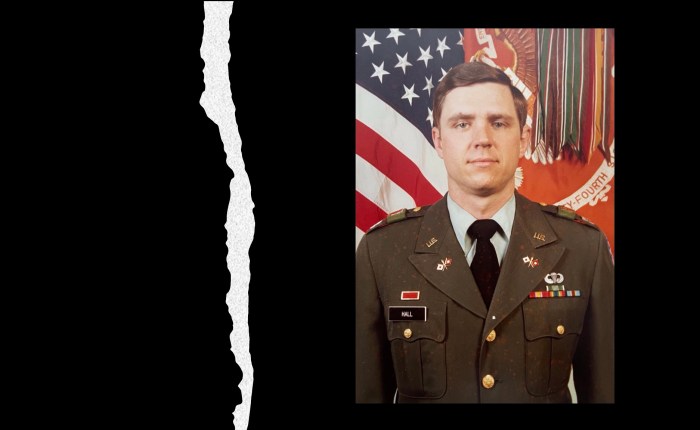
Captain Hall in Early 1983. Commander, HHC, 34th Signal Battalion.
It’s different now and we as a country, or at least most of us, have learned to separate politics from the people serving in uniform. Back then? Post-Vietnam? We weren’t so great about how we treated our soldiers. I remember someone spitting at me as a cadet while walking in New York City in the mid-‘70s. In 1979, right before we first deployed to Germany, a woman from our church commented to my mom about how terrible it was that they as taxpayers had to pay for Cathy to go to Germany with me, and for us to be able to take some of our belongings with us. AND this was a woman from our church I’d know since I was a child.
Of course most family friends, and our close friends were great with us, but past that? Things were often ambiguous. None of this was as bad as soldiers put up with during Vietnam, but it would be years later before we (as a country) really learned to separate politics and our respect for our soldiers.
In June of ‘83, I turned over my Company Command in Stuttgart, Germany. I had a couple of weeks of additional work I needed to do, so Cathy flew back ahead of me. Finally it was time for me to go home and I flew on a commercial flight wearing civies. We landed at Dulles and I made my way to customs where the line seemed about a mile long. Several flights arrived at the same time, and the line wasn’t moving.
As I stood there, I noticed a young lady walking down the line looking at people in the line. Eventually she arrived in front of me and said “Are you in the Armed Forces?” I’m sure my short haircut and bearing probably gave me away.
I answered “Yes ma’am, the Army.” and she said “Follow me.”
I walked with her for quite awhile and we finally arrived at the front of the customs line. One of the stations opened up and she walked me over to it. The guy behind the counter looked at me and asked for my passport, or my military ID and orders, which I produced for him. He took a quick look, handed my papers back to me and then said, “Thank you for your service. Welcome home to the United States of America.”
I still get a shiver typing those words today. It was the first time someone went out of their way to thank me for what I was doing, and then welcomed me home to boot. It was such a little thing, but plainly had a huge impact on me. I remember it clear as a bell forty years later.
I’ve thought about this story lately. Probably since Panama in ‘89, and certainly since the First Gulf War, we’ve thanked our soldiers and shown respect for them. Unfortunately, an annual poll conducted last November by the Reagan Institute shows respect for the military dropping from 70% in 2017 to 48% in 2022. Much of the drop was attributed to people (from both sides) trying to politicize the military, or what the military was doing.
To be quite frank, most people today have no connection with our armed forces. Their sons and daughters aren’t in our military. If fact, over 70% of American youth today aren’t qualified for the military. They are overweight, or are doing illegal drugs, or are doing legal drugs that make them ineligible for military service. I fear that for many, saying thank-you is a cheap and easy way to feel good, while not really caring about our troops. Maybe I have that wrong, but I’m not so sure.
As time progresses, I’m hoping we as a nation can adult enough to remember to mentally separate politics and the soldiers serving in the military. I hope that we can take a couple of minutes to genuinely thank our troops. Not pro forma, but really thank them. We continue to owe them that much.
Addendum:
in a side note, in the 4 1/2 years we were gone on that tour, I only made it back to the States once. That was to attend my sister Tanya’s wedding. When Roberta married the next year, we couldn’t afford another trip home. It was one of the many family events we would miss over the course of our almost 9 years overseas.
Thanks to my wife Cathy for input to parts of this blog. As an Army wife, she too remembers those days. Like me, she is also concerned about the lack of connectivity between our society and our military today.


 Live Life Exuberantly