

There’s been a lot in the news lately about creative Artificial Intelligence (AI) art and writing programs. Some see them as the doom of mankind, others as a bright and shiny future. I don’t have an answer to either point, but what I DO know is people better get ready – this is happening and will continue to grow.
AI, or near AI capabilities have been around for awhile, and continue to expand in our lives. Everyone knows about computers frequently beating all but the very best chess champions on a regular basis. In fact IBM’s “Big Blue” computer defeated the reigning world champion, Gary Kasparov, in 1990. In the intervening decades, AI has expanded in numerous other areas to help mankind – assisting doctors, robots performing intricate operations on humans, financial fraud detection, facial recognition, digital assistants (think Siri or Alexa) and navigation apps (think Waze, Google Maps, etc) to name just a few. In general, we have accepted and embraced these changes and advances. They have improved our lives in one way, or another.
However, we humans seem a bit concerned as of late. It was all fine when AI was assisting us. Now, it is moving into “creative” areas, such as art and writing. People seem a bit more … uneasy – “Wait a minute, if a computer can be creative, what’s my value-add to this thing called life?”
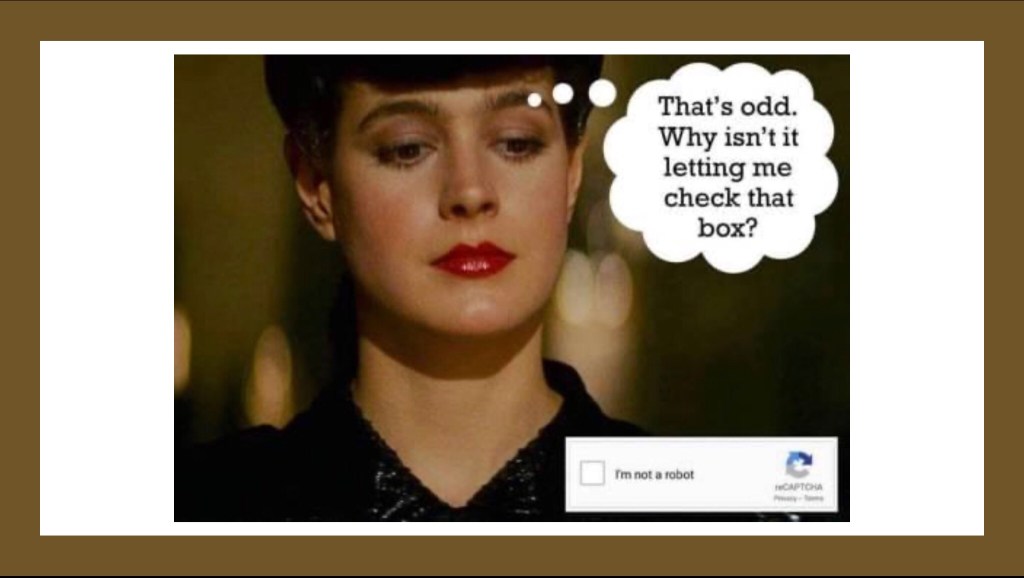
Over the past several months, my friend Morgan and I have been discussing AI and the potential repercussions of it’s expansion into art and writing. It started last fall when he downloaded the AI art program DALL·E 2. It’s free for the first 50 searches. After that, it’s $15 for 115 searches. Each search gives you four images based on what you input as a request. You can request a theme, a style and color scheme and the computer does the rest. Some questions – if a computer can do a da Vinci quality painting, do we need Leonardo? And what’s the value of either painting – how do you equate them? Are there moral issues? How do you compare something generated by a human versus something generated by a computer?
We spent several miles of walking and more than a couple of beers discussing all of those questions and others. We even ran a series of “tests” comparing the classic painting “Dogs Playing Poker” by American Artist Cassius Marcellus Coolidge, and computer versions, based on Morgan’s inputs. You can judge a couple of the results below, including the refinement over time. I particularly like how one of the dogs in the lower (later) AI painting is looking in the direction of the artist – a nice touch.

Then last December, the news started talking about a new AI writing tool called ChatGPT. It can write poems, answer questions, generate lists, act as an assistant in writing, and even do writing of it’s own, including “factual information”, essays and short stories. There have been problems with the “factual info” sometimes getting something totally wrong, but it’s also been correct more often than not.
Morgan and I again spoke about the ramifications. In the future, what happens to a prospective Tom Clancy, James Patterson, Tolstoy or Shakespeare? What happens to college essays? What are the implications for plagiarism? If you wrote the questions that generated the subsequent ChapGPT output, are you the author?
More miles of walking and more beers ensued. Generating a list to help you was one thing, but the computer writing an essay submitted as your work was another. How would teachers know what was reality? We again ran a test of sorts.
Last December, I wrote a blog about our neighbor’s dog, Kylie, who stole some of our shoes (Read it here: https://mnhallblog.wordpress.com/2022/12/21/kylie-the-shoe-thief/). A couple of weeks ago, I asked ChaptGPT to “Write a short story about my neighbor’s Dog, Kylie, who steals our shoes, when our dog Carmen isn’t outside.” In the meantime, Morgan asked DALL·E 2 to produce an accompanying picture. Here was the response from ChapGPT, and Morgan’s picture:
“ Sure! Here's a short story about Kylie the shoe-stealing neighbor's dog:

It was a typical sunny afternoon in the neighborhood, and Carmen the dog was lounging in the yard as her owner, Maria, worked in the garden. Suddenly, Maria noticed something odd happening at the edge of the property. It was Kylie, the neighbor's mischievous golden retriever, sneaking into the yard and making a beeline for the porch.

Maria watched in amazement as Kylie snatched one of her shoes and ran off with it, barking happily. Carmen chased after Kylie, but the clever retriever was too fast. Maria couldn't help but laugh at the sight of the two dogs running circles around the yard, with Kylie proudly holding on to her prize. Despite her initial frustration at losing a favorite pair of shoes, Maria couldn't stay mad at the playful Kylie for long. She knew that the retriever was just having a good time, and she couldn't help but admire her neighbor's dog for her boundless energy and enthusiasm.

In the end, Maria decided to keep an eye on her shoes whenever Kylie was around, but she knew that the playful retriever would always find a way to keep them on their toes (or rather, off their feet).”
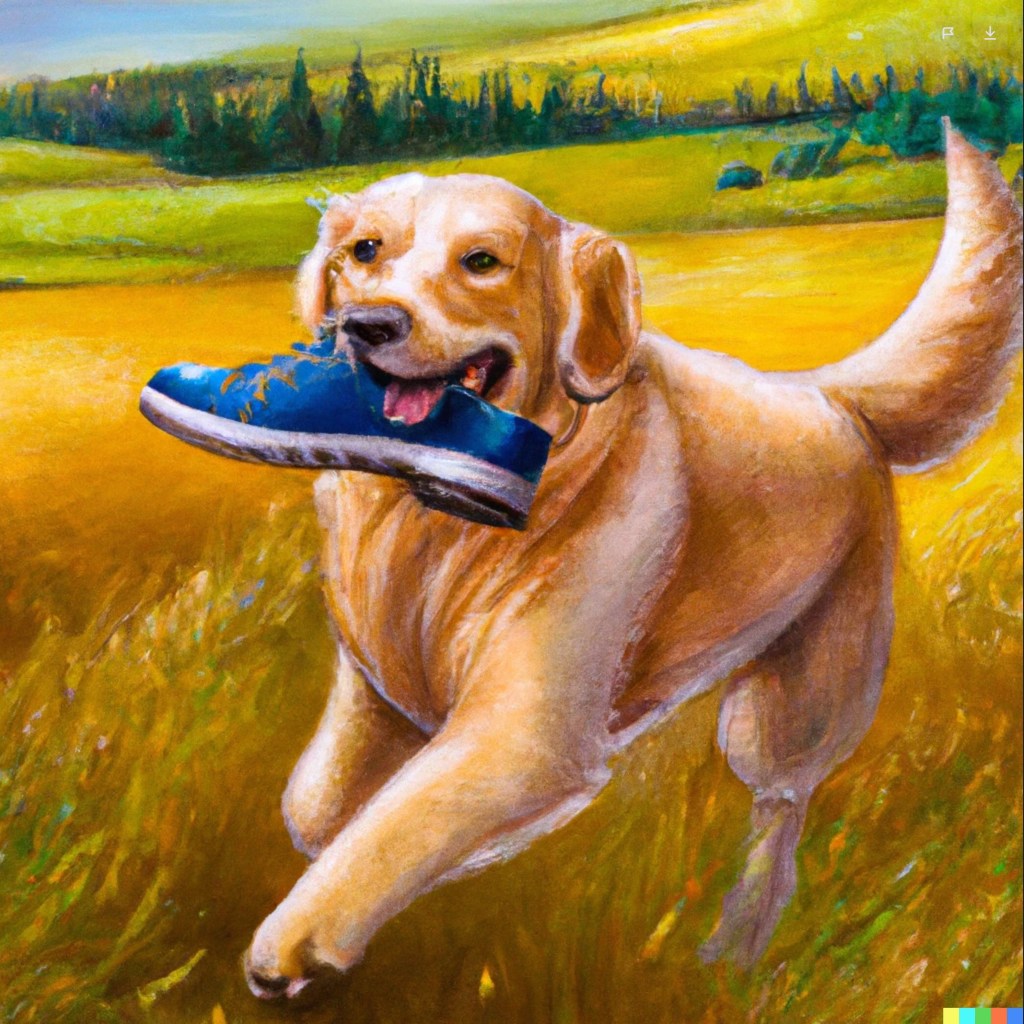
My friend Mark wasn’t overly impressed with the story. His words – “It’s fine, but it looks like it was written by an eighth-grader.” And he is right to a degree. Obviously, ChatGPT didn’t have the full context of the reality of the thefts, but as stories go, it had a beginning, an end and maybe made you smile a little. With a bit of imagination, you can see where the future is heading.
There are lots of questions surrounding “creative” AI – ethical, moral, values, access, financial and privacy concerns to name a few areas. Yes, we need to continue discussing all of this. As importantly, we need to understand the inevitability and implications of what is coming in the future. As Morgan said on one of our walks, “People need to understand this is going to happen. It’s not going away, and it will get exponentially better in the coming years. Good writers will avoid this technology. Great writers will embrace it to flesh out their stories. You won’t lose your job to AI. You’ll lose your job to people who know how to use AI”.
Sometime in the future, a real HAL computer (Of 2001: A Space Odyssey fame) will exist. Will computers become sentient in their own fashion? You never know, but I wouldn’t bet against it. Maybe there will always be a “Dave” or two around to protect us. Maybe we won’t need them. Then again…
Dave: Open the pod bay doors, HAL.
HAL: I'm sorry, Dave. I'm afraid I can't do that.
Dave: What's the problem?
HAL: I think you know what the problem is, just as well as I do.
Addendum:
- I realize this is a hard topic to really cover in 1,000 words or so (my typical blog length), but thought it was worth getting the topic out there. The future is now, and the more people are aware, the better.
- You can read my original Kylie, The Shoe Thief blog here: https://mnhallblog.wordpress.com/2022/12/21/kylie-the-shoe-thief/
- Thanks to Morgan Johnson for editing support and additions to this blog. More importantly, thanks for being a good friend and engaging in these ongoing conversations.
- Thanks to my friend Colleen and wife Cathy as always for their editing support. Also thanks to my old buddy Mark Dunavan for taking a look or two.
 Live Life Exuberantly