It’s not your imagination. The light actually is different this time of year. Golden and lush, it’s also more magical. It’s not just the color of the leaves, or the chill in the air. The light is different and it’s changing fast. There’s science behind the magic as well.
Poets love to write about autumn. They call it our gilded season, or talk of the golden light this time of year. The leaves turning color, the chill in the air, perhaps the smell of wood smoke from a fire. The shadows lengthen. Birds start to head south. At the Bay, you hear more geese honking as they arrive. There is a poignancy to autumn that isn’t present in the other seasons, as well. In the back of our minds we know we will soon be ensconced in the two tone world of winter. For me, those thoughts make me want to linger longer in the golden time of year that is autumn.
I love the light this time of year. It’s different from the flat light of summer, or the cold light of winter. It is softer, and almost has a thickness to it, particularly in early morning and late afternoon. It gives a golden glow that isn’t present in the other seasons. It bathes the woods with a warmth of color. Combined with the turning leaves, it becomes magical.
A Magical Time of Year
But it’s not just magic. There is also a science behind Autumnal Light. Over the course of the year, the angle of the earth changes every day. The sun was straight overhead at the Summer Equinox, giving us the longest day of the year. Since then? As our axis shifts, the sun has dropped lower in the sky every day. In fact, since the start of Autumn, it’s dropping even faster. As the sun falls, it must pass through more atmosphere before reaching us. The color is altered by the absorption and refraction differences with the lower angle. The end result is the magic of autumn we all love.
Soon Halloween, and Thanksgiving will pass, and winter will arrive. The bright spots of Christmas and New Year’s Eve will provide cheer, and then it’s the slow slog through January, February and March. I don’t hate winter, but I’m always glad when it’s over.
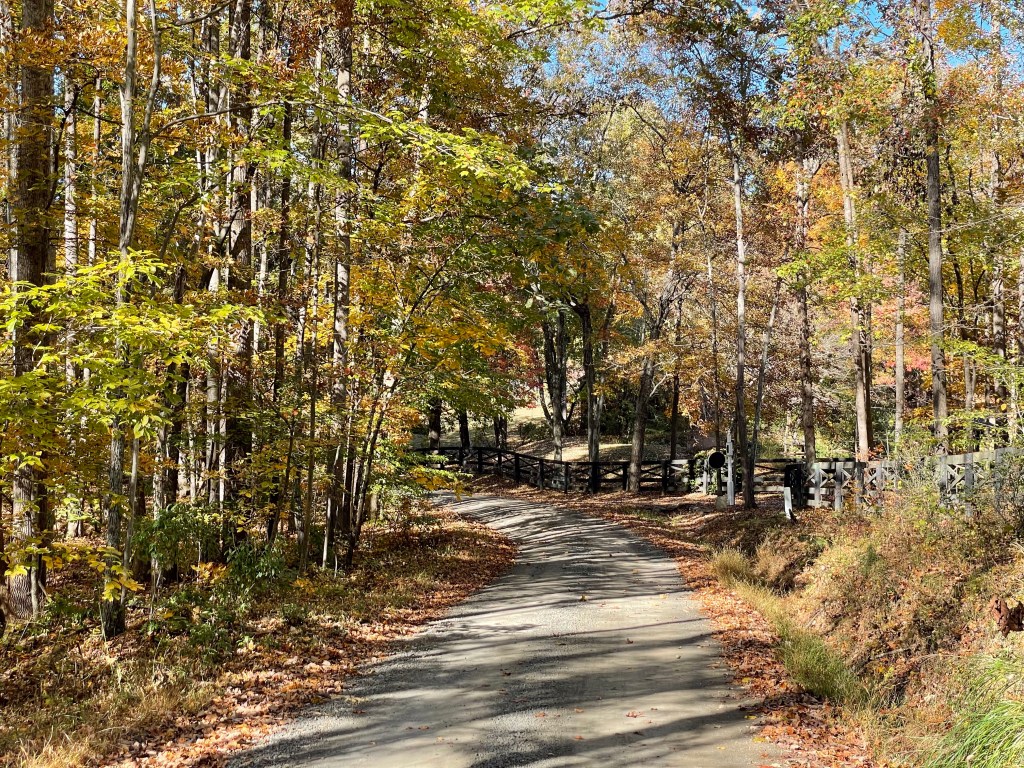
In the meantime, I’m going to enjoy the rest of this autumn. Walks in the woods in the late afternoons are pure joy. The quiet of the woods, the color of the leaves on the trees, the crunch of leaves underfoot, a deer racing up a nearby hill, they all combine to create moments that are mystical. Add in the dappled fall sunlight playing across the woodland and it’s enough to make me wish that moment of perfection would last just a little longer. If only it could.
The Interplay of Color and Light Make me Wish I Could Stretch the Time a Little Longer
Addendum:
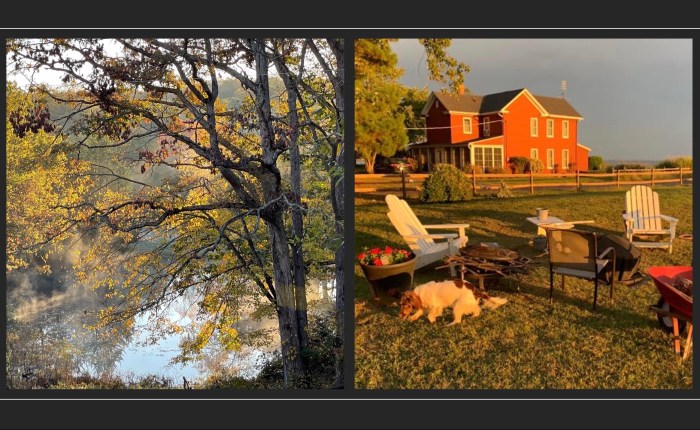
Thanks to our friend Vinnie for the photo of our neighbor Susan’s home on the Bay in the afternoon light. I love this picture.
I was recently informed by WordPress (the site where my blog is hosted), that I first started this blog seven years ago, last week. My, how time flies. Here’s the blog that started it all, published in October of 2015: https://mnhallblog.wordpress.com/2015/10/19/why-live-life-exuberantly/
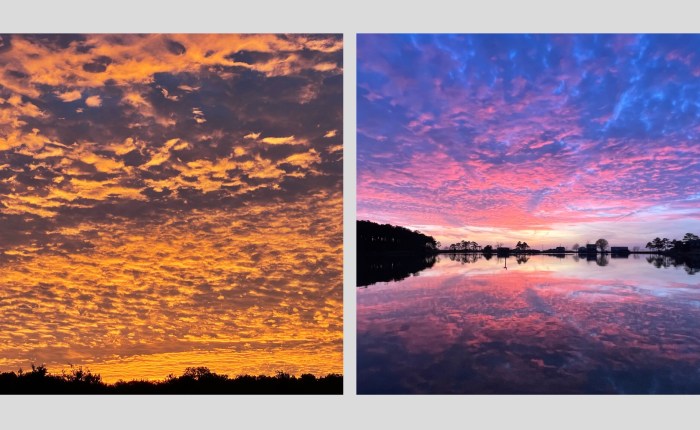
Sunrise, or Sunset? Which do you favor? Both can be equally beautiful. Both can be equally colorful. Both are fleeting. It’s a bit deeper than just color and beauty though, isn’t it? I enjoy them both, but if I could only pick one? Not an easy question to answer, but I would probably say…
It’s easy to say you must be a morning person to see the sunrise, although I think that’s a bit of a cop-out. For myself, I wake up at approximately the same time all year long – about 6:45-7:00AM. That means in the dead of winter, I see some gorgeous sunrises. For the rest of the year? I’m out of luck, unless traveling or something. Virtually all of us are up at least occasionally at sunrise. Maybe not often, but at least occasionally for travel or work, or something else going on, so let’s take the morning person argument off the table.
Many photographers and photography sites seem to favor sunrise – better light, or at least cleaner light I suppose. Maybe that’s true, but to my naked eye? I don’t see the difference.
So what is the difference? Maybe it’s more metaphysical and less about color and light.
Who doesn’t like sunrise and the start of a new day? Poetry and quotes are filled with “wisdom” on this subject – The symbolism of darkness going back to light. The chance to pursue new opportunities with a clean slate. The promise of a new day and all that entails. The stillness of a new morning, that perhaps gives us the chance to think clearly and cleanly, almost as if the morning dew washed away our cobwebs from the night. This is stuff that reaches out to our core and there are elements of truth in all of it.
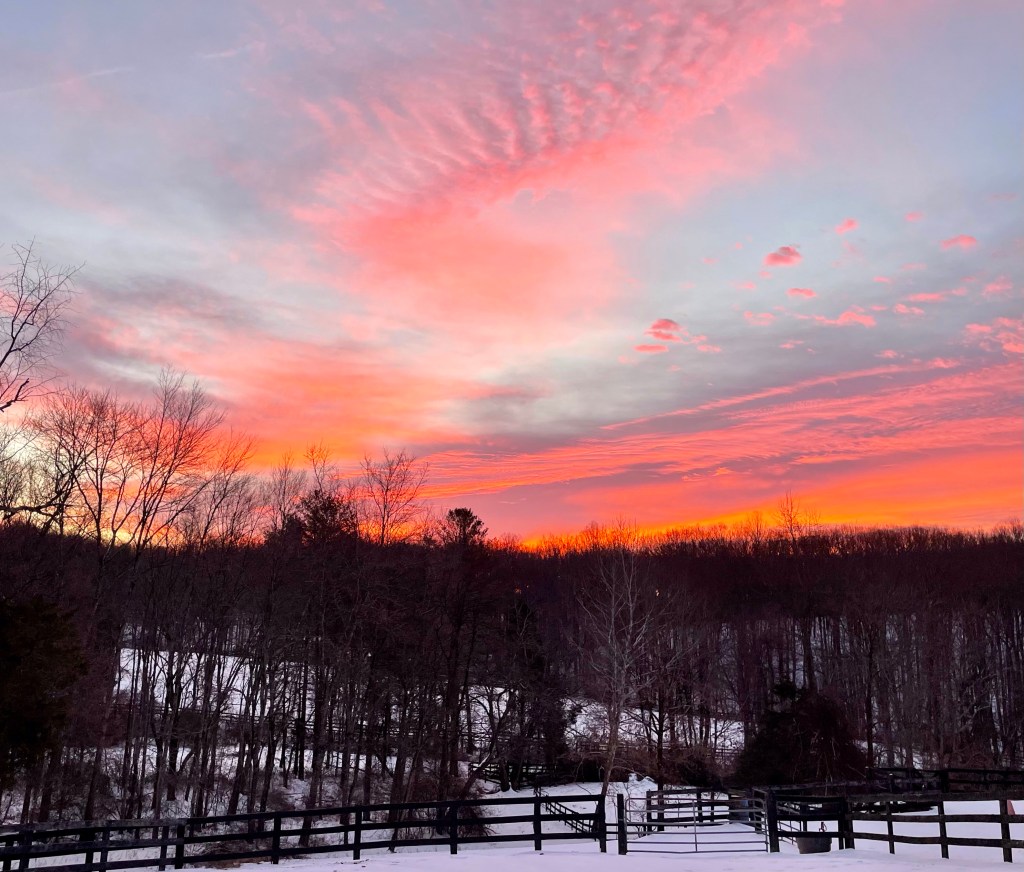
Sunrise at Rohan Farm one day this winter
Ah, but sunsets… They provide a close to the day and our activities. They let us take a small pause as we watch the setting sun, reflect back on the day, and maybe think about what did, or didn’t, happen that day. And if we are with others? I’ve learned over the years that for me, nothing says fellowship, like drinking a “sundowner” with friends while watching the dying light of day. That shared feeling of quiet and peacefulness is pretty wonderful. The warmth of those feelings often extend into the evening hours. And of course, most of us see many more sunsets than sunrises over the course of our lives.
A Sunset in Africa last fall
As I think about it now, the feelings I experience at sunrise and sunset are different. I hadn’t thought about it before, but it’s real and it’s true. I guess I’d sum it up as thinking about new beginnings versus a time of reflection. How do you choose between those two versions of truth?
This is, quite frankly, too much thought about things that happen everyday. And of course, we don’t generally talk about, or remember those sunrises and sunsets happening in the rain, or the fog, or on a cloudy day. Most of us will experience 20,000-30,000 sunrises and sunsets over the course of our lives. I think it’s OK that not all of them are “perfect”. 😉
We were in a small safari boat on the Khwai River in Botswana. We’d just finished some up-close sightings of hippos and elephants when a boat came speeding straight toward us. What was up? Was something important happening at camp? Was there a rare animal sighting on a different part of the river? We were about to find out.
We had arrived at our camp, Xakanaxa, using a six-seater plane the day before. Xakanaxa is located in the Moremei Game Reserve in the Okavango Delta, a World Heritage Site. The waters in the Delta created a lushness that was different from the other safari lodges we had visited. At one point, between the lushness, and the abundance of animals in close proximity with each other, I thought to myself “This is what the Garden of Eden looked like.”
The Garden of Eden
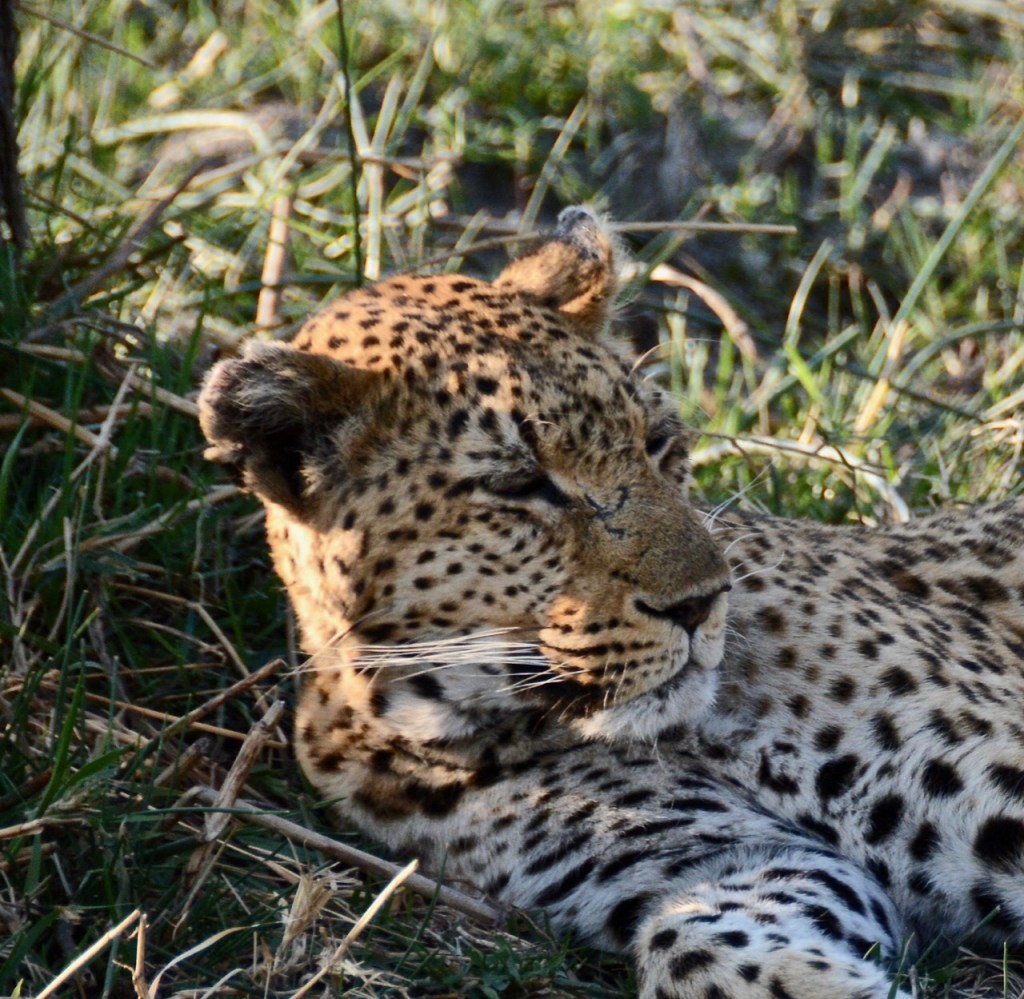
Later on that first day, we had an unbelievable leopard sighting. Harry, our guide had seen the leopard the day before at the site of a kill, so he knew roughly where it would be. Still, this was amazing. After tracking the animal, he located it dozing near a tree. You or I would have gone right by and never known it was there. We were only about five yards away, and watched the leopard for about fifteen minutes as it dozed, woke briefly, and then dozed some more.
A Leopard, Up Close and Personal
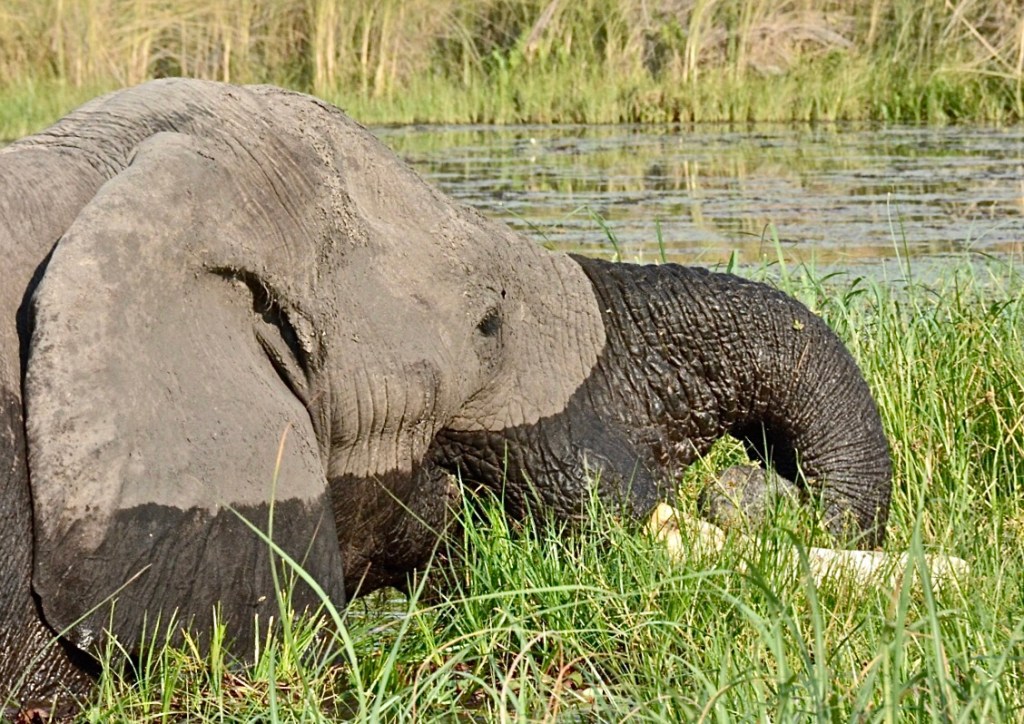
On the afternoon of our second day, we chose to take a boat safari instead of a driving safari in the land cruiser. You have a different vantage from the boat, and sometimes, when lucky, enjoy incredible views. That was the case that afternoon, as we saw two swimming elephants (only the second time we’d actually seen elephants swim), hippos, crocodiles on the bank and in the river, and one elephant just a few yards from us in the water, munching on grass.
Elephant having a Bite to Eat in the Khwai River
A bit later, as we were motoring back in the direction of camp, we were held up when a hippo submerged ahead of us in the river. The river “path” was narrow enough at that point, that Harry didn’t want to proceed without knowing exactly where the hippo was – if it rose under the boat the potential to be upended was real, something that’s never a good idea in a river filled with crocodiles.
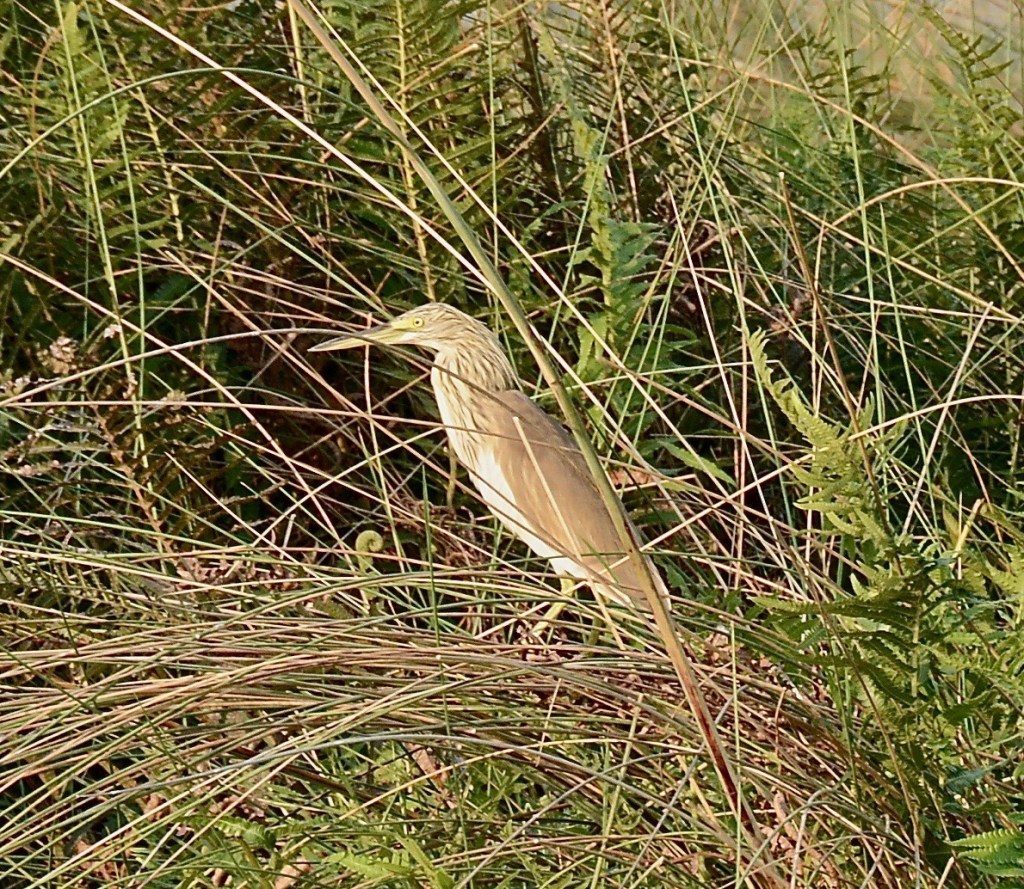
While waiting for the hippo, we had some luck and saw a rare bird – the “Little Bittern”. It was first seen by our friend Sharon (“What’s that?”), and identified by our guide. It turned out that sightings of the Little Bittern are pretty unique. Returning to camp later that evening, we learned some birders from South Africa had looked for it over the previous three days, but never managed to see it. Sharon later joked, “Yep, we were lucky to see the elusive, and exclusive, Little Bittern. And who saw it first?” 😉
“The Elusive, and Exclusive, Little Bittern”
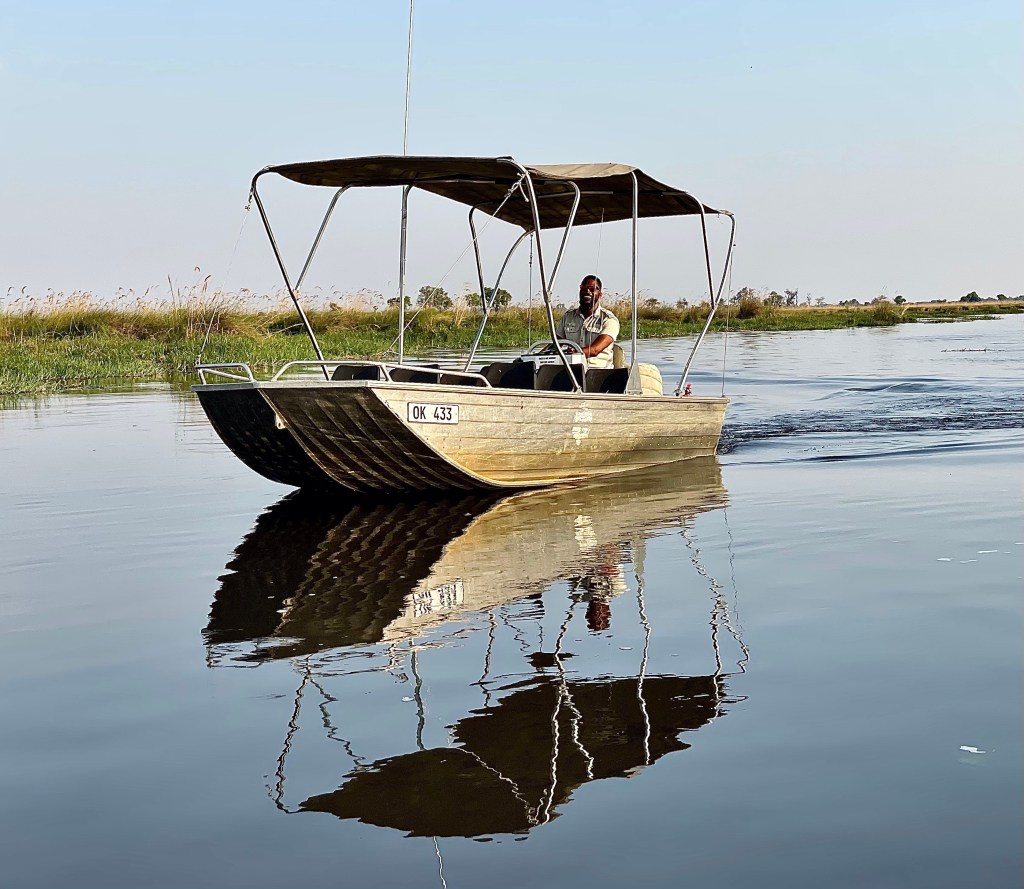
It was after the Little Bittern sighting when we saw the fast approaching boat. Although Harry didn’t look concerned, the four of us had unspoken questions. What the hell was going on? Why would someone be coming down the channel that rapidly? Was there a problem somewhere? Had someone else’s boat been upended by a hippo? Were they going to warn of us about an issue up river? Was there some exciting sighting further up the river? We then recognized Mox, the lodge manager, and Harry said “Mox has a delivery for me.”, which raised more unspoken questions – What was so important that a delivery was needed in the middle of the Khwai River during our safari? Were we low on gas? Was oil leaking? Was there an unknown engine problem? Mox gave a wave, smiled and slowed down as he approached our boat.
Mox, Approaching our Safari Boat
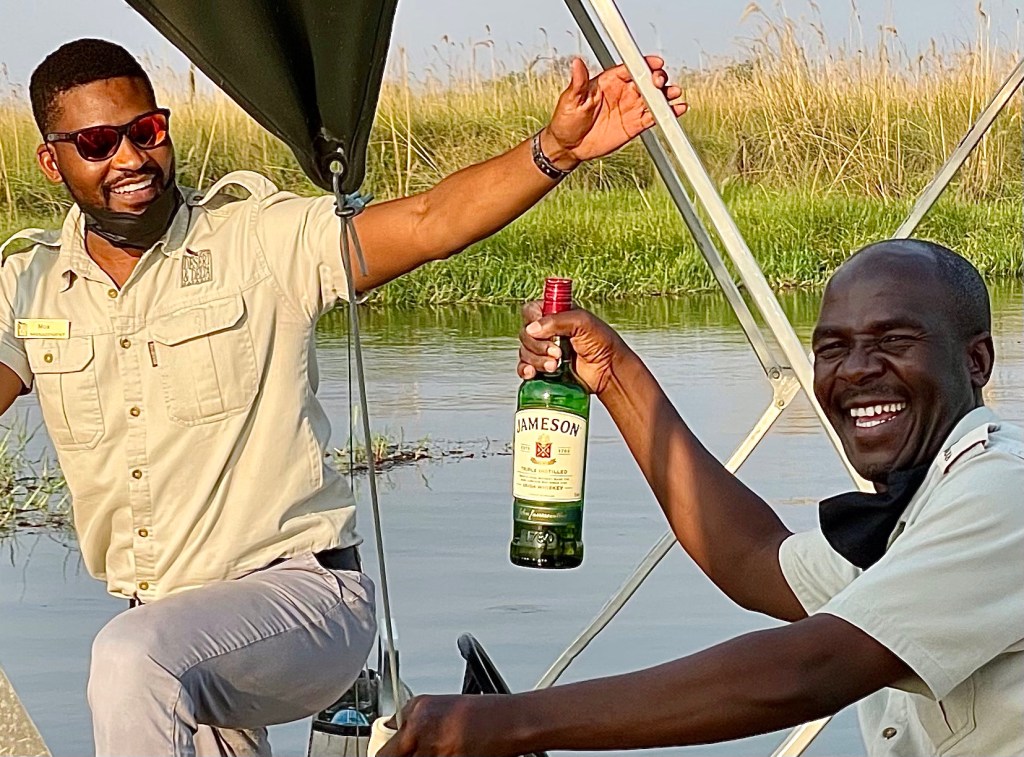
Mox pulled up next to us and then all became apparent – he handed a bottle of Jameson Irish Whiskey to Harry! Harry and Mox both started to laugh, and then let us in on the rest of the story. When we left Xakanaxa that afternoon, Harry packed Gin, Tonic Waters and limes for our sundowners, but forgot to grab the Bottle of Jameson. Our friend Bill had switched between G&Ts and Jameson over the course of our trip, and Harry wanted to be prepared for either choice, so he radioed back to camp to have the Jameson delivered to our boat. At that, we all broke out laughing. This was service above and beyond the call of duty. With a wave and a smile, Mox departed and went back to camp.
Mox and Harry Making the Critical Handoff
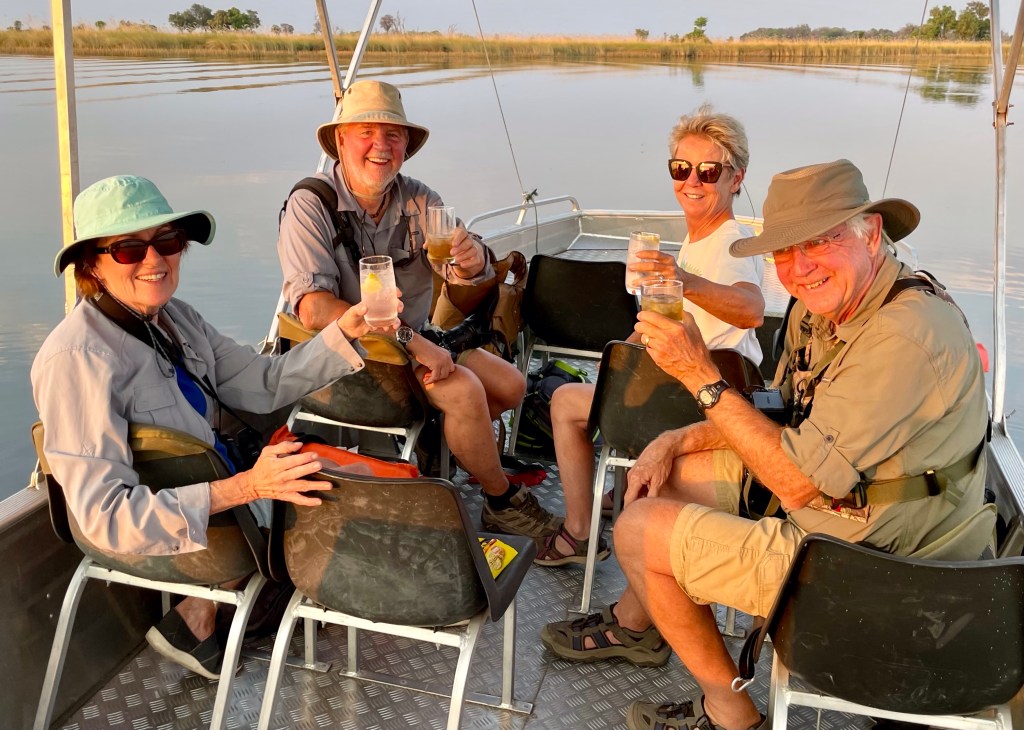
A half hour later or so, Harry piloted us to one side of the Khwai and prepared our drinks. On safaris, Gin and Tonic was virtually always my drink of choice for sundowners, but I knew that evening I was going to have a Jameson. Harry made G&Ts for the ladies and two Jamesons for Bill and I. We all toasted each other “Pula!”** and enjoyed our drinks. I have to say, I always appreciate Jameson, but it was extra tasty that day on the Khwai. As we sipped our drinks, we joked with each other the whole thing would have made a good Jameson commercial.
Pula!
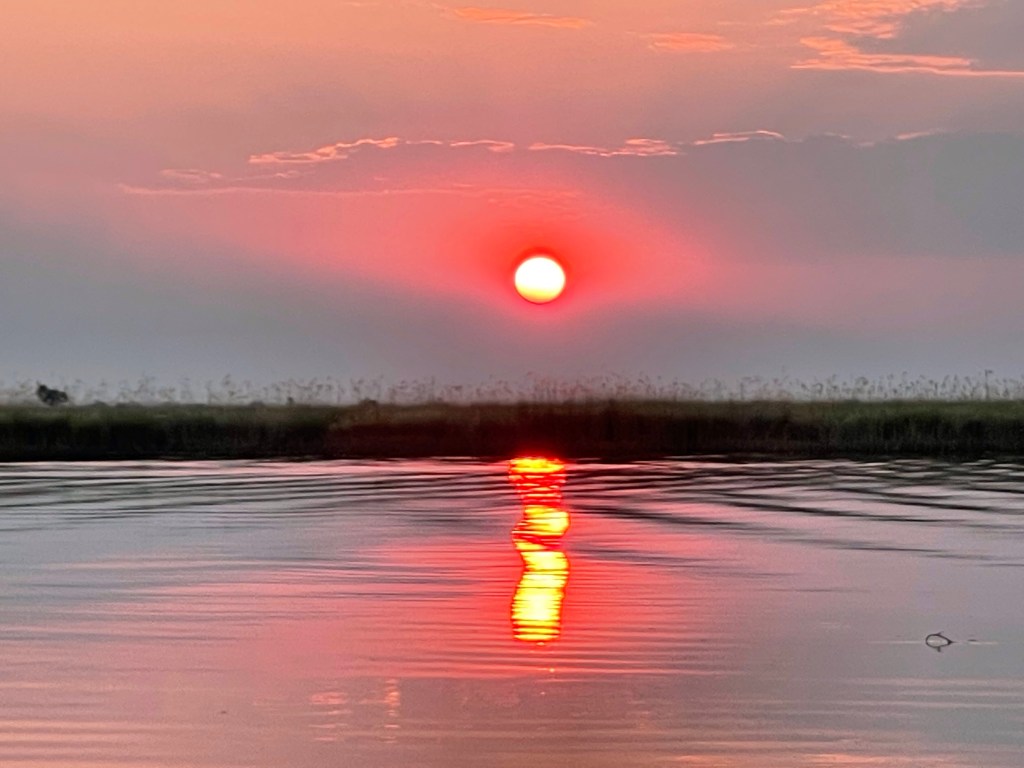
We sat there, enjoyed our drinks and watched the sun set across the river. It was another perfect ending to a great day. I looked around and then said to Harry, “Do we have time for a second drink?” He smiled and answered “I was told to bring the bottle back empty.”
The Perfect Ending to a Great Day
Addendum:
⁃ **Pula actually has four different meanings: rain, a blessing, “Cheers!” If toasting someone over a drink, and lastly, it is what they call their currency. It’s a pretty versatile and important word in Botswana.
⁃ This is the seventh in a series of blogs about our 2021 trip to Africa. The previous blogs are listed here, in the reverse order of their publishing.
⁃ This is the second time we have used Karen Dewhurst, of Sikeleli Travel & Expeditions as our travel consultant. After working with her in 2018, there was no doubt we would use her and Sikeleli again. All accommodations were amazing, the food and wine excellent, the logistics and travel arrangements perfect and the animal viewing exceeded all expectations. If you are coming to this part of the world, I highly recommend her and them. You can reach Karen at: karen@sikelelitravel.com | (+27) 81 067 1094 (South Africa). Their overall website is at: https://sikelelitravel.com/ .
We were in the middle of the Kalahari Desert, on the edge of the Ntwetwe Salt Pan when it started to rain. I’d just started my second Gin and Tonic. Dinner was still a bit away, and we made a dash for shelter in the Land Cruiser…
We’d arrived at our Safari Camp, Leroo La Tau (The Lion’s Paw) the day before after a 1 1/2 hour flight on a six seater plane out of Kasane. Our camp was in a remote location along the Boteti River in the Makgadikgadi Game Reserve.
Cathy and the Plane that Flew us to the Makgadikgadi Game Reserve
One of the reasons we were excited about Leroo was that we were to spend one of our nights under the stars at the the Ntwetwe Salt Pan. We would be as remote as possible in the Kalahari Desert, with no ambient light, or connection to other humans. Literally, it would be just us, the desert and the sky – vastness and emptiness, intertwined.
By luck, or by happenstance, we arrived at Leroo on September 30th. Our hosts were celebrating the 55th anniversary of Botswana’s Independence from the British on September 30, 1966. After dinner, they served us a cake decorated in the colors of Botswana’s flag, and explained the meaning of each of the colors*. As we were eating our cake, it started to rain – not for long, perhaps only 20 minutes. We learned it rained on September 30th, 1966 as well, and as Botswana is such a dry country, rain is considered a blessing and a sign of good luck, particularly on Independence Day. We weren’t yet aware how that rain was going to impact our trip.
The next day, as we were getting ready to leave on our five hour drive for the Pan, we learned there was some concern on the part of our guide, Isaac, and the staff. It turned out not only had it rained at Leroo the night before, it probably also rained at Ntwetwe. The condition of the Pan was unknown, and we might not be able to drive on it, or even approach it without our vehicle sinking into the mud. We would not know until we arrived.
A decision was made to give it a shot and we piled into our Land Cruiser. In addition to Cathy and I, and our friends Bill and Sharon, there was a crew of three. Our guide was Isaac, who had led previous trips to the Pan (we were only the seventh group to actually do this). He was accompanied by Dabe, a Bushman (The San People) who was very familiar with the desert environment, and Kago, a manager from the camp.
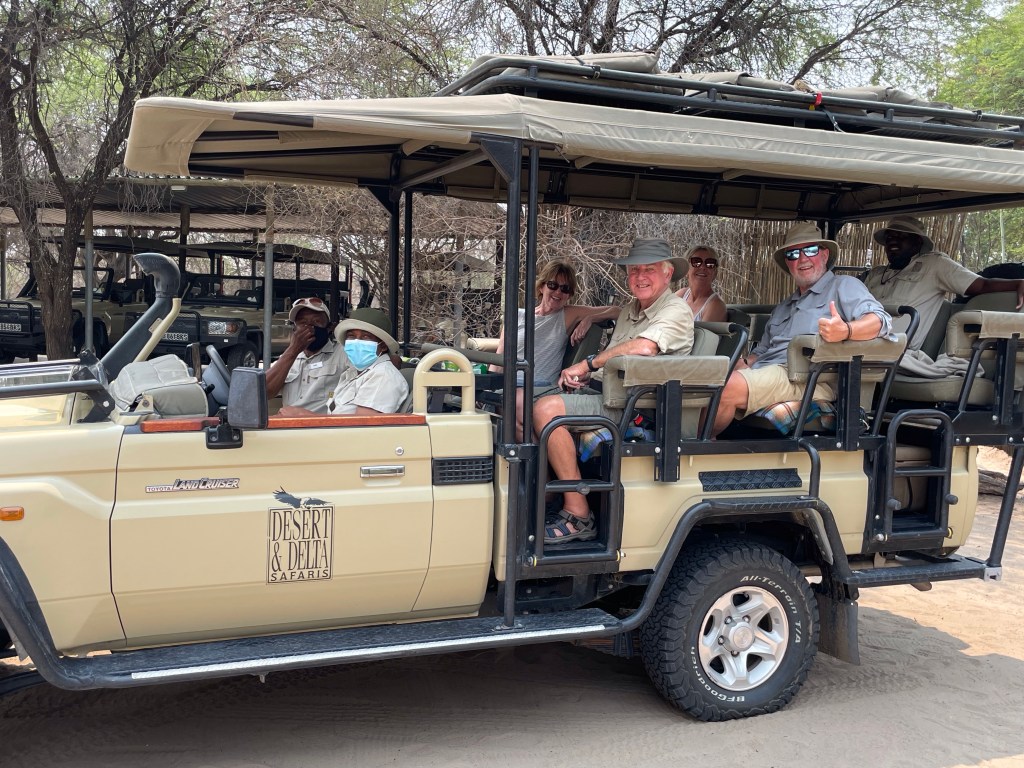
Setting out for the Ntwetwe Pan in our Land Cruiser
After driving nearly 50 kilometers on a highway, we turned off into the desert. We had nearly 70 kilometers to go, which doesn’t sound far, but with no real road, we would follow a path through the grass and shifting sand. There were still several hours before we reached the Pan.
The “Road” Through the Grass and Sand
As time passed, the environment became starker and vegetation started to disappear. There were no more trees, and few bushes. We were left with a sea of grass. Animals too disappeared. Other than some birds, meerkats, and mongoose, we saw no other wild game on the trip. We were told there wasn’t any real water this far into the desert, so the big game stayed away. Interestingly, we did pass some herds of cattle.
This Meerkat is One of the Few Animals we Viewed on the Drive
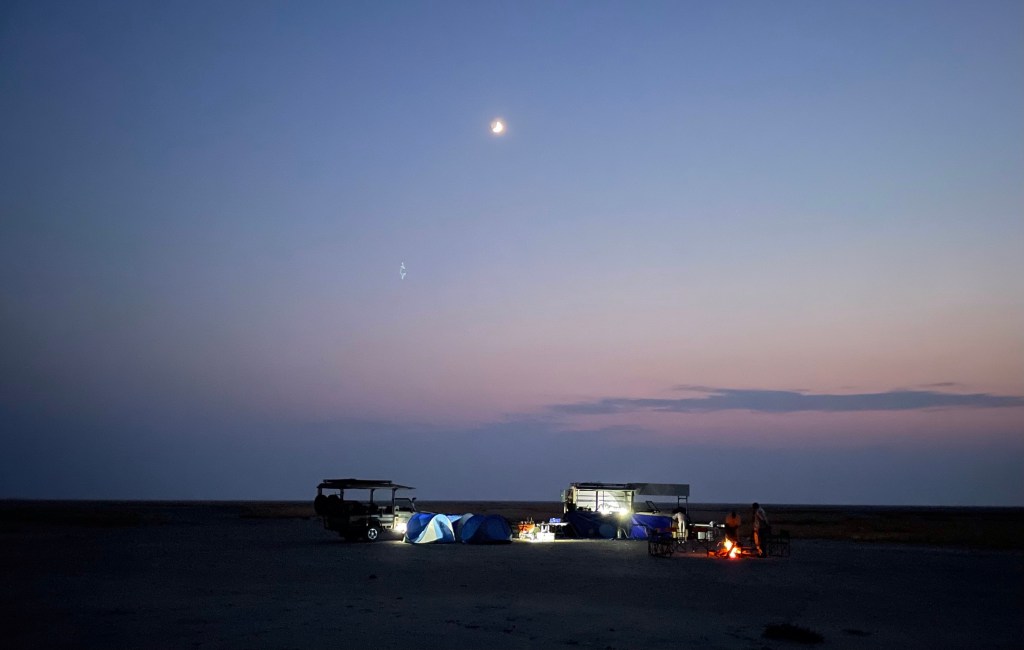
Eventually, around 5PM we arrived at the Ntwetwe Pan, with sundown still about an hour away. It had definitely rained on the Pan and it would be a bad choice to drive on it. Although it appeared dry, our Land Cruiser would have soon sunk up to the hubs and been trapped. Instead, we camped on the edge of the Pan.
We connected with Maipa and Mash who drove “The Elephant” (a vehicle with the kitchen equipment, lights, tarps, loo, etc) to the Pan earlier in the day. It was they who set up the kitchen, and the dining area. You could already smell good things cooking on the fire and stove for our dinner. We were served sundowners, and then received a safety talk and a briefing on how to use the loo.
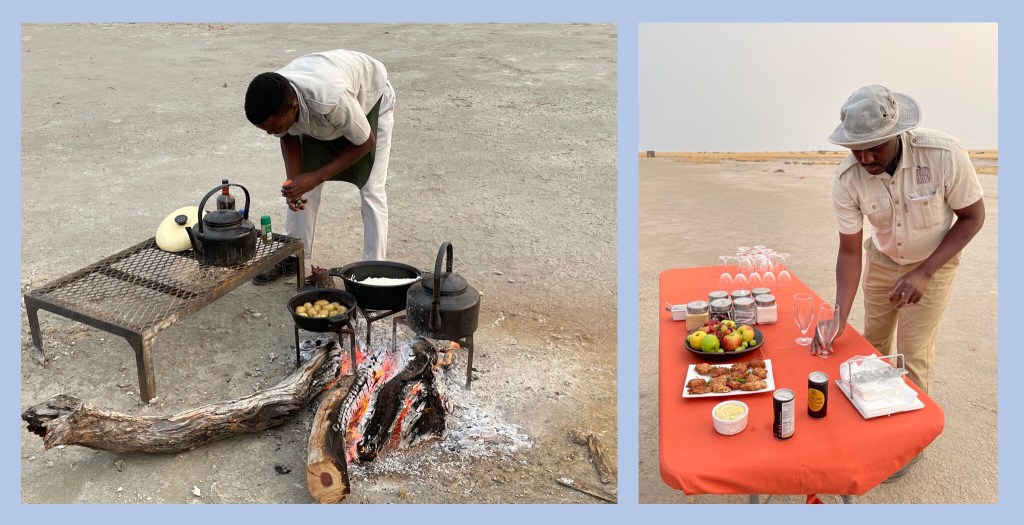
Our Chef, Mash, Fixing Dinner, While Isaac was Making our Sundowners…
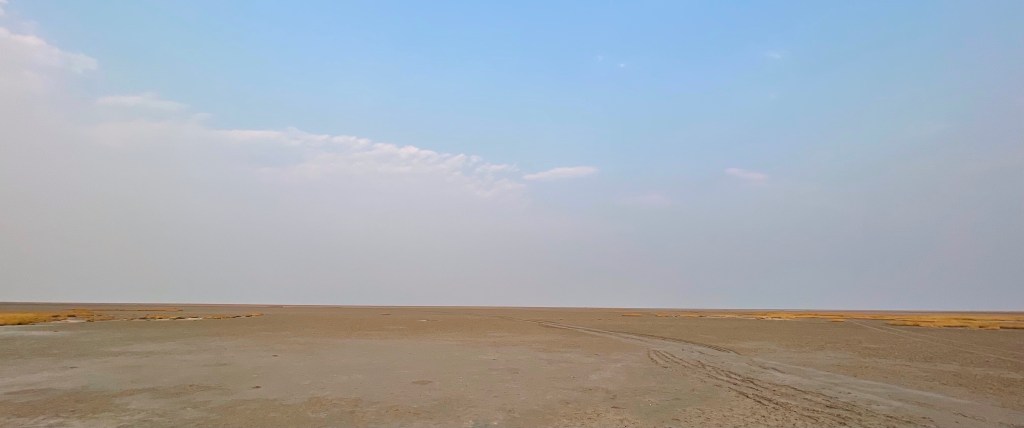
We had time before dinner and wandered around. As I took a sip of my G&T, my gaze looked to the east across the Pan. Vastness and Emptyness? Sure. The word Nothingness also came to mind. There was nothing but a line on the horizon separating the sky above from the salt pan below. Loneliness … desolation … flatness… all were also good descriptors. It was flat as far as you could see in any direction.
Nothingness…
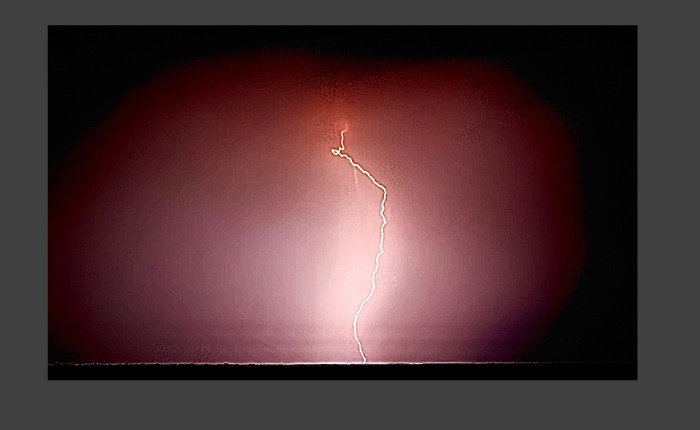
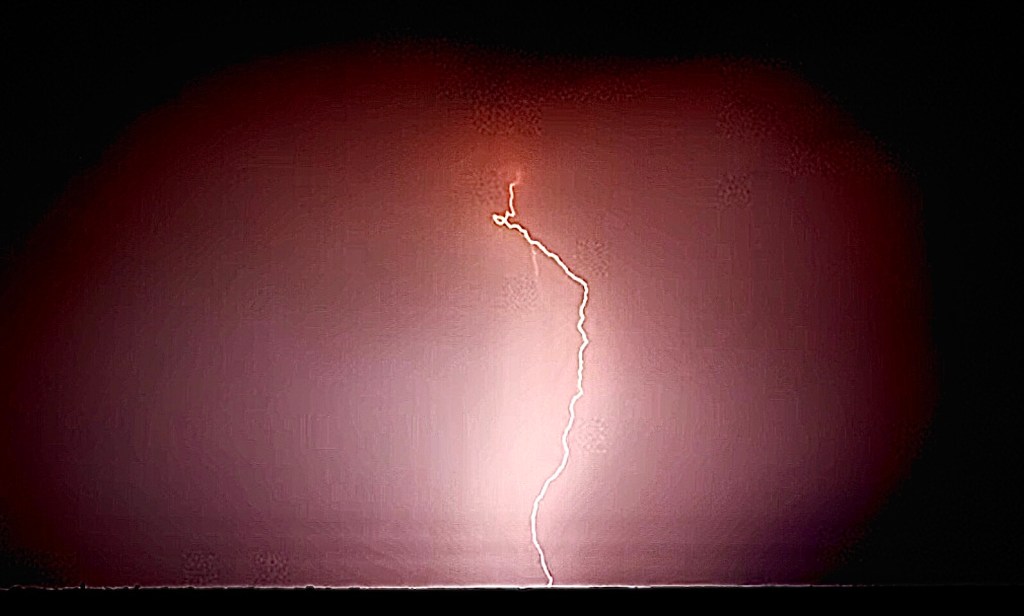
It started to get dark, and we viewed lightning storms on the horizon to the north of us. In Botswana, the weather generally flows east to west, so Isaac thought we were safe. Of course, there IS the occasional freak storm ;-)… I’d just started on my second G&T when the sky opened and it began to rain.
Lightning During the Rainstorm in the Kalahari
Three things then happened in quick succession. First, Isaac directed us to the Land Cruiser where we could stay dry and stay out of the way. Next, the staff divided into two crews. The first one quickly broke down the dinner settings and packed them away. Our table, complete with white table cloth, glassware and china was secured. The second crew grabbed our sleeping mattresses and at the same time popped open small two-person tents and put the mattresses in the tents to keep them dry. If you recall, we were to sleep under the stars. That was no longer going to happen.
It was pitch black, except for the occasional flash of lightning. We were staying pretty dry under the Land Cruiser roof, and then one of us started laughing. Pretty soon all of us were. Here we were, in the middle of the Kalahari Desert, one of the driest places on earth, getting rained on while sipping our drinks in a Land Cruiser. How could you not see the humor in that?
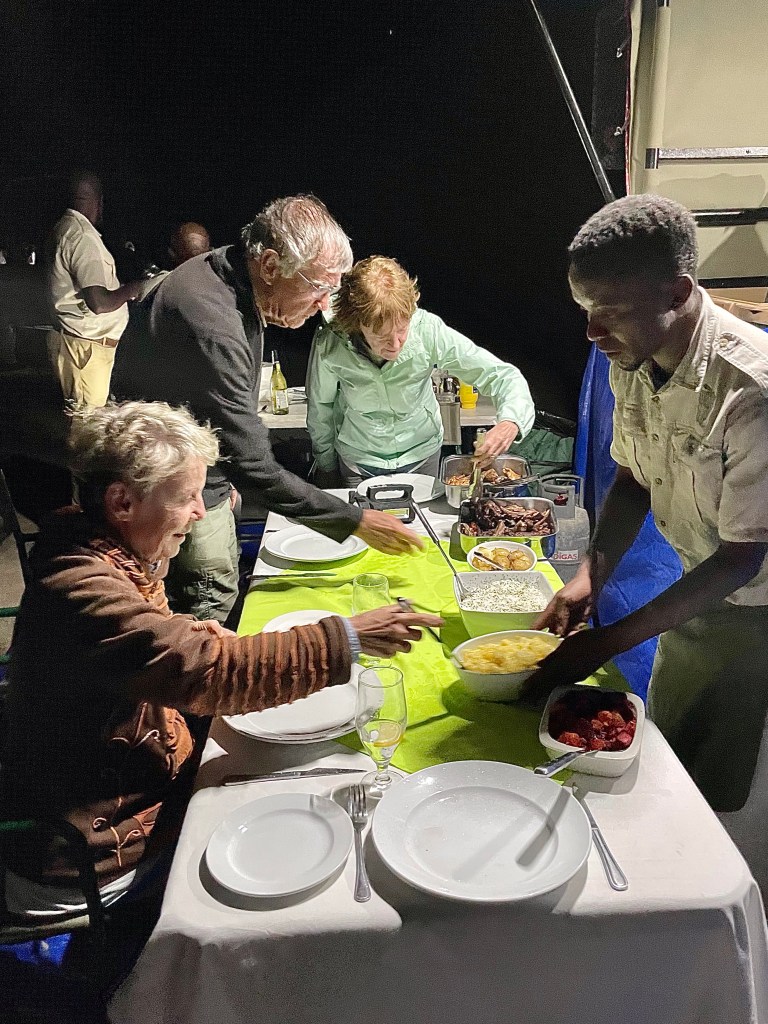
Twenty minutes later the rain stopped. The crew quickly reassembled our dining table and just before 7:30PM, we sat down to dinner. Our chef, Mash, served a feast of rolls cooked in a dutch oven, salad, beet salad, a cauliflower and cheese dish, ribs, and chicken filets in a cream sauce. White and red wines were opened. One more surprise awaited us. The tarp above our table had gathered a considerable amount of rain and while eating our first bite, some of it spilled on the table. We quickly moved the table and then we made our way through the delicious meal. We were still chuckling about the rainstorm, but it was a different chuckle as our bellies grew full.
Mash Serving Dinner After the Rain
After dinner, we joined the crew around the fire. Some stories were told and of course a few jokes. A couple of us may have drunk a Jameson. The sky kept changing from clear to cloudy and Isaac confirmed we would sleep in tents. It was a good call, as it rained twice more during the night.
I woke once in the late hours of the night to go the bathroom. The sky had cleared by then and as I looked up, I saw my old friend Orion high in the sky overhead. I smiled to myself – it’s nice to know some things never change.
The next morning while still dark, I woke to a voice softly singing. It was Kago singing her morning prayers. I listened quietly and out of nowhere, felt an immense sense of peace come over me. I can’t help but wonder if the remoteness of where we were also contributed to the feeling.
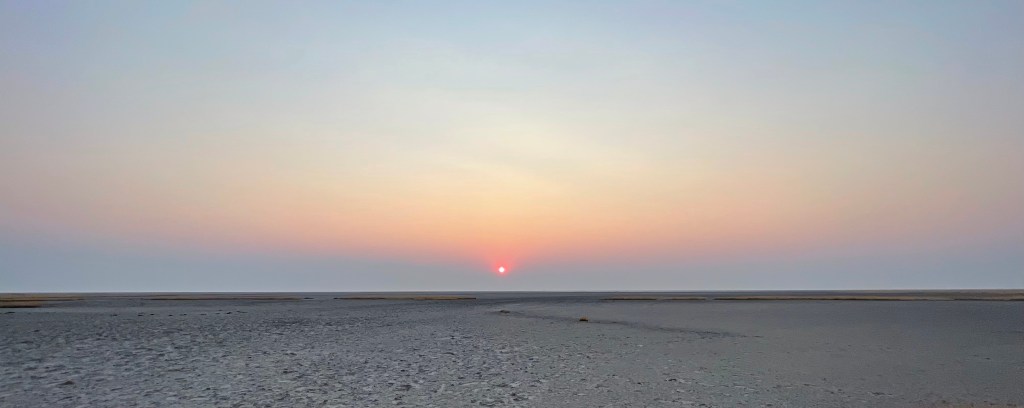
The camp started stirring and I got out of bed about 5:30. Although still dark, a fire was already going, and our morning breakfast was cooking. The eastern sky was turning gold and red, as the sun was about to appear on the horizon.
The Moon was still high in the sky as dawn approached.
As the sun rose, I walked to edge of our camp by myself. I again saw the vastness and emptiness of the Ntwetwe Pan to the east. There was a beauty to it that provoked an ache in my heart. Even now, I find it hard to describe.
Sunrise over the Ntwetwe Pan in the Kalahari
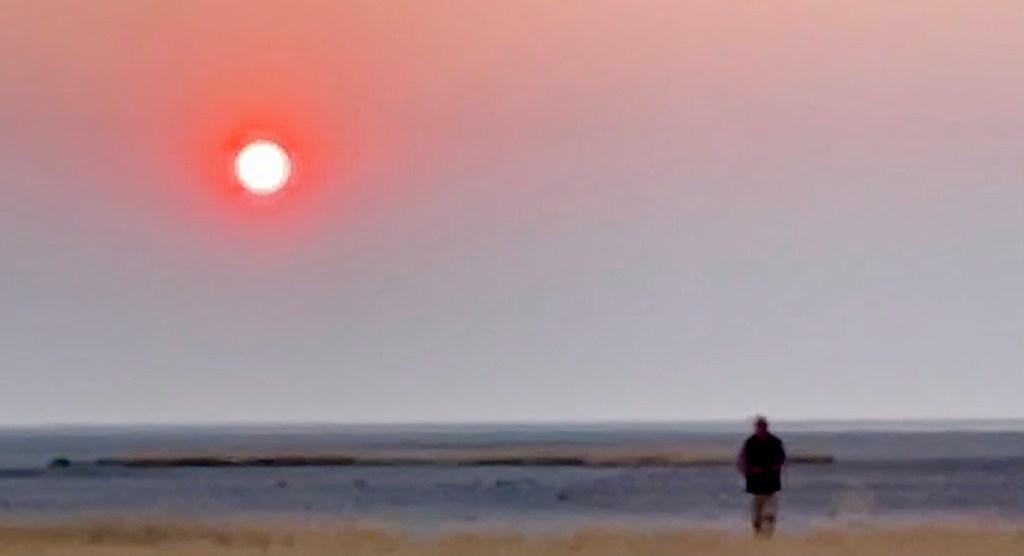
In Botswana, the word for rain is Pula*, which also means a blessing, as rain is so scarce. Although the rain the night before and on Independence Day changed the tenor of the trip, I think it also gave me something else I can’t define. As I looked at the vastness of the Pan that morning at sunrise, I felt the presence of something larger. God? Perhaps, but I don’t think so. It was more a feeling that even though I am so small, I belonged to something much larger than myself. To me, the vast emptiness I was looking at no longer felt like nothingness or loneliness. There was a weight and depth to it, and yes, a peacefulness. I felt blessed to be in such a remote location. Maybe hearing Kago sing her prayers earlier in the dark is what changed my feelings to something more spiritual. I doubt I will ever know.
My Friend Bill Surreptitiously Snapped this Picture of me Contemplating the Pan
A bit later, I rejoined the others and soon we ate a breakfast of bacon, sausage, eggs, pancakes, yogurt, fruit and freshly made biscuits. Afterwards, we packed up, and just after 7AM, started the five hour return trip to Leroo. Later in the afternoon while on safari, our guide Ollie tracked and showed us a Cheetah and her three cubs, which was amazing. For me, even as I was viewing the cheetahs, my mind returned to the sunrise at Ntwetwe and the ethereal feelings I experienced.
Addendum:
– *Pula actually has four different meanings: rain, a blessing, “Cheers!” If toasting someone over a drink, and lastly, it is what they call their currency. It’s a pretty versatile and important word in Botswana.
⁃ I’d like to thank Isaac Mpuchane, our guide, for reading my blog and providing input. As we traded emails, he sent me a link to an article that places the Ntwetwe Pan as one of the possible locations for the start of human civilization. Maybe my spiritual feeling wasn’t as accidental as I thought. You can read the article he sent me here: https://www.bbc.com/news/science-environment-50210701 If you want to learn more about Isaac, or see some of his amazing photography, you can do so at: http://www.instagram.com/isak_naturephotography
⁃ I’d also like to thank Bill Reichhardt for the picture of me on the edge of the Pan. Bill is quite the photographer and if you would like to see more of his pictures from Africa, you can view them here: http://billreichphoto.com/
– * The colors in the flag of Botswana have the following meanings: The light blue represents water, and specifically rain, as it is such a precious resource. The black band with the white frame has two meanings. First, they symbolise the harmony and cooperation between the black and white people who live in Botswana. Furthermore, they represent the stripes of the zebra, the national animal of Botswana.
Botswana’s Flag
– This is the sixth in a series of blogs about our 2021 trip to Africa. The other blogs are listed here, in the reverse order of their publishing.
⁃ This is the second time we have used Karen Dewhurst, of Sikeleli Travel & Expeditions as our travel consultant. After working with her in 2018, there was no doubt we would use her and Sikeleli again. All accommodations were amazing, the food and wine excellent, the logistics and travel arrangements perfect and the animal viewing exceeded all expectations. If you are coming to this part of the world, I highly recommend her and them. You can reach Karen at: karen@sikelelitravel.com | (+27) 81 067 1094 (South Africa). Their overall website is at: https://sikelelitravel.com/ .
Watching an Elephant swim across the Zambezi river from Zimbabwe to Zambia was a first for us. For all the world, it looked as if he was doing the breast stroke, with his trunk and head rhythmically coming up for air. It was an amazing thing to watch.
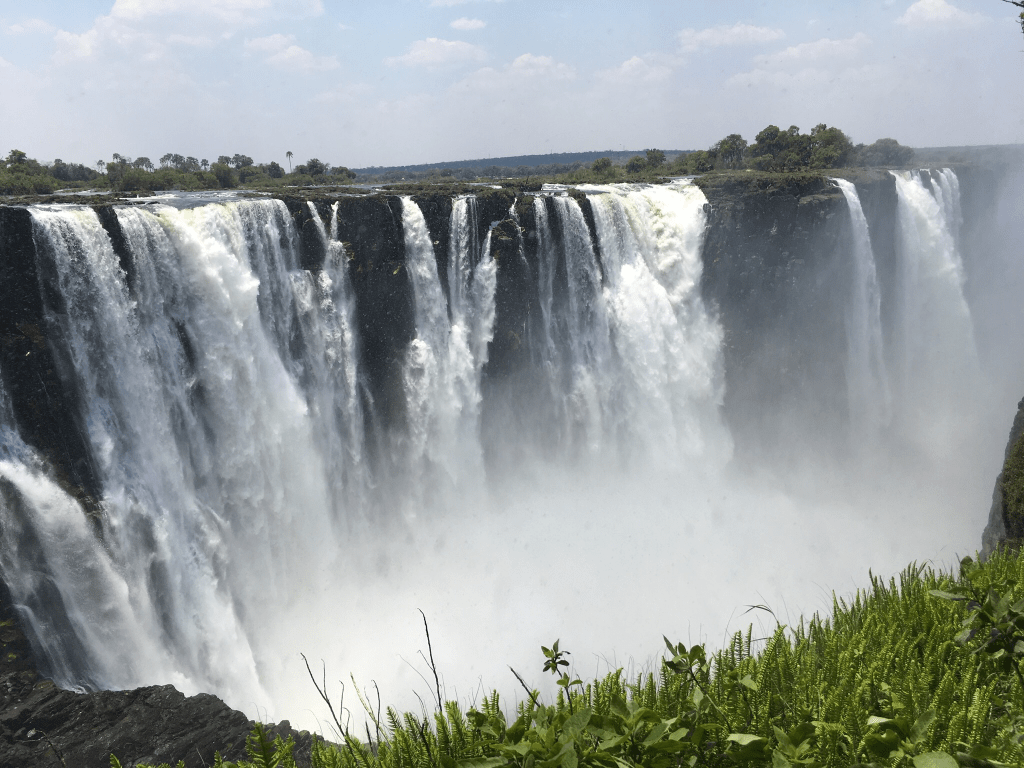
We’d arrived in Victoria Falls the night before, making the drive back from The Hide. We were only in town for two nights, so it was an active day. We started with a visit to the Falls in the morning and they didn’t disappoint. It was our second time seeing them, and the first time for our Friends Bill and Sharon. The Falls had more mist this time and it was quite evident why they are called “The Smoke that Thunders”. There were times the mist obscured the falls themselves and your only connection was the deafening sound of them crashing to the river below.
The Mist Rising Over One Part of the Falls
We ate lunch at The Lookout Cafe with it’s wonderful view of the Zambezi River and the Victoria Falls Bridge crossing from Zim to Zambia. Built in 1905, the train bridge is still used today. After lunch we made a quick stop at “the Big Tree”, a Baobab tree estimated by some to be nearly 2,000 years old, did a bit of shopping, and then went to our lodge to clean up for our Sunset Cruise on the Zambezi.
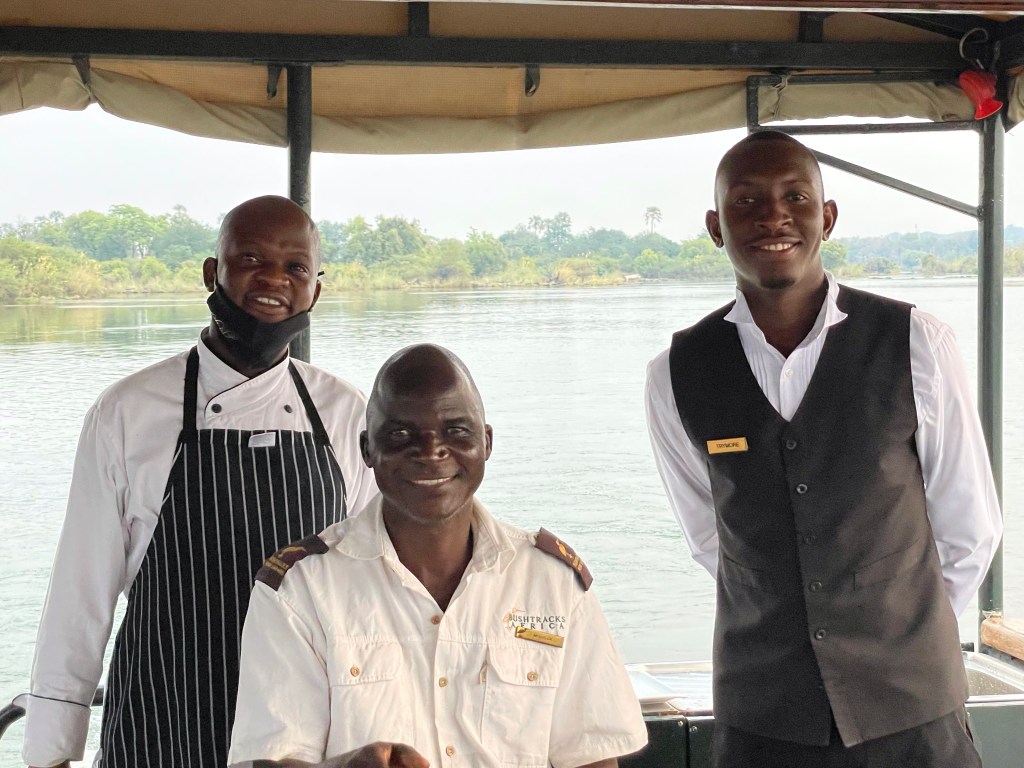
We arrived at our boat, The Victoria, around 4:15PM and were greeted by the boat’s bartender Trymore, with their version of a Pimm’s Cup. The boat pushed away and for the next two and a half hours, we cruised the Zambezi. Due to covid, the four of us were the only guests and we were treated quite well. The boat had a three person crew -Trymore, PK the chef, and our Captain, Misheck.
Captain and Crew of The Victoria
We knew the cruise included appetizers, but were surprised to discover we would have four courses. The next two hours were a surreal combination of drink, food, wildlife and scenery. Even now, I have trouble wrapping my mind around our time on The Victoria.
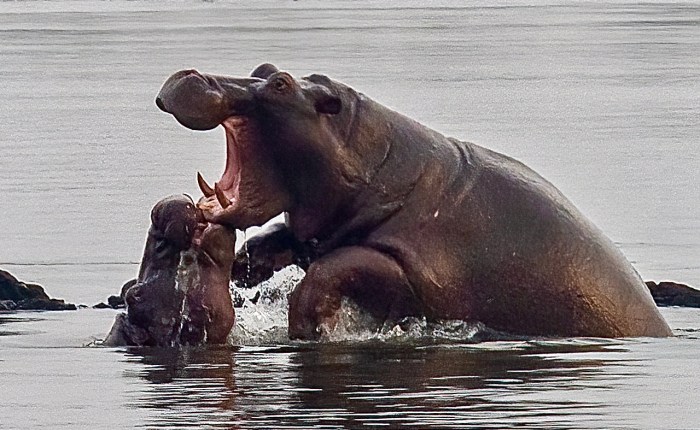
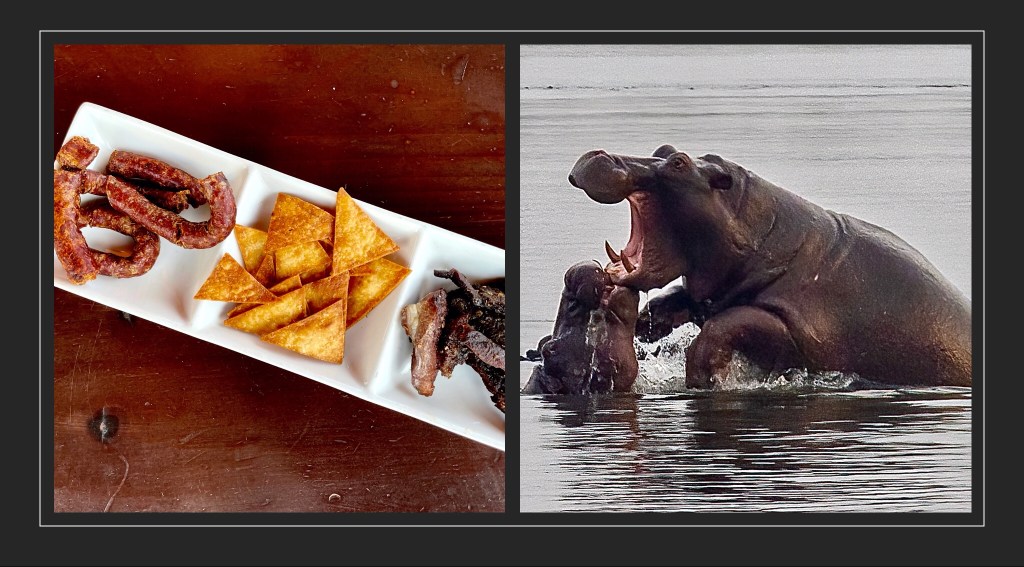
As we motored along, we switched to Gin and Tonics, or Jameson, depending on your vice, and the first course of Biltong, Beerstick and rotti was brought out. We were heading down river, and would ultimately stop about a kilometer above the falls. It was a beautiful afternoon and we were passing some ellies and a few hippos in the water. Suddenly a huge hippo actually breached the water and all thoughts of food disappeared. Our friend Bill, an excellent photographer was in the right place at the right time and grabbed a stunning shot. We all looked at each other and laughed a bit – THIS was fun, amazing and crazy all at the same time.
Biltong and a Leaping Hippo – What’s not to Like?
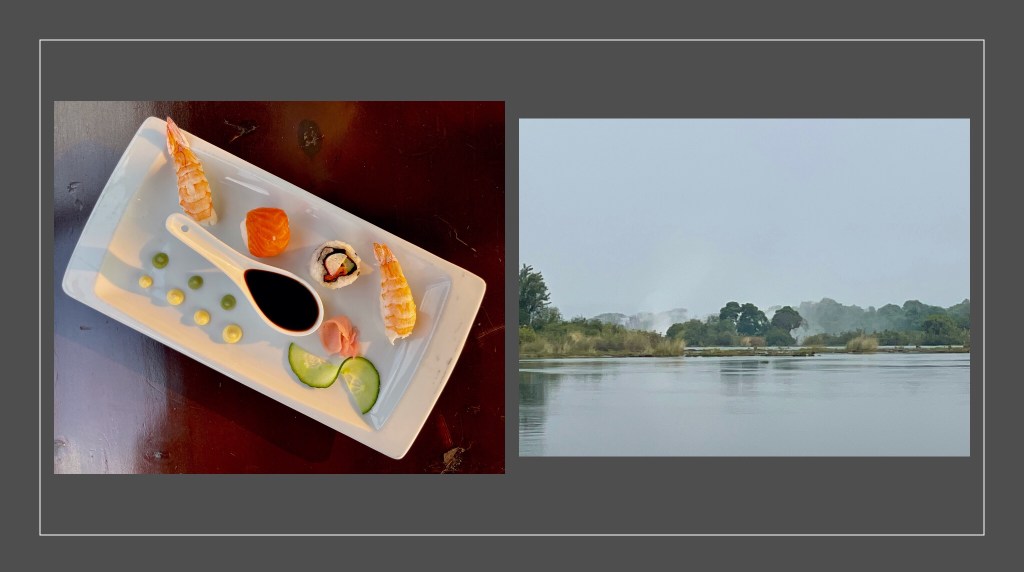
As the second course of sushi arrived, we were nearing the Falls. At about 800 meters away, we stopped for a bit. You could see the “Smoke” caused by the mist of the Falls themselves. As the Captain cut the engine, the thunder and rumble of the Falls was unmistakable. It was an incredibly peaceful scene, except for the roar emanating from the horizon.
Sushi … and “The Smoke That Thunders” Viewed from Upriver
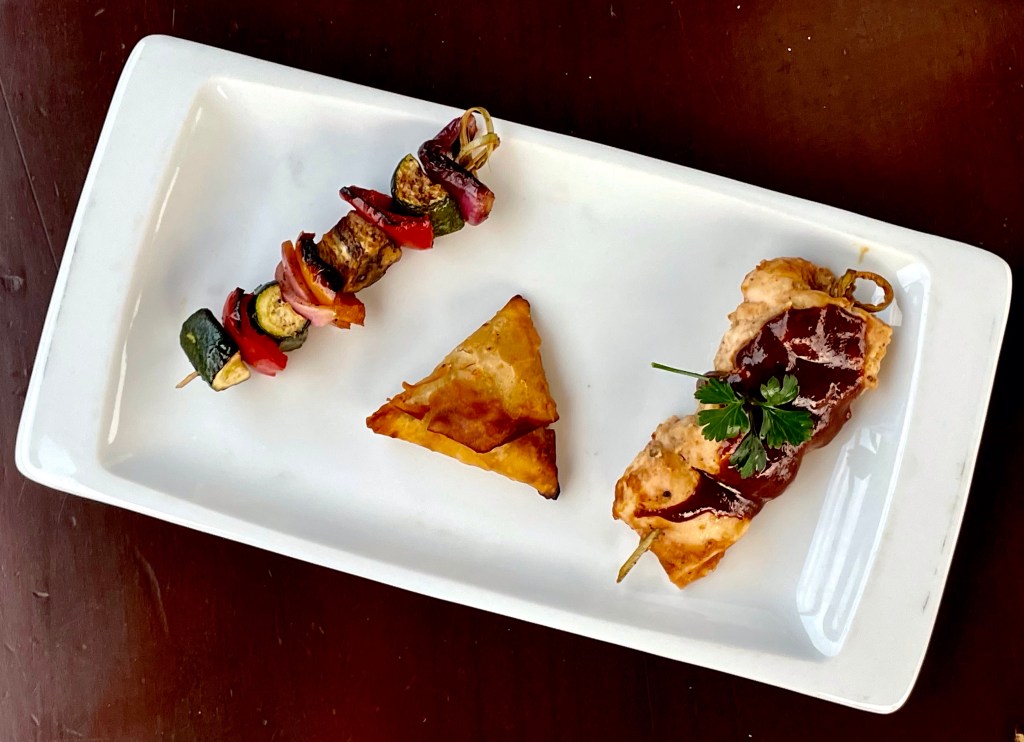
The boat turned around, and a bit further on and we saw something in the water, but couldn’t quite make it out. It was an elephant swimming across the river from Zimbabwe to Zambia! For all the world, it looked as if he was doing the breast stroke, with his trunk and head rhythmically coming up for air. As the elephant climbed out of the river and into Zambia, our third course of veggie and chicken “satay” kebabs arrived. By now we’d switched to wine and were still jabbering with each other about the swimming elephant. Although the kabobs were excellent, I have to tell you, a swimming elephant grabs your attention just a bit more… ;-).
(Click on Arrow for Swimming Elephant Video)
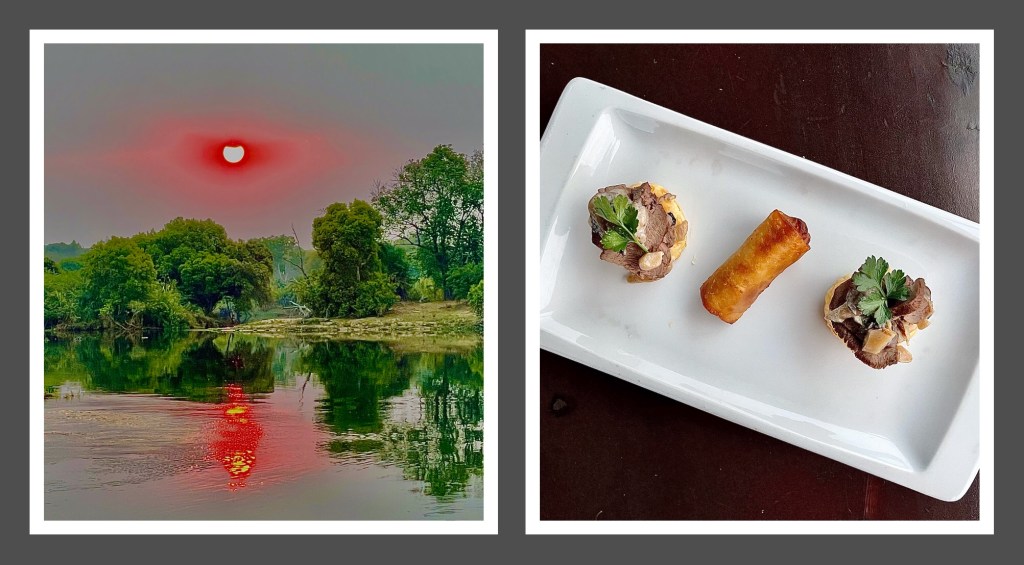
Both the river and time drifted along. It had been overcast, so we didn’t hold much hope out for a great sunset. Suddenly there was a shift of clouds in the west and the sun appeared above the horizon. We watched for several minutes, mesmerized by the colors of the sun playing across the sky and water. It was one of those moments where time froze in place. As we finally returned to our seats, the fourth and final course, “Mini beef Wellingtons” arrived, along with some red wine.
Sunset, accompanied by our Final Course
We were quieter now, basking in the glow of the evening twilight. We passed a few other boats, and more wildlife. Eventually, our dock appeared in the distance and the evening was over. Was it really only two and a half hours ago we’d started out? It felt like a lifetime had passed.
The Zambezi as Twilight Settled in
Addendum:
⁃ Thanks to Bill Reichhardt for the picture of the leaping hippo, and my wife, Cathy for the amazing sunset shot. Special thanks to Sharon Murray for providing the fascinating video of the swimming elephant.
⁃ This is the fifth in a series of blogs about our 2021 trip to Africa. The other blogs are listed here, in the reverse order of their publishing.
⁃ This is the second time we have used Karen Dewhurst, of Sikeleli Travel & Expeditions as our travel consultant. After working with her in 2018, there was no doubt we would use her and Sikeleli again. All accommodations were amazing, the food and wine excellent, the logistics and travel arrangements perfect and the animal viewing exceeded all expectations. If you are coming to this part of the world, I highly recommend her and them. You can reach Karen at: karen@sikelelitravel.com | (+27) 81 067 1094 (South Africa). Their overall website is at: https://sikelelitravel.com/ .










 Live Life Exuberantly