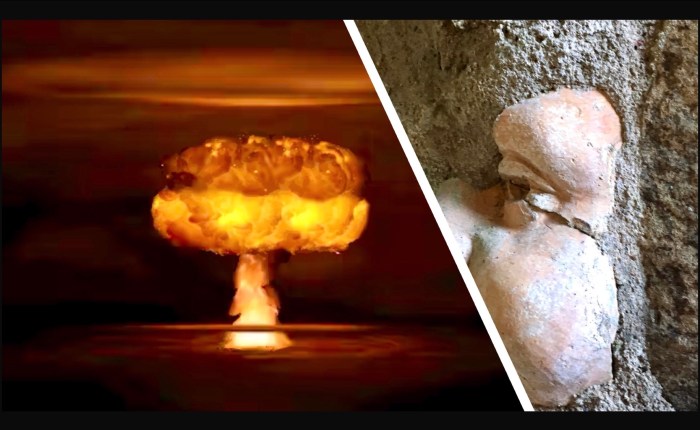
I received my Top Secret (TS), Special Compartmentalized Information (SCI) clearance in 1989. I was an Army Captain at the time. Before receiving the clearance, I did not know what work I would actually do in my new job. When I was cleared into the program, the first thing Gene, my new boss, asked was “How do you feel about Nuclear War?”
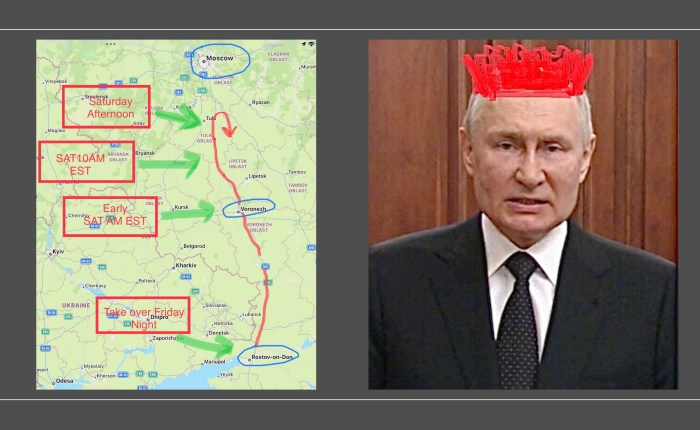
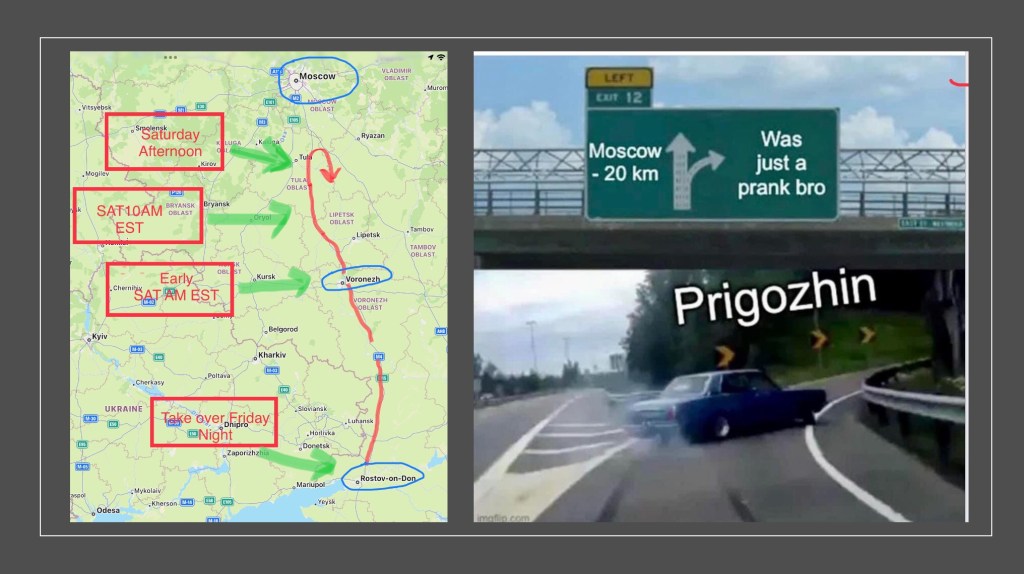
On June 24th, we woke to the news the Wagner Group rebelled against the Russian military and was marching on Moscow. Twelve hours later, it was all over. Peace at hand? More problems to come? Certainly we have ripples of instability, never a good thing in world affairs.
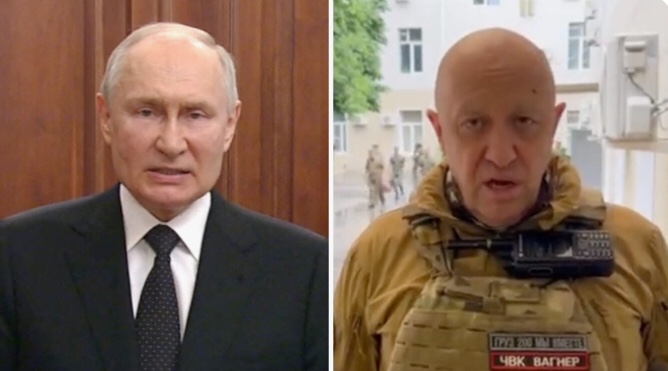
There’s nothing like a coup attempt to grab my attention before I’ve had my morning coffee. On that fateful Saturday, I watched with fascination as Prigozhin’s Wagner Group troops took over the Rostov Russian Military Headquarters and then started their march on Moscow. It appears they were within 120 miles of the capitol before the insurrection ended as suddenly as it began, and Belarus leader Lukashenko worked out a peace between Putin and Prigozhin.
Whoops…I Didn’t Really Mean It
The terms? Maybe, forgiveness for the troops, a safe passage of Prigozhin to Belarus, and no invasion of Moscow itself. Yea, a win-win for everyone – if you believe in fairytales. The “fog of war”, and the cloak around all things “Russia” makes it difficult to assess what is true, what is false, and what is somewhere in between. It will all play out over the next few months. What I know is there is now increased instability in the region, and the world. I’m not a big fan of instability. No sane person should be a fan of instability as we are now experiencing in Russia.
Will The Peace Last?
I am by no means a Russian expert, but I am a student of history. I also spent nearly a decade in the Army in Germany in the ‘80s waiting for them to attack us, and had the opportunity to learn a bit about them then as well. So, while I’m no expert, I do feel confident that I know more than about 95% of the talking heads on TV, and 99% more than all of those spouting off online.
Here are seven questions we don’t have the answers for. I waited this long after the putsch attempt to publish this blog in order for events to develop and perhaps answers become apparent to some of the questions. I don’t believe that has happened. The fog, and the world’s instability will remain until we have a better understanding of the answers. If someone on TV or online says they have the answers right now, you should immediately change your TV channel or go elsewhere online. They are probably lying.
1. Has Putin weakened? Between his failing attacks in Ukraine and this mini-coup, he looks like it, but looks can be deceiving. He is shrewd, and he is ruthless. I wouldn’t count him out just yet.
2. What WAS the agreement between Putin and Prigozhin? Is there wiggle room for both of them? Will they somehow be buddies after all is done? Or are they both out to kill each other?
3. A related question – How hard will Putin try to crush those who rose against him? Putin is not the forgiving type. In addition to settling up with Mr Prigozhin, he will certainly look at how easily the headquarters at Rostov fell. Was there complicity on the part of his generals there, or weakness? In either case, heads are likely to roll.
4. What about the Wagner troops? There are 25,000, give or take, wandering around Southwestern Russia, or in Ukraine with plenty of guns, tanks, and other weapons. They have served as the pointy end of the spear for the Russians in most of their attacks over the past year. If they are now peaceably subsumed into regular Russian units (as the Russian Army is trying to make happen), what happens to their effectiveness? What happens to the effectiveness of the units they are added to? And what happens if they don’t go quietly into the night?
5. What happens to the other Wagner Group troops scattered around the globe providing “security” and other services in places such as Sudan, Mali, Syria, the Central African Republic, Libya, Venezuela and Sri Lanka among others? Does Prigozhin continue to lead them, does someone else, or do they fade away?
6. How will this affect the war in Ukraine? If the Wagner Group is dissolved as a fighting force, what is the impact? Also, the other Russian troops in Ukraine have to know at least some of what has happened. How will they react?
7. How safe are Russia’s nuclear weapons? Are we confident they are managed and controlled in a secure fashion?
As I said, I’m not a big fan of instability, and right now, this situation provides plenty of it. Some people in this country would say ignore it, it’s not our problem. Others (I’m looking at you Majorie Taylor Greene) stupidly question whether the US was somehow behind the coup. Both of those courses are unwise. Any time there is instability in the world the ripples make their way in our direction, arriving sooner or later. The only question is whether the ripples fade away, or due to activities we can’t see below the surface, turn into a tsunami.
And don’t forget China lurking around out there as well. Their commentary was generally muted about these events. I believe they are a bigger longterm threat to us both militarily and economically. Having said that, I’m more concerned about an unstable Russia right now, than I am about a stable China.
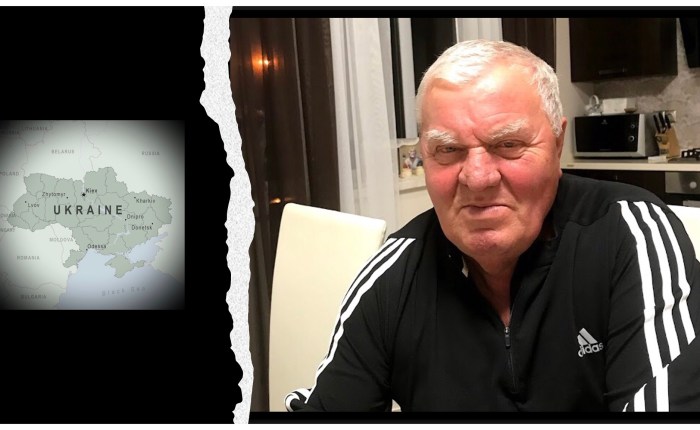
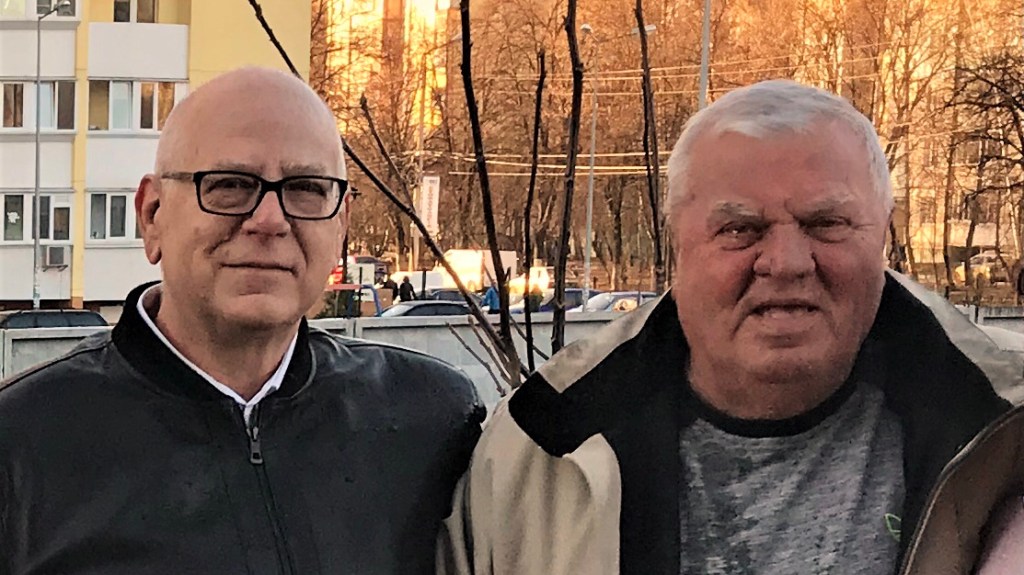
Bob made a comment to Viktor, his father-in-law, about how Ukrainian soil is “so rich and black, it stains my hands like ink!”. Viktor’s retort? “Well Robert, over the centuries, many idiots have tried to capture Ukraine, and we keep having to bury them in the ground here – that is why the soil is so rich.”
Bob and Viktor
Those lines came from my friend Bob Pitts recently published book, UKRAINE: THE AWAKENING: My 20 years of witnessing Ukrainians rediscover their nationhood. Those of you who are regular readers of this blog know that I’ve recently written a couple of articles about Bob and his current life in Ukraine. You can find links to those blogs in the Addendum. Over the past eighteen years, Bob and his wife Vita have divided their time between the USA and Ukraine, where Vita is originally from. They have lived in Ukraine continually for the last two years, and have seen up close and personal Putin’s unjust attack on, and war with, Ukraine.
When the war began, Bob became concerned about how little westerners, especially Americans, understood about Ukraine, its people, its history and how the relationship with Russia is misinterpreted in Western media coverage. As a result of that concern, he wrote UKRAINE: THE AWAKENING. The book gives readers a view into Ukrainian culture and the beauty of the people. I’ve bought and read the book and recommend it to anyone who has even a remote concern about Ukraine and world events. Here’s my quick review.
Ukraine: The Awakening
Bob is, of course, correct. Most of us Americans know little about Ukraine, or its history. That’s what makes this book so perfect. A scant 135 pages, it gives us the basics. With a combination of current events, a bit of personal and family history, a little Ukrainian and Russian History, interviews with some Ukrainian young adults and thoughts about the future, Bob achieves his goal – it not only talks about Ukraine’s Awakening over the past twenty years, it provides the reader with an awakening as well.
Bob isn’t one of the great writers America has produced like Ernest Hemingway (Fiction), or David McCullough (History/Biography). For the purposes of this book, I think he’s something better – he’s a conversationalist. Reading the book feels a bit like sitting in his family room, or at a local bar with him and he is giving you his thoughts on Ukraine. With a casual, but passionate writing style, Bob pulls you in, and then gives you some things to think about. Eminently readable, it’s an important book at the right time.
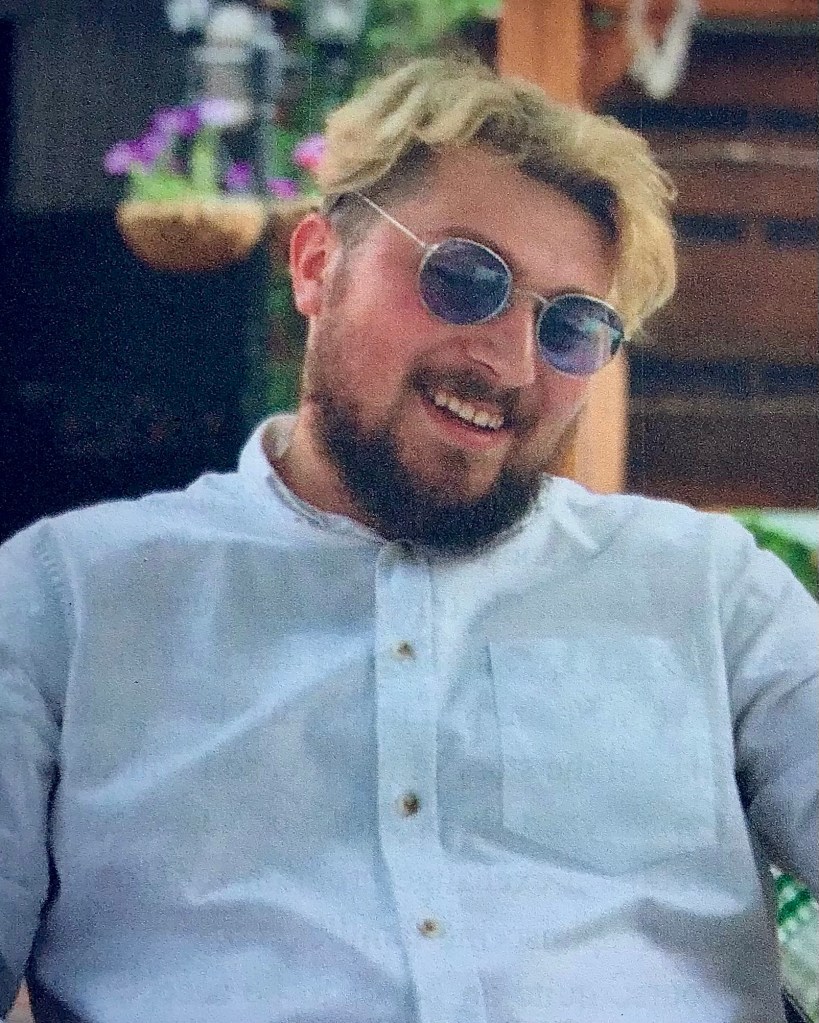
While the entire book is good, my favorite section contains interviews with three young Ukrainians, each telling their own story. These aren’t fairytales, but real stories by real people. These are dynamic, vibrant stories that give you hope for the future, not only for Ukraine, but also for young adults everywhere. As The Who sang, “The Kids Are Alright.”
Artem, One of Those Interviewed by Bob.
The Ukrainian counteroffensive has been going on for a few weeks now and Ukraine will remain in the news. Additionally, the Wagner group takeover of Rostov and attack towards Moscow started and then stopped. Who knows what impact that will have. Some will pay attention. Some will not. If you are a smart and caring person, I recommend you pay attention. I also recommend you buy this book. Ukraine is too important and all of us should learn more about this country. You can find it on Amazon, and the price is right. Go ahead and buy it. What are you afraid of? That you might learn something new?
Addendum:
Here is a link to Bob’s book, UKRAINE: THE AWAKENING: My 20 years of witnessing Ukrainians rediscover their nationhood – this is at Amazon: https://a.co/d/6qUppBU
And… On this Friday June 30th only, you will be able to download a free copy of the eBook version. Here is the link: https://a.co/d/iHZME1U
It was 6:20PM on May 8th DC time, or 1:20AM on May 9th in Kyiv, Ukraine when Bob called. He was in his study, expecting to have to go to their bomb shelter soon. May 9th is a big celebration in Russia for their victory over Nazi Germany in 1945 and there was sure to be an attack. We talked for perhaps twenty minutes, the first time in a couple of years. Things were OK, but it was still tough in Ukraine.
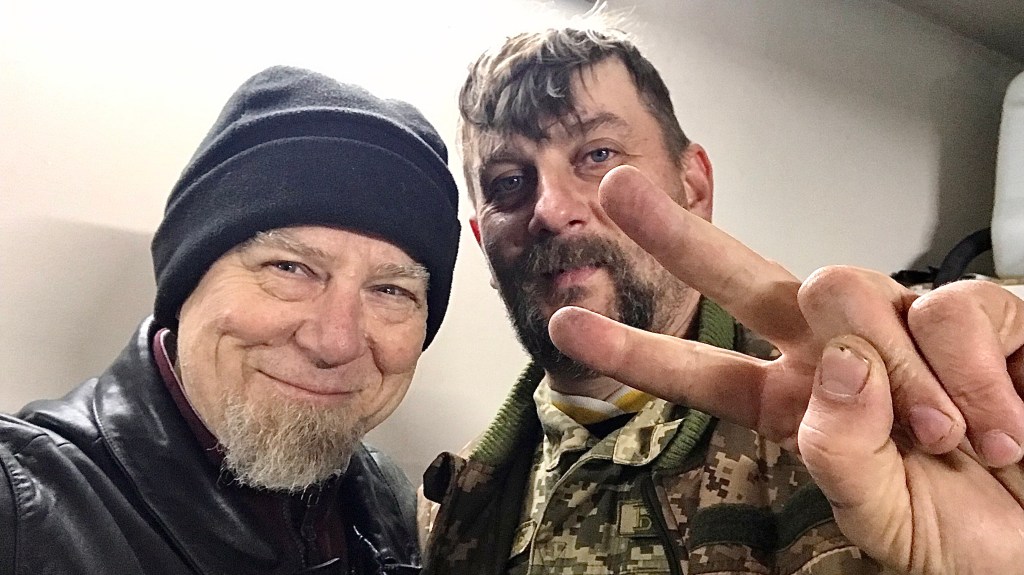
Bob and I worked together at a company called SRA for several years, got along well and were friends. Around twenty years ago, Bob met Vita, the woman who would eventually become his wife. She is Ukrainian by background and still has family there. Over the years, and particularly once Bob retired, they spent time both here in the US and also in Ukraine. They have currently lived in Ukraine for the past two years.
Bob and Vita
He recently sent a text updating me on what has been going on in his life:
“Last year, we decided that we simply couldn’t leave all our family and friends here in Ukraine. So we decided come hell or high water – this was what we needed to do.
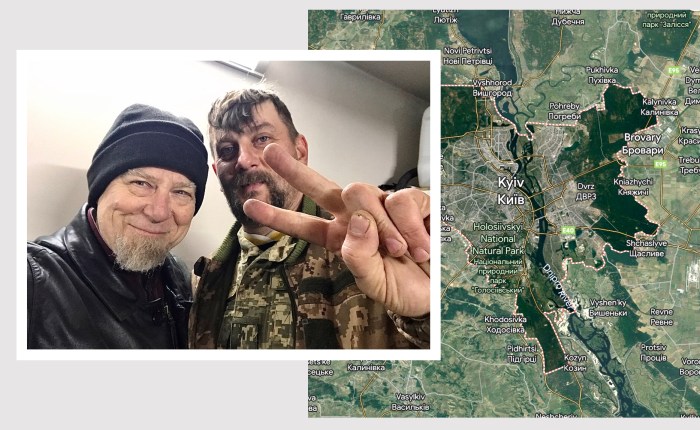
We live in a bedroom community of the capital called Brovary. Brovary was in the news a few times at the beginning of the war because they tried to come through here on the major highways to get to Kyiv. We did have some scary times those first few weeks. I never thought I would see the day that I stood in my front yard and could hear (and even feel sometimes) tank and artillery battles. The front came to within about 5 miles of us before the good guys beat them back and they retreated.
These days the front is a couple hundred miles south of us. We continue to have regular missile and drone attacks. These were WAY bad early on, but now the best defense umbrella is over Kyiv and we are in that protected zone. Still, we have a lot of attacks and the air raid sirens go off at 2 and 3 in the morning and we all have to run to the basement/shelter in the barn. That hasn’t been fun and there is a lot of lost sleep that makes everything more difficult. My neighbors and I joke (only partially) that if there is a direct hit on any of our barns, the other neighbors will come and dig us out.
We do all we can to help the army. Donations – we’ve bought uniforms, boots, tents, food and chainsaws, you name it. I even helped my neighbor, Dima, who is a long range mortar specialist to replace the windows in his car that were shot out when he was coming home on leave. The war has gone on so long, they are rotating some of these guys out and giving them a break.
Things are still very bad in some of the smaller towns where the defenses are not as robust. The stories of what has happened to innocent civilians is more than I can say here. There have been real, no bullshit war crimes…”
Bob and Dima, While Dima was on Leave
Bob has written a book about Ukraine called UKRAINE: THE AWAKENING: My 20 years of witnessing Ukrainians rediscover their nationhood. He worked over this past winter in Brovary to capture the points he believes are important for westerners to know. When the war began, he became concerned about how little westerners, especially Americans, understand about Ukraine, its people, its history and how the relationship with Russia is badly misinterpreted in Western news media coverage.
The book is intended to give readers a view into Ukrainian culture and the beauty of the people. There is also a bit of the history of Russian relations that is helpful to understand the conflict and to dispel some of the propaganda narratives the Kremlin has been using.
I’ve posted a link to the book in the Addendum. In the meantime, I’ve purchased a copy myself, and promise to give an update on Bob, and the book after I finish reading it.
Bob’s Book – Ukraine, The Awakening.
I asked Bob about posting this info, and whether he was concerned about retaliation. Here was his comment back to me: “ Max, I would fully support your using the material in your blog. My reasoning on writing the book is to get the word out, so this would help a lot I think. As far as security goes – to hell with Putin and his goons. I think he has bigger fish to fry than me, but I am not running or hiding from that son of a bitch.”
On the morning of the 9th, I woke up, and after feeding the horses, made my coffee as usual. When I opened my iPad, this message was waiting for me from Bob: “It was really good speaking with you last night Max. We are all good here after the attacks – they started around 4am. We destroyed 23 out of 25 cruise missiles in the air”.
—I will continue to report on Bob’s story in a couple of future blogs. —
Addendum:
Here is a link to the book at Amazon if you are interested in purchasing it: https://a.co/d/6qUppBU
And, Here is a recent Zoom interview Bob did with Cortney Evans at WMBB 13 ABC in Panama City, Florida: https://youtu.be/GuJoxO8Qi8s
I’ve written one previous blog about Ukraine. You can read it here: Command and Control (C2), along with Command Centers, are phrases you hear concerning the Russians in Ukraine. In my military career, I worked all levels of C2 from Infantry Brigade to Presidential, and I can see the Russians are shockingly missing, or ignoring some C2 fundamentals. […] Continue here: https://mnhallblog.wordpress.com/2022/06/14/russian-command-and-control/
Euromaidan Press (seen at the end of the blog) is a daily English language summation of Ukrainian news and information. If interested, look online and you can subscribe here: https://euromaidanpress.com
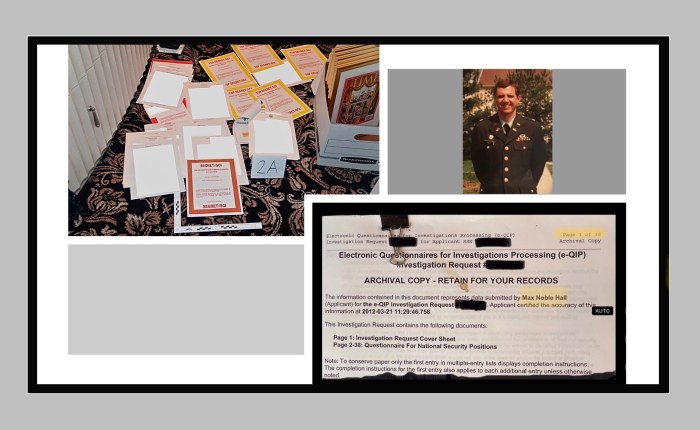
I have held various security clearances for decades in the past. I spent years working in a Special Compartmented Information Facility (SCIF), both in the military, and as a civilian. I’m not here to judge, but I’d probably be in jail if I’d done what our former President did.
One of the things we learned about classified information early on is that in order to access classified documents, or programs, there are actually two requirements. First, you need the security clearance level required for that information. Second, you must have a “need to know” the information. That is, holding a TOP SECRET* (TS) clearance isn’t a sufficient reason to see a TS document. You also must have a specific need to see the particular information.
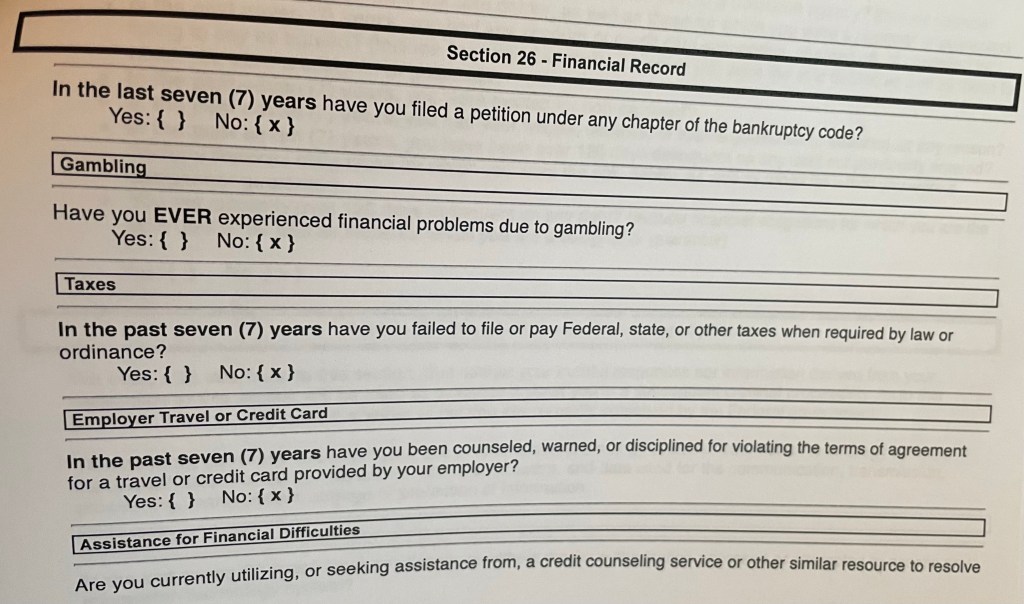
I obtained my first clearance, SECRET, while still at West Point in the seventies. They don’t just give you a SECRET clearance, or any clearance for that matter. You fill out a form answering several pages of questions, they do a background check, interview family and friends and determine whether you are “trustworthy”. The process takes a while. For most folk, unless you have done hard drugs, committed a crime, declared bankruptcy, or declared hostility to the United States, it isn’t too hard to receive a SECRET clearance.
Bankruptcy is One of the Reasons you Can be denied a Clearance.
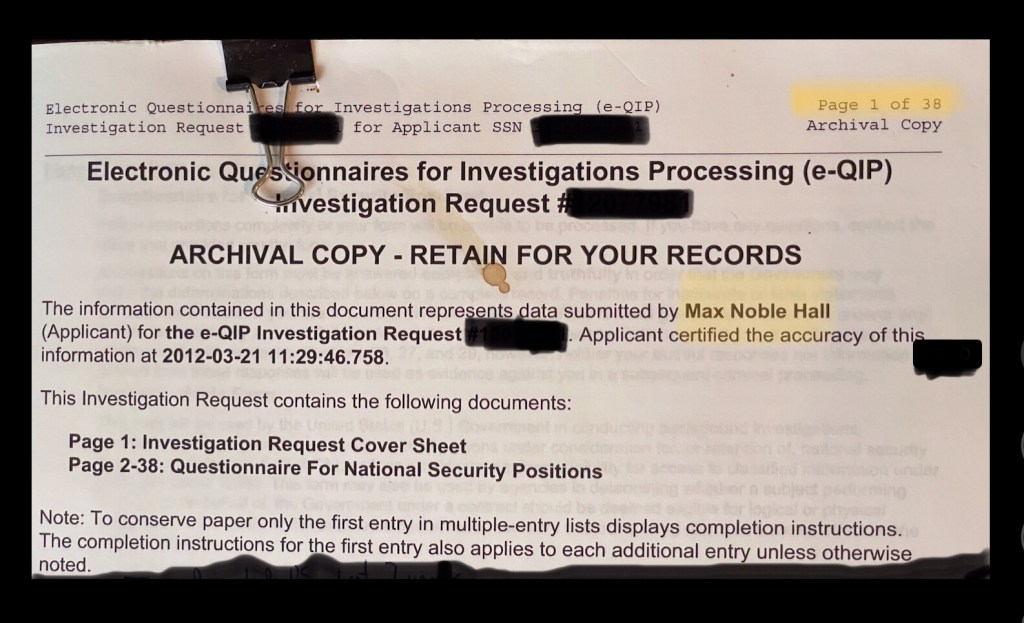
In 1989, we returned from an assignment in Germany to the States and I transferred to a job in the DC area. For that work, I underwent a Special Background Investigation (SBI) in order to receive a TS/SCI/SI/TK (TOP SECRET, Special Compartmented Information, Special Intelligence, Talent Keyhole, clearance). These are a wee bit harder to obtain. Actually, a lot harder. It took months and months for the investigations to take place and for the government to grant my clearance (today, it’s not unusual for the process to take nearly a year). I provided information on where I’d lived over the course of my life, background about my jobs and employers, info on family members and friends, and several references. I documented all overseas travel. I documented any communications I had with East Bloc or communist personnel. In addition to verifying the information I provided, and talking with my references, the government also interviewed neighbors, former bosses, coworkers and family members. They physically went to my prior homes, talked with neighbors and asked about my habits. It’s an intensive and invasive process. When I finally received my clearance, I was also eventually “read in” to a couple of highly classified Special Access Programs (SAPs) further restricting who could access the information.
My TS Renewal in 2012 – All 38 Pages of It.
Everything we did in support of those SAPs was done in a SCIF. To access the SCIF, in addition to the combination lock, there was a retina reader at the outside door, and it was only after your eye was scanned that the door would unlock. Our particular SCIF also required two person access. That is, a person was not allowed in the facility by him or herself. There was a requirement for at least two people to occupy the SCIF, whenever it was opened. This was to prevent someone taking unauthorized information or files out of the SCIF.
The SCIF had intrusion detection systems, and needed to meet a host of other requirements effecting communication systems, the size of duct work and special wiring and HVAC requirements. Cell phones, or any other personal electronic devices weren’t allowed in the SCIF. Inside the facility, all of our classified information was stored in safes which met certain requirements. When you opened the safe, you initialed a form that you opened the safe, and what day and time it was. At the end of the day, when you returned the classified documents to the safe, after locking the safe, you again initialed the form, provided the time you locked it, and the date and time were then verified by a second person.
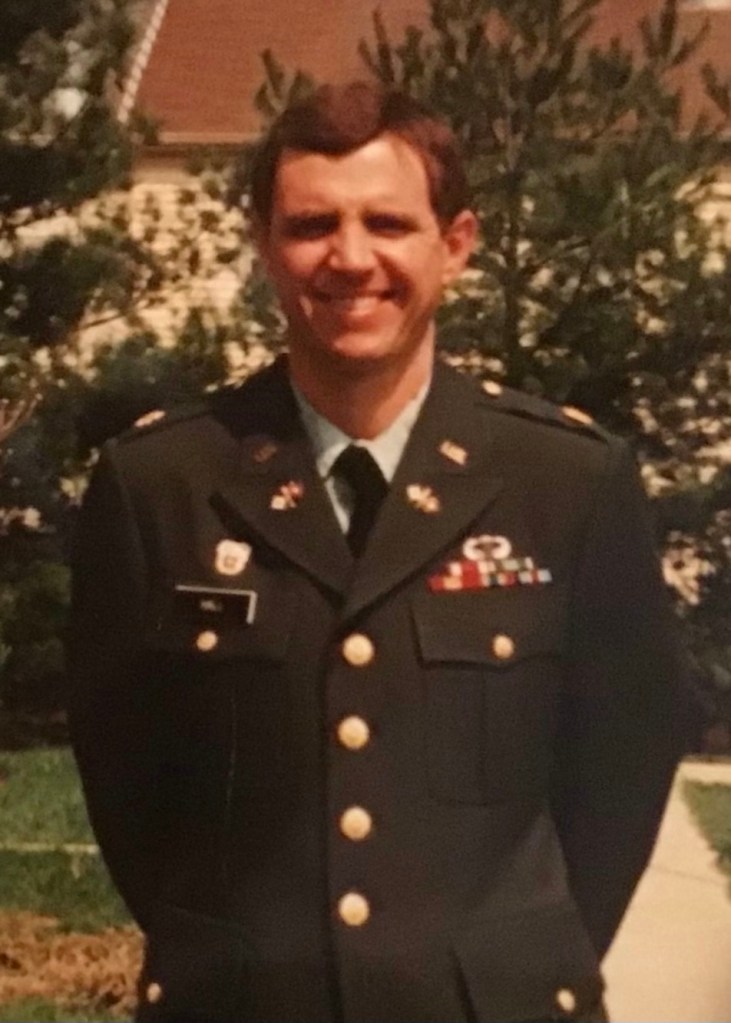
This is me, During the Time I was Working in my First SCIF
If you ever transported classified information outside the SCIF to another location, you needed a special permit. The classified info was double wrapped. You followed a schedule in delivering the information, including the expected arrival time. If there were schedule variances, you notified the authorities.
When I left those SAPs several years later, I was sworn to secrecy, and signed papers indicating I wouldn’t reveal anything about those programs for seventy years.
Honestly, it was all a pain in the ass. BUT, we all understood why it was required, and so we complied without complaining. We understood the security of the nation could be put at risk if there were security compromises, whether intentional or not.
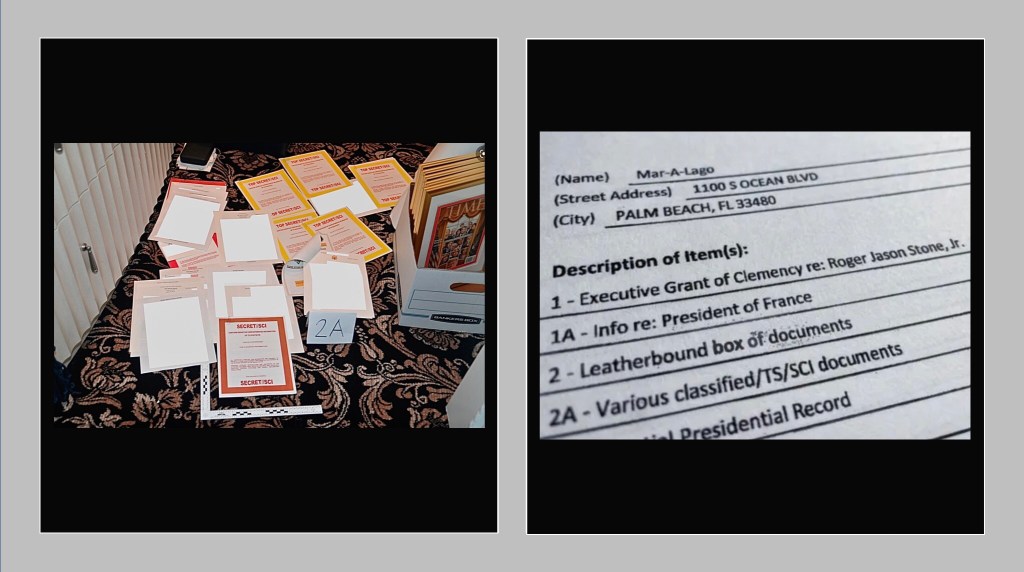
I don’t know what is in the material the former President took to Florida. I also don’t know what he intended to do with it. I doubt we ever will. Based on the covers and documents shown in the now world famous photo, there was TS/SCI material, SECRET/SCI material and other classified information. There were empty SCI folders, with the info, perhaps, stored elsewhere. None of this was stored in a SCIF. As the President was now the former President, there was no longer a “need to know”. The information should not have been at Mar-a-Lago.
Just. Totally. Unbelievable.
Was this a politically motivated search? I don’t know, but given the material found, it’s a moot point. The search was justified. What he did was wrong. Are there always two standards for everything – one for the former President, and one for everyone else? Why do citizens continue to listen to his claptrap**?
Here are some things I do know:
The government held constant dialogs with the former President, his staff, and his lawyers about returning the missing information for over a year, as required by the the Presidential Records Act (enacted after the criminal Nixon tried to destroy documents in 1974).
The former President’s lawyers apparently lied when they swore in June there was no more classified information stored in Florida.
In 2005, former National Security Advisor, Sandy Berger, was convicted of removing, and then destroying five classified documents from the National Archives. He received a $50,000 fine, two years of probation and 100 hours of community service.
In 2015, General Petraeus was convicted for mishandling classified information with his lover. He received a $100,000 fine and two years of probation.
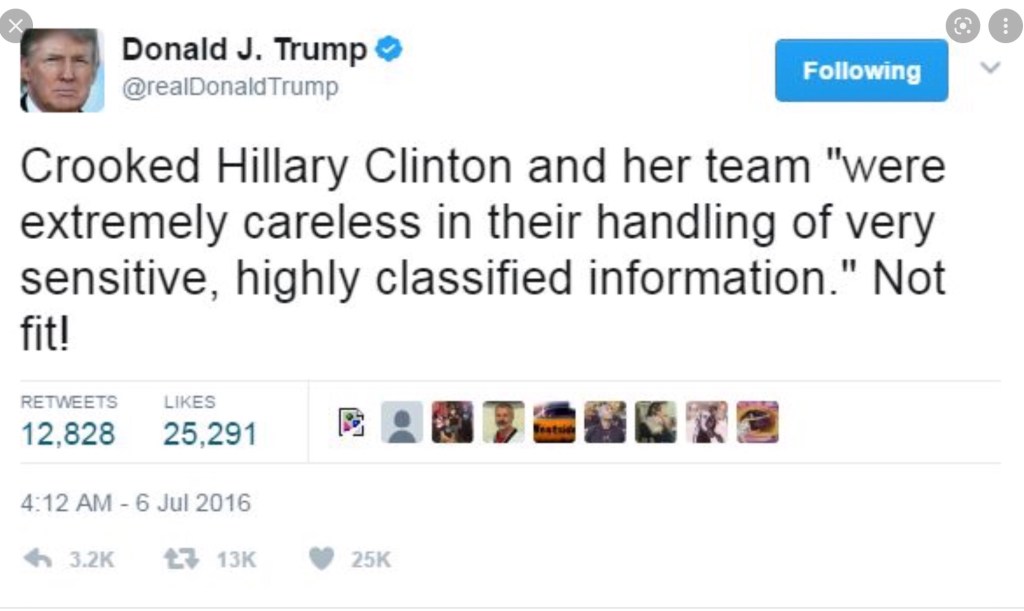
When Hilary Clinton was investigated for her server, people were calling for her prosecution and spoke of how she was unfit for office. Many of those same people are now saying what the former President has done is no big deal, and he can do what he wants.
With the former President, there are Always Two Sets of Standards. Always.
The final thing I know is that If I had done anything remotely close to this, I would have been dishonorably discharged if in the military, fired if a civilian, received a huge fine, and very possibly gone to jail. My public life would have been over.
Of course, unlike some people, I couldn’t shoot someone in the middle of 5th Avenue and get away with it either.
Addendum:
One of the reasons I published this blog is I became aware that many people have no idea what is required to get a clearance, or what is required for the correct handling of classified information. I thought it might be useful for folk to actually understand why this is a big deal, if you work with classified documents. Feel free to share the blog with others.
*TOP SECRET material is defines as something “that would cause exceptionally great damage to US national security and US persons should it reach the eyes of a foreign adversary.”
**Claptrap – noun – absurd or nonsensical talk or ideas.
The Presidential Records Act was enacted in 1978 after President Nixon sought to destroy records relating to his presidential tenure upon his resignation in 1974. The law superseded the policy in effect during Nixon’s tenure that a president’s records were considered private property, making clear that presidential records are owned by the public.
Command and Control (C2), along with Command Centers, are phrases you might hear with regard to the Russians in Ukraine these days. In my military career, I worked all levels of C2 from Infantry Brigade to Presidential, and I can see that the Russians are shockingly missing, or ignoring some C2 fundamentals.
There are other reasons for Russia’s initial bad performance in the first 100+ days of this war as well – too broad of an initial attack, poor logistics and poor morale in a conscript army all come to mind. What I keep returning to is their lack of C2 fundamentals, which impacts everything else.
Command and Control is defined by the Defense Department in military speak as “the exercise of authority and direction by a properly designated commander over assigned and attached forces in the accomplishment of the mission.” What does it really mean? In lay-terms – having the necessary leadership, team and systems to successfully manage a battle or war.
I know a thing or two about C2. From 1979 to 1983 as a junior officer, I supported Command Centers and command and control elements for 2nd Brigade 3ID, the 3rd Infantry Division itself, and VII Corps in Germany. When I returned to Germany from 1985-89, I was involved in work supporting the United States Army HQ in Heidelberg, the US European Command Alternate Support Headquarters in England, and NATO Headquarters in Belgium. In the 1990s I was involved in classified Nuclear Command and Control elements and programs at the Pentagon, and for the White House. For twenty years, virtually all of my work was involved in Command Centers, along with Command and Control processes and systems.
A Personal History of Command and Control Related Assignments
There were several truths and common best practices at all of those levels. I’d like to highlight just a few, including mobility, multiple communications links, and independent and inspired leadership at all levels. The Russians have problems with all three of those concepts.
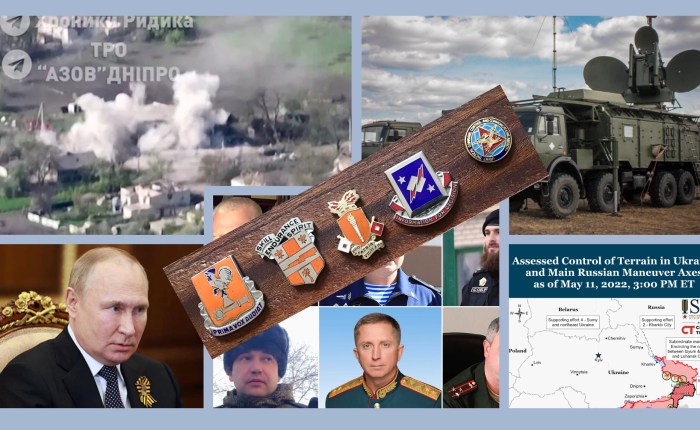
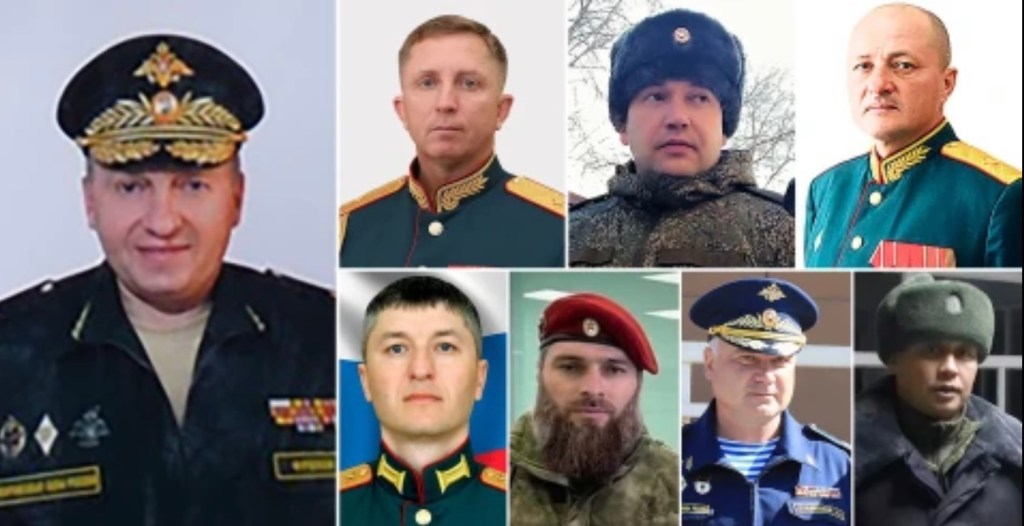
First, they appear to have forgotten that the closer your Command Center is to the front, the more mobile you must be. You can’t allow your Command and Control elements to stay in one place, otherwise they are identified and targeted. This is particularly true today with the availability of satellite imagery. The result of them ignoring this maxim? We have seen multiple Command Centers destroyed, and at least 12 Russian General Officers killed at those Command Centers. As a comparison, the US lost 40 General Officers in all of WWII and 12 GOs in the entire Vietnam war.
A few of the dead Russian General Officers
Next, your command and control centers need multiple communications elements and links, particularly systems which are bi-directional, not Omni-directional. Why is that? Well, for one thing, Omni-directional systems (think HF Radio as an example) are easily detectable by your enemy, and as a result easily targeted. Also, without multiple systems, if one system isn’t working, your messages don’t get through. How did the Russians try and solve this second problem? By using cell phones, which are, guess what? Easily detectable. Combine this problem with their lack of mobility, and the issues for C2 elements are compounded.
I think it is a third issue that is causing the greatest harm for them – their seeming inability to push Command and Control leadership to the lowest levels possible. In the US Army, we try to encourage resourcefulness and independent thinking at all levels of leadership, down to and including individual platoons and squads. It’s not that they act independent of each other, but if there is an issue, individual action, leadership and gumption are expected. With the Russian army, this doesn’t appear to be the case. Putin, or his henchmen, are managing all aspects of the war and they have little ingenuity or original battlefield thinking going on at any level.
In the US, I’ve watched C2 migrate to C3 (add communications), to C3I (add intelligence) to C4I (add computers), to C4ISR (add Surveillance and Reconnaissance), to C5ISR (add Cyber) and today, C6ISR (add Combat Systems). There are two important lessons here: First, The US Military, of course, always loves a growing acronym (kidding … 😉 …); and second, the true lesson is the US Military continues to adapt and improve. All of those additional letters added to the C2 acronym? They are ways we continue to improve and support the fundamentals of Command and Control. We view enhancements to Command and Control as force multipliers.
The Russians continue to press their attack and they are making progress in the East. I will not be surprised to see the Donbas region fall into their hands, and probably sooner rather than later. But it’s coming at a tremendous cost of lives and equipment to them. Currently, the Pentagon reports they have lost in excess of 20% of their fighting forces, including over 1,000 tanks. They have reverted to Russian WWII type tactics of leveling everything in their path as they approach an area. The areas they are “conquering” are reduced to rubble, and remember, these are the areas supposedly “friendly” to the Russians.
Putin, of course, doesn’t care about the loss of Russian manpower, or the destruction of Ukraine. He only wants a victory. When all is said and done, I don’t know that he will regret the lack of Command and Control fundamentals and force multipliers in his military structure, but the families of thousands of dead soldiers back home might.
Addendum:
To my West Point classmates and old military buddies, I realize this is an overly simplified version of Command and Control and what is going on in Ukraine. I’m sure there already are, or soon will be many complex studies and reviews of what is happening in Ukraine, and what problems the Russians are having. I also believe simplicity sometimes serves a purpose, and in this case, its relatively accurate.
Rick Steinke, a West Point classmate, retired Colonel, and Former Associate Dean at the George C Marshall Center in Garmisch-Partenkirchen, Germany, sent this note to me after I posted the blog: Well said, Max. I would also humbly add that you must exercise and train said C2, across a combined arms environment. This training must be honest in exposing problems and weaknesses. This approach is anathema to the Russian military. After all, generals and colonels might end up looking incompetent. Said another way, with their training approach it has always been better to LOOK competent than BE competent. At our National Training Center (three trips as BN/ BDE S-3)in the Mojave desert, after action reviews, brutal and transparent as they were, always made well-led units – and leaders – better.
Remember right after September 11th happened, when former President Clinton said “The attack on The Twin Towers was genius, and Osama bin Laden is pretty savvy.”? Yea, I don’t either, but that is exactly what Mr Trump is saying about Putin and the situation in Ukraine right now.
Still Buddies, Evidently…
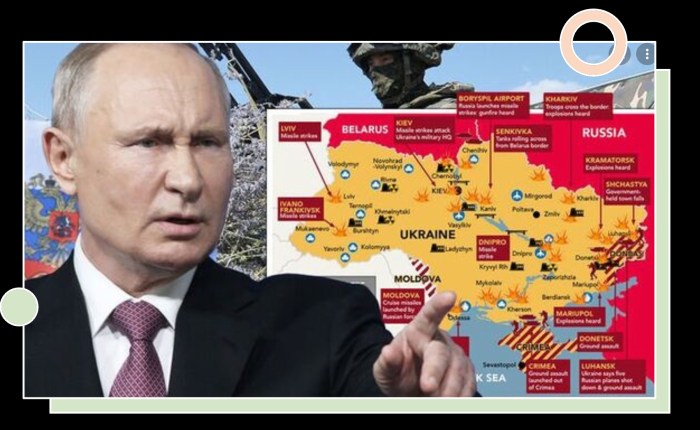
I understand the difference between an attack on New York City and the Pentagon, and an attack on Kyiv. Also that those attacks are not equivalents. Having said that, Putin and Russia are an existential threat to the Western Alliance in general.
It is interesting to watch the current commentary coming from some on the right about Joe Biden and the situation in The Ukraine. I contrast it with America when September 11th happened. No one blamed Bush. Instead, as Americans, we unified behind him. Remember those first couple of years after the attack? We were all Americans, not Democrats or Republicans.
Twenty one years later? It appears to be all about politics.
Mr. Trump, has tried to posit that this attack has taken place because Joe Biden is weak. In 2001, no one tried to say George W Bush was weak and that is why al-Qaeda attacked. Why? Because we united against a common enemy.
And it’s not just Mr Trump yapping away.
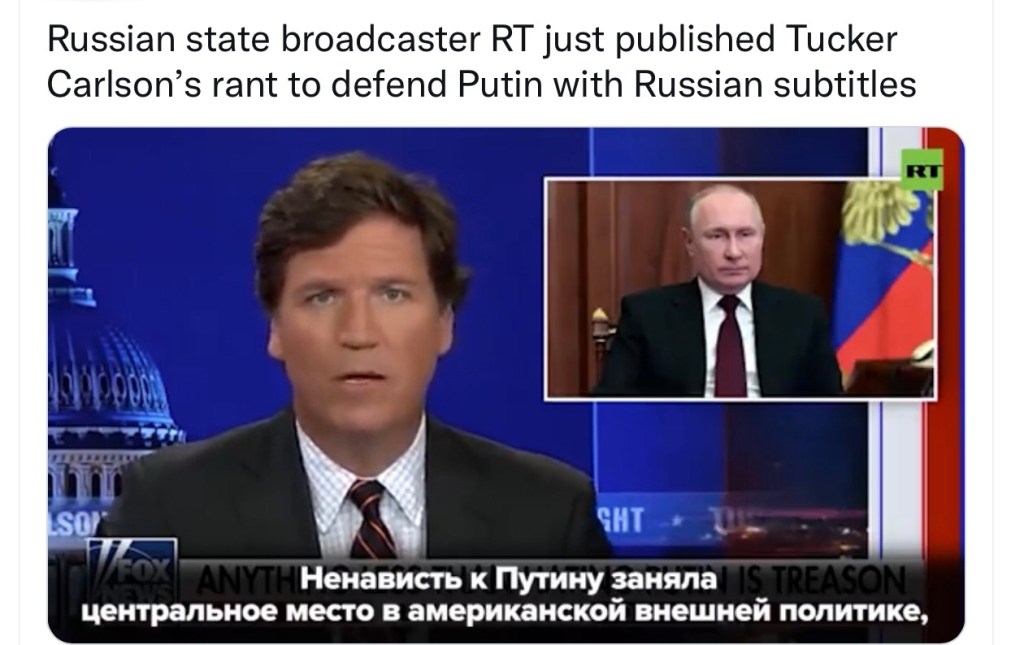
Tucker Carlson and his fawning over Putin has shown himself to be a good imitator of Charles Lindbergh and his love affair with Adolf Hitler before WWII. His whole speech about Putin never hurting him and never wronging him was great theater, but missed the mark and displayed a lack of understanding. Tucker, the former hawk, is also now a peace loving man – we don’t need to do anything in Ukraine according to him.
Former Secretary of State, Mike Pompeo? He and I are both alumni of the same institution (West Point), but that is about all we have in common. He too has praised Putin: “Putin is very shrewd. Very capable… I have enormous respect for him”. He has since walked back his comments, but the damage was done.
Russian State TV is showing video clips of both Pompeo and Carlson praising Putin and using it for reinforcing the invasion of Ukraine. There’s some good Americana for you.
Nothing says love for America, like helping out the Russians
Yes, McConnell, Graham and others have condemned Putin and provided some supporting comments for President Biden. Unfortunately, Hawley, Cruz, Vance and the rest of Trump’s BoyToys continue to whine and try and have it both ways. I wonder if Senator Cruz would modify his stance some if the Russians tried to help Mexico reclaim Texas? Texas belonged to Mexico after all, and I’m sure there are a few Texans who would rather belong to Mexico.
Abe Lincoln was right. “A house divided against itself cannot stand.” When we cannot unite against a common enemy, I fear for the future of our country.
Feel free to share this blog.
Addendum:
– Special thanks to my good friend, Tim Stouffer, who made several contributions to this blog.
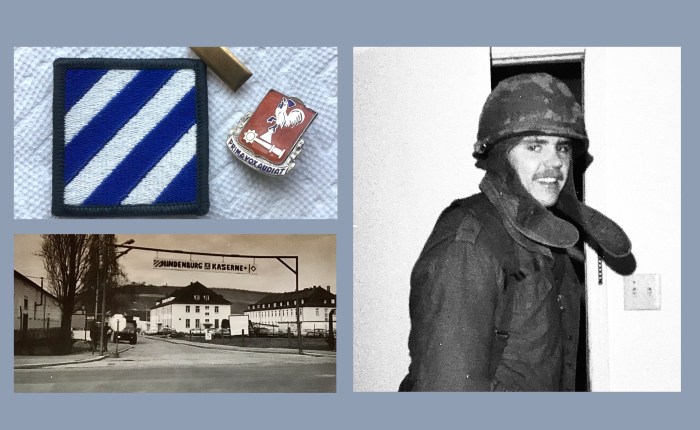
The call came at about 3:40AM in late February, 1979. I answered the phone, “LT Hall.” – “Max, this is Captain Ward. A Lariat Advance Alert was called at 3:25AM this morning.” – “Got it sir – on my way.” I called my Platoon Sergeant, Paul Teague to notify him, and kissed Cathy goodbye, with a “See you when I can”. I was out the door for the drive to Hindenburg Kaserne by 3:50AM.
We lived in the little town of Helmstadt, Germany, about 15 minutes from Hindenburg Kaserne (Barracks, or Army Post) in Würzburg. My mind raced on the drive to the barracks.
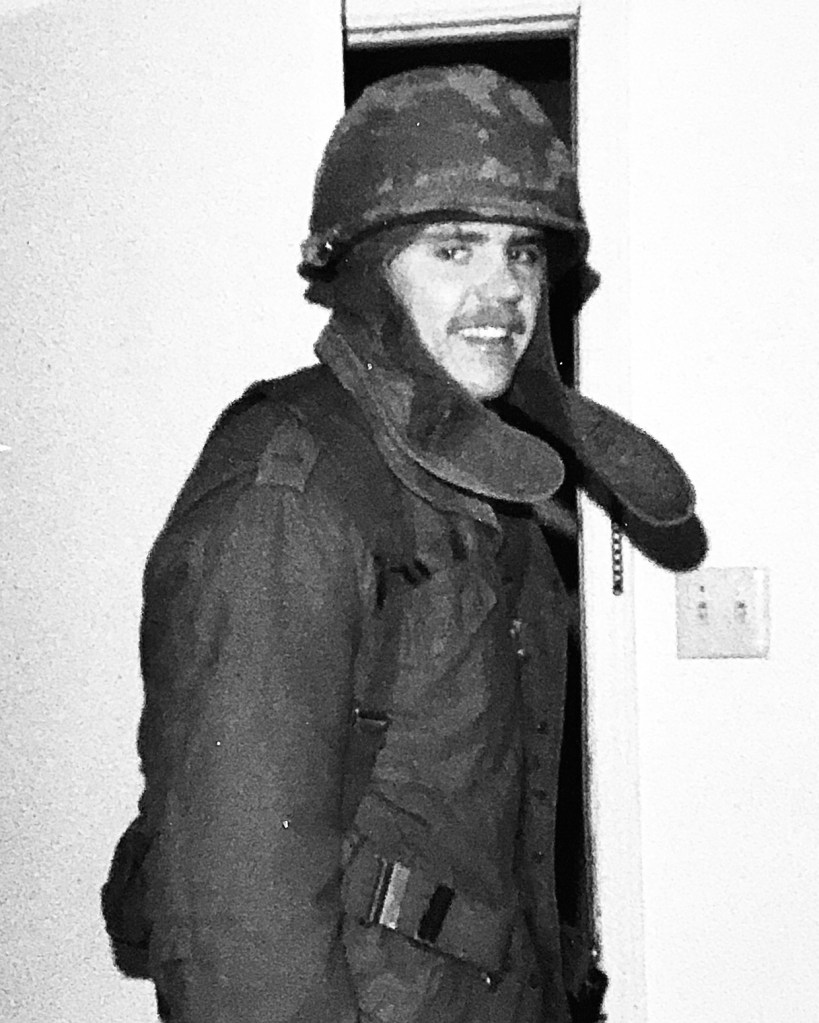
LT Hall in 1979
This was my first Lariat Advance. I’d joined the 123D Signal Battalion, 3rd Infantry Division in January of ‘79. A Lariat Advance was a US Armed Forces Cold War mobilization alert in Germany. The thing was, you never knew if it was a drill, or in response to a real world situation. If just a practice, it might be called off after a couple of hours. BUT, you could also deploy and link up with the unit you supported (2nd Brigade, 3ID in my case), or even deploy to your General Defense Plan (GDP) location. For my platoon, that was near the village of Hof, and the Hof Gap on the the Czech/East German border. The Hof Gap was considered a major Armor Route for a Russian invasion of West Germany. The pucker factor increased significantly if you deployed there on an alert.
My unit, B Company, 2nd Platoon, was always the first unit scheduled for departure, as we had farther to go. We would depart two hours after the alert was originally called. In this case, we needed to be lined up at the Kaserne Gate and ready to go at 5:25AM.
Main Gate, Hindenburg Kaserne
I arrived at the Kaserne a few minutes after 4:00AM. As I climbed out of the car, I promptly locked my keys in the car. “D@mn!” I stood looking at the car, shaking the door when one of my squad leaders, Sergeant Santos ran by and called out – “Yo, L.T. (Pronounced Ell-Tee), what’s up?” – “I locked my keys in the car.” He stopped, looked at me for a second and then said, “Forget ‘em. We’ll get them later – we gotta go!”
He was right, of course. I left the car and ran to the Company HQ and checked in with the CO. Next, over to the Armorer, where I picked up my .45 pistol, and finally, I ran back outside and over to our Platoon Bay. It was probably about 4:15AM.
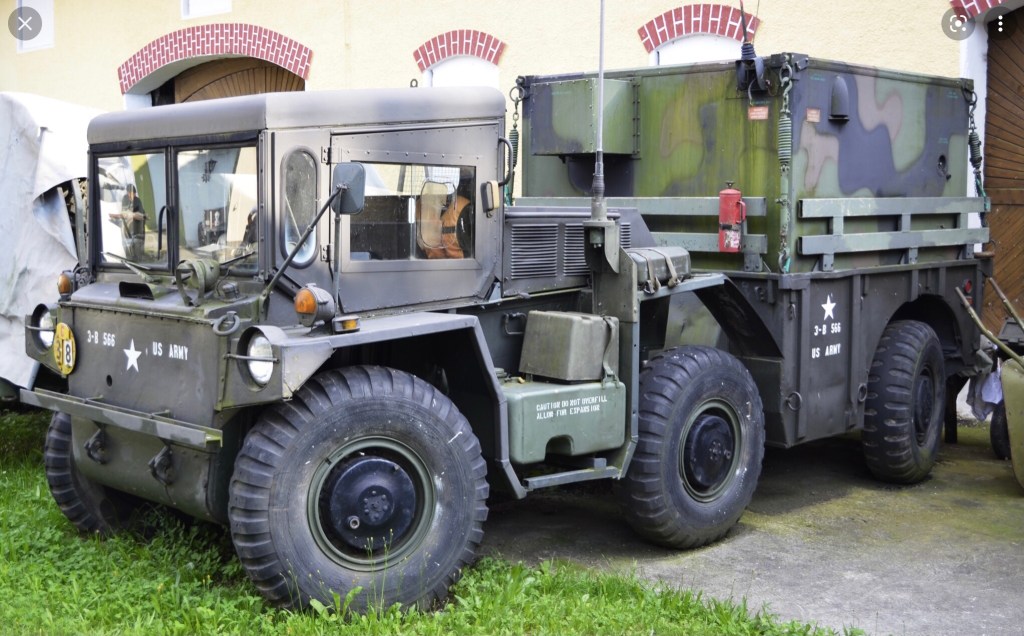
Sergeant Teague had also just arrived and he gave me a status report. About 80% of our troops were on the Kaserne, with the others expected shortly. We then looked at our vehicles’ status. Our platoon had around 20 vehicles in all – a combination of jeeps, a 2 1/2 Ton truck (the Deuce) and several Gamma Goats. Gamma Goats were six wheeled vehicles that could, at least in theory, perform off road much like a tank, or other tracked vehicle. We needed to determine which deadlined vehicles could be made readily available, by cannibalizing* other deadlined vehicles. We agreed that of our four deadlined Gamma Goats we could maybe get three ready, and still make the 5:25 departure time.
A Gamma Goat, with Comm Shelter
The next half hour was total chaos. By then, all of our troops but one were on the Kaserne and had picked up their weapons. We continued loading both personal and platoon equipment into our vehicles. Cases of C-rations were loaded into the Deuce, along with other supplies. Two of the deadlined vehicles were fixed, but we were still having problems with the third. Somewhere in there, we received word we would deploy to Kitzingen, and link up with 2nd Brigade’s HQ elements. It was now 4:55AM, a half hour before departure.
Suddenly, a feeling of great calm and clarity settled over me. The world seemingly slowed down. Sergeant Teague and I agreed it was too late to fix the last vehicle and to hell with it, we would roll with what we had. We held a quick meeting with our three section leaders and strip maps to Kitzingen were passed out for each of the vehicles (remember this was all pre cellphones or google maps). We lined up the vehicles in the motor pool and proceeded to the gate, with my Jeep in the lead. Sergeant Teague was in the last Jeep at the end of the convoy. At 5:15, we were at the gate where the Battalion Commander, Colonel Swedish and Command Sergeant Major Johnson greeted us. We spoke briefly and they wished us good luck.
5:25AM came, and we rolled. The rest of the day passed in a bit of a blur. Google maps says the drive from Würzburg to Kitzingen takes a half hour, but at convoy speed, it probably took us about an hour. We arrived and I reported in to the 2nd Brigade Operations Officer (S3). Then, as is often true in the Army, we sat and waited. And waited. I stayed in touch with the Brigade S3, and also with my Company Commander via FM radio. After a couple of hours passed, we received word it was a drill, and perhaps another two hours later, we were released and returned to Hindenburg Kaserne.
The drive back took another hour. Once back at Hindenburg, we offloaded all of our equipment, washed our vehicles, and then topped all of them off with fuel, so they were ready to go. Cannibalized parts were returned to their original vehicles. A weapons count was done by the armorer, and it was verified all weapons were turned in and accounted for.
I reported to Company Headquarters that all recovery tasks were completed. Once all three platoons were finished, Captain Ward let me know we could dismiss the troops, which I did.
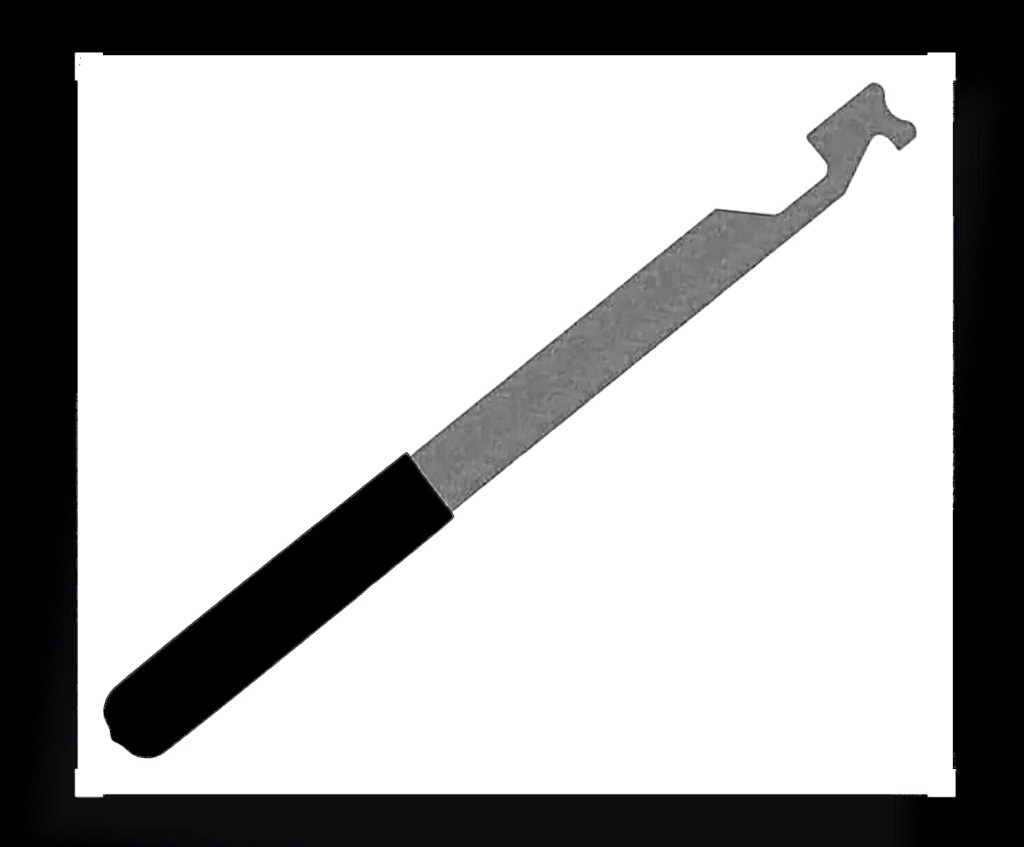
By now, it was late afternoon or early evening, and my keys were still locked in the car. I started thinking about how I was going to get home, when Sergeant Santos came up. “Hey L.T. Let’s get those keys.” – “Sure, how are going to do that?” Ramos just smiled, and then pulled a Slim Jim** out of his jacket. Two minutes later, the door was open, and I had my keys. I thanked him, and decided right then and there, I didn’t need to know why he owned a Slim Jim.
A Slim Jim – Need your car door opened?
With Russia and the Ukraine in the news, I was thinking about that first Lariat Advance. Forty years ago, we were concerned about, and prepping for war with, the USSR. After The Berlin Wall fell in 1989 and the Cold War ended, I thought those days were behind us, at least for Europe. With Mr. Putin’s current aggression, that no longer seems the case. I’ve been thinking about an Intelligence flyer that came out, right after The Wall fell, warning us about the long term goals of the Russians:
“We will Smash them with our clenched fist.”
It is no longer Communism against capitalism, but it is still Russia versus the West. Sometimes the more things change, the more they stay the same. I’m wishing Godspeed and safety to all of our troops.
Addendum:
• Cannibalize – If a vehicle was determined to have a safety issue, or something major wrong with it during operations or an inspection, it was put on the deadline report and the appropriate parts were ordered. You were not allowed to drive deadlined vehicles, until they were repaired. In the event of an alert, you “Cannibalized” one of the vehicles to remove parts to put in the remaining vehicles. It might be something as simple as a brake signal bulb (safety feature), or something more serious like a transmission problem. Cannibalization was frowned upon, as you could literally reduce one of your vehicles to a pile of parts in order to fix other vehicles. That one vehicle would stay on deadline forever. This is why we were to return cannibalized parts to the original vehicle when we returned to the Kaserne.
• **Slim Jim – For those unaware, a Slim Jim is a slender device used to break into a car by fishing down the side of window and into the door for the locking mechanism.
Bob Bishop is a friend of mine and shared this story with me from his time aboard a Ballistic Missile Submarine. It’s a compelling story from the Cold War and I hope you will give it a read. The movie, “The Hunt for Red October” is a bit of child’s play, compared to what these guys did on a daily basis. My only contribution here is a bit of editing.
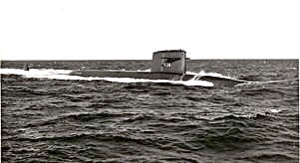
My first real duty station was the USS Nathanael Greene (SSBN-636), Blue Crew*. She had just completed her fourth patrol (two Blue, two Gold) when I reported aboard in April 1966 in Charleston, South Carolina. She was about as seasoned as I was and commissioned the same year I graduated from the Academy. We were in the middle of the Cold War, and Russia was building submarines as fast as we were. Vietnam was still just a little country somewhere over there, on the other side of the Pacific.
Bob, at Graduation from The Naval Academy in 1964
Every day on patrol on a Fleet Ballistic Missile submarine (FBM) is, in many ways, just like the day before or the day after. You have watches to stand, duties to perform, qualifications to train for and, at random times, all-hands drills (such as, “FIRE IN THE TORPEDO ROOM,” or “FLOODING IN THE MISSILE COMPARTMENT”) to wake you if you are off-watch or to interrupt the routine of your duties if you are on watch.
While on patrol, all FBMs, like the Nathanael Greene, must remain in constant radio contact to receive any and all incoming traffic all day, every day. However, a FBM only broke radio silence to send a message in a dire emergency, as sending a message would risk giving away the ship’s position to any nearby enemy ship or aircraft.
Because any change in the volume of message traffic from the sender (i.e., the Pentagon) could have some intelligence value, the radio schedule is purposefully full 24 hours a day.
The most important messages are the operational orders — to change a submarine’s patrol area and thus its missile target package. The Navy filled the remaining time with national news, sports scores and stories, all of it in coded 5-character groups. Every ship received the same radio broadcast, but you only really paid attention to messages sent for your ship. All of the news, sports scores, etc. were printed out and attached to a clipboard in the Radio Shack for anyone to read.
The Navy used the same radio system to conduct simultaneous tests of the combat readiness of all FBMs on patrol through a periodic WSRT (Weapons System Readiness Test). The WSRT begins (and the clock starts counting) with the receipt of a special message which begins, exactly as a real launch message would, with the heading “Top Secret — Cryptographic.” The text that follows, even though still in five-character groupings, is in a code that can only be deciphered through use of a special code book.
When such a message was received, the radioman immediately alerts the Captain (CO) and Executive Officer (XO) a potential Launch message has been received, and the Officer of the Deck instantly sounds “BATTLE STATIONS – MISSILE.” Every member of the crew has an assigned battle station, in addition to their regular job, and moves there at a dead run.
Meanwhile, the Communications Officer hustles to the Radio Shack, as does another officer designated at the start of the patrol by the CO to fulfill the required Two-Man rule. The Communications Officer opens the first safe, and the other officer opens the inner safe where the code book is kept. They extract the code book and break the text into English. They then rush to the Control Room to give the CO the plain-text message. Based on the message, the CO unlocks a cabinet in the overhead just forward of the #1 periscope shear, and pulls out the appropriate firing key – black if it is a drill and red if it is Launch. It’s a little cabinet, maybe 3 inches high by 14 inches wide and 8 inches deep, but within it is the key to launch 16 ICBMs towards their targets thousands of miles away.
WSRTs occurred about every eight to ten days. The time and day chosen were “random.” The experience of the “Old Salts” suggested the frequency was selected by somebody in the Pentagon seemingly based on a roll of the dice – it was never sooner than 2 days after the previous drill, and always within 12 days. It also never occurred on a Sunday morning (i.e., between Saturday midnight and Sunday noon) – to give the crew a break from the chaotic 24/7 pace of shipboard life and to allow an opportunity for anyone who wanted to worship (as a result, Jewish services were also held on Sunday mornings).
The USS Nathanael Greene (SSBN-636) at Sea
Fast forward two years…
The world had become a much more dangerous place. The summer of 1968 was a time of great turmoil, both nationally and internationally. Vietnam was raging. The USSR invaded Czechoslovakia and crushed the Prague uprising. North Korea had captured the USS Pueblo. France was in turmoil – as student protests turned into riots, workers joined them striking across the nation and Charles de Gaulle dissolved the National Assembly. At home, LBJ decided not to run, due to the Vietnam War. Rev. Martin Luther King, Jr., was assassinated in April, resulting in race riots across the country. Whole blocks of cities were ablaze. Bobby Kennedy’s assassination in June added still another dimension to the generally bleak outlook. It was a time of high unemployment in the U.S, strained race relations, unprecedented heat waves, and scattered power outages. The tone and tenor of the news we received in those coded messages was alarming.
You couldn’t help but be affected by thinking about where your loved ones were, how they were, and what was going on around them. I had married a scant 3 months before, between patrols, and Suzan was in DC. The turmoil there was frequently mentioned in the news reports, both as local news and as a setting for reporting on what the Federal government was doing to respond.
I was a Lieutenant now, in charge of the largest Division in the Engineering Department, and on my fifth patrol. I was the only junior officer qualified both to operate the ship and to run the nuclear plant (the only other officers qualified both “forward” and “aft” were the XO and the Engineer). As a result, instead of a typical watch rotation of one in three (six hours on and twelve hours off), I was standing a watch aft as Engineering Officer of Watch, in charge of the nuclear plant et al., then a watch forward as Officer of the Deck, in charge of driving the ship (so my schedule was twelve hours on and six hours off, repeated every 18 hours).
It was late on a Saturday afternoon, and we had just finished a WSRT. My Battle Station was, with Chief Blackmon, to oversee the operation of the Torpedo Fire Control System, which was on the starboard side of the Control Room. Once we launched our sixteen ICBMs, we would immediately leave the launch area and become an attack submarine, to seek out, track and sink any hostile ships. During Battle Stations, my boss, Bill Fernow, the Engineer, was aft, watching over the nuclear plant and other engineering systems.
As we stood down from Battle Stations, there was a palpable tension in the ship because of what seemed to be the deteriorating situation in the U.S. and the world. More than one of us was thinking “Someday this could be real.”
I was dog-tired, but the WSRT had occurred while I was Engineering Officer of the Watch, so after we secured from Battle Stations, I went aft to relieve my boss. He looked at me, and then at his watch, looked up and smiled and said, “I’ll take it from here. You look like you could use some sack time.”
I didn’t argue. I went forward to Officer’s Quarters, and leapt into my rack. Forty minutes later, I was woken for my next watch, the 1800 to 2400 shift.
After a quick bite in the Wardroom, I went up to the Control Room to assume the Conn.
I was relieved at 11:45 p.m. after a thankfully routine watch, sat down in the Wardroom for a quick sandwich, and was asleep within seconds of hitting my rack. Exhaustion does that to you. (When the patrol was over, I found I had logged just a bit over 5 hours of sleep per 24-hour period – for 72 days.)
At 3:42 a.m., the klaxon sounded and the cry “BATTLE STATIONS – MISSILE” came over the 1MC. The advantage of being so tired was that you wore your jumpsuit to bed so you didn’t have to waste precious seconds getting your clothes off, or on. I was at my station at the Fire Control panel in the Control Room within 20 seconds, probably the last 10 seconds of which I became cognizant of the situation we were going into.
The last WSRT was just hours ago and never – never – had there been another WSRT so close to the previous one. And it was early morning on a Sunday.
Battle Stations is always a time of pressure – to do your job as well as possible and to hope your systems performed as designed. This time, however, there was a unique quiet. Everyone knew this was the real thing.
There was no emotion, only a deathly quiet. Given my Battle Station location in the Control Room, I was standing about six feet from the XO, and the CO was about eight feet to my left, standing on the raised platform of the Conn. I could hear each of the stations reporting “Battle Stations manned and ready” to the XO’s sound-powered phone-talker. When the last of the stations had reported in, I watched the XO turn to the CO and report formally “Battle Stations are manned, Captain.”
Although everyone was tightly focused on making sure they did what they were supposed to do exactly right, part of each of our brains was recognizing the inevitability that we would never again see everything we knew and loved. Our families, our country, were surely gone. Our future was the ship, and our sole mission was to launch our missiles, seek the solace of the deep, and then seek revenge.
At that moment, the Communications Officer ran into the Control Room and handed the CO the decoded message. The CO read the message, took the lanyard from his neck, unlocked the firing key cabinet, and reached in for the firing key. We were about to launch… And then, he took out the black key, the WSRT drill key, NOT the red firing key.
Among those of us who could see what had just occurred, there was a moment of disbelief, the sure knowledge that you couldn’t believe your eyes. A double-take, and then the realization it really was a drill after all. The sense of relief was palpable, almost as if everyone, at the same time, slowly exhaled the breath they had been holding since Battle Stations had been called what seemed like hours ago, but was in reality, only a few minutes.
We knew we were at war. And then, suddenly, not. Just as there had been no sobbing or other shows of emotion when we each realized we were at war, there were also no cheers or high-fives to find that we weren’t. Instead, there was only a somber reflection that we were, to a man, trained and ready, but fortunately had not been called upon.
Bob Enjoying Life a Couple of Years Ago
Addendum:
– * Submarines have two separate identical crews, called Blue and Gold, which alternate manning the boat. While one crew is deployed, the other is in port for leave, refresher training, and preparation for their next patrol. This maximizes the amount of time the submarine itself is deployed. At the time, a typical deployment was 72 days – the complete cycle, taking over from the other crew, making needed repairs, installing new equipment, and a short sea trial to test everything out, meant nearly 100 days away from home, twice a year.
– Special thanks to my friend Bob Bishop for sharing this story. Bob graduated from the United States Naval Academy in 1964. At the time, Admiral Hyman G. Rickover, the founder of the modern nuclear Navy, personally interviewed and approved or denied every prospective officer being considered for a nuclear ship. The selection rate was not very high.











 Live Life Exuberantly