Odin

Odin

Odin is not only the god called upon in preparation for war, he is the god of poetry, the dead and magic as well. In a little known side gig, he was also petitioned by cadets at West Point to cancel parades with thunderstorms.

One fall day Plebe Year, my company, B-3, along with our entire regiment, was standing in formation in Central Area waiting for the start of yet another weekday afternoon parade. Central Area is out of view of the general public and where we lined up in preparation for parades. While the upperclassmen were more relaxed, we plebes stood there in full dress uniform, our tar buckets on our heads, and our M14 rifles extended at parade rest. The sky was dark with clouds and foretold the possible arrival of an impending storm. Somewhere in the distance, I heard a plaintive chant starting up, but I couldn’t make out what they were saying. Suddenly, it grew louder, closer and more distinct –

OOOOOOOO-DIIIN… OOOOOOOO-DIIIN… OOOOOOOO-DIIIN…

One of our upperclassmen called out – “Beanheads! Take up the chant!!” (Beanhead was one of the less flattering terms the upperclassmen would call us Plebes)

What?!

“Beanheads!! Take up the call to ODIN. Let’s see if we can get this parade canceled!”

The thirty or so of us Plebes in B-3 quickly joined the cacophony.

OOOOOOOO-DIIIN… OOOOOOOO-DIIIN… OOOOOOOO-DIIIN…

Soon, all 300 or so Plebes in the regiment were chanting. I have no idea what it sounded like to anyone in the bleachers on the parade ground itself, but they had to have heard us. We were LOUD and unrelenting. Always the same pace, always the same mournful sound, we continued…

OOOOOOOO-DIIIN… OOOOOOOO-DIIIN… OOOOOOOO-DIIIN…

Parades… I never knew anyone at West Point, or in the military for that matter, who actually liked taking part in a parade. The public may enjoy watching them, but the participants? The cadets or soldiers who actually march in the parade? I don’t recall anyone ever saying to me “Wow Max, I am so looking forward to cleaning my weapon, dressing up in uniform, standing around in the hot sun (or freezing cold), and then marching in a review in front of the General. How about you?

At West Point we did a lot of marching, and A LOT of parades, starting the day we arrived. The soundtrack of that first day was the drums from the Hellcats (West Point’s drum and bugle corps, made up of professional soldiers). They beat their drums all day long, as we learned to march and keep in step. That evening? We paraded to our swearing in ceremony, with parents, family, and the general public looking on.

Our last official parade took place the day before graduation in 1978.

In between those two events, we marched in an untold number of parades. Mondays through Thursdays, one of the four regiments would be in a parade for the public virtually every afternoon in the spring and fall. On Football Saturdays, there would be a double-regimental parade for every home game, and on Homecoming, the entire Corps of Cadets would perform in a parade. While we didn’t parade in the winter, the overall schedule resumed in the spring, and graduation provided another parade for the entire Corps. I learned to hate parades.
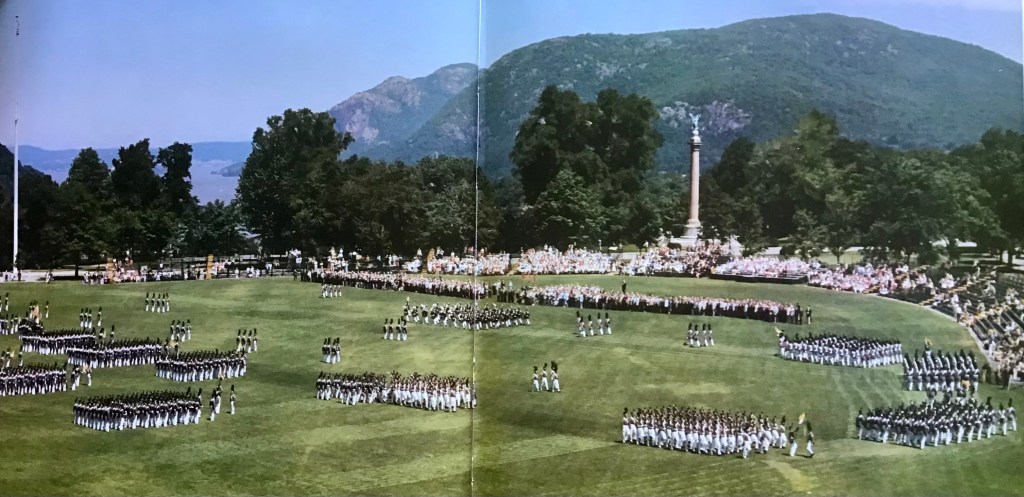
We Marched in an Untold Number of Parades at West Point

… In Central Area, our petition to Odin continued …

OOOOOOOO-DIIIN… OOOOOOOO-DIIIN… OOOOOOOO-DIIIN…

A few raindrops started to fall. And then, a few more and it turned in to something between a sprinkle and a light shower. Our chant droned on.

OOOOOOOO-DIIIN… OOOOOOOO-DIIIN… OOOOOOOO-DIIIN…

I could see our commander conferring with the Battalion commander nearby. Suddenly, he returned. “COMPANY… ATTENNNSHUN!” We snapped to attention, the chanting stopped and there was silence, except for the sound of the rain hitting our hats and the ground. Would we march, or not?? Our Commander called out: “B-3 …DISMISSED!”

It worked! We all sprinted to our rooms, gaining an extra hour of rack time.

That evening as we assembled for dinner formation, our squad leader informed us that appealing to Odin to cancel a parade was an Old West Point tradition, and advised us to study up on him. He would quiz us later.

We learned Odin was the god of war in Germanic and Norse mythology. He was a protector of heroes, and fallen warriors joined him in Valhalla. In a bit of a juxtaposition, he was also the god of poets. He was associated with healing, death, royalty, knowledge, battle, victory, and sorcery. He gave up one of his eyes to gain wisdom. You will notice no where in that description is there any mention of rain, storms, or weather. Evidently, that skill was buried in history.
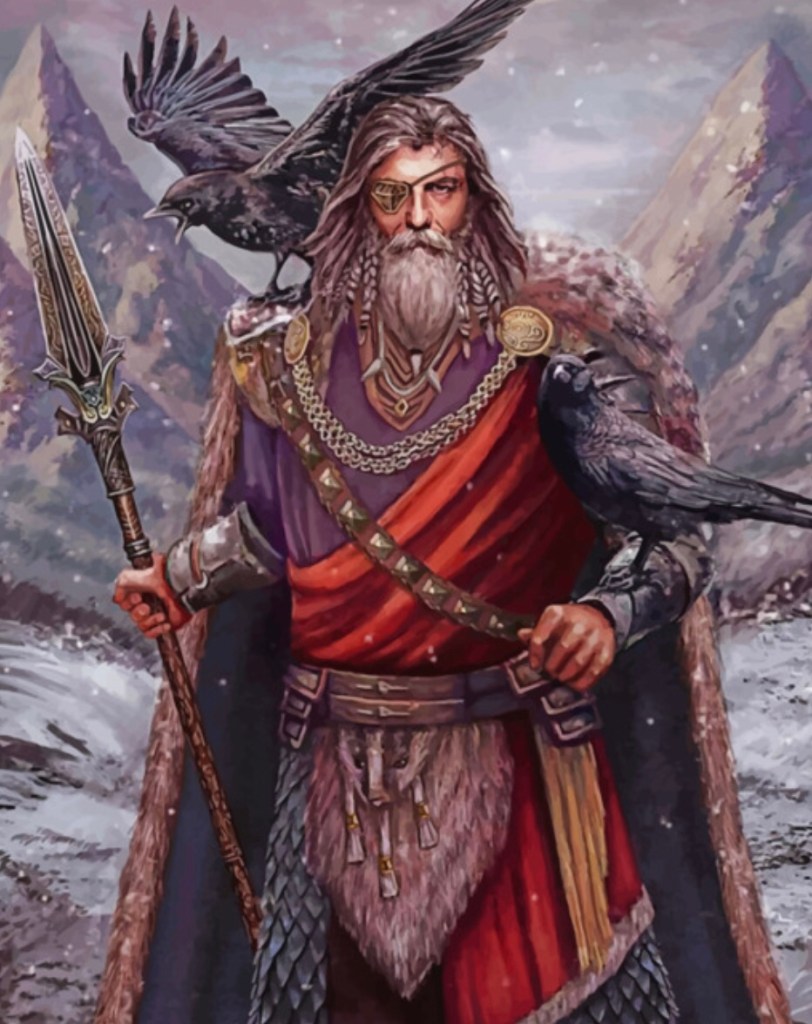
Odin… a god with Many Talents

Over my remaining years at West Point, there were many times we appealed to Odin for rain to cancel a parade. The vast majority of the time, he ignored our pleas, and we emerged through the Sally Ports and onto The Plain for our parade before the Great American Public. They say the gods are fickle. Maybe that was the case with Odin.

As I was thinking about writing this blog a couple of months ago, 40-some years after that initial appeal to Odin, I was trading messages with a few classmates. We were discussing how infrequently parades were actually cancelled due to calling Odin, when Leroy Hurt said, “By the way, I finally found out why we chanted to Odin.” What!?

It turns out Leroy is teaching a class on West Point History. In his research for the class, he came across a book called “The West Point Sketchbook”, published in 1976. In the book, the authors state that in 1958, some cadets saw the movie “The Vikings”. It’s a so-so adventure movie, with an all-star cast of Kirk Douglas, Tony Curtis, Ernest Borgnine and Janet Leigh. Throughout the movie, The Vikings make various appeals and chants to Odin, including asking him to effect the weather and bring rain. In the movie, it worked. The cadets brought the Odin chant back to West Point, and the rest, as they say, is history.
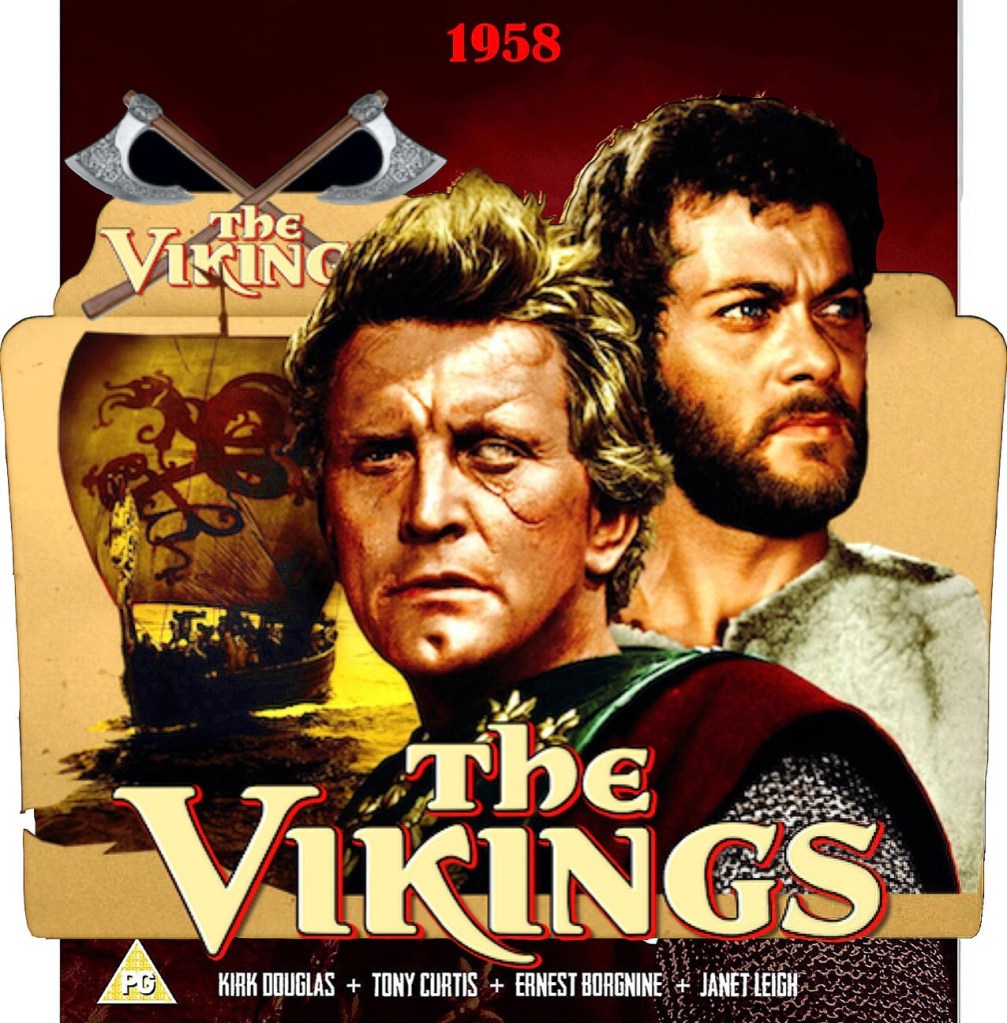
Kirk Douglas and Tony Curtis BOTH Appeal to Odin in the Classic Movie, The Vikings

Of course time and history evolve. Another classmate, Pete Eschbach was recently back at West Point and spoke with a few cadets about some of our past traditions. None of the current cadets had ever heard of appealing to Odin to cancel a parade. Not one. For the West Pointers reading this blog, Pete privately speculated to me that “Perhaps both The Corps, and Odin have… (gone to hell)”.* Maybe with the increases in technology, and the weather apps we have today, it’s no longer required. The weather is a foregone conclusion, and an appeal to Odin isn’t going to change things one way or another. Another mystery…

The legend of Odin may have died at West Point, but he remains an item of interest for me and my classmates. Occasionally, one of us still calls on him. Classmate Joe Mislinski even named his dog Odin. Joe lives pretty close to the Great Lakes Naval Station, where Navy basic training is conducted. He likes to occasionally take Odin for a walk outside the station, once a parade has already started. From the look of the slick streets in the photo below, Odin still has the occasional magic touch.
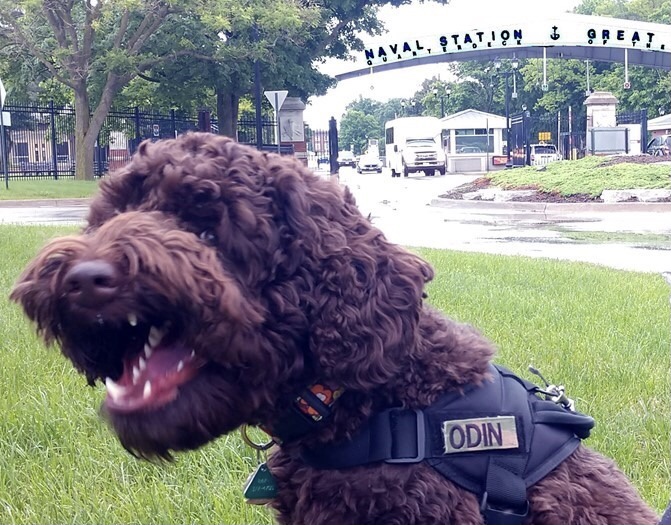
Odin… Bringing Rain to a Navy Parade

Addendum:

⁃ * Pete was making a bit of an inside joke to me about “Perhaps both The Corps, and Odin have… (gone to hell)”. In a tradition probably as old as West Point itself, among old grads you frequently hear the phrase, “The Corps Has…” Every class at West Point believes that the classes who came after them had it easier than they did. Gone to Hell is never stated, but always implied. 😉

⁃ Thanks to classmates Peter Eschbach and Leroy Hurt for their contributions to this blog, and their reviews. They were invaluable. Special Thanks to Joe Mislinksi for suggesting the idea for a blog about Odin, and providing a picture of his dog Odin!

⁃ In The West Point Sketch Book, it is reported that prior to 1958, Plebes would whistle a song called the “Missouri National” to try and bring on rain. Part of the adapted lyrics include: And now the rain drops patter down/ Our hearts fill with delight/ For hear the OD sounding off-/ “There is no parade tonight.”

⁃ The movie, The Vikings, is actually not bad. You might give it a watch sometime when you have nothing to do. In the meantime, here are several of the callouts to Odin, throughout the movie: https://youtu.be/uAM85DFfR24

If you wish to read a few of the previous blogs from my time at West Point, you can find them here:

Rain and a Blessing in The Kalahari Desert

Rain and a Blessing in The Kalahari Desert

We were in the middle of the Kalahari Desert, on the edge of the Ntwetwe Salt Pan when it started to rain. I’d just started my second Gin and Tonic. Dinner was still a bit away, and we made a dash for shelter in the Land Cruiser…

We’d arrived at our Safari Camp, Leroo La Tau (The Lion’s Paw) the day before after a 1 1/2 hour flight on a six seater plane out of Kasane. Our camp was in a remote location along the Boteti River in the Makgadikgadi Game Reserve.

Cathy and the Plane that Flew us to the Makgadikgadi Game Reserve

One of the reasons we were excited about Leroo was that we were to spend one of our nights under the stars at the the Ntwetwe Salt Pan. We would be as remote as possible in the Kalahari Desert, with no ambient light, or connection to other humans. Literally, it would be just us, the desert and the sky – vastness and emptiness, intertwined.

By luck, or by happenstance, we arrived at Leroo on September 30th. Our hosts were celebrating the 55th anniversary of Botswana’s Independence from the British on September 30, 1966. After dinner, they served us a cake decorated in the colors of Botswana’s flag, and explained the meaning of each of the colors*. As we were eating our cake, it started to rain – not for long, perhaps only 20 minutes. We learned it rained on September 30th, 1966 as well, and as Botswana is such a dry country, rain is considered a blessing and a sign of good luck, particularly on Independence Day. We weren’t yet aware how that rain was going to impact our trip.

The next day, as we were getting ready to leave on our five hour drive for the Pan, we learned there was some concern on the part of our guide, Isaac, and the staff. It turned out not only had it rained at Leroo the night before, it probably also rained at Ntwetwe. The condition of the Pan was unknown, and we might not be able to drive on it, or even approach it without our vehicle sinking into the mud. We would not know until we arrived.

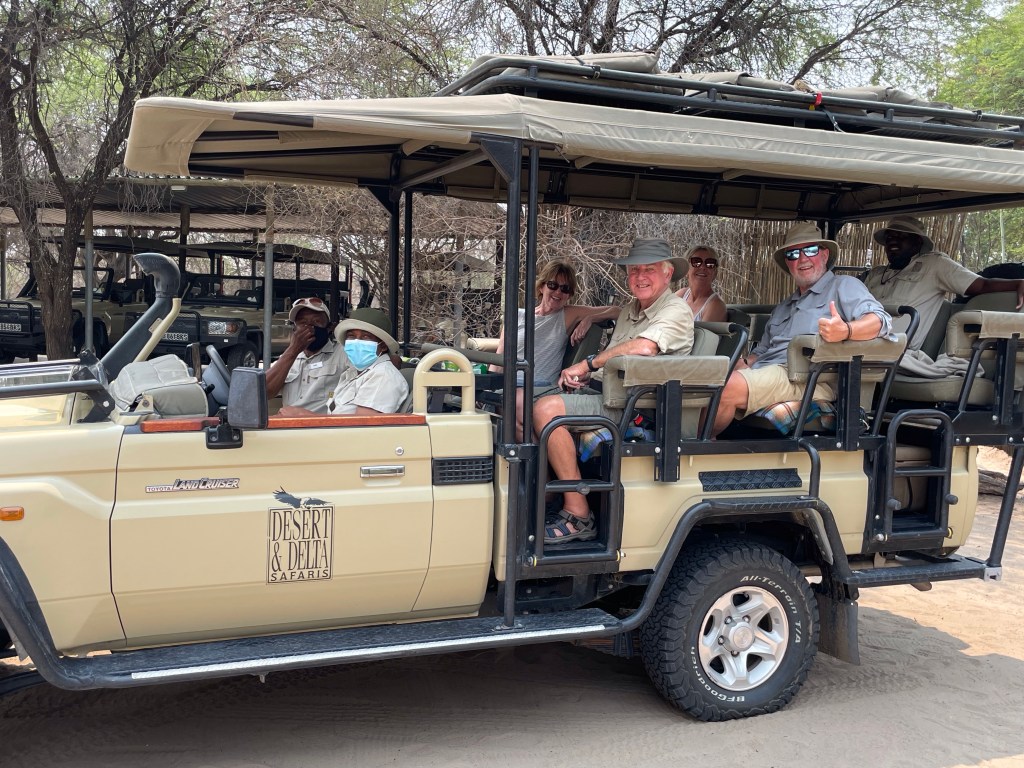
A decision was made to give it a shot and we piled into our Land Cruiser. In addition to Cathy and I, and our friends Bill and Sharon, there was a crew of three. Our guide was Isaac, who had led previous trips to the Pan (we were only the seventh group to actually do this). He was accompanied by Dabe, a Bushman (The San People) who was very familiar with the desert environment, and Kago, a manager from the camp.

Setting out for the Ntwetwe Pan in our Land Cruiser

After driving nearly 50 kilometers on a highway, we turned off into the desert. We had nearly 70 kilometers to go, which doesn’t sound far, but with no real road, we would follow a path through the grass and shifting sand. There were still several hours before we reached the Pan.

The “Road” Through the Grass and Sand

As time passed, the environment became starker and vegetation started to disappear. There were no more trees, and few bushes. We were left with a sea of grass. Animals too disappeared. Other than some birds, meerkats, and mongoose, we saw no other wild game on the trip. We were told there wasn’t any real water this far into the desert, so the big game stayed away. Interestingly, we did pass some herds of cattle.

This Meerkat is One of the Few Animals we Viewed on the Drive

Eventually, around 5PM we arrived at the Ntwetwe Pan, with sundown still about an hour away. It had definitely rained on the Pan and it would be a bad choice to drive on it. Although it appeared dry, our Land Cruiser would have soon sunk up to the hubs and been trapped. Instead, we camped on the edge of the Pan.

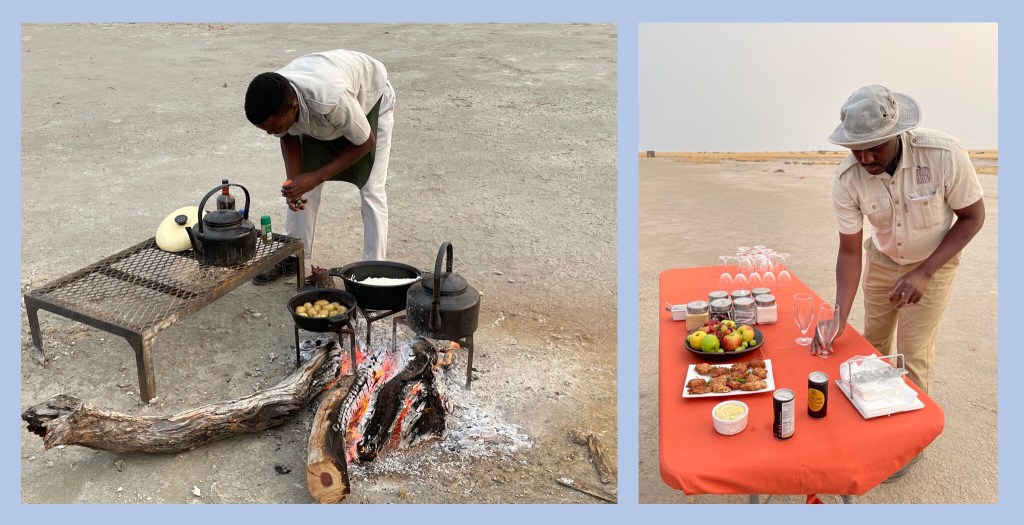
We connected with Maipa and Mash who drove “The Elephant” (a vehicle with the kitchen equipment, lights, tarps, loo, etc) to the Pan earlier in the day. It was they who set up the kitchen, and the dining area. You could already smell good things cooking on the fire and stove for our dinner. We were served sundowners, and then received a safety talk and a briefing on how to use the loo.

Our Chef, Mash, Fixing Dinner, While Isaac was Making our Sundowners…

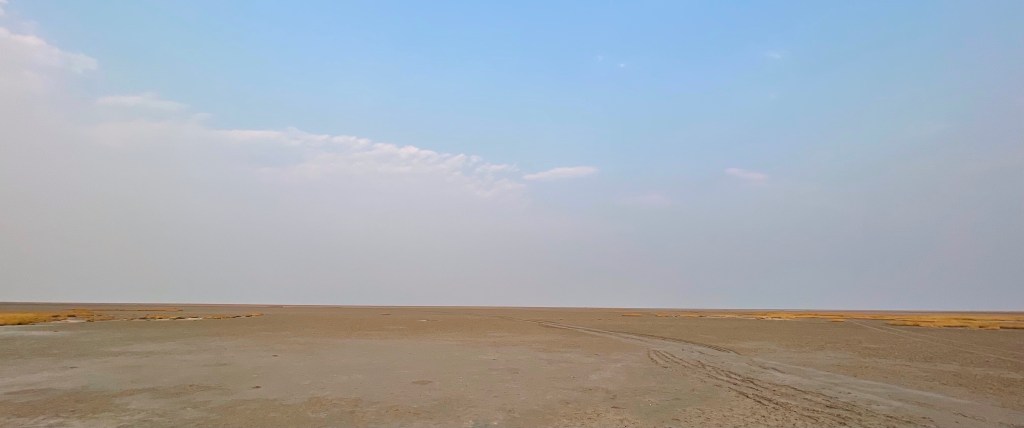
We had time before dinner and wandered around. As I took a sip of my G&T, my gaze looked to the east across the Pan. Vastness and Emptyness? Sure. The word Nothingness also came to mind. There was nothing but a line on the horizon separating the sky above from the salt pan below. Loneliness … desolation … flatness… all were also good descriptors. It was flat as far as you could see in any direction.

Nothingness…

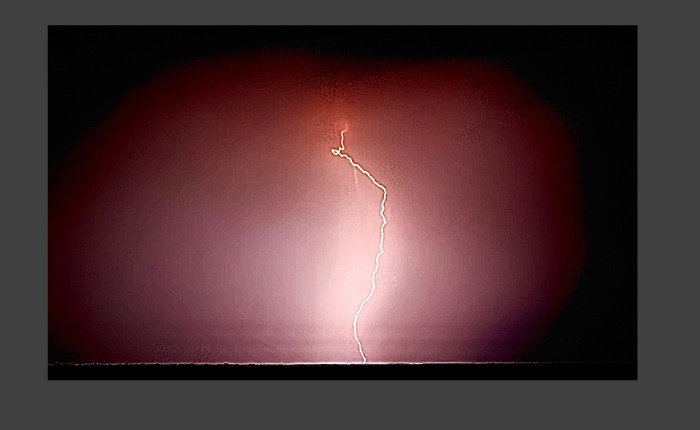
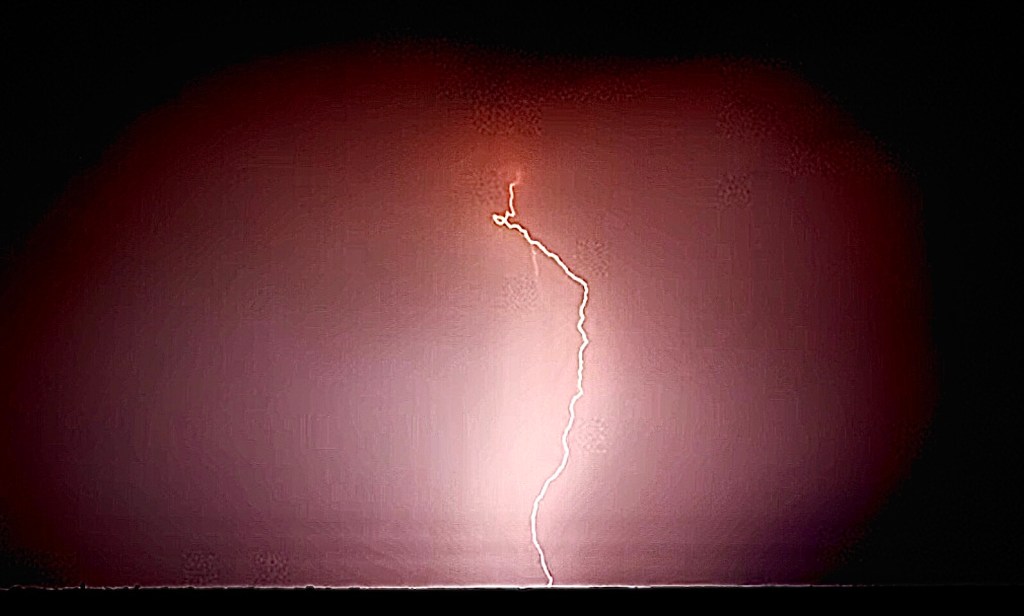
It started to get dark, and we viewed lightning storms on the horizon to the north of us. In Botswana, the weather generally flows east to west, so Isaac thought we were safe. Of course, there IS the occasional freak storm ;-)… I’d just started on my second G&T when the sky opened and it began to rain.

Lightning During the Rainstorm in the Kalahari

Three things then happened in quick succession. First, Isaac directed us to the Land Cruiser where we could stay dry and stay out of the way. Next, the staff divided into two crews. The first one quickly broke down the dinner settings and packed them away. Our table, complete with white table cloth, glassware and china was secured. The second crew grabbed our sleeping mattresses and at the same time popped open small two-person tents and put the mattresses in the tents to keep them dry. If you recall, we were to sleep under the stars. That was no longer going to happen.

It was pitch black, except for the occasional flash of lightning. We were staying pretty dry under the Land Cruiser roof, and then one of us started laughing. Pretty soon all of us were. Here we were, in the middle of the Kalahari Desert, one of the driest places on earth, getting rained on while sipping our drinks in a Land Cruiser. How could you not see the humor in that?

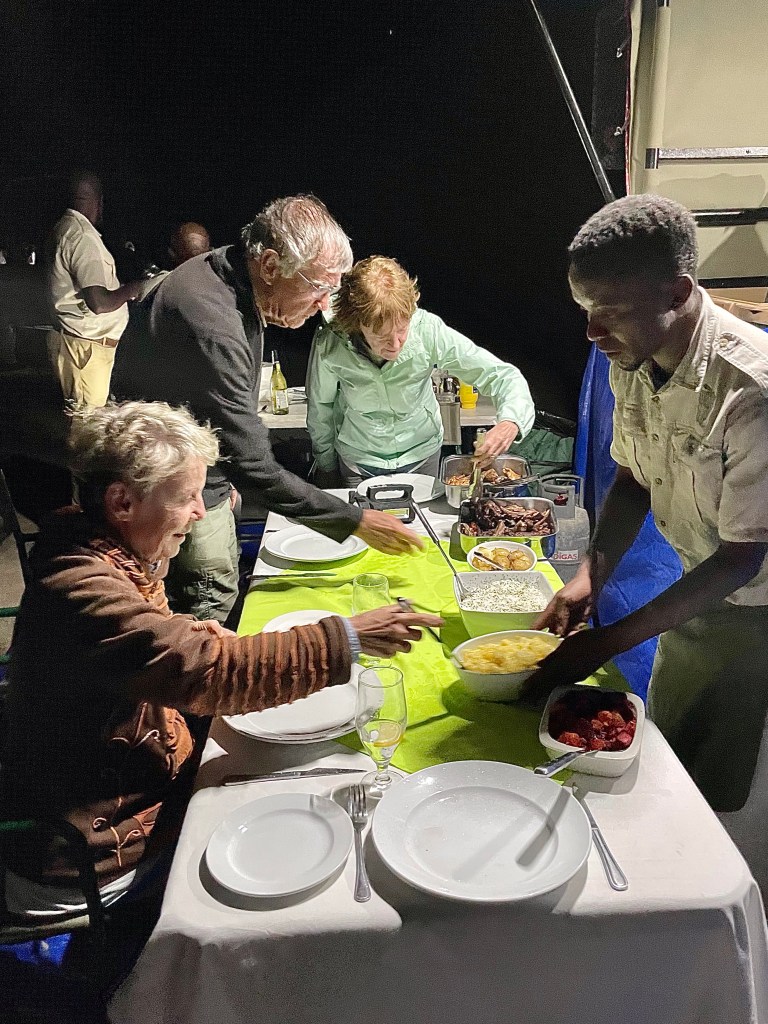
Twenty minutes later the rain stopped. The crew quickly reassembled our dining table and just before 7:30PM, we sat down to dinner. Our chef, Mash, served a feast of rolls cooked in a dutch oven, salad, beet salad, a cauliflower and cheese dish, ribs, and chicken filets in a cream sauce. White and red wines were opened. One more surprise awaited us. The tarp above our table had gathered a considerable amount of rain and while eating our first bite, some of it spilled on the table. We quickly moved the table and then we made our way through the delicious meal. We were still chuckling about the rainstorm, but it was a different chuckle as our bellies grew full.

Mash Serving Dinner After the Rain

After dinner, we joined the crew around the fire. Some stories were told and of course a few jokes. A couple of us may have drunk a Jameson. The sky kept changing from clear to cloudy and Isaac confirmed we would sleep in tents. It was a good call, as it rained twice more during the night.

I woke once in the late hours of the night to go the bathroom. The sky had cleared by then and as I looked up, I saw my old friend Orion high in the sky overhead. I smiled to myself – it’s nice to know some things never change.

The next morning while still dark, I woke to a voice softly singing. It was Kago singing her morning prayers. I listened quietly and out of nowhere, felt an immense sense of peace come over me. I can’t help but wonder if the remoteness of where we were also contributed to the feeling.

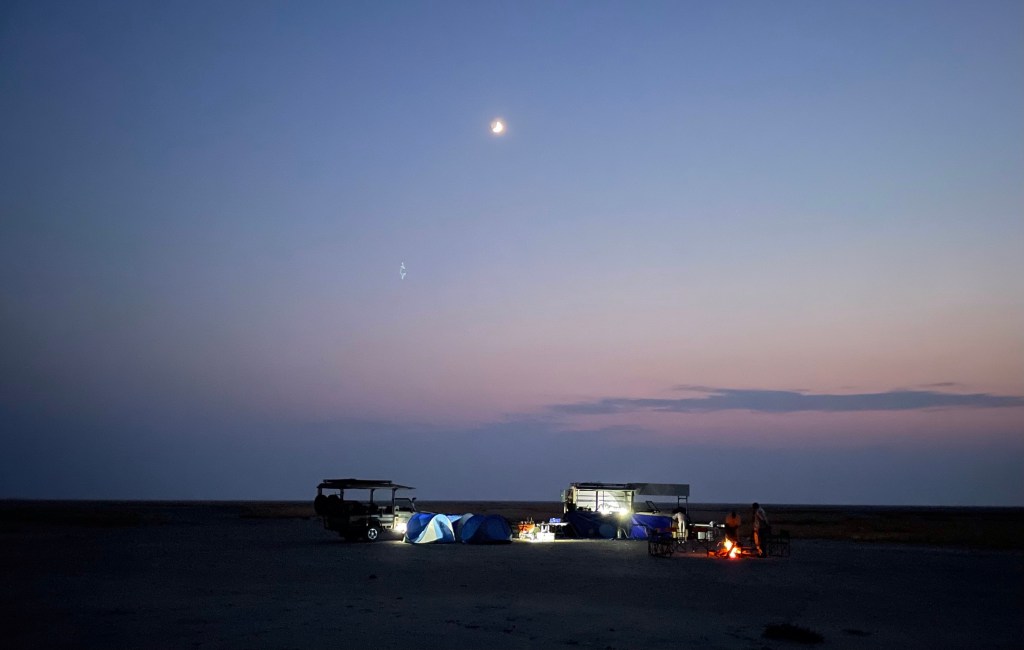
The camp started stirring and I got out of bed about 5:30. Although still dark, a fire was already going, and our morning breakfast was cooking. The eastern sky was turning gold and red, as the sun was about to appear on the horizon.

The Moon was still high in the sky as dawn approached.

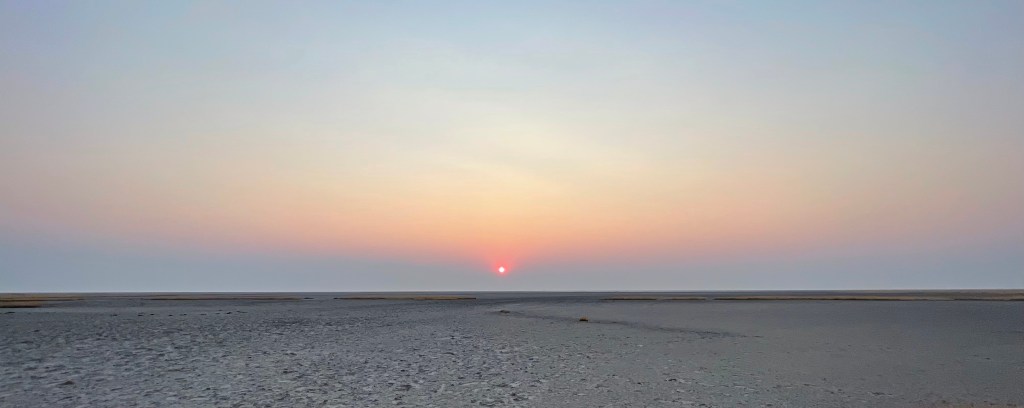
As the sun rose, I walked to edge of our camp by myself. I again saw the vastness and emptiness of the Ntwetwe Pan to the east. There was a beauty to it that provoked an ache in my heart. Even now, I find it hard to describe.

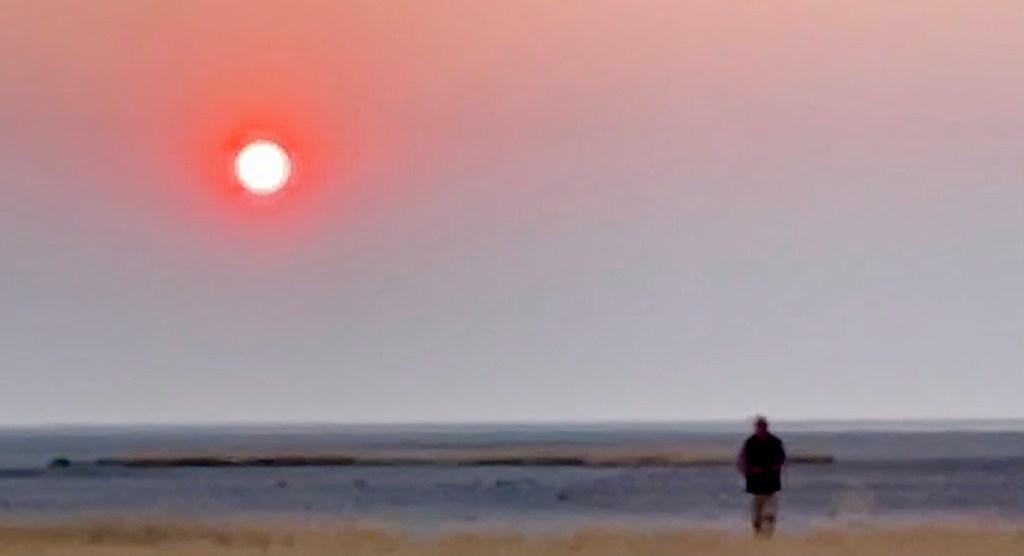
Sunrise over the Ntwetwe Pan in the Kalahari

In Botswana, the word for rain is Pula*, which also means a blessing, as rain is so scarce. Although the rain the night before and on Independence Day changed the tenor of the trip, I think it also gave me something else I can’t define. As I looked at the vastness of the Pan that morning at sunrise, I felt the presence of something larger. God? Perhaps, but I don’t think so. It was more a feeling that even though I am so small, I belonged to something much larger than myself. To me, the vast emptiness I was looking at no longer felt like nothingness or loneliness. There was a weight and depth to it, and yes, a peacefulness. I felt blessed to be in such a remote location. Maybe hearing Kago sing her prayers earlier in the dark is what changed my feelings to something more spiritual. I doubt I will ever know.

My Friend Bill Surreptitiously Snapped this Picture of me Contemplating the Pan

A bit later, I rejoined the others and soon we ate a breakfast of bacon, sausage, eggs, pancakes, yogurt, fruit and freshly made biscuits. Afterwards, we packed up, and just after 7AM, started the five hour return trip to Leroo. Later in the afternoon while on safari, our guide Ollie tracked and showed us a Cheetah and her three cubs, which was amazing. For me, even as I was viewing the cheetahs, my mind returned to the sunrise at Ntwetwe and the ethereal feelings I experienced.

Addendum:

– *Pula actually has four different meanings: rain, a blessing, “Cheers!” If toasting someone over a drink, and lastly, it is what they call their currency. It’s a pretty versatile and important word in Botswana.

⁃ I’d like to thank Isaac Mpuchane, our guide, for reading my blog and providing input. As we traded emails, he sent me a link to an article that places the Ntwetwe Pan as one of the possible locations for the start of human civilization. Maybe my spiritual feeling wasn’t as accidental as I thought. You can read the article he sent me here: https://www.bbc.com/news/science-environment-50210701 If you want to learn more about Isaac, or see some of his amazing photography, you can do so at: http://www.instagram.com/isak_naturephotography

⁃ I’d also like to thank Bill Reichhardt for the picture of me on the edge of the Pan. Bill is quite the photographer and if you would like to see more of his pictures from Africa, you can view them here: http://billreichphoto.com/

– * The colors in the flag of Botswana have the following meanings: The light blue represents water, and specifically rain, as it is such a precious resource. The black band with the white frame has two meanings. First, they symbolise the harmony and cooperation between the black and white people who live in Botswana. Furthermore, they represent the stripes of the zebra, the national animal of Botswana.

Botswana’s Flag

– This is the sixth in a series of blogs about our 2021 trip to Africa. The other blogs are listed here, in the reverse order of their publishing.

⁃ This is the second time we have used Karen Dewhurst, of Sikeleli Travel & Expeditions as our travel consultant. After working with her in 2018, there was no doubt we would use her and Sikeleli again. All accommodations were amazing, the food and wine excellent, the logistics and travel arrangements perfect and the animal viewing exceeded all expectations. If you are coming to this part of the world, I highly recommend her and them. You can reach Karen at: karen@sikelelitravel.com | (+27) 81 067 1094 (South Africa). Their overall website is at: https://sikelelitravel.com/ .