The Rickover Interview

The Rickover Interview

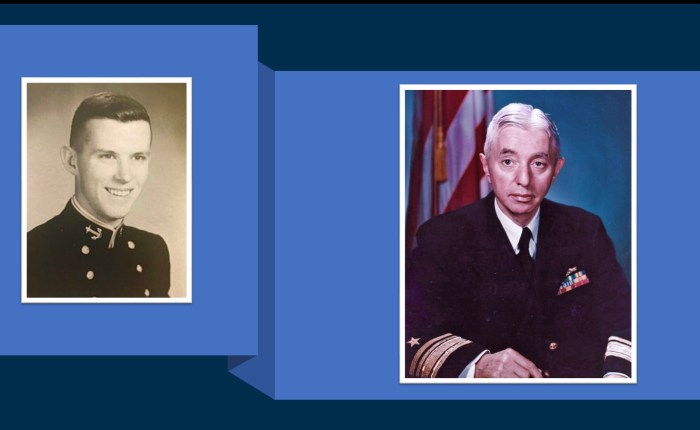
My friend Bob Bishop, straight out of the US Naval Academy, was interviewed by Admiral Hyman Rickover in 1964 for admission to the Navy’s Nuclear Power Program. Rickover, known as the “Father of the Nuclear Navy”, served in a flag (General Officer) rank for nearly 30 years (1953 to 1982), ending his career as a four-star admiral. His total of 63 years of active duty service make him the longest-serving naval officer, as well as the longest-serving member of the U.S armed forces, in history. In 1954, with the launch of the first nuclear submarine, the USS Nautilus, he appeared on the cover of Time Magazine.
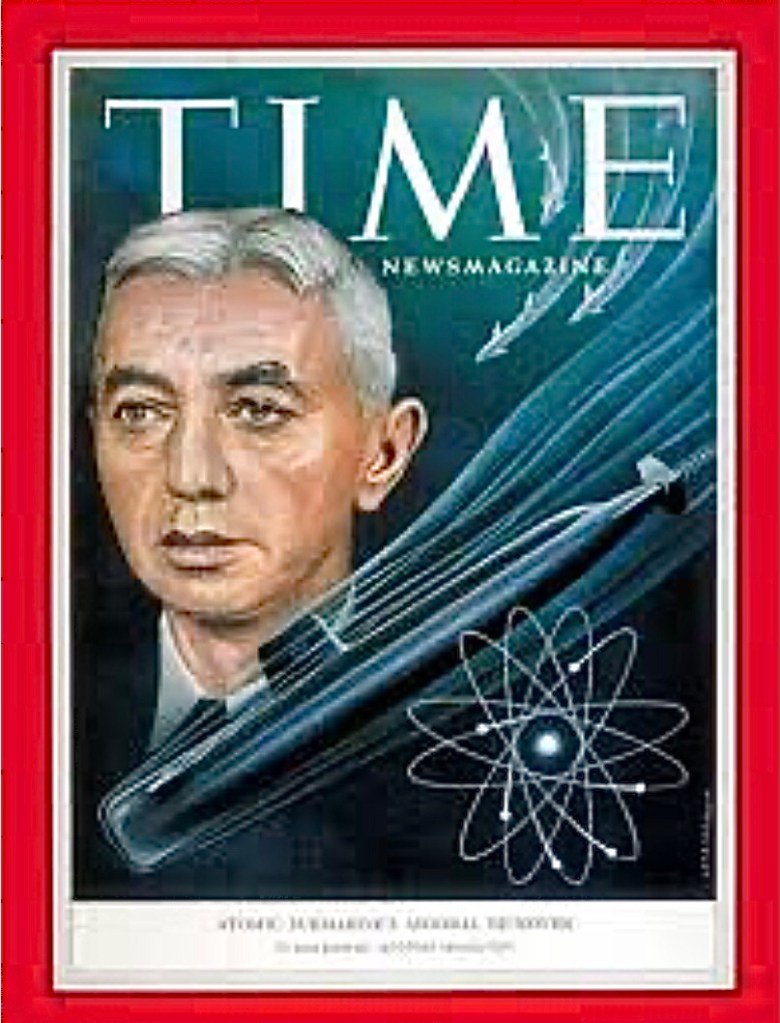
Admiral Rickover on the Cover of Time in 1954

There were those who loved him and those who hated him. He exercised tight control for three decades over the ships, technology, and personnel of the nuclear Navy. He interviewed every single prospective officer considered for service in a nuclear ship in the US Navy until his retirement in 1982 at the age of 82.

According to Wikipedia, “over the course of Rickover’s career, these personal interviews numbered in the tens of thousands; over 14,000 interviews were with recent college-graduates alone.” Many of those interviews are now lost to history. Here is the story of Bob’s interview in his own words.

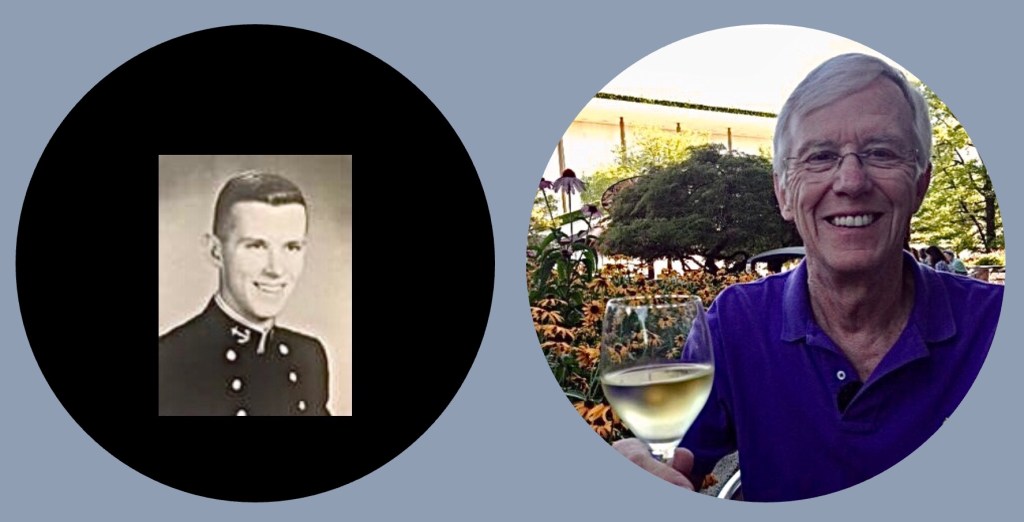
Bob in 1964 at the Naval Academy.

***********

Much has been written regarding the harshness of his interviews, but none can criticize the results. Certainly none of those who successfully emerged from the crucible would do so.

On Friday, January 21, 1964, I was a First Classman (senior) at the Naval Academy and joined 34 other classmates on a bus to DC to be interviewed for the nuclear power program. At the time, many offices of the Navy were still located in “temporary buildings” built on the Mall during the Second World War – and were still in use twenty years later.

There were lots of tidbits floating around about the interviews with Admiral Rickover, aka “The Kindly Old Gentleman,” (abbreviated KOG), although never called that to his face. One such rumor was that the chair you sat in was rigged so it rocked if you were nervous. Most importantly, you should answer any question quickly and decisively.

Needless to say, I was apprehensive. We (there were also a couple of busloads of Midshipmen from Navy ROTC schools) were herded into a large semi-circular room with simple folding chairs, arranged in rows facing the center of the room. There were four passageways leading out from that central hub like spokes on a wheel. There were a couple of vending machines and we were told a head (bathroom) was just down one of the passageways. We were told not to talk to one another. We were also told to remain in the room until your name was called, and that was all. To be honest, we were afraid to even go to the head, because what happened if your name was called and you weren’t there? So, there we sat. Soon, someone would come down one of the hallways and call out a Midshipman’s name. He (there were no women at the Naval Academy for another 13 years) would rise and go with him, and sometime later come back and sit down. The scuttlebutt was that each person would have three interviews before potentially meeting with the Admiral, although some had four and a few had five. Some of those interviews were short (5-10 minutes) and some were long (an hour plus). Also, you had no idea if the person interviewing you was a chief petty officer, a prospective commanding officer, a member of the Nuclear Reactors division or somebody else – they were all in their 40s-50s and all in civilian clothes.

I had three interviews and what we discussed became a blur – I was so focused on answering the questions, I really couldn’t remember the questions even immediately after they were asked. I was thinking on how I did, was I sitting up straight enough, remembering to be decisive, etc. The one question I remember most clearly was being asked about the window air-conditioning unit. I started into a description of the freon cycle when I was stopped. The questioner wanted to know why it didn’t fall out of the window. I started postulating about ways it could have been installed so it wouldn’t fall either in or out. I also remember being asked the value of studying naval history (pro and con), why I decided to go to the Naval Academy, what was Bernoulli’s equation, and why did I want to go into nuclear submarines.

Each time I went back into the central room, there were more and more empty seats. With no one to ask, I merely presumed they had finished the process. I worried and wondered if it was good news or bad that I was still there. As I sat there, morning became afternoon and afternoon night. Eventually, there were maybe three or four of us left. It was 8 something PM, and my name was called. I was led down a narrow corridor, lit only by bare light bulbs hanging down periodically the length of the corridor and into the distance. Light showed in the hallway from only one office, at the end of the corridor on the right. As we approached, my escort told me the Admiral’s yeoman (Navy admin) was gone and I should just walk past her desk and into the Admiral’s office and sit down in the empty seat.

I did and sat down in the Navy issue aluminum square channel chair, with a naugahyde seat. The room was a little dark. The scuttlebutt was right – the two front legs were shorter than the back legs, and one of the front legs was shorter than the other so that, if you were the least bit nervous, you would slide off the seat or rock sideways. I sat with my butt firmly implanted up to the back of the chair, giving thanks to the many hours I spent plebe year on “The Green Bench” (envision sitting in a chair against a wall, with your knees/lower legs at a 90° angle and your thighs/lower back also at a 90° angle – now take the chair away).

His office was a mess. It was about 10’ wide and 15’ deep. There was a bookcase behind me, another on the wall to my left, bookcases down each wall, and a big old wooden desk directly ahead. Each of the horizontal surfaces, including his desk, were piled high with a hodgepodge of varying heights of stacks of books, interspersed with folders. The door I came in was on my right, behind me. I was focused straight ahead (the Navy term was “keeping your eyes in the boat”), but my peripheral vision, and attention, was focused to my right so I could immediately rise as soon as he came in.

Three or four minutes passed when all of a sudden, I heard a loud voice say, “Why the f**k have you been wasting all your goddam time?” I immediately focused straight ahead and there he was, and had been the whole time, obviously just watching me. I never met an Admiral before and certainly never expected one to curse. Notwithstanding the advice to respond quickly and cogently, what do you suppose came out of my mouth? “Umm, er. . .” “What?!” he said. “I have been working hard, sir.” “Don’t give me that shit,” he replied. Our “discussion” did not go much better, although I don’t remember much of it, just the feeling it was going a lot less than well.

Things I remember vividly – At one point, I said something along the lines of “I think there is more to education than just book-learning.” Big mistake. Unfortunately, not the last. Our discussion circled back around to my grades (I thought afterwards he must have those in a folder on his desk). He asked what my class standing was going to be when I graduated. I knew I was doing pretty well but I had no idea what the current number was, so I said “55.” He replied, loudly, “WHAT?” I said “50?” a little plaintively. He said, “DO YOU MEAN . . . ?“ I quickly interrupted and said “45?” He roared “GET THE F**K OUT OF MY OFFICE!”, which I rapidly did.
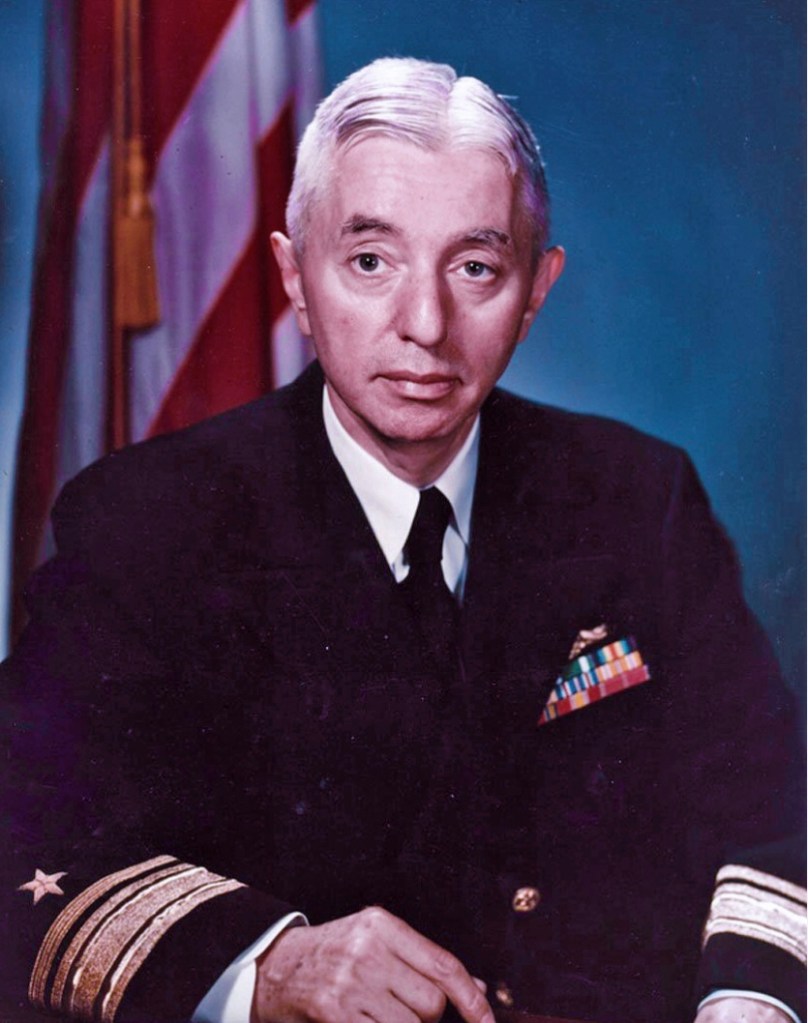
Admiral Rickover – the “KOG“

What felt like a three-hour-long crucible under intense heat, actually lasted around twenty-two minutes. It took me a couple of hours, and a couple of scotches, to get my resting heart rate down. I also started thinking of what I wanted to do in the Navy, other than nuclear submarines, when I graduated. Plainly, I wasn’t going to be selected.

A couple of months later, a list was posted at each of the twenty-four company offices at the Academy. The word quickly spread so each of us Firsties (seniors) who had applied hurried down the corridor. If your name was on the list, you were in. I read the list, haltingly, three times to make sure that was really my name.

Postscript – I had three other interactions with the KOG during my six-plus year career in nuclear submarines. Not bad for a mere lieutenant, but those are stories for another time.

Bob Enjoying Life Last Week

Addendum:

  • if you have the time, it’s worth reading up on Admiral Rickover’s career. It was pretty amazing, although he actually only commanded one ship. Some of his detractors compared his hold on the Navy, and particularly the Nuclear Navy, to Hoover’s hold on the FBI for all of those decades. He was a brilliant man, and there’s no doubt our Nuclear Navy would not be where it is without him.
  • Bob is a wonderful storyteller. Here are two other blogs from his time in the Navy on a Nuclear Submarine:
  • The movie, “The Hunt for Red October” is child’s play, compared to what these submariners did on a daily basis … “The Comms Officer ran in and handed the CO the decoded message. The CO read the message, took the lanyard from his neck, unlocked the firing key cabinet, and reached in for the firing key. We were about to” […] Continue at: https://mnhallblog.wordpress.com/2021/06/23/we-knew-we-were-at-war/
  • Crazy Ivan anyone? … In 1970, our sub, the USS Finback, was helping with Anti-Submarine Warfare training for NATO aircraft. An observer on the sub said “I think I understand your plan. You alternate going to port or starboard as soon as you submerge.” I responded, “Well, not actually”, and we walked over to […]. Continue at: https://mnhallblog.wordpress.com/2022/04/13/submarine-games

Submarine Games

Submarine Games

Crazy Ivan* anyone? Another Submarine story from my buddy, Bob Bishop**… It was mid-September, 1970. Our submarine, the USS Finback, had been commissioned way back in February, but we were still doing a number of exercises and independent operations to get additional sea time under our belt. On this particular exercise, we were to provide “services” to anti-submarine warfare (ASW) configured Navy patrol aircraft, to give them an idea of how to use their ASW gear and try to find a real live nuclear submarine. This exercise was to involve every ASW patrol plane on the US east coast, NATO members in western Europe, and one reserve squadron from Chicago (don’t ask me why there is an ASW squadron in Chicago).

The USS Finback (SSN 670)

In the Atlantic Ocean, that meant a complex organizational challenge for a lot of people. For each exercise, using radar and radio communications, we would vector a Navy Lockheed P-2 Neptune or P-3 Orion aircraft on top of our location so they could mark where we were. We would then submerge and maneuver. If they didn’t find us in 50 minutes (marking our location by dropping a transmitting sonar buoy), we would broach or surface, show them where we were, and they would then clear the area for the next plane to arrive at the top of the hour. We did this for 18-20 hours a day most days, for 4½ weeks.

During the exercise, we also did occasional helo transfers of a CO/XO from an aircraft squadron to our ship, so they could get a sense of what it was like to be on a submarine and how we operated during these exercises. I particularly remember one squadron XO, a Commander (I was a lowly Lieutenant, but was pretty comfortable with what I knew and no longer frightened by a senior officer), who came in the Control Room after midnight one night. I was the Officer of the Deck (OOD) – the officer on duty responsible for driving the ship, responding to emergencies and so on, unless the Commanding Officer came on deck to relieve me. I had the 0000 to 0600 watch and we were in the middle of conducting the ASW exercises.

We talked over a number of things he was curious about, and he watched as I/we went through a couple of the exercise cycles. Chatting after the third one, he observed “I think I understand your plan. You alternate going to port or starboard as soon as you submerge.” I responded, “Well, not actually”, and we walked over to the chart table. A piece of paper was taped on top of the glass top of the chart table. A mechanical device under the glass receives inputs of the ship’s speed and direction and moves a little light accordingly. Every minute the quartermaster puts a pencil dot where the “bug” (the light) was. As a result, you could see where the ship had been.

I quickly explained how “the bug” worked and showed him where we started the last run and where we ended up 50 minutes later. I then explained that the Captain gave the OOD the latitude to do whatever he wanted, so I decided to spell the Helmsman’s (the person actually steering the ship) name in cursive each watch. I think the letter I was on for that particular run was a “b.” The Lt Commander looked at me, aghast. “You mean, you don’t have a pattern, a routine?” “Nope,” I said, “It all depends on when I am on watch and who the Helmsman is. Although sometimes I use the name of the Stern Planesman or the Diving Officer.”

He walked quietly away, mumbling to himself.

During the 4 1/2 weeks of the exercise, not a single plane ever found us, even though they knew where we started each time. A discussion about the capabilities of ASW aircraft is a subject for another day, but I’ll leave it at this – ASW aircraft (including helicopters) vs. a US Navy nuclear submarine? Bet on the submarine, every time.

Bob in 1964, and then about 50 years later

Addendum:

– * Crazy Ivan references a maneuver sometimes performed by Russian submarines, and made famous in the movie. The Hunt For Red October.

⁃ ** My friend Bob Bishop graduated from the United States Naval Academy in 1964 and had several tours on Nuclear Submarines during the Cold War. At the time, Admiral Hyman G. Rickover, the founder of the modern nuclear Navy, personally interviewed and approved or denied every prospective officer being considered for a nuclear ship. The selection rate was not very high.

– This story is pretty much all Bob’s. All I did was add some editing assistance and publish it.

⁃ The USS Finback (SSN-670) was a nuclear-powered fast attack submarine. Bob was a “plankowner” – a member of the initial crew. He was the third officer to report on board.

⁃ You can read another of Bob’s submarine adventures here. It’s a compelling Cold War story. The movie, The Hunt for Red October, is child’s play, compared to what these sailors did on a daily basis. …The Comms Officer ran in and handed the CO the decoded message. The CO read the message, took the lanyard from his neck, unlocked the firing key cabinet, and reached in for the firing key. We were about to […] Continue at: https://mnhallblog.wordpress.com/2021/06/23/we-knew-we-were-at-war/

We Knew we were at War

We Knew we were at War

Bob Bishop is a friend of mine and shared this story with me from his time aboard a Ballistic Missile Submarine. It’s a compelling story from the Cold War and I hope you will give it a read. The movie, “The Hunt for Red October” is a bit of child’s play, compared to what these guys did on a daily basis. My only contribution here is a bit of editing.

My first real duty station was the USS Nathanael Greene (SSBN-636), Blue Crew*. She had just completed her fourth patrol (two Blue, two Gold) when I reported aboard in April 1966 in Charleston, South Carolina. She was about as seasoned as I was and commissioned the same year I graduated from the Academy. We were in the middle of the Cold War, and Russia was building submarines as fast as we were. Vietnam was still just a little country somewhere over there, on the other side of the Pacific.

Bob, at Graduation from The Naval Academy in 1964

Every day on patrol on a Fleet Ballistic Missile submarine (FBM) is, in many ways, just like the day before or the day after.  You have watches to stand, duties to perform, qualifications to train for and, at random times, all-hands drills (such as, “FIRE IN THE TORPEDO ROOM,” or “FLOODING IN THE MISSILE COMPARTMENT”) to wake you if you are off-watch or to interrupt the routine of your duties if you are on watch. 

While on patrol, all FBMs, like the Nathanael Greene, must remain in constant radio contact to receive any and all incoming traffic all day, every day.  However, a FBM only broke radio silence to send a message in a dire emergency, as sending a message would risk giving away the ship’s position to any nearby enemy ship or aircraft. 

Because any change in the volume of message traffic from the sender (i.e., the Pentagon) could have some intelligence value, the radio schedule is purposefully full 24 hours a day.  

The most important messages are the operational orders — to change a submarine’s patrol area and thus its missile target package. The Navy filled the remaining time with national news, sports scores and stories, all of it in coded 5-character groups. Every ship received the same radio broadcast, but you only really paid attention to messages sent for your ship. All of the news, sports scores, etc. were printed out and attached to a clipboard in the Radio Shack for anyone to read.

The Navy used the same radio system to conduct simultaneous tests of the combat readiness of all FBMs on patrol through a periodic WSRT (Weapons System Readiness Test). The WSRT begins (and the clock starts counting) with the receipt of a special message which begins, exactly as a real launch message would, with the heading “Top Secret — Cryptographic.” The text that follows, even though still in five-character groupings, is in a code that can only be deciphered through use of a special code book.

When such a message was received, the radioman immediately alerts the Captain (CO) and Executive Officer (XO) a potential Launch message has been received, and the Officer of the Deck instantly sounds “BATTLE STATIONS – MISSILE.” Every member of the crew has an assigned battle station, in addition to their regular job, and moves there at a dead run.

Meanwhile, the Communications Officer hustles to the Radio Shack, as does another officer designated at the start of the patrol by the CO to fulfill the required Two-Man rule. The Communications Officer opens the first safe, and the other officer opens the inner safe where the code book is kept. They extract the code book and break the text into English. They then rush to the Control Room to give the CO the plain-text message. Based on the message, the CO unlocks a cabinet in the overhead just forward of the #1 periscope shear, and pulls out the appropriate firing key – black if it is a drill and red if it is Launch. It’s a little cabinet, maybe 3 inches high by 14 inches wide and 8 inches deep, but within it is the key to launch 16 ICBMs towards their targets thousands of miles away.

WSRTs occurred about every eight to ten days. The time and day chosen were “random.” The experience of the “Old Salts” suggested the frequency was selected by somebody in the Pentagon seemingly based on a roll of the dice – it was never sooner than 2 days after the previous drill, and always within 12 days. It also never occurred on a Sunday morning (i.e., between Saturday midnight and Sunday noon) – to give the crew a break from the chaotic 24/7 pace of shipboard life and to allow an opportunity for anyone who wanted to worship (as a result, Jewish services were also held on Sunday mornings).

The USS Nathanael Greene (SSBN-636) at Sea

Fast forward two years…

The world had become a much more dangerous place.  The summer of 1968 was a time of great turmoil, both nationally and internationally.  Vietnam was raging.  The USSR invaded Czechoslovakia and crushed the Prague uprising.  North Korea had captured the USS Pueblo.  France was in turmoil – as student protests turned into riots, workers joined them striking across the nation and Charles de Gaulle dissolved the National Assembly.  At home, LBJ decided not to run, due to the Vietnam War.  Rev. Martin Luther King, Jr., was assassinated in April, resulting in race riots across the country.  Whole blocks of cities were ablaze.  Bobby Kennedy’s assassination in June added still another dimension to the generally bleak outlook.  It was a time of high unemployment in the U.S, strained race relations, unprecedented heat waves, and scattered power outages.  The tone and tenor of the news we received in those coded messages was alarming.

You couldn’t help but be affected by thinking about where your loved ones were, how they were, and what was going on around them.  I had married a scant 3 months before, between patrols, and Suzan was in DC.  The turmoil there was frequently mentioned in the news reports, both as local news and as a setting for reporting on what the Federal government was doing to respond.  

I was a Lieutenant now, in charge of the largest Division in the Engineering Department, and on my fifth patrol. I was the only junior officer qualified both to operate the ship and to run the nuclear plant (the only other officers qualified both “forward” and “aft” were the XO and the Engineer). As a result, instead of a typical watch rotation of one in three (six hours on and twelve hours off), I was standing a watch aft as Engineering Officer of Watch, in charge of the nuclear plant et al., then a watch forward as Officer of the Deck, in charge of driving the ship (so my schedule was twelve hours on and six hours off, repeated every 18 hours).

It was late on a Saturday afternoon, and we had just finished a WSRT. My Battle Station was, with Chief Blackmon, to oversee the operation of the Torpedo Fire Control System, which was on the starboard side of the Control Room.  Once we launched our sixteen ICBMs, we would immediately leave the launch area and become an attack submarine, to seek out, track and sink any hostile ships.  During Battle Stations, my boss, Bill Fernow, the Engineer, was aft, watching over the nuclear plant and other engineering systems.  

As we stood down from Battle Stations, there was a palpable tension in the ship because of what seemed to be the deteriorating situation in the U.S. and the world. More than one of us was thinking “Someday this could be real.”

I was dog-tired, but the WSRT had occurred while I was Engineering Officer of the Watch, so after we secured from Battle Stations, I went aft to relieve my boss. He looked at me, and then at his watch, looked up and smiled and said, “I’ll take it from here. You look like you could use some sack time.”

I didn’t argue.  I went forward to Officer’s Quarters, and leapt into my rack.  Forty minutes later, I was woken for my next watch, the 1800 to 2400 shift.  

After a quick bite in the Wardroom, I went up to the Control Room to assume the Conn.  

I was relieved at 11:45 p.m. after a thankfully routine watch, sat down in the Wardroom for a quick sandwich, and was asleep within seconds of hitting my rack.  Exhaustion does that to you.  (When the patrol was over, I found I had logged just a bit over 5 hours of sleep per 24-hour period – for 72 days.)

At 3:42 a.m., the klaxon sounded and the cry “BATTLE STATIONS – MISSILE” came over the 1MC. The advantage of being so tired was that you wore your jumpsuit to bed so you didn’t have to waste precious seconds getting your clothes off, or on. I was at my station at the Fire Control panel in the Control Room within 20 seconds, probably the last 10 seconds of which I became cognizant of the situation we were going into.

The last WSRT was just hours ago and never – never – had there been another WSRT so close to the previous one. And it was early morning on a Sunday.

Battle Stations is always a time of pressure – to do your job as well as possible and to hope your systems performed as designed. This time, however, there was a unique quiet. Everyone knew this was the real thing.

There was no emotion, only a deathly quiet. Given my Battle Station location in the Control Room, I was standing about six feet from the XO, and the CO was about eight feet to my left, standing on the raised platform of the Conn. I could hear each of the stations reporting “Battle Stations manned and ready” to the XO’s sound-powered phone-talker. When the last of the stations had reported in, I watched the XO turn to the CO and report formally “Battle Stations are manned, Captain.”

Although everyone was tightly focused on making sure they did what they were supposed to do exactly right, part of each of our brains was recognizing the inevitability that we would never again see everything we knew and loved. Our families, our country, were surely gone. Our future was the ship, and our sole mission was to launch our missiles, seek the solace of the deep, and then seek revenge.

At that moment, the Communications Officer ran into the Control Room and handed the CO the decoded message.  The CO read the message, took the lanyard from his neck, unlocked the firing key cabinet, and reached in for the firing key.  We were about to launch… And then, he took out the black key, the WSRT drill key, NOT the red firing key.

Among those of us who could see what had just occurred, there was a moment of disbelief, the sure knowledge that you couldn’t believe your eyes.  A double-take, and then the realization it really was a drill after all.  The sense of relief was palpable, almost as if everyone, at the same time, slowly exhaled the breath they had been holding since Battle Stations had been called what seemed like hours ago, but was in reality, only a few minutes.

We knew we were at war. And then, suddenly, not. Just as there had been no sobbing or other shows of emotion when we each realized we were at war, there were also no cheers or high-fives to find that we weren’t. Instead, there was only a somber reflection that we were, to a man, trained and ready, but fortunately had not been called upon.

Bob Enjoying Life a Couple of Years Ago

Addendum:

– * Submarines have two separate identical crews, called Blue and Gold, which alternate manning the boat. While one crew is deployed, the other is in port for leave, refresher training, and preparation for their next patrol. This maximizes the amount of time the submarine itself is deployed. At the time, a typical deployment was 72 days – the complete cycle, taking over from the other crew, making needed repairs, installing new equipment, and a short sea trial to test everything out, meant nearly 100 days away from home, twice a year.

– Special thanks to my friend Bob Bishop for sharing this story. Bob graduated from the United States Naval Academy in 1964. At the time, Admiral Hyman G. Rickover, the founder of the modern nuclear Navy, personally interviewed and approved or denied every prospective officer being considered for a nuclear ship. The selection rate was not very high.