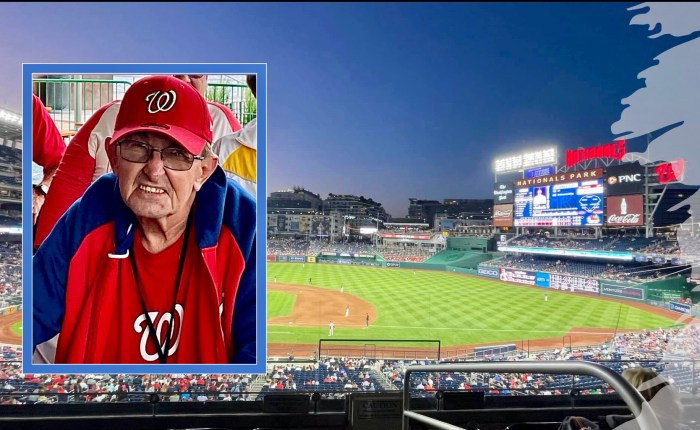
The Nat’s pitchers and catchers reported for spring training last week on February 12th. I’m excited, but also a bit sad. My old friend, Bill Wagner, passed away last September. He was the owner of the season ticket group I belong to and there will be a hole in my heart on Opening Day.
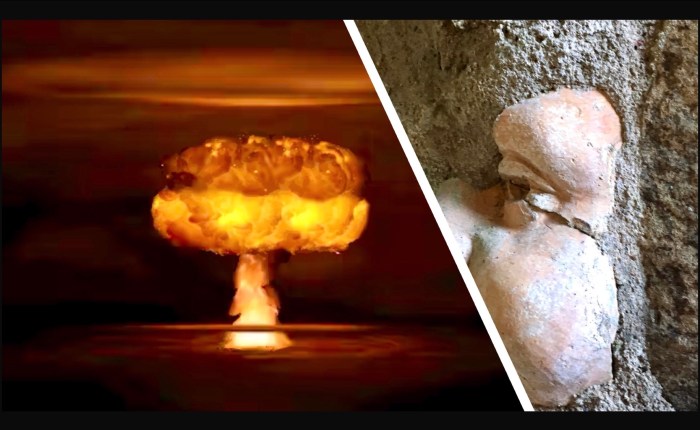
I received my Top Secret (TS), Special Compartmentalized Information (SCI) clearance in 1989. I was an Army Captain at the time. Before receiving the clearance, I did not know what work I would actually do in my new job. When I was cleared into the program, the first thing Gene, my new boss, asked was “How do you feel about Nuclear War?”
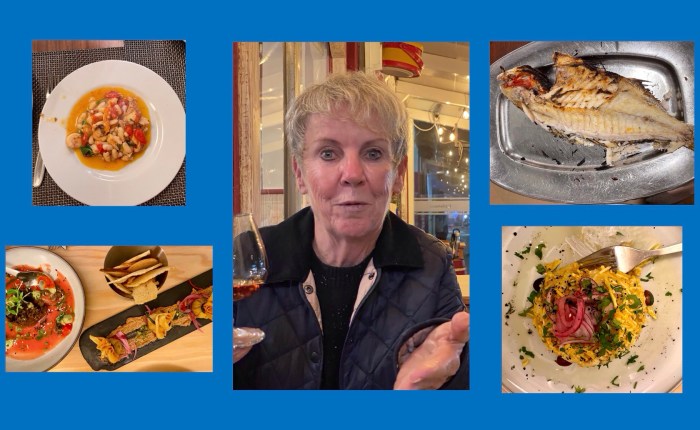
I was a cookbook junkie for a couple of decades. The last few years, I’ve kept my addiction in check. I try and take it one meal at a time, which has worked … so far. Of course, I continue collecting online recipes and recipes from friends like a fiend.
Cath and I recently saw “A Christmas Carole” at Ford’s Theatre, our 12th year in a row. I always find it renewing and every year, a different character or part of the play touches me. Not just Scrooge, or Tiny Tim, or the Ghosts, but sometimes a minor character like Old Fezziwig stays with me and provides inspiration.
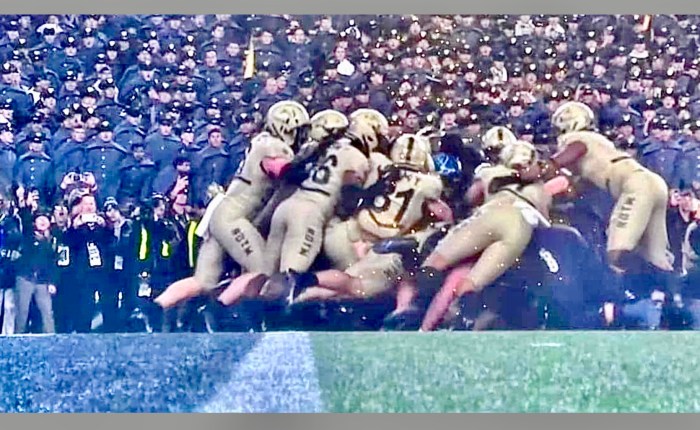
Army-Navy. Yep, it’s this week – the renewal of the rivalry that started in 1890. This year, Army is 11-1 and Navy is 8-3, but records rarely seem to matter. I know I never take the game for granted and always feel a churn in my stomach in the days and hours leading up to game time.
For Thanksgiving this year, we are in Lousã, Portugal heading to the Douro Valley. No turkey. No dressing or mashed potatoes. No oyster stuffing. No cranberries. No pun’kin or pecan pie. When I look back at our lives, there have been many different Thanksgivings, often not at home.
Oktoberfest in München, Germany is from September 21 to October 6th this year. Thinking back, I remember our adventures there in ‘87 with our friends Tim and Bobby. Cathy injured her arm on the rollercoaster at the fest grounds and had to drink her liter mugs of bier with one arm in a sling for the rest of the day.
Our old friend Tim and his buddy Bobby visited us in the Fall of ‘87. At the time, we were stationed in Worms, Germany. Upon arrival, they spent a few days at our house*, and then boarded a train to tour parts of Germany, Austria and Northern Italy. Before they left, we agreed we’d all meet at a location in the München Bahnhof (Train Station) eight days hence and go to Oktoberfest together. This was before cellphones, or texts or email so coordination was a bit trickier. Plus, phone calls in Europe, especially country-to-country were expensive and we avoided them unless necessary.
Cathy and I had, of course, visited many bier and wein festivals in Germany over the years. We usually enjoyed the smaller local festivals more than the big ones. To borrow a word from the Germans, the smaller fests tended to be more “Gemütlich”, a word that doesn’t really translate well to English, but roughly means a combination of fun, pleasant, comfortable, friendly and of good cheer. When Tim asked about joining them at THE Oktoberfest, we agreed to give it a go, and would meet them in München.
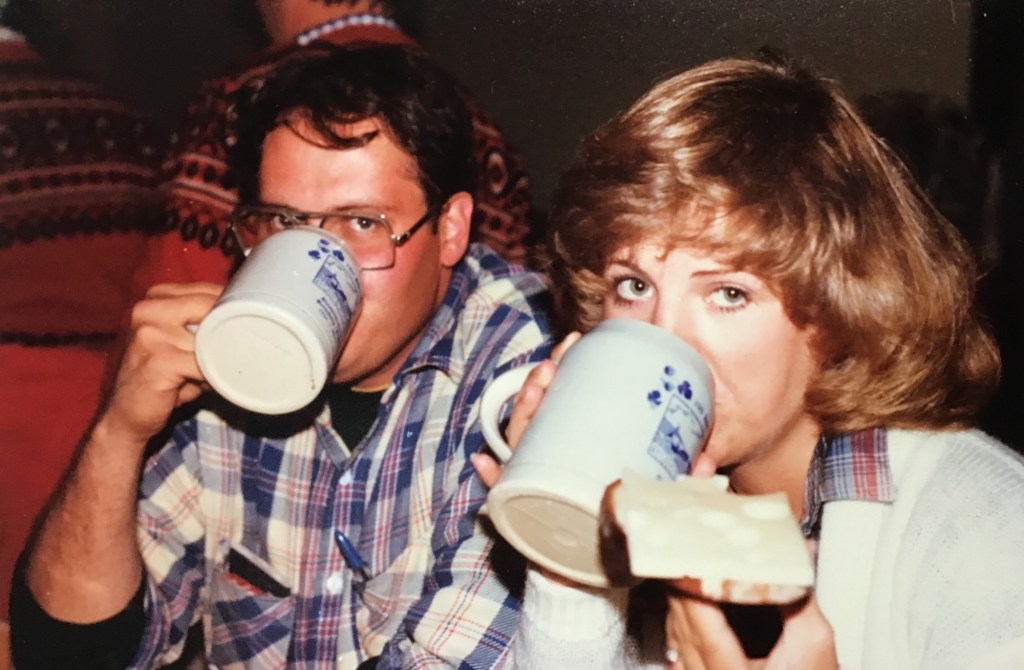
Tim and Cathy Drinking Bier on Another Occasion at the Kreuzburg Monastery,
The München Oktoberfest is huge – part bierfest, part carnival, part party and part madhouse. Last year, visitors consumed over 6.5 million liters (a little over 1.7 million gallons) of bier at the festival. Only bier brewed at the city of Munich’s breweries is served. Anyone who has visited München knows about the Hofbrau Haus, but there are actually five other breweries in the city besides Hofbrau, including: Augustiner, Hacker-Pschorr, Löwenbräu, Paulaner and Spaten. The breweries all adhere to Germany’s beer purity law from 1516, the Reinheitsgebot, which states beer is only made from four ingredients: water, malt, hops, and yeast.
On the day before our link up, Cathy and I drove to Augsburg, Germany, about an hour outside of München. There we had reservations for a Gasthaus for the next two nights and for Tim and Bobby on the second night. We spent the night in Augsburg and the next morning, took the train to München. At the Bahnhof in München, all of us miraculously arrived at the appointed time. Then it was off to the Fest!
Paulaner was always my favorite München bier, so when we arrived at the Fest Grounds, we made a beeline to the Paulaner tent. Each of the breweries have massive tents that can hold thousands of people. People sometimes hang all day at one tent, while others move from place to place. The only problem with the second option is the tents fill up early and stay packed. Giving up your seats in one tent doesn’t guarantee seats in another.
Partial View of an Oktoberfest Tent.
As we were finishing our first liter at Paulaner, we were trying to decide what to do next. Someone suggested that if we were going to ride any carnival rides, we should do that now, before consuming more bier. We made the ill-fated decision to ride the rollercoaster before going to the Hacker-Pschorr tent.
At the roller coaster, Tim and I climbed in one car and Bobby and Cathy jumped in the next. I should point out Bobby was only a few inches taller than Cathy, but probably weighed 75 pounds more. You might see where this is going.
The rollercoaster took off and rapidly gained speed. At the second corner, it made a sharp left turn and Bobby slid hard into Cathy, slamming her into the right side of the rollercoaster car. When we all got off the rollercoaster a few minutes later, Cathy could not move or lift her right arm without pain. In fact, she could hardly move the arm at all. What to do!?
Well, it turned out Oktoberfest had its very own first aid station with doctors and we visited it (in 2023, over 8,000 people used the aid station during the festival). Still early in the day, there were no patients yet. Cathy got right in, while Tim, Bobby and I waited outside. Eventually she returned with her arm in a sling. They didn’t believe she broke any bones, but had severely pulled the muscles around the shoulder and strained some ligaments. They put her in a sling to immobilize her arm and gave her aspirin for the pain.
What to do now? Of course we headed to the Hacker-Pschorr tent and ordered four biers. As the biers arrived, Cath ran into a slight problem. She’s right-handed and that’s the arm she injured, so she had to drink with her left hand. It sounds simple, but liter mugs are heavy, especially when full of bier. She ended up holding the stein in her left hand and then used her right hand (in the sling) to support the mug from the bottom. It was quite the operation. ;-).
The rest of the day was a fun time, and anyone who knows Cathy, knows she’s a trooper. We made it to a couple of other tents along the way and also ate some great food. I think Cath and Bobby both had the famous roast chicken, while Tim and I ordered grilled ham hocks the size of small hams. I’ve never seen ham hocks that big before or since. They were huge, and oh-so-tasty.
Eventually it was getting late and we caught a train back to Augsburg. It was crammed with other revelers heading out of the city. There were various states of intoxication, but people were all in a good mood – a few were still singing German songs, while others tried to sleep. About an hour later we arrived in Augsburg, and finally made it to the hotel and bed.
The next morning, I woke up and felt surprisingly good. After taking a shower, I heard Cathy call out to me. She was in bed, but couldn’t turn over or get out of bed – her arm was of no use. I turned her over and other than her arm hurting like hell, she was ok. We put her arm back in the sling.
We linked up with Bobby and Tim for breakfast and then the four of us made the drive back to Worms. The next day, Cathy went to the doctor’s office. Diagnosis? Just as the doctor said at Oktoberfest, she had some pulled muscles and strained ligaments. She ended up wearing the sling for two more weeks.
We joked later that rather than riding the roller coaster early, we should have skipped it all together and stuck to the bier tents. It would have been a safer day. 😉
Addendum:
* You can read about the first part of Tim and Bobby’s trip to visit us in ‘87 here: In the ‘80s when we lived in Germany, several family members and friends visited us. To “help” them overcome jet lag, we made sure the first couple of days were action packed with eating, drinking and activities to keep them occupied. It almost proved one friend’s undoing in 1987 […] Continue here: https://mnhallblog.wordpress.com/2023/09/12/tim-and-bobbys-visit/
Colonel Bayshore called me into his office. “Max we have a problem at the new Alternate Support Headquarters (ASH) in England and need you on a plane.” “What’s the problem?” “A grounding issue.” “Ummm, I don’t know anything about grounding.” “None of us do. Here’s the manual.”
In 1988 Cath and I were stationed in Germany with the Information Systems Engineering Command (ISEC). I was a Captain at the time and had my master’s in electrical engineering. ISEC did all kinds of complex Information Technology (IT) implementations.
When Colonel Bayshore called me into his office to talk about the ASH*, it was a classified site. The US European Command (EUCOM) ASH was in High Wycombe, England and where EUCOM HQ would bug out, if they needed to evacuate Germany during a war. Originally built in 1942 during WWII for other reasons, the US government later rebuilt the bunker to support the ASH during the Cold War. It was an underground complex and built to survive not only conventional bombings, but even an ElectroMagnetic Pulse (EMP) nuclear attack.
The site wasn’t yet occupied. The system installations were handled by a different organization than ours, with much of the IT work completed by a contractor. Most work was completed with systems installed, but one of the classified rooms had a problem. Whenever you used the secure phones in the room, there was crosstalk with other phones, making it impossible to have a classified conversation. The ASH facility could not pass its security accreditation until the issue was resolved. This meant the faculty could not undergo final testing or become operational. An engineer “somewhere” thought it was a grounding problem. They contacted ISEC for outside support, resulting in Colonel Bayshore’s call to me.
Sergeant First Class (SFC) George Walls would also go on the trip. George was great and a super technician. We would work as a team at the ASH until we solved the problem.
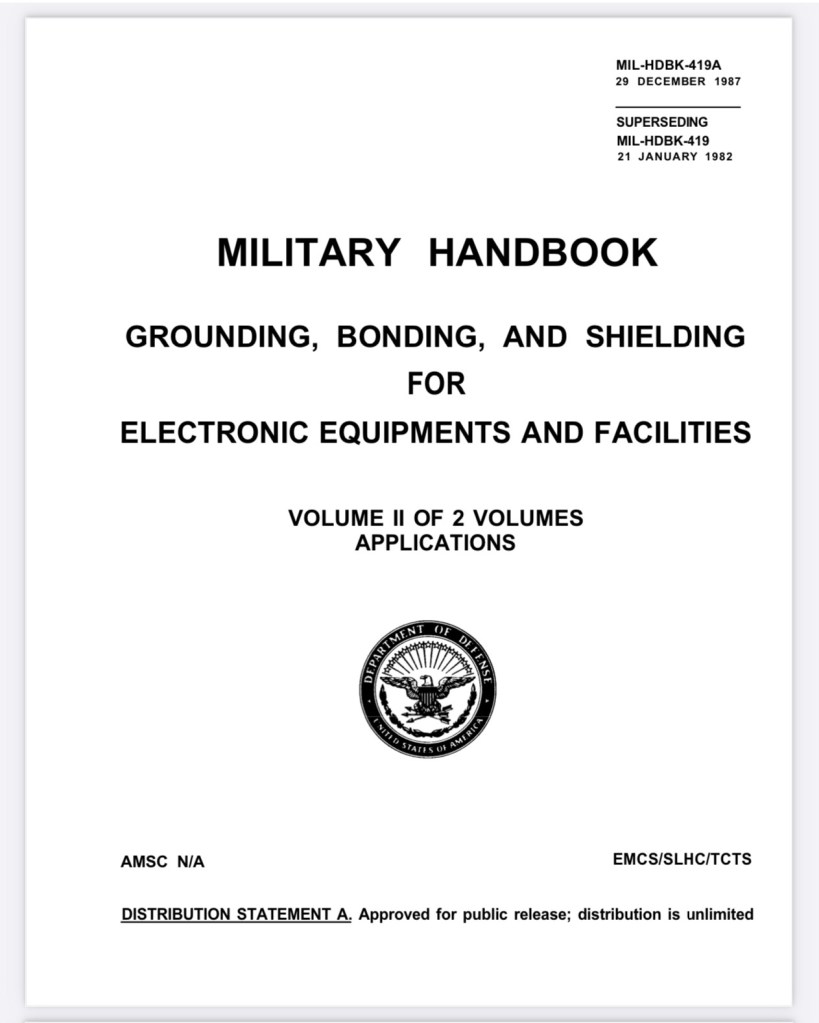
The next day, George and I started reading “MIL-HDBK-419A – Grounding, Bonding, and Shielding for Electronic Equipments and Facilities Volume 2 of 2” (Volume 1 was theory. Volume 2 was applications). At 394 pages, it was a massive document and told us everything and anything we could possibly want to know about grounding buildings and electrical systems within those buildings
Vol II of Mil-Handbook 419A – All 394 Pages of it.
A day later, we were on a plane crossing the Channel. We continued reading and rereading MIL-HDBK-419A.
Arriving in England at the ASH, we met our government point of contact (POC) and a representative from the contractor. They were skeptical we would find anything, but welcomed our help. Our job was to identify issues, but not to fix them. The contractor would complete the corrections, once tasked by the government.
After giving us a tour of the facility, they offered to accompany us as we started our work. We politely declined, and let them know if we needed any help, we would contact them. We didn’t want anyone looking over our shoulders – partly to minimize outside interference in our investigation, and partly so no one could see how green we were in our knowledge of grounding. Quoting from the book/movie “MASH”, we were “The pros from Dover”** and we didn’t want anyone questioning that.
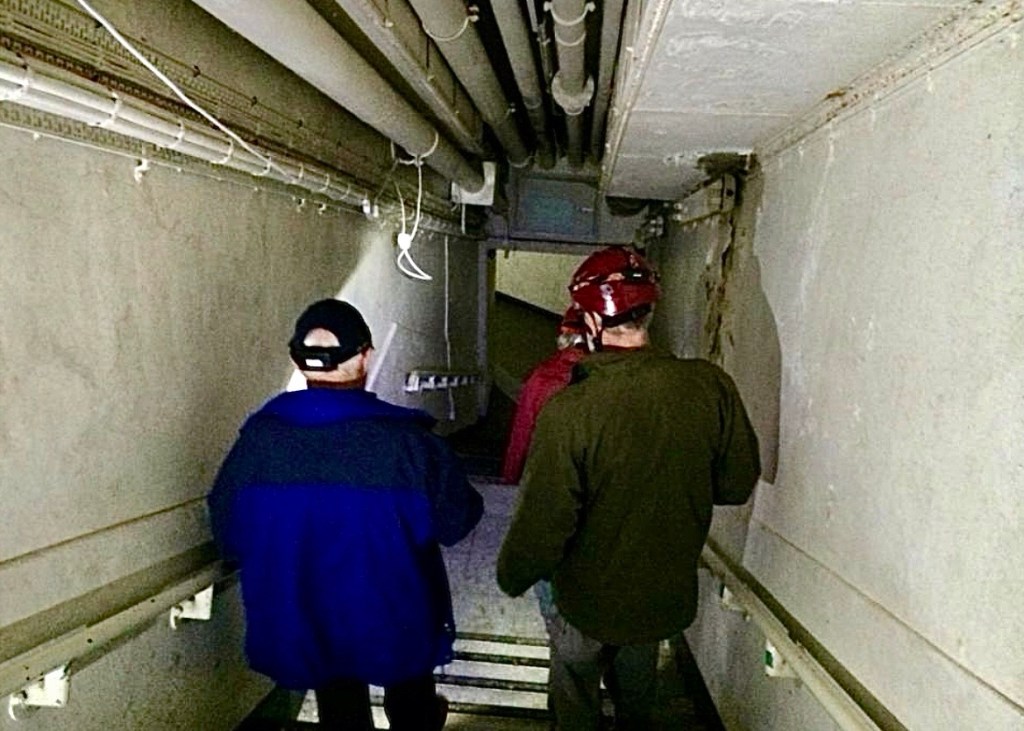
The Descent Into the Bunker Complex.
We started our work in the classified room with the crosstalk problem and spent two days checking every system, circuit, wall plate, ground connection and the entire ground grid underneath the raised floor in the room. We found some wall plates that weren’t grounded and one improperly grounded system, but found no issues related to the crosstalk problem.
From there, we proceeded to the classified phone switch room and did the same type of inspection. Again, we discovered several issues, but none that we believed caused the crosstalk. We hadn’t solved the problem, but our list of grounding issues within the facility continued growing.
Next, we went to the Tech Control Facility (TCF) where all connectivity (cables, wires and radio channels) for the systems going into or out of the ASH passed through. We documented more and different grounding issues.
With the growing list of problems, I called COL Bayshore and recommended we inspect the entire underground facility for grounding issues, including all rooms, systems and connections. This was outside our original scope, but both George and I were concerned with what we were finding. COL Bayshore agreed, but needed approval for the expanded work. The next day, the powers-that-be gave approval.
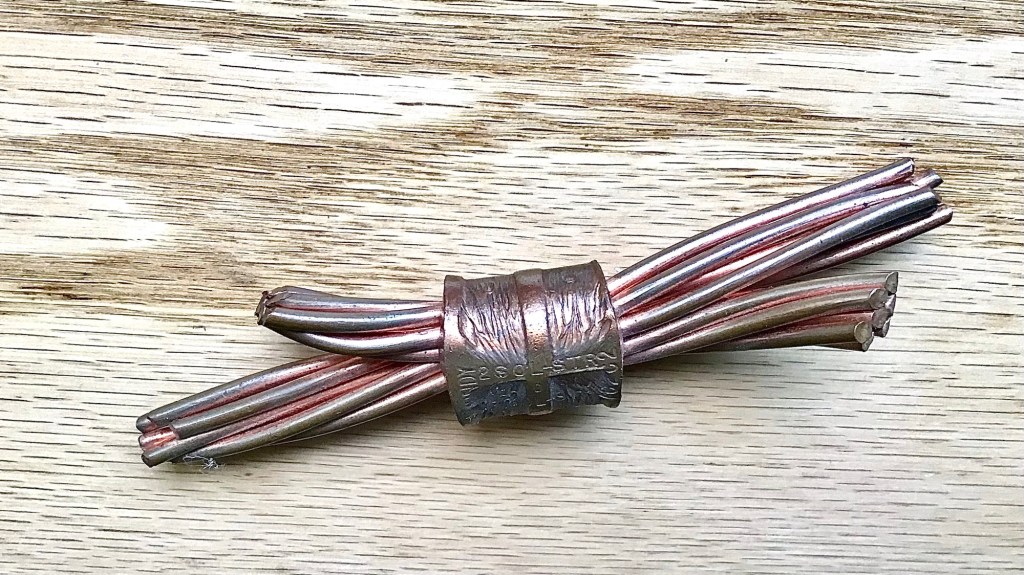
We spent the next few weeks at the ASH continually documenting grounding issues. Many were minor, but some were major. As one example, in a room housing the Worldwide Military Command and Control System (WWMCCS), all systems were properly connected to the ground grid below the raised floor, but the ground grid itself was not connected external to the room, making it worthless. In another case, the grounding cable for an external backup generator was almost cut in half. At some point in the past, the generator startup battery arced to the ground cable, nearly severing it.
A Piece of the Below Floor Ground Grid.
After about three weeks, we finished our inspection. Our list of grounding issues was twenty or thirty pages long and many items needed correction prior to the facility going operational. We sent a copy back to our headquarters at ISEC and also gave a copy to the facility government POC. Needless to say, with the number of identified problems, there was a bit of shock both back at our unit, and in the facility.
Unfortunately, we still hadn’t solved the crosstalk issue.
That night as George and I were having dinner and a beer, we talked things over. We tossed some ideas back and forth, and ultimately decided we would track a single phone circuit in the classified room from the phone to the connection plate to the classified switch to the TCF and see if we could find the problem. Maybe it wasn’t a grounding issue.
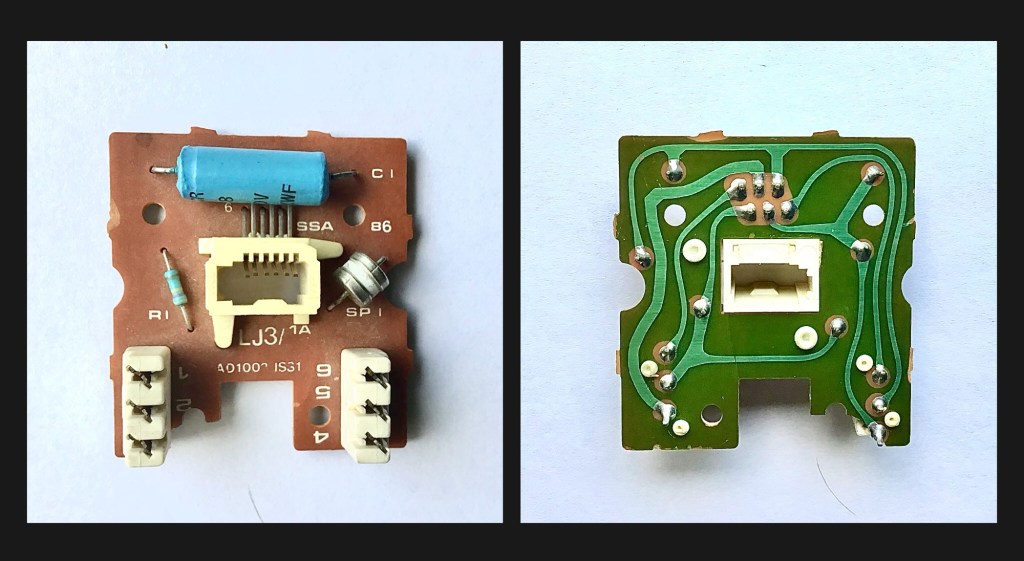
The next day, we were back in the classified room and pulled one of the phones from its cable and inspected it. Nothing…Nada…Nope. From there we traced the phone cable to the wall plate. We took apart the wall plate and pulled out the physical jack the phone plugged into. As we looked at one side we noted the connection port, a resistor, and a couple of capacitors – nothing too exciting there. We turned it over and started tracing the circuitry. HELLO! What’s this? Two capacitors were interconnected and double connected to different circuit posts in the jack where the phone itself connected.
Front and Back of the Phone Jack
We stared at the wiring and started talking. Was this the issue? There was only one way to find out. George pulled out a pair of wire cutters and …snip snip… cut the connections for the suspected capacitor.
We reassembled everything, plugged the phone in and made a call. NO CROSSTALK!
We notified COL Bayshore and then spoke with the POC and the contractor about what we found. They were shocked (and surprised we had the temerity to cut the connections). We eventually tracked down why the connectors were incorrectly wired. It turns out the phones all came from the US for the classified system. The contractor obtained the connectors in Europe. They may have worked with the European equivalent phone, but they would not work with the US version as wired.
George and I were still in England for the next couple of days and had become minor celebrities of sorts. Calls came in from both DC and Fort Huachuca, Az where they completed the original system implementation/design work. The calls were a bit funny. People congratulated us, but couldn’t quite believe we solved the problem, or how we solved it. They asked several questions – some we could answer, some we couldn’t. It didn’t really matter to George or me by then. We’d finished something no one else had solved, mostly through detailed work, and a little bit of luck.
A couple of days later we made our way home to Germany, mission accomplished.
I have thought about the trip more than a few times since then. Becoming an “instant expert” was important. I knew I wasn’t really an expert at the start, but I knew we had more knowledge about grounding than anyone else connected to the program. By the time we finished, we truly were grounding experts.
Finding the many grounding problems was important. The issues probably would have gone unnoticed until a system failed, possibly during a real-world crisis.
Lastly, it was important to remember that sometimes the problem isn’t what you think it is, or what others think it is. Sometimes it’s something so small and innocuous it goes unnoticed, just sitting there looking innocent. Keeping an open mind is always important.
Charlie sent an email to all of us company B-3 West Point ‘78 grads. Colonel Bob Radcliffe, our Tactical (TAC) Officer when we were cadets, passed away. My mind did an immediate flashback to my last two years at school. He made such a difference in my life and was a true mentor and leader.
For me, I’ll always remember him as Major Radcliffe. That was his rank when he served as our TAC. By way of explanation, each of the 36 companies had an active duty officer assigned as a TAC Officer. The TACs:
“Are the primary leader developers/integrators of the Academy’s developmental programs. They oversee each cadet’s individual development in the academic, military, physical, and moral-ethical dimensions within the framework of the Cadet Company. The TACs train, lead, coach, and mentor cadets, with a continual focus on leader development. The TAC is … responsible for the establishment and maintenance of a command climate that fosters individual and unit excellence in all program areas.”
There were of course all kinds of TACs at West Point. Most were good, but some were martinets and some were too folksy. Major Radcliffe was one of the good ones. From my perspective, he was one of the great ones. He knew how to strike the right balance in his work with us.
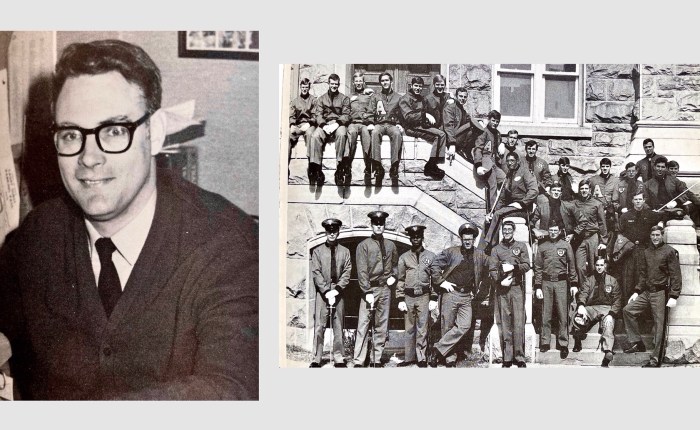
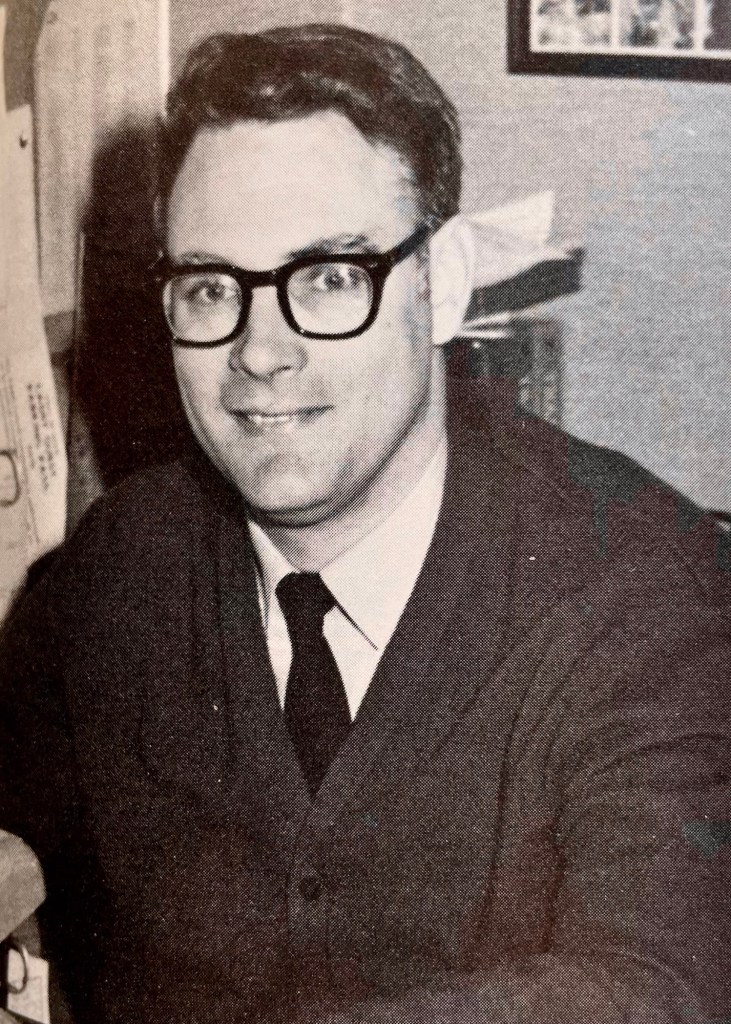
Major Radcliffe in our 1978 Yearbook.
He was a Grad himself from the class of 1965. He was also a first team All American Lacrosse player while at the Academy. After graduating and commissioning in the Infantry, he obtained his Airborne wings and Ranger tab. He did a couple of tours in Vietnam, where he earned the Combat Infantry Badge, the Silver Star and the Bronze Star for Valor.
He made us toe the line as Cadets, but also had a human side. When Cathy and I learned she had MS, he worked with me to obtain an immediate weekend pass to see her in DC, which was so important for me. We weren’t engaged yet, but he came through. He also helped rescue me from myself when I screwed up on something at school. For both of those items, I will be eternally grateful.
Additionally, Major Radcliffe had a sense of humor. I remember going to his home a few times for cookouts or dinners. On one occasion, he surprised us when he lifted his sweatshirt revealing the T-shirt he wore underneath. It said, “US Team. Southeast Asia War Games. 1960-1975. Second Place.” Sense of humor indeed.
A Wry Sense of Humor
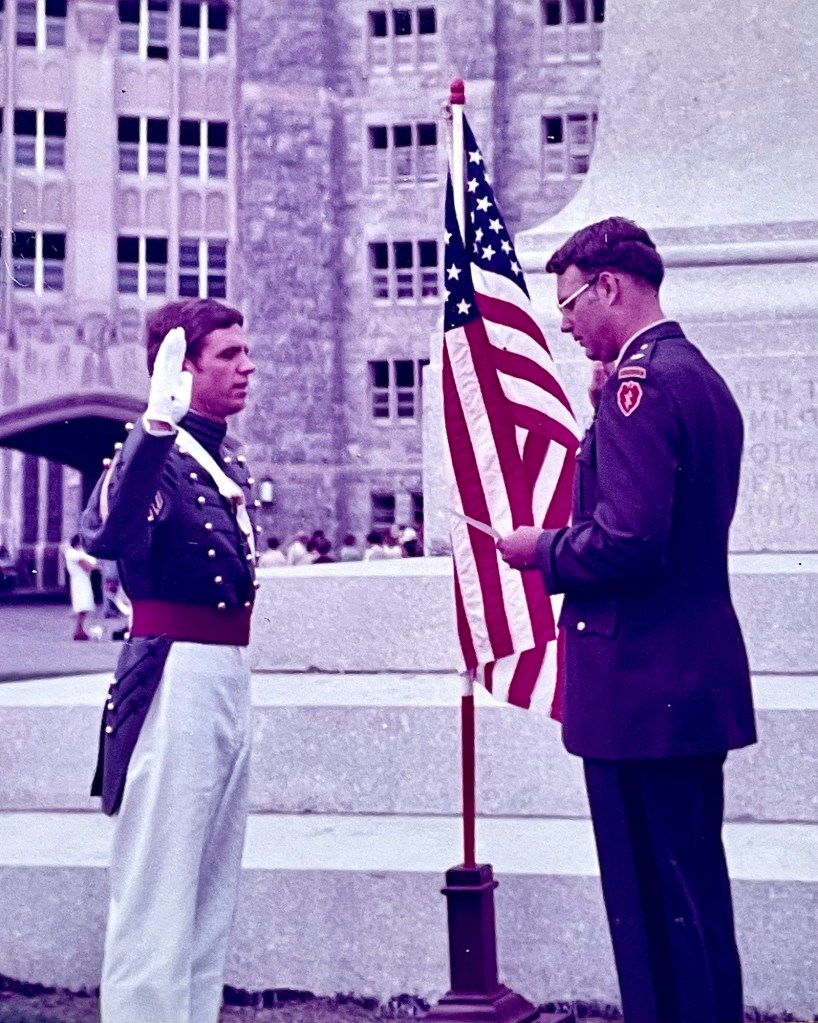
My last official interaction with Major Radcliffe was when he swore me in as a Second Lieutenant on Graduation Day. We were at Washington Monument on The Plain and I remember it as if it were yesterday. Mom, of course, snapped the picture.
My Swearing in Ceremony with Major Radcliffe.
I only saw him a couple times after graduation. Once in the military at an exercise or meeting somewhere. The second time was by chance in an airport. We were both civilians by then and chatted briefly, while waiting for connecting flights. In 2020, Cathy and I were going to host a mini B-3 reunion and we invited him to the event. We traded a couple of emails back and forth and he looked forward to attending. Unfortunately, COVID intervened and we cancelled the get together.
Yes, when Charlie’s email arrived in my inbox, I had my flashback to West Point. I also thought about his impact on my life and how he, along with West Point itself, changed the arc of my life. We didn’t call it mentorship back then, but that’s what it was. His mentorship and his leadership made a difference for many of us, and I’m glad he was in my life. It’s a debt I can’t repay.
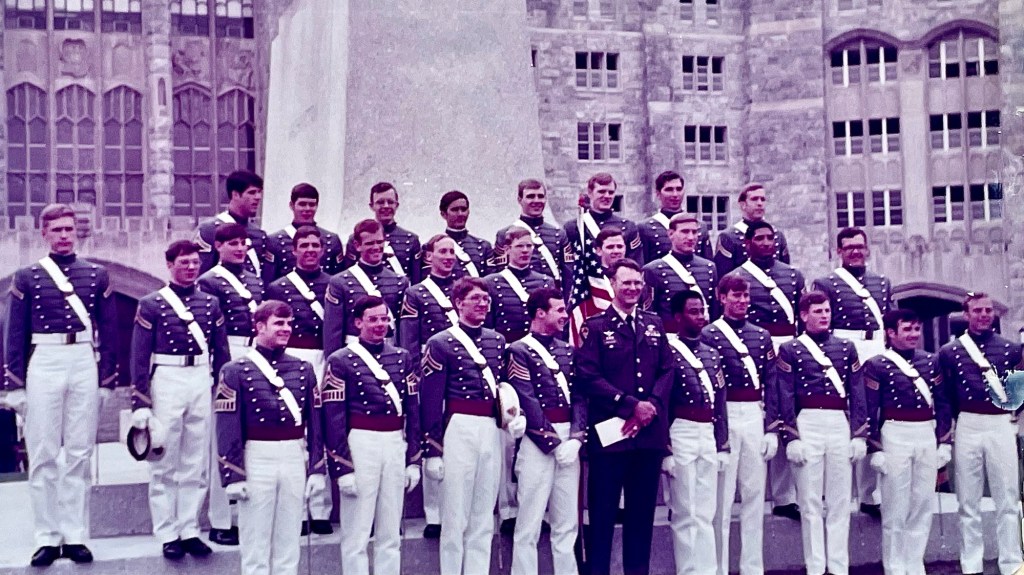
Company B-3 Firsties (Seniors) with Major Radcliffe on Graduation Day.
Addendum:
The photo of Major Radcliffe in the South East Asia war games shirt is courtesy of company mate Charlie Wright. I’d told the story of the shirt for years, but Charlie had the actual proof of it.
Thanks to company mate Charlie Bartolotta for providing some of the information in this blog.
Labor Day Weekend at the Bay was a full-on Summerpalooza. Soft shell crabs and tomatoes…Crab cakes with corn…Grilled steaks and more crabs at our neighbor Vinnie’s home…Bike rides on the island…Drinking crushes at a beach bar… Eating fresh peaches, the juice running down my chin. It’s all been great, but I’m ready for Fall.
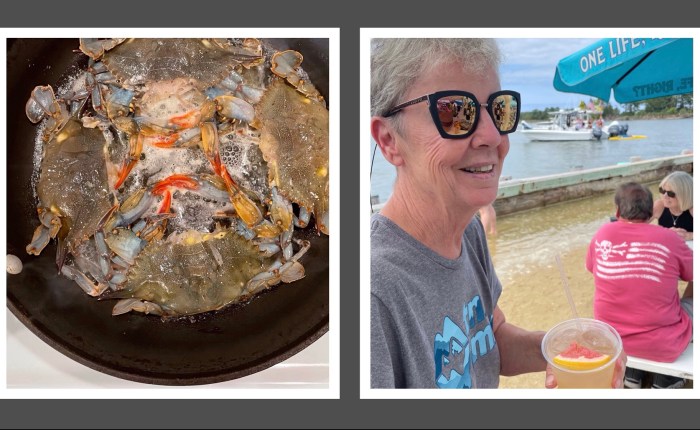
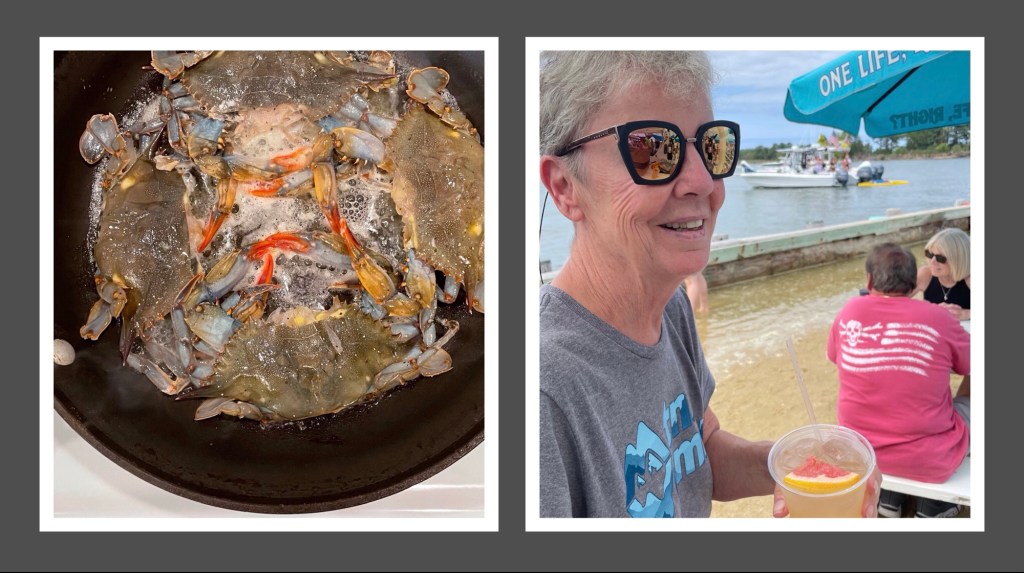
Ahhh Summer – Cooking Soft Shells One Night, and Drinking Crushes at a Beach Bar the Next Day
What a strange Summer it has been, and I’m not just talking about the politics. The weather was … unusual. Quite cool at the start, we endured a drought for a couple of months. In early July it turned hotter than Hades, followed by a rain of several inches, a cool week in August with nighttime temps in the 40s, and then record setting heat the week before Labor Day.
Technically, we have about three weeks until the Autumnal Equinox marks the official start of Fall on September 22d, but of course Labor Day has always served as the unofficial end of Summer.
Growing up, Summer was my favorite season. It was even better than Christmas time. When school let out at the start of Summer, there was unlimited time with endless possibilities. It was the time of going to the pool or Pitstick’s Dairy Lake for swimming – The ding-a-ling of the ice cream truck in the evenings, with cones for a dime – Staying out late – Pick-up Baseball behind Hohner’s house next to the graveyard – Boy Scout Summer Camp at Ki-Shua-Wau – Cicadas, grasshoppers and lightning bugs – Making funny noises into the blowing fan in the front room before we had AC – Cookouts with burgers and Mom’s potato salad – Riding bikes with my buddies Howard and Tim, and later, with Cathy. Endless Possibilities.
As I grew older, Summers became shorter. Still fun, they were no longer endless and instead became finite in their possibilities. Rereading the previous paragraph and the list of things I enjoyed about Summer, it is perhaps no coincidence they are activities from my youth. Is Summer more of a young person’s season?
Eventually, Summer lost its claim as my favorite season. Was it the passing of youth, or did something else cause the change? I can’t answer that, but Autumn rose to the fore.
Ahhhh, Autumn. How do I love thee? Let me count the ways – The drop in temperature and humidity – The crispness of a fall morning – Autumnal light (yes, that’s a real thing) – Going on vacations and knowing there will be fewer children wherever we are – The color of the leaves – Eating soups, stews and roasts again – Wild (not farm raised) oysters – Wearing a sweatshirt and shorts – Steeplechase Races – Orion reappearing in the night sky – Migrating birds – Walks in the woods and the crunch of leaves underfoot. Here in Virginia, we are extra lucky. I defy you to find anywhere with more beautiful colors and weather than Virginia in the Fall.
During Fall, I enjoy watching the slow transition from Summer to Winter and how the world changes. It makes me feel alive as we leave the lethargy of Summer heat behind, but aren’t yet forced inside by the cold and snow of Winter. Although I know Spring is the season of new beginnings, I feel most alive in the Fall.
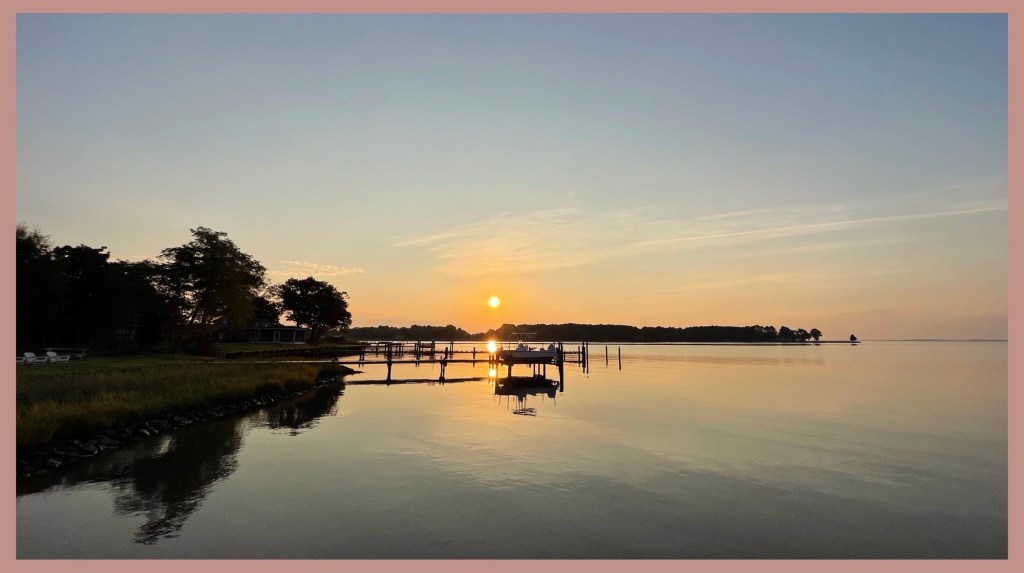
We spent the last few days of August and the start of September at the Bayhouse on Tilghman Island. The heat wave eventually broke and it cooled down to seasonal weather. The end of Labor Day itself was absolutely gorgeous – one of those evenings you get a few times a year. It doesn’t feel like Fall yet, but I know it’s coming soon and I am ready to greet it. Author Victoria Erickson said it best for me: “If a year was tucked inside of a clock, then Autumn would be the magic hour.”
Labor Day Weekend – the End of Summer.
Addendum:
I’ve written two other Autumn related blogs:
As I walk and wander through the nearby woods this fall, I find my mind wandering as well. It is Autumn in the autumn of my life and I feel the passage of time. Death and decline are both more evident, and not quite the strangers they once were. It is not my own […] Continue here: https://mnhallblog.wordpress.com/2023/10/24/autumn-walks/
It’s not your imagination. The light actually is different this time of year. Golden and lush, it’s almost magical. It’s not just the color of the leaves, or the chill in the air. The light is different and it’s changing fast. Poets love to write about it, but there’s science behind the […] Continue at: https://mnhallblog.wordpress.com/2022/10/26/autumnal-light/






 Live Life Exuberantly