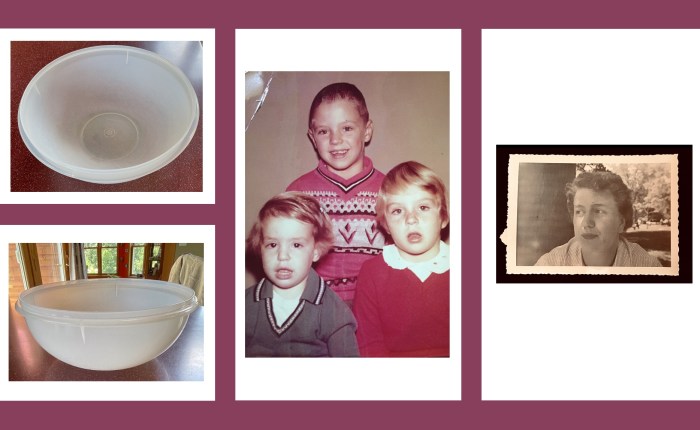
The Puke Bowl

The Puke Bowl

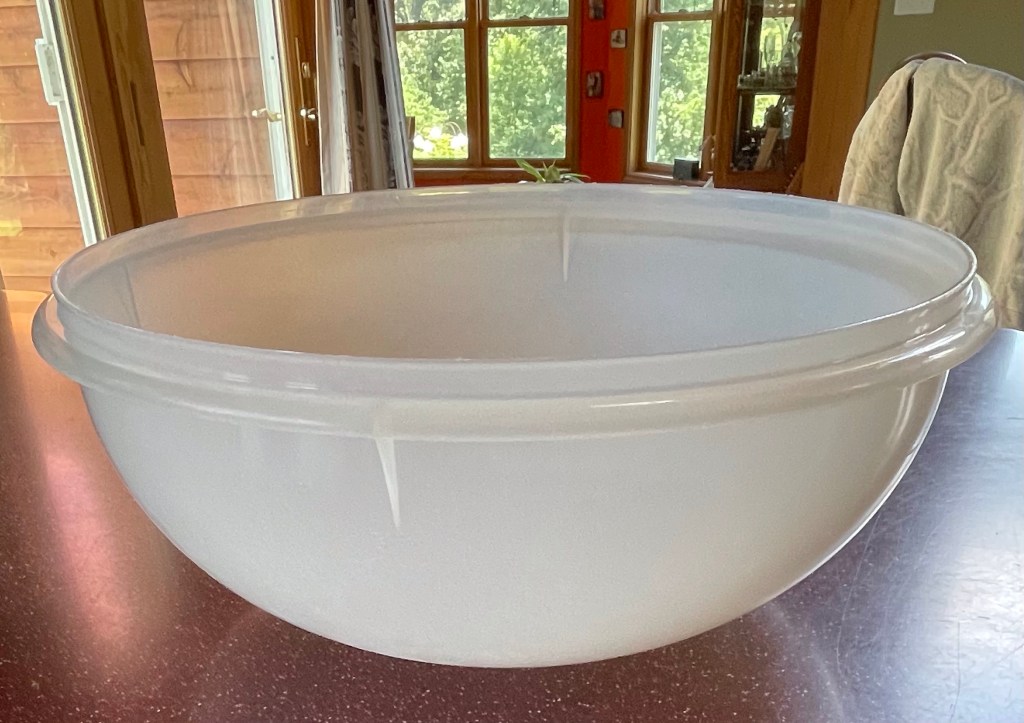
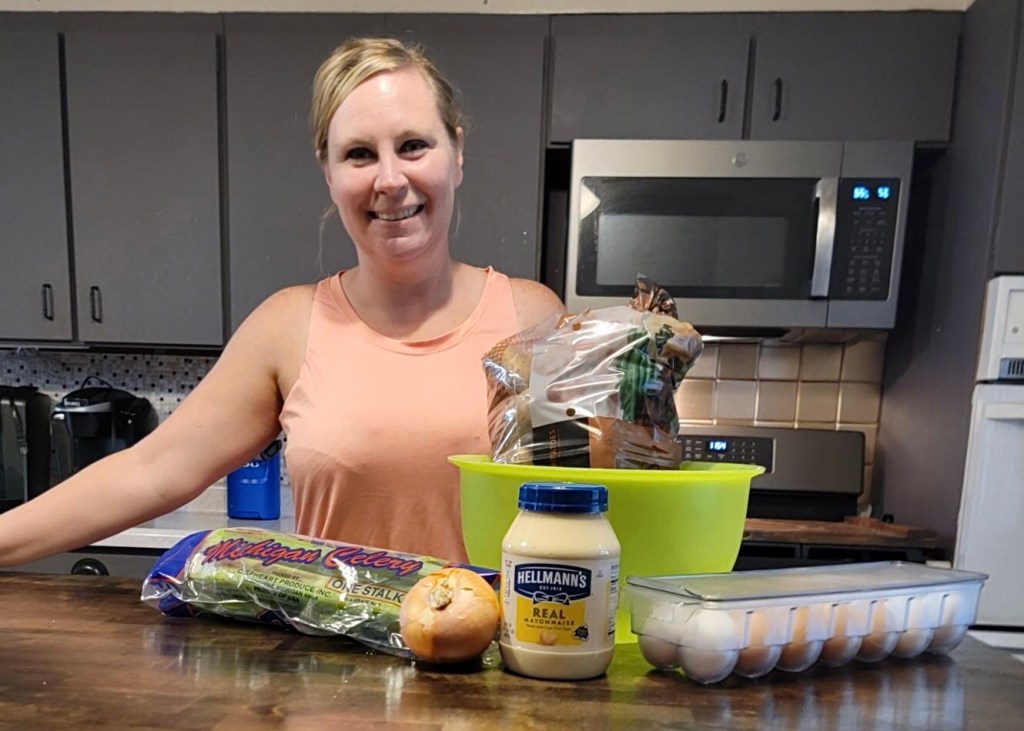
The Puke Bowl. Do all families have one? You know, the one you pull out to put next to your kid’s bed when they have an upset stomach and things are sketchy? That, and coke syrup were staples of our childhood when sick. Our family puke bowl also had a dirty little secret.

Puke… not such a pleasant word, but I suppose it’s an apt descriptor. I’m not sure it’s better or worse than vomit, upchuck, ralphing, throw-up, or barf. All get the idea across pretty graphically. As kids, when the flu or some other illness turned our stomachs, the answer was always the same – a spoonful of coke syrup from the fridge, and then off to bed with the Puke Bowl by the bed. Running to the bathroom toilet was always the first option, but the bowl was right there if you didn’t think you could make it. Mom would dutifully wash and clean the bowl through out our misery, and when we finally became better, gave the bowl a thorough double cleaning and put it away in the utility room by the kitchen.

The Puke Bowl … In all it’s Glory …

Over the years, the Puke Bowl was also used by our nieces and nephews, if they happened to get sick when visiting Grandma and Grandpa. Three generations now called that big Tupperware bowl, the Puke Bowl. All of our spouses do as well. It became it’s own family tradition.

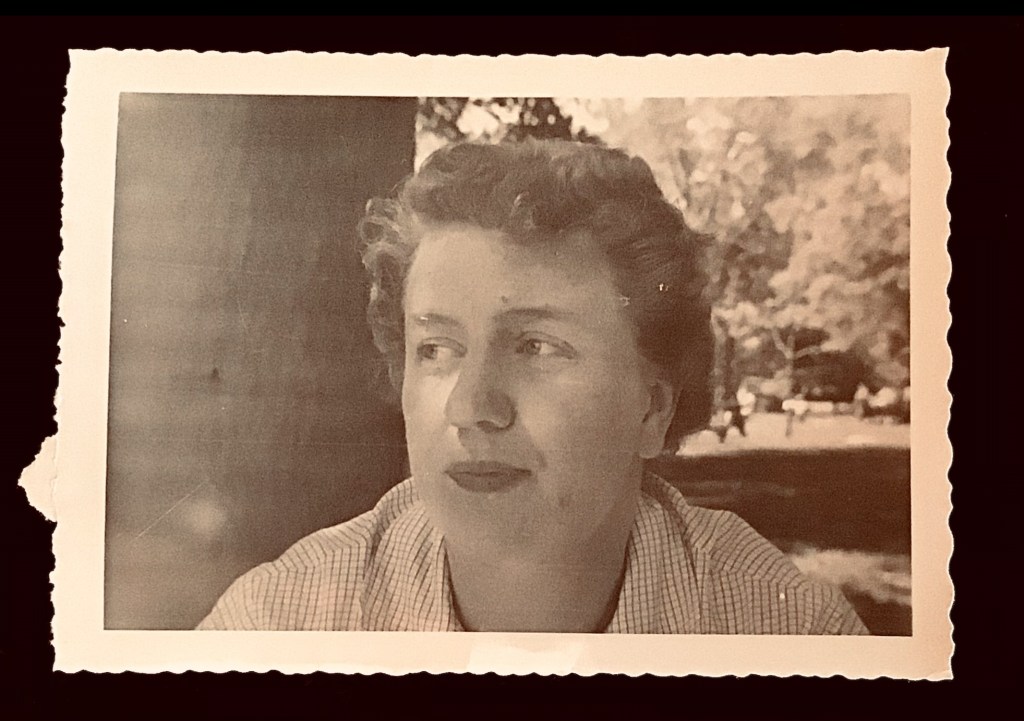
My sister Roberta “inherited” the bowl after mom died in 2017. All three of us kids were interested in it for nostalgic reasons, but Berta was the one who claimed it. To be honest, I did not realize mom still owned it, but of course I should have. Mom didn’t throw much away, and everything had multiple uses. Back then, America wasn’t the throw-away society we are today.

Mom Never Threw Much Away…At that Time, Most Folk Didn’t

Fast forward to this year…

A couple of months ago, Roberta’s granddaughter, Lydia, was visiting, became sick and started throwing up. When her mom, Kathi, came to pick Lydia up, Berta sent the Puke Bowl home with them, in case Lydia needed it in the car. A couple of weeks later, Berta was at Kathi’s, along with Kathi’s mother-in-law, Penny. As Roberta was getting ready to leave, Kathi said, “mom, don’t forget the Puke Bowl”, and handed Berta the bowl. Penny had a strange look on her face, and evidently thought the bowl was just a regular Tupperware bowl, like those you use for cooking or food storage. She exclaimed “What?!” Berta and Kathi started laughing, and then explained the WHOLE back story of the bowl to Penny.

In addition to being The Puke Bowl, the bowl had a secret life. It also doubled as THE bowl in which mom made her much acclaimed Potato Salad. It made an appearance whenever there was a big gathering or picnic for the family, church, neighborhood, or where ever. It was a massive bowl and the largest she owned, and due to the popularity of her potato salad, she didn’t want to run out. I don’t recall mom ever running out of potato salad at family (or other) gatherings when growing up. Never.

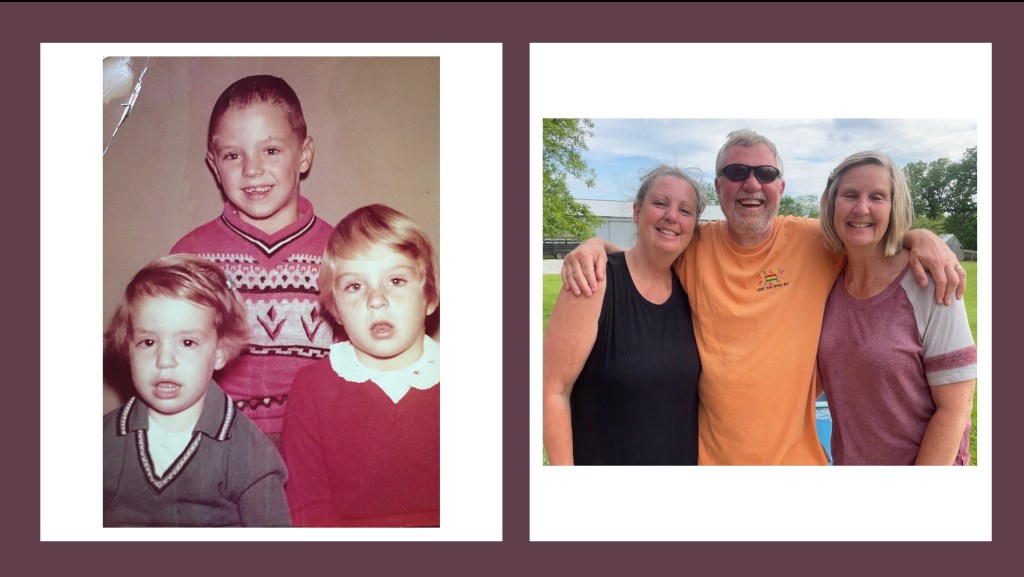
Tanya, Roberta and I Didn’t Seem to Suffer any Adverse Effects from the Puke Bowl…

The bowl is mostly retired now and lives in Berta’s basement. Lydia’s use a couple of months ago was the first time it was pulled out in quite awhile.

I should also mention Roberta’s daughter, Diane, is the official “holder” of mom’s potato salad recipe. Her version is the closest to mom’s of any I’ve tasted, which means it’s pretty d@mned good. Although Diane has her own set of bowls and Tupperware, including a large one she makes her potato salad in, when ever there’s a big family gathering, inevitably one of her sisters will laugh, and say to her, “Diane, you gonna make grandma’s potato salad in the Puke Bowl for the get together?” No, she doesn’t, but old family memories die hard… 😉

No, Diane Doesn’t use the Puke Bowl, to Make Grandma’s Potato Salad

Addendum:

– Our Niece, Tami, also remembered that the bowl almost always seemed to be the hiding place for someone’s Easter Basket each year at Grandma and Grandpa’s house… 😉

– In writing this blog, and talking with friends, two items became clear.

  • First, most all families had some version of a “puke bowl” or bucket, and many of them were multi-use products, particularly for holding popcorn.
  • And second, many lamented the throw-away society we have become. As Americans, we retain very little – Of course diapers, cups, plastic silverware and paper plates are all disposable. These days, so are phones, computers, mixers, coffee pots, stereo equipment, and a great deal of furniture. Washing machines, dryers and dish washers fit the same mode, unless they break down in the first few years of use.

⁃ Special Thanks to Cathy, and my sister Roberta for all of their help on this blog.
⁃ Thanks to sister Tanya, along with nephew Casey, and nieces Diane, Tami, Bre, Kathi and Jordan for their memories as well.

– Thanks and photo credit of the picture of Diane about to make potato salad, to her four year old daughter, Riley! Roberta took the pics of the bowl itself.

⁃ As always, MAJOR thanks to my old friend and editor, Colleen (who didn’t own a Puke Bowl growing up.) She always keeps me straight and on track.

Life and the Ritual of Risotto

Life and the Ritual of Risotto

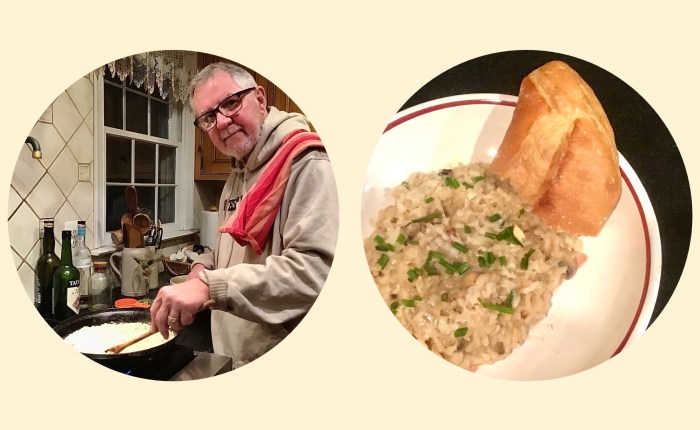
I made Risotto last week. Due to some changes in diet, it was the first time in over a year and it was wonderful. Risotto isn’t hard to make, and it doesn’t take long, but it does require patience and attention. You can’t rush risotto, and to me, that is why making it is both relaxing and a bit zen like.

I’ve been making risotto for years, and have several different recipes. It was a staple part of our dinner rotation. And then about a year ago, I had a couple of blood tests that caused some concern. After engaging in bilateral discussions with my doctor* (… 😉 … ) , I made significant diet changes, and drastically reduced dairy and carbs. Some things were easy, like changing from regular milk to oat milk. Unfortunately, cheese was practically it’s own food group for me, so that required a fair amount of mental adjustment. Pasta, potatoes, white rice, and bread? All eliminated, or severely reduced. I went cold turkey, and just did it. The good news was that after three months, the test results were back to normal, and six months later, they remained normal. As a side benefit, I lost about fifteen pounds.

Over the past six months, we’ve reintroduced small amounts of dairy and carbs into our diet. They’ve become “special” as opposed to every day, and it’s worked out fine. It turns out, sometimes, you can teach an old dog new tricks.

Last Thursday I had a series of follow-up fasting blood tests. I wouldn’t receive the results for a day or two, but decided to celebrate early and chose to make risotto for dinner that night. On the way home, I picked up some cream for the sauce, along with fresh bread from a local bakery. I mean what the hell, in for a penny, in for a pound. While I have several risotto recipes, there was no doubt in my mind about which one I would make – Ben’s Cognac Risotto – a favorite of ours, with mushrooms, shallots, cream, butter, and plenty of Parmesan cheese.

From start to finish, Ben’s Cognac Risotto takes about forty five minutes to an hour to make. As with most risottos, it’s not complicated, however, once you start cooking, you can’t walk away from the stove. You need to be present, both mentally and physically.

That evening , I started heating up the required chicken broth, chopped up the needed shallots and mushrooms, separately measured out the cognac and cream for the sauce, and then grated the Parmesan cheese necessary for the finish.

Shallots and Mushrooms – the Key to Ben’s Cognac Risotto…

The next step is an optional one, but I find it adds to the relaxing nature of making risotto. I walked over to the bar and made myself a martini. In what may be a strange coincidence, I’ve learned that the time it takes to drink a martini, is almost exactly the same length of time it takes to make risotto. Not a martini fan? A Manhattan or Negroni will do, or even a glass of the red wine you opened to serve later with the risotto. Trust me on this. It works.

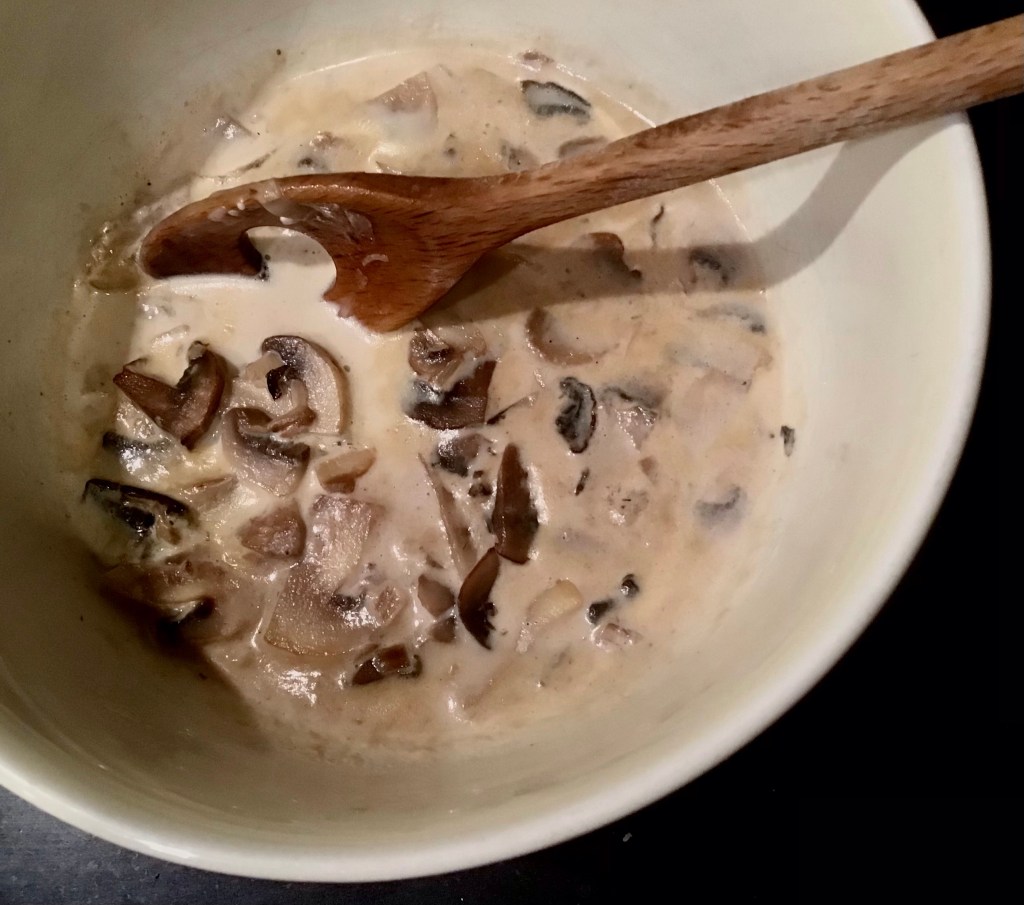
I made the mushroom sauce first and the kitchen filled with that heavenly smell only sautéed mushrooms can bring. After 5 minutes or so, I added the cognac and reduced it, and then added the cream and slowly reduced it some more. I set the sauce aside, and then started to work on the risotto itself. I also let Cathy know dinner would be ready in about twenty minutes, so she could finish setting the table, and pour some wine in our glasses.

Mushrooms, Cognac and Cream – What’s not to like?

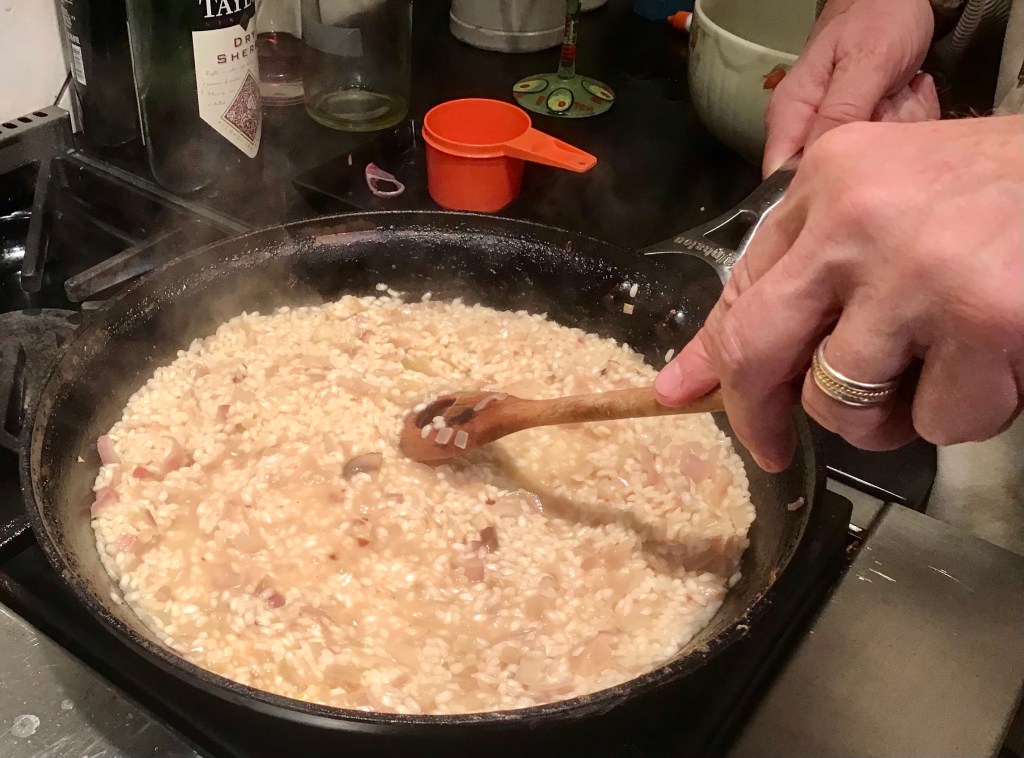
After sautéing the shallots, I added the rice to the pan and stirred a bit. I started adding the broth, about a half a cup at a time, to the rice. Next? The ritual – Keep stirring the rice every few seconds; take a sip of martini; let the rice sit a little, then stir, and add the next portion of broth. And, repeat – Stir the broth into the rice, take a sip of martini, let the rice sit a bit, then stir, and add more broth. And repeat. And repeat. And repeat. A bit of zen zone settles in, or at least it does for me. It’s just me, the spoon, and the rice.

In the Zen Zone – Just me, the Spoon, and the Rice…

As I neared the last of the broth, I tasted the rice, checking for chewiness. You still have the mushroom sauce to add, so a little chewiness is OK. I know that if there’s a bit of broth left, it’s not a big deal.

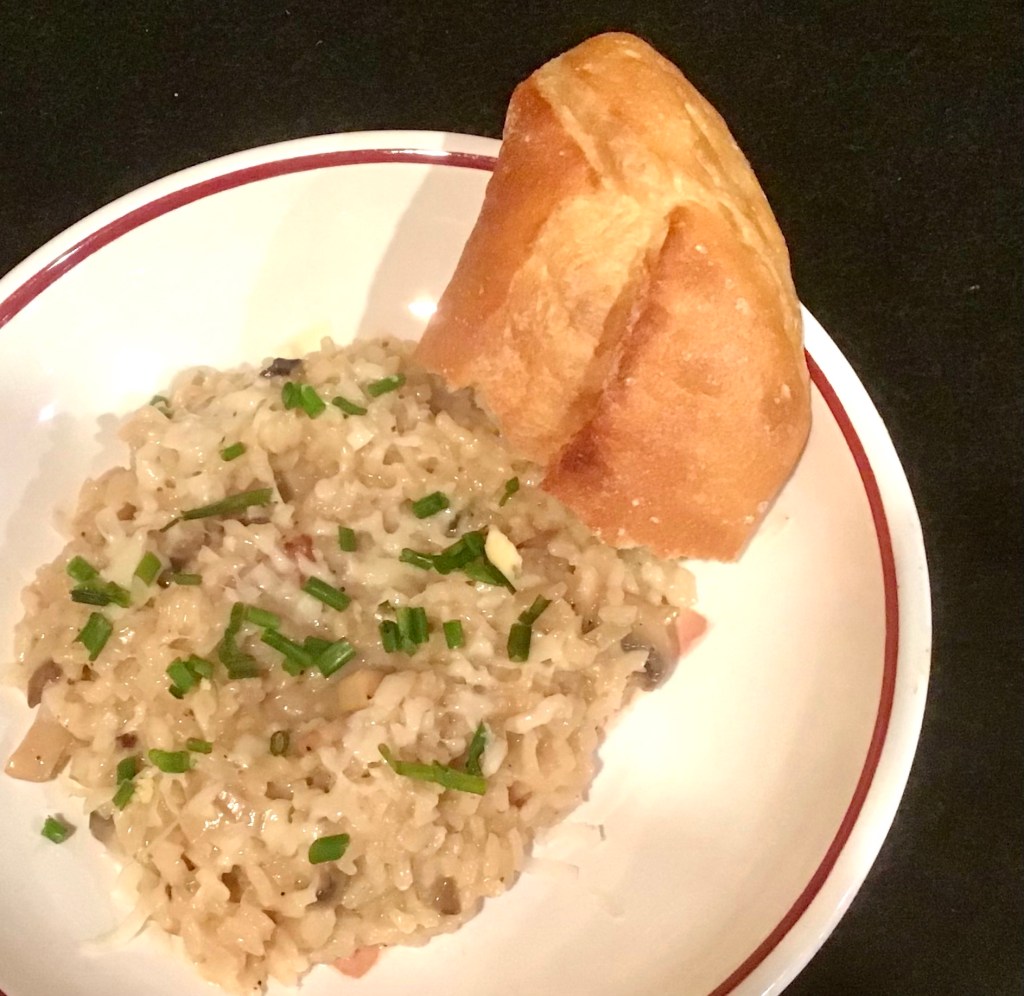
Finally, It was time. I stirred the mushroom sauce into the rice, and let it thicken a bit. I then added the Parmesan and stirred some more. Cathy brought our bowls over, and I put some risotto into each of them, with another dusting of Parmesan on top of each. I took the last sip of my martini, grabbed the bread warming in the oven and crossed to the table. We clinked glasses and then settled into the wonderfulness that is Ben’s Cognac Risotto.

The Wonderfulness that is Ben’s Cognac Risotto…

Cathy asked me if we were maybe celebrating too early, since I hadn’t yet received my test results. I answered I felt good about the tests and wasn’t worried. Besides, it’s a good thing to occasionally celebrate life.

Late the next afternoon, although I hadn’t received a call from the doctor, I logged into my account at her office. The four test results were there – I quickly opened and scanned each of them. Everything was fine, and in fact a couple of tests showed further improvement from last June. The low dairy, low carb diet was working. It also appeared the occasional piece of cheese, serving of roasted potatoes, or bowl of risotto wasn’t having an overly adverse effect on me. I could live with this.

Live is the key word. I’ve reached the age where something is always breaking down, or going a bit haywire in my body. There is always some new thing I need to be aware of for my future health. While healthy over all, Cath and I both have issues that crop up. And of course we have friends who are dealing with greater issues – cancer, loss of eyesight, early onset dementia… getting older isn’t for the faint of heart. But you also have to live, and enjoy life in all of the ways you can. For me, the ritual of risotto is one of those ways, and I’m not ready to give up on it yet. We may not have it as often, but trust me, it’s still going to appear on the menu.

Otherwise, what’s the point?

Addendum:

– * As a side note, I love my doctor, Doctor Emman Hussny, and have been with her for a long time – around twenty years. When she left one practice to start her own, I moved with her. She has a great bedside manner, and encourages leading a healthier lifestyle, without being draconian about it. During checkups, we certainly have discussions about my health, but also discuss other topics of the day. I feel like she genuinely cares about me, and I’m not just another patient flowing through her office.

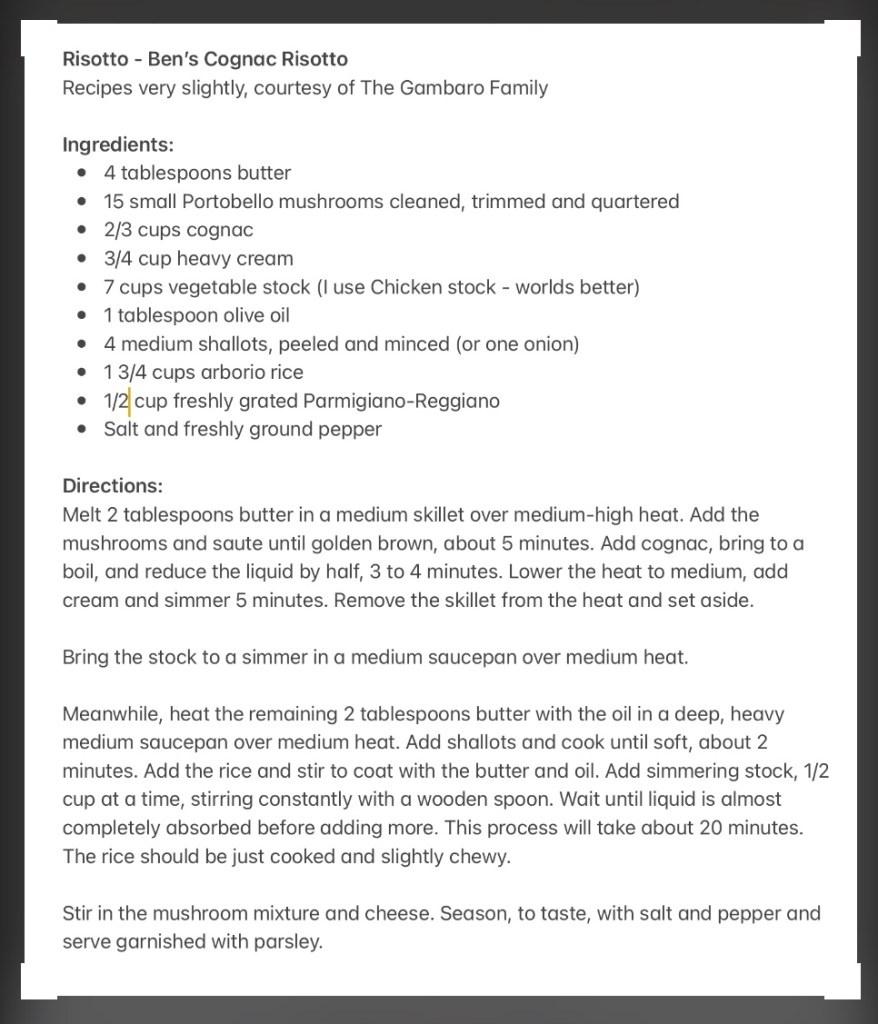
– Here’s the recipe for Ben’s Cognac Risotto – enjoy! If you want to tone it down a bit, you can substitute milk, or even 2% milk for the cream.

The Orange Crock-Pot

The Orange Crock-Pot

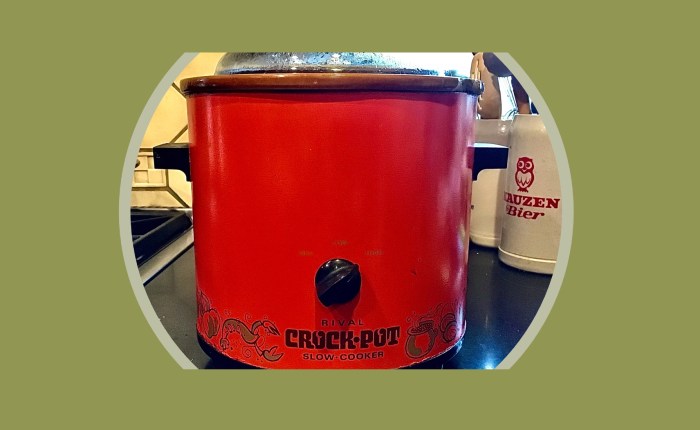
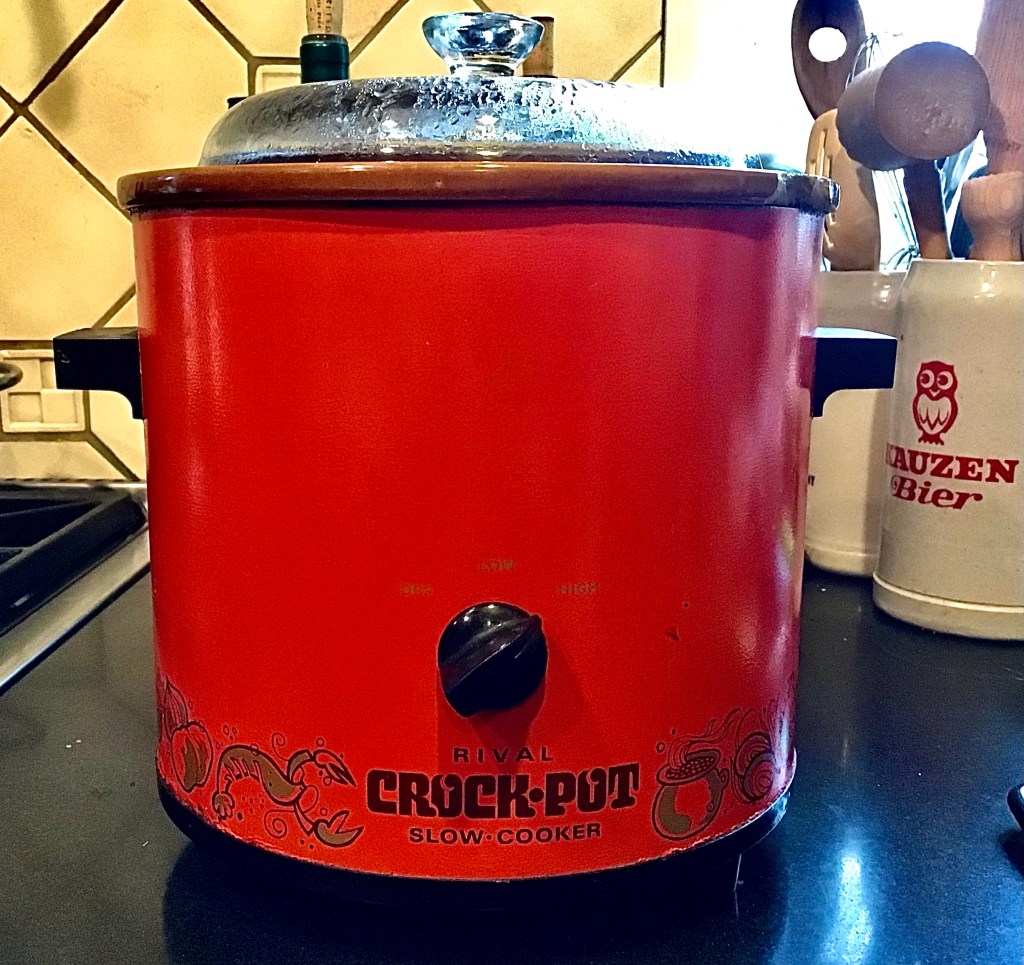
‘Fess up. Who owns, or owned, one of these beauties from the ‘70s? Long before there were Slow Cookers or Instant Pots, there were Crock-Pots. Ours is from 1974 and still chugging along. Seriously, 1974 and it still works. What else do you have that old, and still working? And, you have to love the color…

Cathy’s Crockpot from 1974 – Still Chugging Along…

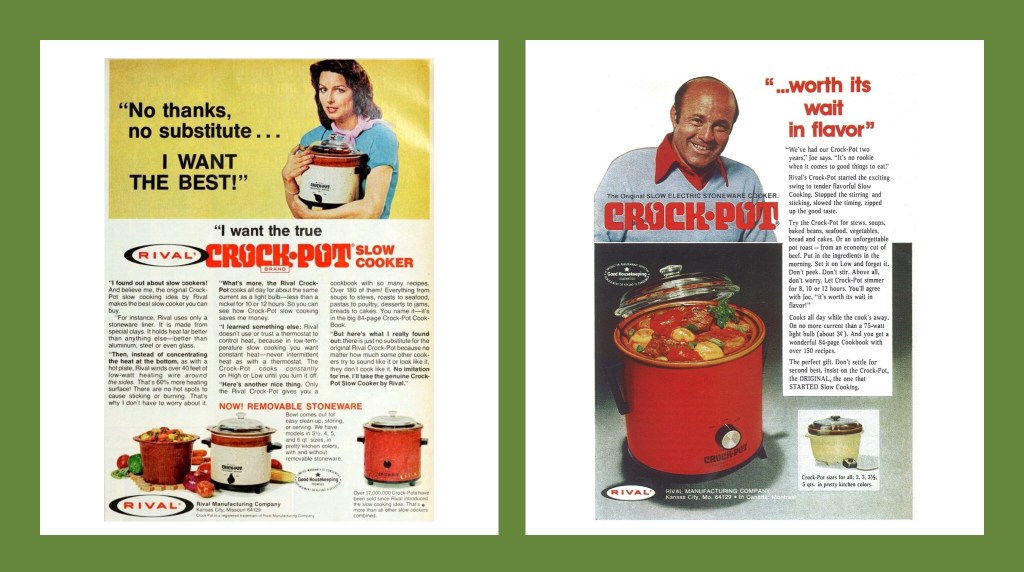
It’s the 50th anniversary of the invention of the Crock-Pot. Appliance maker Rival unveiled it in 1971 at the National Housewares Show in Chicago. Ads and commercials represented the Crock-Pot as a wonderful, time-saving device, assuring women (yes, this was the ‘70s – almost all cooking related ads focused on women) it would simplify their lives. Hell, baseball player Joe Garagiola even became a pitchman for the Crock-Pot, hawking it as “the perfect gift”. And of course, the Crock-Pot would do all of this great work in those fabulous ‘70 colors.

A Couple of Vintage Crock Pot Ads From the 70s

That color – I’m not sure if it’s called burnt orange, red orange, or just mutant orange. It’s a color you can’t forget. Quite frankly, it and the colors “Autumn Gold” and “Avocado” represent the ‘70s as much as disco, polyester and bell bottoms. If you see anything in one of those colors, you pretty much know what decade it came from.

Burnt Orange, Harvest Gold, and Avocado Green – the Holy Trinity of 70s Colors

Cathy bought this particular Crock-Pot at the age of 18 in the summer of 1974. It was just prior to moving to Washington DC and a job with the FBI. Over the past 47 years, our Crock-Pot has made countless chilis, soups, stews, roasts, and other dishes. We have cooked with it in Germany, Georgia, Oklahoma, Ohio and Virginia. It crossed the Atlantic four times. How many things do you have that have been with you your whole marriage? This pot, along with our love, is one of the few things that has survived those 43 years. It’s pretty much indestructible and part of the fabric of our lives.

Having retired, I do much of the cooking around the house these days and often braise, roast or slow cook in the oven itself. Still, there are some recipes that just call out for the Crock-Pot. I think the simplicity of the device helps – you fill it with the food you are cooking; pick one of the two heat choices, low or high; and walk away for 6, 8, or 10 hours. What’s not to like, other than perhaps the color?

Summer is ending, autumn is arriving, and winter will soon be here. This ol’ Crock-Pot will again earn it’s keep, providing us with comfort food this autumn and winter. Sure, it has a couple of chips around the rim, but the heater still works fine and the lid sits securely on top. It does it’s job. In fact, it does it’s job much better than any number of devices from this century. It just keeps ticking along and will probably be with us for another decade or two. Now that I think about it, we should list it in our Trust for one of our nieces or nephews… 😉

Grandma Grubaugh and the Pink Elephants

Grandma Grubaugh and the Pink Elephants

A couple of months after Grandma Grubaugh died in 1996, I received a call from mom. She wanted to know if there was anything I might like from Grandma’s things. I immediately answered “The Pink Elephant and Blue Monkey glasses.” She Said “What?! Nothing else?” “No, those are how I best remember Grandma.”

Grandma and I Just Shy of my Second Birthday

Lillian Henrietta Grubaugh was born on the 2nd of January, 1905 and died on the 4th of December, 1996 at the age of 91. When Grandma died, my Uncle Don was executor of the will and divided the major assets equally out among Aunt Pauline, Aunt Cecilia, mom, Uncle Sonny and himself.

As to the belongings in the house, they took turns picking things each of them wanted, starting with Aunt Pauline, the oldest, and then reversing the order for the next pick. When they finished this up, there were of course many things still left in the house. It fell to mom and my Aunt Pauline to go through the remainder of the stuff in the house, sort it, and give it away or otherwise dispose of it. I think it was around then I received the call from mom, asking if there was anything I might want.

So why did I want those glasses of pink elephants and blue monkeys? Why did I remember them and why did they call to me? I’ve thought about that for awhile.

Sometime around 5th or 6th grade, I started a business of mowing lawns. Or I suppose my dad encouraged me to start the business. One of my first customers was of course Grandma and Grandpa. I think my cousin Joey had the job before, but he’d grown older and moved on to real work of some sort, and the opportunity fell to me.

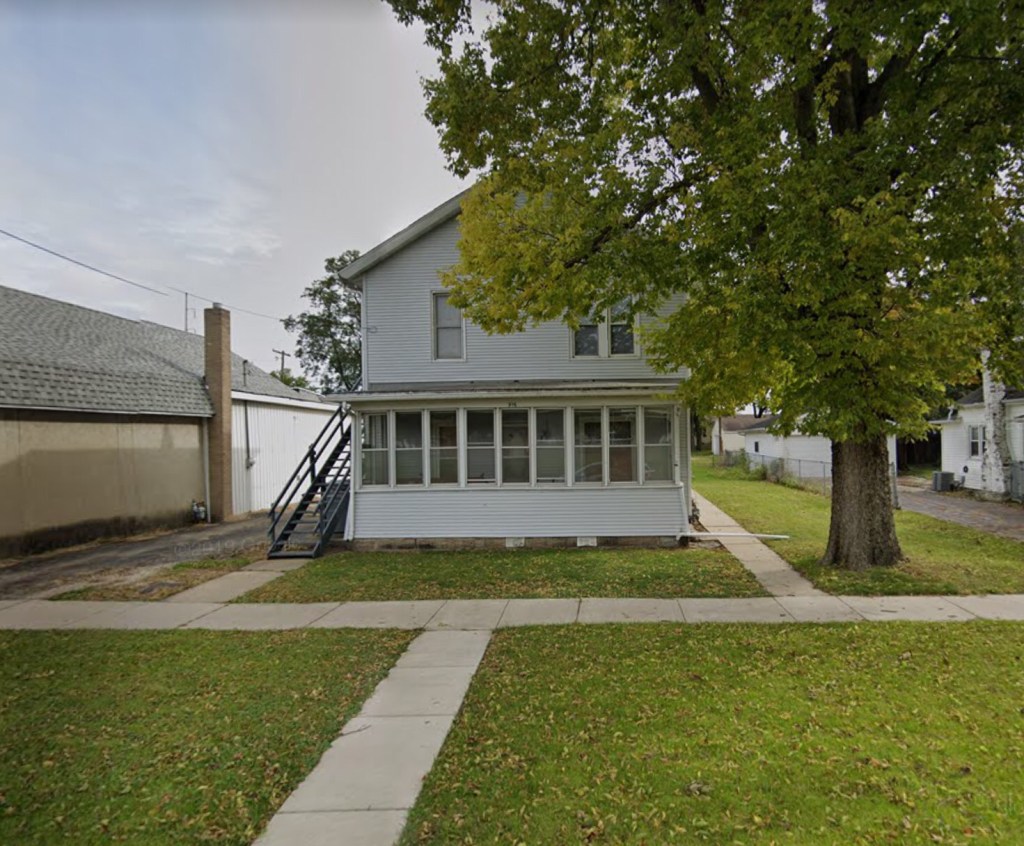
On mowing day, dad and I loaded the mower in the back of his car and drove across town to 916 Chestnut street, where Grandma and Grandpa lived. He helped me take the mower out of the car and then drive home, with instructions to call him when I finished up.

916 Chestnut Street – The Yard Seemed Bigger Back Then

I’d mow the lawn for the next half hour or 45 minutes. The yard wasn’t big, but there were lots of things to mow around – the old swing set, the low metal fence with posts, a couple of big trees, the vegetable garden, including grandma’s rhubarb plants, and the ancient garage out back. After I finished mowing, I’d do a quick trim of the hard-to-get spots with some manual clippers.

Eventually, I’d finish everything up and head to the house, ready to call Dad. Inevitably Grandma would greet me and have me sit down at the kitchen table. She’d bring out a piece of spice cake, or unwrap some of her date nut bread, or pull some of her rhubarb sauce out of the fridge if the season was right. No matter what she served, she also poured me a big glass of milk in one of those elephant or monkey glasses and the two of us sat and talked.

I don’t remember much of what we talked about. I do remember us having those conversations – maybe about school, or summer camp, or Little League or whatever. It was just the two of us in our own little world.

Eventually we finished up and I’d call dad. He’d drive the 5 or 10 minutes across town and pick me up. Grandma and I would say goodbye, she’d give me a hug, and I’d wave goodbye from the car.

Wonderful Memories Involving Pink Elephants and Blue Monkeys

I cut their lawn for three or four years and the ritual was almost always the same. Around 8th grade, I started a “real job” working at the local pool as a locker room attendant, eventually graduating to lifeguard. I think my cousin Jimmy, Joey’s younger brother may have taken over the lawn mowing at Grandma and Grandpa’s home. Grandma and I stayed close, even after I left for West Point, but those regular private times together disappeared. I’d see her on breaks from school, or when we returned on vacation from an overseas assignment, but of course it was never the same. There was still spice cake or date nut bread, and a glass of milk or cup of coffee. We had wonderful conversations, but they were obviously more grown up. The innocence of those previous times was gone.

Grandma and I at my Graduation from West Point in 1978

I’ve thought back to those younger years and sitting at the table eating one of Grandma’s treats and drinking milk out of those glasses. It’s a warm memory, and I always smile when I see the glasses sitting on a shelf at our home now. Grandma and I having a summer conversation at her kitchen table, wrapped up in our own little world…

Addendum:

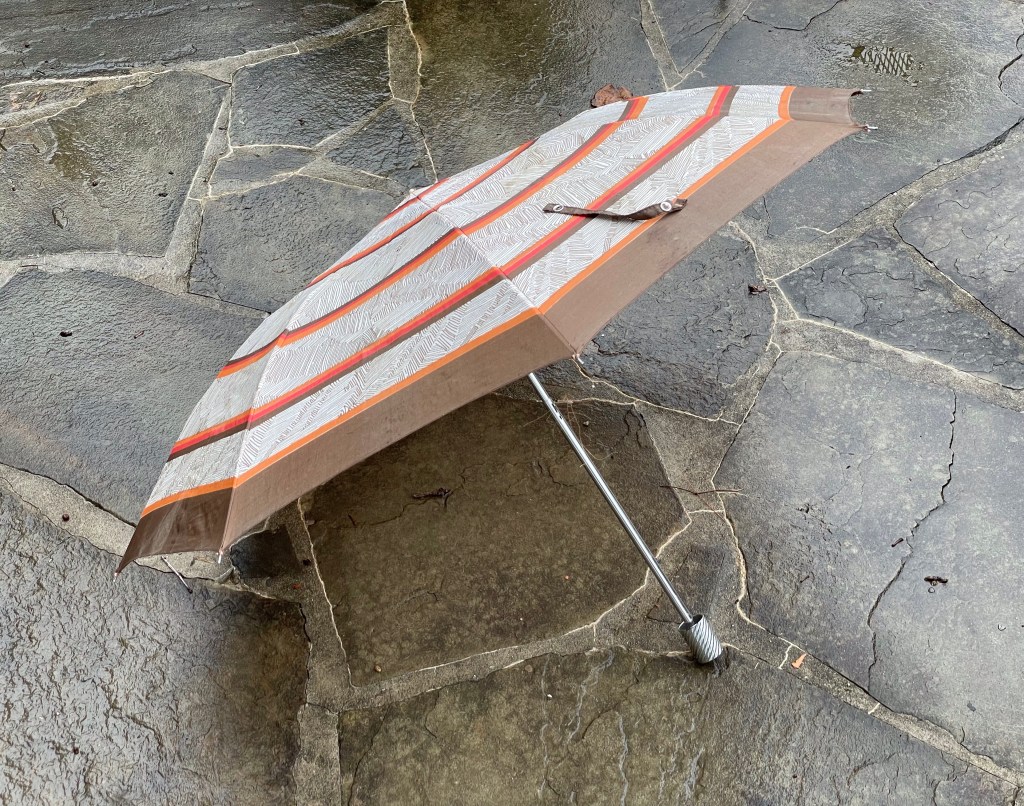
Something we also found out from mom and Aunt Pauline was that Grandma often times didn’t use the Christmas gifts we gave her. Instead, she tagged them with our names and put them away in a chest. The tagged items went back to the giver after she passed away. One of the tagged items was an umbrella of questionable fashion I’d given her one Christmas. it still sits by our back door here in Virginia, in case it’s needed.

Pizza on the Grill

Pizza on the Grill

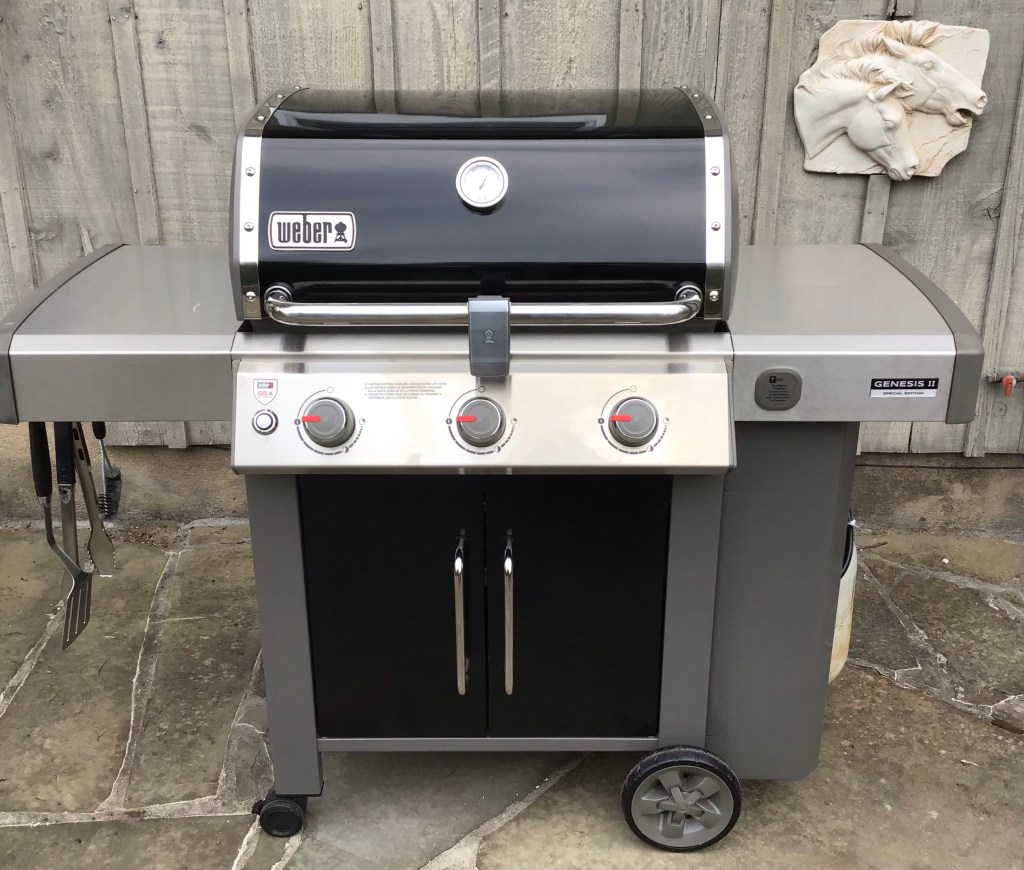
We recently bought a new gas grill. I’ve always been a charcoal guy, but decided to add a gas grill as well. So – what would be the first meal to come off the grill – Steaks? Brats? Burgers? Chicken? A Pork Tenderloin? It turned out to be a Pizza Margherita. Yep. Seriously. What the hell!?! Well, there’s a bit of a story to go with the decision.

For the last 40 years, I’ve cooked on (mostly) Weber Kettle charcoal grills. The smoke, the flame, the flavor, it all just worked for me. Yea, I always knew there was a bit of inconvenience to it, but that was no big deal, and I’d argue with “gas guys” about why charcoal was superior.

When Cathy’s mom passed away in 2010, we inherited her gas grill. It took me a bit of time to cook on it, but I made the adjustment. I still mostly cooked with charcoal, but if I was in a hurry, or occasionally had something that just needed a quick sear, like shrimp, I’d use mom’s grill. It was also put to use when we did our annual Oktoberfest Run at the farm – When you need to cook 125 Brats and warm up 100 soft pretzels, all available cooking surfaces are pressed into service.

Last week, two independent events happened that changed my outlook.

First, the New York Times cooking section had an article about making your own pizza. I’d always shied away from making my own pizzas in the past. Making the dough seemed like more effort than it was worth. The Time’s recipe? Easy. You just needed a bit of time. It also had a simple recipe for the sauce. Still, it seemed that, while you could make a good pizza in your oven, the oven still wasn’t Pizzeria-oven hot, not even close. I know lots of people make great pizza at home, but it gave me pause.

The second event? Cathy and I talked and decided to buy a new gas grill to supplement our charcoal grill. Mom’s old grill was toast. Maybe I’m getting old. Maybe I’m getting soft. In any case, I bit the bullet, and bought a new gas Weber grill. Now with the Weber, as I was reading through the manual, they recommend heating the grill to it’s highest temperature for 20 or 30 minutes before you ever use it. I’m not sure why, maybe to help season everything.

In any case, the day the grill arrived, I heated that puppy up for about half an hour. I went out later to shut it down and glanced at the temperature. Whoa! Over 600 degrees!

A Pizza Oven of a Different Sort

That got me to thinking. 600 degrees still isn’t the 1,000 degrees of a wood pizza oven, or as hot as a commercial pizza oven. But, it’s hotter than most home ovens.

A wood oven, at 1,000 degrees takes about 60 seconds to cook the perfect pie. What could I do at 600 degrees? I decided to find out.

I kept it simple for my first try and just went with a traditional Pizza Margherita. On Saturday afternoon I made the dough and let it rise. While that was happening, I made the sauce they recommended, which was really simple – blended crushed tomatoes, a bit of salt and a swirl of olive oil. I added some garlic and oregano.

The Two Dough Balls for the Crusts

About an hour before dinner time, I put my baking-stone on the grill and started heating it up.

Next? I had a cocktail, got a bottle of Zin out of the cellar and relaxed a bit. Finally it was time to assemble the pizza.

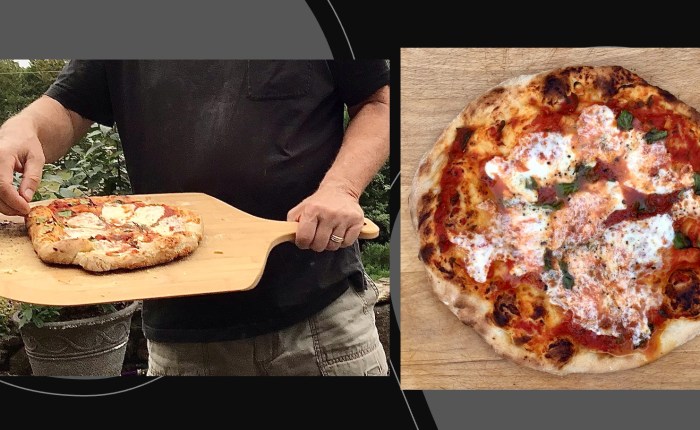
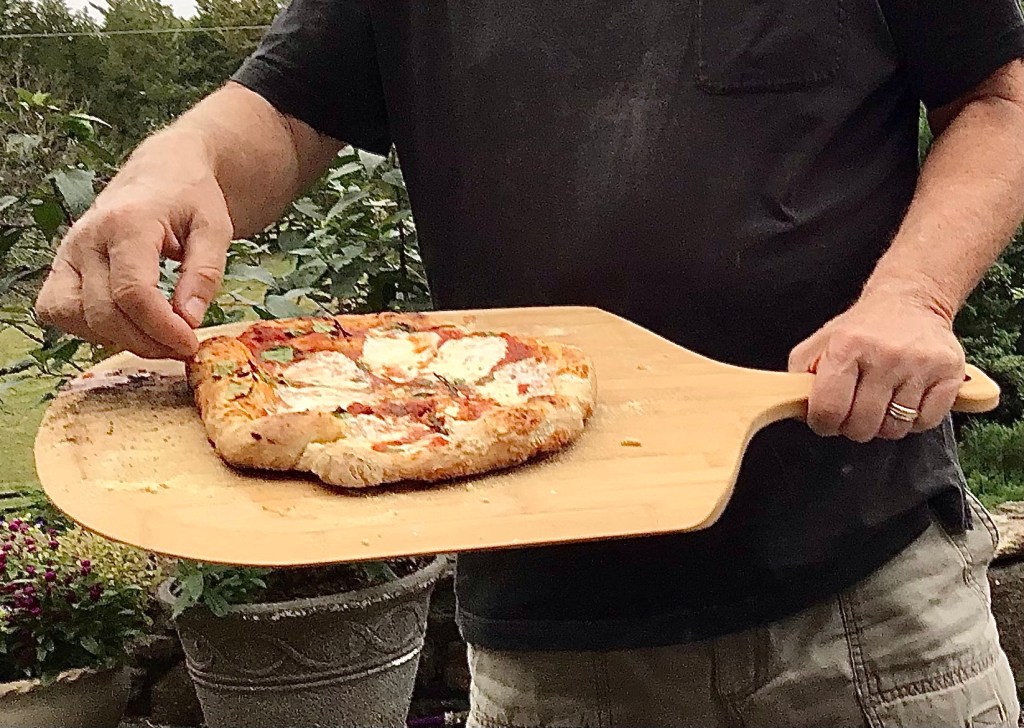
I formed the pie, added some sauce, then placed mozzarella cheese on it, and scattered some basil leaves. I added a quick swirl of olive oil and a grating of pepper. I kept the second round of dough handy, in case I screwed up the first pizza. Into the Weber the pizza went. Six minutes later, I took it out.

Homemade Pizza – Yea Baby!

It looked delicious. I let it cool for a minute or two. Yes, I still remember burning the roof of my mouth on occasion with pizzas straight from the oven… 😉

Finally, it was taste test time, and – Whoa! This was pretty damned good. Was it the best pizza I ever had? No. But it was much better than many pizzas I’ve had. It had a nice crust and a good sauce. The cheese was melted and stringy. This was something I could easily enjoy again and again.

We devoured the first pizza and I quickly made the second one. I added a bit more cheese and basil this time and slid it onto the baking stone. A little under six minutes later, I pulled it out. I’d say Cathy liked the pizza as well, as the second one was also quickly gone.

The Second Pizza was as Good as the First.

I realize I’m late to the “make your own pizza party”, but I’m on board now. The grill made me a believer. I’ve got a few topping ideas for the next pizzas, and some thoughts on how I could improve just a bit. Practice makes perfect, or so they say.

So…I bought this Weber Grill that makes good pizzas. I hear it’s not bad with steaks either. We’ll see sometime in the future.

Addendum:

– I love pizza, although we don’t eat it as much these days (that may change now). I think that’s partly because we have to drive 15 or 20 minutes to the nearest pizza places. It sounds foolish, but growing up in Ottawa, Illinois, we had several great pizza places, and I think it spoiled me a bit. Foremost among the places in Ottawa was Sam’s and Bianchi’s. They are legendary back home. Anyone returning for a visit almost always stops at one of those two places for a pie. If you want to read about me having pizza 116 times at Sam’s in 1972, you can do so here: https://mnhallblog.wordpress.com/2017/04/14/sams-pizza-in-1972/

– Here’s a link to the article from the NYT than inspired me. Give it a shot – it really is pretty simple. https://www.nytimes.com/2014/04/09/dining/a-little-pizza-homework.html

Moules, Pernod and the Brussels Seafood Market

Moules, Pernod and the Brussels Seafood Market

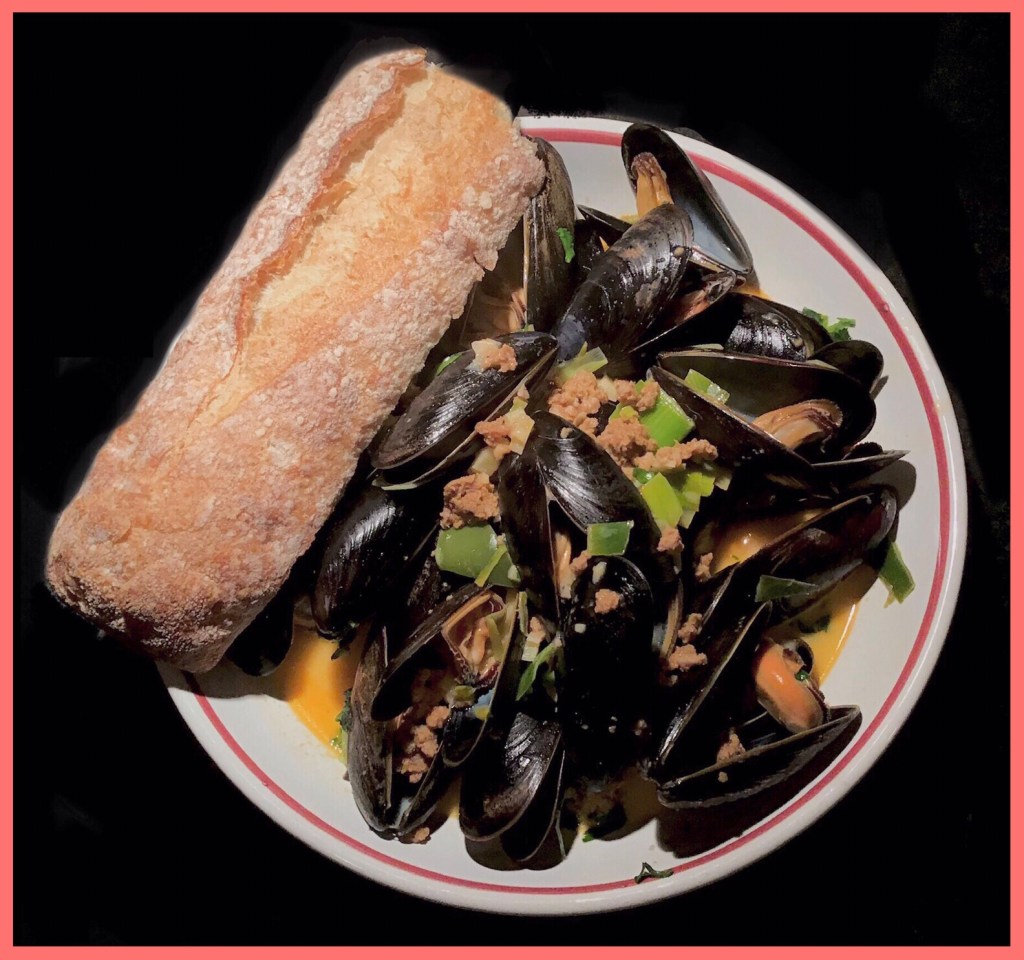
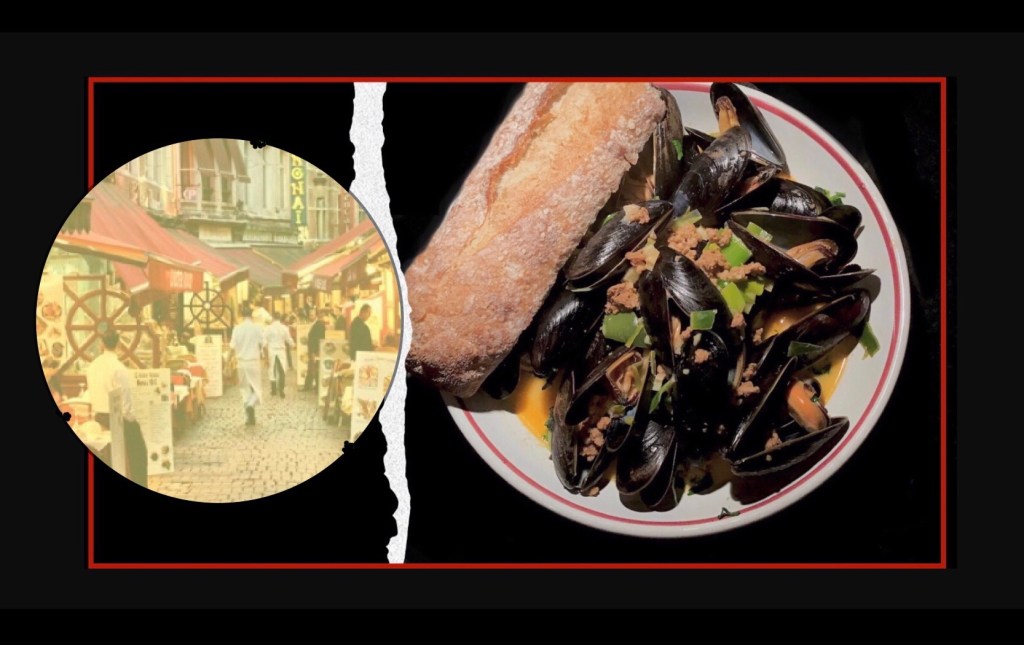
The other evening, Cathy and I made some Mussels Pastis (Mussels with Pernod) at home. It was delicious. It was a new recipe with plenty of Pernod in it, which made it quite good and strongly flavored. The strong flavor caused me to reminisce about Brussels, Belgium and an early morning trip to the seafood market there.

Mussels Pastis – the Wonderful Dish that Brought Back the Memory

It was early in 1988. Although stationed in Germany, I was spending chunks of time in Mons, Belgium. We were upgrading the communications systems at the Supreme Headquarters Allied Powers, Europe (SHAPE), also known as the Headquarters for NATO. My boss, Rich, was there almost full time, while I was dividing time between Germany, Mons, and another HQ in High Wycomb, England.

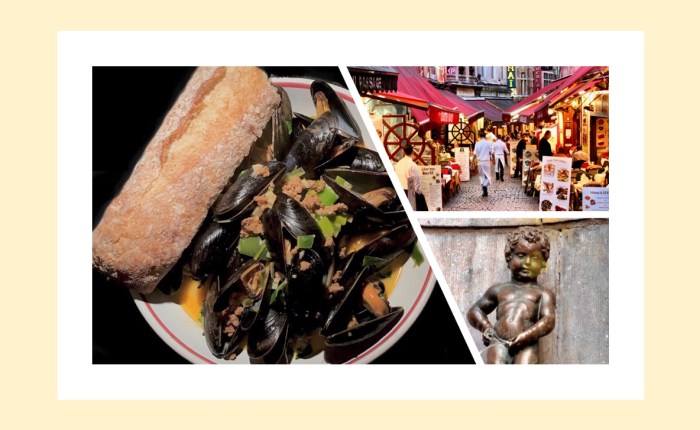
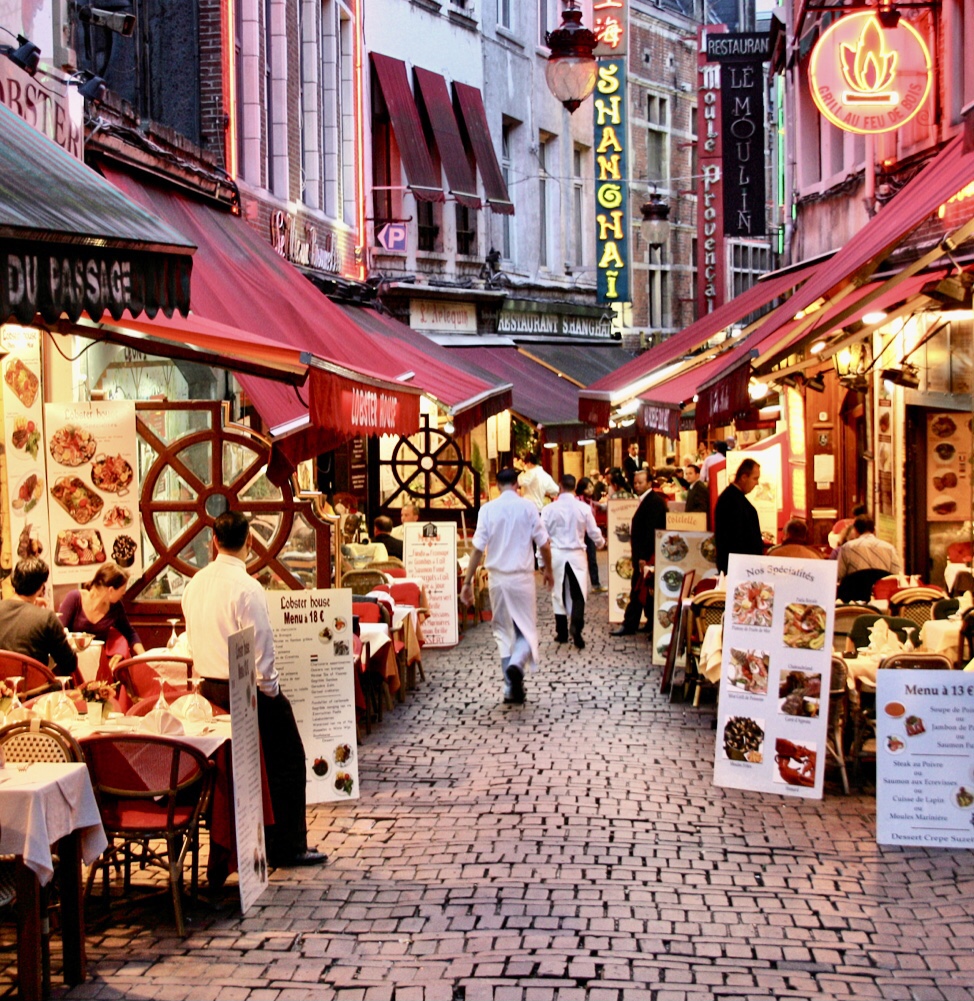
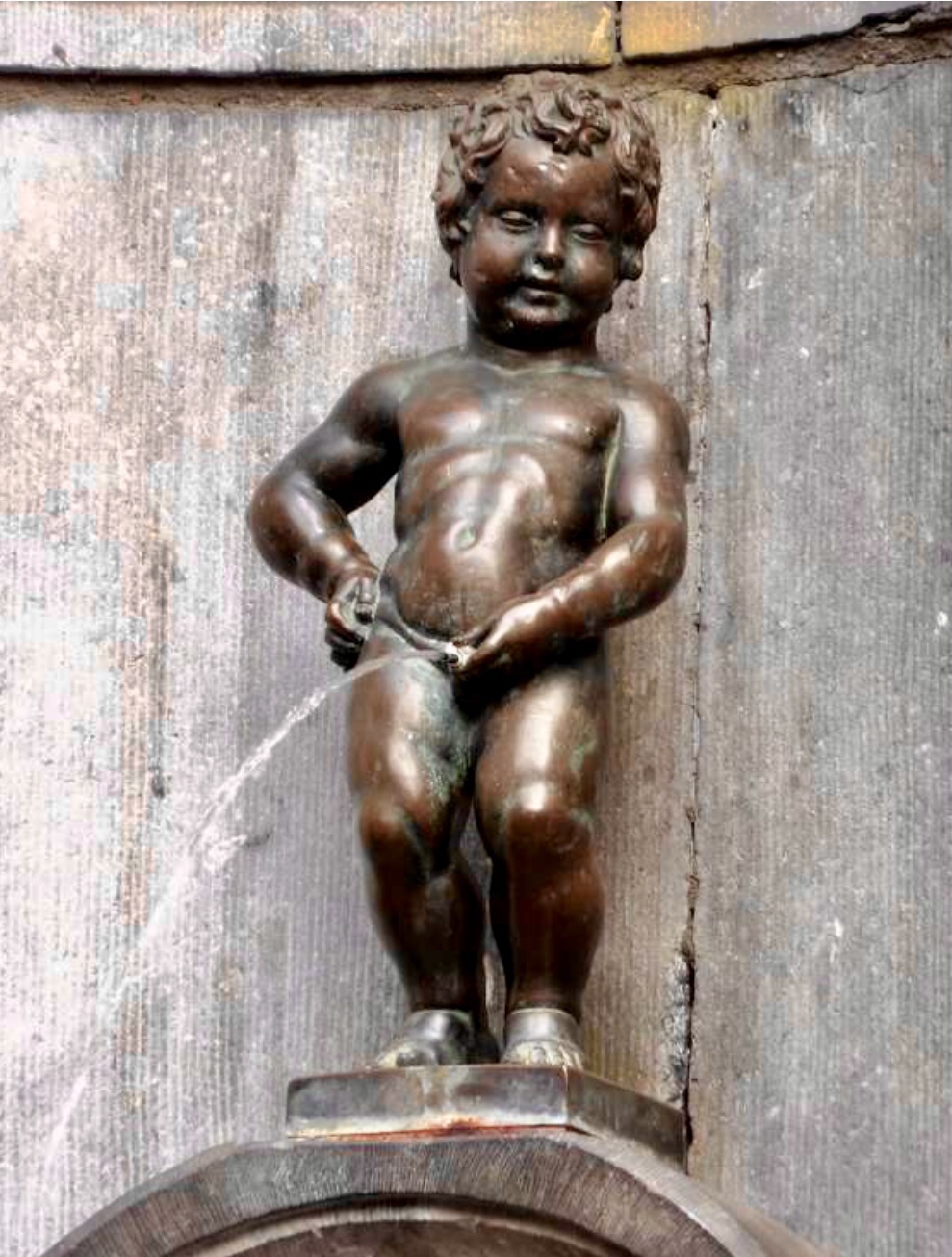
When in Mons, if there over the weekend, we often made a day trip to Brussels, which was only about an hour away. The city has a great history to it, and it was fun to see the sites, including the Grand Canal, and the famous Manneken Pis, which is only about two feet high. There was also of course the famous (infamous?) Red Light District of Brussels, with women on display in storefronts. I suppose it gave a whole different meaning to the term window shopping.

What we really enjoyed was wandering the Rue des Bouchers in the Quays District in the early evening. Here, there were numerous restaurants with outdoor seating, and they also set up temporary wooden “bars” where you could buy a drink, or something lite to eat. We’d walk from place to place having a Belgian beer or French wine, along with some oysters, mussels or shrimp croquettes. Several of the places also served frites (french fries) to die for. Usually, we never sat down at a table for dinner – we’d fill ourselves at the little bars as we ambled along.

Rue des Bouchers

The mussels (Moules) were particularly awesome, and I think Brussels is where I really developed a taste for them. There were soooo many ways they served them: Moules Frites (mussels with those famous Belgian fries), Moules Marinière (mussels in a white wine sauce), Moules à la crème (mussels in a cream sauce) and Moules Pastis (mussels with a Pastis, such as Pernod the anise flavored spirit) were probably the main ones we ate.

There was one place we went to a couple of times and came to know the guy working the “bar”. We were talking with him about seafood one night, and how good and fresh it was in Brussels. We asked where was a good place to buy fresh seafood, if we wanted to take some back to Germany with us. He told us our best chance was at the wholesale seafood market that ran every day from 5AM to about 10AM, but you needed to arrive early, as the vendors ran out of their prime seafood early. The other catch was, it was a wholesale market, so you had to find fishmongers willing to sell in smaller amounts to individuals. Rich, our coworker Steve, and I talked about it and decided we’d try and take a haul of seafood back to Germany when we could.

The next time I went to Mons, I took our cooler and stopped by Rich’s house to pick up his. About a week later, we were finishing up the current portion of the project and all of us were returning home. We made the plan to pick up the seafood early on a Thursday morning, and have a big seafood dinner/party on Friday night, at Rich’s home.

Allowing ourselves plenty of time, we woke about 2:30AM and were on the road by 3:15. We arrived in Brussels an hour later, but the seafood market wouldn’t open until 5. We locates an open bistro and went in, where we joined some late night partiers, ending their evening; a few men having breakfast before going to work; and several “Ladies of the Night” who were apparently finished for the night and having coffees and brandy. We sat at an open table and ordered some coffee and fresh croissants.

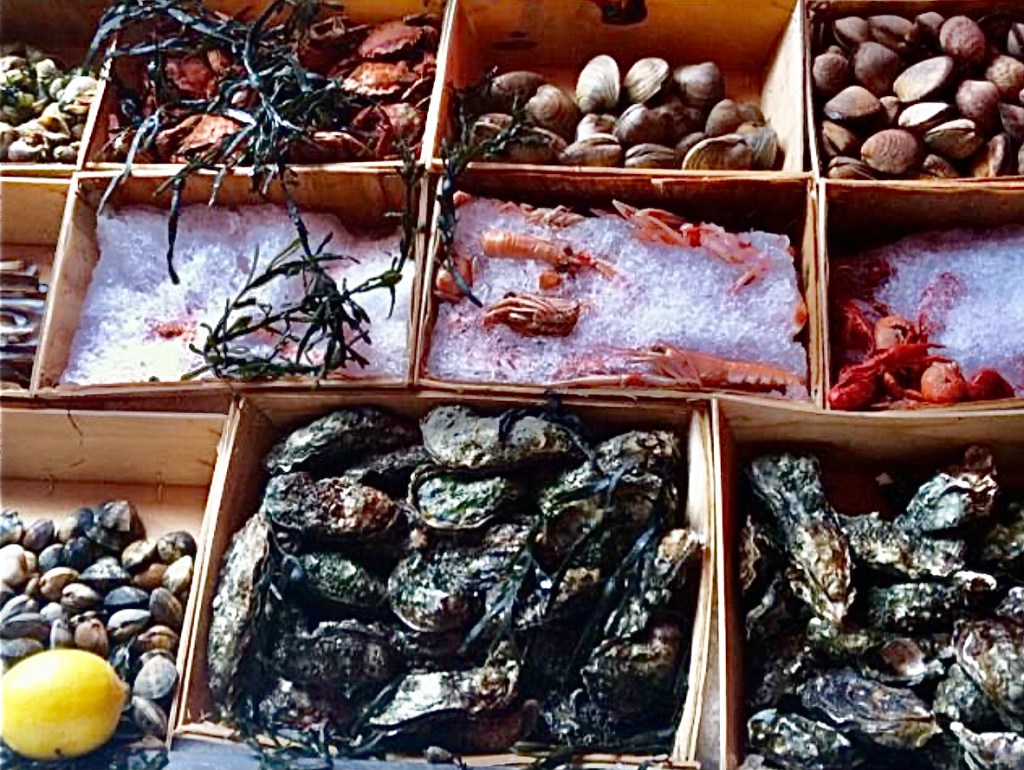
Just after 5AM, we left the pub and walked over to the market. It was huge, and already quite crowded. We wandered among the stalls and trucks for a while looking to see what was available. To be honest, there were so many choices, it was a bit overwhelming. We started talking to a couple of vendors, however when they found out the small amounts (by wholesale standards) we wanted to buy, they quickly ignored us. Eventually, we found a guy willing to deal with us, and we bought everything from him – a couple kinds of fish, some lobster, and of course, plenty of oysters and mussels. Someone went back to our car for the coolers and we loaded them up. The guy was nice enough to put plenty of ice in the coolers as well.

At the Market

We arrived back at our hotel in Mons around 7:30AM and caught a couple hours of sleep, before driving back to Germany later that day. You have to remember this was pre-Internet and pre-cell phone, so it wasn’t until we returned, when we started calling people for the seafood dinner planned for the next night.

Friday night came and we all met at Rich’s house. In addition to Rich and his girlfriend Lynn, there were Cath and I, Steve and his wife Sabine, a few coworkers and Rich’s boss, Ray Sauer and his wife. It was quite the event, with grilled fish and lobster, Moules Pastis, oysters on the half shell, and fried oysters. We washed it all down with plenty of good German Pils, and some of our local dry white wines. A bottle of Sambuca, along with multiple cups of espresso may have made appearances later in the evening as well.

I hadn’t thought about that market trip, or the subsequent party for years. The Mussels with Pernod meal Cathy and I cooked, brought the memory flooding back. For me, good food has never been just about the taste of the food itself. It has always been defined as much by the place and time, and those who we are sharing the meal with. Our taste buds learn to recognize sweet, sour, salty, bitter and umami. Our minds and memories complete and complement our sense of taste. If you are lucky, years later out of nowhere, the taste of a new meal suddenly blesses you with a remembrance from your past.

For me, Good Food is Never Just About Taste

Addendum:

• Cathy and I had another memory from late ‘88 or early ‘89. I was back in Brussels to present a paper at a conference, and Cathy came with me. We were staying at a nice hotel downtown. We went out for a dinner at a nearby bistro and had Moules Frites. On the way back to the hotel, we stopped at a small bar for a nightcap. While having our drink, several “Working Girls” came in and sat at another table. They ordered wine and champagne, seemed to be enjoying themselves and were in a good mood. As it was earlier in the evening, we speculated they might be on break, or getting ready to go work.

• Pastis is an anise-flavored spirit and apéritif traditionally from France. Two of the best known are Pernod and Ricard. If you are looking for a substitute, Ouzo, Sambuca, Herbsaint and Absinthe are other anise flavored liquors, all with different flavor profiles.

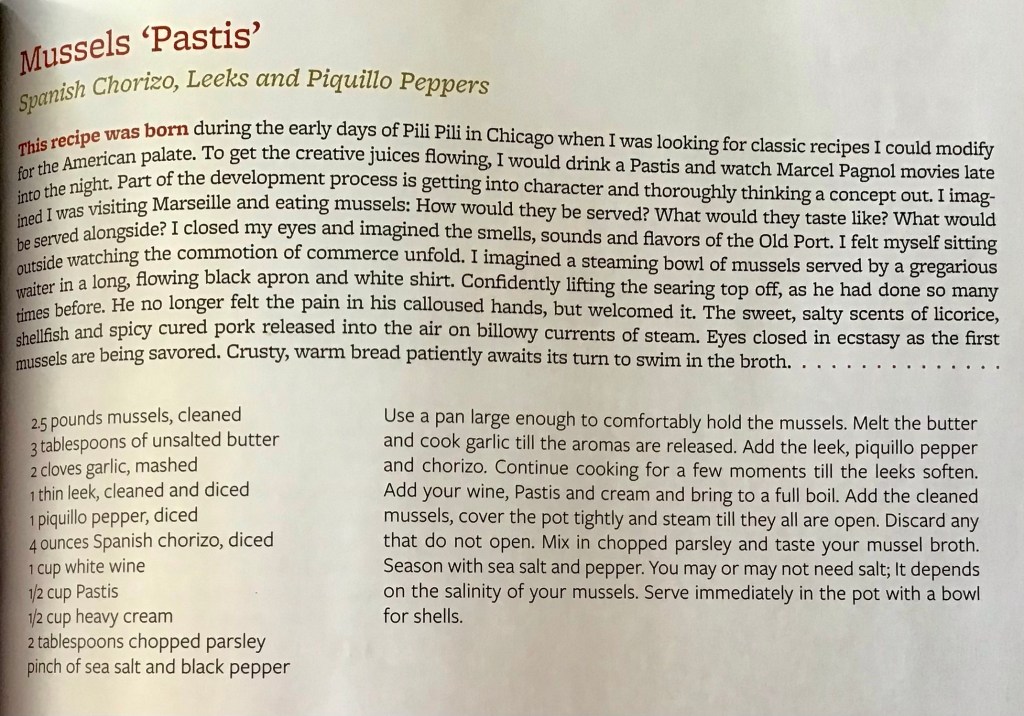
• We’ve made Moules with Pernod at home before, but I never had the same flashback. The previous recipe only had a bit of Pernod in it. This one used a full half of a cup. I think it was the stronger flavor that triggered the memory. The recipe is from a wonderful little cookbook we have called “Cuisine of the Sun”, by François de Mélogue. I like the recipe just the way it is, but if not familiar with Pernod, you may want to cut it just a bit. Here’s a copy of the recipe:

____

Making a Three Day Beef Daube

Making a Three Day Beef Daube

The weather had finally turned cold(er) here in the Virginia Piedmont and they were calling for snow over the next two days. This was the perfect time to make a Beef Daube and I was on a mission.

Daube is a French word that translates to stew. All daubes are stews, but not all stews are daubes. To me, daubes are thicker and richer, and are almost like a stew “sauce”, if that makes sense. I loved my mom’s beef stew, but this beef daube is something else.

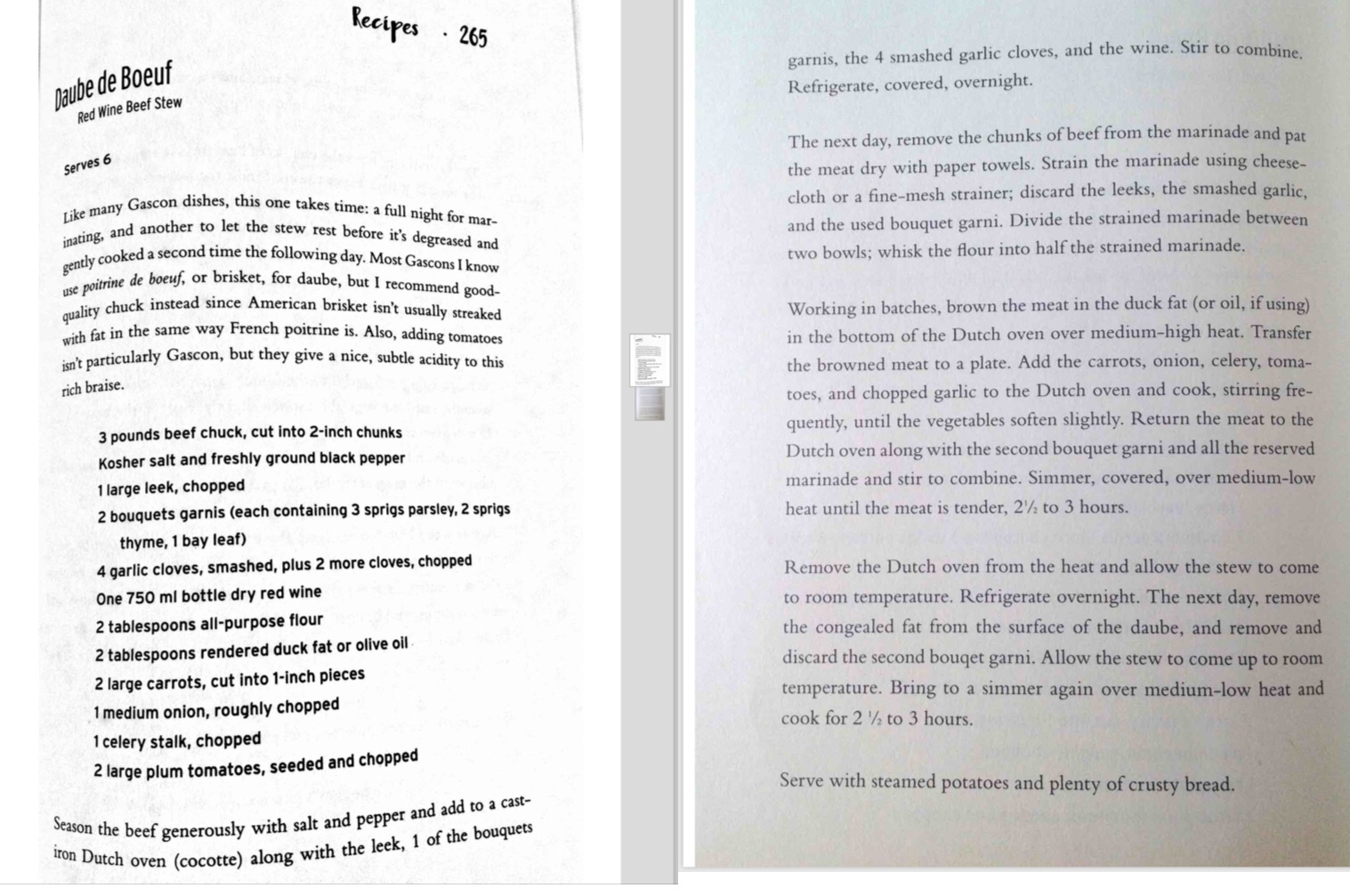
This particular recipe is for a Three Day Beef Daube. It’s from a book my old friend Tim lent me called “Duck Season”. The book is about the Gascony region of France, and if you enjoy reading about other countries, particularly their food, drink and culture, I highly recommend it. The dish takes three days to make, although the steps are pretty easy. Day one – marinate the beef; day two – make and cook the daube for 2-3 hours and let it rest over night; and day three – gently simmer the daube for a couple of hours and then eat. That’s all there is to it.

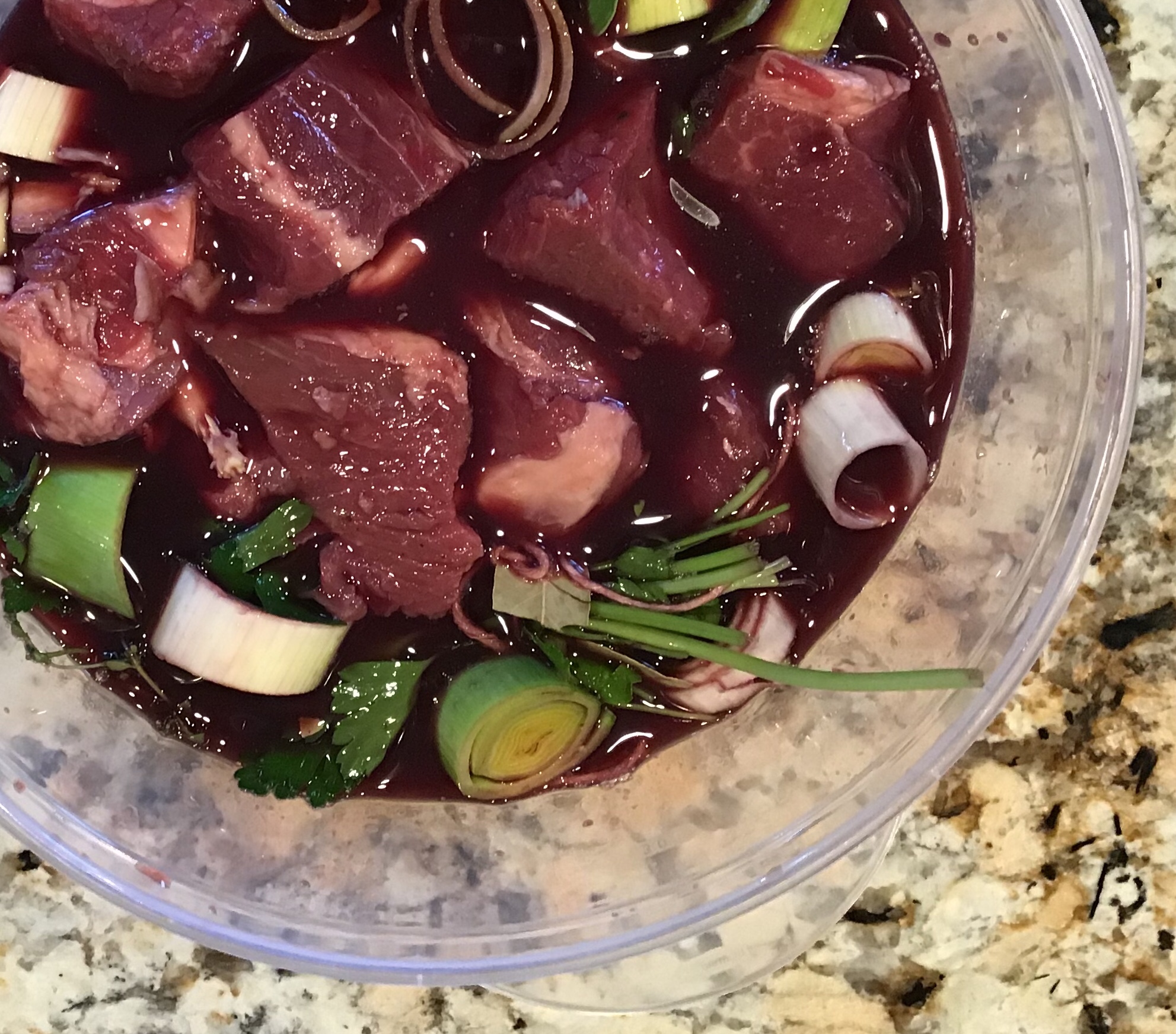
Last Thursday, I pulled the chuck roast out of the freezer to thaw, and made up my shopping list. On Friday morning, I went shopping for the few things I still needed – a leek, some parsley and thyme. We had everything else at home. After a quick lunch, I cut up the beef and added it to a bowl which already included smashed garlic, sliced leak, a bouquet garni, and a bottle of red wine. Day one was done, with plenty of time left to take our dog Carmen for a walk, and in anticipation of the snow, to bring more firewood into the house.
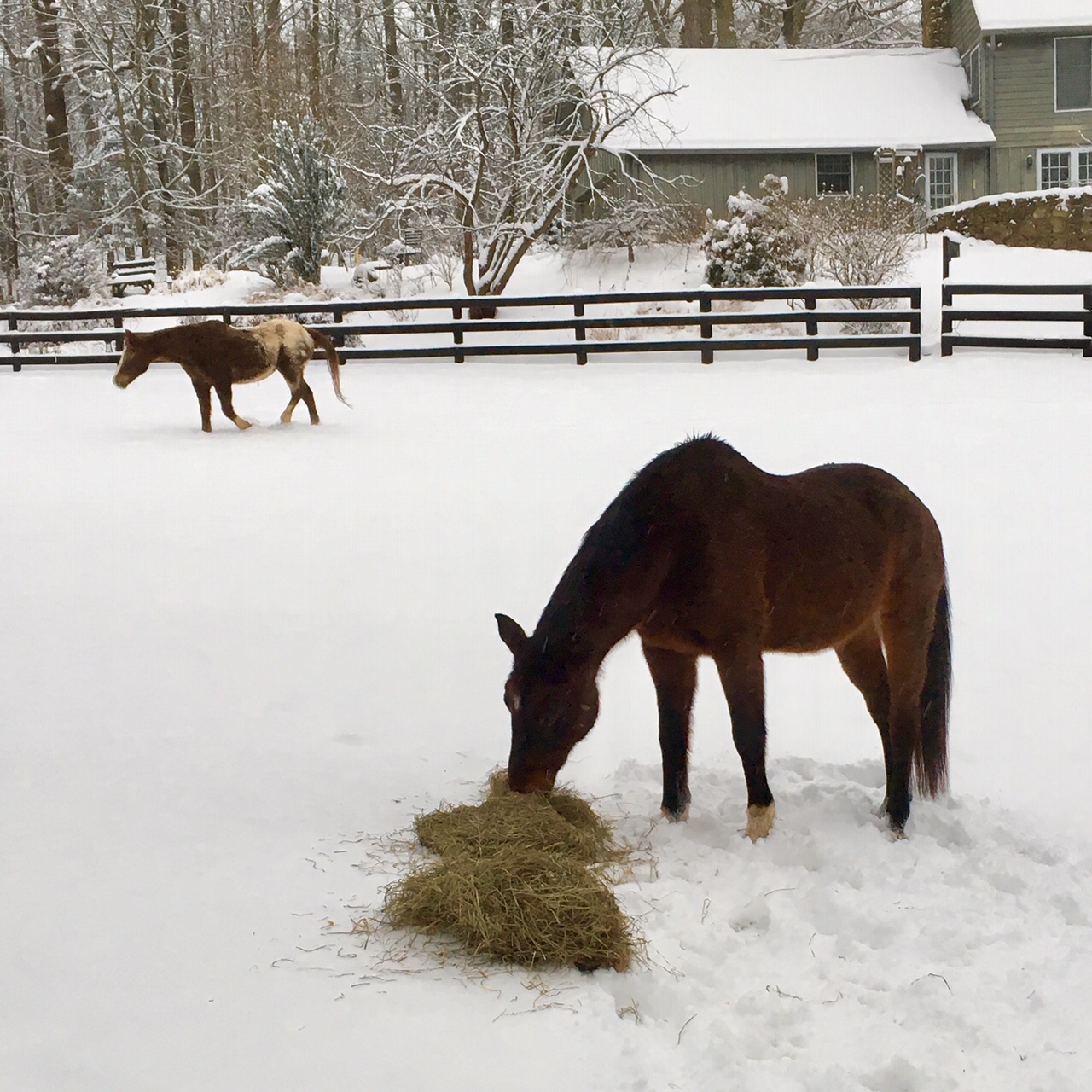
Day two started grey and cold. When I went to the barn in the morning to feed the horses, there was a skim of ice on the pond and the air had that “pregnant with snow” feeling you sometimes get right before a storm. Predictions for snow amounts rose from 2-4” to 3-7”.

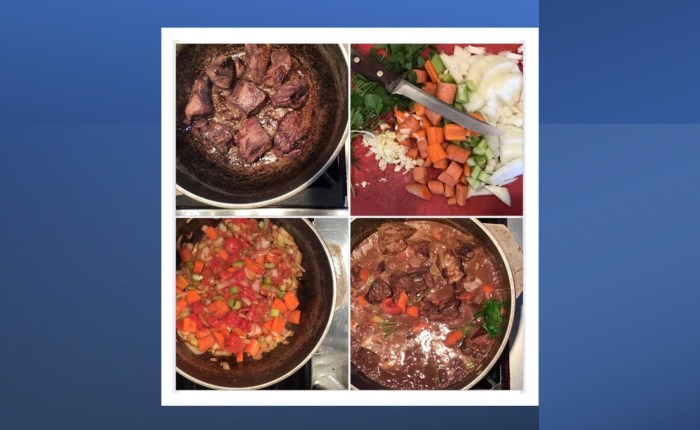
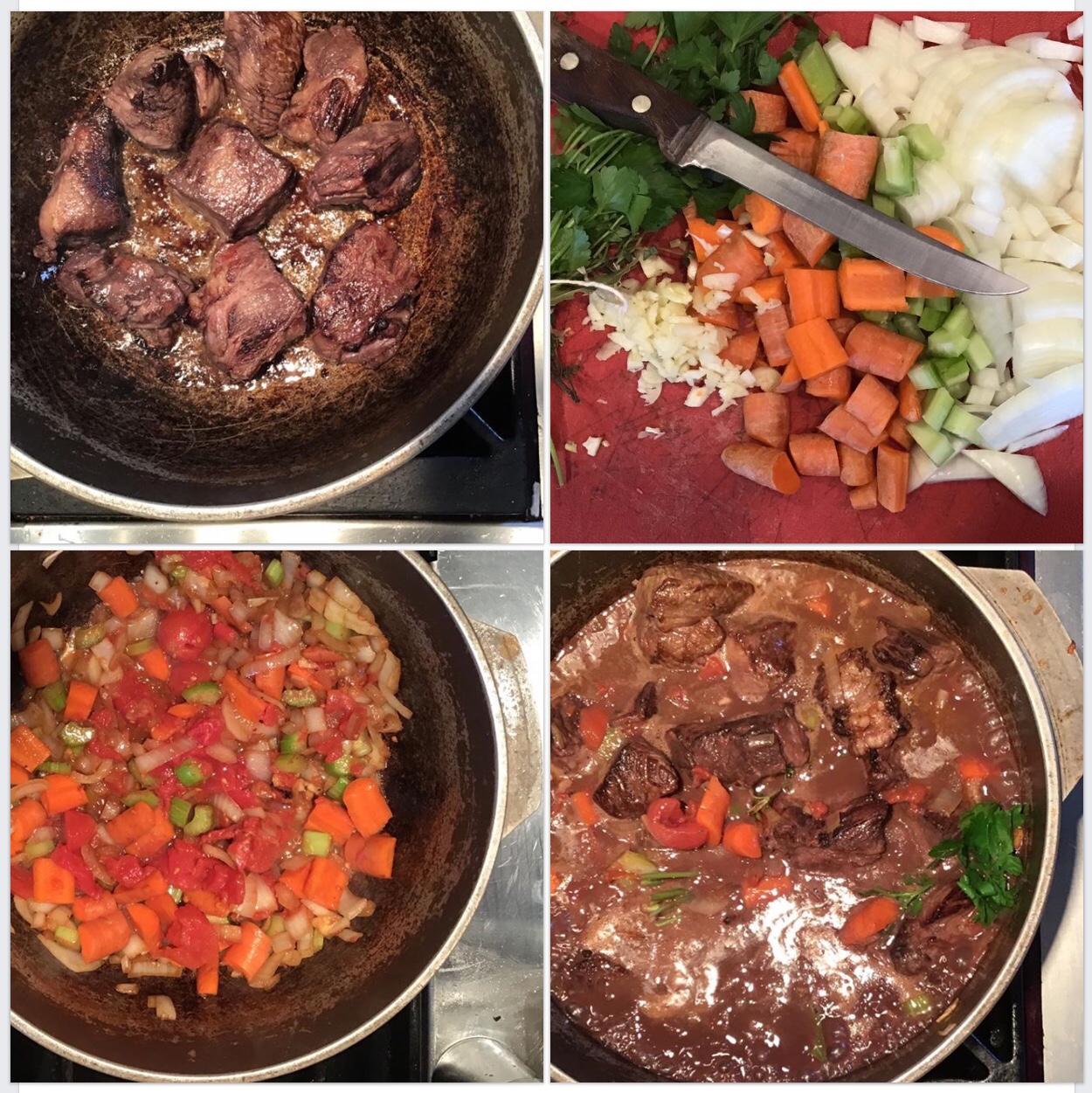
I continued with the daube around noon and day 2 was only a bit more work than day 1. I browned the beef; chopped up and sauté garlic, onions, celery, carrots and tomato; added the beef back to the pot with the vegetables, along with a new bouquet garni; and added the strained and reserved wine marinade to the pot. Once that was done, it simmered on low heat for about 3 hours.
I’ve found it’s best to take your dog for a walk while the stew is simmering, so you don’t drive yourself mad with the wonderful smells coming from the kitchen. After returning from your walk, you are faced with the most difficult part of day 2. You don’t eat the daube on day 2, no matter how good it smells or tastes. Instead, you remove it from the heat, cool it to room temperature and let the daube rest overnight in the fridge. Remember, don’t eat the daube at this point in time.

Sunday, Day 3, greeted us with a blanket of snow. About 7 inches had fallen, with more expected over the course of the day. After feeding the horses in the morning, and then having my own breakfast, I plowed our drive and around the barn, and then plowed the drives of several elderly neighbors. I made it back inside for lunch, and then some playoff football.
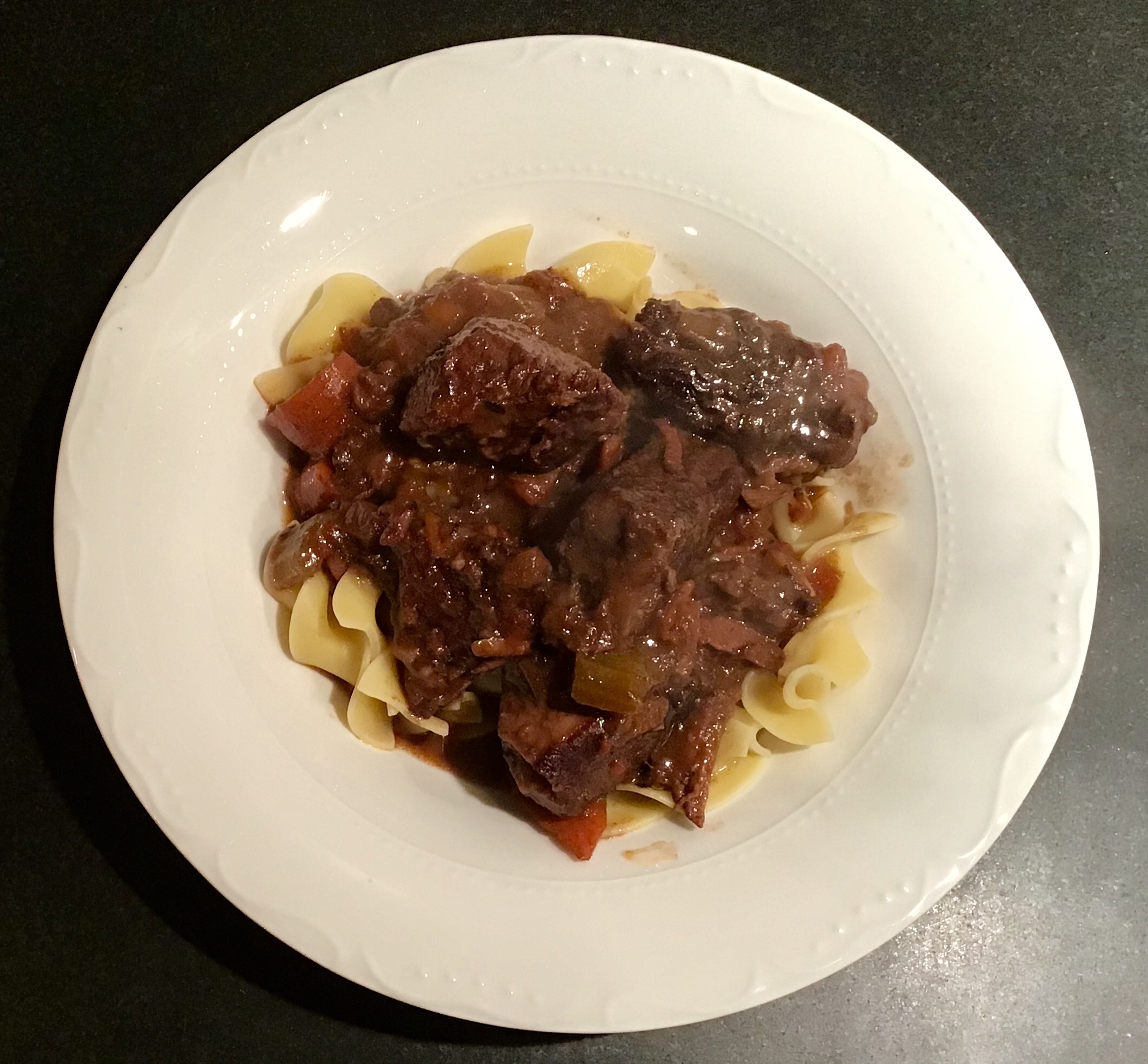
During the afternoon, I started reheating the daube. After removing the congealed fat from the top of the daube, the pot went back on the stove for a gentle three hour simmer. Now the smells were truly driving me crazy and the football was barely a distraction. I took one more walk with Carmen and could see that we had another 3-4 inches of snow today. It was still snowing at dusk as we finished our walk, and I may need to plow again tomorrow, but that will wait.

About a half hour before dinner, I threw a baguette in the oven to warm up, and finally it was time. We served the daube over egg noodles and had it with the bread and a bottle of wine. I breathed in the aroma and took my first bite. What a great ending for a snowy weekend…

_____
Addendum: Here’s the recipe. It’s from the book “Duck Season”, by David McAninch.