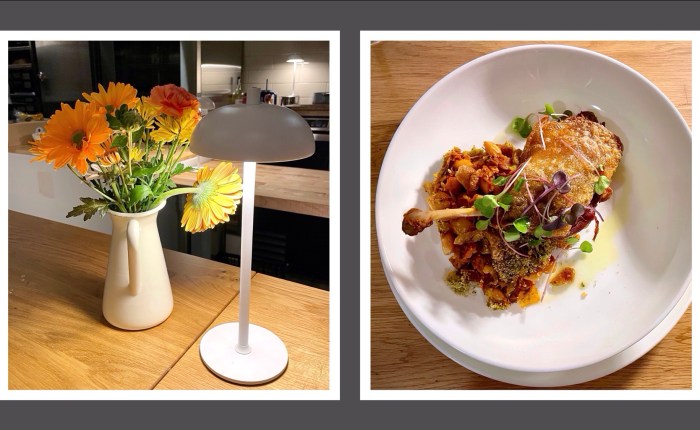
It was the night before snowmaggedon, or stormzilla, or sleetapocalypse, or whatever you want to call it. We were lucky and had scored two seats for a Cassoulet Dinner hosted by our local butcher, The Whole Ox. The meal was wonderful and a terrific way to “prep” for the storm ;-).
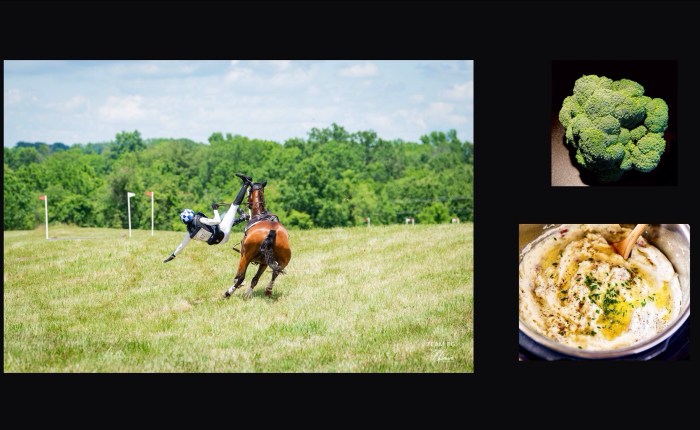
I had started cooking dinner when we received the text. Our good friend badly fractured her wrist in a horse-riding accident. This was on top of unfortunate health related news she received the day before. Cath and I had two immediate reactions: sadness for our friend, and a mutual decision to substitute mashed potatoes for the broccoli we were planning to serve with dinner.
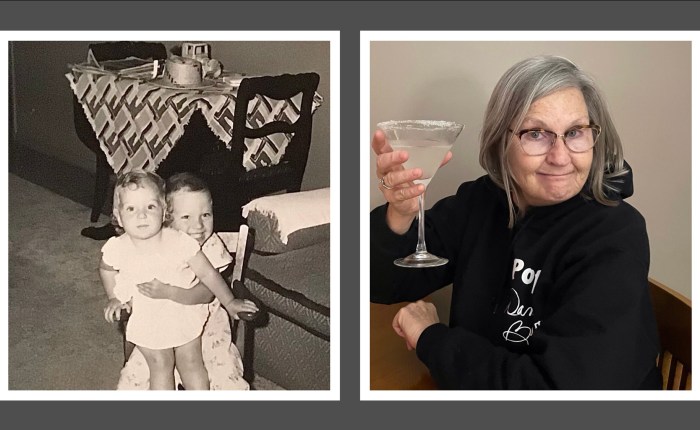
My sister, Roberta, created a fun family cookbook of recipes and stories a decade ago. She recently resent her “intro” to me and I love it. She talks of how our five senses link us to those wonderful memories from our past. I urge you to give this a read and I guarantee it will make you smile.
The words are strictly Roberta’s. I’m just sharing them.
Last Christmas Eve, I was talking with our nephew Casey. He mentioned a visit to our home as a young boy, and then asked “Do you remember making cheese fondue at the cabin? That was so cool!” The memories of that weekend, and our ‘70s era burnt orange fondue pot came flooding back.
I was a cookbook junkie for a couple of decades. The last few years, I’ve kept my addiction in check. I try and take it one meal at a time, which has worked … so far. Of course, I continue collecting online recipes and recipes from friends like a fiend.
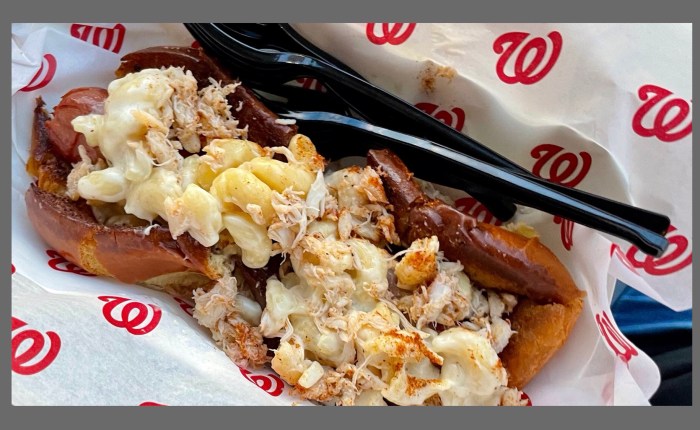
Two questions simultaneously occupied my brain – “Why would I possibly order a hotdog with mac n’ cheese and crab meat on it?” – and – “How could I possibly turn down a hotdog with mac n’ cheese and crab meat on it!?” I admit it – I’ve sampled some strange ‘dogs at the ballpark this year.
Until last season, a good brat stand was not far from our seats and it became my go-to place at Nat’s Park. It’s gone now, or moved somewhere else. Instead, behind our seats in section 219 is a concession stand with burgers and hotdogs. It also has a specialty hotdog called “Taste of the Majors” on the menu.
The “Taste of the Majors” hotdog changes every series, depending on who the visiting team is and where they are from. It pairs the hotdog with something that city or region is known for.
If the Cubs or White Sox are visiting, it’s easy and a straightforward Chicago dog is on the menu. With Milwaukee, it’s always a brat instead of a hotdog, maybe with grilled onions if you want. Both of those make sense. It’s when other cities visit that things can get, well, a little strange.
Earlier this season, when the Baltimore Orioles were in town, they added crab meat and mac n’ cheese. The crab meat I understood, but not sure I knew Bal’more was a mac ‘n cheese hotbed. Seeing it on the menu, I felt both appalled and intrigued. “Intrigued” won out and I ordered it.
And?
In its own weird way, it was delicious. And messy. I needed a knife and fork to finish eating it.
I Ate Every Last Bite of the Bal’more Dog.
A few weeks later, the NY Mets were in town. The Taste of the Majors ‘dog? A hotdog with pastrami, sour kraut and mustard. Excellent. A hotdog with kraut is fairly normal, so the pastrami was just a nice add-on. As a bonus, no knife or fork were required.
A week later the Atlanta Braves were visiting. OK, this was interesting – A deep fried hotdog with pulled pork, BBQ sauce, cole slaw and a pickle. My stomach rumbled just looking at the description. My brain said no. My stomach said no. Some other part of me said “You must try this!”, so I ordered it. It was interesting, but… I wouldn’t get it a second time. I thought it might be a cousin to a chili dog and taste pretty good, but that wasn’t the case. It tasted just as strange as it first sounded. I should note did take a Pepcid before going to bed that night. Curiously, as I write this blog, I am re-tasting the Atlanta dog – a not entirely pleasant sensation.
The Atlanta Dog was … Interesting.
So the early season review? The O’s ‘dog was intriguing and good; the Mets ‘dog was a perfect blend of tastes; and the Braves ‘dog was a clash of flavors that didn’t quite work together.
Each of these puppies weighed in at around 850-900 calories. Healthy is never a term used to describe a hotdog, let alone these bad boys. Cath rolls her eyes when I tell her what I had to eat at the park. Still, my macabre fascination remains. We aren’t at the All-Star break yet and there are many games and ‘dogs to go. At some point, will common sense or my taste buds prevail and I’ll heed Nancy Reagan’s advice and “Just say no!” to these mutants?
That’s a question I can’t definitively answer, but my guess is that for better or worse, I have a few more “Taste of the Majors” hotdog creations in my future.
Addendum:
⁃ Between this blog and the one I did about sausage gravy Pizza, I’m sure at least some people are asking what the hell kind of stuff is Max putting in his system. I actually do eat healthily most of the time – salads, vegetables/vegetarian, some meat, and not much dairy, potatoes or pasta. Still, I think it’s good to enjoy life and challenge the ol’ digestive track on occasion. Otherwise, what’s the point of it all?
When we returned from Germany in ‘83 there were many things we missed from our 4 1/2 years in Europe. One of those items was coffee. Good Coffee. Cathy rectified that by buying me a small Espresso/Cappuccino Maker for Christmas that year. 40 years later, it still brews decent coffee, even if it looks old and outdated.
We were happy to return to the States, but in addition to good coffee, there were a number of things we missed from our time overseas, including good bier and cheese. The craft bier movement wouldn’t really hit its stride in the US until the ‘90s. As a result, Michelob or Heileman’s Special Export were what passed for top-shelf domestic beer at the time. The cheese market in the states consisted of American, Swiss and Cheddar once you were outside of Wisconsin or a couple of places in New York and Northern California. That too would change, but in the early ‘80s, it was a desert. Of course you could buy imported beer (back then, Lowenbrau or Heineken), or imported cheese, but there weren’t any real American products. I was further mystified to find the concept of a charcuterie board hadn’t reached the States – how was it possible something we routinely ate for lunch in a German Gasthaus didn’t even exist here?! And don’t get me started on wine…
Yes, I know this all sounds like an old man rant, and if I were saying it now, it would be. I was saying this in 1983, at the grand old age of 28.
Back to coffee. ;-).
Coffee in Germany and Europe was so much more than just a pot of brewed coffee. The Europeans made stronger coffee in general – not more bitter, just stronger and with great flavor. At the Gasthäuser (local restaurants) we visited, it was always made fresh – it wasn’t from a pot that was sitting for hours. In the afternoon, you could visit a Konditorei (the German word for a pâtisserie or confectionery shop) for a coffee and a sweet treat of some sort. The coffees varied from regular, to espresso, to cappuccino, to café au lait (coffee with a separate small pitcher of hot steamed and slightly frothed milk you added to your coffee). One of our great pleasures was sitting outside at a cafe in Berlin, or Paris, or Vienna, or Monte Carlo or any number of cities having a coffee, while watching the world pass by. I become nostalgic even today thinking about it.
There wasn’t the same type of coffee availability here in the States in ‘83. Starbucks started in Seattle in 1971, but didn’t really begin expanding until the late ‘80s. Although local coffee shops existed in some places, The “Local Coffee Shop” was an idea that hadn’t yet come into its own.
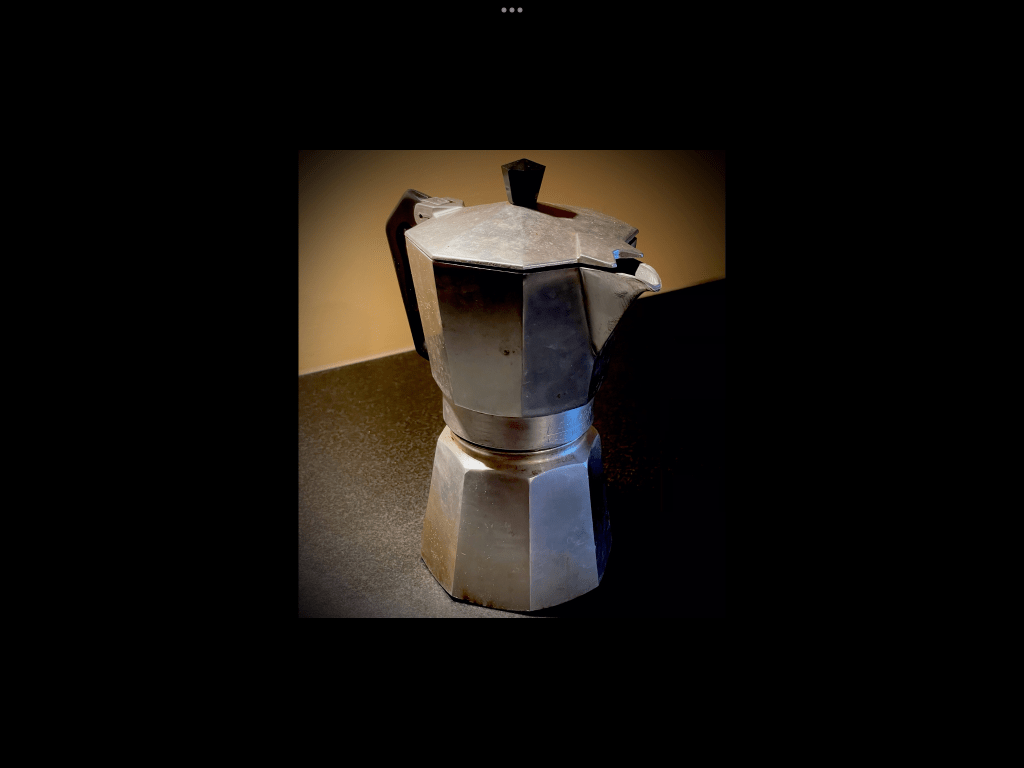
At the time, we were stationed in Dayton, Ohio. At a local mall, we discovered a shop that sold coffee beans. (I can’t remember if you could actually also buy a cup of coffee there or not.) In any case, we bought a grinder, and started grinding our own beans for our regular coffee pot at home and were able to make a stronger cup of coffee. We also bought espresso beans and used our Italian stovetop espresso maker (known as a Moka pot, it cost all of $6 when we bought it in Italy in ‘82 – I see they run $25 plus on Amazon now) to make a decent espresso. Half the problem was solved.
Our Old Moka Pot Also Still Works Well.
Cathy solved the other half of the problem that Christmas when she gave me an Espresso/Cappuccino maker. I was thrilled and started using it that very day. It became a fixture at our house and if you visited us in the ‘80s through the mid ‘90s, I practically forced a coffee on you
A Great Christmas Present in 1983!
Espressos? Sure. In addition, my after-dinner cappuccinos became a point of pride and were quite good, if I do say so myself. I’d add a capful of Cointreau for a sweetener and grind a little fresh nutmeg on the top of the foam. We also did Irish Cappuccinos. I think you know how I made those.
Somewhere along the way, other manufacturers started selling upscale Espresso machines of better quality. Now days, you can easily spend between $500 and $1,600 on a high-end espresso/coffee maker. Breville, Rancillo, Gaggia and others all make excellent machines … at a price. Over the years, I looked at a couple of them, but never pulled the trigger. We have a couple of friends who own them. One uses his religiously. Another found it more trouble than it was worth and it now sits on the counter, mostly unused. For my friends* that own super nice espresso machines and are real aficionados, good for you, and I’m happy for you. I’m sure you can probably make a better espresso than I can, and that’s OK.
Coffee shops are now ubiquitous here and these days you can’t trip without falling into one of them. They generally make great coffee. There are a few good local shops near us not named Starbucks, and I prefer those. If you ask, they’ll serve you your coffee in an actual coffee cup – not some crap paper cup.
Over time, I backed off using our little machine quite as much. Life was too busy, or I’d lost interest. And then, after retiring about a decade ago, I started using it more again. Usually, it’s in the afternoon and Cath and I feel the need for a little pick-me-up. I’ll make us cappuccinos and we take a break from life and sit and sip our coffees for ten or fifteen minutes. It’s a nice pause, especially on a winter day with fresh snow outside.
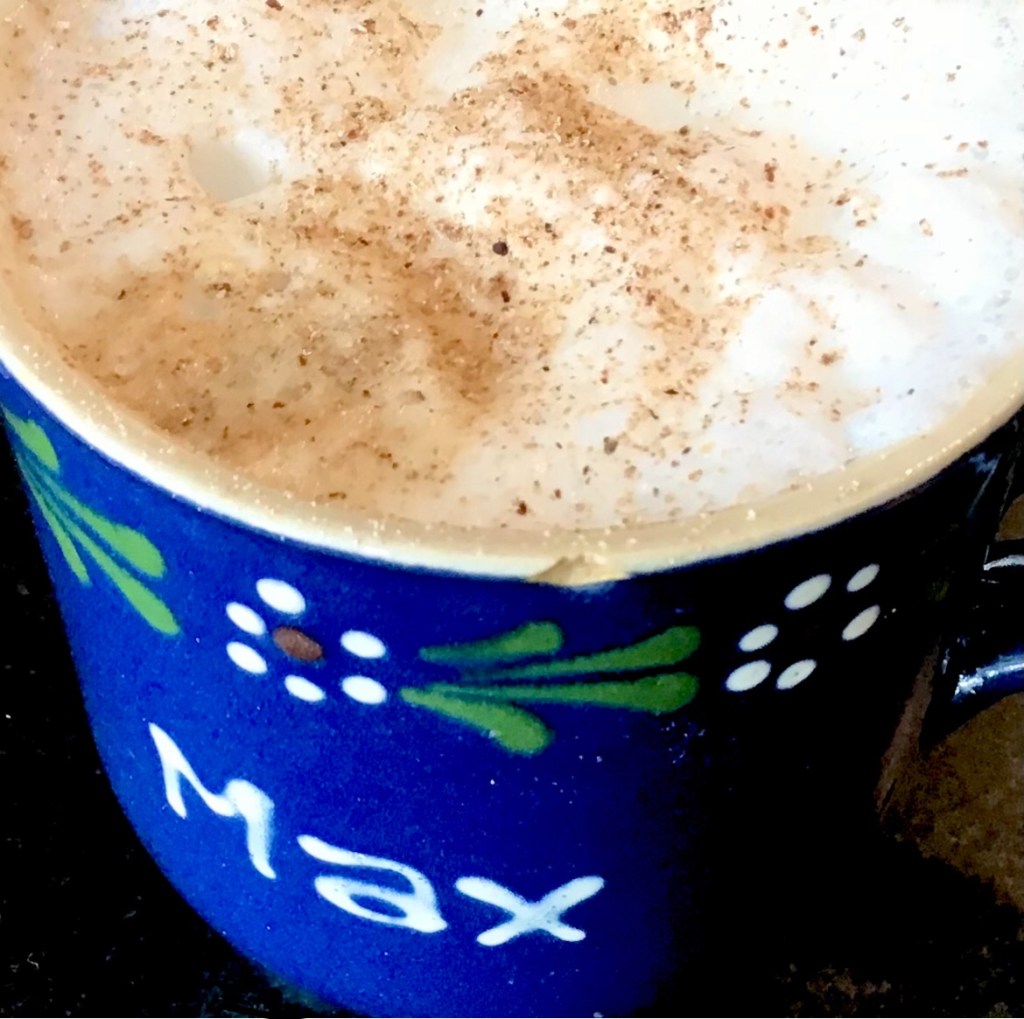
Yes, It Still Makes a Decent Cappuccino. Nutmeg and Cointreau are Optional.
Yes, over the last forty years, we here in the States have caught up to Europe on bier, cheese, good everyday wine and even charcuterie boards. As for coffee, I’m guessing we have more coffee shops than Europe now days.
At home, I would bet we’ve gone through five or six regular coffee machines since 1983. They die every six or seven years. Our Maxim Espresso Machine? It’s a little banged up but works fine and keeps chugging along. How many forty-year-old machines do you have in your home you can say the same thing about?
Addendum:
* I do know there are lots of great espresso makers out there, and that those of you who have them can pull a better shot, with more crema than I can. I certainly mean no criticism of those machines and am, at least a little, envious of you. My point in this blog was about my machine being 40 years old, and there’s not much that lasts that long anymore. Still, it’s interesting. In Italy, rather than buying an elaborate espresso machine, over 3/4 of the country still uses their stove-top espresso machine (Moka pots) everyday for their first cup of coffee. You can read more about the Moka pot here: https://en.m.wikipedia.org/wiki/Moka_pot
The blue coffee cup with my name on it is a bit precious to me. It was a gift from our old friend Tim in ‘80 or ‘81. He bought it while visiting us in Germany and gave it as a gift. Tim passed away last December.
In America, we often ignore cuts of meat used to make excellent dishes elsewhere – beef cheeks and pork jowl are two examples. Oxtail is another. When we lived in Germany, Ochsenschwanzsuppe (Oxtail soup) was a classic you rarely see here. It’s an OMG wonderful dish I’ve made a couple of times now.
Of course, many hear the word Schwanz, and immediately think of the Mel Brooks film, Young Frankenstein and the scene with Inga (the great Terry Garr) using the pseudo-German word schwanzstucker*. I can assure you, there is no schwanzstucker in this Ochsenschwanzsuppe. 😉
Young Frankenstein – Worth Watching Again, Just for the Schwanzstucker Scene!
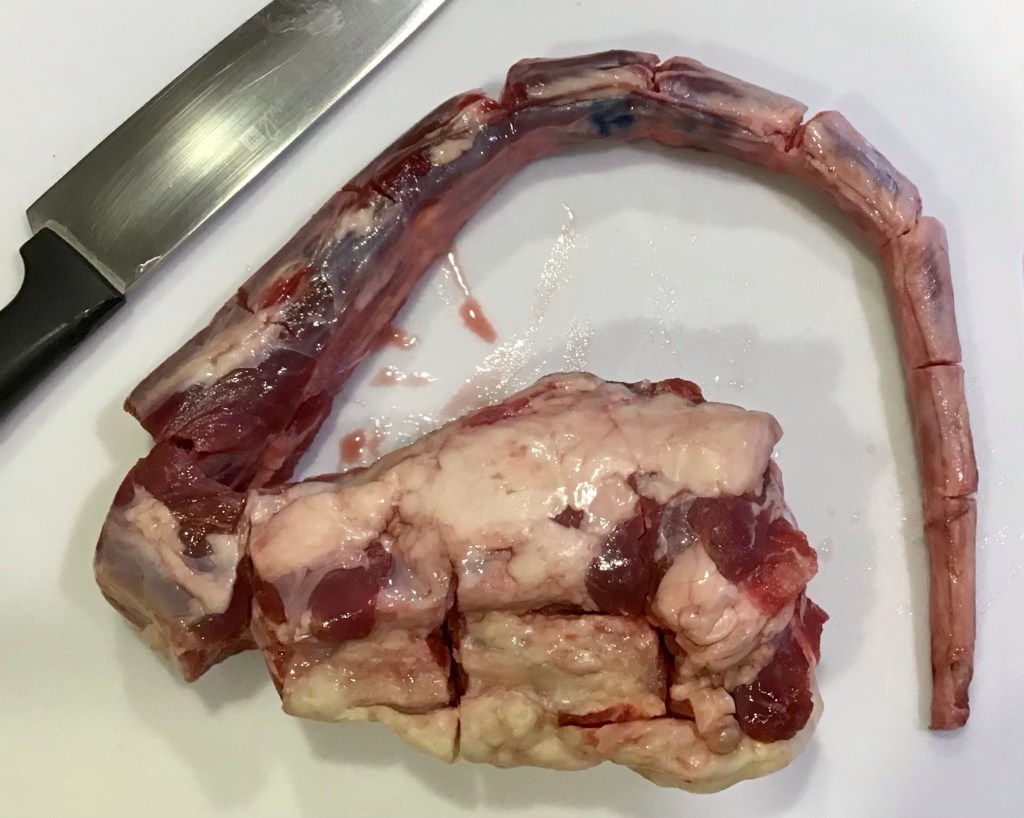
In today’s world, what we are really talking about is beef tail, but I’m going to stick with Ochsenschwanz, or oxtail, which is what it was called when we originally learned about it in Germany. Plus, it sounds cooler.
Oxtail; You Can Actually Order it in a Butcher Shop These Days.
Oxtail is high in protein, has abundant collagen and is a source of healthy fats. With the high collagen and connective tissue content, oxtail was made for long, slow cooking in dishes such as this soup. It’s a great winter dish. I’ve learned from friends who also cook that it is core to many other ethnic dishes as well. As an example, my friend Antoine Freche says, “Oxtail is the preferred bone source when creating a “silky-smooth” broth for Vietnamese Pho. Oxtails are best since they contain more collagen than a regular beef bone. The collagen is what makes the broth silky-smooth.”
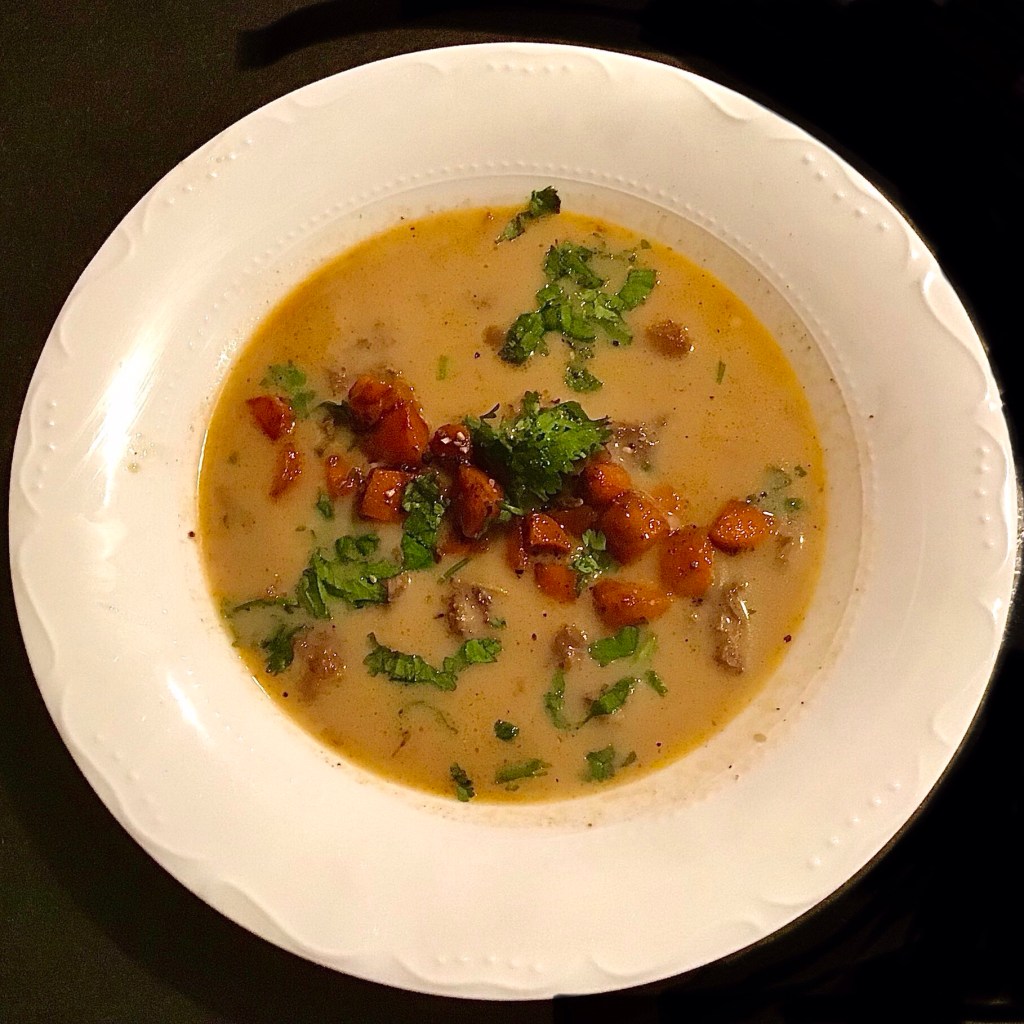
I have to agree with Antoine. The broth in this soup is wonderful. It is a different flavor than a typical beef stew and packed with umami**. Silky and smooth are both great descriptors, but so are tasty, delicious and “OMG this is so f’in good!” I’m already thinking of ways to use this broth for other dishes – it really is that outstanding.
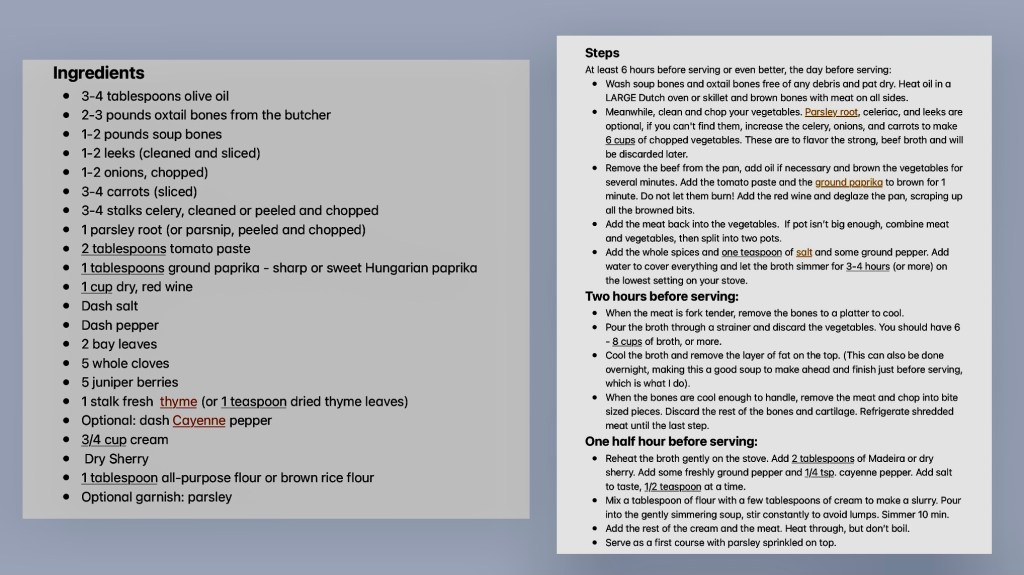
This recipe combines a rich beef and vegetable broth with paprika and pepper to add some bite, along with sherry and cream to round it out. It’s finished with a roux. It takes a while to make but is sooooo good. If you don’t have quite enough Oxtail, add some chuck steak, or some other roast to make up the difference.
Traditionally, Oxtail soup is served as a first course in Germany at restaurants or special events. They have two main versions of Oxtail Soup there – one is a clear broth with beef bits, the other is a “gebundene” (bound) version and is a little heartier. This recipe is a gebundene soup.
Ochsenschwanzsuppe – This is Soooooo Good, and Packed With Umami.
While the original version of this recipe was for a first course, Cath and I have it as a meal. With some bread and a small salad, it’s hard to beat. If you want to add a little to it for a main course, cut up a carrot or two and simmer with the sauce in the final 1/2 hour. As with most soups and stews, it’s better the day after you first cook the broth. The meal is certainly guest worthy, but I won’t judge if just you and your partner eat it by yourselves over two or three days. By the third day, it will be mostly just broth left, but that doesn’t matter. You’ll still be marveling at how tasty it is.
Ochsenschwanzsuppe Recipe.
Addendum:
* Here’s the scene from the Mel Brooks film, Young Frankenstein. It’s a great scene with Inga (Terry Garr) using the pseudo German word schwanzstucker. Gene Wilder’s reaction is classic: https://youtu.be/QuHw5ivCs1A?si=_nb9DdTWr1rlTXF1
** Umami is a fifth category of taste in food (besides sweet, sour, salt, and bitter). For me, the best description is one of savoriness, or perhaps earthiness. Umami means “essence of deliciousness” in Japanese.
Pork Jowl is sometimes considered traditional in Southern Cooking, particularly in a pairing with Black-eyed Peas for good luck on New Years Day. You don’t see it cooked that way much anymore, with folks substituting fatback, or bacon instead. It’s also used in Italy to make Guanciale, a cured meat considered essential for an authentic pasta carbonara.
I have a heavenly recipe for Beef Cheek Daube (stew) that is served over saffron risotto. Like oxtail, it is full of collagen. The first time I made the dish, two of our local grocery stores said there was no such cut of meat as beef cheeks. I ended up going to our wonderful local butcher shop, The Whole Ox, who knew immediately what I was talking about, and got the cheeks for us. The recipe is so good, we once served it on NY Eve.
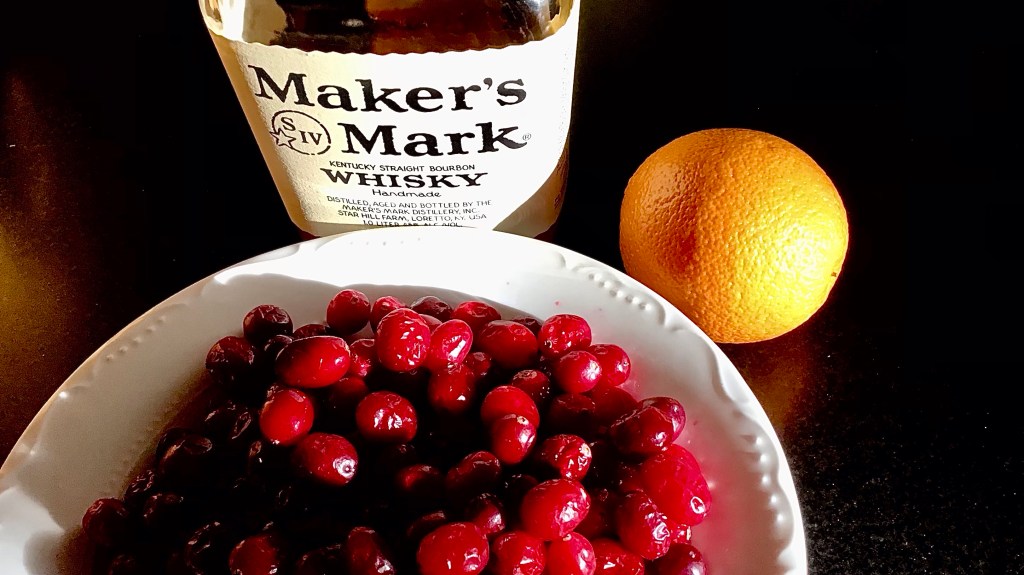
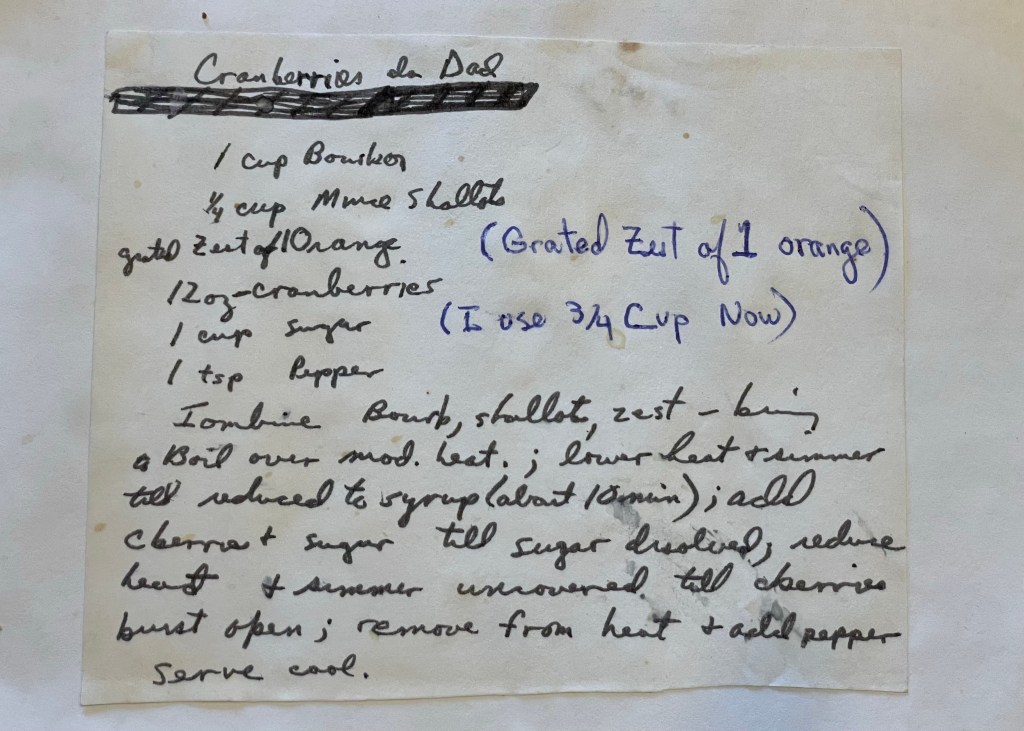
Thanksgiving, that truly American holiday, is approaching and started me to thinking about Dad and his Cranberry Sauce. It’s a great recipe filled with bourbon, cranberries, shallots, orange zest and memories. I love the fact that I get to spend a little time with Dad whenever I make it.
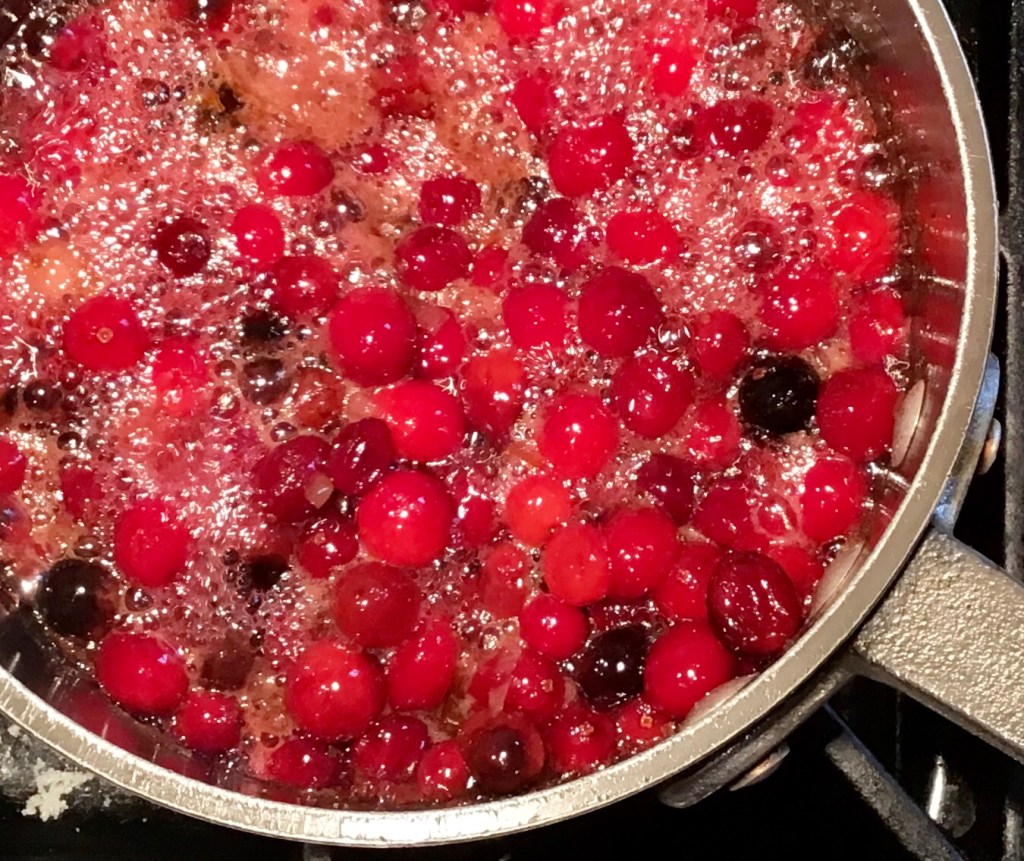
Cranberries, Bourbon, Orange Zest and Shallots…
Growing up in the Hall house in Ottawa, Illinois, Thanksgiving and Christmas were nearly identical meals – turkey, dressing, oyster dressing, mashed potatoes, candied sweet potatoes, corn and green bean casserole. The desserts – pumpkin pie, mincemeat pie and if we were lucky, strawberry-rhubarb pie, were all made by my Aunt Marge, a wonderful baker. Sometimes we would have a cherry pie from Aunt Diane – the cherries were from a tree in her yard. For snacks ahead of time, there were black olives and pickles (when young, my sisters put the olives on the ends of their fingers and then ate them off). There was cranberry sauce served as well – sliced out of the can.
I remember both meals as large loud affairs – Grandma, uncle Don and aunt Diane and their kids would be there. Various uncles or aunts stopping by for a slice of pie and cup of coffee after their own meals. Roberta and Tanya’s friend Marsali would inevitably stop over. Later when we were older my buddies Howard and Tim stopped in for a drink (to settle the stomach) after their own dinners.
Both meals were delicious and mostly made by mom. The kitchen was her domain. She often joked she actually spent more money on the oysters for the oyster dressing than she did on the turkey, and that’s saying something. I never thought to ask why we had exactly the same meal for both occasions and was somewhat shocked when I later learned other families served steaks or some other non-turkey meal for Christmas.
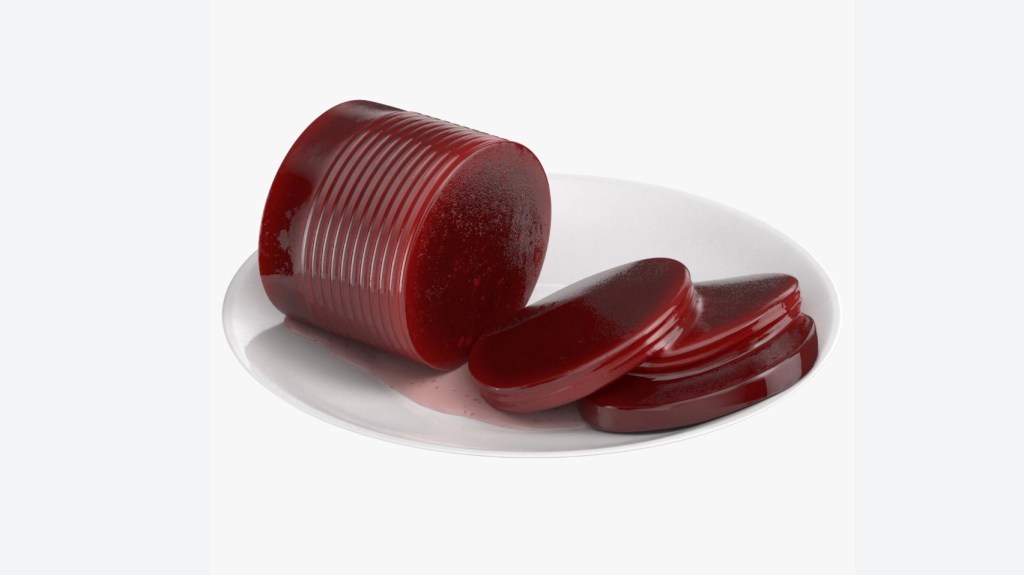
Everything for both Thanksgiving and Christmas dinner was homemade – except for the cranberry sauce. Growing up in the midwest, I think that was fairly typical – canned cranberry sauce, sliced into equal, perfectly round slices.
Sliced Cranberry Sauce. Please, No Judgement.
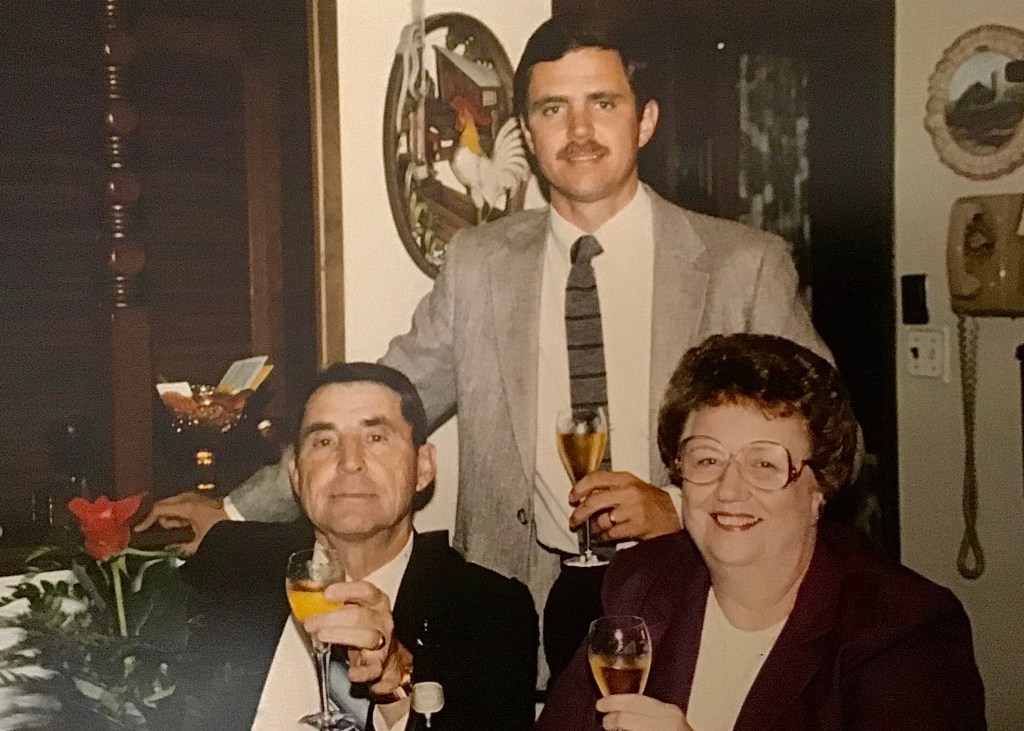
That changed one year, probably around 1984 or so when Dad retired from work. After he retired from the railroad, mom continued to work another seven years until she reached retirement age. As a result, Dad took over much of the cooking at home.
Cath and I were home for Christmas that year and dad had a surprise for us – homemade cranberry sauce! We all oohed and ahhhed over those cranberries and how good they were. Now mind you, mom was still making the entire rest of the meal (with help from my sisters by this point in time), but Dad now had his contribution as well. I think it came from a Bon Appétit recipe he tweaked slightly.
And so, Cranberries à la Dad became a part of the tradition for both Christmas and Thanksgiving.
Mom, Dad and I around the Time He Started Making his Cranberry Sauce Recipe.
It’s carried on at Cath’s and my home for Thanksgiving as well, although these days, we are having Thanksgiving with friends at their homes as often as not. The recipe is easy to follow, and cooks quickly. Still, I enjoy the few minutes it allows me to spend with Dad. As I smell the bourbon reducing and hear the snapping and popping sound of the cranberries opening, I reminisce and think about the good times we enjoyed with Dad over the years. It’s not a bad way to spend a half hour or 45 minutes.
You can Hear the Cranberries as They Sizzle and Pop While Opening.
Here’s the recipe. You have plenty of time before the big day to buy the ingredients. I usually make it the day before Thanksgiving while sipping on a small glass of bourbon, but the morning of works as well, if there’s room for you in the kitchen. For a chunkier look, don’t let all of the cranberries burst. Cranberries, bourbon, shallots, orange zest and memories – it’s a recipe that works.
Enjoy!
Addendum:
Thanks to my sisters, Roberta and Tanya, for their input to this blog. It’s always great to share memories with those you love.
It was strange. It was simple. It was visceral. One moment I was taking a bite of a tuna salad sandwich made with Julia Child’s recipe. The next instant I was a little boy sitting with Grandma Grubaugh at her kitchen table having lunch. It hit me like a bolt out of the blue.
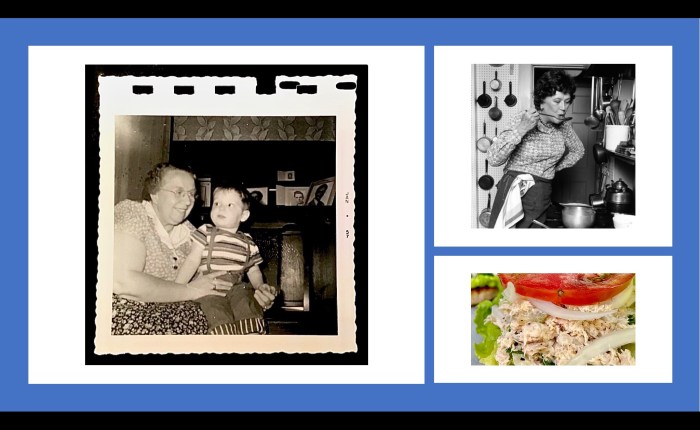
A couple of my favorite benefits of our New York Times subscription are the food and cooking articles. The columns tell great stories, and the recipes are usually pretty manageable. A while back, chef, James Beard Award winning author and former New York Times food columnist Dorie Greenspan wrote a great column “This Tuna-Salad Sandwich Is Julia Child-Approved Lunch”. She was working with Julia at the time on an upcoming book and recounted a day spent in her kitchen. Here’s a partial extract:
“We were working around the kitchen table when Julia declared, “Dorie, let’s make lunch.” I saw Stephanie smile — clearly, she knew what was coming — and then I was at the counter with Julia, doing as I was told, which was cutting celery. While it might not seem like much of a job, I was cutting celery for Julia Child, and I was going to do it right: I trimmed the celery, I peeled it (because I learned to do that in Paris, I thought it was important to do it for the woman who wrote “Mastering the Art of French Cooking”) and I cut the celery into minuscule cubes that were all the same size. I’m only exaggerating a smidge when I say it took me so long that when I put down my knife, Julia had finished everything else, and we were ready to sit down to one of her favorite lunches: tuna salad on an English muffin.”
The article was about nothing and about everything. I love writing like that. I mean, how can you possibly write an entire article about a tuna salad sandwich? And yet Greenspan wrote a great one and I thoroughly enjoyed it.
Julia Childs in the Kitchen.
The list of ingredients in the actual sandwich intrigued me. We’ve all made tuna salad – tuna, mayo, celery and maybe onion and a boiled egg, but this one was a bit different. Yea, there was tuna (packed in oil), mayo (always Hellman’s), celery and onion, but it also included capers, cornichons (small French pickles) and lemon juice. Hmmmm. I was going to have to try this. Some of you know of my aversion to pickles in potato salad, but with tuna salad, why not give it a shot?
I had everything on hand, with the exception of the Cornichons. After doing a little online research, I figured the baby dills in our fridge were a suitable substitute.
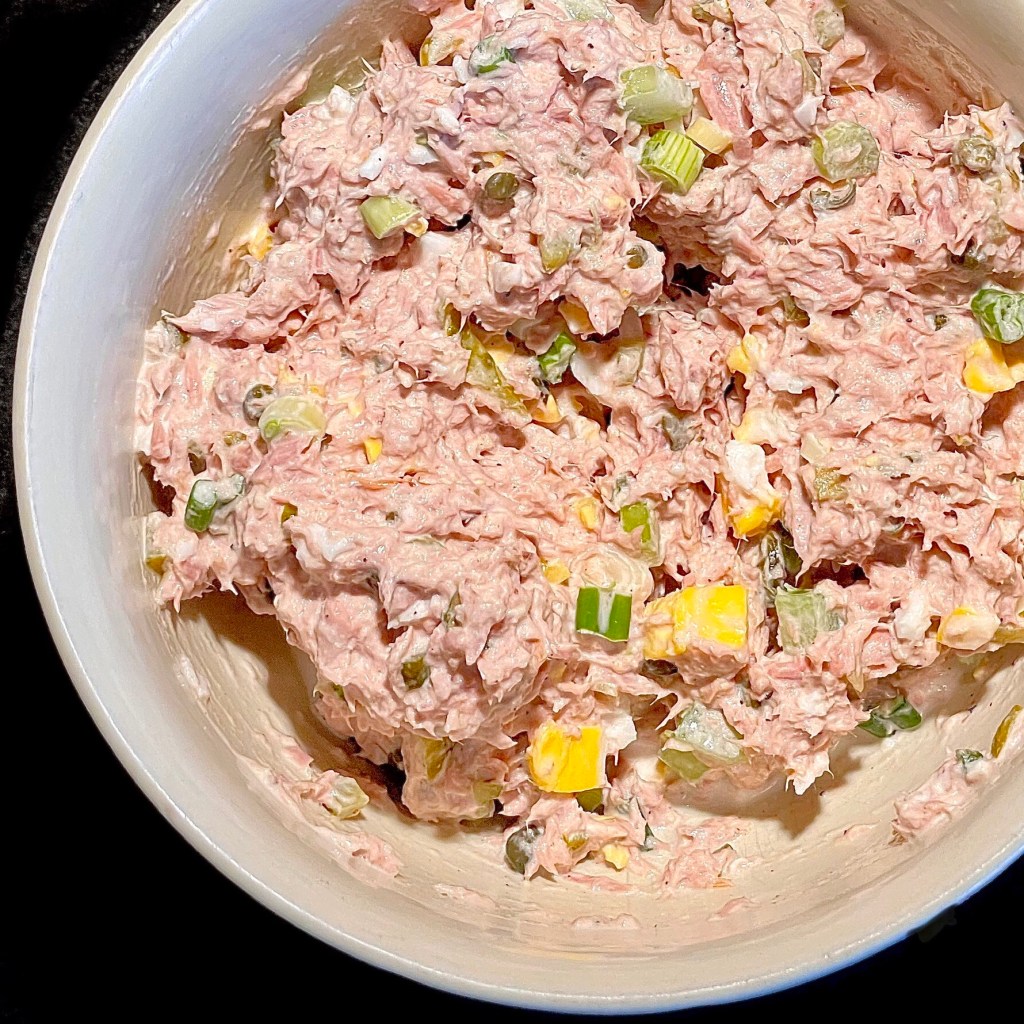
I dutifully chopped the celery (sorry, no peeling), onion, capers and pickles. After emptying the tuna in a bowl, I added all of the chopped ingredients. In went the mayo, and the parsley and I combined everything. Finally, I squeezed the lemon juice in, added salt and pepper, and combined it all again. I did a small taste, and of course because of who I am, added a bit more mayo. Another small taste, and then I put the bowl in the fridge to chill for a couple of hours.
Tuna Salad Heading to the Fridge.
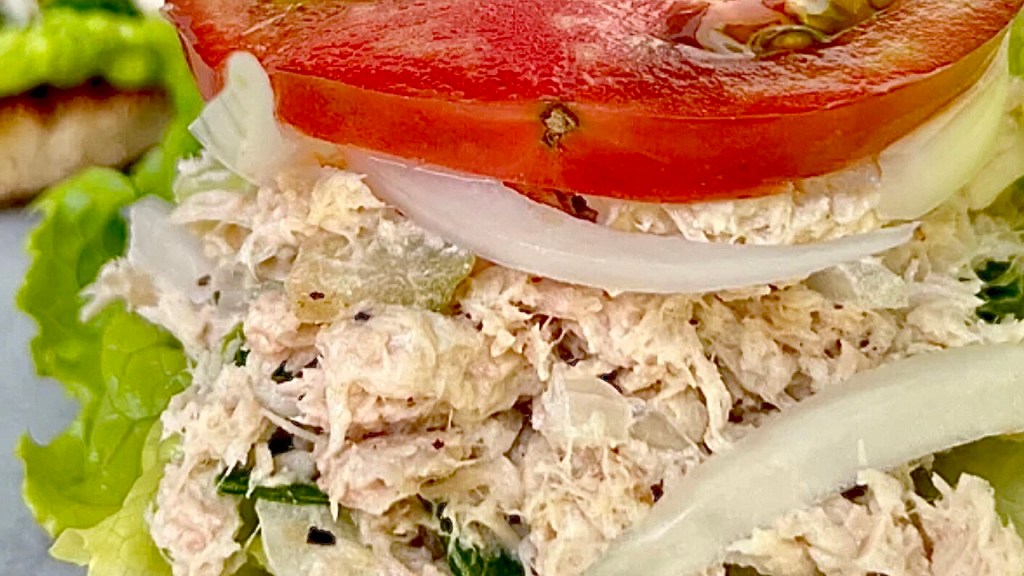
At last it was lunch time and I made my sandwich. More mayo on the bread, the tuna salad itself, some lettuce, tomato and a small slice of onion. Another slice of bread, and then I cut the whole thing in half.
Tuna Salad Sammich. It Doesn’t Get Any Better.
I took the first bite, waiting to be transformed in my mind to Julia Child’s kitchen, and … wait! What!? Was that Grandma Grubaugh sitting next to me? Where in the hell did that come from?! It was a visceral reaction – I was a young boy back in Ottawa, sitting at the kitchen table at Grandma’s house having a tuna sandwich with her.
Grandma Grubaugh and I in 1957.
After rejoining the present, I sat there eating my sandwich trying to figure out what brought on those feelings. Grandma, to my knowledge, never cooked anything from Julia Child. Besides, my flashback would have been some time in the ‘60s, well before Julia became popular in America.
I thought through the ingredients. I don’t really remember grandma keeping fresh lemons, or capers around the house, although I suppose she might have. Grandma putting either in tuna salad seemed a pure fantasy. It had to be the pickles, although I didn’t remember mom putting pickles in tuna at our house.
At this point in time, mom had already passed away. Uncle Don, her younger brother was still alive, and I gave him a call. After catching up for a few minutes, I explained why I was calling, asked about grandma’s tuna salad, and whether she put pickles in it. He immediately answered “No, there were no pickles”, and my heart sank. Then he quickly added – “No, no pickles. She used a couple big spoonfuls of pickle relish.” And it all connected.
We talked a bit more and I eventually hung up. As I thought about Grandma and her pickle relish, it made sense. The relish certainly would account for the pickle flavor and maybe some of the brightness. In a subsequent conversation with my cousin Dawn, she reminded me that while Grandma didn’t really keep fresh lemons around the house (who did in midwest America in the ‘60s?), there was always a bottle of Real Lemon Juice in the fridge – for lemon cake, lemon pie, maybe a spoonful in cobblers. Who’s to say she didn’t add a spoonful to her tuna salad? While it doesn’t all add up perfectly, it made sense to me.
Since then, I’ve continued to make my tuna salad with pickles, capers and lemon juice. I have to admit Julia’s is better than what I’d made before. It’s also a nice lunchtime bonus – remembering Grandma Grubaugh on a day when you are “only” having tuna salad is pretty special.
Addendum:
• Thanks to my sister Roberta, and cousin Dawn (one of Uncle Don’s Daughters – also a flower girl at our wedding) for their contributions to this blog – both had distinct memories of Grandma’s tuna salad and some of grandma’s habits at the time. Dawn was also quite emphatic Grandma used sweet pickle relish in her Tuna salad. We also had a great conversation about foods triggering happy family memories – Thanksgiving at mom and dad’s house (Uncle Don, Aunt Diane and family were almost always in attendance as well), potato salad, Aunt Diane’s cherry pies and cobblers, watermelon outside on the picnic table, and Grandma Grubaugh expertly spitting her seeds across the yard, to the delight of her grandchildren.











 Live Life Exuberantly