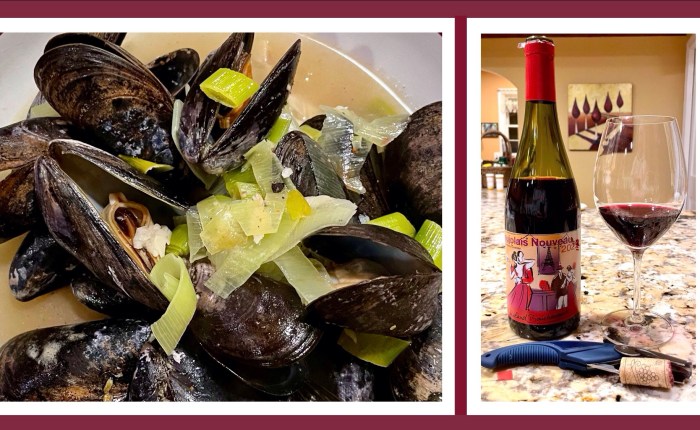
I know it’s hokey, and I know it’s not fine wine, and yet, I could not resist buying a bottle of Beaujolais Nouveau at a local wine shop a year ago in November of ‘24. In the ‘80s when stationed in Germany, the annual November release of Beaujolais Nouveau was something we looked for, and looked forward to.
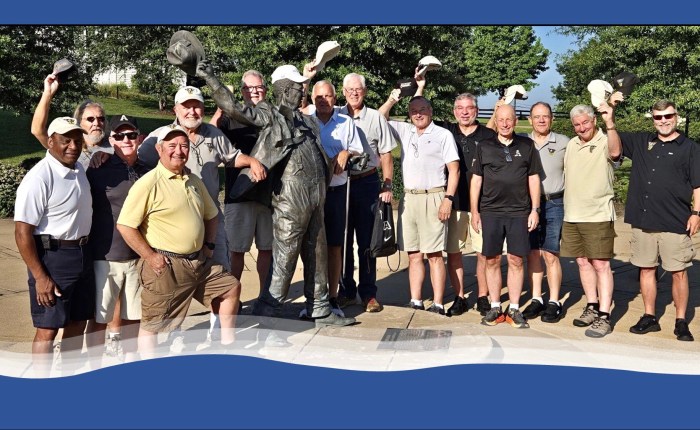
We West Point Whiskey Warriors gave it our best shot on the Bourbon Trail in Kentucky. By the numbers, there were fourteen of us ‘78ers, along with eight wives, from twelve states. We sampled at nine distilleries in four days, and had one helluva good time. Numbers of course don’t capture everything, or for that matter, much of anything.
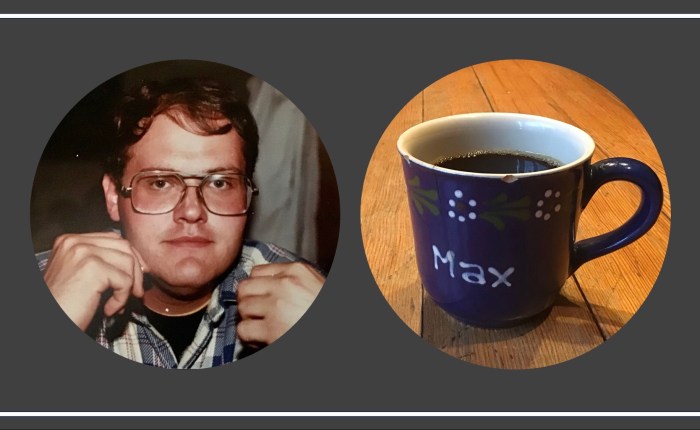
The coffee cup is old and has chips and a crack in it. It was a gift from my buddy Tim Stouffer in 1980 when he visited us in Germany, while returning from a trip to Russia. I think he bought it in a train station somewhere. Tim passed away a little over a year ago, and I’ve thought about whether I should continue using the mug, or put it on a shelf somewhere.
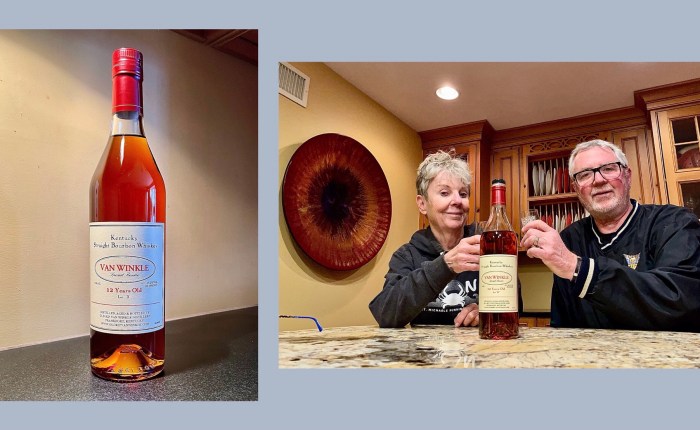
Well shut my mouth! For the first time, I won a lottery here in Virginia through the state Alcohol Beverage Control (ABC) Store. My prize? A bottle of Van Winkle Special Reserve 12 Year Old Bourbon for $150. It’s almost impossible to find, and if you do find it, it’s usually over $700 a bottle.
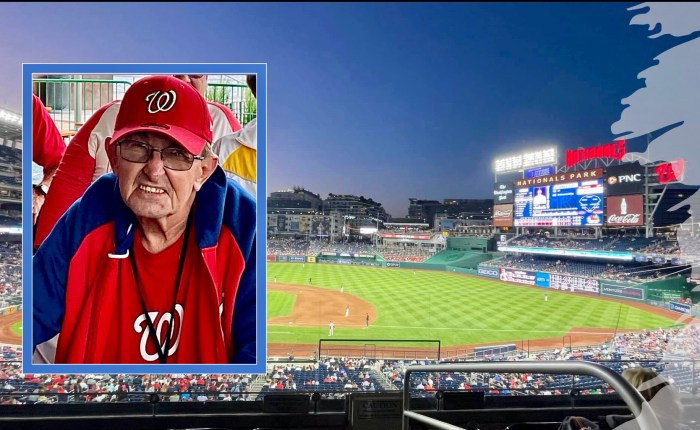
The Nat’s pitchers and catchers reported for spring training last week on February 12th. I’m excited, but also a bit sad. My old friend, Bill Wagner, passed away last September. He was the owner of the season ticket group I belong to and there will be a hole in my heart on Opening Day.
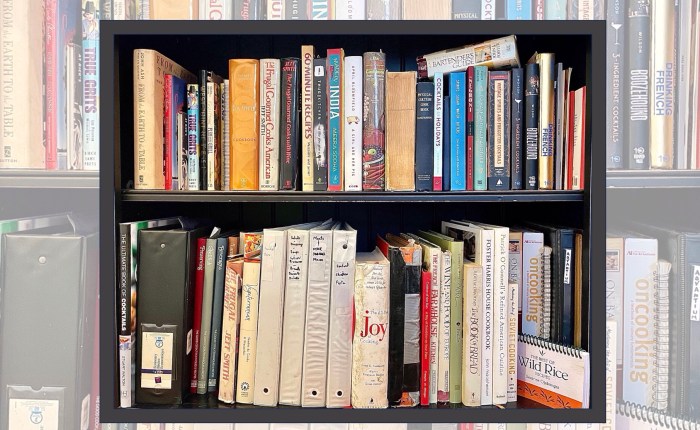
I was a cookbook junkie for a couple of decades. The last few years, I’ve kept my addiction in check. I try and take it one meal at a time, which has worked … so far. Of course, I continue collecting online recipes and recipes from friends like a fiend.
Cath and I recently saw “A Christmas Carole” at Ford’s Theatre, our 12th year in a row. I always find it renewing and every year, a different character or part of the play touches me. Not just Scrooge, or Tiny Tim, or the Ghosts, but sometimes a minor character like Old Fezziwig stays with me and provides inspiration.
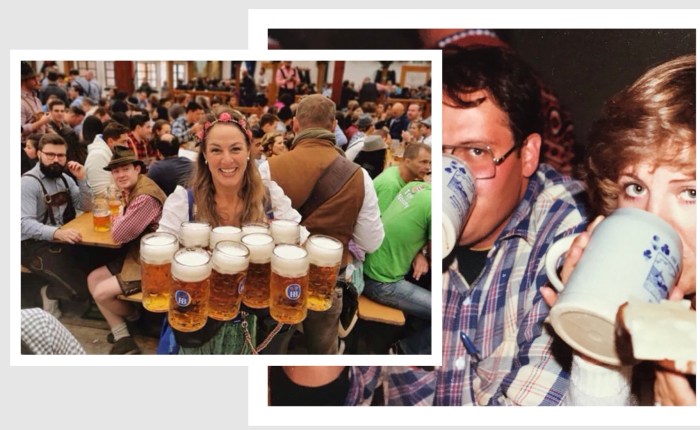
Oktoberfest in München, Germany is from September 21 to October 6th this year. Thinking back, I remember our adventures there in ‘87 with our friends Tim and Bobby. Cathy injured her arm on the rollercoaster at the fest grounds and had to drink her liter mugs of bier with one arm in a sling for the rest of the day.
Our old friend Tim and his buddy Bobby visited us in the Fall of ‘87. At the time, we were stationed in Worms, Germany. Upon arrival, they spent a few days at our house*, and then boarded a train to tour parts of Germany, Austria and Northern Italy. Before they left, we agreed we’d all meet at a location in the München Bahnhof (Train Station) eight days hence and go to Oktoberfest together. This was before cellphones, or texts or email so coordination was a bit trickier. Plus, phone calls in Europe, especially country-to-country were expensive and we avoided them unless necessary.
Cathy and I had, of course, visited many bier and wein festivals in Germany over the years. We usually enjoyed the smaller local festivals more than the big ones. To borrow a word from the Germans, the smaller fests tended to be more “Gemütlich”, a word that doesn’t really translate well to English, but roughly means a combination of fun, pleasant, comfortable, friendly and of good cheer. When Tim asked about joining them at THE Oktoberfest, we agreed to give it a go, and would meet them in München.
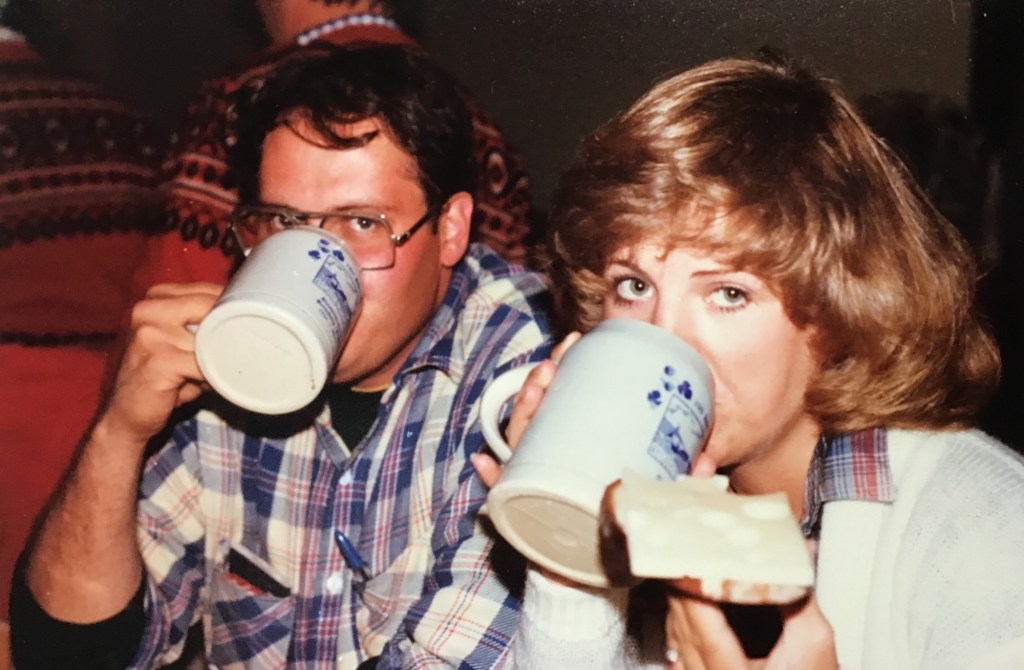
Tim and Cathy Drinking Bier on Another Occasion at the Kreuzburg Monastery,
The München Oktoberfest is huge – part bierfest, part carnival, part party and part madhouse. Last year, visitors consumed over 6.5 million liters (a little over 1.7 million gallons) of bier at the festival. Only bier brewed at the city of Munich’s breweries is served. Anyone who has visited München knows about the Hofbrau Haus, but there are actually five other breweries in the city besides Hofbrau, including: Augustiner, Hacker-Pschorr, Löwenbräu, Paulaner and Spaten. The breweries all adhere to Germany’s beer purity law from 1516, the Reinheitsgebot, which states beer is only made from four ingredients: water, malt, hops, and yeast.
On the day before our link up, Cathy and I drove to Augsburg, Germany, about an hour outside of München. There we had reservations for a Gasthaus for the next two nights and for Tim and Bobby on the second night. We spent the night in Augsburg and the next morning, took the train to München. At the Bahnhof in München, all of us miraculously arrived at the appointed time. Then it was off to the Fest!
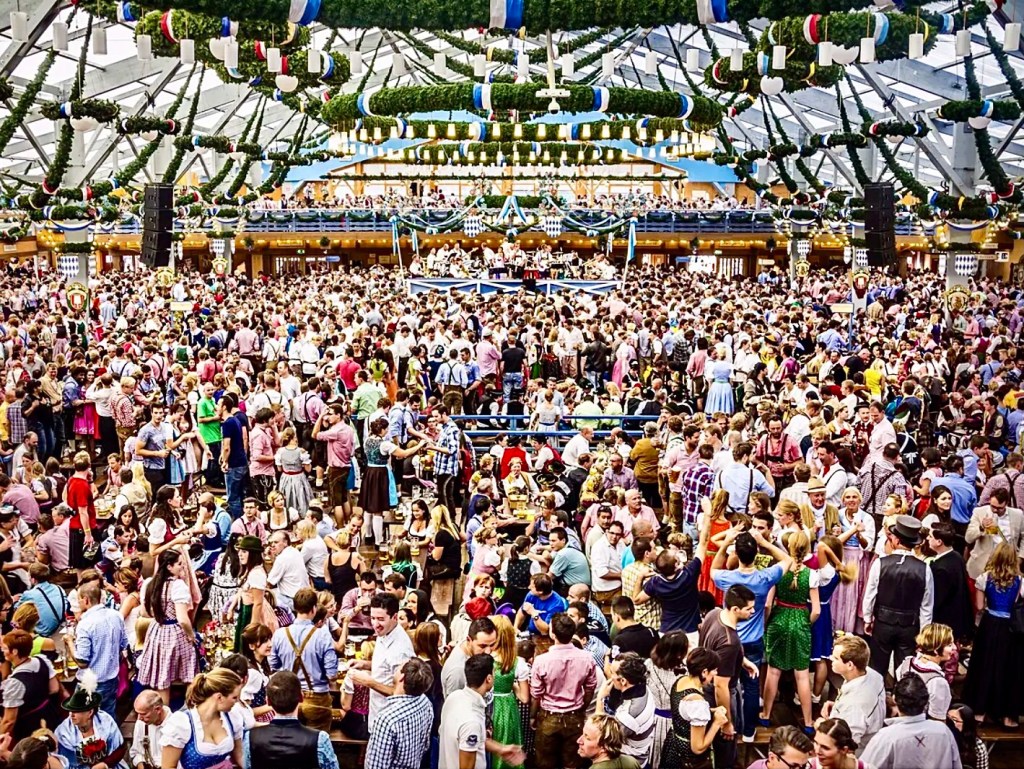
Paulaner was always my favorite München bier, so when we arrived at the Fest Grounds, we made a beeline to the Paulaner tent. Each of the breweries have massive tents that can hold thousands of people. People sometimes hang all day at one tent, while others move from place to place. The only problem with the second option is the tents fill up early and stay packed. Giving up your seats in one tent doesn’t guarantee seats in another.
Partial View of an Oktoberfest Tent.
As we were finishing our first liter at Paulaner, we were trying to decide what to do next. Someone suggested that if we were going to ride any carnival rides, we should do that now, before consuming more bier. We made the ill-fated decision to ride the rollercoaster before going to the Hacker-Pschorr tent.
At the roller coaster, Tim and I climbed in one car and Bobby and Cathy jumped in the next. I should point out Bobby was only a few inches taller than Cathy, but probably weighed 75 pounds more. You might see where this is going.
The rollercoaster took off and rapidly gained speed. At the second corner, it made a sharp left turn and Bobby slid hard into Cathy, slamming her into the right side of the rollercoaster car. When we all got off the rollercoaster a few minutes later, Cathy could not move or lift her right arm without pain. In fact, she could hardly move the arm at all. What to do!?
Well, it turned out Oktoberfest had its very own first aid station with doctors and we visited it (in 2023, over 8,000 people used the aid station during the festival). Still early in the day, there were no patients yet. Cathy got right in, while Tim, Bobby and I waited outside. Eventually she returned with her arm in a sling. They didn’t believe she broke any bones, but had severely pulled the muscles around the shoulder and strained some ligaments. They put her in a sling to immobilize her arm and gave her aspirin for the pain.
What to do now? Of course we headed to the Hacker-Pschorr tent and ordered four biers. As the biers arrived, Cath ran into a slight problem. She’s right-handed and that’s the arm she injured, so she had to drink with her left hand. It sounds simple, but liter mugs are heavy, especially when full of bier. She ended up holding the stein in her left hand and then used her right hand (in the sling) to support the mug from the bottom. It was quite the operation. ;-).
The rest of the day was a fun time, and anyone who knows Cathy, knows she’s a trooper. We made it to a couple of other tents along the way and also ate some great food. I think Cath and Bobby both had the famous roast chicken, while Tim and I ordered grilled ham hocks the size of small hams. I’ve never seen ham hocks that big before or since. They were huge, and oh-so-tasty.
Eventually it was getting late and we caught a train back to Augsburg. It was crammed with other revelers heading out of the city. There were various states of intoxication, but people were all in a good mood – a few were still singing German songs, while others tried to sleep. About an hour later we arrived in Augsburg, and finally made it to the hotel and bed.
The next morning, I woke up and felt surprisingly good. After taking a shower, I heard Cathy call out to me. She was in bed, but couldn’t turn over or get out of bed – her arm was of no use. I turned her over and other than her arm hurting like hell, she was ok. We put her arm back in the sling.
We linked up with Bobby and Tim for breakfast and then the four of us made the drive back to Worms. The next day, Cathy went to the doctor’s office. Diagnosis? Just as the doctor said at Oktoberfest, she had some pulled muscles and strained ligaments. She ended up wearing the sling for two more weeks.
We joked later that rather than riding the roller coaster early, we should have skipped it all together and stuck to the bier tents. It would have been a safer day. 😉
Addendum:
* You can read about the first part of Tim and Bobby’s trip to visit us in ‘87 here: In the ‘80s when we lived in Germany, several family members and friends visited us. To “help” them overcome jet lag, we made sure the first couple of days were action packed with eating, drinking and activities to keep them occupied. It almost proved one friend’s undoing in 1987 […] Continue here: https://mnhallblog.wordpress.com/2023/09/12/tim-and-bobbys-visit/
When we returned from Germany in ‘83 there were many things we missed from our 4 1/2 years in Europe. One of those items was coffee. Good Coffee. Cathy rectified that by buying me a small Espresso/Cappuccino Maker for Christmas that year. 40 years later, it still brews decent coffee, even if it looks old and outdated.
We were happy to return to the States, but in addition to good coffee, there were a number of things we missed from our time overseas, including good bier and cheese. The craft bier movement wouldn’t really hit its stride in the US until the ‘90s. As a result, Michelob or Heileman’s Special Export were what passed for top-shelf domestic beer at the time. The cheese market in the states consisted of American, Swiss and Cheddar once you were outside of Wisconsin or a couple of places in New York and Northern California. That too would change, but in the early ‘80s, it was a desert. Of course you could buy imported beer (back then, Lowenbrau or Heineken), or imported cheese, but there weren’t any real American products. I was further mystified to find the concept of a charcuterie board hadn’t reached the States – how was it possible something we routinely ate for lunch in a German Gasthaus didn’t even exist here?! And don’t get me started on wine…
Yes, I know this all sounds like an old man rant, and if I were saying it now, it would be. I was saying this in 1983, at the grand old age of 28.
Back to coffee. ;-).
Coffee in Germany and Europe was so much more than just a pot of brewed coffee. The Europeans made stronger coffee in general – not more bitter, just stronger and with great flavor. At the Gasthäuser (local restaurants) we visited, it was always made fresh – it wasn’t from a pot that was sitting for hours. In the afternoon, you could visit a Konditorei (the German word for a pâtisserie or confectionery shop) for a coffee and a sweet treat of some sort. The coffees varied from regular, to espresso, to cappuccino, to café au lait (coffee with a separate small pitcher of hot steamed and slightly frothed milk you added to your coffee). One of our great pleasures was sitting outside at a cafe in Berlin, or Paris, or Vienna, or Monte Carlo or any number of cities having a coffee, while watching the world pass by. I become nostalgic even today thinking about it.
There wasn’t the same type of coffee availability here in the States in ‘83. Starbucks started in Seattle in 1971, but didn’t really begin expanding until the late ‘80s. Although local coffee shops existed in some places, The “Local Coffee Shop” was an idea that hadn’t yet come into its own.
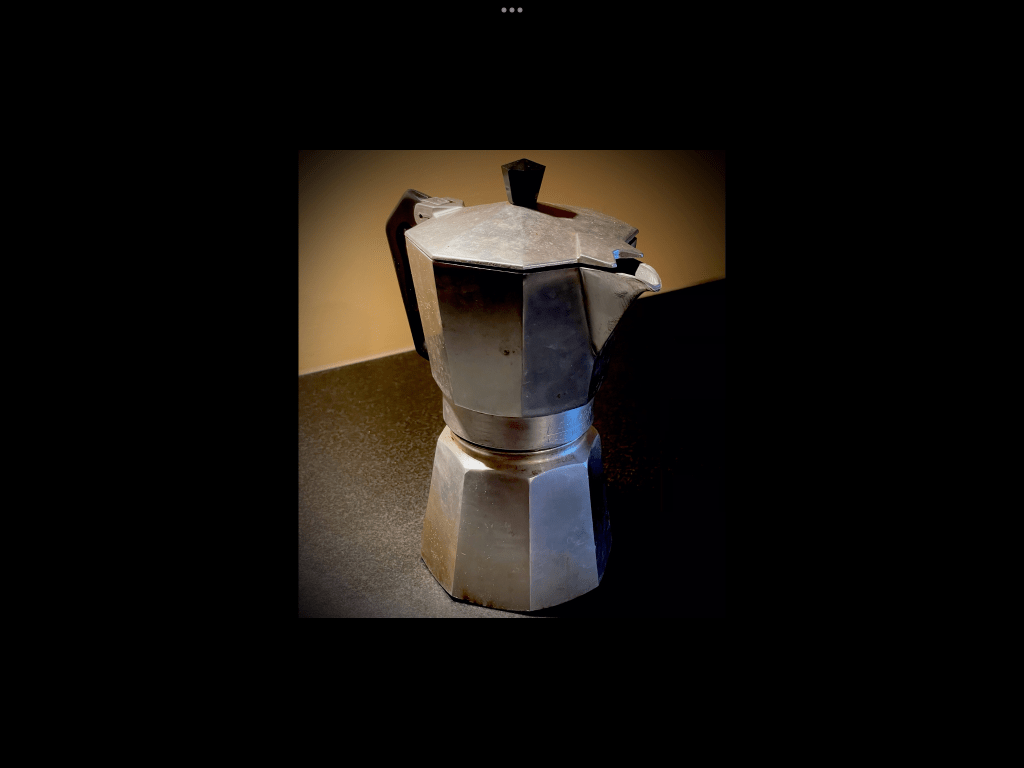
At the time, we were stationed in Dayton, Ohio. At a local mall, we discovered a shop that sold coffee beans. (I can’t remember if you could actually also buy a cup of coffee there or not.) In any case, we bought a grinder, and started grinding our own beans for our regular coffee pot at home and were able to make a stronger cup of coffee. We also bought espresso beans and used our Italian stovetop espresso maker (known as a Moka pot, it cost all of $6 when we bought it in Italy in ‘82 – I see they run $25 plus on Amazon now) to make a decent espresso. Half the problem was solved.
Our Old Moka Pot Also Still Works Well.
Cathy solved the other half of the problem that Christmas when she gave me an Espresso/Cappuccino maker. I was thrilled and started using it that very day. It became a fixture at our house and if you visited us in the ‘80s through the mid ‘90s, I practically forced a coffee on you
A Great Christmas Present in 1983!
Espressos? Sure. In addition, my after-dinner cappuccinos became a point of pride and were quite good, if I do say so myself. I’d add a capful of Cointreau for a sweetener and grind a little fresh nutmeg on the top of the foam. We also did Irish Cappuccinos. I think you know how I made those.
Somewhere along the way, other manufacturers started selling upscale Espresso machines of better quality. Now days, you can easily spend between $500 and $1,600 on a high-end espresso/coffee maker. Breville, Rancillo, Gaggia and others all make excellent machines … at a price. Over the years, I looked at a couple of them, but never pulled the trigger. We have a couple of friends who own them. One uses his religiously. Another found it more trouble than it was worth and it now sits on the counter, mostly unused. For my friends* that own super nice espresso machines and are real aficionados, good for you, and I’m happy for you. I’m sure you can probably make a better espresso than I can, and that’s OK.
Coffee shops are now ubiquitous here and these days you can’t trip without falling into one of them. They generally make great coffee. There are a few good local shops near us not named Starbucks, and I prefer those. If you ask, they’ll serve you your coffee in an actual coffee cup – not some crap paper cup.
Over time, I backed off using our little machine quite as much. Life was too busy, or I’d lost interest. And then, after retiring about a decade ago, I started using it more again. Usually, it’s in the afternoon and Cath and I feel the need for a little pick-me-up. I’ll make us cappuccinos and we take a break from life and sit and sip our coffees for ten or fifteen minutes. It’s a nice pause, especially on a winter day with fresh snow outside.
Yes, It Still Makes a Decent Cappuccino. Nutmeg and Cointreau are Optional.
Yes, over the last forty years, we here in the States have caught up to Europe on bier, cheese, good everyday wine and even charcuterie boards. As for coffee, I’m guessing we have more coffee shops than Europe now days.
At home, I would bet we’ve gone through five or six regular coffee machines since 1983. They die every six or seven years. Our Maxim Espresso Machine? It’s a little banged up but works fine and keeps chugging along. How many forty-year-old machines do you have in your home you can say the same thing about?
Addendum:
* I do know there are lots of great espresso makers out there, and that those of you who have them can pull a better shot, with more crema than I can. I certainly mean no criticism of those machines and am, at least a little, envious of you. My point in this blog was about my machine being 40 years old, and there’s not much that lasts that long anymore. Still, it’s interesting. In Italy, rather than buying an elaborate espresso machine, over 3/4 of the country still uses their stove-top espresso machine (Moka pots) everyday for their first cup of coffee. You can read more about the Moka pot here: https://en.m.wikipedia.org/wiki/Moka_pot
The blue coffee cup with my name on it is a bit precious to me. It was a gift from our old friend Tim in ‘80 or ‘81. He bought it while visiting us in Germany and gave it as a gift. Tim passed away last December.
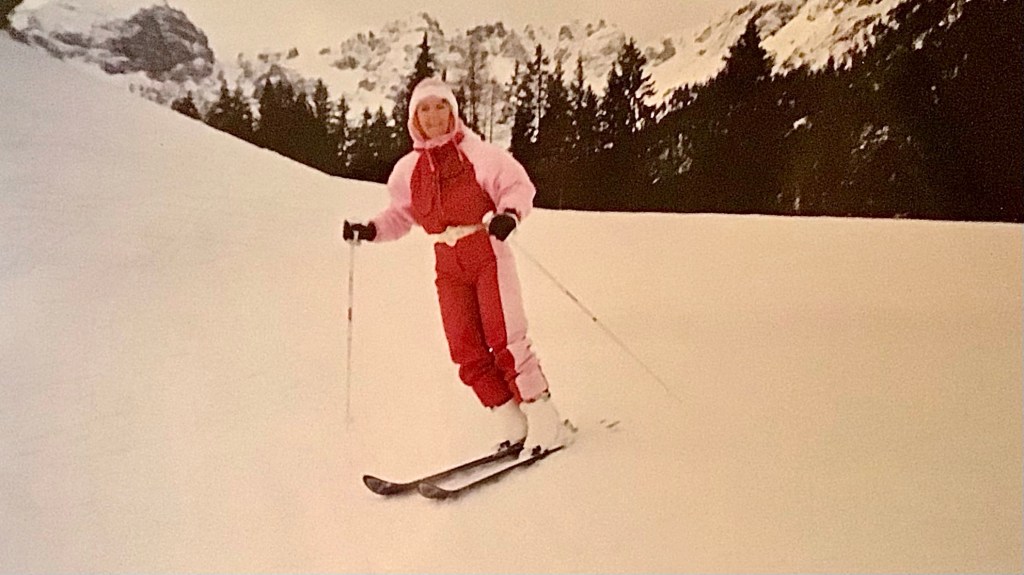
In 1988, Cath and I enjoyed a ski vacation in the village of Ischgl, Austria, known for both its skiing, and its Après-ski activities. It also presented the opportunity to ski from Austria to Switzerland, as long as we brought our passports. As is usual, Cathy had the last word after we completed the run.
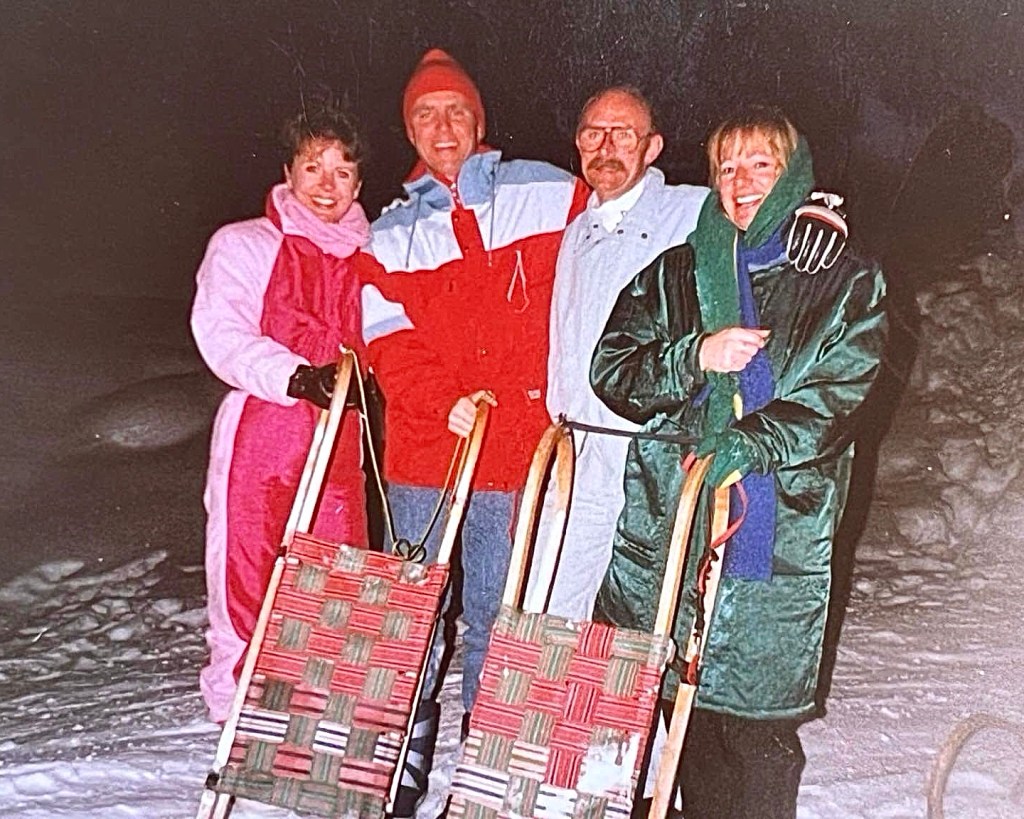
While stationed in Germany in the ‘80s, we took many ski vacations to Austria, sometimes for a long weekend, sometimes for a week. We often went with our friends Jim and Res to the Austrian town of Nauders on the Italian border. The skiing was great there and we enjoyed many fun trips with them.
Good Times With Jim and Res on One of Our Ski Trips.
In ‘88, Jim and Res couldn’t get away, so we decided to go on our own and try a new location. We eventually settled on Ischgl, a village in Austria’s Paznaun Valley with nearly 150 miles of groomed downhill trails. It’s also known as something of a party town with a multitude of Après-ski bars, clubs and restaurants.
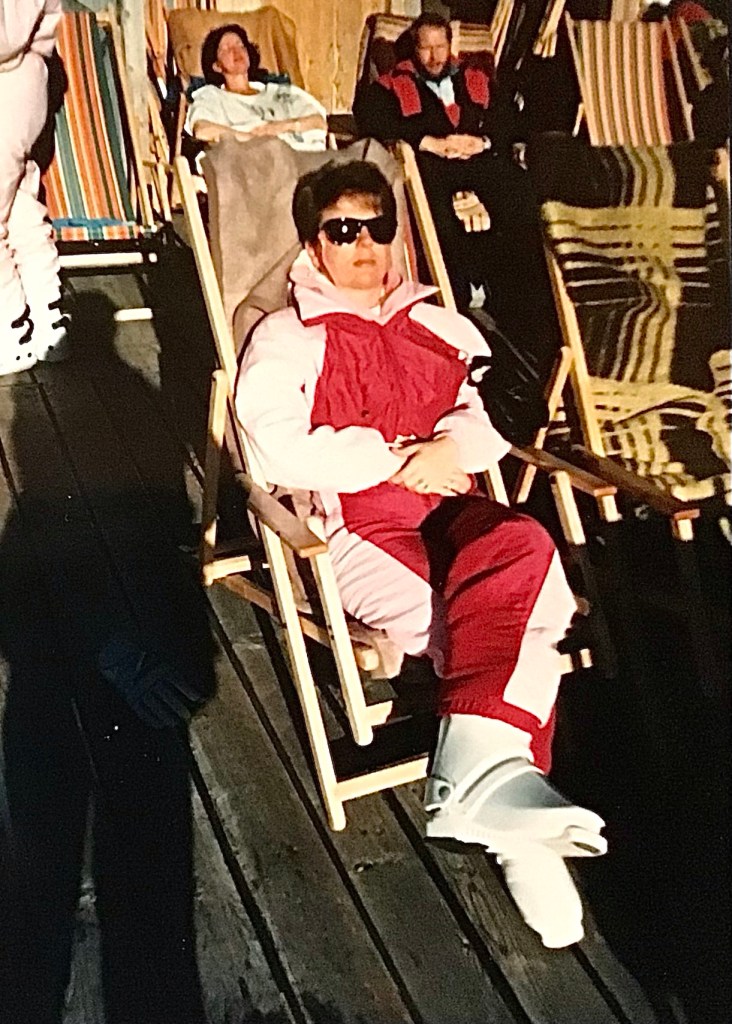
We had a great time that week and the town lived up to both its ski and Après reputation. We would ski in the morning, have lunch and a bier at a restaurant on the mountainside, and then ski all afternoon. Eventually, we skied our way back to town and stopped at different places for a drink. Afterwards, we walked to our Gasthaus, cleaned up and went out for dinner, and maybe dancing later. Finally, we’d make it to bed, sleep like the dead, and then do the same thing the next day. It was wonderful, and an easy thing to do when in your early thirties.
Cathy Catching Some Rays on the Slope at Lunch One Day
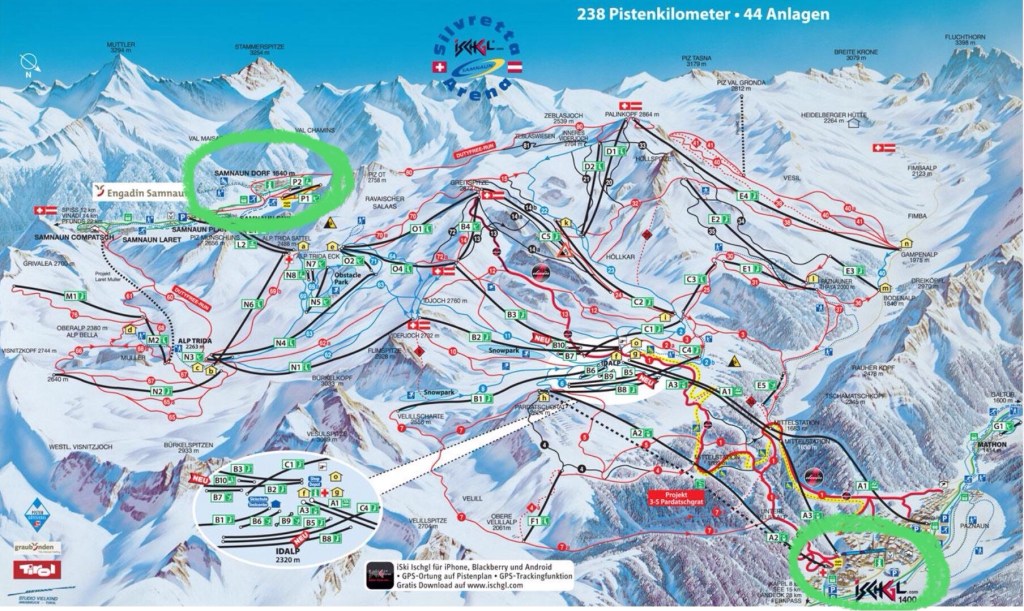
We learned we could ski from Ischgl, across the border and into the duty-free town of Samnaun, Switzerland. As the crow flies, about 10 kilometers separate the two towns, but It’s farther when skiing. Looking at the map, the route was a combination of ski lifts and Blue and Red trails. (in Europe, Blue are considered easy and Red are intermediate trails). Although we didn’t need passports to enter Switzerland, we would need them to re-enter Austria. We decided to give it a go the next day and have lunch in Samnaun, before returning to Austria.
Ischgl on the Right. Samnaun on the Left.
It was a perfect day with a blue sky as we started towards Samnaun. Through a combination of skiing and a couple of chairlifts, we arrived at the red trail heading into Switzerland. As we descended, it was nice skiing, but then we came upon an icy, relatively steep cat-track, connecting on its far side to a steep descent to the village of Samnaun. Several people stopped there gathering their breath, before continuing. The mountain was on the right side of the track. On the left side, the ground dropped rapidly away into an unskiable valley. As we were watching, many people had problems on the ice and were falling, so some caution was warranted. We were about ready to go when someone came zooming down the slope from above, cut his skis into the snow and ice to turn onto the cat-track and… the skis didn’t grab the ice. Instead of turning, he shot off the side of the mountain, traveled through the air for about 40 feet, and then landed 20 feet below the trail in the snow. Hmmmm.
That caught our attention, particularly Cathy’s. The guy was OK, but now needed to find one of his skis and then climb back up the side of the valley to reach the trail. He couldn’t ski out from where he was.
We watched awhile longer, and then I said to Cath it was time to go. She disagreed and wanted to wait a little longer. More time went by and Cathy still wasn’t quite ready. Finally, I said something like “We can’t stay here, and we can’t go back up. The only way out is down the cat-track.” Eventually we started and slowly made our way. Cathy reverted to snow-plowing and her edges grabbed on the ice. After what seemed like forever, but in reality was probably two or three minutes, we made it past the cat-track. A few people were crashing and burning around us, but we had nary a fall. All that was left was the final descent.
We stood there congratulating ourselves and I pulled out my flask for us to share a short shot of brandy. I filled the cap about half full and handed it to Cathy. She looked in the cap and said, “Really? Do you think I could have a double?!” We both laughed and I filled the cap to the brim. She shot it down, handed it back, and took off on the final descent into Samnaun. After pouring myself a short one, I put away the flask and tore after her, eventually catching up. While the slope was a little steep, the snow was good and we arrived in town without mishap.
Cathy on the Slope.
We took off our skis and found a nice looking Gasthaus. I don’t remember what we ate, but the bier we drank with lunch tasted awfully good. After lingering a while and doing a little shopping, we took a cable car back up the mountain. Following a short ski, and then an additional chairlift ride further up, we arrived at the border crossing into Austria, where we dutifully presented our passports.
Once through customs, we skied down the slope into Austria. We made a couple more runs, and decided to call it quits. It had been a tiring day.
We skied into town to a bar/restaurant we discovered earlier in the week, and after stacking our skis outside, walked in. The place was quite crowded. We found a small table, settled in, and ordered biers along with a couple of Poire Williams*, a French eau de vie (we called them Poor Willies).
As we sipped our biers, the band began playing and their first song was The Stones’ “Satisfaction”. We, along with half the crowd, jumped on the dance floor and started dancing in our ski boots. As we were dancing, the crowd, a mishmash of Austrians, Germans, French, Dutch, Italians and others from who knows where, were all singing at the top of their lungs “I CAN’T GET SNOW… SATISFACTION!” It was one of those perfect moments you can never replicate, but forever remains clear as a bell in your mind’s eye. To this day, I feel my boots hitting the floor in time with the music, hear the crowd singing to “Satisfaction” and see the look of laughter and love in Cathy’s eyes.
Eventually it was time to leave. We went outside to find our skis and make our way home. As we were standing there, Cathy grabbed her crotch with one hand and started pulling at her clothes. I burst out laughing and said, “What the hell are you doing?!” She looked me straight in the eye and answered, “I am adjusting my balls. I kicked that slope’s ass today!” With that, my wife threw her skis over her shoulder and started walking home.
Addendum:
Poire Williams is the name of a French eau de vie (literal translation – “water of life”), a clear brandy made from pears. Poire is the French word for pear, while Williams is the type of pear. In Germany and Austria, they make an equivalent bottling called Williams Birne Schnaps. Both are strong, and nothing like the peppermint schnapps we know here in America. Depending on the quality, you might either sip or shoot it.






 Live Life Exuberantly