
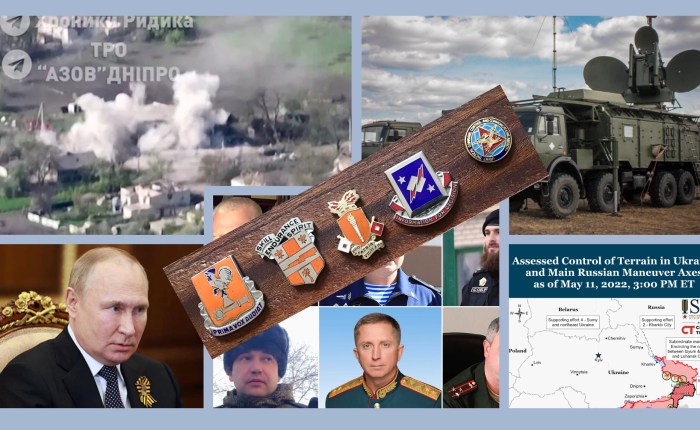
Command and Control (C2), along with Command Centers, are phrases you might hear with regard to the Russians in Ukraine these days. In my military career, I worked all levels of C2 from Infantry Brigade to Presidential, and I can see that the Russians are shockingly missing, or ignoring some C2 fundamentals.
There are other reasons for Russia’s initial bad performance in the first 100+ days of this war as well – too broad of an initial attack, poor logistics and poor morale in a conscript army all come to mind. What I keep returning to is their lack of C2 fundamentals, which impacts everything else.
Command and Control is defined by the Defense Department in military speak as “the exercise of authority and direction by a properly designated commander over assigned and attached forces in the accomplishment of the mission.” What does it really mean? In lay-terms – having the necessary leadership, team and systems to successfully manage a battle or war.
I know a thing or two about C2. From 1979 to 1983 as a junior officer, I supported Command Centers and command and control elements for 2nd Brigade 3ID, the 3rd Infantry Division itself, and VII Corps in Germany. When I returned to Germany from 1985-89, I was involved in work supporting the United States Army HQ in Heidelberg, the US European Command Alternate Support Headquarters in England, and NATO Headquarters in Belgium. In the 1990s I was involved in classified Nuclear Command and Control elements and programs at the Pentagon, and for the White House. For twenty years, virtually all of my work was involved in Command Centers, along with Command and Control processes and systems.

There were several truths and common best practices at all of those levels. I’d like to highlight just a few, including mobility, multiple communications links, and independent and inspired leadership at all levels. The Russians have problems with all three of those concepts.
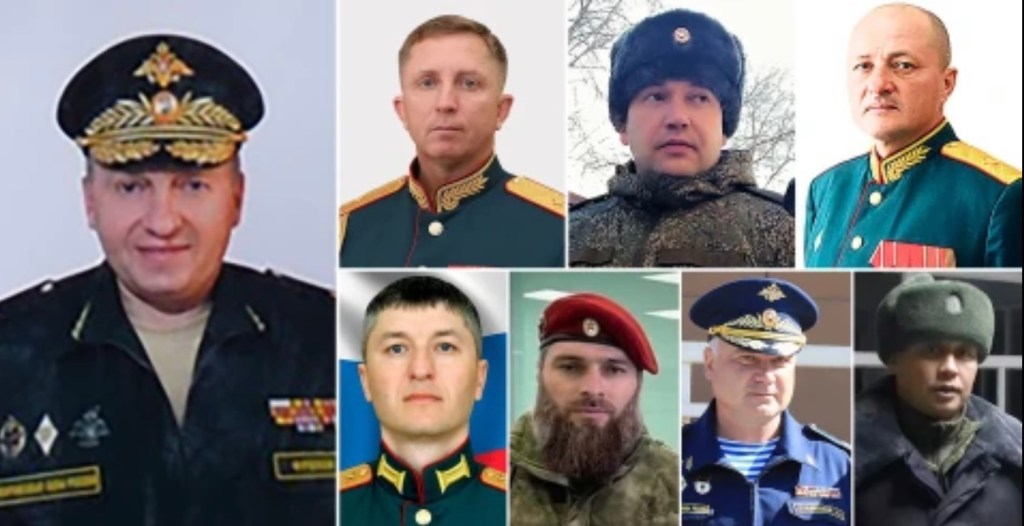
First, they appear to have forgotten that the closer your Command Center is to the front, the more mobile you must be. You can’t allow your Command and Control elements to stay in one place, otherwise they are identified and targeted. This is particularly true today with the availability of satellite imagery. The result of them ignoring this maxim? We have seen multiple Command Centers destroyed, and at least 12 Russian General Officers killed at those Command Centers. As a comparison, the US lost 40 General Officers in all of WWII and 12 GOs in the entire Vietnam war.
Next, your command and control centers need multiple communications elements and links, particularly systems which are bi-directional, not Omni-directional. Why is that? Well, for one thing, Omni-directional systems (think HF Radio as an example) are easily detectable by your enemy, and as a result easily targeted. Also, without multiple systems, if one system isn’t working, your messages don’t get through. How did the Russians try and solve this second problem? By using cell phones, which are, guess what? Easily detectable. Combine this problem with their lack of mobility, and the issues for C2 elements are compounded.
I think it is a third issue that is causing the greatest harm for them – their seeming inability to push Command and Control leadership to the lowest levels possible. In the US Army, we try to encourage resourcefulness and independent thinking at all levels of leadership, down to and including individual platoons and squads. It’s not that they act independent of each other, but if there is an issue, individual action, leadership and gumption are expected. With the Russian army, this doesn’t appear to be the case. Putin, or his henchmen, are managing all aspects of the war and they have little ingenuity or original battlefield thinking going on at any level.
In the US, I’ve watched C2 migrate to C3 (add communications), to C3I (add intelligence) to C4I (add computers), to C4ISR (add Surveillance and Reconnaissance), to C5ISR (add Cyber) and today, C6ISR (add Combat Systems). There are two important lessons here: First, The US Military, of course, always loves a growing acronym (kidding … 😉 …); and second, the true lesson is the US Military continues to adapt and improve. All of those additional letters added to the C2 acronym? They are ways we continue to improve and support the fundamentals of Command and Control. We view enhancements to Command and Control as force multipliers.
The Russians continue to press their attack and they are making progress in the East. I will not be surprised to see the Donbas region fall into their hands, and probably sooner rather than later. But it’s coming at a tremendous cost of lives and equipment to them. Currently, the Pentagon reports they have lost in excess of 20% of their fighting forces, including over 1,000 tanks. They have reverted to Russian WWII type tactics of leveling everything in their path as they approach an area. The areas they are “conquering” are reduced to rubble, and remember, these are the areas supposedly “friendly” to the Russians.
Putin, of course, doesn’t care about the loss of Russian manpower, or the destruction of Ukraine. He only wants a victory. When all is said and done, I don’t know that he will regret the lack of Command and Control fundamentals and force multipliers in his military structure, but the families of thousands of dead soldiers back home might.
Addendum:
- To my West Point classmates and old military buddies, I realize this is an overly simplified version of Command and Control and what is going on in Ukraine. I’m sure there already are, or soon will be many complex studies and reviews of what is happening in Ukraine, and what problems the Russians are having. I also believe simplicity sometimes serves a purpose, and in this case, its relatively accurate.
- Rick Steinke, a West Point classmate, retired Colonel, and Former Associate Dean at the George C Marshall Center in Garmisch-Partenkirchen, Germany, sent this note to me after I posted the blog: Well said, Max. I would also humbly add that you must exercise and train said C2, across a combined arms environment. This training must be honest in exposing problems and weaknesses. This approach is anathema to the Russian military. After all, generals and colonels might end up looking incompetent. Said another way, with their training approach it has always been better to LOOK competent than BE competent. At our National Training Center (three trips as BN/ BDE S-3)in the Mojave desert, after action reviews, brutal and transparent as they were, always made well-led units – and leaders – better.
 Live Life Exuberantly