
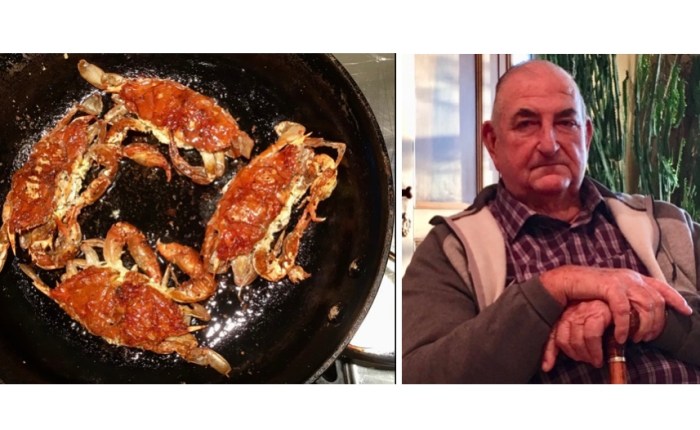
We invited our neighbor Bill over for dinner last night. We were looking forward to catching up, and hearing about his recent travels. The menu? Soft shell crabs and sweet corn. It’s summer and we are on the Eastern Shore of Mary’s Land. What could be more perfect for July?
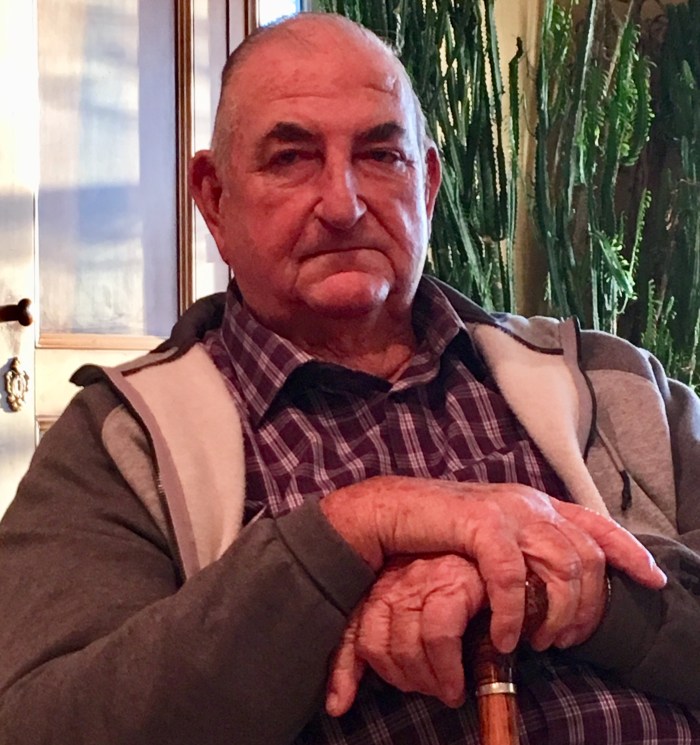
The recipe is from our neighbor on Tilghman, Captain Stanley, who was a skipjack captain. If a skipjack captain gives you a seafood recipe, you damned well better pay attention and write it down. Captain Stanley is in his 80s. He’s spent the better part of his life as a waterman on the Bay, crabbing, and oystering. The recipe is totally minimalist, but that makes perfect sense. As Captain Stanley says, “why add anything else and take away from the flavor?” He worked on the Bay for over 60 years and knows a thing or two about crabs. I’m going to listen.
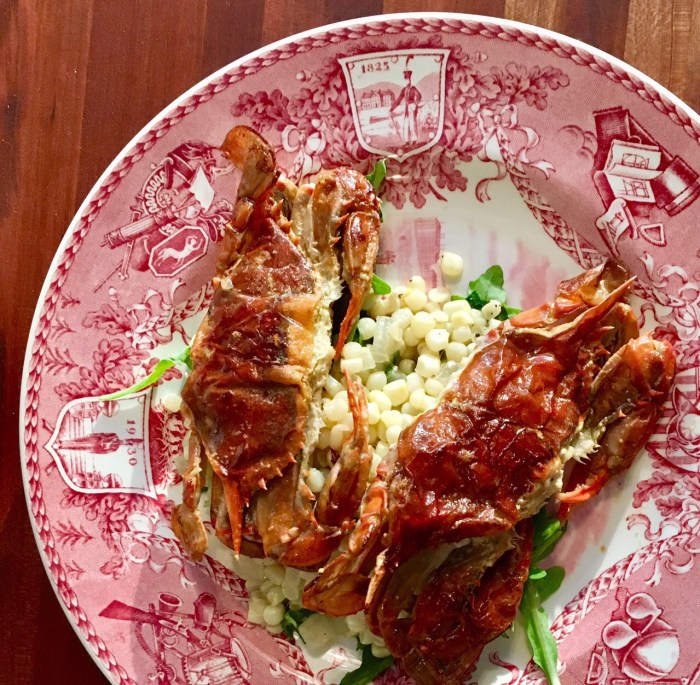
Cathy added to the meal by sautéing the sweet corn in butter and olive oil with some onion and jalapeño. The final dish? A spread of arugula topped with the sweet corn sauté. Put the soft shells on the top of the corn, with a bit of tarter sauce on the side. We served them with a Pinot, but beer would also go with the dish pretty well.
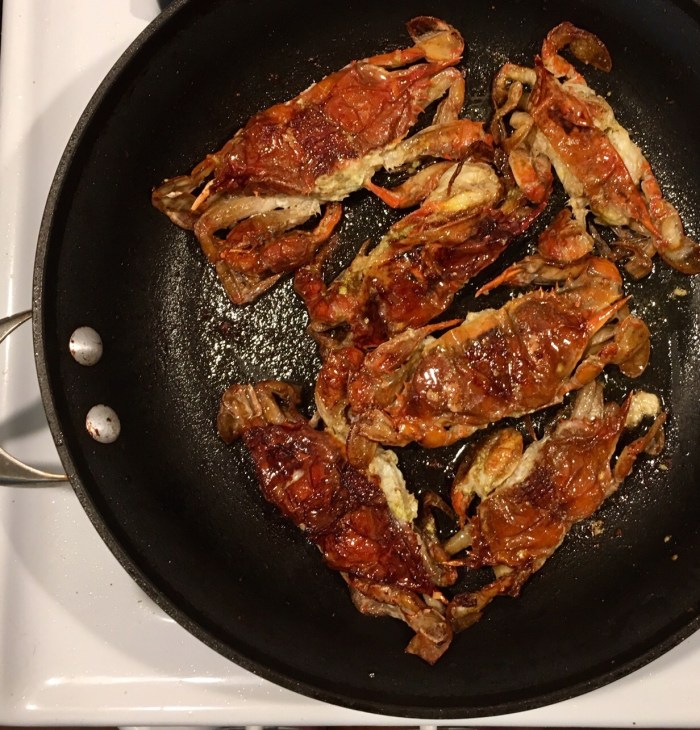
Captain Stanley’s Soft Shell Crabs:
Cleaning the soft shells:
1. Cut off face
2. Take off apron (male or female) (and any inner extension that comes with it).
3. Turn over. Lift top edge and scrape out the “dead men” on each side (the lungs). Put edge back down
4. If female, flip back over. Make slits on the two sides of the crab and take out the two white, dime sized objects (the ovaries). Some people (including me) leave the ovaries in.
To cook:
1. After cleaning, salt and pepper them.
2. Sauté in butter (use ghee or clarified butter if you can; if not, combination of oil and butter) about 3, 3 1/2 min per side.
3. Pull off and eat.
4. Have a little tartar sauce if you want.
Addendum:
I borrowed the phrase “Mary’s Land” from Mary Chapin Carpenter, who wrote a song about Maryland with that same title. It’s a great tribute to the state of Maryland.
If you want to learn more about Captain Stanley, or watermen in general, I highly recommend the Book Skipjack by Christopher White. It’s a wonderful book about a lifestyle that is slowly dying away here on the Eastern Shore of Maryland.
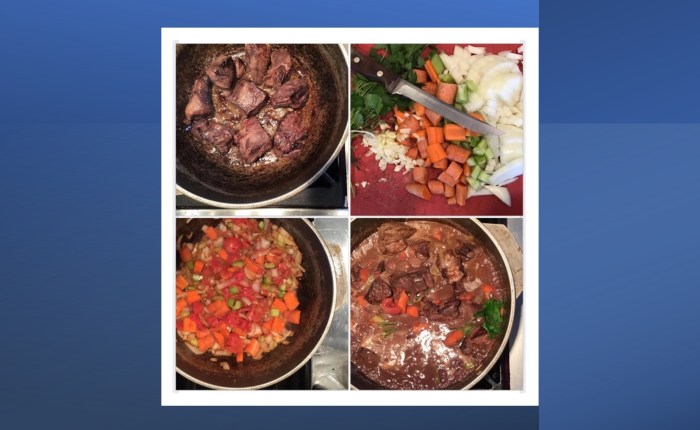
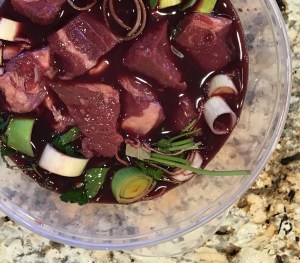 Last Thursday, I pulled the chuck roast out of the freezer to thaw, and made up my shopping list. On Friday morning, I went shopping for the few things I still needed – a leek, some parsley and thyme. We had everything else at home. After a quick lunch, I cut up the beef and added it to a bowl which already included smashed garlic, sliced leak, a bouquet garni, and a bottle of red wine. Day one was done, with plenty of time left to take our dog Carmen for a walk, and in anticipation of the snow, to bring more firewood into the house.
 I continued with the daube around noon and day 2 was only a bit more work than day 1. I browned the beef; chopped up and sauté garlic, onions, celery, carrots and tomato; added the beef back to the pot with the vegetables, along with a new bouquet garni; and added the strained and reserved wine marinade to the pot. Once that was done, it simmered on low heat for about 3 hours.
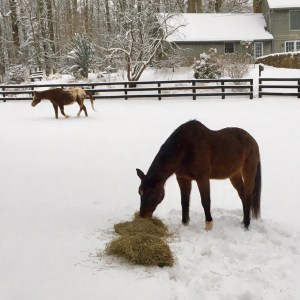 Sunday, Day 3, greeted us with a blanket of snow. About 7 inches had fallen, with more expected over the course of the day. After feeding the horses in the morning, and then having my own breakfast, I plowed our drive and around the barn, and then plowed the drives of several elderly neighbors. I made it back inside for lunch, and then some playoff football.


