Erbseneintopf

Erbseneintopf

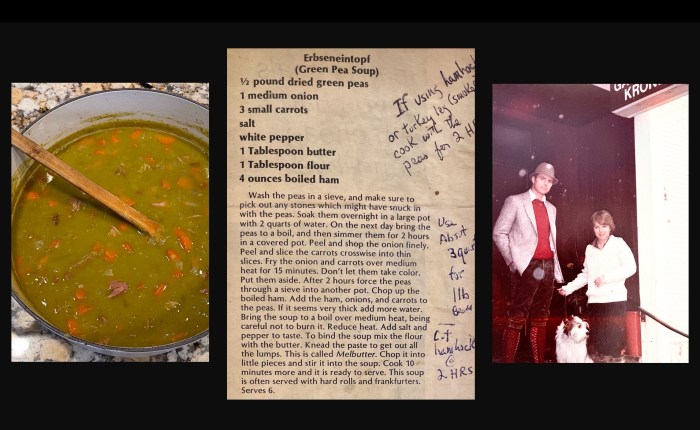
The oldest recipe in my recipe collection is for Erbseneintopf – a German Split Pea Soup. It came from The Stars and Stripes newspaper in Germany in ‘82 or ‘83, and is now a bit tattered. The first time I tasted the soup in a Gasthaus, I thought I’d died and gone to heaven. Getting the recipe was a bonus.

Erbseneintopf. The word and the soup are both a mouthful. Erbseneintopf literally translates to “Pea One-Pot”, and is really closer to a stew. Made properly, it is a thick soup with little chunks of sausage or ham hock in it. I’m not talking the puny American ham hocks, but the big German kind – meaty and smoky. The meat gives the stew a wonderful flavor. It’s a simple, hearty meal.

I believe the first time I had the dish was in a little village near Stuttgart, although I can’t remember the name of the town, or the Gasthaus, for the life of me. At the time, we often went for a walk in the woods on a Sunday afternoon, as many Germans did, and then would stop at a nearby Gasthaus for a late lunch, and a beer or two. We’d usually have some sort of simple meal – a bratwurst, or goulash soup, or some charcuterie and cheese. On one of those trips, it started snowing. Eventually we made it back to the village and the Gasthaus, where Erbseneintopf was on the menu, and despite the green color, I gave it a try. It was delicious. It became one of those dishes that stayed in my mind and I started looking for it on the menu anytime we went to a new Gasthaus – especially in winter.

Cathy, Top and I, probably in ‘82, outside a Gasthaus as it was snowing one Sunday

There were a few other dishes that stuck in my brain back then, and I would stalk them for a while – eating the dish anytime I saw it on a new place’s menu. One of those was Cordon Bleu. I spent a couple of years looking for the perfect Cordon Bleu during our travels across Germany, France and Northern Italy, and dragged visiting friends with me on my quest. Another dish was Käsespätzle, basically a German adult version of Mac ‘n Cheese, with homemade noodles, onions and cheese – It was total comfort food and a bazillion calories.

Cordon Bleu, käsespätzle, schnitzel, wurst, certain kinds of steak, pommes frites (french fries) and a host of other dishes all became a part of our life. We loved German food, but never tried cooking it at home. I’m not sure why. Maybe we knew we couldn’t match what we were eating in the Gasthauses.

Then one day, the world changed. Around 1982, our local military newspaper, The Stars and Stripes*, started a monthly feature with recipes for different German dishes. Some were simple, some more complicated. I’d read the recipes, but didn’t really think much about them, and then one day, they published several soup recipes – Gulaschsuppe, Linseneintopf (Lentil Soup), Tomatencremesuppe (Tomato Soup), and at the bottom of the page – a recipe for Erbseneintopf! I promptly cut the recipe out of the paper.

A little faded, and tattered, but the recipe works just fine.

This was most excellent. I spoke with a German friend about the recipe and she thought it looked authentic. Her one suggestion was to swap out the boiled ham called for in the recipe and replace it with chopped up ham hock, or some smoky local German sausage. It was a good suggestion.

A week or two later, we made the dish for the first time and lightning struck. We couldn’t believe how much it tasted like the restaurant version. The ham hocks provided the smokiness, while the “Melbutter” (see recipe – a mixture of flour and butter) thickened the soup. This baby was a keeper. At the time it was actually one of the very few dishes I cooked, or could cook. Yea, I did steaks, burgers and brats on the grill, but cooking something in the kitchen? I was out of my league there. This soup was probably just about it.
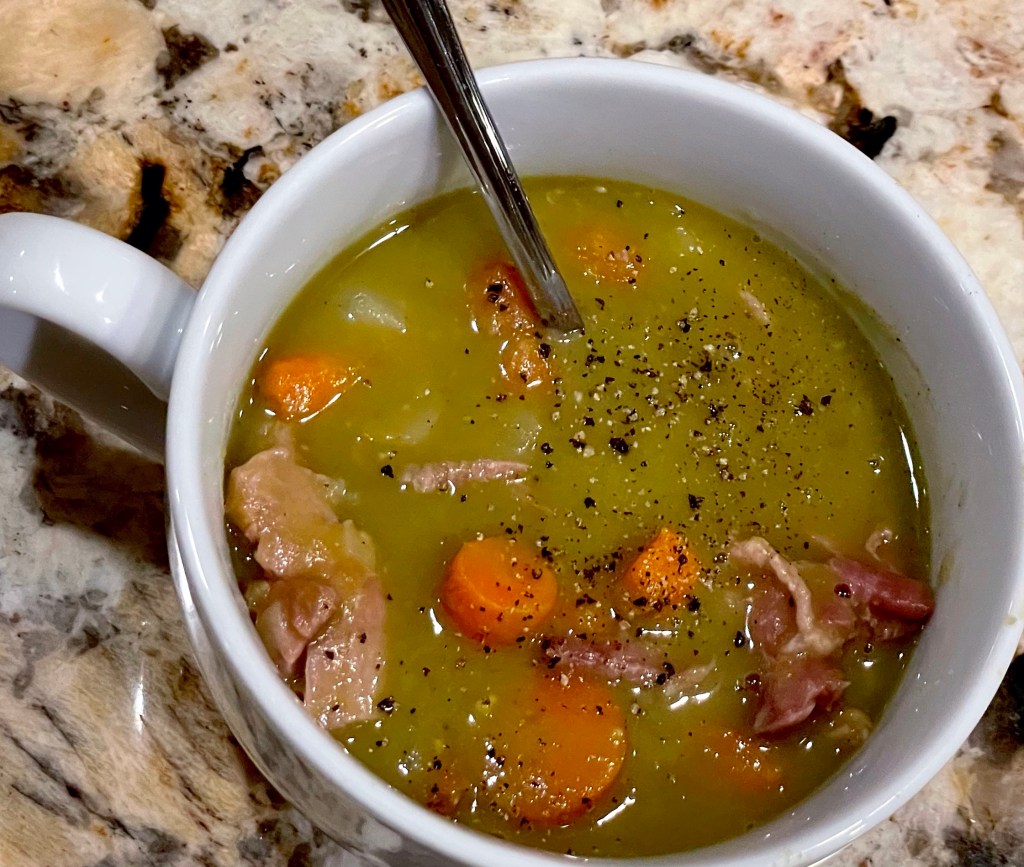
A bowl of Erbseneintopf. Still delicious, after all these years.

Erbseneintopf has remained a part of my winter repertoire ever since. I’ve only made one change since cooking it that first time. Here in the States, it’s sometimes hard to find good German sausage, or ham hocks with a bit more meat on them. As a result, I often substitute a smoked turkey leg for the ham hocks. It gets the job done.

Looking for a good winter soup on a cold, snowy day? Erbseneintopf might be just what you need. It’s peasant food at it’s best. As with many soups and stews, it’s even better on the second day.

Addendum:

⁃ * The Stars and Stripes newspaper was first published during the Civil war. Later, it was delivered to US forces in France during WWI, and became an overseas fixture during WWII. It continued through Korea and Vietnam, and is still published at overseas military locations to this day, although there were discussions during the Trump presidency of cancelling it (it wasn’t). It operates from inside DoD, but is editorially separate and independent from it. The newspaper has been published continuously in Europe since 1942.

⁃ I also struck pay dirt a month or two later when The Stars and Stripes published recipes for Spätzle and Käsespätzle, and our friends Jim and Res bought us a Spätzlemaker for Christmas. The Spätzlemaker is 40 years old now, and in great shape. We still use it a couple times of year.

⁃ My friend Tim Stouffer reminds me occasionally about my Cordon Bleu quest. He visited Cath and I several times throughout the ‘80s. On at least a couple of those visits, I know I inflicted my obsession with Cordon Bleu on him.

An Honest Man at El Agave

An Honest Man at El Agave

How much is an honest man worth?

I needed to run into town for a couple of errands last week. As I was finishing up, it was about 11:30. I was hungry and suddenly had an urge for Mexican food. I called our favorite place, El Agave, a local family owned restaurant here in Warrenton, Virginia to see if I could pick up a couple of burritos to go, and they said sure, come by in ten minutes.

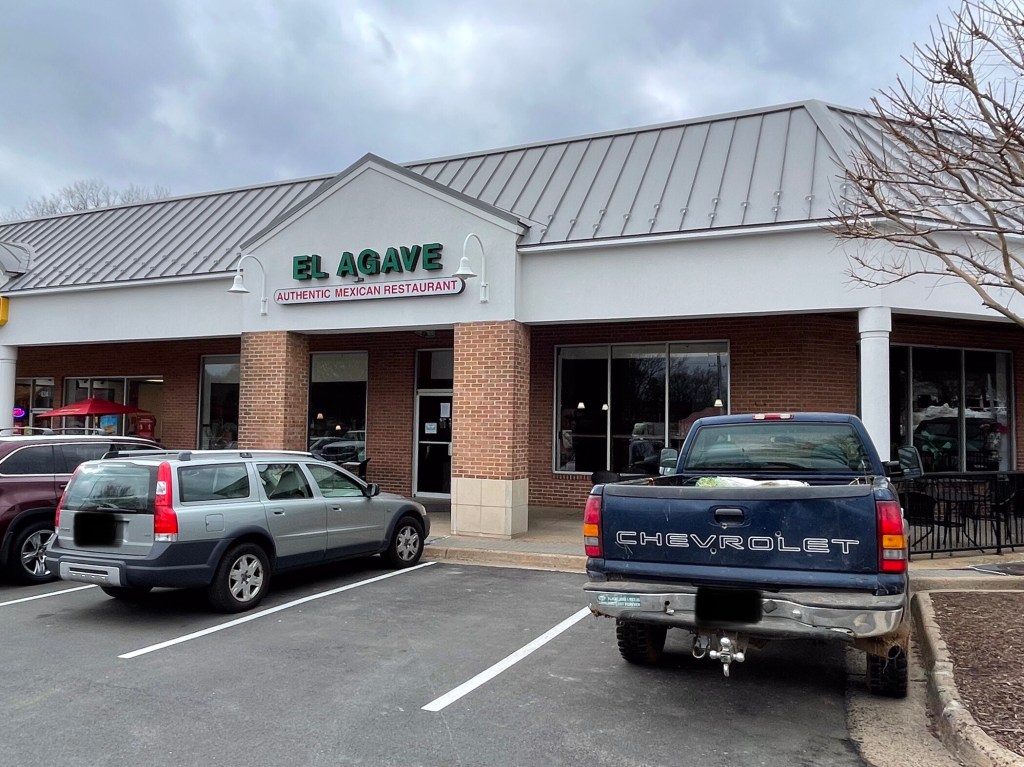
I finished up at the dry cleaners, and drove over to El Agave. It’s been here in Warrenton for years. If we are looking for “Mexican food”, or a decent margarita, it’s almost always the place we go. You know the kind of place – honest food, nice portions, good service and relatively inexpensive. Since Covid, we haven’t eaten there as much in person, but have done take out many times.

El Agave – Our Kind of Place

As I came into the restaurant, my order was just coming out of the kitchen. The owner/manager and I were making small talk as I paid, and he said, “I’m sorry, we have no plastic forks. They are coming in this afternoon.” I answered back “No problem, I’m taking it home to eat.”

We talked a bit more and then I said “Too bad on the forks, I guess between supply chain issues, and the snow storm last week, your order was backed up, eh?”

He looked at me and smiled, and then said “Or maybe I just forgot to order them on time.

I laughed and said “Wow! An honest man!” He chuckled and answered back “People are going to believe what they want to anyway.”

I thanked him, left a tip and went outside to my truck. On the drive home, I was still thinking about our exchange, and it occurred to me. If he was this honest about a small mistake he made, it says a lot about how he runs his restaurant overall. He could have easily laughed at my supply chain comment, agreed it was causing him problems, and I wouldn’t have thought anything more about it. One little white lie that, in the big scheme of things, didn’t matter.

Instead, he told the truth.

Maybe I’m making too much of the whole incident, but it continues to echo around in my brain. I’ve always enjoyed El Agave. Now, I like it even more. It’s always great to see honesty and excellence in a local business. Thank you El Agave – I’ll be back soon.

We’ll Be Back Soon!

Addendum:

There are five local El Agave restaurants in or near Fauquier County, Virginia. I’ve only been to two of them – the one in Warrenton, and one half way between Marshall and The Plains. I highly recommend both of them. You can learn more about El Agave here: https://elagavemexrestaurant.com/

Punk Turns Sixty

Punk Turns Sixty

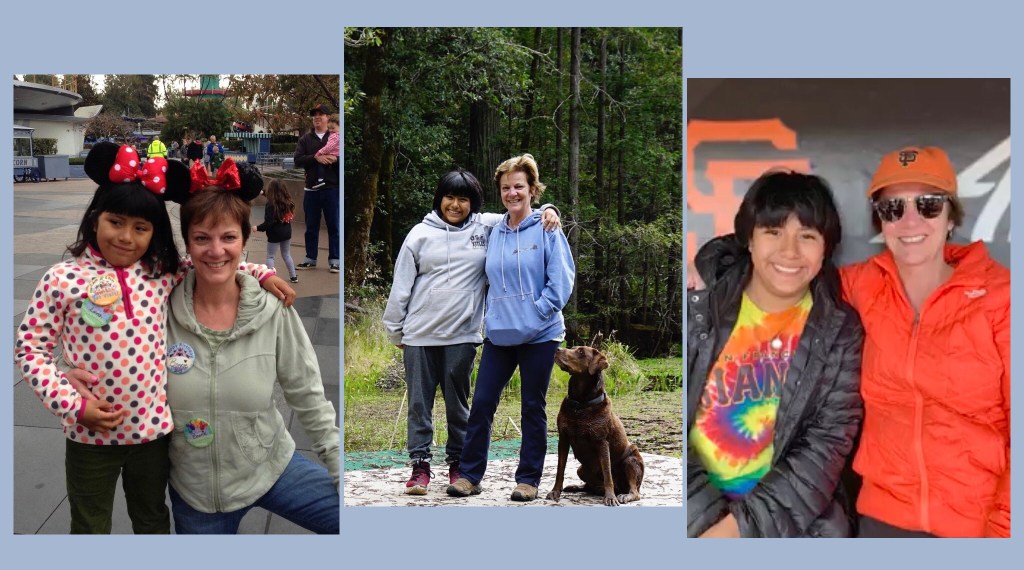
Punk turns sixty this week. Yep, that’s correct. Punk, also known as Bonnie, Bon, Bonswa, Lana’s mom, Don’s wife, and one half of ‘The Sisters of no Mercy’ turns sixty this week. For Cathy and I, she is the youngest of all of our sisters and we are happy to finally welcome her to middle age – ;-). Come on in Bonnie, the water is fine…

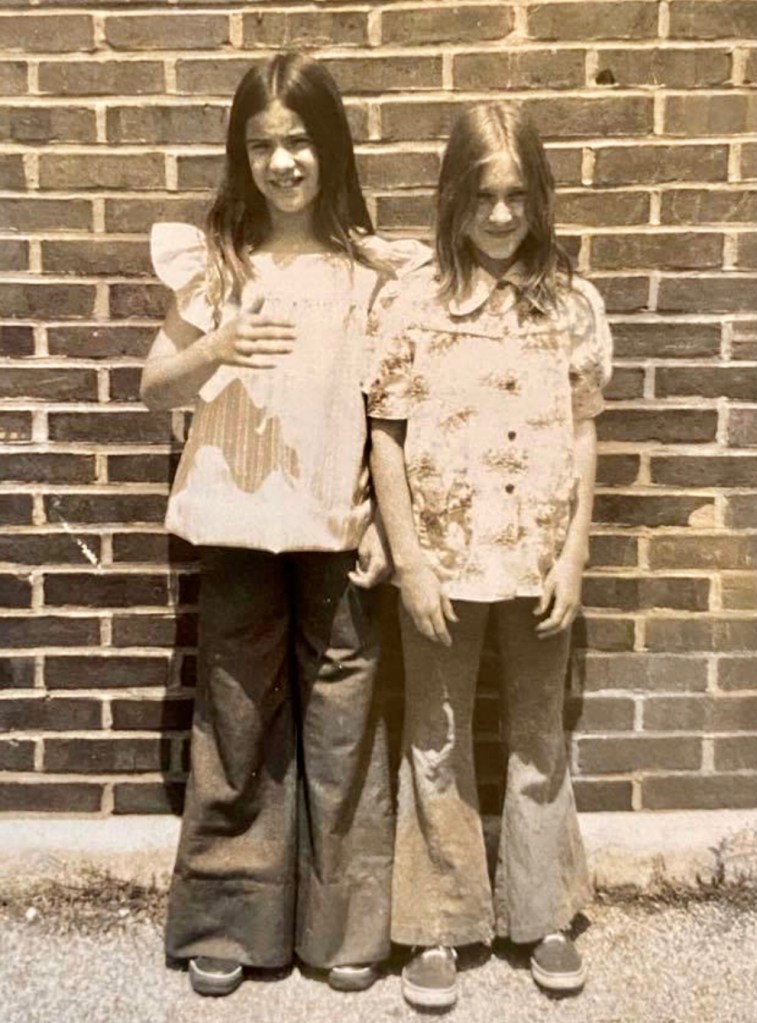
Truth be told, I’ve known Bonnie for most of my life, and hers. When Cathy and I started dating in ‘72, Bonnie was ten years old, and known in their family as “Punk”. I don’t think anyone has called her that in a long time.

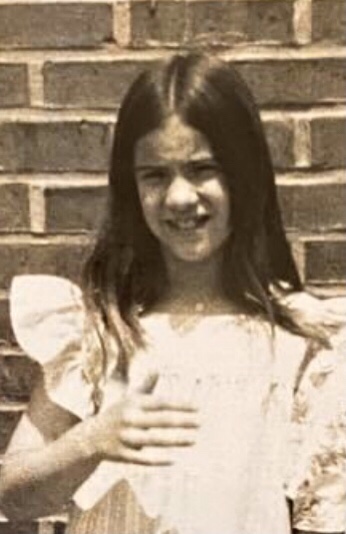
Bonnie, around the time we first met

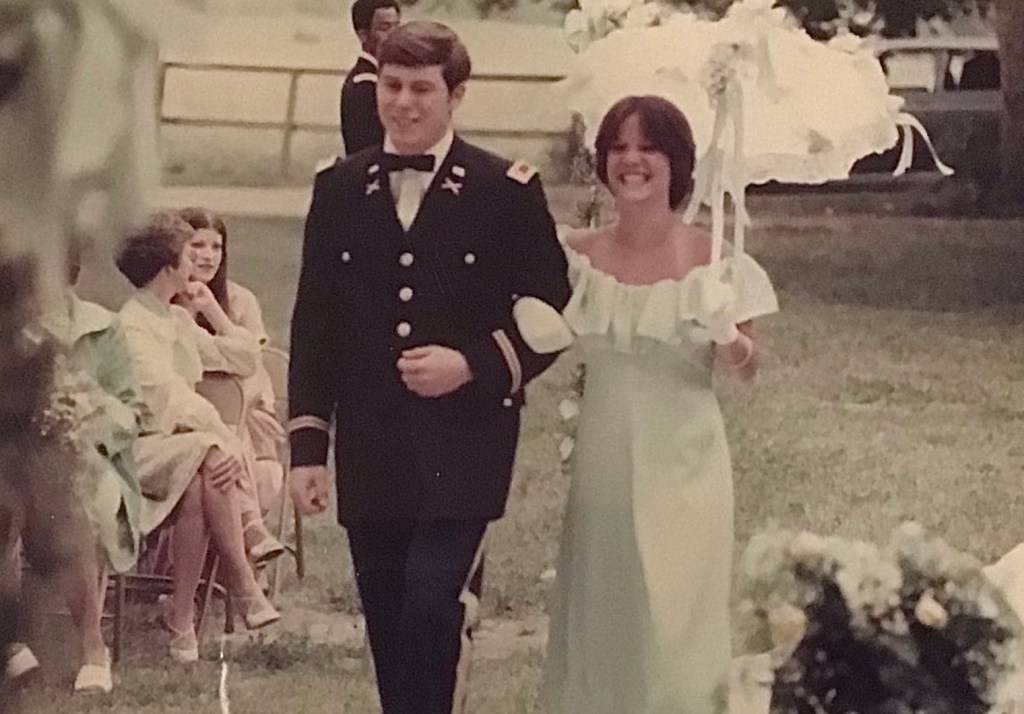
When we married in ‘78, Bonnie was all of sixteen and at the wedding, held her own with the newly commissioned officers in attendance, and all of our long time friends. In ‘83, when we returned after almost five years in Germany, she was of legal age – twenty-one, living near Washington DC and was married. That’s when I remember our relationship starting to change. She was no longer just Cath’s punk sister – she had become an adult in her own right. It was really the start of an adult friendship between us, something I’ve treasured ever since.

Bonnie at our wedding in ‘78, with my classmate Tom Guthrie

In our second tour of Germany, Bonnie enjoyed Multiple trips to Europe and even a Christmas. She was present and an integral participant at the initial Hare-of-the-Dog New Year’s Day party. When we returned to the States in ‘89, Bonnie was still in her twenties. Two years later, we attended the combined party for her thirtieth birthday and her graduation from the University of Maryland. That was a fun night – I seem to remember a bottle of Dom Perignon at some point.

Never one to let the grass grow under her feet, Bonnie moved to California a year or two later. There, she really launched her marketing career, her firm, B3 Communications, was established and she met the love of her life, Don. For the next almost twenty five years, the four of us were the best of friends. We named ourselves the 4-H club and had “meetings” on the East Coast, West Coast, and places in between. Those good times still bring a smile to my face.

Good times with the 4H Club

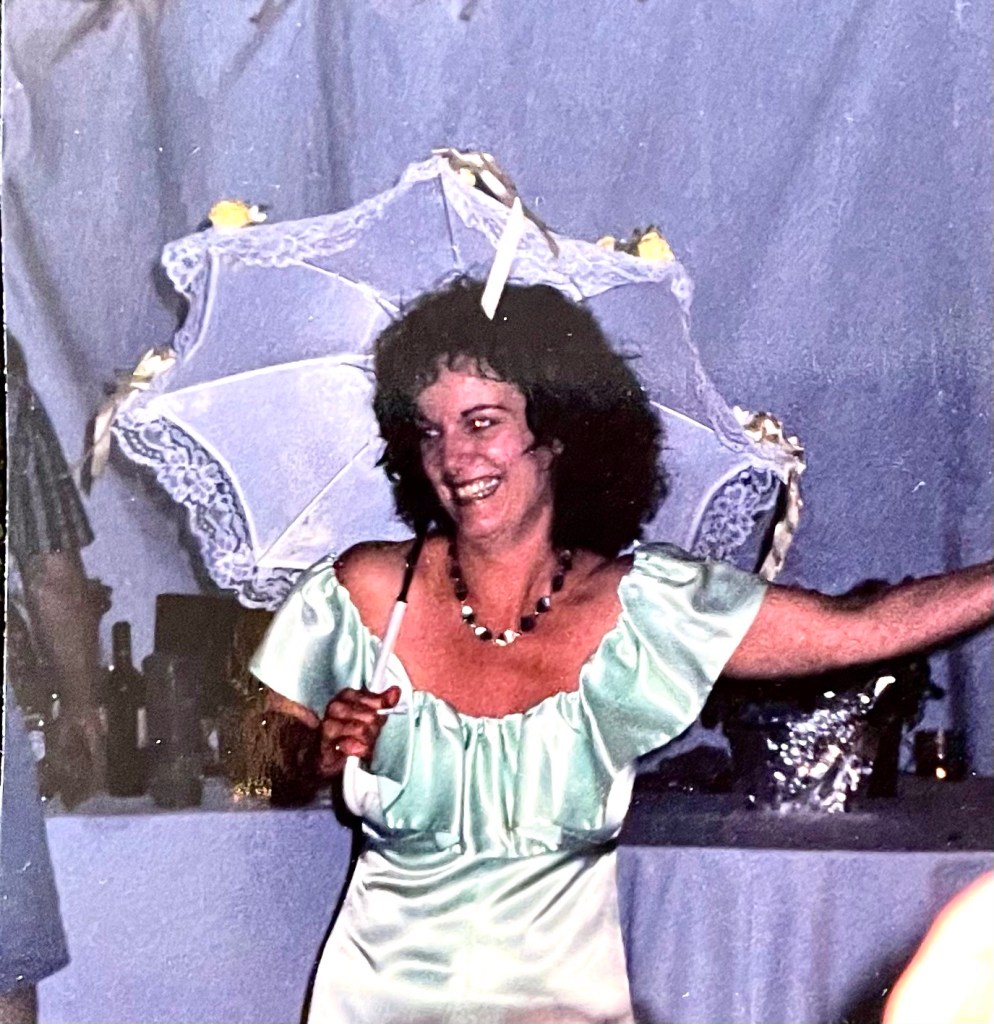
In 2003, Cathy and I celebrated our twenty-fifth wedding anniversary with a large party, which Bonnie and Don attended. During the evening’s festivities, Bonnie disappeared for a bit. When she reappeared later to make a speech congratulating us, she was wearing her Bridesmaid’s dress, and carrying her parasol from our wedding twenty-five years before. At the age of forty-two, she was happy to inform anyone who would listen that, “Yes, the dress still fits; I didn’t have to alter it!” 😉

Yes, the dress still fit, 25 years later.

Of course Lana joined Bonnie and Don along the way in 2005 and we changed from the 4-H Club to the 5-H Club.

Bonnie and Lana

I now chuckle slightly at the fact that as Bonnie turns sixty, Lana is sixteen – the same age Bonnie was when Cathy and I married. How is it even possible? Seriously, how is that even possible? Where did the time go?

So, yea, Punk turns sixty this week. We look forward to celebrating the big day with her out in California. Good food, great wine, loving family and friends – It’s going to be wonderful.

Happy Birthday Punk!

Happy Birthday Punk! I love you as if you are one of my own sisters, and also one of my best friends. On the last day of your 59th year, I want to welcome you to the start of your seventh decade – jump on in, the water is just fine.

Addendum:

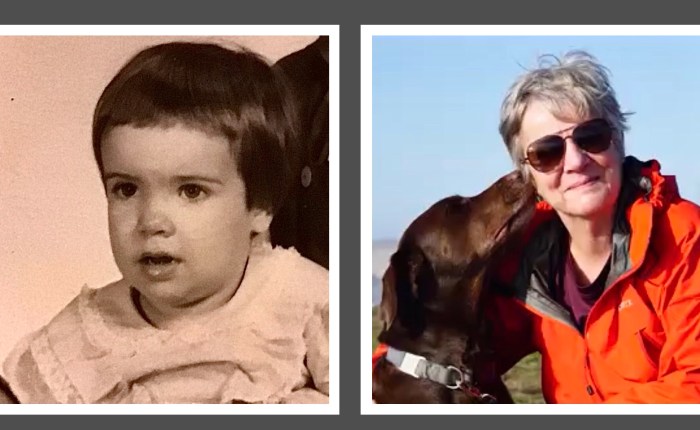
Thanks to Lana Harris for the use of the picture of Bonnie and their Dog, Ruby for the cover photo.

Thanks to Paula Johnson Hamley for the picture of Bonnie in the 5th Grade, around the time we met. I clipped the picture to just get Bonnie, but the whole picture (below) is too cute to pass up. They had just been selected as the 5th Grade Students of the Month in Mr. Herman’s class at Shabbona Grade School in Ottawa Illinois.

Bonnie Snow and Paula Johnson Hamley in 5th Grade

Christmas is Coming

Christmas is Coming

It’s funny what sparks a memory. For me, the Christmas song Up on the Housetop, with it’s chorus of “Ho ho ho, who wouldn’t go, Up on the housetop, click, click, click, down through the chimney with good Saint Nick…”, instantly floods me with holiday memories from my youth. I fondly remember McKinley Grade School in Ottawa, and our Principal, Mr Powell.

‘Tis the season. Don’t we all really remember the Christmases from our childhood? I know I do. The Christmases at McKinley, on the southside of Ottawa, Illinois were special. We ALL remember them.

McKinley was originally a small two story wooden school house. Eventually, in the late fifties, it was replaced with a large, one story brick building. The new school included an indoor gymnasium, with a small elevated stage on one side. Both would figure prominently in the school’s Christmas celebrations.

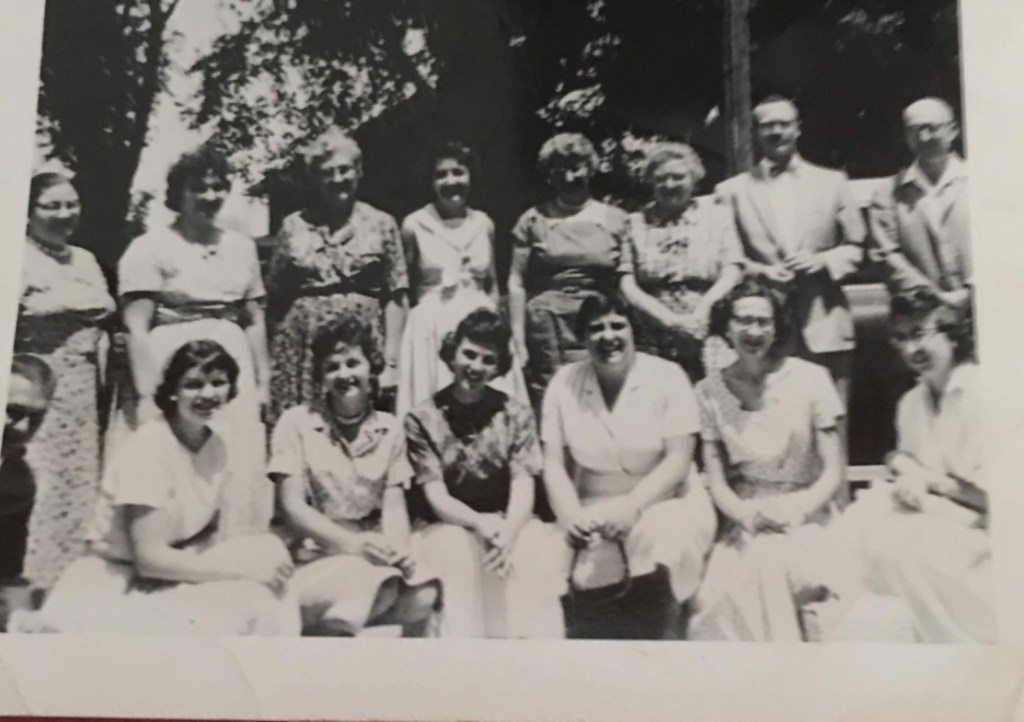
McKinley School Teachers for 1959/60. Mr Powell is second from the right in the second row. The photo is probably from about two years after the new school building opened.

Our excitement started sometime in early December. Christmas was approaching, which of course meant an upcoming break, and if we were lucky, the chance to go sledding, or maybe skating on the pond at Varland’s pasture. Almost as exciting was the Christmas Show the school presented, just before the break. The teachers told us about the upcoming show, and each class was assigned a song to sing. We stared practicing on a daily basis.

A large evergreen tree eventually arrived at the school and was placed prominently on one side of the gym. Of course, it needed decorating. Where did the ornaments come from? They were handmade by the students. Yes, there were the obligatory construction paper chains from the younger classes, but another source of ornaments proved a favorite memory for many. Milk, in individual glass bottles was delivered to school each day. Those bottles had blue or silver foil caps. We collected the caps and then made stars, ornaments, or strings of ornaments from them. Oh how they shined and sparkled in the reflected light on the tree.

Foil milk bottle caps similar to these made perfect tree ornaments

The excitement grew, and a few days before our break, there were gift exchanges in each of the classrooms. The gifts weren’t big of course, but it was still fun and increased our anticipation.

As the date of the show approached, we kids practiced our songs. The week of the show, the entire school gathered in the gym a few times to practice, and also to sing “songs of the season” together. Those daytime sessions were great fun. All of the kids marched by class to the gymnasium, and then we’d sit on the floor facing the stage. Everyone was in a giddy mood with much laughter, yelling and barely contained excitement. Each class practiced their songs, but in between, Mr. Powell would lead the entire school in Christmas and Holiday songs. He stood in front of us near the tree, wearing a holiday bow tie. I think he was as excited as we were.

When leading the songs, he also acted some of them out. One example several friends remember was singing the song Up on the Housetop*. As the chorus was sung, Mr. Powell would stick his belly out and while placing both hands over his stomach, sing in his deep baritone “Ho ho ho, who wouldn’t go, ho ho ho, who wouldn’t go…”. When the next line “Up on the housetop, click, click, click, Down through the chimney with good Saint Nick” was sung, he clicked his fingers three times instead of actually singing “click, click, click.” Of course, all of us kids quickly caught on, and did the same thing – imagine a couple hundred kids all clicking in time with the chorus, and you get the picture.

The songs we sang at the time included both religious and secular Christmas songs. One student who is Jewish, remembered feeling special because we would inevitably sing one or two Hannukah songs. It was a simpler time.

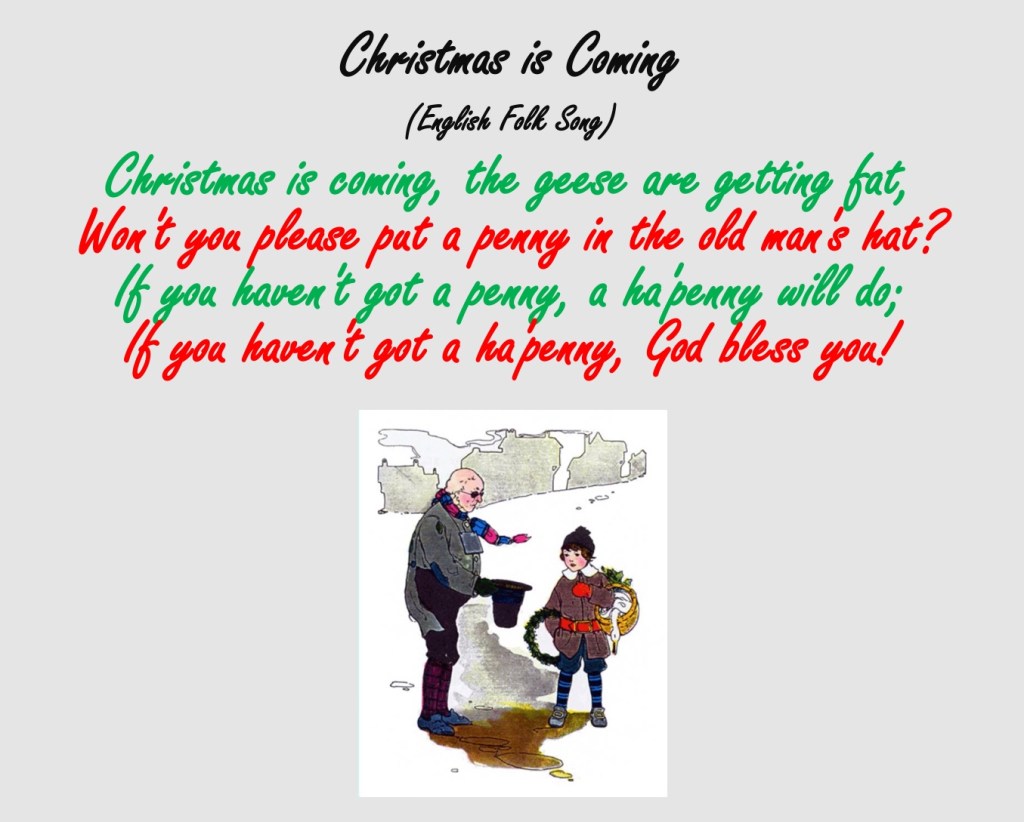
Eventually, it was time to return to our classrooms, but the singing wasn’t quite over. Mr. Powell would start us singing an old English folk song Christmas is Coming, with the opening line “Christmas is coming, the geese are getting fat…” The song is meant to be sung as a round, which is exactly what we did. I believe we were divided into thirds, with each group starting one line after the previous group started. Once we had sung “around” a couple of times, the classes were dismissed, one grade at a time, with each class singing the song all the way back to their classroom.

For the younger kids, there was often a bit of confusion on the lyrics. Instead of “…if you haven’t got a ha’penny, God bless you…”, they heard “if you haven’t got a hay penny God Bless a shoe…” What was a Hay Penny? Why were we blessing shoes? It could all be a bit confusing, but the fun and good spirits made up for it.

Finally it was the big day of the Christmas Show. It was also the day before Christmas break started. Excitement was at a fevered pitch.

The evening program was a bit more formal than our daytime singalongs. It wasn’t quite the Christmas Show from the movie Love Actually – McKinley School was a bit more primitive, but we did have a stage, and the adults sat on folding chairs set up on the gym floor itself. As kids, we dressed in our “good clothes” for the big night. Our parents brought treats and cookies for the classrooms.

While the adults found their seats in the gymnasium, we kids walked to our classrooms, waiting for our turn to sing. My friend Joy remembers sitting at her desk eating cookies and coloring (after smelling) the newly mimeographed Christmas pictures. For the younger grades, there were also games that some of the parents (moms) helped with in the classrooms. Everyone wanted to make sure we kids were entertained, focused and staying out of trouble.

Finally the show started, with the Kindergarten classes singing first. My friend Lynn remembers “The big curtain opening was our cue to start singing. It was quite intimidating to see all the people “out there” sitting on folding chairs looking at us. We sang Away in a Manger and the little stage seemed huge.”

One of the classes always sang Oh Christmas Tree, Oh Christmas Tree in German (Oh Tannenbaum, Oh Tannenbaum…). How cool was that? Singing a Christmas song from another country!

The show eventually ended and parents picked up their children from the classrooms. Cookies were finished, and newly colored Christmas pictures served as visual reminders of the fun that night. During the short drive home, we were still animated. I suppose the stimulation from doing the show, along with the sugar rush of the cookies combined and kept us amped up for awhile.

As with all things, time passed and the world changed – not for better or worse, but changed none-the-less. Mr Powell retired. The huge tree was replaced with two smaller artificial trees for fire safety. Eventually, the festivities changed from a secular Christmas celebration to a Holiday celebration, which was the right thing to do.

One teacher later reminisced “We teachers loved the singing almost more than you kids! We continued the tradition after Mr. Powell retired, but it was never quite the same.”

I’ve been gone from Ottawa for many years now, and to be honest, I don’t know if they have the Holiday celebration in the gym anymore. What I do know is I have wonderful memories from my youth that I wouldn’t trade for anything.

I’ll be home for Christmas, if only in my dreams… Christmas is coming, the geese are getting fat, Please put a penny in the old man’s hat…

Addendum:

  • There is some question/controversy among my friends about whether the title of the song is Up on the Housetop or Up on the Rooftop. Folk seemingly remember singing it both ways. For what it’s worth, the song is referenced in Wikipedia as Up on Housetop. It was written in 1864 and is the second-oldest secular Christmas song after Jingle Bells, which was written in 1857.
  • I had some memories from those special times at McKinley, but of course forgot lots too, until reminded by others about some of the activities. My thanks to the many who contributed memories to this blog, including: students Lisa Palmer Braley, Brenda Brown, Karen Williams Miller, Robert Cavanaugh, Linda Baker, Dorey Renee, Glenda Boettcher, Laurie Sargent Kinken, Mary Cunningham Heider, Kelly Nagle Shanley, Barbara Charlier Houston, LeeAnn Slack Niemann, Lynne Galley Robinson, Becky Ann, Roberta Sherman Schwandner. Jan Butler, Robert Cross, Linda Gerding Bergman, Joy Starjak Algate, Jessica Burress, Roberta Gourley, Tanya McCambridge, Tim Stouffer, and Howard Johnson, along with teachers Charlean Grobe and Sylvia Eichelkraut.
  • Thanks to Mrs Charlean Grobe for the photo of the McKinley School Teachers in 59-60! Charlean was my Kindergarten Teacher, one year later! She is second from the left in the second row in the picture.

The Orange Crock-Pot

The Orange Crock-Pot

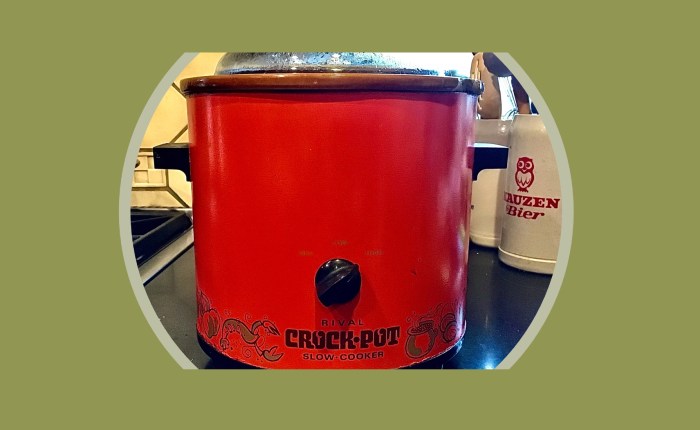
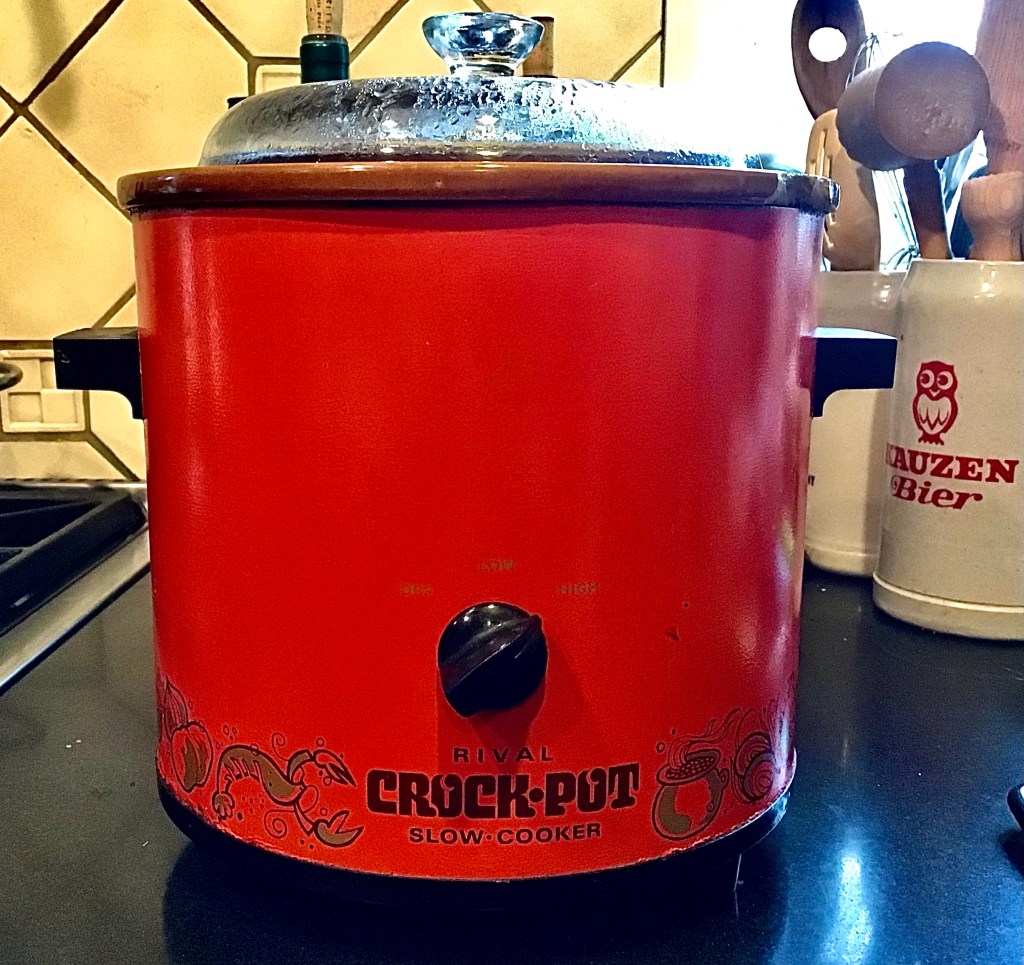
‘Fess up. Who owns, or owned, one of these beauties from the ‘70s? Long before there were Slow Cookers or Instant Pots, there were Crock-Pots. Ours is from 1974 and still chugging along. Seriously, 1974 and it still works. What else do you have that old, and still working? And, you have to love the color…

Cathy’s Crockpot from 1974 – Still Chugging Along…

It’s the 50th anniversary of the invention of the Crock-Pot. Appliance maker Rival unveiled it in 1971 at the National Housewares Show in Chicago. Ads and commercials represented the Crock-Pot as a wonderful, time-saving device, assuring women (yes, this was the ‘70s – almost all cooking related ads focused on women) it would simplify their lives. Hell, baseball player Joe Garagiola even became a pitchman for the Crock-Pot, hawking it as “the perfect gift”. And of course, the Crock-Pot would do all of this great work in those fabulous ‘70 colors.

A Couple of Vintage Crock Pot Ads From the 70s

That color – I’m not sure if it’s called burnt orange, red orange, or just mutant orange. It’s a color you can’t forget. Quite frankly, it and the colors “Autumn Gold” and “Avocado” represent the ‘70s as much as disco, polyester and bell bottoms. If you see anything in one of those colors, you pretty much know what decade it came from.

Burnt Orange, Harvest Gold, and Avocado Green – the Holy Trinity of 70s Colors

Cathy bought this particular Crock-Pot at the age of 18 in the summer of 1974. It was just prior to moving to Washington DC and a job with the FBI. Over the past 47 years, our Crock-Pot has made countless chilis, soups, stews, roasts, and other dishes. We have cooked with it in Germany, Georgia, Oklahoma, Ohio and Virginia. It crossed the Atlantic four times. How many things do you have that have been with you your whole marriage? This pot, along with our love, is one of the few things that has survived those 43 years. It’s pretty much indestructible and part of the fabric of our lives.

Having retired, I do much of the cooking around the house these days and often braise, roast or slow cook in the oven itself. Still, there are some recipes that just call out for the Crock-Pot. I think the simplicity of the device helps – you fill it with the food you are cooking; pick one of the two heat choices, low or high; and walk away for 6, 8, or 10 hours. What’s not to like, other than perhaps the color?

Summer is ending, autumn is arriving, and winter will soon be here. This ol’ Crock-Pot will again earn it’s keep, providing us with comfort food this autumn and winter. Sure, it has a couple of chips around the rim, but the heater still works fine and the lid sits securely on top. It does it’s job. In fact, it does it’s job much better than any number of devices from this century. It just keeps ticking along and will probably be with us for another decade or two. Now that I think about it, we should list it in our Trust for one of our nieces or nephews… 😉

Grandma Grubaugh and the Pink Elephants

Grandma Grubaugh and the Pink Elephants

A couple of months after Grandma Grubaugh died in 1996, I received a call from mom. She wanted to know if there was anything I might like from Grandma’s things. I immediately answered “The Pink Elephant and Blue Monkey glasses.” She Said “What?! Nothing else?” “No, those are how I best remember Grandma.”

Grandma and I Just Shy of my Second Birthday

Lillian Henrietta Grubaugh was born on the 2nd of January, 1905 and died on the 4th of December, 1996 at the age of 91. When Grandma died, my Uncle Don was executor of the will and divided the major assets equally out among Aunt Pauline, Aunt Cecilia, mom, Uncle Sonny and himself.

As to the belongings in the house, they took turns picking things each of them wanted, starting with Aunt Pauline, the oldest, and then reversing the order for the next pick. When they finished this up, there were of course many things still left in the house. It fell to mom and my Aunt Pauline to go through the remainder of the stuff in the house, sort it, and give it away or otherwise dispose of it. I think it was around then I received the call from mom, asking if there was anything I might want.

So why did I want those glasses of pink elephants and blue monkeys? Why did I remember them and why did they call to me? I’ve thought about that for awhile.

Sometime around 5th or 6th grade, I started a business of mowing lawns. Or I suppose my dad encouraged me to start the business. One of my first customers was of course Grandma and Grandpa. I think my cousin Joey had the job before, but he’d grown older and moved on to real work of some sort, and the opportunity fell to me.

On mowing day, dad and I loaded the mower in the back of his car and drove across town to 916 Chestnut street, where Grandma and Grandpa lived. He helped me take the mower out of the car and then drive home, with instructions to call him when I finished up.

916 Chestnut Street – The Yard Seemed Bigger Back Then

I’d mow the lawn for the next half hour or 45 minutes. The yard wasn’t big, but there were lots of things to mow around – the old swing set, the low metal fence with posts, a couple of big trees, the vegetable garden, including grandma’s rhubarb plants, and the ancient garage out back. After I finished mowing, I’d do a quick trim of the hard-to-get spots with some manual clippers.

Eventually, I’d finish everything up and head to the house, ready to call Dad. Inevitably Grandma would greet me and have me sit down at the kitchen table. She’d bring out a piece of spice cake, or unwrap some of her date nut bread, or pull some of her rhubarb sauce out of the fridge if the season was right. No matter what she served, she also poured me a big glass of milk in one of those elephant or monkey glasses and the two of us sat and talked.

I don’t remember much of what we talked about. I do remember us having those conversations – maybe about school, or summer camp, or Little League or whatever. It was just the two of us in our own little world.

Eventually we finished up and I’d call dad. He’d drive the 5 or 10 minutes across town and pick me up. Grandma and I would say goodbye, she’d give me a hug, and I’d wave goodbye from the car.

Wonderful Memories Involving Pink Elephants and Blue Monkeys

I cut their lawn for three or four years and the ritual was almost always the same. Around 8th grade, I started a “real job” working at the local pool as a locker room attendant, eventually graduating to lifeguard. I think my cousin Jimmy, Joey’s younger brother may have taken over the lawn mowing at Grandma and Grandpa’s home. Grandma and I stayed close, even after I left for West Point, but those regular private times together disappeared. I’d see her on breaks from school, or when we returned on vacation from an overseas assignment, but of course it was never the same. There was still spice cake or date nut bread, and a glass of milk or cup of coffee. We had wonderful conversations, but they were obviously more grown up. The innocence of those previous times was gone.

Grandma and I at my Graduation from West Point in 1978

I’ve thought back to those younger years and sitting at the table eating one of Grandma’s treats and drinking milk out of those glasses. It’s a warm memory, and I always smile when I see the glasses sitting on a shelf at our home now. Grandma and I having a summer conversation at her kitchen table, wrapped up in our own little world…

Addendum:

Something we also found out from mom and Aunt Pauline was that Grandma often times didn’t use the Christmas gifts we gave her. Instead, she tagged them with our names and put them away in a chest. The tagged items went back to the giver after she passed away. One of the tagged items was an umbrella of questionable fashion I’d given her one Christmas. it still sits by our back door here in Virginia, in case it’s needed.

Soups, Stews and The Winter Of Our Discontent

Soups, Stews and The Winter Of Our Discontent

This winter sucked. We didn’t have much snow, but the three ice storms we did have, made travel treacherous, even if just walking to the barn. Of course, I’m not only talking about the weather.

A Long Cold Lonely Winter …

Covid and Covid isolation continued to hold sway over most of us. Then, as the vaccine became available, we were all scrambling to find some way, any way, to receive a shot. They even had a name for us: We were Vaccine Hunters. The slow pace of the rollout was maddening.

We also had that failed, inept insurrection thing back on January 6th. THAT didn’t cheer anybody up. In fact, it made many of us despair for our country.

To top it all off, we have several good friends dealing with serious health challenges. Some, with life and death health issues.

All of these matters combined to cast a pall over this winter. There was a hint of melancholy, at least at our house. The Winter of our Discontent, indeed.

Whether the opening line of Shakespeare’s Richard III, or the title of the 1961 John Steinbeck book, the words “The Winter of our Discontent” aren’t promising. Neither the play, nor the book are particularly cheery. Richard III is of course filled with political and familial intrigue, death and murder, while Steinbeck’s book “The Winter of our Discontent”, examined moral decline in America. Both have more than a little in common with this past winter.

So, how do you fight against a winter of discontent? It could have been all too easy to just try and survive – stay cooped up, become cheerless, and drink too much.

One of the ways we fought it was with Comfort Food. And more specifically, comfort food in the form of soups and stews.

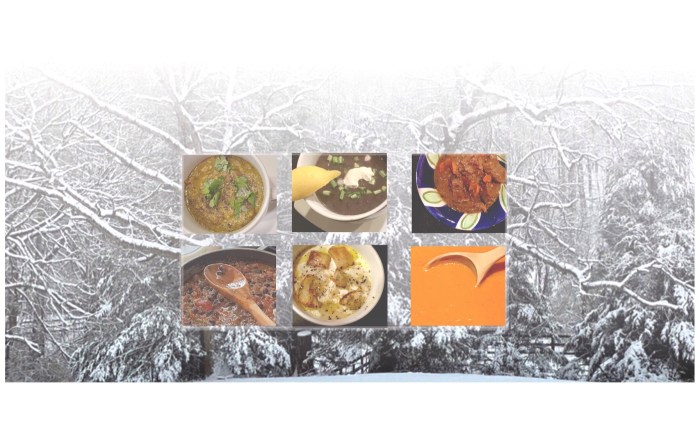
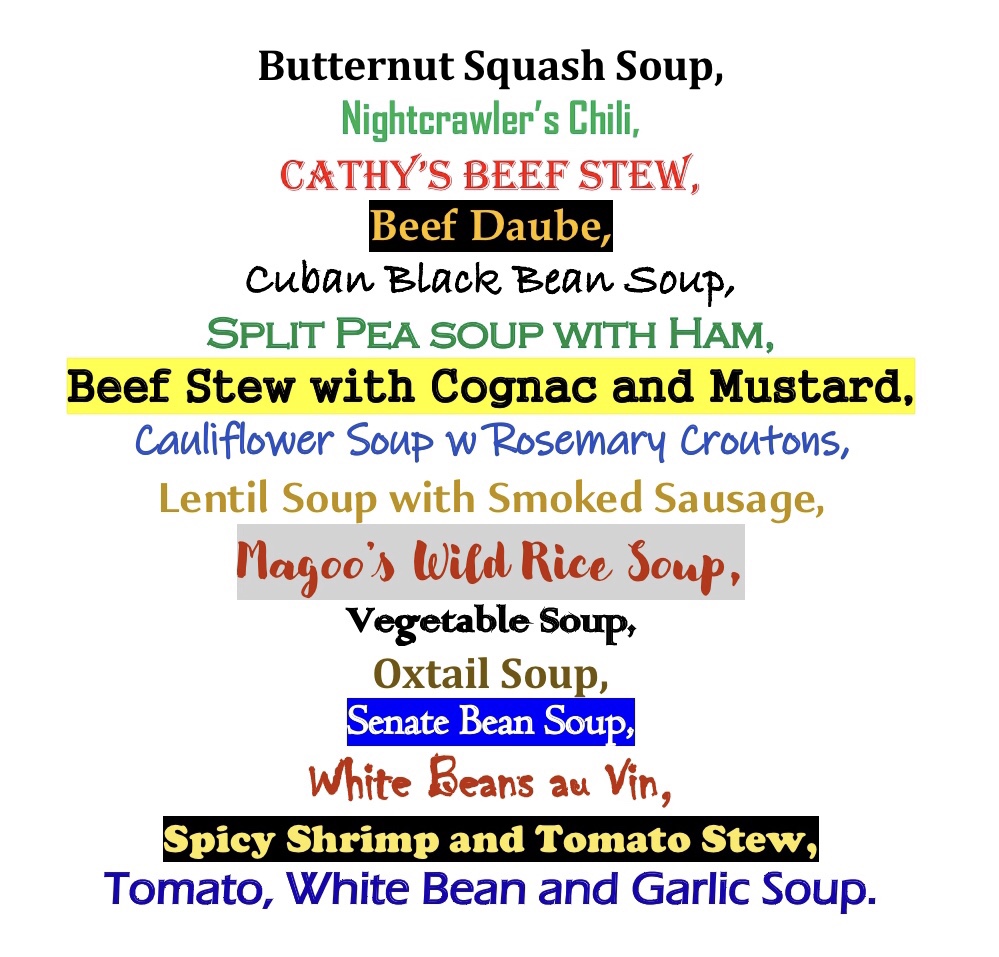
We made and ate more stews and soups than usual this past winter. Actually, I think we had them a couple times a week all season long. Several were old favorites. Others, we made for the first time, and some of those quickly became new favorites. We warmed ourselves with our meals, as much as with the wood stove in the family room. Here’s a list of the assortment we had:

Those soups and stews provided comfort in many ways. Certainly there was the warmth they gave in the bowl and the simplicity of eating a one pot meal. There was also the ritual and pleasure of making them. For me, that brought a bit of relaxation. A few hours in the kitchen, surrounded by the wonderful smells from the simmering pot, along with the warmth of the stove itself, is not a bad way to spend a cold day. I also think their bursts of flavor and color countered the grayness of the season. They furnished a bit of light in the darkness of midwinter, if you will.

Winter Warmth, Clockwise from upper left – Cuban Black Bean Soup, Butternut Squash Soup, Cauliflower Soup with Rosemary Croutons, Split Pea Soup with Ham, Beef Stew with Cognac and Mustard, and NightCrawler’s Chili

This winter, like all winters, will end. Saturday, March 20th, is the first official day of spring. Although I know we still have some cold, and possibly snowy, days ahead of us, the weather is already turning. Additionally, Cathy and I have both received our Covid shots, and it appears the distribution floodgates are finally opening for all who want the vaccine. Soon, we will all get there.

Among our friends with health issues, some have improved, and others are holding their own. They too are getting Covid vaccines and we hope to see them soon. Unfortunately, two classmates, one from West Point, and one from high school did pass away. We are “at that age” now, where death happens more frequently, but it doesn’t make it any easier.

I’m sure we will have a few more warming winter soups and stews over the next several weeks. And while I’m happy for the sustenance they provided over the past four or five months, my mind is already turning to lighter dishes and meals. The days are growing longer and are not so dark. This winter of our discontent is ending. Spring, and the promise of renewal beckon and I am ready to embrace them. In the immortal words of George Harrison:

Addendum:

– Cathy and I had the good fortune to see the play several years ago at the Shakespeare Theatre here in DC. As with many Shakespeare tragedies, there was plenty of death, murder, political mayhem and family intrigue. If you get a chance to see it, I hope you do so.

The Winter of Our Discontent was John Steinbeck’s last novel, and published in 1961. He borrowed the title from Shakespeare. It too tells the story of a family, with themes concerning the effects of social pressure, deceit, lying, corruption and death. Steinbeck stated that he wrote the novel to “address the moral degeneration of American Culture during the 1950s and 1960s.

Making a Three Day Beef Daube

Making a Three Day Beef Daube

The weather had finally turned cold(er) here in the Virginia Piedmont and they were calling for snow over the next two days. This was the perfect time to make a Beef Daube and I was on a mission.

Daube is a French word that translates to stew. All daubes are stews, but not all stews are daubes. To me, daubes are thicker and richer, and are almost like a stew “sauce”, if that makes sense. I loved my mom’s beef stew, but this beef daube is something else.

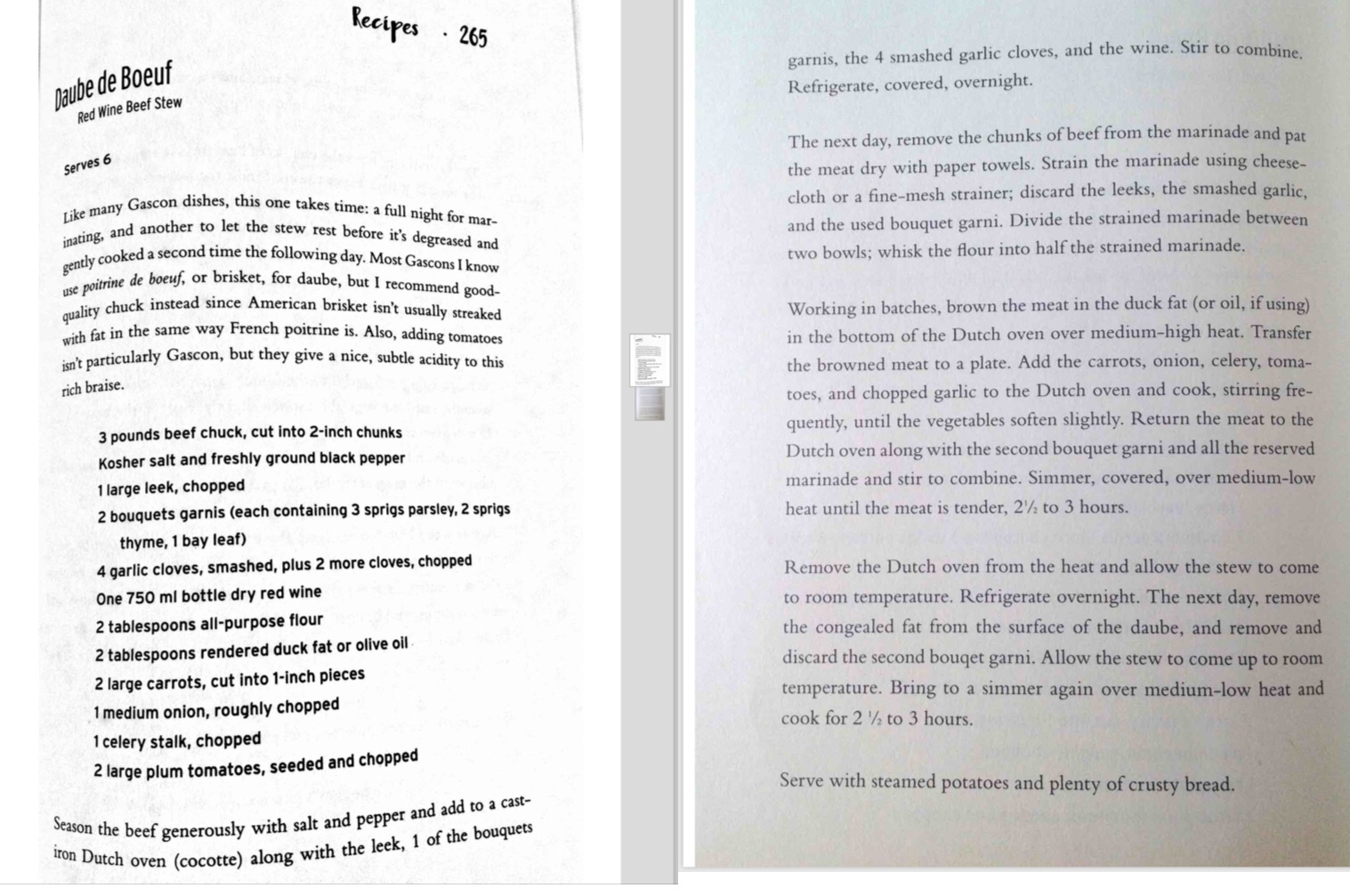
This particular recipe is for a Three Day Beef Daube. It’s from a book my old friend Tim lent me called “Duck Season”. The book is about the Gascony region of France, and if you enjoy reading about other countries, particularly their food, drink and culture, I highly recommend it. The dish takes three days to make, although the steps are pretty easy. Day one – marinate the beef; day two – make and cook the daube for 2-3 hours and let it rest over night; and day three – gently simmer the daube for a couple of hours and then eat. That’s all there is to it.

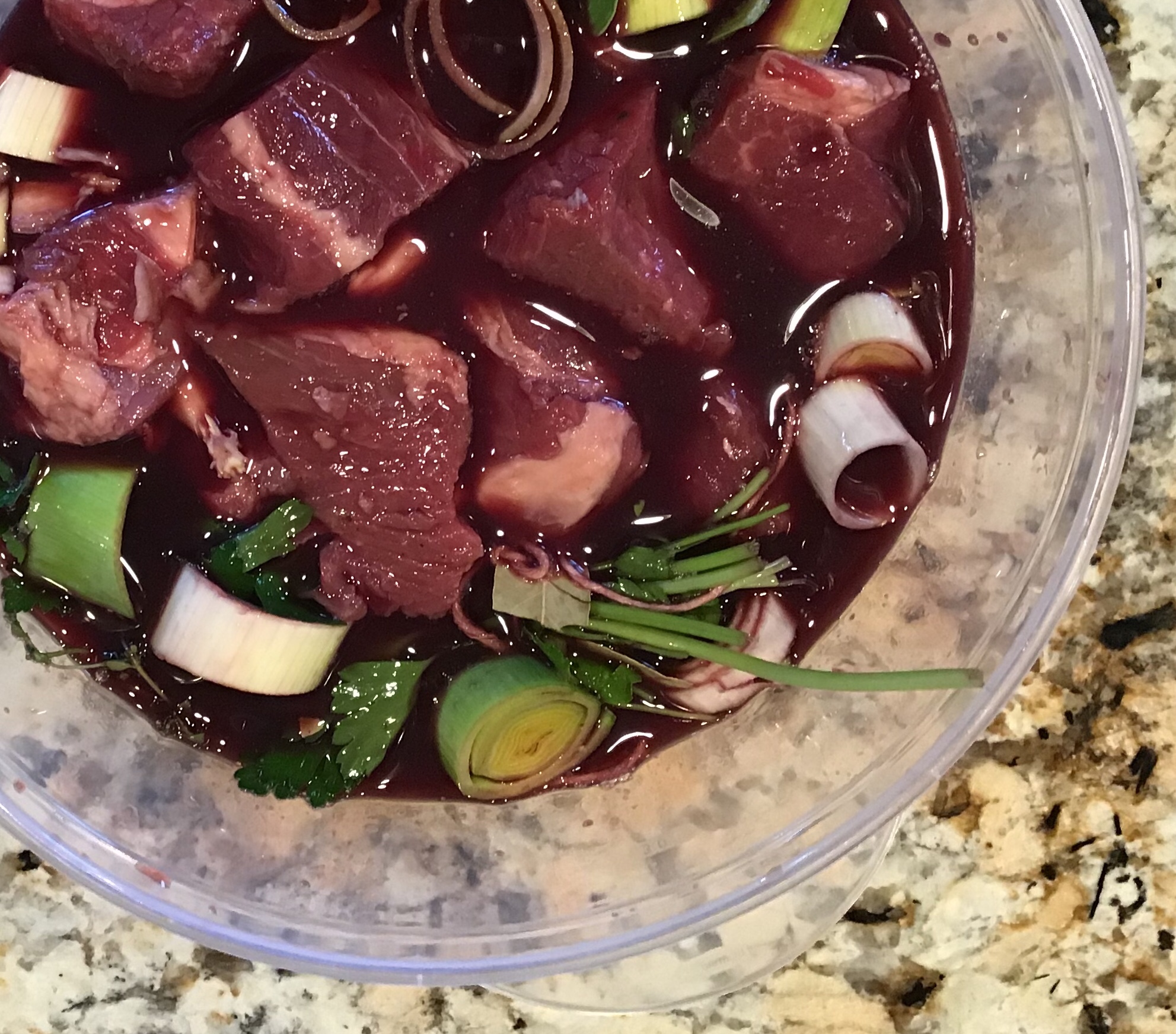
Last Thursday, I pulled the chuck roast out of the freezer to thaw, and made up my shopping list. On Friday morning, I went shopping for the few things I still needed – a leek, some parsley and thyme. We had everything else at home. After a quick lunch, I cut up the beef and added it to a bowl which already included smashed garlic, sliced leak, a bouquet garni, and a bottle of red wine. Day one was done, with plenty of time left to take our dog Carmen for a walk, and in anticipation of the snow, to bring more firewood into the house.
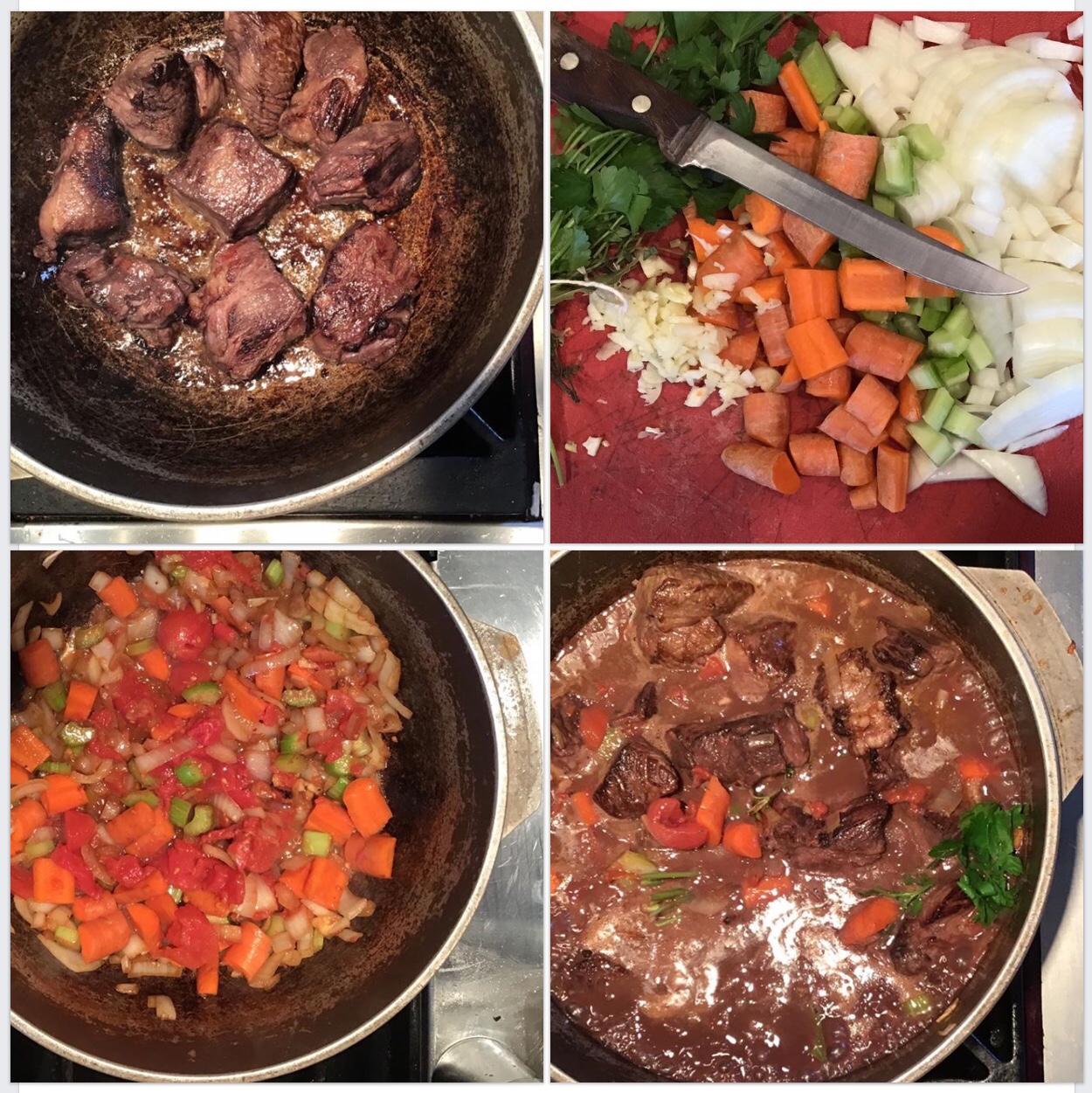
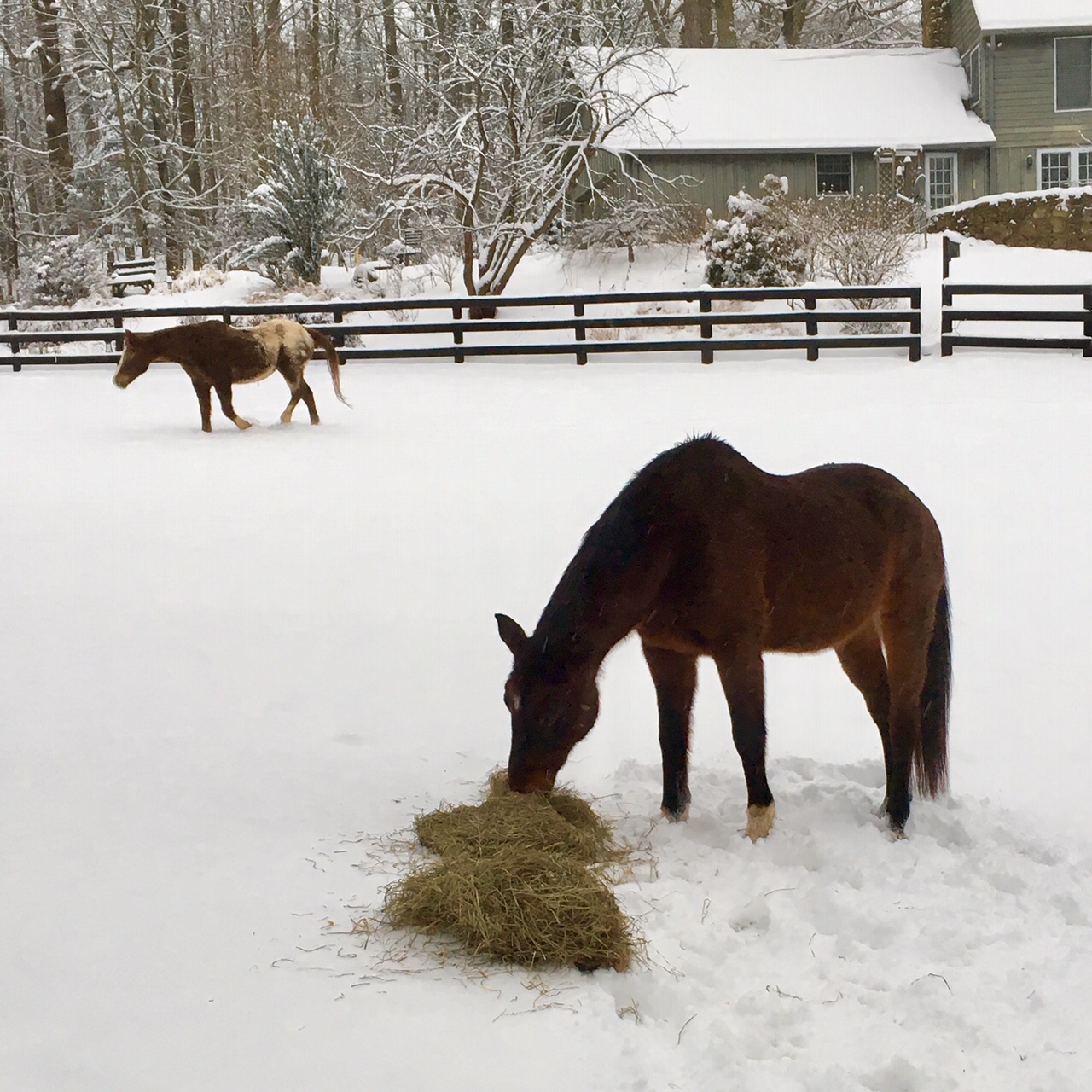
Day two started grey and cold. When I went to the barn in the morning to feed the horses, there was a skim of ice on the pond and the air had that “pregnant with snow” feeling you sometimes get right before a storm. Predictions for snow amounts rose from 2-4” to 3-7”.

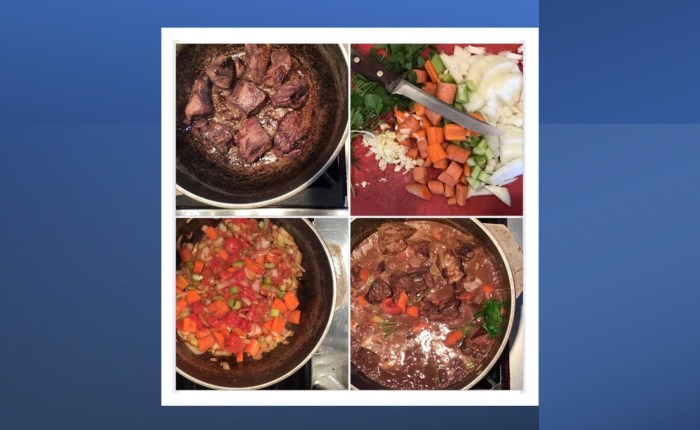
I continued with the daube around noon and day 2 was only a bit more work than day 1. I browned the beef; chopped up and sauté garlic, onions, celery, carrots and tomato; added the beef back to the pot with the vegetables, along with a new bouquet garni; and added the strained and reserved wine marinade to the pot. Once that was done, it simmered on low heat for about 3 hours.
I’ve found it’s best to take your dog for a walk while the stew is simmering, so you don’t drive yourself mad with the wonderful smells coming from the kitchen. After returning from your walk, you are faced with the most difficult part of day 2. You don’t eat the daube on day 2, no matter how good it smells or tastes. Instead, you remove it from the heat, cool it to room temperature and let the daube rest overnight in the fridge. Remember, don’t eat the daube at this point in time.

Sunday, Day 3, greeted us with a blanket of snow. About 7 inches had fallen, with more expected over the course of the day. After feeding the horses in the morning, and then having my own breakfast, I plowed our drive and around the barn, and then plowed the drives of several elderly neighbors. I made it back inside for lunch, and then some playoff football.
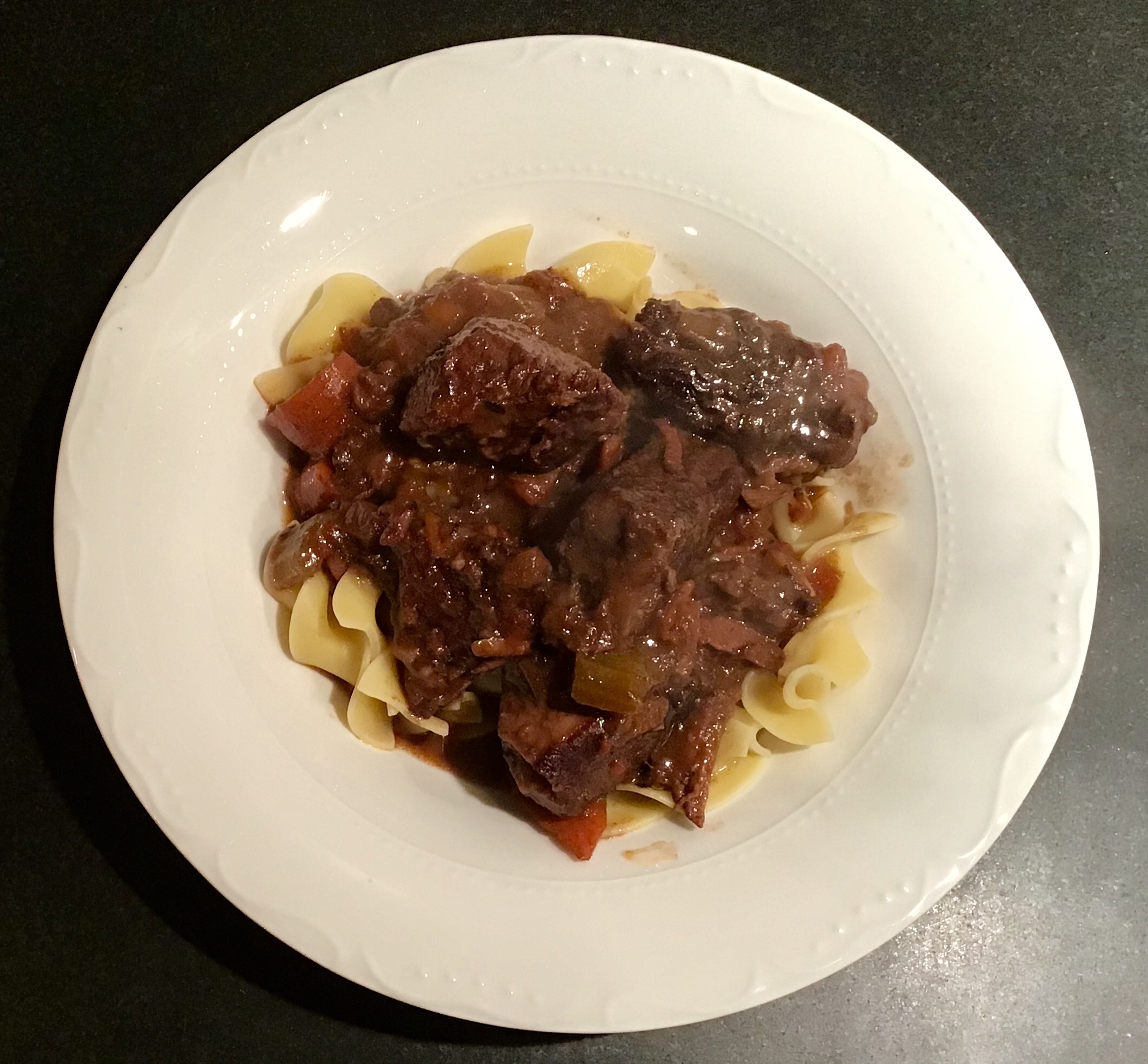
During the afternoon, I started reheating the daube. After removing the congealed fat from the top of the daube, the pot went back on the stove for a gentle three hour simmer. Now the smells were truly driving me crazy and the football was barely a distraction. I took one more walk with Carmen and could see that we had another 3-4 inches of snow today. It was still snowing at dusk as we finished our walk, and I may need to plow again tomorrow, but that will wait.

About a half hour before dinner, I threw a baguette in the oven to warm up, and finally it was time. We served the daube over egg noodles and had it with the bread and a bottle of wine. I breathed in the aroma and took my first bite. What a great ending for a snowy weekend…

_____
Addendum: Here’s the recipe. It’s from the book “Duck Season”, by David McAninch.