Cacophony of Color

Cacophony of Color

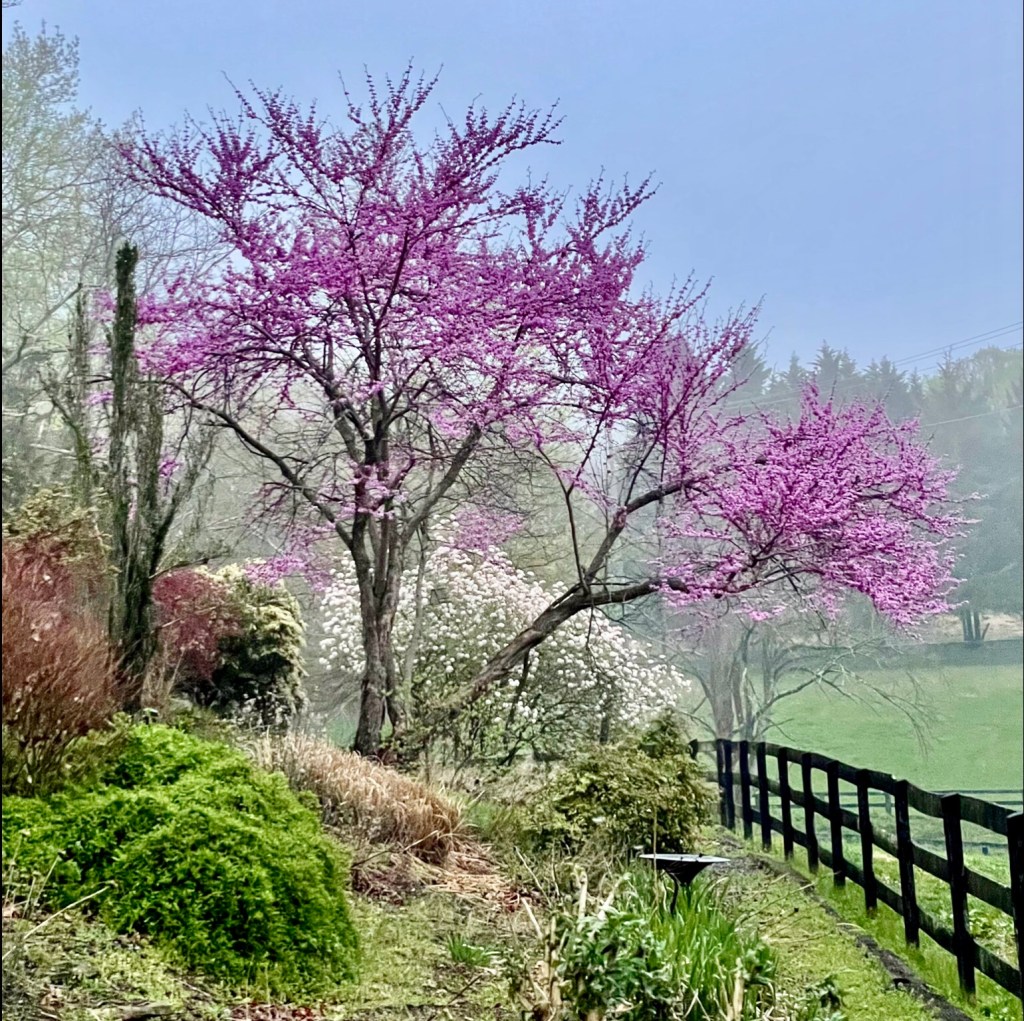
In his poem, The Wasteland, TS Eliot famously said, “April is the cruelest month.” Perhaps Mr. Eliot is correct, but it’s hard to imagine that in our gardens this year. It’s as if God said, “We’ll put on a show in April, and worry about the other months later.” And what a show, at our home here in the Virginia Piedmont. 

When we moved here twenty-five years ago, there were no gardens. Yes, we inherited a few azaleas, some forsythia, and a couple of dogwoods, but that was it. Everything since has been all Cathy. The hillside garden, the shade garden, the front garden, Cathy’s cutting garden, some redbuds – they were all put in by Cathy. Her labor of love is both amazing and beautiful. 
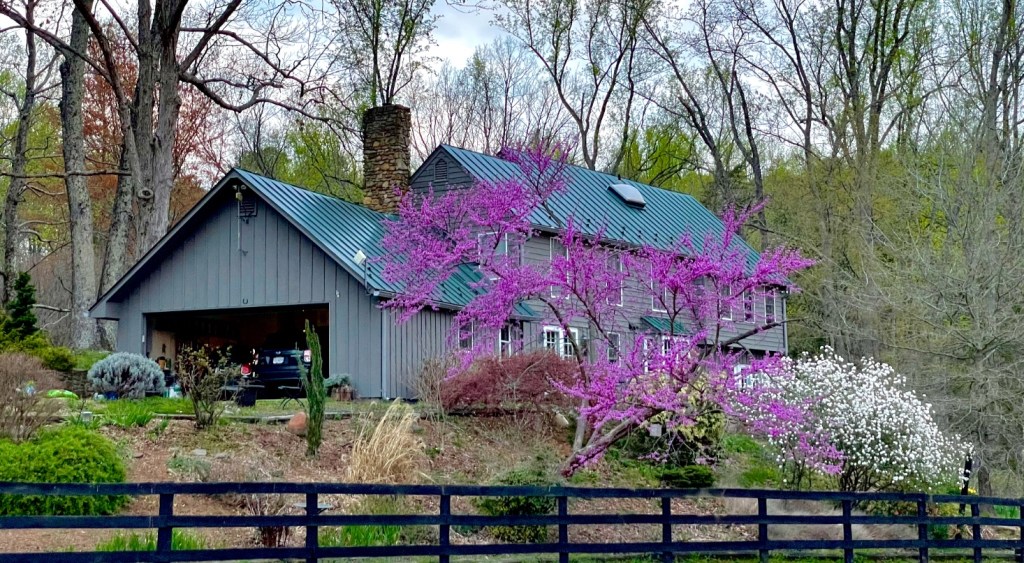
The Hillside Garden in Early Spring.

This year, it was if all of our plants were on a clock that had somehow both accelerated and compressed time. In February the hellebores and crocuses started the show. March blended in the daffodils and forsythia, which led to the cacophony of color that was April.  
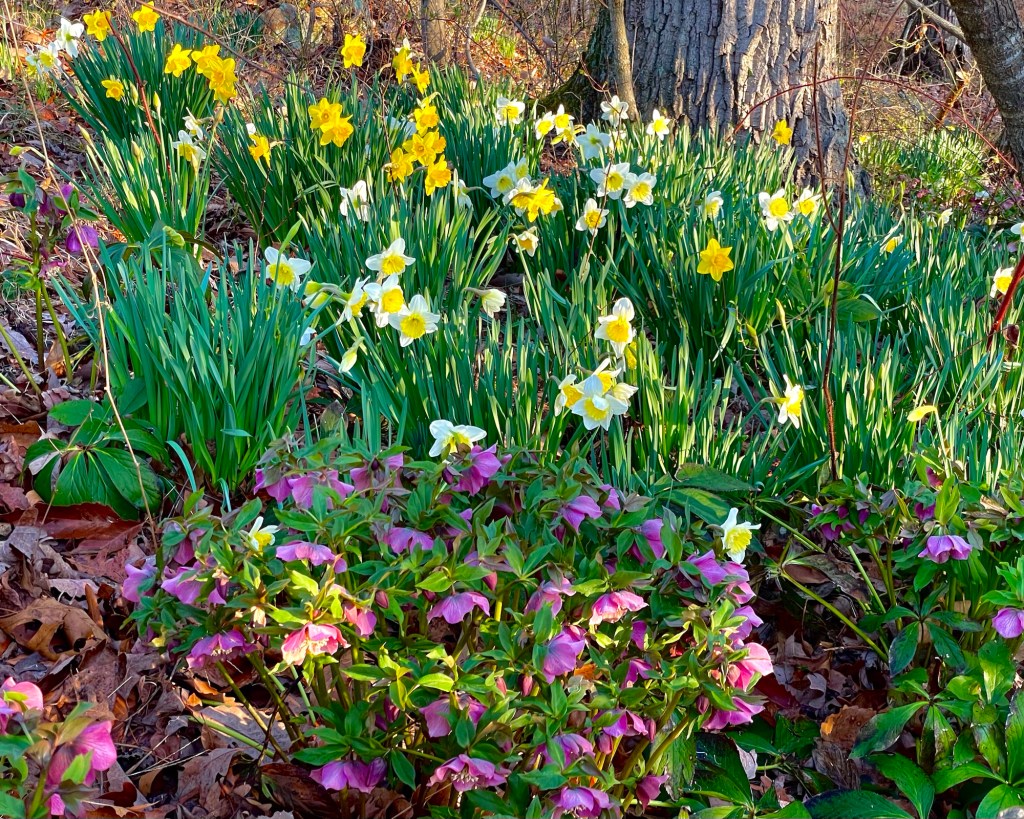
In March, the Pre-Show of Daffodils and Hellebores.

I don’t know if it was global warming, a warm winter, a mild spring, plenty of rain or what. All I know is the flowers were unbelievable – an endless parade of new blooms, all consolidated over the past thirty days. 
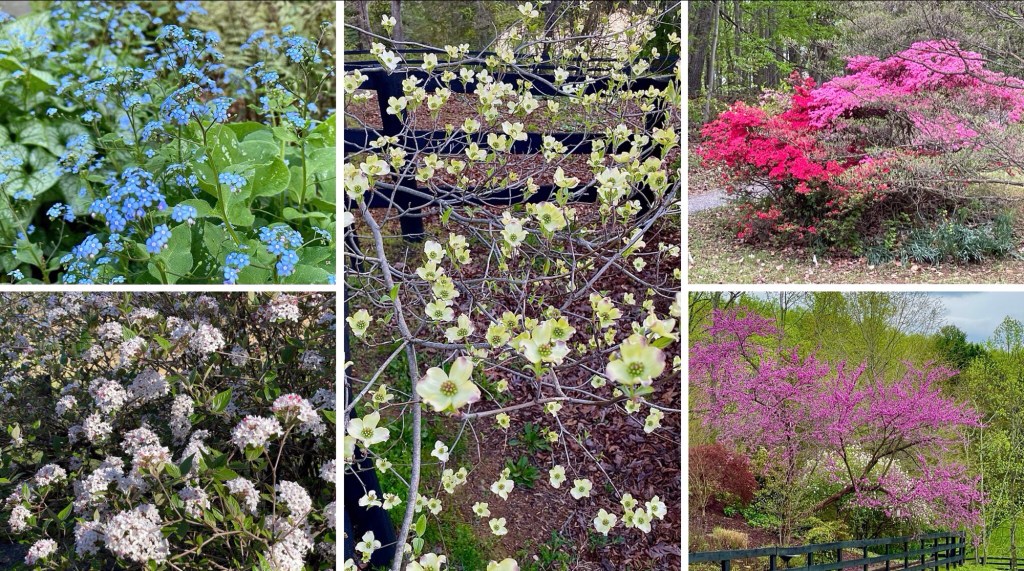
April Flowers (1)

The month started with Virginia Bluebells, Viburnum and the Redbuds. The Dogwoods, Forget Me Nots and our Japanese Maple with its red leaves then joined in. Bugle weed and Dandelions added their flowers to the crowd and were soon followed by our Azaleas, which never bloom as early as they did this year. 
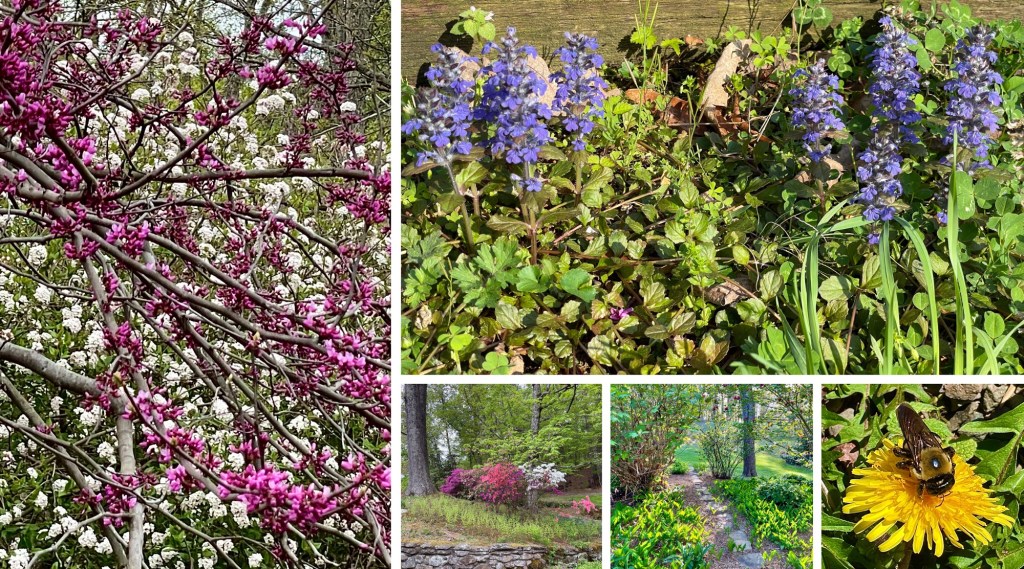
April Flowers (2)

The Shade Garden started contributing as well, with Lillies of the Valley, Bleeding Hearts and Spice Bush all getting in on the act. At the end of the month the Clematis and Columbine became a part of the show. 
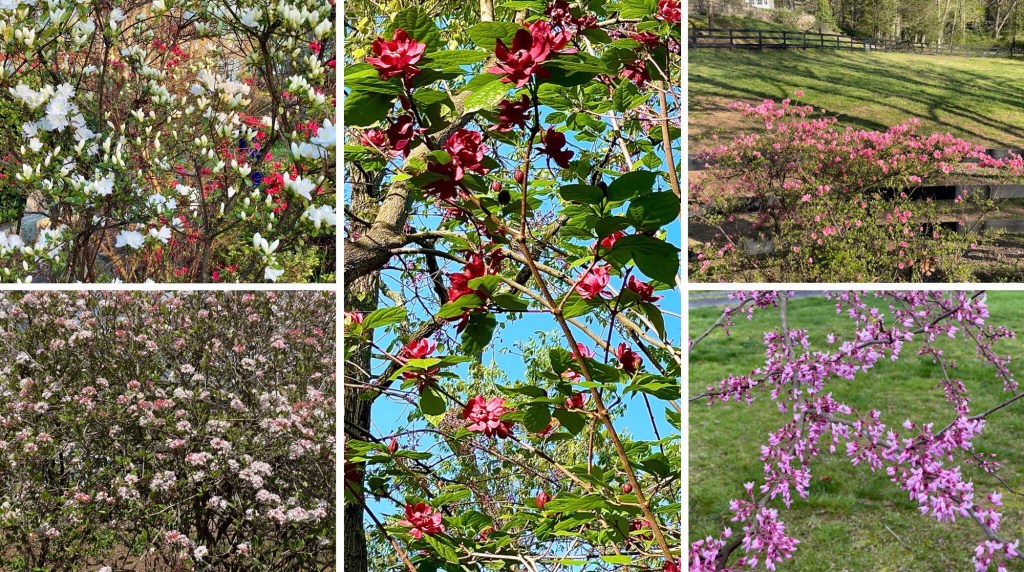
April Flowers (3)

April is gone now. Other than the Crocuses, Daffodils and Redbuds, most of the flowers and blooms still remain, with more coming. I know “April Showers bring May Flowers”, but it’s hard for me to believe the month of May could be more beautiful than this past April. In my mind, it’s only cruel that April is over.
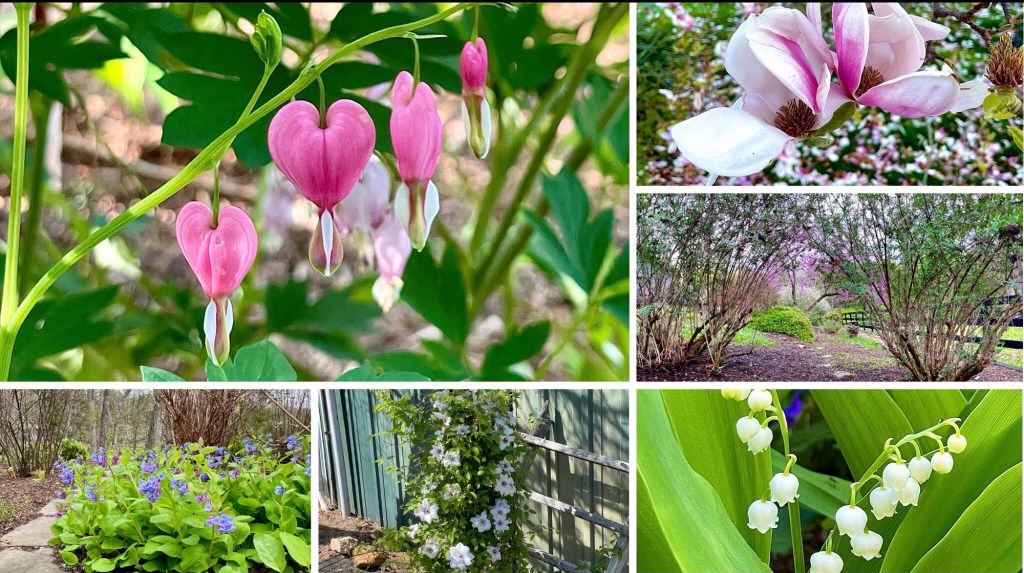
April Flowers (4)

Addendum:

  • In all honesty, I know next to nothing about plants or flowers. What I’ve learned has come over the past ten years since retiring. While I was working, I didn’t have a full understanding, or appreciation for what Cathy did here at the farm with her gardens. It’s only been since I’ve retired that the scales have fallen from my eyes and I truly see the beauty. I know it sounds silly, but it’s true. Since then, my awareness and interest have grown. I’m still not great on names, but Cath helps me with that.  Continually.
The Palette of Our Life

The Palette of Our Life

Through Cathy, I’ve gained an appreciation for the colors that make up the palette of our life. As an engineer, the journey hasn’t been a simple one. Sometimes though, you can teach an old dog new tricks.

Over the decades, the two of us have seen life through different lenses.

For me, it has usually been about form, and lines and precision. It’s hard for me to say whether I was always this way, or I became this way. Did my childhood background start me on the road to becoming a military officer, an engineer and a business leader? Or was it something that was self-reinforcing over time? Even in my hobbies, whether running, or reading, or photography, there was a certain precision… trying to reduce my times on a run, or capturing greater detail in a photo, there was a linearity to it. The gauziness of color didn’t really register in my brain.

For Cathy, her view is much more about color and the senses. This is most obvious in our gardens. While our gardens are made up hundreds of plants and flowers, and requires much hard work on her part, it is the flow of color over the seasons that defines them. There are constantly changing colors and hues. Only a fool, or an engineer, would miss them and their beauty.

A Redbud in the Garden Last Spring

For years, I didn’t get it, or understand it. Or perhaps even worse, I didn’t think about it.

And then about seven years ago, I retired. There are many great things about retirement, and most retirees will happily enumerate them to you ad nauseam. For me, the greatest gift is the luxury of time. Time to do the things you want, or time to do nothing at all and not feel guilty about it.

One of the things I started doing with my time, was taking care of the morning feeding of the horses. It was easy enough, and made me feel like I was contributing at home. There was also an unintended consequence.

After feeding the horses, while walking back to the house, I would notice little bursts of color in the garden. Why were flowers blooming in February? And then March? And then everywhere by May? Our hillside garden was awash in color, both from the flowers, and the many hues of green from the plants themselves. Now mind you, these colors and flowers were there for years, but it was as if I was seeing them for the first time. Cathy had created all of this, and I was blind to it.

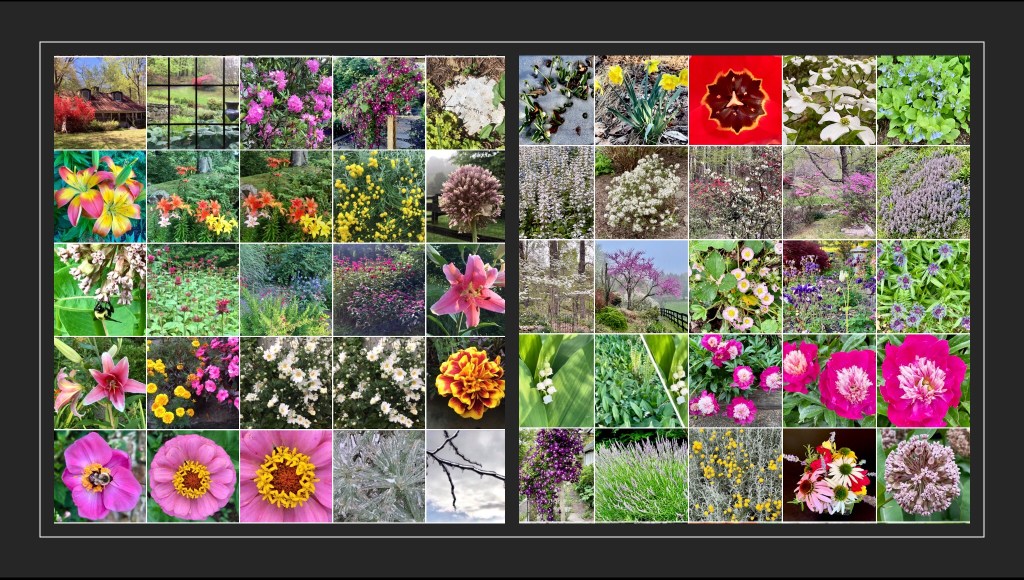
Some Photos of Just a Few of the Flowers in Cathy’s Gardens

Thank God, we all have the ability to grow, even when we appear set in our ways. As spring arrives, I walk through the gardens looking at the new growth and colors peeping out. This year is different than the past. Our hellebores, crocuses and daffodils are blooming at the same time, when typically they would bloom sequentially. The engineer in me wants to understand why, but it’s not stopping me from enjoying this beautiful March we are having.

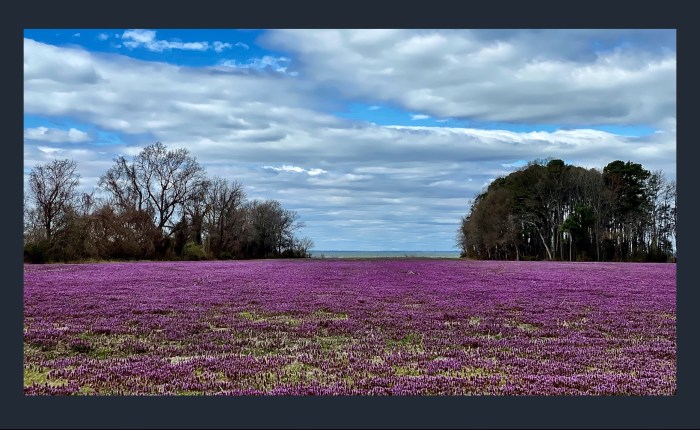
I see color now, or perhaps a better description is I see more color now. Sure, I always saw the red, yellow and orange leaves of autumn, or the red white and blue fireworks on the Fourth of July, or a multicolored string of Christmas lights. Now, I also see the purple ground cover in a field in the spring, the mixed colors in a neighbor’s garden, the infinite shades of grey in the sky and sea on a cloudy day. I’m a better person for all of it.

On a Recent Drive to the Chesapeake Bay, a Sea of Purple…

I’m still Max and keep spreadsheets, to-do lists, and can be pretty anal about time. Happily, I’ve also gained an appreciation for color. I excitedly show Cathy pictures of her flowers and of the garden and she smiles at me. Even though she has seen those colors and flowers for decades, she’s a good partner and encourages me in my growing understanding of color, and of who she is.

It makes me feel pretty lucky.

The Orange Crock-Pot

The Orange Crock-Pot

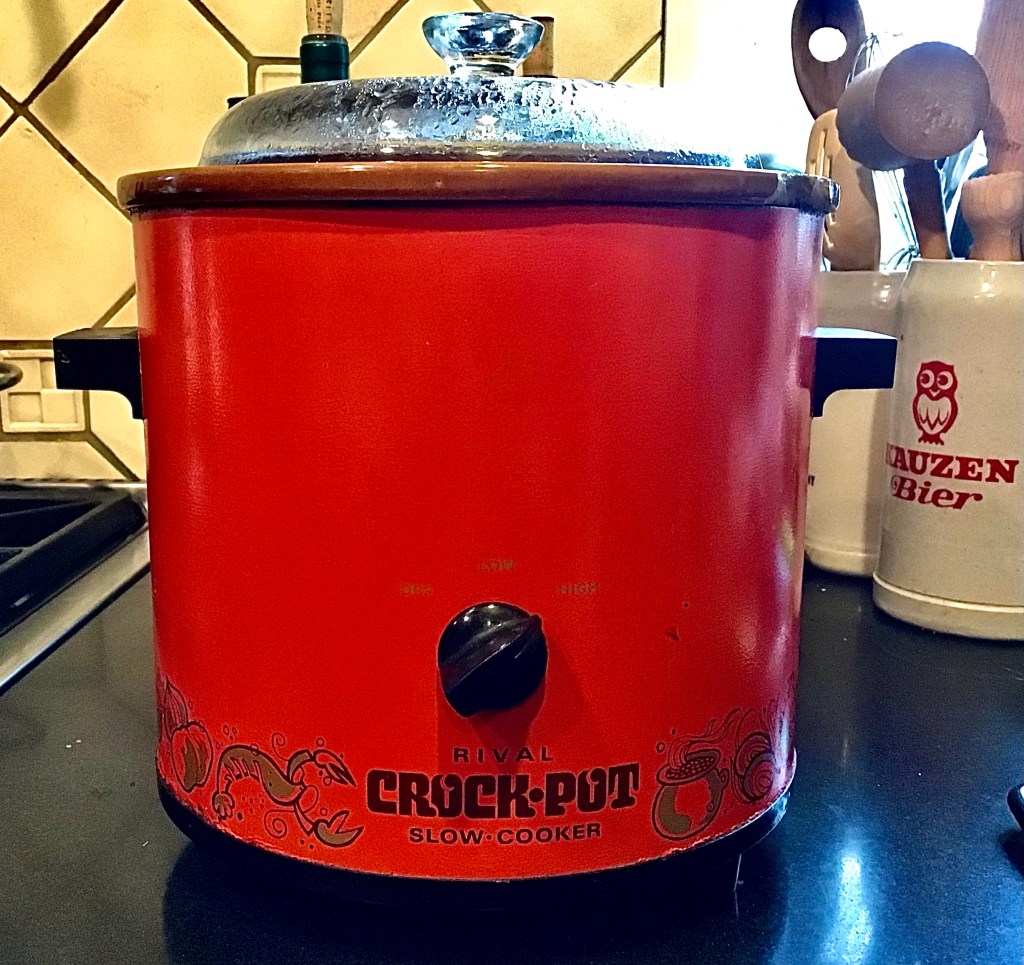
‘Fess up. Who owns, or owned, one of these beauties from the ‘70s? Long before there were Slow Cookers or Instant Pots, there were Crock-Pots. Ours is from 1974 and still chugging along. Seriously, 1974 and it still works. What else do you have that old, and still working? And, you have to love the color…

Cathy’s Crockpot from 1974 – Still Chugging Along…

It’s the 50th anniversary of the invention of the Crock-Pot. Appliance maker Rival unveiled it in 1971 at the National Housewares Show in Chicago. Ads and commercials represented the Crock-Pot as a wonderful, time-saving device, assuring women (yes, this was the ‘70s – almost all cooking related ads focused on women) it would simplify their lives. Hell, baseball player Joe Garagiola even became a pitchman for the Crock-Pot, hawking it as “the perfect gift”. And of course, the Crock-Pot would do all of this great work in those fabulous ‘70 colors.

A Couple of Vintage Crock Pot Ads From the 70s

That color – I’m not sure if it’s called burnt orange, red orange, or just mutant orange. It’s a color you can’t forget. Quite frankly, it and the colors “Autumn Gold” and “Avocado” represent the ‘70s as much as disco, polyester and bell bottoms. If you see anything in one of those colors, you pretty much know what decade it came from.

Burnt Orange, Harvest Gold, and Avocado Green – the Holy Trinity of 70s Colors

Cathy bought this particular Crock-Pot at the age of 18 in the summer of 1974. It was just prior to moving to Washington DC and a job with the FBI. Over the past 47 years, our Crock-Pot has made countless chilis, soups, stews, roasts, and other dishes. We have cooked with it in Germany, Georgia, Oklahoma, Ohio and Virginia. It crossed the Atlantic four times. How many things do you have that have been with you your whole marriage? This pot, along with our love, is one of the few things that has survived those 43 years. It’s pretty much indestructible and part of the fabric of our lives.

Having retired, I do much of the cooking around the house these days and often braise, roast or slow cook in the oven itself. Still, there are some recipes that just call out for the Crock-Pot. I think the simplicity of the device helps – you fill it with the food you are cooking; pick one of the two heat choices, low or high; and walk away for 6, 8, or 10 hours. What’s not to like, other than perhaps the color?

Summer is ending, autumn is arriving, and winter will soon be here. This ol’ Crock-Pot will again earn it’s keep, providing us with comfort food this autumn and winter. Sure, it has a couple of chips around the rim, but the heater still works fine and the lid sits securely on top. It does it’s job. In fact, it does it’s job much better than any number of devices from this century. It just keeps ticking along and will probably be with us for another decade or two. Now that I think about it, we should list it in our Trust for one of our nieces or nephews… 😉

Soups, Stews and The Winter Of Our Discontent

Soups, Stews and The Winter Of Our Discontent

This winter sucked. We didn’t have much snow, but the three ice storms we did have, made travel treacherous, even if just walking to the barn. Of course, I’m not only talking about the weather.

A Long Cold Lonely Winter …

Covid and Covid isolation continued to hold sway over most of us. Then, as the vaccine became available, we were all scrambling to find some way, any way, to receive a shot. They even had a name for us: We were Vaccine Hunters. The slow pace of the rollout was maddening.

We also had that failed, inept insurrection thing back on January 6th. THAT didn’t cheer anybody up. In fact, it made many of us despair for our country.

To top it all off, we have several good friends dealing with serious health challenges. Some, with life and death health issues.

All of these matters combined to cast a pall over this winter. There was a hint of melancholy, at least at our house. The Winter of our Discontent, indeed.

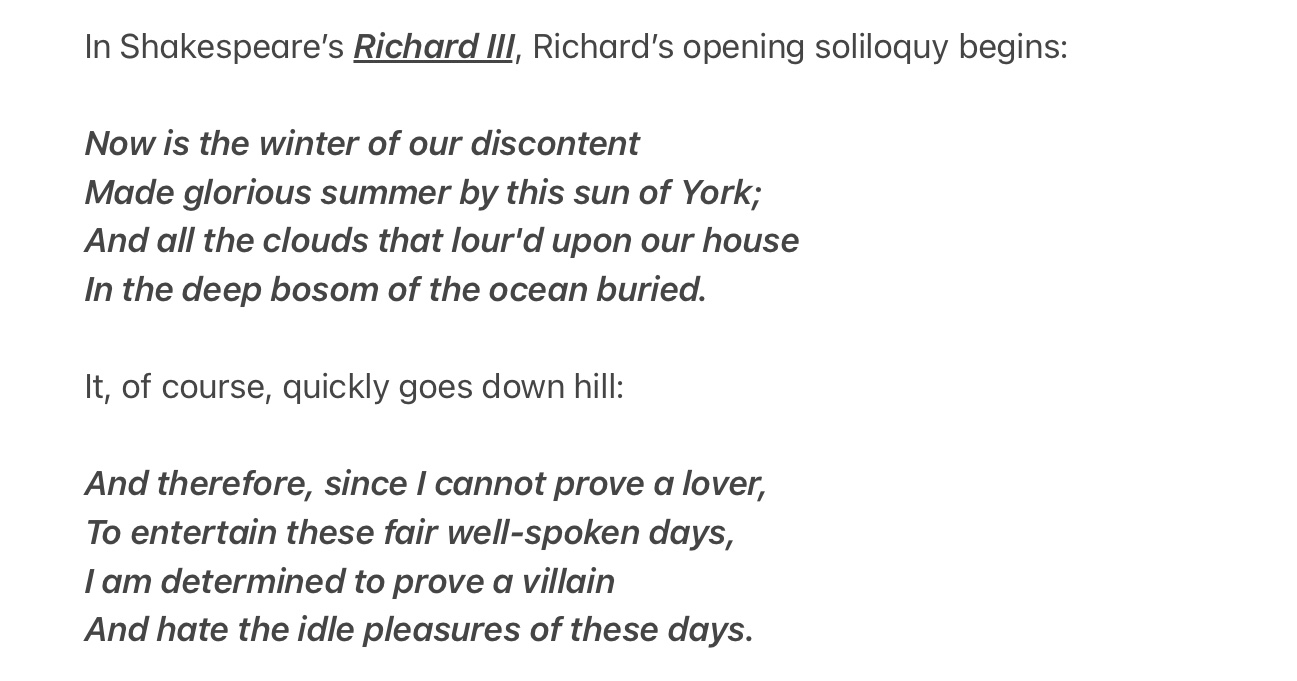
Whether the opening line of Shakespeare’s Richard III, or the title of the 1961 John Steinbeck book, the words “The Winter of our Discontent” aren’t promising. Neither the play, nor the book are particularly cheery. Richard III is of course filled with political and familial intrigue, death and murder, while Steinbeck’s book “The Winter of our Discontent”, examined moral decline in America. Both have more than a little in common with this past winter.

So, how do you fight against a winter of discontent? It could have been all too easy to just try and survive – stay cooped up, become cheerless, and drink too much.

One of the ways we fought it was with Comfort Food. And more specifically, comfort food in the form of soups and stews.

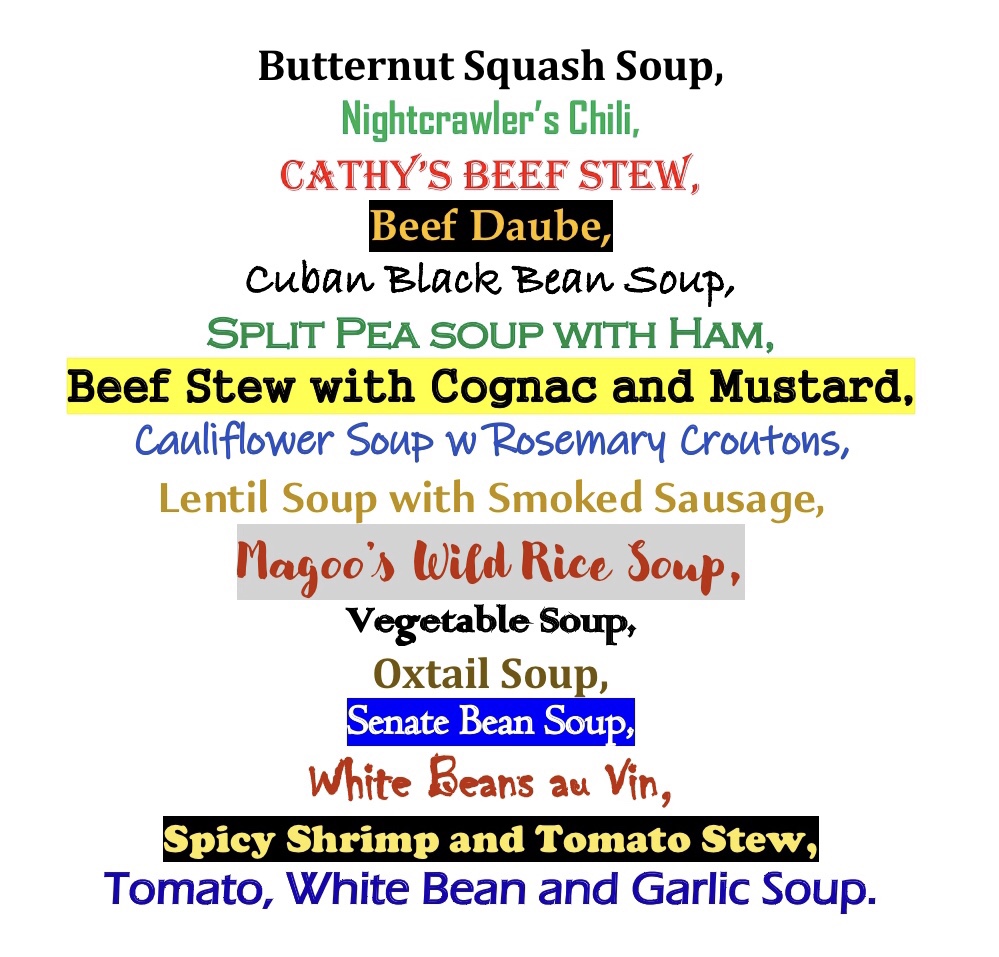
We made and ate more stews and soups than usual this past winter. Actually, I think we had them a couple times a week all season long. Several were old favorites. Others, we made for the first time, and some of those quickly became new favorites. We warmed ourselves with our meals, as much as with the wood stove in the family room. Here’s a list of the assortment we had:

Those soups and stews provided comfort in many ways. Certainly there was the warmth they gave in the bowl and the simplicity of eating a one pot meal. There was also the ritual and pleasure of making them. For me, that brought a bit of relaxation. A few hours in the kitchen, surrounded by the wonderful smells from the simmering pot, along with the warmth of the stove itself, is not a bad way to spend a cold day. I also think their bursts of flavor and color countered the grayness of the season. They furnished a bit of light in the darkness of midwinter, if you will.

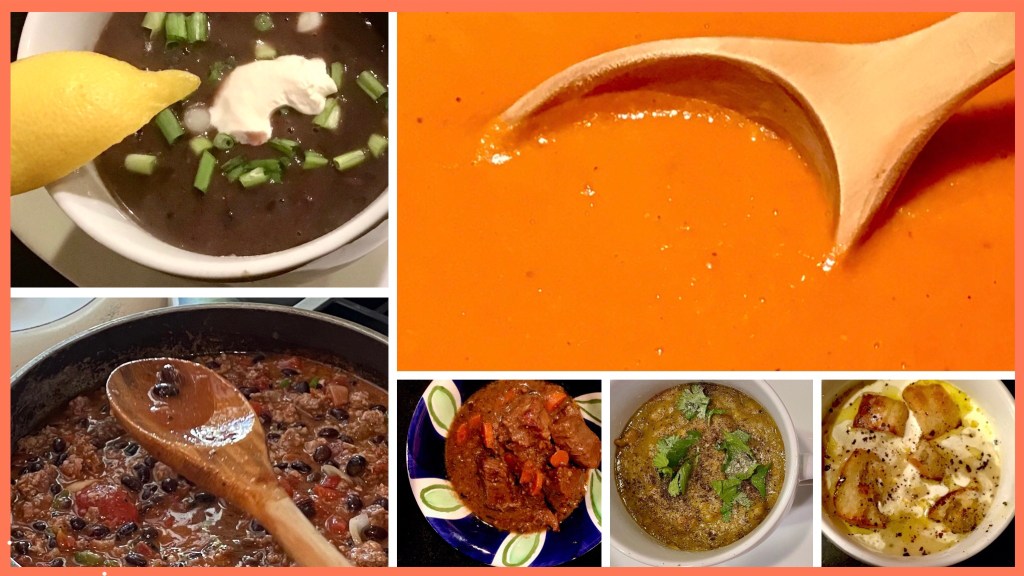
Winter Warmth, Clockwise from upper left – Cuban Black Bean Soup, Butternut Squash Soup, Cauliflower Soup with Rosemary Croutons, Split Pea Soup with Ham, Beef Stew with Cognac and Mustard, and NightCrawler’s Chili

This winter, like all winters, will end. Saturday, March 20th, is the first official day of spring. Although I know we still have some cold, and possibly snowy, days ahead of us, the weather is already turning. Additionally, Cathy and I have both received our Covid shots, and it appears the distribution floodgates are finally opening for all who want the vaccine. Soon, we will all get there.

Among our friends with health issues, some have improved, and others are holding their own. They too are getting Covid vaccines and we hope to see them soon. Unfortunately, two classmates, one from West Point, and one from high school did pass away. We are “at that age” now, where death happens more frequently, but it doesn’t make it any easier.

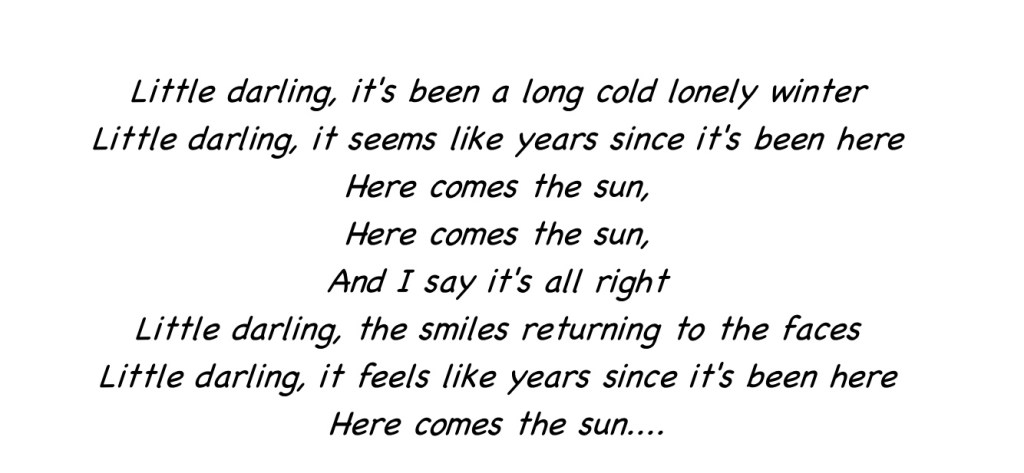
I’m sure we will have a few more warming winter soups and stews over the next several weeks. And while I’m happy for the sustenance they provided over the past four or five months, my mind is already turning to lighter dishes and meals. The days are growing longer and are not so dark. This winter of our discontent is ending. Spring, and the promise of renewal beckon and I am ready to embrace them. In the immortal words of George Harrison:

Addendum:

– Cathy and I had the good fortune to see the play several years ago at the Shakespeare Theatre here in DC. As with many Shakespeare tragedies, there was plenty of death, murder, political mayhem and family intrigue. If you get a chance to see it, I hope you do so.

The Winter of Our Discontent was John Steinbeck’s last novel, and published in 1961. He borrowed the title from Shakespeare. It too tells the story of a family, with themes concerning the effects of social pressure, deceit, lying, corruption and death. Steinbeck stated that he wrote the novel to “address the moral degeneration of American Culture during the 1950s and 1960s.