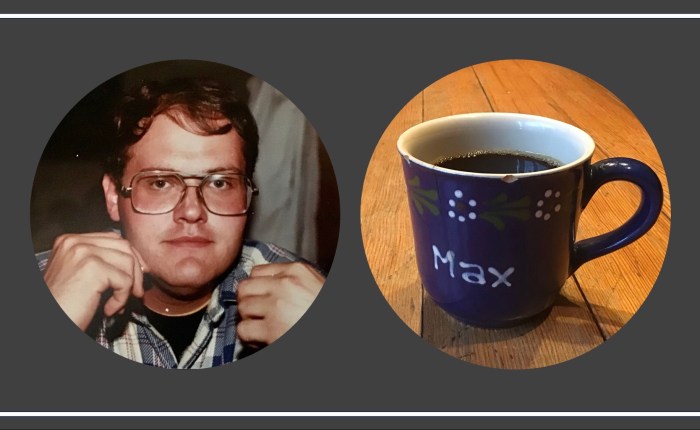
The coffee cup is old and has chips and a crack in it. It was a gift from my buddy Tim Stouffer in 1980 when he visited us in Germany, while returning from a trip to Russia. I think he bought it in a train station somewhere. Tim passed away a little over a year ago, and I’ve thought about whether I should continue using the mug, or put it on a shelf somewhere.
When we returned from Germany in ‘83 there were many things we missed from our 4 1/2 years in Europe. One of those items was coffee. Good Coffee. Cathy rectified that by buying me a small Espresso/Cappuccino Maker for Christmas that year. 40 years later, it still brews decent coffee, even if it looks old and outdated.
We were happy to return to the States, but in addition to good coffee, there were a number of things we missed from our time overseas, including good bier and cheese. The craft bier movement wouldn’t really hit its stride in the US until the ‘90s. As a result, Michelob or Heileman’s Special Export were what passed for top-shelf domestic beer at the time. The cheese market in the states consisted of American, Swiss and Cheddar once you were outside of Wisconsin or a couple of places in New York and Northern California. That too would change, but in the early ‘80s, it was a desert. Of course you could buy imported beer (back then, Lowenbrau or Heineken), or imported cheese, but there weren’t any real American products. I was further mystified to find the concept of a charcuterie board hadn’t reached the States – how was it possible something we routinely ate for lunch in a German Gasthaus didn’t even exist here?! And don’t get me started on wine…
Yes, I know this all sounds like an old man rant, and if I were saying it now, it would be. I was saying this in 1983, at the grand old age of 28.
Back to coffee. ;-).
Coffee in Germany and Europe was so much more than just a pot of brewed coffee. The Europeans made stronger coffee in general – not more bitter, just stronger and with great flavor. At the Gasthäuser (local restaurants) we visited, it was always made fresh – it wasn’t from a pot that was sitting for hours. In the afternoon, you could visit a Konditorei (the German word for a pâtisserie or confectionery shop) for a coffee and a sweet treat of some sort. The coffees varied from regular, to espresso, to cappuccino, to café au lait (coffee with a separate small pitcher of hot steamed and slightly frothed milk you added to your coffee). One of our great pleasures was sitting outside at a cafe in Berlin, or Paris, or Vienna, or Monte Carlo or any number of cities having a coffee, while watching the world pass by. I become nostalgic even today thinking about it.
There wasn’t the same type of coffee availability here in the States in ‘83. Starbucks started in Seattle in 1971, but didn’t really begin expanding until the late ‘80s. Although local coffee shops existed in some places, The “Local Coffee Shop” was an idea that hadn’t yet come into its own.
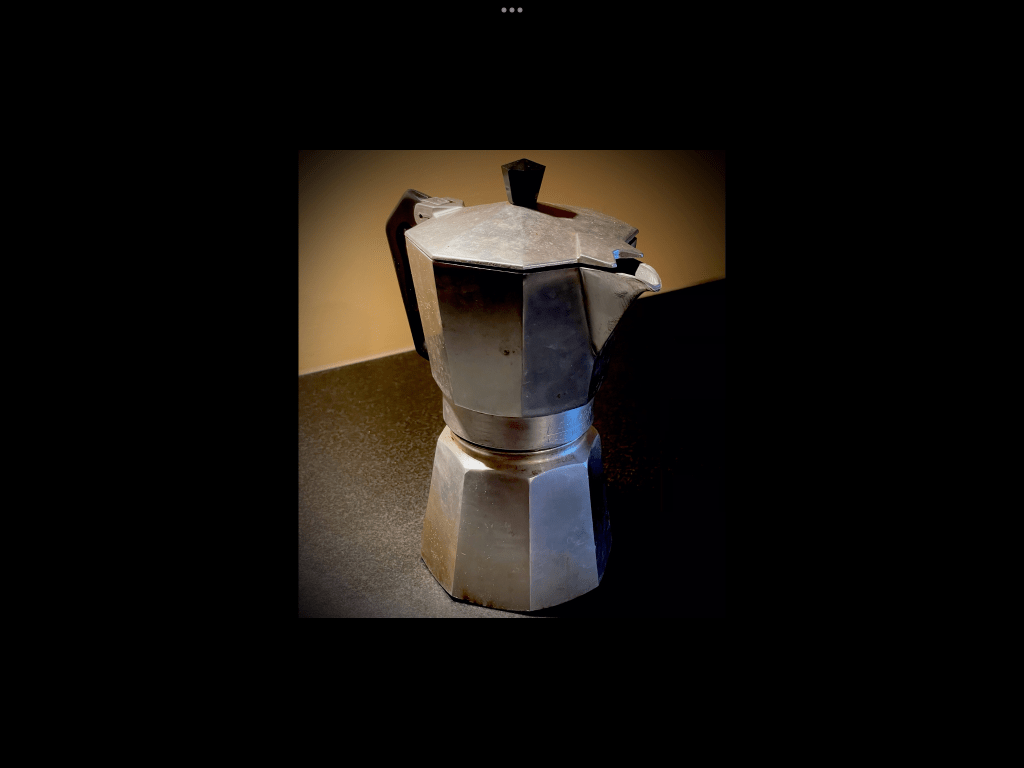
At the time, we were stationed in Dayton, Ohio. At a local mall, we discovered a shop that sold coffee beans. (I can’t remember if you could actually also buy a cup of coffee there or not.) In any case, we bought a grinder, and started grinding our own beans for our regular coffee pot at home and were able to make a stronger cup of coffee. We also bought espresso beans and used our Italian stovetop espresso maker (known as a Moka pot, it cost all of $6 when we bought it in Italy in ‘82 – I see they run $25 plus on Amazon now) to make a decent espresso. Half the problem was solved.
Our Old Moka Pot Also Still Works Well.
Cathy solved the other half of the problem that Christmas when she gave me an Espresso/Cappuccino maker. I was thrilled and started using it that very day. It became a fixture at our house and if you visited us in the ‘80s through the mid ‘90s, I practically forced a coffee on you
A Great Christmas Present in 1983!
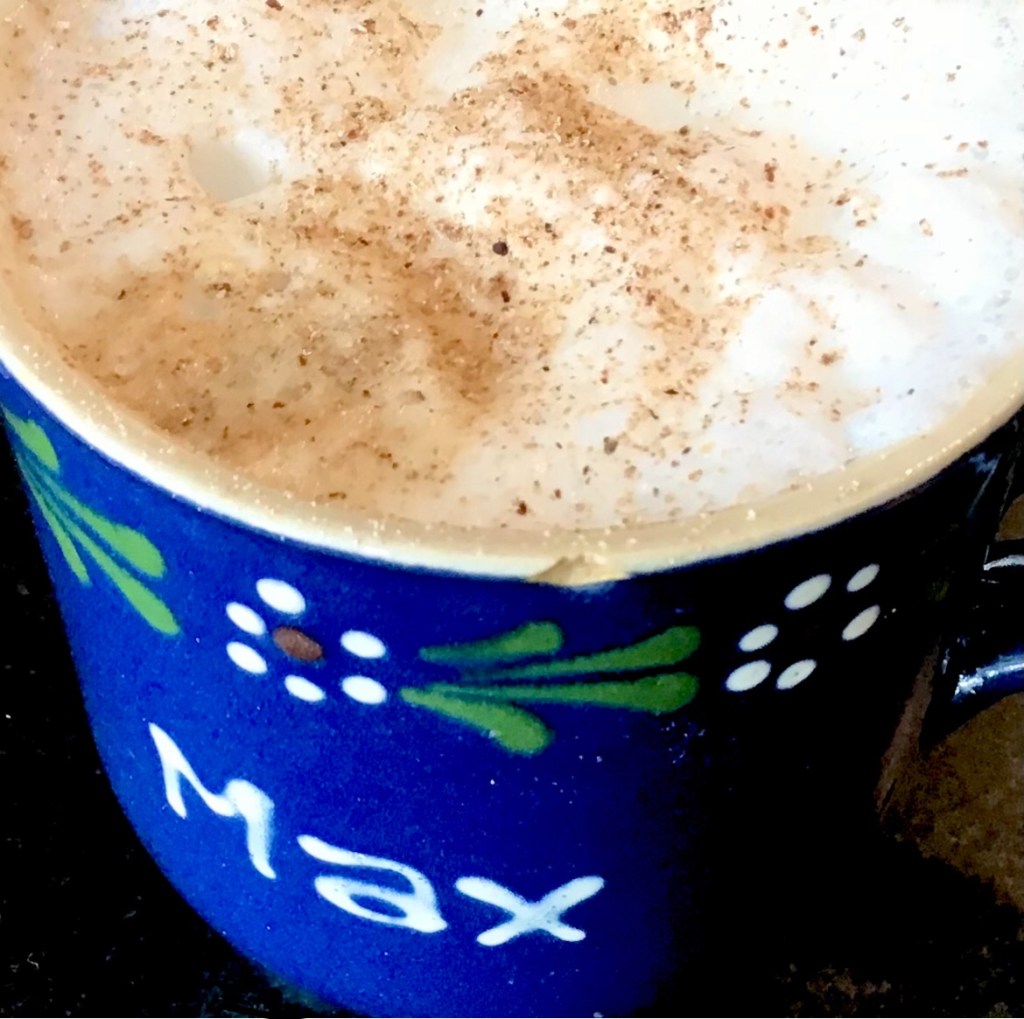
Espressos? Sure. In addition, my after-dinner cappuccinos became a point of pride and were quite good, if I do say so myself. I’d add a capful of Cointreau for a sweetener and grind a little fresh nutmeg on the top of the foam. We also did Irish Cappuccinos. I think you know how I made those.
Somewhere along the way, other manufacturers started selling upscale Espresso machines of better quality. Now days, you can easily spend between $500 and $1,600 on a high-end espresso/coffee maker. Breville, Rancillo, Gaggia and others all make excellent machines … at a price. Over the years, I looked at a couple of them, but never pulled the trigger. We have a couple of friends who own them. One uses his religiously. Another found it more trouble than it was worth and it now sits on the counter, mostly unused. For my friends* that own super nice espresso machines and are real aficionados, good for you, and I’m happy for you. I’m sure you can probably make a better espresso than I can, and that’s OK.
Coffee shops are now ubiquitous here and these days you can’t trip without falling into one of them. They generally make great coffee. There are a few good local shops near us not named Starbucks, and I prefer those. If you ask, they’ll serve you your coffee in an actual coffee cup – not some crap paper cup.
Over time, I backed off using our little machine quite as much. Life was too busy, or I’d lost interest. And then, after retiring about a decade ago, I started using it more again. Usually, it’s in the afternoon and Cath and I feel the need for a little pick-me-up. I’ll make us cappuccinos and we take a break from life and sit and sip our coffees for ten or fifteen minutes. It’s a nice pause, especially on a winter day with fresh snow outside.
Yes, It Still Makes a Decent Cappuccino. Nutmeg and Cointreau are Optional.
Yes, over the last forty years, we here in the States have caught up to Europe on bier, cheese, good everyday wine and even charcuterie boards. As for coffee, I’m guessing we have more coffee shops than Europe now days.
At home, I would bet we’ve gone through five or six regular coffee machines since 1983. They die every six or seven years. Our Maxim Espresso Machine? It’s a little banged up but works fine and keeps chugging along. How many forty-year-old machines do you have in your home you can say the same thing about?
Addendum:
* I do know there are lots of great espresso makers out there, and that those of you who have them can pull a better shot, with more crema than I can. I certainly mean no criticism of those machines and am, at least a little, envious of you. My point in this blog was about my machine being 40 years old, and there’s not much that lasts that long anymore. Still, it’s interesting. In Italy, rather than buying an elaborate espresso machine, over 3/4 of the country still uses their stove-top espresso machine (Moka pots) everyday for their first cup of coffee. You can read more about the Moka pot here: https://en.m.wikipedia.org/wiki/Moka_pot
The blue coffee cup with my name on it is a bit precious to me. It was a gift from our old friend Tim in ‘80 or ‘81. He bought it while visiting us in Germany and gave it as a gift. Tim passed away last December.
Sometimes, it’s the little things we remember. With a small assist from Burt Lancaster, I once surprised Dad with a present of WWII mess hall coffee mugs he’d been trying to find in antique shops for years. The gift brought joy to both of us at the time, and continues giving me comfort to this day.
Dad always liked his coffee. From the time we were kids, I remember the role it played in his life. On early weekday mornings, he packed the big thermos with him as he left for work on the railroad. On weekends, there was a pot available all day long on Saturdays, and half the day on Sunday. On Saturday mornings, various uncles or aunts stopped by. They all sat around the kitchen table drinking endless cups of coffee, while telling, or retelling, the stories of their youth, and the war years. We kids often listened in, laughing at the stories we came to know by heart.
I started understanding a bit more about his love for coffee when I was applying to West Point. On a couple of occasions, dad drove me to Fort Sheridan (an Army Post in Illinois that no longer exists) for a physical and a fitness test. As we were walking on the Post, he surprised me by becoming a bit nostalgic for the “good old days” in the Army, and talked about how good the coffee was. I think he may have even joked with one of the folk we interfaced with about reenlisting, if he could have a cup of coffee from the Mess Hall. It’s strange, the things you remember, but I distinctly recall the conversations about Army coffee on those trips. It was about 27 years after World War II and he was 48 at the time.
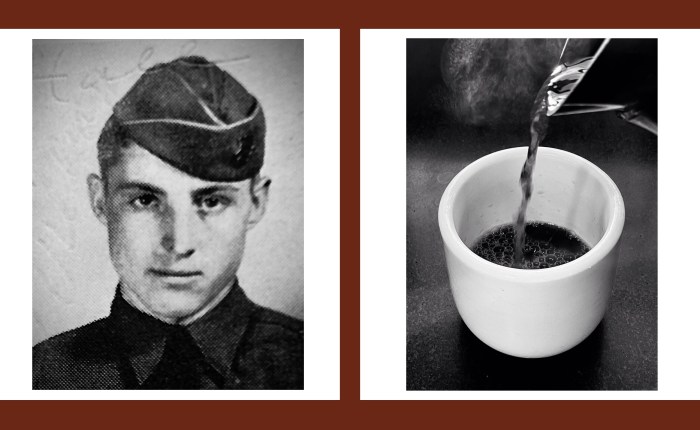
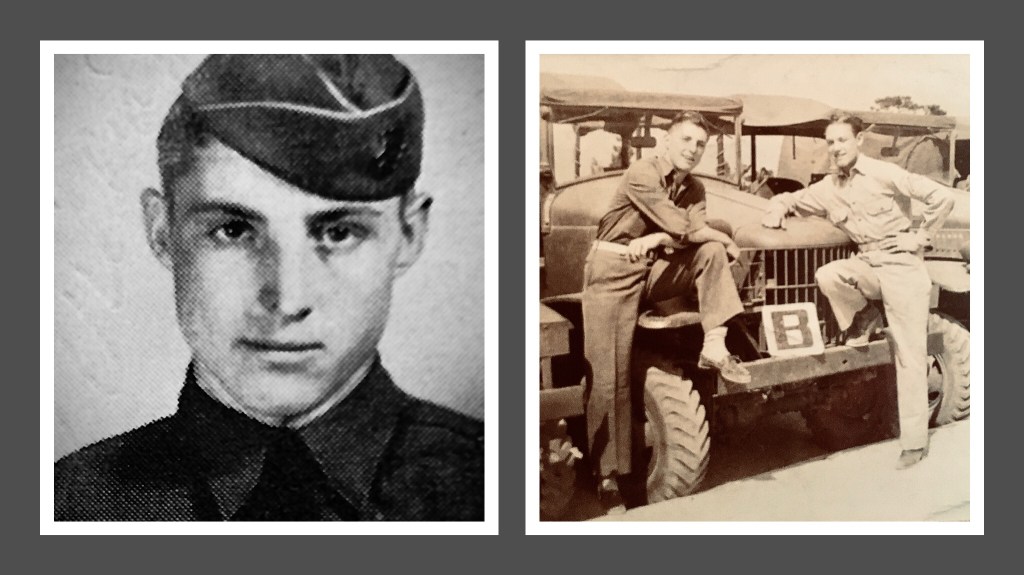
Dad in the “Good Old Days” in 1941, Sometime Before Pearl Harbor
I eventually graduated from West Point and Cath and I were deployed to Germany for most of the ‘80s. We didn’t see Mom and Dad much during our time overseas.
In ‘85, Dad retired from the railroad, and he and mom started traveling more, particularly to jazz concerts around the country. They also managed to visit us in Germany in ‘88. While there, dad talked about their travels. In a side conversation, he mentioned they also typically visited “antique” stores during their trips. He was looking for mess hall coffee mugs from WWII, but hadn’t found any. I was intrigued. What the hell do WWII mess hall coffee mugs look like, and why did he want them?
In Dad’s words, they were thick, heavy white mugs with no handle. You could put both hands around the mug when you took your first sip in the morning, and the mug warmed your hands. He’d used them throughout his time in the Army during the war. I mean, he was waxing poetic about these mugs. I still didn’t quite know what they looked like, but that was OK. During their visit, we stopped in a couple of shops with older items, and Dad would poke around. His thinking was maybe during the occupation of Germany after the war, some mugs made it into the local economy. The looking was to no avail, and no mugs were found.
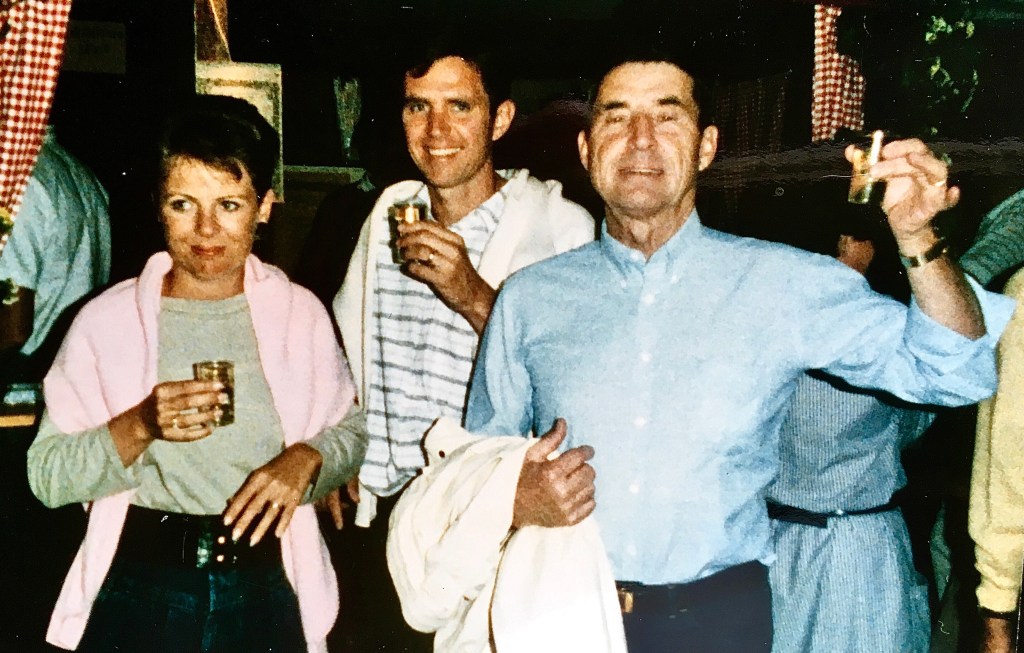
Dad, Cathy and I at a Winefest on the ‘88 Trip to Germany.
We eventually returned to the States in ‘89, and on a visit at Mom and Dad’s over Christmas, Dad and I were watching TV. The classic WWII movie, From Here to Eternity, was on. You know the movie… Burt Lancaster, Montgomery Clift, Frank Sinatra, Donna Reed, Debora Kerr and Ernest Borgnine. It has the great scene with Lancaster and Kerr kissing on the beach as the waves crash over them.
As we were watching, Dad suddenly shouted out “There’s the coffee mug! Look in Burt’s hand!” What!? I look up, and I’ll be damned. Just as the Japanese are about to attack Pearl Harbor, there’s Burt with a white, thick, handleless coffee mug… which he immediately throws on the ground to go out and confront the attacking Japanese.
Everyone Knows the Scene of Burt and Deborah Kerr on the Beach, but Dad and I Were More Interested in Burt and the Coffee Mug.
I’d completely forgotten about the mugs until Dad’s outburst. Of course I immediately asked him how the hunt was going. He’d visited a lot of shops, but never seen any, or really even met anyone who knew what he was looking for.
At the time, I was involved in a couple of classified Black programs for the military and traveling a fair amount. Cathy couldn’t know where I was going, only the approximate day of my return. On the trips, we could only use cash, and no credit cards were allowed. We often had some spare time, and now that I knew how the mugs looked, I too started poking around in the occasional store.
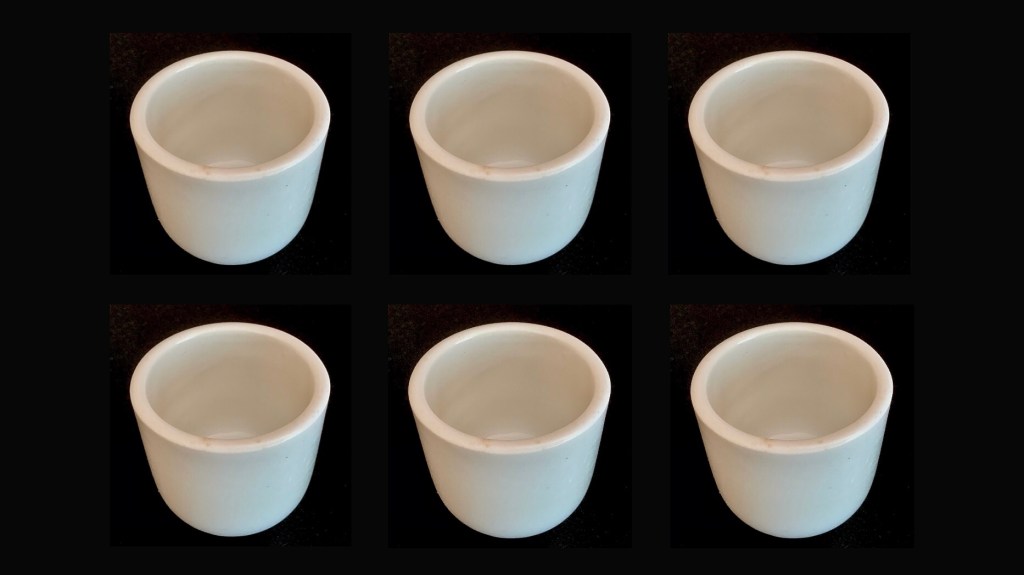
A couple of years went by, and I wasn’t having much luck either. That changed in the spring of ‘93. I was looking around a junk shop in the middle of no where, and there they were – Six of them! Holy hell. Were these really them? I asked the owner what he knew about them, which wasn’t much, only that they were old coffee mugs. It was enough for me. I counted out some cash, bought all six mugs, and returned home with them a week later.
Six Handleless Coffee Mugs, Bought with Cash at an Unnamed Location
Cathy and I thought about giving them to Dad for a Christmas or Birthday present, however those were still a while away. Mom and Dad were coming for a visit in July, and we decided we would give them to him then, with a twist. Rather than just hand them over, we would not say anything, serve soup in them, and see if Dad noticed.
They finally made it to Virginia and the big night arrived. It was a beautiful evening, and we ate dinner in the backyard on the picnic table. Cathy made Gazpacho for a first course, and we served it in the mugs. As she and I brought the soup out, we set a mug in front of each of us.
I could hardly contain myself, I was so excited. We started eating and both Mom and Dad complemented Cath on the soup. There was no word from Dad on the mugs. Were these not the right ones? We continued eating, and all of a sudden Dad paused, and started looking at his mug. He looked more intently, and then, “Say! I … I … I think these are the mess hall coffee mugs!”, at which point I burst out laughing.
Dad verified these were INDEED the mugs. By then, we were all laughing, and I told him the story of how I found them.
We used those mugs for coffee in the morning for the rest of their visit. Dad would use both hands, and bring it up to his mouth and nose to inhale the smell of the fresh brewed coffee, probably the same way he did back in 1940-‘45. When they left, I sent four of the mugs home with them, and kept two for us.
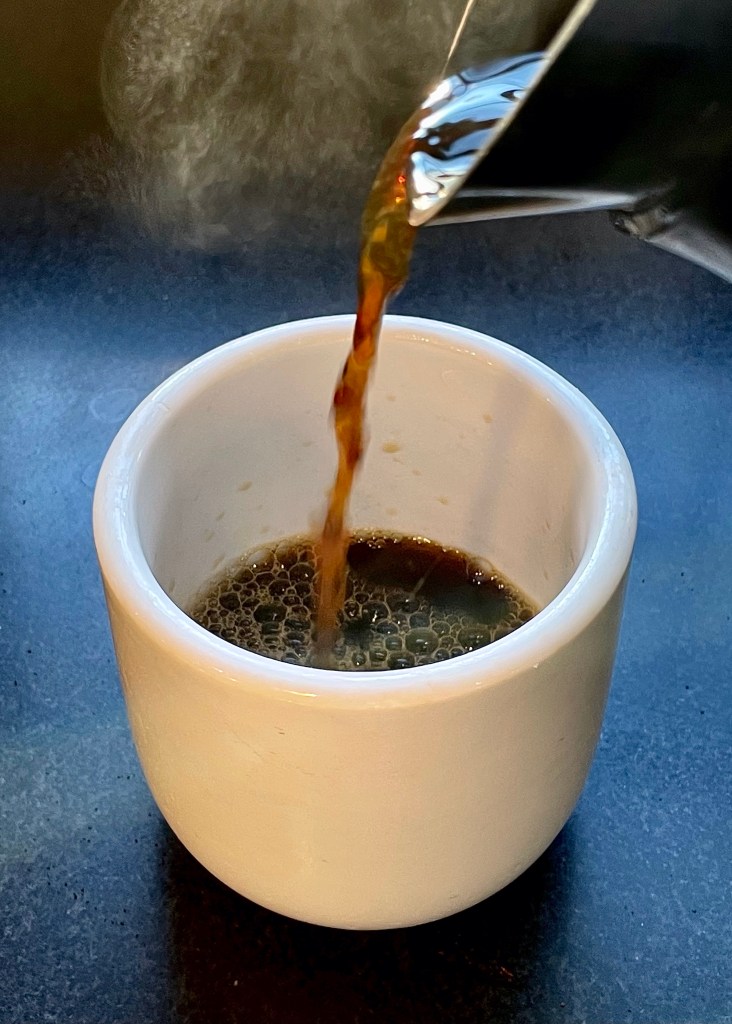
Nostalgia and Coffee. What’s Not to Like?
Eventually, Dad passed away in 2010. At some point in time, mom gave the four mugs back to us. Occasionally, I use one of them for my own Cuppa Joe in the morning. I feel the warmth of the mug in my hands, inhale the smell of the fresh brewed coffee, and think back to Dad – It’s a wonderful way to start the day.
Addendum:
If you want to see the scene of Burt Lancaster with the coffee mug as the Japanese are attacking Pearl Harbor, you can view it here: https://youtu.be/2UxTGH7cR5Y




 Live Life Exuberantly