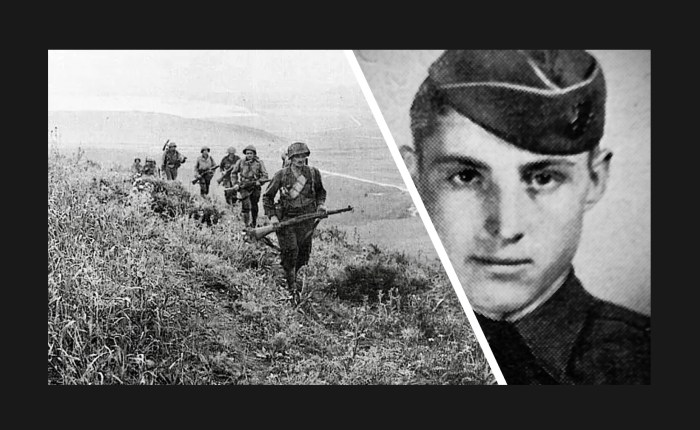
Dad and Al Capone

Dad and Al Capone

It was May of 1943 in Bizerte, Tunisia. My Dad, then twenty year old Sergeant Willie I. Hall looked at the German soldier and said “Chicago”. The German answered “Chicago?” Dad stared back. “Chicago. Al Capone”. Now the German’s eyes’ widened …

… After the battle at Maknassy, Dad’s unit, the 60th Regimental Combat Team (RCT) reunited with the rest of the 9th Infantry Division. In late April of ‘43, the push was on to finish the war in North Africa, and in the words of the division Commander, Major General Eddy, “A world spotlight will be focused on us from the moment we attack until we have killed, captured, or driven every Axis soldier from Tunisia…”

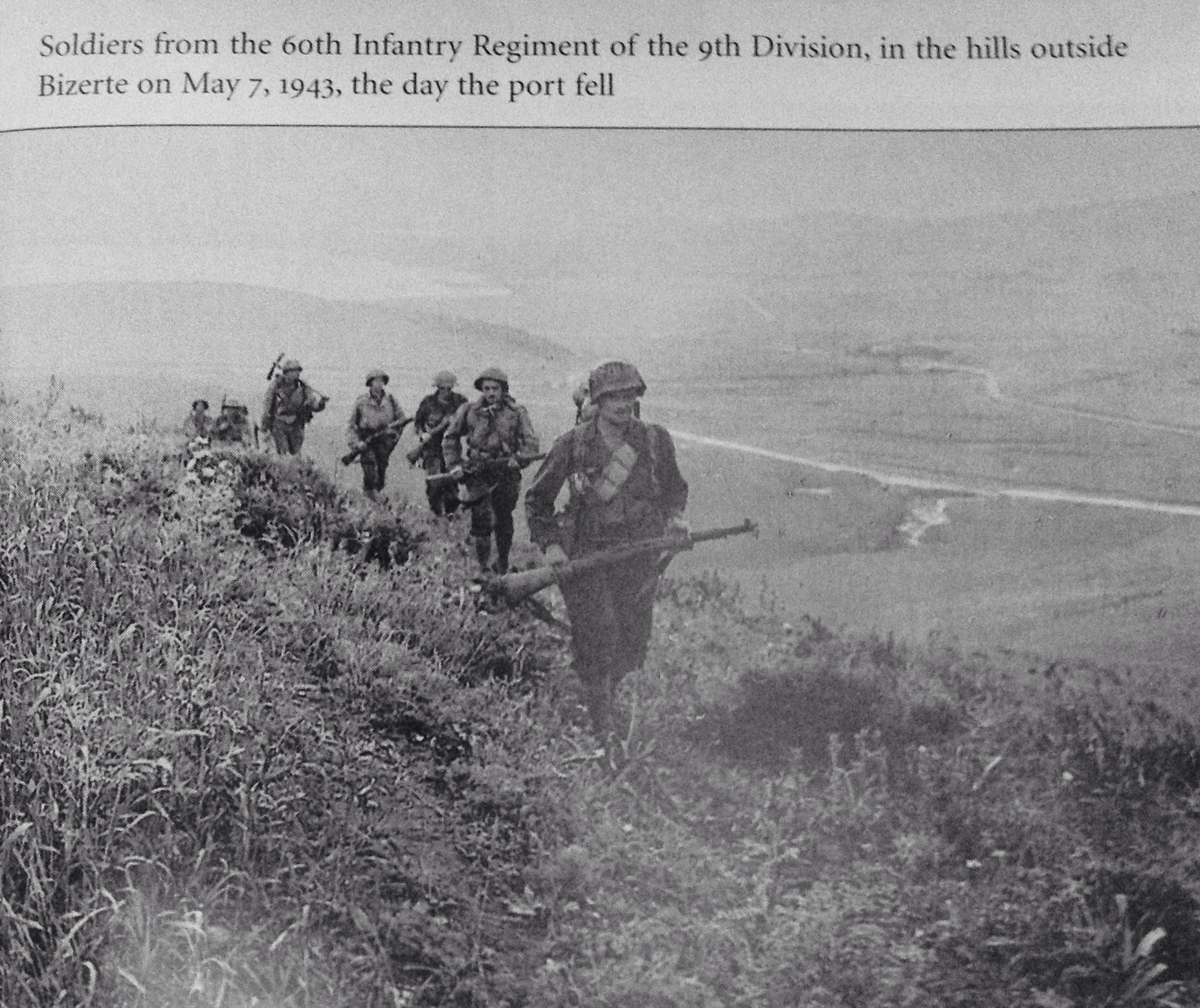
The history books tell us that as a part of their assault, the 60th, attacked through the Sedjenane Forest and after driving the Germans out of the area, hit a bottleneck at Djebel Cheniti. On May 5th, the 1st Battalion of the 60th (Dad’s Battalion – about 500 men) attacked Hills 207 and 168 (see diagram below) and Djebel Cheniti by a direct assault with fixed bayonets. You read that right. Fixed Bayonets. In the words of the 9th Infantry Division Record, “One of the strongest positions in the final Axis defense was assaulted by one battalion of Infantry, with artillery blasting a shell-strewn pathway for its advance. Another story in the annals of foot soldiers, who do the dirty tasks of warfare”. After several hours, they took the hills and Cheniti.

I never heard dad say a word about the battle at Cheniti. Not one.*
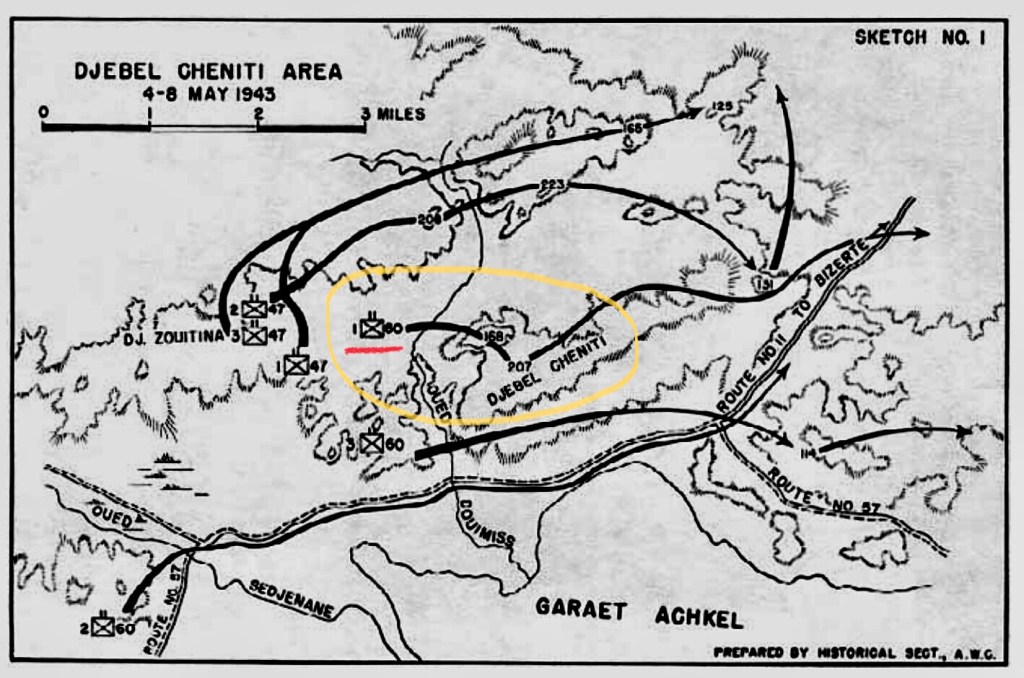
1st Battalion, 60th RCT’s Path While Attacking Djebel Cheniti and then Bizerte

On the 8th of May, they arrived in Bizerte, and on May 9th, the Germans surrendered. The battle for North Africa was over. In the words of one soldier of the 60th, “We were all 20 pounds lighter and 20 years older.”
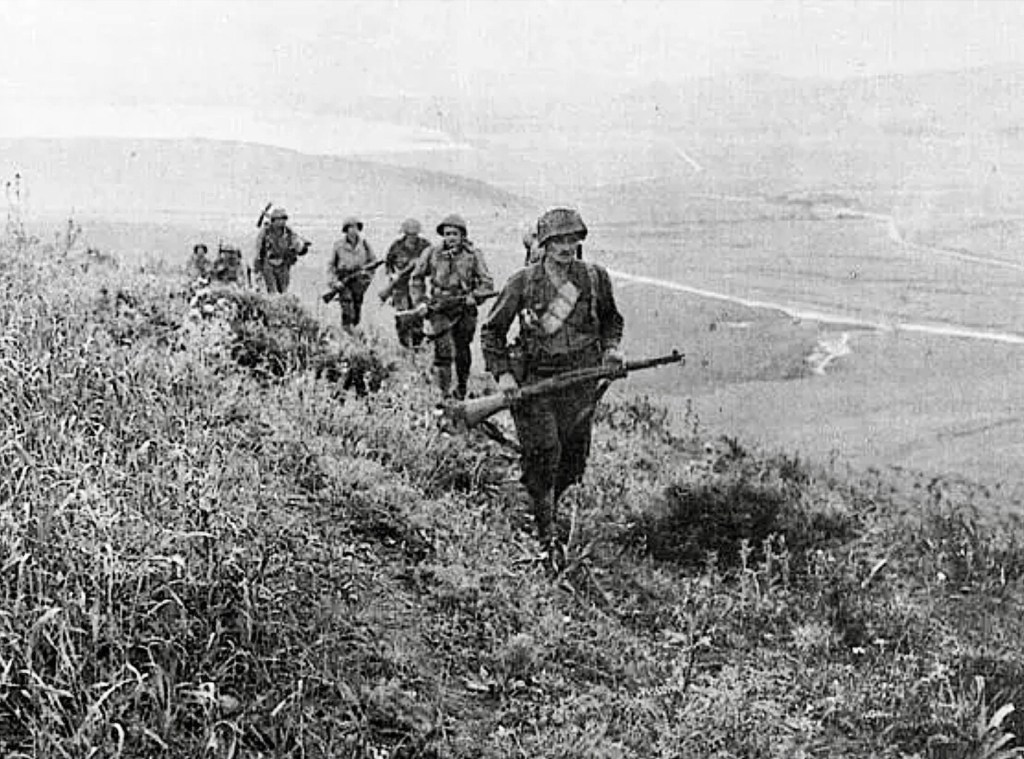
Soldiers of the 60th RCT in the Hills outside Bizerte, Tunisia on May 7, 1943.

At this point, I’m sure you are saying, “This is all great history Max, but what the hell does it have to do with your Dad and Al Capone?” Good question.

Now we come to the rest of the story.

With the collapse of Rommel’s Africa Corps, the allies captured prisoners. A lot of prisoners. Over 275,000 Axis prisoners were taken in all, including 25,000 in and around Bizerte alone. This included General Jürgen von Arnim, the German Supreme Commander.

There were, of course, no prisons, so in the immediate aftermath they confined the Germans in large “holding pens” with single strands of barbed wire around each of the pens. The 9th, along with other units, were then drafted into guarding the prisoners until more secure facilities could be established.
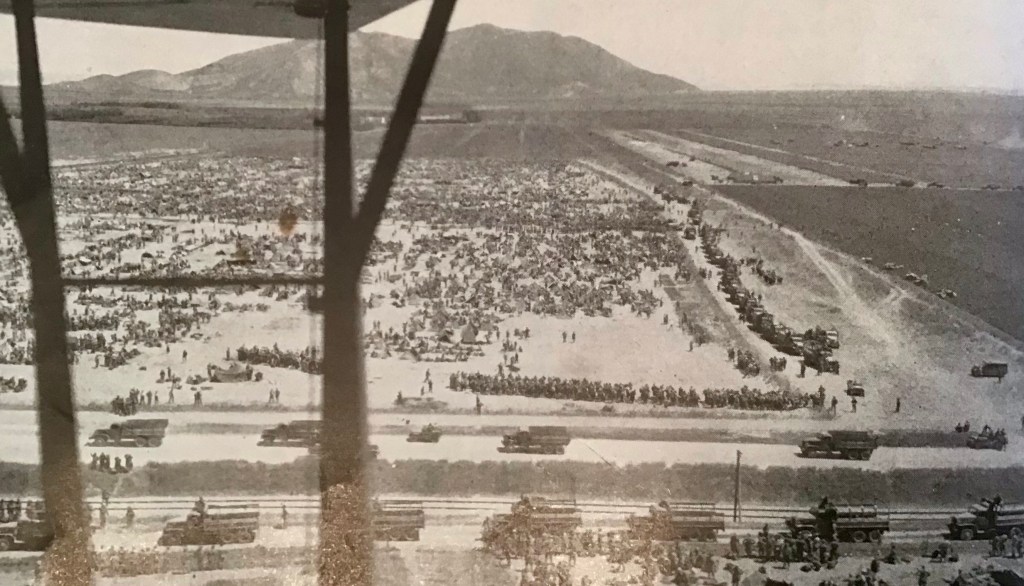
Prisoner Holding Pens Near Bizerte, Tunisia

Dad talked about guarding the Germans and the Italians. You have to remember just a few days or weeks before, they were in a kill or be killed mode with the enemy, with plenty of butchery to go around. All that separated the two sides now was a bit of barbed wire. According to Dad, the Italians never had much fight, and the captured Germans knew they were beat, so they generally behaved. Still, you needed to be careful.

During the days they were on duty, dad’s platoon always guarded the same area, and after a while, they would recognize certain prisoners, talk a bit back and forth, and maybe even pass a cigarette across the wire. At the same time, Dad said he wanted to make sure he looked tough so no one did anything stupid.

As Dad tells the story, he was talking with a few of the Germans one day and someone asked where he was from. He answered “Illinois”, but the Germans looked confused. So dad thought about it a bit, and then trying to look a bit tougher he said “Chicago”. The German answered “Chicago?” Dad stared back. “Chicago … Al Capone”. Now the German’s eyes widened. Everyone knew who Al Capone was.

The German looked at Dad and said with a smile “Al Capone…. Ratatatatat….” While making a machine gun like motion with his hands.

Dad looked back at the German, nodded his head, patted his M1 Garand Rifle and without smiling, said “Ja, Al Capone.” The German stopped smiling and didn’t say anything else.

Dad always told the Al Capone story with a chuckle. When getting to the punchline, he would draw himself up to look bigger and meaner. But he was deadly serious about the Germans not trying anything. After what they had been through, I don’t think it would have taken much for him to put a bullet in someone, for doing something stupid.

A little over two months later, after a bit of rest and relaxation, Dad and the 60th were back in Combat against the Germans on the Island of Sicily. There, he was wounded and almost died. You can find a link for that story in the Addendum below.
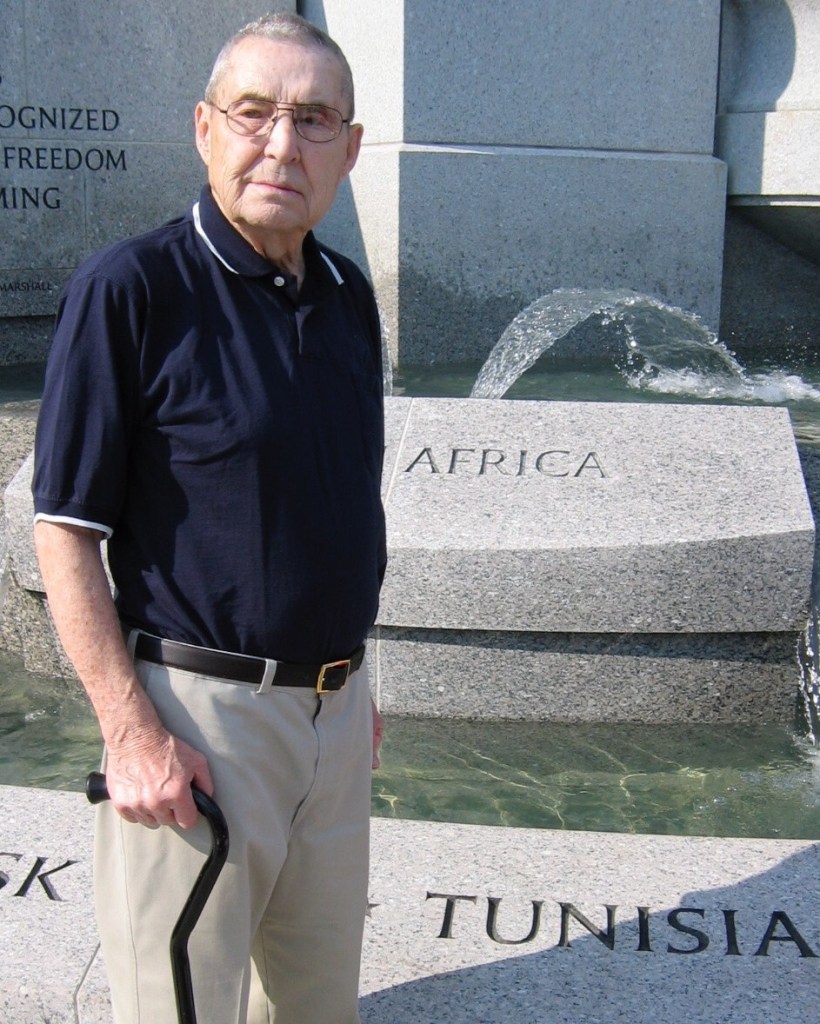
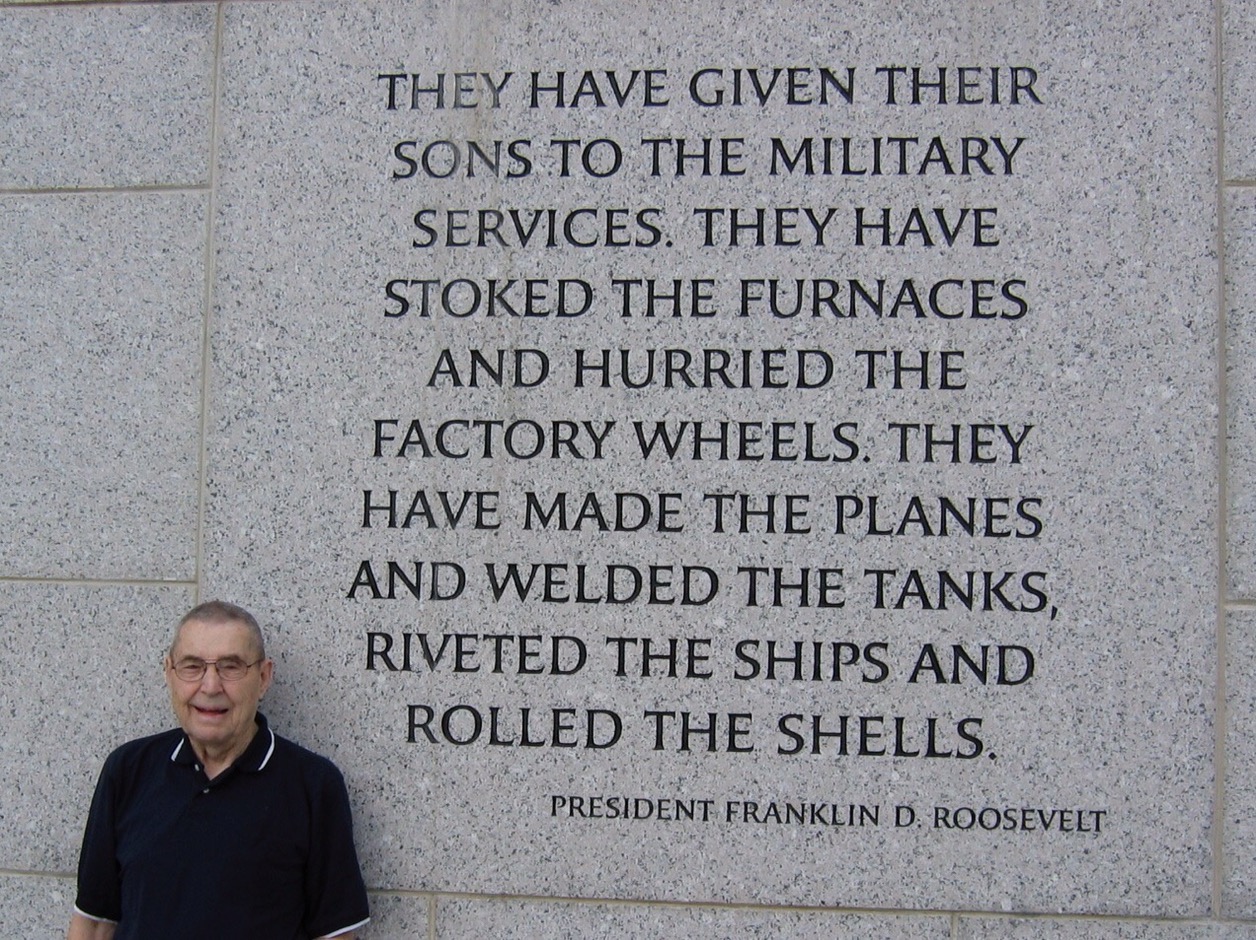
Dad at the WWII Memorial in 2008.

Addendum:

* Except for the story of how he was wounded, Dad never said much about any of the battles he was involved in. For the most part, he told funny stories about events during the war. I was shocked when doing some research for this blog to find he had been involved in a charge with fixed bayonets. As a soldier, you know things aren’t going to be pretty when you receive an order to fix bayonets. That is combat at its most up close and personal. I have to figure that after you’ve been given the command to fix bayonets, and then taken part in a bayonet charge, everything else in your life, maybe for the rest of your life, must seem pretty easy. It may explain a bit about why Dad always had such a good attitude throughout his life.

Al Capone – As everyone knows, after being the Crime Boss of Chicago for much of the Twenties, Al Capone was incarcerated for tax evasion in 1931. He was released from prison in 1939, but wouldn’t die until 1947. He had a worldwide reputation for murder and violence that may have been the equivalent of his actual deeds.

You can read more about Dad almost dying in Sicily in August of ‘43 here: https://mnhallblog.wordpress.com/2016/05/14/wounded-in-sicily/

You can read more about the 9th Infantry Division in Tunisia here: https://9thinfantrydivision.net/battle-history/tunisia-battle/
Pickerell, The Biltmore, and The Whiskey Tasting

Pickerell, The Biltmore, and The Whiskey Tasting

When Rob Grubbs asked if I would help “host” the whiskey tasting for the West Point Class of ‘78 mini-reunion, I took about a nano-second to respond yes. The evening, if possible, turned out even better than I imagined. It was one of those rare occasions of reality exceeding expectations.

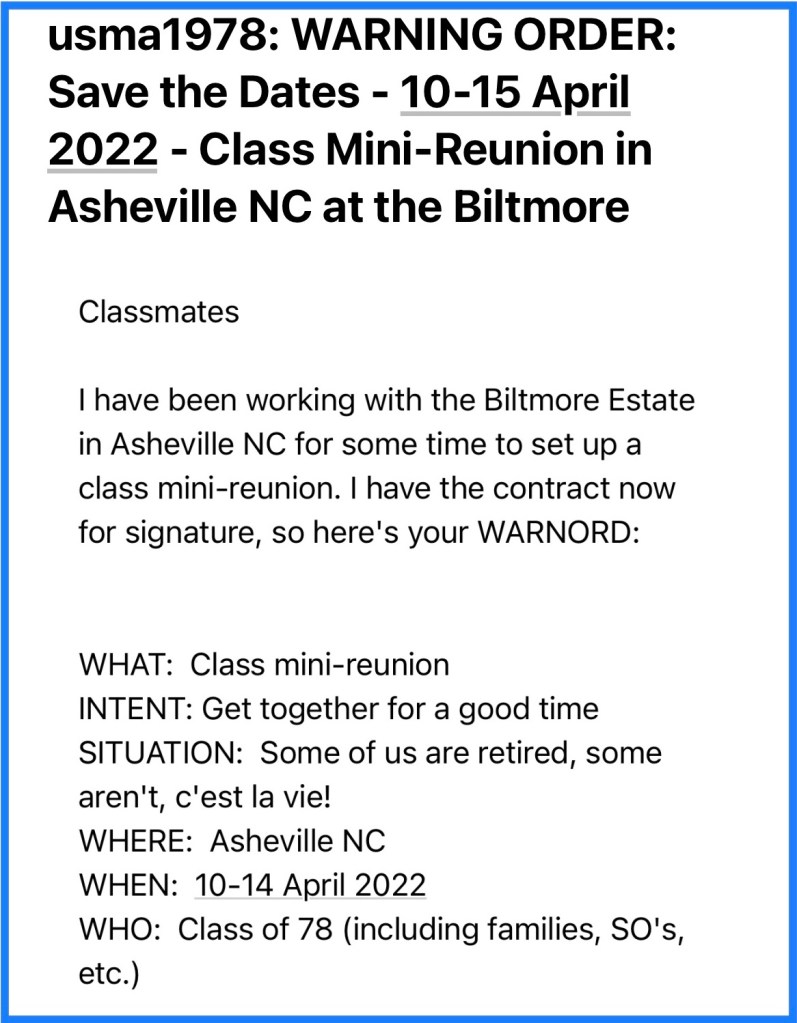
Rob sent the original invitations for the April ‘22 West Point Class of ‘78 mini-reunion, in August of ‘21 in the form of a military Warning Order. The reunion would be at The Biltmore Estate in Asheville,NC, and there was an immediate interest. Ultimately, 129 classmates, significant others, and family members made the trip.

The Original “Warning Order” From Rob Grubbs

The five days of the mini reunion were great fun, with a combination of group events and laid back small get-togethers. Dinners, a picnic, wine tastings, tours, just hanging out… it was nice. For me, a highlight was the Whiskey Tasting on the second night. What originally started as an idea for a bourbon and cigar event, morphed into a bourbon whiskey tasting, and then morphed again into the event it became.

Rob asked Bill Moeller to host and organize the tasting, and they then drafted me to assist Bill. Bill had the brilliant idea of bringing a focus to one of our departed classmates, Dave Pickerell, who later became known as The “Johnny Appleseed” of Craft and Rye Whiskey. The Army, in it’s infinite wisdom, sent Dave to grad school in Chemistry. The rest, as they say, is history.

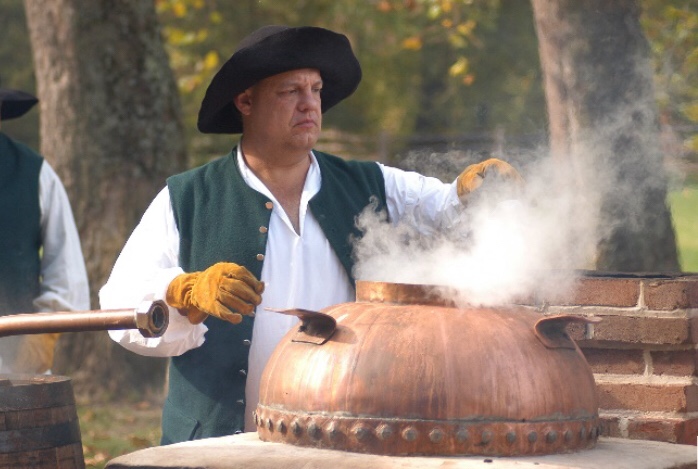
After a stint teaching back at West Point, Dave later left the Army and eventually went to work for bourbon distiller Makers Mark, where he became the Master Distiller and worked for 14 years. After leaving Makers Mark, he struck out on his own. Almost immediately, he was one of the distillers called to Mount Vernon to recreate George Washington’s original Rye Whiskey. Not only did Dave distill rye whiskey using Washington’s recipe, he would dress in colonial period clothes at Mount Vernon for special whiskey social events. This was around 2005, about the time craft distilleries were beginning. Dave ultimately helped over 50 distilleries get off the ground, and consulted with over 50 others.

Dave in Colonial Attire at the Mount Vernon Still

Dave was particularly known for a couple of events. One was the establishment of WhistlePig, a Vermont distillery dedicated to Rye Whiskey – Some people say they make the best Rye Whiskey in the world. The second event was his collaboration with the band Metallica, when they created their whiskey, Blackened. What makes Blackened unique?

Dave was fascinated with the effects of sound – the way an organ can play a note that shakes an entire building. The thought of what sound could do to whiskey at a molecular level stayed with him. As it happened, Metallica and Dave harnessed the vibrations that make a Metallica concert historic. The convergence of these ideas resulted in a sonic-enhancement method utilizing a variation of the band’s song frequencies to disrupt the whiskey inside the barrel, causing increased wood interaction and increasing the wood-flavor characteristics in the whiskey. Sonic-enhancement does not replace traditional aging methods and Blackened is typically aged an average of 7-8 years. Each batch of Blackened has a unique playlist of Metallica songs used to sonically-enhance the whiskey during finishing.

Picture of Dave Pickerell (Center), and Metallica from a Rolling Stone Article About Blackened

After discussions between Bill, Rob and I, it was decided our tasting would focus on whiskeys connected to Dave, and conclude with a toast to him, and our 71 other departed Classmates.

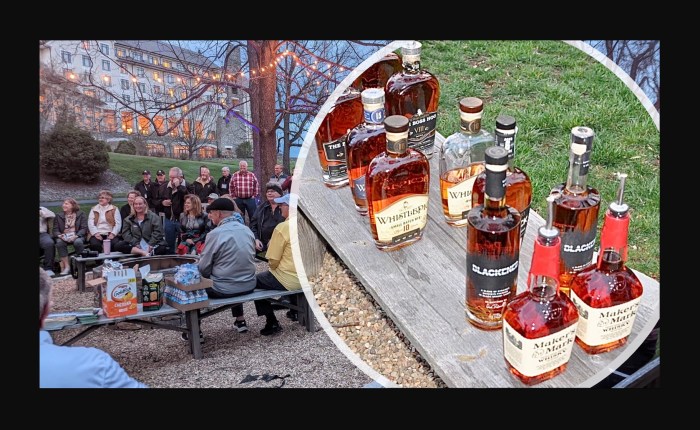
The list for the tasting was as follows:

  • Makers Mark – where Dave worked so long as the Master Distiller
  • Blackened – His collaboration with Metallica
  • Piggyback – A WhistlePig Rye developed for use in Cocktails. Dave passed away just before the release. As a nod to Dave’s legacy, WhistlePig added the dates 1956-2018 (Dave’s birth and death years) to the neck label of each bottle, The WhistlePig pig logo usually includes a top hat, however for Piggyback, the pig wears a Stetson hat which Dave always wore.
  • WhistlePig 10 year old Rye
  • WhistlePig 15 year old Rye
  • The Boss Hog – WhistlePig’s top whiskey, which included final finishing in Philippine Rum barrels.

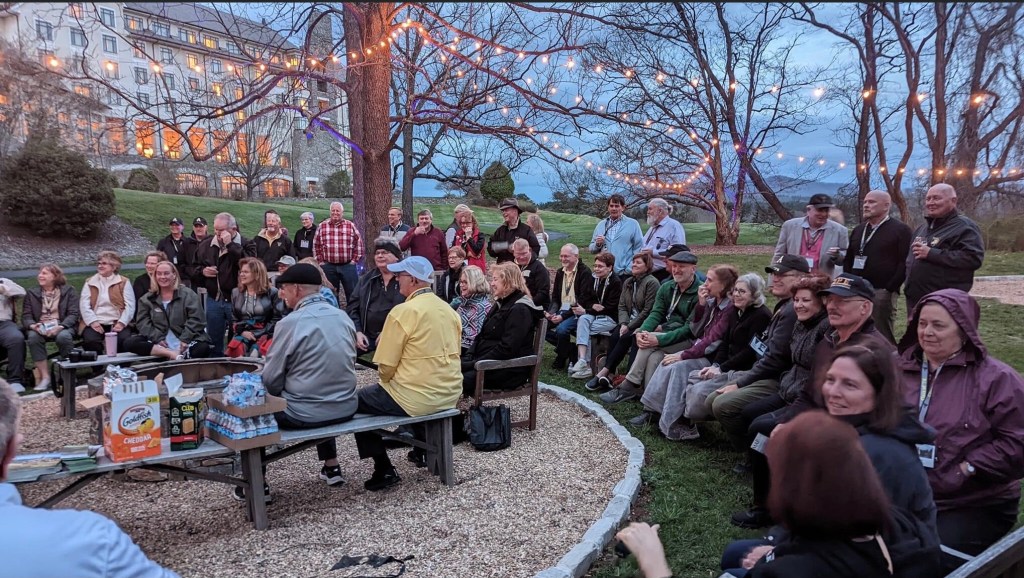
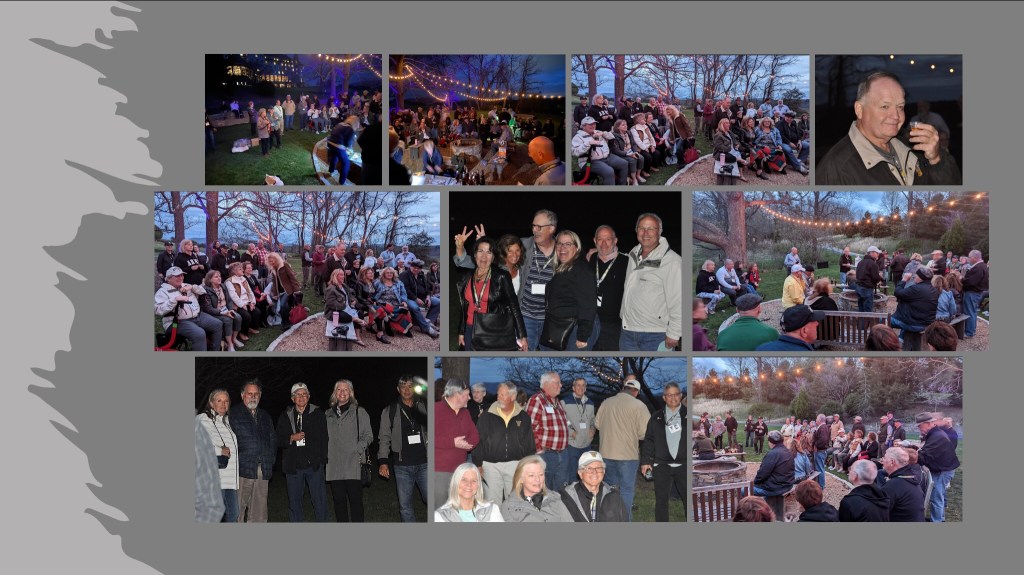
On the Monday of the reunion, approximately 100 classmates, spouses and friends gathered at dusk in a glade just below the Biltmore Inn itself. Seventy were there to taste, and another thirty came for the fellowship. As the sun fell, the overhead string lights came on, adding just a touch of magic to the atmosphere.

Dusk was Falling as we Gathered Below The Biltmore

Bill wrote a script for he and I to introduce the whiskies, while also imparting a bit of history about the interaction of whiskey and the United States Army over the course of our Nation’s History. It is perhaps no coincidence that June 14th is Flag Day, the birthdate of the United States Army in 1775, and National Bourbon Day ;-).

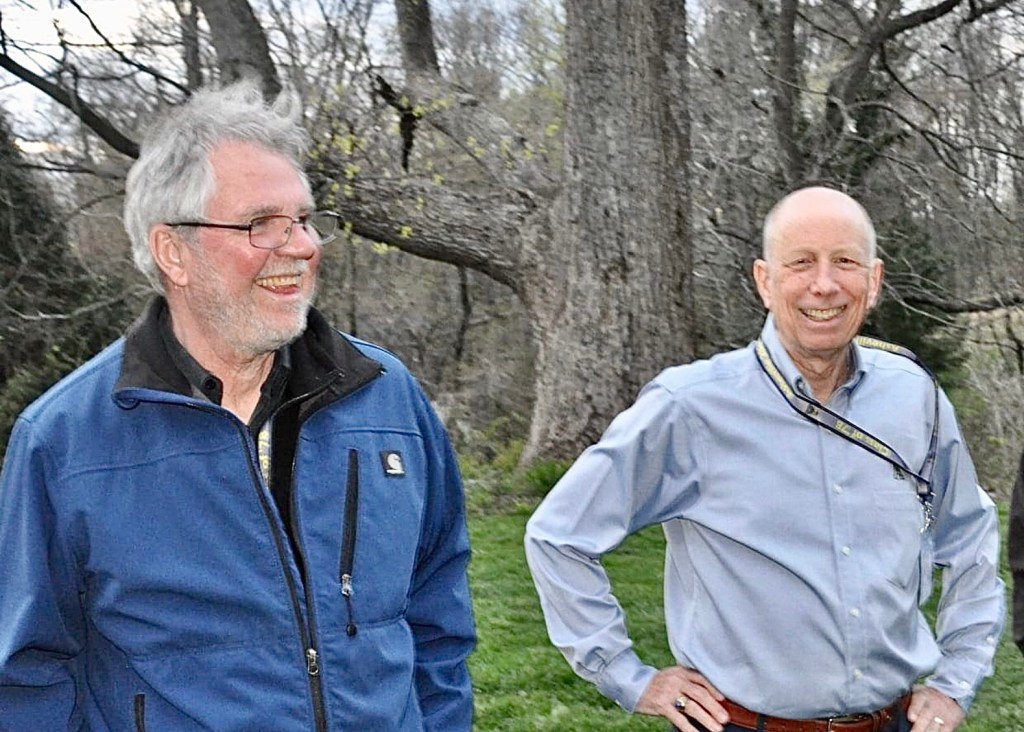
Bill and I Sharing a Laugh Just Before the Start of the Whiskey Tasting

A little after 8PM, we started. Bill and I drafted our wives, Cathy and Bridget, as the official whiskey pourers, and several classmates volunteered to deliver the samples to the crowd.

Bridget and Cathy … Whiskey Pourers, Extraordinaire

What followed was a lot of living, learning and laughter, with a bit of drinking and history thrown in. Between tastings, Bill and I talked to the crowd about whiskey rations in the Revolutionary War, the Civil War and WWI. We also shared how whiskey was a part of the history between Lewis and Clark, and Lincoln and Grant. Stories were told of Dave Pickerell’s life and his impact on whiskey. As the night wore on, the crowd grew louder and more rambunctious.

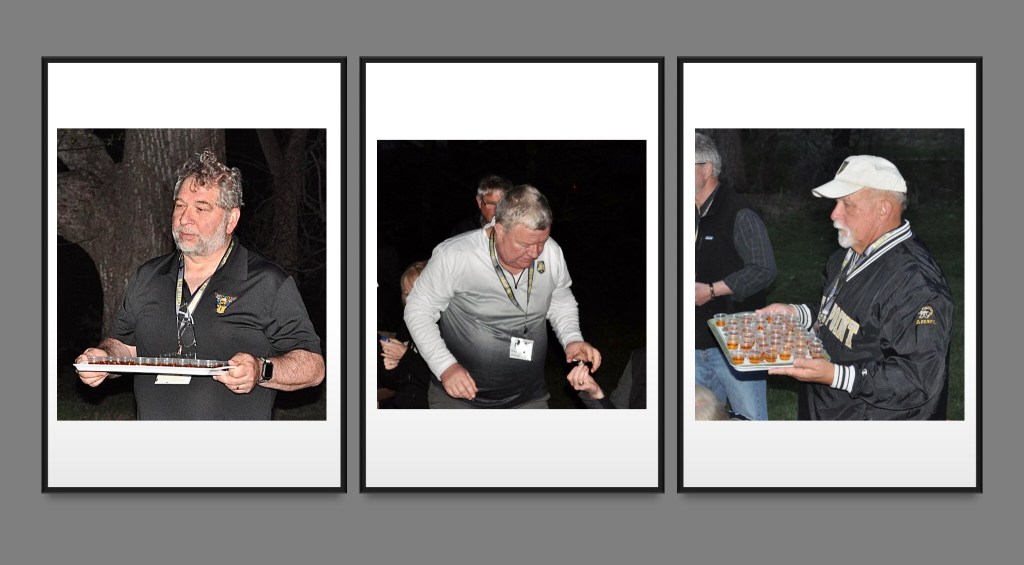
Bond, Brent and Gus Delivering the Whiskey

A little after 9PM we were serving the last of the official tastings, The Boss Hog. The light was gone from the sky now and there were only the overhead lights. As the final glasses were served, we raised them in a toast to Dave, and our 71 other departed classmates. Suddenly, Grant Short led us in an impromptu singing of “The Alma Mater”, with it’s refrain of: “And when our work is done, Our course on earth is run, May it be said, “Well done”, Be thou at peace“. I have to admit to feeling a bit of a shiver as we sang, and it wasn’t from the weather – the words seemed extra special that night. Of course as we finished the song, all responded with a vigorous “BEAT NAVY!”

Seventy two of our classmates are gone. They will never be forgotten.

The formal part of the program was over, but the crowd remained. There was still a fair amount of whiskey left and war stories, both literally and figuratively, to be told. The crowd moved around, circled and shifted. Old friends were given hugs, and as always happens at these reunions, new friends were made. Cigars were lit and more whiskey was shared.

The Proud and Great Class of ‘78 Enjoying Life

Eventually, around 1030PM a soft rain started falling. As the crowd thinned, we packed up the remaining bottles, along with the water and snacks and moved back to the Biltmore. Some folks stayed up for a last drink at the bar, while others drifted off to bed. It was a fine night for the Proud and Great Class of ‘78, and our first group whiskey tasting. I hope it isn’t the last.

.. Feel free to forward this blog …..

Addendum:

– Special thanks to:

  • Rob and Jan Grubbs for organizing the mini reunion overall – what a wonderful event.
  • My wife Cathy and Bill’s wife Bridget who served as pourers for the event. We couldn’t have done it with out them. Also, classmates Brent Holmes, Bond Wells and Gus Hellzen who delivered the whiskey samples (in the dark) to all, without spilling a drop.
  • Rob Grubbs and Marion Seaton who took the photos in this blog.
  • Several classmates donated additional bottles of whiskey for tasting and drinking after the “official” tasting. Hats off to: Rob Grubbs, John Kimmel, Brian Keenan, and Joe Spenneberg among others.

– Huge thanks to Bill Moeller, who provided much of the information for this blog, and provided a wonderful history of the interaction of whiskey and the US Army over the course of history. The event would not have been what it was without him.

– You can read the Rolling Stone article about Dave Pickerell and Metallica here: https://www.rollingstone.com/music/music-features/metallica-whiskey-distilling-process-blackened-723508/ . Dave joked that he never made the cover of Rolling Stone, but he did get on the inside… ;-).

– Some of the history of whiskey allotments for the Army in past wars includes:

  • During the Revolutionary War, each soldier was issued a gill (4 ounces) of whiskey per day. Washington directed field commanders to reward valor on the battlefield with additional whiskey rations.
  • During the Civil War, whiskey was used by medics to treat patients, steady the nerves of soldiers, and heavily consumed during breaks in the chaos.
  • During WWI, soldiers on the front line were issued an ounce of whiskey, two times a day, 7 days a week. Resting soldiers received half that amount.

Lariat Advance

Lariat Advance

The call came at about 3:40AM in late February, 1979. I answered the phone, “LT Hall.” – “Max, this is Captain Ward. A Lariat Advance Alert was called at 3:25AM this morning.” – “Got it sir – on my way.” I called my Platoon Sergeant, Paul Teague to notify him, and kissed Cathy goodbye, with a “See you when I can”. I was out the door for the drive to Hindenburg Kaserne by 3:50AM.

We lived in the little town of Helmstadt, Germany, about 15 minutes from Hindenburg Kaserne (Barracks, or Army Post) in Würzburg. My mind raced on the drive to the barracks.

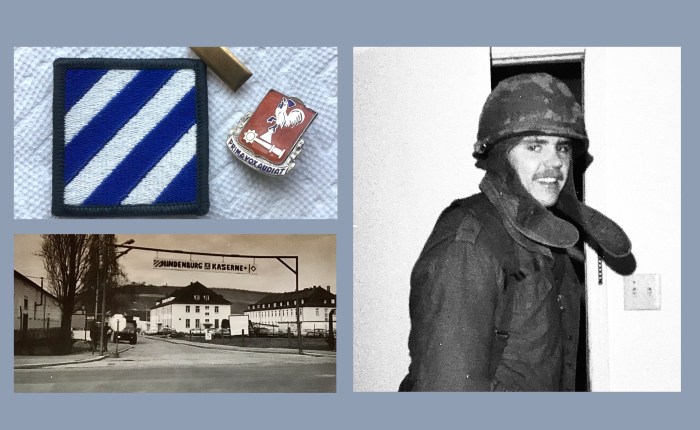
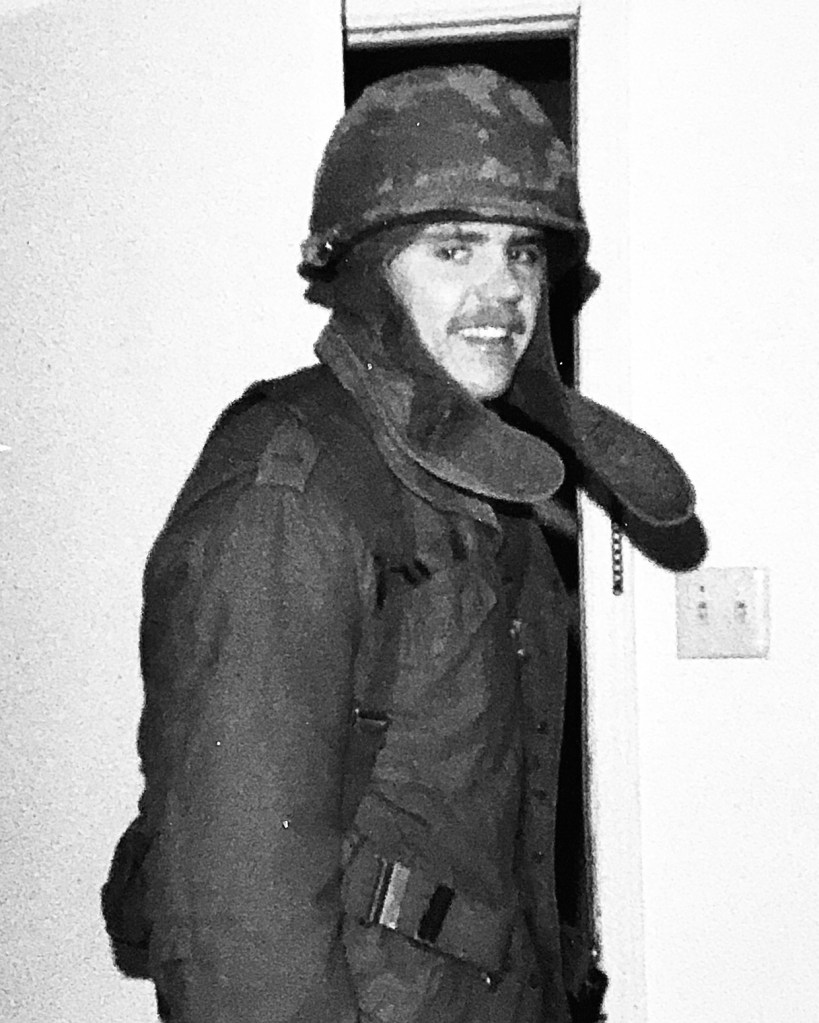
LT Hall in 1979

This was my first Lariat Advance. I’d joined the 123D Signal Battalion, 3rd Infantry Division in January of ‘79. A Lariat Advance was a US Armed Forces Cold War mobilization alert in Germany. The thing was, you never knew if it was a drill, or in response to a real world situation. If just a practice, it might be called off after a couple of hours. BUT, you could also deploy and link up with the unit you supported (2nd Brigade, 3ID in my case), or even deploy to your General Defense Plan (GDP) location. For my platoon, that was near the village of Hof, and the Hof Gap on the the Czech/East German border. The Hof Gap was considered a major Armor Route for a Russian invasion of West Germany. The pucker factor increased significantly if you deployed there on an alert.

My unit, B Company, 2nd Platoon, was always the first unit scheduled for departure, as we had farther to go. We would depart two hours after the alert was originally called. In this case, we needed to be lined up at the Kaserne Gate and ready to go at 5:25AM.

Main Gate, Hindenburg Kaserne

I arrived at the Kaserne a few minutes after 4:00AM. As I climbed out of the car, I promptly locked my keys in the car. “D@mn!” I stood looking at the car, shaking the door when one of my squad leaders, Sergeant Santos ran by and called out – “Yo, L.T. (Pronounced Ell-Tee), what’s up?” – “I locked my keys in the car.” He stopped, looked at me for a second and then said, “Forget ‘em. We’ll get them later – we gotta go!

He was right, of course. I left the car and ran to the Company HQ and checked in with the CO. Next, over to the Armorer, where I picked up my .45 pistol, and finally, I ran back outside and over to our Platoon Bay. It was probably about 4:15AM.

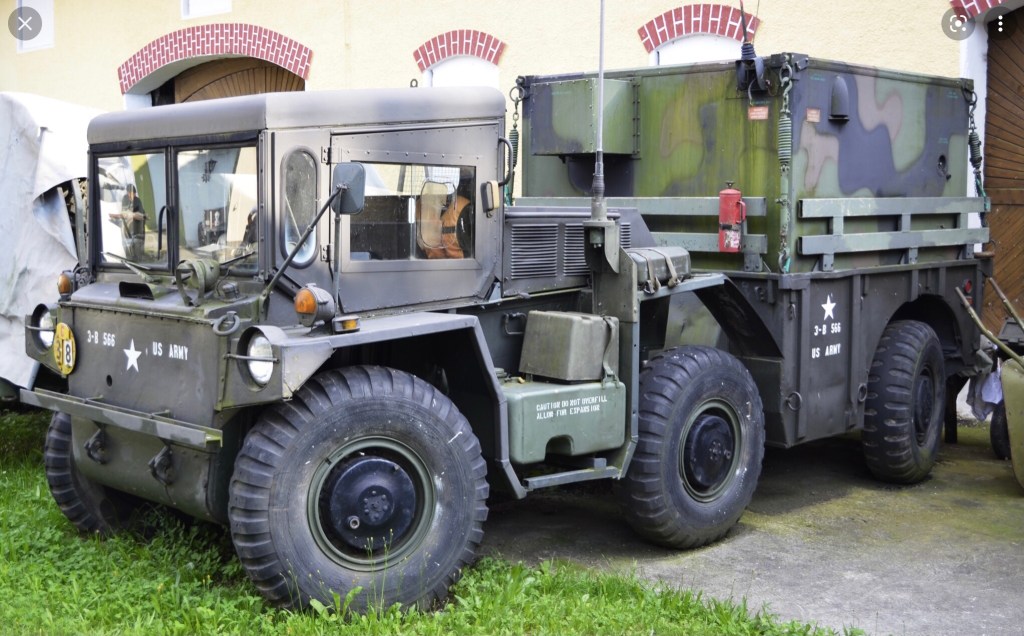
Sergeant Teague had also just arrived and he gave me a status report. About 80% of our troops were on the Kaserne, with the others expected shortly. We then looked at our vehicles’ status. Our platoon had around 20 vehicles in all – a combination of jeeps, a 2 1/2 Ton truck (the Deuce) and several Gamma Goats. Gamma Goats were six wheeled vehicles that could, at least in theory, perform off road much like a tank, or other tracked vehicle. We needed to determine which deadlined vehicles could be made readily available, by cannibalizing* other deadlined vehicles. We agreed that of our four deadlined Gamma Goats we could maybe get three ready, and still make the 5:25 departure time.

A Gamma Goat, with Comm Shelter

The next half hour was total chaos. By then, all of our troops but one were on the Kaserne and had picked up their weapons. We continued loading both personal and platoon equipment into our vehicles. Cases of C-rations were loaded into the Deuce, along with other supplies. Two of the deadlined vehicles were fixed, but we were still having problems with the third. Somewhere in there, we received word we would deploy to Kitzingen, and link up with 2nd Brigade’s HQ elements. It was now 4:55AM, a half hour before departure.

Suddenly, a feeling of great calm and clarity settled over me. The world seemingly slowed down. Sergeant Teague and I agreed it was too late to fix the last vehicle and to hell with it, we would roll with what we had. We held a quick meeting with our three section leaders and strip maps to Kitzingen were passed out for each of the vehicles (remember this was all pre cellphones or google maps). We lined up the vehicles in the motor pool and proceeded to the gate, with my Jeep in the lead. Sergeant Teague was in the last Jeep at the end of the convoy. At 5:15, we were at the gate where the Battalion Commander, Colonel Swedish and Command Sergeant Major Johnson greeted us. We spoke briefly and they wished us good luck.

5:25AM came, and we rolled. The rest of the day passed in a bit of a blur. Google maps says the drive from Würzburg to Kitzingen takes a half hour, but at convoy speed, it probably took us about an hour. We arrived and I reported in to the 2nd Brigade Operations Officer (S3). Then, as is often true in the Army, we sat and waited. And waited. I stayed in touch with the Brigade S3, and also with my Company Commander via FM radio. After a couple of hours passed, we received word it was a drill, and perhaps another two hours later, we were released and returned to Hindenburg Kaserne.

The drive back took another hour. Once back at Hindenburg, we offloaded all of our equipment, washed our vehicles, and then topped all of them off with fuel, so they were ready to go. Cannibalized parts were returned to their original vehicles. A weapons count was done by the armorer, and it was verified all weapons were turned in and accounted for.

I reported to Company Headquarters that all recovery tasks were completed. Once all three platoons were finished, Captain Ward let me know we could dismiss the troops, which I did.

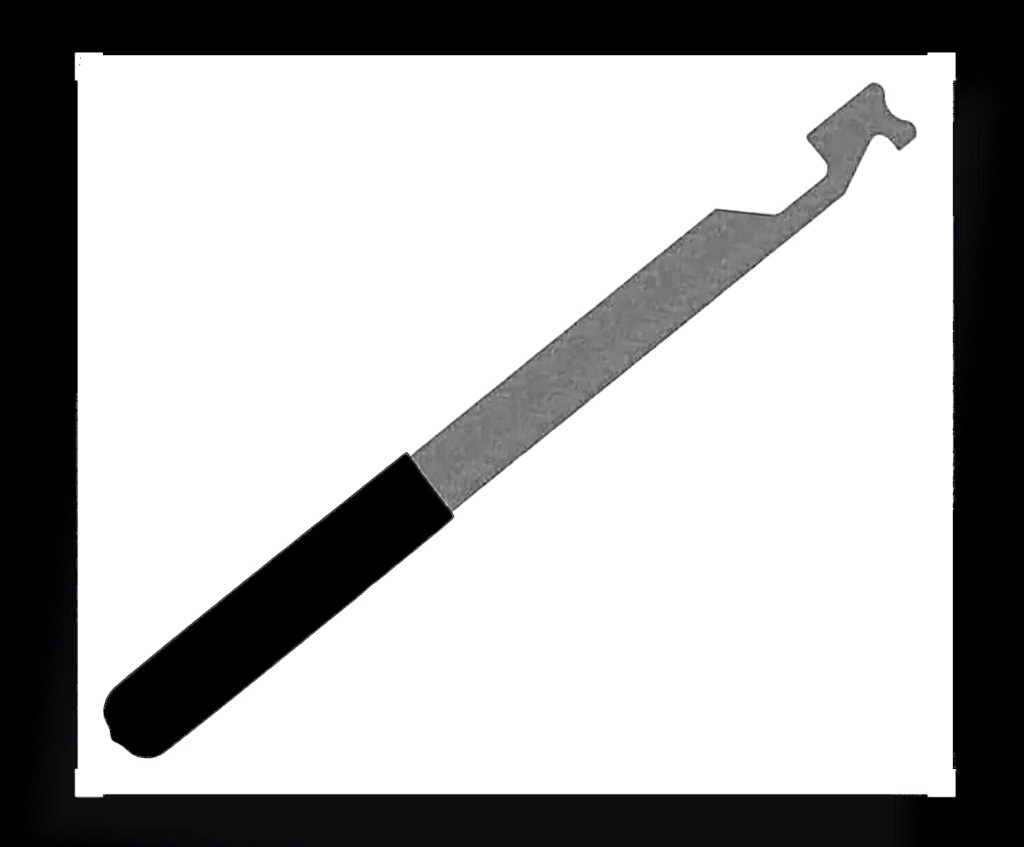
By now, it was late afternoon or early evening, and my keys were still locked in the car. I started thinking about how I was going to get home, when Sergeant Santos came up. “Hey L.T. Let’s get those keys.” – “Sure, how are going to do that?” Ramos just smiled, and then pulled a Slim Jim** out of his jacket. Two minutes later, the door was open, and I had my keys. I thanked him, and decided right then and there, I didn’t need to know why he owned a Slim Jim.

A Slim Jim – Need your car door opened?

With Russia and the Ukraine in the news, I was thinking about that first Lariat Advance. Forty years ago, we were concerned about, and prepping for war with, the USSR. After The Berlin Wall fell in 1989 and the Cold War ended, I thought those days were behind us, at least for Europe. With Mr. Putin’s current aggression, that no longer seems the case. I’ve been thinking about an Intelligence flyer that came out, right after The Wall fell, warning us about the long term goals of the Russians:

“We will Smash them with our clenched fist.”

It is no longer Communism against capitalism, but it is still Russia versus the West. Sometimes the more things change, the more they stay the same. I’m wishing Godspeed and safety to all of our troops.

Addendum:

Cannibalize – If a vehicle was determined to have a safety issue, or something major wrong with it during operations or an inspection, it was put on the deadline report and the appropriate parts were ordered. You were not allowed to drive deadlined vehicles, until they were repaired. In the event of an alert, you “Cannibalized” one of the vehicles to remove parts to put in the remaining vehicles. It might be something as simple as a brake signal bulb (safety feature), or something more serious like a transmission problem. Cannibalization was frowned upon, as you could literally reduce one of your vehicles to a pile of parts in order to fix other vehicles. That one vehicle would stay on deadline forever. This is why we were to return cannibalized parts to the original vehicle when we returned to the Kaserne.

• **Slim Jim – For those unaware, a Slim Jim is a slender device used to break into a car by fishing down the side of window and into the door for the locking mechanism.

Kicked out of a Walled City….Twice

Kicked out of a Walled City….Twice

Not everyone can get kicked out of a walled city twice in one night, but dad found a way….

In February of ’43, after relieving the 1st Infantry Division at Kasserine Pass, the 9th Infantry Division spent the next several months in combat across Tunisia. I remember dad telling some stories of those times and the names don’t role across the tongue lightly – Maknassy, Jefna, the Sedjenane Valley, Mateur, Bizerte…. Forgotten names in history books now, but deadly important then. I think the great WWII columnist Ernie Pyle got it right in his description of the Infantry in North Africa:

         “IN THE FRONT LINES BEFORE MATEUR, MAY 2, 1943…..

       There is now a thin line of men. For four days and nights they have fought hard, eaten little, washed none, and slept hardly at all. Their nights have been violent with attack, fright, butchery, and their days sleepless and miserable with the crash of artillery…..The men are walking. Their walk is slow, for they are dead weary, as you can tell even when looking at them from behind. They are young men, but the grime and whiskers and exhaustion make them look middle-aged…..There is an agony in your heart and you almost feel ashamed to look at them. They are just guys from Broadway and Main Street, but you wouldn’t remember them. They are too far away now. They are too tired. Their world can never be known to you, but if you could see them just once, just for an instant, you would know that no matter how hard people work back home they are not keeping pace with these infantrymen in Tunisia.”

They kept at it and on May 9th, the enemy surrendered In Africa. By then, they had fought and beaten the French, Italians, and Germans and were feeling pretty good about themselves.  

Dad’s unit, on the date Bizerte fell (from “An Army at Dawn”, by Atkinson)

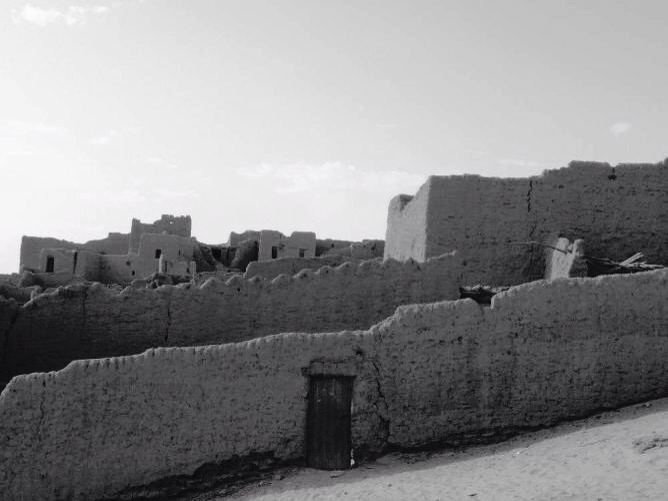
At the end of May, the division was in bivouac and had almost seven weeks of light duty and downtime. The nearest town was a walled city, Sidi bel Abbes, about 30 miles away. The Army, in it’s generosity and wisdom, was giving day passes on a quota system. They’d truck the GIs there during the day, and bring them back to the encampment at nightfall.  

Over the course of June, Dad made it there multiple times and drank wine, ate French food, and visited a couple of houses of ill repute. Not a bad way to spend time in your 19th year of life.

In any case, he eventually returned one time to often to Sidi bel Abbes. Towards the end of June, dad and a buddy got a pass and caught the truck ride to town, where they spent the day partying, drinking, and committing other questionable acts. They missed the truck back to the camp and kept partying until they were caught by the MPs who were patrolling the town. The MPs actually cut them a break and didn’t arrest them. They just kicked them out of the walled city, meaning they would have to walk the 30 miles back to camp. They knew they were already in trouble at this point, so they said the hell with it and climbed the wall and went back into the city.  

Part of the wall around Sidi bel Abbes

More partying ensued and they were trying to find a particular address they had been given. The MPs saw them again and gave chase. With the wine they had consumed, they were in no real shape to get away, and were caught a second time. This time, rather than just depositing them outside the gate to the town, the MPs drove them back to the encampment, and turned them over to the company First Sergeant.

The next day, dad reported in to the CO.
      “Sir! Sergeant Hall reporting as ordered”.

The CO looked up from his desk, then looked back down.
      “That will be all Private Hall”.

And so, dad, who entered North Africa as a Sergeant, departed as a Private. In his words, 
       “Hell, what were they going to do to you for acting up? Short of murder, Or armed robbery, no one went to the stockade, especially if you were an Infantryman.    Combat veterans at that point were of incredibly high value, so maybe you got busted, but you stayed with your unit.”

Dad left Africa on July 24th, on a ship bound for Sicily. They landed at Polermo on August 1, while being bombed by the Germans. He didn’t know it yet, but his time with the 9th Infantry Division would be over on August 8th when he was severely wounded. In fact, his buddies thought he was probably going to die. He survived, and was in the Army for two more years, but never did rejoin the 9th…