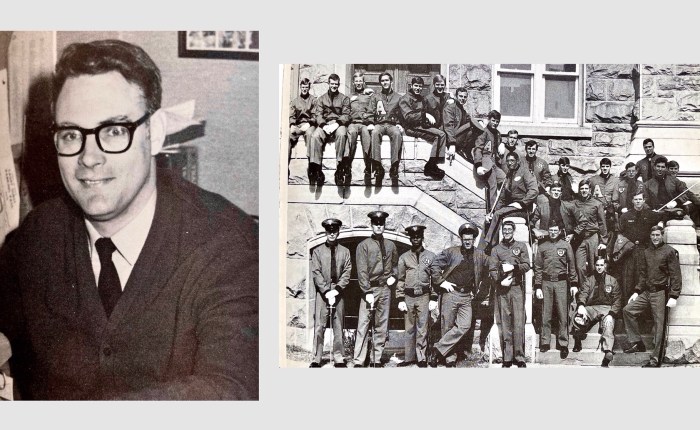
Charlie sent an email to all of us company B-3 West Point ‘78 grads. Colonel Bob Radcliffe, our Tactical (TAC) Officer when we were cadets, passed away. My mind did an immediate flashback to my last two years at school. He made such a difference in my life and was a true mentor and leader.
For me, I’ll always remember him as Major Radcliffe. That was his rank when he served as our TAC. By way of explanation, each of the 36 companies had an active duty officer assigned as a TAC Officer. The TACs:
“Are the primary leader developers/integrators of the Academy’s developmental programs. They oversee each cadet’s individual development in the academic, military, physical, and moral-ethical dimensions within the framework of the Cadet Company. The TACs train, lead, coach, and mentor cadets, with a continual focus on leader development. The TAC is … responsible for the establishment and maintenance of a command climate that fosters individual and unit excellence in all program areas.”
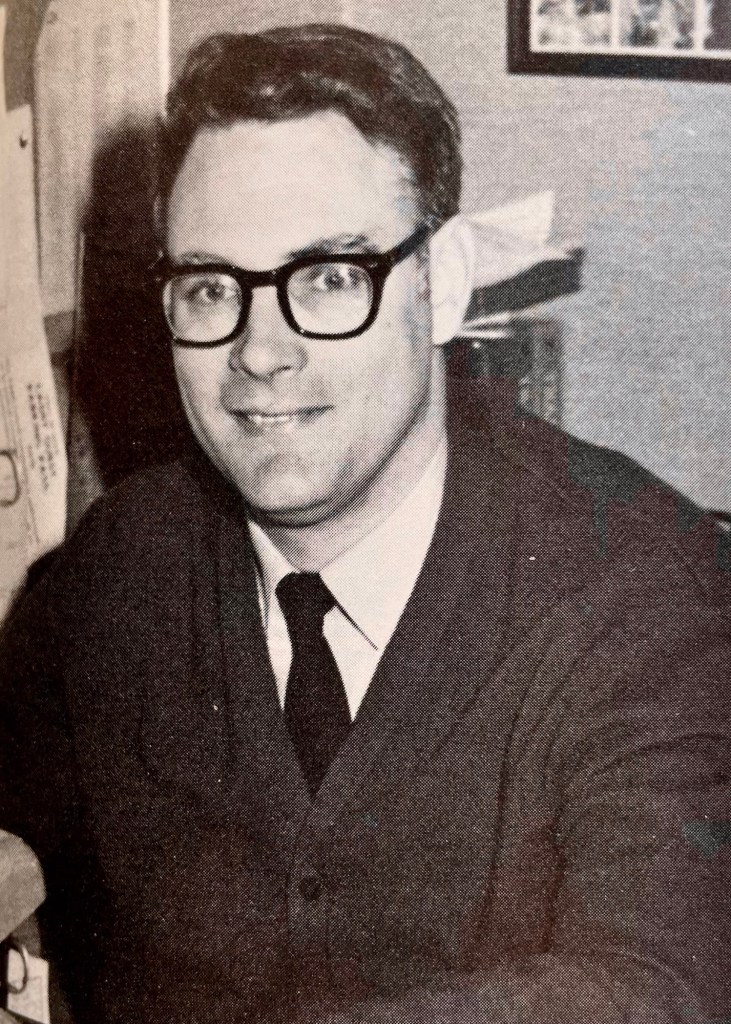
There were of course all kinds of TACs at West Point. Most were good, but some were martinets and some were too folksy. Major Radcliffe was one of the good ones. From my perspective, he was one of the great ones. He knew how to strike the right balance in his work with us.
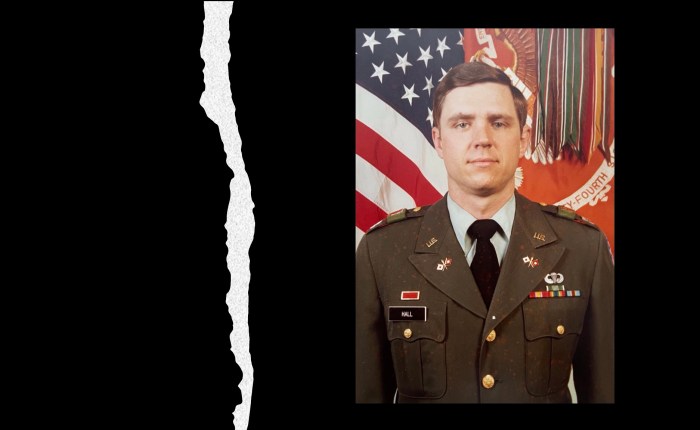
Major Radcliffe in our 1978 Yearbook.
He was a Grad himself from the class of 1965. He was also a first team All American Lacrosse player while at the Academy. After graduating and commissioning in the Infantry, he obtained his Airborne wings and Ranger tab. He did a couple of tours in Vietnam, where he earned the Combat Infantry Badge, the Silver Star and the Bronze Star for Valor.
He made us toe the line as Cadets, but also had a human side. When Cathy and I learned she had MS, he worked with me to obtain an immediate weekend pass to see her in DC, which was so important for me. We weren’t engaged yet, but he came through. He also helped rescue me from myself when I screwed up on something at school. For both of those items, I will be eternally grateful.
Additionally, Major Radcliffe had a sense of humor. I remember going to his home a few times for cookouts or dinners. On one occasion, he surprised us when he lifted his sweatshirt revealing the T-shirt he wore underneath. It said, “US Team. Southeast Asia War Games. 1960-1975. Second Place.” Sense of humor indeed.
A Wry Sense of Humor
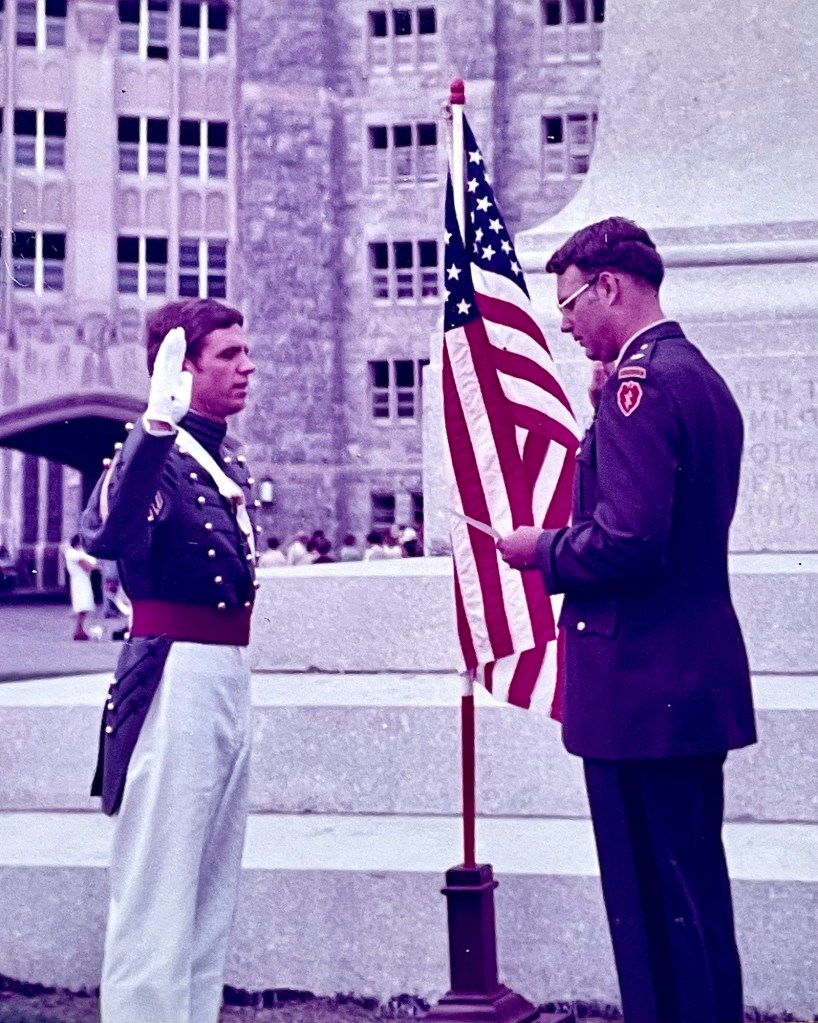
My last official interaction with Major Radcliffe was when he swore me in as a Second Lieutenant on Graduation Day. We were at Washington Monument on The Plain and I remember it as if it were yesterday. Mom, of course, snapped the picture.
My Swearing in Ceremony with Major Radcliffe.
I only saw him a couple times after graduation. Once in the military at an exercise or meeting somewhere. The second time was by chance in an airport. We were both civilians by then and chatted briefly, while waiting for connecting flights. In 2020, Cathy and I were going to host a mini B-3 reunion and we invited him to the event. We traded a couple of emails back and forth and he looked forward to attending. Unfortunately, COVID intervened and we cancelled the get together.
Yes, when Charlie’s email arrived in my inbox, I had my flashback to West Point. I also thought about his impact on my life and how he, along with West Point itself, changed the arc of my life. We didn’t call it mentorship back then, but that’s what it was. His mentorship and his leadership made a difference for many of us, and I’m glad he was in my life. It’s a debt I can’t repay.
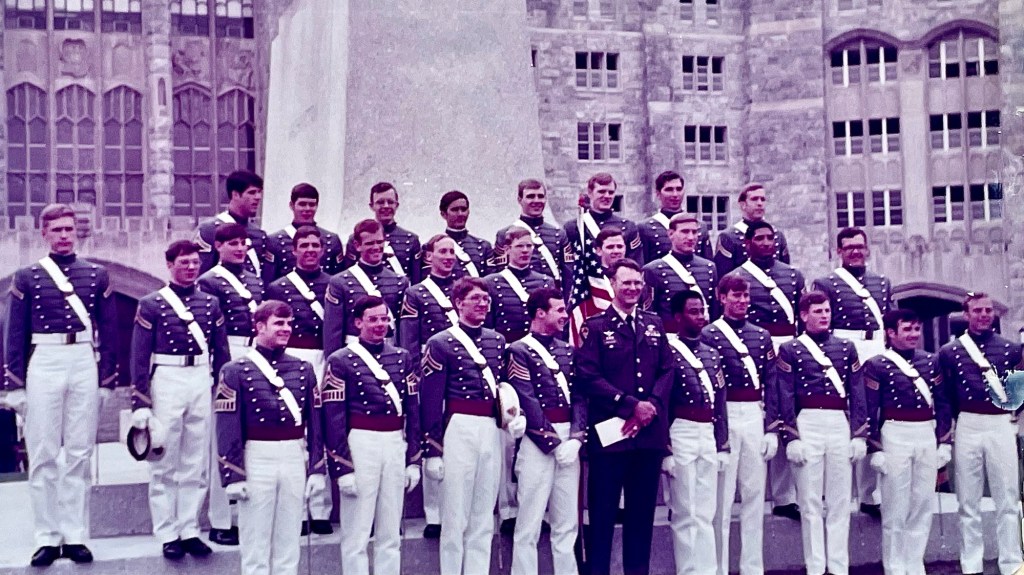
Company B-3 Firsties (Seniors) with Major Radcliffe on Graduation Day.
Addendum:
The photo of Major Radcliffe in the South East Asia war games shirt is courtesy of company mate Charlie Wright. I’d told the story of the shirt for years, but Charlie had the actual proof of it.
Thanks to company mate Charlie Bartolotta for providing some of the information in this blog.
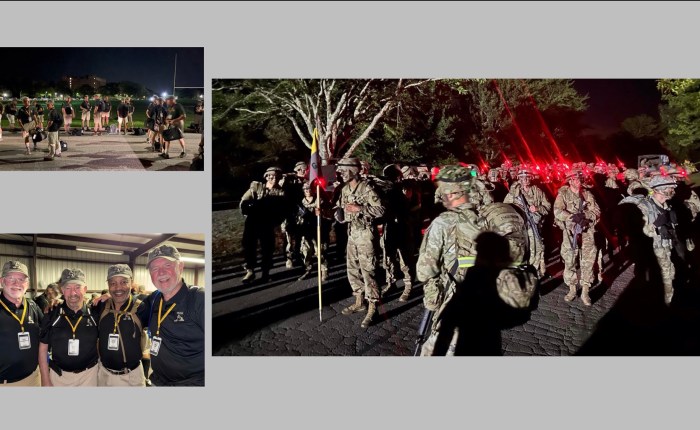
We started gathering around 0130 at Buffalo Soldier Field. Soon, buses would drive us to Lake Frederick. There we would link up with the West Point Class of 2028 and join them for their 14-mile March Back to West Point, which culminates with the end of New Cadet Summer Training, aka Beast Barracks. The Class of ‘28 will graduate exactly 50 years after we graduated in ‘78.
Just about everyone is aware that West Point Graduates are known for being a part of “The Long Gray Line.” The phrase “The Long Gray Line” in its simplest definition is the continuum of all graduates and cadets of the United States Military Academy at West Point, from 1802 to the present. In an effort to strengthen the concept of “The Long Gray Line”, the West Point Association of Graduates (AOG) started a 50 Year Affiliation Program (YAP). It’s an absolutely brilliant idea. The 50 YAP started 25 years ago in 1999, with the class of ’49 supporting ’99.
To bring some perspective, IF the program had existed when I was at West Point, our Affiliation Class would have been the Class of 1928. Classmate Frank Arduni pulled together some facts about that class:
The class graduated 261 new Lieutenants on June 9, 1928. By the time the last member of their class passed away in October 2010 at the age of 104, the class produced 78 General officers. They became pioneers of Army Aviation, and within four years of graduation at least 6 members of the class died as 2LTs in air accidents. Eventually 73 served in the Army Air Corps, two long enough to see it become the Air Force.
28 lost their lives in the Second World War, and at least eight of those as prisoners of war. Six members of the class were “participants” in the Bataan Death March, of whom only one would survive the ordeal.
One member of the class, Robert Albert Howard, was the grandfather of our 1978 classmate, Eric Franks (RIP).
Over the course of the next four years, various members of our class will attend significant events during the Class of 2028’s time at West Point. Some of those events include: their First Day at West Point and the Start of Beast Barracks; Affirmation Day at the start of Cow (Junior) year when they have officially committed to serving in the military; Ring Weekend; Branch Night Firstie (Senior) year, when they select their military branch; and of course, Graduation.
The event that caught my eye was “March Back”. At the end of Beast Barracks, the New Cadets do a forced march of 14 miles from Lake Frederick where they have been for some of their training, back to West Point. A few days later, they transition from “New Cadets” to full fledged members of the Corps of Cadets. Each year a number of graduates (Old Grads) participate in the March Back and interact with the cadets. The 50-year affiliation class is guaranteed 50 of those slots.
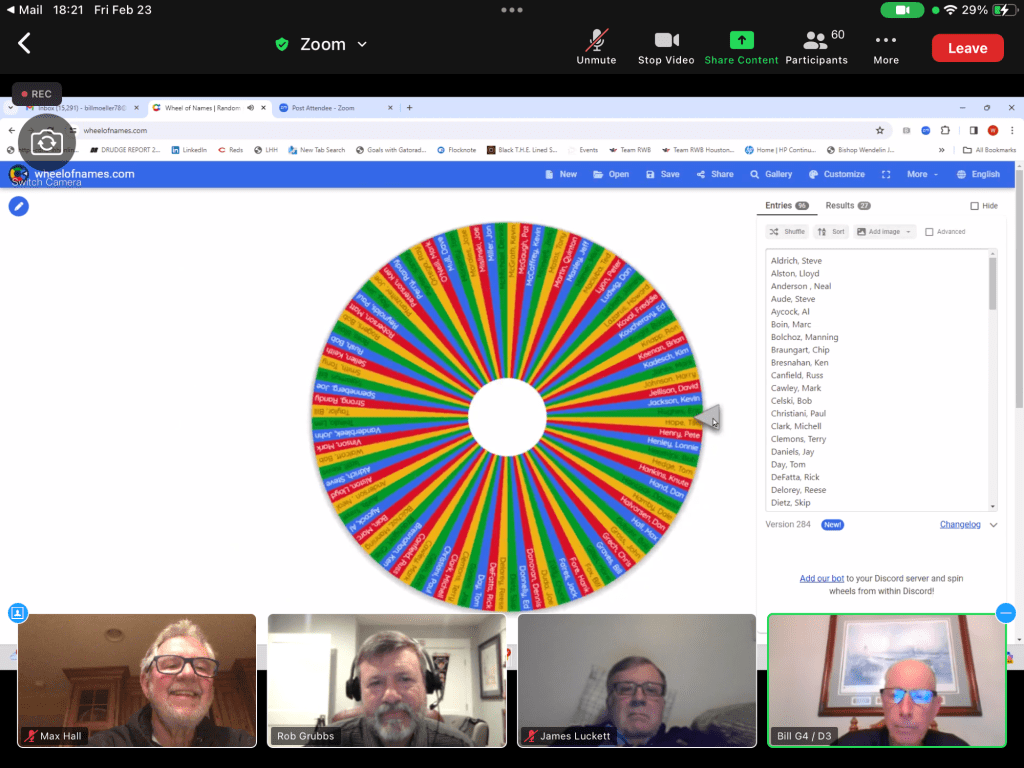
Last winter, our class announced the upcoming events. 118 of us said we wanted to do the March Back. In February, we held an online lottery via Zoom for the guaranteed 50 slots. I was number 76. D@mn. I now needed to rely on some luck and try and sign up for one of the additional slots available to all graduates later in the spring.
The Lottery
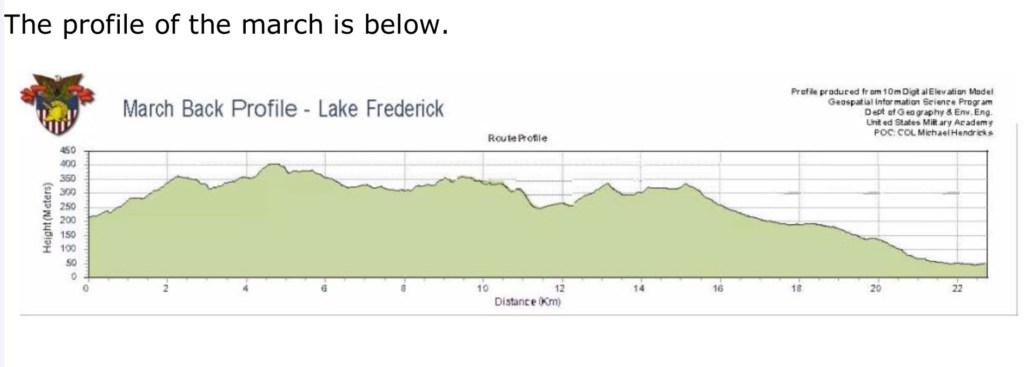
In the meantime, I increased the mileage of my daily walks and started going both farther and faster. The March Back itself is 14 miles long, with the first three miles entirely uphill. The pace was to be at 20 minutes/mile, but we were warned the first three uphill miles could go faster.
Route Elevation. The First 5 km Are All Uphill.
In June, I lucked out, signed up early enough online and was selected to participate in the March Back. Ultimately 73 members of the class of ‘78 would make the 14 mile March Back, with another 42 joining us for the final two miles.
Over the next month and a half, I increased my workouts again. I didn’t want to let myself, my classmates or the Class of 2028 down. In addition to daily 5-6 mile walks, I added several 8, 10 and 12 mile hikes over the hills here in Virginia. The longer hikes were at an 18 to 18:40 min pace. I was as ready as I was going to be.
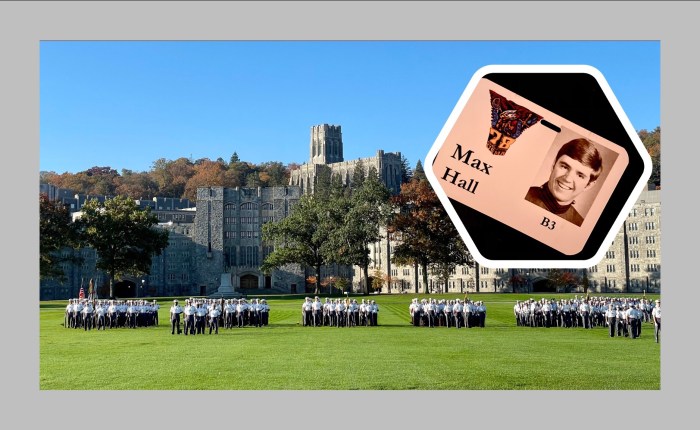
On Saturday, the 10th of August, I made the six-hour drive to West Point. As always when returning to the Academy, my mind filled with a mishmash of thoughts – the March Back of course, but also my own time at West Point, and its impact on my life. It’s 46 years since I graduated, but I still remember reporting to The Man in the Red Sash on my first day as if it was yesterday.
That first night was great and I had the chance to see a number of classmates who were also staying at the Thayer Hotel. We had drinks and dinner while telling stories and catching up on the activities in our lives. Our hair was grayer and we were, perhaps, heavier, but our love for life remained.
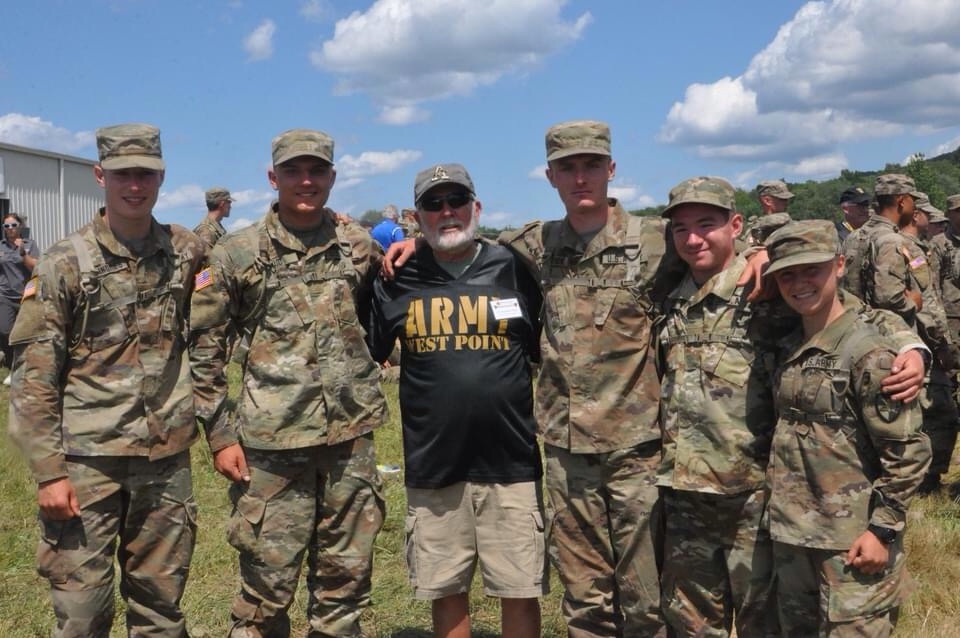
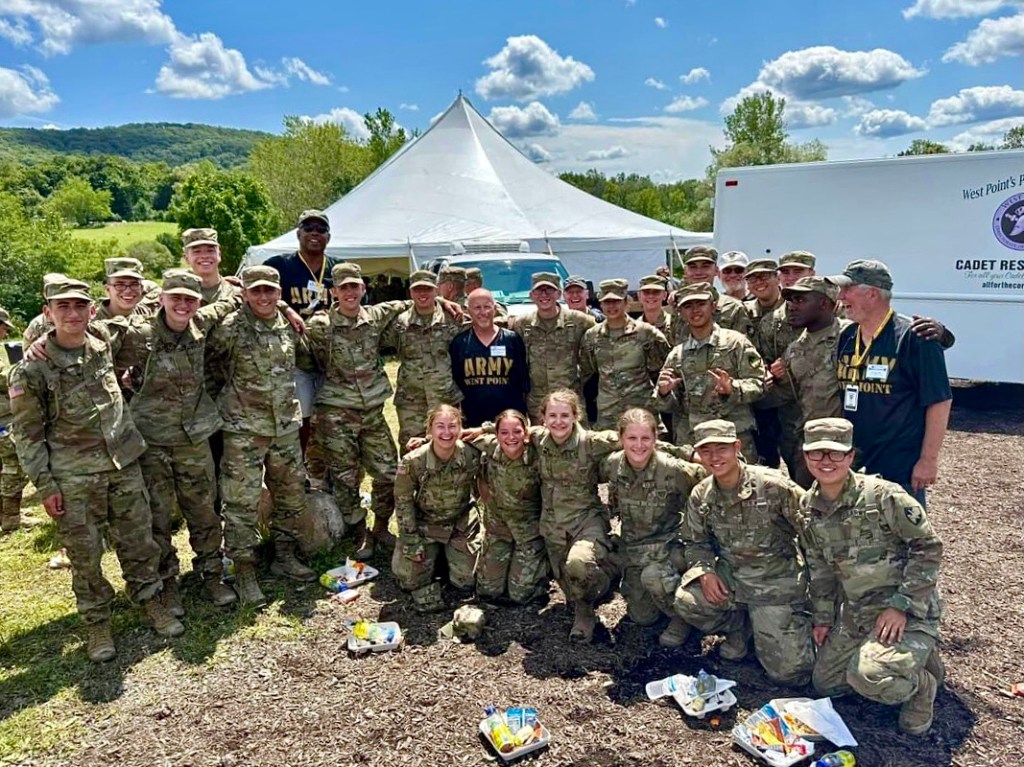
The next day, the AOG bused us ‘78ers out to Lake Frederick to interact with the class of ‘28 prior to the march later that night. At lunch we talked with the New Cadets over hotdogs and hamburgers. It was the start of an amazing 24-hour period. I probably spoke with 7 or 8 different groups during the next three hours and came away universally impressed. You hear stories about kids being unmotivated these days – nothing was further from the truth for these young men and women. They were sharp, motivated, inquisitive and fired up. They had marched 9 miles to Lake Frederick three or four days before in the remnants of Hurricane Debby. It rained during the march and for the next two nights when they slept outside without tents. You’d have thought they would be depressed or unmotivated, but the exact opposite was true. They were charged up and attentive. I was inspired by all of those I met and spoke with.
Classmate Bob Rush with Members of the Class of ‘28Some of the Class of ‘28 with a Couple of us Old Grads
We eventually boarded our buses for the trip back to West Point. My mind kept playing and replaying the time with the New Cadets. Yes, we were there to help them understand the concept of The Long Gray Line, and hopefully we were doing that. What I hadn’t understood earlier was how motivating these young people would be for me. Their enthusiasm had increased my own. They also brought home the fact that The Long Gray Line extends both into the past AND into the future.
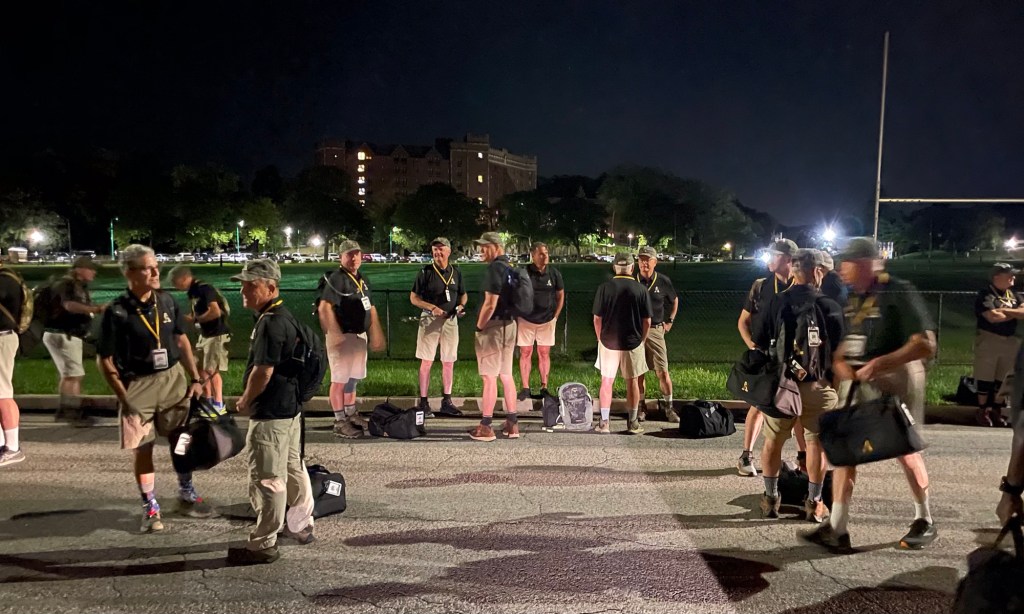
I went to bed around 2100 that night, but didn’t sleep much. Three hours and forty-five minutes later, my alarm went off at 0045. I hopped out of bed and got ready. I left the Thayer and walked the quarter mile to our Assembly Point at Buffalo Soldier Field. When I arrived around 0130, many Grads were already there, milling around.
“Hurry up and Wait”
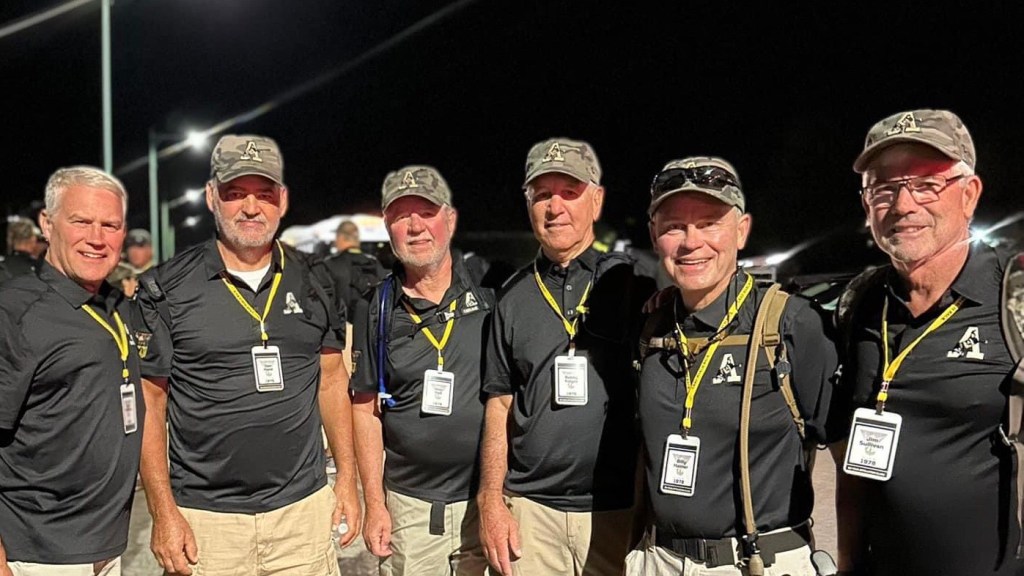
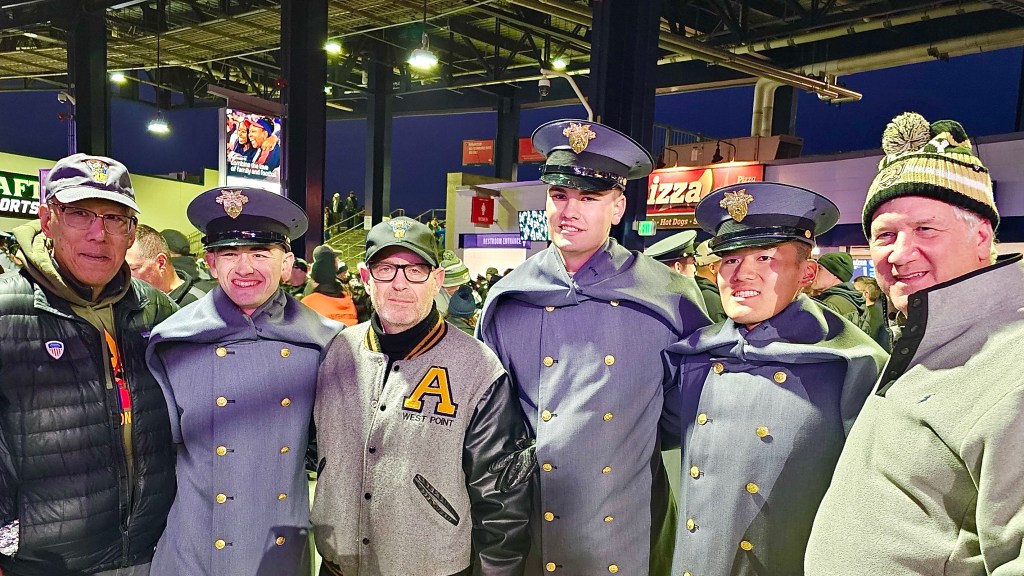
The crowd grew and in the dark we started linking up with friends and classmates. Six of us ‘78ers were marching with Gulf Company and we snapped a pic.
Proud and Great ‘78
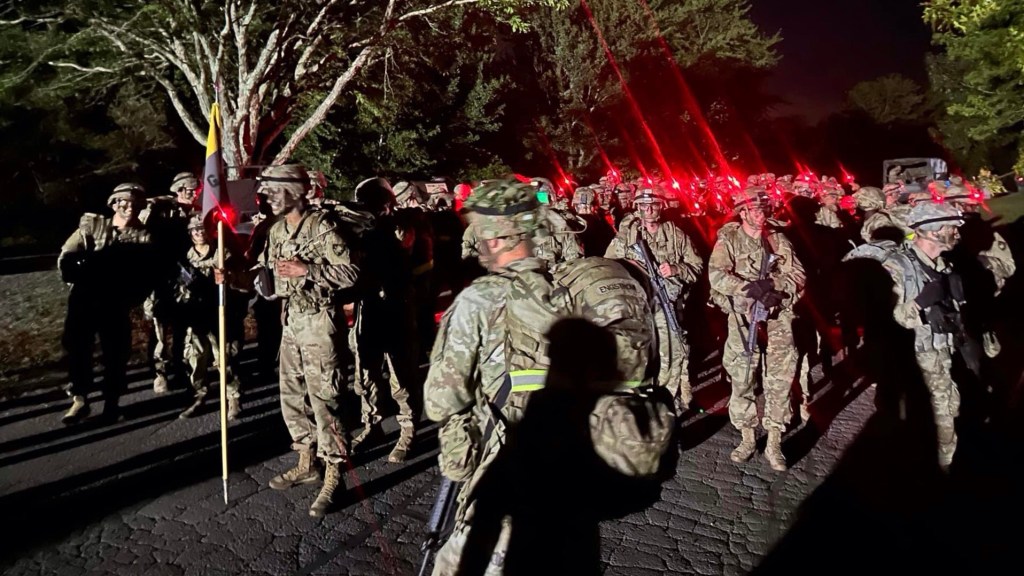
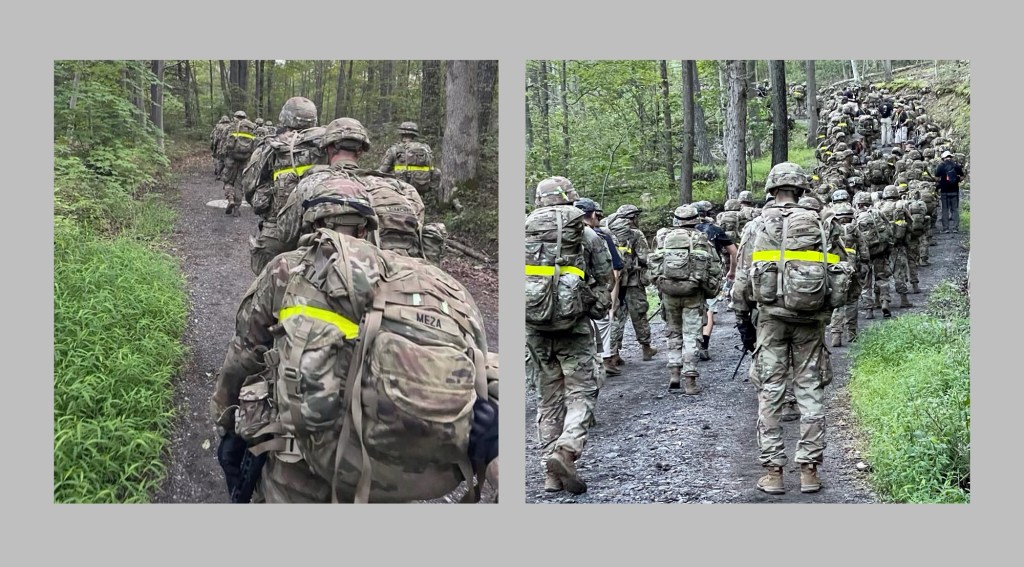
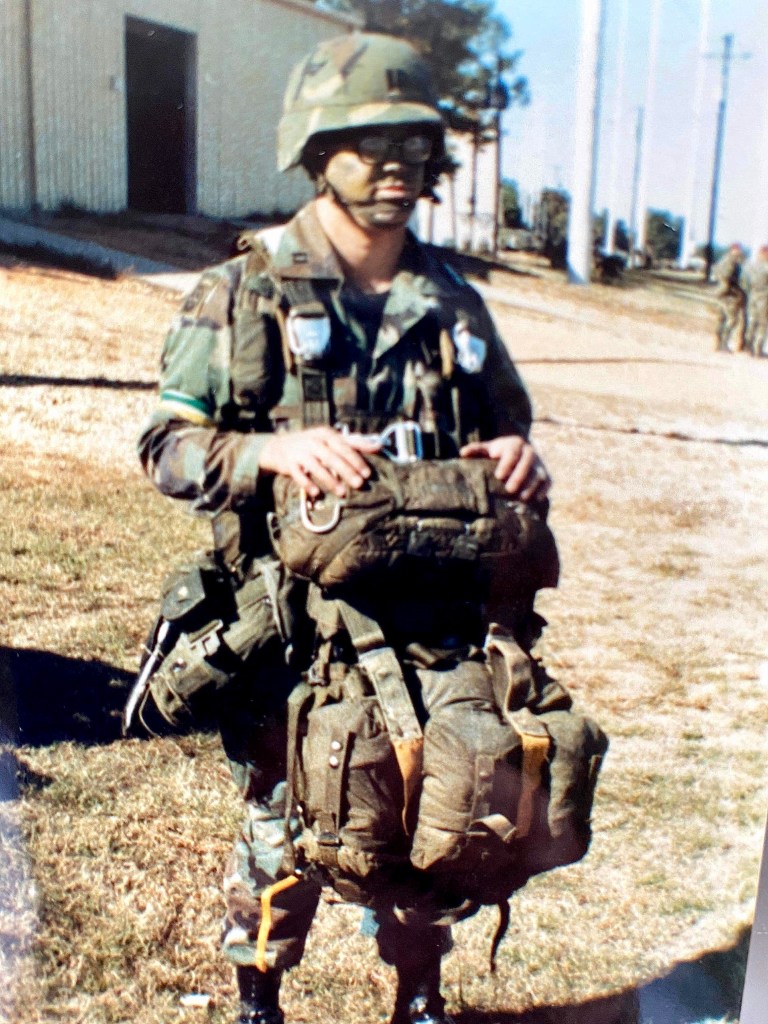
Soon, the buses arrived. We left a little after 0200 and drove to Lake Frederick. After a quick breakfast, they started linking us Old Grads with the companies and platoons we would each march with. I and several others would walk with G-4, the 4th platoon of Gulf Company and they linked us with them around 0415. We grads were only carrying small Camelbak packs with water and maybe a snack, bandaids and a pair of dry socks. The New Cadets? Full uniforms, helmets, 30-40 pound ruck sacks and their M4 rifles. Yep, men and women alike, they were doing a full combat march back to the Academy to start the academic phase of their Plebe year.
Gulf Company, Ready to Roll.
At 0430, right on time, Gulf Company started its return to West Point.
We did the first three miles uphill in the dark. The trail was gravelly and rock strewn but honestly, I didn’t really notice the dark, the climb or the rocks. I was having too much fun talking with the New Cadets and a couple of the Cadet Cadre. The New Cadets were supposed to march in silence, unless they were talking with one of us Old Grads and that’s what they did. But when you started talking with them – man did they open up. They asked me as many questions as I asked them and the time passed quickly. We arrived at the three-mile mark around 0525. True to what they’d warned us about ahead of time, we went out at a spirited 18 Minute/mile pace, but I hadn’t noticed.
After a short break, we continued marching as daylight approached. The New Cadets were in two columns, one on each side of the road, with the cadre and us Old Grads marching in the center between the columns. For the next three hours, I spoke with perhaps 15 or 20 New Cadets. We talked about West Point, Beast Barracks, Plebe Year, the Army, how long I stayed in and where I was stationed, Women at West Point, Women in the Army, Airborne School, the rain from Hurricane Debby, wet boots, what drew them to West Point, why they chose West Point, why I chose West Point, the best part of Beast, the worst part of Beast, square meals, and a whole host of other topics, including the Green Bay Packers and their chances this year. The conversations were full grown adult conversations, not the monosyllabic answers you sometimes receive from youth these days. The next nine miles passed in a blur.
The Class of 2028 on the March
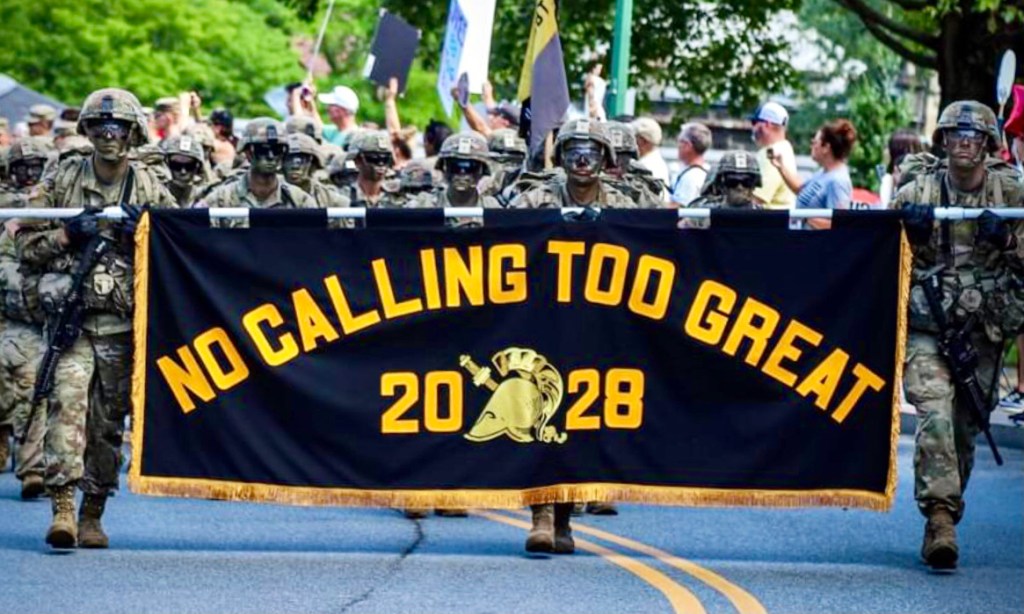
At the 12-mile mark, we arrived at the West Point Ski Slope. We Old Grads said our goodbyes and left the New Cadets. We joined our classmates who were only marching the last two miles into West Point proper. After a break the Class of ‘78 formed up. The Class of 2028 passed in front of us in company formation and unfurled their new motto, “No Calling Too Great – 2028” for the first time. We members of the Proud and Great Class of ‘78 saluted them as they passed.
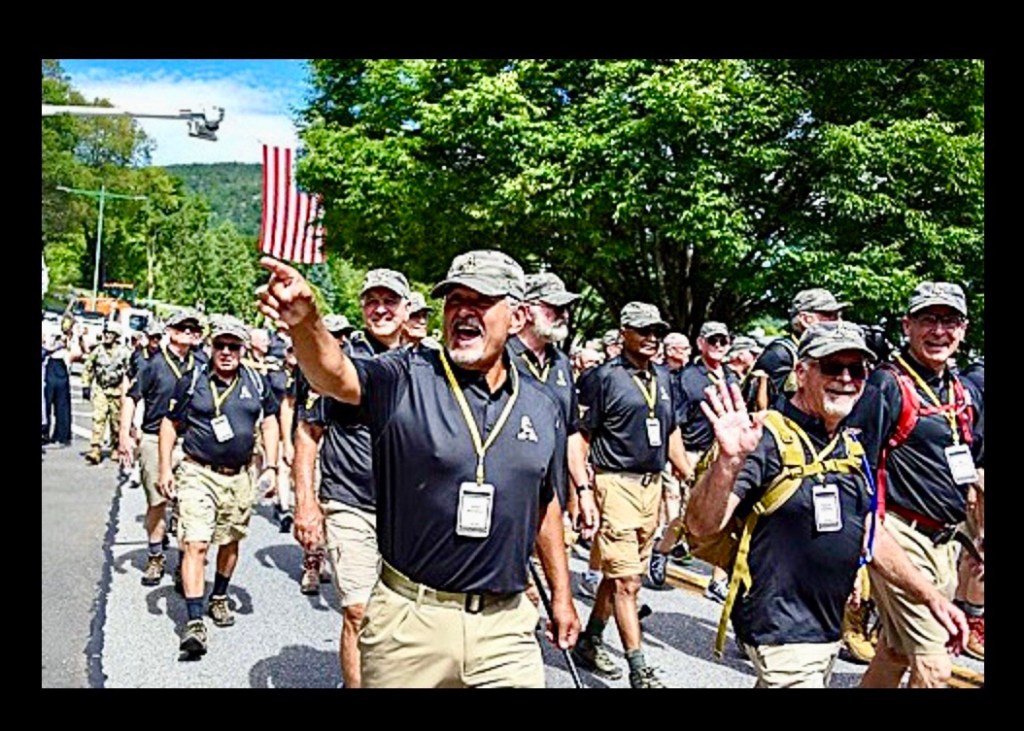
After the Class of ‘28 marched by, the class of ’78 fell in behind them, leading the Old Grad contingent of nearly 400 marchers. We picked up the cadence of the drum, and as one of my classmates mentioned, even at our age we were still marching better than the Naval Academy does. ;-).
José Morales and the Class of ‘78 on the Parade Route
Much of the route for the final two miles was lined with people watching the parade. They too were inspiring with their claps and cheers. I think the last time I marched in a parade was around 1982 in Germany. Eventually we reached main campus and Passed in Review at the Superintendent’s house. We (‘78) chanted “Beat. Navy! Beat. Navy! Beat. Navy!” in time with the drum for the Supe and he laughed.
And then the March Back was over. The Class of ‘28 went to clean their weapons. We ‘78ers walked across The Plain for the rededication of a Statue of Civil War General, John Sedgwick, that the Class of ‘78 had funded a restoration of (stay tuned for a future blog about Sedgwick’s Spurs.) We followed that with a short Memorial Service for our 93 classmates who have passed away and ended with classmate Harry Johnson leading us in singing The Corps. The words to The Corps always ring true, particularly with its references to The Long Gray Line. On this day, it was perhaps a double punch with both the Memorial Service for our departed Classmates and the March Back with the future of the Corps.
The Class gathered one last time a couple hours later for a cookout and a few drinks. We all remarked about what a great time we’d had over the last 24 hours and how impressed we were with the Class of ‘28. We were still enthused, but a bit quieter by now. As evening approached, with hugs and handshakes, we went our separate ways
On my drive home Tuesday morning, my legs were only a little sore. As I drove,I thought about the Class of ‘28 and my interactions with them. My friend and classmate Tony Matos called the weekend magical and I agree. I spoke with young men and women of all colors and ethnicities. I’d spent time with New Cadets from California, Washington, Oregon and Idaho; Oklahoma, Illinois, Indiana, Wisconsin and Minnesota; Georgia, North Carolina, Virginia, New Jersey, New York, and Connecticut. It was as if the melting pot of America was on display for those two days. I’d made the trip to West Point to show and give them a view of the continuity of The Long Gray Line. They gave me so much more – a demonstration of grit and fortitude; a view of encouraging teamwork; a promise of both mental and physical strength; and a look at the future. From my time with the Class of 2028, I felt encouraged. I believe that both now and in the future, West Point, our Army and our Country will be in good hands as the Class of ‘28 answers the call of Duty, Honor, Country.
No Calling Too Great, 2028
Addendum:
Thanks to classmate Frank Arduni for his ongoing research about the class of 1928.
Thanks to classmates Bill Moeller and Tony Matos for their editing support on this blog. Both had great ideas to add.
Thanks to classmates Bill, Tony and Billy Harner, along with the AOG for organizing the March Back activities and making it such a wonderful event for all of us.
The pictures in this blog are from a number of sources, including classmates, the AOG, and my own photos.
Thanks to my wife, Cathy, and friend, Colleen, for their continuing editorial support. I’d be lost without them.
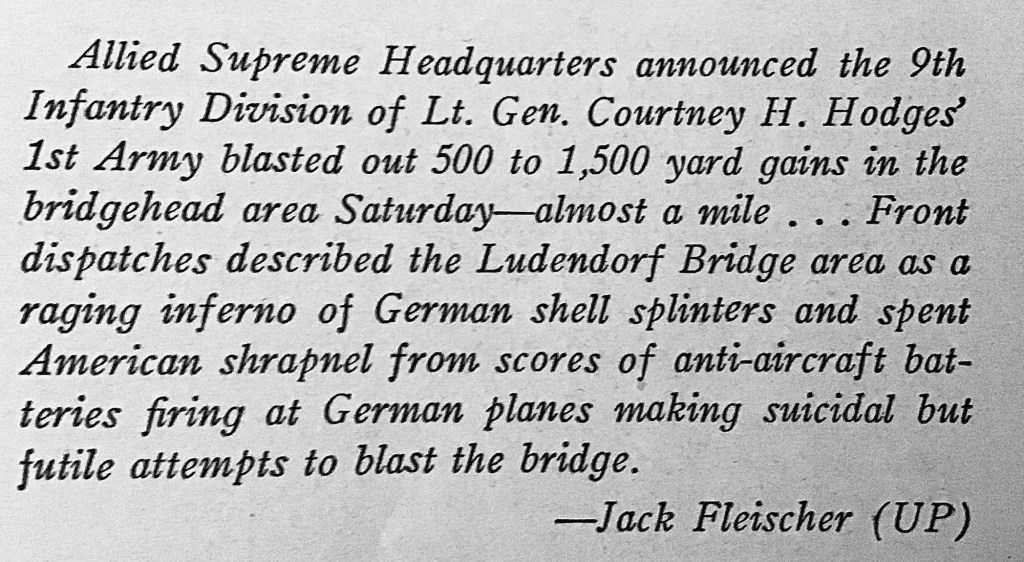
80 years ago this week, my “Uncle” Noble and the 9th Infantry Division sealed off the Cherbourg Peninsula eleven days after D-Day during WWII. I was thinking about him while watching the Band of Brothers on TV. When Easy Company jumped into Normandy for their first wartime engagement, Noble and the 9th had already been in combat for over 1 1/2 years.
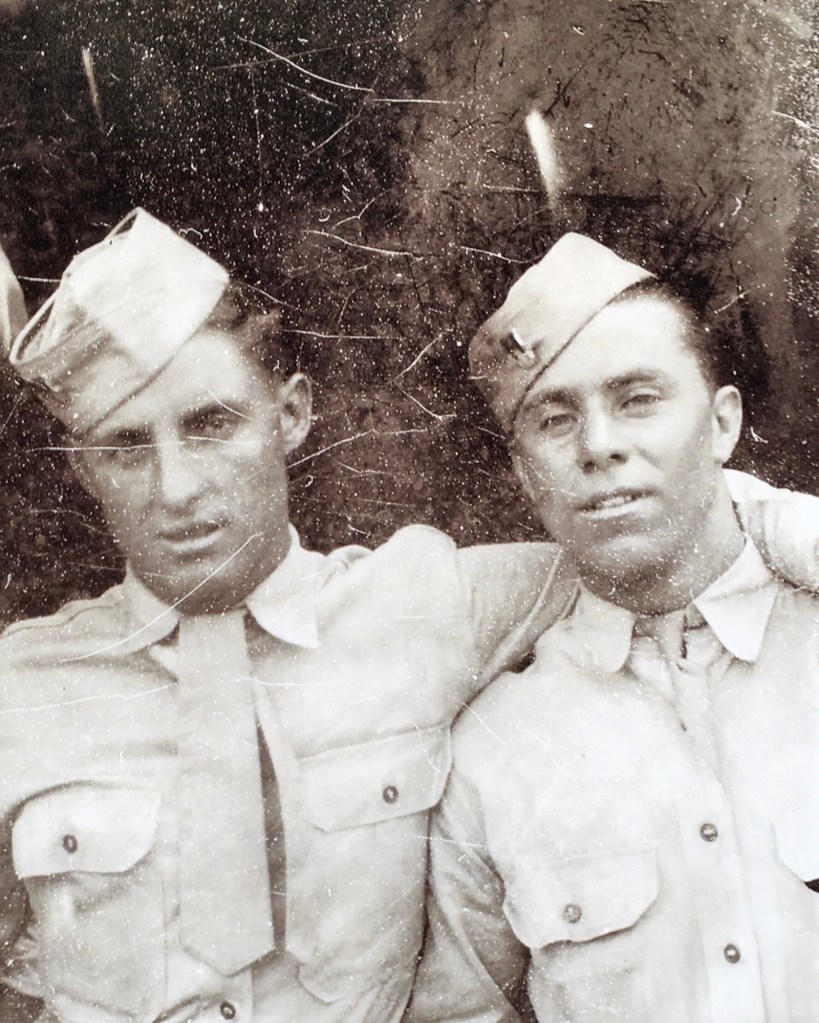
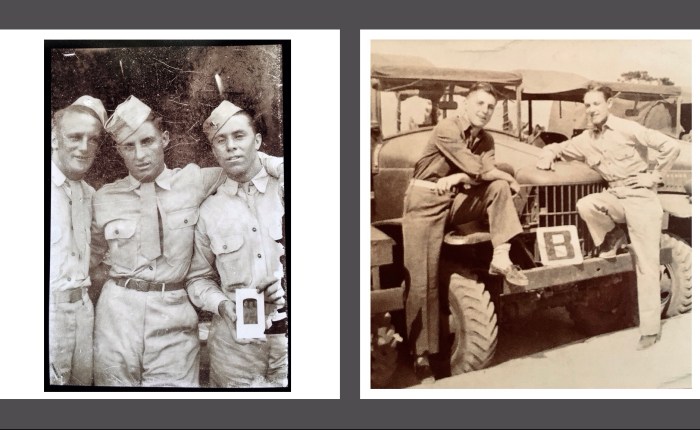
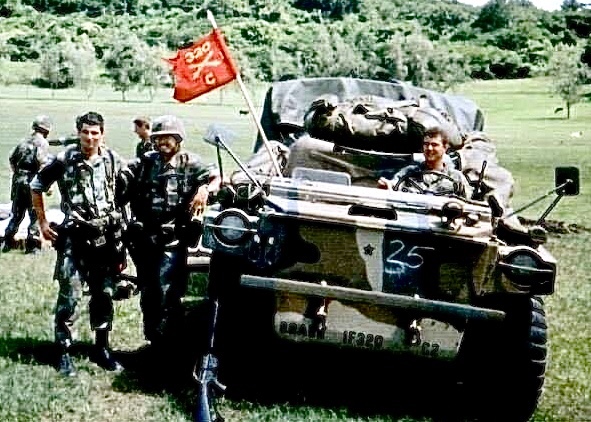
Noble was Dad’s best friend, after his brothers, Mick and George. Both he and Dad joined the Army when underage in 1940, over a year before WWII started. They were in B Company, 60th Regimental Combat Team (RCT), of the storied 9th Infantry Division.
Dad and Noble in ‘41 or early ‘42.
Mom, Dad, “Uncle” Noble and “Aunt” Myra were great friends through the years and got together several times a year. The four of them had a close friendship that lasted a lifetime. I learned a lot about life, and about enjoying life from all of them, but particularly Dad and Noble. They told stories from their time in the Army – almost always funny stories of things that happened. The serious stuff? The stories of death and destruction? Those didn’t make it to the kitchen table where folks gathered, drinking coffee and listening, as these two combat veterans told their tales.
Noble’s actual WWII story is interesting. It’s one you can’t really tell without also telling the story of the 9th.
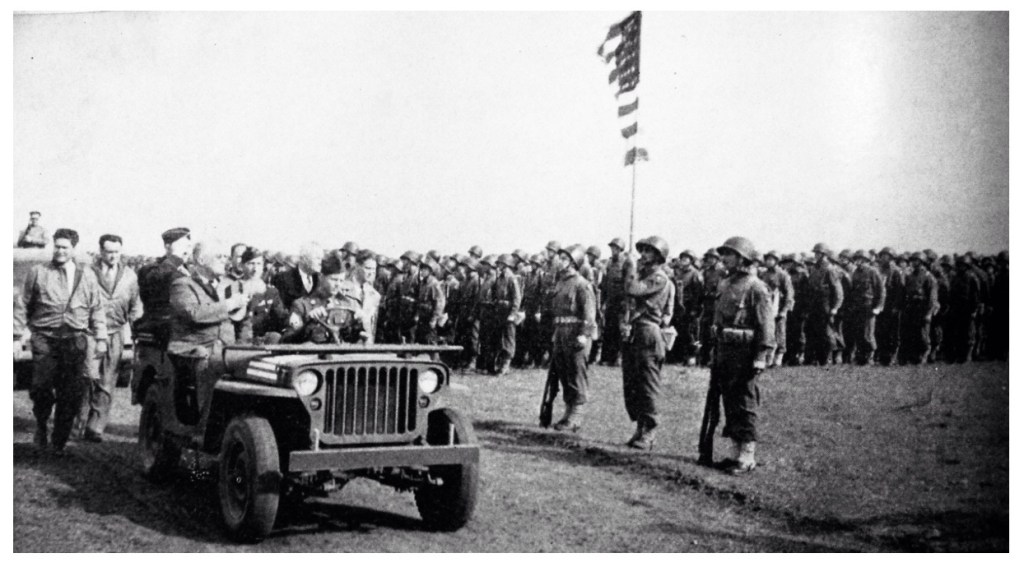
Dad and Noble’s wartime experience started on November 8th, 1942, when the 9th took part in the Invasion of North Africa. Until D-Day happened, it was the largest wartime amphibious assault ever. After three days of battle, they took Port Lyautey, Morocco and the Vichy French surrendered. After some downtime, in January of ‘43, the 60th RCT was the only unit selected to take part in a review for President Roosevelt who was at the Casablanca Conference. Dad and Noble were both there and told us funny stories of the comments in the ranks as Roosevelt passed their unit in a jeep for the review. “Hey Rosie – who’s leading the country while you’re over here?” “Hey Rosie – Who’s keeping Mamie warm while you’re over here?”
Roosevelt Reviewing the 60th RCT During the Casablanca Conference
Things got tough again after that. Starting in February, they fought their way across Algeria and then Tunisia. Station de Sened, Maknassy, Bizerte – forgotten names now, but deadly locations in the spring of ‘43. The Germans eventually surrendered at Bizerte, on May 9th, 1943, just over a year before D-Day.
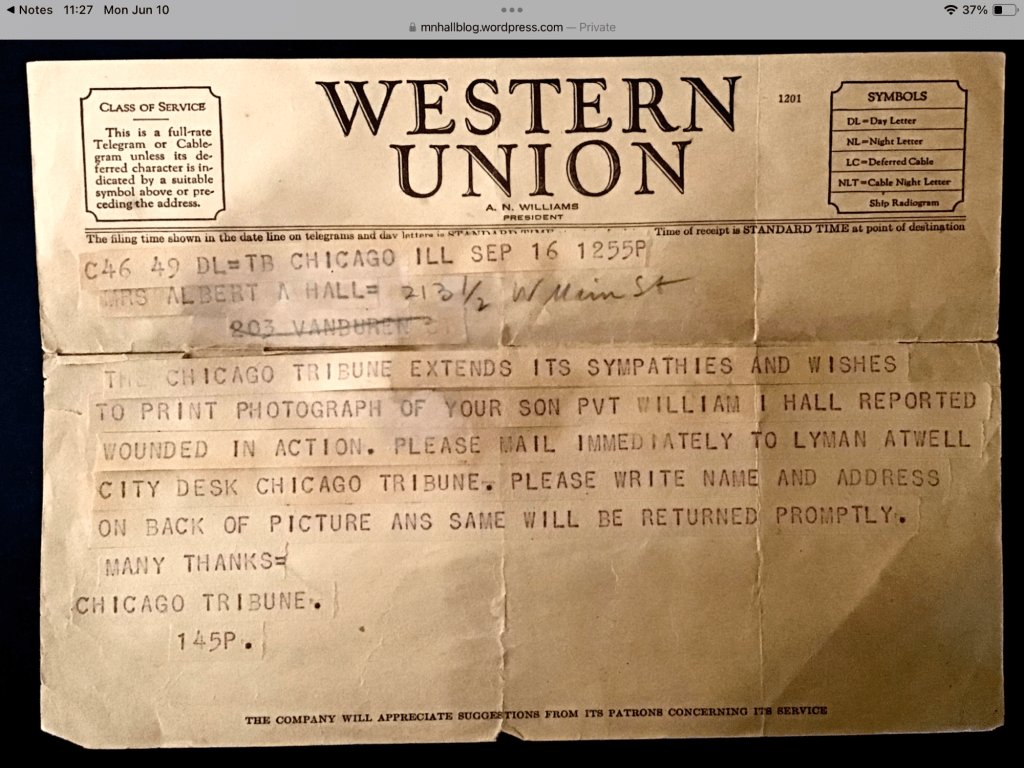
The 9th wasn’t finished though. A little over two months later, in July of ‘43 they took part in the invasion of Sicily. The 60th conducted the famous “Ghost March” through the mountains of Sicily, which the Germans originally thought were impenetrable. Dad was shot three times there, and almost died. It took them a few days to evacuate Dad to an aid station, and then a hospital. The war was over for him and they eventually sent him back to the States.
Chicago Tribune Asking for a Picture After Dad was Wounded.
In fact Dad’s wounds were so severe, Noble thought he had died, or would die shortly. As they evacuated him, Noble and the 60th continued the fight. 38 days after the invasion began, Sicily fell on August 20th. Noble was there when Patton addressed the Division on August 26th, congratulating them for their efforts.
In September of ‘43, the 9th deployed to England for rest and refitting. With just over nine months until D-Day, the 60th had already fought in four countries on two continents.
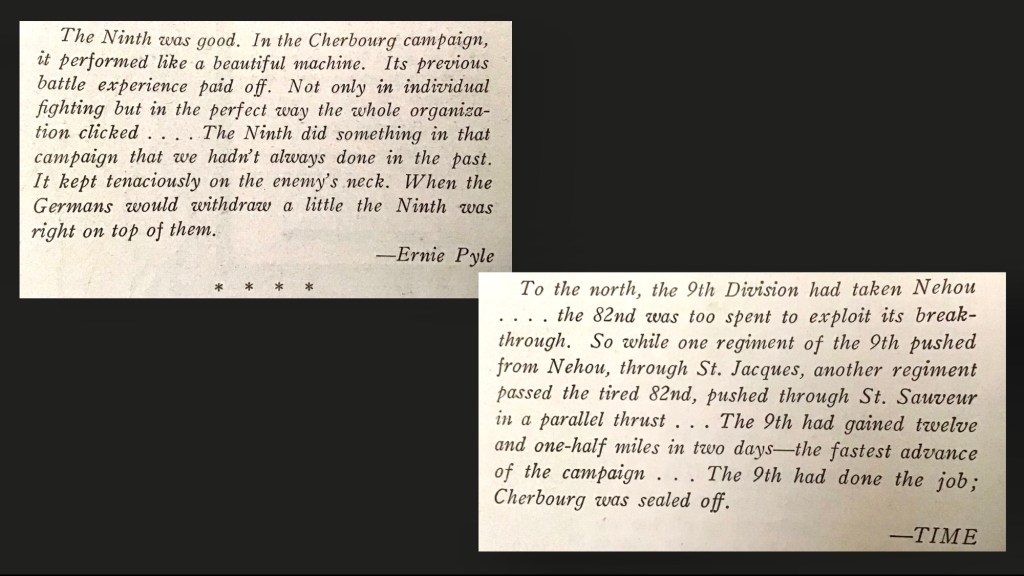
On June 10th, D-Day plus 4, Noble and the 9th landed on Utah Beach. Their mission? Attack towards Cherbourg and cut off the peninsula. This they did and on the 17th of June, reached the ocean on the other side of the peninsula, and eventually, captured the port of Cherbourg itself. If you’ve forgotten your history, Cherbourg was critical for the allies to establish a port on the Atlantic Seaboard. Back home, the news singled out the 9th for their efforts.
Ernie Pyle and Time Magazine Talking About the 9th on the Peninsula
From there, they started on the great chase across France. The 9th advanced over 600 miles by the end of September thru France and into Belgium. In 3 1/2 months they were engaged in three major campaigns and were only out of action for a total of five days.
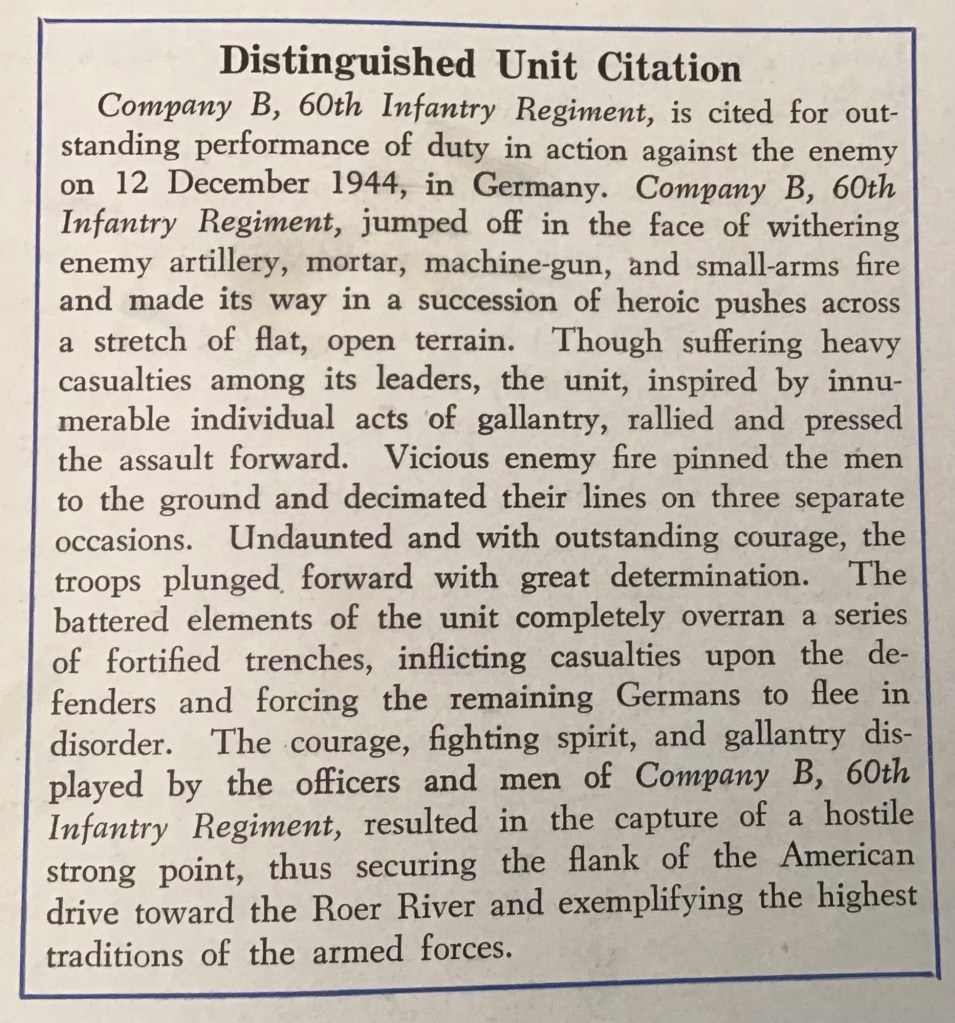
The 9th was among the first units entering Germany itself. For actions on December 12th in the Hurtgen Forest area of Germany, Noble’s unit, B company 60th RCT, received a Distinguished Unit Citation for combat actions in Germany. At the time, the company probably had around 80 or so men.
Noble and B Company, in Action Just Before the Bulge
Just after the 12th, The 9th was pulled out of the line due to the heavy casualties they had sustained. It was “resting” in the Monschau Forest area of Belgium, when on December 16th, 1944, the German winter offensive, the “Battle of the Bulge” started. Thrown back into combat, the Division beat back the enemy at the northern edge of “The Bulge”.
The Battle of the Bulge, The Ardennes, the fight across Germany to the Rhine River – Noble saw all of that. On 7 March, when the American 9th Armored Division captured the bridge across the Rhine River at Remagen, Noble and the 60th RCT were among the first Infantry units to cross under heavy fire and defend the bridgehead from the East side of the Rhine.
The 9th at Remagen
On across Germany – The Ruhr, The Hartz Mountains… On April 26th, 1945, a patrol from the 60th RCT linked up with the Russians at the Elbe River. The war in Europe officially ended on May 7th.
Noble spent 2 1/2 years in combat, fought in seven countries and survived without a scratch. Miracles do happen.
In 1950, a minor miracle also happened.
In July of that year, a knock came at my parent’s door and Mom answered. A young couple was standing there and wanted to know if William Hall lived there. Mom said yes and called Dad. All of a sudden there was yelling, and exclamations, and hugging, and dancing and back pounding – it was Noble, and his new wife Myra.
It turned out Noble and Myra were traveling from a vacation in Wisconsin back to Southern Illinois where they lived, when they passed our hometown – Ottawa. Noble thought Dad had died in Sicily, and then remembering he was from Ottawa, decided to stop in and see if he could find Dad’s parents and offer his condolences. He looked the name William Hall up in the phone book, and stopped off at the local VFW to see if anyone knew of Dad or his relations. They then drove to the address from the phone book, assuming it was my grandfather’s home. Instead, he and Dad saw each other for the first time since August of 1943 in Sicily.
I was born in ’55 and named Max Noble Hall in honor of Noble. I always enjoyed seeing him and Myra over the years during their visits. Later, at West Point, and then while spending my own time in the Army, I often asked myself if I was measuring up to these men from B Company of the 60th RCT.
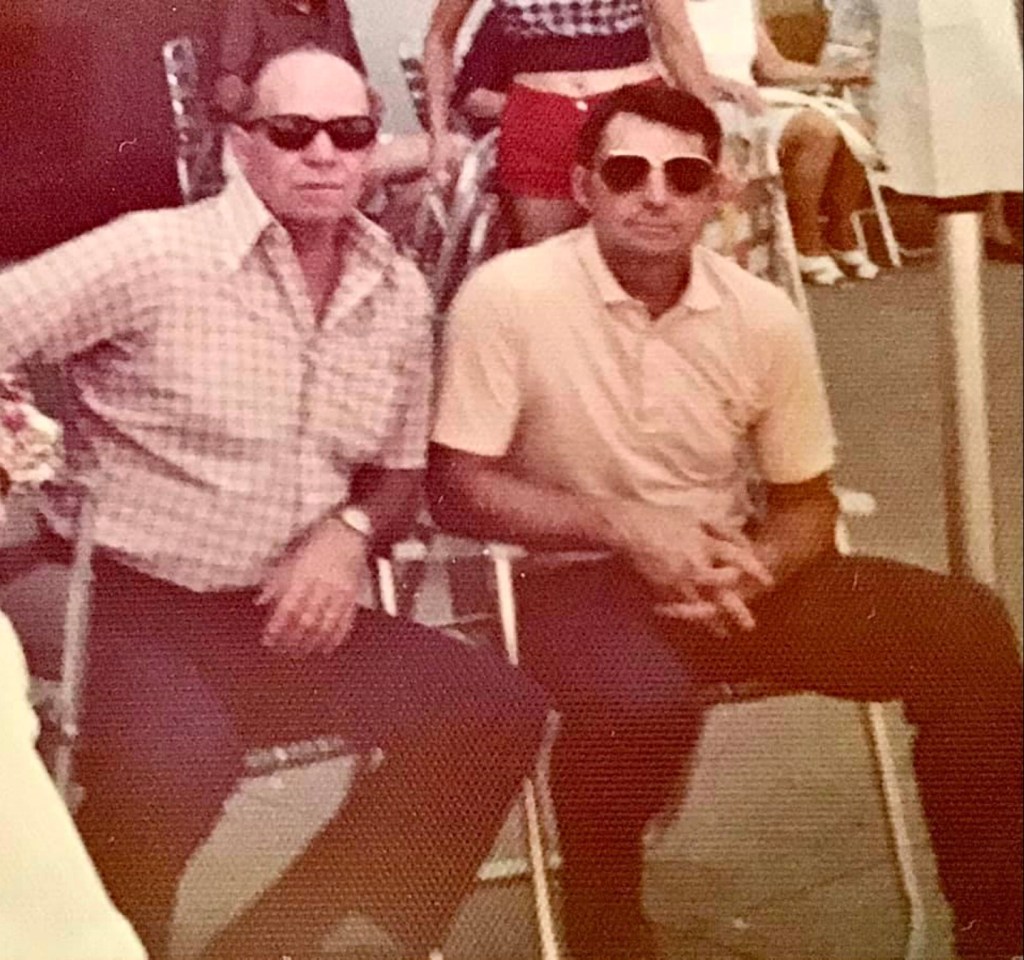
Noble and Dad in the Mid-‘70s in Ottawa. Still Ready to Kick Ass.
I feel so lucky having known them and having heard the stories Noble and Dad told. It’s only in the last decade I’ve matched those stories up to the details in history books. I can tell you they greatly underplayed what they did for America and the free world. What I wouldn’t give for another day with Noble and Dad – listening to the stories, and this time, asking more questions.
The “Greatest Generation” is mostly gone now. I think it’s important we not let them, or their stories be forgotten.
Here’s to you Uncle Noble. Thanks for everything you did for this country and being an influence in my life. It’s a debt I can never repay.
I relied on the book, “Eight Stars to Victory, A History of the Veteran Ninth U.S. Infantry Division”, published in 1948, as background for much of the factual information in this blog.
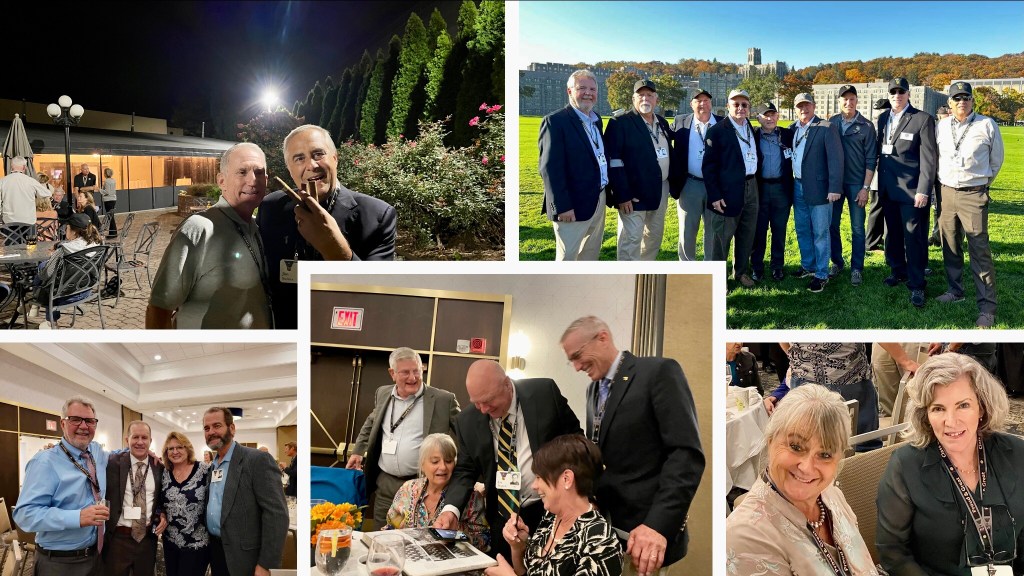
On a beautiful sunny day, sixteen of us attended the funeral of our brother, Eric Franks. The service was perhaps, more poignant, as it was the Friday before Memorial Day. It’s always bittersweet when members of the West Point Proud and Great class of ‘78 gather and say goodbye to a classmate.
At our 45th class reunion last fall, we held a memorial service for the 82 classmates who have passed away. This year, since January, at least ten additional classmates have died. The rate of our passing seems to have increased, but I suppose we are at that age. The youngest of us is 67. The oldest, maybe 71.
For those who pass away, a contingent of classmates typically attends the funeral services. Depending on when and where it is, there might be only one or two of us able to make it, or as at Eric’s, as many as 16 or more. It’s not only a last chance to honor a brother, but also an opportunity to spend time with each other and catch up in person. The sands drop through the hourglass more quickly these days and I think we all know it. Bittersweet indeed.
And so it was with Eric. Over the years, Cath and I saw Eric and his wife Robin at various reunions, or mini-reunions. The past few years, we also met them, along with our classmate Gus Hellzen and his wife Janice for an occasional beer or lunch on the Eastern Shore of Maryland. All three couples were married over 45 years ago in the weeks after our June, 1978 graduation. Our wives also made the journey through West Point and the Army.
B-3 Company-Mates and Wives at a Class Mini Reunion in 2022: Hellzens, Wells, Franks, Halls and Powells.
At the service, most classmates in attendance were from the MidAtlantic region, but some flew in from Alabama and Florida among other places. Classmate Brad Andrews, a close friend of Eric’s was one of two speakers giving a eulogy. He told stories of Eric from our cadet days and his time in the Army, including Panama. He talked about Eric becoming a renowned and pioneering Orthopedic Surgeon and the impact he had both on his patients and on other doctors. He also spoke of Eric having cancer and how it didn’t slow him down, even at the end of his life. At the end of his talk, he called the attending West Point graduates to attention and we rendered a final hand salute to Eric.
After the service, we gathered outside the church and a group photo was taken, something that has become a tradition at funerals, but also other times when some of us gather together to celebrate life and each other. The photos are usually posted to our class Facebook Page, or our email server. “Yes,” we seem to say, “we are still alive, celebrating our brother, each other and The Long Grey Line. Grip Hands.” At funerals in particular, the phrase “Grip Hands”, from the song The Corps* is more real and more important.
Class of 1978 at Dr. Eric Franks funeral in Salisbury, MD. L-R: Charlie Bartolotta, Max Hall, Bond Wells, Bob Rush, Craig College, Kevin MacCaffery, Kevin Beam, Bob Maszarose, Charlie Dixon, Adolf Ernst, Brad Andrews, Jack Paul, Hank Gillen, Chris Maxfield, Gus Hellzen & Jim Galloway.
Most of us eventually made our way to Robin and Eric’s home for lunch and libation. It was a lively time, with more laughter than tears as far as I could tell. We met with family and friends of Eric from throughout his life. At one point, Gus poured small glasses of WhistlePig** for all who wished to join us in a toast – “To Eric – Grip hands and be thou at peace. Proud & Great ‘78! Here’s to Eric.” And then, echoing from our formal events in the military (in an Army that was still mostly male in our early days), his second toast, “To the ladies!”
Eventually Cath and I said our goodbyes and left for the drive home. Along the way, we talked of the day and what a fine tribute to Eric it was.
During the drive, I also thought of some of the words Brad used in his eulogy for Eric. He quoted Samual Johnson, saying “To my question, as to whether we might fortify our minds for the approach of death, he answered in a passion, ‘No, Sir, let it alone. It matters not how a man dies, but how he lives. The act of dying is not of importance, it lasts so short a time.’ “
Our hearts are with Robin, their children Erica and Ricky, and with their families. Here’s to you Eric – You led a life worth living. Be Thou at Peace.
Eric and Robin
Addendum:
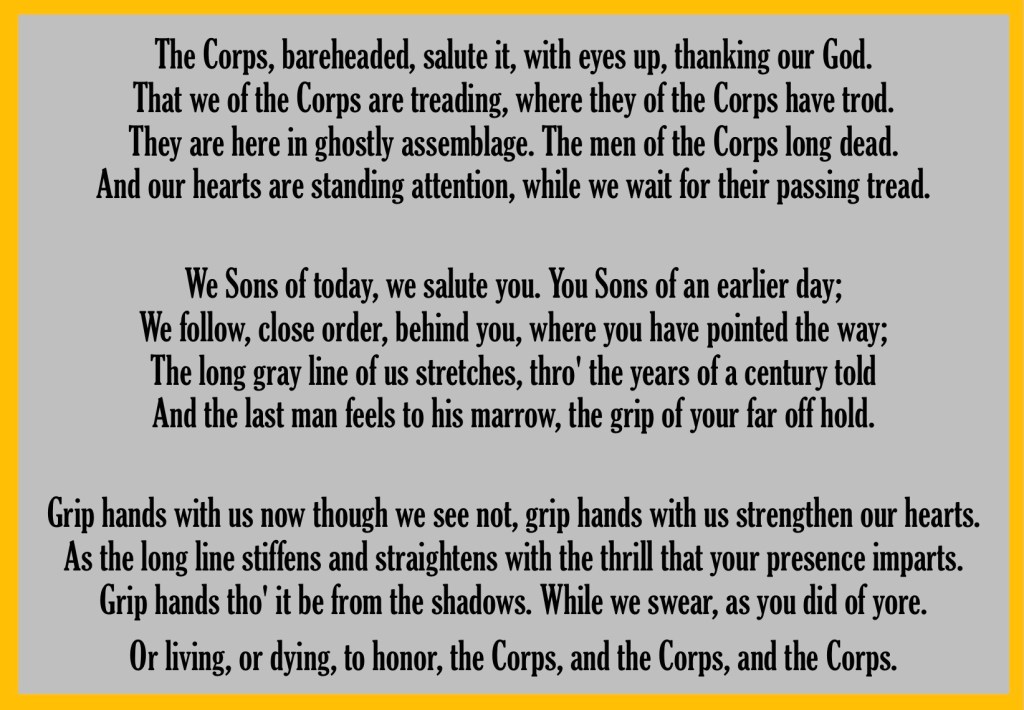
Here are the words to “The Corps”:
WhistlePig Rye Whiskey holds a special place with our class. If you want to learn why, you can read more here – We were on a mission to the WhistlePig Distillery in Vermont. Twelve classmates gathered to taste whiskey from five barrels. We would select two for the West Point Proud and Great, Class of ‘78 45th reunion this coming fall. We didn’t want to let our classmates down […] Continue here: https://mnhallblog.wordpress.com/2023/05/09/__trashed-2/
Thanks to Gus Hellzen for the photo of Eric and Robin at the start of this blog. Thanks to Cathy for the photo of classmates at Eric’s service.
Every once in a while, something happens, or somebody does something that makes the idea of “The Long Gray Line” real to us West Point graduates. Sometimes it’s an event affecting the world. Sometimes it’s a death. Sometimes it’s only something small. One of those small things happened at our recent 45th class reunion.
A month or so ago, we had our West Point 45th reunion*. It was a wonderful long-weekend seeing the Academy and more importantly, catching up with classmates. A few days after the reunion some of my classmates were exchanging stories online, when one of them asked if anyone else noticed during the parade honoring our class, one cadet staff element maintained “Eyes Right” as they passed our entire class.
A side note for those who have not served in the military. Everyone knows what a salute is, from one soldier to a more senior officer, or soldiers saluting the flag as it passes, or is raised or lowered. When there is a parade in the military, as a unit marches past the reviewing stand while carrying their weapons, it’s impractical/impossible for the unit to salute, or present arms to the reviewing party. Instead, the commander calls out the command, “EYES…RIGHT!”, and the entire unit, except for the file of troops on the right side of the unit, turns their head at a 45 degree angle and looks at (salutes/honors) the reviewing party as they march past (the right-hand file of troops continues to look straight ahead, ensuring the unit remains on the line of march). Once the entire unit is past the reviewing party, the command “READY…FRONT!” is given and the soldiers snap their heads back to the front. This is a form of saluting (honoring) the reviewing party while on the march.
Back to the story…
During our reunion, a Saturday morning parade was held in our honor. There were about 300 or so of us who dutifully lined up to the right of the reviewing party, which consisted of the Academy Superintendent, his Command Sergeant Major, the Commander of the 7th Infantry Division, and his Command Sergeant Major. Two of the four Cadet Regiments (eighteen companies total) took part in the review. After Ruffles and Flourishes and the Star Spangled Banner played, the command “PASS…IN REVIEW!” was given and Corp of Cadets began their march past the reviewing party and then our class.
Proud and Great ‘78, Lined up for the Parade Review
By happenstance, I was near the front and left side of our class line, fairly close to where the reviewing party was. We could hear the various staff elements and companies give the command EYES RIGHT as they arrived in front of the reviewing party. Then, after the staff element or company passed completely by the reviewing party, the subsequent READY FRONT command was given. Coincidentally, the READY FRONT command was given just before or after where I was standing, depending on the timing of each commander.
My buddies, Steve, Jay, Gus and I all noticed they were doing EYES RIGHT only for the reviewing party. Someone may have even joked about us not being salute worthy, but someone else pointed out it would be pretty tough, and almost impractical to carry an EYES RIGHT for the entire length of our class, spread out over perhaps forty or fifty yards.
Cadets Passing By Us, Already at the READY FRONT
Eventually the parade ended and after pictures, we headed off for lunch and the football game, and no one thought anymore about the parade.
Well, almost no one.
Joe Mislinski and a few other classmates who were at the end of our class in the reviewing line noticed one staff element held their EYES RIGHT the entire time. It was only after they passed the last member of our class that the commander gave the READY FRONT command. Joe was intrigued and got to work trying to find out who this particular commander was.
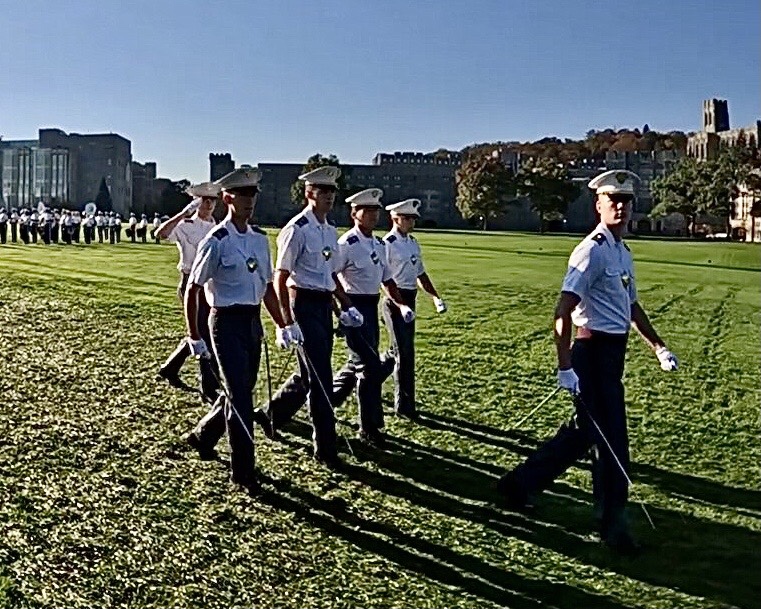
One Staff Element Held Their Salute Until They Passed our Entire Class
Another one of our classmates, Bob Greenwalt, videoed the entire parade. Joe watched the video and eventually was able to determine the staff element who retained their salute was the commander and staff of the 2nd Battalion, 2nd Regiment. Through a chain of several cadets Joe knows, he was able to track down the 2nd Battalion Commander. It turns out, he was out that day and the cadet in charge for the parade was Cadet Lieutenant Paul Conroy, class of ‘24. Joe wrote him an email asking if he indeed was the commander for the parade that day and if so, thanked him – “I’m sure you thought it was a small thing to do, to honor us in that way, but it really meant a lot. Thank you, it really warmed our hearts. Grip Hands!”
Cadet Lieutenant Conroy and the 2nd Bn, 2nd Reg Staff holding Their Salute
A bit later, the reply came back from Cadet Conroy – “As the stand-in for the commander, I was responsible for giving the commands “Eyes Right” for my staff to salute and “Ready, Front” for them to drop it. I admit my gesture was not premeditated; it just did not seem right to order my staff to drop their salutes until we had passed all the officers, current or retired, who had served our Army. I waited to call “Ready, Front” until myself and my staff had passed the class line. I could not look behind me, but I assume my entire staff held their salutes as well.”
Cadet Conroy’s Reply
After another exchange or two, Joe and Cadet Conroy arranged to link up in person at the upcoming Army Navy Game. Unknown to Cadet Conroy, Joe had a small gift for him and the Battalion staff.
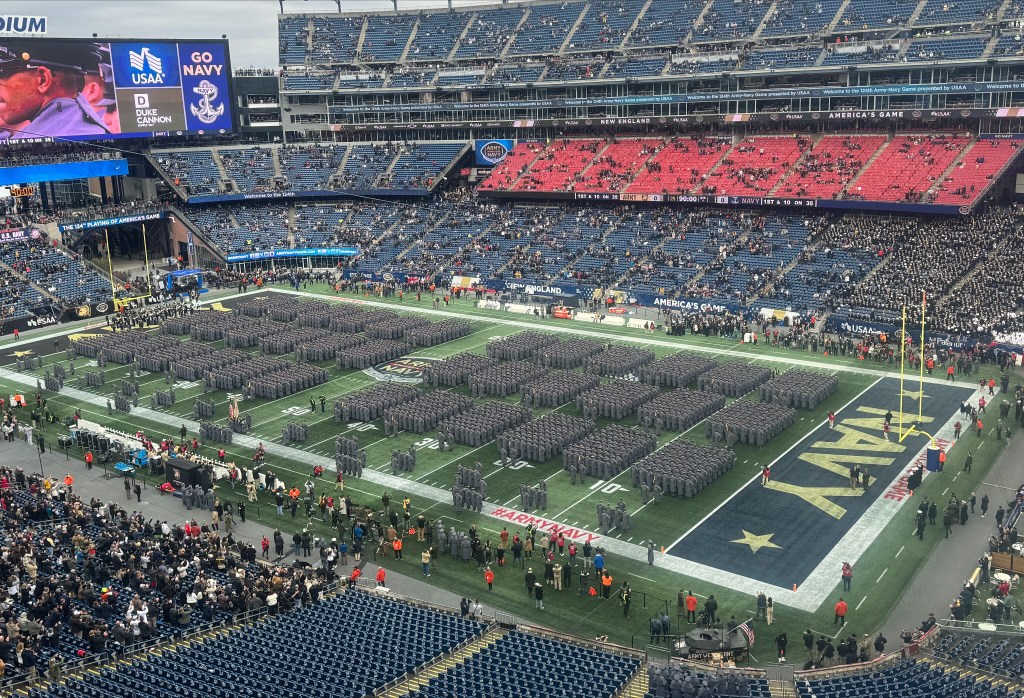
Finally, it was the day of the Army Navy game. If you ever get the chance to go to one, I urge you to do so – it’s a day of pageantry – Cadet and Midshipman march-ons, flyovers, parachute drops, and of course the game itself. No, they aren’t Michigan, Texas, Alabama or Washington vying for the National Title. But that’s OK. These two teams – the passion, the emotion, the rivalry, the ties that bind these two schools. Yes, Michigan and Ohio State have a great rivalry. But when the Army Navy game is over, and the players graduate, these men and women take on joint duties and responsibilities, risking their lives for this great nation.
West Point March-On at Gillette Stadium in Foxboro, MA.
During the game, Joe and Paul texted and arranged a location to link up at the end of the first half. The score was 10-0 Army at halftime when classmates Joe, Paul Chang and Jeff Foley made their way to the bowels of the stadium where they met with Paul, and two of the members from the Battalion Staff – Firstie (Senior) Allen Liu and Cow (Junior) Timothy Jolicoeur. Tim is who originally caught the eye of many of my classmates as he is the one in the photo holding the hand salute the entire time. Three of the cadets, Justus Gabriel, Jake Pinuelas and Wesley Anderson couldn’t make the meeting. Wesley is on the West Point Marathon team and was one of the cadets who ran a game ball from West Point to Gillette Stadium.
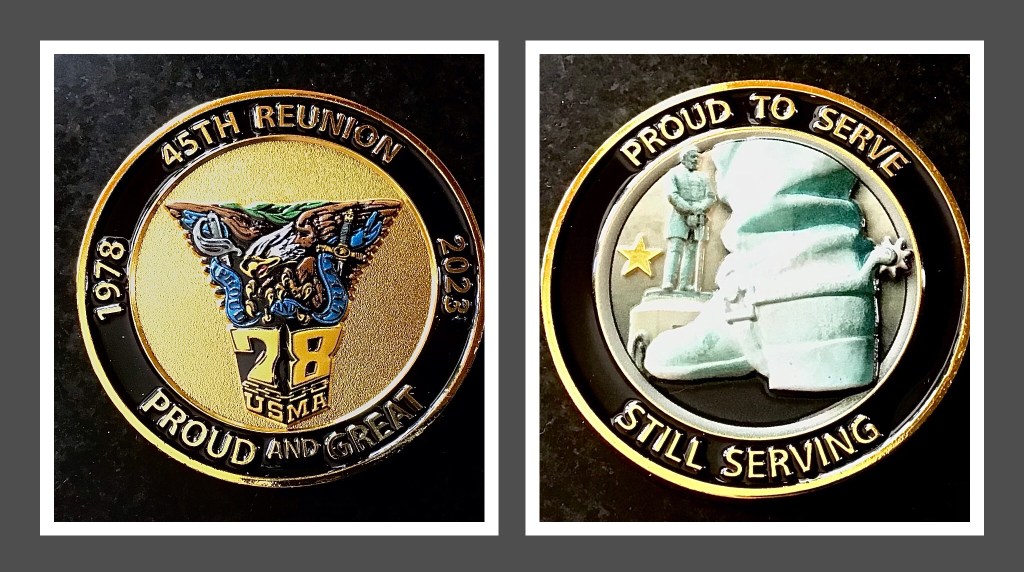
As my classmates spoke with the cadets, Joe mentoned how he, Jeff and Paul were there on behalf of our entire class. They gave each of the cadets a Class of ‘78 coin. “Coining” is something done in the military (and some other government organizations). When you “coin” someone outside your unit, it is considered an honor and is because they have done something of value or importance to the unit. The way it’s done is in the form of a handshake. The coining party holds the coin in their right hand and extends the hand for the handshake. The parties shake hands and the receiving party takes the coin after the handshake. For West Pointers, it’s particularly meaningful because of lines from one of our most treasured songs, “The Corps” and the act of “gripping hands”.
The Cadets were surprised and happy. My classmates discussed how meaningful their gesture was for us as a class and how many of us noticed it and remarked to each other about it. They let them know there was chatter about it on our class Facebook page and the class unanimously agreed it was a great idea to do this meetup and present them with the coins.
Class of ‘78 45th Reunion Coin.
There was a bit more small talk, and then all headed back to their respective seats for what turned out to be an exciting second half. If you didn’t see the game, Army won 17-11 after stopping Navy on the one yard line with three seconds left in the game. These games are always thrilling and you shouldn’t leave your seat until they are over. Army has won six of the last eight games between the two Academies. Their margin of victory in those six wins? 36 points. Total.
So that’s the story. Cadet Lieutenant Conroy will graduate from the Academy in another six months and join The Long Gray Line. “The Long Gray Line” is often talked about in the abstract, but every once in a while, you experience something that makes it real and personal. In the future, I’m guessing if Paul Conroy runs into a member of our class in a bar or restaurant, or some other place in this far-flung world of ours, his money will be no good. Sometimes it’s the little things that make a difference and you notice. The Class of ‘78 noticed on this occasion.
Thanks to you Paul Conroy, and the 2nd Battalion, 2nd Regimental Staff for going out of your way recognizing the Proud and Great Class of ’78. We wish you good luck and Godspeed on your journey with the Army and throughout your life.
Addendum:
In a side note, classmate Paul Chang has an interesting connection to Paul Conroy – “Paul Conroy and my youngest son were classmates at the same grade school in San Antonio (Keystone) before we moved to Massachusetts 13 years ago! His mom and I worked together at the Med School and they lived close by. Another classmate from that grade school also went to West Point – Isabella Sullivan, who is one of two West Point Rhodes Scholars this year!”
Credit goes to classmate Billy Harner for the photo of our class lined up for the parade. It’s used in both the lead in to the blog, and again in the text.
Photo of the West Point march-on at the Game was provided by my good friend, Rudy Crespin, who was in attendance at the game. Rudy is a Naval Academy graduate from the Class of ‘87.
The two photos of the Cadet Conroy and staff were extracted by Joe Mislinski from the video provided by Bob Greenwalt.
Thanks to classmate Rick Makowski, who provided the coins for free from his merchandising company.
Thanks to classmates Joe Mislinski and Gus Hellzen, along with my wife Cathy for providing editing assistance with this blog.
If interested, here is a link to Bob Greenwalt’s video of the parade. There’s a bit of chatter going on throughout the video, which is also a bit cool. Cadet Conroy and staff come into view at 21:40 and it’s clear that they didn’t do a READY FRONT when everyone else did – https://www.youtube.com/watch?v=HMCKT8QXodE
* Here’s a link to the blog about the reunion itself: It was raining as I left our West Point 45th reunion last Sunday. I took the longer, slower route home rather than drive Interstate 95. Tired and emotionally spent, I didn’t trust myself on a route that would have more traffic. I knew I would be thinking about West Point, the reunion and my classmates […] Continue here: https://mnhallblog.wordpress.com/2023/11/01/grip-hands/
It was December 6th, 1941. Dad, Noble and other men from B Company, 60th Regimental Combat Team of the 9th Infantry Division had weekend passes. They left Fort Bragg, North Carolina that Saturday for nearby Fayetteville. They didn’t know it yet, but the next day their world would change forever.
That weekend, Dad was a little over 18 years old and had been in the Army for about fifteen months. The 9th Infantry Division reactivated in August of 1940, and Dad joined the unit in September of that year, at the age of 16.
Dad (on the left) in 1941 in the Bravo Company Motor Pool.
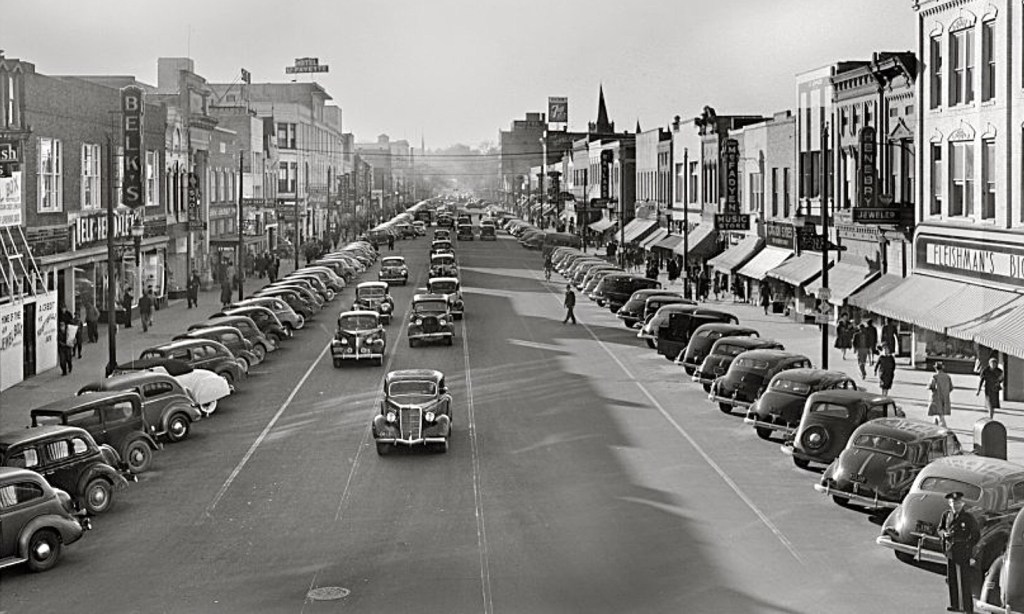
In 1940, the population of Fort Bragg was 5,400. One year later, there were 67,000 troops at Bragg and Fayetteville was on the way to becoming a military town, with bars, clubs, restaurants and everything needed to “entertain” the troops, for better or worse.
Fayetteville, 1941.
Dad and the other boys of Company B received their weekend passes that fateful weekend and probably left Bragg around noon. Typical weekend passes went from noon on Saturday to 6PM on Sunday. They usually rented a room or two to use as a base for their partying. Over the years, he told me about some of those weekend passes. Real food, beer, clubs, blues, jazz, dancing and trying to link up with girls. They’d party into the night, and then the next day, after a big breakfast, party some more until they eventually returned to Post. I heard stories about fun times in North Carolina (Fayetteville and Charlotte) in Tunisia and Algeria, and late in the war back in Washington DC. Let’s just say, Dad knew how to party.
For this particular weekend, he didn’t tell me about any of that. What he talked about was the return to Fort Bragg late Sunday afternoon on December 7th.
Dad and several others were returning to the Post in a cab. I think he said there was a formation at 6PM for accountability purposes, but maybe they just had to sign back in. He and his friend, Noble, had partied it up pretty good and were a bit hungover. As they neared Fort Bragg, two things happened. First, traffic was backed up to drive onto the Post – they were checking IDs or checking IDs more closely than normal. Second – the cab driver turned on the car radio.
By 1940, AM radios were considered a standard feature in automobiles. The stations carried news, some radio shows and music. There weren’t lots of stations, and the programming wasn’t all that varied. This time however, the boys of Company B heard the words that would change their lives. An NBC announcer read the following statement, relayed earlier from station KGU in Hawaii:
BULLETIN: We have witnessed this morning the attack of Pearl Harbor and the severe bombing of Pearl Harbor by army planes that are undoubtedly Japanese. The city of Honolulu has also been attacked and considerable damage done. This battle has been going on for nearly three hours. One of the bombers dropped within fifty feet of Tanti Towers. It’s no joke -it’s a real war. The public of Honolulu has been advised to keep in their homes and away from the army and navy. There has been severe fighting going on in the air and on the sea …(There then was an interruption, followed by this) . . . We have no statement as to how much damage has been done but it has been a very severe attack. The army and the navy, it appears, now has the air and sea under control.
There is a five-hour time difference between Honolulu and the East Coast. The attack on Pearl Harbor started at 8AM and lasted about 90 minutes (not the three hours in the news bulletin). That means the attack ended about 9:30AM Honolulu time, or 2:30PM East Coast time. The Honolulu station was somewhat delayed in reporting the news, and then of course, in the pre-internet age, it took longer for stations in the Continental US to pick up the bulletin and rebroadcast it. My guess is Dad, Noble and the other guys were hearing this news around 4:30PM or so that afternoon.
What did they do at this point? Wait in the cab to drive onto Fort Bragg? Get out of the cab and run onto Fort Bragg? Leave the cab and start talking with the other gathering soldiers? None of those things happened.
Instead, they directed the cabbie to make a U-Turn and drive back to Fayetteville. They were going to hit the bars again, even though they would be Absent Without Leave (AWOL) and miss the evening formation. They knew instantly this was going to be a shooting war, training was going to get tougher and opportunities to leave Post become slimmer. They weren’t going to miss this chance for a last shebang.
Dad and Noble in ‘41 or Early ‘42on a Different Weekend Pass.
And of course, when they returned to Fayetteville, they weren’t alone. Soldiers were everywhere drinking and partying. I think Dad said he thought half his battalion was in town. They joined the crowd and partied into the evening. There was a great deal of talk about when and where they would deploy.
Eventually, they returned to Bragg late that night. According to Dad lots of guys had hangovers at morning formation on Monday, December 8th, but nothing was really done about them missing the evening formation. There was too much work to do.
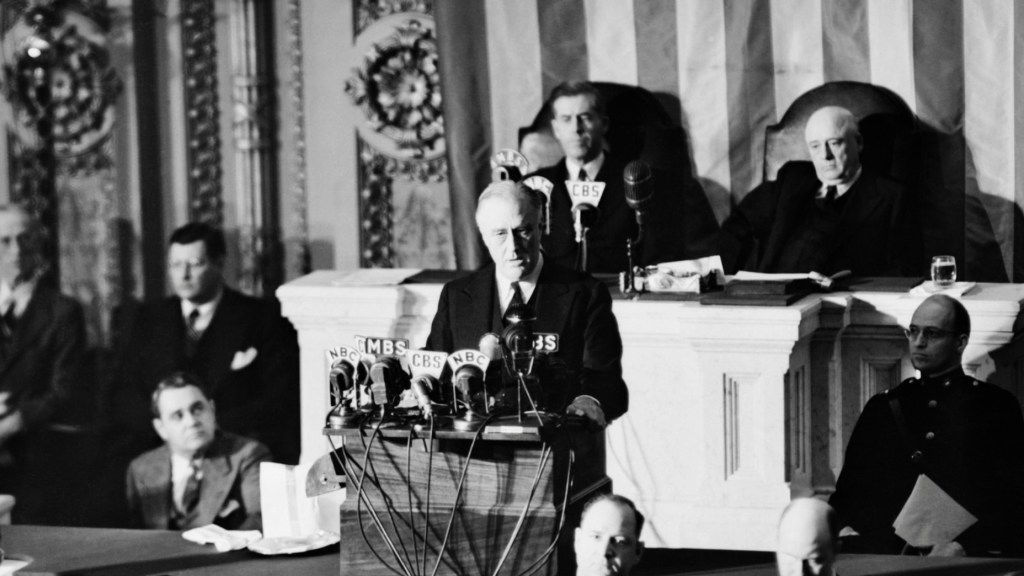
On the evening of the 8th, President Roosevelt gave his famous “A Day which will live in Infamy” speech to a joint session of Congress. The speech was broadcast live by radio and attracted the largest audience in American radio history, with over 80% of Americans allegedly tuning in to hear it.
President Roosevelt Speaking to Congress on Dec 8, 1941.
Eleven months to the day later, on November 8th, 1943, the men of the 60th Regimental Combat Team, including Dad and Noble, landed on the beach under fire in North Africa at Port Lyautey, Morocco as a part of Operation Torch. The counteroffensive had started against the Axis powers in the European Theater of Operations.
When dad joined the Army in 1940, it was for a three-year hitch. It would be 5 years before he was honorably discharged in August of 1945. He took part in the invasions of North Africa and Sicily, where he was wounded and almost died. I think partying several extra hours on the evening of December 7th was probably justified.
— Never Forget —
Addendum:
In 1940, the population of Fort Bragg was 5,400. By the following year, it reached 67,000. Various units trained at Fort Bragg during World War II, including the 9th Infantry Division, the 82D Airborne Division, the 100th Infantry Division, the 2nd Armored Division and various field artillery groups. The population reached a peak of 159,000 during the war years. This past year, Fort Bragg was renamed Fort Liberty.
Here is one other Pearl Harbor blog I’ve done: The plaque is only a small one, over in front of The South Ottawa Town-Hall on 1st Avenue. The Hall is still used for occasional meetings, but 1st Avenue is pretty sleepy in that area, so I don’t know how many people actually ever see the plaque. When I walk by, the words always compel me to stop. And think. And remember … Herman Koeppe was 19 the day he died […] https://mnhallblog.wordpress.com/2016/11/30/never-forget/
It was raining as I left our West Point 45th reunion last Sunday. I took the longer, slower route home to Virginia rather than drive Interstate 95. Tired and emotionally spent, I didn’t trust myself on a route that would have more traffic. I knew I would be thinking about West Point, the reunion and my classmates.
And of course, that’s what happened. The reunion, mixed with memories of West Point and my time in the Army cycled through my brain. Was it really 45 years since we graduated? It turned out the answer was yes.
Due to health issues, Cathy didn’t make the trip (she’s OK). It was a tough choice for her not to go to this reunion, but it was the right decision. Having dated since high school, and marrying each other right after my graduation from West Point, she too made the journey through my time at the Academy and in the Army. We’ve known many of these folk for nearly fifty years and together we have attended every reunion since the fifteenth. If I were to pass away, she would be welcomed with open arms by my classmates at any event, and they would help her in any way they could.
On October 25th, the day before the official start of our reunion, someone noted online the conditions were a bit nicer than 40 years previously on the same date. That was the day Operation Urgent Fury, the United States intervention in Grenada began at dawn. Several members of our class* were in the 82D Airborne Division and a part of the operation. It was a reminder that although we were “Cold Warriors” against the Russians, many of our classmates spent time in combat around the globe.
CPT Marion Seaton in Grenada. “We Were Soldiers Once, and Young”.
I arrived early Thursday afternoon and the weekend passed in a blur. The reunion hotel was a little over an hour from West Point. With 500+ attendees, there are no hotels at West Point or in the immediate vicinity large enough to host a gathering of our class. As is always the case at these five year reunions, not unlike our days at West Point, they are jammed with activities. We joke about it of course, but it’s true. I’m doubtful many other college reunions have days starting at 6:45AM. ;-).
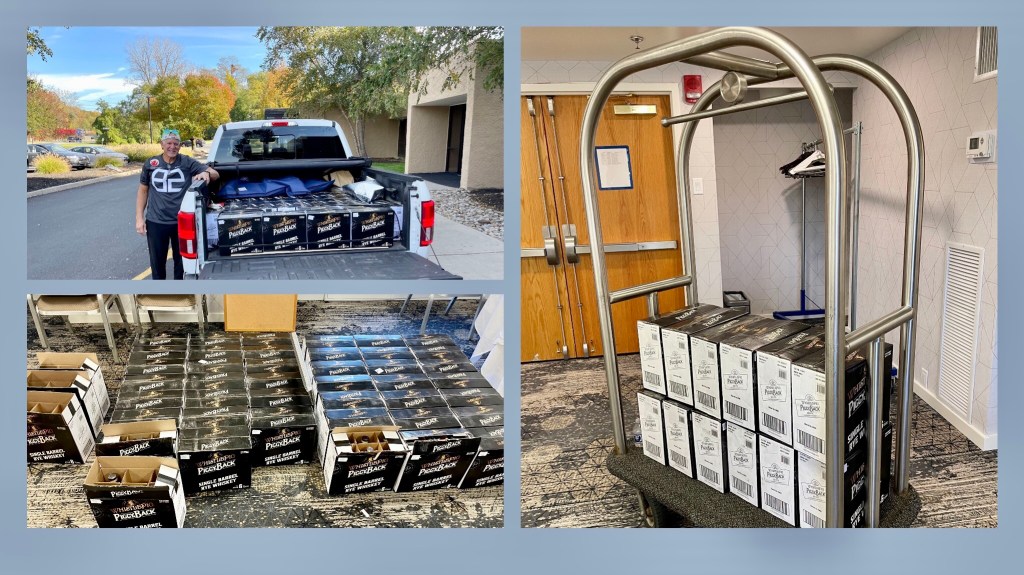
After arriving, I found Tony Matos, who had just arrived from New Hampshire. As importantly, Tony brought the 312 bottles of WhistlePig Whiskey we were going to distribute to classmates. Regular readers of this blog will recall that a group of us did a tasting at WhistlePig in Vermont last spring and bought two barrels (you can read about that tasting and why we did it at the link in the addendum). We dutifully transported the cases of whiskey to our distribution room and classmates started picking up their bottles. All were gone by Sunday morning.
The Successful Conclusion of Operation WhistlePig.
By Thursday night, things were in full swing. Around 300 classmates (about one third of our living class members) along with 250+ spouses, partners and family members were there. Dinner, drinks, and for some of us, cigars ensued. My time was divided between dinner with several of my company mates and then circling the rooms seeking out other old friends. Handshakes, hugs and toasts, along with conversations occurred several times – How are you? … Where’s Cathy – is she OK? … Do you remember … whatever happened to … where are you now … we have to do better at staying in touch … Eventually I made my way to bed and a restless night’s sleep.
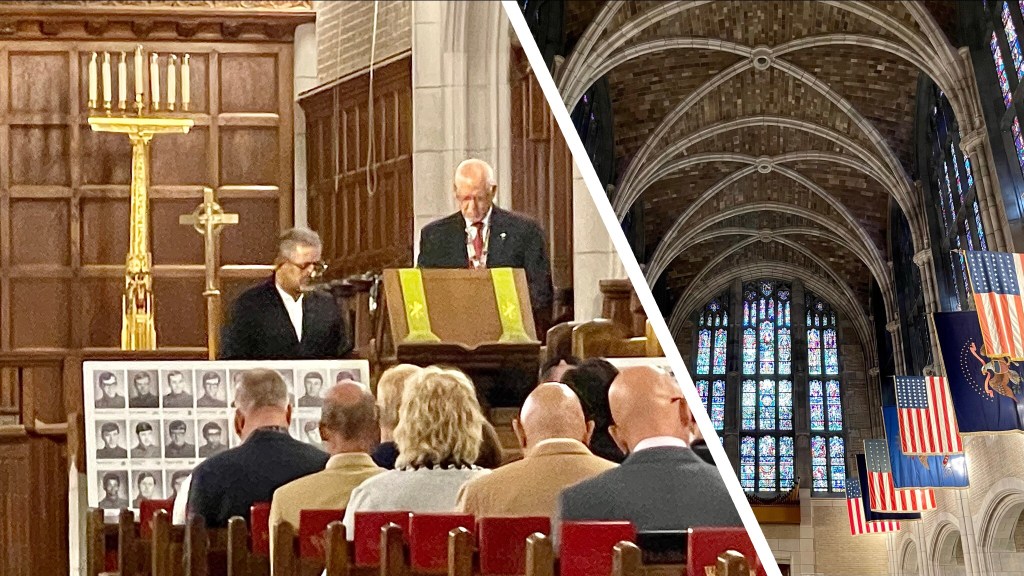
On Friday morning, we boarded buses for West Point. Our destination was the Cadet Chapel. Our first event, and for me one that has grown increasingly important, was a memorial service honoring classmates who have passed away. At our fortieth reunion, 50 classmates were so honored. This time the number was 82, including my company mate Dan Zimmerman. At the fortieth reunion, Dan sat with Cathy and I at the memorial service. This time, his name was one of the 82 called out loud. I thought a lot about Z-Man during the service. I have to say, the meaning of “The Long Grey Line” has changed, grown and become more real with the passage of time.
Memorial Service at the Chapel.
After the service, my buddies Jay, Steve and I, along with many of our classmates, walked the half mile from the Chapel to Ike Hall, although I also noticed there were more classmates taking the provided buses. Age catches up with all of us at some point. At Ike Hall we had lunch, along with a class meeting and a presentation by the Supe (Superintendent), before eventually busing back to the hotel.
At the hotel, Tony, Gus, Bob, Bill and I resumed distributing the remaining WhistlePig bottles. Classmate Al Aycock was distributing bags of coffee – the beans spent time in one of our empty whiskey barrels before bagging. We repeatedly received thanks from classmates for the arduous journey we’d made to Vermont for the WhistlePig tasting the previous spring. ;-).
After a short fifteen minute nap, it was time to get ready for the formal dinner that evening. More good food, drinking, talking and dancing. Perhaps because this was day two, things were slightly slower than the night before. It wasn’t as rushed and more faces were familiar now.
Random Pictures From the Weekend.
Saturday morning came early. We boarded buses for West Point at, wait for it … 6:45AM. Yes, you read that right, 6:45 in the morning. It was for a good reason – Two regiments of the Corps of Cadets were having a parade at 9:00AM, and our entire class was a part of the reviewing party. I remember as a cadet having parades and passing in review for old grads during their reunions. To put things in perspective, in the fall of 1977 our Firstie (Senior) year, the class celebrating their 45th reunion was the Class of 1932. Yikes! Back then, while waiting to pass in review, we made jokes about the OLD GRADS and of course could never see ourselves on the other side of the parade ground in the future. I’m sure the same thing was happening on this Saturday, but I have to say they looked squared away when they marched past us.
The Corps of Cadets, Passing in Review.
The Army football game that afternoon was a forgettable loss, but something happened later that left a strong impression on me. After the game, Clem, one of my company mates and his wife Nancy hosted a post-game tailgate and several of us B3ers stopped by for a beer. Three Yearling (Sophomore) cadets were there as well – members of the Class of 2026. Talking with them and listening to them made me feel good about our future, and the future of this country. If they are any indication of the quality of current West Point cadets, we have nothing to worry about. The United States Army, and our Officer Corps are in good hands.
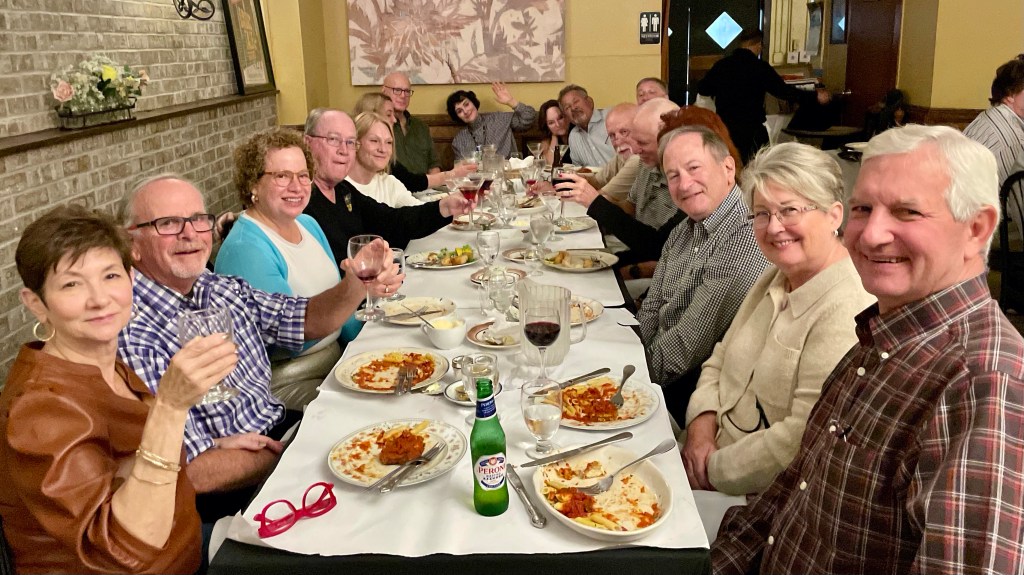
The last evening was special. There was no official event that night, and I was invited out to dinner by Jose Morales, one of the alumni from the Whistle Pig tasting in the spring. There were perhaps 18 of us at the dinner . Some I knew, some I didn’t. It didn’t matter. We were all one big happy family, talking, laughing, telling stories, eating and drinking.
One Big Happy Family at Saturday Night’s Dinner.
The next morning, I left for the drive home around 8AM. I’m not big on long goodbyes and wanted to hit the road. I spent the next six hours driving in the rain and thinking about the weekend. I wasn’t just thinking about the details of the weekend itself, as I recounted here. I was also thinking about this special brotherhood I have the great good fortune to be a member of. As time goes by, I cherish it more and more. I think we all do. It’s hard to explain to others who haven’t been a part of it.
We members of the West Point class of 1978 share a special bond that has only grown stronger with the passing of time. Yes, we still tell the old stories from cadet days, or our time in the Army, but it’s more than that. Those stories only represent the surface of our commonality. We rose to the call of Duty, Honor, Country as cadets and during our time defending this nation. Most of us have found ways to contribute to the greater good, even after our time in service to our nation ended.
As Plebes, we were required to memorize many things. Some mundane, some of no apparent use, and some that were important. One of those requirements was the song “The Corps”. As I grow older, the song’s lyrics speak to me more directly than when I was a cadet and first memorized them. We all know our time here on Earth is limited and we all need to make the most of the time we have. Grip hands indeed.
The Corps
Addendum:
* Classmate Marion Seaton provided the photo from Grenada. In his words, “Chuck Jacoby, Brent Holmes, Dale Tatarek and I were having the time of our lives on a little spice island 40 years ago this week. We were all part of the 82nd Airborne’s mission to secure the Island of Grenada. I was the C Battery 1/320 (Airborne) Artillery Commander. We were chuted up to parachute with our equipment into Grenada. Our original plan was for the 105 howitzers to be dropped from the C141B on the first pass and we would jump on the second pass over the Drop Zone. The jump would’ve been dangerous, certainly due to the hostile fire, but more importantly, because of the dispersion of the equipment and troops onto the ground. There was a huge body of water to our left and the Ocean to our right. We would’ve lost a lot of jumpers and equipment. Lucky for us, The Rangers jumped the day before from C130s below 400 feet. They secured the Drop Zone, so we were able to fly in rather than jump. Over the course of the battle, Charlie Battery fired 152 rounds in support of the Division and Rangers.”
Marion, A Bit Before his Unit’s Jump into Grenada was Cancelled.
Dale and Jan Hamby were in charge of this reunion overall and did a great job. While a host of people worked with and for them, our class owes them a debt for the wonderful time we enjoyed. Dale’s comments after the reunion were pretty spot on: “Personally, we are determined to do a better job staying in touch with those we were able to reconnect with this weekend. We hope you will too. The reunion reminded us how important these connections are, and life is just too short not to make them a priority. Besides that, it was so great to relive cherished memories that our kids don’t want to hear about for the 50th time!”
Here’s the blog from our whiskey tasting at WhistlePig: “We were on a mission to the WhistlePig Distillery in Vermont. Twelve classmates gathered to taste whiskey from five barrels. We would select two for the West Point Proud and Great, Class of ‘78 45th reunion this coming fall. We didn’t want to let our classmates down” […] Continue here: https://mnhallblog.wordpress.com/2023/05/09/__trashed-2/
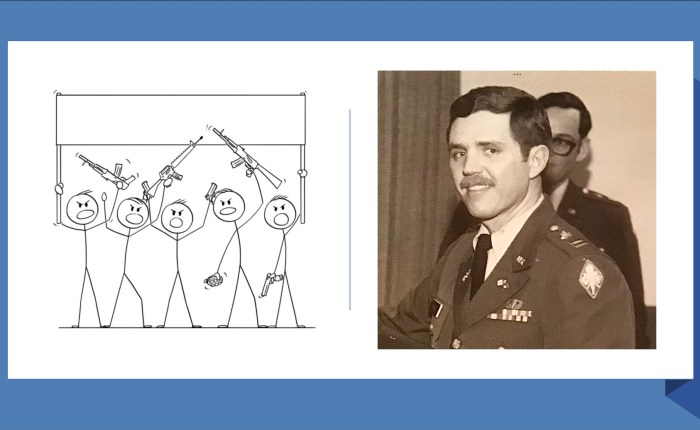
In 1984, Cath and I were back home in Ottawa for her 10-year high school reunion. I was waiting in line for a drink when a guy approached me. “Hey, aren’t you Max Hall? Didn’t you go to West Point?” I answered, “I am and I did. Why do you ask?” “I’m Joe xxx. We would love to have you come talk with our local militia.” What?
I was a Captain in the Army at the time and had recently returned from four and a half years in Germany with 3ID and VII Corps. Cath and I were stationed in Ohio and returned to Ottawa for the weekend of the reunion.
Me, About the Time of the Encounter – 1984 or ‘85.
Me: “Sure. Where’s the National Guard meeting these days, and what kind of unit is it?”
Joe: “Oh no. We aren’t with the National Guard. We started a private group as a militia. We fire our guns on weekends and do some tactical training. We want to be ready to fight the communists.”
Me:
Joe: “It would be great if you came out to meet with us and give us a talk. I think you could provide some real inspiration!”
Me: “Really?! Where do you all meet?”
He gives me a location south of town in the country.
Me: “Hmmmm. That’s great, but rather than meet there, I think we should meet on LaSalle Street, not far from Bianchi’s Pizza.”
Joe: “Really? Why there?”
Me: “We could go the Army recruiter’s office on LaSalle Street and get you guys signed up. We are always looking for a few good men!”
Joe: “What?!”
Me: “We could meet at the Army recruiter’s office. We are always looking for a few good men to enlist. If you really want to fight the communists, we could use you. I’ll be deploying back to Germany in a year. We could probably even work it out for you to join my unit!”
Joe:
Me: “That’s what I thought. See you later and quit bothering me… Bartender – I’ll have a gin and tonic please.”
Yep. Those militia toy-soldiers who always say they are going to defend our country were around 40 years ago as well. They are still eager to play soldier these days, as long as they don’t have to do anything to, you know, actually defend our country as a soldier.
*** Feel free to share this blog. ***
Addendum:
I don’t recall Joe’s actual name. I just remember that he was in Cathy’s class and I knew him some from high school.
In June of ‘83, I returned to America after serving 4 1/2 years with the Army in Germany. At the time, the Post-Vietnam dislike of soldiers was still alive, a decade after the war. Returning to the States, I had a good experience at the airport that still gives me shivers today.
Captain Hall in Early 1983. Commander, HHC, 34th Signal Battalion.
It’s different now and we as a country, or at least most of us, have learned to separate politics from the people serving in uniform. Back then? Post-Vietnam? We weren’t so great about how we treated our soldiers. I remember someone spitting at me as a cadet while walking in New York City in the mid-‘70s. In 1979, right before we first deployed to Germany, a woman from our church commented to my mom about how terrible it was that they as taxpayers had to pay for Cathy to go to Germany with me, and for us to be able to take some of our belongings with us. AND this was a woman from our church I’d know since I was a child.
Of course most family friends, and our close friends were great with us, but past that? Things were often ambiguous. None of this was as bad as soldiers put up with during Vietnam, but it would be years later before we (as a country) really learned to separate politics and our respect for our soldiers.
In June of ‘83, I turned over my Company Command in Stuttgart, Germany. I had a couple of weeks of additional work I needed to do, so Cathy flew back ahead of me. Finally it was time for me to go home and I flew on a commercial flight wearing civies. We landed at Dulles and I made my way to customs where the line seemed about a mile long. Several flights arrived at the same time, and the line wasn’t moving.
As I stood there, I noticed a young lady walking down the line looking at people in the line. Eventually she arrived in front of me and said “Are you in the Armed Forces?” I’m sure my short haircut and bearing probably gave me away.
I answered “Yes ma’am, the Army.” and she said “Follow me.”
I walked with her for quite awhile and we finally arrived at the front of the customs line. One of the stations opened up and she walked me over to it. The guy behind the counter looked at me and asked for my passport, or my military ID and orders, which I produced for him. He took a quick look, handed my papers back to me and then said, “Thank you for your service. Welcome home to the United States of America.”
I still get a shiver typing those words today. It was the first time someone went out of their way to thank me for what I was doing, and then welcomed me home to boot. It was such a little thing, but plainly had a huge impact on me. I remember it clear as a bell forty years later.
I’ve thought about this story lately. Probably since Panama in ‘89, and certainly since the First Gulf War, we’ve thanked our soldiers and shown respect for them. Unfortunately, an annual poll conducted last November by the Reagan Institute shows respect for the military dropping from 70% in 2017 to 48% in 2022. Much of the drop was attributed to people (from both sides) trying to politicize the military, or what the military was doing.
To be quite frank, most people today have no connection with our armed forces. Their sons and daughters aren’t in our military. If fact, over 70% of American youth today aren’t qualified for the military. They are overweight, or are doing illegal drugs, or are doing legal drugs that make them ineligible for military service. I fear that for many, saying thank-you is a cheap and easy way to feel good, while not really caring about our troops. Maybe I have that wrong, but I’m not so sure.
As time progresses, I’m hoping we as a nation can adult enough to remember to mentally separate politics and the soldiers serving in the military. I hope that we can take a couple of minutes to genuinely thank our troops. Not pro forma, but really thank them. We continue to owe them that much.
Addendum:
in a side note, in the 4 1/2 years we were gone on that tour, I only made it back to the States once. That was to attend my sister Tanya’s wedding. When Roberta married the next year, we couldn’t afford another trip home. It was one of the many family events we would miss over the course of our almost 9 years overseas.
Thanks to my wife Cathy for input to parts of this blog. As an Army wife, she too remembers those days. Like me, she is also concerned about the lack of connectivity between our society and our military today.
We have lived in our current home for 24 years. When we started looking here in Fauquier County, since I was the one who would be doing the long commute, I told Cathy the only way I would move out this far is if we found the house we were going to die in. Cath, of course, took on the challenge.
In last week’s blog I spoke about a 750+ unit housing development happening about 15 minutes from us in nearby Culpeper County. (A link to the blog is in the Addendum). It consists of cookie-cutter homes starting north of $500K, with some as high as $800K+. All are on small lots. I’m sure they are someone’s dream home, but not mine.
It did get me to thinking about our journey to Fauquier back in 1999 and our own dream home.
When Cathy and I returned from Germany in 1989, a couple things happened: first, We bought a townhome in Fairfax, Va; second, I started working a classified job with the military; and third, Cath got a job in Crystal City, AND bought a horse she was to own for the next 15 years – Arthur. After I decided to get out of the Army in ‘92, we stayed in Fairfax. I started a great job with a company called SRA and had about a 30 minute commute to work.
Our townhouse was nice, but by ‘98 we’d decided to look for a house. More specifically, a property with enough room to keep a couple of horses on it, which meant at least five acres of land. By then Cathy had her own business and was working from home, while I was still working for SRA. We looked in Fairfax County and found a few properties we liked in the Clifton and Fairfax Station areas and even put an offer on one, narrowly losing out to another couple. It was frustrating to lose out on the house, but we were also frustrated as there weren’t many properties for sale in the area that met our requirements and were in our price range.
That’s when Cathy suggested moving out farther to Fauquier County, a beautiful area. We’d spent time there over the years for various horseshows, weekend trips to B&Bs, going to a few Sunday brunches and of course visiting a couple of our favorite wineries. We loved Fauquier.
I immediately said no. Not only no, but hell no. It was not open to discussion. There was no way I was going to do that commute on a daily basis. At the time I was working in Arlington and the commute would take an hour and fifteen or twenty minutes each way.
We circled around that “discussion” for quite some time and a few weeks probably passed. I then made a mistake.
We were discussing Fauquier again, and in a weak moment I said, “I tell you what. If we find the house we are going to die in, I’ll move there.” Cathy nodded and said OK.
In the coming week or two, Cath found three country places online to look at, and with our agent, we scheduled visits to all three on the same day in February of 1999. It snowed an inch or two the evening before our visit but was sunny as we drove to view the properties.
The first place didn’t really look as it did in the photos and we spent no time there. The second place was nice, new and had a barn to die for. Some of the rooms in the home were a bit odd, but overall, we liked it. We weren’t blown away by it but might give it further consideration. We left, and then proceeded to house number three, also the farthest away.
We drove down the long driveway with snow in the field to the left and the woods to the right. It was a nice setting. You couldn’t yet see the house and then we crested a small hill for our first view. It had stone and cedar siding with two chimneys and a cedar shingled roof. How pretty in the snow! We parked outside the garage and walked to the stone porch in the back of the house. As we stood there looking at the pond and fields, three horses trotted by in the paddock between the house and the pond. I mean it was so perfect, it was almost as if they were holding the horses out of sight, and as we arrived, someone called and said, “Cue the horses.”
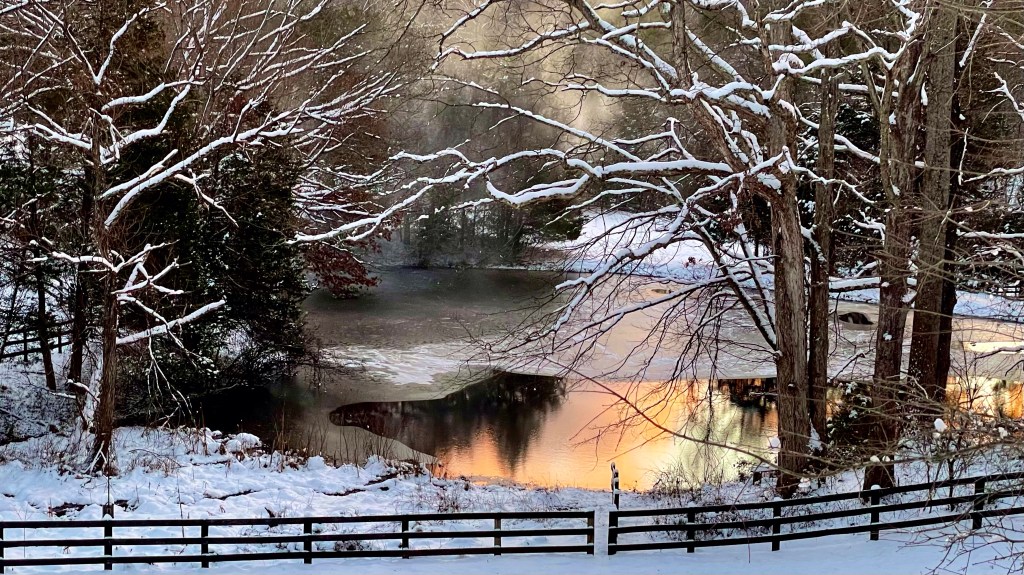
The Pond, on Another Winter Morning
Cathy and I didn’t say a word but looked at each other. It was one of those looks married couples have where an entire conversation takes place and no one says a word. We hadn’t entered the house yet, but pretty much knew this was our next home.
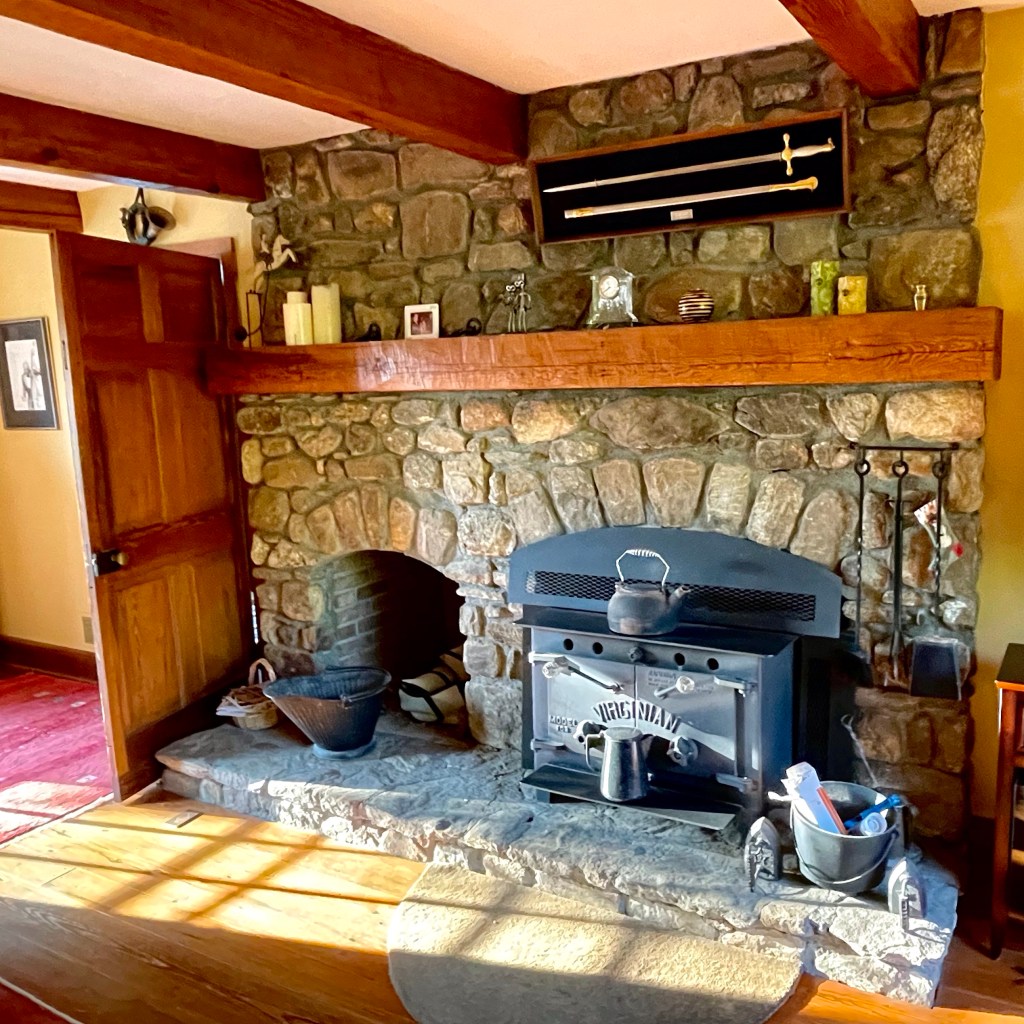
This house wasn’t new. It was about 20 years old, but built in a way to make it look much older. In the family room there was flooring and beams from a pre-Civil War warehouse near Petersburg, Virginia. One of the doors was antique and made entirely by hand with no nails involved. Most of one side of the home was glass or glass doors so there were constant views of the pond and fields. The fireplace in the family room was made with stone from the property and installed by an old stone mason who lived just up the road (and is now deceased).
The Morning Sun Streaming in on the Family Room’s Stone Fireplace.
There were things that needed updating of course. Some of the colors were straight out of the 70s. The peacock wallpaper in the dining room would have to go. Most of the carpet was old – probably from the late ‘70s as well.
We also did a tour of the barn. It was functional, although nothing special. The barn at house number two kind of blew it away, but this one was perfectly functional with 6 stalls, instead of the 4 at the previous place.
We left and drove back home with our agent. The distance didn’t seem quite so far to me now.
A few days later we called the owner directly and asked if she would give us a tour of the property itself, which she was more than happy to do. We spent a few hours walking the twenty acres and helped her feed her horses that night. As we passed by the pond, she said “I’ll even throw in the rowboat, if you decide to buy.” When our agents (both ours and hers) found out we’d met without them, they were, ummm, a bit upset, but there wasn’t anything they could do about it.
The next day we put our offer in, and after some back and forth, we signed the contract. We couldn’t actually close until the end of May, as the owner had a couple of pregnant mares and didn’t want to move them until the foals were born and old enough to travel. It made perfect sense to us.
We closed on the appointed day in May and a few days later, with our pickup truck, horse trailer and a U-Haul truck, our friends helped us move. The house was christened with a party that afternoon and evening, and on its way to becoming a home. We named it Rohan Farm*.
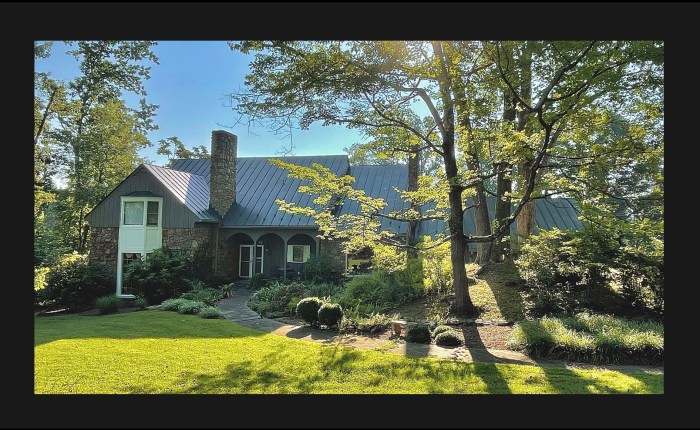
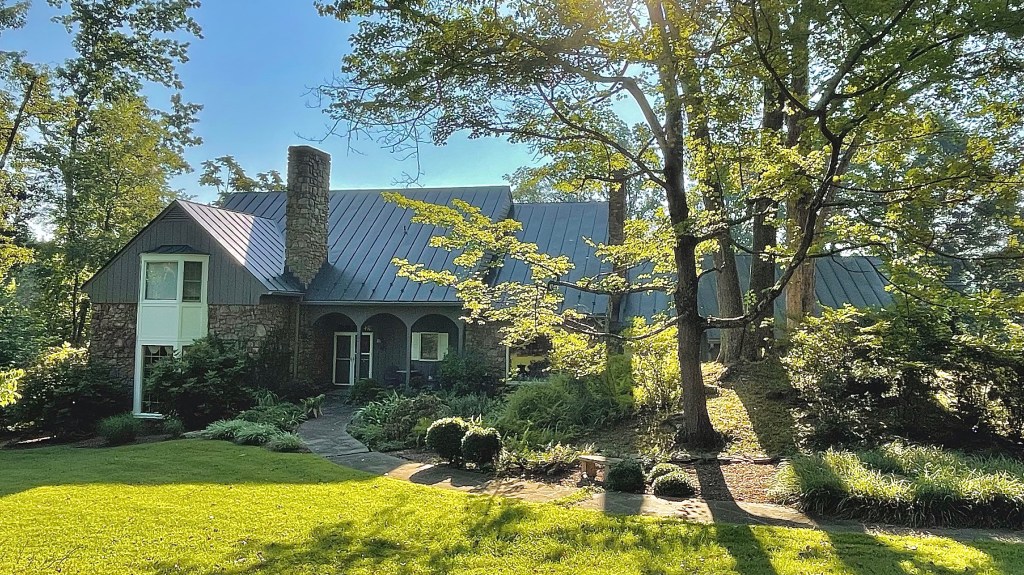
Our Home, Rohan Farm
Although the house was already nice, we spent a decade getting everything just the way we wanted it – repainting and recarpeting; the ‘70s look went, as did the outdated kitchen; ultimately, a wine room was added. There was lots of work outside as well – redoing things in the barn; clearing brush off of fencing and replacing the fencing; adding an outdoor riding ring; adding new paddocks; putting in automatic waterers; adding multiple gardens; and of course an endless list of smaller items.
In June it will be 25 years here. We love this place. It doesn’t have all the bells and whistles, but it’s warm and comfortable. It looks like it belongs here in Virginia and has been here forever. We love it and hope to remain here forever as well.
Addendum:
* Rohan Farm – Yes, this is from Lord of the Rings. Rohan was the land of the horse people, so it seemed to fit. We’ve both been big fans since the ‘70s, well before the movies ever came out.
You can find a link to last week’s blog on the housing development here – The new housing development sits in the middle of nowhere, 6 miles west of Warrenton and 12 miles north of Culpeper. Some thought it might provide “affordable housing” for the area, but with homes starting “in the low $500s”, I don’t think so. Or maybe my definition of affordable housing is […] Continue here: https://mnhallblog.wordpress.com/2023/08/08/paving-paradise/











 Live Life Exuberantly