It’s that time of year when we (some of us) make resolutions. The making of a resolution often implies we previously made a mistake, or hadn’t done something well enough. The thing is, everyone makes mistakes. Everyone. The question is, what do we do about them?
Yes, we all make mistakes. Sometimes they are little. Sometimes they are life altering. We often beat ourselves up about them, which doesn’t really do any good, does it? I think back through my life and some of the mistakes I’ve made at work, at home, or in my relationships. Maybe I could have avoided making them, but due to foolishness, pride, lack of knowledge, inattention to detail or just plain stubbornness, I didn’t. And afterwards? To be honest, I’m not always proud of how I reacted, once I realized the error of my ways.
They say you can’t teach old dogs new tricks, but I think that’s a cop out. We all have the capacity to learn, and to change. And that’s true of how we deal with the inevitable mistakes we make as well.
I’ve learned, for me at least, there are four steps I can take to improve from the mistakes I’ve made – Even big mistakes that altered my life. How we react to our mistakes determines the ultimate path we follow in our lives.
It starts with recognizing and acknowledging I made a mistake. It seems pretty straight forward, but is a step many of us have a hard time taking. I’m not sure why, but I know I have a problem saying “I screwed up.” It’s often easier to try and blame someone else. And yet, once I finally do acknowledge I made a mistake, it makes everything else simpler. It also lessens the opportunity for a a fight with someone else, when after all, I’m really just angry with myself.
Next is forgiveness. We routinely forgive other people for their mistakes and sins. Why is it so hard to forgive ourselves? Forgiveness, instead of self punishment permits us to recognize that yes, we are all human, and mistakes sometimes happen, even with those of us who are loathe to admit we make them.
After acknowledgement and forgiveness comes knowledge. What can I learn from the mistake I made? How can I ensure I don’t make the same mistake again? What other mistakes can I avoid making, by understanding this one? With knowledge comes power – the power to better control my own life.
Which finally leads to the last step – moving forward. We can’t undo the past, but we can learn from it, improve ourselves and focus on the future. It doesn’t mean we don’t acknowledge the mistakes in our past, but we must look forward. Dwelling on past mistakes gains you nothing. Nada. Zero. Zilch. Zip. For me, I know that once I’m looking forward, I can move on, continue my life, and continue improving my life.
So, Happy New Year to all. As we enter 2023, and lead our less than perfect lives, remember to cut yourself a break occasionally when you make a mistake. As Alexander Pope said “To err is human”. We can try to minimize our mistakes, but we can’t eliminate them totally. And when mistakes do occur? Life is short – don’t dwell on them, or live in the past. Acknowledge your mistakes, forgive yourself, learn from them and move forward. You will be a better person for it.
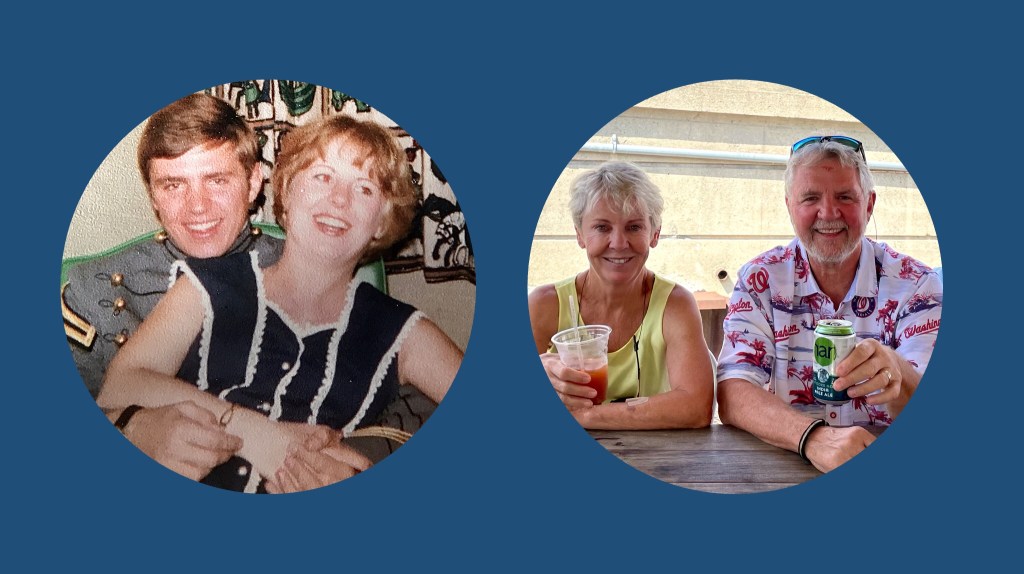
My wife, Cathy, has had Multiple Sclerosis (MS) since 1976 when she was 20 years old. It’s been almost 47 years since that first diagnosis. The MS is always there, lurking in the background, but Cath refuses to give in to it. It’s a special strength she has, and I love her for it.
Cathy Around the Time of her Diagnosis, and Just a Few Weeks Ago
MS is called the snowflake disease; no two people have exactly the same symptoms, or frequency of occurrence. MS symptoms can include: trouble walking, fatigue, vision problems, numbness, muscle spasms, weakness, mobility issues, and bladder or bowel issues, among other problems. Not all symptoms are visible.
Cathy’s symptoms have varied over the years, but fortunately for her (and us), she has been relatively stable for the last few decades, with only some minor issues. Compared to many with the disease, we are extremely lucky.
We both belong to a Facebook MS support group called We’re not drunk, we have MS. The name is a bit of an inside joke. Many people who have MS but can still walk, sometimes have an unsteady looking gait or trip easily, not unlike someone who’s had a few too many drinks.
Recently someone put a query out to the group: “If you were to wake up tomorrow MS free, what is the first thing you would do?” There were many responses. Reading through them, I thought they expressed how the disease effects so many people much better than anything I’d ever read or watched on TV about MS. It’s the straightforwardness and simplicity of the answers that is their strength. People were just asking for the basic things in life that so many of us take for granted.
Here are some of their answers to the question “If you were to wake up tomorrow MS free, what is the first thing you would do?”
Walk normal
Stand
Run
Walk
Dance
Stand up, embrace my husband, and not let go for a long time
Go Skiing
Ride my horse
Go for a hike in the woods
Dance with my husband
Wear heels again
Jump out of bed
Go for a run – maybe like Forest Gump
Ride a bike
Hike in the mountains
Shoot hoops again
Walk on the beach
Go horseback riding and then dance
Get a full night’s sleep
Play tennis again
Walk through my neighborhood
Chase my grandchildren
Go skateboarding again
Run with my kids
Stay at a hotel
Go up and down stairs
Walk, run, dance
Drive my car
Learn to belly dance
Dance in rhythm again
Get on the floor and play with my grandchildren
Eat out and enjoy every meal
Start quilting again
Go skating, then dancing
Go to my daughter’s home and go up the stairs to see my grandchildren’s room
Work in the flower bed
Ride a motorcycle again
Carry my grandchildren around
Rake the leaves in my yard
Go back to work
Just to consider this is overwhelming
Buy a lottery ticket because it would be a miracle
Jump in the ocean
Walk on the beach with my husband
Get on my knees and thank God.
They have newer medicines these days to address the symptoms of MS, and sometimes lessen the progression of the disease, but there is still no cure. In the meantime, these MS Warriors soldier on.
As for Cath and I, we count ourselves pretty lucky in the big scheme of things. She has some issues, and occasional flare ups, but continues to live her life. Every day is something to be enjoyed, and lived to the fullest.
Cathy and I in ‘77, a Year After her Diagnosis, and Last Summer
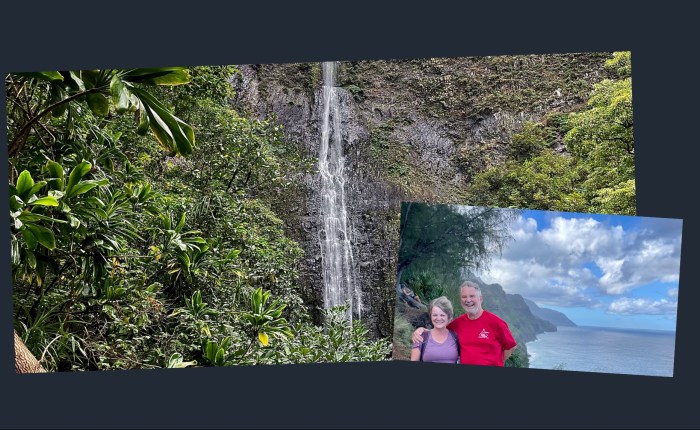
As we hiked towards the Hanakapi’ai Falls on Kauai, what I was thinking was “If one more person happily says to me ‘You’re almost there!’, I am going to punch them.” Seriously. Bonnie and I knew we were almost there, but I was concentrating on climbing over boulders, roots and slippery rocks, and not falling down…again.
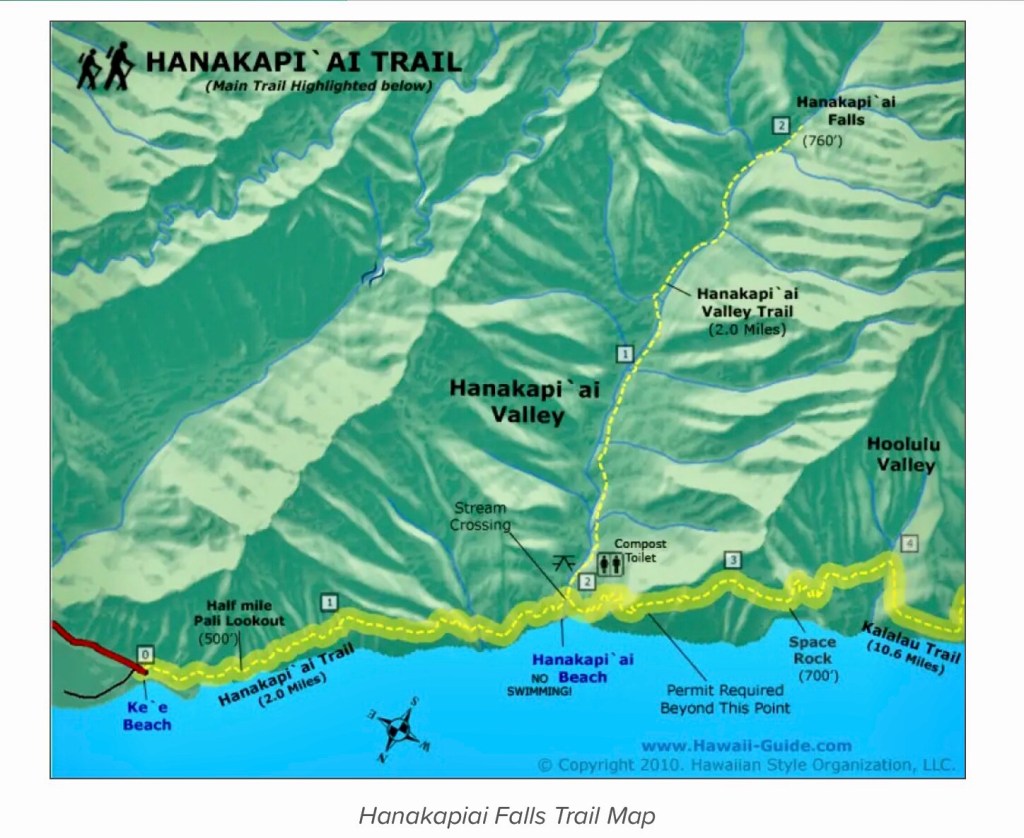
Bonnie, my sister-in-law, contacted Cath and I to see if we were interested in a couple of hikes while visiting Kauai, one of the Hawaiian Islands, with her and her daughter Lana. The hike to Hanakapi’ai Falls sounded interesting, although not for the faint of heart. Bonnie had completed the hike several years earlier with her husband Don, before he passed away. She warned us the trail was a challenge – It’s an eight mile round trip trek with mud, lava rock, roots and stream crossings, with over 1,800 ft of elevation change. It also promised a tropical forest, panoramic ocean views and the Falls themselves, which drop over 400 feet.
The only catch was the rules changed since her last visit – now you needed reservations for the bus to the trailhead and access to Haena State Park. Both Bonnie and I were in, and she made the reservations.
The big day came for the hike and we packed lots of water, snacks and sandwiches. Our friend John dropped us off at the bus pick-up point. We told him we thought we’d finish between 2 and 3PM, and would call once we returned to the shuttle. That allowed 5-6 hours for the hike, at a 2 miles/hour pace, plus some spare time at the beach and Falls. It seemed like a reasonable time estimate. That was our first underestimation. ;-).
We arrived at the park itself about 9:00AM, where there was a check-in station and we were given more information about the trail. It turned out they’ve now measured the trail multiple times in recent years – it clocks in at 9.2 miles, not 8. Whoops! What’s another mile among friends? We were also warned to leave the Falls no later than 2:00PM to ensure we had enough time to hike the return to the start, where the last bus left at 5:30PM. If you missed the bus, it was a 6 mile stroll back to the parking area.
We started up the trail about 9:15. The first section was two plus miles from Ke’e Beach to Hanakapi’ai Beach. Two miles – easy peasy, right? Well, not quite. The first mile was all uphill, much of it over slick flat rocks. The trail also had a 500 or so foot drop off on the right hand side, which ended in the ocean. Mental note to self:if you fall on the rocks, don’t fall to the right. As we hiked along, we passed some folk, others passed us. One young woman hiked by in flip flops, while chatting with her friends. We eventually reached the high point and were rewarded with beautiful views of the ocean and distant coastline. We stopped and took a couple of pics, before continuing.
The View, One Mile Into the Hike.
From there, it was another mile or so downhill. The slippery rocks mostly disappeared, to be replaced by steps carved into the side of the mountain. You know the kind of steps I’m talking about – too wide, and too high to be comfortable while moving downhill. They were easy enough, but would come back to haunt me on the return trip.
An hour and twenty minutes after starting, we reached Hanakapi’ai Beach which was gorgeous. We stopped for a break and to eat a snack. Sitting for a bit felt good. There were warning signs everywhere about the treacherous rip tides and not to swim here. Evidently every couple of years someone would get sucked out to sea, never to be seen again.
At the Beach. Numerous Signs Warned About the Dangers of Swimming Here.
Around 11, we continued our hike. It looked like well over half of the people we’d seen along the way, including the young lady in flip flops, were staying at the beach, so the number of people on the trail to the Falls thinned out considerably. It would be a little over two more miles to the Falls.
Bonnie brought out her new, never used walking sticks for this part of the hike. After the first half mile or so, the trail narrowed considerably. Flat ground gave way to a tangle of tree roots, mud and lava rocks. It slowed us down as we worked to find a reasonable path on the path. We passed through bamboo stands and dense forest along the way.
There were Lots of Rocks and Boulders on the Trail – Looking for a Path on the Path was a Challenge.
Hanakap’ai Stream was on our left as we made our way up the trail. Along the way, we crossed the twenty foot wide stream three times. We rock-hopped across the stream pretty easily the first two times, but on the third crossing, I slipped and went into the water, banging my shin in the process. Bonnie looked at me and my bleeding shin, and with a smile, changed from her boots to water shoes. She then used her sticks to safely cross.
One of the Stream Crossings.
At this point we were nearing the Falls. The trail was getting more slippery, and we were frequently climbing over wet rocks. I fell another time or two, scraping the same shin I’d already banged up. Bonnie stayed vertical the entire time – I may need to buy a pair of those walking sticks for next time!
This is also when we started encountering the Good Samaritans coming the other way – “You’re almost there!” … “Keep going, it’s worth it!” … “Only 15 more minutes to the Falls!” … and then 15 minutes later, “Only 15 more minutes to the Falls – you’re almost there!” I believe that last one was what made me think I’d punch the next person with words of encouragement … ;-).
We did arrive at the Falls a short time later, and they were beautiful. It made the hike totally worthwhile. Bonnie took a short swim in the pool at the base of the Falls and then we ate lunch – our sandwiches tasted pretty damned good. I looked around at the other people at the Falls taking their breaks – I think almost everyone was a decade or four younger than us. Well younger physically, but maybe not mentally. Having eaten, I was feeling pretty good again.
Bonnie, as we Arrived at The Falls.
After about a half hour break, it was 1:00PM and we started our hike back. We were at the four hour mark from our start that morning and knew we were going to be late returning to John, Cathy and Lana. There was no cell coverage in any case, so nothing to be done for it.
The return hike was the same path we came in on only in reverse. Again we passed a few people, and some passed us. There were three Japanese ladies we hiked with for a while, before eventually passing them for good. Another lady was running to the Falls – we would see her again as she re-passed us a couple of hours later. We crossed the stream three more times, and this time, with the use of one of Bonnie’s walking sticks, I managed to stay dry. Eventually we reached the beach, and took another short break before tackling the last two miles.
A Section of the Trail, Returning from the Falls.
The last two miles? As I said before, Bonnie had done this hike 5 or 6 years earlier and at this point said to me “These next two miles are going to suck!” and we both laughed. Finding humor in the truth is always a good thing. She was right – for me, they were tough. Those steps on the way up were spaced just far enough apart to make me dislike them. The downhill for the last mile over those wet stones and roots, well, my knees noticed every step. And yet, there was also a peaceful feeling of contentment. Maybe we were drawing strength from the trail itself.
Finally, at about 4:30PM, a little over seven hours after we set out, we were back at the start. It had been a great experience, a wonderful hike, and a tiring day. We still had no cell coverage, and couldn’t reach our crew to let them know we were safely back, so we just climbed on the bus for the drive to the parking lot. When we arrived dirty and sweaty at the drop off point, two or three hours later than our “expected time”, they were there waiting for us. There were hugs all around and a return to John’s for a well deserved beer.
Over the next couple of days, my thighs reminded me of what a good time I had. I reflected back on the hike, and a couple of things occurred to me. First, Bonnie and I both encouraged each other along the way, as we traded off the lead at various points. It was a natural back and forth between us. Also, although, I’m the former Boy Scout and Army Airborne trooper, Bonnie was the better prepared. She brought her water shoes and the walking sticks, making for a better and safer hike. Those last couple of miles? She may not have skipped up the trail, but she handled them better than I and my old man knees did.
My final thought? Age truly is a state of mind. Go for the gusto, and enjoy every bit of life you can.
Aloha, Until the Next Time.
Addendum:
Talking with locals afterwards, I’ve learned the hike is considered one of the “tougher ones” on the island. I’ve been asked by several folk if I would do it again, and the answer is an unqualified yes.
Special Thanks to Bonnie for her contributions of content and editing for this blog. Also a big thanks for suggesting the trail in the first place, and for being such a positive force on the hike itself – it was a blast. Love you sis!
Davie was the gentlest soul I have ever known. He also had a memorable lust for life. When he died last week, the world became colder, less kind, and a little less forgiving. I mourn his passing, and there is a weight on me.
Davie and I first met through our running group, The Mount Vernon Hash House Harriers* (MVH3), in ‘90 or ‘91. Back then, we were all in decent shape, and could both run for miles and drink copious amounts of beer, sometimes at the same time. There were lots of good times running around different parts of Northern Virginia. We’d run, eat and drink, and then maybe party some more. At the time, Cath and I only lived about 1/2 mile from Davie, and frequently found ourselves in his hot tub on Saturday afternoons, some time after The Hash finished.
Random Hash Photos from DC, Orlando and Trinidad
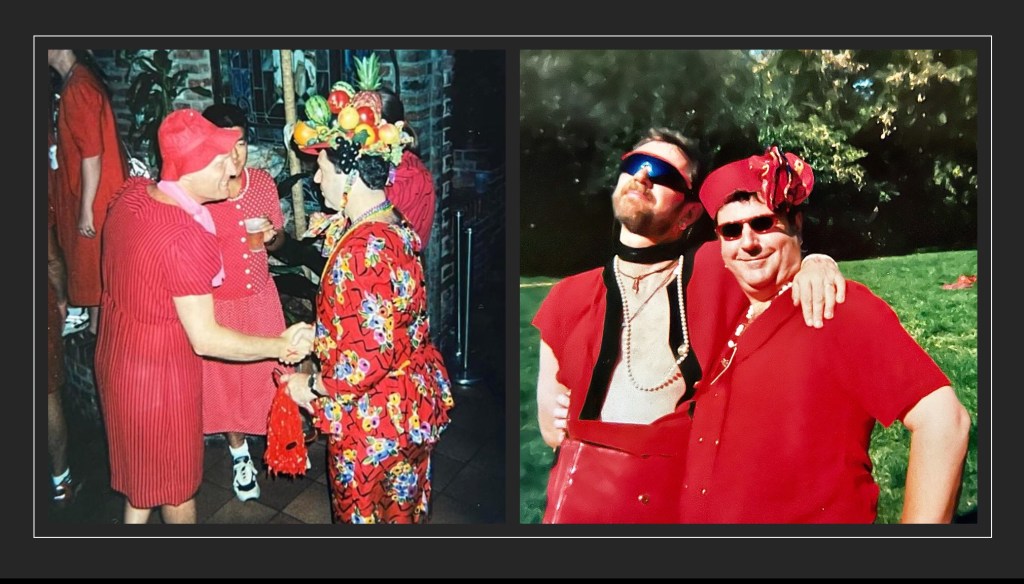
Later, when The Hash started hosting it’s annual Red Dress Run (yes, all members were required to wear red dresses on the run), some of Davie’s outfits were legendary. Wearing his Carmen Miranda fruit plate hat still draws chuckles from those who were there.
At the Red Dress Run – Davie with his Carmen Miranda Hat, and the two of us a Different Year
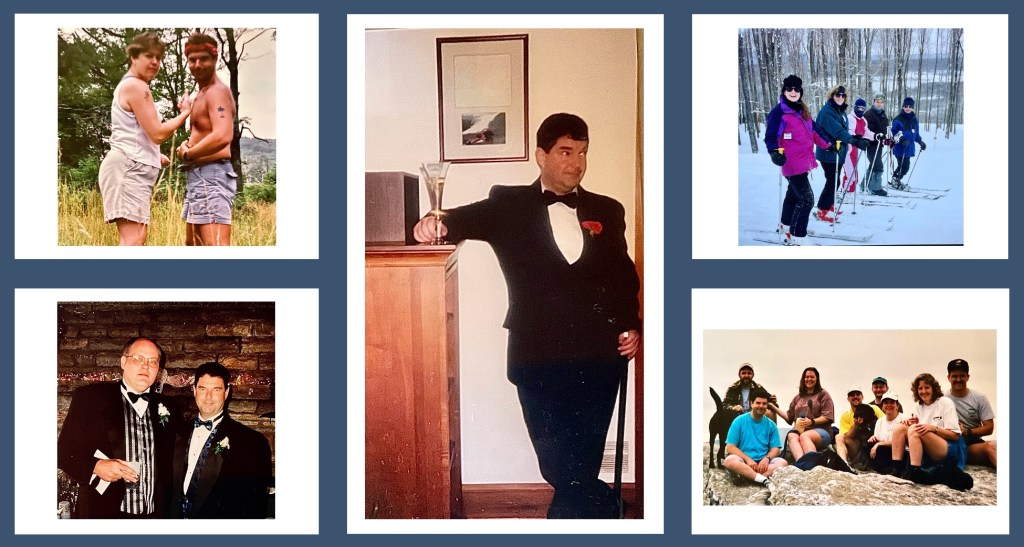
Our friendship grew to be much more than just The Hash. We started doing other activities together, including dinners out, hikes in the woods or up Old Rag, and visits to our then cabin in West Virginia. Sometime in the mid ‘90s Davie organized an annual ski trip for 8 or 10 of us to the wilds of West Virginia. He’d rent a big group house, where we’d ski during the day, and take turns cooking dinners at night. There was more hottubbing, beer drinking and partying in general, but what I remember most was the fellowship we all had with each other. It was the best of times and something we looked forward to every year.
Hikes, Ski Trips, and Parties – Alway a Fun Time
In the late ‘90s, Davie came out to us. We always suspected, although we weren’t sure. It was very different then, than it is today, and coming out was a real act of bravery. It took him over half an hour and some tears before he finally came to the point he was gay. Cathy and I told him we loved him, and it didn’t matter, we still loved him. We shared hugs and tears all around at that point. It’s also what made me realize no one chooses to be gay – no one would want to willingly go through the pain and fear of potentially being an outcast of society. God, or genetics, or some combination of the two made Davie gay, and also made him the wonderful person he was.
We eventually moved to the country, a little over an hour from our old home. We saw Davie less frequently, but still had great times.
For his part, Davie, who always loved to travel, was traveling even more. He was a recognized expert on waterways for the Army Corps of Engineers and frequently flew around the country and the world for conferences, and to speak at some of those conferences. He also travelled on his personal time and loved to bicycle. I remember one trip when he went to Vietnam and rode by bike from Hanoi to Ho Chi Minh City (Saigon). He told great stories of that trip and one he biked in South Africa.
When covid hit, we didn’t see each other for a couple of years. We texted and had a few random phone calls, but that was it. One of the unfortunate realities of covid was the year or two it robbed from all of us. It’s easier to recover from the loss of a year or two when you are in your twenties. When you are in your sixties, you may still think death isn’t imminent, but you notice it hanging around out there on the horizon.
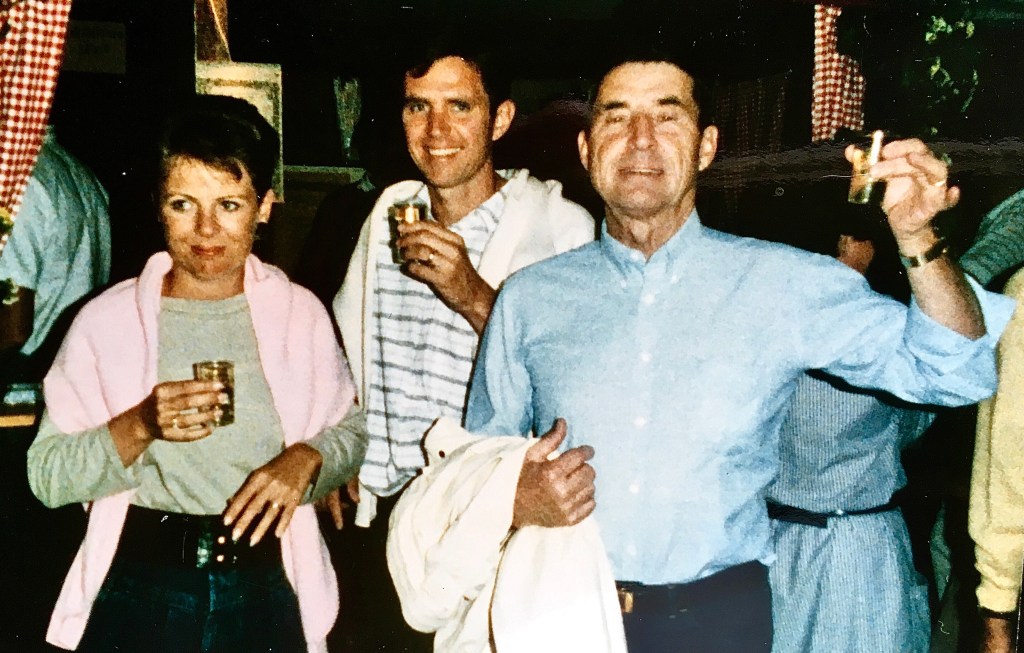
We saw Davie three times this year, including twice at Nats’ games. The final time we shared together was at our home during our annual Oktoberfest Hash, just two weeks before his death. Davie arrived early and we hugged as always. He didn’t do the trail that day, instead, hanging around the house drinking beer and eating brats. It was a fine autumn day and we spent time talking about nothing. They were the kind of conversations you have when you don’t yet know one of you is going to die in two weeks. It was wonderful.
Davie at the Oktoberfest Hash this Year
The day we found out Davie died was a grey, misty day. His death was sudden and unexpected. Calls followed to others. When you call someone in the middle of the day that you normally never call in the middle of the day, they know something is up. Still, there is the shock of the specific news.
It stayed grey, misty and rainy for two days before the sun finally re-emerged. It certainly fit our mood. The depression felt like a weighted blanket on my forehead and temples. It was a visceral, oppressive feeling. The opening stanza of W.H. Auden’s melancholy poem, “Stop all the clocks, cut off the telephone” came to mind –
“Stop all the clocks, cut off the telephone, Prevent the dog from barking with a juicy bone, Silence the pianos and with muffled drum Bring out the coffin, let the mourners come.”
Yes, the sun is out now, and certainly life goes on. I always think we who are living have a duty to keep the memories of those who have died alive. For my part, I will remember Davie’s smile and the twinkle in his eyes. I will recall his gentleness, and his lust for life. And I will chuckle at his fruit-plated hat, and the many other stories I haven’t shared here.
When I think of Davie, his personality, and how he enjoyed life, I often think of the opening lines of the great Joan Armatrading song, “Everyday Boy” –
“Well I’ve never met anyone With your courage, And the way your enjoy life Puts me to shame. Just an hour with you, And I understand Why we had to meet…”
Davie was our friend, whom we loved. We will miss him always.
Addendum:
* MVH3 is a part of a world wide group known as the Hash House Harriers, which started in Kuala Lumpur, Malaysia in 1938. Hash, in this case refers to bad food, not pot. The runs are hare and hound in nature, with a marked trail. Typically, beer and food are served after the run. Hashers have the playful motto of “we are a drinking club with a running problem”. You can find out more about The Hash here: https://en.m.wikipedia.org/wiki/Hash_House_Harriers
If you haven’t heard the Joan Armatrading song, “Everyday Boy”, give it a listen. It’s worth it. Ditto on the WH Auden poem “Stop all the clocks, cut off the telephone” – find it online and give it a read.
Special thanks to my wife Cathy, and our friend Tia Perry who both contributed thoughts and ideas to this blog.
Thanks to Sharon Gustafson Schoen for the pic of Davie with the Carmen Miranda hat. The hat was actually made by our old friend Renee Ayer, who wore it at a previous Red Dress Run. Thanks also go out to Ann Simon for the last photo of Davie at Oktoberfest.
It’s not your imagination. The light actually is different this time of year. Golden and lush, it’s also more magical. It’s not just the color of the leaves, or the chill in the air. The light is different and it’s changing fast. There’s science behind the magic as well.
Poets love to write about autumn. They call it our gilded season, or talk of the golden light this time of year. The leaves turning color, the chill in the air, perhaps the smell of wood smoke from a fire. The shadows lengthen. Birds start to head south. At the Bay, you hear more geese honking as they arrive. There is a poignancy to autumn that isn’t present in the other seasons, as well. In the back of our minds we know we will soon be ensconced in the two tone world of winter. For me, those thoughts make me want to linger longer in the golden time of year that is autumn.
I love the light this time of year. It’s different from the flat light of summer, or the cold light of winter. It is softer, and almost has a thickness to it, particularly in early morning and late afternoon. It gives a golden glow that isn’t present in the other seasons. It bathes the woods with a warmth of color. Combined with the turning leaves, it becomes magical.
A Magical Time of Year
But it’s not just magic. There is also a science behind Autumnal Light. Over the course of the year, the angle of the earth changes every day. The sun was straight overhead at the Summer Equinox, giving us the longest day of the year. Since then? As our axis shifts, the sun has dropped lower in the sky every day. In fact, since the start of Autumn, it’s dropping even faster. As the sun falls, it must pass through more atmosphere before reaching us. The color is altered by the absorption and refraction differences with the lower angle. The end result is the magic of autumn we all love.
Soon Halloween, and Thanksgiving will pass, and winter will arrive. The bright spots of Christmas and New Year’s Eve will provide cheer, and then it’s the slow slog through January, February and March. I don’t hate winter, but I’m always glad when it’s over.
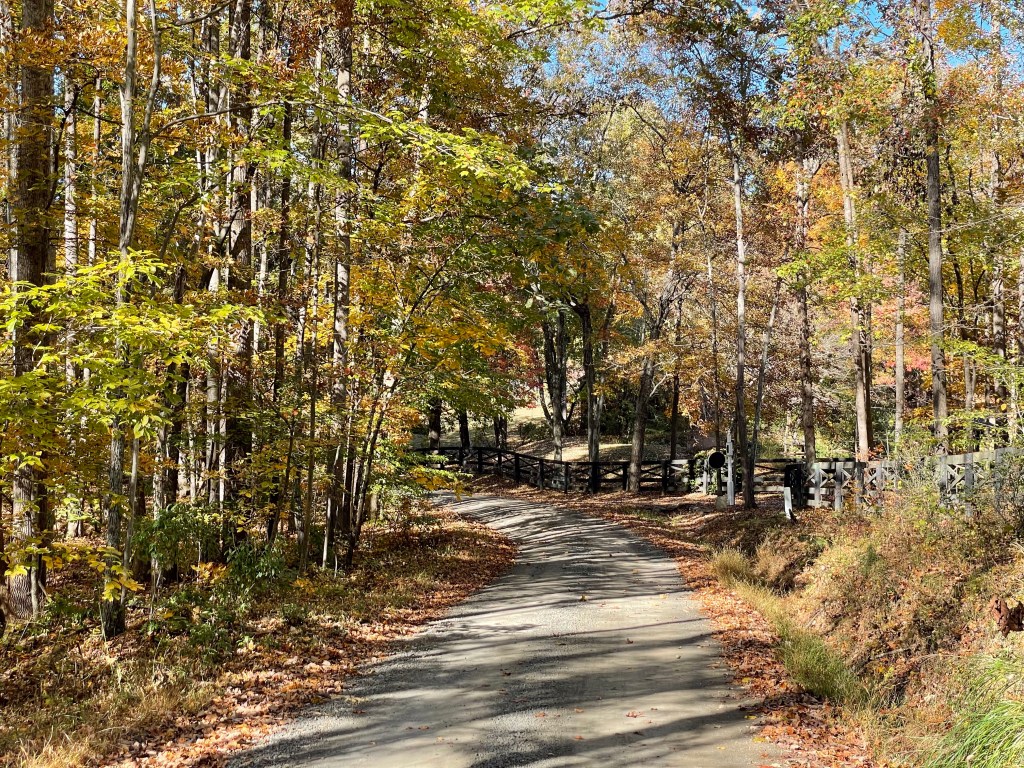
In the meantime, I’m going to enjoy the rest of this autumn. Walks in the woods in the late afternoons are pure joy. The quiet of the woods, the color of the leaves on the trees, the crunch of leaves underfoot, a deer racing up a nearby hill, they all combine to create moments that are mystical. Add in the dappled fall sunlight playing across the woodland and it’s enough to make me wish that moment of perfection would last just a little longer. If only it could.
The Interplay of Color and Light Make me Wish I Could Stretch the Time a Little Longer
Addendum:
Thanks to our friend Vinnie for the photo of our neighbor Susan’s home on the Bay in the afternoon light. I love this picture.
I was recently informed by WordPress (the site where my blog is hosted), that I first started this blog seven years ago, last week. My, how time flies. Here’s the blog that started it all, published in October of 2015: https://mnhallblog.wordpress.com/2015/10/19/why-live-life-exuberantly/
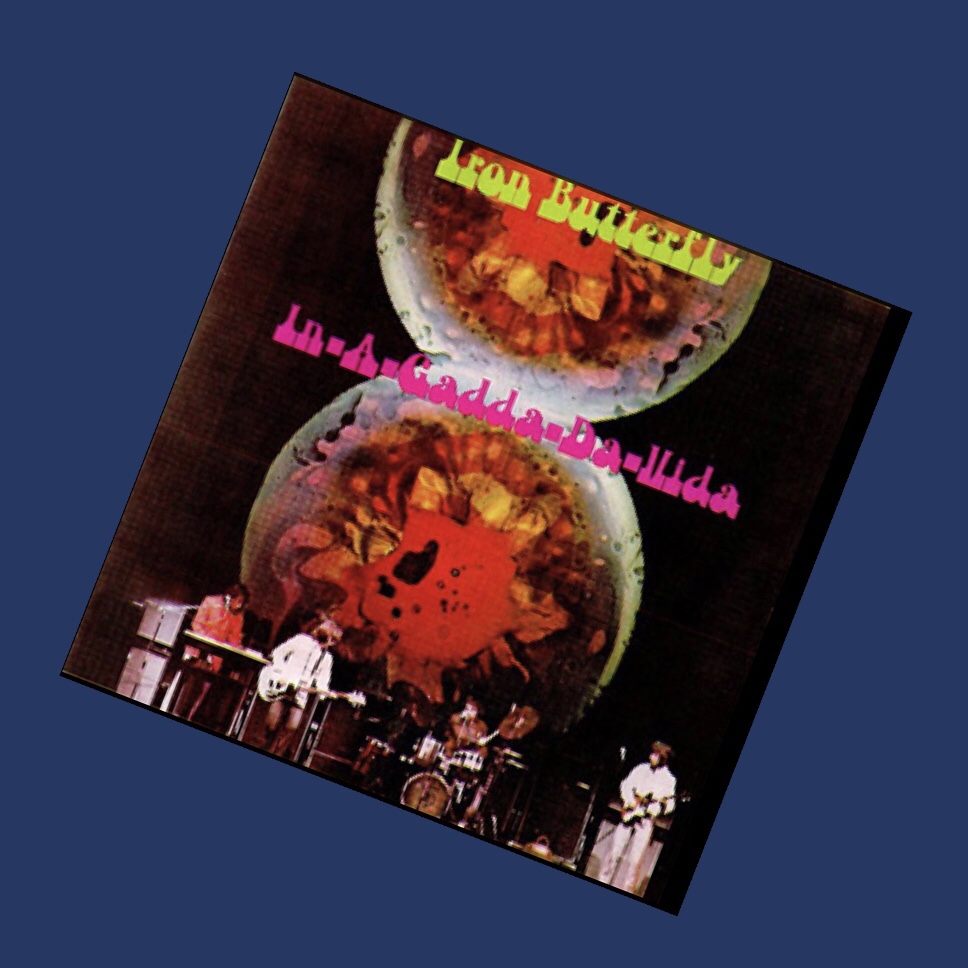
I was in Warrenton between stops at the dry cleaners and the UPS store when Iron Butterfly’s “In-A-Gadda-Da-Vida” came on the radio. Talk about flashbacks. I don’t think I’d heard it in decades. When I came out of the UPS store several minutes later, it was still playing and my mind drifted back to Plebe year at West Point.
As Plebes (Freshmen), we weren’t allowed to have stereo equipment in our rooms during the first semester. I suppose some sort of depravation challenge for us. Second semester, the restriction was lifted, and many of us went to the Cadet Store to dutifully buy audio equipment of varying quality.
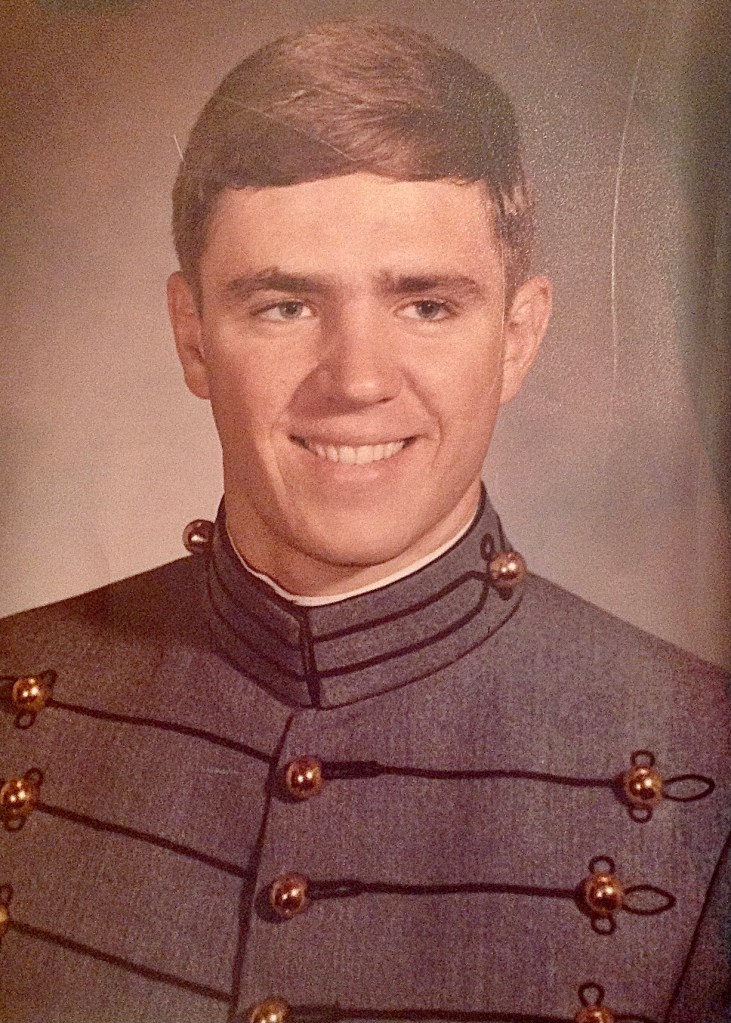
Me, as a Plebe at West Point
Of course I started buying albums of various types as well. Sometime in the middle of the semester, a friend dropped by and said something like “Have you listened to Iron Butterfly’s In-A-Gadda-Da-Vida?” Now the album was actually released in 1968. Not only had I never heard it, I’d never heard of it. I looked at the album and said “Hey, there’s only one song on this side.” My friend looked at me like I was stupid, and put the album on the turntable.
Full On 1968…
I was blown away. Seventeen minutes for one song. It went on and on and on. The lyrics were simple and repeated. And then somewhere in the middle is that incredible drum solo. I was hooked and bought a copy. For the next month, I hardly played anything else.
The Lyrics were … Simple … and Repeated Over and Over
Eventually, my infatuation faded a bit and it moved into a normal musical rotation. By Firstie (Senior) year, it moved to the back of the albums and was rarely played.
….
Back in my car, the drum solo was pounding and I cranked the volume. I was lost somewhere between nostalgia and thinking to myself “Hmmm, this is still pretty good.”
The drum solo eventually finished, and so too did the song about half way home. When I arrived at our house, I looked through my old albums for Iron Butterfly. It wasn’t there. Somewhere along the way, it evidently didn’t make the cut for our next move. Or maybe someone borrowed it and it never came home.
I know in today’s world, I can call it up online and listen to it anytime I want, and now that I’ve remembered it, maybe I will. Or I could pay Apple and downline the single. I don’t know that I’ll do either, but yesterday was a pretty cool drive home and I enjoyed the trip back in time.
Addendum:
⁃ In-A-Gadda-Da-Vida actually started as “In the Garden of Eden” and a reference to Adam and Eve. When one of the band members first wrote down the words from a band mate’s recording that was slurred (due to alcohol consumption), In a gadda da vida is what he heard, and what was written down. The rest is rock history.
Here are two YouTube videos of the song. First one contains a video of the band (very blurry and very ‘60s). Second one is just the album cover, but I think the audio is better.
Sometimes, it’s the little things we remember. With a small assist from Burt Lancaster, I once surprised Dad with a present of WWII mess hall coffee mugs he’d been trying to find in antique shops for years. The gift brought joy to both of us at the time, and continues giving me comfort to this day.
Dad always liked his coffee. From the time we were kids, I remember the role it played in his life. On early weekday mornings, he packed the big thermos with him as he left for work on the railroad. On weekends, there was a pot available all day long on Saturdays, and half the day on Sunday. On Saturday mornings, various uncles or aunts stopped by. They all sat around the kitchen table drinking endless cups of coffee, while telling, or retelling, the stories of their youth, and the war years. We kids often listened in, laughing at the stories we came to know by heart.
I started understanding a bit more about his love for coffee when I was applying to West Point. On a couple of occasions, dad drove me to Fort Sheridan (an Army Post in Illinois that no longer exists) for a physical and a fitness test. As we were walking on the Post, he surprised me by becoming a bit nostalgic for the “good old days” in the Army, and talked about how good the coffee was. I think he may have even joked with one of the folk we interfaced with about reenlisting, if he could have a cup of coffee from the Mess Hall. It’s strange, the things you remember, but I distinctly recall the conversations about Army coffee on those trips. It was about 27 years after World War II and he was 48 at the time.
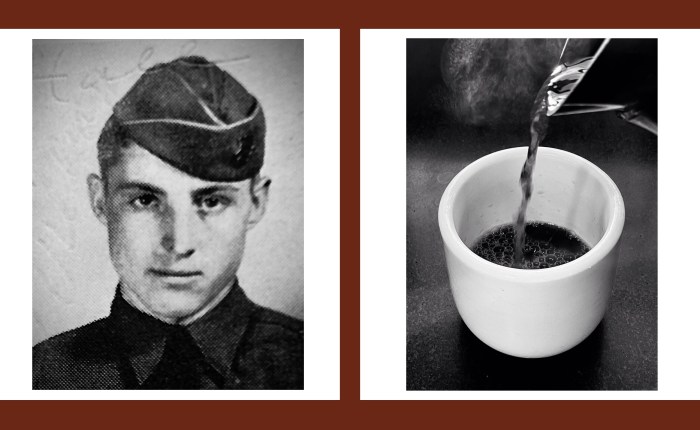
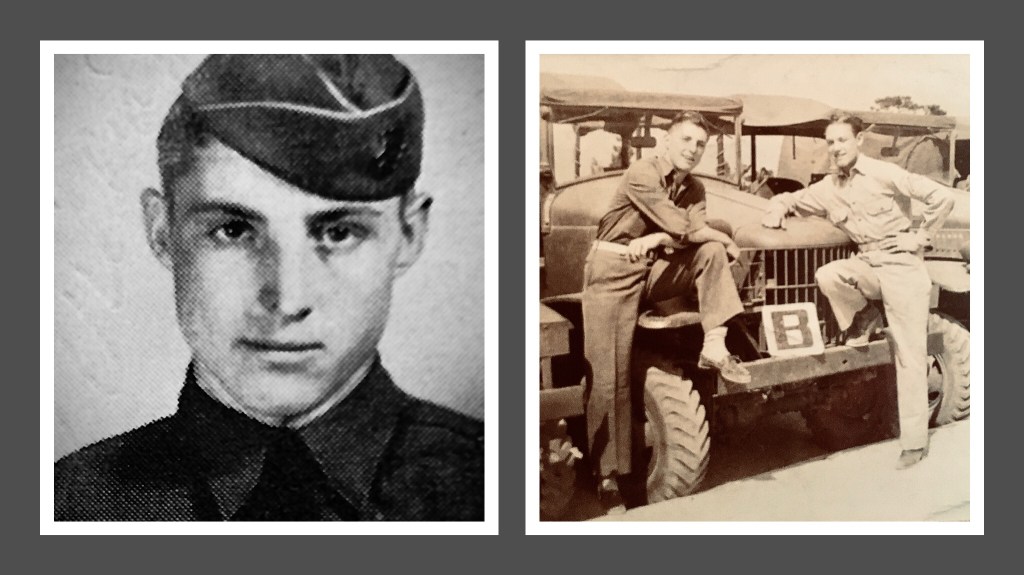
Dad in the “Good Old Days” in 1941, Sometime Before Pearl Harbor
I eventually graduated from West Point and Cath and I were deployed to Germany for most of the ‘80s. We didn’t see Mom and Dad much during our time overseas.
In ‘85, Dad retired from the railroad, and he and mom started traveling more, particularly to jazz concerts around the country. They also managed to visit us in Germany in ‘88. While there, dad talked about their travels. In a side conversation, he mentioned they also typically visited “antique” stores during their trips. He was looking for mess hall coffee mugs from WWII, but hadn’t found any. I was intrigued. What the hell do WWII mess hall coffee mugs look like, and why did he want them?
In Dad’s words, they were thick, heavy white mugs with no handle. You could put both hands around the mug when you took your first sip in the morning, and the mug warmed your hands. He’d used them throughout his time in the Army during the war. I mean, he was waxing poetic about these mugs. I still didn’t quite know what they looked like, but that was OK. During their visit, we stopped in a couple of shops with older items, and Dad would poke around. His thinking was maybe during the occupation of Germany after the war, some mugs made it into the local economy. The looking was to no avail, and no mugs were found.
Dad, Cathy and I at a Winefest on the ‘88 Trip to Germany.
We eventually returned to the States in ‘89, and on a visit at Mom and Dad’s over Christmas, Dad and I were watching TV. The classic WWII movie, From Here to Eternity, was on. You know the movie… Burt Lancaster, Montgomery Clift, Frank Sinatra, Donna Reed, Debora Kerr and Ernest Borgnine. It has the great scene with Lancaster and Kerr kissing on the beach as the waves crash over them.
As we were watching, Dad suddenly shouted out “There’s the coffee mug! Look in Burt’s hand!” What!? I look up, and I’ll be damned. Just as the Japanese are about to attack Pearl Harbor, there’s Burt with a white, thick, handleless coffee mug… which he immediately throws on the ground to go out and confront the attacking Japanese.
Everyone Knows the Scene of Burt and Deborah Kerr on the Beach, but Dad and I Were More Interested in Burt and the Coffee Mug.
I’d completely forgotten about the mugs until Dad’s outburst. Of course I immediately asked him how the hunt was going. He’d visited a lot of shops, but never seen any, or really even met anyone who knew what he was looking for.
At the time, I was involved in a couple of classified Black programs for the military and traveling a fair amount. Cathy couldn’t know where I was going, only the approximate day of my return. On the trips, we could only use cash, and no credit cards were allowed. We often had some spare time, and now that I knew how the mugs looked, I too started poking around in the occasional store.
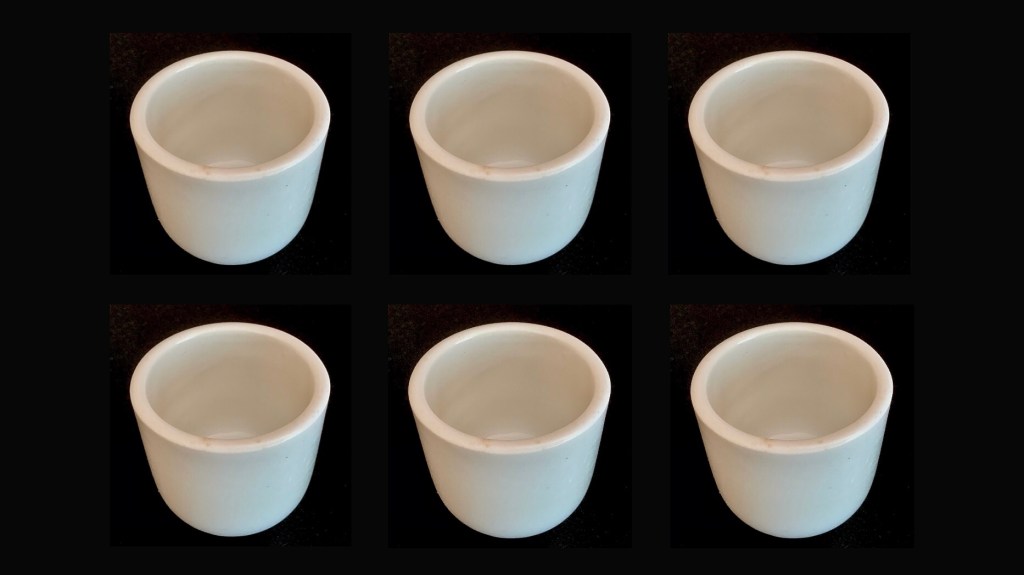
A couple of years went by, and I wasn’t having much luck either. That changed in the spring of ‘93. I was looking around a junk shop in the middle of no where, and there they were – Six of them! Holy hell. Were these really them? I asked the owner what he knew about them, which wasn’t much, only that they were old coffee mugs. It was enough for me. I counted out some cash, bought all six mugs, and returned home with them a week later.
Six Handleless Coffee Mugs, Bought with Cash at an Unnamed Location
Cathy and I thought about giving them to Dad for a Christmas or Birthday present, however those were still a while away. Mom and Dad were coming for a visit in July, and we decided we would give them to him then, with a twist. Rather than just hand them over, we would not say anything, serve soup in them, and see if Dad noticed.
They finally made it to Virginia and the big night arrived. It was a beautiful evening, and we ate dinner in the backyard on the picnic table. Cathy made Gazpacho for a first course, and we served it in the mugs. As she and I brought the soup out, we set a mug in front of each of us.
I could hardly contain myself, I was so excited. We started eating and both Mom and Dad complemented Cath on the soup. There was no word from Dad on the mugs. Were these not the right ones? We continued eating, and all of a sudden Dad paused, and started looking at his mug. He looked more intently, and then, “Say! I … I … I think these are the mess hall coffee mugs!”, at which point I burst out laughing.
Dad verified these were INDEED the mugs. By then, we were all laughing, and I told him the story of how I found them.
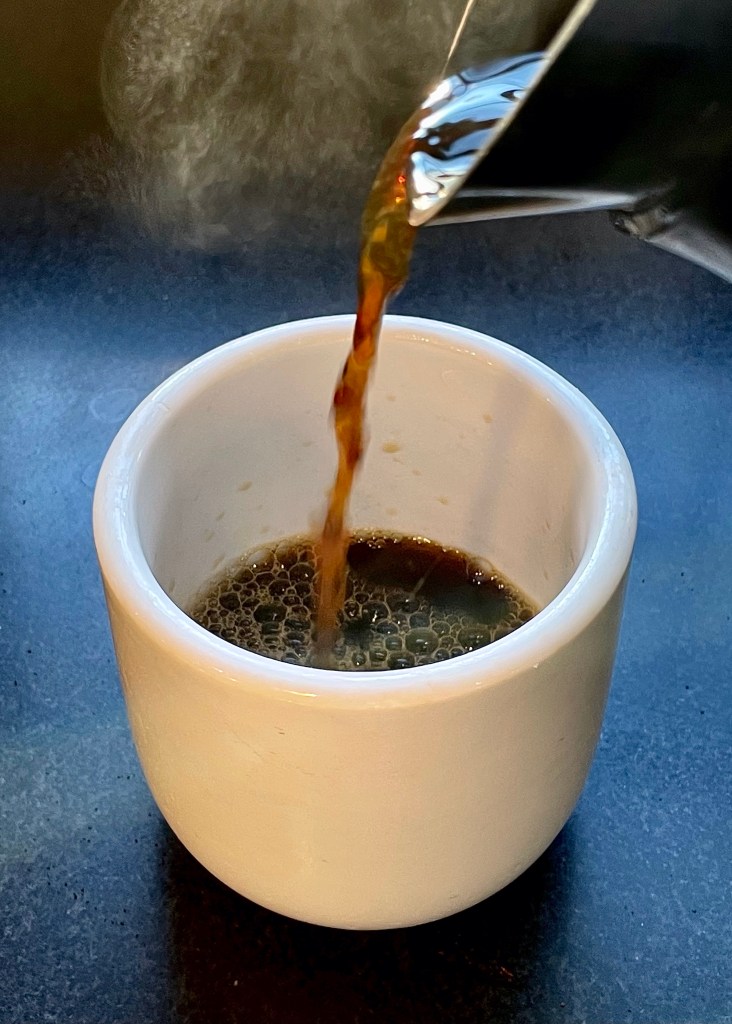
We used those mugs for coffee in the morning for the rest of their visit. Dad would use both hands, and bring it up to his mouth and nose to inhale the smell of the fresh brewed coffee, probably the same way he did back in 1940-‘45. When they left, I sent four of the mugs home with them, and kept two for us.
Nostalgia and Coffee. What’s Not to Like?
Eventually, Dad passed away in 2010. At some point in time, mom gave the four mugs back to us. Occasionally, I use one of them for my own Cuppa Joe in the morning. I feel the warmth of the mug in my hands, inhale the smell of the fresh brewed coffee, and think back to Dad – It’s a wonderful way to start the day.
Addendum:
If you want to see the scene of Burt Lancaster with the coffee mug as the Japanese are attacking Pearl Harbor, you can view it here: https://youtu.be/2UxTGH7cR5Y
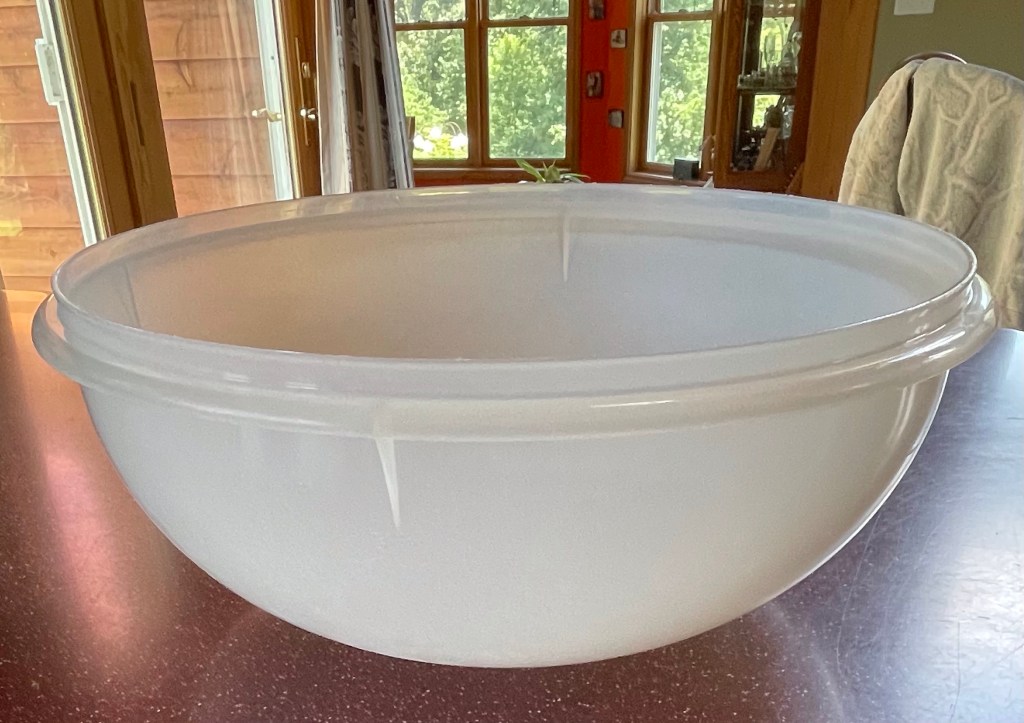
The Puke Bowl. Do all families have one? You know, the one you pull out to put next to your kid’s bed when they have an upset stomach and things are sketchy? That, and coke syrup were staples of our childhood when sick. Our family puke bowl also had a dirty little secret.
Puke… not such a pleasant word, but I suppose it’s an apt descriptor. I’m not sure it’s better or worse than vomit, upchuck, ralphing, throw-up, or barf. All get the idea across pretty graphically. As kids, when the flu or some other illness turned our stomachs, the answer was always the same – a spoonful of coke syrup from the fridge, and then off to bed with the Puke Bowl by the bed. Running to the bathroom toilet was always the first option, but the bowl was right there if you didn’t think you could make it. Mom would dutifully wash and clean the bowl through out our misery, and when we finally became better, gave the bowl a thorough double cleaning and put it away in the utility room by the kitchen.
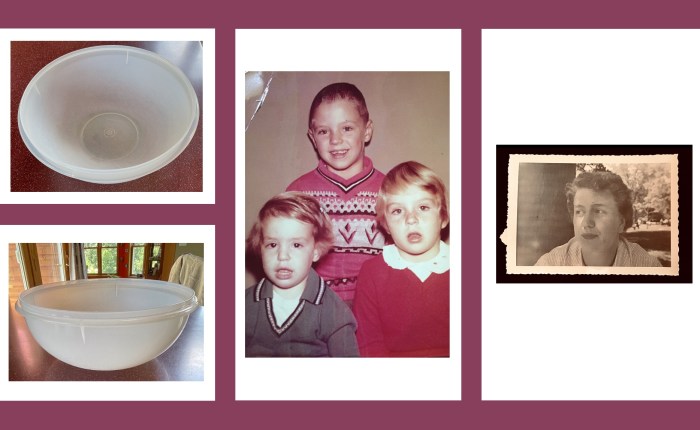
The Puke Bowl … In all it’s Glory …
Over the years, the Puke Bowl was also used by our nieces and nephews, if they happened to get sick when visiting Grandma and Grandpa. Three generations now called that big Tupperware bowl, the Puke Bowl. All of our spouses do as well. It became it’s own family tradition.
My sister Roberta “inherited” the bowl after mom died in 2017. All three of us kids were interested in it for nostalgic reasons, but Berta was the one who claimed it. To be honest, I did not realize mom still owned it, but of course I should have. Mom didn’t throw much away, and everything had multiple uses. Back then, America wasn’t the throw-away society we are today.
Mom Never Threw Much Away…At that Time, Most Folk Didn’t
Fast forward to this year…
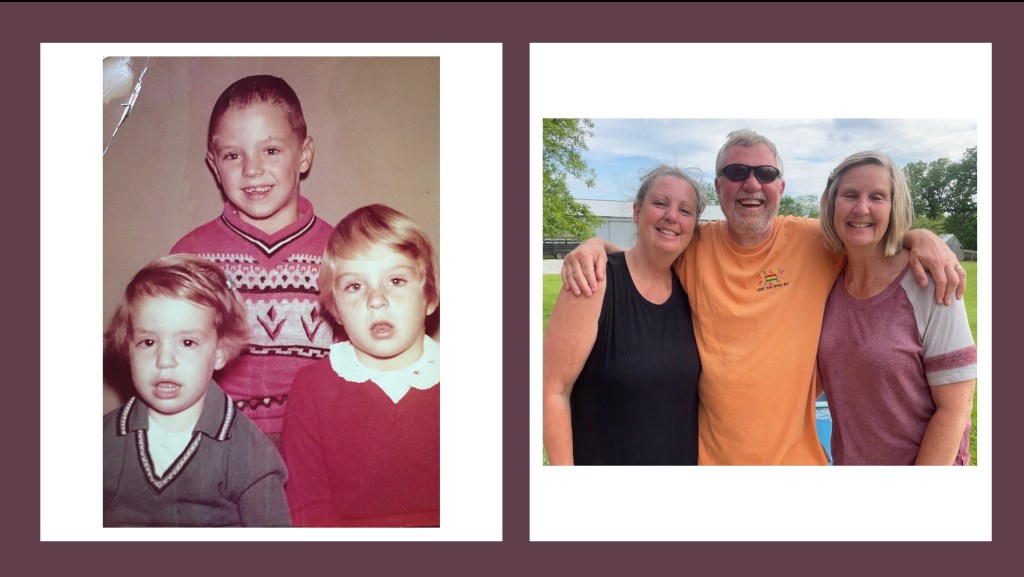
A couple of months ago, Roberta’s granddaughter, Lydia, was visiting, became sick and started throwing up. When her mom, Kathi, came to pick Lydia up, Berta sent the Puke Bowl home with them, in case Lydia needed it in the car. A couple of weeks later, Berta was at Kathi’s, along with Kathi’s mother-in-law, Penny. As Roberta was getting ready to leave, Kathi said, “mom, don’t forget the Puke Bowl”, and handed Berta the bowl. Penny had a strange look on her face, and evidently thought the bowl was just a regular Tupperware bowl, like those you use for cooking or food storage. She exclaimed “What?!” Berta and Kathi started laughing, and then explained the WHOLE back story of the bowl to Penny.
In addition to being The Puke Bowl, the bowl had a secret life. It also doubled as THE bowl in which mom made her much acclaimed Potato Salad. It made an appearance whenever there was a big gathering or picnic for the family, church, neighborhood, or where ever. It was a massive bowl and the largest she owned, and due to the popularity of her potato salad, she didn’t want to run out. I don’t recall mom ever running out of potato salad at family (or other) gatherings when growing up. Never.
Tanya, Roberta and I Didn’t Seem to Suffer any Adverse Effects from the Puke Bowl…
The bowl is mostly retired now and lives in Berta’s basement. Lydia’s use a couple of months ago was the first time it was pulled out in quite awhile.
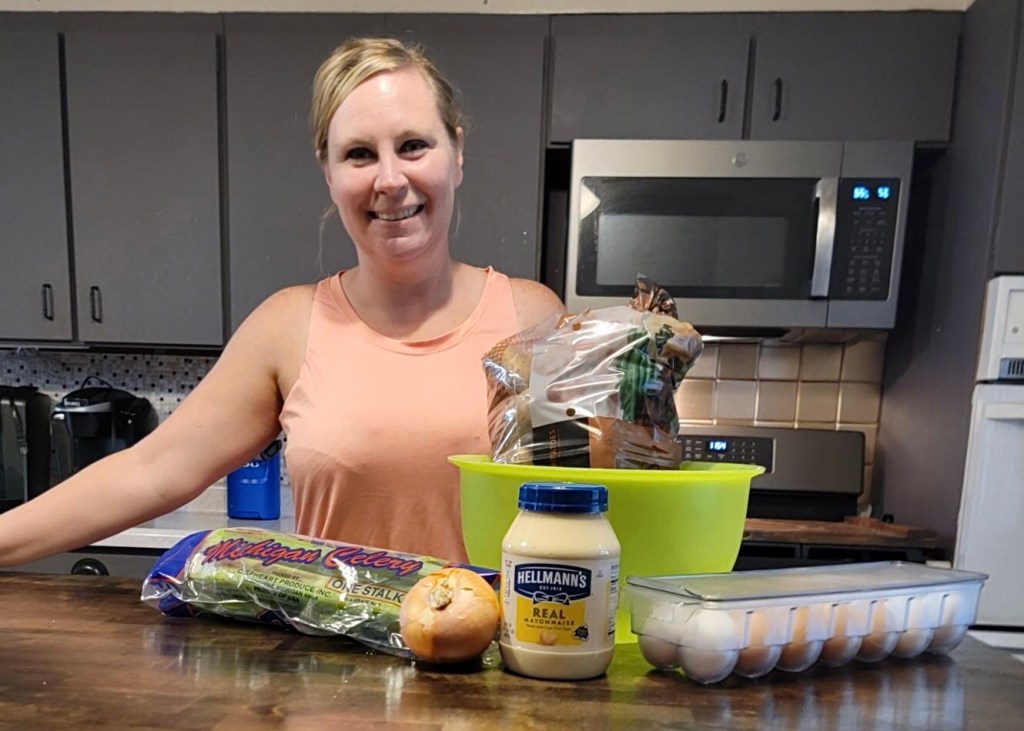
I should also mention Roberta’s daughter, Diane, is the official “holder” of mom’s potato salad recipe. Her version is the closest to mom’s of any I’ve tasted, which means it’s pretty d@mned good. Although Diane has her own set of bowls and Tupperware, including a large one she makes her potato salad in, when ever there’s a big family gathering, inevitably one of her sisters will laugh, and say to her, “Diane, you gonna make grandma’s potato salad in the Puke Bowl for the get together?” No, she doesn’t, but old family memories die hard… 😉
No, Diane Doesn’t use the Puke Bowl, to Make Grandma’s Potato Salad
Addendum:
– Our Niece, Tami, also remembered that the bowl almost always seemed to be the hiding place for someone’s Easter Basket each year at Grandma and Grandpa’s house… 😉
– In writing this blog, and talking with friends, two items became clear.
First, most all families had some version of a “puke bowl” or bucket, and many of them were multi-use products, particularly for holding popcorn.
And second, many lamented the throw-away society we have become. As Americans, we retain very little – Of course diapers, cups, plastic silverware and paper plates are all disposable. These days, so are phones, computers, mixers, coffee pots, stereo equipment, and a great deal of furniture. Washing machines, dryers and dish washers fit the same mode, unless they break down in the first few years of use.
⁃ Special Thanks to Cathy, and my sister Roberta for all of their help on this blog.
⁃ Thanks to sister Tanya, along with nephew Casey, and nieces Diane, Tami, Bre, Kathi and Jordan for their memories as well.
– Thanks and photo credit of the picture of Diane about to make potato salad, to her four year old daughter, Riley! Roberta took the pics of the bowl itself.
⁃ As always, MAJOR thanks to my old friend and editor, Colleen (who didn’t own a Puke Bowl growing up.) She always keeps me straight and on track.
It had been raining for a while when Gary pulled two more beers from the fridge. As he handed me one, he said “I’ll tell you one thing, I don’t do funerals.” I popped my beer and looked up. “I didn’t know you were that particular”.
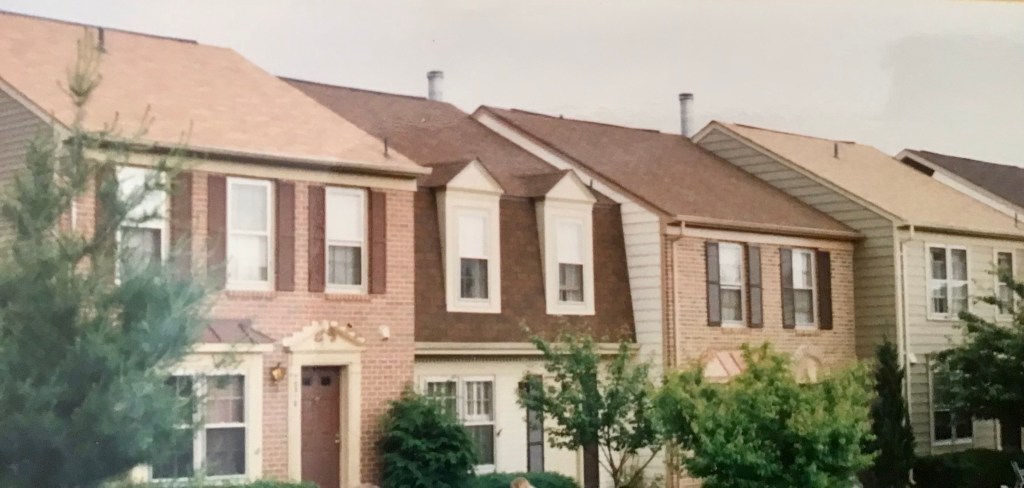
Gary lived two townhouses down from us. His girlfriend Cindy had moved out a couple weeks before, although I’m not sure why. I didn’t ask, and he didn’t volunteer a reason. We were casual friends – the kind of guy you saw in the neighborhood often enough. We’d drank beers together a couple of times and I think Cathy and I had Cindy and him over for dinner once.
Gary’s Townhouse was Two Doors Down From our Own
When I came home from my running group that day, he was vacuuming out his Limo in the parking lot. He was pretty religious about keeping it clean. I stopped to talk with him and he offered me a beer from the cooler next to the Limo. I readily accepted.
We talked about this and that, and then it started raining. “Damn. Let me go park this and I’ll be right back. The house door is open.”
I waited on his stoop for the couple minutes it took him to return, and then we went in his kitchen, where he popped two more beers and we sat down.
As we were drinking our beers, he talked about his history as a Limo driver. It may not have exactly been sex, drugs and Rock ‘n’ Roll, but it wasn’t far off. There were a couple of B level rock singers who regularly booked him when playing in DC. He did the usual “big dates”, weddings, and business meetings. A few local corporate types used him consistently. He was strict with the kids that rented the limo for prom or graduation. After that? Who was he to judge?
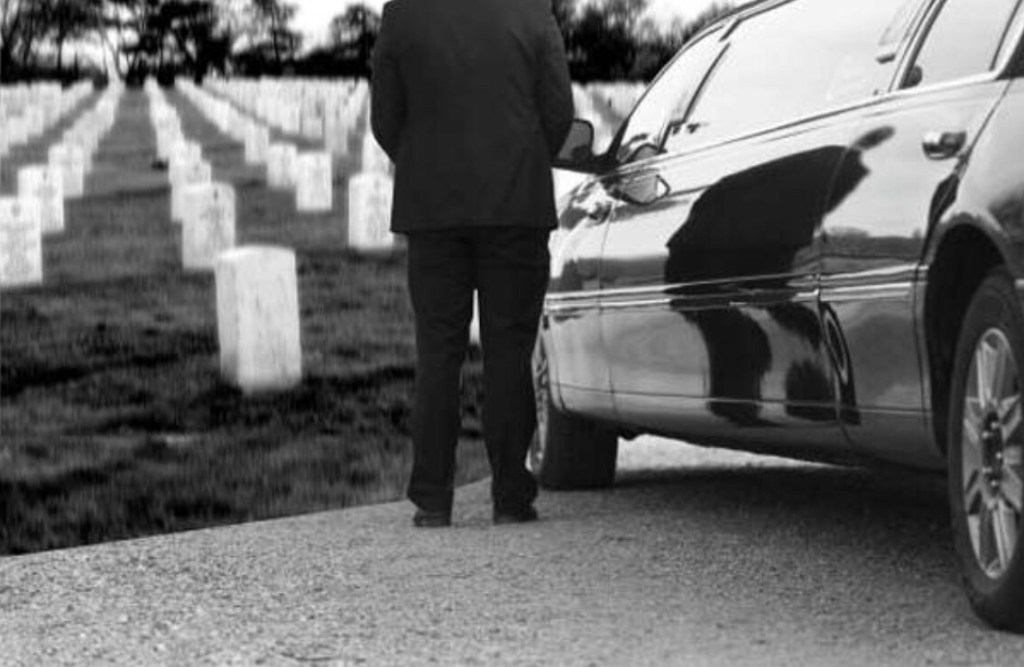
It was then, as he grabbed two more beers from the fridge he uttered “I’ll tell you one thing, I don’t do funerals.”, and I spoke my quick rejoinder “I didn’t know you were that particular”.
“I Don’t do Funerals”
He looked at me and smiled, and then the smile faded away. “I used to do funerals. Quite a few of them. But I learned something about the limo, or I guess more about myself. Afterwards, no matter how hard I cleaned the inside of the car, I couldn’t get the smell out.”
I looked at him inquisitively. “The smell?”
He took a swig of beer. “Yea, the smell. The smell of loss, of sadness, of blackness, of death itself. No matter how much I cleaned the inside of the limo, to me, the smell was still there for the next trip or two. I finally gave up and quit doing funerals. It was better for me, or at least better for my soul.”
After sitting quietly for a couple of minutes, I raised my beer, and as we clinked cans, said “Your Good Health” and he answered “and yours”.
We finished the beers and I said goodbye. It was still raining as I walked home, thinking about Gary, and death, and how something can linger in the air, even when there is no smell.
Summer is almost here and schools will soon release their prisoners for the season. I envy the kids and their feelings of anticipation right now. Summertime, and the livin’ will be easy… Of course lots of the summer will be planned out, as seemingly everything is for children these days. Do they ever have the chance to just act like kids?
I was thinking back to summertime during my own youth and growing up in Tomahawk Terrace on the Southside of Ottawa, Illinois – population 18,000. There wasn’t much planning of our time at all, with every day it’s own adventure. Playground at the school? Playing Horse or two-on-two basketball at Schaefer’s or Cavanaugh’s house? Playing army in Varland’s nearby corn field or cow pasture? Hanging out and reading comics? … The possibilities were endless.
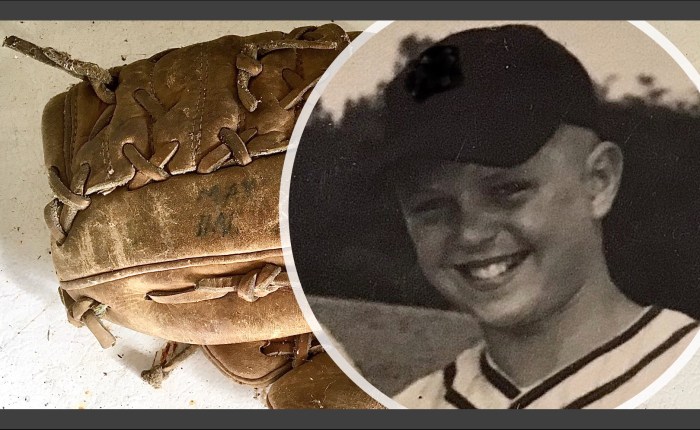
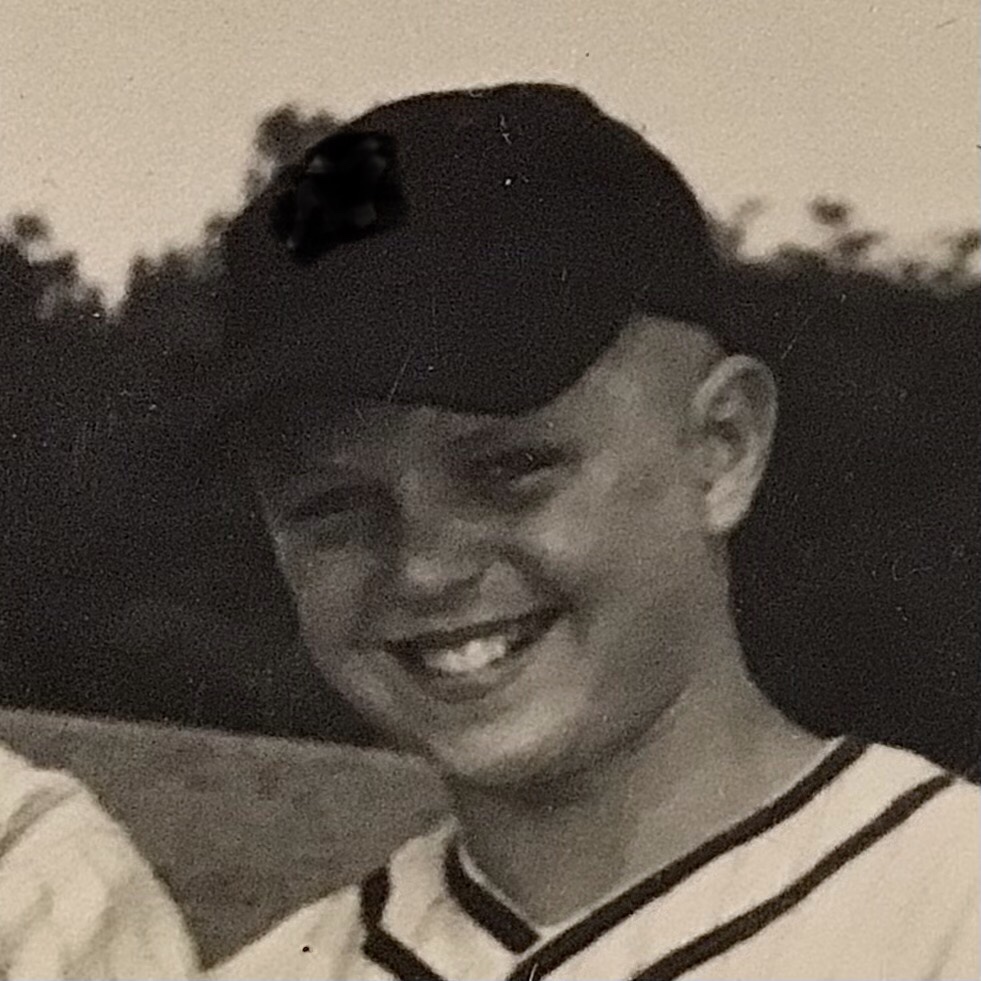
There were some organized activities in my life, such as Little League Baseball, or Boy Scout Camp, but most of the time? It was just us kids hanging out. You had to be home for lunch, and you had to be home for dinner. After that, I don’t really remember any other requirements.
… me in the mid 60s …
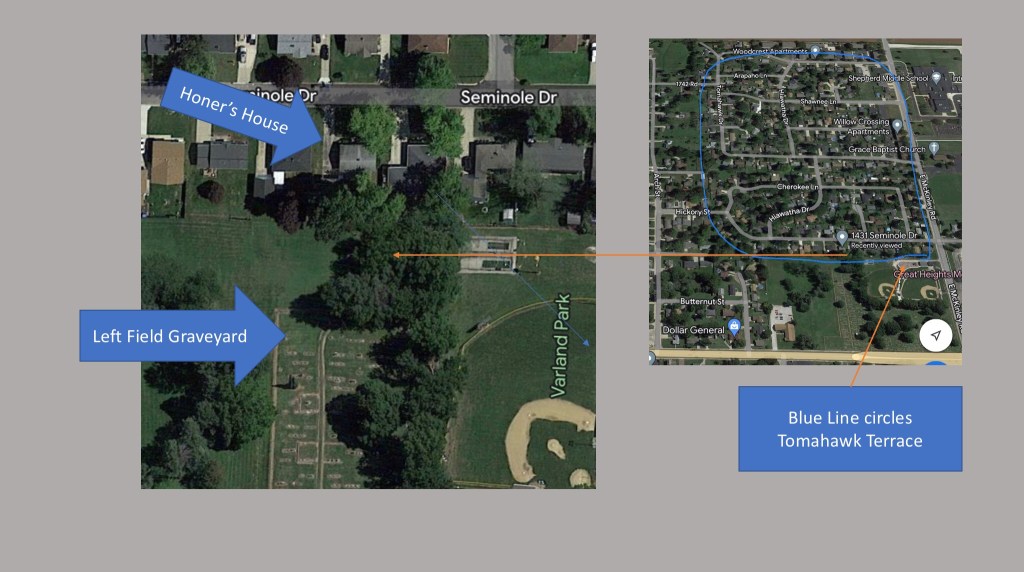
I think one of the best memories was playing “Work Up” baseball behind Honer’s house, next to the cemetery.
Work Up? What’s that you say? It’s the baseball game you play when you don’t have enough players for two teams, or maybe even one team. Hell, it’s the game the kids on the movie “Sandlot” would have been playing if the film had really gotten it right (and yes, I do love the movie).
The rules? Well there weren’t really any rules, but there were norms. Typically we’d have 7, 8 or 9 guys show up to play. You’d have 2 or 3 guys up to bat, with the remainder in the field. In our case, that included, in order of importance, a pitcher, 1st baseman, shortstop, 2nd baseman, and right and center fielders. We didn’t have a catcher, it was just whoever was up next to bat. The game was called Work Up because you would bat and run the bases until you made an out. Then the pitcher would go in to join the batters, the first basemen became the pitcher, and everyone else advanced one position. Whoever made the out moved to right field. Oh, and if you hit a fly ball and someone caught it, you did a direct exchange with that player.
The game was really adaptable. As an example, if you didn’t have enough kids, there might be only one outfielder, or maybe no 2nd baseman.
The only rules I really remember concerned Left Field. Our “ball diamond” had a graveyard where much of left field normally was. We never put a player in left field, although the center fielder might shade that way a bit. When you were at bat, if you hit a tombstone on the fly, it was an out – we basically assumed the gravestone “caught” the ball. If you hit a tombstone on the ground, we assumed the gravestone fielded a grounder and it was an automatic double. If you hit a ball and it didn’t touch any of the gravestones (almost impossible to do), then the ball was in play.
There are now trees near where Home plate, and 1st and 3rd Base were. Varland Park was a cow pasture at the time.
I don’t remember us ever having a set time for a game. Word just spread around and some number of guys would show up. We might play pickle, while waiting for enough folk to show. Most everybody was from the ‘Terrace, with the occasional friend or cousin added in. This included the Honer brothers, the Hinsons, Deaks, Hazelwoods, Steve Schaefer, John Levy, Chuck Ogden, Jim Habben, one of the Leach boys, Leonard Mayberry, Howard … other names I have long forgotten. If everyone showed up, we’d actually have enough for two teams and play pick-up, but that rarely happened. Kids ranged in age from a couple years older than me to a couple years younger, and there were lots of younger brothers in attendance. One unwritten rule was you didn’t try and take advantage of the younger kids. I mean, it was OK if one of your hits went towards them, but if you did it every time? Not so cool.
By the way, there was never an adult in sight. We seemed to manage just fine by ourselves, without their oversight or interference.
I don’t recall much about the games themselves, I just remember playing the game on hot summer days until we were tired. It might have been an hour, it might have gone on for three hours. Eventually someone’s mom would call and that player went home and then someone else would have to leave, and the game slowly broke up. We might reconvene again the next day, or maybe not until a week later.
I know it’s a different world today. Things are more complex, more challenging, and perhaps less safe. Kid’s lives, from what I can see as an outside observer and non-parent, are organized to the nth degree. Multiple activities, multiple practices, multiple study activities. I guess they are able to try more things, but I also think some things might get lost in the process, like the ability to entertain yourself, informal group interactions and how to handle them, and perhaps even learning a little about leadership for better or worse…
I dunno, do kids even want to spend time outside these days, or is it all mostly computer and video games? Back in the day, I know mom, or our babysitter, would have kicked us out of the house if we were hanging there too much.
I suppose some of this makes me sound like a grumpy old man after a fashion. I don’t really mean it that way. I just remember how much fun we had hanging out on our own behind Honer’s house, playing ball and trying like hell to not hit a fly ball to left field, where it was sure to be caught by a tombstone…
Addendum:
I went online to do a bit of research on “Work Up” baseball as a check on my memory. In a sign of the times, I found plenty of entries, most of them with long lists of rules on how to play Work Up… – sigh –
Thanks to Tomahawk Terrace alumni Bob Deak and Leonard Mayberry, for providing input to this blog.













 Live Life Exuberantly