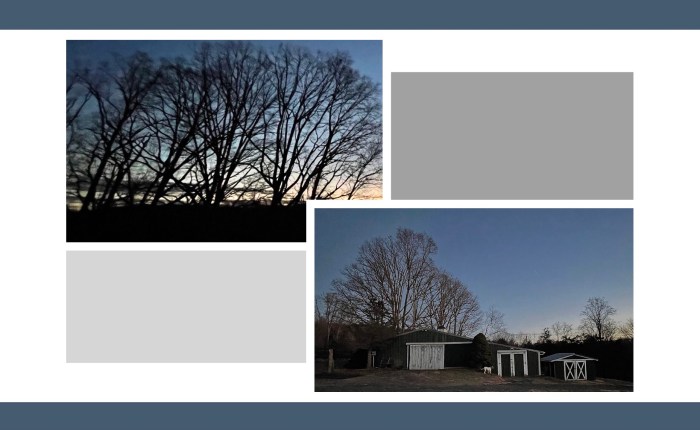
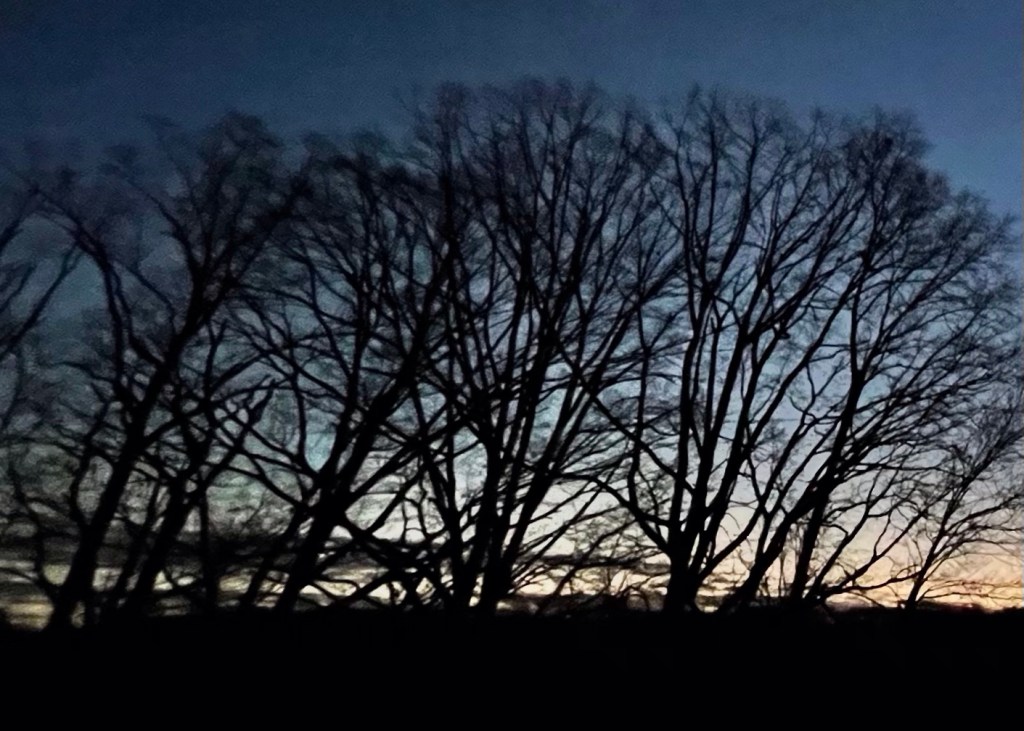
It was an early winter morning a little before sunrise – that liminal period of time between darkness and light. When I left the house to feed the horses, it was so quiet, the silence felt deafening. I soon discovered the opposite was true. In that cold predawn stillness, sound was everywhere, once I started listening.
That Liminal Period Between Darkness and Light.
I have to admit on most mornings, I’m on autopilot as I walk to the barn. Typically, I’ve only been up about ten or fifteen minutes and haven’t yet had my coffee. It’s pretty rote – walk to the barn, feed the cats, feed the horses and return to the house to make coffee.
I suppose I have the sudden snorting of a buck to thank for my change on this particular day. I stopped and tried to pinpoint his location in the paddock, but couldn’t see him. The question of whether he was sounding an alarm, or merely indicating curiosity was soon answered – I heard muffled footfalls, and then saw six deer leaping our fence before clamoring into a neighbor’s field. Our dog Carmen and I were both so startled, neither of us did anything except watch them go, their white tails vivid in the half-light. I have no idea why Carmen didn’t chase them – it was the first of three unusual non-actions on her part that morning.
The deer must have disturbed some nearby turkeys, as two of them started “gobbling” in the woods by the pond. I looked for them as well, but couldn’t tell if they were on the ground, or the low branches of a tree. Carmen, for the second time that morning, did nothing.
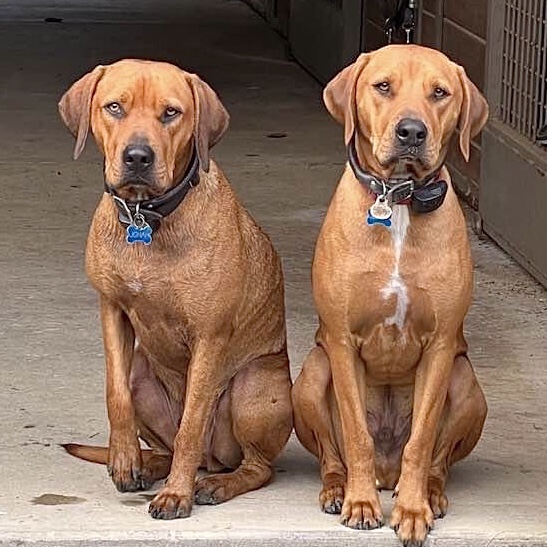
By now, my ears were evidently alert, as I heard a woodpecker tapping near the side of the house. A few footsteps later, the whinnies of our neighbors’ horses came from about 100 yards away. That was unusual for them at this time of the morning. Perhaps something was about, as they were joined by the barking of our friend’s dogs, Jonah and Jebson, about a quarter mile down Swains Road. Carmen’s ears pricked up. Much like the dog telegraph in the movie, 101 Dalmatians, the two frequently start a message that circulates among the other dogs in the neighborhood. This morning, Carmen must have decided they were just gossiping – after listening for a second, she trotted to the barn, with nary a bark.
Jonah and Jebson Trying to Look Innocent
It was chilly in the barn and there was a skim of ice on the water buckets. Our cats, Ollie and Mama Cat, stared silently at me, waiting for their breakfast. The horses weren’t so quiet. Stella and Katie nickered, snorted and pawed the ground. They too wanted their breakfast, but made a much bigger demonstration than the cats about it.
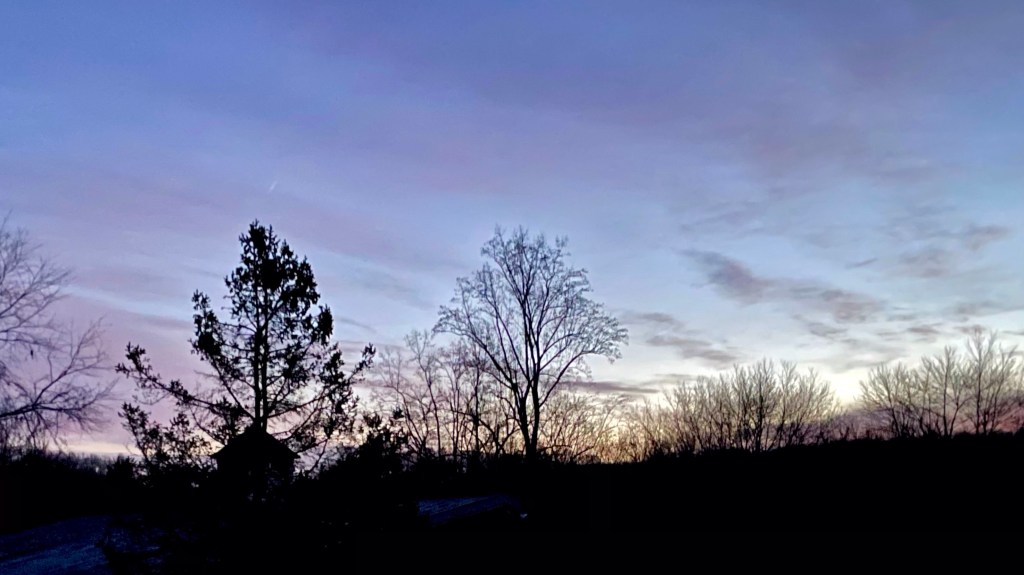
I fed the cats and then the horses, left the barn and started making my way back to the house. It was nearing sunrise now and there was some color in the eastern sky. Carmen and I stopped for a moment just outside the barn and looked to the east. We disturbed a couple of crows who scolded us with their caws, but the cardinals in the nearby evergreen didn’t seem to mind our presence and continued to sing their song of CHEER, CHEER, CHEER ,,, PRETTY, PRETTY ,, PRETTY, PRETTY!
Color and Light in the Eastern Sky.
I thought about the birds and animals, both tame and wild, who were there to greet Carmen and I that morning. It brought to mind one of my favorite quotes from Maya Angelou – “Listen to yourself and in that quietude you might hear the voice of God.” While watching the sun rise that morning, I had an additional thought – In the quietude of a winter’s morning, hear the voices of God’s creatures and feel blessed, for we are all God’s creatures.
Years ago my friend Joe said, “When I turned fifty, God shared all the knowledge and wisdom of the world with me. When I turned sixty, God told me I should share that knowledge and wisdom with the rest of the world.” Thinking of any number of older pontificators we both knew, we chuckled. I’ve thought about it more seriously since then – from whom have I gained knowledge and wisdom?
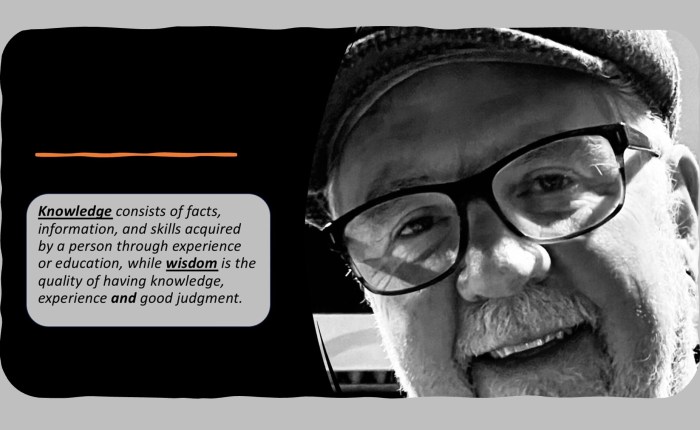
Of course, knowledge and wisdom aren’t exactly the same thing. According to the Oxford Dictionary, knowledge consists of “facts, information, and skills acquired by a person through experience or education”, while wisdom is “the quality of having knowledge, experience and good judgment”. Those definitions are close, although not exact. Looking at the two, knowledge is necessary, but not sufficient to have wisdom. There’s that little thing called “good judgement”. I also note the word “age” is in neither definition, and while perhaps, unexpected, I think that’s good. I know some people who were fools when they were young and have remained fools their entire life. It’s almost as if they have an anti-wisdom gene in their DNA.
I’ve thought of my own life and how I’ve obtained knowledge and tried to gain wisdom. Reading books or online resources, experiencing life and listening to others seem to be the three primary ways I’ve learned about life. To keep consistent with the “from whom have I gained Knowledge and wisdom” question in the opening paragraph, I’m only going to talk about listening to and interacting with others today. Certainly, the other two thoughts are important, but short of writing a thesis, I think it’s a bit hard to tackle all three in one short blog.
My parents were a big influence on me, not only as a kid, but throughout adulthood. I think back to the important lessons I learned at home as a child, and also to the advice they gave me over the years. Sometimes I listened, and other times not. Later in life, I also remember a conversation on the phone with dad one day. I was considering a job change and asked for his advice. There was a pause, and then he said “I think this is above my pay grade. You have to make this decision on your own.” Sometimes, wisdom is knowing when to say nothing.
When it comes to learning from others, I along with many of us, have practiced this inconsistently over the course of my life. As a young man, I certainly listened to “older” folk, but I was also guilty of the arrogance and certainty of youth. Who among us hasn’t experienced that combination of youthful passion and fearlessness? I alone KNEW the right answer! Sometimes I was right, and sometimes I failed. But where would we be without that youthful exuberance which has brought so much innovation? Who else has the courage, desire and tirelessness to challenge the status quo?
Growing into middle age, I continued to gain knowledge, and I hope I was gaining wisdom. Moving into leadership positions in the Army, business world and with other groups, I was frequently asked to impart my knowledge and/or wisdom across multiple subjects. I certainly listened to others, but as George Bush infamously stated, I became the “decider” on any number of issues. I believe I made my share of good decisions. There were also errors and poor recommendations along the way. I can think of more than a couple of choices I’d like to have back. Maybe if I’d listened a bit more to others … but of course, you can’t go back.
And now? I mostly retired 10 years ago. Today at 68, I sit on the cusp of elder time. Unlike my friend Joe, as I become older, I’m less sure God gave me any of the knowledge or wisdom of the world. Still, I often DO feel compelled to share what I have with others.
With that in mind, there are two things I’ve learned about myself I want to share.
First, for my peers, don’t let the complacency of old age settle in. You have to keep learning. If you don’t, you grow stagnant and might as well die. Never. Stop. Learning.
Second, and this is for everyone, the true wisdom I’d share is no matter your age, don’t constrict your interactions only to a group of people your own age. There is a wealth of knowledge and wisdom out there and you can learn at all ages from people of all ages. Don’t deprive yourself of the chance to find this out. All you need are open ears and eyes, and an open mind. Most importantly, an open mind.
And so, while I continue to learn much from my friends and peers in their 50s and 60s, I also continue to gain wisdom from friends John, Bill, Nancy, Irv, Malcom, Bob and Kathy among others in their 70s and 80s. Our nieces and nephews who are in their 30s and 40s are a constant source of joy and education about things both large and small. I continually gain new insights and ideas from our friends Mila, Raagni and Morgan, all in their 20s, and all of whom seem wise beyond their years. Lana, our 18 year old niece, makes me think, and raises new concepts and thoughts for me to consider. A couple of months ago, I even learned more about modesty and good manners from Kaeden, the 11 year old grandson of a friend. Of course there are many, many other people I could name here, but you get the idea. Making it personal also makes it more real. Who are some of the people of all ages in your own life you learn from, or maybe more importantly, could learn from? Never stop learning from friends and people of all ages. Never.
I realize this blog has rambled, and I apologize for that. With the year 2024 starting soon, I hope you will commit to a life of gaining knowledge and wisdom. Sample broadly from the learning choices offered. My wife is fond of saying “Every time an older person dies, it’s like a library burning down.”, and she’s right. Don’t miss the opportunity to learn from your older friends and family members before they are gone. Listen to their stories. But also allow time and openness to drink from that endless fountain of youthful exuberance. No one has a corner on knowledge and wisdom. No one
Addendum:
In my younger years, I never did “New Year’s Resolutions”. To be honest, I still don’t. But, as I’ve become older, I seem to do a bit more reflection this time of year. Maybe it’s because I have more time to be reflective, or maybe it’s because I have less time left in my life – I’m not sure which. In either case, I wish you the Happiest of New Years and hope you can take a few minutes to reflect on your life. See you in 2024.
Do you know the best way to develop your wine palate? Drink more wine. I believe Cath and I have that covered. We began drinking wine together (legally) in 1974 when she started working for the FBI in DC. Seriously. We’ve had more than a couple of bottles together in the past fifty years.
After Cathy moved to DC in 1974 to work for the FBI, I’d visit from West Point for the weekend. If we were doing a “special” night out, we’d always order a bottle of wine. I think we felt more like adults. Now mind you, neither of us owned a car, and metro wasn’t here yet. We’d take a bus from her apartment to Old Town Alexandria and usually go to The Wharf, one of the nicer restaurants in town. After a seafood dinner and bottle of wine, we’d dutifully wait for the bus and take it back to her apartment. ;-). A taxi was out of our price range.
Our real wine education came after we married and were stationed in Germany in the ‘80s. Yea, we drank a lot of good German bier, but we drank our fair share of wine as well. Not only dry German and Austrian whites, but also French, Spanish or Italian reds when we traveled to those countries. Spending nine years in Europe significantly broadened our exposure to what wine could be.
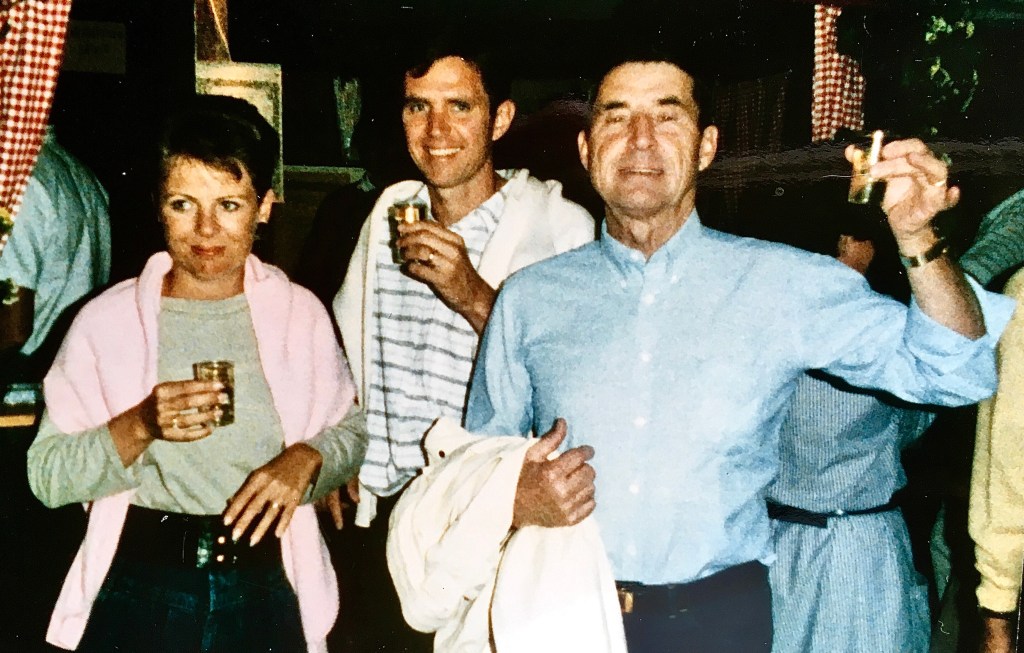
Cath, Dad and I at a Weinfest in Germany around 1987.
Returning to the States in ‘89, we discovered California wines, which we’d pretty well ignored before then. Cabs, Merlots, Zins and eventually Pinot Noir’s – Our taste buds grew once again and sometime in the ‘90s we installed our first wine rack, which held about 110 bottles.
After moving to the farm in ‘99, we renovated the kitchen around 2005 and put in a wine cooler – we could store 250 bottles in it, which seemed like a pretty reasonable number. Except it wasn’t. And so…
In 2011 we discussed putting in a wine room with a separate chiller. To be honest, I think Cathy was feeling a bit guilty about the money we were spending on her horses and she readily agreed we needed a cellar. Of course, she would benefit from the cellar as well. And so, we bit the bullet and installed it.
The Wine Cellar – Not quite at Capacity.
Our cellar holds around 950 bottles, although if you wanted to stack cases on the floor, you could add another 200 or so. I’d point out this is a drinking cellar. This isn’t a cellar for storing trophy wines. Everything in the cellar is meant to be consumed … over time. It’s stocked to our tastes. You’ll find sparkling wines, Virginia wines from a couple of our favorite vineyards (Linden and Glen Manor); California Pinots, Merlots, Cabs, and Zins; French, Italian, Sicilian, Spanish, South African and Portuguese reds; whites from a number of locations in the States and France; and some dessert wines. There’s a bottle of Georgian wine in there somewhere (the country, not the state). There are a couple of bottles from the late ‘90s, and then probably just about every year from 2000 to the present. We like the cellar and we like the inventory. We enjoy putting a dent in it with friends.
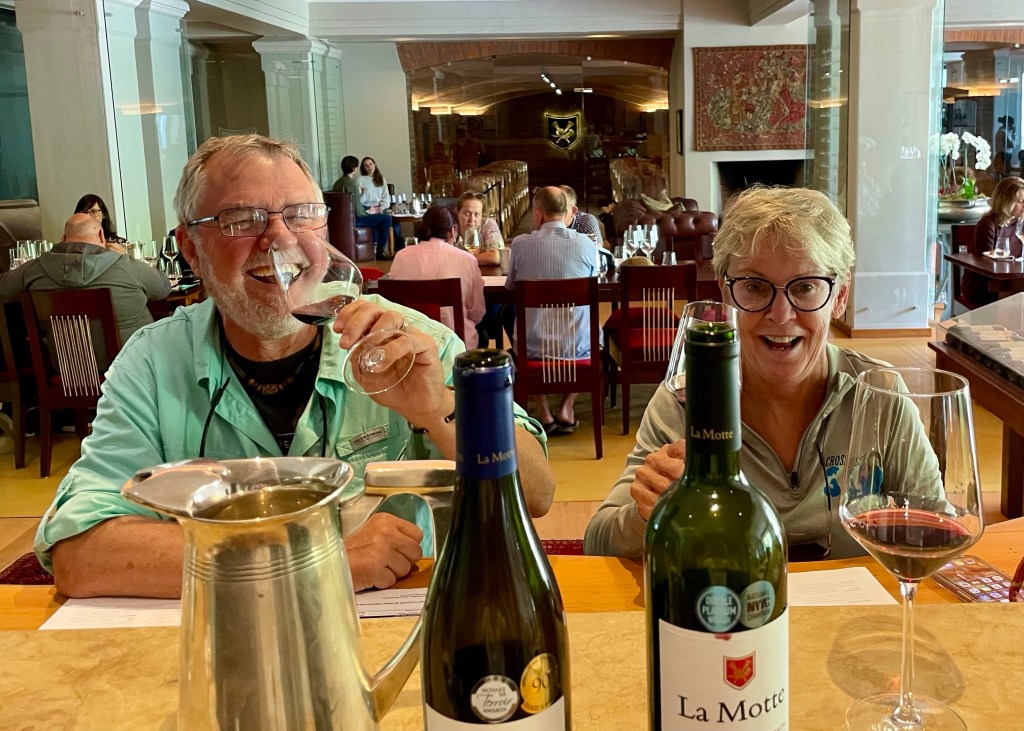
Wine Tasting in South Africa.
Now here’s the funny part. Although the cellar is ostensibly mine, Cathy has a palate that blows mine away. She’s much better in blind tastings at guessing the grape and where the wine is from. She recognizes the flavors and can talk about them. And if a wine has turned bad or is corked? She can tell just by smelling the wine before she’s even taken a sip. These days, when we go out to dinner and order a bottle of wine, I usually just tell the waiter or sommelier to let her taste the wine. She’s really good.
I suppose we’ve consumed thousands of bottles of wine over the last fifty years – at home or in restaurants; on picnics and vacations; at wineries; and of course with friends and family. There are lots of good memories associated with those bottles and gatherings.
Good Memories. Always.
“In vino veritas”, is a Latin phrase that means “In wine, there is truth”. The truth is we are still improving our palates, one bottle at a time.
Cathy says life is too short to drink bad wine. I think I agree.
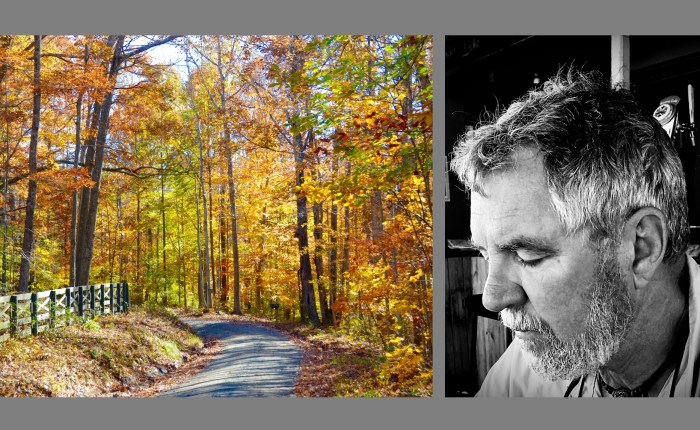
As I walk and wander through the nearby woods this fall, I find my mind wandering as well. It is autumn in the autumn of my life and I feel the passage of time. Death and decline are both more evident, and not quite the strangers they once were.
A Walk in the Woods on an Autumn Day.
It is not my own death I contemplate or fear. I have made peace with who I am, what I am, and where I am. I’ve had a good and lucky life with little to complain about. When my time comes, I hope I have the courage to accept my blessings and be thankful for the life I’ve lived.
Rather, it is the death and decline of others that I’ve been dwelling on during my walks. I think of friends or family members taken too soon and though they are now at peace, those of us left behind in this world feel the sadness and emptiness of their passing. What we wouldn’t give for one more hug, one more smile, one more drink together, or one more conversation.
For some, death has come suddenly and unexpectedly. For others, we have marked their decline, whether from old age, cancer, or some other disease. Fighters all, they eventually succumb, whether after months, or a decade. And for some lucky few, they live a good life into old age before peacefully slipping away.
I’ve thought about that last paragraph a bit. How do we measure time’s passing, and how do we measure time passing in our relationships with others?
If I do die suddenly, whether tomorrow or in five years, I would tell my friends and family do not mourn me. Instead, keep my memory alive, tell stories about me or drink a toast to me. I’ve had a good life. Don’t be sad at my passing, but rejoice at the life I was able to live.
If I fall into decline, for whatever reason, I pray I have the grace to continue to love and treasure those around me, no matter my fears of what is coming, or the pain I am in. I know that caregivers often suffer as much, or more than the person they are giving care to. I hope that I am able to continue to love and appreciate those doing their best to help me. I know that is sometimes a difficult thing to do.
And if I’m one of the lucky few who live well to a ripe old age before peacefully slipping away? If my old friends, my wife, my family were to precede me in death, I would want to honor each of them and keep their memory alive. I also know I would want to continue to live, and grow, and celebrate each day. To go for walks, talk with other friends, stay active, and challenge my mind and body to the best of my abilities. I think that is how I could best honor them, until my own time here on earth ends.
Walking in the woods on an autumn day – it’s funny where your mind sometimes goes. Two thousand years ago, the Roman Emperor Marcus Aurelius* said, “Accept the things to which fate binds you, and love the people with whom fate brings you together, but do so with all your heart”. I think his words still ring true.
Addendum:
⁃ *Marcus Aurelius in current times may be best known as the Emperor in the Movie Gladiator who is killed early in the film and gives Rome to Maximus, played by Russell Crowe. If you want to know the real Marcus Aurelius, I suggest you pick up his book, Meditations. It is a short read and filled with wisdom.
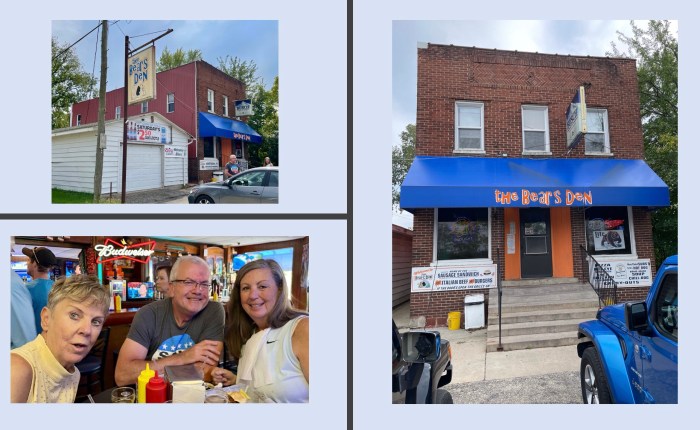
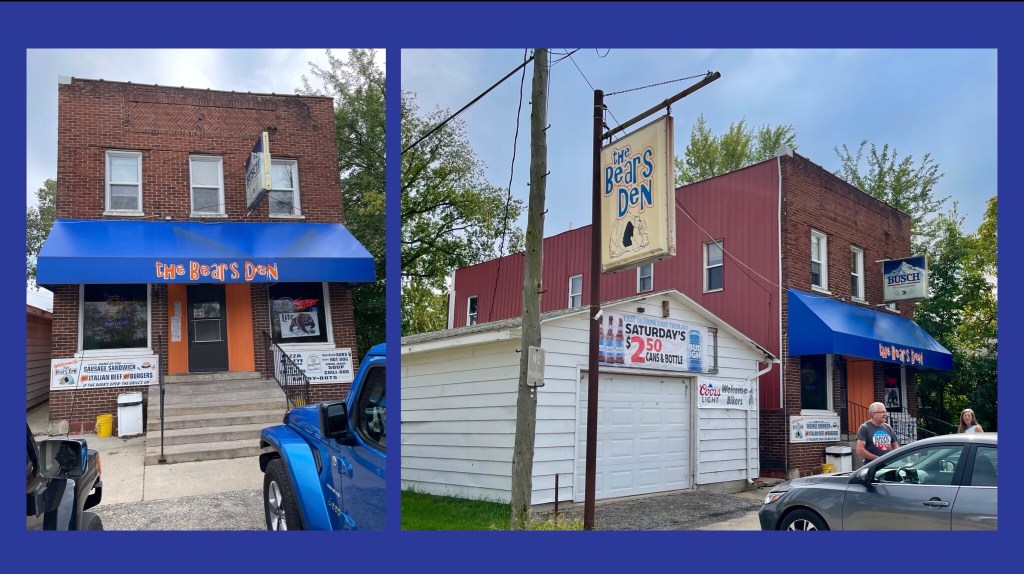
The Bears Den in Naplate, Illinois is a great little dive bar. I mean that in the best sense of the word. It’s an older place and hasn’t been updated in years. On a recent trip back home to Ottawa, we stopped in on a Sunday afternoon for lunch and Bloody Marys. We all should have such a good local place.
Naplate, a town of just over 400 people, probably has more restaurants and bars per capita than any town in America*. They are all small local places. Some more bar oriented, and some more food oriented. All have their devoted fans and regulars from Naplate, or the surrounding area. Over the years we’ve enjoyed several of them, including Casa Mia, Annie’s Hideaway, and of course, The Bears Den.
The Bears Den – It’s Been Around Awhile.
A few years ago, a really bad tornado ripped through Naplate and parts of Ottawa and Naplate were destroyed. Although Naplate restaurants were ordered closed in the immediate aftermath, The Bears Den stayed open providing food for the folk doing the cleanup and damage control. They were giving back to the community in a big way.
A couple of weeks ago we were back in Ottawa to see family and go to a reunion. We spent Saturday night with my sister Tanya and Brother-in-Law Shawn and on Sunday morning were discussing what to do. Cath previously mentioned possibly going to The Bears Den for Bloodies, and we all quickly agreed that was a great idea. It had been a few years since we were able to stop in there and we were looking forward to a good time. Shawn, the smart one among us, checked to see what time the Bears were playing that day. When they are on TV, it’s standing room only at the Den, and we wanted to avoid that. Fortunately, the game didn’t start until 3PM.
We arrived just after noon and easily grabbed a table. Several people were there, but it wasn’t crowded. The Packers were on TV, so there were both cheers and catcalls, depending on what was going on. The waitress came over and we ordered our Bloodies with sidecars. In Illinois (and maybe across the Midwest) a sidecar is a small beer, typically 7 ounces, to go with your Bloody Mary. At the Bears Den, they brought you a can of beer, and a 7 ounce glass. On Sundays, they have “build your own Bloody Mary” for $3, but we opted for the bartender to make ours.
Lunch at The Bears Den with Tanya and Shawn.
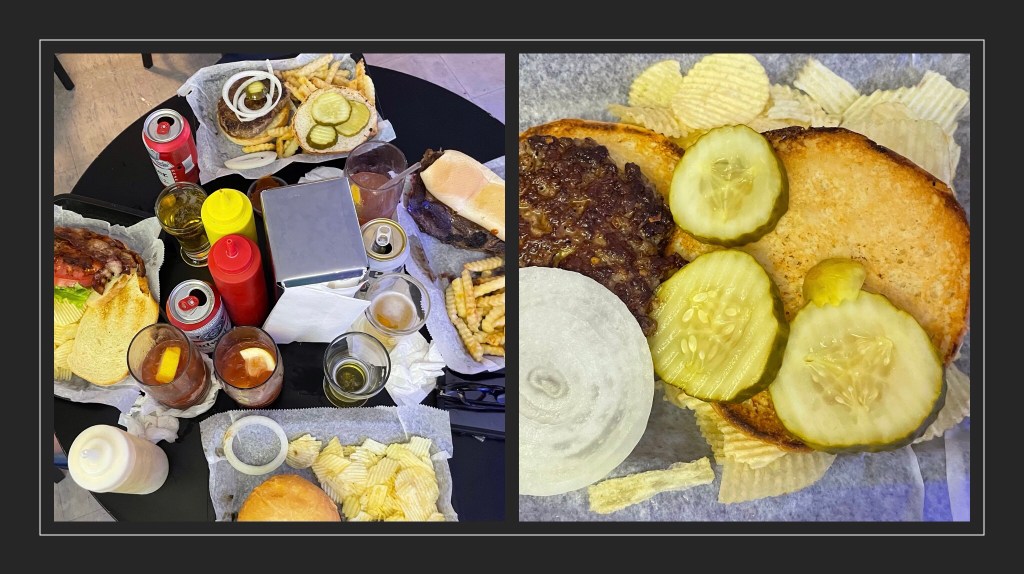
Drinks arrived and the Bloodies were as good as we remembered. Our waitress asked what we would like to eat. For me, there was only one thing to order – their Sausage Sandwich. You can have it with peppers, or cheese, or any number of other combinations, but I just ordered it with pickles and onions. It’s like a burger, but made with 1/2 pound of sausage instead. As my buddy Howard says “It rivals the pork tenderloin**as the best area sandwich. The difference? You can order the tenderloin at lots of places, but only The Bears Den has the sausage sandwich.” Shawn also ordered one, while the ladies opted for a BLT and a ribeye sandwich. One of the great things about The Bears Den is they have a decent menu, especially considering the small size of the place and the size of the kitchen.
The food came, and all I can say is, man, I love that sandwich. It was sooooo good. Yea, it didn’t help my cholesterol any, but that’s OK. In fact everyone’s sandwich was good. I think Cath’s BLT was the biggest I’d ever seen, and Tanya’s Ribeye sandwich was great. The table grew quiet for a while as we concentrated on our food. Eventually, we ordered a second round of Bloodies and Shawn had another beer.
Good Food All Around, but Man That Sausage Sandwich!
At some point, our nephew and niece Casey and Ann stopped by with their kids and we were able to catch up with them for a bit, but eventually, it was time to go. Hugs all around in the parking lot, lots of I love you’s, and we headed south to my sister Berta and her husband Jack’s place.
I know it’s a bit crazy to write about a dive bar in the middle of Illinois, when we don’t even live there anymore. Still, it’s good to have things and places you know you can count on. The Bears Den is one of those places. If you are ever near Naplate, I highly recommend it.
Addendum:
The “Bears Den” has no apostrophe in it, and I have written it that way throughout this blog.
* My friend Howard Johnson notes that Naplate was a factory town (the former Libby Owens Ford, now Pilkington,). The shift workers all converged on the Naplate bars when their shifts ended, keeping them busy 24 hours a day back in the day. That’s a big reason such a tiny village has so many bars.
** One of the great meals you can find in the corn-belt of Indiana, Illinois and parts of Iowa is a breaded pork tenderloin sandwich. They are crazy good and something that many people who move away from the area crave, and always have when they return to Ottawa. If you are closer to Chicago, or in Wisconsin, an Italian Beef Sandwich is just as loved.
Pork Tenderloin Sandwich at The Court Street Pub in Ottawa.
The Bears are having a rough stretch in football lately and lost 14 straight games before beating the hapless Commanders last week. The Bears Den remains crowded for their games. In general, the fans are still loyal, but getting restless. One of my buddies, Mark, a diehard Bears fan, sent me this meme after I mentioned we were at The Bears Den for lunch:
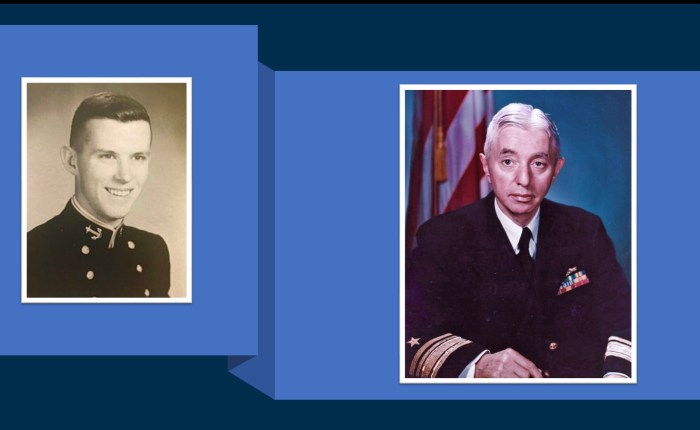
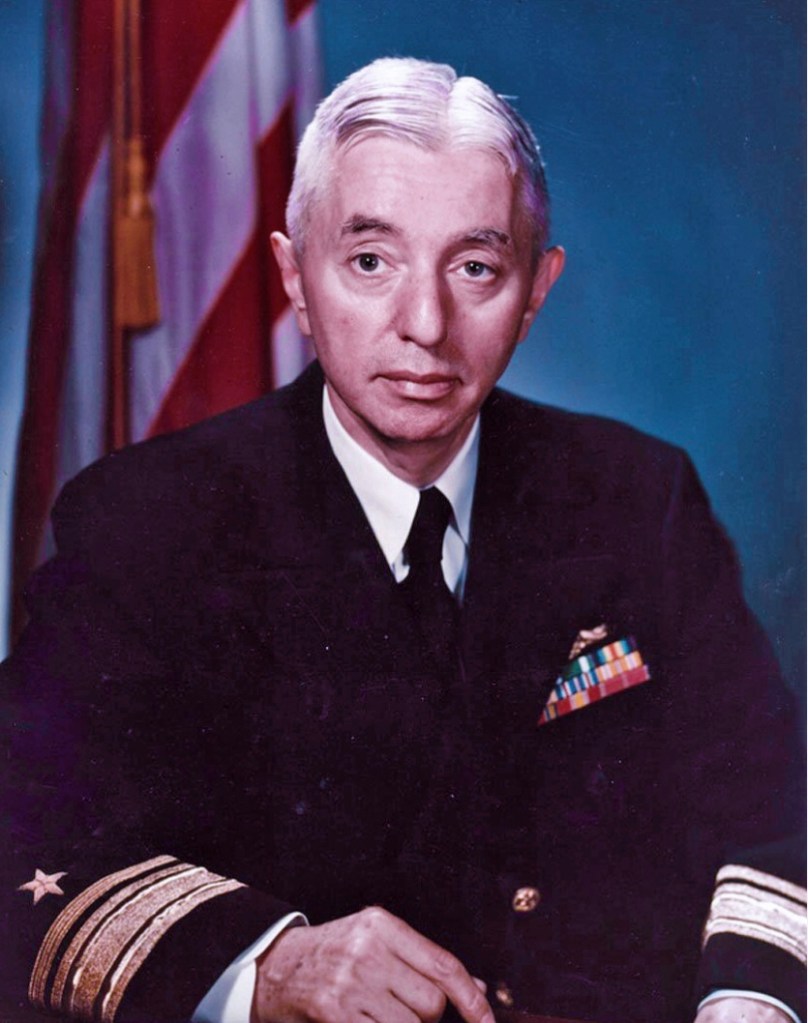
My friend Bob Bishop, straight out of the US Naval Academy, was interviewed by Admiral Hyman Rickover in 1964 for admission to the Navy’s Nuclear Power Program. Rickover, known as the “Father of the Nuclear Navy”, served in a flag (General Officer) rank for nearly 30 years (1953 to 1982), ending his career as a four-star admiral. His total of 63 years of active duty service make him the longest-serving naval officer, as well as the longest-serving member of the U.S armed forces, in history. In 1954, with the launch of the first nuclear submarine, the USS Nautilus, he appeared on the cover of Time Magazine.
Admiral Rickover on the Cover of Time in 1954
There were those who loved him and those who hated him. He exercised tight control for three decades over the ships, technology, and personnel of the nuclear Navy. He interviewed every single prospective officer considered for service in a nuclear ship in the US Navy until his retirement in 1982 at the age of 82.
According to Wikipedia, “over the course of Rickover’s career, these personal interviews numbered in the tens of thousands; over 14,000 interviews were with recent college-graduates alone.” Many of those interviews are now lost to history. Here is the story of Bob’s interview in his own words.
Bob in 1964 at the Naval Academy.
***********
Much has been written regarding the harshness of his interviews, but none can criticize the results. Certainly none of those who successfully emerged from the crucible would do so.
On Friday, January 21, 1964, I was a First Classman (senior) at the Naval Academy and joined 34 other classmates on a bus to DC to be interviewed for the nuclear power program. At the time, many offices of the Navy were still located in “temporary buildings” built on the Mall during the Second World War – and were still in use twenty years later.
There were lots of tidbits floating around about the interviews with Admiral Rickover, aka “The Kindly Old Gentleman,” (abbreviated KOG), although never called that to his face. One such rumor was that the chair you sat in was rigged so it rocked if you were nervous. Most importantly, you should answer any question quickly and decisively.
Needless to say, I was apprehensive. We (there were also a couple of busloads of Midshipmen from Navy ROTC schools) were herded into a large semi-circular room with simple folding chairs, arranged in rows facing the center of the room. There were four passageways leading out from that central hub like spokes on a wheel. There were a couple of vending machines and we were told a head (bathroom) was just down one of the passageways. We were told not to talk to one another. We were also told to remain in the room until your name was called, and that was all. To be honest, we were afraid to even go to the head, because what happened if your name was called and you weren’t there? So, there we sat. Soon, someone would come down one of the hallways and call out a Midshipman’s name. He (there were no women at the Naval Academy for another 13 years) would rise and go with him, and sometime later come back and sit down. The scuttlebutt was that each person would have three interviews before potentially meeting with the Admiral, although some had four and a few had five. Some of those interviews were short (5-10 minutes) and some were long (an hour plus). Also, you had no idea if the person interviewing you was a chief petty officer, a prospective commanding officer, a member of the Nuclear Reactors division or somebody else – they were all in their 40s-50s and all in civilian clothes.
I had three interviews and what we discussed became a blur – I was so focused on answering the questions, I really couldn’t remember the questions even immediately after they were asked. I was thinking on how I did, was I sitting up straight enough, remembering to be decisive, etc. The one question I remember most clearly was being asked about the window air-conditioning unit. I started into a description of the freon cycle when I was stopped. The questioner wanted to know why it didn’t fall out of the window. I started postulating about ways it could have been installed so it wouldn’t fall either in or out. I also remember being asked the value of studying naval history (pro and con), why I decided to go to the Naval Academy, what was Bernoulli’s equation, and why did I want to go into nuclear submarines.
Each time I went back into the central room, there were more and more empty seats. With no one to ask, I merely presumed they had finished the process. I worried and wondered if it was good news or bad that I was still there. As I sat there, morning became afternoon and afternoon night. Eventually, there were maybe three or four of us left. It was 8 something PM, and my name was called. I was led down a narrow corridor, lit only by bare light bulbs hanging down periodically the length of the corridor and into the distance. Light showed in the hallway from only one office, at the end of the corridor on the right. As we approached, my escort told me the Admiral’s yeoman (Navy admin) was gone and I should just walk past her desk and into the Admiral’s office and sit down in the empty seat.
I did and sat down in the Navy issue aluminum square channel chair, with a naugahyde seat. The room was a little dark. The scuttlebutt was right – the two front legs were shorter than the back legs, and one of the front legs was shorter than the other so that, if you were the least bit nervous, you would slide off the seat or rock sideways. I sat with my butt firmly implanted up to the back of the chair, giving thanks to the many hours I spent plebe year on “The Green Bench” (envision sitting in a chair against a wall, with your knees/lower legs at a 90° angle and your thighs/lower back also at a 90° angle – now take the chair away).
His office was a mess. It was about 10’ wide and 15’ deep. There was a bookcase behind me, another on the wall to my left, bookcases down each wall, and a big old wooden desk directly ahead. Each of the horizontal surfaces, including his desk, were piled high with a hodgepodge of varying heights of stacks of books, interspersed with folders. The door I came in was on my right, behind me. I was focused straight ahead (the Navy term was “keeping your eyes in the boat”), but my peripheral vision, and attention, was focused to my right so I could immediately rise as soon as he came in.
Three or four minutes passed when all of a sudden, I heard a loud voice say, “Why the f**k have you been wasting all your goddam time?” I immediately focused straight ahead and there he was, and had been the whole time, obviously just watching me. I never met an Admiral before and certainly never expected one to curse. Notwithstanding the advice to respond quickly and cogently, what do you suppose came out of my mouth? “Umm, er. . .” “What?!” he said. “I have been working hard, sir.” “Don’t give me that shit,” he replied. Our “discussion” did not go much better, although I don’t remember much of it, just the feeling it was going a lot less than well.
Things I remember vividly – At one point, I said something along the lines of “I think there is more to education than just book-learning.” Big mistake. Unfortunately, not the last. Our discussion circled back around to my grades (I thought afterwards he must have those in a folder on his desk). He asked what my class standing was going to be when I graduated. I knew I was doing pretty well but I had no idea what the current number was, so I said “55.” He replied, loudly, “WHAT?” I said “50?” a little plaintively. He said, “DO YOU MEAN . . . ?“ I quickly interrupted and said “45?” He roared “GET THE F**K OUT OF MY OFFICE!”, which I rapidly did.
Admiral Rickover – the “KOG“
What felt like a three-hour-long crucible under intense heat, actually lasted around twenty-two minutes. It took me a couple of hours, and a couple of scotches, to get my resting heart rate down. I also started thinking of what I wanted to do in the Navy, other than nuclear submarines, when I graduated. Plainly, I wasn’t going to be selected.
A couple of months later, a list was posted at each of the twenty-four company offices at the Academy. The word quickly spread so each of us Firsties (seniors) who had applied hurried down the corridor. If your name was on the list, you were in. I read the list, haltingly, three times to make sure that was really my name.
Postscript – I had three other interactions with the KOG during my six-plus year career in nuclear submarines. Not bad for a mere lieutenant, but those are stories for another time.
Bob Enjoying Life Last Week
Addendum:
if you have the time, it’s worth reading up on Admiral Rickover’s career. It was pretty amazing, although he actually only commanded one ship. Some of his detractors compared his hold on the Navy, and particularly the Nuclear Navy, to Hoover’s hold on the FBI for all of those decades. He was a brilliant man, and there’s no doubt our Nuclear Navy would not be where it is without him.
Bob is a wonderful storyteller. Here are two other blogs from his time in the Navy on a Nuclear Submarine:
The movie, “The Hunt for Red October” is child’s play, compared to what these submariners did on a daily basis … “The Comms Officer ran in and handed the CO the decoded message. The CO read the message, took the lanyard from his neck, unlocked the firing key cabinet, and reached in for the firing key. We were about to” […] Continue at: https://mnhallblog.wordpress.com/2021/06/23/we-knew-we-were-at-war/
Crazy Ivan anyone? … In 1970, our sub, the USS Finback, was helping with Anti-Submarine Warfare training for NATO aircraft. An observer on the sub said “I think I understand your plan. You alternate going to port or starboard as soon as you submerge.” I responded, “Well, not actually”, and we walked over to […]. Continue at: https://mnhallblog.wordpress.com/2022/04/13/submarine-games
Where is your Zen Zone? That is, what do you do, or what place do you go to that helps you relax, find peace and become accepting of what “is” in your life? Where do you go to bring balance to your life? I’m lucky, in that I have a place that works for me in today’s crazy world.
When I talk about a Zen Zone, I don’t really mean the full-on Buddhist Zen practice with meditation, aiming at enlightenment. I’m talking about finding a place of peace, contentment and balance in my life. A place that brings back some sanity to this mad world we live in these days.
How Do You Find a Place of Peace, Contentment and Balance?
If you go to the web and look up Zen, or Zen Zone, you find a number of descriptions, some of them not very Zen like. Many look distinctly as if they are coming from someone trying to make a buck, which isn’t particularly Zen. I did however, find a couple of definitions/comments that spoke to what I’m talking about:
Put simply, Zen is an orientation toward life that generates a sense of peace, equanimity, acceptance, and contentment. To be Zen is to be committed to maintaining clarity and remaining grounded in the present moment, no matter how challenging it is to do so.
“A space designed to be peaceful and calming. No matter what is happening outside this area, it allows me to have a small, predictable place in the world that was created specifically to comfort me.”
Making your way in the world today takes everything you’ve got. Taking a break from all your worries, sure would help a lot. Wouldn’t you like to get away? (OK, kidding on this one – these are the opening lines of the old TV show Cheers, but doesn’t it sound sort of Zen like? 😉 … )
Over the years, I’ve done meditation off and on. When I was working full time, I often took a short ten-minute break in the middle of the day to meditate and re-center myself. I think it helped some, and certainly provided some grounding and calming. I wouldn’t say it was anything to do with Zen, or a Zen Zone, just taking a few minutes to find some peace and balance.
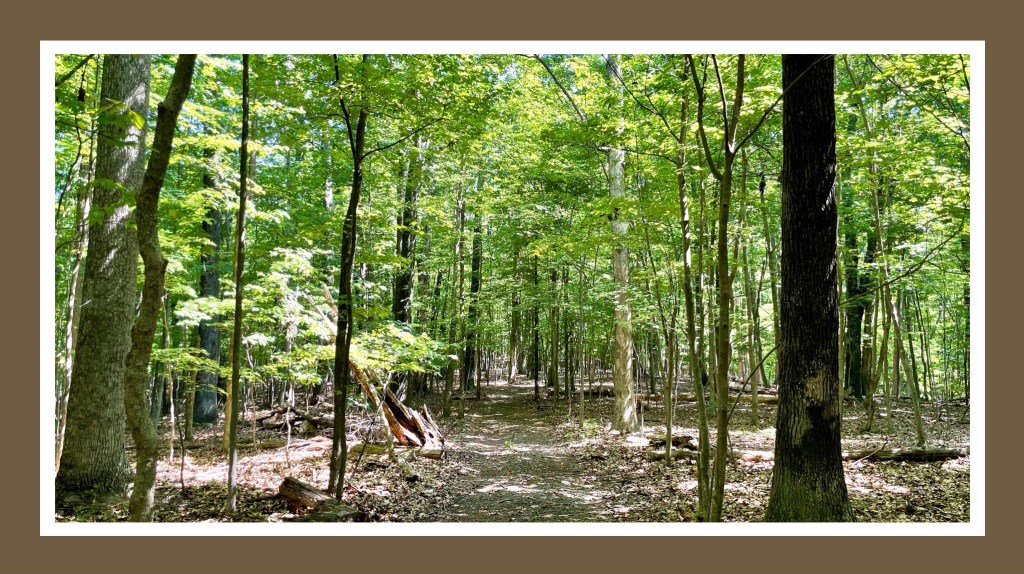
And now? Where’s my Zen Zone? Where do I relax, find peace and “meditate”? It’s an easy answer for me – on my daily walks in the woods. With my knee issues, I don’t run anymore, but I love to walk. Most afternoons you can find me, along with our dog Carmen, in the nearby woods on a three or four mile escape. Sometimes I remain attentive to nature and my surroundings, but other times, the “Zen times”, I lose track of where I am and what I’m doing. Suddenly, I come out of it a quarter mile from home. Hello!? Where am I? Oh yea, I remember now. Be thou at peace.
It’s a wonderful trick when it happens, although it doesn’t happen all of the time. And when it doesn’t happen, it’s still time well spent – a wonderful hike and enjoying what nature has to offer: the trees, animals, plants and views; wildflowers and ferns; a small stream or two; and of course, watching Carmen enjoy the walk as much as I do.
A Walk in the Woods Works for Me.
In either case, I always feel better after my walk. My mind is clearer and less stressed. Maybe I’ve solved a problem or two, or at least gained some perspective. Running and then later, walking, have always worked as exercise for me – burning off calories and trying to stay in reasonable shape. But the mental benefits aren’t to be undersold. As I become older, I am much more appreciative of those mental aspects.
What about you? Have you found such a zone? Perhaps running or walking? Working in the garden? Maybe hunting or fishing? Quilting? Yoga? Doing active meditation? What works for you? Where do you lose yourself and gain some balance in your life?
Making our way in the world today DOES take everything we’ve got. Politics, online garbage, traffic, aggressive people, health concerns, and other personal issues all raise our stress levels. Finding a Zen Zone can help make a difference, even if only for a few minutes each day. Taking a break from all our worries and reclaiming some balance and peace in our lives – I can live with that. Maybe the Cheers theme song was on to something after all.
“If you are depressed, you are living in the past. If you are anxious, you are living in the future. And, if you are at peace, you are living in the present.” ~ Lao Tzu
Addendum:
Zen is a school of Buddhism which emphasizes the practice of meditation as the key ingredient to awakening one’s inner nature, compassion and wisdom. The practice of meditation, as a means of attaining enlightenment
Cathy was thrown from her horse two months ago. While she has some lingering pain, overall, she was pretty lucky. It reminded me of the story my friend Bob Bishop told of being thrown by a horse, but unfortunately not clear, as the horse galloped away. He too was lucky as you’ll soon find out.
This is Bob’s story and it’s a good read. All I’ve added is a bit of editing.
In 1952 Crested Butte, Colorado was a bucolic place in the summer, with blue skies, white clouds and mountains surrounding the area. At the time, Crested Butte was a little town of maybe fifteen frame houses, a general store, and a post office/sheriff’s office. All were two stories high, and each had a door on the second floor. Crested Butte typically received twelve to fifteen feet of snow in the winter, and with drifts, that door became the only way people could exit their house. They would chop stairs in the snow and ice down to the street. As spring approached and the likelihood of more snow lessened, they tunneled through the snow to the front door and used that as access as the snow started to melt.
Needless to say, it was not the multimillion-dollar ski area it is today.
My father and mother were asked by our friends, the Dorsetts, if mom could help them out at the boy’s camp they had founded a few years earlier. This was mid-May, two weeks before the camp was to open for the summer, and the camp cook had just quit. The Dorsetts knew that mother was schooled as a dietician, and also knew she was a good cook. Coincidently, father had just accepted a new job with Aetna Life Insurance Company, which required him to attend a four-week school in Hartford, Connecticut. Mother and father agreed they could help the Dorsetts out and a little extra money would be welcome. My brother and I could go to the camp for free, and they waived the requirement that a camper must be at least twelve years old, for nine-year-old me.
Bob, About the Time of the Incident
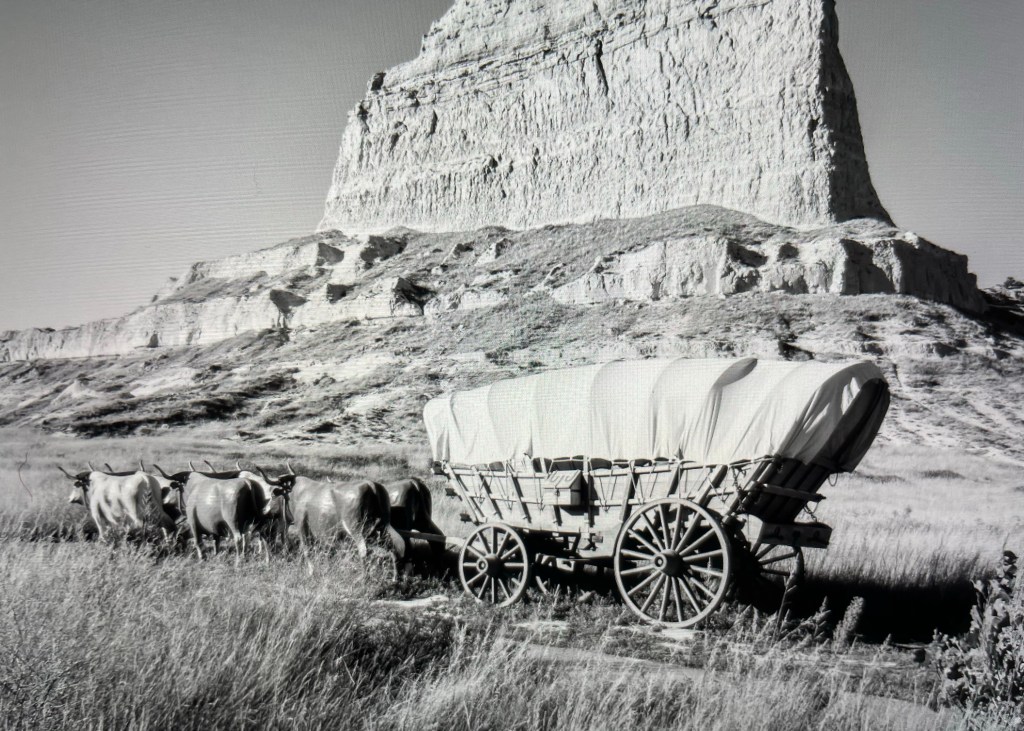
The camp was three miles down a dirt road from the town of Crested Butte, at the base of Mt. Crested Butte, which rose almost three thousand feet straight up from the meadow. We kids slept in Conestoga wagons – not replicas, but real ones left there by those who rode in them to seek their fortunes in the west decades earlier. Inside the canvas covered wagons were four sets of bunk beds, two on each side. Light came from three kerosene lanterns hanging in the middle. There were six wagons with eight boys to a wagon, for a total of forty-eight campers. The only electricity in the camp was in the kitchen, the residence “hall” for the staff and counselors, and the dining hall.
One of the Conestoga Wagons They Were Using.
It was pretty idyllic, for a young lad of nine. Other than the mandatory arts and crafts sessions, we were free to go fishing, hiking, or horseback riding, or to just play. I generally chose horseback riding, and off we rode to the meadows beyond the camp for romping around, and frequently to play flag football on horseback.
Great fun, until …
One fateful day, my horse saw something. A snake? A gopher hole? I’ll never know. She reared up – I was just moseying along, reins held loosely, and then I was airborne. Spooked by whatever she had seen, the horse took off at a gallop. I was thrown off, but unfortunately, not completely. My left foot caught in the stirrup, and I was just tall enough that my head almost reached the ground. I remember fervently hoping I didn’t hit a rock with my head, although it was clearly beyond my control. My journey across the meadow continued with me hanging upside down, bouncing off the ground in synch with the horse’s gallop. The direction I faced changed with each bounce – seeing the meadow stretching endlessly behind at one moment, and next peering at the blue sky from under the horse’s belly. Although I have no exact recollection, I was later told the whole journey lasted less than a couple of minutes before my horse was pulled to a stop by one of the counselors.
The next thing I remembered was lying in my bed in our Conestoga wagon, just staring up at the canvas top. I could talk and move my arms, but I had no sensation below my waist. In time, the “local” doctor (from Gunnison, 30 miles away, the last 15 on a dirt road) came in to evaluate my condition. He reminded me of a shorter, thinner Santa Claus, with white hair and a beard. After an eternity of poking, prodding and sticking pins into me everywhere, he drew a deep breath, turned to my mother and said, “He’s paralyzed, and it’s either temporary or permanent. Either way, the only thing you can do is make him comfortable.” He said if I could ever wiggle my toes, the paralysis was probably temporary, a traumatic inflammation of the spinal cord, and I would likely become fully functional. If not, well …
What’s a nine-year-old to think? Honestly, not much. I had no idea what “permanently paralyzed” meant. It never occurred to me I wouldn’t be able to walk, bike, play baseball, or go horseback riding again. My brother and some of my wagon-mates kept me supplied with comic books, Archie and Jughead, which helped while away the time. I was not in pain, but ached all over. I slept a lot.
As time passed, I kept looking down at my toes. I concentrated as hard as I could on wiggling them, but nothing happened. Until, on the third day, I stared at my toes, willing them to move. And then I swear, my right big toe did. I swear. I saw it move just a little. Didn’t it? I thought it did. I concentrated even harder, and, sure enough, I could actually see it move. Not much, but it actually moved. Yippee!!!
A couple of hours later, Mom came in with my lunch, and I said, “Mom?! Watch this!” And I wiggled my right big toe. She looked at me and said, “What, Bobby? What do you want me to watch?” I yelled, “Mom! LOOK! Look at my right foot!” She turned to look down at my feet, I wiggled my toe, and her eyes glistened as she turned back and looked at me. She broke into a huge smile, leaned down, and gave me a BIG hug.
In a couple more days, I could wiggle all of my toes. The doctor came back to check on me a week after the accident. I recognized him as he pulled the canvas flap aside and climbed into the wagon. I said, “Hi. Watch this.” He started smiling as I performed my new trick (wiggling my toes), and said, “You sure are one lucky little boy.” Pause. “I think you’re going to be just fine.” Then he left.
A couple more days passed, and I was up and walking, although I needed help to keep my balance. Another week, and I was fine, walking and running around – just as if it never happened.
Later in life, I learned there is real value in being as good as you can be, but it is really good if you’re also very lucky.
Bob in 1952, and Again in 2020.
Postscript: I started having back problems in 2017. It began with tingling in both quadriceps, but two months later, I had a pinched nerve in my neck. The MRI showed “severe” narrowing of where the nerves go from the spinal cord out to my left at L2-3 and to my right at L3-4 (aka “spinal stenosis”). Oh, also some scoliosis, having lost 4” of height in the last twenty years. I mentioned the horse escapade to my orthopedist and asked whether it might have some bearing on the condition of my back. He looked at me over the top of his horned-rim glasses and said, “It can’t a-helped” and smiled. And so did I.
Addendum:
I should mention Bob later attended the Naval Academy at Annapolis, and served for several years in the Navy as a submariner. He’s a great storyteller and I’ve done a couple of previous blogs with him about his time in the Navy. If you would like to read them, you can do so here:
Crazy Ivan anyone? … In 1970, our sub, the USS Finback, was helping with Anti-Submarine Warfare training for NATO aircraft. An observer on the sub said “I think I understand your plan. You alternate going to port or starboard as soon as you submerge.” I responded, “Well, not actually”, and we walked over to […]. Continue at: https://mnhallblog.wordpress.com/2022/04/13/submarine-games
The movie, “The Hunt for Red October” is child’s play, compared to what these submariners did on a daily basis … “The Comms Officer ran in and handed the CO the decoded message. The CO read the message, took the lanyard from his neck, unlocked the firing key cabinet, and reached in for the firing key. We were about to” […] Continue at: https://mnhallblog.wordpress.com/2021/06/23/we-knew-we-were-at-war/
The Washington Post headline screamed out “Barely a quarter of Americans still have landlines. Who are they?” I wanted to shout back, “ME FOR ONE!” Still, I wasn’t really surprised at the numbers. So why haven’t Cath and I taken the plunge? Well, there are one or two downsides to living in the country, which I will get to in a bit.
The article was actually quite interesting. It was based on analysis from the National Center for Health Statistics (NCHS) and their National Health Interview Survey (NHIS). The survey takes place on an annual reoccurring basis and covers a wide range of topics, including since 2003, cell phone usage. The change overall is pretty dramatic, as you can see from the chart.
Amazing Changes Since 2003.
Not surprisingly, more older people still maintained their landlines. There were however, a couple of other interesting statistics:
Homeowners are more likely than renters to have home phones.
Hispanics are less likely to have landlines than blacks or whites.
There are minimal differences between men and women on who has pulled the plug on landline service.
There are minimal difference based on education level on who has pulled the plug on landline service.
1% of Americans have no phones at all (cell or landline)
Some Interesting Statistics.
Researchers also found that phone usage is correlated with health and health issues, often in surprising ways. From a WaPo interview with Mr Blumberg, the head of NCHS, people who abandon landlines and rely only on wireless — “are generally more likely to engage in risky behaviors. They’re more likely to binge drink, more likely to smoke and more likely to go without health insurance.” That’s true even when researchers control for age, sex, race, ethnicity and income. Yep, you read correctly. That friend of yours who smokes cigarettes and binge drinks is also more likely to have only a cell phone.
So why do Cathy and I currently still have our landline? It’s simple really. We live in the country and at our home, cell service has occasionally been sketchy in the past. There are many cell towers across the county. Unfortunately, we have lived in a bit of a semi-dead zone. A few years ago, I put in an amplifier to strengthen the signal which helps, but provides no absolute guarantees. We’ve wanted to make sure that if we have to make an emergency call, we could do so.
I should also mention that about half the time when someone calls one of our cell phones, they don’t ring. Of course some would consider that a blessing. 😉
Maybe it’s time to cut our landline service. With much better internet service now, we also do Wifi calling, which helps from a reliability perspective. Currently, we pay $103.25/month for our landline, so over the course of a year, that’s a chunk of change ($1239 to be exact).
It’s interesting. Sometimes catalysts come from the strangest sources. As I’m typing this, Cathy and I have spoken and decided it’s probably time to give the landline the Heave-Ho. We may wait a month or so to allow some transition time for a few key notifications, but that’ll be it. We may be a bit late to the party, but we’re there now. When you see me smoking more cigars and my alcohol intake increasing, you will know we’ve pulled the trigger. I guess it’s a good thing I’m now on Medicare.
This “Digital Answering System” will be Going by the Wayside.
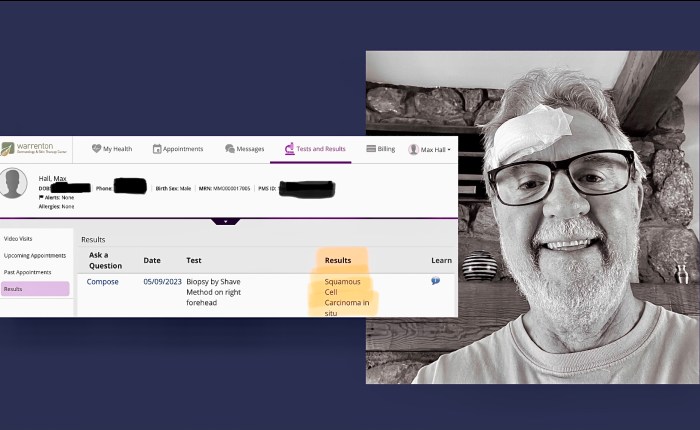
The surgery went well. As far as cancers go, squamous cell carcinoma (a type of skin cancer) is usually pretty minor, but it was still good to have the surgery over and done with. Cancer is one of those words that draws your attention, or at least it draws my attention.
It all started late last winter when I noticed a scaly spot on my forehead. I didn’t think much about it at first. Due to my AFIB, I take Eliquis, a blood thinner. One of the results of blood thinners is scrapes, cuts and wounds sometimes heal a bit weirdly. The blood doesn’t clot quite the same way it does for a normal person and as a result, minor scrapes or cuts can take a while to heal. That’s what I thought was going on with this scrape.
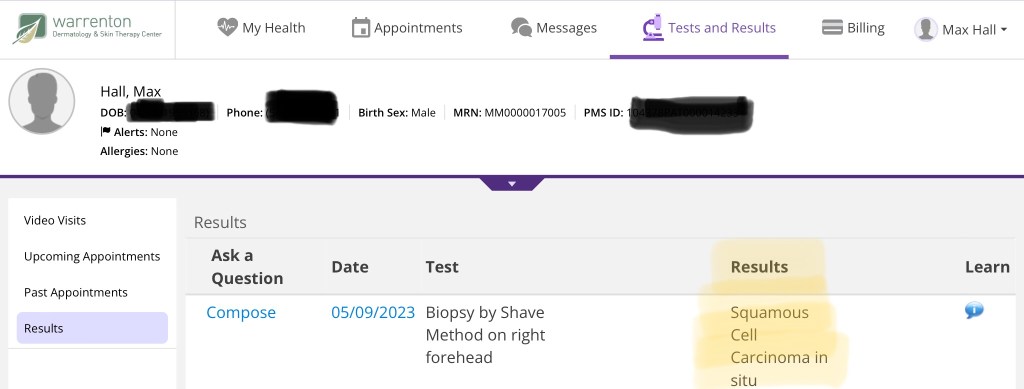
Unfortunately, it didn’t disappear and I mentioned it to Cathy. She looked and recommended I consult a doctor, so I called the Warrenton Dermatology and Skin Therapy Center at the end of April. They were a bit backed up and scheduled an appointment for me on May 9th.
On May 9th, I arrived at the Center and explained why I was there. They examined the spot and thought it looked OK, but there was something right next to the spot that concerned them. After numbing my forehead, they took a biopsy and told me the results would be back in ten days to two weeks and they would call me.
10 days came and went, then 11, then 12, then 13 days and still no word. Finally on Day 14 I called them. The results had just arrived, but hadn’t yet been reviewed by a doctor. And… They couldn’t release the results until a doctor reviewed them.
The next day, May 23d, I received a call from Danielle at the center. The biopsy came back positive for squamous cell carcinoma. What? What did you say? Squamous Cell Carcinoma.
A Diagnosis of Squamous Cell Carcinoma
Danelle continued to speak, and after a few seconds, I started listening again. They recommended the removal of the cancer with Mohs Surgery. They could do it there, or if I wanted to go with another dermatologist, I could. Another dermatologist? Until two weeks ago, I didn’t know any dermatologists… I told them their office was fine. After consulting calendars, the first available date was Saturday, June 3rd – 8AM and 12 noon were available. Was there nothing in between? Well, no, Danelle informed me – the surgery could take one to four hours, I should wear comfortable clothes, and bring something to read or pass the time.
What!?!
It turns out the surgery, while relatively simple, can take some time. Here’s how Mohs surgery works (according to the Mayo Clinic):
You are given a local anesthetic. After the anesthetic takes effect, the surgeon uses a scalpel to remove the visible portion of the cancer. The surgeon also takes a thin layer of tissue underneath and around the cancer. A temporary bandage is placed where the skin was removed. This takes only a few minutes.

The tissue is then taken to the lab for analysis. This part of the procedure usually takes the longest time and you'll wait about an hour in a waiting room.

In the lab, the surgeon cuts the tissue sample into sections and looks at them with a microscope. If there is more cancer, your Mohs surgery continues.

The surgeon removes an additional layer of tissue from the affected area. Again, you'll wait while the surgeon looks at the tissue in the lab.

This process continues until the last tissue sample removed is cancer-free. During the procedure, you may receive another shot of local anesthetic if necessary.
I chose the 8AM slot and the appointment was in the book. Of course after that, I did more research, and came to realize I was pretty lucky.
According to the Mayo Clinic, there are three major types of skin cancer – basal cell carcinoma, squamous cell carcinoma and melanoma. While squamous cell is considered relatively “mild”, if left untreated it can destroy nearby healthy tissue, spread to the lymph nodes or other organs, and may be fatal, although this is uncommon.
I also learned skin cancers are caused by many things, but most often are the result of overexposure to the sun. I guess my days of lifeguarding back in the early ‘70s may have had something to do with it. Not only did we not use any type of sunscreen, we used baby oil to tan more quickly. Whoops.
Time passed and I spoke with others. It turns out I’m actually a bit late to the skin cancer party. I learned numerous friends and acquaintances around my age have developed skin cancer. Many had the Mohs procedure, and all said it wasn’t a big deal.
On the 2nd of June, I made a big steak dinner with a salad. I mean, what the hell, if you are having a cancerous growth removed, it seemed a reasonable thing to do. A couple of glasses of wine, and a couple of hours of bad TV later, I went to bed and slept like a rock.
The next morning, after having some coffee and a small breakfast, I drove to the Center in Warrenton. On the way there, Taj Mahal and Keb’ Mo’ were singing “Waiting on the World to Change” on the radio and while I’m not sure why, it seemed to fit somehow.
I arrived at the center just before 8AM that Saturday. Doctor Dolan and his assistant, Amanda started their work just after 8:00. After Amanda put about 5 shots in my forehead to numb it, the Doctor came in. He was retired Navy, which for some strange reason gave me comfort. By 8:20, DR Dolan had taken the first cuttings and Amanda was cauterizing the one-inch wound. I recognized that peculiar smell of burning flesh from a previous surgery, but didn’t feel anything, as the anesthetic was still doing its job. Amanda escorted me to the waiting room where I did some reading while waiting for the results.
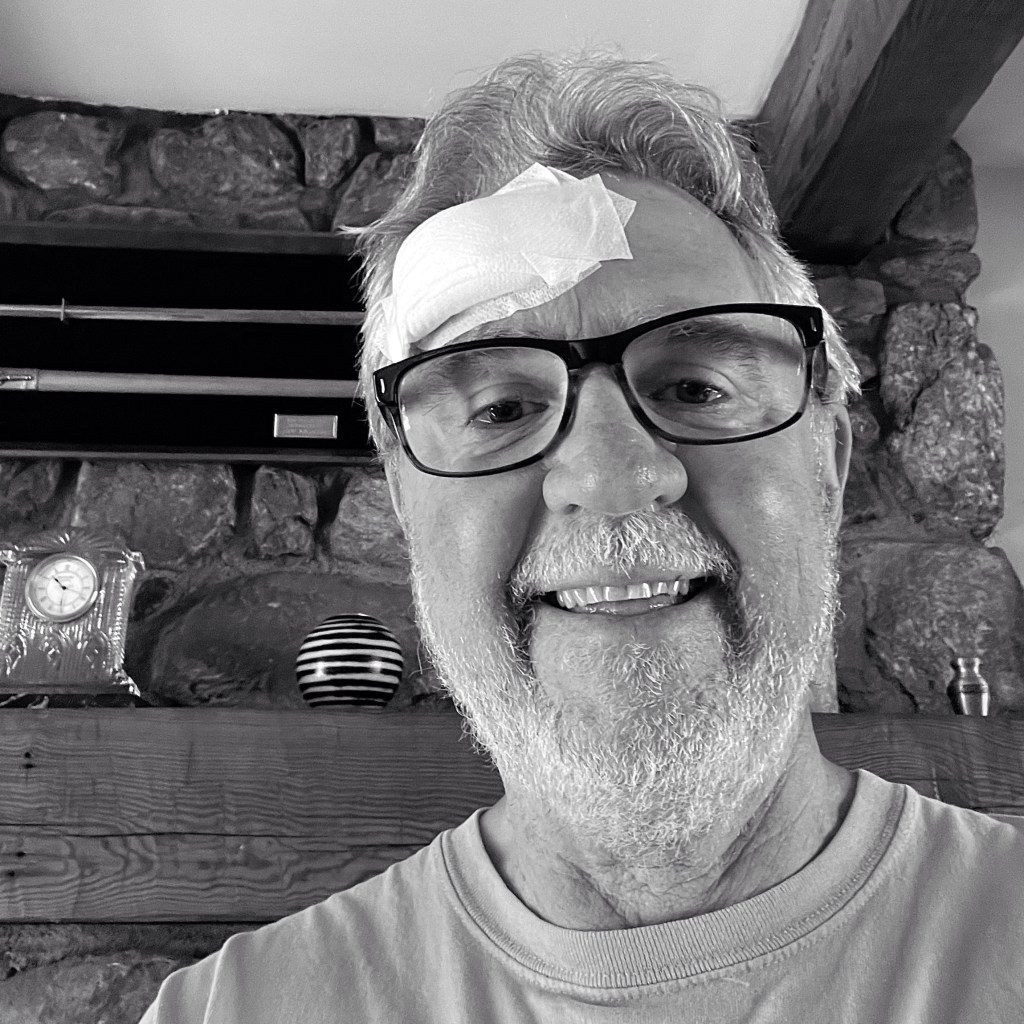
Thirty minutes later, Amanda came and gave me the good news. I was clear after the first pass. She said I was probably the easiest and shortest surgery the doctor would have all day. We went back to one of the rooms where the good doctor stitched me up. Seven or eight stitches I think but if you look at the picture, they’re big stitches. That’s fine with me. Just a little more character added to my forehead, and vitamin E should make it disappear over the course of the next year.
Mohs Surgery in Four Easy Steps.
There was a headache for a day or two, and a slight black eye in my future, but that was alright. Things were OK, at least for now.
In 1964, actor John Wayne was diagnosed with lung cancer. Some people recommended he hide the diagnosis due to concerns about his image – they thought it might make him look weak. At the time, many public figures hid illnesses they had for image reasons. He chose the opposite path. During a press conference after the surgery the Duke said “They told me to withhold my cancer operation from the public because it would hurt my image. Isn’t there a good image in John Wayne beating cancer? Sure, I licked the Big C.”
Squamous Cell Carcinoma isn’t the “Big C”. We have friends and family who are dealing with, or have dealt with breast cancer, lung cancer, pancreatic cancer, brain cancer, prostate cancer, melanomas… there’s a lot of bad stuff falling into the “Big C” category. I know I’m quite lucky and this is fairly minor, so let’s just call it the “little c”.
One of the things for people to remember is that any cancer, even something relatively minor like my “little c” squamous cell carcinoma can kill you if left untreated. If you see something that doesn’t quite look right on your skin, have it checked out. If everything is fine, all you did was lose an hour of time. And if it turns out to be a cancer of some sort, you did the right thing and can have it treated.
No need to be macho. No need to be stoic. Just get the damned thing checked out.
Really. Just Get the Damned Thing Checked Out.
— Feel Free To Share This Blog —
Addendum:
– If you live in the Warrenton/western DC suburbs area, I highly recommend the Warrenton Dermatology and Skin Therapy Center. They are great, and take care of you. You can find more about them here: https://www.warrentondermatology.com/
















 Live Life Exuberantly