
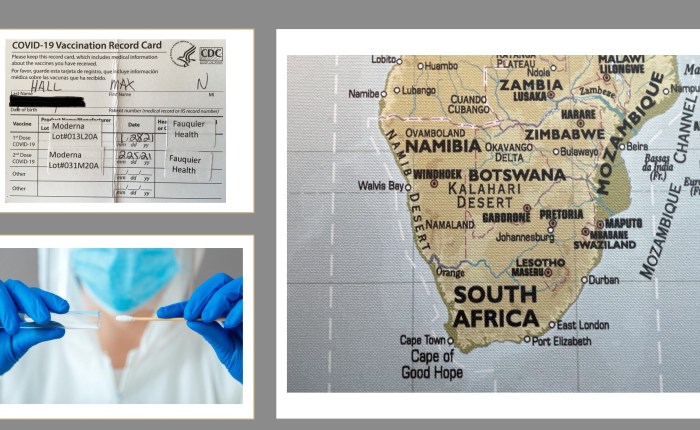
In three weeks, we depart for Africa. We’ll have our first (but not last) Covid PCR* test 48 hours prior to departure. In fact, it will be the first of four Covid tests during the vacation. Although the State Department says we shouldn’t travel to South Africa, Zimbabwe, or Botswana due to Covid, it turns out all are much safer than traveling to Florida.
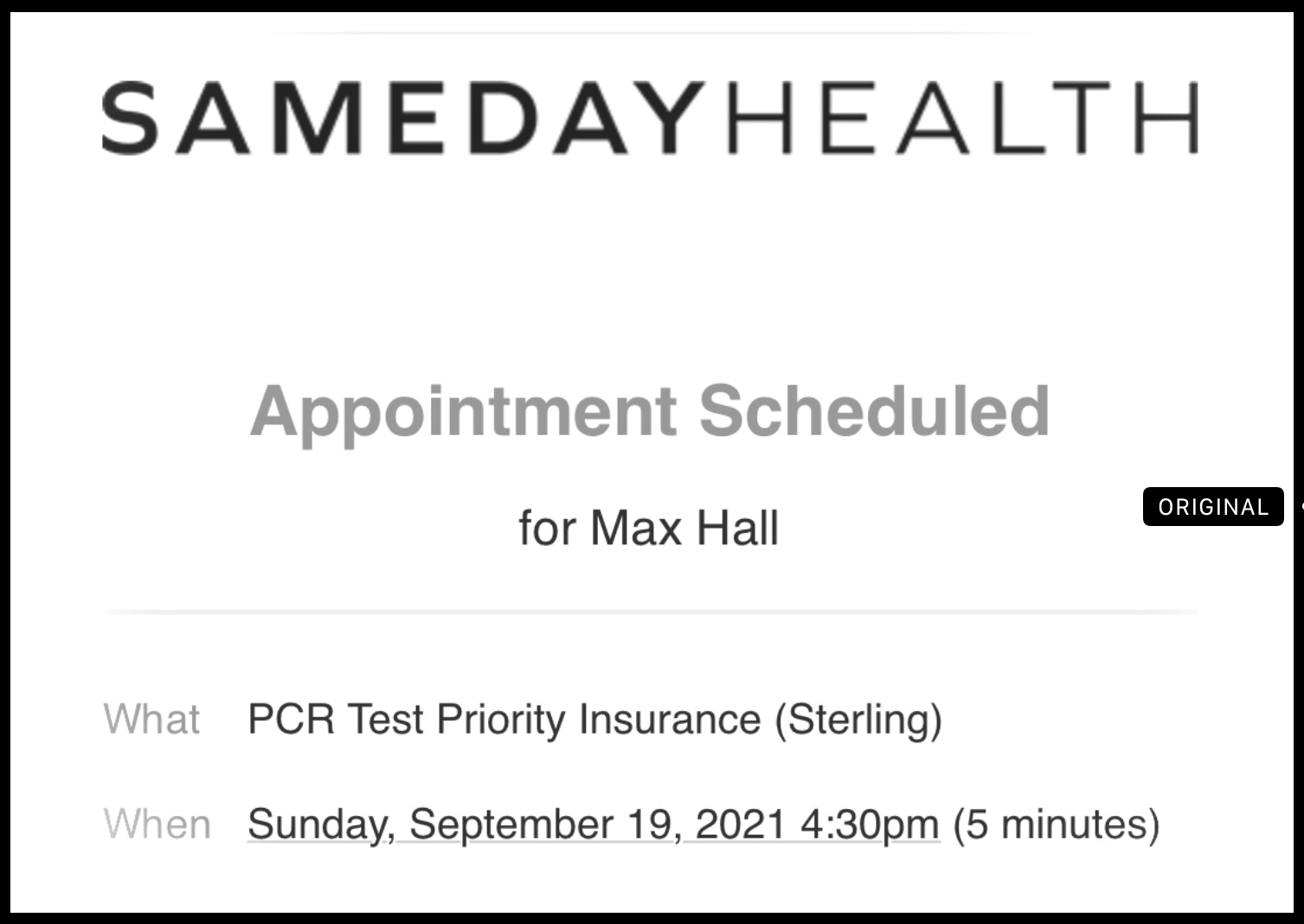
When we board our plane here in the States bound for Johannesburg, South Africa, we need to show the result of a test taken not more than 72 hours prior to our departure. When we enter Zimbabwe, a day after arriving in South Africa, the TEST RESULTS themselves can’t be older than 48 hours PRIOR to the beginning of our travels. Given that it takes at least 16 hours here locally to receive test results back (for a PCR test, not the rapid test), the logistics are doable, but a bit … challenging.
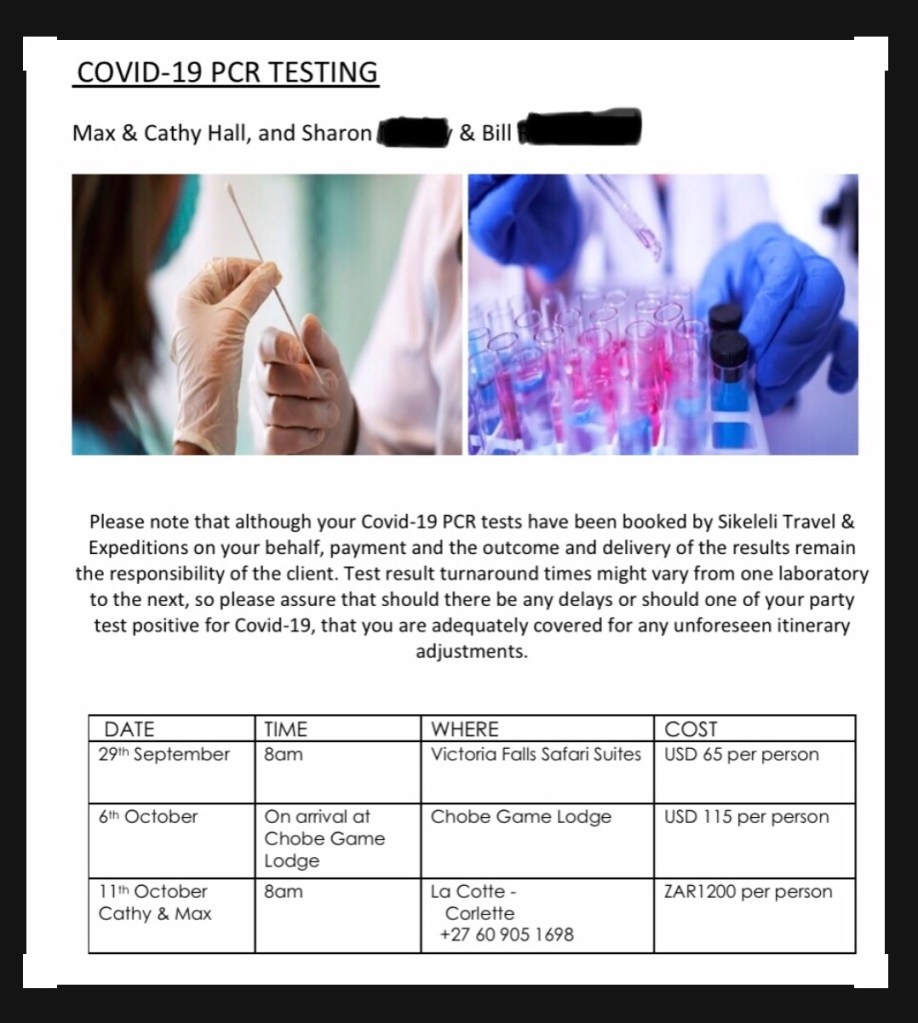
A week later, when we travel from Zimbabwe to Botswana, we’ll need another PCR test. Eight days after that, when we return from Botswana to South Africa, we will receive our third PCR Test. Finally, when we return from South Africa to the States, we will have our fourth Covid PCR test. None of the tests can be older than 48 or 72 hours, depending on each country’s requirements, hence, the number of tests required. Karen, our travel agent, has already scheduled the tests in Africa for us.
The Department of State is currently warning against travel to Zimbabwe, Botswana and South Africa due to the increase in Covid cases in all three countries. Here’s the interesting part. The current number of weekly Covid infections per 100,000 people in each of these countries is:
Zimbabwe – 13 infections per 100,000 people
Botswana – 318 infections per 100,000 people
South Africa – 136 infections per 100,000 people
Guess what Covid weekly infection rates are per 100,000 people in Florida, Louisiana, Texas, and Mississippi?
Florida – 691 infections per 100,000 people
Louisiana – 720 infections per 100,000 people
Texas – 397 infections per 100,000 people
Mississippi – 753 infections per 100,000 people
The United States over all – 306 infections per 100,000 people
Seriously. And they are worried about us traveling to South Africa, Botswana and Zim.
In Africa, the precautions don’t stop with the tests. We will fill out health questionnaires at border crossings and hotels. At the Safari Camps where we are staying, the staff are all 100% vaccinated. If they depart the camp, they are retested upon return, and all staff are temperature tested twice daily. They will also temperature test us once per day. All staff members are masked. They will clean and sanitize all public and private areas as they are used.
Is there risk in going on this trip? Sure. There’s always risk. In addition to Covid, there is also the chance of malaria, typhoid fever, cholera, hepatitis, tetanus, stomach distress, and assorted other diseases.
Cath and I, along with our friends Bill and Sharon have discussed the risks and received continual updates from Karen. For Covid, we will mask as needed, distance from others as required, and wash our hands frequently. Although the vaccination rate is not as high in these countries as it is in the US (due to vaccine access), they are doing the right things to minimize the risks.
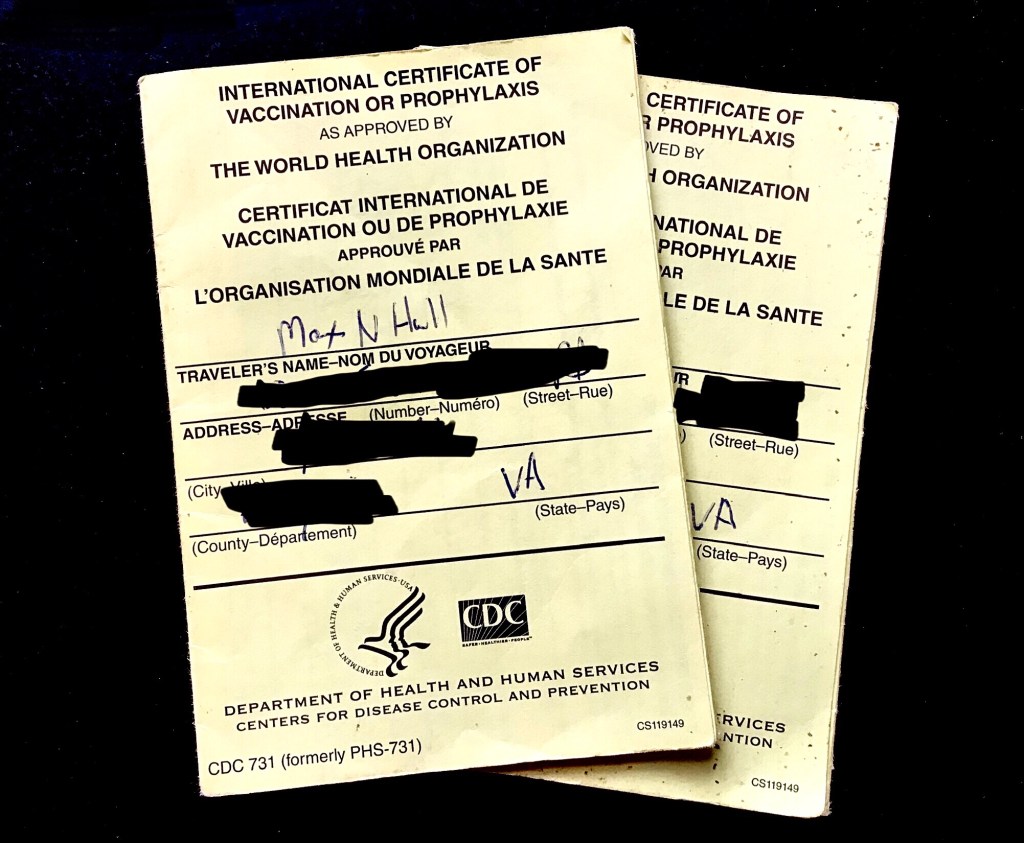
As to the other diseases, it’s amazing. They have these wonderful things called vaccines and vaccine boosters now that take care of several of the diseases. For the rest, good hygiene and drinking water only from known sources solves most potential issues. As a side note, Cathy and I have had our International Vaccination cards for decades – they are a great way to keep track of the current status of all of our vaccines, boosters and shots. It’s unclear to me whether owning these card makes us a part of some International Communist conspiracy or not :-).
All four of us are unbelievably excited about the trip. Originally scheduled for September of 2020, we postponed a year, due to covid overall. Now? We are ready to go.
Risks? Yes, we are ready to take some risks, and travel to Africa. Just don’t ask us to go to Florida, Louisiana, Mississippi or Texas. There are some risks we just won’t entertain.
Addendum:
• For international travel, you must have a PCR test, not the rapid test. It is considered more reliable. Unfortunately, it takes longer to receive the results.
• US Covid statistics are at this link if you want to look up your state: https://covid.cdc.gov/covid-data-tracker/#trends_dailycases_7daycasesper100k
• African Covid statistics were provided via Reuters. You can look at countries world wide at the following location: https://graphics.reuters.com/world-coronavirus-tracker-and-maps/countries-and-territories/botswana/ They provide US overall statistics there as well, which match closely to CDC statistics.

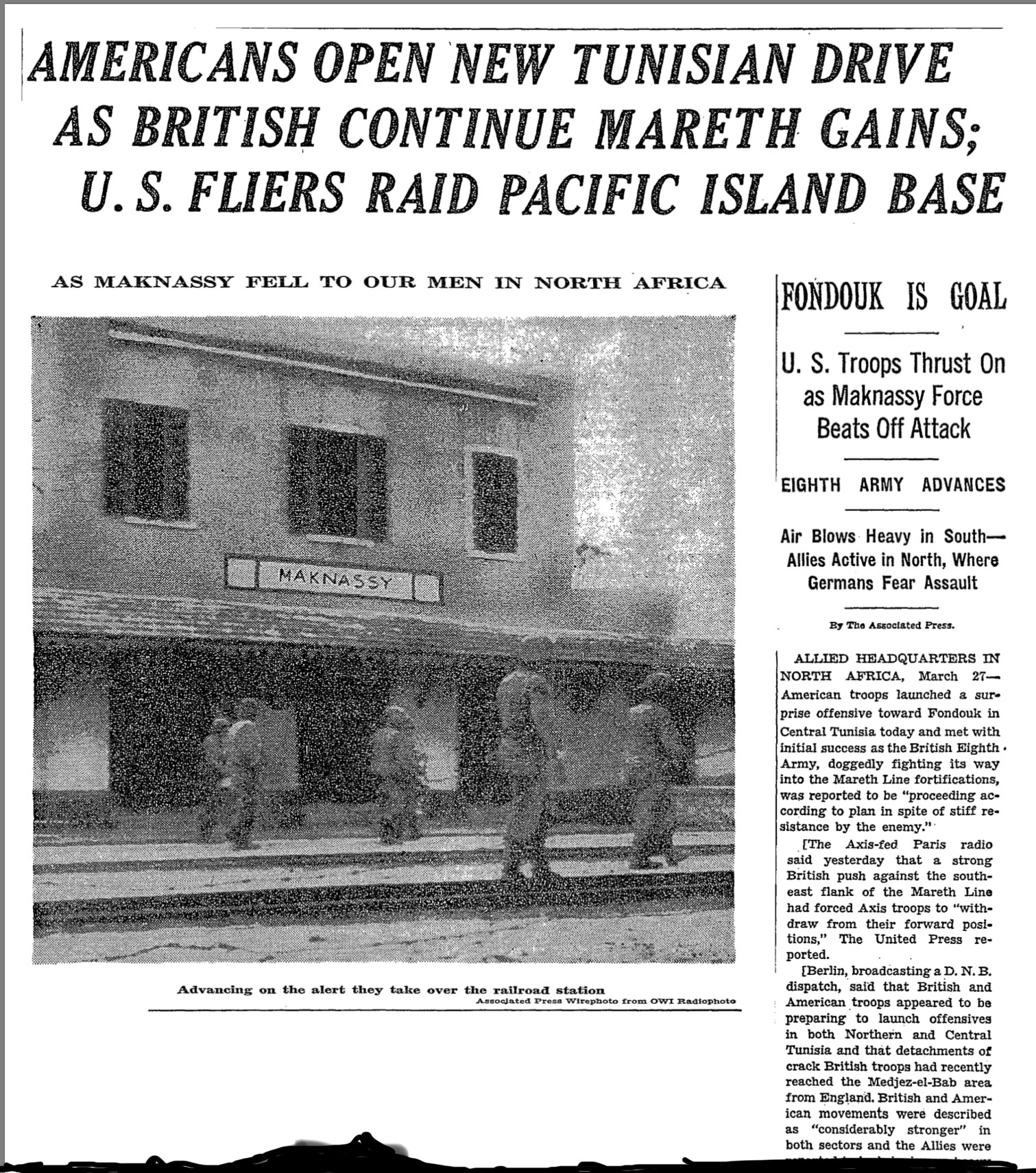
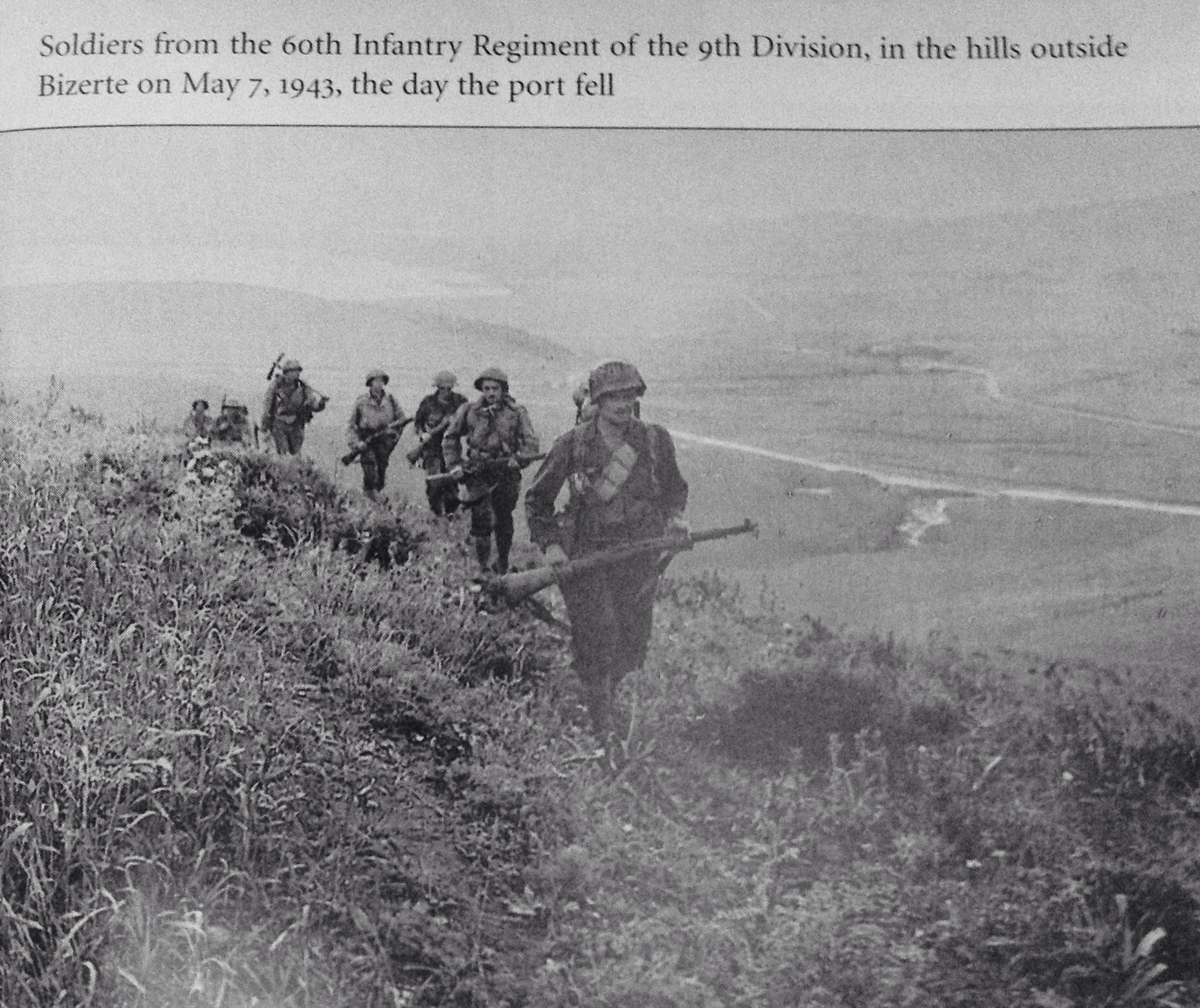
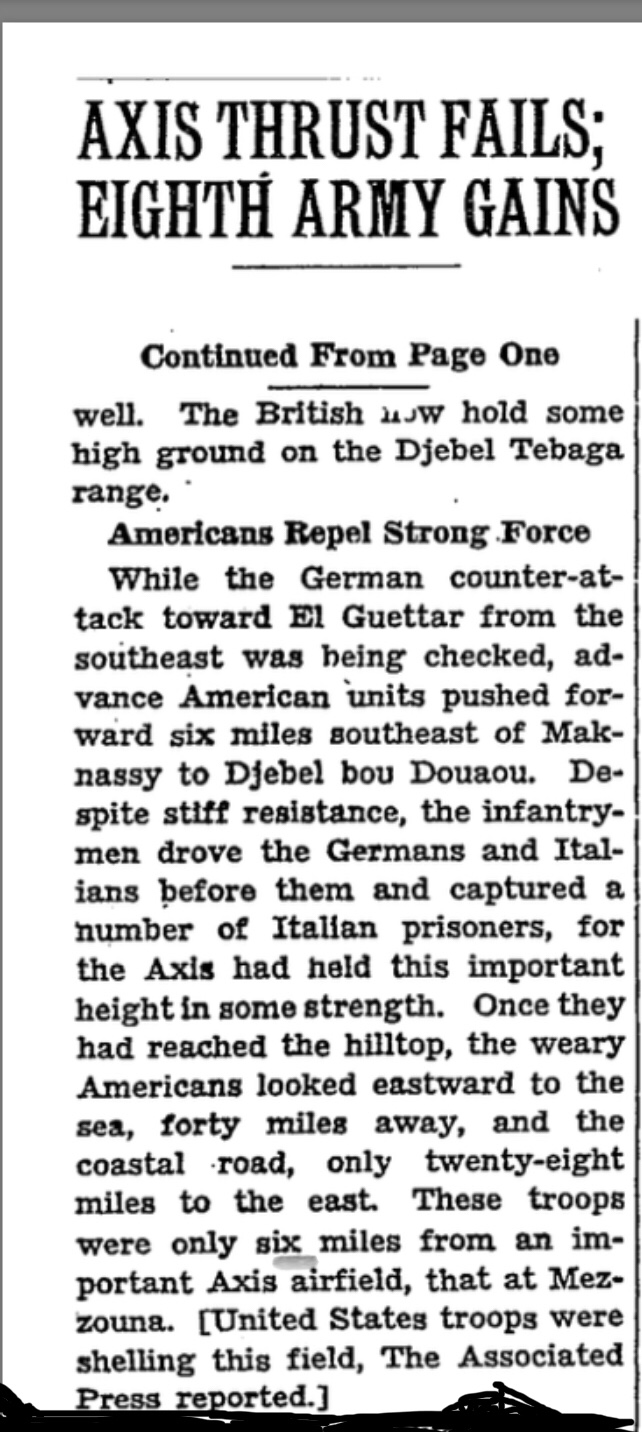 The 60th attacked a series of hills on the nights of the 22d and 23d with mixed success. As dad explained “we always attacked at night, but the Germans were well dug in. And they had mines on many of the approaches. The Germans used mines everywhere. The going was very slow.” They did take several of the hills, particularly on the north side of the pass, but the Germans still controlled the south side. Hill 322 was attacked many times but never taken. The advance bogged down, but the US Forces acted forcefully enough to cause the Germans to deploy reserve units, keeping them from engaging with Montgomery and the British, further to the south. Dad said that from where they were, they could actually see the open land on the other side of the pass, even though the Germans still controlled the south side of the pass. That open ground was what the tanks needed.

 Live Life Exuberantly