Cold Warriors and The Fall of the Berlin Wall

November 9th marks the 31st anniversary of the fall of the Berlin Wall in 1989. Between 1979 and 1989, I spent 8 1/2 years in Germany. As Veterans Day approaches, I think back to those years. To rephrase Gen Hal Moore*, we were Cold Warriors once, and young.

Had a land war with the Russians happened in Europe, in the ‘80s, it would not have been a particularly fun time. While we would have slowed the East Bloc armies, shear numbers would probably have worn down US and NATO forces. Many of us would have died before reinforcements could arrive. Perhaps tactical nuclear weapons would have been employed. Not a pretty picture.

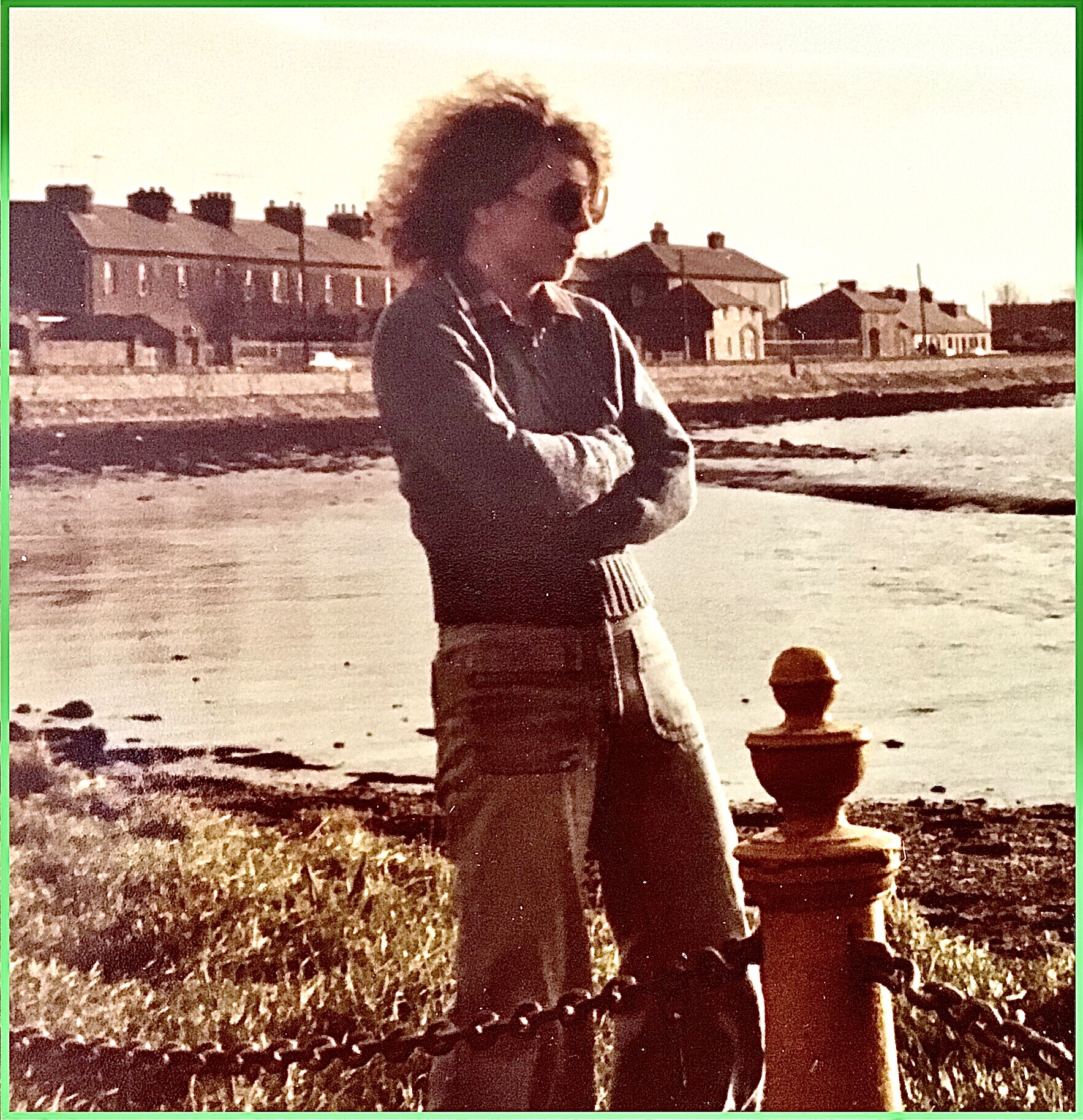
Lieutenant Hall on a winter exercise in Germany

During that decade in Germany, I served in a number of command and staff positions. As a new Lieutenant, during my first assignment I deployed with an Infantry Brigade in the 3rd Infantry Division, just a few kilometers from the Czech border. Towards the end of the decade, I worked in several engineering jobs that affected the United States Army, Europe (USAREUR) Headquarters in Heidelberg, the NATO Headquarters in Mons, Belgium, and the US European Command (EUCOM) Alternate Support Headquarters (ASH)** in High Wycombe, England. ASH was where EUCOM HQ would bug out, if they needed to evacuate from Germany. Over all of those assignments, hung the Cold War threats of both conventional and tactical nuclear warfare in Europe.

And then of course, there was the ultimate symbol of the Cold War in Europe, Berlin.

We would have lost West Berlin almost immediately if a war started. Time has passed and many have forgotten that small bit of history during the Cold War. After WWII, Berlin, located in what became East Germany, was divided between the US, Britain, France and the USSR and remained an “occupied city” until the reunification of Germany in October, 1990. West Berlin was an island surrounded by East Germany. The history of Berlin is cluttered with stories of challenge and heroism during that time.

Berlin and the two Cold War Germanys

Many of those stories happened when East Germany built the Wall in 1961 to keep people from leaving for the Western sectors. They created a whole new level of aberration – Guard towers, zones of death, dog runs, bunkers and an 87 mile long wall – all to keep people in the Eastern Zone. Over the next 28 years, 5,000 people would escape from East Berlin, while more than 200 were killed trying.

The Wall. In the left picture you can see the “zone of death”. In the right, one of the Guard Towers

Cath and I made it to West Berlin twice during our time in Europe, once by train through East Germany, and once by plane, flying into Tempelhof. In addition to good food and bier, we of course saw Checkpoint Charlie, the Brandenburg Gate, the Reichstag, the Wall, and many other sites. We also visited East Berlin on one of those trips. As a GI, you needed a special pass and to be in uniform. If not in uniform, you were considered a spy. While there, we saw the Brandenburg Gate again (from the East), some memorials and did a bit of shopping. Parts of East Berlin looked much as it did immediately after WWII, with bullet holes still evident in the walls of homes. Seeing both sides of Berlin provided a huge contrast between the vibrancy of West Berlin and the starkness of the East. It was almost like having a color film suddenly turn black and white.

Lieutenants Hall and Chase in front of the Brandenburg Gate in East Berlin

Five months after Cathy and I returned to the States in June of ‘89. the Wall “fell” on November 9th. We watched in wonder, as TV coverage showed people sitting on the wall drinking champagne, while others hit it with sledge hammers. It was a surreal moment because of the cruelty and suppression it represented, and the beginning of the end of the Cold War. We drank a bottle of champagne ourselves that night.

A crowd gathers at the Wall near the Brandenburg Gate, Nov 9, 1989.

Eight months later, in July of 1990, our friend Dave who was still stationed in Germany, attended the “The Wall – Live in Berlin” concert organized by Roger Waters of Pink Floyd. The concert was held near the Brandenburg Gate in Berlin. While there, Dave collected several pieces of the wall as mementos. Later, he generously gave us one. That small piece of concrete with a smear of blue paint across it now sits in a curio case in our front room.

Our piece of The Berlin Wall

Glasnost followed over the next couple of years, and the Cold War with the USSR came to an end. I left the Army in 1992 to pursue other opportunities. It seemed the United States, and the world, were on track for more peaceful times.

Of course, we all know what has happened since then.

Looking at the faded pictures of Lieutenant Hall, and the little piece of blue painted concrete now, I remember those times, and the mission we accomplished. Did we gain anything? Yes, but in the end, how much did it matter? The world remains a dangerous place and in the long term, there is always a new risk around the corner. We fight our wars and finish them. Then our soldiers wait, and prepare for the next one. Currently, they are waiting in nearly 150 countries around the world.

Addendum:

  • Special thanks to my wife Cathy for help in recollecting memories of our times there, as well as editorial support. Also thanks to Colleen Conroy for her always helpful editorial support.
  • * Hal Moore, along with Joe Galloway wrote the book ”We were Soldiers Once, and Young”. The book is a classic and tells the story of the battle in the la Drang Valley in Vietnam in 1965. It was the first large scale combat between US Forces and the North Vietnamese. The movie came later with Mel Gibson. If you get a chance, read the book. It’s much better.
  • Here are some past blogs about my military time in Germany.
  • And here are a few blogs about some of the more fun times Cathy and I had in Germany.

    Don, Bonnie, and the Channel Locks

    My brother (in law) Don passed away a year ago on October 20th, 2019. We still grieve his loss. Having said that, I’m a big believer in keeping the memories of those who have gone before us alive, by remembering the good times we had with them. Here is one of my favorite Don memories. It involves Don, Bonnie, Her Belly Button Ring, and a pair of channel locks….

    In June of 2000, Cathy visited Bonnie and Don in Sausalito, California. I had to work at the time and couldn’t make the trip. While there, The Sisters of No Mercy (as Cathy and Bonnie are known in some circles), along with another friend, decided to have their belly buttons pierced. Jason, the gentleman who did the piercing and put the rings in, gave them specific instructions, including: 1 – Move the ring around a bit every day; 2 – Apply a sea-salt solution on a daily basis for six months to insure the piercing heals properly; 3 – Don’t take the ring out for six months to keep the piercing clean; and 4 – no swimming or hot tubs for six months.

    For the next three months, The Sisters both diligently cared for their bellies and their belly button rings. They checked in with each other on email and via phone. The rings were doing nicely, and there were no issues.

    Then came Labor Day weekend. On the Friday of that weekend, Cathy and I flew to San Francisco for a visit with Bonnie and Don in Sausalito. We were looking forward to the time together, prior to a longer vacation on the California coast.

    On Saturday, after a big breakfast, we walked about a mile to the Sausalito Art Festival. The Festival was held every year on Labor Day Weekend at the waterfront and was quite the event. Art of all kinds was on display and for sale. There were a number of bands playing throughout the day, and they had wonderful food and drink to keep you sated. It was our kind of place. We started the day wandering through the displays, listening to the music and drinking champagne. Cathy and I bought a print of two tulips, and Don and Bonnie bought a painting of two chairs facing a lake. He called the painting “Retirement”. I snuck off and bought Cathy a pair of earrings for Christmas at one point. The weather turned warmer, and the boys switched to beer, while the girls stayed with champagne. We eventually settled in front of one of the stages and had some food while listening to a band. We christened ourselves the 4-H Club, and later, bought a poster to commemorate the day. It was a great way to spend a Saturday afternoon.

    Poster commemorating the meeting of the 4-H Club…

    As afternoon turned to evening, we packed up and made the trek back to Bonnie and Don’s. We were going hiking at Point Reyes the next day, so the thought was to just have a quiet relaxing evening at home.

    We were sitting in their Family Room drinking some wine, when all of a sudden Bonnie said “UH OH!”. We all looked at her.

    The ball closure just popped out of my belly button ring!”

    Silence on our part, as the three of us looked at Bonnie.

    Bonnie kept playing with the ring, but couldn’t get the ball to lock back into the ring. After a bit of time passed, Cathy went over to Bonnie to see if she could assist in putting the ball back in the ring. More time passed, and still the belly button ring refused to cooperate.

    Don, being a man and having a penis, then said something like “Let me take a look. I’m sure I can get the ball back in” and went to assist Bonnie. Cathy stood up and got out of the way, while Don started “helping” Bonnie.

    Time passed. Then a bit more time passed. Things were, perhaps, becoming a bit tense when suddenly, Don said “Max, go get the channel locks”.

    Me: “What”?

    Don: “Go get the channel locks. They are in the garage on the work bench. I need them to hold Bonnie’s belly button ring steady”.

    Me: —silence—, then “OK, I’ll be right back”.

    I went out to the garage and found the channel locks where Don said they would be. I returned to the house and handed them to Don.

    The Channel Locks….

    Don was at Bonnie’s knees trying, not very successfully, to hold her belly button ring with the channel locks, while inserting the ball with his other hand. Cathy and I watched from nearby. Finally he said “Max can you hold the ring with the locks? If you are able to do that, I think I can insert the ball”.

    I knelt next to Don, grabbed the locks, and put a hold on the belly button ring. Don then attempted to insert the ball multiple times and failed. The ring moves around a bit in the locks with each attempt. This was not good. Things were definitely heating up, until finally all four of us were talking at once.

    Holding the channel locks, while Don attempts to insert the ball in Bonnie’s belly button ring

    Suddenly, Bonnie, in a loud voice said “WE ARE DONE HERE! I WILL PUT A BANDAID ON THE RING TO HOLD IT IN PLACE”. Then softer “Tomorrow, we’ll see if Jason can fix it”. Bonnie put a bandaid on the ring opening and we all retired to the family room. Needless to say, the rest of the evening was pretty quiet.

    The next morning, Bonnie called Jason’s shop and said she had a small problem, could she drop by. He was open, and she could indeed come to the shop. His place was on the way to Point Reyes, so we all drove together, planning to go directly to our hike from his shop.

    We arrived at Jason’s and he greeted Bonnie and Cathy warmly. Bonnie explained about the ball popping out, while omitting the multiple strategies and attempts to put it back in. Jason said no problem, let’s have a look.

    Bonnie went into a separate room with Jason and he took a look at the ring. Then he pulled out a magnifying glass to look at the ring and we heard him exclaim rather loudly “Oh my God! What’s happened to the ring?! There are scratches all over it. This will tear up your skin! We need to replace this ring”.

    Don and I looked at each other and then quickly looked down. We didn’t say a word. We could hear Bonnie speaking in a muffled voice with Jason in the next room. A few minutes later they came out, and Bonnie had a new navel ring. Jason looked at Don and I intensely, but didn’t say anything. Bonnie paid, and we continued to Point Reyes for our hike.

    I suppose, in retrospect, using channel locks to hold the ring may NOT have been the best possible solution. Could it be, with all of the good times at the Festival, both our judgement, and our steadiness may have been slightly off? Nah…. 😉

    John Lennon said “Life is what happens to you while you’re busy making other plans”. The 4-H Club had a lot of great adventures over the years. While some were planned, this one definitely wasn’t. Aren’t the unplanned ones often the best?

    The 4-H Club sending “Cheers!” to everyone

    Over the course of my life, I’ve had many good friends. I’ve also been blessed with two friends I have loved like brothers. Don was one of them. I miss him tremendously. Although he died doing what he loved (surfing), he still died way too young. I’ll do my best to tell the stories, and promise to keep his memory alive. As a friend, a brother, and one of the two guys married to The Sisters of No Mercy, I owe him that.

    God has made everything beautiful for its own time. He has planted eternity in the human heart, but even so, people cannot see the whole scope of God’s work from beginning to end”. (Ecclesiastes 3:11).

    Addendum:

    This write up, by coincidence, is occurring at the five year anniversary mark of when I started my blog, “Live Life Exuberantly” . It seems fitting this anniversary blog is about Don. He was someone who knew how to live his life exuberantly, and did so.

    I’ve published 189 blogs in those five years. Here’s the one that started it all: https://mnhallblog.wordpress.com/2015/10/19/why-live-life-exuberantly/

    John Lennon sang “Life is what happens to you while you’re busy making other plans” in the song “Beautiful Boy”. Variations of those words were around for at least two decades prior to Lennon’s usage. A version was attributed as early as 1957 to cartoonist, Allen Saunders, who worked on the comic strips “Steve Roper” and “Mary Worth”.

    Duty Officer and the Nuclear Missile Protests

    It was in October, 1981 when Lieutenant Colonel (LTC) Rex Pierson came in my office and asked “Who is the Duty Officer this Sunday?” I checked the roster and said “2LT Smrt”. He answered back “You need to redo the schedule and appoint yourself as Duty Officer. We may have trouble from the Nuclear Missile Protests”.

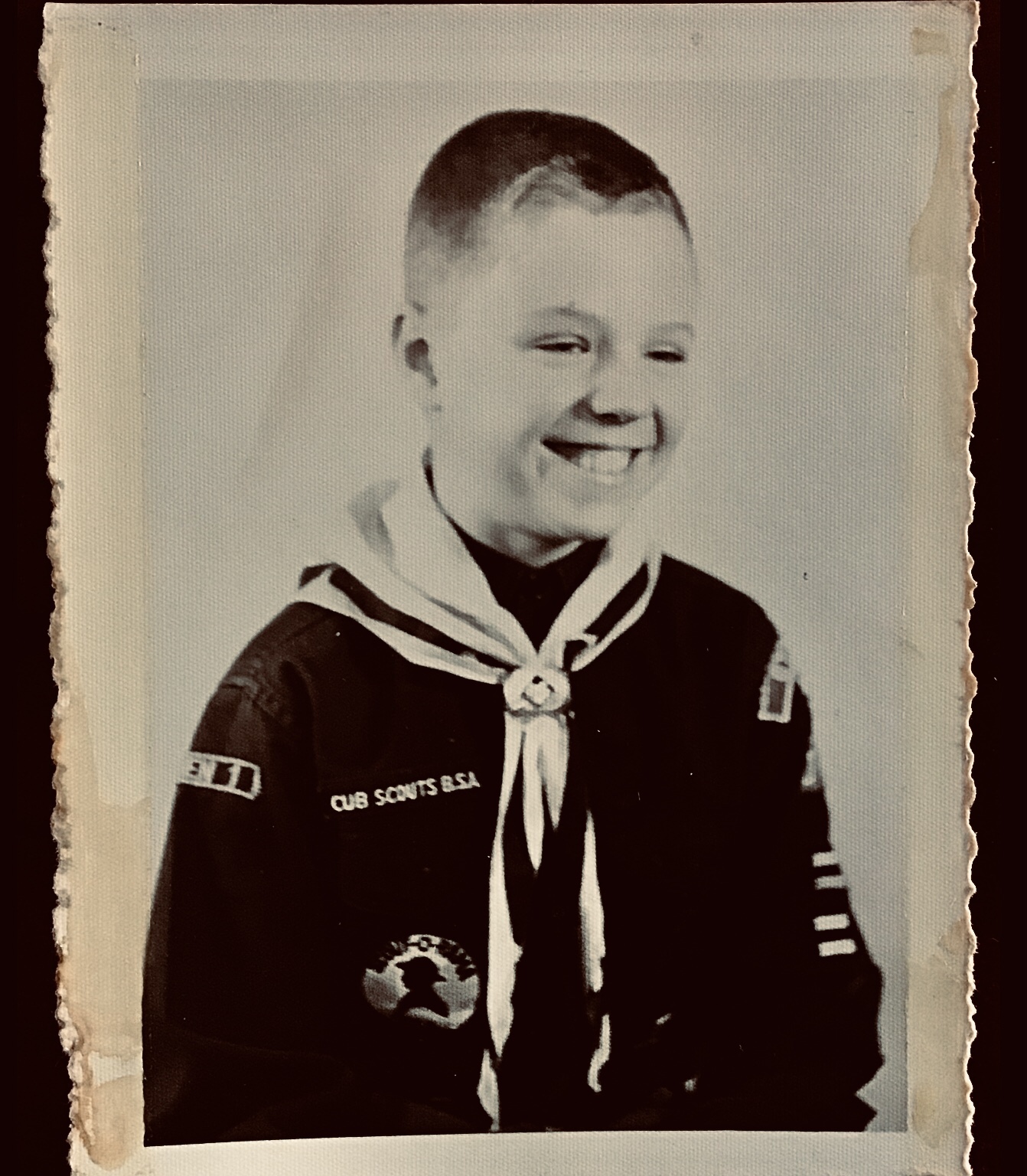
    This is me, about the time of the incident

    I was a First Lieutenant (promotable)* and the Battalion Adjutant for the 123D Signal Battalion, 3rd Infantry Division. One of my responsibilities was to maintain the Duty Officer roster for the battalion. The Duty Officer was “responsible” for the battalion during non-duty hours, when the officers and senior NCOs were not at work. Since the 123d was isolated at Hindenburg Kaserne (army post) by itself, our Duty Officer was also responsible for all activities on the Kaserne. On weekdays, the Duty Officer served from 5PM to about 6AM the following day. On weekends, your tour went from 8AM to 8AM the following day.

    Things were a bit tense in West Germany that Fall. In August, a large car-bomb exploded at Ramstein Airbase, wounding twenty people. Responsibility for the bombing was claimed by the Red Army Faction, also known as the Baader Meinhof gang. In a letter, they declared “we have undertaken a war against imperialist war.” On September 14th, there were violent protests in Berlin, coinciding with a visit by Secretary of State Al Haig. Over 50,000 people took part in the protest. Two days later, on September 16th, the Baader Meinhof gang struck again with an assassination attempt on General Frederick Kroesen, the commander of all United States Army forces in Europe. Using a Soviet made grenade launcher, they severely damaged his car, but the General and his wife were unharmed.

    The NY Times coverage of the attack on General Kroesen

    On Sunday, October 11th, a massive protest was scheduled to take place against the deployment of US made medium-range nuclear missiles in West Germany. At the time, the decision to deploy the Pershing II and cruise missiles, which could reach Moscow, was viewed by many as an escalation of the arms race and could put Europe on the brink of nuclear war.

    This was all part of the backdrop for LTC Pierson’s visit to my office. The main protest was to be in Bonn, the Capitol of West Germany, while scattered protests were expected in other cities. Based on recent history, concerns were legitimate that things could turn violent, or the Red Army Faction would infiltrate the protests and incite violence against US facilities. As a result of these concerns, not only did Colonel Pierson want me as duty officer, he wanted me armed. Normally, the Duty Officer in the 123D, did not carry a side arm, or ammunition. October 11th would be different. I was to carry my 45 (.45 Caliber pistol) and two clips of ammunition.

    October 11th dawned and I was at the Kaserne early that morning. I checked in with our company’s armorer and drew my 45 and the two clips. I strapped the 45 to my hip, while the two clips went in my shirt pocket. I then went to the battalion headquarters and relieved my predecessor.

    The Duty Non Commissioned Officer (NCO) and I had taken what precautions we could ahead of time. We agreed to spend more time watching the perimeter of the Kaserne and had drafted a few soldiers from my old platoon to act as observers. They were to notify us immediately of any suspicious activities. Hindenburg Kaserne was only about two or three blocks square, so it wasn’t difficult to view the entire facility from a few locations. The walls surrounding the Kaserne had barbed wire in some locations, but not all. Some of the buildings were directly on the surrounding streets with no wall separating them. The back of the Kaserne bordered a small park, and we had concerns people could slip through the woods in the park and approach us from that direction, so greater surveillance was placed there.

    Hindenburg Kaserne

    The day passed slowly and quietly. We checked in with the MPs across town, and with 3ID Headquarters on a frequent basis. A small protest took place in our city of Würzburg, but it was peaceful. As day turned to night, Colonel Pierson stopped by. We toured Hindenburg, and he was satisfied with how things looked. After reminding me that other acts of violence had occurred under the cover of darkness, he left, and wished me a peaceful night.

    Neither the Duty NCO nor I slept. We patrolled frequently and checked in with our observers regularly. The night passed without incident.

    The next morning, we debriefed the commander and Sergeant Major when they arrived. I turned my 45 and ammo back in and went home for a few hours of sleep. The event was a nonevent, at least for Würzburg.

    I later learned the protest in Bonn attracted over 250,000 people. At the time, it was the largest demonstration ever in postwar Germany. Two peace groups associated with the united Protestant Church in Germany chartered 3,000 buses and 42 trains to bring protesters from other parts of West Germany and neighboring European countries. With the opportunity to easily join the protest in Bonn, there were actually very few demonstrations elsewhere in Germany. The organizers policed the protest themselves and held the few trouble makers in check. Overall, it was a peaceful event.

    In the years since then, I’ve thought about that day and night and what I would have done, if protests had come to our Kaserne, or someone had tried to breach our facility. If we knew a protest was imminent, we certainly would have called the MPs for support and they probably would have arrived in time. If something happened unexpectedly and an intruder (or intruders) gained access to the Kaserne, what would I have done? Called out my old platoon as a quick reaction force? Sure. But what if it happened suddenly and I was alone? Try to talk to them? Fire a warning shot? Shoot the person? I like to think having the clips in my pocket and not locked and loaded would have enabled me to take some time and behave in a reasonable way, but I don’t know that for sure.

    Our lives are defined by the events that happen in them, and sometimes by those that don’t. Looking back, I’m glad I never actually had to make a decision that day. Maybe things would have ended well, but maybe, just maybe, they wouldn’t have.

    The classic novel, Once an Eagle, by Anton Meyer has a great quote – “if it comes to a choice between being a good soldier and a good human being – try to be a good human being“. On October 11th, 1981, I think I was prepared to be both. We try to prepare for realities, some of which never actually happen. Sometimes, it’s good they don’t.

    Addendum:

    The violence continued later that year. In December of 1981, Army Brigadier General James Dozier was kidnapped by the Red Brigade in Italy. He was rescued by Italian Police Special Forces, after 42 days of captivity.

    * First Lieutenant (promotable) – I was selected for promotion to Captain earlier in the summer of ‘81 and LTC Pierson moved me from an assignment as a Platoon Leader to the Battalion Adjutant position, a Captain’s billet. I was promoted to Captain in January of 1982.

    Second Lieutenant Chris Smrt’s name really was Smrt, with no vowels. I believe his family was originally Slavic.

    You can find out more about the attack on General Kroesen here: https://www.nytimes.com/1981/09/16/world/us-general-safe-in-raid-in-germany.html

    Among attendees at the protest in Bonn, while there were certainly activists, there were also church people, students and some German soldiers. Speakers included politicians, union organizers, clergy, and a Nobel Prize winner. From the US, both Harry Belafonte and Coretta Scott King, the widow of slain civil rights leader Martin Luther King Jr., attended and spoke. You can find out more about the Nuclear Protests on that day here: https://www.washingtonpost.com/archive/politics/1981/10/11/250000-in-bonn-protest-stationing-of-nato-missiles/d37b0ddc-baa7-4df3-88a7-11e94491e47a/

    Once an Eagle, by Anton Meyer was first published in 1968 and is a classic novel about warfare and leadership. It has been used at various times by West Point, The Army War College, and the Marine Corps for leadership studies. The book has also been on the Army Chief of Staff’s recommended reading list for professional development, and is currently on the Marine Corps Commandant’s recommended reading list. You can find out more about the book here: https://en.m.wikipedia.org/wiki/Once_an_Eagle

    The Old Maple Tree

    The Silver Maple sits on the property line between The Bayhouse, and our neighbor Vinnie’s home. It’s old and gnarled. Half the trunk appears to have rotted out from the inside. Vinnie says it looks like something that would grow at Hogwarts.

    The Silver Maple – 14 feet from our home; 11 feet from Vinnie’s.

    While not ancient, the tree is old. It’s 136 inches in circumference, which, according to tree guides, makes it about 130 years old*. Our home at the Bay was built in 1890, so maybe the people planted this tree around the time they built the house. Or perhaps it was already here, and they built the home next to the, then, small tree. The Faulkner store and house (Vinnie’s home now) weren’t built until 1912, so it’s entirely possible they planted it, not thinking another house would be built so close.

    Now, it’s hoary and contorted, and probably doesn’t have many years left. A Silver Maple at 130 years of age is considered quite old. A storm, or lightning, broke the top two main trunks off the tree sometime in the past, so it’s not as tall as it once was. Instead, it has that knobby, twisted, slightly wizened look that old trees, and some old people develop. A bit of a Halloween look, if you will. There’s also a metal “door” of sorts embedded at the base of the tree. I’ve tried to lift it, or move it, but it won’t budge. At some point in time, I fully expect Christopher Walken, as The Headless Horseman, to emerge through the door.

    Where’s Christopher Walken when you need him?

    Vinnie is right, there is a bit of Hogwarts about the tree, although for my money, it looks more like an Ent**. If only it could talk. I think about what it has seen with the passing of time – it could tell a tale or two.

    Many different families have lived in our home since 1890, but no one ever chose to take the tree down, even though it has hung over the top of the house. The tree has survived hurricanes and Nor’easters over the years, including Isabel in 2003, which tore out the County Dock, not 50 yards away. In June of 2011, a derecho came across Tilghman and toppled several old trees on our street. This was the day before we put an offer on The Bayhouse. The sound of chainsaws filled the air as we looked at the house, and the tree for the first time that day. Neighboring trees had splintered or blown over, but our Silver Maple was untouched.

    The tree is gnarled, stunted and twisted, but it’s still here. Maybe John Prine is right and “… old trees just grow stronger”. Every year in springtime, it produces whirligig seeds. The leaves pop out, and it again shades our back porch, and house. We’ve strung old floats and crab pot markers in the branches, giving it a more festive look. Lunches on the porch are nice. Having a candlelight twilight dinner under it’s branches is always a special evening.

    Good for a few more years, I think….

    Some folk, who are either wiser, or more cautious, have said it’s time, we should take the tree down to prevent it from falling and causing damage. We politely thank them for their advice, but look at each other and know that’s not going to happen. I’m not sure why, but in our minds, the tree has earned the right to be here a while longer. I don’t know how many years it has left, but I think at least a few. We will enjoy this Silver Maple for as long as we can.

    Addendum:

    • * I found a couple of different ways online to measure the approximate age of a tree. The most common method was to:

    – Measure the circumference of the tree at 4 1/2 feet from the base
    – Divide the circumference by Pi (3.14) to get the diameter
    – Multiply the diameter (in inches) by the tree growth factor (3 for a Silver Maple). This gives you the approximate age.

    For this tree, the circumference at 4 1/2 feet was 136 inches
    – 136/3.14 = 43.31 inch diameter
    – 43.31 x 3 = 129.9 years

    While not exact, the method is a good approximation. Interestingly, another method I used (measuring a foot off the ground) came up with almost exactly the same age. Perhaps the tree isn’t 130 years old, but I have to believe it’s at least 108. Vinnie’s house was built in 1912. No one would plant the tree right between the two homes, fourteen feet from our house, and eleven feet from Vinnie’s. No one.

    • ** Ents are the Tree Herders in the book and movie The Lord Of The Rings by JRR Tolkien. They look like old trees, and can talk and walk.
    • Thanks to my old friend Tim Stouffer for the John Prine quote.
    • Fairbank, our little two street village here on Tilgman Island, looks much as it did in a map from the 1930s. The makeup of the village though, has changed significantly. Back then, many of the villagers were watermen, working the Bay for crabs, oysters, and fish, or in fishing related industries. Today? About half the homes are owned by “part timers” such as ourselves, or retirees who have moved here. There are still a few families with connections to the Bay. Fritz, a waterman in his youth, now owns a local lawn service. Chris and his wife Christine moved here a few years ago. Chris is an active Waterman, and part time boatbuilder. Captain Stanley Larrimore, a 90 year old local legend, still lives across the street from us. He sailed and worked his Skipjack, Lady Katie, on the Bay for decades.

    Lou Brock and Feeling Mortal

    I was sad to learn that Lou Brock, one of my boyhood heroes, recently passed away. He was 81. As a young kid playing Little League Baseball in the ‘60s, if I could have been anyone in the world, it was Lou Brock. In my dreams, he was who I wanted to be. There’s nothing like losing a childhood hero to make you reflect on your past.

    Just a couple of left fielders with big smiles

    The Saint Louis Cardinals baseball team acquired Brock from the Cubs for Ernie Broglio in a deal since considered the “steal of the century”. Brock played left field for the Cards, helping lead them to pennants in ‘64, ‘67, and ‘68, and World Series Titles in ‘64 and ‘67. Me? I played left field for the Ottawa, Illinois Yanks in Little League. We won the City Championship in 1967.

    The resemblance between us, at least as far as left field goes, ended there. Brock was elected to the Baseball Hall of Fame in 1985. Along the way, he surpassed Ty Cobb’s stolen base record, and collected over 3,000 hits, putting him in elite company. Me? My baseball career ended the year we won the city championship. I’d made the cut for Little League (yes, Ottawa Little League held a “draft”), but didn’t make Pony League, and didn’t try out for High School Baseball. I had a pretty short baseball career.

    While Brock’s career continued, mine ended in ‘67 with the city championship

    Fortunately, there were other lessons I learned from Lou, including hard work, dedication, humility, and playing while hurt. Those are good life lessons, no matter what you are doing. Later, it also wasn’t lost on me that he was a Black man finding his way in America, during one of the more tumultuous periods in our history. I learned about dignity from him as well.

    Between recently turning 65, and witnessing a close and old friend deal with cancer, I’m in a more thoughtful mood these days. My friend had some good news lately, and for that we are all thankful. As for turning 65, I have been texting with friends I’ve known since grade school about Medicare and Social Security. While the discussions are humorous, there’s also a bit of grim reaper attitude in them.

    With Brock’s passing, I was thinking back to my youth. Through the rose tinted glasses of my memory, I see Lou and I both chasing down deep fly balls in left field. I’ve also thought of the rest of my life. There’s nothing like losing a childhood hero to make you reflect on your past. I’ve been lucky and had a good run so far. As Sinatra sang, “Regrets? I’ve had a few…”, though I wouldn’t trade any of it. The good, the bad and the in between have all made for a pretty good life.

    Kris Kristofferson, who is still among the living, penned a song called ”Feeling Mortal” a few years ago. I love how the song ends –

    “Soon or later I’ll be leaving

    I’m a winner either way

    For the laughter and the loving

    That I’m living with today.”

    I’m going to continue to try and live life exuberantly each and every day. Thanks for reminding me to do so, Mr. Brock.

    Addendum:

    • Lou Brock had quite the career. In addition to helping the Cards with three pennants, and two World Series, he was a National League All Star six times, and led the League in stolen bases eight times. He surpassed Ty Cobb’s stolen base record, which many thought unassailable (Brock’s record was later broken by Ricky Henderson). He had 3026 hits (number 27 on the all time list for MLB), and had a .293 lifetime batting average. Brock’s .391 World Series batting average is still the highest for anyone who played over 20 series games. He was inducted to the Baseball Hall of Fame in 1985, his first year of eligibility. After his baseball career, he became a successful florist in Saint Louis, and still later, an ordained minister. He had a pretty good life, especially if you consider he was born in 1939 to a Louisiana sharecropper.
    • Frank Sinatra singing “My Way” is of course a classic. “… Regrets, I’ve had a few, But then again, too few to mention …” – For those who may have forgotten, the song was actually written by Paul Anka.

    The Lie – He Knew it, Gene and I Knew it, and She Knew it

    I was in 6th grade when I first realized adults lied. I’m not talking white lies, but honest to goodness, flout the truth lies. Mrs R____ told a lie to our principal at McKinley School. He knew it, Gene and I knew it, and she knew it, but she still got her way.

    It was 1966. I was one of several sixth graders selected to serve on McKinley School’s Safety Patrol. Our job was to act as crossing guards at two key intersections the kids used on their way to and from school. Back then, there were no adult crossing guards, just us sixth graders. Speaking with old friends now, we were all pretty proud and happy to have been selected. As my friend Joy recently said “We were like the Postal Service, doing our job in snow, sleet, rain and ice … Such different times”.

    The McKinley School Safety Patrol Schedule for 1966/67

    The two crossing points were on State Street on the West Side of school, and Route 23 to the East of the school. State Street was a city street and fairly busy, but the traffic was relatively slow. Route 23 was a state highway and the crossing point was only 1/2 mile inside Ottawa’s city limits, so traffic moved at a high rate of speed. At the Route 23 crossing point, there was one of those old stoplights where you pushed a button to turn on the red light for oncoming traffic. The last stopsign before that stoplight was seven miles away, in Grand Ridge.

    Gene Grobe and I were the early morning crossing guards on Route 23. This was when kids were on the way to school at the start of the day. We received instruction on use of the stoplight, checking especially for semi truck traffic, and were told to never let kids cross the road until the traffic had actually stopped at the light. We were actually given a booklet with additional instructions in it.

    Our Safety Patrol Handbook

    The school year started, and Gene and I met at the crossing early each morning. We kept the little kids under control, pumped our arms to get a honk from the passing semis, and never ever let kids cross the road until traffic was completely stopped.

    Occasionally at the start of the year, a parent might accompany their Kindergarten child as far as our crossing point. Once we stopped the traffic with the light, their kid crossed the road, while the parent returned home. There were no other major roads or crossing points between our stoplight and the school, so the parents were OK with their child walking the rest of the way with the other children.

    Mrs R____ was one of those parents. At the crossing, while other parents would just say hello, or stay quiet, Mrs. R_____ always offered advice on when to push the button on the light, when to let the kids cross and so on. You know the type. A nice enough lady, but a bit overbearing. In today’s world, she would definitely be considered a “Helicopter Parent”. We felt sorry for her son.

    After the first couple of weeks, only one parent still accompanied their child to school. Yep, you guessed it, Mrs. R_____. She was still bringing her son every morning, and still offering advice. It was, to be honest, a bit annoying.

    Time passed, as did the seasons. It was darker in the mornings. Cars and trucks had headlights on and our stoplight was visible a long ways away. Eventually winter arrived, and with it the occasional snow. Gene and I, bundled up against the cold, were at the crossing every morning doing our job. And Mrs. R____? She still arrived faithfully every morning, and chattered away. In fact she talked more, and offered even more advice, if that was possible. Gene and I thought her a bit odd by then. You know how as a kid, you sometime had a sense something wasn’t quite right with an adult? That was how we thought about her.

    Then one day, Gene and I were called to the principal’s office. Our principal, Mr. Powell was THE MAN. He was universally respected, but in general, you didn’t want to get called to his office. When we arrived, Mr. Powell looked a bit uncomfortable, something you never saw. He proceeded to explain Mrs. R_____ was going to start working the Route 23 crossing with us in the morning. One of us asked why. It turns out she claimed her son was nearly killed when a truck didn’t stop at the light. What?! We told Mr. Powell it never happened. We never let the kids cross until the traffic HAD stopped. He could check with any of the kids. It didn’t make sense. Her son never left her side until she told him to. How could he almost be hit, if she were controlling him so closely? He listened to us, and didn’t say anything at first. His eyes shifted back and forth a bit, and eventually, he said something like “Well, I understand, but we need to move on”. Gene and I returned to Mr. Ledbetter’s class wondering what the hell had just happened.

    A few days later, an article appeared in the local paper. In the article, she claimed her son was almost struck by a semi, and would have been thrown a block if she hadn’t grabbed him. As a result, she would now work as a crossing guard, while her son went back and forth to school.

    This was all a complete fabrication. Nothing even close to this happened. As an adult, I would call it a flat out lie. Even as a kid, I felt my personal honor was impugned. I remember talking to mom about it, and asking why Mrs. R____ would lie. She paused, and in a controlled voice replied “That’s the way some people are. They want to feel important, so they make up stories”, or words to that effect.

    Mrs. R_____ worked the remainder of the year with Gene and I. We pushed the light button, and she always went onto the highway with a small stop sign on a paddle and held it up. My buddy Howard was on the 1150 shift with Jim Carroll. This was when kids returned home for lunch, including the Kindergarteners, who were released a bit later than the rest of the grade schoolers. She worked their shift as well. As Howard recently said, “ She was a psycho. She just started showing up, and we were demoted”. Kindergarteners only went to school for half a day, so those were the only two shifts affected.

    Mrs. R_____ never spoke about the alleged incident with Gene and I, and we never brought it up. Actually, we didn’t speak to her much at all, although she continued to chatter away. As a child, what do you say to an adult, who you know has lied about you?

    Addendum:

    • I’ve thought quite a bit about Mr. Powell’s reaction to all of this. He was always a straight shooter. I’m guessing she threatened some sort of legal action, or that she was going to the newspaper. Plainly, she lied to get her way. As he spoke with us that day, I knew he didn’t believe her, but I couldn’t figure out why he was making the decision he did. Now, I also wonder if she wasn’t one of those parents who are at the school, always complaining about something. The other thing I’ve thought about since then is this: if she was at the light and saved him at the last second, how did she even allow the incident to happen? If she were at the light, she never would have let her son leave her side with a truck approaching and not stopping. As an eleven year old boy, it was particularly frustrating for me.
    • Thanks to Joy Starjak Algate, Lynne Galley Robinson, Tim Stouffer and Howard Johnson for sharing memories with me about McKinley School and serving as a School Patrol Officer. We all chuckled at some of the memories. Only Howard and I had the “honor” of Mrs. R____ working with us at the stoplight on Route 23. Gene Grobe has since passed away.
    • Special thanks to Joy Starjak Algate for the included photos of our schedule and the Safety Patrol Members Handbook. They backed up the memories provided by others.
    • Another interesting memory surfaced among several of us as we talked. We all remember going home at lunchtime, and watching “Bozo’s Circus” on TV while at home. If you grew up in the Midwest, I think Bozo was almost required
    • I haven’t named Mrs. R_____ here, as I don’t know if she, or any of her family are still alive and living in Ottawa, Illinois. The intent of the blog is not to disparage an individual, but to reflect on how the incident effected me at the time.
    • McKinley was a great place to go to for elementary school. If you want to read other blogs about the school, you can find them here:

    Justice is a Journey

    Justice is a Journey

    Last Saturday morning, I arrived at the Courthouse in Warrenton, Virginia. It was the tenth week in a row for our local Black Lives Matter Vigil. The Vigils started shortly after the murder of George Floyd, and have occurred every week since then. Seeking justice is a journey, and not always a short one.

    Some of the Attendees in front of the Warrenton Courthouse.

    I’m guessing some of you are now shaking your heads, wondering how I became part of such a radical undertaking.

    … Oh my God! Max was hoodwinked by those radical BLM leftist groups! He’s calling for the destruction of America! Maybe he was a Marxist spy when he was in the Army! He always seemed like a good man, I wonder what happened?…

    Except justice and equality aren’t radical undertakings, they are something we should all want to strive towards. Peaceful protest is as American as apple pie. Shouldn’t we want justice and equality for all of our citizens?

    Our local vigil, Vigil for Action: Black Lives Matter, is sponsored by The Virginia Interfaith Center for Public Policy, The League of Women Voters, and The NAACP – Fauquier County Branch. These aren’t exactly communist or violence prone organizations. In fact, they are just the opposite. They are a part of the fabric of our community, and are quietly making a difference every single day with their good activities across Warrenton and Fauquier County. We should all be so radical.

    Each week, somewhere between 65 and 120 people gather peacefully at the Warrenton Courthouse. The group coordinates with our local police, and there is always at least one officer in attendance providing protection. After an initial greeting, there are words of inspiration from a clergyman or speaker. Previous speakers include clergy from Baptist, Catholic, Buddhist, Episcopal, and Unitarian churches. The crowd then spreads out on the sidewalks of the four streets that intersect at the Courthouse and holds a Vigil for the next forty five minutes.

    On this most recent Saturday morning, we totaled over 100 participants. We were a multi-hued and multicultural gathering. Black, brown, cream, and white. Women, men, children and dogs. Protestants, Catholics, Jews, Muslims, and probably a few agnostics and atheists. Old, middle aged, young adults and toddlers. You could look around and see the America of today, and the future.

    Atefeh Rokhvand welcoming the crowd.

    We were greeted by Atefeh Rokhvand, who then introduced Imam Nahidian from the Manassas, Virginia Mosque. After his thoughtful and encouraging words, we moved to the streets approaching the courthouse, where we stood waving our signs. Many who drove by honked and gave a thumbs up. Some just looked straight ahead. And two (that I saw) flipped us off. Interestingly, of the two flipping us off, one drove a black pickup truck and the other a black Dodge Charger. Evidently, they thought black vehicles mattered, but their views apparently didn’t extend to black lives mattering.

    People at the start of the most recent Black Lives Matter Vigil in Warrenton

    What good does all of this do? Are we changing any minds? Scott Christian of The Virginia Interfaith Center for Public Policy explained the mission for the local Black Lives Matter Vigil as fourfold:

    • To encourage an understanding of systemic racism as being both institutional and personal.
    • To promote changes in policies and laws by advocacy and elections.
    • To demonstrate peacefully, with a diverse group of participants, that ending racism is not partisan.
    • To keep this issue in the public eye through the November elections.

    I can’t tell you whether we changed any minds last Saturday. I do know advocacy and bearing witness are key to effecting change for most issues. I encourage all to confront the issue of racism and consider how you can make a difference. If “Black Lives Matter” with Capital Letters causes you concern that you are somehow supporting a larger group, then simply remove the capital letters. We should all agree, black lives do matter.

    For my friends who say “all lives matter”, yes, of course they do. But we have a sickness in this country that is going to kill us, if we don’t cure it. When you can be publicly suffocated to death, killed while falling asleep in a Wendy’s parking lot, murdered while sleeping in your own bed, murdered while jogging through a neighborhood, or shot in the back seven times while your three children watch, the world is not right. We are not right. If we don’t solve this problem of racism, what becomes of us?

    These Vigils were originally scheduled to end Labor Day weekend. Last week, a decision was made to extend them through the November 3rd elections. As we approach the end of summer, the three organizing groups are distributing information to: help people advocate with legislators, inform them about various candidate’s policy positions in the upcoming November election, help people register to vote, and help people understand Virginia’s new laws on absentee and early voting.

    Seeking justice is a journey, and not always a short one. I hope you join us on this pilgrimage.

    ——————————— Feel free to share this blog ————————————-

    Addendum:

    For those who live in the area, here is the information on upcoming Vigils:- Vigil for Action: Black Lives Matter is held every Saturday,10-10:45 am at Courthouse Square Plaza, Old Town Warrenton. Wearing a mask and keeping physical distance, come stand in solidarity with your neighbors and advocate for understanding and political action to end systemic racism. There are plenty of signs available for you to hold and homemade signs are welcomed. The vigil is sponsored by the League of Women Voters, the NAACP- Fauquier County Branch and the Virginia Interfaith Center for Public Policy (VICPP). For more information, call 540.272.0483. 

    – Thanks to Scott Christian, Colleen Conroy and Cathy Hall for editing assistance with this blog.

    – I’ve written five other blogs about race relations. You can find them here:

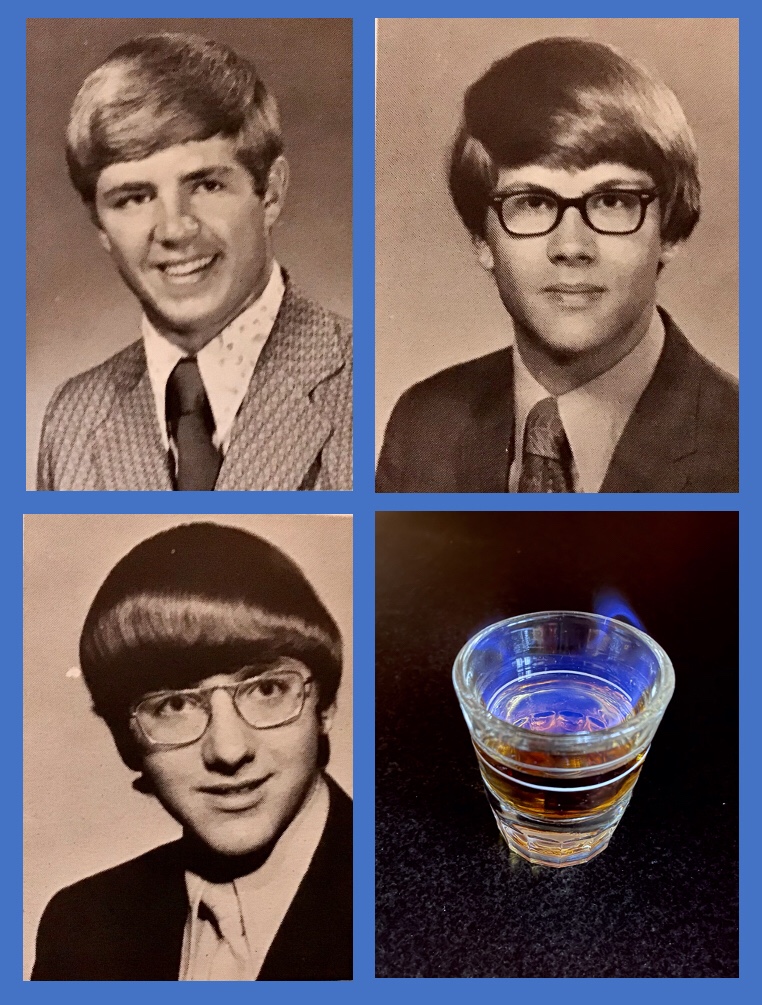
    Die Alte Herren (The Old Men)

    It was January of ‘87 and we were living in Rheindurkheim, Germany. I was sitting at Sportheim Gasthaus’s Stammtisch (regular’s table) enjoying a bier, when Jürgen sat down next to me. After a bit of small talk, he asked me how old I was. I answered 31. He then wanted to know if I’d ever played Fussball (soccer), and I told him I’d played a couple of years of intramural soccer at West Point.Was ist los, Jürgen?” (What’s up Jürgen?)

    Jürgen explained he was the captain of the local “over 30” soccer team, and wanted to know if I would be interested in joining the team. The name of the team was “Die Alte Herren” (The Old Men).

    After laughing, I explained to Jürgen I wasn’t all that good. There was a large difference between a couple years of college intramural soccer and people who had played in organized leagues since they were little kids. Everyone knows the Germans are fanatics about soccer and I thought honesty was the best policy for my answer. Jürgen wasn’t deterred. He told me it was mostly about fun, and they could always use an extra guy. Sometimes it was tough to get everyone together on game day. Finally he said “Kommst du zu einer Übung, und siehst du, was du denkst” (Come to a practice and see what you think) and I agreed to give it a try.

    It was early January and practices were held at night in a local gym, as our soccer field had no lights. At that first practice, I arrived and it turned out I knew about 2/3 of the players from my time at Sportheim. All were in their mid thirties to mid forties, so I was the youngster on the team. We started with some drills, and then played seven on seven. I was in good shape, better than most on the team, but the back and forth on the wood floors was brutal on my feet and I had at least one blood blister at the end of practice. Afterwards, I told Jürgen to count me in, if the offer still stood. He laughed, and I officially became an Old Man. Well, not quite officially yet. Jürgen had told one small lie.

    It wasn’t just about fun. As this was Germany, anyone playing soccer in an official league had to have a Spieler Pass (Player Identification Card). It’s actually the same ID used throughout Germany for all league play, up and down all levels. I had my picture taken, filled out the paperwork and submitted the required information and forms. In mid February, I received my Pass. You can see on the Pass, if another team ever wanted to pick me up, there are ample spaces to record transfers. ;-).

    # 155069, Max Hall, Playing for the Rhenania Alte Herren….

    It was finally the day of our first game. Just before the start, Jürgen presented all of our ID Cards to the head referee. There was a bit of consternation when they came to my card. The refs thought the team might have hired a ringer. Jürgen explained I was stationed locally and had joined the team. He also explained I wasn’t all that good, as the ref would see if I entered the game.

    I didn’t get into the first game, but we won 1-0, so there was cause for celebration. After the game, we gathered in Sportheim and there were biers all around. We also had a two-liter “boot” of bier we passed around the table. It was a good time, and we continued the tradition after every game, win or lose.

    I played in the second half of the second game that year and we won that game too. My soccer skills weren’t so good, but I was in great shape and could usually make up for a mistake with speed.

    The season progressed and we lost a couple, and then won again. Midseason, we received some bad news. The goalie for Rheindurkheim’s main team (TSV Rhenania, our parent club) was injured, and Hans, our goalie, was called up to the big team. It was good news for him; not so much for Die Alte Herren. Our backup goalie wasn’t as good and the season went downhill. The low point came during a game when we only had eight players. Eight on eleven isn’t a good matchup, and while we played well for most of the first half, the dam finally broke and we lost 5-0. We ended the season just under .500.

    A couple of weeks later, we had our end of year Dinner at Sportheim. Vroni and Wolfgang, Sportheim’s owners, closed the restaurant and we took over the place. All the players, their wives and girlfriends were there. It was quite the night, with platters of food, bottles of wine and mugs of bier. There was singing, dancing, and lots of laughing and storytelling. As the night progressed, schnapps and brandy were also consumed, frequently in toasts to Die Alte Herren. Finally, sometime well after midnight, Cathy and I walked home. We were moving more slowly the next day.

    Wolfgang serving one of the platters of food for our dinner.

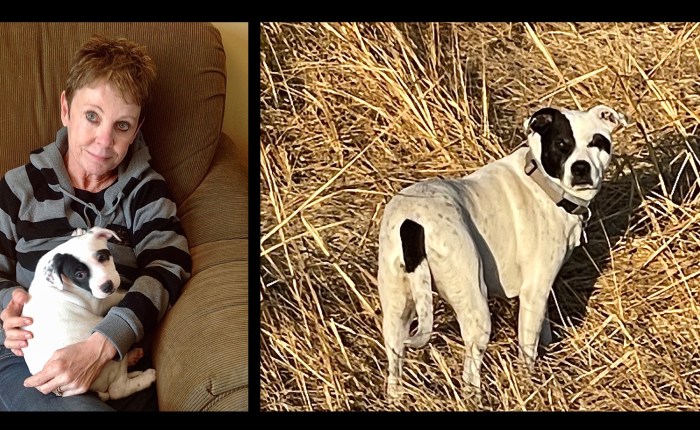
    Die Alte Herren’s record didn’t show it, but it was a good season for me. The soccer was fun, and I did get better. Cathy and I had become a real part of the community. When you live in a town of around 1,000 people, everyone knows who everyone is…. what you do, what you don’t do. This was true, even if you were “a foreigner”. Did you make any efforts to integrate, or did you just stay at home? When we first came to town, we were known as “Die Amis mit dem Scwartz Weiss” – The Americans with the black and white (dog). Now, we were an active part of the town. We had people over to the house, or went to their homes. We went on vacation with Vroni and Wolfgang. Local Christmas parties and events, fests, soccer games and participating in parades all became a part of our lives. We were given a rare gift for those four years in Rheindurkheim, and Die Alte Herren were a part of making that happen.

    I returned to play for the team the next year as well, and had more playing time. I was traveling to England and Belgium for the Army quite a bit that year, and missed several games, but it didn’t matter. Jürgen, Hans, Dieter, Freddy and the others always greeted me as a teammate and friend when I could be there. Mates are good to have, no matter where you live.

    Addendum:

    TSV Rhenania has played soccer for a long time. The club originated in 1908, and is still active today, 122 years later. Here’s their symbol (note you can also see it above in the picture of Wolfgang serving our dinner). They have a grass field now, but at the time I played, it was dirt.

    Drunken Potato Children

    The Drunken Potato Children at RAR Brewery in Cambridge, MD were good. Crunchy outside, soft inside, and smothered with bacon, sour cream, two cheeses and scallions. Delicious. What, you’ve never had Potato Children? Sure you have, you just called them something else.

    Cathy digging into some Potato Children….

    When I was a Plebe (Freshman) at West Point, as part of the effort to make officers and gentlemen of us, they also strove to improve our English language skills. As a Plebe, you were not allowed to use slang, contractions, or abbreviations in conversation. For example, we were required to say: “yes”, instead of “yea”; “Roast Thomas Turkey” instead of “Roast Tom Turkey”; “will not” instead of “won’t”; and DC was the District of Columbia. One other quirk of Plebe year was that unless asked for an explanation, you had four answers you could give to any question: Yes Sir, No Sir, No Excuse Sir, and Sir, I do not Understand (note, “do not” not “don’t”).

    One day early in the year, I was one of the Minute Callers for my company. A Minute Caller stood at attention near one of the hallway clocks and announced how many minutes until the next formation, and information concerning the formation. They did this on the 10, 5, 4, 3, and 2 minute marks. On this particular day, I announced:

    “Sir! There are ten minutes until assembly for dinner formation. Uniform is white over gray. For dinner we are having: Green salad, hamburgers, tater tots and chocolate chip cookies. Ten minutes sir!”

    A door flew open and my squad leader came out. “New Cadet HALL! What did you say was for dinner!?

    Sir, we are having green salad, hamburgers, tater tots and ”

    STOP! Hall, why are you using slang?”

    ….silence for a second on my part, while I’m thinking “what?”. I answer –

    Sir, I do not understand”.

    What’s for dinner Hall?”

    Sir, green salad, hamburgers, tater tots and

    STOP! Hall, why are you using slang!?

    … now I’m really confused…

    Sir, I do not understand”.

    Hall – did you say tater tots?

    Yes Sir!

    What part of the word “slang”, do you not understand? You said Tater. What is the proper word for Tater, New Cadet Hall?

    …me thinking…

    Sir, Potato”.

    That’s right Hall. And what is the correct word for tots?

    …more thinking…

    Sir, Children.

    Correct, New Cadet Hall. What are we having for dinner?”

    …silence…

    Sir, Potato Children!

    Carry on Hall.

    At the five minute mark I called out:

    “Sir! There are five minutes until assembly for dinner formation. Uniform is white over gray. For dinner we are having: Green salad, hamburgers, potato children and chocolate chip cookies. Five minutes sir!”

    Another lessen learned….

    Ever since that summer, “tater tots” have been “potato children” for me, and it turns out, for most of my classmates. I recently posted the picture of Cathy and me having potato children for lunch and it garnered quite a bit of laughter and varied comments. One of my classmates (looking at you Jim Ray), has even passed the tradition of calling tater tots “potato children” on to his own children. I’m not sure if his kids see the humor in it.

    If you ever make it to RAR brewery in Cambridge, Maryland, make sure to order the Drunken Potato Children. I guarantee you will love them.

    The Best Potato Children on the Eastern Shore….

    Perfection in a Sandwich

    It’s that time of year. I’ve (we’ve) been waiting for it since sometime last fall when the last tomato came off the vine. Last night we had our first Bacon, Lettuce, and Tomato sandwiches of the year. They were perfect.

    Summertime, and the livin’ is easy….

    I’m not sure why I like the BLT so much, but I do. They taste of summer I think. They are simple. There’s a finite time when they are in “season” (End of July through early October). And they taste so damned good.

    With the BLT, there are, of course, a few choices. You can toast or not toast the bread. What kind of lettuce? What kind of tomato? Thick or thin cut bacon? Those are just the basics. Add some basil? Add a sliced avocado? Maybe a slice of cheese? I suppose there are infinite things you could add. Me? I’m a purist (or boring, depending on your point of view). Bacon, romaine or iceberg, and whatever tomatoes ripen first. Given a choice, I’d take a beefsteak, or some kind of heirloom, but I’m not picky. And, I like the mayo a bit thick, but that’s just me.

    My friend Tim says it much better than I ever could: .”Yep, fry up a pound of bacon, get a loaf of bread, keep slicing tomatoes and eat till the bacon is gone. It is not pretty, so do not watch if you are squeamish“.

    Summertime is a sandwich. What’s not to like? It’s perfect.