My war with the cattails continues. I have attacked them regularly at the pond for two years now. I trudge in the mud on the shoreline or arrive by boat, pulling them out one by one. They are densely packed and their root systems interconnect. I think they secretly laugh at my efforts.
I doubt that I will ever actually win.
Several years ago, I found a few cattails on one of our creeks. I thought they were cool looking and brought some to the house for a decorative setting on the table. In the process, a few of the seeds may have been released by the pond.
Nothing happened for a couple of years. And then, a few appeared in the mucky area on the west side of the pond. They looked pretty and very pond like. The next year, there were more. By year three (last year), there were a LOT more.
Uh-oh.
I decided I’d better read up on these trespassers. It turns out they are not native to Virginia. While their removal is regulated in some states including Florida, Wisconsin, Michigan, Minnesota, and New York, here they are considered an invasive species and there are no restrictions on removing them.
There is a poison you can use, Glyphosate (Aquatic Formulation). Glyphosate is related to Roundup, but is formulated for use in ponds. It is not supposed to affect fish, or wildlife around the pond, but I’m not too keen on that approach if we can avoid it.
The other approaches? Cut them off below the surface and the plant drowns, or pull them out, including as much of the root system as is possible. They can and do spread with their rhizomes.
I tried cutting last year, but it was a pain, and quite frankly, not safe to do from a boat. Leaning over the side of the boat, gripping a cattail, attempting to cut while not upsetting the boat. You get the picture. After a few feeble efforts, I just pulled out plants from the rowboat instead. It takes time. And effort. I was a bit lazy last year and removed 1/3 to 1/2 of the cattails.
That was a mistake. They smirked at my efforts and came back this year doubling or tripling the area they covered.
This summer, I started the battle by wading in from land and pulling them out. It’s great at first, but then a slight problem develops. Once you are a foot or two offshore, you sink in the muck up to your knees or thighs. You are guaranteed to fall over, and if wearing rubber boots, they will fill with water. After the first time, I switched from boots to Tevas. Seriously.
It’s not quite quicksand, but it can make it difficult to turn around or move. I ended up almost crawling across the top of the water to extract myself. I did find I could crawl on hands and knees from clump of grass to clump of grass to get further out, but that really tires you quickly, and trust me, it’s not a pretty picture.
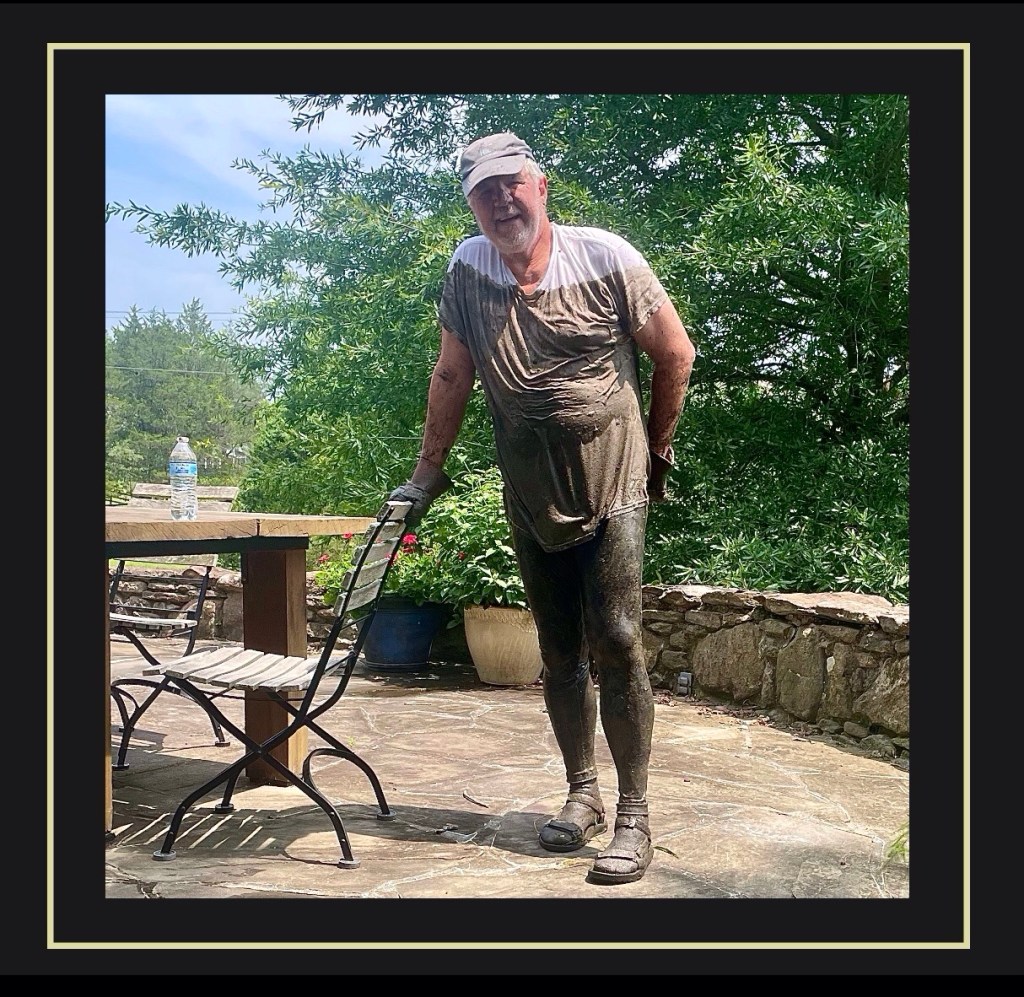
It was back to the boat.
I’ve been out several times now. It’s a labor-intensive approach.
Paddle across the pond. Pull the cattails one at a time. Throw them in the front of the boat. Repeat. Keep repeating until you notice the front of your boat is sitting a bit low in the water. Pull one or two more and throw on the growing heap. Start paddling, but realize the extra weight has pushed the boat to the bottom of the pond and you are stuck. Push furiously with the paddle on the bottom until the boat frees itself.
Paddle back across the pond to the shore on the other side. Of course, the boat is heavy enough now that you cannot pull it out of the water. So, you pull up next to the shore, climb out of the boat into the pond and start throwing the cattails and their roots up on the shore a couple at a time until the boat is empty.
Leave the pond and climb on shore. Now carry the cattails about 20 yards away from the pond where you can spread them in the field and they can dry out and die. Cut any of the seed pods you see off the plants and put them in a plastic bag to hold them. Keep a couple for the house to sit and look pretty on the kitchen island.
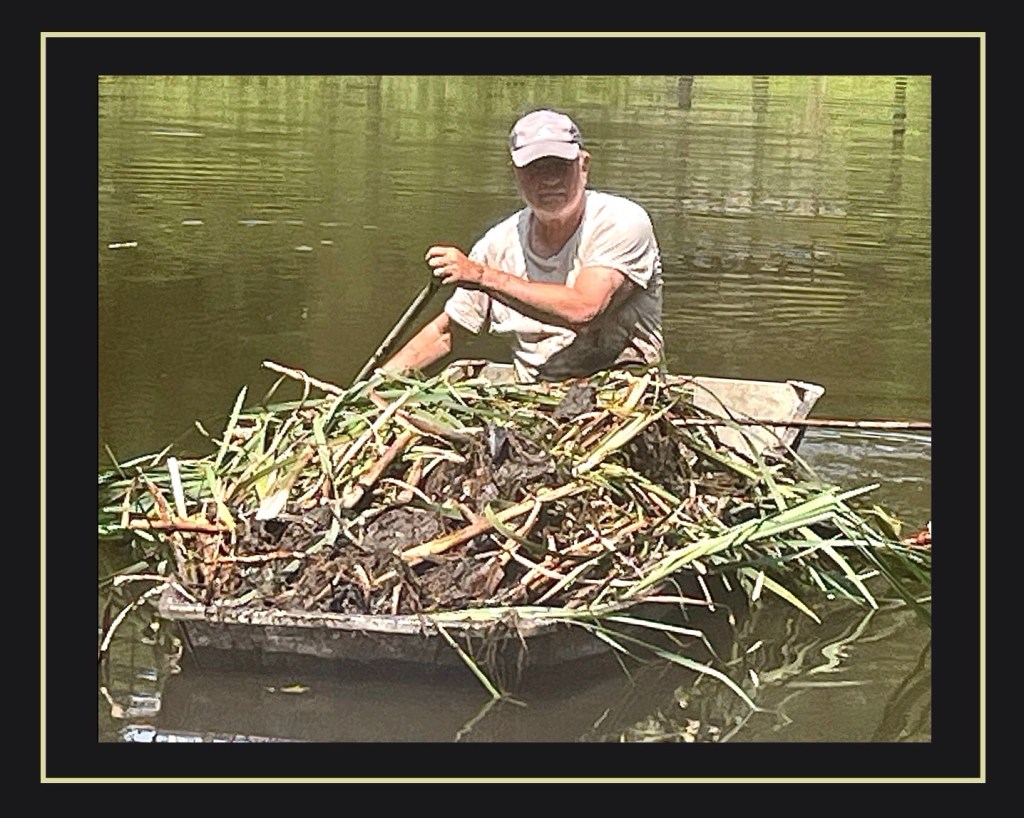
Then, if you feel up to it, repeat the whole cycle one more time that day. It is tiring work, and I have never done more than two cycles in one day.
I have made huge progress and I’m happy to say I am nearing the end. I quit counting after I removed over 350 of them. I still have a few small ones I need to pull and hope to do so before fall arrives. The problem is they may be too shallow for the boat, but in deep enough muck that I’ll sink like a stone up to my thighs if I try it from shore. It may be back to trying to crawl from clump of grass to clump of grass to reach them.
It is dirty and physical work. It’s not much fun, but I can see the results.
Or at least the results until next spring. If they come back en masse, well, I may decide to do something else. Stay tuned for a sequel next year.
Addendum:
- Thanks to my wife Cathy for taking all of the photos. I should note that she would not come near me until after I took an outdoor shower. I wasn’t allowed inside before that. As a matter of fact, the clothes were never allowed back inside, and are bound for the trash bin when I finally finish.
Discover more from Live Life Exuberantly
Subscribe to get the latest posts sent to your email.
 Live Life Exuberantly