My friend Evan and I were checking out a trail for our running group, The DC Hash House Harriers (DCH3). As we followed the route, it became clear Evan and I have different definitions of what constitutes a hill. We decided to do a joint blog about hills, each writing half without input from the other. This is the result.
For this writeup, I will start, and Evan will close out the blog.
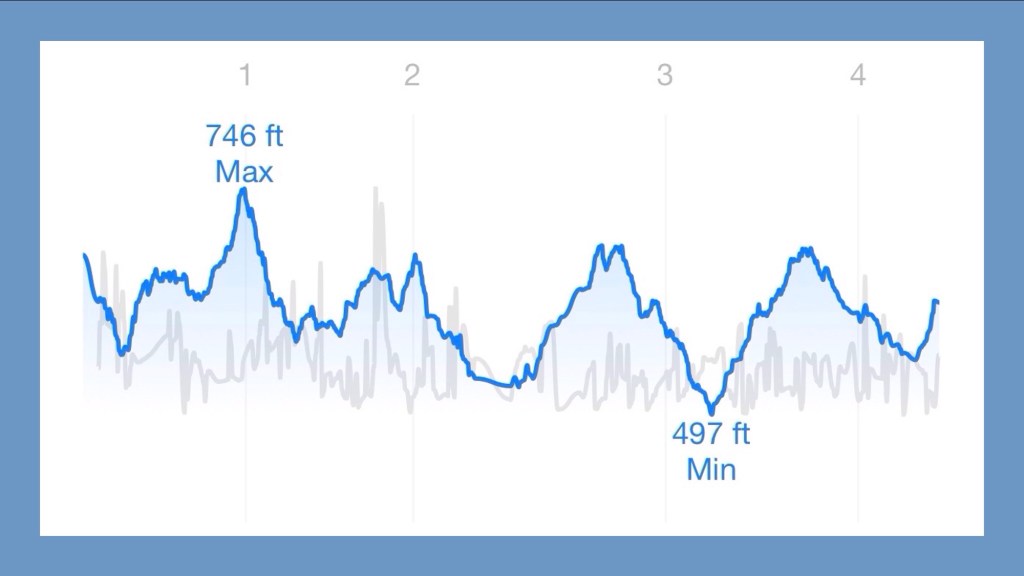
The four-mile route we followed was challenging, as much of it was not only off road, but off trail as well, with some bushwhacking required through the woods. Recent rains added to the challenge, but it was a beautiful day for a walk.
What constitutes a hill? Honestly, I hadn’t thought about it much. Without a doubt, the Virginia Piedmont is hilly, as it is the precursor to the Appalachian Mountains. Still …
The thing is, we have lived out here for almost 27 years. This is my space and I am comfortable in it. I suppose, in a way, I have home court advantage, as I know this terrain well. There are changes in elevation everywhere, but does a change in elevation make something a hill? In my view, just because you are going uphill, does not mean you are going up a hill.
As I said before, our route was a challenge. Not due to any hills, but because of the bushwhacking in various sections. From my view, the trail had three hills, and three hills ONLY. My guess is Evan would say there were six or seven hills, but hey, what’s a little elevation change among friends?
The three hills I acknowledged? One is a driveway. A second one is a long uphill route on a small dirt road in the woods. It is a quarter of a mile long, and yep, you are breathing hard at the top. The third hill? Well, honestly, it is a ballbuster. You bushwhack a half mile through the woods to reach it, and then, well then, you pretty much suck while going UP a mostly dry, rock filled stream bed. The path is about three feet wide with low hanging brush for much of the route. When we did it, we needed to stop a couple of times on the way up to catch our breath. Without a doubt, it is an ass-kicker of a hill.
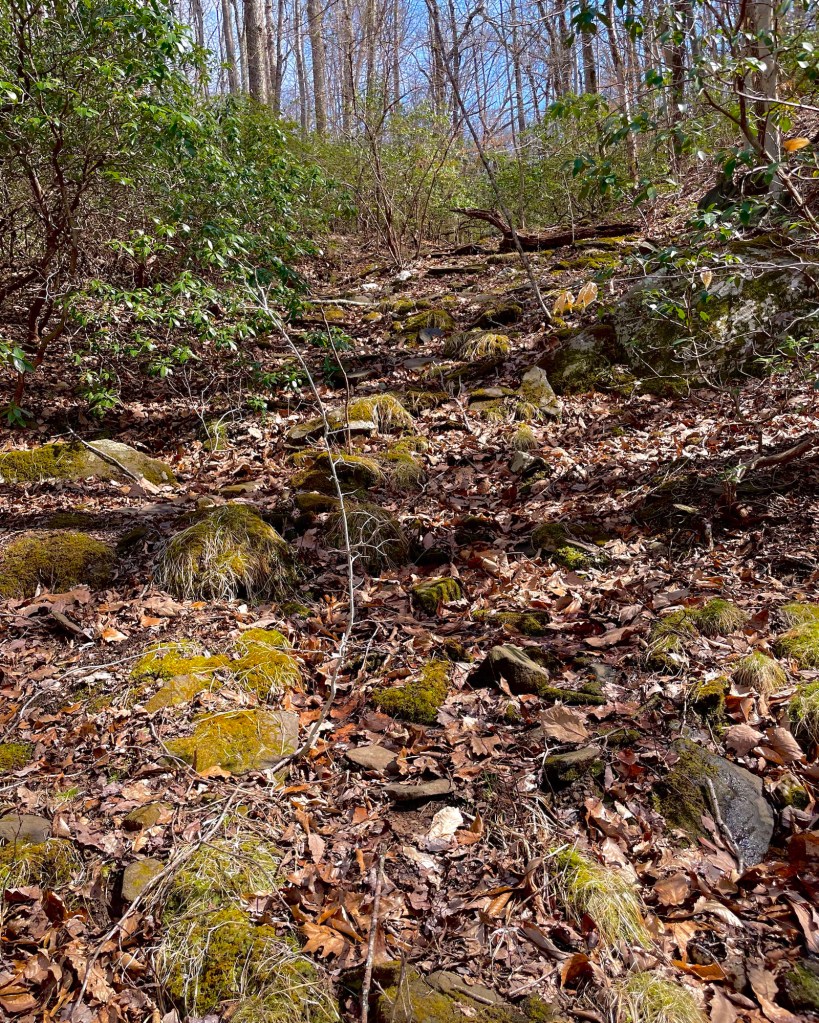
I have hiked this area so much I don’t really notice going uphill or downhill. Our driveway goes uphill when you leave, but it’s not a hill. The same with our neighbor’s driveway. I believe Evan viewed things a bit differently and would classify both as hills.
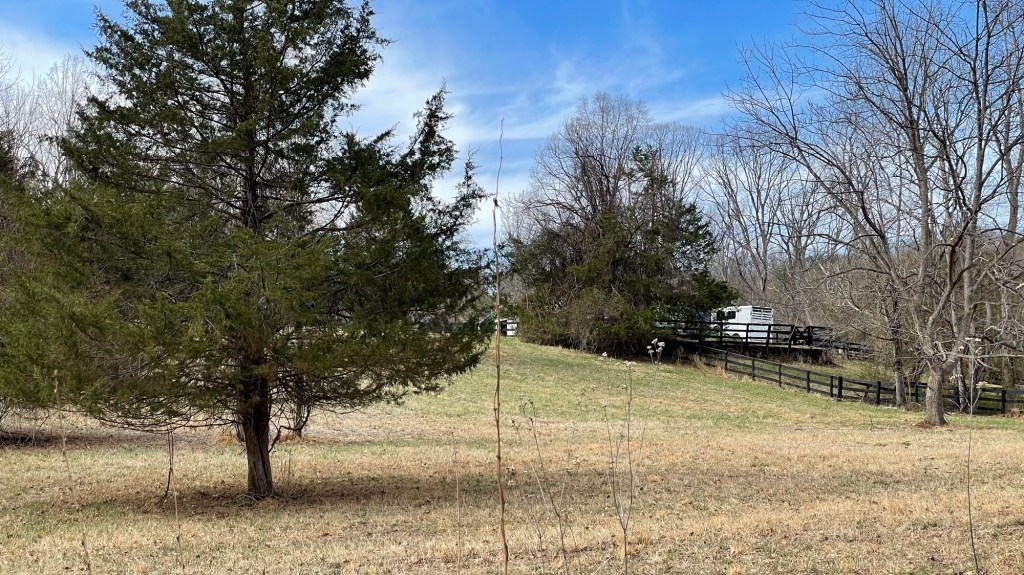
The same was true of a few other pathways in the woods. Yea, they were paths that went uphill, however, in no way, shape, or form, were they actually hills. This was particularly true on the final approach to our farm at the end of the walk, when we were both tired. Yes, there was a slow elevation gain over a distance, but that didn’t make it a hill. One part of me would say, “Evan, get on with it. We are almost home. Quit whining about what you perceive as a hill and just keep walking.” Of course, since Evan is a good friend, I would not say that to him, although I might write the words to him in a blog. ;-).
(Evan’s part – as a reminder, he had not reviewed what I wrote, prior to writing his own section.)
Max and I were scouting a route for our running club when we stumbled into one of those debates that starts casually and somehow turns philosophical. We had reached a stretch of road with a noticeable rise, and I called it a hill. Max stopped, looked up the road, and said something like, “That’s not a hill.”
This surprised me. There was elevation. The road went up. In my mind, that checked the basic requirements. If the ground rises and you must work a little harder to get to the top, congratulations, you have found a hill.
Max disagreed. In his view, a hill needed credentials. It had to be steep enough to demand respect and long enough to make you question your life choices halfway up. A mild rise in the road did not qualify. That was just a grade, or an incline, or perhaps something runners politely ignore while saving the word hill for the real leg burners. We stood there for a moment looking at the same piece of ground and seeing two different landscapes.
The truth is, neither of us was wrong. We were just measuring different things.
My definition was broad. Any upward movement counted. Hills came in all shapes and sizes. Small bumps, gradual rollers, lung burning climbs. They were part of the natural rhythm of a run. Some were barely noticeable, others were memorable, but they all belonged to the same category.
Max’s definition was more selective. To him, a hill was something that demanded effort and maybe a little strategy. It had to slow you down, change your stride, and make your lungs notice. Otherwise, it did not deserve the title.
You could argue either side and find logic in both. If you talk to runners long enough you will hear the same debate repeated in different ways. Some people call anything uphill a hill. Others reserve the word for climbs that make your watch beep with alarming heart rate warnings.
Interestingly, we never actually talked about the metaphor of hills while we were out scouting the route. We were just two runners debating pavement and elevation. But later, I realized we had wandered into something a little deeper without knowing it.
Because we do the same thing in life when we talk about the hills we face.
For some people a hill is any challenge that forces them to adjust their pace. It might be a busy week at work, a tough conversation, a family responsibility, or a decision that takes more thought than expected. These are the small climbs of life. Noticeable, sometimes tiring, but manageable.
Other people use Max’s definition. A hill to them is something serious. It is the kind of obstacle that truly slows you down. Illness, loss, financial hardship, major transitions, or moments when the road ahead suddenly feels much steeper than the one behind you.
Just like on the running trail, both perspectives have value.
If you see hills everywhere, every incline and every rise, you build awareness. You learn to pace yourself and recognize that effort changes over the course of a journey. You respect the terrain and adjust before you are exhausted. There is wisdom in noticing the small climbs.
But there is also wisdom in Max’s approach. When you reserve the word hill for the truly steep stretches, you build perspective. Not every challenge needs to be treated like a mountain. Some things are simply part of the road. Save your energy for the climbs that actually demand it.
In other words, the disagreement was not really about hills. It was about how we frame effort.
One approach emphasizes awareness. The other emphasizes perspective. Runners know instinctively that both matter. If you treat every small rise like a mountain, you will burn out quickly. But if you ignore the gradual climbs entirely, they will quietly drain your energy before you realize what is happening.
Life works much the same way.
Some hills are short but sharp. Others stretch on longer than you expected. Some appear suddenly around a corner. Others you can see from a distance and prepare for.
What matters most is not agreeing on the definition. It is learning how to approach the climb. Slow your pace. Shorten your stride. Keep moving forward. Eventually the road levels out.
My dad was a lot like Max in the ways that matter most. He was kind, quietly wise, and had a sense of humor that could sneak into just about any conversation. He loved a good intellectual discussion, the kind where you could go back and forth for a while, not to win, but just to explore an idea from a few different angles. Being around Max sometimes brings me right back to that feeling. The easy conversation, the thoughtful perspective, and the reminder that the best discussions are the ones where you walk away thinking a little differently than when you started.
And if you are lucky, you are scouting that road with someone who sees the terrain a little differently than you do. Because sometimes the most interesting part of a run is not the hill itself. It is the conversation you have about whether it counts.
(Back to Max)
As an after note, I couldn’t get Hemingway’s great short story “Hills Like White Elephants” out of my brain while writing this blog. Of course that story may be about a couple discussing an abortion, but in the broader perspective, a “white elephant” can be considered a rare and beautiful gift, or a costly, unwanted burden. I thought about going down the road of hills in our lives, how we look at them, and our choices. I decided not to. Evan did, and I’m glad he did. We are all the better for it. Thanks, my friend.
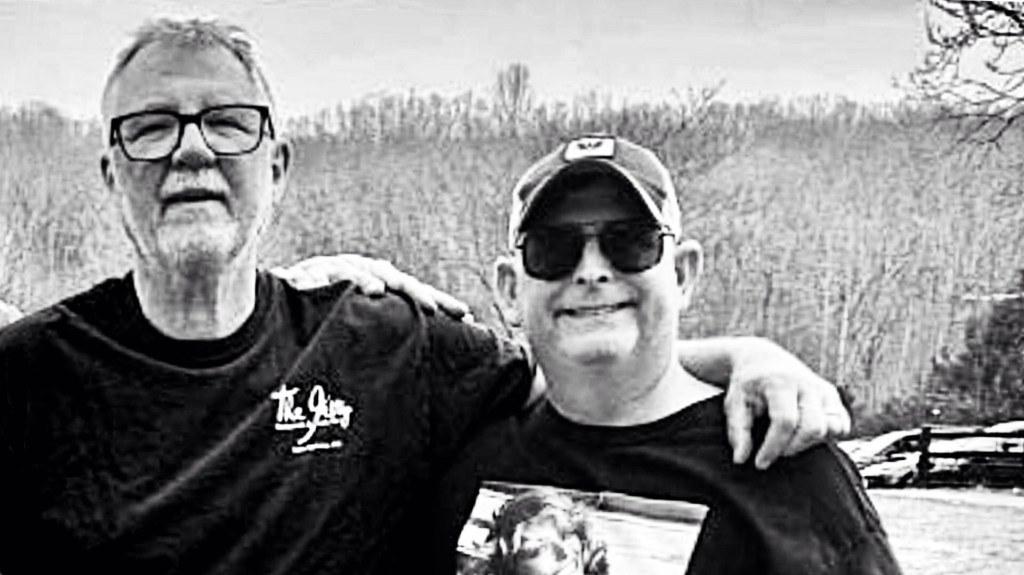
So, there you have it. Two good friends spent an enjoyable couple of hours walking in the woods on a beautiful day. When we returned home, our wives were waiting for us. We enjoyed a fun dinner, a few drinks, and of course excellent conversations. The subject of hills DID come up, and our arguing about them amused Cathy and Kristen. Since duels are outlawed in America, we decided to settle our differences with this blog. We hope you enjoyed the collaboration. ;-). Sometimes a hill is just a hill. Sometimes, it’s something more.
Discover more from Live Life Exuberantly
Subscribe to get the latest posts sent to your email.


Hill Yeah!
LikeLiked by 1 person
Hahahaha.
LikeLike
Well done, both of you! Using hills both metaphorically and literally to highlight different perspectives really made this an enjoyable read.
LikeLiked by 1 person
Thanks Mark. It was a fun one to write.
LikeLike
A delightful discourse wonderfully expressed.
LikeLiked by 1 person