Founded in 1802, West Point is the oldest American military academy. When I graduated in 1978, I was the 35,591st graduate. Between 1802 and 1977, there were less than 300 black graduates. Let that sink in. Less than 300. Henry O. Flipper was the first in 1877.
With Black History Month drawing to a close, I was thinking about Henry O. Flipper and West Point, and the slow history of black graduates from my Alma Mater.
Born a slave in 1856, Flipper was appointed to the Academy by Georgia Representative James C Freeman, a former slave owner. When Flipper arrived at the academy, four other black cadets were already there. James Webster Smith was the first black appointed to West Point in 1870, but the Academy found him deficient and dismissed him in 1874, as Flipper was arriving.
West Point was not easy for anyone but was particularly hard for black cadets. They were hazed, ostracized, and isolated by their own classmates and the other white cadets. Flipper persevered and graduated in 1877. He was later assigned to the 10th Calvary Regiment, the famed “Buffalo Soldiers*”, and the first black to lead troops in the unit.
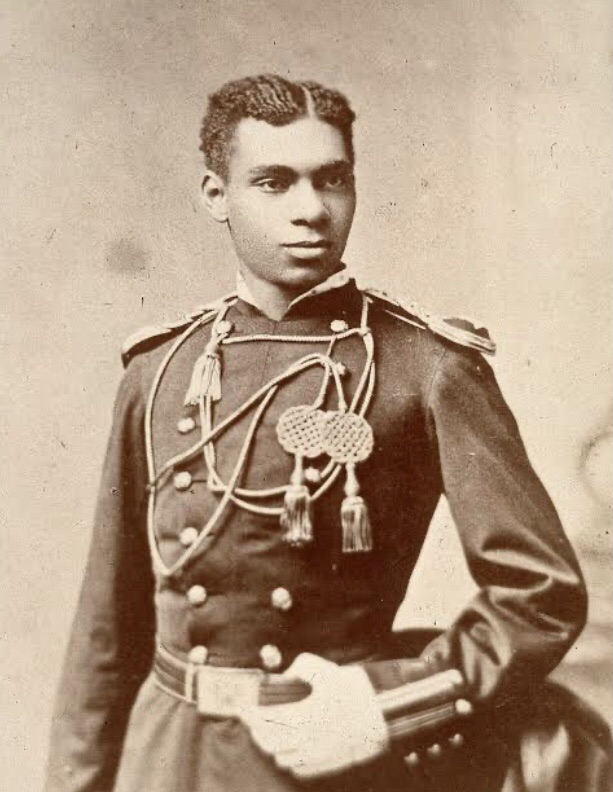
A decade later in 1887 John Hanks Alexander became the second black graduate. A third, Charles Young, graduated in 1889. It would be 47 more years before Benjamin O. Davis Jr became the 4th black graduate of West Point in 1936. He went on to lead the Tuskegee Airmen in WWII, and become the first black general in the United States Air Force.
When President Truman integrated the Armed Forces in 1948, further progress was made at West Point and in the Army. Since then, black West Point graduates have continued to act as groundbreakers. As one example, Patricia Locke was the first black female graduate in 1980 (one of two black females in the first class of women to graduate from West Point.) More recently, in 2012 my Classmate Lieutenant General Tom Bostick was the first black graduate to command the Army Corps of Engineers. He was also a part of the Review Group that made a recommendation to the Secretary of Defense and the President to allow gays and lesbians to serve openly in the military.
At West Point, one of our unofficial sayings is “Much of the history we teach was made by people we taught.” It is a true statement in more ways than one.
Of course, both West Point and its graduates have been a part of “big” American History since the Revolutionary War. We tend to think of the large events or conflicts – the Civil War, or WWII; or of famed generals such as Grant, Eisenhower, Patton, Bradley, and Schwarzkopf.
West Point is also a part of small or “little” history – the history that makes up the fabric of this country – the good, and the bad. I was shocked and embarrassed when I first learned there were less than 300 black graduates before my own graduation. And then I thought, “Of course. West Point is only a reflection of America as a whole. This is who we were, and are.”
Times change and many improvements have happened at West Point, in the military, and in America. Some more quickly. Some more slowly. And sometimes, we have receded. It is all a part of the history of the Academy and of our country.
Today, there are those who would have us hide or forget our American past. That must never happen. At West Point, and elsewhere, we must continue to teach the history made by those who preceded us. By all of those who preceded us. How do we move forward without acknowledging our past?
As Black History Month draws to a close, think about both big and little history. We should never forget people who persevere and change the fabric of our country. Think of all who have made a difference, including Henry O. Flipper, a footnote in the story of America.
Addendum:
- * The Buffalo Soldiers were black Calvary units in the American West after the Civil War. American Indians gave them the name due to the soldier’s dark, curly hair resembling a buffalo’s mane, their fierce fighting style, and the thick bison coats they wore. Bob Marley’s hit “Buffalo Soldier” raised the exposure of the term and the soldiers.
- In June of 2020, I wrote a related blog about my graduation from West Point and white privilege: I am Number 35,591. You can read it here: https://mnhallblog.wordpress.com/2020/06/06/i-am-number-35591/
- If you want to learn more about Henry O Flipper and other black West Point graduates who have had an impact on America, you can do so here: https://www.domore2gether.org/notablealumni
Discover more from Live Life Exuberantly
Subscribe to get the latest posts sent to your email.
 Live Life Exuberantly
Wesley Brown was the first Black Midshipman to graduate from the Naval Academy. That was in 1949. The Academy’s indoor track stadium was named after him in 2021.
We had one Black Midshipman in the Class of 1964. Unfortunately, he was in the other regiment so our paths never crossed. I just looked him up in our yearbook – he served in the Marine Corps, got his MBA from the Harvard Business School and had a very successful career in the banking business. I’m sorry that I never met him – but there were a lot of guys in my class of 933 graduates (of the 1,266 who were sworn in together four years earlier) that I had never met.
LikeLike