This write-up is from my friend, Clark Hall (no relation), a Vietnam Veteran. While the words are his, the lessons are for all of us —
60 years ago, on August 3, 1965, an “incident of war” occurred that foreshadowed the human, political and military disaster underscoring the lunacy of the Vietnam War.
If President Lyndon B. Johnson had heeded the harsh lesson learned on this date in 1965 and halted the war in its earliest stages, hundreds of thousands of Vietnamese and 60,000 Americans would not have been killed over the next ten years. The war would not have ended in a crushing defeat for the United States. The war finally ended in 1975—a ten-year human catastrophe.
Some will recall black-and-white filmed images of Marines burning down a village early in the war. This is that incident.
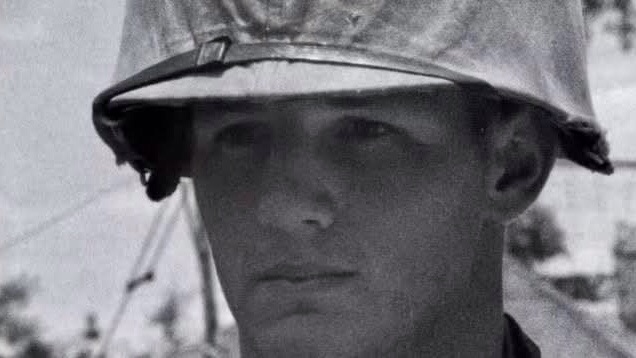
The “Cam Ne Village Complex” was comprised of five separate villages and about 500 thatched-roofed huts, stretched out along the Cau Do River, twenty miles southwest of Da Nang.
Delta Company, 1st Battalion, 9th Marines, about 200 troops, lined up, three platoons well spread out in a rice paddy 500 yards west of the complex. We headed out across the flooded rice paddy, with fetid water coming up to our groins. About halfway across the open paddy, the tree line on the right suddenly lit up with multiple automatic weapons firing into our exposed right flank, where my squad was positioned.
We advanced towards the fire. Wounded Marines went down in the water and courageous Navy Corpsmen rushed to their aid, before they drowned.
Finally arriving at the tree line, we crawled up the steep bank, commenced firing, and did considerable damage to retreating Viet Cong. Dead and dying bodies haphazardly laid about on village pathways and inside several huts.
Villagers – young, old, women, children, and babies, were all shrieking. In many cases, a Viet Cong soldier was lying dead in the hut in which he was born, and the howling folks were his parents, or his wife and child.
Right then and there, I thought there is something terribly wrong with this scene as we had no idea “who was for us, and who was against us.” But we kept moving throughout the entire complex as the retreating enemy fired back at us.
Finally returning to the village from the outlying jungle, we discovered that many of the huts were connected underground, by a sophisticated tunnel complex. We also uncovered great quantities of ammunition and weapons under bamboo mats.
“Burn every hut down!”
That was the order, by radio, from the company commander, as relayed from the battalion commander. This order from above was in fact clear, and non-negotiable.
I thought to myself, this can’t be right. We are now ordered to burn down homes!? My squad members incredulously looked over at me, seeking confirmation.
What will happen to the wailing villagers, we thought? And even though their homes certainly facilitated war-making, the fact remained these rice farmers were innocent pawns suddenly caught between an indigenous insurgency initiated by a communist country (North Vietnam), and a remote superpower which had no earthly notion of the horrific strategic and tactical mess it was now getting itself into.
So, as gently as possible, we moved the villagers out of their homes. More screaming and more wailing ensued. An old grandmother, crying hard and holding a baby, looked up at me, beseechingly. I could not meet her tearful gaze and carefully moved them away from the hut.
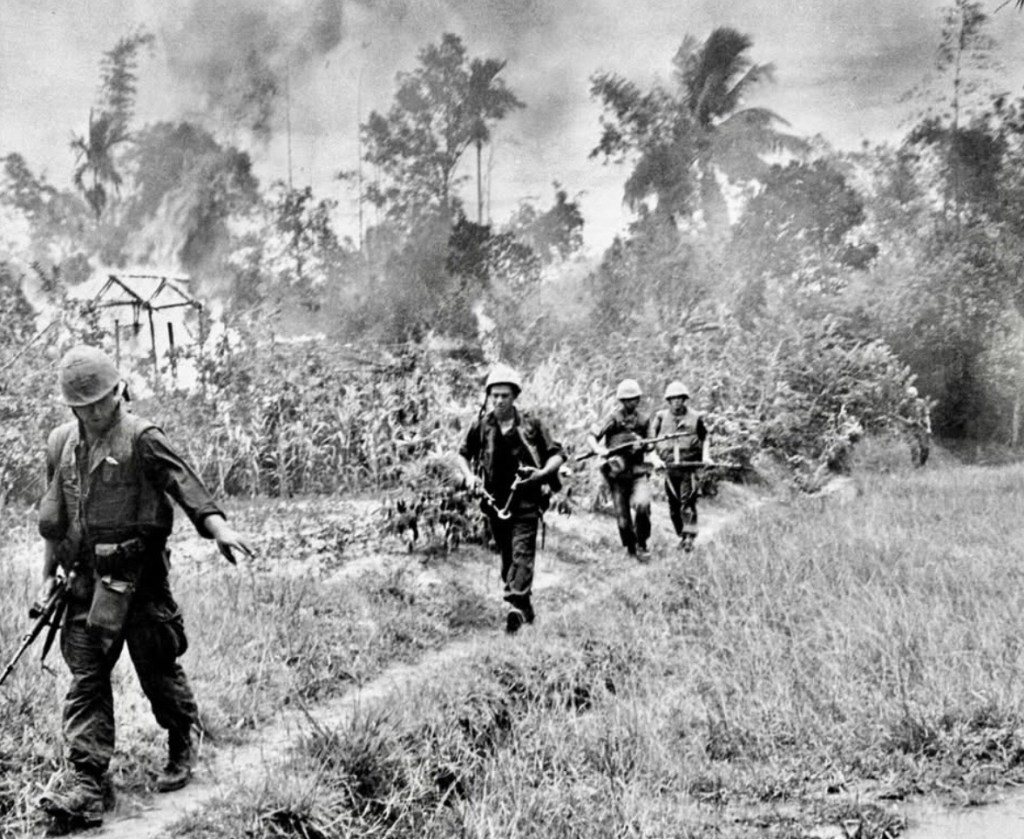
Flame throwers were brought in and dozens of dry, thatched huts quickly went up in leaping flames. It was end of the world stuff.
Soon, we were ordered to withdraw back to our amphibious tractors. We moved out into the rice paddy, with huts burning hotly behind us. Not one of us felt good about it.
No, it is not “appropriate” at any time to target civilians, in any war. That is not the American way, not the Marine way. And we knew it, and felt it. Still do, in fact. Every day.
Did we “win any hearts and minds at Cam Ne,” or in the countless other villages we subsequently flattened, under orders, in “search and destroy missions?”
No, not hardly. The war took off in earnest, and as it went ahead, the conflict never became anything other than America’s war. Civilians were always caught in the middle. Who cared about them? Nobody but us, as it turned out. And we grunts had no power to do anything but extend our heartfelt pity for their lot.
The tragedy remains that the lesson could have been learned at Cam Ne, August 3, 60 years ago, today, that America was never going to win the war in Vietnam. No, not ever.
That same evening, August 3, my company commander directed me to be interviewed by CBS correspondent Morley Safer. This reporter’s film crew captured many images of us burning down the huts.
I tried my best, unsuccessfully, to put our our best foot forward but I did not believe what I was saying, when I said it, and that interview shortly thereafter appeared on Walter Cronkite’s, “CBS Evening News.” (Author’s Note: This interview was later shared in Ken Burns’ “Vietnam” documentary.)
Sixty years later, here are three of my takeaways:
1. Marines are not trained to confront civilians. We are trained to fight a military force that is seriously hostile to the safety/security of the American people.
2. Marines obey orders from their unit commanders.
3. The tragic lessons of the Vietnam War should be heeded today. The United States Marine Corps must never be ordered to use military force against civilians, any civilians, anywhere, including in Los Angeles, California, or elsewhere in America.
– Feel Free to Share This Blog –
Addendum:
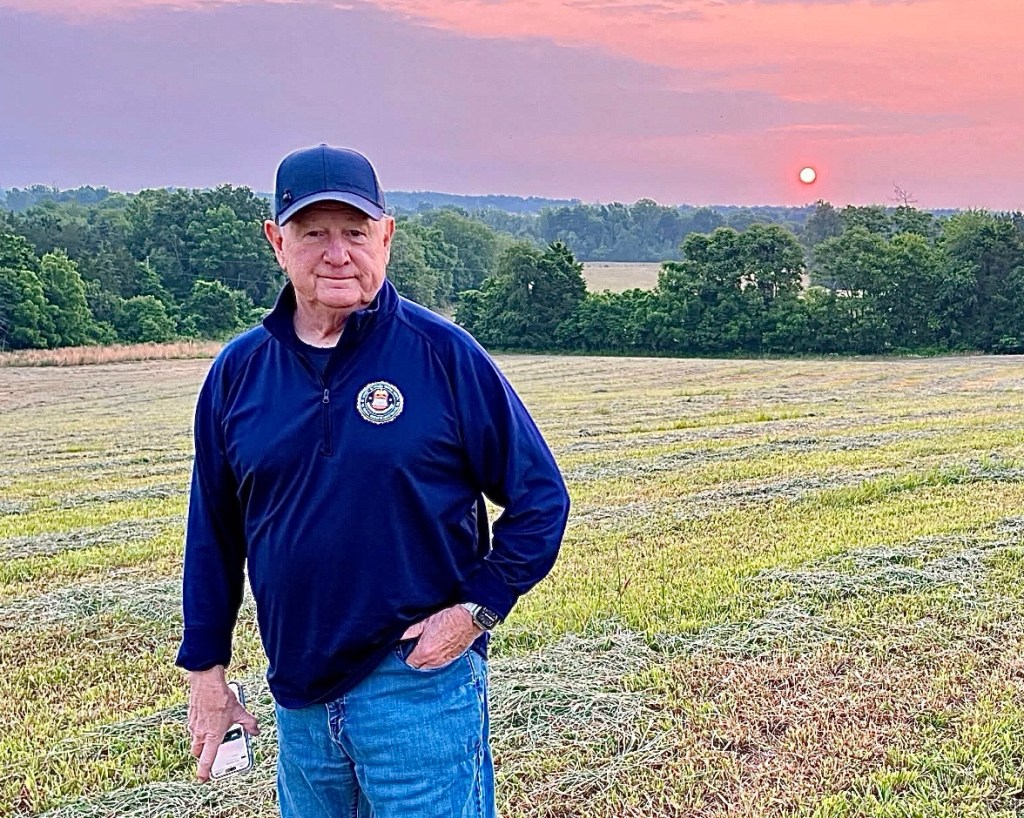
- Special thanks to Clark Hall, both for his service, and for sharing this powerful story from his youth. After leaving the Marines, Clark became active in Vietnam Veterans Against the War. Later in life, among other jobs, he took on the mob while working for the FBI, and still later, he was the lead investigator, House Select Committee, Iran/Contra affair. More recently, he has been involved in land preservation of Civil War Battlefields.
Discover more from Live Life Exuberantly
Subscribe to get the latest posts sent to your email.
 Live Life Exuberantly
Thank you both for sharing this.
LikeLiked by 1 person
A terrible and very sad time in our history. I served in the army in the early 70’s and while I did not go to Vietnam, I did go through infantry training at Fort Polk, Louisiana for two months prior to being assigned to red eye missile training at Fort Bliss, Texas. For those two months, which focused on when, not if, we would go to Vietnam, the Vietnamese people were constantly dehumanized with derogatory names and depicted as “others”, a universal tactic in training those who will be sent to kill those “others” in every war. This is a grim but very moving story by Clark, and an important one all of us need to remember and take to heart. Thanks to him and to you, Max, for sharing it.
LikeLiked by 1 person
And thank you for sharing your own story of those times. Many lessons not to be forgotten.
LikeLike
We would never have been in that war at all, had John Foster Dulles listened to Ho Chi Mien, who was a student in Paris at the time, when he pleaded with the Americans to support the Vietnamese in their quest to rid themselves of French colonialism. However, Dulles refused, instead supporting the French because of the rubber plantations owned by the French. What ensued was first the debacle at Dien Bien Phu and then the escalation into what became the Vietnam war.
It is interesting that your friend was part of the Vietnam Veterans Against the War (VVAW). I was part of the defense in the prosecution of VVAW for the crime of using wrist rocket slingshots at the Republican convention in Miami. The center of the prosecution was Gainesville, FL where I was practicing at the time. The story of how the feds softened up the jury pool in the Norther District of Florida is for another time, but the upshot was total acquittals for everyone anyway. My part of it was to co-chair with William Kunstler the defense of Alton Foss, the one person the feds flipped in the case, in state court, against the charge of possession of one hit of Orange Sunshine (LSD) in Miami. The judge denied Alton his 6th Amendment right to representation by Bill. This resulted in a total circus of a trial, in which every other lawyer in the courtroom refused to represent Alton, who only wanted both Bill and me together, refusing representation from anyone else. The crowning irony of that day was the arrest of the judge that evening for taking a 10K bribe. You couldn’t make that stuff up! The two detectives who arrested Alton became the models for “Miami Vice.”
VVAW became VVA in a highly contentious VVAW convention in, I think, 1986.
LikeLiked by 1 person
Thanks for sharing!
Can you send me a note at mnhall@gmail.com? Would love to hear more about Foss and working w Kunstler. Those were such strange times.
LikeLike
So sad. And an important reminder.
LikeLiked by 1 person