It was December 6th, 1941. Dad, Noble and other men from B Company, 60th Regimental Combat Team of the 9th Infantry Division had weekend passes. They left Fort Bragg, North Carolina that Saturday for nearby Fayetteville. They didn’t know it yet, but the next day their world would change forever.
That weekend, Dad was a little over 18 years old and had been in the Army for about fifteen months. The 9th Infantry Division reactivated in August of 1940, and Dad joined the unit in September of that year, at the age of 16.

In 1940, the population of Fort Bragg was 5,400. One year later, there were 67,000 troops at Bragg and Fayetteville was on the way to becoming a military town, with bars, clubs, restaurants and everything needed to “entertain” the troops, for better or worse.
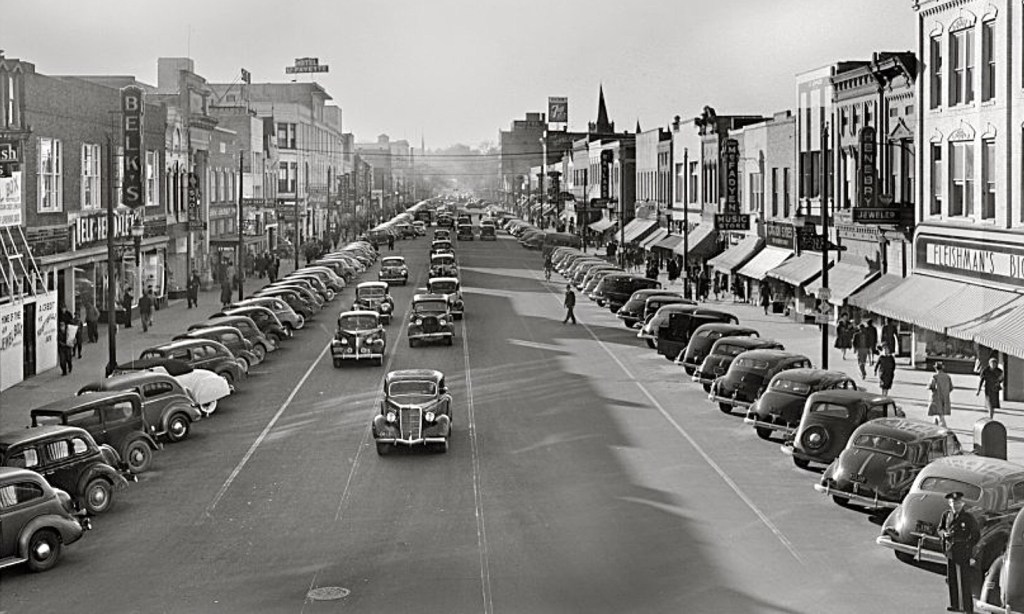
Dad and the other boys of Company B received their weekend passes that fateful weekend and probably left Bragg around noon. Typical weekend passes went from noon on Saturday to 6PM on Sunday. They usually rented a room or two to use as a base for their partying. Over the years, he told me about some of those weekend passes. Real food, beer, clubs, blues, jazz, dancing and trying to link up with girls. They’d party into the night, and then the next day, after a big breakfast, party some more until they eventually returned to Post. I heard stories about fun times in North Carolina (Fayetteville and Charlotte) in Tunisia and Algeria, and late in the war back in Washington DC. Let’s just say, Dad knew how to party.
For this particular weekend, he didn’t tell me about any of that. What he talked about was the return to Fort Bragg late Sunday afternoon on December 7th.
Dad and several others were returning to the Post in a cab. I think he said there was a formation at 6PM for accountability purposes, but maybe they just had to sign back in. He and his friend, Noble, had partied it up pretty good and were a bit hungover. As they neared Fort Bragg, two things happened. First, traffic was backed up to drive onto the Post – they were checking IDs or checking IDs more closely than normal. Second – the cab driver turned on the car radio.
By 1940, AM radios were considered a standard feature in automobiles. The stations carried news, some radio shows and music. There weren’t lots of stations, and the programming wasn’t all that varied. This time however, the boys of Company B heard the words that would change their lives. An NBC announcer read the following statement, relayed earlier from station KGU in Hawaii:
- BULLETIN: We have witnessed this morning the attack of Pearl Harbor and the severe bombing of Pearl Harbor by army planes that are undoubtedly Japanese. The city of Honolulu has also been attacked and considerable damage done. This battle has been going on for nearly three hours. One of the bombers dropped within fifty feet of Tanti Towers. It’s no joke -it’s a real war. The public of Honolulu has been advised to keep in their homes and away from the army and navy. There has been severe fighting going on in the air and on the sea …(There then was an interruption, followed by this) . . . We have no statement as to how much damage has been done but it has been a very severe attack. The army and the navy, it appears, now has the air and sea under control.
There is a five-hour time difference between Honolulu and the East Coast. The attack on Pearl Harbor started at 8AM and lasted about 90 minutes (not the three hours in the news bulletin). That means the attack ended about 9:30AM Honolulu time, or 2:30PM East Coast time. The Honolulu station was somewhat delayed in reporting the news, and then of course, in the pre-internet age, it took longer for stations in the Continental US to pick up the bulletin and rebroadcast it. My guess is Dad, Noble and the other guys were hearing this news around 4:30PM or so that afternoon.
What did they do at this point? Wait in the cab to drive onto Fort Bragg? Get out of the cab and run onto Fort Bragg? Leave the cab and start talking with the other gathering soldiers? None of those things happened.
Instead, they directed the cabbie to make a U-Turn and drive back to Fayetteville. They were going to hit the bars again, even though they would be Absent Without Leave (AWOL) and miss the evening formation. They knew instantly this was going to be a shooting war, training was going to get tougher and opportunities to leave Post become slimmer. They weren’t going to miss this chance for a last shebang.

And of course, when they returned to Fayetteville, they weren’t alone. Soldiers were everywhere drinking and partying. I think Dad said he thought half his battalion was in town. They joined the crowd and partied into the evening. There was a great deal of talk about when and where they would deploy.
Eventually, they returned to Bragg late that night. According to Dad lots of guys had hangovers at morning formation on Monday, December 8th, but nothing was really done about them missing the evening formation. There was too much work to do.
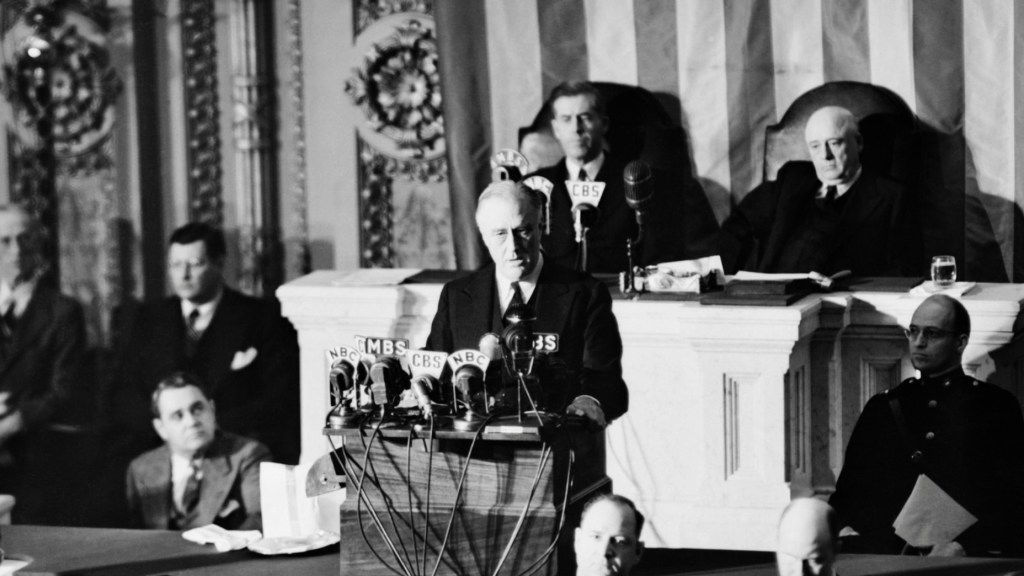
On the evening of the 8th, President Roosevelt gave his famous “A Day which will live in Infamy” speech to a joint session of Congress. The speech was broadcast live by radio and attracted the largest audience in American radio history, with over 80% of Americans allegedly tuning in to hear it.
Eleven months to the day later, on November 8th, 1943, the men of the 60th Regimental Combat Team, including Dad and Noble, landed on the beach under fire in North Africa at Port Lyautey, Morocco as a part of Operation Torch. The counteroffensive had started against the Axis powers in the European Theater of Operations.
When dad joined the Army in 1940, it was for a three-year hitch. It would be 5 years before he was honorably discharged in August of 1945. He took part in the invasions of North Africa and Sicily, where he was wounded and almost died. I think partying several extra hours on the evening of December 7th was probably justified.
— Never Forget —
Addendum:
- In 1940, the population of Fort Bragg was 5,400. By the following year, it reached 67,000. Various units trained at Fort Bragg during World War II, including the 9th Infantry Division, the 82D Airborne Division, the 100th Infantry Division, the 2nd Armored Division and various field artillery groups. The population reached a peak of 159,000 during the war years. This past year, Fort Bragg was renamed Fort Liberty.
- Here is one other Pearl Harbor blog I’ve done: The plaque is only a small one, over in front of The South Ottawa Town-Hall on 1st Avenue. The Hall is still used for occasional meetings, but 1st Avenue is pretty sleepy in that area, so I don’t know how many people actually ever see the plaque. When I walk by, the words always compel me to stop. And think. And remember … Herman Koeppe was 19 the day he died […] https://mnhallblog.wordpress.com/2016/11/30/never-forget/
Discover more from Live Life Exuberantly
Subscribe to get the latest posts sent to your email.
 Live Life Exuberantly
Max,
<
div>Incredib
LikeLiked by 1 person