It’s not like we were Kevin Costner in Dances With Wolves, eating the raw liver from a freshly killed buffalo with our hands. No, we used forks and knives to sample the beef heart tartar we’d just made in the Offal Cookery class at The Whole Ox Butcher Shop. It was delicious and opened me to new ideas.
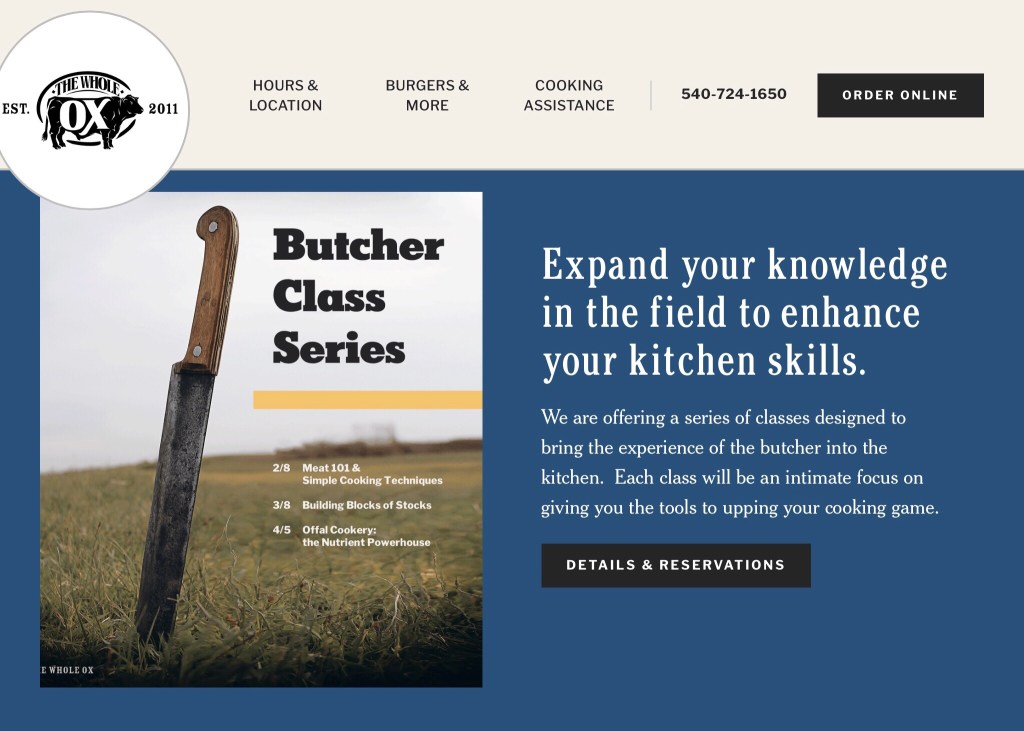
The Whole Ox here in Marshall is one of our local treasures. It’s a wonderful butcher shop with a great selection. Their offerings are ethically sourced, organic, and generally local. One of their mantras is “Eat better. Eat less”. When they offered a series of cooking classes this spring, I was immediately interested. The one that particularly caught my eye was “Offal Cookery”.
Offal is “the inside organs of, and parts trimmed from, an animal killed and prepared for food”. Innards is another good descriptor, though perhaps less delicate. Most of us are familiar with beef liver and chicken liver, but there’s quite a bit more. Around the world, there are multiple dishes that use offal. As examples, English Steak and Kidney Pie, Scottish Haagis (offal and vegetables stuffed in a sheep or cow’s stomach) and Mexican Menudo (made with tripe [stomach]) are three dishes many of us have tried or heard of. Intestines are of course often used for sausage casings. Liver pâté is something most have tried. Sautéed sweetbreads (thymus gland or pancreas) make an occasional appearance on a restaurant menu, and if I see them, I almost always order the dish.
While I’ve eaten offal in restaurants, I’d never cooked anything other than liver, chicken liver or beef tongue at home. For this particular class, beef liver, tongue, heart and sweetbreads were all on the menu. I was excited.
Eight of us arrived at The Whole Ox on a Wednesday evening. Amanda and Derek, the owners, greeted us and poured glasses of wine as we gathered at the prep station. Derek, who was previously a vegetarian for ten years, talked with us about what was planned for the night, and gave us background on offal in general. We learned that historically, offal was usually eaten first by our ancestors – it is the most nutrient dense part of the animal and was prized above other cuts of meat. Organ meat is high in vitamins, and has shown the ability to help with some diseases such as MS. We also learned that like wine, terroir effects beef and how it tastes.

After the brief introduction, we were divided into pairs and assigned the courses we would assist on: a classic liver and onions dish, tongue tacos, beef heart tartar and deep fried sweetbreads.
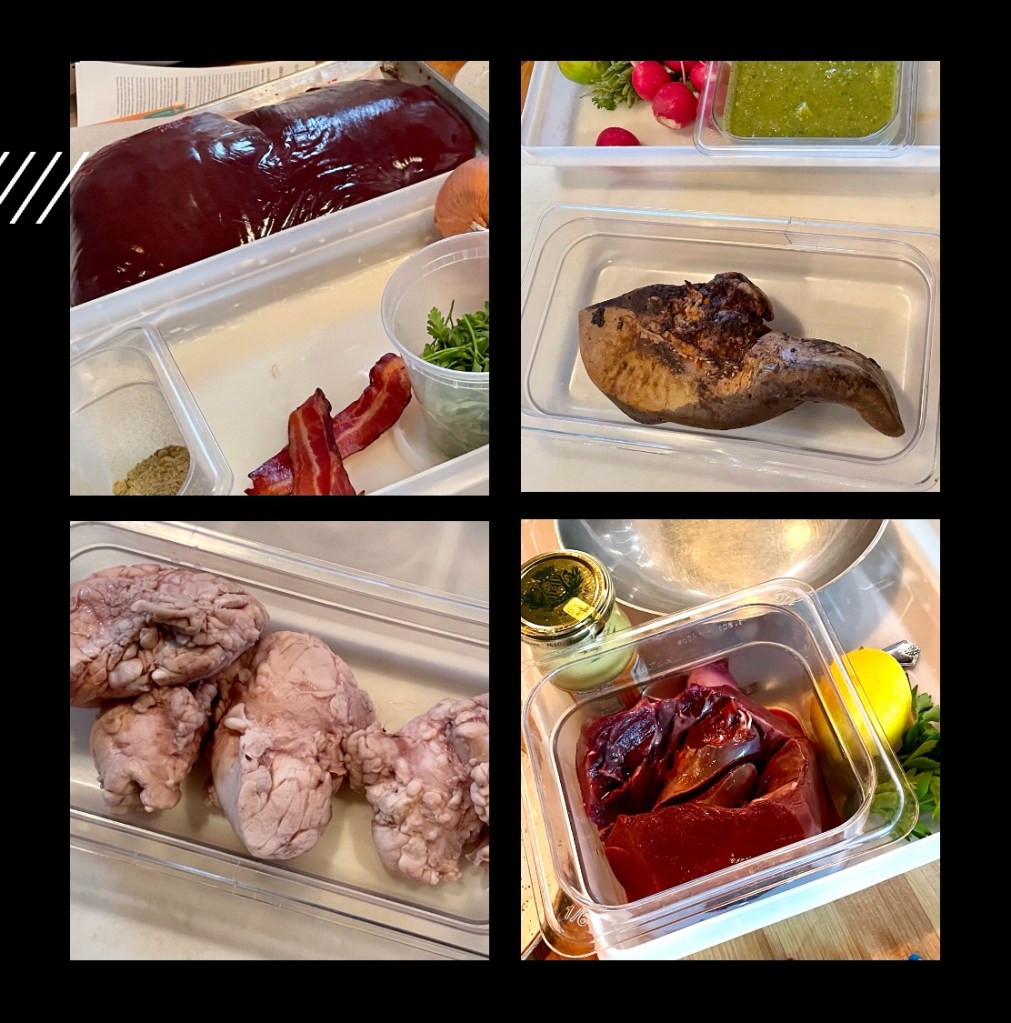
My partner and I were assigned the sweetbreads, and we started peeling the thin membrane from the outside. As with many deep-fried foods, the pieces went into seasoned flour, then buttermilk, then more flour. We turned them over to Derek for the actual deep frying. As the evening progressed, we were all watching each other. A few things stood out: cutting the liver a bit thicker than you normally think of, so it stays more tender and doesn’t dry out; splitting open the cooked tongue and removing the external casing to get to the tender meat; and with the heart, doing a fine dice for the tartar – if not fine, it would be too chewy, and if ground, the consistency would be too soft (not unlike Goldilocks and the three bears – the first bed was too hard, and the second bed was too soft, while the third bed was just right).
The recipes were coming together and as our wine glasses were refilled, we started receiving samples of each dish. There were a few nice surprises along the way, including bacon added to the liver, and salsa verde and finely sliced radishes added to the tongue tacos. The deep-fried sweetbreads were simple and excellent, with a consistency similar to fried oysters. And the heart tartar? I enjoy beef tartar, so I was looking forward to it. Simply prepared, there was salt and pepper, a little seasoning, parsley and a little lemon juice. It was delicious.

The evening wasn’t over, as Derek started cooking a surprise fifth dish. “Big Macs” that were fifty percent ground heart and fifty percent ground beef. We had eaten a fair amount by then, but smelling the burgers on the grill got the juices flowing again. After adding cheese to the grilling burgers, he placed them on the buns, then added lettuce, a bit of onion, pickles and their own Whole Ox “special sauce”. Watching him assemble the Big Mac sliders just about drove me mad with anticipation. I’m not sure, but I may have started drooling. Finally they arrived on our plates. WOW! Among the best burgers I’ve ever eaten. I practically inhaled mine.

The class wound down and folks started leaving. A few of us stayed a bit longer talking – about the shop and cooking, about Marshall, about innards. Derek revealed that one of his secrets to get people to try food out of their comfort zone is to mix it in with a familiar dish, hence the 50/50 Big Macs. It’s a brilliant idea. Eventually we finished our drinks and I drove home, already planning future meals.
As a final note, the next time you are at the farm and we are serving burgers, you may, or may not want to ask what’s in them. 😉
Addendum:
If you live in the area, or even the near-in Virginia ‘burbs, I highly recommend their classes. Out of the eight people there for our class, four were local and four were from DC suburbs about half an hour or forty minutes away.
Marshall is a great little village with several good stores, diners and coffee shops. There are three local gems among the offerings. In addition to The Whole Ox, we also have the nationally renowned Red Truck Bakery, and the excellent Field and Main Restaurant. If you are in the area, all three are worth a visit.
Discover more from Live Life Exuberantly
Subscribe to get the latest posts sent to your email.
 Live Life Exuberantly