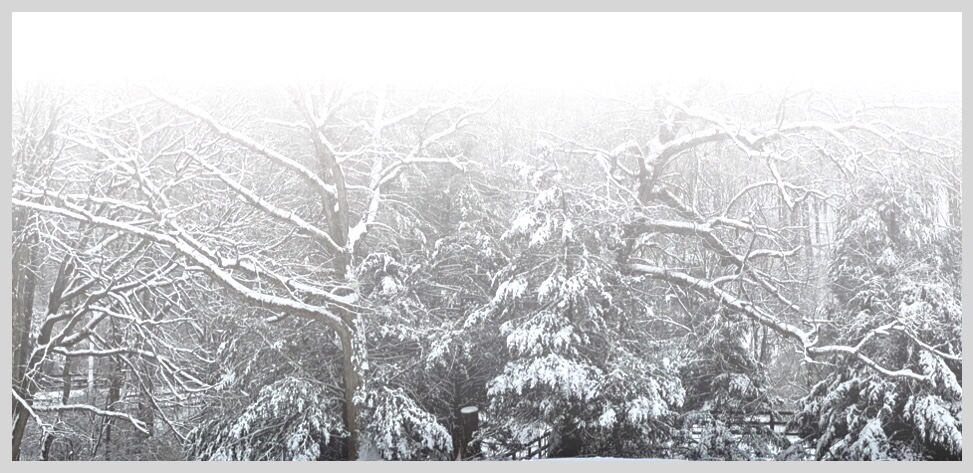
This winter sucked. We didn’t have much snow, but the three ice storms we did have, made travel treacherous, even if just walking to the barn. Of course, I’m not only talking about the weather.
Covid and Covid isolation continued to hold sway over most of us. Then, as the vaccine became available, we were all scrambling to find some way, any way, to receive a shot. They even had a name for us: We were Vaccine Hunters. The slow pace of the rollout was maddening.
We also had that failed, inept insurrection thing back on January 6th. THAT didn’t cheer anybody up. In fact, it made many of us despair for our country.
To top it all off, we have several good friends dealing with serious health challenges. Some, with life and death health issues.
All of these matters combined to cast a pall over this winter. There was a hint of melancholy, at least at our house. The Winter of our Discontent, indeed.
Whether the opening line of Shakespeare’s Richard III, or the title of the 1961 John Steinbeck book, the words “The Winter of our Discontent” aren’t promising. Neither the play, nor the book are particularly cheery. Richard III is of course filled with political and familial intrigue, death and murder, while Steinbeck’s book “The Winter of our Discontent”, examined moral decline in America. Both have more than a little in common with this past winter.
So, how do you fight against a winter of discontent? It could have been all too easy to just try and survive – stay cooped up, become cheerless, and drink too much.
One of the ways we fought it was with Comfort Food. And more specifically, comfort food in the form of soups and stews.
We made and ate more stews and soups than usual this past winter. Actually, I think we had them a couple times a week all season long. Several were old favorites. Others, we made for the first time, and some of those quickly became new favorites. We warmed ourselves with our meals, as much as with the wood stove in the family room. Here’s a list of the assortment we had:
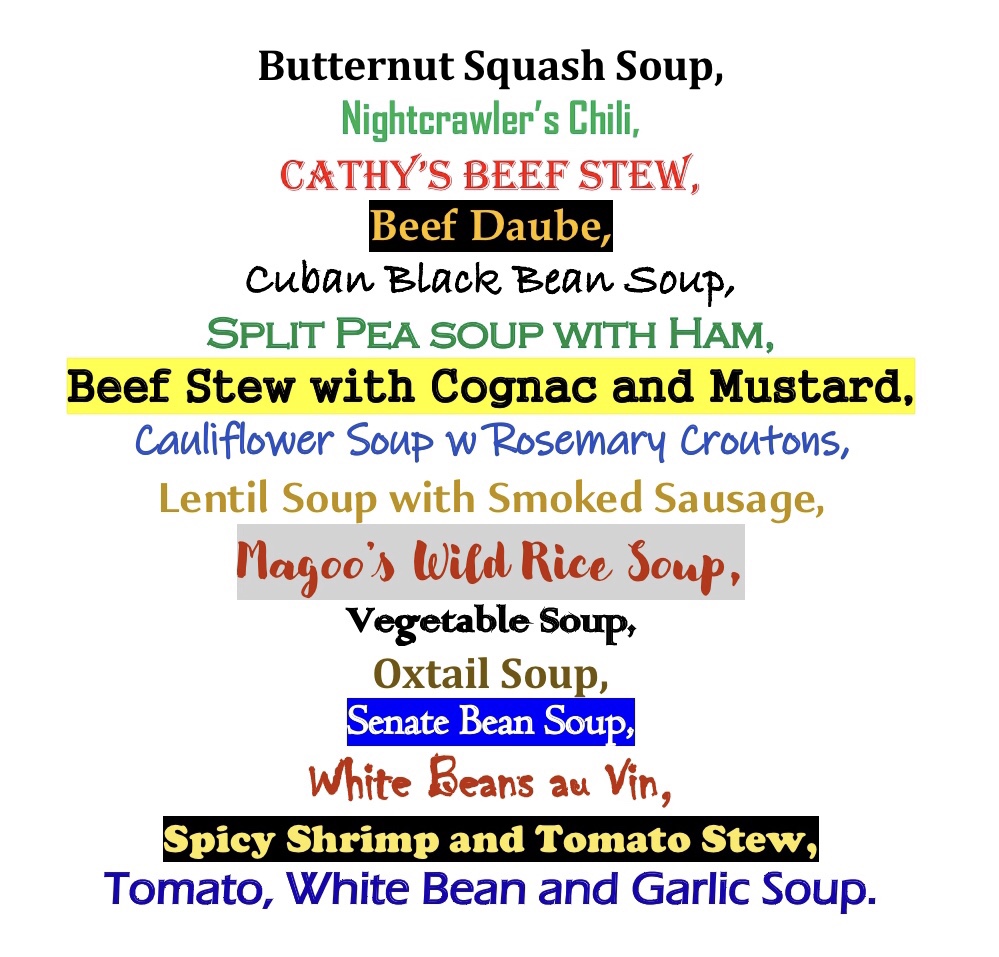
Those soups and stews provided comfort in many ways. Certainly there was the warmth they gave in the bowl and the simplicity of eating a one pot meal. There was also the ritual and pleasure of making them. For me, that brought a bit of relaxation. A few hours in the kitchen, surrounded by the wonderful smells from the simmering pot, along with the warmth of the stove itself, is not a bad way to spend a cold day. I also think their bursts of flavor and color countered the grayness of the season. They furnished a bit of light in the darkness of midwinter, if you will.

This winter, like all winters, will end. Saturday, March 20th, is the first official day of spring. Although I know we still have some cold, and possibly snowy, days ahead of us, the weather is already turning. Additionally, Cathy and I have both received our Covid shots, and it appears the distribution floodgates are finally opening for all who want the vaccine. Soon, we will all get there.
Among our friends with health issues, some have improved, and others are holding their own. They too are getting Covid vaccines and we hope to see them soon. Unfortunately, two classmates, one from West Point, and one from high school did pass away. We are “at that age” now, where death happens more frequently, but it doesn’t make it any easier.
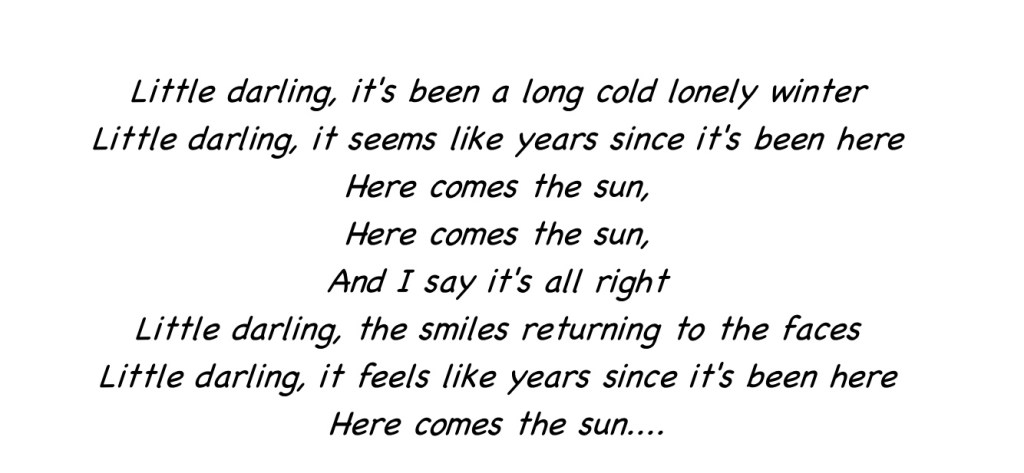
I’m sure we will have a few more warming winter soups and stews over the next several weeks. And while I’m happy for the sustenance they provided over the past four or five months, my mind is already turning to lighter dishes and meals. The days are growing longer and are not so dark. This winter of our discontent is ending. Spring, and the promise of renewal beckon and I am ready to embrace them. In the immortal words of George Harrison:
Addendum:
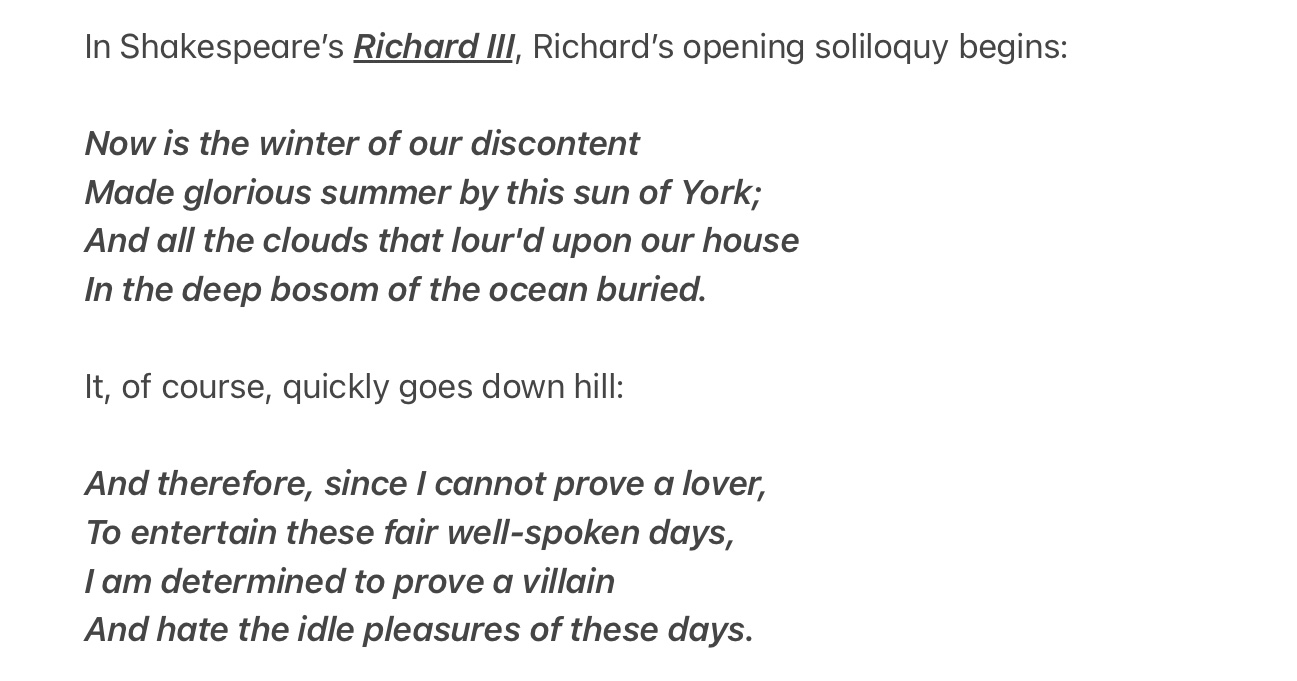
– Cathy and I had the good fortune to see the play several years ago at the Shakespeare Theatre here in DC. As with many Shakespeare tragedies, there was plenty of death, murder, political mayhem and family intrigue. If you get a chance to see it, I hope you do so.
– The Winter of Our Discontent was John Steinbeck’s last novel, and published in 1961. He borrowed the title from Shakespeare. It too tells the story of a family, with themes concerning the effects of social pressure, deceit, lying, corruption and death. Steinbeck stated that he wrote the novel to “address the moral degeneration of American Culture during the 1950s and 1960s.”
Discover more from Live Life Exuberantly
Subscribe to get the latest posts sent to your email.
 Live Life Exuberantly