I sometimes envy those who see the world in black and white. For me, I often see shades of gray. Next week, March 2nd is the 82d anniversary of the release of the movie Stagecoach in 1939. The iconic western teamed John Wayne and director John Ford for the first time, and made Wayne a star. This milestone made me think about The Duke, and how my views of him have moderated over time.
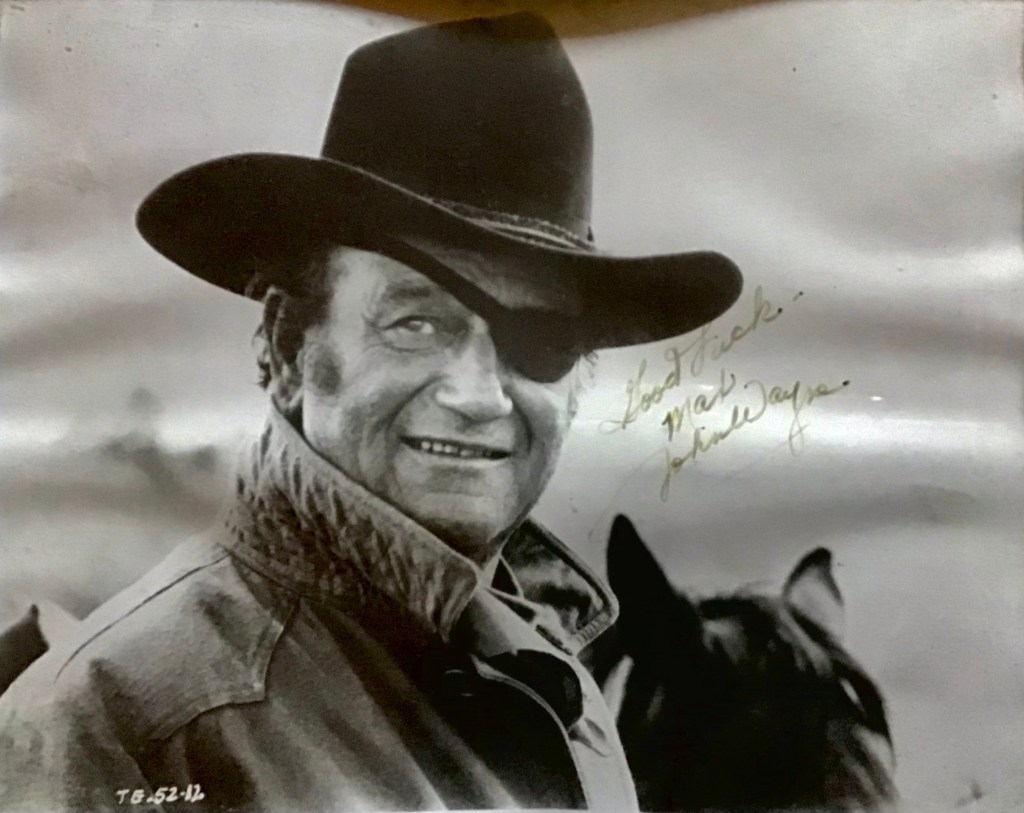
The Duke was without a doubt one of my boyhood heroes. Watching his movies on TV, you always knew who to root for, and the “good guys” were sure to win. When we were old enough to make it to the theater itself, my buddy Howard and I never missed a Duke movie – whether The Sons of Katie Elder, True Grit, Big Jake, The Cowboys, or one of the other dozen or so movies he made during our youth, we always went (between 1963 and 1973, Wayne starred in 19 movies). We often memorized favorite lines from some of the movies. To this day, my friends Howard, Mark, Tim and I can recite word-for-word a memorable quote from Duke in Big Jake (“Now you understand. Anything goes wrong, anything at all – your fault, my fault, nobody’s fault – it won’t matter – I’m gonna blow your head off...”). Hell, Howard and I even wrote him letters and received autographed pictures. We didn’t do much to separate the man, from his legend and the characters he played.
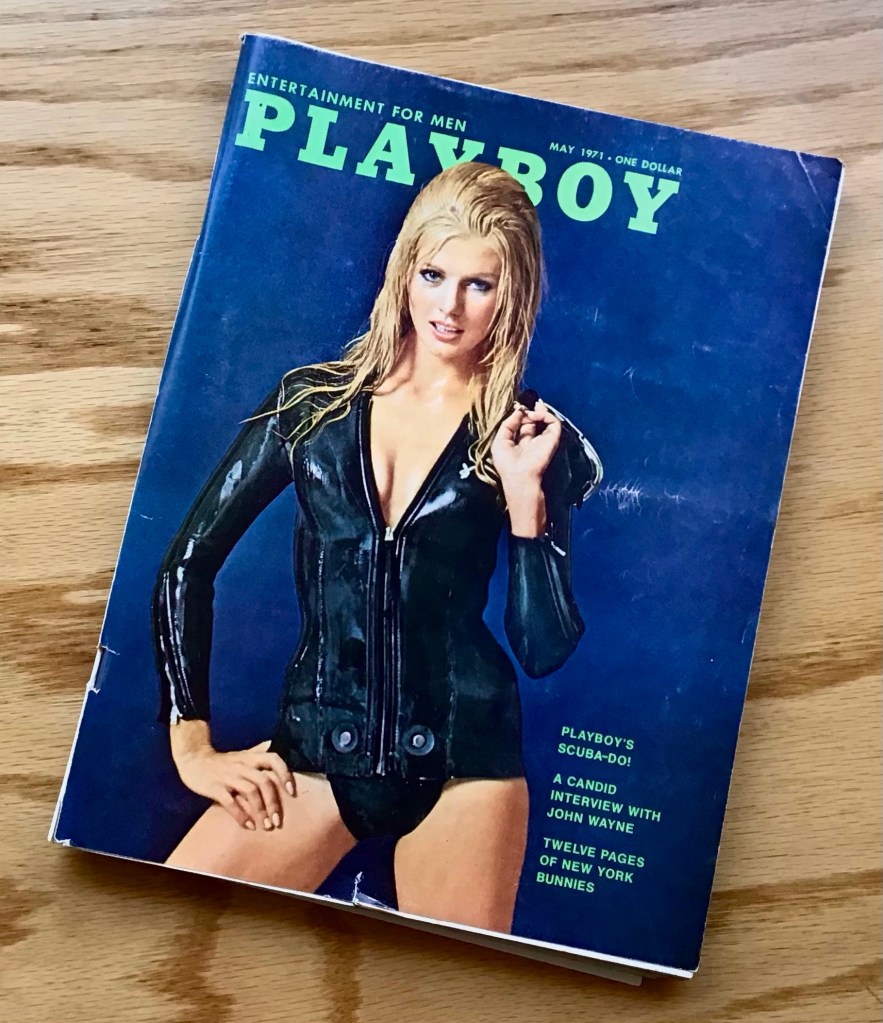
It wasn’t all blind worship. In 1971, Wayne did an interview with Playboy. I can truthfully say I bought the magazine for the articles that month. Sure, the “Twelve Pages of New York Bunnies” might have been interesting, but what I was really excited about was the “Candid Interview with John Wayne”. While the interview was pretty good overall, there were also some disturbing quotes, and they have not aged well. To a 16 year old fan, they were an eye opener. I don’t think my buddy Howard and I could quite match the words with the man who purportedly said them. His comments on Blacks and Indians were offensive then, and now they come off as shocking. Candid indeed.
If you read any of the other magazine articles about him at the time (Look, Life, The Saturday Evening Post – I bought them all if they had an article about Duke), there wasn’t a whiff of racism. In fact they were quite the contrary and positioned him as a man of honesty and integrity. Was the Playboy interview somehow out of context? Or were the other magazines covering for him? They still presented him as complex, but without the sharpness of the Playboy interview.

Over time, as I grew into adulthood, I learned more about Duke and not all of it was flattering.
He probably starred in more “patriotic” films than anyone; however, when WWII started and the likes of Clark Gable, Henry Fonda and Jimmy Stewart were serving overseas, The Duke stayed home (two deferments) and made more movies.
He took part in creating the conservative Motion Picture Alliance for the Preservation of American Ideals (the MPA) and was elected president in 1949. He became a strong anti-communist and a vocal supporter of the House Un-American Activities Committee (HUAC) that eventually led to the rise and influence of Senator Joe McCarthy. Wayne was an advocate for Blacklisting writers and actors who had any connection to the Communist Party, even if during their youth.
And yet…. he may have tried to enlist during WWII, but was threatened with lawsuits by Republic Pictures if he left. Over the course of his life, he raised awareness of the plight of Native Americans. His three wives were all Latina. While he made the pro-Viet Nam war movie The Green Beret, he also felt America should either be in the war to win it, or get out and cut our losses. He grew disgusted with Nixon and his “enemies list”. Although a Republican, he strongly supported Jimmy Carter in returning the Panama Canal to the Panamanians. He was awarded the Congressional Gold Medal in 1979 by a Democratic Congress, and posthumously received the Presidential Medal of Freedom from Carter in 1980.
Duke was fearlessly honest in his opinions and that is certainly worth admiring. There was no hypocrisy or trying to shade things both ways. You knew where he stood. As a result, he was a polarizing figure for a long time, sometimes for the right reasons, sometimes for the wrong ones.
Wayne, as with much of American history itself, was complicated. Part of me wants to say you should pick your heroes from real life, not from Hollywood Heroes. But among real life people, who isn’t also flawed? Whether Thomas Jefferson and slavery, Abraham Lincoln and his comments about Blacks, or Martin Luther King JR and his multiple infidelities, we are all, after all, only human and a product of our times. We all know some flaws are greater than others, but I’m not sure I’m the one qualified to sit in judgement of anyone. I think Jesus was right in John 8:7 – “Let him who is without sin among you, be the first to cast a stone…”
While I continue to enjoy the old Duke movies today, I also remember they are fiction. My buddies, Tim, Mark, Howard, and I still have discussions about them. We occasionally rate our favorite Westerns and where Duke’s work falls in those lists. They are wide and rambling conversations/arguments, including everything from Stagecoach to Blazing Saddles, and more recently, Tarantino’s The Hateful Eight. Wayne’s The Searchers and Eastwood’s The Unforgiven are always near the top of the heap. My top two? John Wayne in The Man who Shot Liberty Valance, and High Noon with Gary Cooper. Both are moral tales, although for different reasons. Interestingly, The Duke couldn’t stand High Noon. He figured no real Marshall would ever act the way Gary Cooper’s character, Marshall Will Kane, did. He might also have disliked the movie because the Screenwriter was Carl Forman. Foreman had been a onetime member of the Communist Party and declined to identify fellow members to HUAC. As a result, he was labeled an “uncooperative witness” by the committee, and later Blacklisted in Hollywood. I should also mention Carl Forman did serve in the Army during WWII.
On June 11th, 1979, John Wayne died. At the time, I was stationed overseas with the Army in Germany. We were on day three of a week long exercise, and deployed near the Czech border. Word came in over an FM link from Battalion Headquarters that Wayne had died. My Platoon Sergeant, Paul Teague, and I briefly talked about the Duke, and then went back to work. We needed to redeploy our platoon to a site a few Klicks away – a Soviet attack (in the exercise) was considered imminent. There was no hero, real or fictional, who was going to give us advice or tell us what to do. As is often true in the real world, we had to solve the problem ourselves.
Addendum:
⁃ For years, John Wayne’s grave was unmarked. He wanted the phrase “Feo Fuerte y Formal”, which translates to “Ugly, Strong, and Dignified” on his tombstone. His family was afraid of people stealing things, as often happens at Hollywood gravesites and didn’t have anything marking the grave for 20 years. Eventually they did put up a marker. Here’s the quote on the gravestone: “Tomorrow is the most important thing in life. Comes into us at midnight very clean. It’s perfect when it arrives and it puts itself in our hands. It hopes we’ve learned something from yesterday.” Wayne used the same quote in the Playboy interview in 1971 with this line added – “As a country, our yesterdays tell us that we have to win not only at war but at peace. So far, we haven’t done that.”
⁃ Thanks to my friends Tim Stouffer, Mark Dunavan and Howard Johnson for their inputs to this blog. As with almost all of our discussions, I gained new insights, thoughts, and ideas.
⁃ Also thanks to my niece, Tami Harmon, who has a Bachelor of Arts degree in Film Studies from The Ohio State University. She provided some additional thoughts and comments about differentiating movie stars from the characters they play.
⁃ It’s worth noting that in several of his movies, John Wayne played complex characters with issues of their own. Watch The Searchers, or The Man who Shot Liberty Valance for two anti-hero heroes. If you don’t come away from those movies conflicted, you just aren’t watching. Liberty Valance has a memorable line towards the end of the movie, which also seems to apply to views of our sometime “Heroes” – “This is the West, sir. When the legend becomes fact, print the legend.”
Discover more from Live Life Exuberantly
Subscribe to get the latest posts sent to your email.
 Live Life Exuberantly
I got to meet 3 of the Dodgers when I was about 6 or 7 years old. Your post has made me think about that and I am going to write the story down.
LikeLike
We didn’t get to go to too many movies growing up. We were that poor. But I did watch my fair share of TV programs and my favorites were The Lone Ranger, Roy Rogers & Dale Evans, Gene Autry, Sky King and his niece Penny and Lash LaRue. But they were not true heroes to me because their existence was so far removed from mine as to be unbelievable. My heroes were the Brooklyn Dodgers and my favorite was Gil Hodges. I devoured every once of information about them and used in my daily life. I read the sports section of at least 5 newspapers every day (my brothers and I delivered 3 of them). My favorite was the New York Daily News and the legendary Dick Young’s daily column. We collected any bit of information on the Dodgers and used it like currency. You were the center of attention at least for a few moments if you had some new statistic or a comment that one of Dodgers had made. If you could say something like “Newk is going to miss his next start because his shoulder is bothering him”, you were clearly a better Dodger fan and thereby a better human being.
LikeLike