
This year is the 18th anniversary of September 11th, and everyone of a certain age remembers when they heard the news that day. If you lived in New York City, or the Metro DC area you probably have a story of what you experienced. This is the story of my experience.
The original construction of the Pentagon started on September 11th, 1941 (yes, that is true) and was completed in January, 1943. It is the largest low-rise office building in the world and 25,000 military and civilian employees work there on any given day. In the 1990s at 50 years of age, the building had several problems and a determination was made to renovate it, one Wedge at a time. In 1993, I became a part of the team assigned to upgrade the computer and communications systems, as a part of the Renovation. I eventually became the lead civilian engineer for the National Military Command Center (NMCC), and a couple of years later the lead civilian systems integration engineer for all of the networks and systems going into the renovated Pentagon. It was a great job, and I thought I’d died and gone to heaven. In 2000, I had the opportunity to become the Technical Director (think CTO) for a division of the company I worked for, SRA, and I moved back to our corporate headquarters. It was a promotion, but I was sad about leaving the Renovation Program.
On the morning of September 11th, 2001, I was sitting in a meeting with a few people in our company offices. A little after 9:00AM, the door to the conference room burst open and someone shouted a plane hit one of the twin towers. Pat, my boss, said he knew about it, and it was only a small off-course plane. The other person said, no, two large planes crashed into the Towers. We all jumped up and out of the room to find a TV and see what was going on.
A few minutes later, we received word a plane also crashed into the Pentagon. My stomach tightened in a knot. Oh shit. We had over 40 people working in the Pentagon on the Renovation and other programs. In fact, my old team had just finished renovating the Navy Command Center three weeks before. It was in the Wedge of the Pentagon hit by the plane.
Pat asked me to track down all of our Pentagon related personnel. As I started making calls, it was something of a madhouse in the hallways outside my door.
I called our office a couple of miles from the Pentagon and was able to get the status on a few of our people. The others were still unknown. Many worked full time in the Pentagon, or were there for meetings that day. We had a call tree for disaster situations. Unfortunately, when the Pentagon was hit, cell service was so overloaded it was almost impossible to get through to people. Landlines only seemed marginally better.
Around 10:00AM, the first tower fell. A bit later the second tower also went. Near 11:00AM, the outside portion of the Pentagon Wedge where the plane crashed, collapsed and the fire intensified. At our office, people were departing work and trying to get to their families around the beltway. They were expecting another plane and wanting to reach their loved ones.
Time went by blindingly fast and morning turned to afternoon. Slowly we were finding people. One person was chased down a hallway by a fireball before he ducked into an open door and the fireball whooshed by. The smell of smoke and jet fuel was overpowering. Someone else jumped out of an interior second floor window and hurt his leg, but was otherwise OK. My friend Tom was suppose to attend a meeting in the Navy Command Center, and missed the start because his metro train was delayed. He was walking across the Pentagon when the plane hit and the Command Center was destroyed. Of the 189 people who died at the Pentagon September 11th, 42 were in the Navy Command Center.
Sometime in the afternoon Cathy called. She had tried to reach me for a while, but couldn’t get through. I confirmed I was OK. My job carried me around the DC metro area, including the Pentagon, so she wasn’t sure where I was that day. It was good to hear her voice. I told her I wasn’t sure when I’d be home.
The afternoon turned late. More reports came in and I learned a number of our folk were evacuated from the Pentagon into nearby Crystal City. We added their name to the growing list of people confirmed alive from our company. Since metro was now out of service near the Pentagon, they had to walk several miles to return to our corporate offices where their cars were parked. One of our engineers, Bobby, was in the Wedge where the plane crashed, but only suffered a broken shoulder when he was slammed into a wall from the explosion. He walked out of the building with his arm hanging at his side.
Finally, around 6:30PM, we tracked down the last missing person. Everyone in our company had survived and only Bobby had to go to the hospital. It was a bit of relief on a grim day.
A while later, near dusk, I drove home. Route 66, normally jammed with the evening rush hour, was amazingly empty. Most folk had evidently left work much earlier in the day to be with their families. There was literally no traffic and I reached home in record time. I called my folks and returned a couple of calls from concerned friends. Cathy and I had a quiet dinner as we watched TV cycle and recycle through footage of the towers, news about the plane crash in Pennsylvania, and video of the still burning Pentagon. It was the first time I actually saw the footage of the Pentagon’s destruction, as I was glued to the phone all day. We eventually went to bed, and a sleepless night.
The story doesn’t end there.
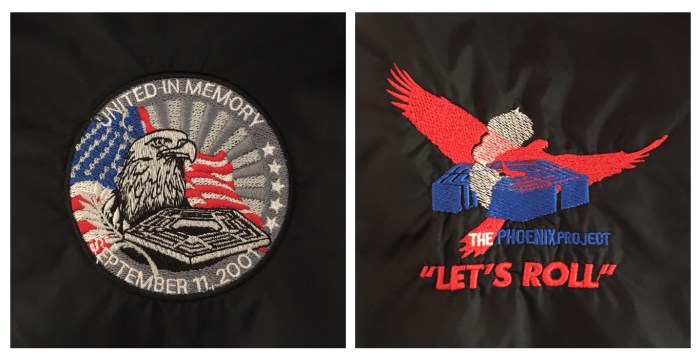
The next couple of days were a blur of both activity and inactivity. The world had changed, although most of us weren’t yet aware of exactly how. The Pentagon was still functioning, and over 10,000 people reported for work on September 12th. The vast majority of the communications and computer systems outside the destroyed Wedge survived, however, there were some interconnectivity and redundancy issues.
A day later I received a call and was asked to attend a meeting at the Pentagon Renovation headquarters, just outside the Pentagon in a Modular Office Complex (we called it the MOC). I arrived, and I believe there was still smoke coming out of the Wedge hit by the plane. The meeting was to discuss measures to address the issues with the networks in the Pentagon, provide work-arounds for the destroyed Wedge, and address fitting out a temporary Navy Command Center. The meeting went on a few hours and general plans were established and work started.
At the start of October, a decision was made and a goal established to fix and reopen the destroyed part of the Pentagon by September 11th, 2002. The Phoenix Project was born, and the crews involved worked like fiends. While I wasn’t a part of the team directly working on the Phoenix Project, I was indirectly involved through corporate and project oversight of our parts of the effort. I had many friends and coworkers involved, and their story is a great one.
The phrase “Let’s Roll”, borrowed from Todd Beamer who died on UA Flight 93 in Pennsylvania, became the project’s slogan. The team removed the debris and wreckage, tested the infrastructure and facilities, rebuilt the building itself, and ultimately, put the computer and communications systems back into the destroyed Wedge. On August 15th, 2002, nearly one month ahead of schedule, the first tenants moved back into the newly renovated Wedge.
At the ceremony marking the one-year anniversary of the tragedy, General Richard B. Meyers, Chairman of the Joint Chiefs of Staff, thanked the Phoenix Project Team by saying, “You’ve restored this great building ahead of schedule, with muscle, determination, marble, cement and Indiana limestone. You did more than repair our windows and walls, you repaired ours souls. In the process, you turned this building into another symbol, one of American resilience.”
For me, the events of 9-11 weren’t isolated to just the one day. I can never think of the planes hitting the Towers and the Pentagon, without also thinking of the massive effort over the next year to rebuild the Pentagon. It showed us at our best, and what we are capable of as a country and a people. When we put our minds, and our backs to it, nothing is beyond our reach.
Addendum:
– If you want a good book about the history of the Pentagon, including the renovation and the events surrounding 9-11, I recommend: The Pentagon, by Steve Vogel.
– When I started writing this post, I planned to name all of the folk I knew involved in the Renovation effort and particularly Project Phoenix. There are many and rather than name a few, I decided to name no one. You know who you are. My hat is off to you and your efforts, now and forever.
Discover more from Live Life Exuberantly
Subscribe to get the latest posts sent to your email.
 Live Life Exuberantly
Max – First thankyou for putting the engineering team together which I was part of. For those who went through 9/11 at the Pentagon, can only relate our experiences at an unique level with others that where there during 9/11 and year after.
LikeLiked by 1 person
Good to hear from you Bob and you are oh so correct. The team did a job they most folk have no comprehension of.
LikeLike
Max—Thanks for sharing. You did a great job of capturing what creating value for our clients was all about. Ted
LikeLiked by 1 person
Ted – good to hear from you. Yes, those times were special and we had great people that were totally mission and customer focused.
LikeLike
Thanks for sharing Max. I had moved to the IA group and was on a project at Labor, but with all of the connections to those who were there and then rebuilt had great concern and intense feelings about it. That morning I had stayed at AP where I would normally park my car to continue into DC on Metro because of what had already happened in NY. I still had an office among the PenRen team. Difficult day. Great work by the SRA team and many more to clean up and rebuild!
LikeLiked by 1 person
David good to hear from you and glad you are doing well! Yes, that was a strange day all around. What time did you get out of the AP office that day?
LikeLike
Max,
Thanks for the write up. I will never forget the sep 11 day, recovery, and re-build.
LikeLiked by 2 people
Sajeel, my old friend. Amazing, amazing work by you all. It’s a story that many don’t know, and I don’t think can begin to comprehend what took place in that year.
LikeLiked by 1 person
Very cool story. I was dispatch there to work the fire and rescue, and i was at NCTC 10 years later when we got Bin Laden. My circle was complete. I still cry all day 9/11. I cry when my FDNY brother loose another soul.
Thanks for your service, Max
LikeLiked by 1 person
Max, Great overview and thanks for shining more light on the massive recovery.
LikeLiked by 1 person
Like you, I drove home from work around the beltway, crossing the American Legion bridge, and heading out 66 about 7pm. It was spooky–no cars on the road, no planes overhead, and total silence. It felt like I was the last person on the face of the earth.
LikeLiked by 2 people
Thank you Max. It was indeed a very hectic time for the Renovation Project Team.
LikeLiked by 1 person
I thought about trying to capture more about everything people were doing in a separate blog, but it would have ended up being a book. Amazing stuff you all did. Simply amazing.
LikeLiked by 1 person