The Palette of Our Life

The Palette of Our Life

Through Cathy, I’ve gained an appreciation for the colors that make up the palette of our life. As an engineer, the journey hasn’t been a simple one. Sometimes though, you can teach an old dog new tricks.

Over the decades, the two of us have seen life through different lenses.

For me, it has usually been about form, and lines and precision. It’s hard for me to say whether I was always this way, or I became this way. Did my childhood background start me on the road to becoming a military officer, an engineer and a business leader? Or was it something that was self-reinforcing over time? Even in my hobbies, whether running, or reading, or photography, there was a certain precision… trying to reduce my times on a run, or capturing greater detail in a photo, there was a linearity to it. The gauziness of color didn’t really register in my brain.

For Cathy, her view is much more about color and the senses. This is most obvious in our gardens. While our gardens are made up hundreds of plants and flowers, and requires much hard work on her part, it is the flow of color over the seasons that defines them. There are constantly changing colors and hues. Only a fool, or an engineer, would miss them and their beauty.

A Redbud in the Garden Last Spring

For years, I didn’t get it, or understand it. Or perhaps even worse, I didn’t think about it.

And then about seven years ago, I retired. There are many great things about retirement, and most retirees will happily enumerate them to you ad nauseam. For me, the greatest gift is the luxury of time. Time to do the things you want, or time to do nothing at all and not feel guilty about it.

One of the things I started doing with my time, was taking care of the morning feeding of the horses. It was easy enough, and made me feel like I was contributing at home. There was also an unintended consequence.

After feeding the horses, while walking back to the house, I would notice little bursts of color in the garden. Why were flowers blooming in February? And then March? And then everywhere by May? Our hillside garden was awash in color, both from the flowers, and the many hues of green from the plants themselves. Now mind you, these colors and flowers were there for years, but it was as if I was seeing them for the first time. Cathy had created all of this, and I was blind to it.

Some Photos of Just a Few of the Flowers in Cathy’s Gardens

Thank God, we all have the ability to grow, even when we appear set in our ways. As spring arrives, I walk through the gardens looking at the new growth and colors peeping out. This year is different than the past. Our hellebores, crocuses and daffodils are blooming at the same time, when typically they would bloom sequentially. The engineer in me wants to understand why, but it’s not stopping me from enjoying this beautiful March we are having.

I see color now, or perhaps a better description is I see more color now. Sure, I always saw the red, yellow and orange leaves of autumn, or the red white and blue fireworks on the Fourth of July, or a multicolored string of Christmas lights. Now, I also see the purple ground cover in a field in the spring, the mixed colors in a neighbor’s garden, the infinite shades of grey in the sky and sea on a cloudy day. I’m a better person for all of it.

On a Recent Drive to the Chesapeake Bay, a Sea of Purple…

I’m still Max and keep spreadsheets, to-do lists, and can be pretty anal about time. Happily, I’ve also gained an appreciation for color. I excitedly show Cathy pictures of her flowers and of the garden and she smiles at me. Even though she has seen those colors and flowers for decades, she’s a good partner and encourages me in my growing understanding of color, and of who she is.

It makes me feel pretty lucky.

The Black Death

The Black Death

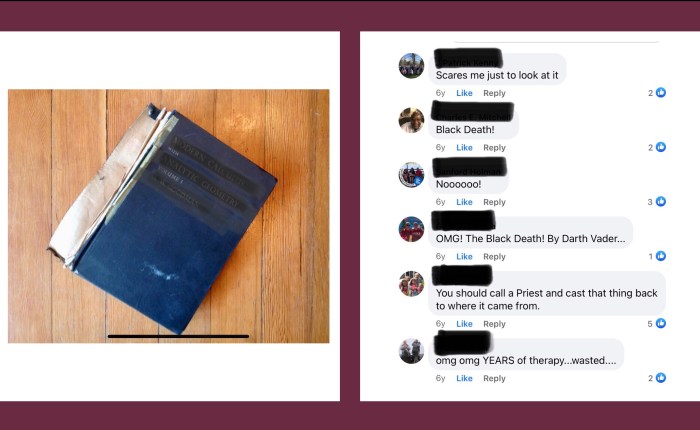
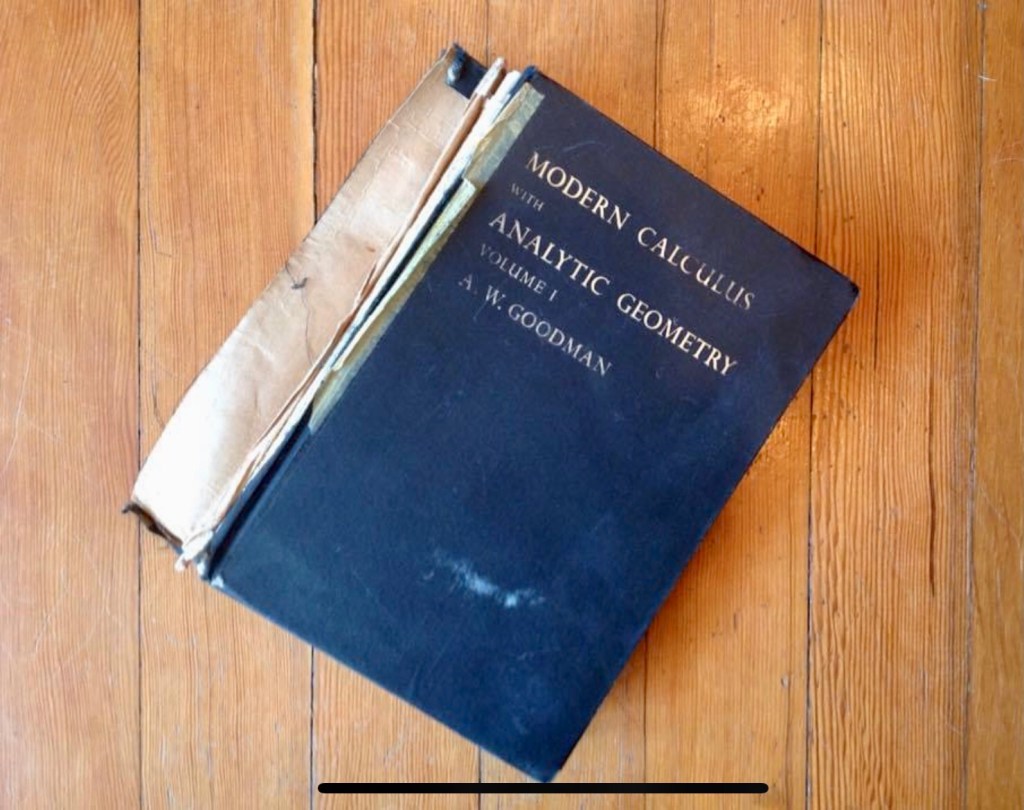
The Black Death. That’s what we called it. Among us Plebes at West Point, feelings were strong, and universal. To this day, grown men shudder when they see a picture of The Black Death. How could a single book leave such a strong impression? What devilry was this? What book of spells could cause such consternation?

Yes, Grown Men Still Shudder when they See a Photo of The Black Death

Of course it wasn’t just any book. This book was “Modern Calculus With Analytic Geometry (Volume 1)” by A.W. Goodman. We never called it that though. We called it The Black Death, or sometimes The Black Plague. The book was black, but I suppose our title referred to the entire experience of Plebe (Freshman) math at West Point as much as anything.

The Black Death, in all it’s Glory

After Beast Barracks our first summer at West Point, it was a relief to get to the academic year. Unfortunately, we didn’t quite know was waiting for us. In addition to the normal Plebe challenges, Calculus was a required course for all, and provided our introduction to The Black Death.

This wasn’t just any old math course. There were several “attributes” that put the class  into the category of those things you never forget.  My classmates and I laugh about it now, but it’s still a bit of a nervous laugh.

First off, the class of ‘78 went to Plebe math five days a week, including Saturdays, with 90 minutes for each class. Prior classes attended Calculus class six days a week for 75 minutes per class and thought ‘78 was getting over, since it was only five days a week ;-).

In the class itself, we had normal homework, quizzes and tests. In addition, we suffered a unique form of torture called “The Boards”, also known as “Recitations”. A couple of days a week, the professor would call out “Take Boards.” We cadets stood up and each of us went to one of the blackboards that covered the walls in the classroom. The professor then asked us to work through a calculus problem on the board. It might have been one of the previous night’s homework problems, or it might have been the proof of some theorem. After several minutes, he called “Cease Work!” and then called on one of the students to walk through, or recite, their problem solution. Sometimes it was a cadet who had the solution mapped out perfectly. Other times? Well, other times it might be a cadet whose answer wasn’t correct. It could make for some tense/fumbling moments. Recitations had taken place at the Academy since at least 1869.

Somethings Never Change – Cadets “Taking Boards” in 1900

Of course that sly b@stard Goodman contributed to our pain. While there were often theorems in the book that provided the mathematical proof for the result, it wasn’t always the case. If there was ever a theorem in the book where it said “The proof is intuitively obvious to the casual observer”, you knew it would be a problem for the boards, or a quiz, or a test. For most of us, the solution was never “intuitively obvious”.

At the time, West Point was on a 3.0 grading scale. 3.0 was a perfect score. 2.0 was the lowest passing grade. If you scored a 2.5 on a quiz, you built up five “tenths”. If you scored a 1.7 on a quiz, that was the equivalent of an F and you were down three “tenths”. For those near the bottom of the class in math (or any course), the phrase “2.0 (pronounced “Two OH”) and go” became common. Basically it meant over the course of the semester (and year) you needed to finish with a 2.0 average. Any tenths over that were wasted.

We were quizzed and tested on a regular basis and over time, each of us fell somewhere on the spectrum between 3.0 and less than 2.0. Every few weeks, the math department reordered us cadets by current math class grade ranking. That is, those with the highest grade average, migrated to the “top” sections, while those with the lowest scores would migrate to the “bottom” sections. Each section had about 15 or 17 students. The theory was those in the top sections could cover more material, while those in the lower sections could receive the extra help needed. This reordering of the class on a regular basis was first implemented in the 1820s and was unencumbered by progress for the next 160 years.

The lowest section also earned the nickname “the ejection section” and the guy with the very lowest grade was in the ejection seat. My classmate Rick Steinke, was in the ejection section and ejection seat at various times. At the end of the semester and year, some number of cadets weren’t going to have a grade over 2.0 and one of three things would happen. Rick’s recollection – “That is where I was at the end of first semester, plebe year. Of the bottom 30, as I recall: 1/3 of us did not make it to the next semester (they were booted from the academy); another 1/3 were turned back a year; and another 1/3 went to summer school. I believe I was the only plebe who escaped unscathed, with just a couple of tenths to spare. Thanks to Captain Art Bonifas*, my first semester Professor, and Major Bachman my second semester P, I made it through. Also, Marty Vozzo, my roommate (and several years later, a math professor back at West Point), told me which theorems and equations I needed to memorize. Divine intervention, my brother.”

Rick DID survive the Ejection Section, and the Ejection Seat

Time passed, and we moved on. Obviously lots of Plebes did quite well in Calculus. Many excelled at it.

My classmate Joe Spenneberg, returned to teach math at West Point a decade later, from ‘88-‘91. By the time he returned, Goodman was gone, as were The Boards. The cadets still attended math five days a week, but only for an hour at a time. Also, classes were no longer “reordered” on a regular basis. The course work changed some as well – instruction started with “discrete math”, before migrating to integrals and “continuous math”. In Joe’s words, “The jump between discrete and continuous was key. We told them to imagine that the discrete step is infinitesimally small, which introduces the concept of the limit which is essential to being able to define a derivative …” as Joe was recently explaining this to me, I fogged over about then ;-).

Joe also told me a total of nine or ten of our classmates DID return and teach math at West Point.  To the best of my knowledge, as a class we never ostracized them. 

I’m sure Mr. Adolph Winkler Goodman, who died in 1989, had no idea about his effect on Plebes at West Point. I don’t think it mattered if you were a star man (top 5% of the class) or a goat (bottom of the class), everyone called it The Black Death. Yea, we laugh about it now, but it was pretty serious stuff then. Looking back, it was one of those commonalities that united all of us. You don’t think about a math class uniting people, but I sure think The Black Death did so for us. The only other class with a similar effect was boxing, but that’s another story for another time.

As I was working on this blog last week, I had a dream one night.  I was back at West Point, and you guessed it, in math class.  It was finals and I was in the classroom with several classmates.  Time was passing and for some reason, while I had a copy of the test, I couldn’t find my paper to write my answers down.  I knew the answers, but I couldn’t find the piece of paper to write them on. Classmates started finishing the test and leaving the classroom AND I still hadn’t started.  I was trying to ask the teacher for help, and getting no response…  

I woke up in a sweat.  Looking around, I was in my own bed, with Cathy sound asleep next to me.  I settled back to sleep and chalked it up to one last gift from Mr Goodman and The Black Death. 

Addendum:

⁃ * The name Captain Art Bonifas might sound familiar to you. After leaving West Point, Captain Bonifas was stationed in Korea. In what came to be known as “The Korean Axe Murder incident ”, Bonifas was bludgeoned to death by North Korean soldiers in an international border incident in August of 1976. The world was pretty tense for a couple of weeks after his death. You can learn more about the incident here: https://en.m.wikipedia.org/wiki/Korean_axe_murder_incident

⁃ Special thanks to classmates Rick Steinke, Joe Spenneberg and David Fitzpatrick, who contributed both content and editing to this blog. All three were involved in teaching and Higher Education after their time at West Point. Rick is a former Harvard National Security Fellow, and later served as the Associate Dean at the George C. Marshall European Center for Security Studies. Joe and David both returned to teach at the Academy, and Dave continues to teach History at Washtenaw Community College in Ann Arbor, MI.

– If interested, here’s a blog about my first two hours at West Point: https://mnhallblog.wordpress.com/2017/03/18/first-two-hours-at-west-point/

⁃ For some additional history about West Point and Math, you can try this article – Mathematics Education at West Point: The First Hundred Years: https://www.maa.org/book/export/html/116851. Founded in 1802, West Point was the first engineering school in the United States, and had a uniquely technical curriculum for its time. The first two years of the curriculum was dominated by mathematics. The information in this blog on the history of “Taking Boards”, and the reordering of the class on a regular basis were both documented in this article.

⁃ You can learn more about the restructuring of math instruction at West Point in the late 1980s and early 1990s here: https://www.westpoint.edu/sites/default/files/inline-images/academics/academic_departments/mathematical_sciences/Math/v04_issue1.pdf

Baseball’s Hubris

Baseball’s Hubris

(With apologies to Ernest Lawrence Taylor).
Oh, somewhere in this favoured land the sun is shining bright,
The band is playing somewhere, and somewhere hearts are light;
And somewhere men are laughing, and somewhere children shout,
But there is no joy in Baseball, the fans are all locked out.

Of course Taylor’s poem, Casey at the Bat is a classic. The famous last stanza is a monument to hubris:

And somewhere men are laughing, and somewhere children shout,
But there is no joy in Mudville – mighty Casey has struck out.

Unfortunately, the billionaire owners and millionaire players are fighting over money again this year. Like the Mighty Casey, their hubris knows no bounds. They need to be careful, or they too might strike out.

Who doesn’t have a seat at the table? We fans.

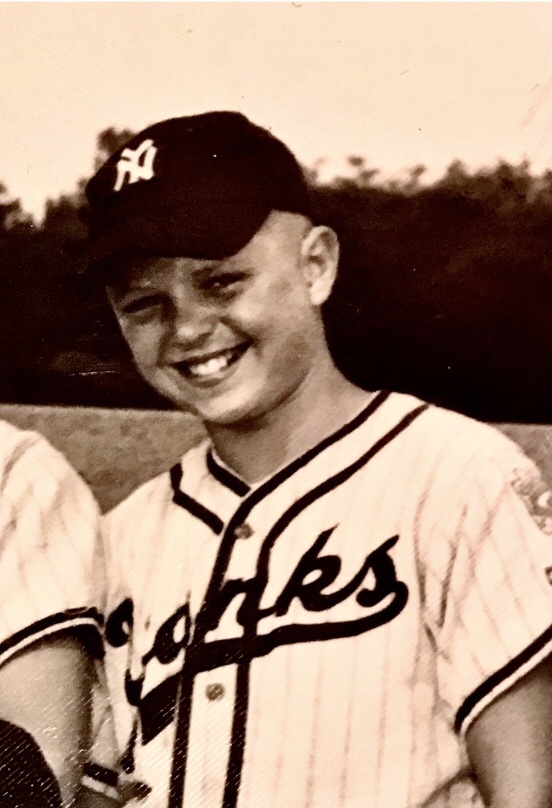
I’ve been a baseball fan since I was a kid. Although I started as a White Sox fan like most of my friends at the time, I’ve been a Cardinal fan since ‘64, when they won the World Series and my father convinced me of the error of my ways.

I was a Cardinal Fan, but Played for the Yanks in Little League

I’ve remained a Cardinal fan, but I’ve also followed other teams over the years. Truth be told, I love live baseball. I may take a nap watching a game on TV, but in the ballpark? I love it. There is nothing like being at the ball park. The excitement, smells, and sounds. Having a beer and a brat. The roar of the crowd. It’s a very nostalgic feeling.

Busch Stadium in Saint Louis. Note the Arch in the Background.

Over the years, I’ve attended live baseball games all over the country. Certainly the Cards, Cubs and White Sox back home, but I followed several other teams as well.

Many folks hate the Yankees, however, when I was at West Point in the ‘70s, military personnel could attend games for free and I went to a few. The military wasn’t particularly popular then, and their gesture has always stayed with me. When we moved to DC in ‘89, there was no local baseball, but the Orioles were just up the road. Cath and I attended the occasional game at the old Memorial Stadium, and then when they built Camden Yard, we bought a mini season ticket plan with friends.

When the Nats came to DC, I became a season ticket holder with three other friends. They were great seats, right behind home plate. We kept those tickets for their first two years at RFK stadium, and then they jacked the prices up, and we let them go.

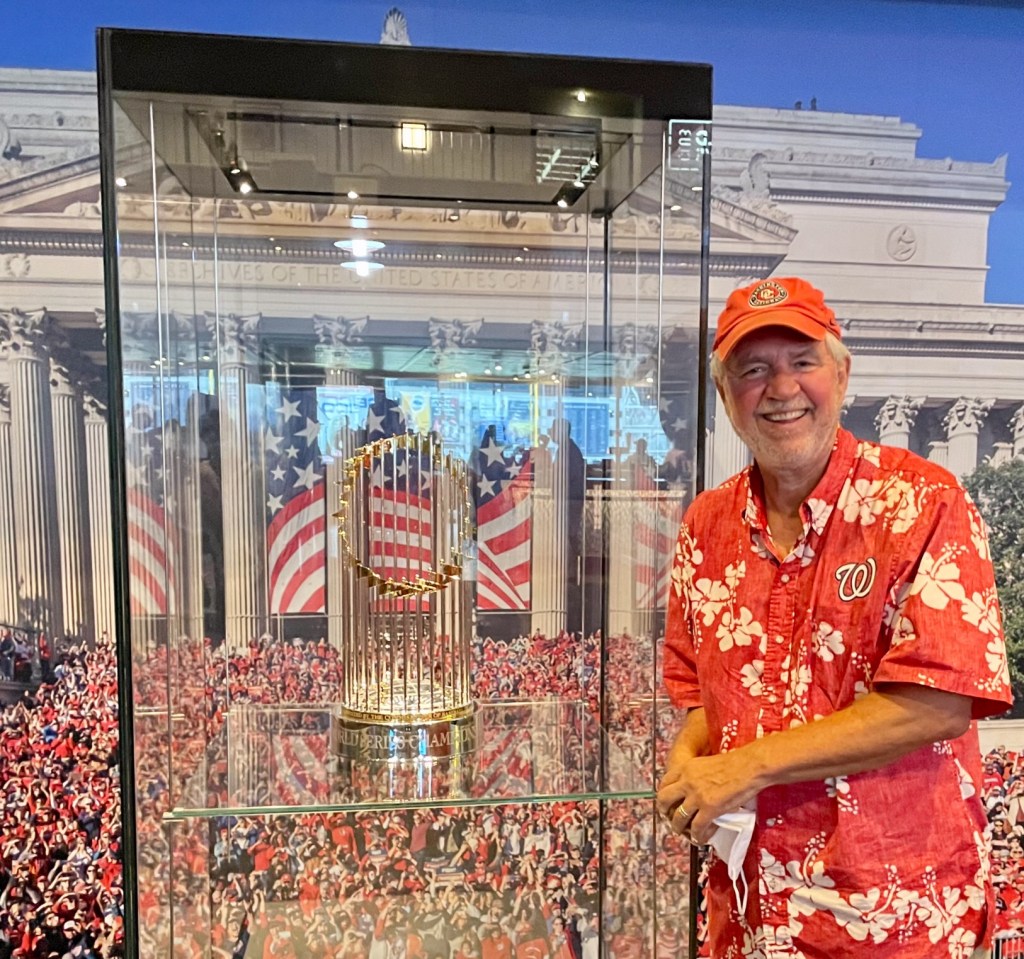
Several years later, I joined another group of four guys and have been attending Nats games ever since. I saw the All Star game in ‘18 when it was in DC, and made one of the World Series games in 2019, when they won it all. I still root for the Cardinals, but I’m as much of a Nats Fan as a Cardinal Fan these days. Don’t tell my dad – he’d probably roll over in his grave… 😉

Posing with the Nats’ World Series Trophy

I love baseball.

And now? Now, I just don’t get it. The 2020 season was lost due to Covid. The first third of the 2021 season only had limited seating, again due to Covid. You would think the last thing anyone would want now, is an impact on the 2022 season, and yet, here we are. The first two series of the season are already cancelled, and they are about to cancel more.

I won’t pretend to understand the intricacies of the current negotiations. What I do know is that they are continuing to lose fans. Greed never looks good, and to this fan, that’s what it looks like. Greed on the part of the owners, and greed on the part of the players.

It’s true fans don’t have a seat at the negotiating table. Ultimately though, fans DO have a vote – they can vote with their pocket books. It seems to me that both the owners and the players could learn something from Casey’s hubris.

This fan of baseball for the past sixty years is considering his options for the future.

Addendum:

– Special Thanks to my niece, Tami Harmon, who provided several suggestions for this blog. A life long Cubs fan, she knows quite a bit about baseball.

Casey at the Bat was originally written in 1888. You can find a link to the complete poem here: https://www.poetryfoundation.org/poems/45398/casey-at-the-bat

– UPDATE: Two days after this blog was originally published, the two sides reached an agreement. I’m sure this write up is what pushed them across the line. ;-).

Sunrise or Sunset?

Sunrise or Sunset?

Sunrise, or Sunset? Which do you favor? Both can be equally beautiful. Both can be equally colorful. Both are fleeting. It’s a bit deeper than just color and beauty though, isn’t it? I enjoy them both, but if I could only pick one? Not an easy question to answer, but I would probably say…

It’s easy to say you must be a morning person to see the sunrise, although I think that’s a bit of a cop-out. For myself, I wake up at approximately the same time all year long – about 6:45-7:00AM. That means in the dead of winter, I see some gorgeous sunrises. For the rest of the year? I’m out of luck, unless traveling or something. Virtually all of us are up at least occasionally at sunrise. Maybe not often, but at least occasionally for travel or work, or something else going on, so let’s take the morning person argument off the table.

Many photographers and photography sites seem to favor sunrise – better light, or at least cleaner light I suppose. Maybe that’s true, but to my naked eye? I don’t see the difference.

So what is the difference? Maybe it’s more metaphysical and less about color and light.

Who doesn’t like sunrise and the start of a new day? Poetry and quotes are filled with “wisdom” on this subject – The symbolism of darkness going back to light. The chance to pursue new opportunities with a clean slate. The promise of a new day and all that entails. The stillness of a new morning, that perhaps gives us the chance to think clearly and cleanly, almost as if the morning dew washed away our cobwebs from the night. This is stuff that reaches out to our core and there are elements of truth in all of it.

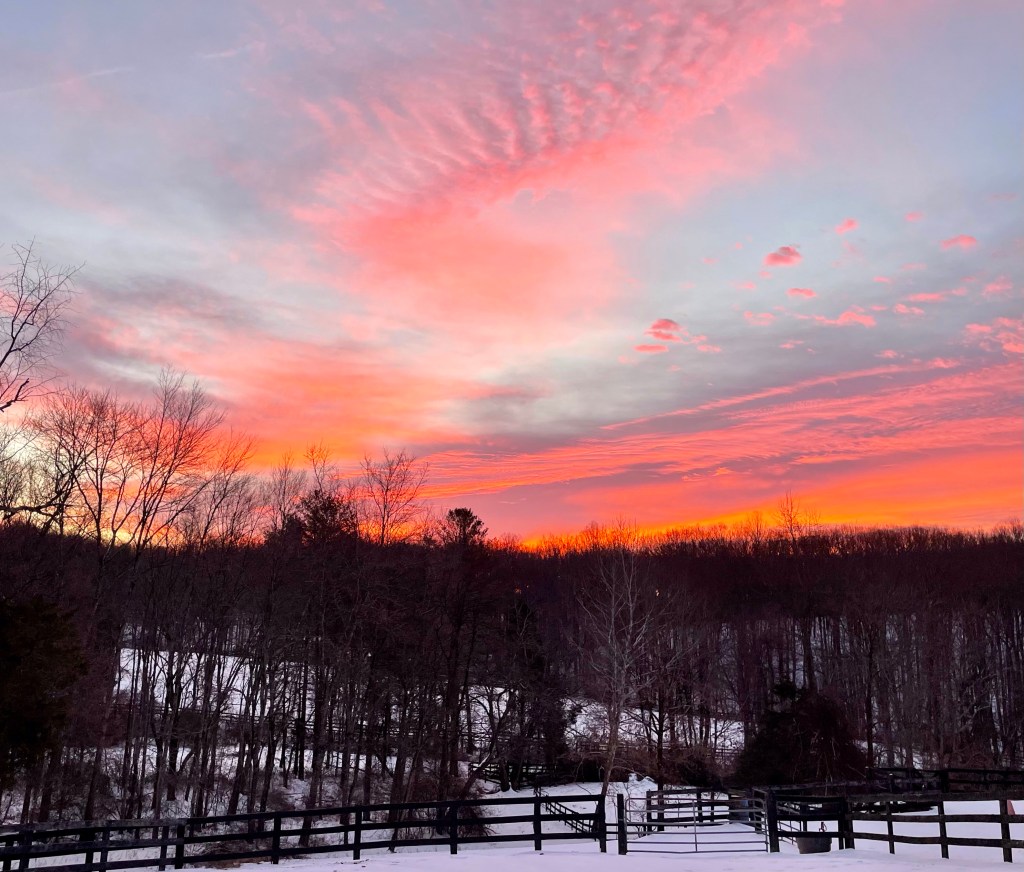
Sunrise at Rohan Farm one day this winter

Ah, but sunsets… They provide a close to the day and our activities. They let us take a small pause as we watch the setting sun, reflect back on the day, and maybe think about what did, or didn’t, happen that day. And if we are with others? I’ve learned over the years that for me, nothing says fellowship, like drinking a “sundowner” with friends while watching the dying light of day. That shared feeling of quiet and peacefulness is pretty wonderful. The warmth of those feelings often extend into the evening hours. And of course, most of us see many more sunsets than sunrises over the course of our lives.

A Sunset in Africa last fall

As I think about it now, the feelings I experience at sunrise and sunset are different. I hadn’t thought about it before, but it’s real and it’s true. I guess I’d sum it up as thinking about new beginnings versus a time of reflection. How do you choose between those two versions of truth?

This is, quite frankly, too much thought about things that happen everyday. And of course, we don’t generally talk about, or remember those sunrises and sunsets happening in the rain, or the fog, or on a cloudy day. Most of us will experience 20,000-30,000 sunrises and sunsets over the course of our lives. I think it’s OK that not all of them are “perfect”. 😉

So which is it for you? Sunrise or Sunset?

For me,

Lariat Advance

Lariat Advance

The call came at about 3:40AM in late February, 1979. I answered the phone, “LT Hall.” – “Max, this is Captain Ward. A Lariat Advance Alert was called at 3:25AM this morning.” – “Got it sir – on my way.” I called my Platoon Sergeant, Paul Teague to notify him, and kissed Cathy goodbye, with a “See you when I can”. I was out the door for the drive to Hindenburg Kaserne by 3:50AM.

We lived in the little town of Helmstadt, Germany, about 15 minutes from Hindenburg Kaserne (Barracks, or Army Post) in Würzburg. My mind raced on the drive to the barracks.

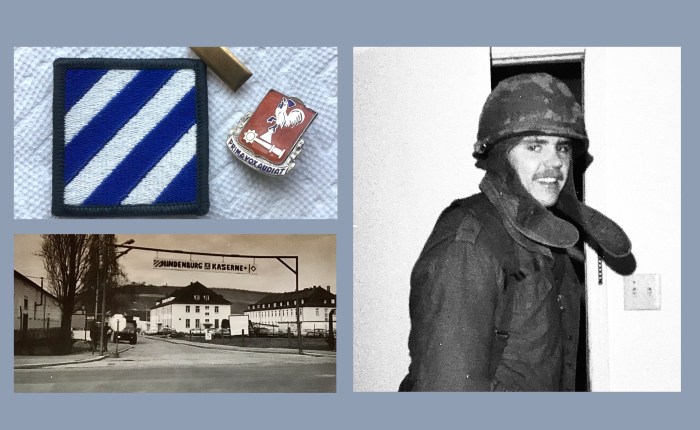
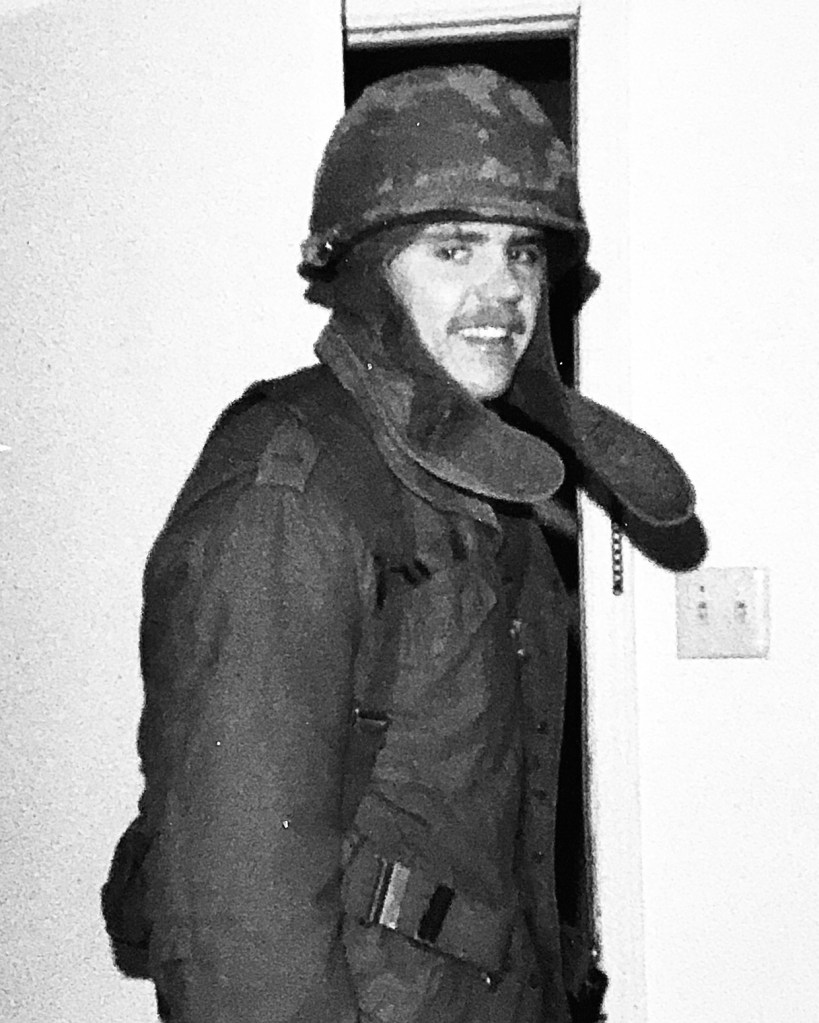
LT Hall in 1979

This was my first Lariat Advance. I’d joined the 123D Signal Battalion, 3rd Infantry Division in January of ‘79. A Lariat Advance was a US Armed Forces Cold War mobilization alert in Germany. The thing was, you never knew if it was a drill, or in response to a real world situation. If just a practice, it might be called off after a couple of hours. BUT, you could also deploy and link up with the unit you supported (2nd Brigade, 3ID in my case), or even deploy to your General Defense Plan (GDP) location. For my platoon, that was near the village of Hof, and the Hof Gap on the the Czech/East German border. The Hof Gap was considered a major Armor Route for a Russian invasion of West Germany. The pucker factor increased significantly if you deployed there on an alert.

My unit, B Company, 2nd Platoon, was always the first unit scheduled for departure, as we had farther to go. We would depart two hours after the alert was originally called. In this case, we needed to be lined up at the Kaserne Gate and ready to go at 5:25AM.

Main Gate, Hindenburg Kaserne

I arrived at the Kaserne a few minutes after 4:00AM. As I climbed out of the car, I promptly locked my keys in the car. “D@mn!” I stood looking at the car, shaking the door when one of my squad leaders, Sergeant Santos ran by and called out – “Yo, L.T. (Pronounced Ell-Tee), what’s up?” – “I locked my keys in the car.” He stopped, looked at me for a second and then said, “Forget ‘em. We’ll get them later – we gotta go!

He was right, of course. I left the car and ran to the Company HQ and checked in with the CO. Next, over to the Armorer, where I picked up my .45 pistol, and finally, I ran back outside and over to our Platoon Bay. It was probably about 4:15AM.

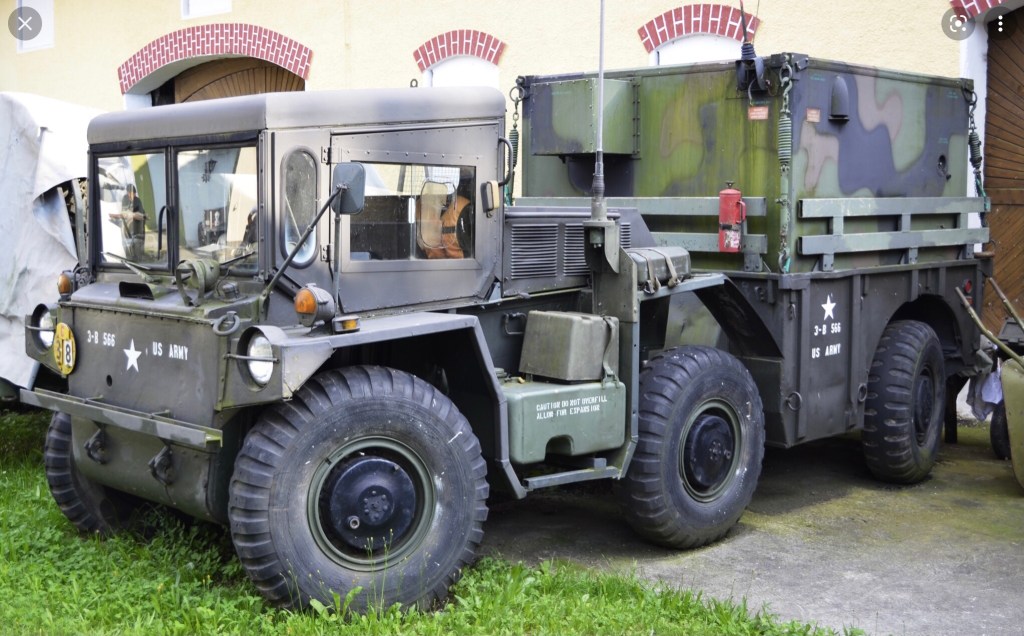
Sergeant Teague had also just arrived and he gave me a status report. About 80% of our troops were on the Kaserne, with the others expected shortly. We then looked at our vehicles’ status. Our platoon had around 20 vehicles in all – a combination of jeeps, a 2 1/2 Ton truck (the Deuce) and several Gamma Goats. Gamma Goats were six wheeled vehicles that could, at least in theory, perform off road much like a tank, or other tracked vehicle. We needed to determine which deadlined vehicles could be made readily available, by cannibalizing* other deadlined vehicles. We agreed that of our four deadlined Gamma Goats we could maybe get three ready, and still make the 5:25 departure time.

A Gamma Goat, with Comm Shelter

The next half hour was total chaos. By then, all of our troops but one were on the Kaserne and had picked up their weapons. We continued loading both personal and platoon equipment into our vehicles. Cases of C-rations were loaded into the Deuce, along with other supplies. Two of the deadlined vehicles were fixed, but we were still having problems with the third. Somewhere in there, we received word we would deploy to Kitzingen, and link up with 2nd Brigade’s HQ elements. It was now 4:55AM, a half hour before departure.

Suddenly, a feeling of great calm and clarity settled over me. The world seemingly slowed down. Sergeant Teague and I agreed it was too late to fix the last vehicle and to hell with it, we would roll with what we had. We held a quick meeting with our three section leaders and strip maps to Kitzingen were passed out for each of the vehicles (remember this was all pre cellphones or google maps). We lined up the vehicles in the motor pool and proceeded to the gate, with my Jeep in the lead. Sergeant Teague was in the last Jeep at the end of the convoy. At 5:15, we were at the gate where the Battalion Commander, Colonel Swedish and Command Sergeant Major Johnson greeted us. We spoke briefly and they wished us good luck.

5:25AM came, and we rolled. The rest of the day passed in a bit of a blur. Google maps says the drive from Würzburg to Kitzingen takes a half hour, but at convoy speed, it probably took us about an hour. We arrived and I reported in to the 2nd Brigade Operations Officer (S3). Then, as is often true in the Army, we sat and waited. And waited. I stayed in touch with the Brigade S3, and also with my Company Commander via FM radio. After a couple of hours passed, we received word it was a drill, and perhaps another two hours later, we were released and returned to Hindenburg Kaserne.

The drive back took another hour. Once back at Hindenburg, we offloaded all of our equipment, washed our vehicles, and then topped all of them off with fuel, so they were ready to go. Cannibalized parts were returned to their original vehicles. A weapons count was done by the armorer, and it was verified all weapons were turned in and accounted for.

I reported to Company Headquarters that all recovery tasks were completed. Once all three platoons were finished, Captain Ward let me know we could dismiss the troops, which I did.

By now, it was late afternoon or early evening, and my keys were still locked in the car. I started thinking about how I was going to get home, when Sergeant Santos came up. “Hey L.T. Let’s get those keys.” – “Sure, how are going to do that?” Ramos just smiled, and then pulled a Slim Jim** out of his jacket. Two minutes later, the door was open, and I had my keys. I thanked him, and decided right then and there, I didn’t need to know why he owned a Slim Jim.

A Slim Jim – Need your car door opened?

With Russia and the Ukraine in the news, I was thinking about that first Lariat Advance. Forty years ago, we were concerned about, and prepping for war with, the USSR. After The Berlin Wall fell in 1989 and the Cold War ended, I thought those days were behind us, at least for Europe. With Mr. Putin’s current aggression, that no longer seems the case. I’ve been thinking about an Intelligence flyer that came out, right after The Wall fell, warning us about the long term goals of the Russians:

“We will Smash them with our clenched fist.”

It is no longer Communism against capitalism, but it is still Russia versus the West. Sometimes the more things change, the more they stay the same. I’m wishing Godspeed and safety to all of our troops.

Addendum:

Cannibalize – If a vehicle was determined to have a safety issue, or something major wrong with it during operations or an inspection, it was put on the deadline report and the appropriate parts were ordered. You were not allowed to drive deadlined vehicles, until they were repaired. In the event of an alert, you “Cannibalized” one of the vehicles to remove parts to put in the remaining vehicles. It might be something as simple as a brake signal bulb (safety feature), or something more serious like a transmission problem. Cannibalization was frowned upon, as you could literally reduce one of your vehicles to a pile of parts in order to fix other vehicles. That one vehicle would stay on deadline forever. This is why we were to return cannibalized parts to the original vehicle when we returned to the Kaserne.

• **Slim Jim – For those unaware, a Slim Jim is a slender device used to break into a car by fishing down the side of window and into the door for the locking mechanism.

Grad School, and Learning to Cook

Grad School, and Learning to Cook

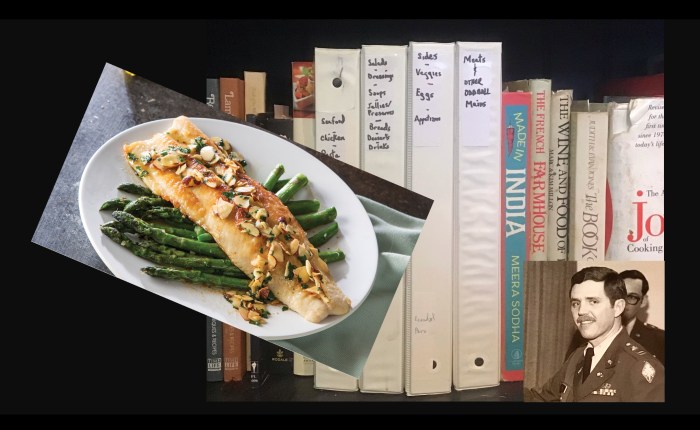
Embarrassment is what started it. Well, embarrassment, a class in Stochastic Communications and Trout Almandine. In 1984, I started learning how to cook, largely after being embarrassed at a friend’s house on a Sunday afternoon.

Last week, I published a blog about cooking a German dish, Erbseneintopf (Split Pea Soup) in 1982, and I received notes from several friends asking if that’s when I started learning to cook. The answer was no, that didn’t really come till later.

It’s true Erbseneintopf was the first recipe I collected, but as to cooking, my skills were limited. Yea, I could do steaks, brats, and burgers on the grill, but not much else. Cathy did the vast majority of cooking for us, and that (from my view point) seemed to work out fine.

Things changed in 1984.

The Army, in it’s infinite wisdom, sent me to Grad School to pursue a master’s degree in Electrical Engineering. I was in the Army Signal Corps and they were looking for engineers to help with the new field of Computer Networks. We all take the Internet and computer networks for granted now, but back then, it was brand new, except for some research networks like The Arpanet, a DoD funded network.

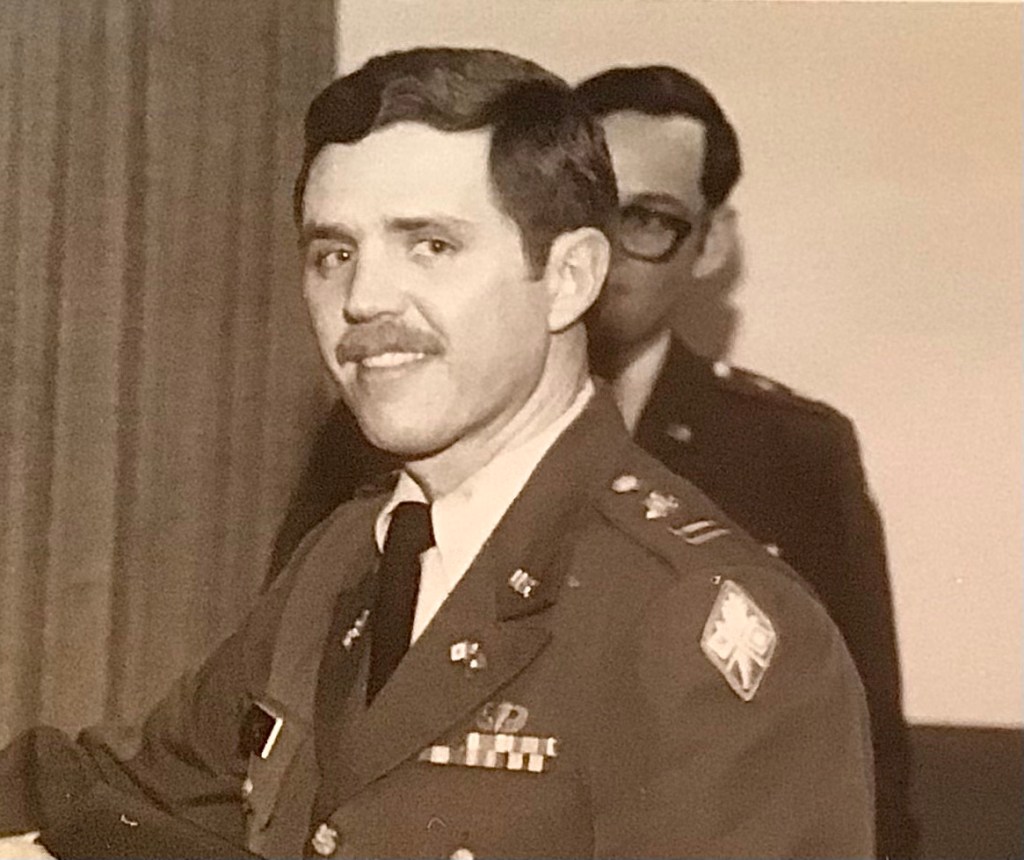
Captain Hall, The Future “Cook”. The Photo was Taken During my Time at Grad School.

As I started my graduate program, something quickly became obvious. My math skills were rusty and needed work. I’d studied calculus, differential equations, linear equations, and probability and statistics at West Point, but that was several years before and I’d forgotten most of it.

In the fall of 1984, I was required to take a class in Stochastic Communications – it was a theory class about how communication systems act in the presence of noise, and was very math heavy. A friend of mine, Gerry, was also taking the class and we often studied together to understand the math.

One Sunday afternoon, Gerry was at my house and we were working through some tough problems. At some point, I said, “Hey, feel like some dinner? How about if I order us a pizza?” Gerry agreed, and I ordered a pizza from the Pizza Hut just down the road. When they delivered the pie, we took a break and had a beer with our dinner. Eventually, we resumed our studies, and then quit an hour or two later.

Nothing Says Fine Dining Like a Pizza from Pizza Hut…

A couple of weeks later on another Sunday afternoon, we were studying at Gerry’s apartment. Eventually, we were getting hungry and Gerry said “How about a break for dinner?”, to which I readily agreed. I expected him to pick up the phone. Instead he said, “Come on, let’s go to the kitchen.

We arrived in the kitchen and after opening a bottle of wine and pouring two glasses, he proceeded to the fridge where he pulled out some trout filets and asparagus. He then brought out some almonds, garlic, and God only knows what else from his cabinets. What? Was he actually going to cook a dinner?

Gerry spent the next half hour or so preparing the meal, while we continued drinking and talking. He toasted the almonds, sautéed some garlic and eventually pan fried the trout, while sautéing the asparagus in another pan. Half an hour later, it all came together on our two plates with the almonds scattered over the trout and the asparagus served on the side.

Trout Almandine with Asparagus on the Side – a Treat from my Friend, Gerry.

Holy Cow! A real meal, and a great one. I believe I was in a bit of shock. Thinking back to the Pizza Hut pizza I’d served two weeks before, I was also a bit embarrassed.

On the way home, I thought to myself, “What the hell is wrong with this picture? A bachelor comes to a married guy’s house and has delivery pizza from a chain restaurant for dinner, while the married guy goes to the bachelor’s house and has a gourmet meal!?!?” Right then and there, I decided I needed to learn how to cook.

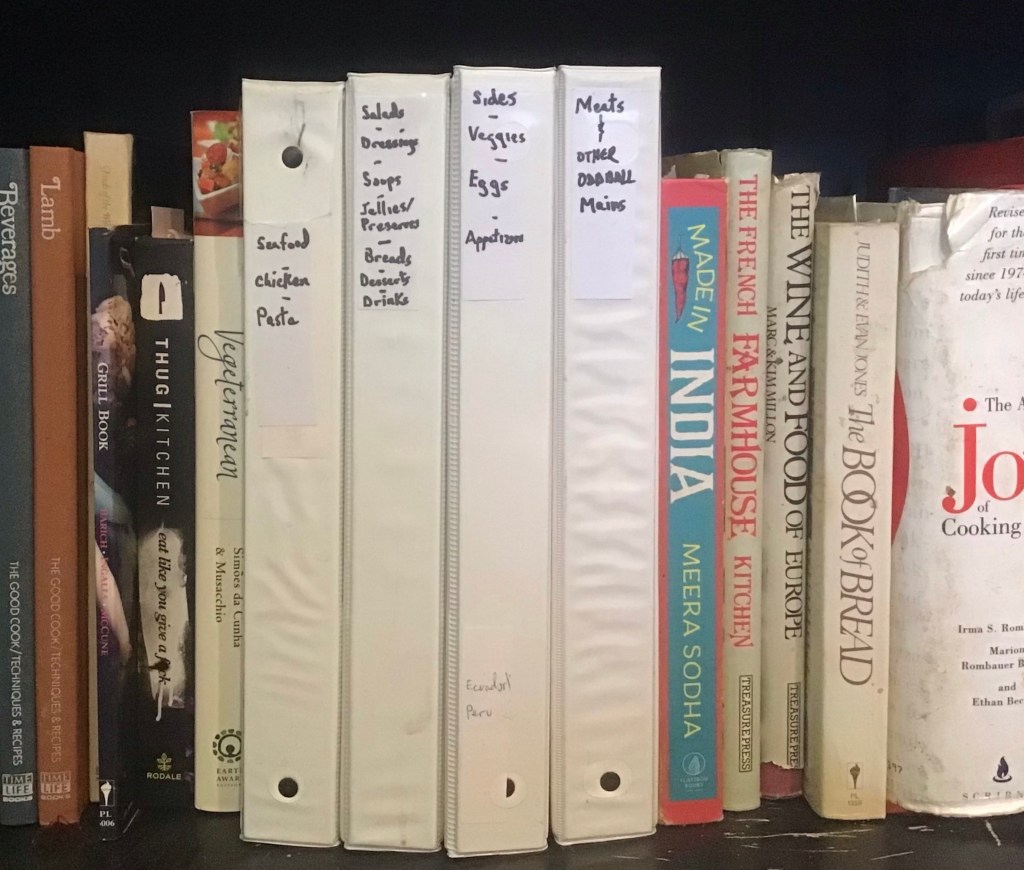
And so, my cooking journey began. Cathy still did most of the cooking, but I started cooking some as well, especially on weekends. I’d find different recipes to try and slowly expanded my repertoire. I also started collecting cookbooks, some basic, some focused on specific cuisines. I went through bread and muffin phases, German and French phases, Vegetarian, Stir Fry’s, and eventually Indian curries, among other recipes.

Just a Few of the Couple Dozen Cookbooks I Now Own

I found I enjoyed cooking, and I started to cook decently, but man, was I a messy cook. I knew nothing about “Mise en place” (prepping things ahead of time), or cleaning as you go. While I could turn out a great meal, the kitchen was a disaster. Cathy’s mom said something to Cath about it one time, and Cathy basically told her to be quiet, I was at least cooking some of the meals now. 😉

Eventually I retired from work around 2015, and and over time, started cooking my share of our meals. I also learned about Mise en place and cleaning the kitchen as I cooked. It only took me about 30 years to learn those two basic lessons. Better late than never, I guess.

So, that’s my story. Who knows, If I hadn’t been rusty in math and in need of help, maybe none of this would have happened. You don’t always know what will send you down a different pathway in life. I’m glad I discovered this one.

Addendum:

⁃ Strangely, there is no Trout Almandine recipe in my collection of recipes. I never asked Gerry for it at the time. If I’m making it now, I use a variation of a recipe I found online. C’est la vie

– Gerry went on to get his PhD in Electrical Engineering – he was a smart guy about many things. Unfortunately, over the years, we lost touch with each other.

Erbseneintopf

Erbseneintopf

The oldest recipe in my recipe collection is for Erbseneintopf – a German Split Pea Soup. It came from The Stars and Stripes newspaper in Germany in ‘82 or ‘83, and is now a bit tattered. The first time I tasted the soup in a Gasthaus, I thought I’d died and gone to heaven. Getting the recipe was a bonus.

Erbseneintopf. The word and the soup are both a mouthful. Erbseneintopf literally translates to “Pea One-Pot”, and is really closer to a stew. Made properly, it is a thick soup with little chunks of sausage or ham hock in it. I’m not talking the puny American ham hocks, but the big German kind – meaty and smoky. The meat gives the stew a wonderful flavor. It’s a simple, hearty meal.

I believe the first time I had the dish was in a little village near Stuttgart, although I can’t remember the name of the town, or the Gasthaus, for the life of me. At the time, we often went for a walk in the woods on a Sunday afternoon, as many Germans did, and then would stop at a nearby Gasthaus for a late lunch, and a beer or two. We’d usually have some sort of simple meal – a bratwurst, or goulash soup, or some charcuterie and cheese. On one of those trips, it started snowing. Eventually we made it back to the village and the Gasthaus, where Erbseneintopf was on the menu, and despite the green color, I gave it a try. It was delicious. It became one of those dishes that stayed in my mind and I started looking for it on the menu anytime we went to a new Gasthaus – especially in winter.

Cathy, Top and I, probably in ‘82, outside a Gasthaus as it was snowing one Sunday

There were a few other dishes that stuck in my brain back then, and I would stalk them for a while – eating the dish anytime I saw it on a new place’s menu. One of those was Cordon Bleu. I spent a couple of years looking for the perfect Cordon Bleu during our travels across Germany, France and Northern Italy, and dragged visiting friends with me on my quest. Another dish was Käsespätzle, basically a German adult version of Mac ‘n Cheese, with homemade noodles, onions and cheese – It was total comfort food and a bazillion calories.

Cordon Bleu, käsespätzle, schnitzel, wurst, certain kinds of steak, pommes frites (french fries) and a host of other dishes all became a part of our life. We loved German food, but never tried cooking it at home. I’m not sure why. Maybe we knew we couldn’t match what we were eating in the Gasthauses.

Then one day, the world changed. Around 1982, our local military newspaper, The Stars and Stripes*, started a monthly feature with recipes for different German dishes. Some were simple, some more complicated. I’d read the recipes, but didn’t really think much about them, and then one day, they published several soup recipes – Gulaschsuppe, Linseneintopf (Lentil Soup), Tomatencremesuppe (Tomato Soup), and at the bottom of the page – a recipe for Erbseneintopf! I promptly cut the recipe out of the paper.

A little faded, and tattered, but the recipe works just fine.

This was most excellent. I spoke with a German friend about the recipe and she thought it looked authentic. Her one suggestion was to swap out the boiled ham called for in the recipe and replace it with chopped up ham hock, or some smoky local German sausage. It was a good suggestion.

A week or two later, we made the dish for the first time and lightning struck. We couldn’t believe how much it tasted like the restaurant version. The ham hocks provided the smokiness, while the “Melbutter” (see recipe – a mixture of flour and butter) thickened the soup. This baby was a keeper. At the time it was actually one of the very few dishes I cooked, or could cook. Yea, I did steaks, burgers and brats on the grill, but cooking something in the kitchen? I was out of my league there. This soup was probably just about it.

A bowl of Erbseneintopf. Still delicious, after all these years.

Erbseneintopf has remained a part of my winter repertoire ever since. I’ve only made one change since cooking it that first time. Here in the States, it’s sometimes hard to find good German sausage, or ham hocks with a bit more meat on them. As a result, I often substitute a smoked turkey leg for the ham hocks. It gets the job done.

Looking for a good winter soup on a cold, snowy day? Erbseneintopf might be just what you need. It’s peasant food at it’s best. As with many soups and stews, it’s even better on the second day.

Addendum:

⁃ * The Stars and Stripes newspaper was first published during the Civil war. Later, it was delivered to US forces in France during WWI, and became an overseas fixture during WWII. It continued through Korea and Vietnam, and is still published at overseas military locations to this day, although there were discussions during the Trump presidency of cancelling it (it wasn’t). It operates from inside DoD, but is editorially separate and independent from it. The newspaper has been published continuously in Europe since 1942.

⁃ I also struck pay dirt a month or two later when The Stars and Stripes published recipes for Spätzle and Käsespätzle, and our friends Jim and Res bought us a Spätzlemaker for Christmas. The Spätzlemaker is 40 years old now, and in great shape. We still use it a couple times of year.

⁃ My friend Tim Stouffer reminds me occasionally about my Cordon Bleu quest. He visited Cath and I several times throughout the ‘80s. On at least a couple of those visits, I know I inflicted my obsession with Cordon Bleu on him.

The Tribe – Together Again

The Tribe – Together Again

It’s good to keep memories alive, and laugh and cry for those we have lost. It’s also good to remember that life is for the living – to try and savor each and every day, and the time we have with those we love.

Before New Year’s Eve 2021, the last time we were all together was almost three years ago at the 2019 Anderson Valley (California) Pinot Festival. The difference was there were six of us then, and only four of us now. Don passed away in October of 2019, and Kim in August of 2021. I like to think Kim and Don were with us in spirit this year. We certainly ate and drank enough to cover them. 😉

Don and Kim at the 2019 Anderson Valley Pinot Festival

Cathy’s sister Bonnie married Don in ‘96 and the four of us were great friends from then on. They introduced us to their friends Kim and John, perhaps ten or fifteen years ago. Over the ensuing years, we saw Kim and John just about every time we visited California. Inevitably they would spend a couple of days at Bonnie and Don’s when we were in town. Often it was for either the annual Anderson Valley Pinot Festival, or perhaps the winter white wine Alsace Festival, but there were also a couple of Christmases or New Year’s Eves in the mix.

In 2018, the Californians all came to Virginia for a vacation over New Years and we again enjoyed fun times. It’s always wonderful when you find people you get along with in multiple locations and over time – you realize you are a part of the same tribe. At the time, we talked about the six of us linking up at Kim and John’s vacation place in Hawaii, “sometime in the future.”

New Year’s Eve Menu at Rohan Farm in 2018

The following May, we were all together again at Bonnie and Don’s for the 2019 Pinot Festival. Kim was dealing with cancer, but it didn’t slow her, or us, down. At the time, we of course didn’t realize it was the last time all six of us would be together.

Pinot Festival 2019! From the left – Don, John, Kim, Cathy and Bonnie.

Don passed away five months after that Pinot Festival and Kim a little over two years later in August of ‘21. Covid provided an overlay for all of that time. We had reservations for Pinot Festival in May of ‘20 and ‘21, but it was cancelled both years due to Covid.

Time Passed.

We came to California this year for Bonnie’s birthday and to celebrate New Year’s Eve, and were delighted to find out that John would join us for both of those events.

We arrived first, and John drove up from Santa Cruz a couple of days later. The time passed in a whirlwind of fun, food, wine, poker games, walks and talks. We of course remembered and talked about Don and Kim throughout our time together. For John, it had only been 4 months or so since Kim passed away – they were married for 53 years. Bonnie and Don had 23 years together. As she noted, it’s not easy, and everything takes time. On New Year’s Eve, we toasted Kim with one of her favorite wines. On New Year’s Day, we went to Point Arena for a hike and toasted Don with beers and some tasty pizza.

Good Times Celebrating Bonnie’s Birthday on Dec 29th in Healdsburg, and later on New Year’s Day at Point Arena

We also spoke about many other things and didn’t forget to enjoy life and the time we were having together. John invited Cathy and I to Hawaii again. There was laughter and joking, smiles and stories. We kept old memories alive, while also making new ones. It was good to be with the tribe again. We consumed our fair share of food and al’ahol over the five days we spent together.

John eventually left for the drive back to Santa Cruz. There were hugs all around and promises to see each other sooner rather than later. John made sure to invite us to Hawaii again and we readily agreed to give serious consideration for a trip there.

It’s good to keep memories alive, and laugh and cry for those we have lost. It’s also good to remember that life is for the living – to try and savor each and every day, and the time we have with those we love. As the days fly by, I want to race with the wind and also stop and smell the roses. Can you do both? I want to keep trying.

—-

Ecclesiastes 5:18-20 – Even so, I have noticed one thing that is good. It is good for people to eat well, drink a good glass of wine and enjoy their work – whatever they do under the sun – for however long God lets them live. To enjoy your work and accept your life, that is indeed a gift from God. People who do this rarely look with sorrow on the past, for God has given them reason for joy.

Punk Turns Sixty

Punk Turns Sixty

Punk turns sixty this week. Yep, that’s correct. Punk, also known as Bonnie, Bon, Bonswa, Lana’s mom, Don’s wife, and one half of ‘The Sisters of no Mercy’ turns sixty this week. For Cathy and I, she is the youngest of all of our sisters and we are happy to finally welcome her to middle age – ;-). Come on in Bonnie, the water is fine…

Truth be told, I’ve known Bonnie for most of my life, and hers. When Cathy and I started dating in ‘72, Bonnie was ten years old, and known in their family as “Punk”. I don’t think anyone has called her that in a long time.

Bonnie, around the time we first met

When we married in ‘78, Bonnie was all of sixteen and at the wedding, held her own with the newly commissioned officers in attendance, and all of our long time friends. In ‘83, when we returned after almost five years in Germany, she was of legal age – twenty-one, living near Washington DC and was married. That’s when I remember our relationship starting to change. She was no longer just Cath’s punk sister – she had become an adult in her own right. It was really the start of an adult friendship between us, something I’ve treasured ever since.

Bonnie at our wedding in ‘78, with my classmate Tom Guthrie

In our second tour of Germany, Bonnie enjoyed Multiple trips to Europe and even a Christmas. She was present and an integral participant at the initial Hare-of-the-Dog New Year’s Day party. When we returned to the States in ‘89, Bonnie was still in her twenties. Two years later, we attended the combined party for her thirtieth birthday and her graduation from the University of Maryland. That was a fun night – I seem to remember a bottle of Dom Perignon at some point.

Never one to let the grass grow under her feet, Bonnie moved to California a year or two later. There, she really launched her marketing career, her firm, B3 Communications, was established and she met the love of her life, Don. For the next almost twenty five years, the four of us were the best of friends. We named ourselves the 4-H club and had “meetings” on the East Coast, West Coast, and places in between. Those good times still bring a smile to my face.

Good times with the 4H Club

In 2003, Cathy and I celebrated our twenty-fifth wedding anniversary with a large party, which Bonnie and Don attended. During the evening’s festivities, Bonnie disappeared for a bit. When she reappeared later to make a speech congratulating us, she was wearing her Bridesmaid’s dress, and carrying her parasol from our wedding twenty-five years before. At the age of forty-two, she was happy to inform anyone who would listen that, “Yes, the dress still fits; I didn’t have to alter it!” 😉

Yes, the dress still fit, 25 years later.

Of course Lana joined Bonnie and Don along the way in 2005 and we changed from the 4-H Club to the 5-H Club.

Bonnie and Lana

I now chuckle slightly at the fact that as Bonnie turns sixty, Lana is sixteen – the same age Bonnie was when Cathy and I married. How is it even possible? Seriously, how is that even possible? Where did the time go?

So, yea, Punk turns sixty this week. We look forward to celebrating the big day with her out in California. Good food, great wine, loving family and friends – It’s going to be wonderful.

Happy Birthday Punk!

Happy Birthday Punk! I love you as if you are one of my own sisters, and also one of my best friends. On the last day of your 59th year, I want to welcome you to the start of your seventh decade – jump on in, the water is just fine.

Addendum:

Thanks to Lana Harris for the use of the picture of Bonnie and their Dog, Ruby for the cover photo.

Thanks to Paula Johnson Hamley for the picture of Bonnie in the 5th Grade, around the time we met. I clipped the picture to just get Bonnie, but the whole picture (below) is too cute to pass up. They had just been selected as the 5th Grade Students of the Month in Mr. Herman’s class at Shabbona Grade School in Ottawa Illinois.

Bonnie Snow and Paula Johnson Hamley in 5th Grade

Christmas is Coming

Christmas is Coming

It’s funny what sparks a memory. For me, the Christmas song Up on the Housetop, with it’s chorus of “Ho ho ho, who wouldn’t go, Up on the housetop, click, click, click, down through the chimney with good Saint Nick…”, instantly floods me with holiday memories from my youth. I fondly remember McKinley Grade School in Ottawa, and our Principal, Mr Powell.

‘Tis the season. Don’t we all really remember the Christmases from our childhood? I know I do. The Christmases at McKinley, on the southside of Ottawa, Illinois were special. We ALL remember them.

McKinley was originally a small two story wooden school house. Eventually, in the late fifties, it was replaced with a large, one story brick building. The new school included an indoor gymnasium, with a small elevated stage on one side. Both would figure prominently in the school’s Christmas celebrations.

McKinley School Teachers for 1959/60. Mr Powell is second from the right in the second row. The photo is probably from about two years after the new school building opened.

Our excitement started sometime in early December. Christmas was approaching, which of course meant an upcoming break, and if we were lucky, the chance to go sledding, or maybe skating on the pond at Varland’s pasture. Almost as exciting was the Christmas Show the school presented, just before the break. The teachers told us about the upcoming show, and each class was assigned a song to sing. We stared practicing on a daily basis.

A large evergreen tree eventually arrived at the school and was placed prominently on one side of the gym. Of course, it needed decorating. Where did the ornaments come from? They were handmade by the students. Yes, there were the obligatory construction paper chains from the younger classes, but another source of ornaments proved a favorite memory for many. Milk, in individual glass bottles was delivered to school each day. Those bottles had blue or silver foil caps. We collected the caps and then made stars, ornaments, or strings of ornaments from them. Oh how they shined and sparkled in the reflected light on the tree.

Foil milk bottle caps similar to these made perfect tree ornaments

The excitement grew, and a few days before our break, there were gift exchanges in each of the classrooms. The gifts weren’t big of course, but it was still fun and increased our anticipation.

As the date of the show approached, we kids practiced our songs. The week of the show, the entire school gathered in the gym a few times to practice, and also to sing “songs of the season” together. Those daytime sessions were great fun. All of the kids marched by class to the gymnasium, and then we’d sit on the floor facing the stage. Everyone was in a giddy mood with much laughter, yelling and barely contained excitement. Each class practiced their songs, but in between, Mr. Powell would lead the entire school in Christmas and Holiday songs. He stood in front of us near the tree, wearing a holiday bow tie. I think he was as excited as we were.

When leading the songs, he also acted some of them out. One example several friends remember was singing the song Up on the Housetop*. As the chorus was sung, Mr. Powell would stick his belly out and while placing both hands over his stomach, sing in his deep baritone “Ho ho ho, who wouldn’t go, ho ho ho, who wouldn’t go…”. When the next line “Up on the housetop, click, click, click, Down through the chimney with good Saint Nick” was sung, he clicked his fingers three times instead of actually singing “click, click, click.” Of course, all of us kids quickly caught on, and did the same thing – imagine a couple hundred kids all clicking in time with the chorus, and you get the picture.

The songs we sang at the time included both religious and secular Christmas songs. One student who is Jewish, remembered feeling special because we would inevitably sing one or two Hannukah songs. It was a simpler time.

Eventually, it was time to return to our classrooms, but the singing wasn’t quite over. Mr. Powell would start us singing an old English folk song Christmas is Coming, with the opening line “Christmas is coming, the geese are getting fat…” The song is meant to be sung as a round, which is exactly what we did. I believe we were divided into thirds, with each group starting one line after the previous group started. Once we had sung “around” a couple of times, the classes were dismissed, one grade at a time, with each class singing the song all the way back to their classroom.

For the younger kids, there was often a bit of confusion on the lyrics. Instead of “…if you haven’t got a ha’penny, God bless you…”, they heard “if you haven’t got a hay penny God Bless a shoe…” What was a Hay Penny? Why were we blessing shoes? It could all be a bit confusing, but the fun and good spirits made up for it.

Finally it was the big day of the Christmas Show. It was also the day before Christmas break started. Excitement was at a fevered pitch.

The evening program was a bit more formal than our daytime singalongs. It wasn’t quite the Christmas Show from the movie Love Actually – McKinley School was a bit more primitive, but we did have a stage, and the adults sat on folding chairs set up on the gym floor itself. As kids, we dressed in our “good clothes” for the big night. Our parents brought treats and cookies for the classrooms.

While the adults found their seats in the gymnasium, we kids walked to our classrooms, waiting for our turn to sing. My friend Joy remembers sitting at her desk eating cookies and coloring (after smelling) the newly mimeographed Christmas pictures. For the younger grades, there were also games that some of the parents (moms) helped with in the classrooms. Everyone wanted to make sure we kids were entertained, focused and staying out of trouble.

Finally the show started, with the Kindergarten classes singing first. My friend Lynn remembers “The big curtain opening was our cue to start singing. It was quite intimidating to see all the people “out there” sitting on folding chairs looking at us. We sang Away in a Manger and the little stage seemed huge.”

One of the classes always sang Oh Christmas Tree, Oh Christmas Tree in German (Oh Tannenbaum, Oh Tannenbaum…). How cool was that? Singing a Christmas song from another country!

The show eventually ended and parents picked up their children from the classrooms. Cookies were finished, and newly colored Christmas pictures served as visual reminders of the fun that night. During the short drive home, we were still animated. I suppose the stimulation from doing the show, along with the sugar rush of the cookies combined and kept us amped up for awhile.

As with all things, time passed and the world changed – not for better or worse, but changed none-the-less. Mr Powell retired. The huge tree was replaced with two smaller artificial trees for fire safety. Eventually, the festivities changed from a secular Christmas celebration to a Holiday celebration, which was the right thing to do.

One teacher later reminisced “We teachers loved the singing almost more than you kids! We continued the tradition after Mr. Powell retired, but it was never quite the same.”

I’ve been gone from Ottawa for many years now, and to be honest, I don’t know if they have the Holiday celebration in the gym anymore. What I do know is I have wonderful memories from my youth that I wouldn’t trade for anything.

I’ll be home for Christmas, if only in my dreams… Christmas is coming, the geese are getting fat, Please put a penny in the old man’s hat…

Addendum:

  • There is some question/controversy among my friends about whether the title of the song is Up on the Housetop or Up on the Rooftop. Folk seemingly remember singing it both ways. For what it’s worth, the song is referenced in Wikipedia as Up on Housetop. It was written in 1864 and is the second-oldest secular Christmas song after Jingle Bells, which was written in 1857.
  • I had some memories from those special times at McKinley, but of course forgot lots too, until reminded by others about some of the activities. My thanks to the many who contributed memories to this blog, including: students Lisa Palmer Braley, Brenda Brown, Karen Williams Miller, Robert Cavanaugh, Linda Baker, Dorey Renee, Glenda Boettcher, Laurie Sargent Kinken, Mary Cunningham Heider, Kelly Nagle Shanley, Barbara Charlier Houston, LeeAnn Slack Niemann, Lynne Galley Robinson, Becky Ann, Roberta Sherman Schwandner. Jan Butler, Robert Cross, Linda Gerding Bergman, Joy Starjak Algate, Jessica Burress, Roberta Gourley, Tanya McCambridge, Tim Stouffer, and Howard Johnson, along with teachers Charlean Grobe and Sylvia Eichelkraut.
  • Thanks to Mrs Charlean Grobe for the photo of the McKinley School Teachers in 59-60! Charlean was my Kindergarten Teacher, one year later! She is second from the left in the second row in the picture.