
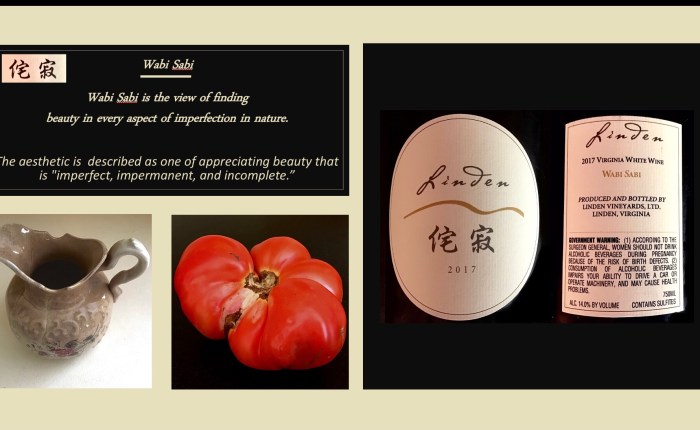
I was recently at Linden Vineyards for a wine tasting. It was a beautiful day. While there, I recalled a nice little wine they made in 2017 called Wabi Sabi. Jim Law, the owner and winemaker, said this about the wine when it was released in 2020 – “Wabi Sabi refers to a Japanese aesthetic that reveres the “imperfect, impermanent, and incomplete … It is an unintentional wine that resulted in a spontaneous decision ” I was so taken with Jim’s description of Wabi Sabi, I started looking into the concept.

After a year of researching online, and reading one book, I’m no expert. But I learned some things I’m trying to blend into my outlook, and my life. (yes, you can sometimes teach an old dog new tricks.)
The concept of Wabi Sabi is hundreds of years old and almost the opposite of order and perfection. As an engineer, and former military guy, this is 180 degrees from much of my professional career. It has taken some mental adjustments and rethinking. With Wabi Sabi, beauty is “spontaneous, fleeting, and singular”.
Stop and say that again, out loud to yourself. Spontaneous. Fleeting. Singular. Think of the changing colors of a maple tree’s leaves in autumn, before they finally fall to the ground.
It’s a very different view of beauty than we have here in the US and the western world in general, and focuses more on the simple and imperfect. Here, we often seem to think of beauty in terms of a state of perfection that is unattainable for most of us. Something that is often out of our reach.
Wabi Sabi stresses a simpler way of looking at and appreciating things in our lives. It also pushes two views at the same time – against the accumulation of objects to no set purpose, and recognizing the good things you already have in your life.
In the book, WABI SABI SIMPLE,* Richard Powell states it even more plainly – “Wabi Sabi nurtures all that is authentic by acknowledging three realities: nothing lasts, nothing is finished, and nothing is perfect.“
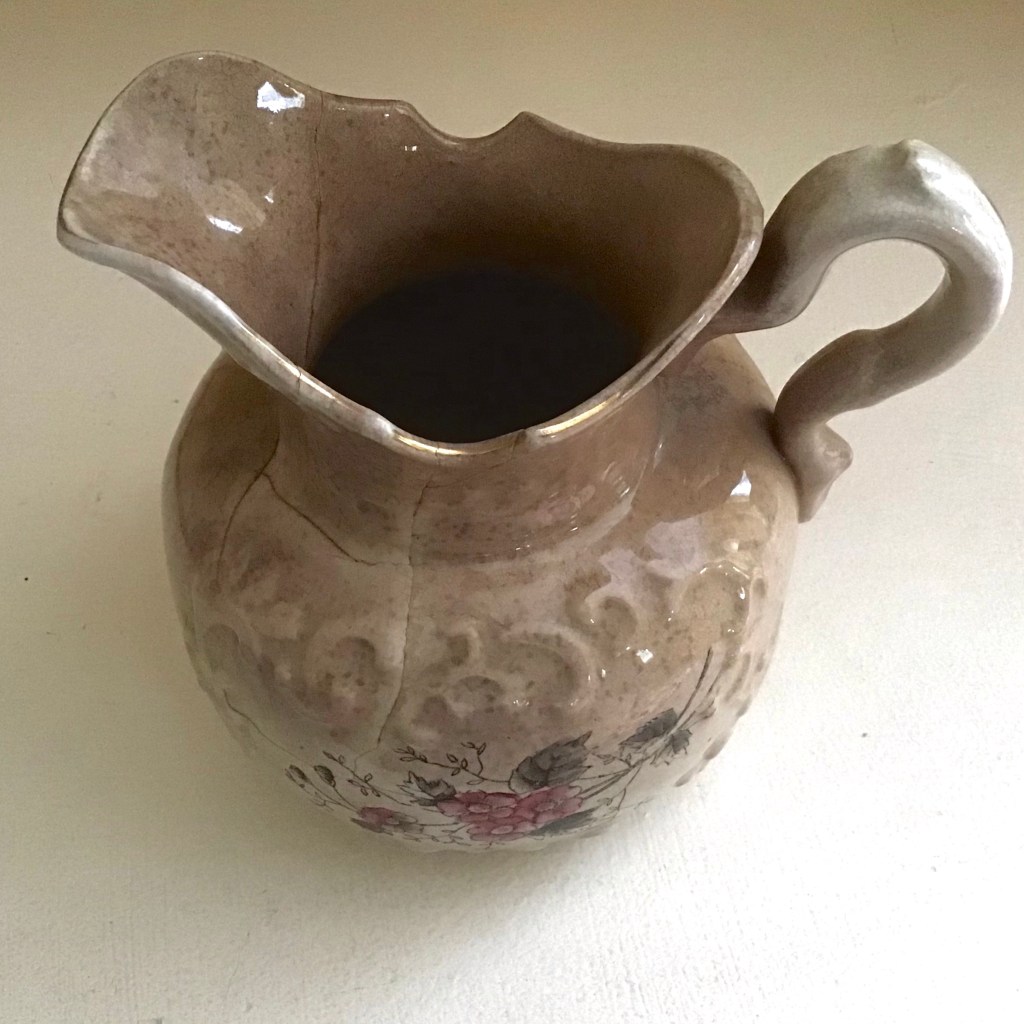
It is the crack in an old pitcher from your grandmother or an old friend, that makes it unique and dear, and maybe more interesting with a story behind it. You know you cannot replace it, and you treasure it. Someday, you also know it might break.
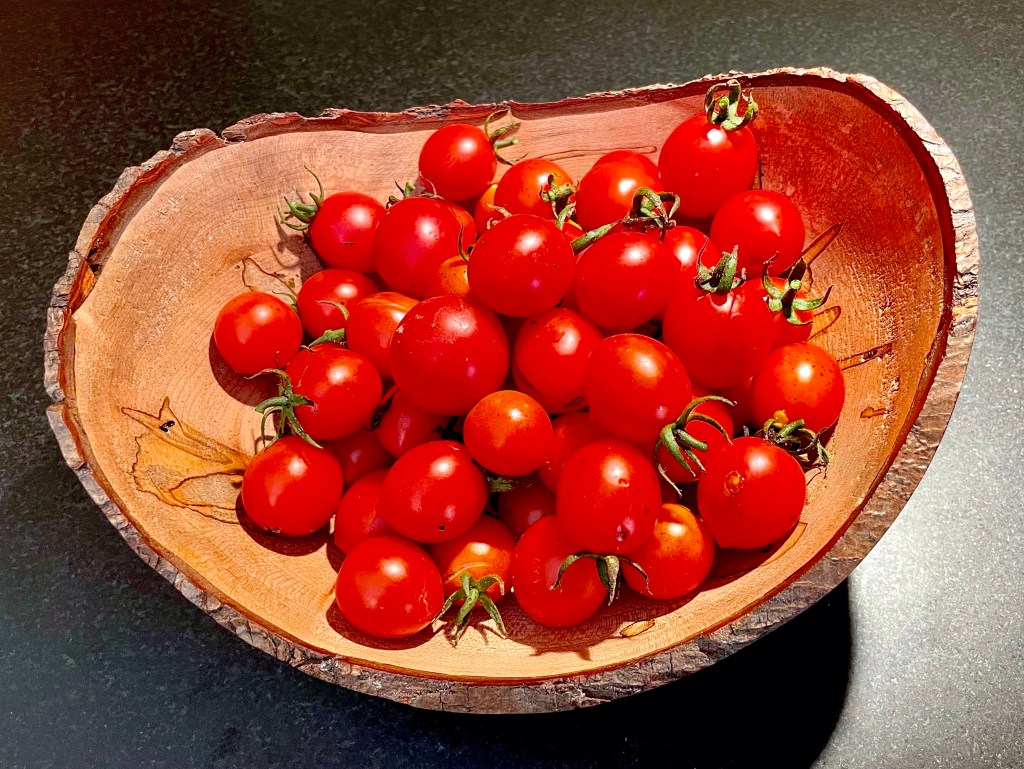
Perhaps it is seen in the gnarly heirloom tomato with a blemish that you have grown in your garden, as opposed to the perfectly shaped tomato at the supermarket. Each of those home grown tomatoes is unique in it’s shape, pretty to look at, and will certainly wither on the vine if you do not pick and eat it. And, think of how much better a home grown tomato tastes than one that comes from the store.

Think of the handcrafted items you make or buy, or receive as a gift, as opposed to those mass produced items we all pick up at nearby big box stores.
Again, I’m not an expert. Having said that, I am trying to relook at my life and how I view things. I think a bit of Wabi Sabi could help.
As to the Wabi Sabi wine at Linden, Jim also said this “Wabi Sabi reflects our philosophy behind the wine. It is an unintentional wine that resulted in a spontaneous decision. This is unusual for traditional, conservative, methodical Linden Vineyards. Once all blending decisions were made at the winery, there were several lots of wine that had no home. These misfit barrels were blended and bottled without intention or name.”
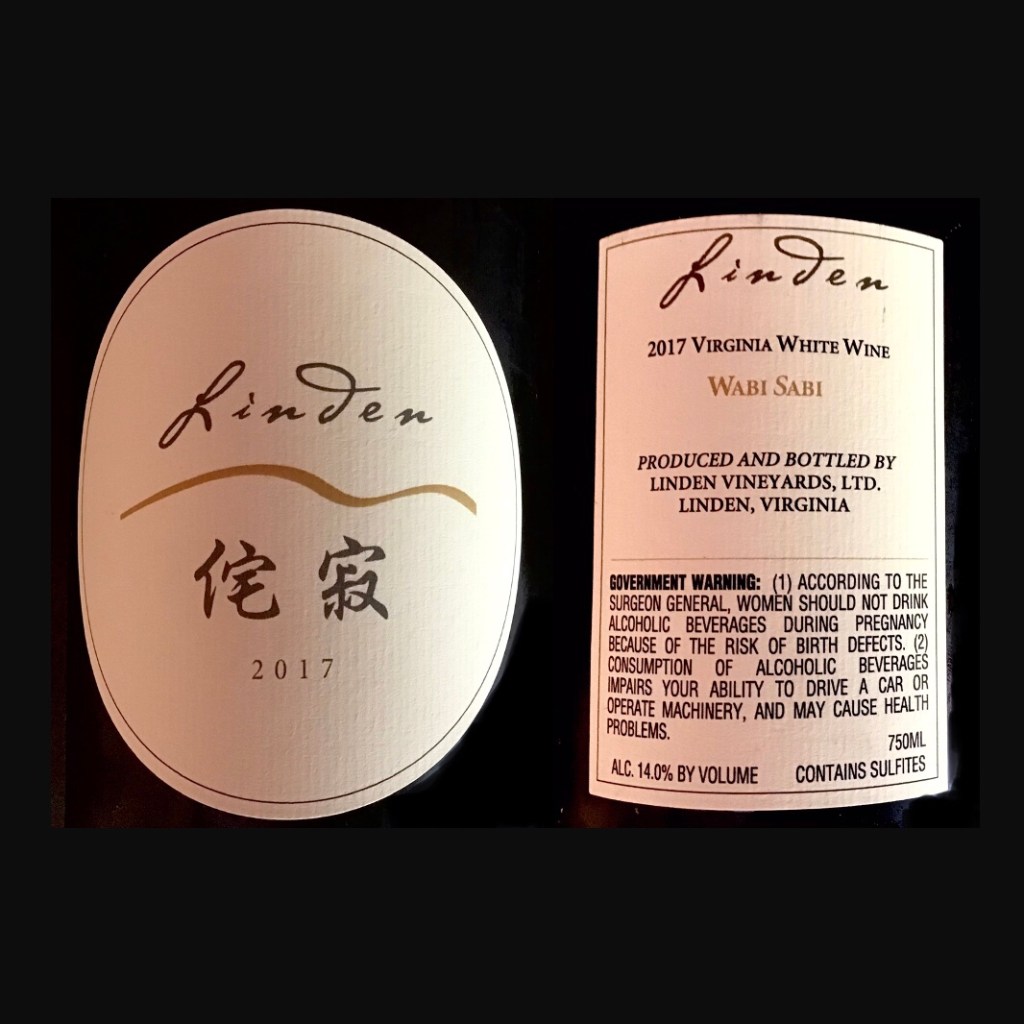
Jim may have blended those barrels without intention, but the result was a wonderful little wine. It wasn’t perfect, but tasted awfully nice on a summer day. I have only one bottle left, and Linden has no more. Soon, my last bottle will be gone as well. Wabi Sabi indeed.
Addendum:
⁃ * The book I read on Wabi Sabi is titled “WABI SABI SIMPLE” by Richard R Powell. It’s a slim volume, and has some interesting thoughts for life and for work. One comment made was “maintain a conscious perspective that no job is perfect, no job is forever, and no job finishes completely.” Food for thought.
⁃ ** In the spring of 1973, Cathy and I were both in High School and had been dating for about a year. We took part in a High School Volunteer program to help out older folks around town. We worked together and went to the home of Mr. and Mrs. Pray, who we had never met before. We spent the day helping to clean up their yard, and clean and fix some things in their home. At the end of the day, Mrs Pray served us cake and something to drink. She tried to pay us, which of course we refused. She then disappeared for a moment and came back with the pitcher in the photograph above and gave it to Cathy. It was from her Grandmother, who was born in 1856 and started using the pitcher in 1875. I think it’s one of the most beautiful and generous gifts we ever received.
– In January of 2020, I wrote a blog called “Perfectly Imperfect”. Looking back at the blog now, I was already on a journey towards Wabi Sabi, and didn’t realize it. It’s always interesting to me when I find events in my life that overlap, and I’m not even aware of it at the time. Read this blog, and tell me if it doesn’t sound like Wabi Sabi by another name: https://mnhallblog.wordpress.com/2020/01/01/perfectly-imperfect/
⁃ For what it’s worth, Linden’s Wabi Sabi wine was a combination of Vidal Blanc, Sémillon and Viognier, not your typical blend. I love Linden Vineyards here in Virginia. They make excellent wines, by any standard. Want to know more about them? Here’s a link to a 2021 article about Jim Law and Linden – https://vinepair.com/articles/linden-vineyards-virginia/ and here’s a link to Linden’s website: https://www.lindenvineyards.com/
 Live Life Exuberantly