The Best Burger

The Best Burger

For the last 30 years, I’ve told anyone who would listen that the best burger I ever ate was at The Squeeze Inn in Sacramento, CA. The place is still around and if you are there, you should try it. It’s a great burger, but it’s no longer my “best ever”. For that, you must visit Field and Main Restaurant here in Marshall, Va for an Ooomami Smashburger. Trust me on this. You won’t go wrong.

According to some studies, Americans eat about 50 billion burgers a year. Taste is subjective, and we all have our favorites. Sometimes they’re from dives, sometimes gourmet places and occasionally from chains (I’m looking at all of you Five Guys and In-N-Out burger fans). It just so happens my two favorite burgers are from two very different restaurants, 2,700 miles apart.

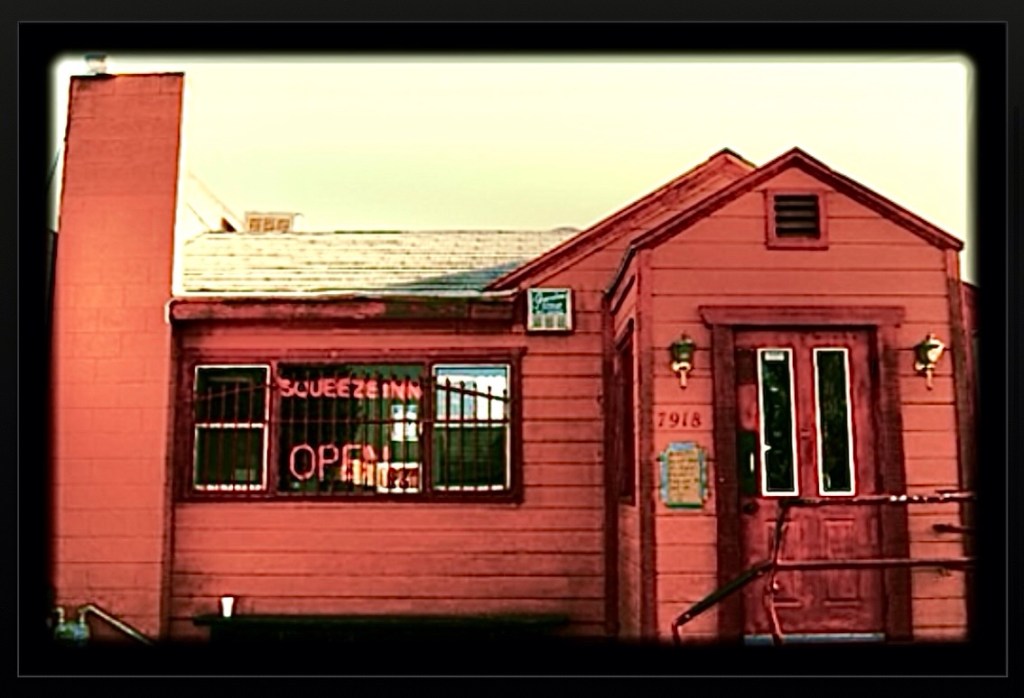
In 1992, I happened to be in Sacramento, CA and someone recommended trying “The Squeeze Inn”, so called due to its tiny size. It was a small greasy spoon with seating for about a dozen people. It may have had a couple of picnic tables outside. In any case, we finally went and I ordered a cheeseburger. HOLY COW – it was amazing, the best burger I ever had. I couldn’t even tell you what made it so good, other than lots of cheese. A few months later in early ‘93 I was back in Sacramento and stopped in again – was the previous trip a mirage? Was the burger really that good? DOUBLE HOLY COW! It was just as good the second time.

The Original Squeeze Inn

I became an apostle and proselytized regularly. If I knew anyone traveling remotely close to Sacramento, I recommended they stop in. If I met someone from Sacramento, I’d always ask about the Inn. It turns out I wasn’t the only one who liked the place. Virtually anyone who’d eaten there loved their burgers. In fact, Guy Fieri of Diners Drive-ins and Dives TV Show fame, proclaimed it one of the best burgers in America.

Strangely, I haven’t returned to Sacramento since the ‘93 visit, but The Squeeze Inn’s cheeseburger lived on in my mind as the best burger I’d ever eaten. I’d occasionally look up the restaurant online, and they were still receiving rave reviews.

So, what changed for me? The Ooomami Smashburger at Field and Main came along.

Field and Main first opened in 2016. Neal Wavra, the owner, has done a great job of making the place both a destination restaurant AND a good addition to the local restaurant scene. Cathy and I enjoy dinners there on a regular basis. The menu rotates, but I’d tell you their Chicken leg “confit” is one of my favorite meals. Billed as “casual fine dining”, it’s received two favorable reviews from WaPo restaurant critic Tom Sietsma, has won numerous awards, and is constantly written up as one of the best restaurants in Virginia. Their food is excellent. If you saw the place, or looked at their menu, it’s not immediately obvious they would make a great burger, and yet they do.

Field and Main – “Casual Fine Dining” AND a Great Burger!

I was reminded of this on a recent Saturday evening. Returning from an afternoon with my running group, I stopped in to pick up some wine we’d ordered and to get take-out dinner for Cathy and me. I went upstairs to the bar, ordered one of their signature drinks, a “Red Lantern” (definitely try it if you visit) and ordered dinner to go – two Ooomami Smashburgers and an order of loaded crispy potatoes. If you time it right, you can finish your drink in about the time it takes them to make your meal, and that was true on this occasion. I paid, grabbed the food and drove home, where Cathy was waiting.

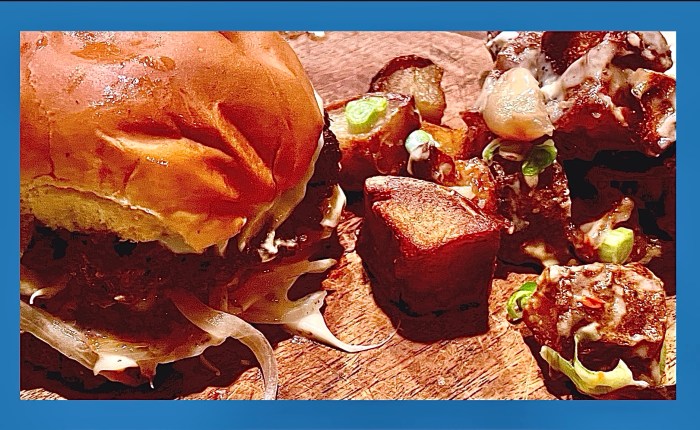
Both of us were hungry and we tore into the burgers. We’ve eaten them several times before and on this particular night, the revelation hit me – this may well be the best burger I’ve ever eaten. I don’t know if it’s the Wagyu beef, the homemade bacon jam, or both of those combined with the onions and American Cheese that makes it so good, but it is delicious. The loaded crispy potatoes with garlic, bacon, sour cream, scallions and a pimento cheese sauce are pretty d@mned good as well. Focused on our food, we didn’t say much as we ate.

The Ooomami Smashburger with Loaded Potatoes

I highly recommend you give it a try, but don’t just take my word for it. Northern Virginia Magazine recently held a competition and of 32 places, it was judged the best burger in Northern Virginia (read here: NoVA Wars: Burger Edition). The loaded crispy potatoes aren’t mandatory, but they’re mighty tasty as well.

The burger is listed on the menu as an appetizer. I know some who do order it as an appetizer or split it between 2-4 people to start the meal. Others order it as their main. With so many good choices on the menu, Cath and I rarely order it as a main unless we are having a casual dinner in the bar or getting take-out. Then? There’s a good chance we have Ooomami Smashburgers in our future.

I know there are many great burgers around, and I’m sure most of you have your own “best burger” in mind at some local restaurant, or some place you remember from your past. For all of you Five Guys or In-N-Out burger fans, if your best burger comes from a chain, that’s OK. I might think you’re living a sheltered life, but I won’t hold it against you.

If you are in Sacramento, CA or Marshall, VA I’d recommend both places for a burger. If you could only choose one place? Visit Field and Main in Marshall. Call me ahead of time and I’ll happily join you.

Addendum:

  • For info on Field and Main Restaurant, a reservation is usually required, unless you are sliding into the bar. Additional information can be found here: https://www.fieldandmainrestaurant.com/
  • The Squeeze Inn is still around in Sacramento, and now several other places in Northern California. They no longer have their original building (it closed due to a frivolous lawsuit). I still highly recommend you get one of their burgers if in the area. You can find more about them here: http://www.squeezeburger.com/

Making Espresso

Making Espresso

When we returned from Germany in ‘83 there were many things we missed from our 4 1/2 years in Europe. One of those items was coffee. Good Coffee. Cathy rectified that by buying me a small Espresso/Cappuccino Maker for Christmas that year. 40 years later, it still brews decent coffee, even if it looks old and outdated.

We were happy to return to the States, but in addition to good coffee, there were a number of things we missed from our time overseas, including good bier and cheese. The craft bier movement wouldn’t really hit its stride in the US until the ‘90s. As a result, Michelob or Heileman’s Special Export were what passed for top-shelf domestic beer at the time. The cheese market in the states consisted of American, Swiss and Cheddar once you were outside of Wisconsin or a couple of places in New York and Northern California. That too would change, but in the early ‘80s, it was a desert. Of course you could buy imported beer (back then, Lowenbrau or Heineken), or imported cheese, but there weren’t any real American products. I was further mystified to find the concept of a charcuterie board hadn’t reached the States – how was it possible something we routinely ate for lunch in a German Gasthaus didn’t even exist here?! And don’t get me started on wine…

Yes, I know this all sounds like an old man rant, and if I were saying it now, it would be. I was saying this in 1983, at the grand old age of 28.

Back to coffee. ;-).

Coffee in Germany and Europe was so much more than just a pot of brewed coffee. The Europeans made stronger coffee in general – not more bitter, just stronger and with great flavor. At the Gasthäuser (local restaurants) we visited, it was always made fresh – it wasn’t from a pot that was sitting for hours. In the afternoon, you could visit a Konditorei (the German word for a pâtisserie or confectionery shop) for a coffee and a sweet treat of some sort. The coffees varied from regular, to espresso, to cappuccino, to café au lait (coffee with a separate small pitcher of hot steamed and slightly frothed milk you added to your coffee). One of our great pleasures was sitting outside at a cafe in Berlin, or Paris, or Vienna, or Monte Carlo or any number of cities having a coffee, while watching the world pass by. I become nostalgic even today thinking about it.

There wasn’t the same type of coffee availability here in the States in ‘83. Starbucks started in Seattle in 1971, but didn’t really begin expanding until the late ‘80s. Although local coffee shops existed in some places, The “Local Coffee Shop” was an idea that hadn’t yet come into its own.

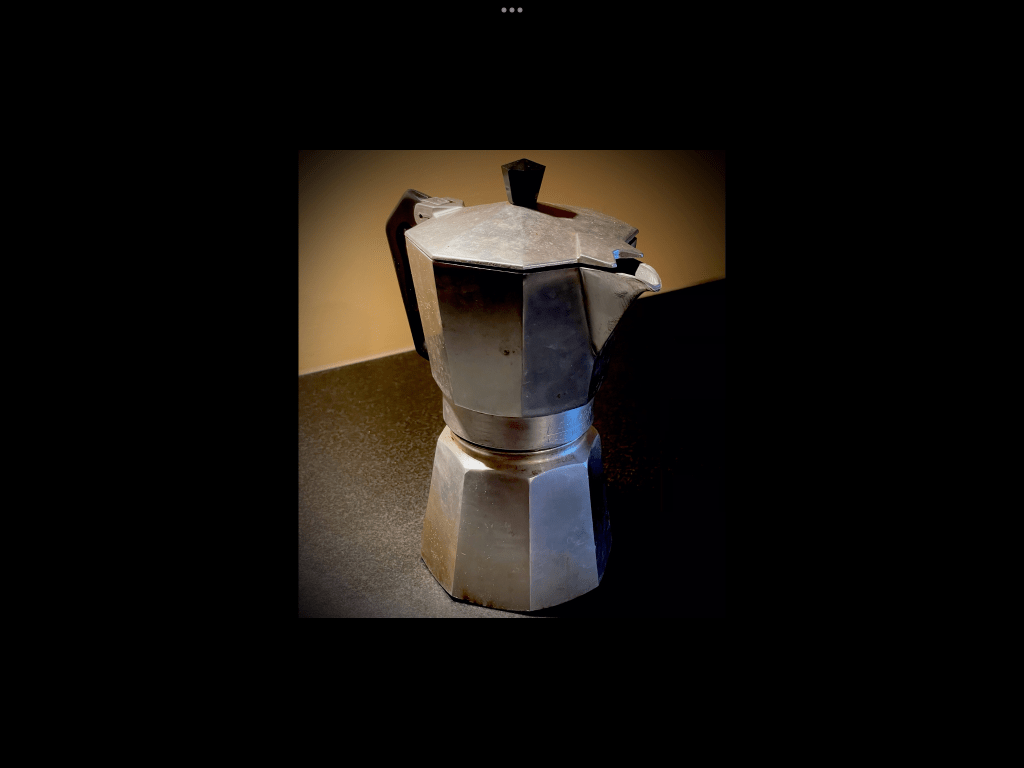
At the time, we were stationed in Dayton, Ohio. At a local mall, we discovered a shop that sold coffee beans. (I can’t remember if you could actually also buy a cup of coffee there or not.) In any case, we bought a grinder, and started grinding our own beans for our regular coffee pot at home and were able to make a stronger cup of coffee. We also bought espresso beans and used our Italian stovetop espresso maker (known as a Moka pot, it cost all of $6 when we bought it in Italy in ‘82 – I see they run $25 plus on Amazon now) to make a decent espresso. Half the problem was solved.

Our Old Moka Pot Also Still Works Well.

Cathy solved the other half of the problem that Christmas when she gave me an Espresso/Cappuccino maker. I was thrilled and started using it that very day. It became a fixture at our house and if you visited us in the ‘80s through the mid ‘90s, I practically forced a coffee on you

A Great Christmas Present in 1983!

Espressos? Sure. In addition, my after-dinner cappuccinos became a point of pride and were quite good, if I do say so myself. I’d add a capful of Cointreau for a sweetener and grind a little fresh nutmeg on the top of the foam. We also did Irish Cappuccinos. I think you know how I made those.

Somewhere along the way, other manufacturers started selling upscale Espresso machines of better quality. Now days, you can easily spend between $500 and $1,600 on a high-end espresso/coffee maker. Breville, Rancillo, Gaggia and others all make excellent machines … at a price. Over the years, I looked at a couple of them, but never pulled the trigger. We have a couple of friends who own them. One uses his religiously. Another found it more trouble than it was worth and it now sits on the counter, mostly unused. For my friends* that own super nice espresso machines and are real aficionados, good for you, and I’m happy for you. I’m sure you can probably make a better espresso than I can, and that’s OK.

Coffee shops are now ubiquitous here and these days you can’t trip without falling into one of them. They generally make great coffee. There are a few good local shops near us not named Starbucks, and I prefer those. If you ask, they’ll serve you your coffee in an actual coffee cup – not some crap paper cup.

Over time, I backed off using our little machine quite as much. Life was too busy, or I’d lost interest. And then, after retiring about a decade ago, I started using it more again. Usually, it’s in the afternoon and Cath and I feel the need for a little pick-me-up. I’ll make us cappuccinos and we take a break from life and sit and sip our coffees for ten or fifteen minutes. It’s a nice pause, especially on a winter day with fresh snow outside.

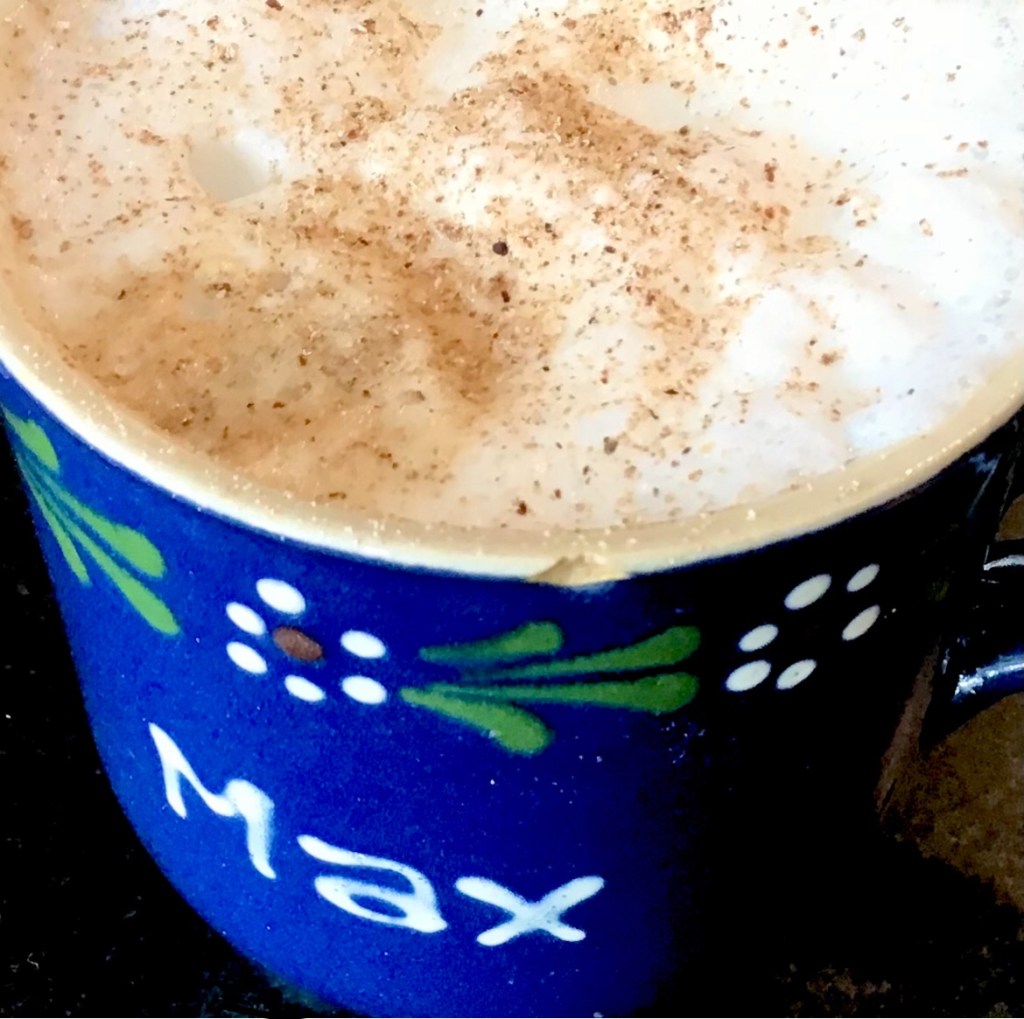
Yes, It Still Makes a Decent Cappuccino. Nutmeg and Cointreau are Optional.

Yes, over the last forty years, we here in the States have caught up to Europe on bier, cheese, good everyday wine and even charcuterie boards. As for coffee, I’m guessing we have more coffee shops than Europe now days.

At home, I would bet we’ve gone through five or six regular coffee machines since 1983. They die every six or seven years. Our Maxim Espresso Machine? It’s a little banged up but works fine and keeps chugging along. How many forty-year-old machines do you have in your home you can say the same thing about?

Addendum:

  • * I do know there are lots of great espresso makers out there, and that those of you who have them can pull a better shot, with more crema than I can. I certainly mean no criticism of those machines and am, at least a little, envious of you. My point in this blog was about my machine being 40 years old, and there’s not much that lasts that long anymore. Still, it’s interesting. In Italy, rather than buying an elaborate espresso machine, over 3/4 of the country still uses their stove-top espresso machine (Moka pots) everyday for their first cup of coffee. You can read more about the Moka pot here: https://en.m.wikipedia.org/wiki/Moka_pot
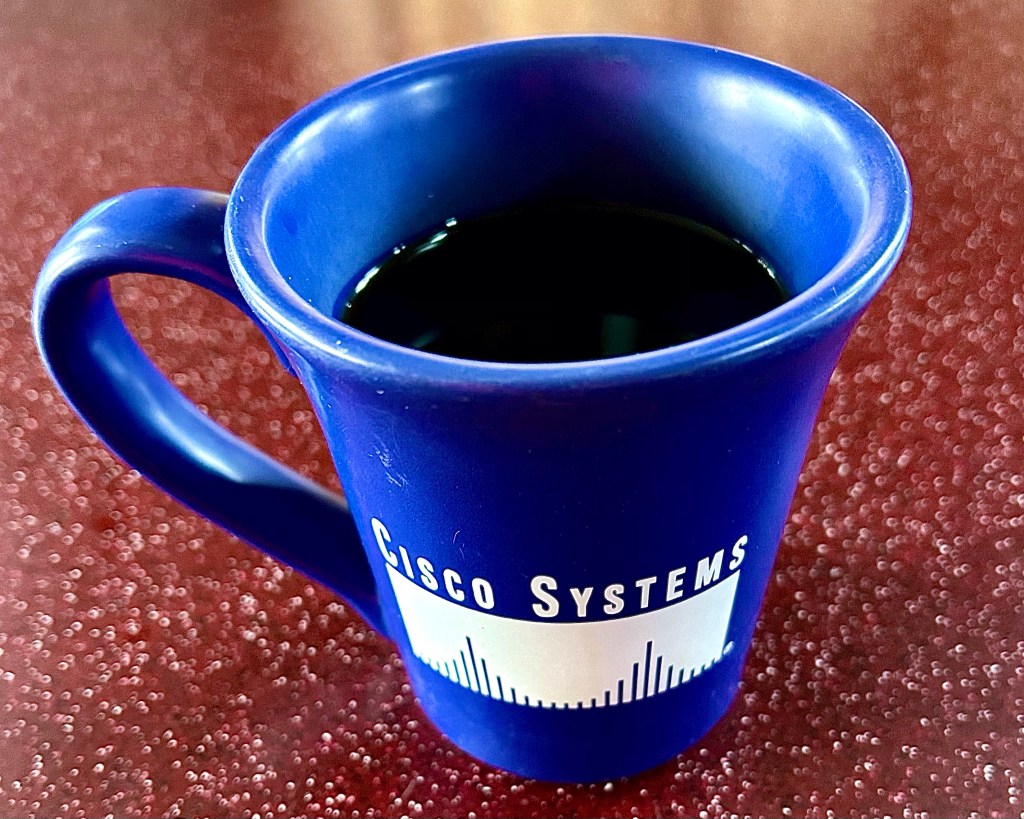
  • The blue coffee cup with my name on it is a bit precious to me. It was a gift from our old friend Tim in ‘80 or ‘81. He bought it while visiting us in Germany and gave it as a gift. Tim passed away last December.

Snow Satisfaction

Snow Satisfaction

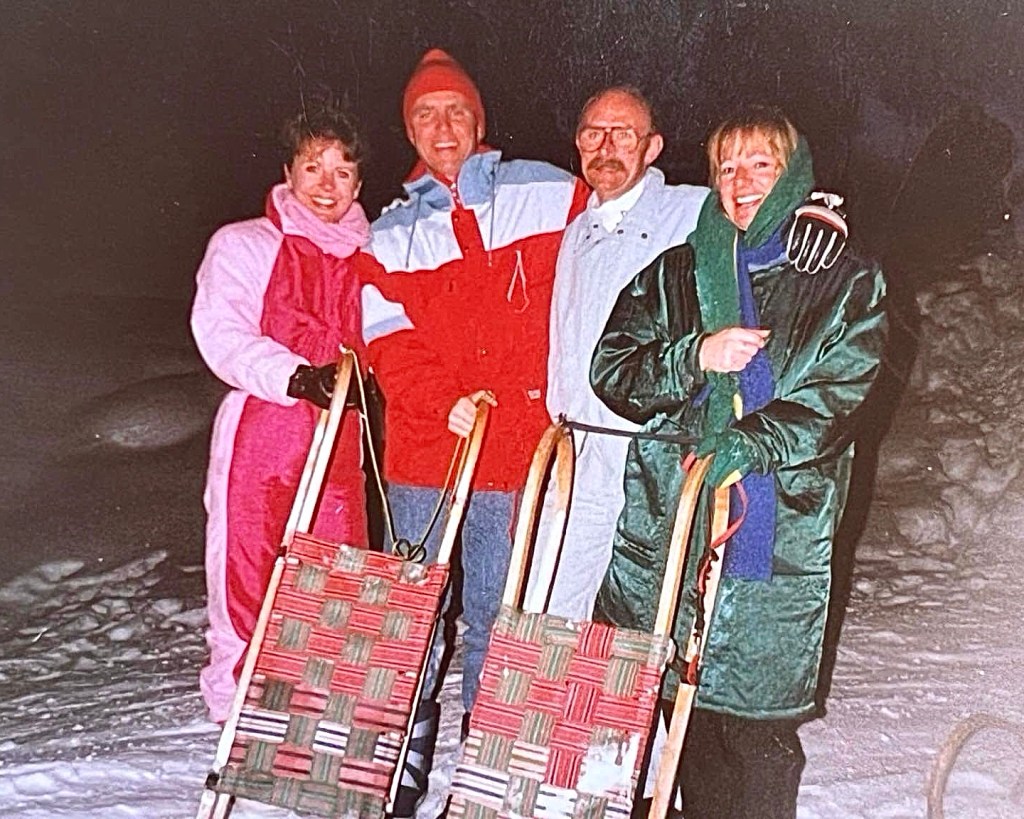
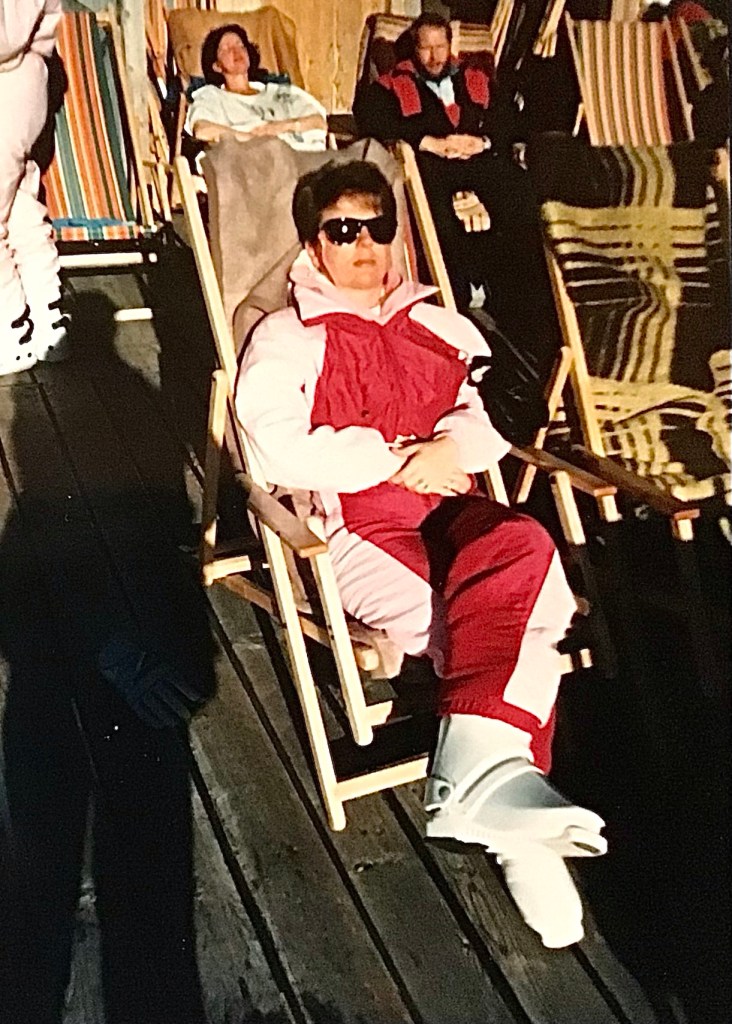
In 1988, Cath and I enjoyed a ski vacation in the village of Ischgl, Austria, known for both its skiing, and its Après-ski activities. It also presented the opportunity to ski from Austria to Switzerland, as long as we brought our passports. As is usual, Cathy had the last word after we completed the run.

While stationed in Germany in the ‘80s, we took many ski vacations to Austria, sometimes for a long weekend, sometimes for a week. We often went with our friends Jim and Res to the Austrian town of Nauders on the Italian border. The skiing was great there and we enjoyed many fun trips with them.

Good Times With Jim and Res on One of Our Ski Trips.

In ‘88, Jim and Res couldn’t get away, so we decided to go on our own and try a new location. We eventually settled on Ischgl, a village in Austria’s Paznaun Valley with nearly 150 miles of groomed downhill trails. It’s also known as something of a party town with a multitude of Après-ski bars, clubs and restaurants.

We had a great time that week and the town lived up to both its ski and Après reputation. We would ski in the morning, have lunch and a bier at a restaurant on the mountainside, and then ski all afternoon. Eventually, we skied our way back to town and stopped at different places for a drink. Afterwards, we walked to our Gasthaus, cleaned up and went out for dinner, and maybe dancing later. Finally, we’d make it to bed, sleep like the dead, and then do the same thing the next day. It was wonderful, and an easy thing to do when in your early thirties.

Cathy Catching Some Rays on the Slope at Lunch One Day

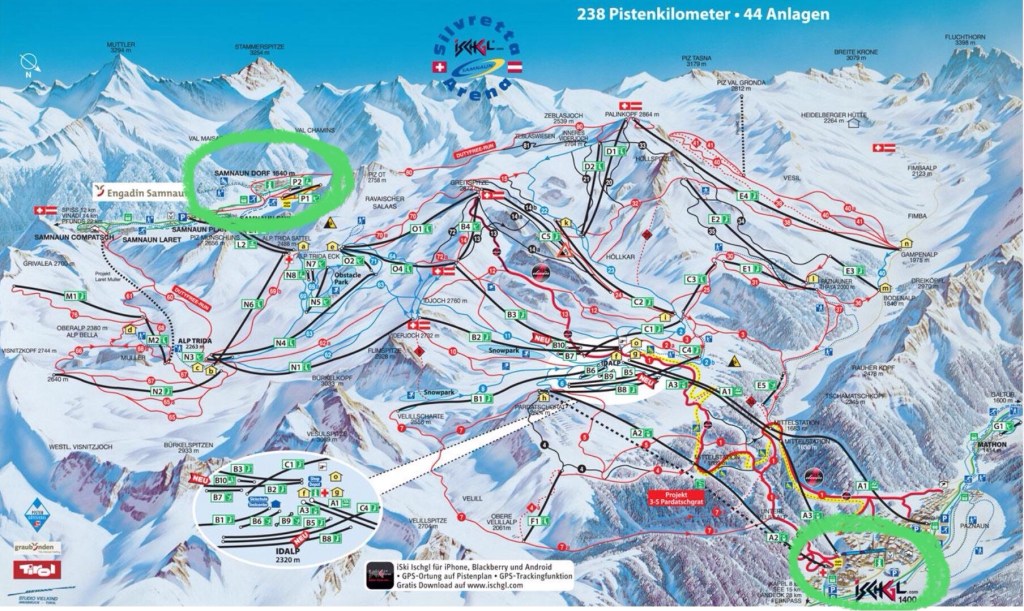
We learned we could ski from Ischgl, across the border and into the duty-free town of Samnaun, Switzerland. As the crow flies, about 10 kilometers separate the two towns, but It’s farther when skiing. Looking at the map, the route was a combination of ski lifts and Blue and Red trails. (in Europe, Blue are considered easy and Red are intermediate trails). Although we didn’t need passports to enter Switzerland, we would need them to re-enter Austria. We decided to give it a go the next day and have lunch in Samnaun, before returning to Austria.

Ischgl on the Right. Samnaun on the Left.

It was a perfect day with a blue sky as we started towards Samnaun. Through a combination of skiing and a couple of chairlifts, we arrived at the red trail heading into Switzerland. As we descended, it was nice skiing, but then we came upon an icy, relatively steep cat-track, connecting on its far side to a steep descent to the village of Samnaun. Several people stopped there gathering their breath, before continuing. The mountain was on the right side of the track. On the left side, the ground dropped rapidly away into an unskiable valley. As we were watching, many people had problems on the ice and were falling, so some caution was warranted. We were about ready to go when someone came zooming down the slope from above, cut his skis into the snow and ice to turn onto the cat-track and… the skis didn’t grab the ice. Instead of turning, he shot off the side of the mountain, traveled through the air for about 40 feet, and then landed 20 feet below the trail in the snow. Hmmmm.

That caught our attention, particularly Cathy’s. The guy was OK, but now needed to find one of his skis and then climb back up the side of the valley to reach the trail. He couldn’t ski out from where he was.

We watched awhile longer, and then I said to Cath it was time to go. She disagreed and wanted to wait a little longer. More time went by and Cathy still wasn’t quite ready. Finally, I said something like “We can’t stay here, and we can’t go back up. The only way out is down the cat-track.” Eventually we started and slowly made our way. Cathy reverted to snow-plowing and her edges grabbed on the ice. After what seemed like forever, but in reality was probably two or three minutes, we made it past the cat-track. A few people were crashing and burning around us, but we had nary a fall. All that was left was the final descent.

We stood there congratulating ourselves and I pulled out my flask for us to share a short shot of brandy. I filled the cap about half full and handed it to Cathy. She looked in the cap and said, “Really? Do you think I could have a double?!” We both laughed and I filled the cap to the brim. She shot it down, handed it back, and took off on the final descent into Samnaun. After pouring myself a short one, I put away the flask and tore after her, eventually catching up. While the slope was a little steep, the snow was good and we arrived in town without mishap.

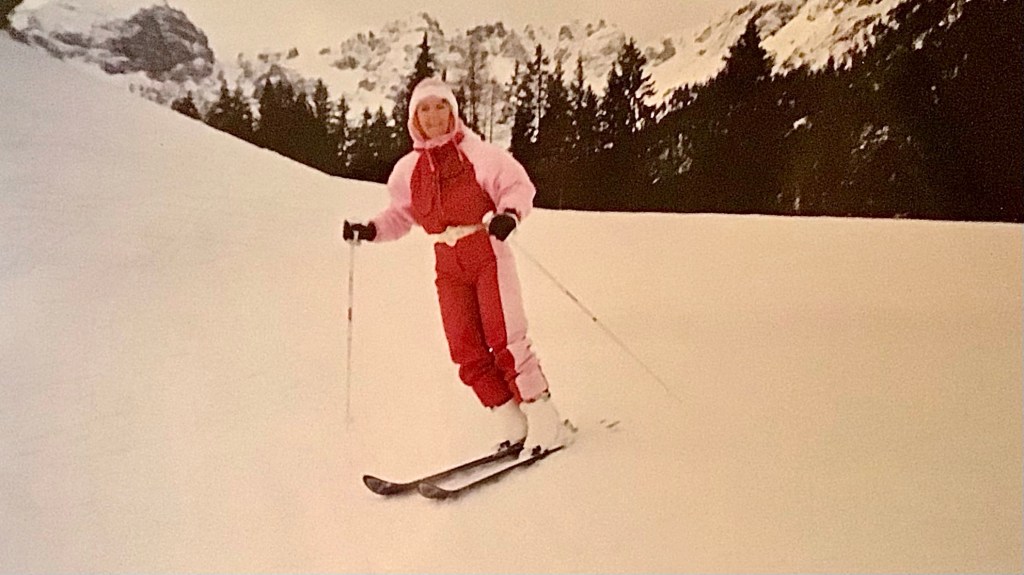
Cathy on the Slope.

We took off our skis and found a nice looking Gasthaus. I don’t remember what we ate, but the bier we drank with lunch tasted awfully good. After lingering a while and doing a little shopping, we took a cable car back up the mountain. Following a short ski, and then an additional chairlift ride further up, we arrived at the border crossing into Austria, where we dutifully presented our passports.

Once through customs, we skied down the slope into Austria. We made a couple more runs, and decided to call it quits. It had been a tiring day.

We skied into town to a bar/restaurant we discovered earlier in the week, and after stacking our skis outside, walked in. The place was quite crowded. We found a small table, settled in, and ordered biers along with a couple of Poire Williams*, a French eau de vie (we called them Poor Willies).

As we sipped our biers, the band began playing and their first song was The Stones’ “Satisfaction”. We, along with half the crowd, jumped on the dance floor and started dancing in our ski boots. As we were dancing, the crowd, a mishmash of Austrians, Germans, French, Dutch, Italians and others from who knows where, were all singing at the top of their lungs “I CAN’T GET SNOW… SATISFACTION!” It was one of those perfect moments you can never replicate, but forever remains clear as a bell in your mind’s eye. To this day, I feel my boots hitting the floor in time with the music, hear the crowd singing to “Satisfaction” and see the look of laughter and love in Cathy’s eyes.

Eventually it was time to leave. We went outside to find our skis and make our way home. As we were standing there, Cathy grabbed her crotch with one hand and started pulling at her clothes. I burst out laughing and said, “What the hell are you doing?!” She looked me straight in the eye and answered, “I am adjusting my balls. I kicked that slope’s ass today!” With that, my wife threw her skis over her shoulder and started walking home.

Addendum:

  • Poire Williams is the name of a French eau de vie (literal translation – “water of life”), a clear brandy made from pears. Poire is the French word for pear, while Williams is the type of pear. In Germany and Austria, they make an equivalent bottling called Williams Birne Schnaps. Both are strong, and nothing like the peppermint schnapps we know here in America. Depending on the quality, you might either sip or shoot it.

Cranberries à la Dad

Cranberries à la Dad

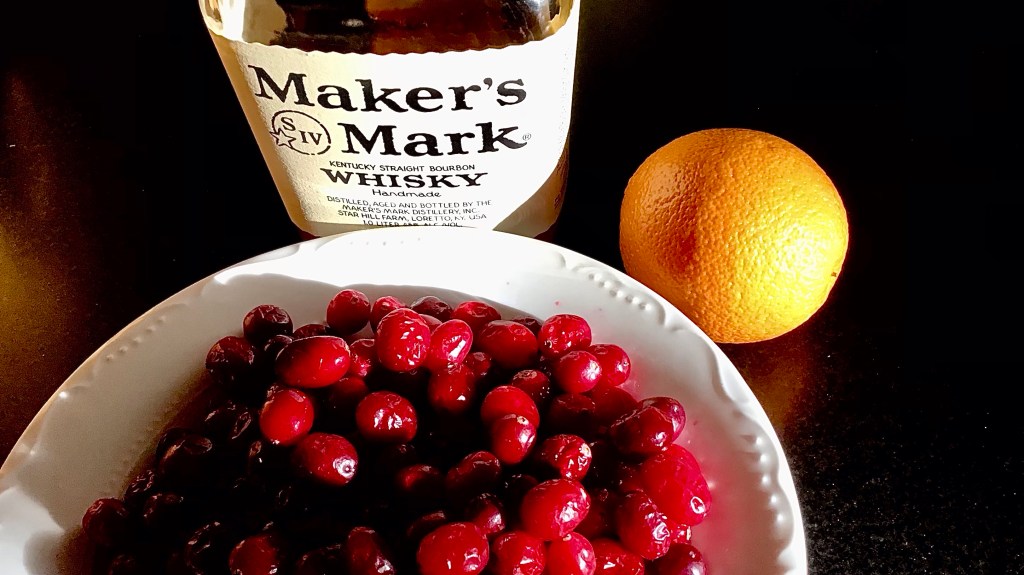
Thanksgiving, that truly American holiday, is approaching and started me to thinking about Dad and his Cranberry Sauce. It’s a great recipe filled with bourbon, cranberries, shallots, orange zest and memories. I love the fact that I get to spend a little time with Dad whenever I make it.

Cranberries, Bourbon, Orange Zest and Shallots…

Growing up in the Hall house in Ottawa, Illinois, Thanksgiving and Christmas were nearly identical meals – turkey, dressing, oyster dressing, mashed potatoes, candied sweet potatoes, corn and green bean casserole. The desserts – pumpkin pie, mincemeat pie and if we were lucky, strawberry-rhubarb pie, were all made by my Aunt Marge, a wonderful baker. Sometimes we would have a cherry pie from Aunt Diane – the cherries were from a tree in her yard. For snacks ahead of time, there were black olives and pickles (when young, my sisters put the olives on the ends of their fingers and then ate them off). There was cranberry sauce served as well – sliced out of the can.

I remember both meals as large loud affairs – Grandma, uncle Don and aunt Diane and their kids would be there. Various uncles or aunts stopping by for a slice of pie and cup of coffee after their own meals. Roberta and Tanya’s friend Marsali would inevitably stop over. Later when we were older my buddies Howard and Tim stopped in for a drink (to settle the stomach) after their own dinners.

Both meals were delicious and mostly made by mom. The kitchen was her domain. She often joked she actually spent more money on the oysters for the oyster dressing than she did on the turkey, and that’s saying something. I never thought to ask why we had exactly the same meal for both occasions and was somewhat shocked when I later learned other families served steaks or some other non-turkey meal for Christmas.

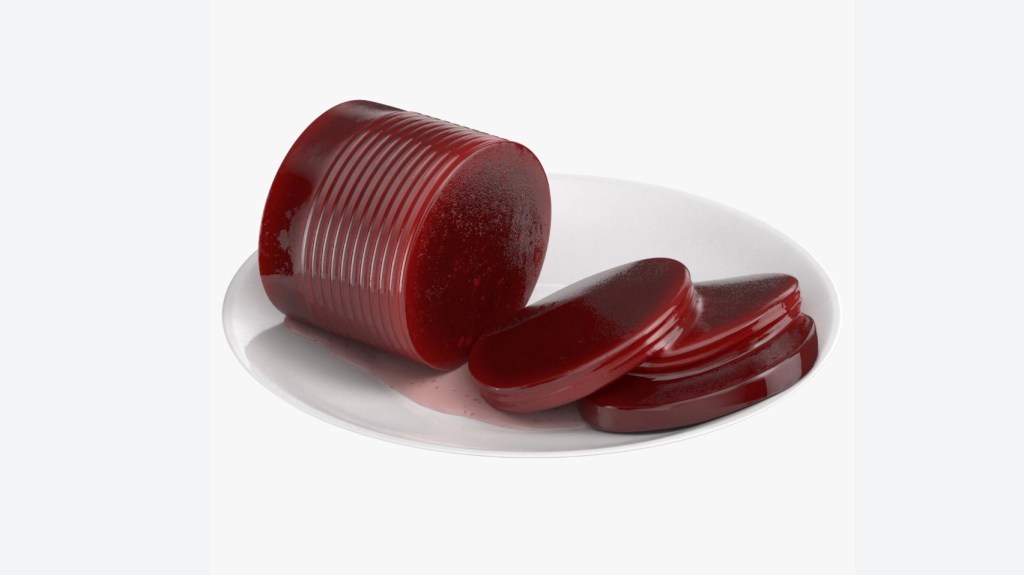
Everything for both Thanksgiving and Christmas dinner was homemade – except for the cranberry sauce. Growing up in the midwest, I think that was fairly typical – canned cranberry sauce, sliced into equal, perfectly round slices.

Sliced Cranberry Sauce. Please, No Judgement.

That changed one year, probably around 1984 or so when Dad retired from work. After he retired from the railroad, mom continued to work another seven years until she reached retirement age. As a result, Dad took over much of the cooking at home.

Cath and I were home for Christmas that year and dad had a surprise for us – homemade cranberry sauce! We all oohed and ahhhed over those cranberries and how good they were. Now mind you, mom was still making the entire rest of the meal (with help from my sisters by this point in time), but Dad now had his contribution as well. I think it came from a Bon Appétit recipe he tweaked slightly.

And so, Cranberries à la Dad became a part of the tradition for both Christmas and Thanksgiving.

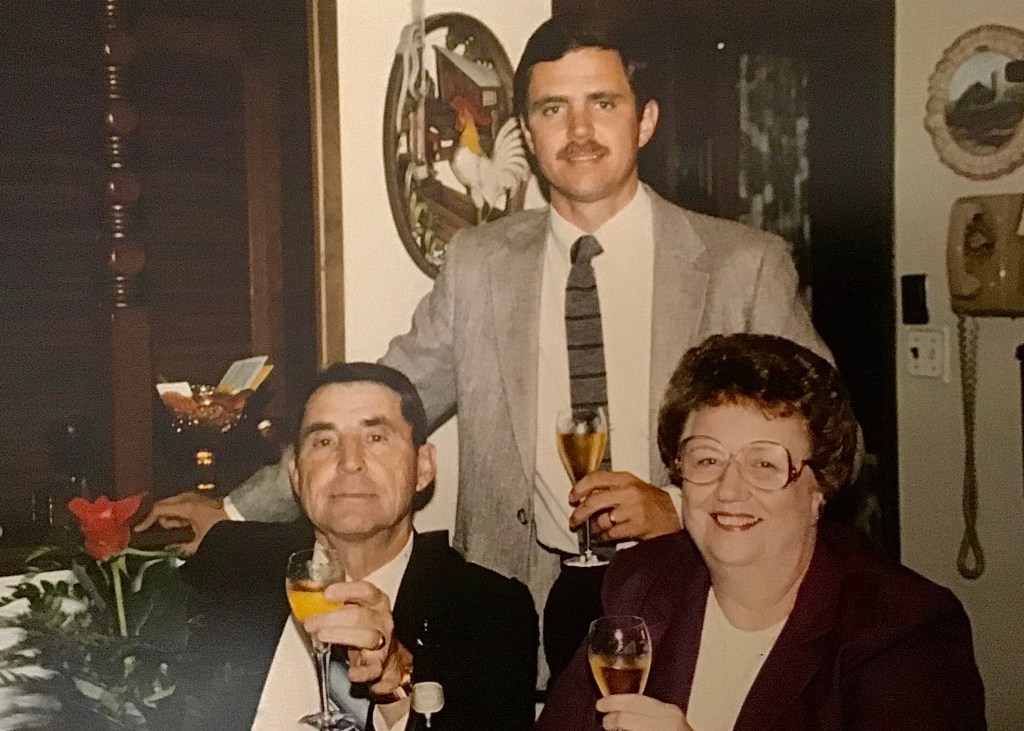
Mom, Dad and I around the Time He Started Making his Cranberry Sauce Recipe.

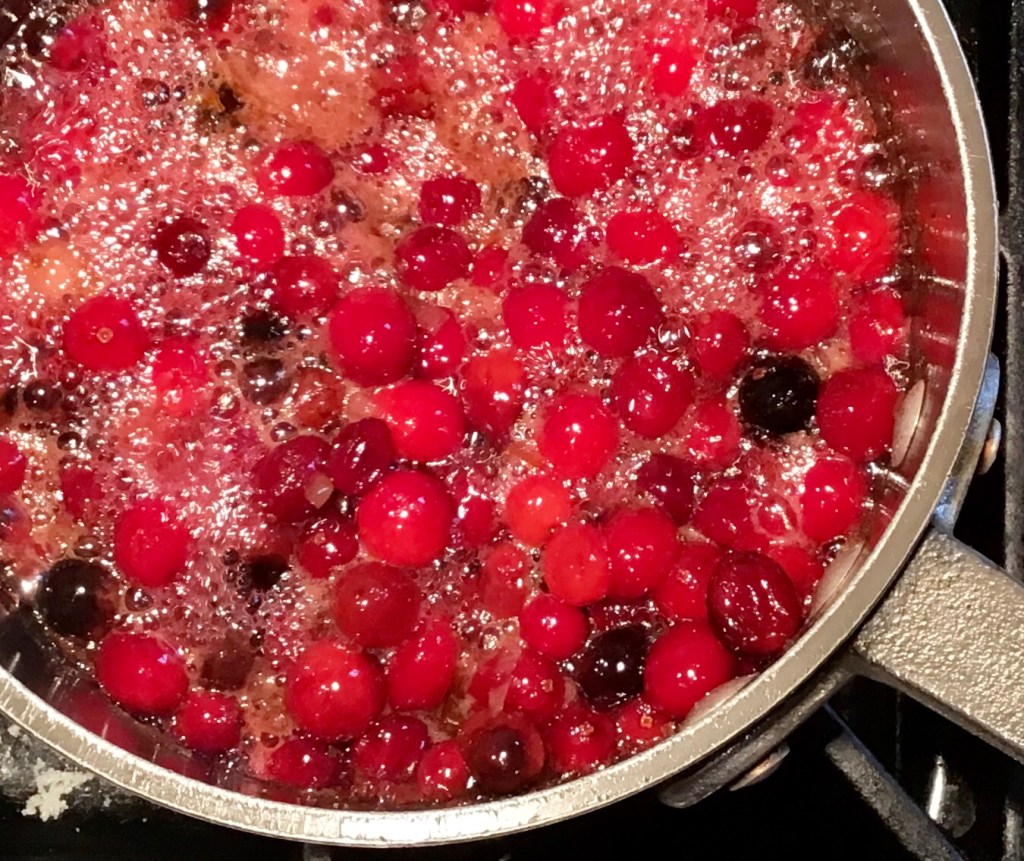
It’s carried on at Cath’s and my home for Thanksgiving as well, although these days, we are having Thanksgiving with friends at their homes as often as not. The recipe is easy to follow, and cooks quickly. Still, I enjoy the few minutes it allows me to spend with Dad. As I smell the bourbon reducing and hear the snapping and popping sound of the cranberries opening, I reminisce and think about the good times we enjoyed with Dad over the years. It’s not a bad way to spend a half hour or 45 minutes.

You can Hear the Cranberries as They Sizzle and Pop While Opening.

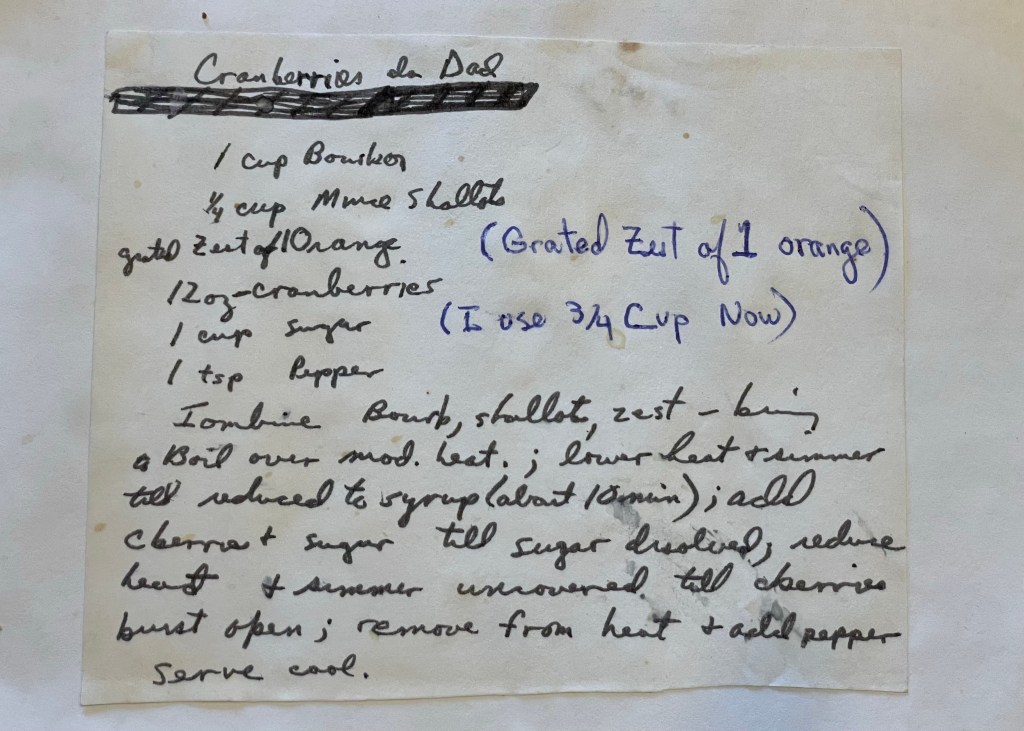
Here’s the recipe. You have plenty of time before the big day to buy the ingredients. I usually make it the day before Thanksgiving while sipping on a small glass of bourbon, but the morning of works as well, if there’s room for you in the kitchen. For a chunkier look, don’t let all of the cranberries burst. Cranberries, bourbon, shallots, orange zest and memories – it’s a recipe that works.

Enjoy!

Addendum:

  • Thanks to my sisters, Roberta and Tanya, for their input to this blog. It’s always great to share memories with those you love.

Developing A Wine Palate

Developing A Wine Palate

Do you know the best way to develop your wine palate? Drink more wine. I believe Cath and I have that covered. We began drinking wine together (legally) in 1974 when she started working for the FBI in DC. Seriously. We’ve had more than a couple of bottles together in the past fifty years.

After Cathy moved to DC in 1974 to work for the FBI, I’d visit from West Point for the weekend. If we were doing a “special” night out, we’d always order a bottle of wine. I think we felt more like adults. Now mind you, neither of us owned a car, and metro wasn’t here yet. We’d take a bus from her apartment to Old Town Alexandria and usually go to The Wharf, one of the nicer restaurants in town. After a seafood dinner and bottle of wine, we’d dutifully wait for the bus and take it back to her apartment. ;-). A taxi was out of our price range.

Our real wine education came after we married and were stationed in Germany in the ‘80s. Yea, we drank a lot of good German bier, but we drank our fair share of wine as well. Not only dry German and Austrian whites, but also French, Spanish or Italian reds when we traveled to those countries. Spending nine years in Europe significantly broadened our exposure to what wine could be.

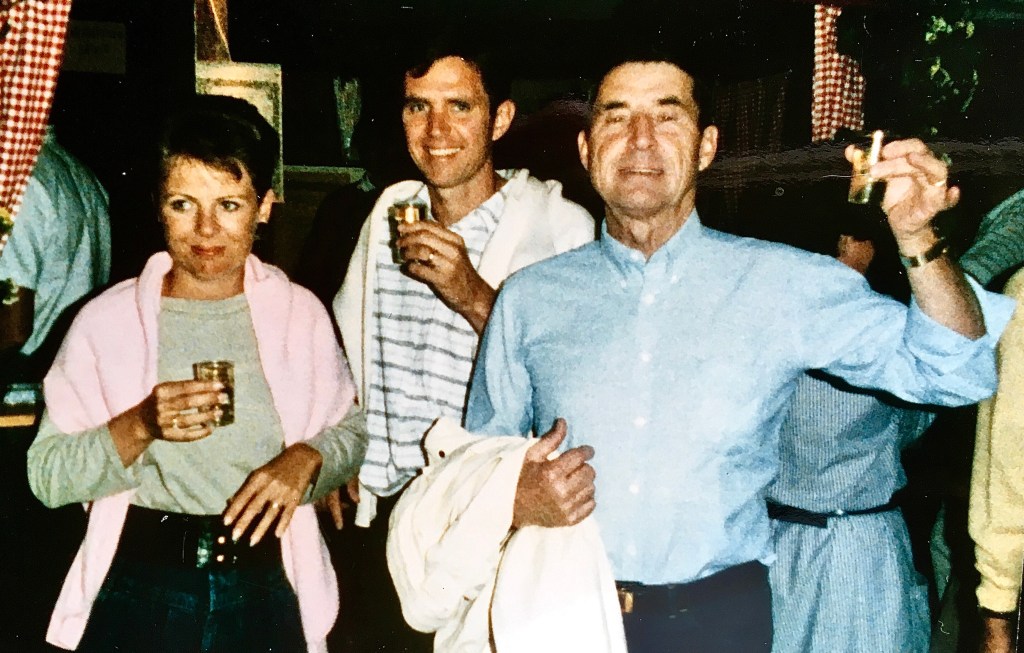
Cath, Dad and I at a Weinfest in Germany around 1987.

Returning to the States in ‘89, we discovered California wines, which we’d pretty well ignored before then. Cabs, Merlots, Zins and eventually Pinot Noir’s – Our taste buds grew once again and sometime in the ‘90s we installed our first wine rack, which held about 110 bottles.

After moving to the farm in ‘99, we renovated the kitchen around 2005 and put in a wine cooler – we could store 250 bottles in it, which seemed like a pretty reasonable number. Except it wasn’t. And so…

In 2011 we discussed putting in a wine room with a separate chiller. To be honest, I think Cathy was feeling a bit guilty about the money we were spending on her horses and she readily agreed we needed a cellar. Of course, she would benefit from the cellar as well. And so, we bit the bullet and installed it.

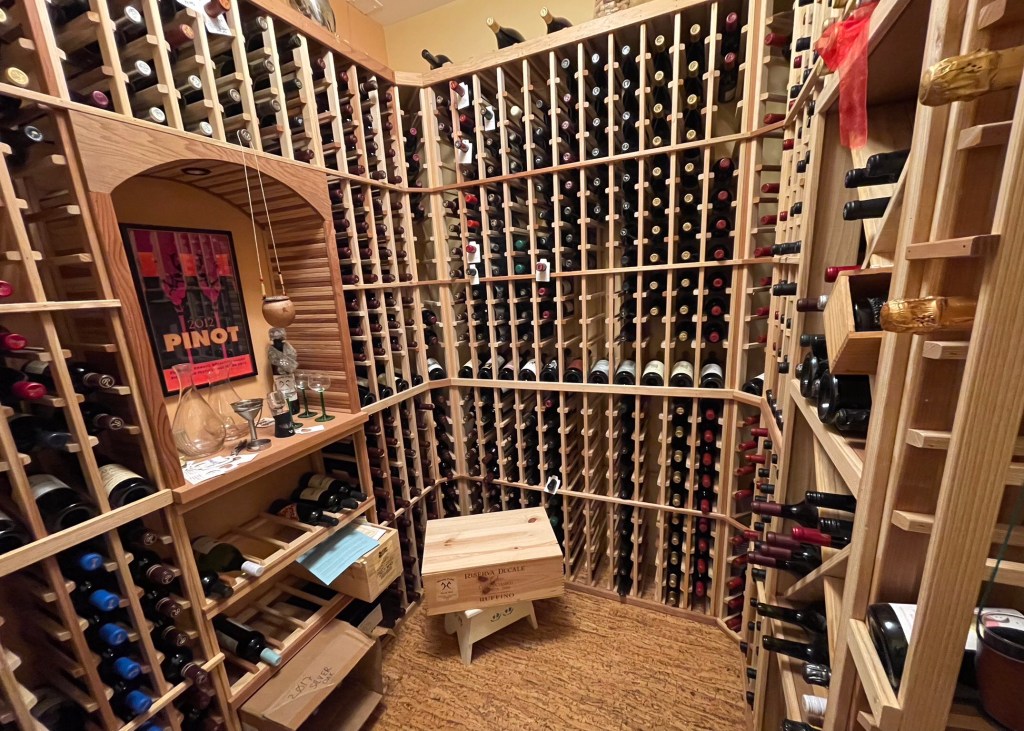
The Wine Cellar – Not quite at Capacity.

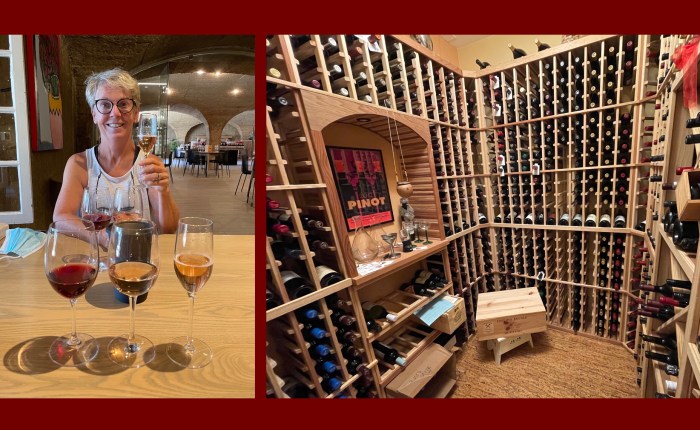
Our cellar holds around 950 bottles, although if you wanted to stack cases on the floor, you could add another 200 or so. I’d point out this is a drinking cellar. This isn’t a cellar for storing trophy wines. Everything in the cellar is meant to be consumed … over time. It’s stocked to our tastes. You’ll find sparkling wines, Virginia wines from a couple of our favorite vineyards (Linden and Glen Manor); California Pinots, Merlots, Cabs, and Zins; French, Italian, Sicilian, Spanish, South African and Portuguese reds; whites from a number of locations in the States and France; and some dessert wines. There’s a bottle of Georgian wine in there somewhere (the country, not the state). There are a couple of bottles from the late ‘90s, and then probably just about every year from 2000 to the present. We like the cellar and we like the inventory. We enjoy putting a dent in it with friends.

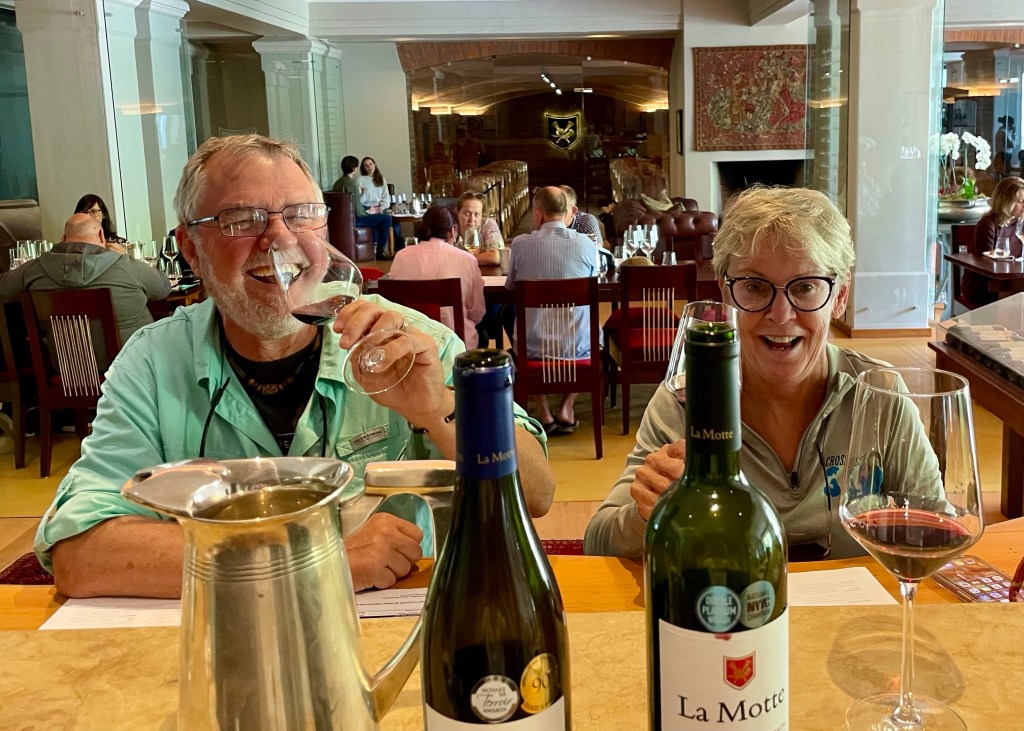
Wine Tasting in South Africa.

Now here’s the funny part. Although the cellar is ostensibly mine, Cathy has a palate that blows mine away. She’s much better in blind tastings at guessing the grape and where the wine is from. She recognizes the flavors and can talk about them. And if a wine has turned bad or is corked? She can tell just by smelling the wine before she’s even taken a sip. These days, when we go out to dinner and order a bottle of wine, I usually just tell the waiter or sommelier to let her taste the wine. She’s really good.

I suppose we’ve consumed thousands of bottles of wine over the last fifty years – at home or in restaurants; on picnics and vacations; at wineries; and of course with friends and family. There are lots of good memories associated with those bottles and gatherings.

Good Memories. Always.

In vino veritas”, is a Latin phrase that means “In wine, there is truth”. The truth is we are still improving our palates, one bottle at a time.

Cathy says life is too short to drink bad wine. I think I agree.

The Bears Den

The Bears Den

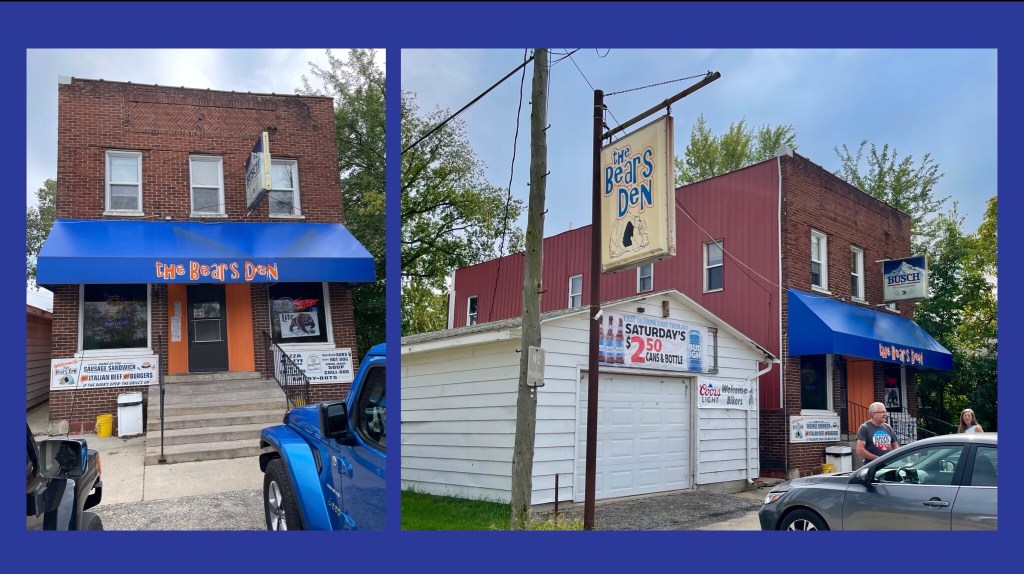
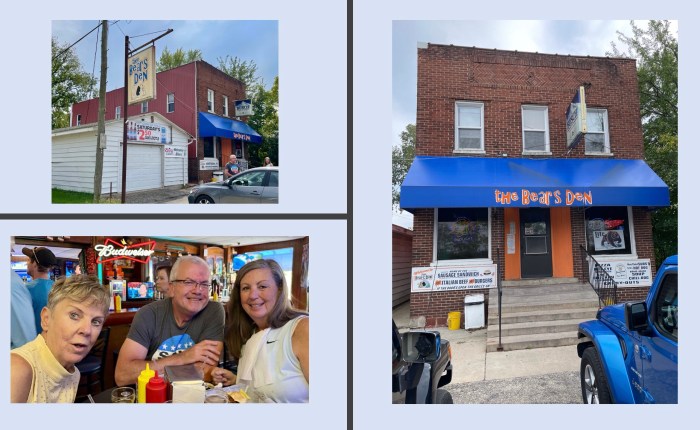
The Bears Den in Naplate, Illinois is a great little dive bar. I mean that in the best sense of the word. It’s an older place and hasn’t been updated in years. On a recent trip back home to Ottawa, we stopped in on a Sunday afternoon for lunch and Bloody Marys. We all should have such a good local place.

Naplate, a town of just over 400 people, probably has more restaurants and bars per capita than any town in America*. They are all small local places. Some more bar oriented, and some more food oriented. All have their devoted fans and regulars from Naplate, or the surrounding area. Over the years we’ve enjoyed several of them, including Casa Mia, Annie’s Hideaway, and of course, The Bears Den.

The Bears Den – It’s Been Around Awhile.

A few years ago, a really bad tornado ripped through Naplate and parts of Ottawa and Naplate were destroyed. Although Naplate restaurants were ordered closed in the immediate aftermath, The Bears Den stayed open providing food for the folk doing the cleanup and damage control. They were giving back to the community in a big way.

A couple of weeks ago we were back in Ottawa to see family and go to a reunion. We spent Saturday night with my sister Tanya and Brother-in-Law Shawn and on Sunday morning were discussing what to do. Cath previously mentioned possibly going to The Bears Den for Bloodies, and we all quickly agreed that was a great idea. It had been a few years since we were able to stop in there and we were looking forward to a good time. Shawn, the smart one among us, checked to see what time the Bears were playing that day. When they are on TV, it’s standing room only at the Den, and we wanted to avoid that. Fortunately, the game didn’t start until 3PM.

We arrived just after noon and easily grabbed a table. Several people were there, but it wasn’t crowded. The Packers were on TV, so there were both cheers and catcalls, depending on what was going on. The waitress came over and we ordered our Bloodies with sidecars. In Illinois (and maybe across the Midwest) a sidecar is a small beer, typically 7 ounces, to go with your Bloody Mary. At the Bears Den, they brought you a can of beer, and a 7 ounce glass. On Sundays, they have “build your own Bloody Mary” for $3, but we opted for the bartender to make ours.

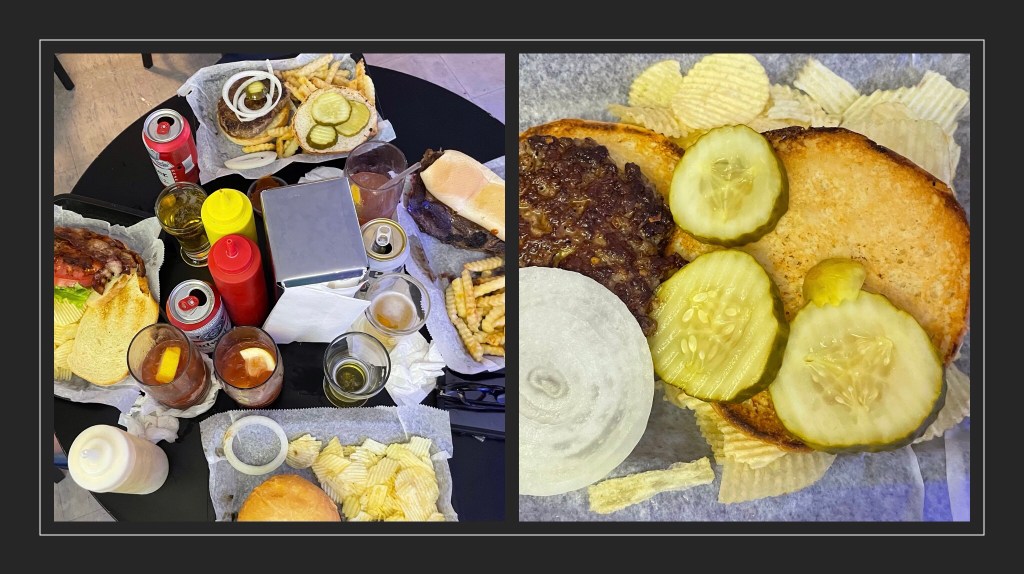
Lunch at The Bears Den with Tanya and Shawn.

Drinks arrived and the Bloodies were as good as we remembered. Our waitress asked what we would like to eat. For me, there was only one thing to order – their Sausage Sandwich. You can have it with peppers, or cheese, or any number of other combinations, but I just ordered it with pickles and onions. It’s like a burger, but made with 1/2 pound of sausage instead. As my buddy Howard says “It rivals the pork tenderloin**as the best area sandwich. The difference? You can order the tenderloin at lots of places, but only The Bears Den has the sausage sandwich.” Shawn also ordered one, while the ladies opted for a BLT and a ribeye sandwich. One of the great things about The Bears Den is they have a decent menu, especially considering the small size of the place and the size of the kitchen.

The food came, and all I can say is, man, I love that sandwich. It was sooooo good. Yea, it didn’t help my cholesterol any, but that’s OK. In fact everyone’s sandwich was good. I think Cath’s BLT was the biggest I’d ever seen, and Tanya’s Ribeye sandwich was great. The table grew quiet for a while as we concentrated on our food. Eventually, we ordered a second round of Bloodies and Shawn had another beer.

Good Food All Around, but Man That Sausage Sandwich!

At some point, our nephew and niece Casey and Ann stopped by with their kids and we were able to catch up with them for a bit, but eventually, it was time to go. Hugs all around in the parking lot, lots of I love you’s, and we headed south to my sister Berta and her husband Jack’s place.

I know it’s a bit crazy to write about a dive bar in the middle of Illinois, when we don’t even live there anymore. Still, it’s good to have things and places you know you can count on. The Bears Den is one of those places. If you are ever near Naplate, I highly recommend it.

Addendum:

  • The “Bears Den” has no apostrophe in it, and I have written it that way throughout this blog.
  • * My friend Howard Johnson notes that Naplate was a factory town (the former Libby Owens Ford, now Pilkington,). The shift workers all converged on the Naplate bars when their shifts ended, keeping them busy 24 hours a day back in the day. That’s a big reason such a tiny village has so many bars.
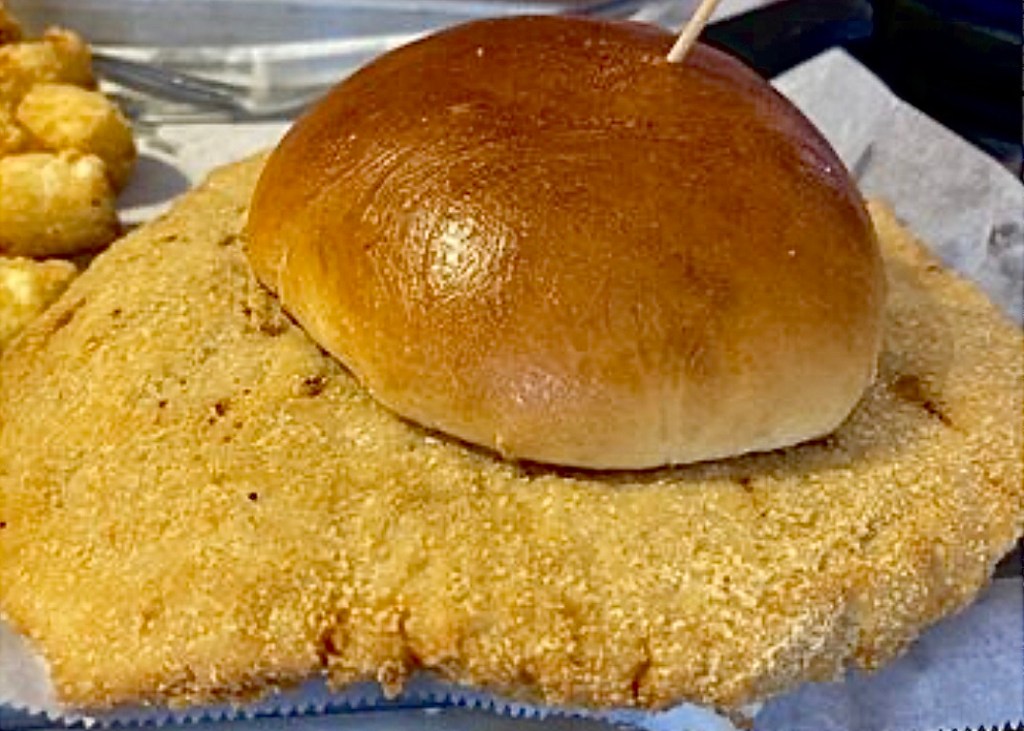
  • ** One of the great meals you can find in the corn-belt of Indiana, Illinois and parts of Iowa is a breaded pork tenderloin sandwich. They are crazy good and something that many people who move away from the area crave, and always have when they return to Ottawa. If you are closer to Chicago, or in Wisconsin, an Italian Beef Sandwich is just as loved.
Pork Tenderloin Sandwich at The Court Street Pub in Ottawa.
  • The Bears are having a rough stretch in football lately and lost 14 straight games before beating the hapless Commanders last week. The Bears Den remains crowded for their games. In general, the fans are still loyal, but getting restless. One of my buddies, Mark, a diehard Bears fan, sent me this meme after I mentioned we were at The Bears Den for lunch:
Heeheeheehee

Tim and Bobby’s Visit

Tim and Bobby’s Visit

In the ‘80s when we lived in Germany, several family members and friends visited us. To “help” them overcome jet lag, we made sure the first couple of days were action packed with eating, drinking and activities to keep them occupied. It almost proved one friend’s undoing in 1987.

Our old friend Tim visited us several times while we were stationed in Germany. In 1987, he asked if he could visit and bring his friend/work buddy Bobby along. They planned to visit us, and then tour parts of Germany, Austria and Northern Italy, eventually arriving back in Germany for Oktoberfest in Munich. We of course said yes and looked forward to their arrival.

Tim and I at a Bierfest during a different visit.

They flew to Dusseldorf one morning in September and then took the train to Worms where we picked them up. Tim recently recalled the train paralleling the Rhein River for part of the trip, when all of a sudden the train shook a bit. He looked out the window and saw two F15s flying low, following the path of the Rhein as well.

After arriving at our home in Rheindürkheim, we ate lunch. Tim and Bobby may have slept for a couple of hours, although I don’t remember for sure. Later, we gave them a tour of town and walked along the Rhein River. That night, we went out for dinner at a local Gasthaus (pub) called Sportheim. We knew the owners, Vroni and Wolfgang well, and Tim knew them from a previous visit. It’s safe to say they greeted Tim like a long lost relative. It was a great evening and Bobby joined right in. We spent several hours at Sportheim and after many biers and wines, eventually made our way home. We may have drunk a brandy or schnapps, before making our way to bed and a good night’s sleep.

The next day, amazingly, none of us were the worse for wear. After a hearty breakfast with some good German bread, sausages and cheese, we drove around to show Bobby the area. We went into Worms, the city where Martin Luther made his famous statement “Heir stehe ich” (here I stand) before the Imperial Diet in 1521. Basically, it’s where and when Protestantism started.

That evening, we had a special treat in store for the guys. The Rheindürkheim Feuerwehrfest (Fire Department Festival) was going on in town. There were about 1,000 residents in Rheindürkheim and a majority of the adults would be at the Fest. It was a classic German wein festival with a huge tent, oompah band, dance floor and lots of adult beverage.

We made our way to the fest, found some local friends and settled in. Of course we drank our share, and ate brats and other German food, such as curry wurst or roast chicken. We also listened to the music and took turns dancing with Cathy and some of the other ladies in our group. It was a great time. Eventually it was getting late, and the fest was coming to an end. We were going to head home when one of our German friends, Michael, told me several people were going to an after party at the Zenit, basically a local Navy VFW club and wanted to know if we wished to join them. I’d been to Zenit several times and immediately said yes. For Tim and Bobby, it’d be an even greater look at the local culture. Cathy, always the wisest of us two, declined and said she was going home. We left the fest and after dropping Cath at home, walked to Zenit.

Now Zenit was actually a dry-docked ship that was turned into a club. Rheindürkheim, was on the Rhein River and traditionally, most young men of the town served in the Navy instead of the Army. That’s why their “VFW” club-equivalent was in a ship.

The Zenit in Rheindürkheim

As we arrived, we made our way to the bar and bought a couple of biers. I nudged Tim and pointed out a picture hanging in Zenit. Tim’s a history major and I thought his eyes were going to bug our when he saw who it was – Admiral Karl Dönitz*, supreme commander of the German Navy during WWII. Dönitz also took over the German government after Hitler killed himself and it was he was who actually surrendered to the Allies in May of ‘45.

We had a good time at Zenit. The party was eventually winding down when our friend Hans approached me. He and his wife Inge were having an after-after party at their home and wanted to know if we wanted to stop by. Their home was actually on the way back to our house and I again immediately said yes. We joined a group of 15 or 20 people and dutifully walked or stumbled to Hans and Inge’s house.

At Hans and Inge’s there was no oompah music. What was playing on the stereo was the soundtrack from the movie “Dirty Dancing”, released earlier that year. I remember chuckling about it at the time.

I believe they served coffee and dessert for those who wanted it. I also distinctly remember Inge walking around with a bottle of homemade schnapps and pouring people small glasses/shots. Schnapps in Germany is nothing like the sweet stuff we think of as schnapps here in the States. It’s similar to Italian grappa or French marc and can definitely have a rough edge to it. She asked if we wanted some and of course we all said yes. Bobby didn’t yet know about real schnapps. We all toasted with a “Prost”. Bobby took a small sip and may have actually turned green. He looked around and saw a nearby plant, where he discretely poured the remainder of his schnapps.

A bit later, Inge came back by, saw Bobby’s empty glass and refilled. It. At that point Bobby looked at the glass and then leaned into Tim and said, “Tim, I don’t know that I can do this for the whole two weeks.” ;-).

We left a short time later and walked the 3 or 4 blocks home and immediately went to bed.

The next morning, everyone was moving a little slowly and there were probably a couple of hangovers among us, or at least there should have been. I also know this – Tim and Bobby were no longer suffering from jet lag. ;-).

They would leave us a day or two later and head south by train. We linked up with them in Munich for Oktoberfest about ten days later and they told us tales of their travels and the good times they enjoyed. At Oktoberfest itself, other than Cathy throwing her shoulder out on a rollercoaster ride with Bobby (another story, and no, alcohol wasn’t involved), we had a grand time.

Addendum:

  • * Dönitz was the architect of the German U-boat campaign during WWII. He was by his own admission, a dedicated Nazi and supporter of Hitler. Following the war, he was indicted as a major war criminal at the Nuremberg trials on three counts: conspiracy to commit crimes against peace, war crimes and crimes against humanity; planning, initiating, and waging wars of aggression; and crimes against the laws of war. He was found not guilty of committing crimes against humanity, but guilty of committing crimes against peace and war crimes against the laws of war. He was sentenced to ten years’ imprisonment. After his release, he lived near Hamburg until his death in 1980.
  • Here’s another story involving Tim and Germany – In 1986, we found a way to ship a Keg of German bier from a Monastery, home in a transport plane: https://mnhallblog.wordpress.com/2019/10/09/shipping-bier-from-germany/

Ding Dong, Snyder’s Gone

Ding Dong, Snyder’s Gone
Ding dong, Snyder’s gone. 
Sing it low, shout it loud!
Ding dong, Dan is gone.

Don’t be slow, join the crowd!

It’s so sad one man and his hubris could single-handedly destroy an organization. Carbuncle is the descriptive word that comes to my mind.

In full disclosure, I’m a Green Bay Packers fan, but that doesn’t matter. Dan Snyder was such a carbuncle on the Commanders, the NFL and the DC region, it just feels good that he is finally gone. He may not be the most despised sports team owner ever, but he’s up there. He was so bad on so many levels.

  • FOOTBALL: – his lack of football knowledge – his inability to let the GM and coaches do their jobs – his constant interfering – his constant hiring and firing of coaches – his hiring of past their prime players – his lack of accepting responsibility – his constant need to blame someone else – his hiring of yes-men
  • THE FANS:his poor treatment of the fans – his suing of season ticket holders – his selling of peanuts that he acquired after they passed their “sell by” date – his banning of signs at the stadium (because many were about him) – his lying about the season ticket wait-list
  • WOMEN: – his misogyny while running the team – his condoning taking nude pictures and videos of cheerleaders without their consent – his sexual harassment and probable sexual misconduct and assaults
  • CORPORATE: his constant lying and misdirection – his reading of over 400,000 internal emails, looking for others to blame – his toxic work environment – his statement about changing the name of the team: “We’ll never change the name. It’s that simple. NEVER. You can use caps.” – he was sued by three limited partners for corporate malfeasance – his interference with the NFL investigation of the Commanders – his hiding of ticket revenue from the NFL and defrauded season-ticket holders of their refundable deposits – The Washington, D.C. Attorney General sued the Commanders twice

1999-2023. Twenty four years was more than enough of the Snyder experience. EVERYONE is ready to move on.

You get the idea. Goodbye and good riddance Dan.

Ding dong, Snyder’s gone. 
Sing it low, shout it loud!
Ding dong, Dan is gone.

Don’t be slow, join the crowd!

A “The Corps Has” Old Fashioned

A “The Corps Has” Old Fashioned

The Corps Has… Every West Pointer knows the phrase. When we were Cadets, we laughed at it, and thought it untrue. As Old Grads, many of us use it, and believe it is true. “The Corps Has”, short for “The Corps has gone to hell” is a grad’s way of saying “Things aren’t as tough now, as when I was a cadet.”

The academy was founded in 1802 and is the oldest of the United States’ five service academies. The phrase “The Corps Has” has no doubt been around since 1803. Every class, once they graduate, seems to think those after it have it easier.

A friend from the class of ‘64 reminds me regularly (half in jest, but only half) that as Plebes, they stayed at the Academy their whole first year, and couldn’t go home for Christmas break like we did.

Friends from my Class of ‘78 regularly bemoan the fact that current cadets no longer have meal formations three times a day like we did.

I think you get the drift. And that doesn’t even get into how the whole Plebe System has changed over the years. The Corps has gone to hell. Although for as long as it’s been going to hell, you’d think we’d logged enough miles to get to hell and back by now. ;-).

With the Passage of Time, Some of Our Memories Get a Little Hazy.

Recently, on June 26th, ‘23, the class of 2027 had their first day at West Point, more commonly known as “R” Day (Reception Day). That evening, I posted a picture of a whiskey Old Fashioned I was drinking on our class Facebook page and offered a toast to the class of ‘27. They will graduate 49 years after we did. I don’t care how much easier it may have become; one thing I know for sure is you never forget your first day at West Point. It may become blurry, but you won’t forget it. Ever.

In the comments to the post, one of my classmates, Joe Mooney, brilliantly suggested having a “The Corps Has” Old Fashioned, by using WhistlePig whiskey in it. Our Classmate, Dave Pickerel, was one of the founders and the Master Distiller at WhistlePig Distillery. I started thinking about it. How would I make/what would go into a “The Corps Has” Old Fashioned?

After some additional thought and a few practice rounds, here’s my version, with explanation, of a “The Corps Has” Old Fashioned*.

Simple Ingredients for a Good Drink

Ingredients

  • 1 Sugar cube
  • 2-3 Dashes of Smoked Cherry Bitters
  • 1 Teaspoon warm water
  • 2 ounces WhistlePig PiggyBack Rye Whiskey
  • Large ice cube or ball of ice
  • Small piece of Orange peel
  • And, you will need matches or a lighter

Instructions

1. Add a sugar cube to a rocks glass. These days, most recipes for an Old Fashioned start with a teaspoon of simple syrup. To hell with that. Since we are Old Corps, we are going to start the way the original Old Fashioned started – with a sugar cube.

2. Shake 2 or 3 dashes of the Smoked Cherry Bitters** onto the sugar cube. Why Smoked Cherry instead of the Angostura Bitters called for in the original Old Fashioned? The Smoked Cherry Bitters add just a bit of haze to the drink. Sort of like the haziness of our memories of West Point. (If you can’t find Smoked Cherry bitters, look for another smoked bitters, or use regular Angostura.)

3. Add the Teaspoon of warm water to the glass. Muddle the sugar cube until it dissolves in the bitters and water (TA-DA! No simple syrup needed. 😉 )

4. Add the Rye and stir. Why WhistlePig PiggyBack Rye? First, as I previously mentioned, our deceased Classmate, Dave Pickerel, after a stint as the master distiller at Makers Mark, was one of the founders and the master distiller at WhistlePig. Every bottle of PiggyBack actually has his birth and death years on the neck of the bottle (1956-2018). Also, it’s Rye, not bourbon. Rye is spicier than bourbon, which is generally sweeter. While there were some sweet times at West Point, I’d have to say overall the experience was more on the complex and spicy side. It certainly wasn’t for everyone.

5. Add the ice. Stir until chilled.

6. Use a lighter or a match to singe the orange peel a bit (note, I said singe, not burn). Express the orange peel over the glass and then drop it in. Stir a few more times. Why singe the orange peel? It adds a little smokiness to the peel when you express it. It doesn’t change the drink…much. But somewhere in the background it adds a touch of something you can’t quite place, but think you remember. Not unlike that first summer at Beast Barracks, the memory of which seems clear and hazy at the same time.

7. Raise your glass in remembrance of our fallen classmates and toast the Corps of Cadets.

Ah, Yes. A Very Good “The Corps Has” Old Fashioned.

The Corps Has? No, not really. Every year young men and women report to West Point at the start of summer. I suspect those four years always have been and always will be a challenge. The demands and tests evolve, but are always there. Thank God there are still those today who answer the call.

Addendum:

  • * You might ask why I selected an Old Fashioned as the starting point/base for the drink. Well, the Old Fashioned is the granddaddy of all cocktails and as with many cocktails, the history is a little muddled. Cocktails were first mentioned around 1805 and generally consisted of some combination of alcohol, bitters, sugar and water. At the time, the alcohol was probably whiskey, gin, brandy or rum. As the 19th century was coming to an end, people started adding other things to their cocktails – fruit, fruit juice, soda water, or tonic as examples. This increased the number of people drinking cocktails, but irritated some of the people who had been drinking them for for a while. They wanted the “old fashioned cocktails”, not the new fangled stuff. Sometime around 1890, the Whiskey Old Fashioned became the first named cocktail. It may or may not have been invented by Colonel James E. Pepper at the The Pendennis Club in Louisville, KY, before he allegedly brought the cocktail to the Waldorf-Astoria hotel bar in New York City. Since West Point is the senior service academy, it seemed right to use the oldest known cocktail as the base for the drink.
  • ** You can probably find smoked or spiced cherry (or smoked orange) bitters online, or at your local liquor/wine store. If you want a treat, try ordering them online from Artemisia, a local farm here in Virginia. In addition to growing vegetables, they make several unique bitters and herbal wines (similar to vermouth, but better). They are currently sold out, but should have them again in about a week. Their link is: https://www.artemisia.farm/ For those who live in Northern Virginia, you can also find them at The Whole Ox, in Marshall, Va.
  • Thanks to classmate Joe Mooney for coming up with the idea for a “The Corps Has” Old Fashioned with WhistlePig. It was a great idea.
  • Thanks to classmates Joe Mooney and Bill Moeller for reviewing this blog and suggesting some ideas.
  • Our West Point Class of ‘78 45th class reunion is coming up this fall. Here’s the story of us selecting two barrels of WhistlePig PiggyBack Whiskey for sale at the reunion (all bottles already sold out) – – – We were on a mission to the WhistlePig Distillery in Vermont. Twelve classmates gathered to taste whiskey from five barrels. We would select two for the West Point Proud and Great, Class of ‘78 45th reunion this coming fall. We didn’t […] Continue here: https://mnhallblog.wordpress.com/2023/05/09/__trashed-2/
  • There are many Old Fashioned recipes, but the basic one uses: 2 oz Bourbon or rye, a tsp of simple syrup, a couple dashes of Angostura bitters and a slice of orange peel.

Losing the Landline

Losing the Landline

The Washington Post headline screamed out “Barely a quarter of Americans still have landlines. Who are they?” I wanted to shout back, “ME FOR ONE!” Still, I wasn’t really surprised at the numbers. So why haven’t Cath and I taken the plunge? Well, there are one or two downsides to living in the country, which I will get to in a bit.

The article was actually quite interesting. It was based on analysis from the National Center for Health Statistics (NCHS) and their National Health Interview Survey (NHIS). The survey takes place on an annual reoccurring basis and covers a wide range of topics, including since 2003, cell phone usage. The change overall is pretty dramatic, as you can see from the chart.

Amazing Changes Since 2003.

Not surprisingly, more older people still maintained their landlines. There were however, a couple of other interesting statistics:

  • Homeowners are more likely than renters to have home phones.
  • Hispanics are less likely to have landlines than blacks or whites.
  • There are minimal differences between men and women on who has pulled the plug on landline service.
  • There are minimal difference based on education level on who has pulled the plug on landline service.
  • 1% of Americans have no phones at all (cell or landline)
Some Interesting Statistics.

Researchers also found that phone usage is correlated with health and health issues, often in surprising ways. From a WaPo interview with Mr Blumberg, the head of NCHS, people who abandon landlines and rely only on wireless — “are generally more likely to engage in risky behaviors. They’re more likely to binge drink, more likely to smoke and more likely to go without health insurance.” That’s true even when researchers control for age, sex, race, ethnicity and income. Yep, you read correctly. That friend of yours who smokes cigarettes and binge drinks is also more likely to have only a cell phone.

So why do Cathy and I currently still have our landline? It’s simple really. We live in the country and at our home, cell service has occasionally been sketchy in the past. There are many cell towers across the county. Unfortunately, we have lived in a bit of a semi-dead zone. A few years ago, I put in an amplifier to strengthen the signal which helps, but provides no absolute guarantees. We’ve wanted to make sure that if we have to make an emergency call, we could do so.

I should also mention that about half the time when someone calls one of our cell phones, they don’t ring. Of course some would consider that a blessing. 😉

Maybe it’s time to cut our landline service. With much better internet service now, we also do Wifi calling, which helps from a reliability perspective. Currently, we pay $103.25/month for our landline, so over the course of a year, that’s a chunk of change ($1239 to be exact).

It’s interesting. Sometimes catalysts come from the strangest sources. As I’m typing this, Cathy and I have spoken and decided it’s probably time to give the landline the Heave-Ho. We may wait a month or so to allow some transition time for a few key notifications, but that’ll be it. We may be a bit late to the party, but we’re there now. When you see me smoking more cigars and my alcohol intake increasing, you will know we’ve pulled the trigger. I guess it’s a good thing I’m now on Medicare.

This “Digital Answering System” will be Going by the Wayside.

Addendum:

  • Here’s a link to the entire WaPo article if you are interested: https://wapo.st/438278B
  • Statistical charts in the blog are from the WaPo article.