
We arrived at the ranger Station in Wrangell-St Elias National Park, Alaska. As we checked in for our backpacking trip to Dixie Pass, an older looking ranger eyed me. After a brief conversation, he asked, “Do you know what grizzly bear scat looks like?” I shook my head no.
Six months before meeting that ranger, Cathy turned 40 years old. We decided to celebrate her milestone birthday in Alaska the next summer and do some backpacking while there. Coincidentally, Cath’s sister Bonnie was marrying Don that June and they asked about coming with us for their honeymoon. We quickly said yes and started outlining the trip.
While we planned to visit several places, the highlight would be a four-day backpacking trip in Wrangell-St Elias National Park (WSNP). It is a vast national park that is the same size as Yellowstone National Park, Yosemite National Park, and Switzerland combined. Only Denali, also in Alaska, is a larger Park.
We specifically chose WSNP because of its remoteness. Unlike Denali, which has buses circling the park and regulates when and how people can enter the park, WSNP is a wilderness area with one 60-mile gravel road dead-ending at the town of McCarthy. I should mention that while McCarthy’s summertime population was 200, its winter population was just 13.
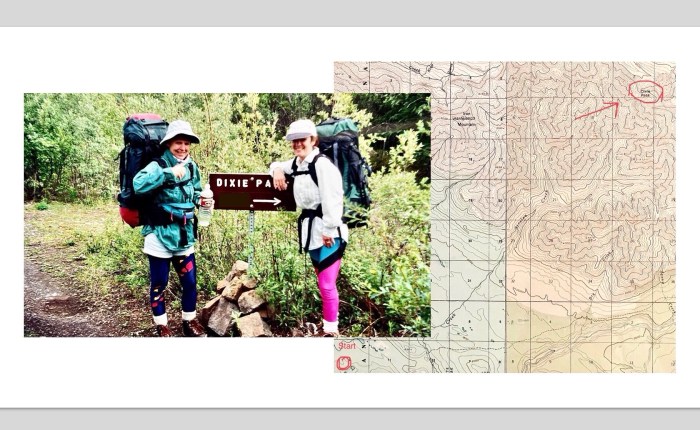
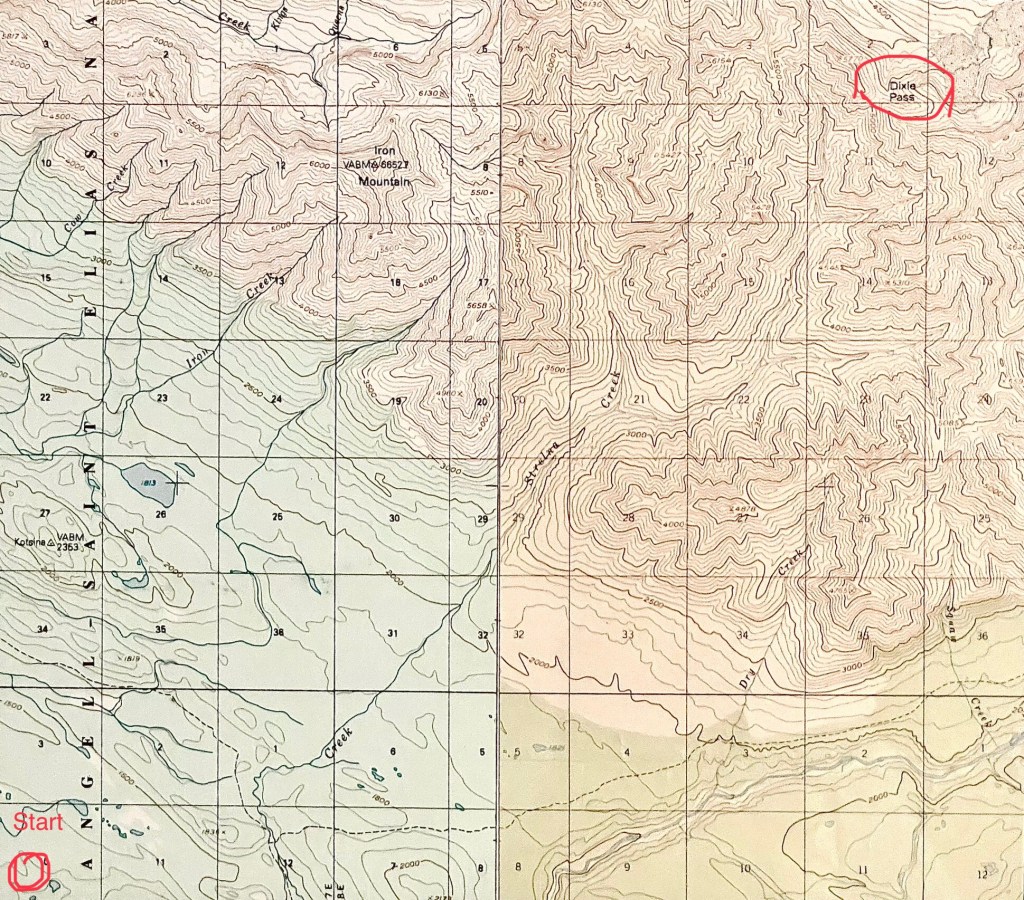
In the WSNP there were no trails, only suggested routes requiring map and compass skills. We eventually settled on a hike to Dixie Pass – a four-day, 28-mile round trip hike with 5,400 feet of elevation gain. The country was remote and about half the hike was above the tree line. It was also mosquito infested until you were above the tree line. Guidebooks suggested checking in and out with the Ranger Station at the entrance of the park for safety reasons.
After Bonnie and Don’s wedding in June of ‘96, the four of us flew to Anchorage. We spent a few days seeing some sites and getting acclimated to the near continuous sunlight. Eventually we made our way to WSNP and checked in at the Ranger Station.
We signed in and spoke with one of the two rangers working that day and told him of our planned hike to Dixie Pass. He gave us a few safety tips and talked about the fact there were both black bears and brown bears (also known as grizzly bears) in the park. While black bears are usually more timid and less confrontational, the grizzly bear was totally different. They could attack even when unprovoked.
The ranger pointedly looked at us and then asked, “Have you bought any jingle-bells for attaching to your pack to make noise, so the bear know you are coming?” I answered, “No, we planned to attach our drinking cups to the outside of our packs so they would make noise.”
“Ahhhhhh. Did you bring any pepper spray with you?” – “Ummm, no. Should we have?”
“Hmmmmmmm. Do you know the difference between black bear skat (poo) and grizzly bear skat?” – “No, we don’t. Could you fill us in?”
He kind of smiled, and then said, “Sure. Black bear scat is sort of brownish and fibrous. You’ll often see berries in it as well. And grizzly bear scat? Well, it’s similar to black bear scat, but it also has jingle bells in it and smells like pepper!”
A half second passed and then all of us, including the ranger, burst out laughing. He’d reeled me in like a bluegill in a pond.
After the laughter ended, he did share that in WSNP, unlike Denali, there generally were no bear problems. There were so few people in the park that when the bear smelled or saw humans, they generally turned around or went in a different direction. They didn’t really know what we were and would probably avoid us. If we did come across a bear, stay still or slowly back away, don’t run, and things would probably turn out fine.
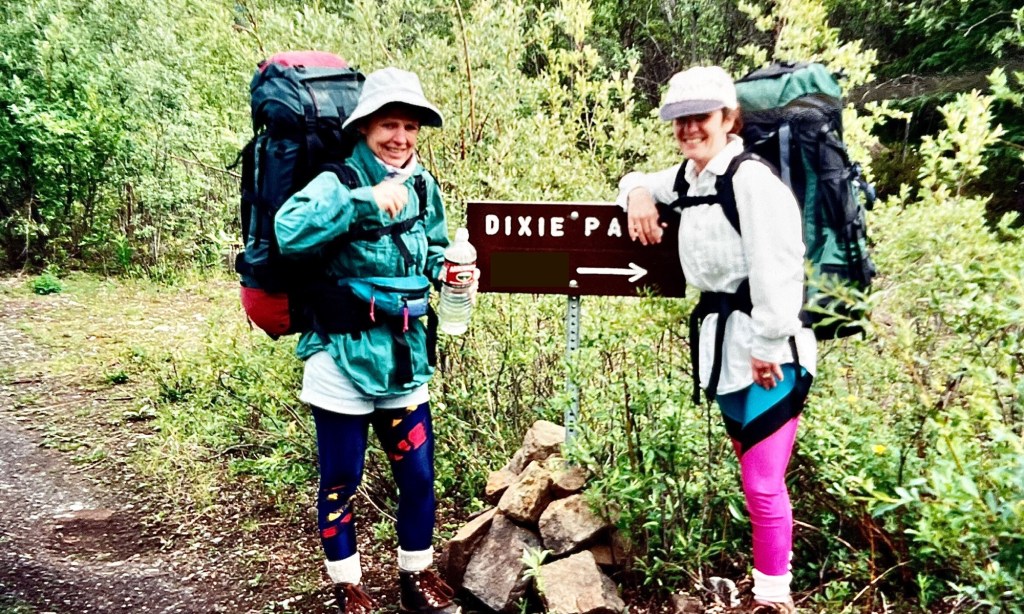
We thanked him for his help and then drove down the gravel road awhile before turning onto a dirt trail for a bit. Eventually, we arrived at a small, cleared area. We saw a small sign pointing towards Dixie Pass. There were no other cars.
The hike itself was wonderful and everything we hoped for – beauty, silence, wilderness – Mother Nature at her best.
We definitely needed a map and compass to guide us, so both Boy Scout and Army skills came in handy. Mountains, valleys, creeks, draws, outcroppings … they all became important in identifying our route.
The mosquitos were horrible until we climbed above the tree line. A half mile into the hike, we needed our head nets and sprayed ourselves with 90% Deet. We used so much Deet, Cath’s running tights basically disintegrated when we returned home and she washed them.

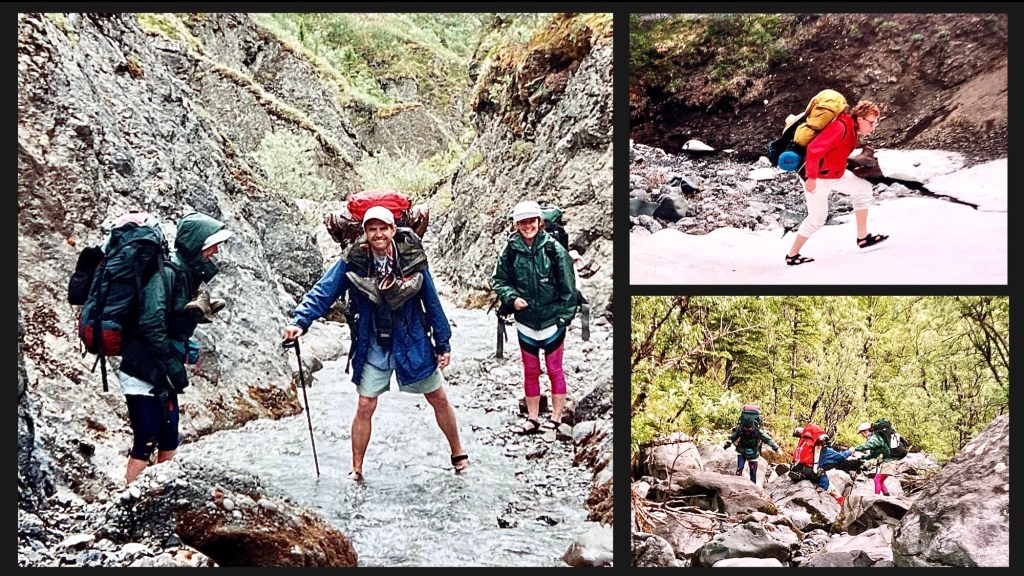
The route challenged us. There were multiple creek crossings, some two feet deep, and places where we hiked over snowpack. We switched to Tevas or sandles several times each day to keep our boots dry. There was also plenty of rock hopping where you were using both legs and arms to scramble over the boulders. While not really dangerous, the trail wasn’t for the faint of heart.
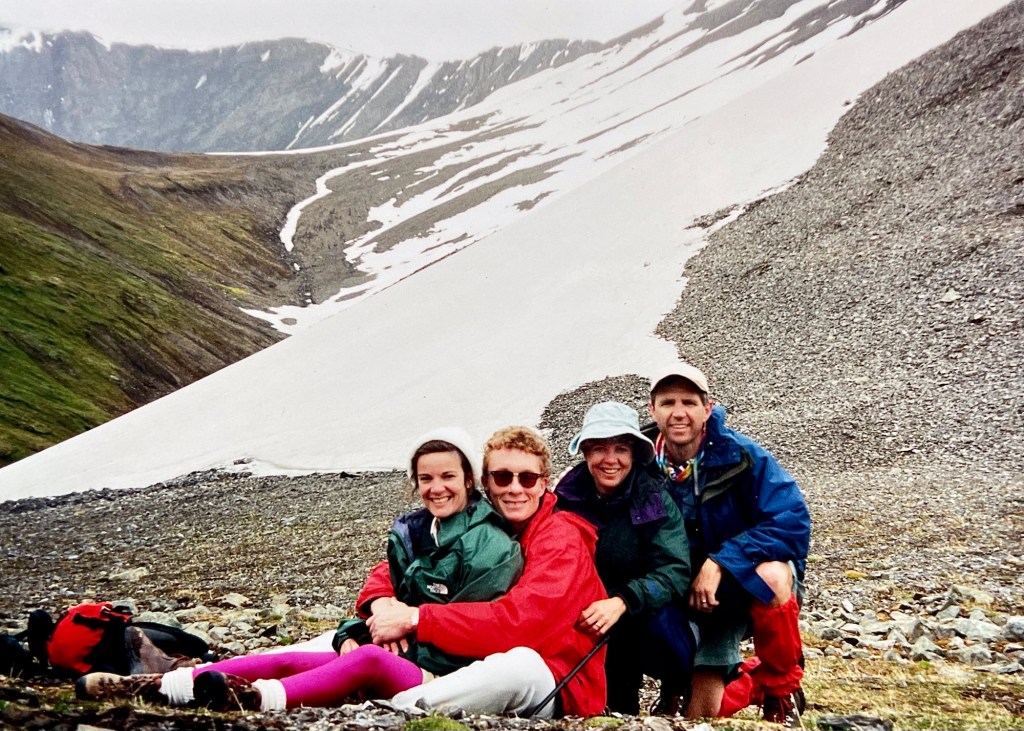
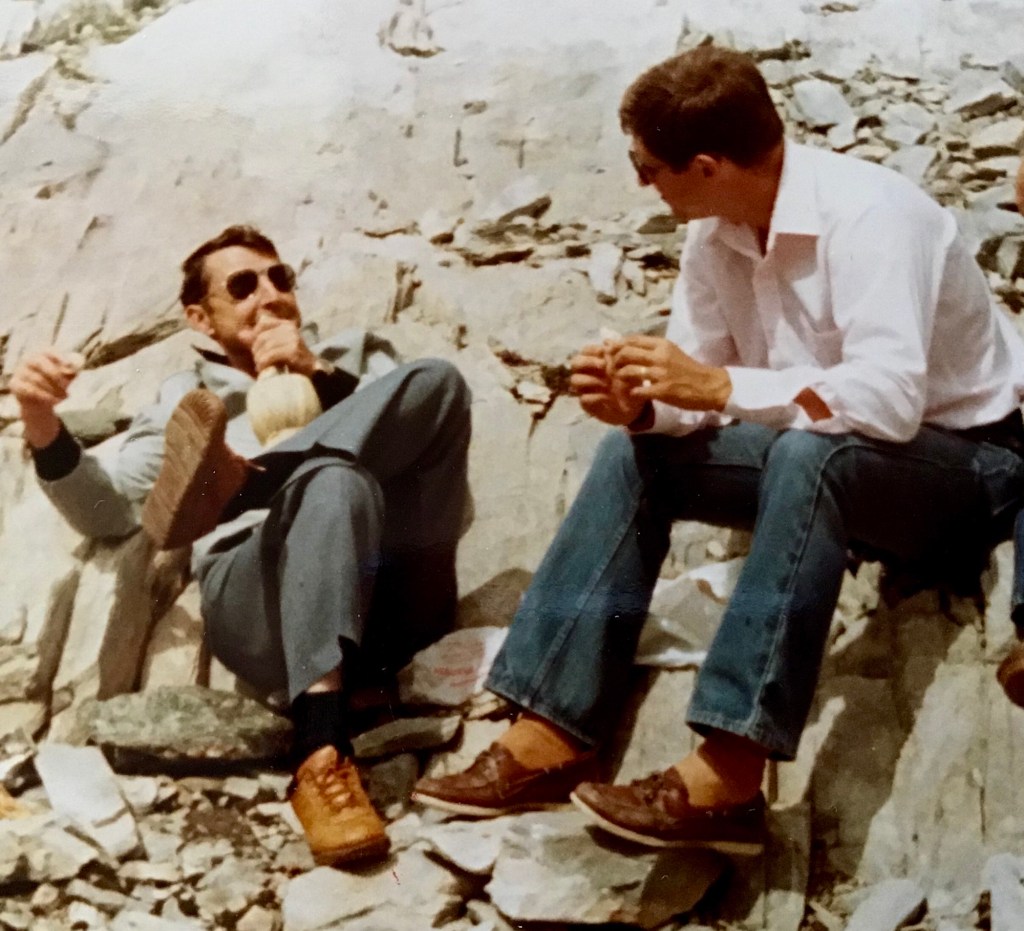
We finally arrived at Dixie Pass where there were gorgeous views in all directions. We lounged around, ate lunch and took some photos. Although it was June 30th, we were snowed on while hiking back down from the pass.
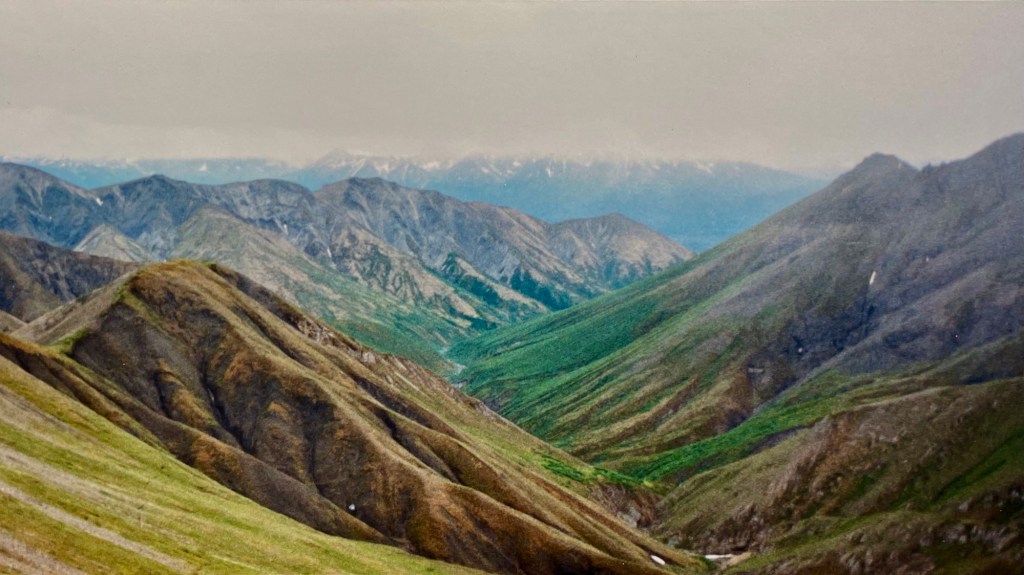
On the 3rd morning around breakfast time, we did have a distant encounter with a brown bear, but the ranger was right. When the grizzly smelled us, he turned in another direction and gave us a wide berth. We were probably 75 yards or so away and watched him from a hillside. Still, I have to say it elevated my pulse.
Eventually, we finished the hike and our grand adventure ended. It was both a beautiful and challenging hike – one of those life events you never forget. For me, the story is never complete without also talking about the ranger, the jingle bells and the pepper spray. I laugh to this day when I tell the tale, and it always gets a chuckle.












 Live Life Exuberantly