Mom, Dad, and a Date on the Old Railroad Bridge

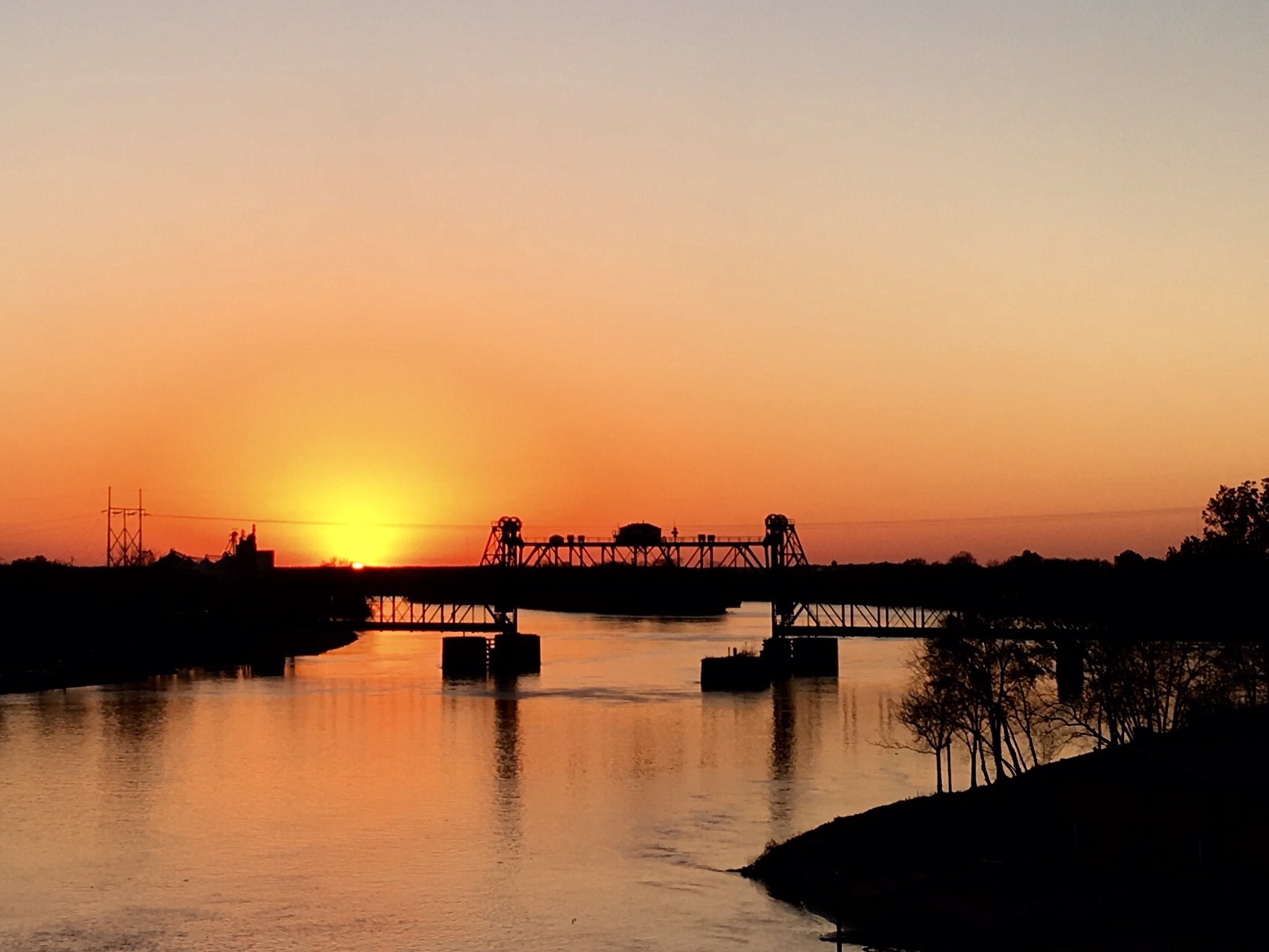
Sunset over the railroad bridge…..
On a recent trip home to Ottawa, I took a couple of sunset pictures of the old railroad bridge over the Illinois River. After walking home, I showed them to mom.   

She said “Oh, those are nice! Did I ever tell you about the time dad and I had a date on the top of the railroad bridge?”  

I answered “No mom, you didn’t. But I’d sure like to hear about it.”

It was the fall of 1949 and mom graduated from Ottawa High School the previous spring. She and dad started dating in the summer of ’47, and would marry in May of 1950.  

One day, dad told her they were “Going to do something special” for their date that night, and he would show her the best sunset in town.

Early evening came and dad picked mom up. He didn’t own a car yet, so they walked. They made their way from Chestnut Street across the west side of town, finally arriving at the north side of the railroad bridge. Mom said “What are we doing?” Dad answered “Going out on the bridge.”

Mom wasn’t thrilled about going on the bridge. There were gaps between the railroad ties and you could see the river below. Dad finally convinced her to walk on, and slowly they made their way to the center of the bridge. When they arrived at the center, a head popped out of the bridge tender’s hut. Mom thought “uh oh“. Then a voice called out “Hey Bill! Come on up”.

It turned out my dad knew the bridge tender, Wally Halm. They both played local baseball, and were in the VFW together. Mom and dad climbed the narrow stairs up into the hut and once there, they watched the sun set, which seemed extra pretty that night.  A few minutes later, Wally received a call from a barge on the river. He needed to raise the center section, so the barge could pass underneath. (Back then, there were several trains a day using the bridge, so it normally stayed in the down position. Today, there are only a couple of trains a day, and lots more barge traffic, so the center section stays up, and only lowers when a train comes).

They stayed in the hut while Wally raised the center section. The barge spotlight appeared and slowly it moved up the river towards them. Finally, the barge passed underneath, and he lowered the bridge. Mom and dad said their goodbyes to Wally and dad helped mom down the stairs to the tracks. Eventually, they made it back to shore.

A couple of weeks later, my Grandpa Grubaugh pulled mom aside. Grandpa was the Roundhouse foreman for the Burlington railroad, and generally knew all train related things going on in town. He asked “Were you out on the railroad bridge a couple of weeks ago!?” Mom ‘fessed up, and grandpa said “Don’t you ever do that again!” Mom said she wouldn’t, but never did find out how Grandpa knew.

Mom and dad never did go back on the railroad bridge, but 67 years later, she remembered both the date and the sunset like it was yesterday.  
Never Forget

Never Forget….

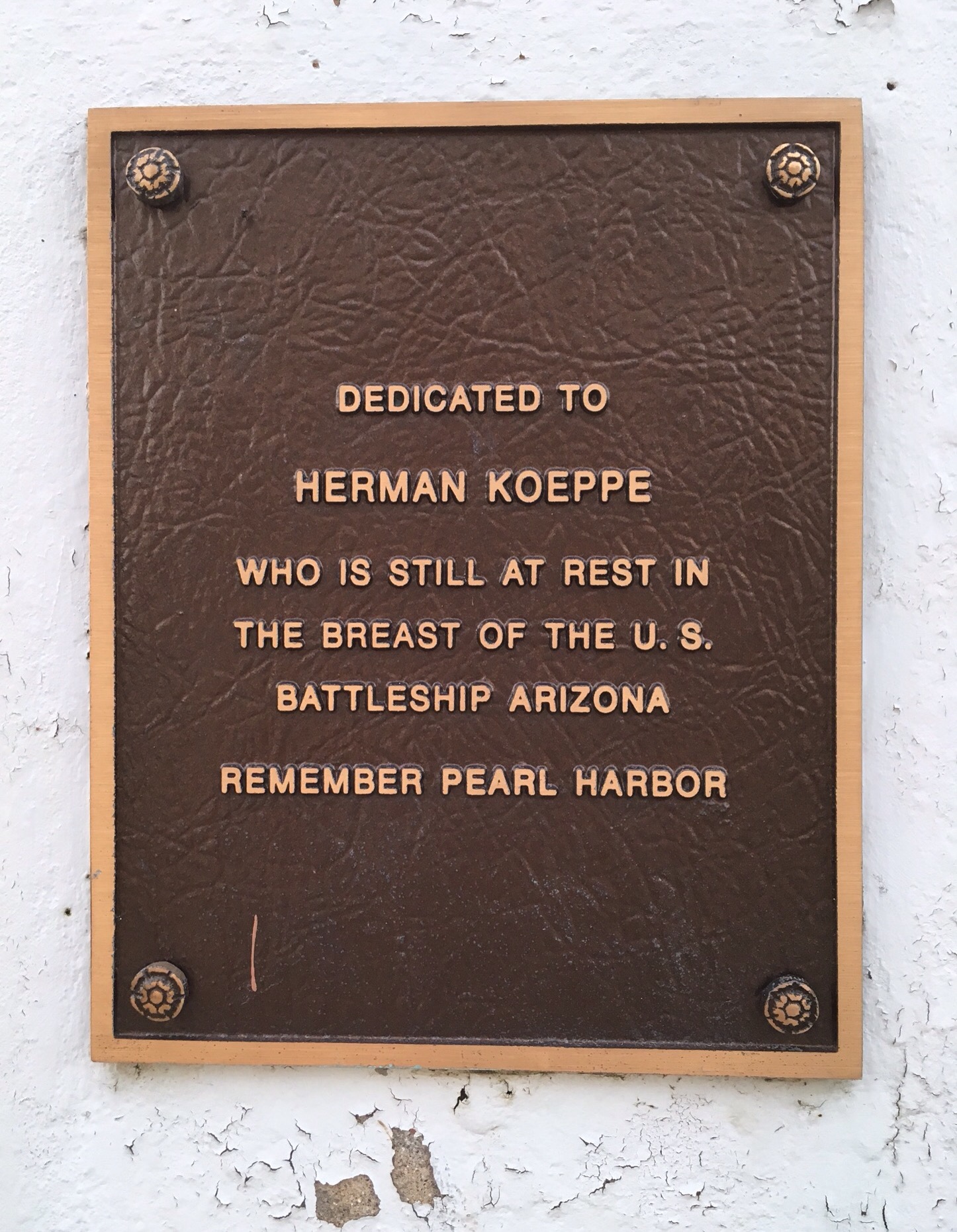
The plaque is only a small one, over in front of The South Ottawa Town Hall on 1st Avenue. The Hall is still used for occasional meetings, but 1st Avenue is pretty sleepy in that area, so I don’t know how many people actually ever see the plaque. But when I walk by, the words always compel me to stop. And think. And remember.


 “DEDICATED TO HERMAN KOEPPE. – WHO IS STILL AT REST IN THE BREAST OF THE U.S. BATTLESHIP ARIZONA – REMEMBER PEARL HARBOR”

Herman was 19 the day he died. A member of the Ottawa High School class of 1940, he also joined the Navy in 1940. The USS Arizona was his first, and only assignment. He was a ship’s cook and Petty Officer Third Class.

Was he serving breakfast that Sunday morning? Did he have the day off, and was he sleeping in? When the bombing runs started, did he move above deck to help defend the ship? We don’t know, and we never will. His life was cut short, along with 1,176 other crew members of the Arizona that day. Of the 2,403 that died from the Japanese attack on Pearl Harbor, almost half were on the Arizona.

The Arizona was hit 4 times that morning. When it sunk, only a few sailors were able to get off the ship. It went down with the crew, and everything on board. In fact, while the crew remains buried with the ship, fuel is still seeping out of the wreckage, 75 years later.

Interestingly, Ottawa, an Illinois town of 16,000 in 1941, had 3 people die at Pearl Harbor. In addition to Koeppe, Marine Cpl James McCarrens, 24 was also on the Arizona that day. And Seaman 1st Class Robert Halterman, 20, died when his ship, the USS Oklahoma was bombed. To recognize the three, the local Ottawa VFW Post was recently renamed to honor them – Halterman-McCarrens-Koeppe VFW Post 2470.

This year is the 75th anniversary of the 7 December, 1941 attack on Pearl Harbor, a day that has lived in infamy. I hope we take time to remember not only the historical event, but also the individual lives that ended that day. Herman Koeppe and the other 2,402 sailors, soldiers, marines and civilians that didn’t live to see the rest of their lives.  

Pearl Harbor. Never Forget.  

Old Roy

Old Roy….
My Grandpa Hall, by today’s standards, was an alcoholic. Grandpa was known as ‘Old Roy’, and he loved his Irish whiskey. While he had a ‘colorful’ life, he and Grandma had a rough life, and I’m sure the drinking didn’t help. Old Roy’s ingenuity, when it came to getting whiskey, brought both chuckles and tears to the family over the years. We often tell the happy stories about our family histories, but this isn’t one of those stories. It is however, a true story.

Grandpa was born in 1887, and wandered around more than a bit in his young life. We were always told that he was in the Army during the Spanish American war, but that took place in 1898. He actually was in the army, but not until around 1904, and was stationed in California. After his tour of duty, he returned to Illinois, and married my Grandmother in 1909. You would think he settled down then, but what he actually settled down to was drinking

Grandma didn’t like it when Old Roy drank, as it always caused some kind of problem. So, he became sly about it. In the 30s, he worked as a logger for the coal mines in Southern Illinois. They cut down the large trees used to stabilize the walls and roofs of the mines. Roy would give my cousin Pooch (his grandson) a couple of dollars, and tell him he could keep the change if he would buy some whiskey and get it to him by 10AM. Pooch of course, had to keep it secret. So Pooch would go buy the pint and ride his bike into the woods to make the delivery. Grandma couldn’t quite figure out how grandpa went to work sober and came home tipsy. I’ve always thought in retrospect, how is it no one was killed while cutting down the trees?

In the 40s, they moved to Ottawa (my hometown). Everyone said Old Roy was very talented, great at working with his hands, and could do anything. Instead, he worked odd jobs, did day labor during and after the war, and for awhile, was the janitor at the Roxy Theater. On paydays he would often disappear for a day or two, and go off on a bender. When he returned home, sometimes there was payday money still left, but as often as not, it was gone. Grandma washed and mended clothes on the side to make a little additional cash.

After World War II ended, my dad got back to Ottawa, and one day saw that Grandma had a black eye. She tried to lie about it, but dad knew what happened. He found Old Roy and decked him with one punch. He told him if he ever touched his mother again, he’d get hit worse. Grandpa never did hit grandma again after that.   

In the late 40s he developed TB, and was confined to a sanitarium to “get well”. Aunts and uncles would visit, and the kids would have to stay in another room and look through a big window at him. Grandpa would always wave and yell greetings to the kids. Later, Old Roy broke out of the sanitarium and the police found him in an apartment with a “lady friend”, drunker than hell. The police took him back to the sanitarium, with him cussing the whole way.

When he was old enough to get Social Security, he collected his first check and promptly moved out on Grandma Hall. He was going to live the high life downtown. About a week later, he moved back home, the money all spent.

His health continued to get worse, and at some point he was confined to the hospital. His children were called, and told he didn’t have much time left. My dad and two of my uncles (George and Mick) went to see him. They were talking among themselves, and grandpa told my uncle Mick he had something to tell him, could he lean closer? Uncle Mick leaned in, and Old Roy asked him to bring some Irish whiskey. Uncle Mick popped up and told his brothers “let’s go. If he wants whiskey, he’s not dying right now”. They left, and sure enough, grandpa was later discharged from the hospital.

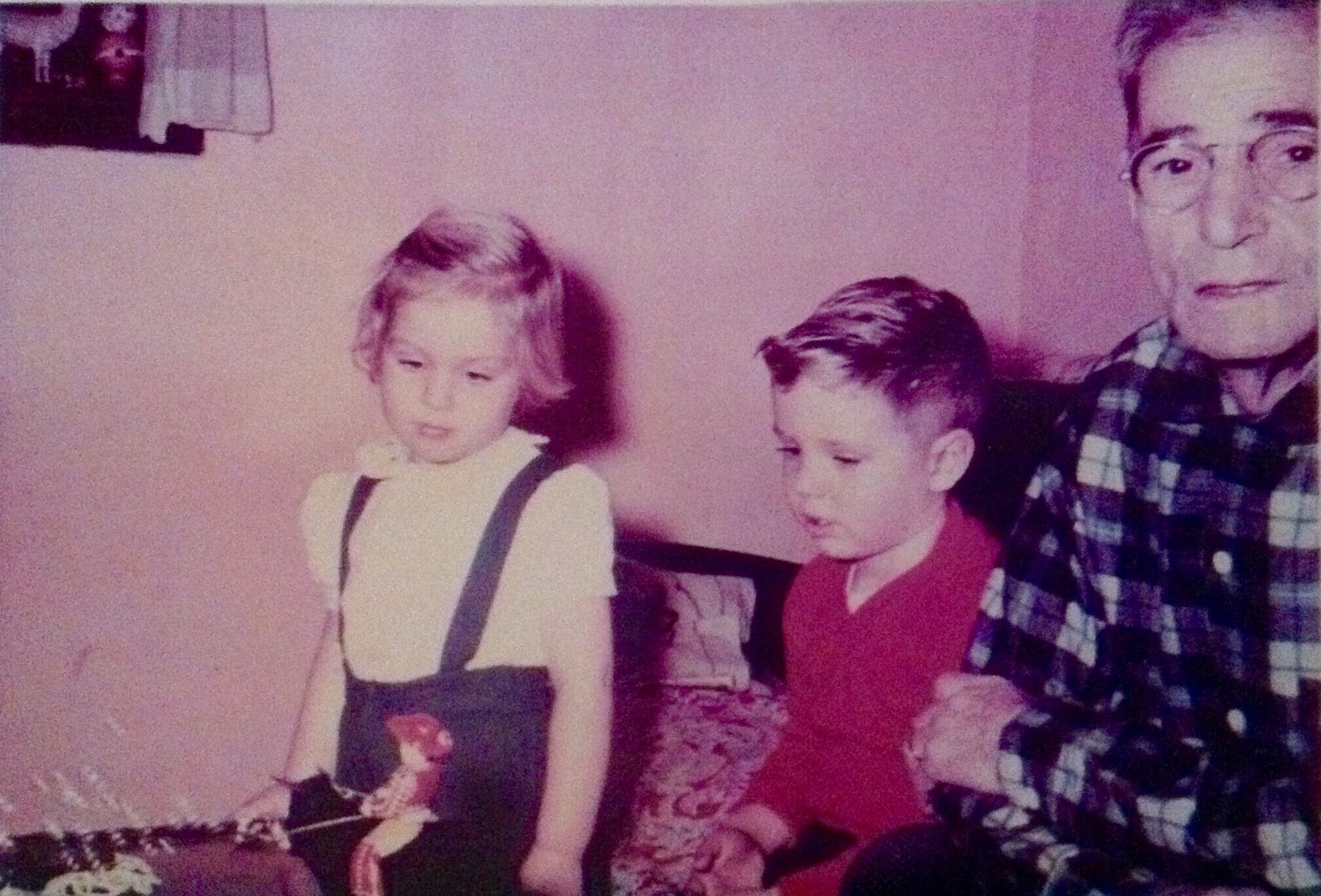
My sister, Roberta and I with Old Roy in 1959, two years before his death.
Eventually, my Uncle Dave turned his garage into a little apartment, and Grandma and Grandpa moved in there. The one condition was that Grandpa had to give up drinking. He agreed to, and mostly did. His health was quite poor at that point, and he didn’t have many years left. He died in 1961, at the age of 73.  

My Grandma Hall was a saint. She didn’t drink and was something of a religious woman. One of the things people always said was that “they didn’t know how she put up with Old Roy”. It was a different time then and people did what they had to, to get by. They were married 51 years when he passed away. I have to believe that there were definitely lots of good times in those 51 years, and listening to the stories from dad and my uncles, I know there were. But there had to be a lot of hell as well. 

***********

I’d like to thank my cousin Janice Connell who provided some of the stories for this blog.

Dad, Me, and the ’82 World Series

Dad, Me, and the ’82 World Series…….

The World Series for this year is over, and the Cubs have won. I’m thinking about my nieces and how they must feel as forever die-hard Cub fans. You remember this stuff over a lifetime, especially something like game 7 of this series. You think of fans/family/people in the past. And you remember things that were going on in your life at the time of the Series. I’m sure they will all be telling this story for years to come.

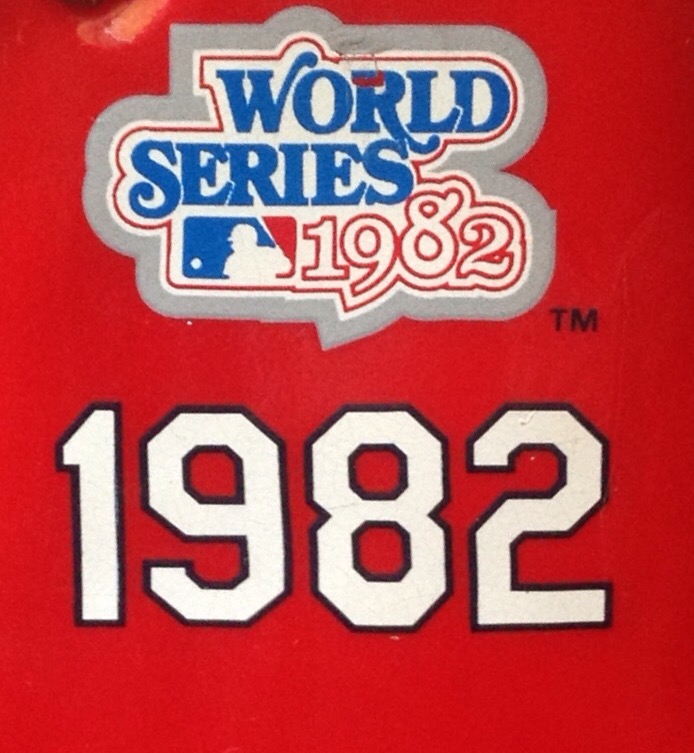
As a Cardinal fan, we’ve had many memorable series over the years – both wins and losses. I remember the win in 2006 and the great 2011 series. As a kid, ’64 and ’67 cemented me as a Cardinal fan for life. And I remember the losses as well – Lolich and the Tigers in ’68, and the “tarp incident” in ’85 among others. But the Series I remember the most, is probably the one I know the least about – 1982. This is a story about my Dad, me, and the ’82 World Series.

In 1982, I was a Captain in the Army, and stationed in Germany. I was a Company Commander in VII Corps. At the time the Cold War was very much alive, and having alerts and deploying to the West German/Czech border was a monthly occurrence. And this was also the post-Viet Nam Army, with prevalent drug and alcohol abuse problems. 

The Cardinals were in the Series with the Brewers. In Germany, we were six hours ahead of StL time, which meant a 7PM start was 1AM in Germany. You couldn’t get it on TV, and the morning paper, The Stars and Stripes, was a day behind. You would get the scores on Armed Forces Network (AFN) radio, but no details.

In any case, on October 20th, 1982, Cath and I went to bed. Around 4AM on Oct 21st, the phone range. Now in 1982, if you were a Company Commander in the Army in Germany, a 4AM call meant one of three things. Number 1, you were going on alert and maybe heading for the border; number 2, one of your troops had been arrested somewhere, and you had to go pick him up; or number 3, a family member in the United States had died, or had something serious happen.

I ran to the phone. 

     “Captain Hall, sir”…..

     “THEYWONTHEYWONTHECARDINALSWON!”

     “Hello? What? Say again?”

     “THEYWON!THECARDINALSWONTHEWORLDSERIES!” 

     “THE  CARDINALS  WON  THE  WORLD  SERIES!” …shouted Dad.

And that’s how I found out the Cards won the ’82 Series, 6-3 in game 7. We talked another 5 minutes or so, said our goodbyes and said we loved each other. I went back to bed for about an hour, before getting up to go in to work.

I’ve thought about that call over the years…. Baseball as something that binds us….The love between a father and a son….A memory I will never forget. 

With the Cubs win, I’ve been watching the posts on Facebook, and not surprisingly, many referred to a father, or mother, or brother, or friend who had passed away, and they were sure that special someone was celebrating in heaven. I know all the Cub fans will celebrate, remember and cherish the win this year, just as much as I’ve remembered that call in October, 1982.

The Nats

Coulda…

Shoulda…

Woulda…

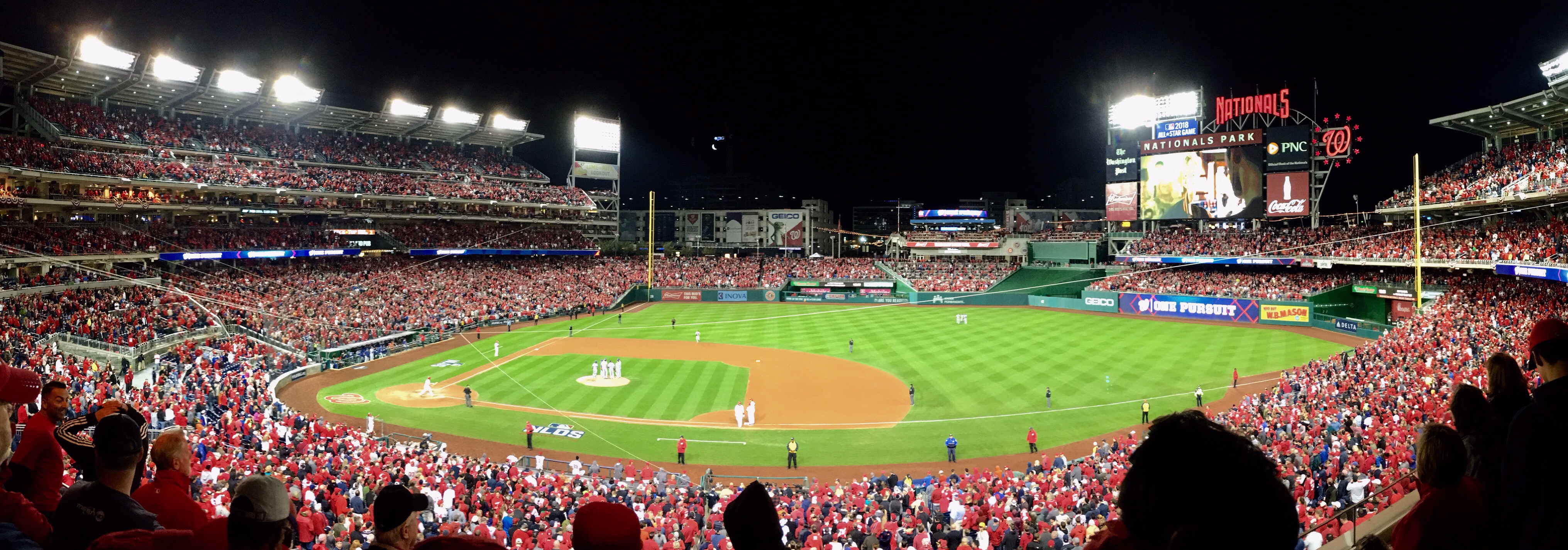
Yep.  They lost it in 5 games to the Dodgers.  They would have done better if Strasburg and Ramos hadn’t got hurt.  They should have had better base running than what Werth and Harper demonstrated.  They could have had a different outcome if they’d just scored one of the three times they had a man on third with only one out.  

But they didn’t.  Some people (not particularly smart people) around here are talking about a curse.  You want a curse?  Visit the Cubs or Red Sox – They know what a curse is.  This was no curse.  It was a game 5 loss to a team that played a little bit better and smarter than we did.  Both managers did a great job of making their decisions and rolling the dice.  When was the last time you saw a closer throw over 50 pitches?  But that’s what the Dodgers did with Jansen.  And it worked.  

12:35AM. One out, two on, and Kershaw comes in to face Murphy

Then Kershaw in the 9th? On one day’s rest? One out, two on, and Murphy coming to the plate. WOW! Talk about excitement. My heart was going like a trip wire…Right up until Murphy popped out. Difo striking out was almost anti-climactic….a boy facing a man.

We’ll be back next year, and I like where we are.  There are a few changes that need to be made, but I think Rizzo will get it done.

Oh, and for all of my Cub fan nieces and cousins back in Illinois- good luck against the Dodgers.  I think you will take them in 5 or 6.

The Caisson Platoon on a Rainy Day

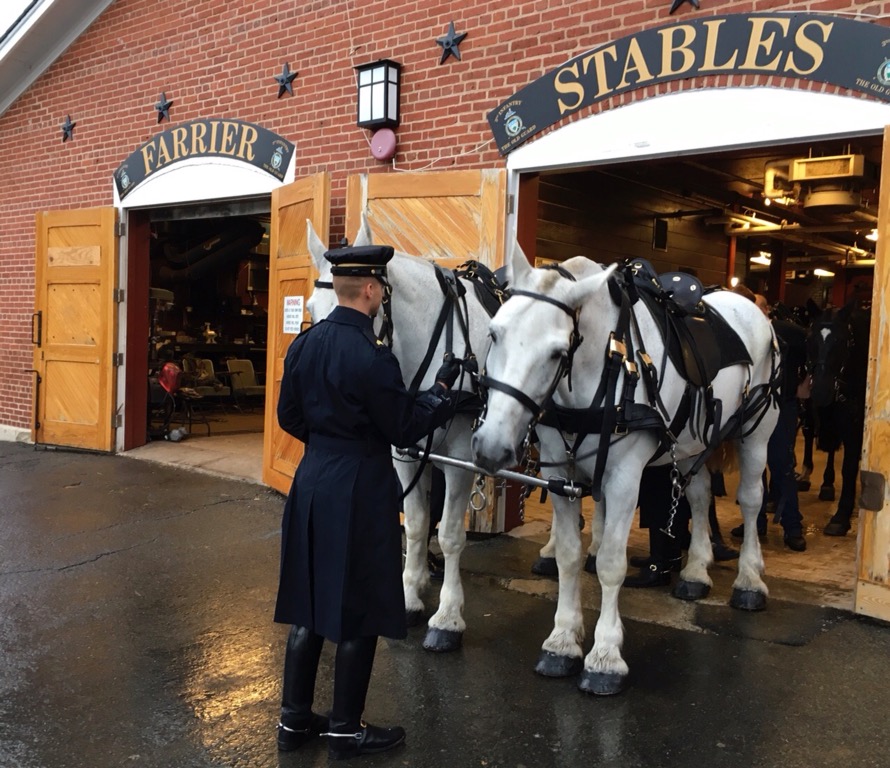
When I arrived at the stable at Fort Meyer on Thursday morning, it was dark and rainy. The ceremony wasn’t until 7:15AM, but it takes a while to get on an Army post these days, so I arrived early. Phil Godfrey, who I had gone to high school with, and several other members of the Old Guard Association had just arrived as well. Most had served in the Caisson section of the Old Guard back in the mid-70s, and were going to make a special presentation that morning to the current members of the Caisson Platoon. In a side note, one of the Association members present was Andy Carlson, who led the riderless horse  (It is called the caparisoned horse) at JFK’s funeral in 1963.

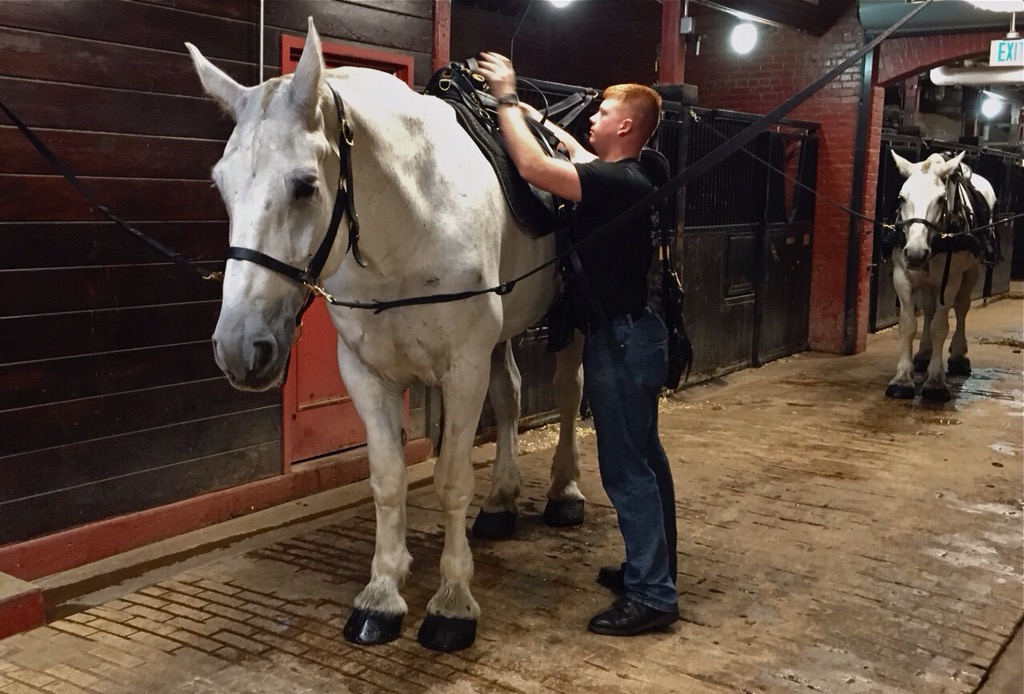
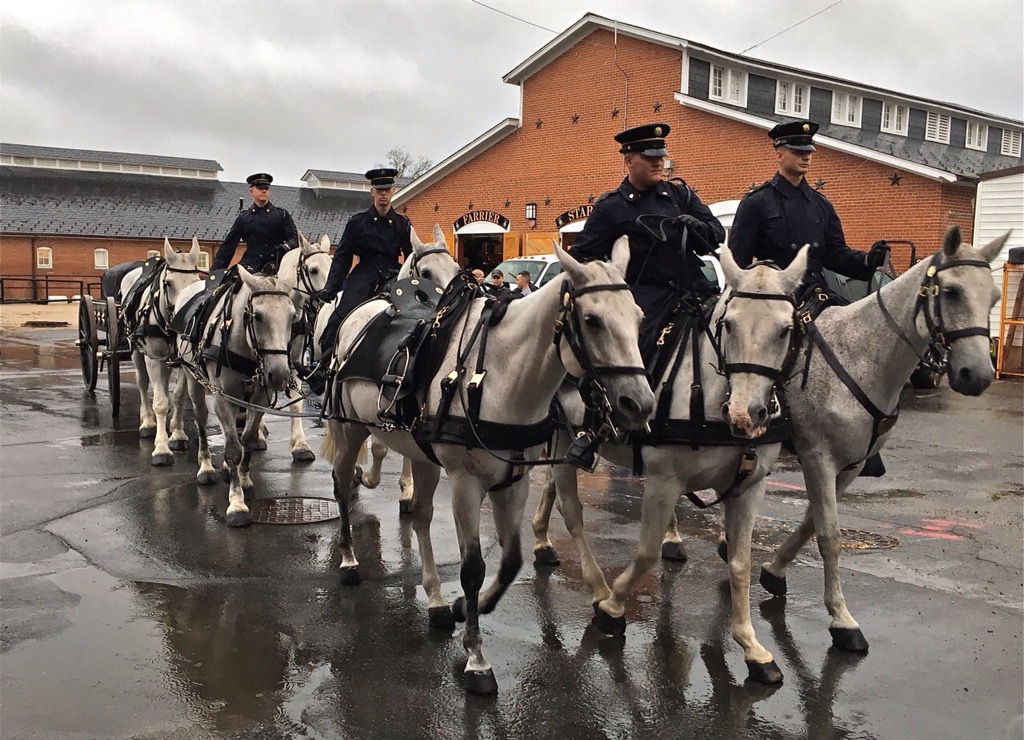
The Caisson Platoon is made up of the soldiers and horses who provide the escort for soldiers and veterans as they go to their final resting place at Arlington Cemetery. On this day, like most days, they have been up since 4:00AM, getting their horses and equipment ready for their detail that day. There are two teams, and each team provides a final escort for up to four different funerals on any given day. This day would be no different, and both soldiers and horses were all business. The horses had been fed and groomed well before we arrived. They were now being bridled and saddled.

Before the 7:15 ceremony, we had the chance to talk to some of the platoon, while trying to stay out of their way. For many of the younger soldiers, this is their first assignment in the Army. For the Noncoms, most have 7-12 years in the army and It was interesting to hear their histories. If they were in 7-8 years, that usually meant 3 tours overseas in either Afghanistan, or Iraq. If they had served 9-10 years in the Army, most had at least 4 tours between Iraq and Afghanistan. This assignment at Ft Meyer was their “down” or more relaxing tour.

While most of the funerals they work are for WWII and Korean veterans, there are an increasing number from the Viet Nam era, and of course, some from our current conflicts in Iraq and Afghanistan, the wars where the NCOs from the Caisson Platoon have served as well.

The ceremony took place, and a presentation was made of the new belt buckles the Association had commissioned. Phil spoke, as did the battalion commander, the Colonel, and the Sargent Major. The buckles are nice, and they recognize the history of the unit. They will become a permanent part of their uniform. I think they were appreciated.

After the ceremony, the soldiers went back to work and finished harnessing up the horses. They then led them to the two waiting caissons, and after a brief inspection, they were moving off to the first of the 8 funerals they would escort that day.  They do this all year long – rain, sleet, snow, high heat and humidity….  They are there, doing their jobs and honoring the fallen. 

I felt honored to be at the ceremony, and have nothing but the deepest respect for these soldiers. I almost felt embarrassed at the workload they are putting in, not only to guarantee the safety of this great country of ours, but also to help us honor our fallen soldiers and veterans. I know we talk about the World War II generation being “The Greatest Generation”, but these soldiers of today are second to none. We should count ourselves lucky that they are willing to sacrifice so much for us.

God bless them, and this great country of ours.

Diversity….Really?

Diversity in 2016
Bigotry is a horrible thing. Black, white. Mexican. Gay, Straight. Misogyny. Muslim, Christian.  Good Cops, Bad Cops. ‘Foreigners’. I don’t understand it. Where does this hatred come from? Why do we have this inability to embrace people and the diversity of our great country?

people being people

I guess you learn about diversity the same way some people learn to hate. From your parents, your coaches, your friends, your coworkers….I’m not sure I understand the world now, and the hatred that seems to have grown all around us. I think back through my life, the lessons I’ve learned, and the experiences I’ve had, and I am thankful for them . While institutional activities have grown (and continue to grow) to support diversity over the years, it’s the small, personal encounters that I recall and that make a difference.

I remember as a grade school kid, there was a young African American couple that moved in across the street. It caused a bit of consternation at the time, because the “black neighborhood” was down off of Third Avenue. What did Dad do? I remember to this day. The guy was out watering his lawn, and Dad crossed the street, went over and shook his hand, and welcomed him to the neighborhood. If he needed anything, don’t hesitate to ask…

A few years later, my cousin married a “Mexican Girl”. The wedding? One of the most fun I’ve ever been to, and, I think it was the best food I had at any wedding I’ve attended. By the way, they’re still married, 40-some years later

At my own wedding, one of our groomsmen happened to be African American. I didn’t think anything about it, as Chuck was a good friend and classmate from West Point. 30 some years later, I was talking with some friends back home and one of them said “ya know, that was pretty brave of you Back then.” And I said, “what was pretty brave?” And he answered back “you know…having a black guy in your wedding.” …really?

Half way through my time at West Point, the decision was made to admit women. Before the decision, there was much angst and fighting about the issue. After the decision was made, the Superintendent made a presentation to the entire Corps of Cadets. He said, “If there are female soldiers, and female officers, why wouldn’t we want women to attend West Point, one of the premier leadership schools in the world?” And all of a sudden the issue disappeared, or at least it did for me.

Over time, other happenings….

Several years ago, we were with a friend who was trying hard to tell us something, he was tearful while doing so. Finally it comes out “I’m gay” he says. And we say “so? We love you no matter who you are”. And then he was crying tears of happiness, because he wasn’t sure how we would react.

Or the coworker and office mate I had while working on the Pentagon Renovation, who is one of the smartest engineers I’ve ever known. Sajeel was the lead engineer for all of the new Information Technology (IT) in the Pentagon. He also happened to be Muslim. Guess who led all of the IT reconstruction efforts at the Pentagon after the events of 9/11?

Or a former boss who is Vietnamese, and was stranded in this country when South Viet Nam fell. After stints teaching at UCal and Georgetown, he started an IT company and has grown it to over $200M in annual revenue through hard work and persistence.

Or your sister-in-law and brother-in-law adopt a little girl from Guatemala.   And the love in that family is totally color blind.

Or the lesbian friend and coworker who is the best operations person I’ve ever seen. After she and her wife were married, they had a little boy. If you see the three of them together, I defy you to find a better family, or see more loving parents.

These are just a few of the countless examples throughout my life. Look around people – I’m sure you have many of the same in your own life, if you just take the time to look. I’m not trying to be Pollyanna – I know that bad things happen as well. But I have to believe that the good in people out-weighs the bad.

Hatred and bigotry? They have no place in my life. Life is too precious, and too short to waste time on them. I’ve always thought our diversity is what makes us such a great country. Each of us needs to do what we can to end bigotry and I’m convinced it can only happen at a personal level.

Make A Difference. You can. Embrace diversity and take a stand against bigotry today, and everyday.  Diversity…Really.

Who Decides?

    Who gets to decide, 

    Which is a flower? 

     And what is a weed?

     I see bush and vine In my neighbor’s yard.

    Both look pretty to me.

The photo shows a knockout rose bush, and (probably) an Autumn Clematis. It’s in our neighbor Bill’s yard (he hasn’t had much time to pay attention to his plants lately).

I know that if left unattended, the vine will eventually encompass the bush. And maybe that makes the difference.

Maybe one is native and one is not, but I’m not sure.

I just asked my wife Cathy, she of the green thumb, the answer, and she laughed, and then said “a weed is something unwanted, and unplanned in a garden. It robs the wanted plant of sunlight, nutrients and water. Some people think of the dandelion as a plant, but I don’t”

According to the Chicago Tribune, “In broad terms, a weed can be characterized as any specimen that a gardener feels is an unwelcome and annoying plant”…..hmmm, that’s a little harsh.

Maybe there’s no totally common definition of what makes a weed, but in nosing around on the Internet, I likes Ralph Waldo Emerson’s definition:

        “What is a weed?  A plant whose virtues have not yet been discovered.”

Dad and Pooch

Dad and Pooch…..

Recently, a second cousin of mine reached out and shared a couple of stories about her dad (my cousin Pooch) and my dad. This is one of those stories.

It was Late May, 1944, and World War II had been going on for awhile. Dad, who had joined the Army in 1940, was home on furlough from the Army. He was severely wounded in Sicily in August of ’43, and after recovering in North Africa, this was his first trip home. His body was scarred, and his recovery still wasn’t 100%. In fact, he hadn’t been cleared to go back to combat duty.

Dad was staying at his folks home, and it was a pretty big deal and everyone wanted to see him. My Aunt Ellen (also known as ‘The Head Pecker’, but that’s another story) came by bus from Southern Illinois to stay, and brought along her son Pooch, who was 10 years old.

At the time, dad was 19 years old, so while older than Pooch, they weren’t that far apart, and during the day, they would hang out some together. As a matter of fact, dad started taking Pooch with him when he walked to a local swimming hole, known as Blackhawk Beach, a few miles away. Everyday they would walk there, swim for several hours, and then walk home. 

Blackhawk Beach, Back in the Day….

 My Aunt Ellen couldn’t understand why a “grown man” would want to spend so much time with his nephew.   One day she asked why he took Pooch with him everyday, and if Pooch was bothering him. If he was, she would stop it. Dad smiled. He said “No, he’s not bothering me. Actually, I’m using him for bait”. Aunt Ellen looked at him quizzically, and Dad started to laugh, and then explained. “Pooch is so cute, I’m using him to attract the pretty girls at the beach”.

The trips to the beach continued, until one day in June. Pooch was ready to go to the beach, and found dad pacing back and forth in front of the radio. It was June 6th, 1944 and the D-Day invasion had started. Reports were coming in, and dad was talking to himself. He was trying to figure out the status of his old unit, and was concerned about the guys he knew. He also didn’t know that his brother, my Uncle Mick, would be landing with the Navy at one of the Normandy beaches on June 7th, delivering supplies.  

They didn’t walk to the beach together that day, or ever again.

Dad ended his furlough the next day and had to walk to the bus station to head back to Fort Bragg, North Carolina. Everyone wanted to go to the terminal with him to say goodbye, as they didn’t know when or if they would see him again. Dad wouldn’t allow it. He didn’t want a big scene at the terminal, and so told his mother and his sisters that they all had to stay home. But not Pooch. Pooch walked with Dad to the terminal. At the station, they said their goodbyes. Dad got on the bus and made his way to Fort Bragg. Pooch, a little man at 10 years old, cried all the way home, because he knew there was a chance his Uncle Bill wouldn’t be coming back.

 When I think back to that June of ’44, I see a relationship between an uncle and a nephew that came to be that of two brothers. They stayed close over the years, even though they were often miles apart. When dad died six years ago, Pooch traveled from Arizona to pay his respects. To quote my cousin Jan “Uncle Bill went out of his way to take care of my dad when he was a young boy. He was one of his heroes”.

Pooch attending Dad’s funeral in 2010

An Experiment in Coexistence

The Decision – an Experiment in Coexistence….

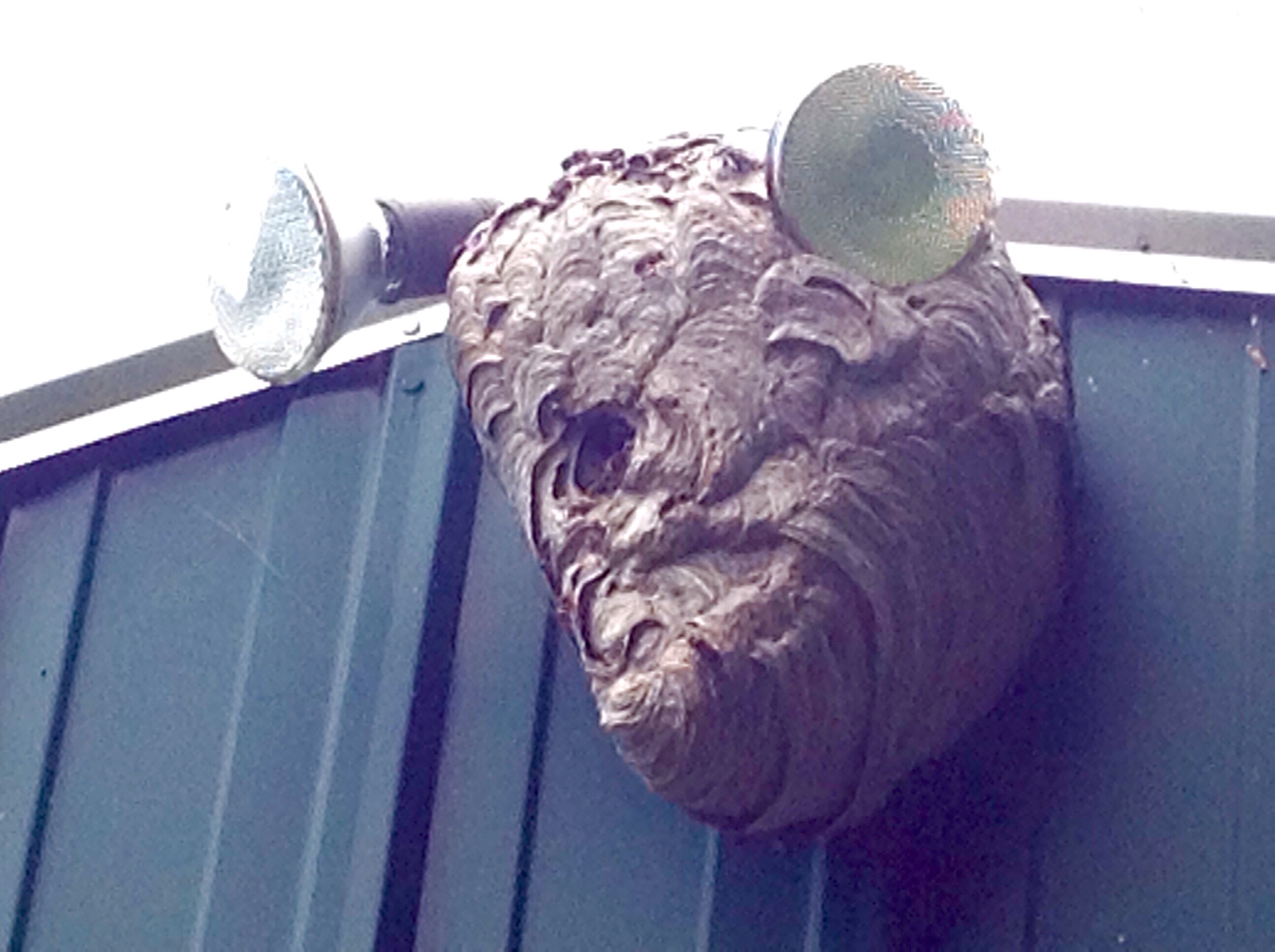
Carmen actually saw them first. Cathy was at the barn cleaning stalls and Carmen was barking like crazy. And kept barking like crazy. That’s usually the sign of a snake, or some other animal that she has cornered or is unsure about. So Cath went outside the barn to see what was causing the commotion. But Carmen wasn’t looking down at the ground, she was looking up. Cathy followed Carmen’s gaze upward, and then she saw it. The wasp nest was at the top of the barn, about 16 feet off the ground, and anchored between two barn lights. Maybe a foot wide, by a foot deep, by a foot and a half high. And while maybe not a freeway, there was county road of wasps flying in and out of the hive.

Our new neighbors seem to keep to themselves.

Cath told me about it that night and I took a look. At home, we have about a half can of sure-shot 20 foot hornet spray, which is not enough in my opinion. So I took a couple of pictures, and figured I’d go to the store the next day, get a couple more cans, and do the job the next night.

Of course, me being me, I posted one of the photos on Facebook, and the comments came pouring in. “Yikes!” was probably the most popular comment. After that, there many helpful comments about how to destroy the nest – Call the pros…. Hit it with a stick and then run….Multiple suggestions on spraying, and doing it at night, when all the wasps were in the nest….And there were a surprisingly large number of people suggesting fire as the solution: use a flamethrower; squirt lighter fluid on it and strike a match; tie a rag to a stick, soak it in gasoline, and use it to torch the hive; use a drone with a mini flamethrower on it (do those exist?!?!)…. Now, I’m not against fire in general, but the nest IS attached to the barn, and I know how my luck would go on something like this.

And finally, there were a few folk (our sisters Roberta and Bonnie, an old Boy Scout friend, now photographer, Bryan, and our good friend Cory), who all said versions of “Is it bothering anyone? If not, just leave it there until the first hard frost, the wasps will die, and you can take it down then.” Bryan and Roberta even posted pictures of old wasp nests hanging in their houses. Cory, who is a crazy good artist, wants the nest so she can make paper out of it. WHAT?!? ARE YOU ALL CRAZY – DON’T DO ANYTHING?!?! And then I thought “hmmmmm” and went on line to do some research.

It turns out that wasps generally don’t bother people, unless their hive is being threatened. And they do some good things. They actually kill and eat many common garden pests, including predatory insects, caterpillars, tomato worms and flies. They are decent pollinators. Not as good as bees (something about leg size), but pretty good. AND, it turns out they carry and store yeasts. Yep, it turns out they can have a positive impact on bread, wine, and beer.

So, the whole yeast thing finally put me over the top and helped me make my decision. We are going to try an experiment in coexistence. If the wasps can leave us and the horses alone, I’m ok with them hanging out, helping us reduce pests in the garden, and doing their yeast thing. Their flight path needs to stay up there, and maybe we can make this whole thing work.

And Cory – you can have the nest sometime in October or November…