Rain and a Blessing in The Kalahari Desert

Rain and a Blessing in The Kalahari Desert

We were in the middle of the Kalahari Desert, on the edge of the Ntwetwe Salt Pan when it started to rain. I’d just started my second Gin and Tonic. Dinner was still a bit away, and we made a dash for shelter in the Land Cruiser…

We’d arrived at our Safari Camp, Leroo La Tau (The Lion’s Paw) the day before after a 1 1/2 hour flight on a six seater plane out of Kasane. Our camp was in a remote location along the Boteti River in the Makgadikgadi Game Reserve.

Cathy and the Plane that Flew us to the Makgadikgadi Game Reserve

One of the reasons we were excited about Leroo was that we were to spend one of our nights under the stars at the the Ntwetwe Salt Pan. We would be as remote as possible in the Kalahari Desert, with no ambient light, or connection to other humans. Literally, it would be just us, the desert and the sky – vastness and emptiness, intertwined.

By luck, or by happenstance, we arrived at Leroo on September 30th. Our hosts were celebrating the 55th anniversary of Botswana’s Independence from the British on September 30, 1966. After dinner, they served us a cake decorated in the colors of Botswana’s flag, and explained the meaning of each of the colors*. As we were eating our cake, it started to rain – not for long, perhaps only 20 minutes. We learned it rained on September 30th, 1966 as well, and as Botswana is such a dry country, rain is considered a blessing and a sign of good luck, particularly on Independence Day. We weren’t yet aware how that rain was going to impact our trip.

The next day, as we were getting ready to leave on our five hour drive for the Pan, we learned there was some concern on the part of our guide, Isaac, and the staff. It turned out not only had it rained at Leroo the night before, it probably also rained at Ntwetwe. The condition of the Pan was unknown, and we might not be able to drive on it, or even approach it without our vehicle sinking into the mud. We would not know until we arrived.

A decision was made to give it a shot and we piled into our Land Cruiser. In addition to Cathy and I, and our friends Bill and Sharon, there was a crew of three. Our guide was Isaac, who had led previous trips to the Pan (we were only the seventh group to actually do this). He was accompanied by Dabe, a Bushman (The San People) who was very familiar with the desert environment, and Kago, a manager from the camp.
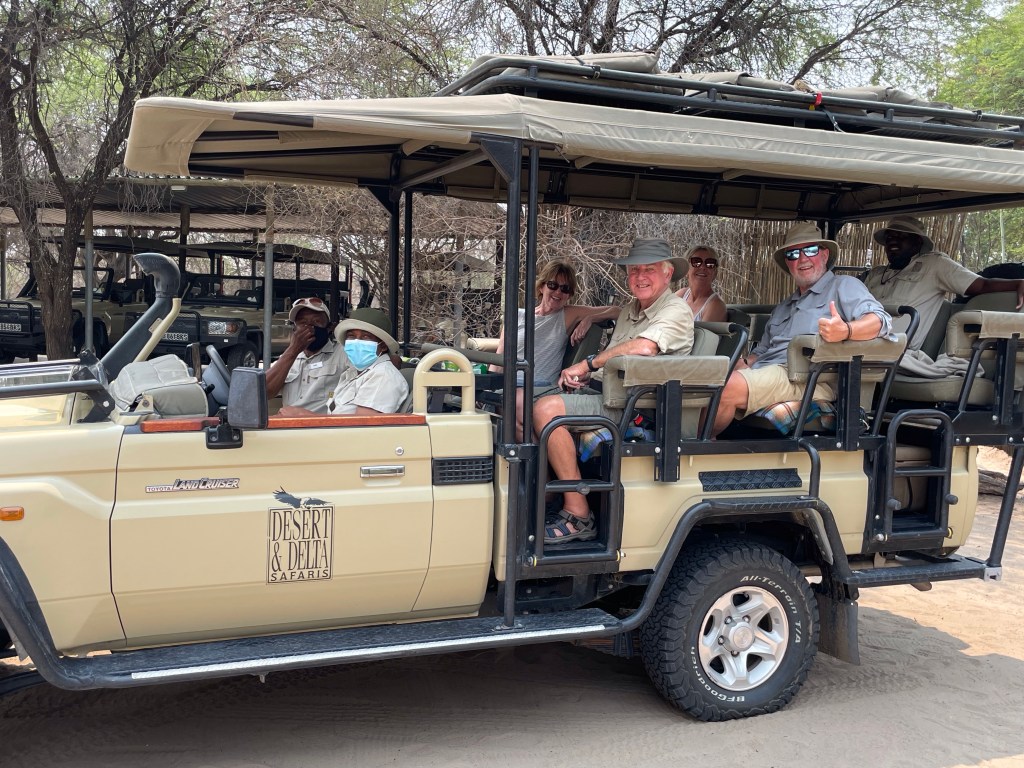
Setting out for the Ntwetwe Pan in our Land Cruiser

After driving nearly 50 kilometers on a highway, we turned off into the desert. We had nearly 70 kilometers to go, which doesn’t sound far, but with no real road, we would follow a path through the grass and shifting sand. There were still several hours before we reached the Pan.

The “Road” Through the Grass and Sand

As time passed, the environment became starker and vegetation started to disappear. There were no more trees, and few bushes. We were left with a sea of grass. Animals too disappeared. Other than some birds, meerkats, and mongoose, we saw no other wild game on the trip. We were told there wasn’t any real water this far into the desert, so the big game stayed away. Interestingly, we did pass some herds of cattle.

This Meerkat is One of the Few Animals we Viewed on the Drive

Eventually, around 5PM we arrived at the Ntwetwe Pan, with sundown still about an hour away. It had definitely rained on the Pan and it would be a bad choice to drive on it. Although it appeared dry, our Land Cruiser would have soon sunk up to the hubs and been trapped. Instead, we camped on the edge of the Pan.

We connected with Maipa and Mash who drove “The Elephant” (a vehicle with the kitchen equipment, lights, tarps, loo, etc) to the Pan earlier in the day. It was they who set up the kitchen, and the dining area. You could already smell good things cooking on the fire and stove for our dinner. We were served sundowners, and then received a safety talk and a briefing on how to use the loo.
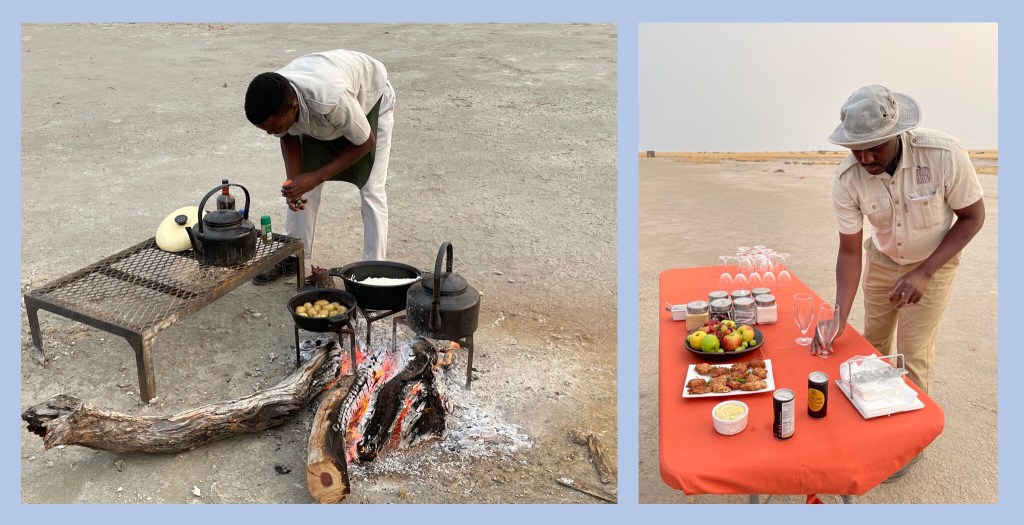
Our Chef, Mash, Fixing Dinner, While Isaac was Making our Sundowners…

We had time before dinner and wandered around. As I took a sip of my G&T, my gaze looked to the east across the Pan. Vastness and Emptyness? Sure. The word Nothingness also came to mind. There was nothing but a line on the horizon separating the sky above from the salt pan below. Loneliness … desolation … flatness… all were also good descriptors. It was flat as far as you could see in any direction.
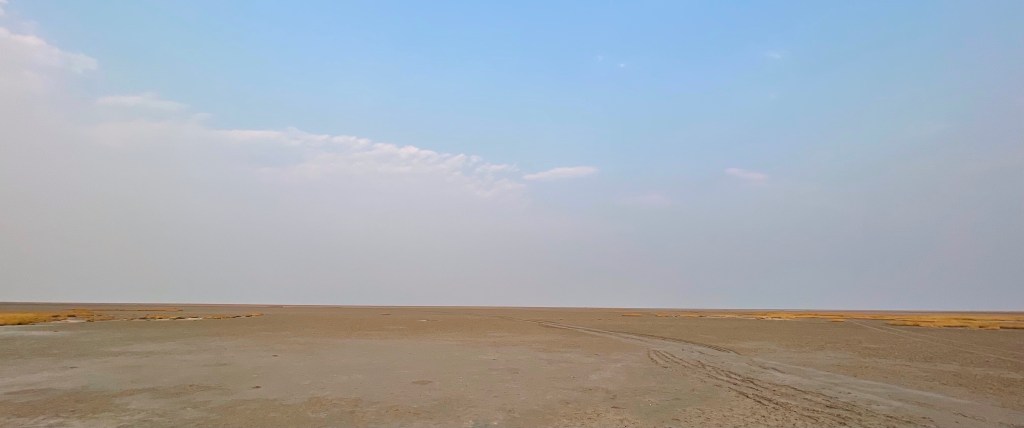
Nothingness…

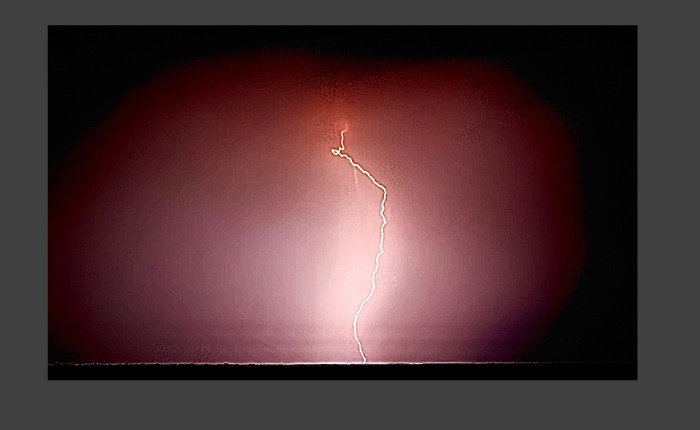
It started to get dark, and we viewed lightning storms on the horizon to the north of us. In Botswana, the weather generally flows east to west, so Isaac thought we were safe. Of course, there IS the occasional freak storm ;-)… I’d just started on my second G&T when the sky opened and it began to rain.
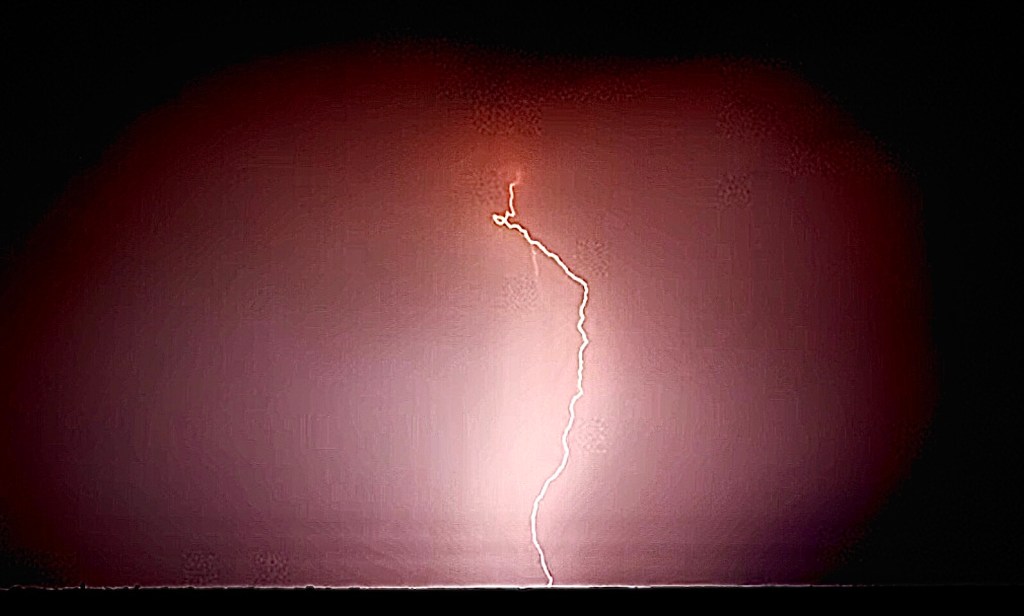
Lightning During the Rainstorm in the Kalahari

Three things then happened in quick succession. First, Isaac directed us to the Land Cruiser where we could stay dry and stay out of the way. Next, the staff divided into two crews. The first one quickly broke down the dinner settings and packed them away. Our table, complete with white table cloth, glassware and china was secured. The second crew grabbed our sleeping mattresses and at the same time popped open small two-person tents and put the mattresses in the tents to keep them dry. If you recall, we were to sleep under the stars. That was no longer going to happen.

It was pitch black, except for the occasional flash of lightning. We were staying pretty dry under the Land Cruiser roof, and then one of us started laughing. Pretty soon all of us were. Here we were, in the middle of the Kalahari Desert, one of the driest places on earth, getting rained on while sipping our drinks in a Land Cruiser. How could you not see the humor in that?

Twenty minutes later the rain stopped. The crew quickly reassembled our dining table and just before 7:30PM, we sat down to dinner. Our chef, Mash, served a feast of rolls cooked in a dutch oven, salad, beet salad, a cauliflower and cheese dish, ribs, and chicken filets in a cream sauce. White and red wines were opened. One more surprise awaited us. The tarp above our table had gathered a considerable amount of rain and while eating our first bite, some of it spilled on the table. We quickly moved the table and then we made our way through the delicious meal. We were still chuckling about the rainstorm, but it was a different chuckle as our bellies grew full.
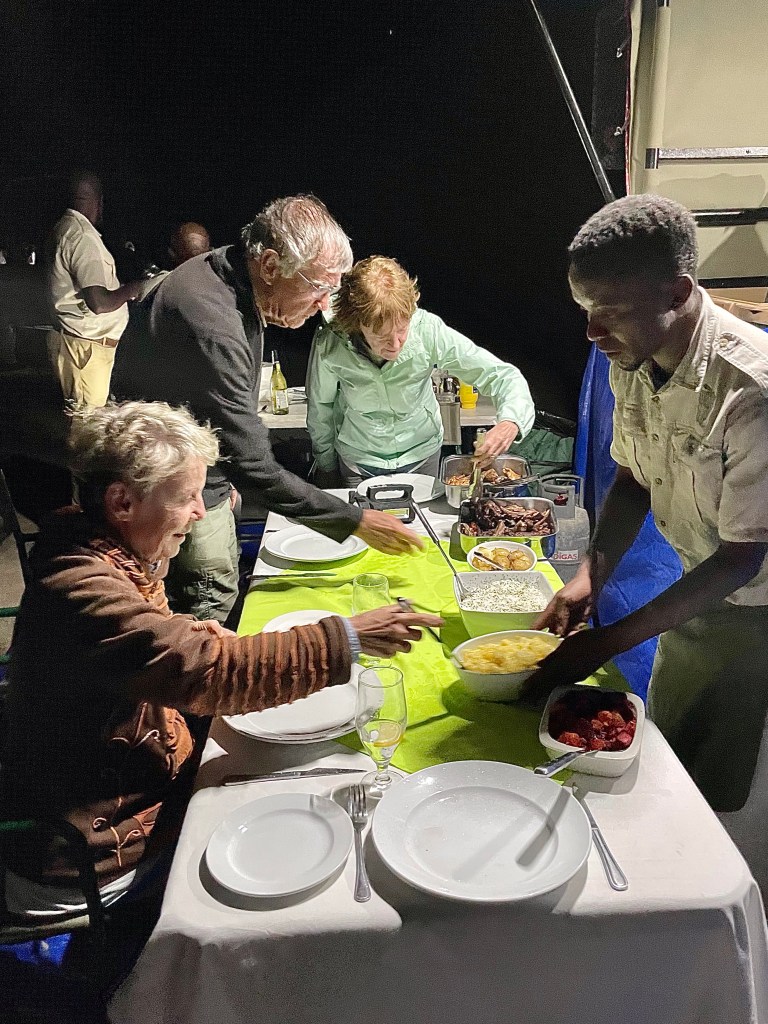
Mash Serving Dinner After the Rain

After dinner, we joined the crew around the fire. Some stories were told and of course a few jokes. A couple of us may have drunk a Jameson. The sky kept changing from clear to cloudy and Isaac confirmed we would sleep in tents. It was a good call, as it rained twice more during the night.

I woke once in the late hours of the night to go the bathroom. The sky had cleared by then and as I looked up, I saw my old friend Orion high in the sky overhead. I smiled to myself – it’s nice to know some things never change.

The next morning while still dark, I woke to a voice softly singing. It was Kago singing her morning prayers. I listened quietly and out of nowhere, felt an immense sense of peace come over me. I can’t help but wonder if the remoteness of where we were also contributed to the feeling.

The camp started stirring and I got out of bed about 5:30. Although still dark, a fire was already going, and our morning breakfast was cooking. The eastern sky was turning gold and red, as the sun was about to appear on the horizon.
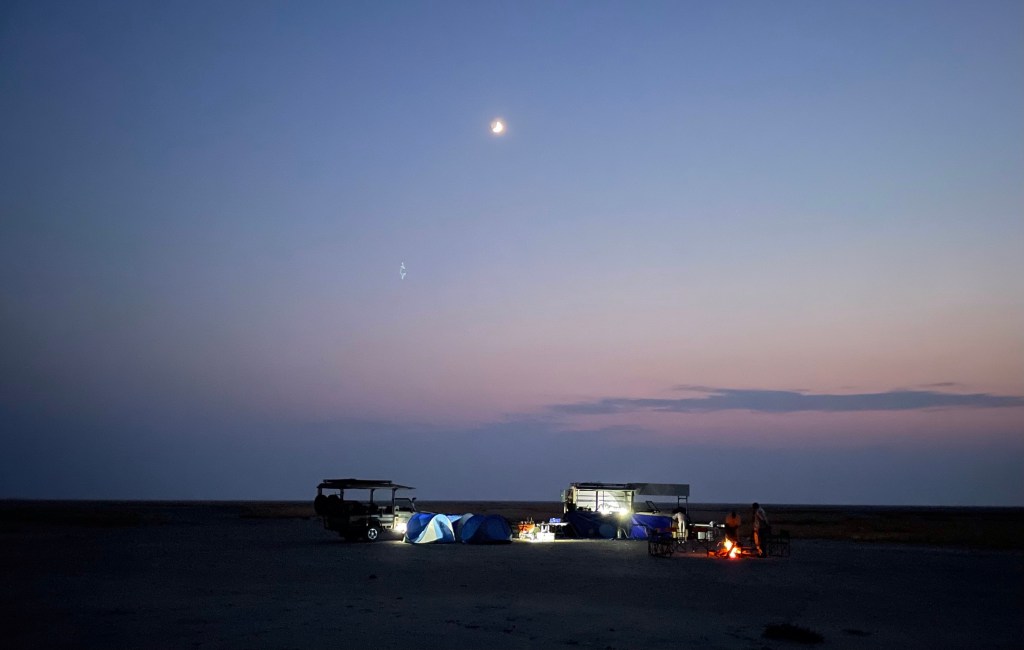
The Moon was still high in the sky as dawn approached.

As the sun rose, I walked to edge of our camp by myself. I again saw the vastness and emptiness of the Ntwetwe Pan to the east. There was a beauty to it that provoked an ache in my heart. Even now, I find it hard to describe.
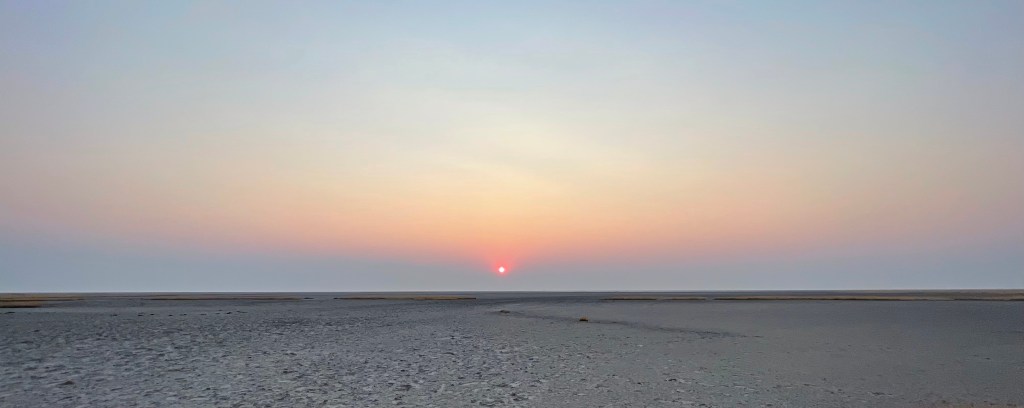
Sunrise over the Ntwetwe Pan in the Kalahari

In Botswana, the word for rain is Pula*, which also means a blessing, as rain is so scarce. Although the rain the night before and on Independence Day changed the tenor of the trip, I think it also gave me something else I can’t define. As I looked at the vastness of the Pan that morning at sunrise, I felt the presence of something larger. God? Perhaps, but I don’t think so. It was more a feeling that even though I am so small, I belonged to something much larger than myself. To me, the vast emptiness I was looking at no longer felt like nothingness or loneliness. There was a weight and depth to it, and yes, a peacefulness. I felt blessed to be in such a remote location. Maybe hearing Kago sing her prayers earlier in the dark is what changed my feelings to something more spiritual. I doubt I will ever know.
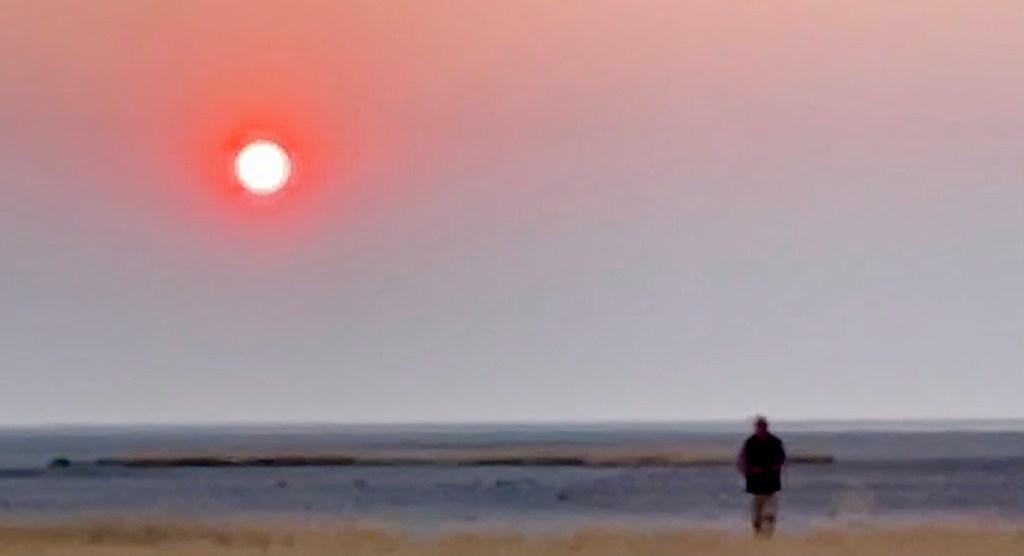
My Friend Bill Surreptitiously Snapped this Picture of me Contemplating the Pan

A bit later, I rejoined the others and soon we ate a breakfast of bacon, sausage, eggs, pancakes, yogurt, fruit and freshly made biscuits. Afterwards, we packed up, and just after 7AM, started the five hour return trip to Leroo. Later in the afternoon while on safari, our guide Ollie tracked and showed us a Cheetah and her three cubs, which was amazing. For me, even as I was viewing the cheetahs, my mind returned to the sunrise at Ntwetwe and the ethereal feelings I experienced.

Addendum:

– *Pula actually has four different meanings: rain, a blessing, “Cheers!” If toasting someone over a drink, and lastly, it is what they call their currency. It’s a pretty versatile and important word in Botswana.

⁃ I’d like to thank Isaac Mpuchane, our guide, for reading my blog and providing input. As we traded emails, he sent me a link to an article that places the Ntwetwe Pan as one of the possible locations for the start of human civilization. Maybe my spiritual feeling wasn’t as accidental as I thought. You can read the article he sent me here: https://www.bbc.com/news/science-environment-50210701 If you want to learn more about Isaac, or see some of his amazing photography, you can do so at: http://www.instagram.com/isak_naturephotography

⁃ I’d also like to thank Bill Reichhardt for the picture of me on the edge of the Pan. Bill is quite the photographer and if you would like to see more of his pictures from Africa, you can view them here: http://billreichphoto.com/

– * The colors in the flag of Botswana have the following meanings: The light blue represents water, and specifically rain, as it is such a precious resource. The black band with the white frame has two meanings. First, they symbolise the harmony and cooperation between the black and white people who live in Botswana. Furthermore, they represent the stripes of the zebra, the national animal of Botswana.

Botswana’s Flag

– This is the sixth in a series of blogs about our 2021 trip to Africa. The other blogs are listed here, in the reverse order of their publishing.

⁃ This is the second time we have used Karen Dewhurst, of Sikeleli Travel & Expeditions as our travel consultant. After working with her in 2018, there was no doubt we would use her and Sikeleli again. All accommodations were amazing, the food and wine excellent, the logistics and travel arrangements perfect and the animal viewing exceeded all expectations. If you are coming to this part of the world, I highly recommend her and them. You can reach Karen at: karen@sikelelitravel.com | (+27) 81 067 1094 (South Africa). Their overall website is at: https://sikelelitravel.com/ .
An Evening on the Zambezi River

An Evening on the Zambezi River

Watching an Elephant swim across the Zambezi river from Zimbabwe to Zambia was a first for us. For all the world, it looked as if he was doing the breast stroke, with his trunk and head rhythmically coming up for air. It was an amazing thing to watch.

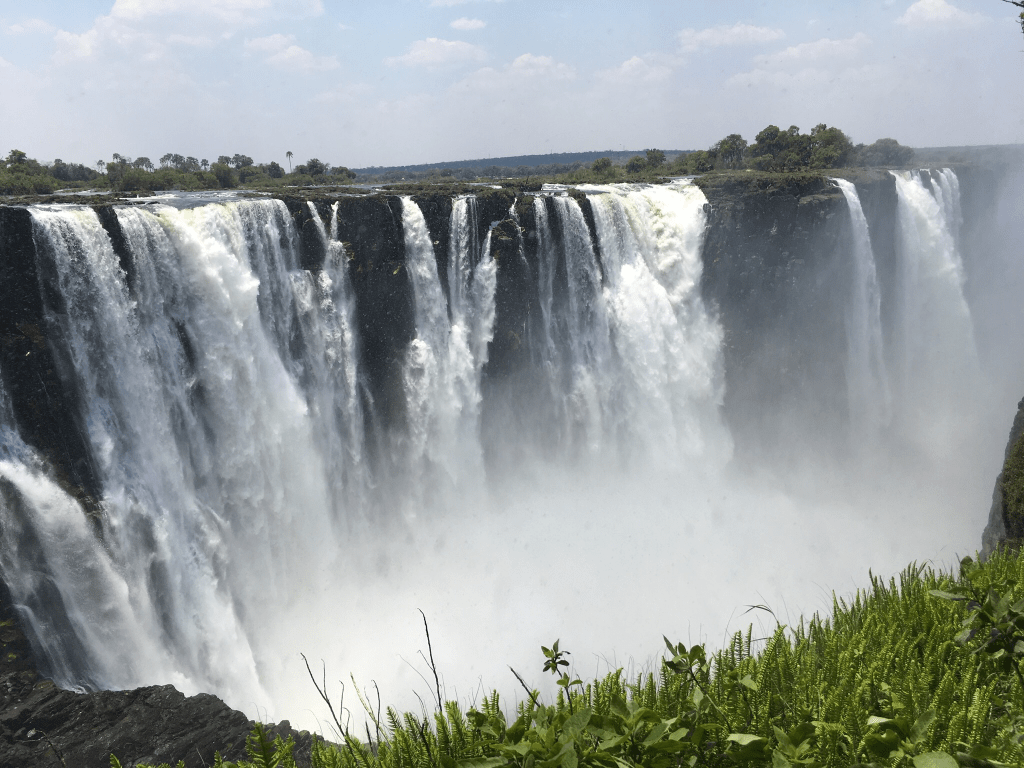
We’d arrived in Victoria Falls the night before, making the drive back from The Hide. We were only in town for two nights, so it was an active day. We started with a visit to the Falls in the morning and they didn’t disappoint. It was our second time seeing them, and the first time for our Friends Bill and Sharon. The Falls had more mist this time and it was quite evident why they are called “The Smoke that Thunders”. There were times the mist obscured the falls themselves and your only connection was the deafening sound of them crashing to the river below.

The Mist Rising Over One Part of the Falls

We ate lunch at The Lookout Cafe with it’s wonderful view of the Zambezi River and the Victoria Falls Bridge crossing from Zim to Zambia. Built in 1905, the train bridge is still used today. After lunch we made a quick stop at “the Big Tree”, a Baobab tree estimated by some to be nearly 2,000 years old, did a bit of shopping, and then went to our lodge to clean up for our Sunset Cruise on the Zambezi.

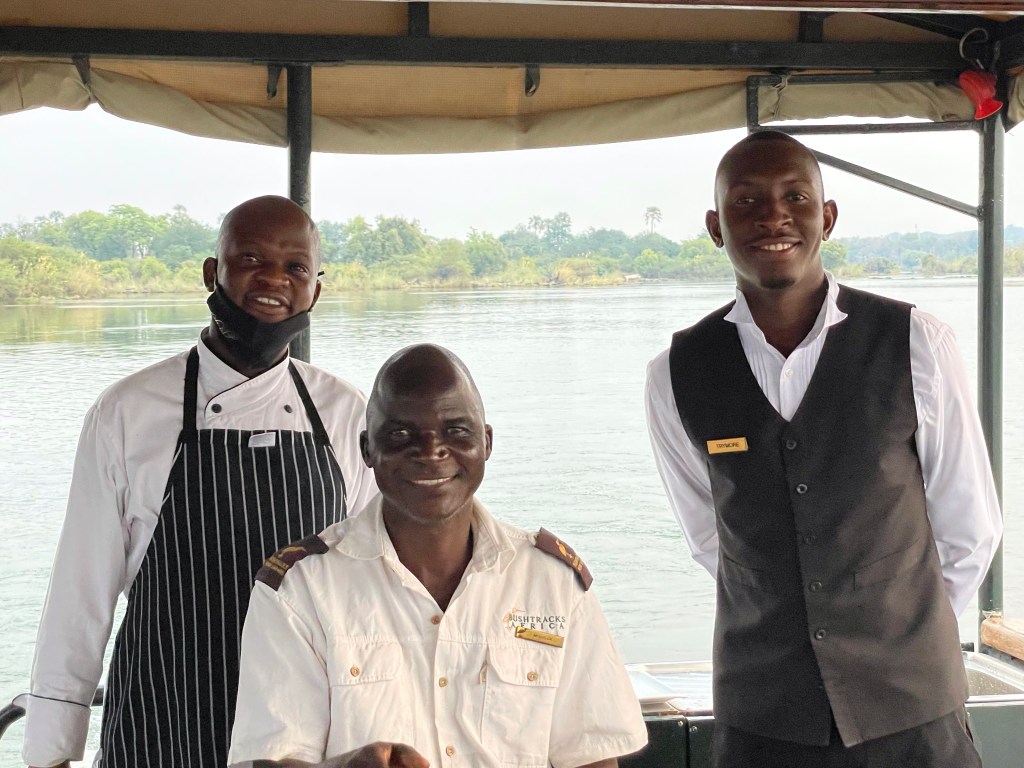
We arrived at our boat, The Victoria, around 4:15PM and were greeted by the boat’s bartender Trymore, with their version of a Pimm’s Cup. The boat pushed away and for the next two and a half hours, we cruised the Zambezi. Due to covid, the four of us were the only guests and we were treated quite well. The boat had a three person crew -Trymore, PK the chef, and our Captain, Misheck.

Captain and Crew of The Victoria

We knew the cruise included appetizers, but were surprised to discover we would have four courses. The next two hours were a surreal combination of drink, food, wildlife and scenery. Even now, I have trouble wrapping my mind around our time on The Victoria.

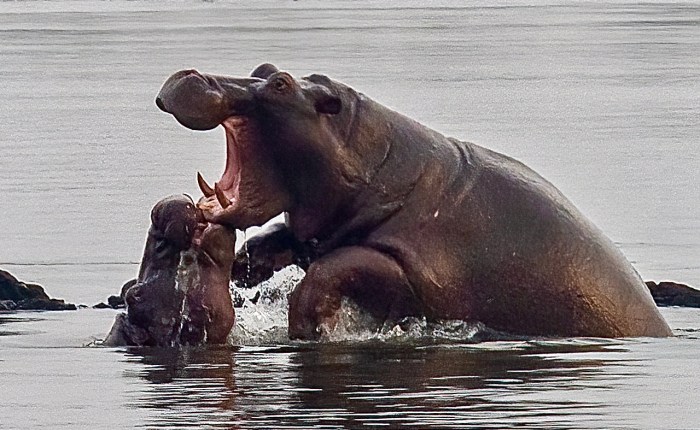
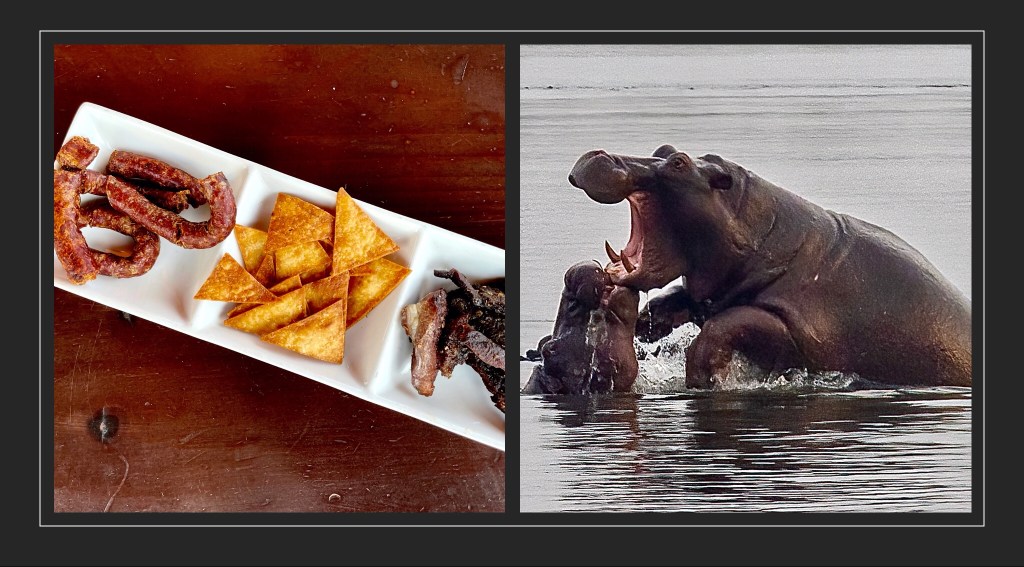
As we motored along, we switched to Gin and Tonics, or Jameson, depending on your vice, and the first course of Biltong, Beerstick and rotti was brought out. We were heading down river, and would ultimately stop about a kilometer above the falls. It was a beautiful afternoon and we were passing some ellies and a few hippos in the water. Suddenly a huge hippo actually breached the water and all thoughts of food disappeared. Our friend Bill, an excellent photographer was in the right place at the right time and grabbed a stunning shot. We all looked at each other and laughed a bit – THIS was fun, amazing and crazy all at the same time.

Biltong and a Leaping Hippo – What’s not to Like?

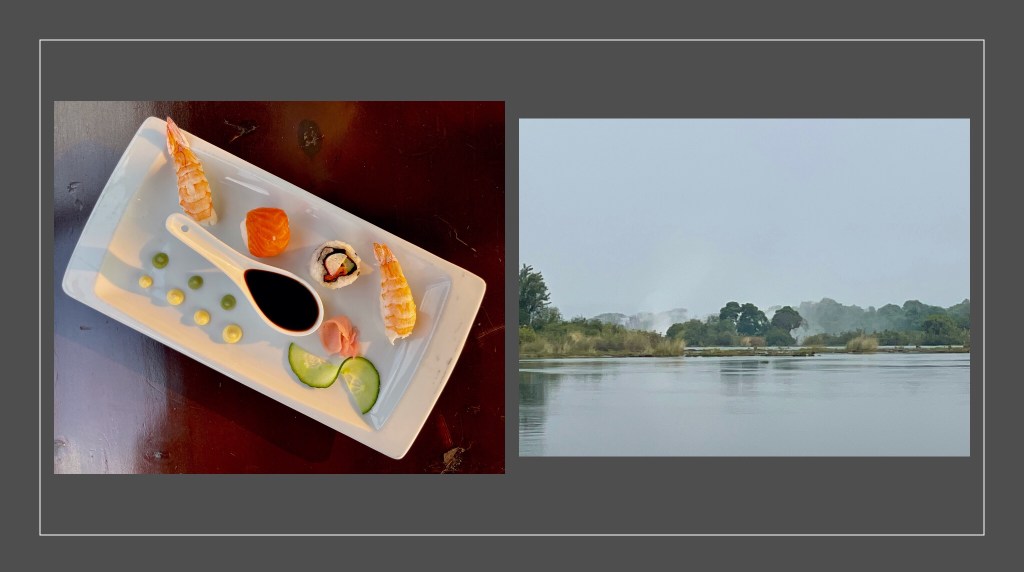
As the second course of sushi arrived, we were nearing the Falls. At about 800 meters away, we stopped for a bit. You could see the “Smoke” caused by the mist of the Falls themselves. As the Captain cut the engine, the thunder and rumble of the Falls was unmistakable. It was an incredibly peaceful scene, except for the roar emanating from the horizon.

Sushi … and “The Smoke That Thunders” Viewed from Upriver

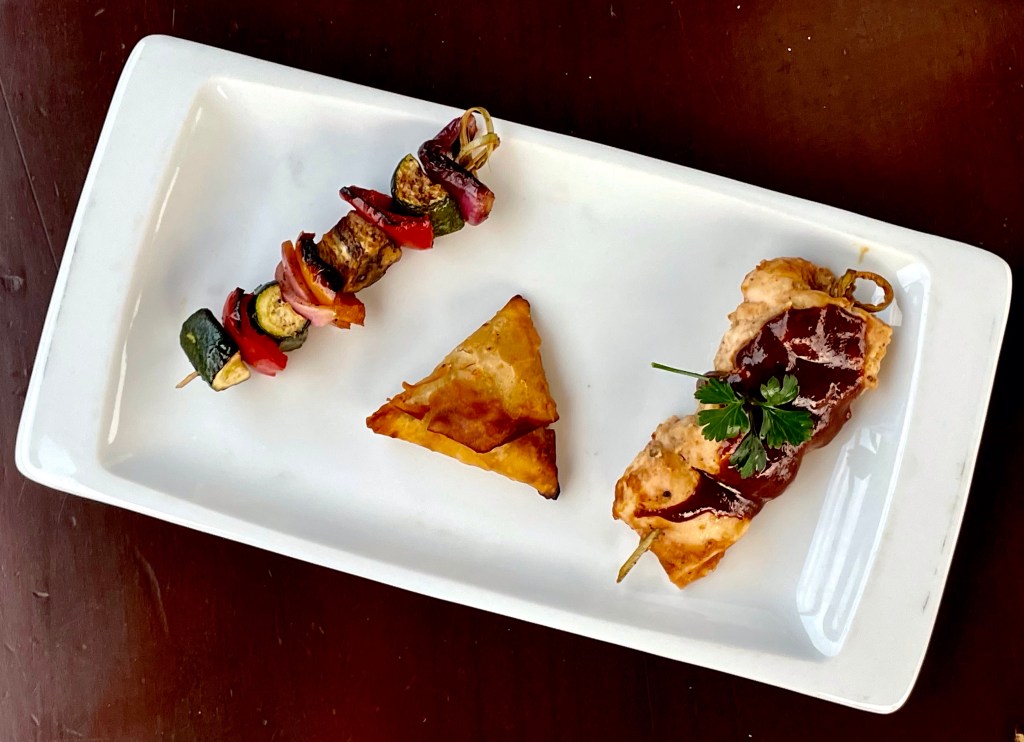
The boat turned around, and a bit further on and we saw something in the water, but couldn’t quite make it out. It was an elephant swimming across the river from Zimbabwe to Zambia! For all the world, it looked as if he was doing the breast stroke, with his trunk and head rhythmically coming up for air. As the elephant climbed out of the river and into Zambia, our third course of veggie and chicken “satay” kebabs arrived. By now we’d switched to wine and were still jabbering with each other about the swimming elephant. Although the kabobs were excellent, I have to tell you, a swimming elephant grabs your attention just a bit more… ;-).

(Click on Arrow for Swimming Elephant Video)

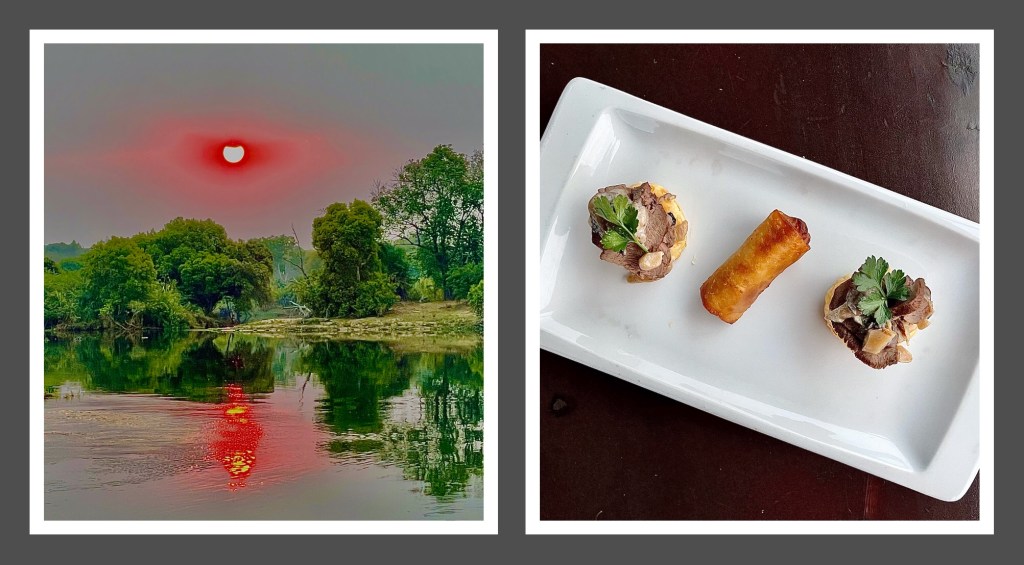
Both the river and time drifted along. It had been overcast, so we didn’t hold much hope out for a great sunset. Suddenly there was a shift of clouds in the west and the sun appeared above the horizon. We watched for several minutes, mesmerized by the colors of the sun playing across the sky and water. It was one of those moments where time froze in place. As we finally returned to our seats, the fourth and final course, “Mini beef Wellingtons” arrived, along with some red wine.

Sunset, accompanied by our Final Course

We were quieter now, basking in the glow of the evening twilight. We passed a few other boats, and more wildlife. Eventually, our dock appeared in the distance and the evening was over. Was it really only two and a half hours ago we’d started out? It felt like a lifetime had passed.

The Zambezi as Twilight Settled in

Addendum:

⁃ Thanks to Bill Reichhardt for the picture of the leaping hippo, and my wife, Cathy for the amazing sunset shot. Special thanks to Sharon Murray for providing the fascinating video of the swimming elephant.

⁃ This is the fifth in a series of blogs about our 2021 trip to Africa. The other blogs are listed here, in the reverse order of their publishing.

⁃ Our visit to The Hide safari camp, with lions dominating our sightings: https://mnhallblog.wordpress.com/2021/10/16/the-hide-never-fails-to-deliver/

⁃ Anticipation of the trip, just days before we departed: https://mnhallblog.wordpress.com/2021/09/21/our-bags-are-packed/

⁃ Covid testing requirements for the trip were quite extensive, even though it was much safer in Africa than Florida or Texas here in America: https://mnhallblog.wordpress.com/2021/09/01/africa-and-covid-testing/

⁃ Africa in our blood. Why we decided to return to Africa, after having “the trip of a lifetime” in 2018: https://mnhallblog.wordpress.com/2021/06/02/africa-in-our-blood/

⁃ This is the second time we have used Karen Dewhurst, of Sikeleli Travel & Expeditions as our travel consultant. After working with her in 2018, there was no doubt we would use her and Sikeleli again. All accommodations were amazing, the food and wine excellent, the logistics and travel arrangements perfect and the animal viewing exceeded all expectations. If you are coming to this part of the world, I highly recommend her and them. You can reach Karen at: karen@sikelelitravel.com | (+27) 81 067 1094 (South Africa). Their overall website is at: https://sikelelitravel.com/ .
The Hide Never Fails to Deliver

The Hide Never Fails to Deliver

The Hide was the one Safari Camp we rebooked from our last trip to Africa in 2018. We knew we wanted our friends, Sharon and Bill to experience it as well. As our buddy Dave said in 2018 “The Hide never fails to deliver.” He was right.

It took two and a half days to travel to The Hide Safari Camp in northern Zimbabwe. We left the States on a Tuesday evening, arrived in Jo’burg, South Africa Wednesday evening and spent the night. The Next morning we flew to Victoria Falls, Zimbabwe and spent another evening there. On Friday morning, we made the three hour drive to Main Camp in Hwange National Park, where our guide, Sean Hind, picked us up and then spent another hour driving on “roads” of dirt and sand to finally arrive at The Hide.

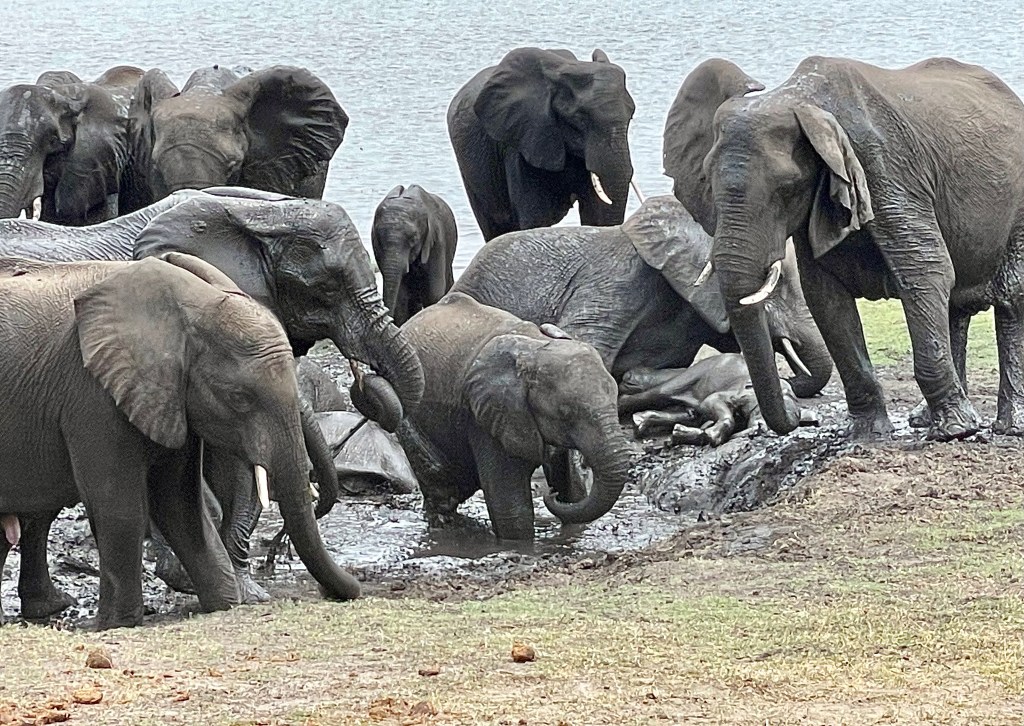
Our guide, Sean was excellent. On the very first afternoon, as we were leaving for our first Safari, we passed a large elephant pack (also called a memory of elephants) heading to the watering hole back at The Hide. Sean stopped for a second, and then said “If you are up for it, let’s head back to The Hide and watch the elephants approach – we could be in for a show.” We turned around and made our way back, not realizing what a treat we were in for. There wasn’t just one herd of elephants, but five or six that paraded in front of us for the next hour and a half. Each memory came in from the sunset in the west, drank water, played in the mud bath, and then exited to the east. We sat there mesmerized, drinking our sundowners and watching them pass. We saw, perhaps, 100-200 Ellies in total.

Ellies in the Mud Bath…

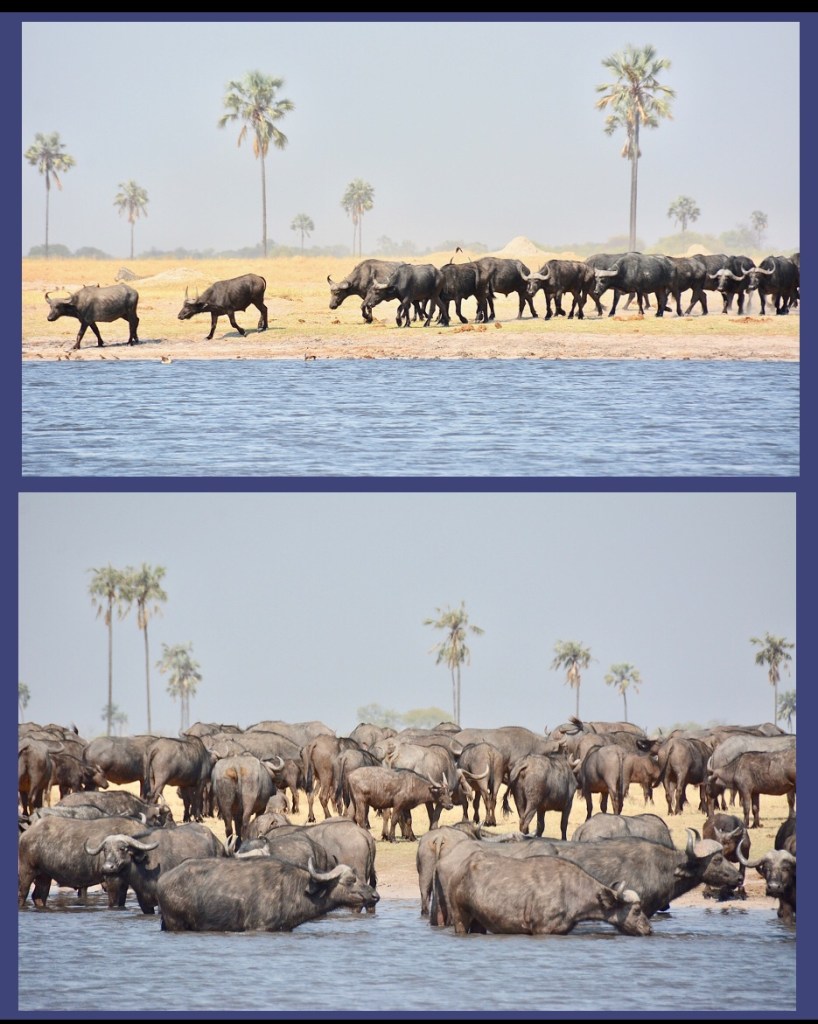
On another day in the morning, Sean drove us over an hour to the pan (water hole) called Mbiza, where we sat and waited to see what might appear. There were baboons, zebras, and warthogs, some ostrich in the distance and many beautiful birds. While sitting there, all of a sudden a dark line appeared on the horizon. It then became a dark line with dust in the air over it. A large herd of Cape Buffalo was approaching. We watched for fifteen minutes as they slowly made their way to the pan. They were in no hurry, and it was more of a march. Finally they arrived and crowded the bank of the pan on the opposite side from where we sat. We were perhaps 40 yards away from the massive herd. Sean said there were over 600 of them. When we asked how he knew how many there were, he answered straight faced “Oh it’s easy. I just count the legs and divide by four.” We all burst out laughing.

Some of the Cape Buffalo at the Mbiza Pan

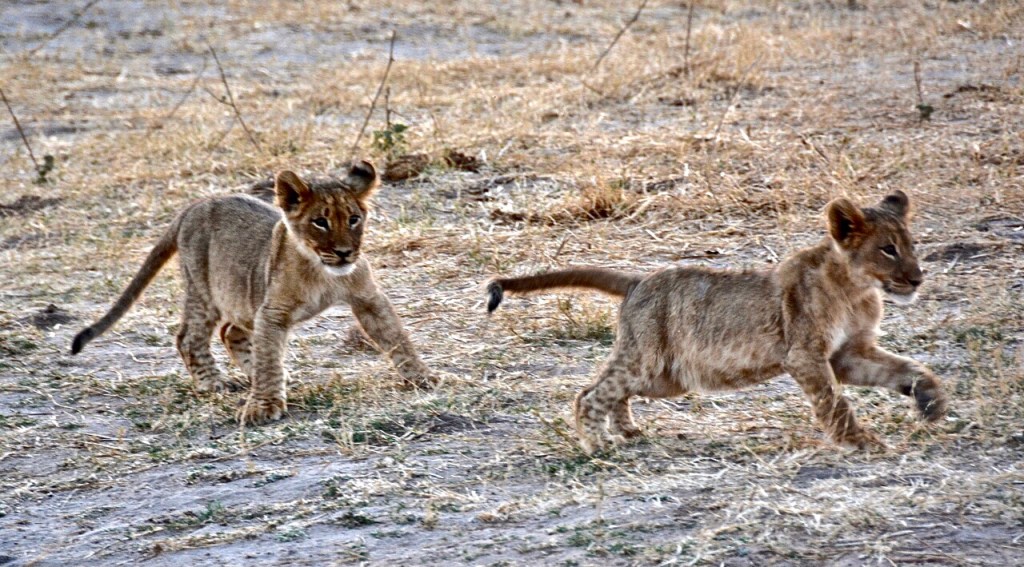
The last thing I’ll mention is the number of lions we were able to see. On our last trip to The Hide, we “only” saw two lions sleeping. This time? On the first two days, we saw two different prides, including one with cubs only three or four month old. For the pride with the cubs we were only about 5 yards away from them. It was amazing.

The Three Month Old Cubs

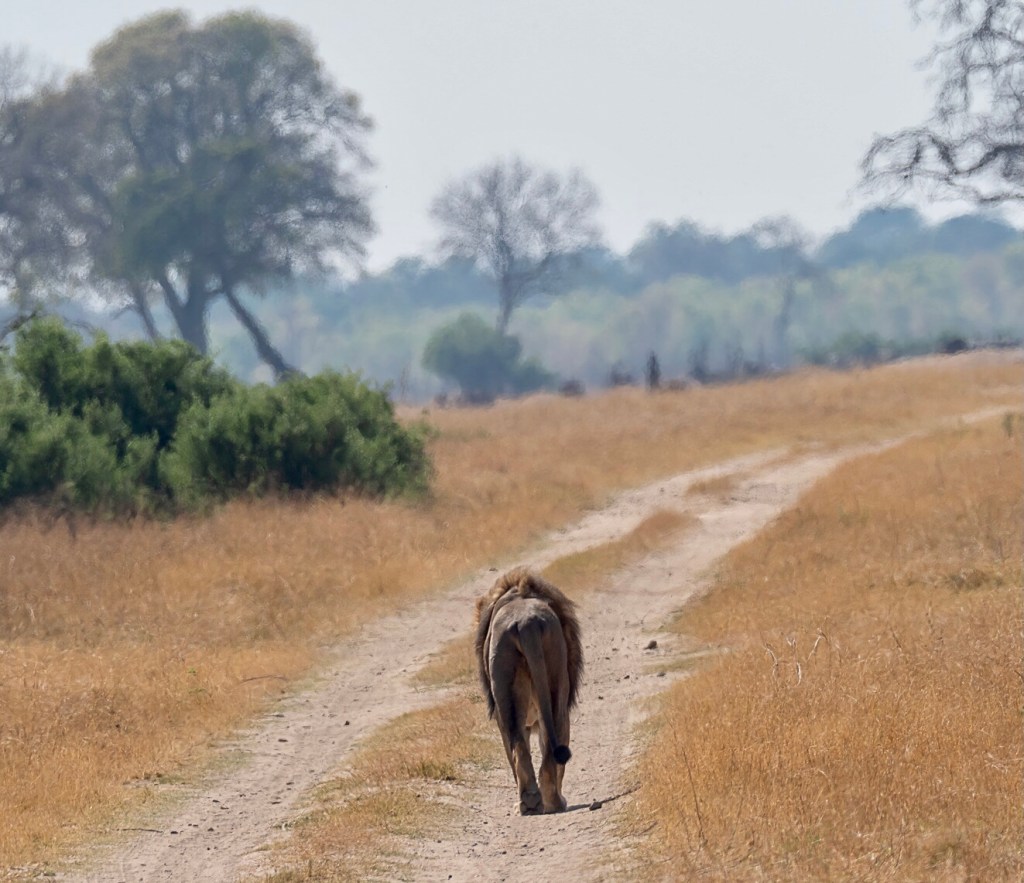
Later we were on our way to the Pan at Ngweshla when Sean received a call over the radio. After a conversation back and forth, he turned to us and said “If you need to use the loo, you’d better find a bush now. There’s a lion on the road between us and the next bathroom at Ngweshla!” We drove on and then saw another safari vehicle going slowly in front of us. Sure enough, in front of the vehicle was a single male lion ambling along. He was zigzagging back and forth across the road so the vehicle could not pass. It turned out they had followed him for over a kilometer. He showed himself to not only be king of the jungle, but King of the Road (Where’s Roger Miller when you need him? 😉 …)

King of the Jungle, AND King of the Road…

The thing about safaris, is you never know what you will see. It’s not a zoo or a Disney Theme park. It’s nature, in the wild and unscripted. The sightings on this trip were different from three years ago in 2018. Not better, not worse, but different. Our buddy Dave was correct though – The Hide never fails to deliver. Thanks to our guide, Sean, for helping us see so much.

Dinner with Sean on our Last Night at The Hide

Addendum:

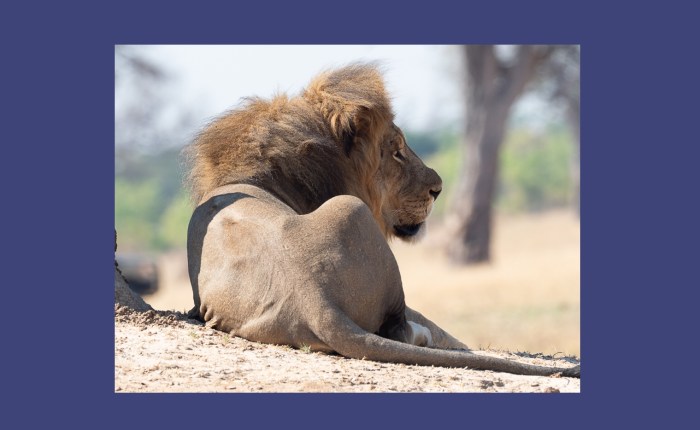
⁃ Special thanks to our friend Bill Reichhardt for the title picture of the lion and of the lion strolling down the road. The photos are both of the same lion, about 1/2 hour apart. After following the lion on the road for a while, he eventually veered to the side, and rested by a termite mound.

⁃ Many thanks to our guide, Sean Hind, at the Hide. Sean works at The Hide, but also has his own guiding company. You can read more about him and his company here: http://www.safarisicansee.co.zw

– This is the second time we have used Karen Dewhurst, of Sikeleli Travel & Expeditions as our travel consultant. After working with her in 2018, there was no doubt we would use her and Sikeleli again. All accommodations were amazing, the food and wine excellent, the logistics and travel arrangements perfect and the animal viewing exceeded all expectations. If you are coming to this part of the world, I highly recommend her and them. You can reach Karen at: karen@sikelelitravel.com | (+27) 81 067 1094 (South Africa). Their overall website is at: https://sikelelitravel.com/ .
Our Bags are Packed

Our Bags are Packed

With apologies to John Denver –

All our bags are packed, We’re ready to go.
Africa holds us, and won’t let go…
Yea, we’re leaving, on a jet plane,
Didn’t know that we’d go back again…

After three years, we are once again Africa bound. We took our Covid tests on Sunday afternoon and received the negative results back Monday. We start the journey at 4PM later today (Tuesday) flying from Dulles to Newark, and then board a direct flight to Johannesburg, South Africa. We arrive 15 hours later at 5PM local time (11AM DC time) on Wednesday. We’ll have a good night’s sleep and then take a flight to Vic Falls the next morning (Thursday), where the fun really begins. With a bit of luck, we’ll see ellies than evening while having sundowners.

The Safari Camps

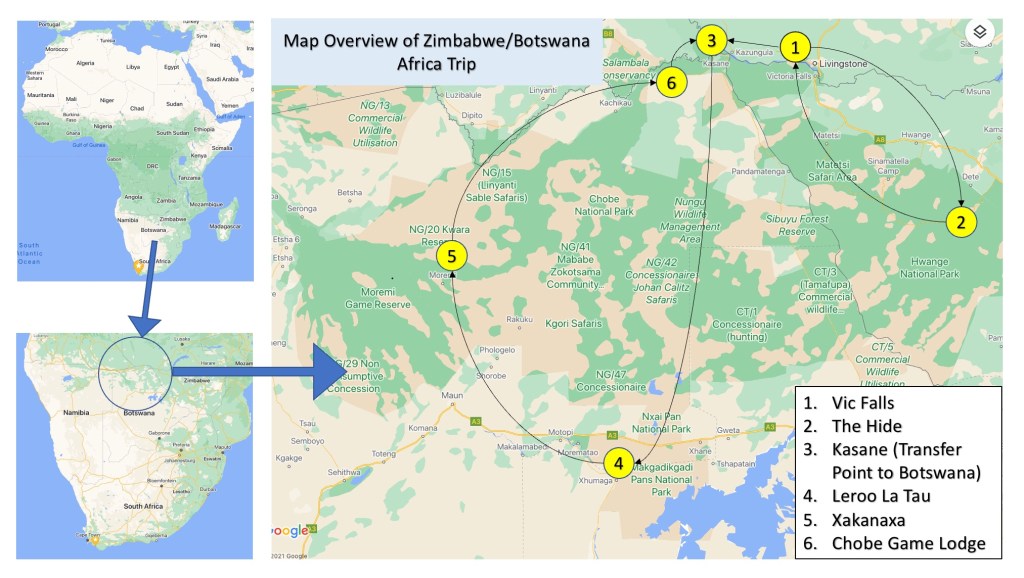
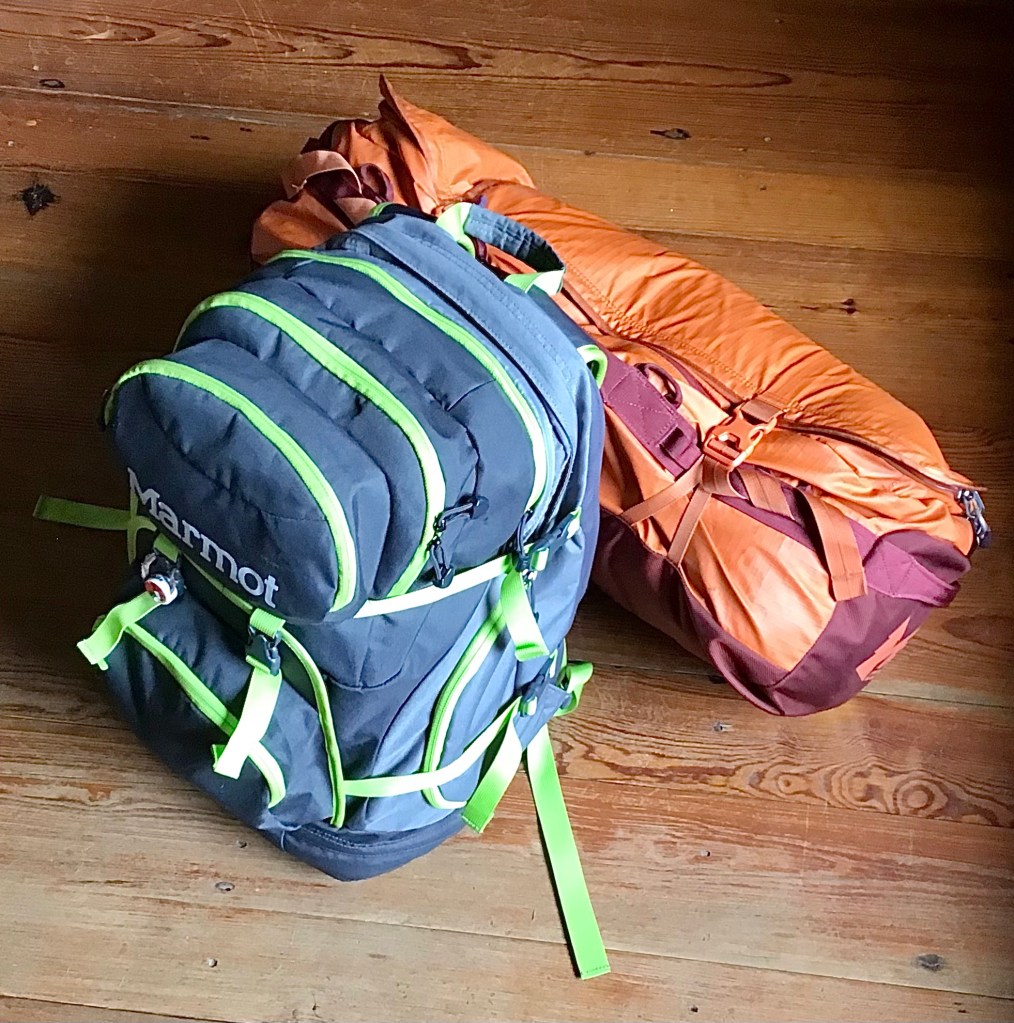
We’ll be on this adventure for about 3 1/2 weeks, with most of the time on safaris in Zimbabwe and Botswana. Our first Safari camp, The Hide, is in Zim and a several hour drive from Vic Falls. This is the one part of the trip we are repeating from our last visit. After The Hide, the other three camps are all in Botswana and are fly-in camps. Those flights all set a limit of two small, soft bags and no more than 44 pounds per person. My two bags weigh 40 pounds together. It’s amazing how light you can pack when you need to.

Two Small Bags and 40 Pounds, for 24 Days

Cathy and I, along with our friends Bill and Sharon, started planning this vacation in January of 2020. After a one year Covid delay, it’s finally here. I feel like a kid on Christmas Eve and can’t wait for this trip to begin.

Addendum:

I’ve written two other blogs about this upcoming 2021 trip to Africa.

The first one is about why we wanted to return to Africa, after having the “Trip of a Lifetime” there in 2019. It can be viewed here: https://mnhallblog.wordpress.com/2021/06/02/africa-in-our-blood/ .

The Second blog is about the extensive Covid testing required throughout this upcoming trip, along with some stats showing Africa is actually safer (for covid) than several of the States here in the USA. You can read it at this link: https://mnhallblog.wordpress.com/2021/09/01/africa-and-covid-testing/ .
The Orange Crock-Pot

The Orange Crock-Pot

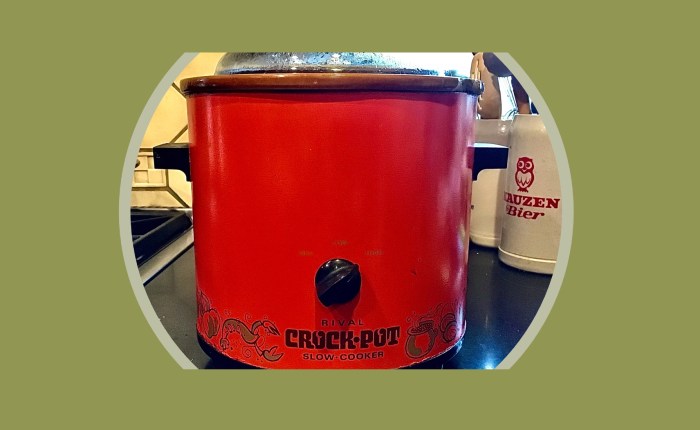
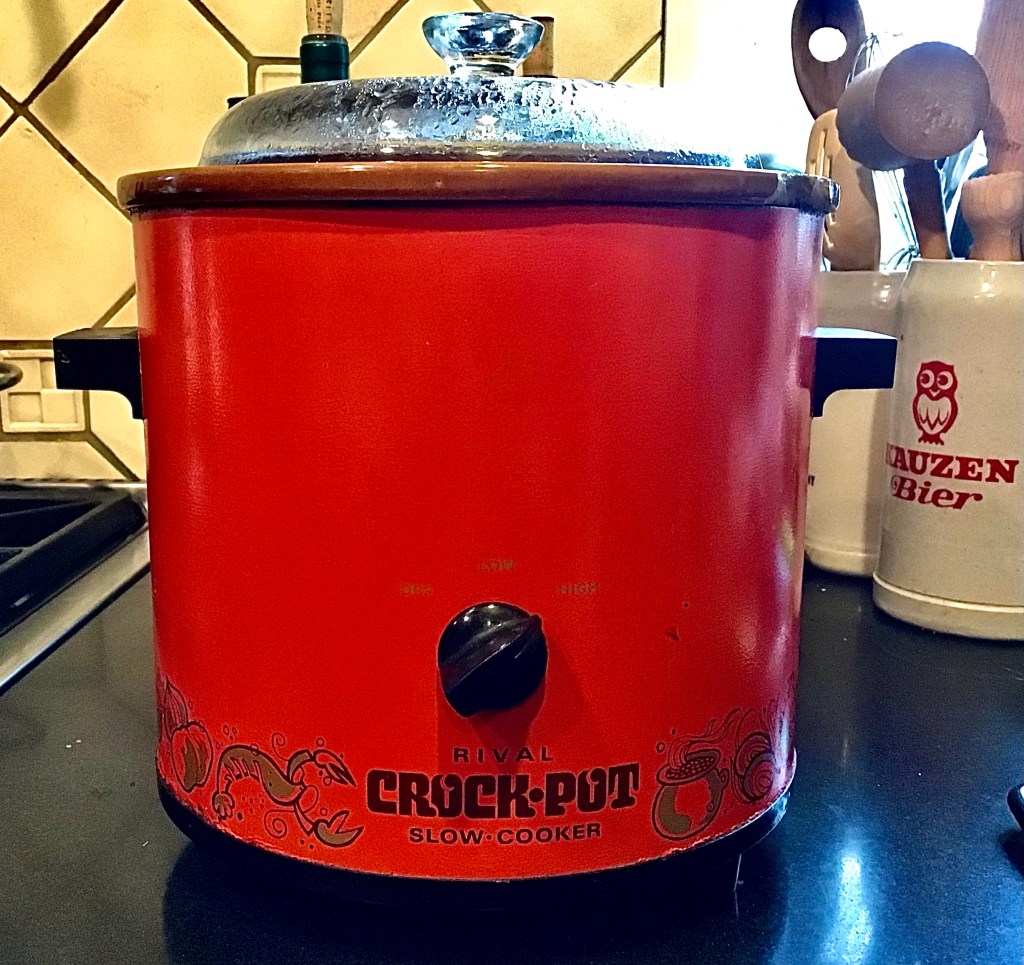
‘Fess up. Who owns, or owned, one of these beauties from the ‘70s? Long before there were Slow Cookers or Instant Pots, there were Crock-Pots. Ours is from 1974 and still chugging along. Seriously, 1974 and it still works. What else do you have that old, and still working? And, you have to love the color…

Cathy’s Crockpot from 1974 – Still Chugging Along…

It’s the 50th anniversary of the invention of the Crock-Pot. Appliance maker Rival unveiled it in 1971 at the National Housewares Show in Chicago. Ads and commercials represented the Crock-Pot as a wonderful, time-saving device, assuring women (yes, this was the ‘70s – almost all cooking related ads focused on women) it would simplify their lives. Hell, baseball player Joe Garagiola even became a pitchman for the Crock-Pot, hawking it as “the perfect gift”. And of course, the Crock-Pot would do all of this great work in those fabulous ‘70 colors.

A Couple of Vintage Crock Pot Ads From the 70s

That color – I’m not sure if it’s called burnt orange, red orange, or just mutant orange. It’s a color you can’t forget. Quite frankly, it and the colors “Autumn Gold” and “Avocado” represent the ‘70s as much as disco, polyester and bell bottoms. If you see anything in one of those colors, you pretty much know what decade it came from.

Burnt Orange, Harvest Gold, and Avocado Green – the Holy Trinity of 70s Colors

Cathy bought this particular Crock-Pot at the age of 18 in the summer of 1974. It was just prior to moving to Washington DC and a job with the FBI. Over the past 47 years, our Crock-Pot has made countless chilis, soups, stews, roasts, and other dishes. We have cooked with it in Germany, Georgia, Oklahoma, Ohio and Virginia. It crossed the Atlantic four times. How many things do you have that have been with you your whole marriage? This pot, along with our love, is one of the few things that has survived those 43 years. It’s pretty much indestructible and part of the fabric of our lives.

Having retired, I do much of the cooking around the house these days and often braise, roast or slow cook in the oven itself. Still, there are some recipes that just call out for the Crock-Pot. I think the simplicity of the device helps – you fill it with the food you are cooking; pick one of the two heat choices, low or high; and walk away for 6, 8, or 10 hours. What’s not to like, other than perhaps the color?

Summer is ending, autumn is arriving, and winter will soon be here. This ol’ Crock-Pot will again earn it’s keep, providing us with comfort food this autumn and winter. Sure, it has a couple of chips around the rim, but the heater still works fine and the lid sits securely on top. It does it’s job. In fact, it does it’s job much better than any number of devices from this century. It just keeps ticking along and will probably be with us for another decade or two. Now that I think about it, we should list it in our Trust for one of our nieces or nephews… 😉

September 11th, Twenty Years Removed

September 11th, Twenty Years Removed

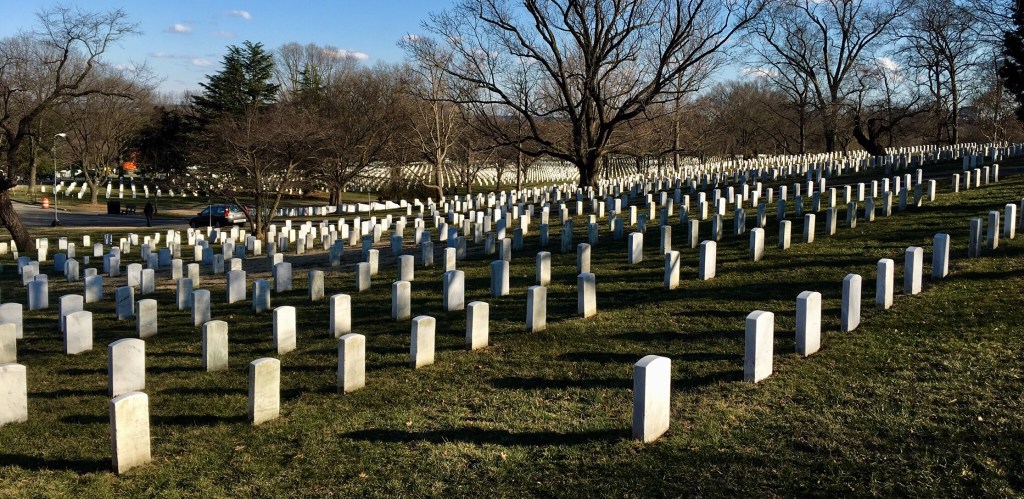
In “Sympathy for the Devil” Mick Jagger famously sang “I shouted out Who killed the Kennedys? When after all it was you and me.” One might ask the very same question about Afghanistan. As we approach the 20th anniversary of 9/11, I can’t help but wonder how much culpability all of us have for these 2,455 soldier’s deaths and 2 Trillion dollars spent.

Arlington Cemetery

Some folks are suddenly concerned about the last 13 who died in Afghanistan, but they don’t seem to have cared about the thousands who died in the previous two decades. Of course the 2,455 soldiers killed doesn’t include the 3,476 contractors who also died there.

Death by Numbers

And, there is of course the money. In the 20 years since September 11, 2001, the United States has spent more than $2 trillion on the war in Afghanistan (all government agencies, not just DoD). That’s $300 million dollars per day, every day, for the last two decades.

Where are we, the American People, in all of this? It’s as if we as a nation have Attention Deficit Hyperactivity Disorder (ADHD) with our very own combination of inattentiveness, impulsivity, and then hyperactivity. Doesn’t that describe how we as a country react to so many things?

Did we previously care about the Afghan women? The translators? Our GIs there? Now, we are magically, gravely concerned. Where were we one year, five years, ten years or twenty years ago? Sadly, we all know the answer to that question.

Our Presidents, Republican and Democrat committed our troops to Afghanistan. Our Congress, Republicans and Democrats alike approved the dollars spent there. It’s pretty easy to engage in a 20 year war with other people’s sons and daughters, and finance it with deficit spending. Just send kids, guns and money… And Now? Now all anyone wants to do is find someone to blame. American hypocrisy knows no limit and has no shame.

It’s not a problem though. With our collective ADHD, our attention will soon flit to some other topic du jour and those twenty years will quickly fade away. We might briefly look at the problems that confront us here and now at home – disease, healthcare, environmental challenges, domestic terrorism, inequality and border issues to name a few. Will we have the moral courage, conviction and concentration to do the hard work and address these and other concerns?

Where is the soul of America these days? Where have our humanity, faith and decency gone? Perhaps we should start with those.

Maybe, on this 20th anniversary of 9/11 we can quietly remember how we felt 20 years ago. We can at least try to reclaim some of our humanity, faith and decency. If we don’t, the rest of the Stone’s lyrics might well prove prophetic for us as a nation.

Feel Free To Share This Blog…

Addendum:

⁃ I wrote one other blog about my experiences during 9/11 and the Phoenix Project the year after. You can find it here: https://mnhallblog.wordpress.com/2019/09/05/september-11th-and-the-phoenix-project/

⁃ Thanks to my friends Tim, Mark, Colleen, Larry and Donna for their thoughts and contributions to this blog. They all added different views and ideas that greatly improved my original efforts.

⁃ It’s a bit difficult to come to a definitive number of US deaths in Afghanistan. Some figures count only those who die in country. Others add in those wounded there, who die elsewhere. Still others also add those who died in other countries in support of operations in Afghanistan. I’ve have found no totals that also include those who have committed suicide back here at home.

Africa and Covid Testing

Africa and Covid Testing

In three weeks, we depart for Africa. We’ll have our first (but not last) Covid PCR* test 48 hours prior to departure. In fact, it will be the first of four Covid tests during the vacation. Although the State Department says we shouldn’t travel to South Africa, Zimbabwe, or Botswana due to Covid, it turns out all are much safer than traveling to Florida.

When we board our plane here in the States bound for Johannesburg, South Africa, we need to show the result of a test taken not more than 72 hours prior to our departure. When we enter Zimbabwe, a day after arriving in South Africa, the TEST RESULTS themselves can’t be older than 48 hours PRIOR to the beginning of our travels. Given that it takes at least 16 hours here locally to receive test results back (for a PCR test, not the rapid test), the logistics are doable, but a bit … challenging.

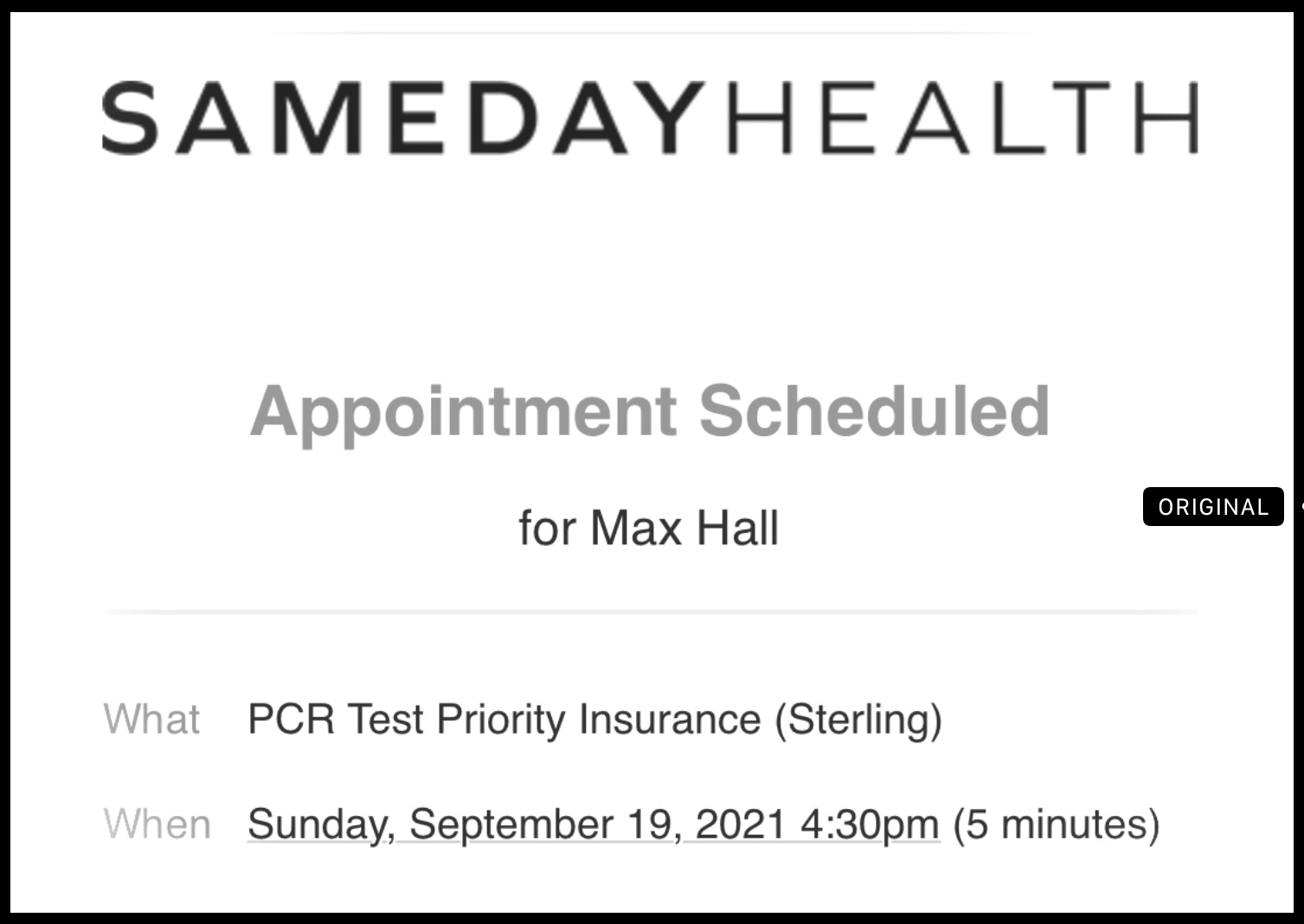
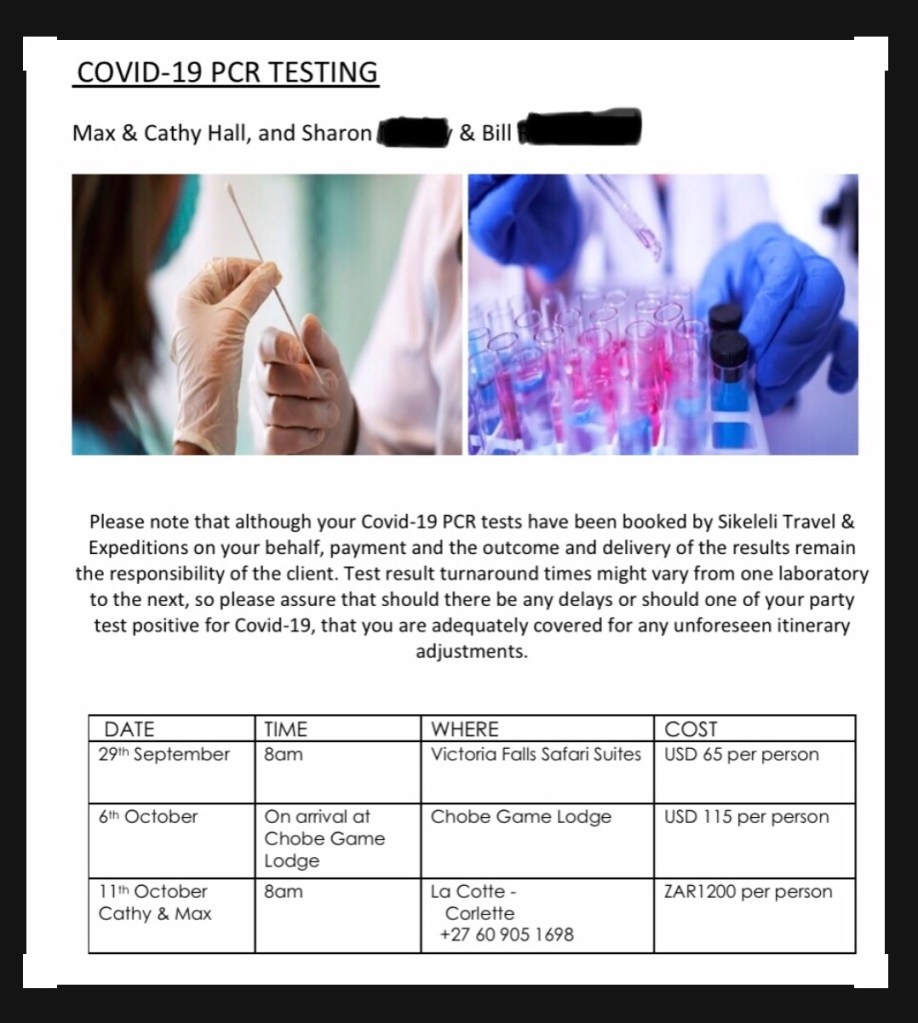
A week later, when we travel from Zimbabwe to Botswana, we’ll need another PCR test. Eight days after that, when we return from Botswana to South Africa, we will receive our third PCR Test. Finally, when we return from South Africa to the States, we will have our fourth Covid PCR test. None of the tests can be older than 48 or 72 hours, depending on each country’s requirements, hence, the number of tests required. Karen, our travel agent, has already scheduled the tests in Africa for us.

Our Covid PCR Tests are Already Scheduled in Africa

The Department of State is currently warning against travel to Zimbabwe, Botswana and South Africa due to the increase in Covid cases in all three countries. Here’s the interesting part. The current number of weekly Covid infections per 100,000 people in each of these countries is:

Zimbabwe – 13 infections per 100,000 people

Botswana – 318 infections per 100,000 people

South Africa – 136 infections per 100,000 people

Guess what Covid weekly infection rates are per 100,000 people in Florida, Louisiana, Texas, and Mississippi?

Florida – 691 infections per 100,000 people

Louisiana – 720 infections per 100,000 people

Texas – 397 infections per 100,000 people

Mississippi – 753 infections per 100,000 people

The United States over all – 306 infections per 100,000 people

Seriously. And they are worried about us traveling to South Africa, Botswana and Zim.

In Africa, the precautions don’t stop with the tests. We will fill out health questionnaires at border crossings and hotels. At the Safari Camps where we are staying, the staff are all 100% vaccinated. If they depart the camp, they are retested upon return, and all staff are temperature tested twice daily. They will also temperature test us once per day. All staff members are masked. They will clean and sanitize all public and private areas as they are used.

Is there risk in going on this trip? Sure. There’s always risk. In addition to Covid, there is also the chance of malaria, typhoid fever, cholera, hepatitis, tetanus, stomach distress, and assorted other diseases.

Cath and I, along with our friends Bill and Sharon have discussed the risks and received continual updates from Karen. For Covid, we will mask as needed, distance from others as required, and wash our hands frequently. Although the vaccination rate is not as high in these countries as it is in the US (due to vaccine access), they are doing the right things to minimize the risks.

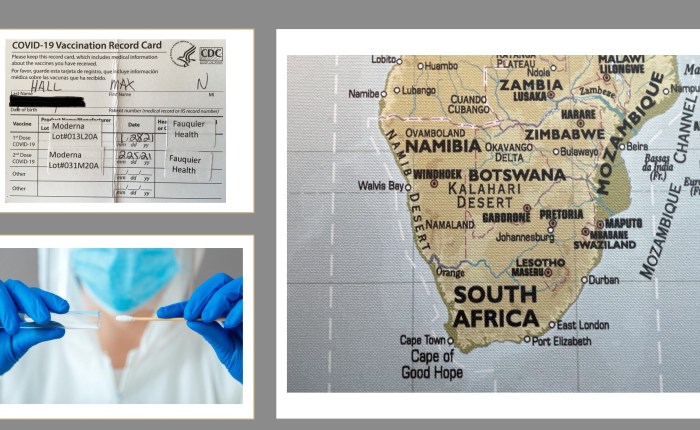
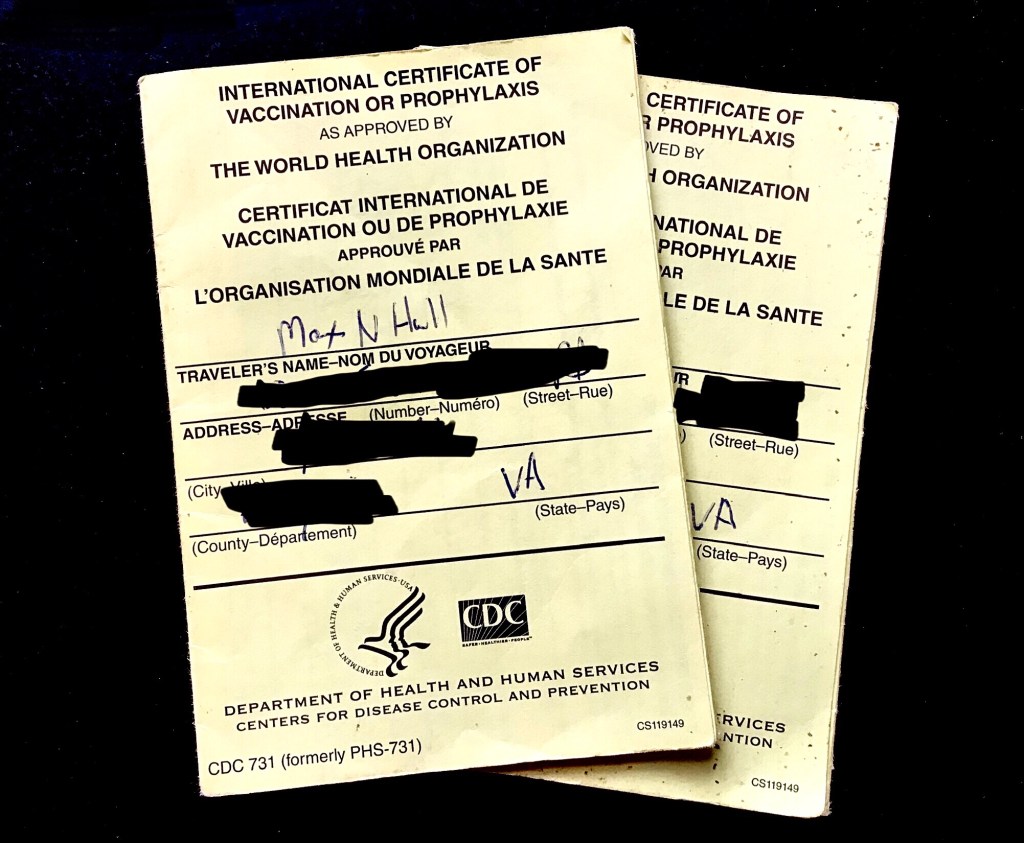
As to the other diseases, it’s amazing. They have these wonderful things called vaccines and vaccine boosters now that take care of several of the diseases. For the rest, good hygiene and drinking water only from known sources solves most potential issues. As a side note, Cathy and I have had our International Vaccination cards for decades – they are a great way to keep track of the current status of all of our vaccines, boosters and shots. It’s unclear to me whether owning these card makes us a part of some International Communist conspiracy or not :-).

International Vaccination Certificates are a Great Thing to Have.

All four of us are unbelievably excited about the trip. Originally scheduled for September of 2020, we postponed a year, due to covid overall. Now? We are ready to go.

Risks? Yes, we are ready to take some risks, and travel to Africa. Just don’t ask us to go to Florida, Louisiana, Mississippi or Texas. There are some risks we just won’t entertain.

Addendum:

• For international travel, you must have a PCR test, not the rapid test. It is considered more reliable. Unfortunately, it takes longer to receive the results.

• US Covid statistics are at this link if you want to look up your state: https://covid.cdc.gov/covid-data-tracker/#trends_dailycases_7daycasesper100k

• African Covid statistics were provided via Reuters. You can look at countries world wide at the following location: https://graphics.reuters.com/world-coronavirus-tracker-and-maps/countries-and-territories/botswana/ They provide US overall statistics there as well, which match closely to CDC statistics.

Grandma Grubaugh and the Pink Elephants

Grandma Grubaugh and the Pink Elephants

A couple of months after Grandma Grubaugh died in 1996, I received a call from mom. She wanted to know if there was anything I might like from Grandma’s things. I immediately answered “The Pink Elephant and Blue Monkey glasses.” She Said “What?! Nothing else?” “No, those are how I best remember Grandma.”

Grandma and I Just Shy of my Second Birthday

Lillian Henrietta Grubaugh was born on the 2nd of January, 1905 and died on the 4th of December, 1996 at the age of 91. When Grandma died, my Uncle Don was executor of the will and divided the major assets equally out among Aunt Pauline, Aunt Cecilia, mom, Uncle Sonny and himself.

As to the belongings in the house, they took turns picking things each of them wanted, starting with Aunt Pauline, the oldest, and then reversing the order for the next pick. When they finished this up, there were of course many things still left in the house. It fell to mom and my Aunt Pauline to go through the remainder of the stuff in the house, sort it, and give it away or otherwise dispose of it. I think it was around then I received the call from mom, asking if there was anything I might want.

So why did I want those glasses of pink elephants and blue monkeys? Why did I remember them and why did they call to me? I’ve thought about that for awhile.

Sometime around 5th or 6th grade, I started a business of mowing lawns. Or I suppose my dad encouraged me to start the business. One of my first customers was of course Grandma and Grandpa. I think my cousin Joey had the job before, but he’d grown older and moved on to real work of some sort, and the opportunity fell to me.

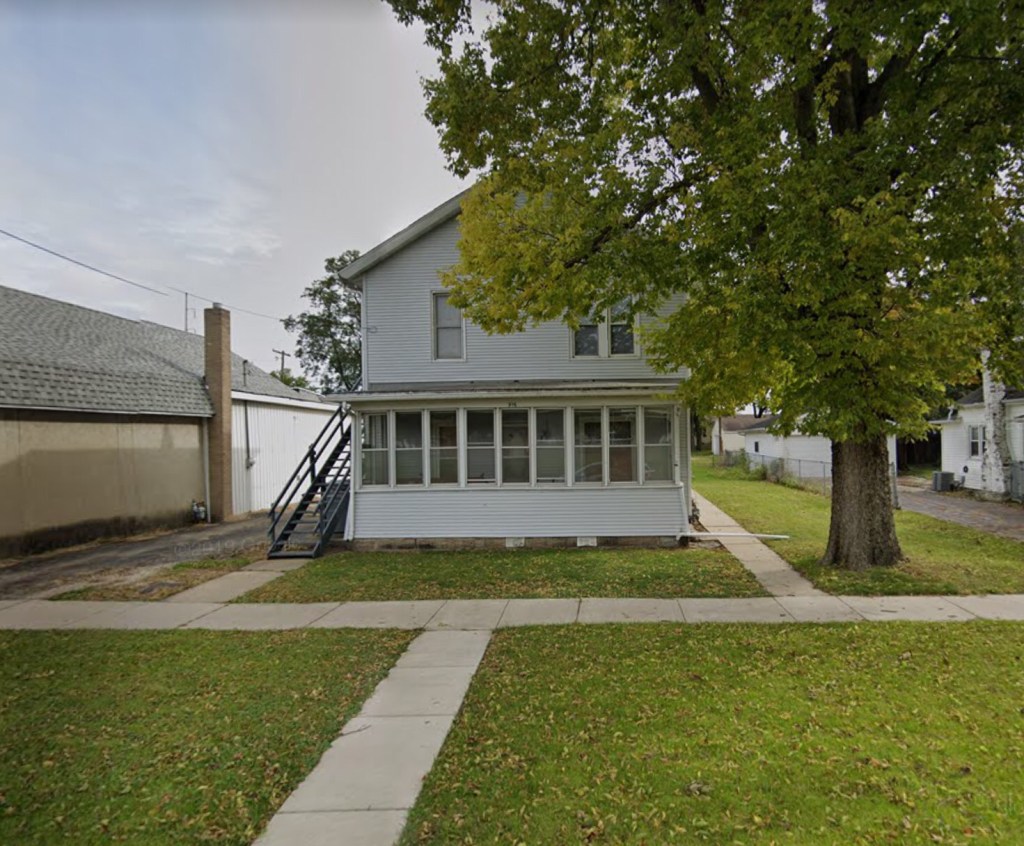
On mowing day, dad and I loaded the mower in the back of his car and drove across town to 916 Chestnut street, where Grandma and Grandpa lived. He helped me take the mower out of the car and then drive home, with instructions to call him when I finished up.

916 Chestnut Street – The Yard Seemed Bigger Back Then

I’d mow the lawn for the next half hour or 45 minutes. The yard wasn’t big, but there were lots of things to mow around – the old swing set, the low metal fence with posts, a couple of big trees, the vegetable garden, including grandma’s rhubarb plants, and the ancient garage out back. After I finished mowing, I’d do a quick trim of the hard-to-get spots with some manual clippers.

Eventually, I’d finish everything up and head to the house, ready to call Dad. Inevitably Grandma would greet me and have me sit down at the kitchen table. She’d bring out a piece of spice cake, or unwrap some of her date nut bread, or pull some of her rhubarb sauce out of the fridge if the season was right. No matter what she served, she also poured me a big glass of milk in one of those elephant or monkey glasses and the two of us sat and talked.

I don’t remember much of what we talked about. I do remember us having those conversations – maybe about school, or summer camp, or Little League or whatever. It was just the two of us in our own little world.

Eventually we finished up and I’d call dad. He’d drive the 5 or 10 minutes across town and pick me up. Grandma and I would say goodbye, she’d give me a hug, and I’d wave goodbye from the car.

Wonderful Memories Involving Pink Elephants and Blue Monkeys

I cut their lawn for three or four years and the ritual was almost always the same. Around 8th grade, I started a “real job” working at the local pool as a locker room attendant, eventually graduating to lifeguard. I think my cousin Jimmy, Joey’s younger brother may have taken over the lawn mowing at Grandma and Grandpa’s home. Grandma and I stayed close, even after I left for West Point, but those regular private times together disappeared. I’d see her on breaks from school, or when we returned on vacation from an overseas assignment, but of course it was never the same. There was still spice cake or date nut bread, and a glass of milk or cup of coffee. We had wonderful conversations, but they were obviously more grown up. The innocence of those previous times was gone.

Grandma and I at my Graduation from West Point in 1978

I’ve thought back to those younger years and sitting at the table eating one of Grandma’s treats and drinking milk out of those glasses. It’s a warm memory, and I always smile when I see the glasses sitting on a shelf at our home now. Grandma and I having a summer conversation at her kitchen table, wrapped up in our own little world…

Addendum:

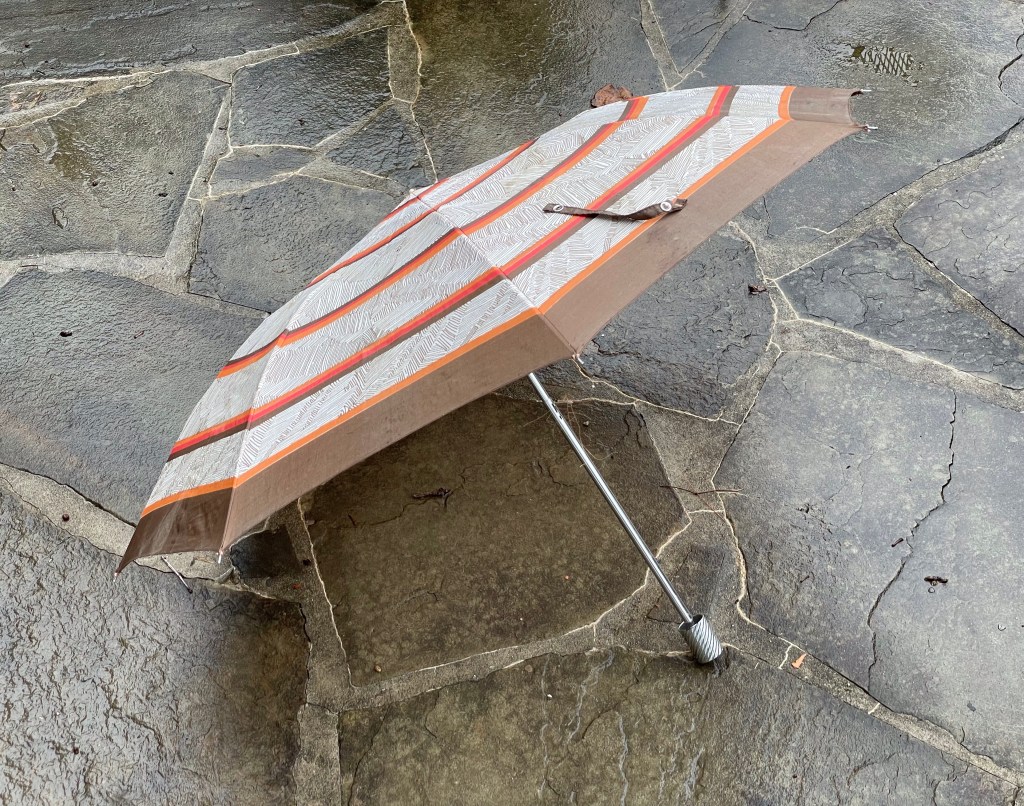
Something we also found out from mom and Aunt Pauline was that Grandma often times didn’t use the Christmas gifts we gave her. Instead, she tagged them with our names and put them away in a chest. The tagged items went back to the giver after she passed away. One of the tagged items was an umbrella of questionable fashion I’d given her one Christmas. it still sits by our back door here in Virginia, in case it’s needed.

Wabi Sabi

Wabi Sabi

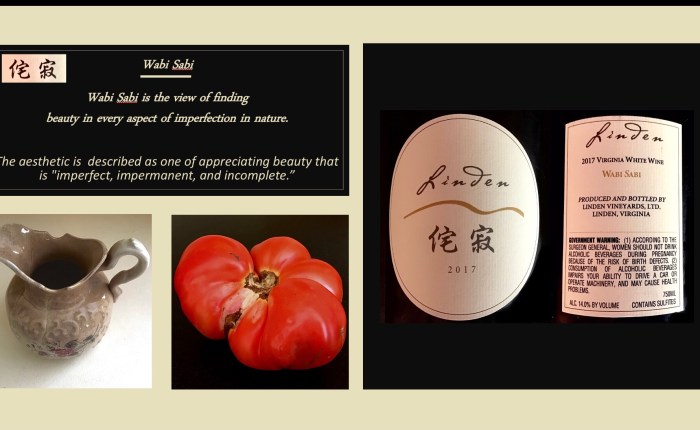
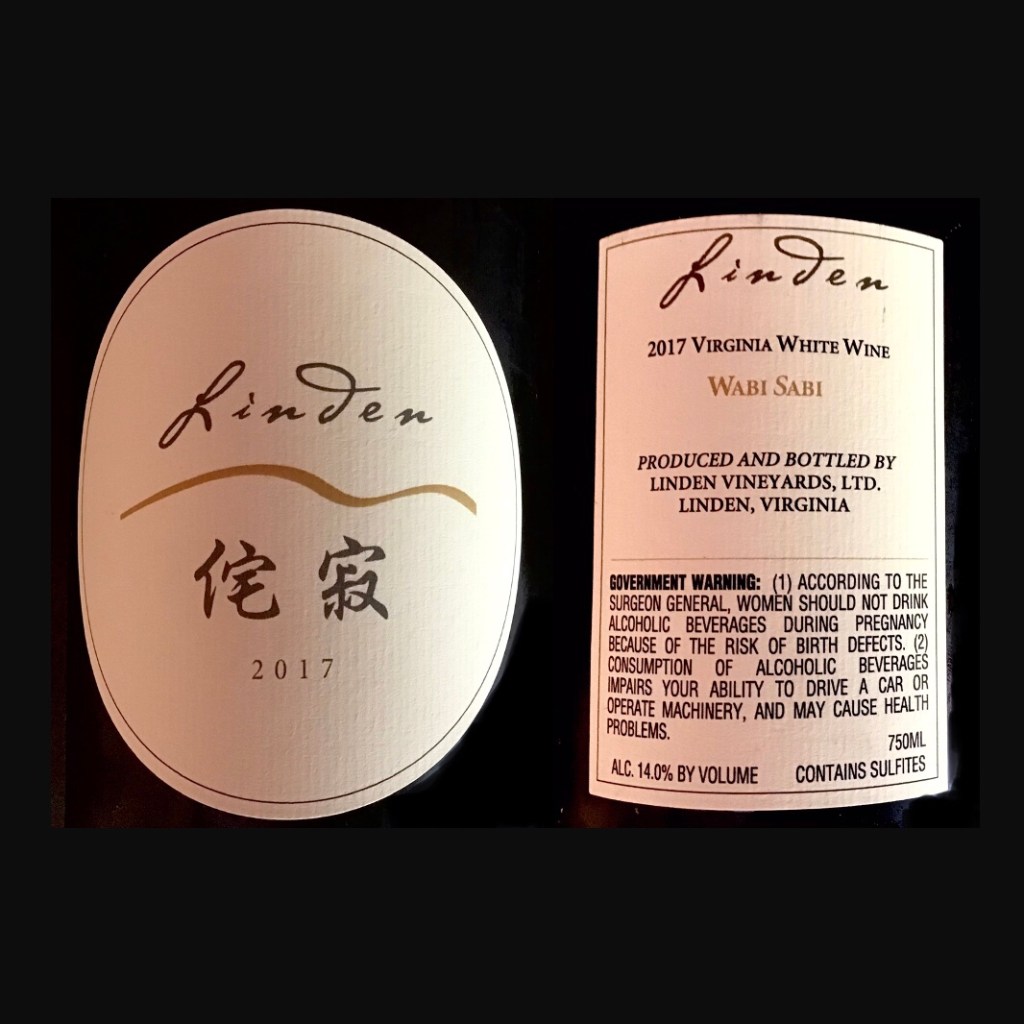
I was recently at Linden Vineyards for a wine tasting. It was a beautiful day. While there, I recalled a nice little wine they made in 2017 called Wabi Sabi. Jim Law, the owner and winemaker, said this about the wine when it was released in 2020 – “Wabi Sabi refers to a Japanese aesthetic that reveres the “imperfect, impermanent, and incomplete … It is an unintentional wine that resulted in a spontaneous decision ” I was so taken with Jim’s description of Wabi Sabi, I started looking into the concept.

Wine Tasting at Linden on a Beautiful Day

After a year of researching online, and reading one book, I’m no expert. But I learned some things I’m trying to blend into my outlook, and my life. (yes, you can sometimes teach an old dog new tricks.)

The concept of Wabi Sabi is hundreds of years old and almost the opposite of order and perfection. As an engineer, and former military guy, this is 180 degrees from much of my professional career. It has taken some mental adjustments and rethinking. With Wabi Sabi, beauty is “spontaneous, fleeting, and singular”.

Stop and say that again, out loud to yourself. Spontaneous. Fleeting. Singular. Think of the changing colors of a maple tree’s leaves in autumn, before they finally fall to the ground.

It’s a very different view of beauty than we have here in the US and the western world in general, and focuses more on the simple and imperfect. Here, we often seem to think of beauty in terms of a state of perfection that is unattainable for most of us. Something that is often out of our reach.

Wabi Sabi stresses a simpler way of looking at and appreciating things in our lives. It also pushes two views at the same time – against the accumulation of objects to no set purpose, and recognizing the good things you already have in your life.

In the book, WABI SABI SIMPLE,* Richard Powell states it even more plainly – “Wabi Sabi nurtures all that is authentic by acknowledging three realities: nothing lasts, nothing is finished, and nothing is perfect.

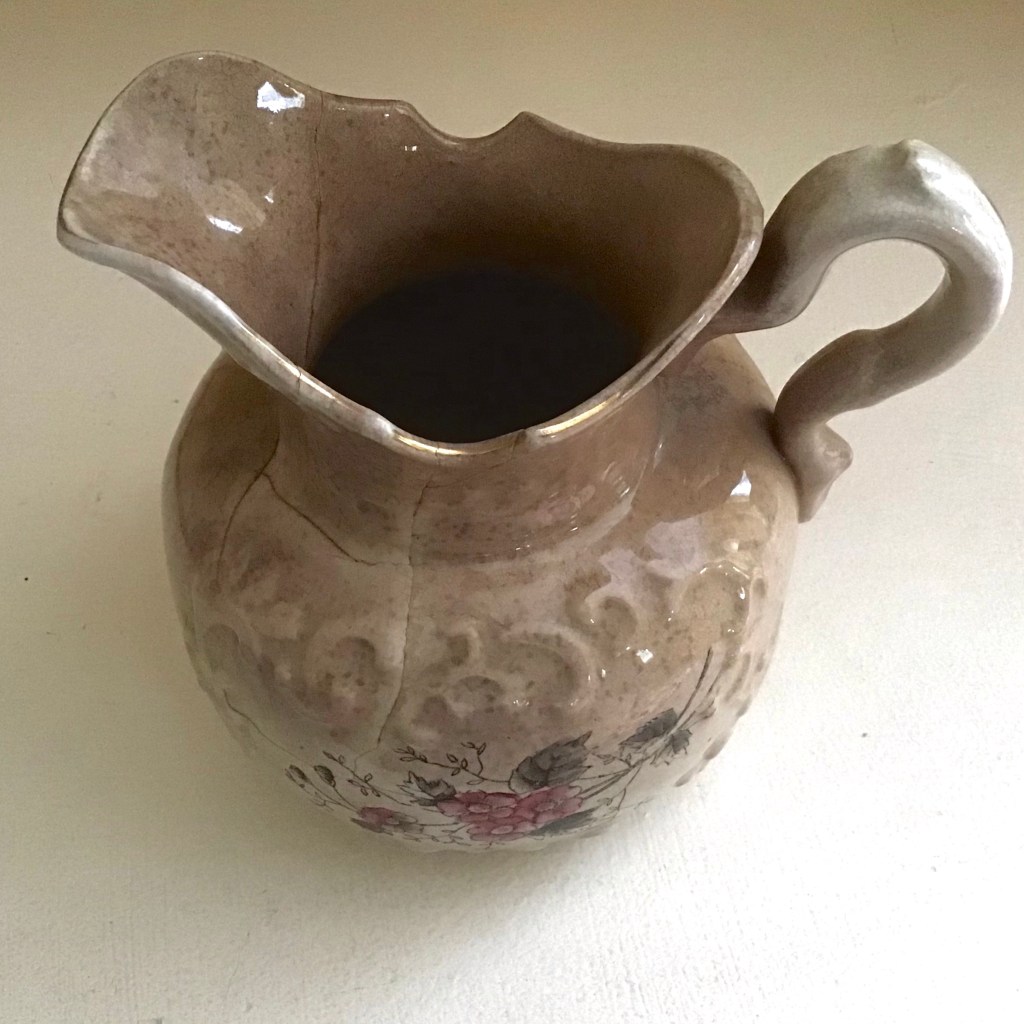
It is the crack in an old pitcher from your grandmother or an old friend, that makes it unique and dear, and maybe more interesting with a story behind it. You know you cannot replace it, and you treasure it. Someday, you also know it might break.

A Gift to Cathy from Mrs Pray** – Some Simple Wabi Sabi

Perhaps it is seen in the gnarly heirloom tomato with a blemish that you have grown in your garden, as opposed to the perfectly shaped tomato at the supermarket. Each of those home grown tomatoes is unique in it’s shape, pretty to look at, and will certainly wither on the vine if you do not pick and eat it. And, think of how much better a home grown tomato tastes than one that comes from the store.

An Heirloom Tomato from the Garden

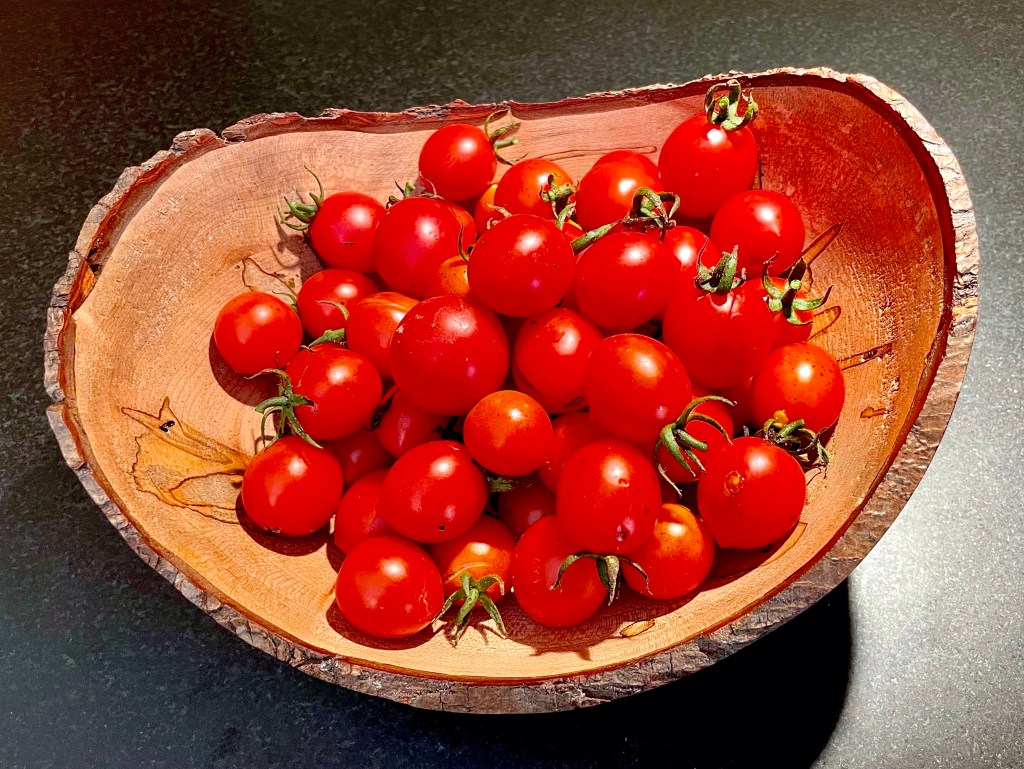
Think of the handcrafted items you make or buy, or receive as a gift, as opposed to those mass produced items we all pick up at nearby big box stores.

A Handmade Wooden Bowl we Received as a gift from our Friend, Kirby.

Again, I’m not an expert. Having said that, I am trying to relook at my life and how I view things. I think a bit of Wabi Sabi could help.

As to the Wabi Sabi wine at Linden, Jim also said this “Wabi Sabi reflects our philosophy behind the wine. It is an unintentional wine that resulted in a spontaneous decision. This is unusual for traditional, conservative, methodical Linden Vineyards. Once all blending decisions were made at the winery, there were several lots of wine that had no home. These misfit barrels were blended and bottled without intention or name.”

Linden’s Wabi Sabi … A Wonderful Little Wine.

Jim may have blended those barrels without intention, but the result was a wonderful little wine. It wasn’t perfect, but tasted awfully nice on a summer day. I have only one bottle left, and Linden has no more. Soon, my last bottle will be gone as well. Wabi Sabi indeed.

Addendum:

⁃ * The book I read on Wabi Sabi is titled “WABI SABI SIMPLE” by Richard R Powell. It’s a slim volume, and has some interesting thoughts for life and for work. One comment made was “maintain a conscious perspective that no job is perfect, no job is forever, and no job finishes completely.” Food for thought.

⁃ ** In the spring of 1973, Cathy and I were both in High School and had been dating for about a year. We took part in a High School Volunteer program to help out older folks around town. We worked together and went to the home of Mr. and Mrs. Pray, who we had never met before. We spent the day helping to clean up their yard, and clean and fix some things in their home. At the end of the day, Mrs Pray served us cake and something to drink. She tried to pay us, which of course we refused. She then disappeared for a moment and came back with the pitcher in the photograph above and gave it to Cathy. It was from her Grandmother, who was born in 1856 and started using the pitcher in 1875. I think it’s one of the most beautiful and generous gifts we ever received.

– In January of 2020, I wrote a blog called “Perfectly Imperfect”. Looking back at the blog now, I was already on a journey towards Wabi Sabi, and didn’t realize it. It’s always interesting to me when I find events in my life that overlap, and I’m not even aware of it at the time. Read this blog, and tell me if it doesn’t sound like Wabi Sabi by another name: https://mnhallblog.wordpress.com/2020/01/01/perfectly-imperfect/

⁃ For what it’s worth, Linden’s Wabi Sabi wine was a combination of Vidal Blanc, Sémillon and Viognier, not your typical blend. I love Linden Vineyards here in Virginia. They make excellent wines, by any standard. Want to know more about them? Here’s a link to a 2021 article about Jim Law and Linden – https://vinepair.com/articles/linden-vineyards-virginia/ and here’s a link to Linden’s website: https://www.lindenvineyards.com/

Zman is Gone

Zman is Gone

It’s always tough when a West Point brother dies, but this one hit me harder than most. Zman is gone. I’ve lost other classmates over the years, but Zman was the first from my company, and I felt a great sadness on hearing the news. I suppose it was sadness both for his passing, and the passing of our youth.

Dan Zimmermann was a big guy with a big personality. The kind of guy whose good mood was infectious. We had some good times at WooPoo U (West Point) our Firstie (Senior) year, although I also remember him studying a lot – he was taking P Chem, a class not for the faint of heart. Still, I remember an evening or two (or three) of partying.

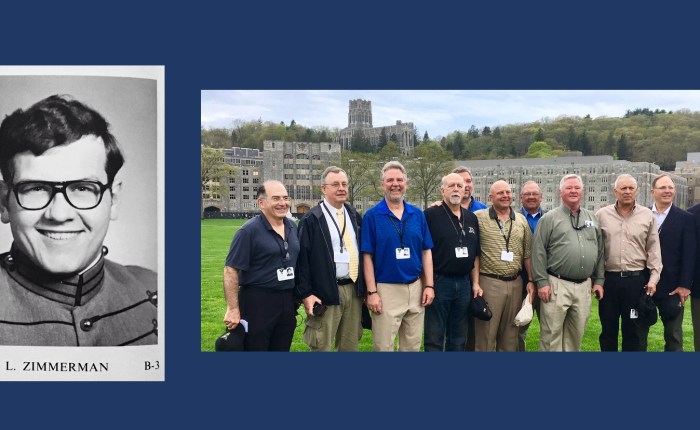
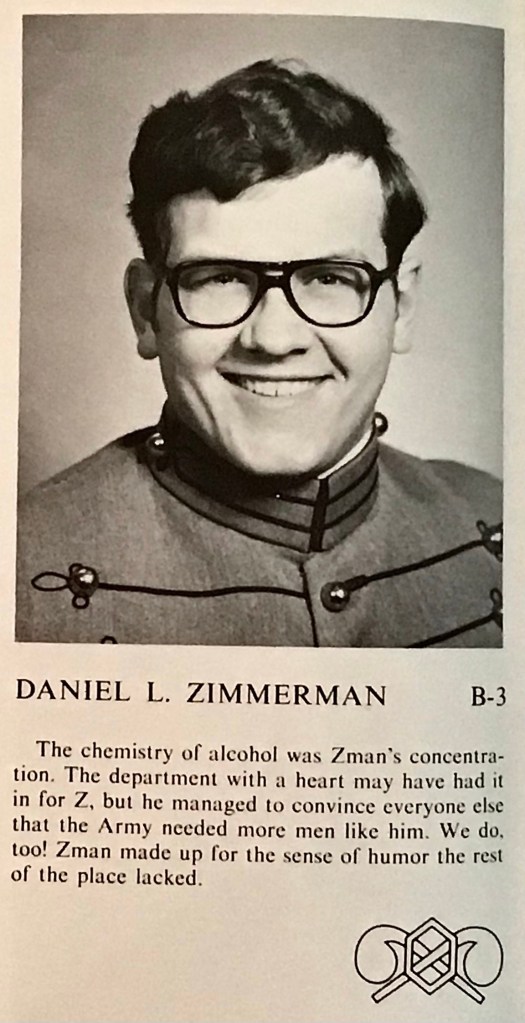
Dan’s Graduation Picture

After graduation in 1978, we reunited several months later in Wurzburg, Germany. I was stationed with the 123d Signal Bn (3ID) at Hindenburg Kaserne, and he was across town with a Chemical unit. I can’t remember now if he was a part of 3ID or some other unit. Over the next three years, we managed to hit more than a few Bier and Wien Fests together in the surrounding area.

I remember one evening in ‘80 or ‘81 when the town he lived in held something called a “Heckenwirtschaft.” In Franconia, a part of Bavaria, small towns would occasionally allow the small wine growers to open their homes as limited seating “pubs” – an event called a “Heckenwirtschaft”. Dan’s landlord was one of the people who opened their homes. We spent the night wandering from house to house, and in their cellars or kitchens sampled some good white wines and wonderful homemade foods. It was a great time – one of those evenings when it’s just you and the locals, and because of Dan’s landlord, we were treated like locals as well. Nights like that don’t come around all that often and I remember it to this day. We may have overserved ourselves a bit that evening.

We lost track of each other after our next assignments and didn’t see each other for a couple of decades. In 2015, Cath and I held a mini-reunion for my West Point Company, B-3. There were about eighteen of us here for the weekend and Dan joined up at the last minute for the two nights of festivities. It’s funny, but the whole group of us clicked back together, as if it was Firstie year in 1978. There were stories told, both old and new. The bonds we’d forged decades before on the banks of the Hudson River still held strong.

We saw each other for what turned out to be the last time at our 40th reunion at West Point in 2018. He had become the National Sergeant at Arms for the American Legion, and told us about escorting both candidates, Secretary Clinton and Mr. Trump, to the stage in 2016, when each spoke at the Legion’s National Meeting prior to the election.

B-3 Classmates at the 40th Reunion in 2018. Dan is in the Center in the Back.

In 2020, Cathy and I were going to hold another mini B-3 reunion in May here in Warrenton, Virginia. Dan and I traded emails and spoke, and he was planning to come. Unfortunately, in April, we cancelled the get-together due to Covid. Dan called me after that and we talked for about 10 or 15 minutes about Covid, along with this and that. It was the last time we spoke with each other. He didn’t mention the lung cancer he already knew he was dying of.

It’s Forty-some years since our graduation from West Point in 1978 and those years have passed much too quickly. I think of Dan, and my other classmates, both living and dead. Our class will still have plenty of good times together, and many more reunions. Having said that, the chapel service honoring our departed classmates at those reunions becomes just a little sadder each time.

I’ve also been thinking about the great Dire Straits/Mark Knopfler song, “Brothers in Arms” and it’s refrain,

You did not desert me

My brothers in arms…

Whenever I hear the song, I think of both West Point and my time in the Army. The song is bittersweet, and also a testament to those who have served, and the brotherhood that exists between them. Released in 1985, it also reminds me of my 8 1/2 years with the Army in Germany that decade.

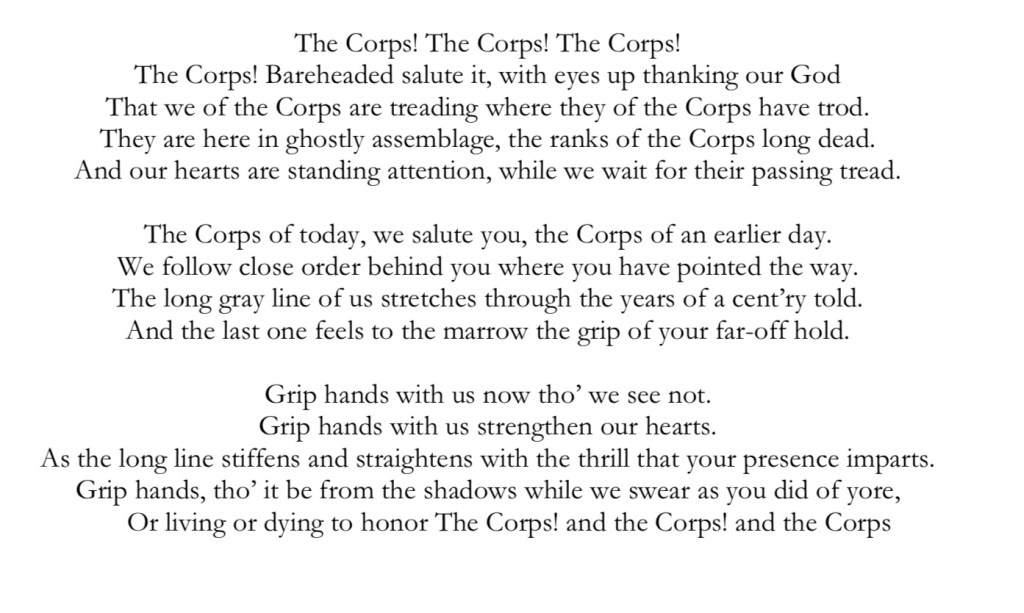
And of course, I can’t help but remember the song “The Corps” from West Point. It celebrates the continuity of The Long Gray Line, past, present and future.

Grip hands with us now tho’ we see not. Grip hands with us strengthen our hearts … Grip hands, tho’ it be from the shadows…

Rest In Peace Zman, Rest in Peace. You are gone, but not forgotten.

Grip Hands …

Addendum:

– You can read Dan’s official obituary here, if you so desire. https://www.mvfh.org/guestbook/daniel-zimmermann . Dan is survived by his wife Mary Lepley, and three children.

– My classmate COL Chuck Allen (Ret) captured that 2015 B-3 Company get together pretty perfectly in this article: https://cumberlink.com/print-specific/article_9ce2a381-0218-5973-b12e-1196218b230d.html . Chuck is still doing great work and teaching Leadership at the Army War College.

– Thanks as always to my friend Colleen for her super editorial assistance. I’m alway thankful for her corrections to my poor English. I’m better than when I started this blog 5 years ago, but still have room for improvement. Thanks Colleen!