Punk Turns Sixty

Punk Turns Sixty

Punk turns sixty this week. Yep, that’s correct. Punk, also known as Bonnie, Bon, Bonswa, Lana’s mom, Don’s wife, and one half of ‘The Sisters of no Mercy’ turns sixty this week. For Cathy and I, she is the youngest of all of our sisters and we are happy to finally welcome her to middle age – ;-). Come on in Bonnie, the water is fine…

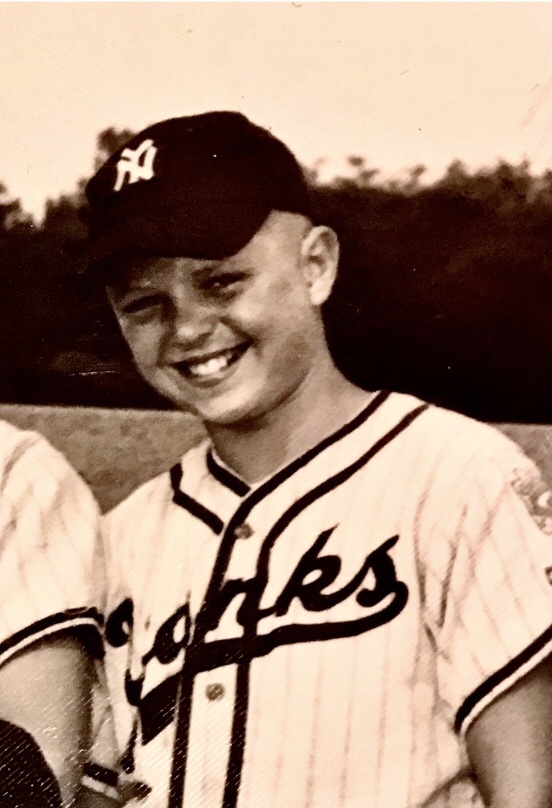
Truth be told, I’ve known Bonnie for most of my life, and hers. When Cathy and I started dating in ‘72, Bonnie was ten years old, and known in their family as “Punk”. I don’t think anyone has called her that in a long time.

Bonnie, around the time we first met

When we married in ‘78, Bonnie was all of sixteen and at the wedding, held her own with the newly commissioned officers in attendance, and all of our long time friends. In ‘83, when we returned after almost five years in Germany, she was of legal age – twenty-one, living near Washington DC and was married. That’s when I remember our relationship starting to change. She was no longer just Cath’s punk sister – she had become an adult in her own right. It was really the start of an adult friendship between us, something I’ve treasured ever since.

Bonnie at our wedding in ‘78, with my classmate Tom Guthrie

In our second tour of Germany, Bonnie enjoyed Multiple trips to Europe and even a Christmas. She was present and an integral participant at the initial Hare-of-the-Dog New Year’s Day party. When we returned to the States in ‘89, Bonnie was still in her twenties. Two years later, we attended the combined party for her thirtieth birthday and her graduation from the University of Maryland. That was a fun night – I seem to remember a bottle of Dom Perignon at some point.

Never one to let the grass grow under her feet, Bonnie moved to California a year or two later. There, she really launched her marketing career, her firm, B3 Communications, was established and she met the love of her life, Don. For the next almost twenty five years, the four of us were the best of friends. We named ourselves the 4-H club and had “meetings” on the East Coast, West Coast, and places in between. Those good times still bring a smile to my face.

Good times with the 4H Club

In 2003, Cathy and I celebrated our twenty-fifth wedding anniversary with a large party, which Bonnie and Don attended. During the evening’s festivities, Bonnie disappeared for a bit. When she reappeared later to make a speech congratulating us, she was wearing her Bridesmaid’s dress, and carrying her parasol from our wedding twenty-five years before. At the age of forty-two, she was happy to inform anyone who would listen that, “Yes, the dress still fits; I didn’t have to alter it!” 😉

Yes, the dress still fit, 25 years later.

Of course Lana joined Bonnie and Don along the way in 2005 and we changed from the 4-H Club to the 5-H Club.

Bonnie and Lana

I now chuckle slightly at the fact that as Bonnie turns sixty, Lana is sixteen – the same age Bonnie was when Cathy and I married. How is it even possible? Seriously, how is that even possible? Where did the time go?

So, yea, Punk turns sixty this week. We look forward to celebrating the big day with her out in California. Good food, great wine, loving family and friends – It’s going to be wonderful.

Happy Birthday Punk!

Happy Birthday Punk! I love you as if you are one of my own sisters, and also one of my best friends. On the last day of your 59th year, I want to welcome you to the start of your seventh decade – jump on in, the water is just fine.

Addendum:

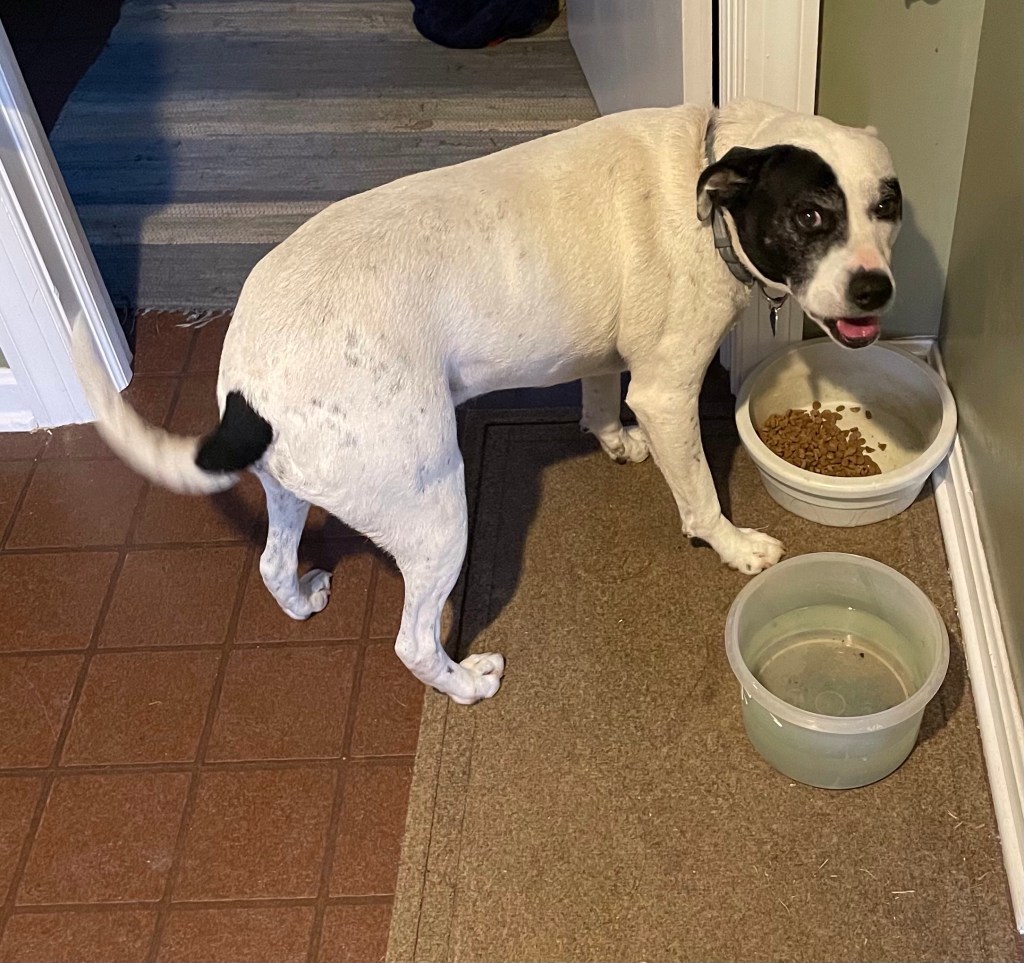
Thanks to Lana Harris for the use of the picture of Bonnie and their Dog, Ruby for the cover photo.

Thanks to Paula Johnson Hamley for the picture of Bonnie in the 5th Grade, around the time we met. I clipped the picture to just get Bonnie, but the whole picture (below) is too cute to pass up. They had just been selected as the 5th Grade Students of the Month in Mr. Herman’s class at Shabbona Grade School in Ottawa Illinois.

Bonnie Snow and Paula Johnson Hamley in 5th Grade

Fighting Optimism

Fighting Optimism

On the Late Show last October, Bruce Springsteen said “You have to be a fighting optimist, I believe.” I think The Boss is right. As this year ends, I’m trying to do two things. One, put the disaster that was 2021 behind me, and two, approach 2022 with a sense of not just optimism, but fighting optimism.

While there were many good things that happened in 2021, I suspect the year will long be remembered for two things. First, the Insurrection on January 6th and the right’s attempts to minimize those events. And second, the gift that keeps on giving – Covid. Those are the twin pillars that define 2021.

At their core, they are of course, entwined with each other. He who shall go unnamed continues to push against the valid election results of 2020 and calls the insurrectionists of January 6th patriots and heroes. The big lie just keeps getting bigger. And with Covid, we know it’s not going away any time soon, and maybe never. Despite the Delta and Omicron variants, the death rate has dropped dramatically – except among those who refuse to get the shot. For them, the death rate has increased. We all know the reason why a majority of those refusing the vaccine have done so. It’s an interesting juxtaposition to see a leader cause the deaths of some of those who follow him.

The past, of course, informs the future.

Those of you who know me, know I’m an optimist at heart. When people ask me if I see the glass half full, or half empty, in my mind I almost always answer “I see it 3/4 full.” But Bruce is right. Being an optimist isn’t enough – You need to be a fighting optimist.

What does a “fighting optimist” even mean? Springsteen originally used the phrase on October 25th, 2021 in a Podcast with former President Barack Obama. He was speaking about fighting for America in these troubled times when he said “You have to be a fighting optimist, I believeYou know, I think you’ve got to adhere to the truth. You’ve got to adhere to the basic values in our institutions … “(We) need to protect American Democracy and things like the fundamental right to vote…”

For me, that defines fighting optimism perfectly. Democracy should be a participatory activity – not just by voting, but also by helping to shape this great country of ours. There is too much at stake to sit on the sidelines. It means continuing to fight for change, in order to enable the optimistic view of the future I have. I need to do everything I can to empower that future.

As I look to 2022 and beyond, I’m making fighting optimism a part of my life. I want to ensure my optimistic view of a better America is achieved. It’s not enough to be aware of what is going on in the world. We must also have the will to work towards the needed changes. It will continue to take time and effort to make our better America happen, and I’m committed to doing so. I hope you are as well.

As Bruce says, “the other choice is unthinkable.”

Awareness and optimism aren’t enough. We must also have the will to work towards the needed changes.

Feel free to share this blog.

Addendum:

Bruce Springsteen and President Obama have written a book together called Renegades, that is based on a series of podcasts they did in 2020. You can read more here: https://www.npr.org/2021/10/25/1048032010/obama-bruce-springsteen-podcast-book-renegades

Christmas is Coming

Christmas is Coming

It’s funny what sparks a memory. For me, the Christmas song Up on the Housetop, with it’s chorus of “Ho ho ho, who wouldn’t go, Up on the housetop, click, click, click, down through the chimney with good Saint Nick…”, instantly floods me with holiday memories from my youth. I fondly remember McKinley Grade School in Ottawa, and our Principal, Mr Powell.

‘Tis the season. Don’t we all really remember the Christmases from our childhood? I know I do. The Christmases at McKinley, on the southside of Ottawa, Illinois were special. We ALL remember them.

McKinley was originally a small two story wooden school house. Eventually, in the late fifties, it was replaced with a large, one story brick building. The new school included an indoor gymnasium, with a small elevated stage on one side. Both would figure prominently in the school’s Christmas celebrations.

McKinley School Teachers for 1959/60. Mr Powell is second from the right in the second row. The photo is probably from about two years after the new school building opened.

Our excitement started sometime in early December. Christmas was approaching, which of course meant an upcoming break, and if we were lucky, the chance to go sledding, or maybe skating on the pond at Varland’s pasture. Almost as exciting was the Christmas Show the school presented, just before the break. The teachers told us about the upcoming show, and each class was assigned a song to sing. We stared practicing on a daily basis.

A large evergreen tree eventually arrived at the school and was placed prominently on one side of the gym. Of course, it needed decorating. Where did the ornaments come from? They were handmade by the students. Yes, there were the obligatory construction paper chains from the younger classes, but another source of ornaments proved a favorite memory for many. Milk, in individual glass bottles was delivered to school each day. Those bottles had blue or silver foil caps. We collected the caps and then made stars, ornaments, or strings of ornaments from them. Oh how they shined and sparkled in the reflected light on the tree.

Foil milk bottle caps similar to these made perfect tree ornaments

The excitement grew, and a few days before our break, there were gift exchanges in each of the classrooms. The gifts weren’t big of course, but it was still fun and increased our anticipation.

As the date of the show approached, we kids practiced our songs. The week of the show, the entire school gathered in the gym a few times to practice, and also to sing “songs of the season” together. Those daytime sessions were great fun. All of the kids marched by class to the gymnasium, and then we’d sit on the floor facing the stage. Everyone was in a giddy mood with much laughter, yelling and barely contained excitement. Each class practiced their songs, but in between, Mr. Powell would lead the entire school in Christmas and Holiday songs. He stood in front of us near the tree, wearing a holiday bow tie. I think he was as excited as we were.

When leading the songs, he also acted some of them out. One example several friends remember was singing the song Up on the Housetop*. As the chorus was sung, Mr. Powell would stick his belly out and while placing both hands over his stomach, sing in his deep baritone “Ho ho ho, who wouldn’t go, ho ho ho, who wouldn’t go…”. When the next line “Up on the housetop, click, click, click, Down through the chimney with good Saint Nick” was sung, he clicked his fingers three times instead of actually singing “click, click, click.” Of course, all of us kids quickly caught on, and did the same thing – imagine a couple hundred kids all clicking in time with the chorus, and you get the picture.

The songs we sang at the time included both religious and secular Christmas songs. One student who is Jewish, remembered feeling special because we would inevitably sing one or two Hannukah songs. It was a simpler time.

Eventually, it was time to return to our classrooms, but the singing wasn’t quite over. Mr. Powell would start us singing an old English folk song Christmas is Coming, with the opening line “Christmas is coming, the geese are getting fat…” The song is meant to be sung as a round, which is exactly what we did. I believe we were divided into thirds, with each group starting one line after the previous group started. Once we had sung “around” a couple of times, the classes were dismissed, one grade at a time, with each class singing the song all the way back to their classroom.

For the younger kids, there was often a bit of confusion on the lyrics. Instead of “…if you haven’t got a ha’penny, God bless you…”, they heard “if you haven’t got a hay penny God Bless a shoe…” What was a Hay Penny? Why were we blessing shoes? It could all be a bit confusing, but the fun and good spirits made up for it.

Finally it was the big day of the Christmas Show. It was also the day before Christmas break started. Excitement was at a fevered pitch.

The evening program was a bit more formal than our daytime singalongs. It wasn’t quite the Christmas Show from the movie Love Actually – McKinley School was a bit more primitive, but we did have a stage, and the adults sat on folding chairs set up on the gym floor itself. As kids, we dressed in our “good clothes” for the big night. Our parents brought treats and cookies for the classrooms.

While the adults found their seats in the gymnasium, we kids walked to our classrooms, waiting for our turn to sing. My friend Joy remembers sitting at her desk eating cookies and coloring (after smelling) the newly mimeographed Christmas pictures. For the younger grades, there were also games that some of the parents (moms) helped with in the classrooms. Everyone wanted to make sure we kids were entertained, focused and staying out of trouble.

Finally the show started, with the Kindergarten classes singing first. My friend Lynn remembers “The big curtain opening was our cue to start singing. It was quite intimidating to see all the people “out there” sitting on folding chairs looking at us. We sang Away in a Manger and the little stage seemed huge.”

One of the classes always sang Oh Christmas Tree, Oh Christmas Tree in German (Oh Tannenbaum, Oh Tannenbaum…). How cool was that? Singing a Christmas song from another country!

The show eventually ended and parents picked up their children from the classrooms. Cookies were finished, and newly colored Christmas pictures served as visual reminders of the fun that night. During the short drive home, we were still animated. I suppose the stimulation from doing the show, along with the sugar rush of the cookies combined and kept us amped up for awhile.

As with all things, time passed and the world changed – not for better or worse, but changed none-the-less. Mr Powell retired. The huge tree was replaced with two smaller artificial trees for fire safety. Eventually, the festivities changed from a secular Christmas celebration to a Holiday celebration, which was the right thing to do.

One teacher later reminisced “We teachers loved the singing almost more than you kids! We continued the tradition after Mr. Powell retired, but it was never quite the same.”

I’ve been gone from Ottawa for many years now, and to be honest, I don’t know if they have the Holiday celebration in the gym anymore. What I do know is I have wonderful memories from my youth that I wouldn’t trade for anything.

I’ll be home for Christmas, if only in my dreams… Christmas is coming, the geese are getting fat, Please put a penny in the old man’s hat…

Addendum:

  • There is some question/controversy among my friends about whether the title of the song is Up on the Housetop or Up on the Rooftop. Folk seemingly remember singing it both ways. For what it’s worth, the song is referenced in Wikipedia as Up on Housetop. It was written in 1864 and is the second-oldest secular Christmas song after Jingle Bells, which was written in 1857.
  • I had some memories from those special times at McKinley, but of course forgot lots too, until reminded by others about some of the activities. My thanks to the many who contributed memories to this blog, including: students Lisa Palmer Braley, Brenda Brown, Karen Williams Miller, Robert Cavanaugh, Linda Baker, Dorey Renee, Glenda Boettcher, Laurie Sargent Kinken, Mary Cunningham Heider, Kelly Nagle Shanley, Barbara Charlier Houston, LeeAnn Slack Niemann, Lynne Galley Robinson, Becky Ann, Roberta Sherman Schwandner. Jan Butler, Robert Cross, Linda Gerding Bergman, Joy Starjak Algate, Jessica Burress, Roberta Gourley, Tanya McCambridge, Tim Stouffer, and Howard Johnson, along with teachers Charlean Grobe and Sylvia Eichelkraut.
  • Thanks to Mrs Charlean Grobe for the photo of the McKinley School Teachers in 59-60! Charlean was my Kindergarten Teacher, one year later! She is second from the left in the second row in the picture.

Life and the Ritual of Risotto

Life and the Ritual of Risotto

I made Risotto last week. Due to some changes in diet, it was the first time in over a year and it was wonderful. Risotto isn’t hard to make, and it doesn’t take long, but it does require patience and attention. You can’t rush risotto, and to me, that is why making it is both relaxing and a bit zen like.

I’ve been making risotto for years, and have several different recipes. It was a staple part of our dinner rotation. And then about a year ago, I had a couple of blood tests that caused some concern. After engaging in bilateral discussions with my doctor* (… 😉 … ) , I made significant diet changes, and drastically reduced dairy and carbs. Some things were easy, like changing from regular milk to oat milk. Unfortunately, cheese was practically it’s own food group for me, so that required a fair amount of mental adjustment. Pasta, potatoes, white rice, and bread? All eliminated, or severely reduced. I went cold turkey, and just did it. The good news was that after three months, the test results were back to normal, and six months later, they remained normal. As a side benefit, I lost about fifteen pounds.

Over the past six months, we’ve reintroduced small amounts of dairy and carbs into our diet. They’ve become “special” as opposed to every day, and it’s worked out fine. It turns out, sometimes, you can teach an old dog new tricks.

Last Thursday I had a series of follow-up fasting blood tests. I wouldn’t receive the results for a day or two, but decided to celebrate early and chose to make risotto for dinner that night. On the way home, I picked up some cream for the sauce, along with fresh bread from a local bakery. I mean what the hell, in for a penny, in for a pound. While I have several risotto recipes, there was no doubt in my mind about which one I would make – Ben’s Cognac Risotto – a favorite of ours, with mushrooms, shallots, cream, butter, and plenty of Parmesan cheese.

From start to finish, Ben’s Cognac Risotto takes about forty five minutes to an hour to make. As with most risottos, it’s not complicated, however, once you start cooking, you can’t walk away from the stove. You need to be present, both mentally and physically.

That evening , I started heating up the required chicken broth, chopped up the needed shallots and mushrooms, separately measured out the cognac and cream for the sauce, and then grated the Parmesan cheese necessary for the finish.

Shallots and Mushrooms – the Key to Ben’s Cognac Risotto…

The next step is an optional one, but I find it adds to the relaxing nature of making risotto. I walked over to the bar and made myself a martini. In what may be a strange coincidence, I’ve learned that the time it takes to drink a martini, is almost exactly the same length of time it takes to make risotto. Not a martini fan? A Manhattan or Negroni will do, or even a glass of the red wine you opened to serve later with the risotto. Trust me on this. It works.

I made the mushroom sauce first and the kitchen filled with that heavenly smell only sautéed mushrooms can bring. After 5 minutes or so, I added the cognac and reduced it, and then added the cream and slowly reduced it some more. I set the sauce aside, and then started to work on the risotto itself. I also let Cathy know dinner would be ready in about twenty minutes, so she could finish setting the table, and pour some wine in our glasses.

Mushrooms, Cognac and Cream – What’s not to like?

After sautéing the shallots, I added the rice to the pan and stirred a bit. I started adding the broth, about a half a cup at a time, to the rice. Next? The ritual – Keep stirring the rice every few seconds; take a sip of martini; let the rice sit a little, then stir, and add the next portion of broth. And, repeat – Stir the broth into the rice, take a sip of martini, let the rice sit a bit, then stir, and add more broth. And repeat. And repeat. And repeat. A bit of zen zone settles in, or at least it does for me. It’s just me, the spoon, and the rice.

In the Zen Zone – Just me, the Spoon, and the Rice…

As I neared the last of the broth, I tasted the rice, checking for chewiness. You still have the mushroom sauce to add, so a little chewiness is OK. I know that if there’s a bit of broth left, it’s not a big deal.

Finally, It was time. I stirred the mushroom sauce into the rice, and let it thicken a bit. I then added the Parmesan and stirred some more. Cathy brought our bowls over, and I put some risotto into each of them, with another dusting of Parmesan on top of each. I took the last sip of my martini, grabbed the bread warming in the oven and crossed to the table. We clinked glasses and then settled into the wonderfulness that is Ben’s Cognac Risotto.

The Wonderfulness that is Ben’s Cognac Risotto…

Cathy asked me if we were maybe celebrating too early, since I hadn’t yet received my test results. I answered I felt good about the tests and wasn’t worried. Besides, it’s a good thing to occasionally celebrate life.

Late the next afternoon, although I hadn’t received a call from the doctor, I logged into my account at her office. The four test results were there – I quickly opened and scanned each of them. Everything was fine, and in fact a couple of tests showed further improvement from last June. The low dairy, low carb diet was working. It also appeared the occasional piece of cheese, serving of roasted potatoes, or bowl of risotto wasn’t having an overly adverse effect on me. I could live with this.

Live is the key word. I’ve reached the age where something is always breaking down, or going a bit haywire in my body. There is always some new thing I need to be aware of for my future health. While healthy over all, Cath and I both have issues that crop up. And of course we have friends who are dealing with greater issues – cancer, loss of eyesight, early onset dementia… getting older isn’t for the faint of heart. But you also have to live, and enjoy life in all of the ways you can. For me, the ritual of risotto is one of those ways, and I’m not ready to give up on it yet. We may not have it as often, but trust me, it’s still going to appear on the menu.

Otherwise, what’s the point?

Addendum:

– * As a side note, I love my doctor, Doctor Emman Hussny, and have been with her for a long time – around twenty years. When she left one practice to start her own, I moved with her. She has a great bedside manner, and encourages leading a healthier lifestyle, without being draconian about it. During checkups, we certainly have discussions about my health, but also discuss other topics of the day. I feel like she genuinely cares about me, and I’m not just another patient flowing through her office.

– Here’s the recipe for Ben’s Cognac Risotto – enjoy! If you want to tone it down a bit, you can substitute milk, or even 2% milk for the cream.

Let Sleeping Dogs Lie…

Let Sleeping Dogs Lie…

Next month, it will be 25 years since our first dog, Top, passed away. He was 17 years old at the time. Recently, I was thinking about him as we were placing baskets on couches and chairs, so our current dog, Carmen, couldn’t hop up for a quick snooze while we were out and about. We weren’t that smart with Top, and he took full advantage of our negligence. He was a covert couch sleeper the entire time he was with us.

Some of our German friends often said Top was “einmalig”, which translates to “one of a kind.” He was definitely that. We have tons of stories about him – eating a cherry (and only the cherry) off the top of a danish; chasing and catching bees; leaping out of a moving car while traveling with Cathy; earning the nickname “Deerslayer” from our running group; hating cats, except for Vincent, who lived next door to us; eating half a ham one Christmas, as Cathy and I were opening our presents; learning how to open an outside door and letting himself out for a walk… The list goes on. This story is about him outfoxing us and sleeping on the couch.

Top, Early in His Life

From day one, Top wasn’t allowed on the furniture, unless “asked”. That is, he sat in front of you, looked cute and stared at you. If you didn’t invite him to join you, he knew he wasn’t allowed on the furniture. And for all intents and purposes, he respected that rule … as long as we were at home. If we were out of the house, there were evidently a different set of rules. Top’s Rules. Since there was no one to ask, he presumed it was OK to grant himself permission, and would jump on the couch for a nap.

Through much of Top’s life, when we arrived home and opened the door, there he was, sitting in the entry way with his tail wagging, eager to see us. You could look over at the couch, see the indentation where he’d been sleeping and feel his warmth on the cushion. Of course we were never able to catch him. He was too clever for that. We drove Saabs for much of that time period, and although I could never prove it, I always suspected he recognized the unique engine noise of a Saab, and knew it was his cue to leave the couch.

As the years went by, Top grew older, and had some hearing loss. When you arrived home, turned the key in the lock and opened the door, you would hear him spring off the couch and run over to the entryway. There he greeted you, looking innocent. We didn’t catch him in the actual act of laying on the couch, and so ignored the transgression.

More time passed and he became a senior dog, getting deafer and a bit creakier. Now when we arrived home and opened the door, he would still be on the couch, just starting to sit up, looking sleepy and a bit chagrined. He’d hop down and walk over to greet us. We’d admonish him, but only a bit. Who could blame an old guy for wanting a soft and warm place to sleep?

In the last year or so of his life, his hearing was pretty much gone. We’d come home, unlock and open the door, and come inside. No dog to greet us, no dog springing off the couch and trotting over, no dog looking embarrassed and walking slowly to the door. We’d look at the couch, and there was Top, curled up in a ball sleeping, while softly snoring. We’d walk on in and quietly go about our business. If it was dinner time, we’d go to the couch and gently wake him for his evening meal. Otherwise, he’d snooze away a bit, and eventually wake up. He’d hop down and find us in the kitchen, or wherever, and walk up to say hello and receive a pet.

A few months later, it was time, and we eased him over the rainbow bridge. It was a sad day, weekend and month. As with all things, time eventually passed and the pain lessened.

Flowers we Received from our Friend, Don, at Top’s Passing

We still think of Top, laugh at his antics and tell his stories. Of course many of our friends have heard the stories more than once. Maybe because Top was “einmalig”, or maybe because he was our first dog, we tell more stories about him than any of our other pets. I’m sure they are a bit boring to others, but for me, it’s a way of keeping his memory alive. He’s been gone for 25 years now, but will never be gone from our hearts.

Addendum:

Here’s another blog about Top from the past. I don’t know if our dog Top could bark in both German and English, but he had a fluent understanding of the two languages … We discovered this outside our local Bäckerei (Bakery), when an old German lady bent down, looked at Top and said “Gib mir deine Pfote”. As she extended her hand, Top […]. Continue at: https://mnhallblog.wordpress.com/2020/07/15/our-bilingual-dog-top/

Covid…Again

Covid…Again

I didn’t really think I would be writing about Covid nearly two years after it started, but here we are. With the new omicron variant, the market did it’s requisite tanking, travel restrictions for some countries are back in place, and collectively, we are all groaning, although for a variety of reasons.

I wrote my first Covid Blog on March 14th, 2020 – I titled it (With apologies to REM) “It’s the End of the World as we Know It”. I don’t think I quite realized how prophetic that title was at the time. Other Covid blogs followed, including toilet paper shortages, supply chain issues (we didn’t call it that back then), and our first Zoom Happy Hour.

On April 30th of 2020, I had the temerity to write a blog titled “Ramblings on a Post Covid Future.” At the time, my friend Dave cautioned “I think you’re taking on an elephant here, maybe a premature elephant at that.” Dave – I owe you a beer – truer words were never spoken.

I then went silent on Covid until spring of this year when I did a prematurely optimistic blog about Covid and baseball, and then a follow up about the cancellation of Opening Day for the Nats, due to Covid.

More Covid silence ensued until September of this year, when I wrote a blog about our upcoming trip to Southern Africa, and the four, count ‘em four, Covid PCR tests required over the course of our time there (it actually ended up being four PCR tests, and one quick test).

When we were traveling in Southern Africa, we visited South Africa, Zimbabwe and Botswana, three of the countries now on the no-fly list. All three countries were doing the right things – Masks in public spaces indoors; temperature checks on entering hotels, restaurants and bars; hand sanitizer everywhere and people using it; and as you entered any restaurant, bar or hotel, you were required to provide your name and telephone number, in case contact tracing was necessary. All three countries required Covid PCR tests to cross their borders.

What they didn’t have, was enough vaccine. As we talked with people there, they were amazed that in America some people were refusing the vaccine. They thought we Americans were slightly crazy.

Over there? Everyone wants it, but there’s still not enough to go around. As a result, the vaccine rate remains quite low, and is probably part of the reason for the emergence of both Delta and Omicron.

Something South Africa does have is great researchers in this space. They know what they are doing. Having dealt with AIDS, SARS, Ebola and other dangerous outbreaks in the past, they are equipped to study and identify emerging variants of infectious diseases. It is they who identified this latest threat. They did the right thing to sound warnings to the WHO. Unfortunately for them, due to their honesty, their country will suffer the most economically.

I’m guessing we will figure out how to deal with omicron, as we have the other variants. Who knows, maybe instead of it becoming deadlier than Delta, it will go the way of the lambda and mu variants and fizzle out. In the meantime, we will no doubt continue our political fighting about vaccines and masks.

A friend of ours had covid early on, although it wasn’t a very severe case. He decided he didn’t need the vaccine because he had developed “natural immunity”. Except he hadn’t, and got covid again. This time he had a severe case. He lost 30 pounds, was in and out of the hospital twice and had to use supplemental oxygen. After it was over, doctors warned him if he had covid again, without the vaccine, he would probably die. He got the shot.

I don’t have some great closing for this blog, or some wisdom to impart. What I do know is Covid isn’t going away. Not now, and maybe not ever. We need to continue to deal with it. People need to practice good hygiene, consider when masking may be appropriate, and get the damned shot. I really don’t want to write another covid blog.

Addendum:

If you are interested, or bored with nothing to do, here are my previous Covid Blogs.

The Lions and the Warthogs

The Lions and the Warthogs

When we returned to the Chobe Game Lodge, we were still animated from our safari that afternoon. The manager asked us how it went, and we excitedly told him about the lions hunting the warthogs. He asked “Ahhh, and who did you bet on?”

We had arrived at the Lodge the afternoon before. Located in Chobe National Park, it’s a wonderful setting. The Park is particularly known for some of the largest elephant herds anywhere in the world and didn’t disappoint – we saw hundreds of elephant along the Chobe River on our drive to the Lodge that first day.

The next morning, we were on safari when our guide, Thuso*, received a radio call that lions were at a certain location near the river. We quickly changed our route and drove to the spot by the Chobe. Sure enough, there were a couple of female lions and we watched them, as they settled in for a sleep. We were told they had cubs, but the cubs stayed out of sight in the brush. For me, big cat sightings are always special, and this time was no exception.

Settling in for a Snooze

Eventually we moved on and resumed our planned route. For the rest of the morning we had the opportunity to see plenty of ellies, baboons and male Kudu. We’d seen plenty of female kudu on previous safaris, but it was a treat to see the males with their huge spiraling horns. Later, we returned to the Lodge for lunch, and siesta time.

I love the Kudu’s Spiraling Horns

When we left for our afternoon game drive, it was bittersweet. After three weeks of travel, this was the final safari of the vacation and our friends, Bill and Sharon, would fly back to the States the next day. We made a joke with Thuso about it being our last safari, and we hoped she could make it special. She laughed, and then said “Let’s go back and check on the lions. I doubt they moved during the heat of the day.

Our Wonderful Guide, Thuso

We drove for twenty minutes or so and arrived back at the location of the lion sighting from that morning. As we pulled around a corner, there they were, not two, but seven lions sleeping or lounging in the shade. We watched for the next twenty minutes, as the pride woke up, and started moving around. It was fascinating to see their nonchalance as they slowly stood, stretched and nuzzled one another.

The Pride Starts Coming to Life

The matriarch of the pride eventually crossed the path in front of us and strolled to a nearby stream for a drink of water. Thuso quietly said “I think she is on the hunt.” and pointed out two warthogs, perhaps two hundred yards away, foraging along the bank of the Chobe River. As the lion drank from the stream, her view was fixed on the warthogs. She crossed the stream, and after sitting briefly, slowly started covering the distance to her prey.

The Lioness was Keeping her Focus on The Task at Hand

Meanwhile, while there was no apparent communication, the rest of the pride slowly stood up, and one by one, at perhaps one or two minute intervals, crossed the road, and made their way to the stream for a drink, and then oh so slowly, followed the matriarch’s lead.

As the matriarch proceeded towards the warthogs, she occasionally slowed or stopped, or shrunk down to the ground. The rest of the lions followed her lead and acted similarly. While she moved on a straight line to the warthogs, the rest of the pride slowly spread to the left as they crossed the stream. With the River on the far side preventing the warthogs movement in that direction, the lions spread in a lazy “L” to the left, creating something of a classic ambush setup. The warthogs were blocked in on three sides and oblivious to what was about to happen. We were barely breathing as we watched the lions set up the attack.

The Lions Set Up a Classic Ambush Pattern

The matriarch was pretty much low crawling at this point. Finally, she was perhaps fifteen yards from the nearest warthog. She paused, then, with a leap, charged the warthogs. And…

Two of the Lions and One of the Warthogs. Note the Lead Lion in the Crouch

Do you remember watching the Roadrunner cartoons as a kid? When the roadrunner disappears in a flash of speed and a cloud of dust? That is exactly what the warthogs did. The warthogs turned to the left, turned on their afterburners (who knew warthogs had afterburners!?!) and were gone. I swear, they moved 50 yards instantly. The lead lion raced for perhaps ten yards, and then just stopped. The other lions didn’t do much more than stand up to join the chase, and immediately stopped as well. We watched the dust trails form behind the warthogs as they raced parallel to the Chobe River. They were quickly out of sight and all we saw was their dust lingering in the air.

We were silent for a second, and then all of us burst out laughing and talking at the same time. Of all the possible outcomes, this was one we had never anticipated. The lions had a great setup, they had three sides blocked, and yet, the warthogs made their escape, and made it look easy.

We eventually continued on our safari and saw several more animals, but the hunt didn’t leave us. Even as we drank our last sundowners that evening, the lions and the warthogs dominated the conversation. We had spent close to an hour watching the hunt. It would have been hard to find a better way to end our final safari of the vacation.

The Perfect Ending to our Last Safari with Bill and Sharon. We were Still Laughing about the Lions and the Warthogs

Returning to the Lodge, we were still animated. We saw the manager and he asked us how the afternoon went. We quickly and excitedly told him about the lions hunting the warthogs. He asked “Ahhh, and who did you bet on?” We looked at each other and all of sheepishly admitted we mentally bet on the lions. He chuckled, and then with a smile, said “Never bet against the Warthog.”

Addendum:

⁃ * Thuso was the first female guide we had on this trip, or on our previous trip to Africa. In fact, all of the Guides at the Chobe Game Lodge are female. They must meet the same exact standards of schooling, tests and field work as the male guides. She was an excellent guide – as good as any of our previous guides at the other locations.

⁃ Thanks to Bill Reichhardt for the great photo of the stalking lions. When I asked him whether he had any pics of the hunt, he replied “This shot shows two of the lions and the intended prey – the super speedy warthog – just before he turned on the afterburners. I didn’t have a fast enough shutter speed set for that.” ;-). If you want to see more of Bill’s wonderful photos from Africa, you can view them here: http://billreichphoto.com/

⁃ This is the eighth and final blog about our 2021 trip to Africa. The previous blogs are listed here, in the reverse order of their publishing.

⁃ This is the second time we have used Karen Dewhurst, of Sikeleli Travel & Expeditions as our travel consultant. After working with her in 2018, there was no doubt we would use her and Sikeleli again. All accommodations were amazing, the food and wine excellent, the logistics and travel arrangements perfect and the animal viewing exceeded all expectations. If you are coming to this part of the world, I highly recommend her and them. You can reach Karen at: karen@sikelelitravel.com | (+27) 81 067 1094 (South Africa). Their overall website is at: https://sikelelitravel.com/ .

A Delivery on the Khwai River

A Delivery on the Khwai River

We were in a small safari boat on the Khwai River in Botswana. We’d just finished some up-close sightings of hippos and elephants when a boat came speeding straight toward us. What was up? Was something important happening at camp? Was there a rare animal sighting on a different part of the river? We were about to find out.

We had arrived at our camp, Xakanaxa, using a six-seater plane the day before. Xakanaxa is located in the Moremei Game Reserve in the Okavango Delta, a World Heritage Site. The waters in the Delta created a lushness that was different from the other safari lodges we had visited. At one point, between the lushness, and the abundance of animals in close proximity with each other, I thought to myself “This is what the Garden of Eden looked like.

The Garden of Eden

Later on that first day, we had an unbelievable leopard sighting. Harry, our guide had seen the leopard the day before at the site of a kill, so he knew roughly where it would be. Still, this was amazing. After tracking the animal, he located it dozing near a tree. You or I would have gone right by and never known it was there. We were only about five yards away, and watched the leopard for about fifteen minutes as it dozed, woke briefly, and then dozed some more.

A Leopard, Up Close and Personal

On the afternoon of our second day, we chose to take a boat safari instead of a driving safari in the land cruiser. You have a different vantage from the boat, and sometimes, when lucky, enjoy incredible views. That was the case that afternoon, as we saw two swimming elephants (only the second time we’d actually seen elephants swim), hippos, crocodiles on the bank and in the river, and one elephant just a few yards from us in the water, munching on grass.

Elephant having a Bite to Eat in the Khwai River

A bit later, as we were motoring back in the direction of camp, we were held up when a hippo submerged ahead of us in the river. The river “path” was narrow enough at that point, that Harry didn’t want to proceed without knowing exactly where the hippo was – if it rose under the boat the potential to be upended was real, something that’s never a good idea in a river filled with crocodiles.

While waiting for the hippo, we had some luck and saw a rare bird – the “Little Bittern”. It was first seen by our friend Sharon (“What’s that?”), and identified by our guide. It turned out that sightings of the Little Bittern are pretty unique. Returning to camp later that evening, we learned some birders from South Africa had looked for it over the previous three days, but never managed to see it. Sharon later joked, “Yep, we were lucky to see the elusive, and exclusive, Little Bittern. And who saw it first?” 😉

“The Elusive, and Exclusive, Little Bittern”

It was after the Little Bittern sighting when we saw the fast approaching boat. Although Harry didn’t look concerned, the four of us had unspoken questions. What the hell was going on? Why would someone be coming down the channel that rapidly? Was there a problem somewhere? Had someone else’s boat been upended by a hippo? Were they going to warn of us about an issue up river? Was there some exciting sighting further up the river? We then recognized Mox, the lodge manager, and Harry said “Mox has a delivery for me.”, which raised more unspoken questions – What was so important that a delivery was needed in the middle of the Khwai River during our safari? Were we low on gas? Was oil leaking? Was there an unknown engine problem? Mox gave a wave, smiled and slowed down as he approached our boat.

Mox, Approaching our Safari Boat

Mox pulled up next to us and then all became apparent – he handed a bottle of Jameson Irish Whiskey to Harry! Harry and Mox both started to laugh, and then let us in on the rest of the story. When we left Xakanaxa that afternoon, Harry packed Gin, Tonic Waters and limes for our sundowners, but forgot to grab the Bottle of Jameson. Our friend Bill had switched between G&Ts and Jameson over the course of our trip, and Harry wanted to be prepared for either choice, so he radioed back to camp to have the Jameson delivered to our boat. At that, we all broke out laughing. This was service above and beyond the call of duty. With a wave and a smile, Mox departed and went back to camp.

Mox and Harry Making the Critical Handoff

A half hour later or so, Harry piloted us to one side of the Khwai and prepared our drinks. On safaris, Gin and Tonic was virtually always my drink of choice for sundowners, but I knew that evening I was going to have a Jameson. Harry made G&Ts for the ladies and two Jamesons for Bill and I. We all toasted each other “Pula!”** and enjoyed our drinks. I have to say, I always appreciate Jameson, but it was extra tasty that day on the Khwai. As we sipped our drinks, we joked with each other the whole thing would have made a good Jameson commercial.

Pula!

We sat there, enjoyed our drinks and watched the sun set across the river. It was another perfect ending to a great day. I looked around and then said to Harry, “Do we have time for a second drink?” He smiled and answered “I was told to bring the bottle back empty.”

The Perfect Ending to a Great Day

Addendum:

⁃ **Pula actually has four different meanings: rain, a blessing, “Cheers!” If toasting someone over a drink, and lastly, it is what they call their currency. It’s a pretty versatile and important word in Botswana.

⁃ This is the seventh in a series of blogs about our 2021 trip to Africa. The previous blogs are listed here, in the reverse order of their publishing.

⁃ This is the second time we have used Karen Dewhurst, of Sikeleli Travel & Expeditions as our travel consultant. After working with her in 2018, there was no doubt we would use her and Sikeleli again. All accommodations were amazing, the food and wine excellent, the logistics and travel arrangements perfect and the animal viewing exceeded all expectations. If you are coming to this part of the world, I highly recommend her and them. You can reach Karen at: karen@sikelelitravel.com | (+27) 81 067 1094 (South Africa). Their overall website is at: https://sikelelitravel.com/ .

November, 1942 – Dad and the Invasion of North Africa

November, 1942 – Dad and the Invasion of North Africa

They were kids really. These men getting ready to invade North Africa, were kids. On November 8th, 1942, the invasion of North Africa began. Dad had turned 19 just two weeks before. Under the Command of Major General George S. Patton, Sergeant Willie I. Hall and his squad were among the first troops on the beach. It was the first US offensive ground engagement against the enemy during World War II.

Dad joined the army in September of 1940 at the age of 16. Pearl Harbor happened a little over a year later, and the training became serious. Along the way, he was promoted, and then promoted again to Sergeant and made a Squad Leader in B Company, 1st Battalion, 60th Regimental Combat Team.

Dad, Probably in 1941

He said a final goodbye to family and friends in Ottawa, Illinois during a leave in August of ‘42. In early October, his unit received their last weekend passes from Fort Bragg, and tore up the town of Charlotte, North Carolina. Some of the troops were late returning, but no one paid any attention. Things were about to get real.

A few days after that weekend, on October 14th, their unit loaded in trucks and moved to the coast and their embarkation point, Norfolk, Virginia. There, they boarded the ship, the USS George Clymer, and departed US waters on October 22d, Dad’s 19th birthday.

Operation Torch had three distinct landing areas in French Morocco and Algeria and they would be fighting against troops of Vichy France. The 60th was a part of the “Western Task Force” under Patton. With combined units from the 9th and the 2nd Armored Division, the Western Task Force was at about Division strength, and unlike the other two Task Forces, consisted solely of American Troops.

Operation Torch – Dad would Land at Port Lyautey, as a part of the Western Task Force under Patton

On November 8th, during the early morning hours, Operation Torch, and the invasion of North Africa, began. At about 4:30AM, the men of the 60th started climbing over the side of the ship, working their way down the landing nets and into the waiting Landing Craft (LCVs). At about 5:40AM, Dad and the 60th came ashore at Port Lyautey, Morocco, 80 miles northeast of Casablanca. Their objective was the Airfield beyond the city, and the Casbah (a fortress on higher ground). Even as they were landing, French shore batteries opened fire on the warships and French aircraft strafed the beach. The 60th suffered it’s first casualties.

The 60th Landing at Port Lyautey on November 8th, 1942

What followed was almost three days of intense fighting. It was the first combat for the vast majority of those involved on the American side. Reading the after-action reports and historical perspectives of the battle, the word “chaos” is used frequently to describe those days – the ships were 90 minutes late arriving at the drop off points for the 60th; a radio broadcast was made at the time the attack was suppose to take place, asking the French to lay down their arms. Because of the delay in deploying the troops, all the broadcast did was warn the French of the impending attack; the 60th was dropped off in the wrong spot and landed 1 1/2 miles south of their assigned landing zone; the seas turned rough and landing craft foundered or capsized; and, tanks weren’t on the ground until the very end of the first day, so the US Infantry had little to counter the French tanks on the initial day of combat.

Brigadier General Lucian Truscott, the Commander of the Northern part of the Task Force under Patton (including the 60th) that landed at Port Lyautey had this to say: “As far as I could see along the beach there was chaos. Landing craft were beaching in the pounding surf, broaching to the waves, and spilling men and equipment into the water. Men wandered about aimlessly, hopelessly lost, calling to each other and for their units, swearing at each other and at nothing.” Truscott later commanded the 3ID, and after that, VI Corps, and then the 5th Army. He retired as a four star general.

Years ago, I talked to Dad about the invasion. He didn’t talk about any of the “chaos”, although I’d guess if you are a grunt in the middle of an invasion, it all looks either chaotic, or crystal clear; maybe both at the same time. What he remembered was his Company knew they had a job to do. It didn’t occur to him they could or would fail. It simply wasn’t an option. He did talk about how fiercely the French fought the first day, but on the second day, they started taking prisoners, lots of prisoners, and that’s when he knew the battle had flipped. Of course this being dad, he also talked about liberating some wine in a cafe where they captured a number of prisoners…. ;-). I’d always laughed when I heard dad tell this last part, but in fact, it’s documented in historical accounts of the battle. B Company DID capture a cafe with a number of French soldiers inside.
On the third day, they took the Casbah (the fortress on the high ground overlooking the city), then Port Lyautey itself, and the nearby airfield. The fighting was over for now. I never had the sense from dad he experienced any of the butchery that would be a part of the fighting a couple of months later against the Germans in Tunisia and Algieria.

The remains of 84 U.S. soldiers who lost their lives from the 60th during this operation were laid to rest in a newly established military cemetery near the Casbah. 275 Americans were listed as wounded or missing.

The US Cemetery Near the Casbah

Years after the war, in the 70s and 80s, whenever in Ottawa on leave from my own time in the Army, Cathy and I went out to dinner with mom and dad. If dad was in a good mood (and he was ALWAYS in a good mood), he’d be talking to one of the women in our group, or another woman we happened to meet at The Steak House or some other local restaurant. Bringing out his very best sexy French Charles Boyer voice (hell, dad sounded more like Charles Boyer than Charles Boyer sounded like Charles Boyer) he’d quote Boyer talking with Hedy Lamarr in the great 1938 movie “Algiers”** and say “Come with me to zee Casbahhh…”, inevitably getting laughs and giggles. The thing was, dad had already been to the Casbah in 1942 with the 60th. There was no Heddy Lamarr, but there were a helluva lot of Frenchmen trying to kill him. Maybe he was just quoting from the movie for laughs, but later in life, I wondered if it was his own private joke with himself, remembering 19 year old Willie I Hall kicking ass in French Morocco in the Fall of ‘42.

Dad at the WWII Memorial in 2008

Addendum:

• ** The movie “Algiers” came out in 1938 and featured Charles Boyer and Hedy Lamarr. It was an instant hit and many considered it a forerunner to the movie “Casablanca” which came out in 1942. Boyer actually received an Oscar nomination in his role as Pepe Le Moko, a French jewel thief hiding in the Casbah. He falls in love with the mysterious Heddy Lamarr, and is torn between returning to Paris with her, or staying in the Casbah. I recently learned the famous line “Come with me to the Casbah…” was in the trailer for the film, but actually cut from the movie itself. Boyer’s role as Pepe Le Moko in Algiers was already famous, when animator Chuck Jones based the character of Pepe’ Le Pew the romantic skunk, on Boyer.

Boyer and Lamarr – “Come with me to zeee Casbahhh…“

• You can read a fascinating blow-by-blow description of the battle for Port Lyautey at: https://warfarehistorynetwork.com/2019/01/12/a-hit-or-miss-affair/ – many of the facts I’ve presented in this blog come from that article, and from “Eight Stars to Victory”, a history of the Ninth US Infantry Division published in 1948. Photos of the map, the cemetery and the beach landing come from both sources as well.

Here are two blogs I previously wrote about dad’s last visit home in ‘42 and dad’s last weekend pass before the invasion.

• In Aug 1942, Dad had A last visit home before the invasion. This tells some of that story. https://mnhallblog.wordpress.com/2015/11/10/veterans-day-a-blue-star-a-flag-and-a-letter/

• In late September or early Oct 1942, dad had his last Weekend Pass before shipping out. This blog recounts some of that last wild weekend. https://mnhallblog.wordpress.com/2017/12/04/the-%EF%BB%BFlast-big-weekend-before-the-invasion/

Rain and a Blessing in The Kalahari Desert

Rain and a Blessing in The Kalahari Desert

We were in the middle of the Kalahari Desert, on the edge of the Ntwetwe Salt Pan when it started to rain. I’d just started my second Gin and Tonic. Dinner was still a bit away, and we made a dash for shelter in the Land Cruiser…

We’d arrived at our Safari Camp, Leroo La Tau (The Lion’s Paw) the day before after a 1 1/2 hour flight on a six seater plane out of Kasane. Our camp was in a remote location along the Boteti River in the Makgadikgadi Game Reserve.

Cathy and the Plane that Flew us to the Makgadikgadi Game Reserve

One of the reasons we were excited about Leroo was that we were to spend one of our nights under the stars at the the Ntwetwe Salt Pan. We would be as remote as possible in the Kalahari Desert, with no ambient light, or connection to other humans. Literally, it would be just us, the desert and the sky – vastness and emptiness, intertwined.

By luck, or by happenstance, we arrived at Leroo on September 30th. Our hosts were celebrating the 55th anniversary of Botswana’s Independence from the British on September 30, 1966. After dinner, they served us a cake decorated in the colors of Botswana’s flag, and explained the meaning of each of the colors*. As we were eating our cake, it started to rain – not for long, perhaps only 20 minutes. We learned it rained on September 30th, 1966 as well, and as Botswana is such a dry country, rain is considered a blessing and a sign of good luck, particularly on Independence Day. We weren’t yet aware how that rain was going to impact our trip.

The next day, as we were getting ready to leave on our five hour drive for the Pan, we learned there was some concern on the part of our guide, Isaac, and the staff. It turned out not only had it rained at Leroo the night before, it probably also rained at Ntwetwe. The condition of the Pan was unknown, and we might not be able to drive on it, or even approach it without our vehicle sinking into the mud. We would not know until we arrived.

A decision was made to give it a shot and we piled into our Land Cruiser. In addition to Cathy and I, and our friends Bill and Sharon, there was a crew of three. Our guide was Isaac, who had led previous trips to the Pan (we were only the seventh group to actually do this). He was accompanied by Dabe, a Bushman (The San People) who was very familiar with the desert environment, and Kago, a manager from the camp.
Setting out for the Ntwetwe Pan in our Land Cruiser

After driving nearly 50 kilometers on a highway, we turned off into the desert. We had nearly 70 kilometers to go, which doesn’t sound far, but with no real road, we would follow a path through the grass and shifting sand. There were still several hours before we reached the Pan.

The “Road” Through the Grass and Sand

As time passed, the environment became starker and vegetation started to disappear. There were no more trees, and few bushes. We were left with a sea of grass. Animals too disappeared. Other than some birds, meerkats, and mongoose, we saw no other wild game on the trip. We were told there wasn’t any real water this far into the desert, so the big game stayed away. Interestingly, we did pass some herds of cattle.

This Meerkat is One of the Few Animals we Viewed on the Drive

Eventually, around 5PM we arrived at the Ntwetwe Pan, with sundown still about an hour away. It had definitely rained on the Pan and it would be a bad choice to drive on it. Although it appeared dry, our Land Cruiser would have soon sunk up to the hubs and been trapped. Instead, we camped on the edge of the Pan.

We connected with Maipa and Mash who drove “The Elephant” (a vehicle with the kitchen equipment, lights, tarps, loo, etc) to the Pan earlier in the day. It was they who set up the kitchen, and the dining area. You could already smell good things cooking on the fire and stove for our dinner. We were served sundowners, and then received a safety talk and a briefing on how to use the loo.

Our Chef, Mash, Fixing Dinner, While Isaac was Making our Sundowners…

We had time before dinner and wandered around. As I took a sip of my G&T, my gaze looked to the east across the Pan. Vastness and Emptyness? Sure. The word Nothingness also came to mind. There was nothing but a line on the horizon separating the sky above from the salt pan below. Loneliness … desolation … flatness… all were also good descriptors. It was flat as far as you could see in any direction.

Nothingness…

It started to get dark, and we viewed lightning storms on the horizon to the north of us. In Botswana, the weather generally flows east to west, so Isaac thought we were safe. Of course, there IS the occasional freak storm ;-)… I’d just started on my second G&T when the sky opened and it began to rain.

Lightning During the Rainstorm in the Kalahari

Three things then happened in quick succession. First, Isaac directed us to the Land Cruiser where we could stay dry and stay out of the way. Next, the staff divided into two crews. The first one quickly broke down the dinner settings and packed them away. Our table, complete with white table cloth, glassware and china was secured. The second crew grabbed our sleeping mattresses and at the same time popped open small two-person tents and put the mattresses in the tents to keep them dry. If you recall, we were to sleep under the stars. That was no longer going to happen.

It was pitch black, except for the occasional flash of lightning. We were staying pretty dry under the Land Cruiser roof, and then one of us started laughing. Pretty soon all of us were. Here we were, in the middle of the Kalahari Desert, one of the driest places on earth, getting rained on while sipping our drinks in a Land Cruiser. How could you not see the humor in that?

Twenty minutes later the rain stopped. The crew quickly reassembled our dining table and just before 7:30PM, we sat down to dinner. Our chef, Mash, served a feast of rolls cooked in a dutch oven, salad, beet salad, a cauliflower and cheese dish, ribs, and chicken filets in a cream sauce. White and red wines were opened. One more surprise awaited us. The tarp above our table had gathered a considerable amount of rain and while eating our first bite, some of it spilled on the table. We quickly moved the table and then we made our way through the delicious meal. We were still chuckling about the rainstorm, but it was a different chuckle as our bellies grew full.

Mash Serving Dinner After the Rain

After dinner, we joined the crew around the fire. Some stories were told and of course a few jokes. A couple of us may have drunk a Jameson. The sky kept changing from clear to cloudy and Isaac confirmed we would sleep in tents. It was a good call, as it rained twice more during the night.

I woke once in the late hours of the night to go the bathroom. The sky had cleared by then and as I looked up, I saw my old friend Orion high in the sky overhead. I smiled to myself – it’s nice to know some things never change.

The next morning while still dark, I woke to a voice softly singing. It was Kago singing her morning prayers. I listened quietly and out of nowhere, felt an immense sense of peace come over me. I can’t help but wonder if the remoteness of where we were also contributed to the feeling.

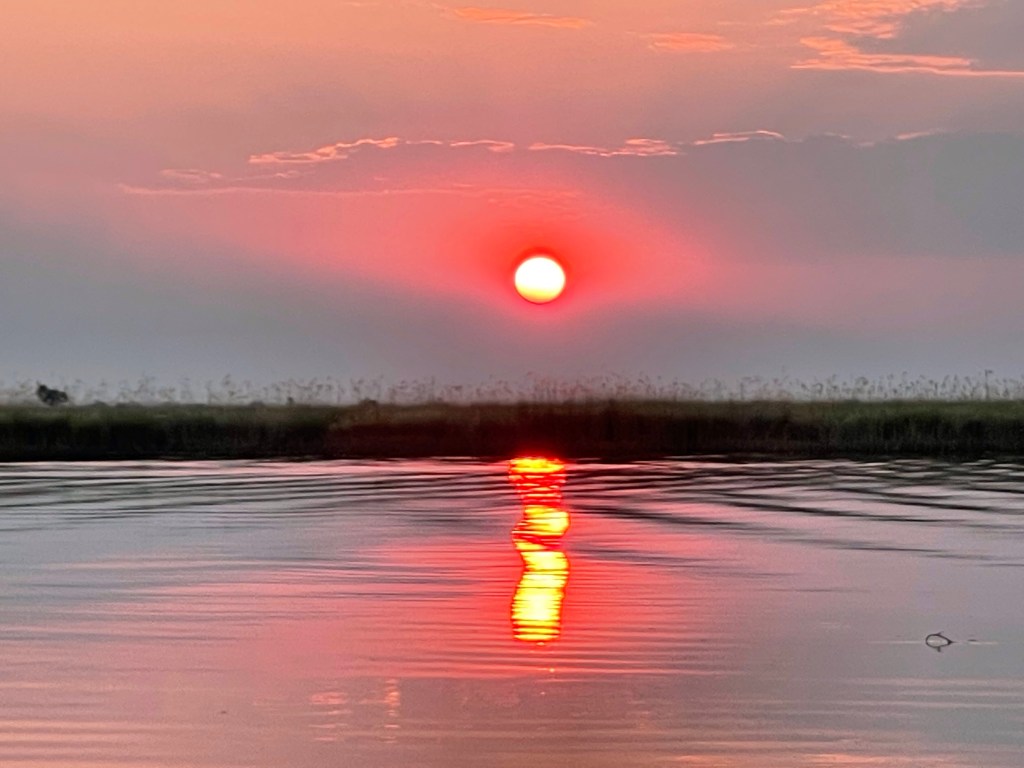
The camp started stirring and I got out of bed about 5:30. Although still dark, a fire was already going, and our morning breakfast was cooking. The eastern sky was turning gold and red, as the sun was about to appear on the horizon.

The Moon was still high in the sky as dawn approached.

As the sun rose, I walked to edge of our camp by myself. I again saw the vastness and emptiness of the Ntwetwe Pan to the east. There was a beauty to it that provoked an ache in my heart. Even now, I find it hard to describe.

Sunrise over the Ntwetwe Pan in the Kalahari

In Botswana, the word for rain is Pula*, which also means a blessing, as rain is so scarce. Although the rain the night before and on Independence Day changed the tenor of the trip, I think it also gave me something else I can’t define. As I looked at the vastness of the Pan that morning at sunrise, I felt the presence of something larger. God? Perhaps, but I don’t think so. It was more a feeling that even though I am so small, I belonged to something much larger than myself. To me, the vast emptiness I was looking at no longer felt like nothingness or loneliness. There was a weight and depth to it, and yes, a peacefulness. I felt blessed to be in such a remote location. Maybe hearing Kago sing her prayers earlier in the dark is what changed my feelings to something more spiritual. I doubt I will ever know.

My Friend Bill Surreptitiously Snapped this Picture of me Contemplating the Pan

A bit later, I rejoined the others and soon we ate a breakfast of bacon, sausage, eggs, pancakes, yogurt, fruit and freshly made biscuits. Afterwards, we packed up, and just after 7AM, started the five hour return trip to Leroo. Later in the afternoon while on safari, our guide Ollie tracked and showed us a Cheetah and her three cubs, which was amazing. For me, even as I was viewing the cheetahs, my mind returned to the sunrise at Ntwetwe and the ethereal feelings I experienced.

Addendum:

– *Pula actually has four different meanings: rain, a blessing, “Cheers!” If toasting someone over a drink, and lastly, it is what they call their currency. It’s a pretty versatile and important word in Botswana.

⁃ I’d like to thank Isaac Mpuchane, our guide, for reading my blog and providing input. As we traded emails, he sent me a link to an article that places the Ntwetwe Pan as one of the possible locations for the start of human civilization. Maybe my spiritual feeling wasn’t as accidental as I thought. You can read the article he sent me here: https://www.bbc.com/news/science-environment-50210701 If you want to learn more about Isaac, or see some of his amazing photography, you can do so at: http://www.instagram.com/isak_naturephotography

⁃ I’d also like to thank Bill Reichhardt for the picture of me on the edge of the Pan. Bill is quite the photographer and if you would like to see more of his pictures from Africa, you can view them here: http://billreichphoto.com/

– * The colors in the flag of Botswana have the following meanings: The light blue represents water, and specifically rain, as it is such a precious resource. The black band with the white frame has two meanings. First, they symbolise the harmony and cooperation between the black and white people who live in Botswana. Furthermore, they represent the stripes of the zebra, the national animal of Botswana.

Botswana’s Flag

– This is the sixth in a series of blogs about our 2021 trip to Africa. The other blogs are listed here, in the reverse order of their publishing.

⁃ This is the second time we have used Karen Dewhurst, of Sikeleli Travel & Expeditions as our travel consultant. After working with her in 2018, there was no doubt we would use her and Sikeleli again. All accommodations were amazing, the food and wine excellent, the logistics and travel arrangements perfect and the animal viewing exceeded all expectations. If you are coming to this part of the world, I highly recommend her and them. You can reach Karen at: karen@sikelelitravel.com | (+27) 81 067 1094 (South Africa). Their overall website is at: https://sikelelitravel.com/ .