Turtle Lake and Fishing for Beers

Turtle Lake and Fishing for Beers

It was Memorial Day Weekend, 1973. High School graduation was a couple of weeks away, when Howard, Funny, Hick, Bull, and I drove north to Wisconsin in search of Beer, Bass and Northern Pike. We would be more successful in finding one of those items than the other two.

I’m not sure who came up with the original thought, but with graduation from Ottawa High School (OHS) looming, the idea of a fishing trip to Wisconsin came up among a number of my friends. Sure we were interested in fishing, but we were also interested in drinking beer. At the time, the drinking age for beer and wine in Illinois was 19, while a mere two hours away in Wisconsin, it was 18. We decided to do it. Amazingly, our parents all agreed with the idea, (the fishing part, that is), and we were just about set. One of our number, my old friend June, actually had to work the whole weekend, and couldn’t make the trip. Another buddy, Jack, had to work on Friday, but would drive up on Saturday and meet us in The Promised Land.

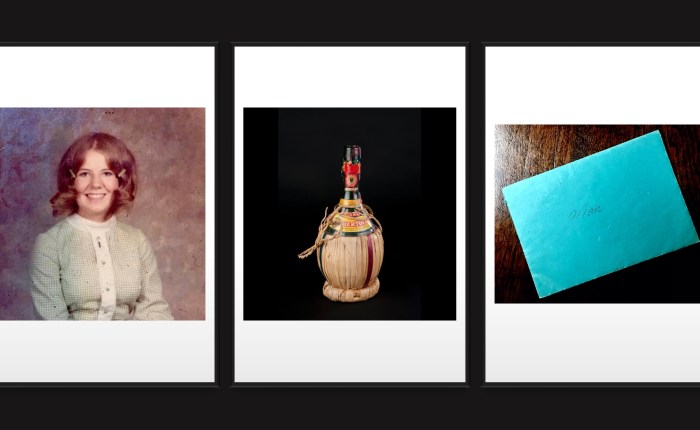
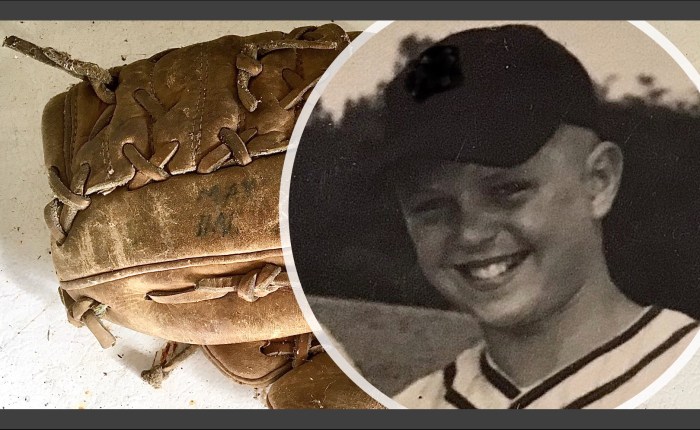
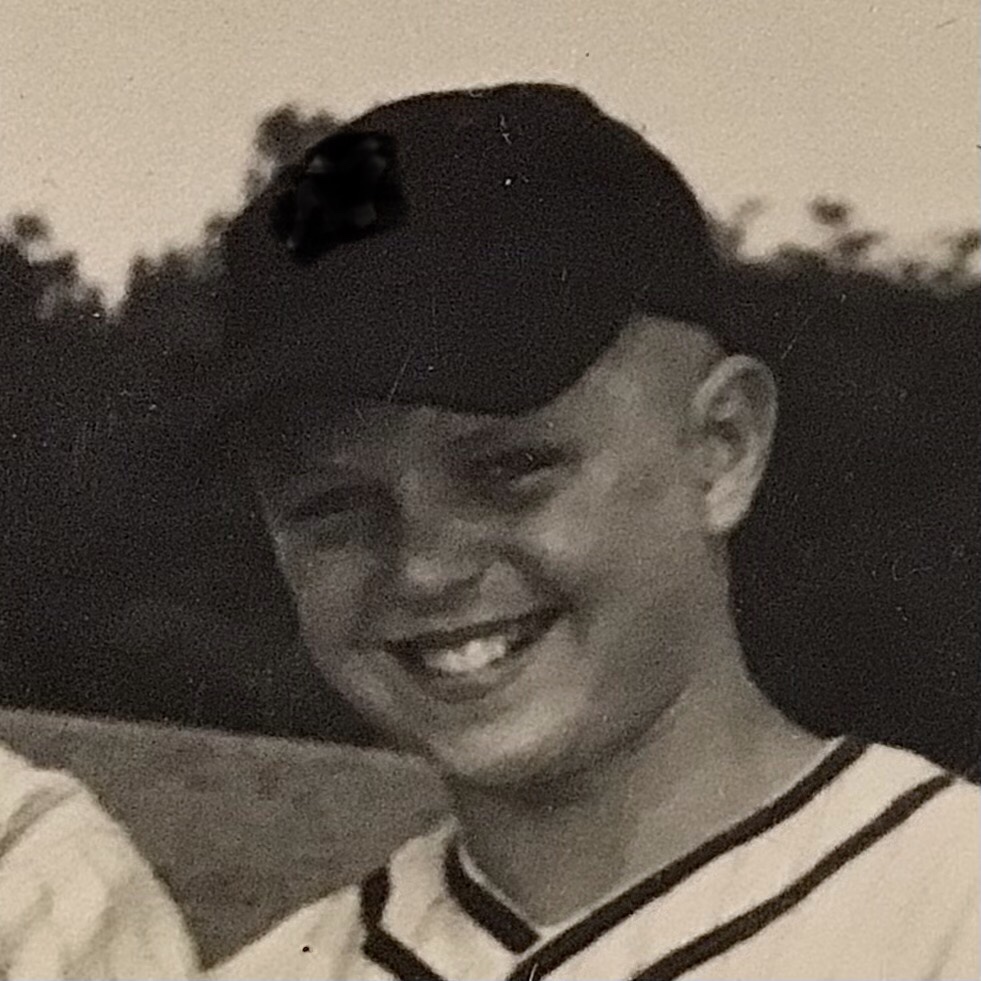
A Photo of me, from the 1973 OHS YearbookYea, we were Young

On the Friday of Memorial Day weekend, after skipping a half day of school, five of us set off for Wisconsin. The fishing party included Howard (Kim), Hick (Tim), Funny (Mark), Bull (Ed) and me. We piled into two cars, and drove north. The goal was to head to Lake Geneva, find a campground, find beer, and settle in for the weekend. When we reached the Lake Geneva area, a small bug crept into our plan – It was Memorial Day weekend and everybody and their brother was going camping and fishing in Wisconsin. As teenage boys, it didn’t occur to us to make reservations. There was nothing, and I mean nothing, available.

They say necessity is the mother of invention, and we decided to head west looking for a place to camp. Suddenly, near Delevan, Wisconsin our luck changed. On the side of the road, as if bathed in heavenly light, we came across Don’s Liquor Store. A sign in the window proclaimed “2 cases of Red, White and Blue for $5.85.” We had hit the mother lode! Now, for those who may not be aware, Red, White and Blue was Pabst Blue Ribbon’s lower level beer. You may be thinking to yourself right now “Hmmm, PBR is pretty low level itself. I didn’t know they had an even lower level beer.” Fortunately for us, they did. We didn’t care so much about the taste at the time, this was a matter of economics. Going into Don’s, we made our purchase, and loaded up the trunk of one of the cars with an enviable amount of beer. We then continued west, and that’s where the second bit of good luck hit.

We came across Turtle Lake, and as importantly, Schroeder’s Snug Harbor Inn. The Pabst sign out front drew us in like moths to a flame. It wasn’t fancy, and the lake wasn’t big, but camping sites were available right on the lake. Schroeder, the owner, registered us for three nights. We left the lodge, popped some beers and set up camp. This was going to be good.

The PBR Sign Drew us in, Like Moths to a Flame

Later, we explored the campground and their Lodge. Lodge is really toooooo grand of a title, but I don’t know what else to call it. There was a bar, a pool table, and they sold bait and snacks. A guy named Hank helped Schroeder at the Lodge and bar. The Inn was also affiliated somehow with the Turtle Lake Sportsman’s Club, but the relationship was murky. All in all, we were pretty happy.

A Turtle Lake Sportsman’s Club Patch from 1973

Back at our camp we made a fire and continued to drink beer. Suddenly one of our members came running up – “Guys! Guys! You aren’t going to believe this! Mr Murphy is here with his family and camping about a hundred yards a way!” What!!?!? Now, all of us knew Mr Murphy. He was a teacher at OHS. He’d coached Howard and I in wrestling, and I’d given his sons swimming lessons. More concerning was the fact that he was currently Howard’s homeroom teacher. Rut Roh…

Mr Murphy from the 1973 OHS Yearbook

What to do!? What to do!? We finally decided to take the bull by the horns and go say hello. We left our beers on the picnic table and wandered through the campground till we finally came to his tent. I believe he was as shocked to see us, as we were to see him. What are the odds we would both pick a minor campground in the middle of no-where for the weekend? Everyone shook hands and he introduced his wife and kids. I’m sure we reeked of beer, but he didn’t say anything. And to his credit, after that, we pretty much stayed in our part of the campground, and he stayed in his, preventing chance encounters. Still, we weren’t sure how to interpret this new omen…

Dinner that night was burgers and chips, and of course more beers. We drank around the fire well into the night, before eventually retiring.

The next morning arrived, and at least some of us went out early to fish in our canoe and rowboat. My recollection is that after a couple of hours, we came back in, skunked. No bass, no pike, no fish in general. Making our way to camp, we cooked up some breakfast and discussed the situation, but mostly just put it down to bad first day luck.

A couple of us went up to the lodge bar to have a beer, and Hank was working there. My buddy Hick recently recollected “I can see Hank behind the bar. I still smell his Lucky Strikes, and see the Brylcreem in his hair…” That’s as good of a description of Hank as any. We ordered our beers and were lamenting our poor morning showing to Hank when he suddenly said “You want fun? I’ll tell you what you do. Buy some of these wax worms we have for bait, and you’ll have more fun than a barrel full of assholes!” What? “Yep! More fun than a barrel full of assholes! You’ll catch plenty of brim and bluegill with them!

Now I don’t know how much fun a “barrel full of assholes” would actually have, but we were hooked and bought some wax worms.

After we finished our beers, we headed back to camp. In the late afternoon, it was back in the boats to try our luck once again.

Someone caught a pike, but in general we were again having no luck and decided to switch to the wax worms – amazingly, we caught a number of brim, but most were too small to keep or cook. I don’t know if we met Hank’s definition of fun, but it made the late afternoon of fishing more enjoyable. The pike and a few brim become a part of dinner that night.

At Least a Few Fish Became Part of a Meal…

Eventually, we made it back to shore. Some of us worked our way to the lodge to shoot pool and have a beer or two. Jack, who had arrived too late to fish, joined us at the bar, where he impressively slapped a handful of bills on the bar like he’d been doing it his whole life. Never mind that we were still in high school.

While we were at the bar, Mr Murphy walked in to buy something in the store. We pretended our beers didn’t exist, and were making small talk with him, when Howard invited him to shoot a game of pool with us. He hesitated for a second, and then readily agreed. We decided to play two on two, with Howard and I against Mr Murphy and one of the other guys. As the game was about to start, Mr Murphy said “What do you say we make it interesting, and put a bet on the game?” We all readily agreed and were trying to decide what would make a good bet when Mr Murphy said “How about losers by the winners a beer?” Dead silence, and then an immediate and resounding “YES!” From all of us.

We played the game, and eventually Howard and I lost. And so it was, that Howard bought his high school homeroom teacher a beer, while still in high school. I don’t see that happening in today’s world.

After awhile, we went back to the campsite and started a fire. Unfortunately, later that night it started to rain, and rain, and rain some more. We moved to our tents when it turned to a deluge. At some point in time, we went to sleep, but the rain didn’t stop and continued all night long. By the early morning hours, our tents and everything in our tents, including us, was soaked through. It was almost as if Turtle Lake itself expanded, there was so much water.

The next morning we woke and went about making breakfast. Jack was already out in a boat by himself a bit off shore, and using the wax worms. Since he’d arrived so late the day before, he hadn’t yet been able to fish and went out early. He was getting a lot of bites, but the fish were so small, he wasn’t pulling any in.

The weather forecast was for rain all day long. As we ate a wet breakfast, a mutual decision was reached – it was time to head home after only two nights in Wisconsin. We packed our soggy belongings, along with our remaining beer and made the drive back to Ottawa. The great fishing expedition was over.

I did have one small problem. My mom worked at OHS as a secretary. What if Mr Murphy told her about seeing us, and our beer drinking? I decided to come clean and after unpacking, casually mentioned to mom and dad – “Did you know the drinking age in Wisconsin is only 18? We drank a couple of beers while fishing.” They didn’t really say much, and a few minutes later I added – “and it was amazing – we ran into Mr Murphy at the campground!” Mom shot me a look, but didn’t say anything. I never asked later whether he told her about seeing us and the game of pool.

The story didn’t quite end there…

Graduation came a couple of weeks later, and four weeks after that, I headed to West Point for summer training. The rest of the guys returned to Turtle Lake for another weekend of beer and fishing later that summer. When they arrived, they bought a beer at the bar and said hello to Schroeder. After a bit, someone inquired about Hank and rather irate, Schroeder immediately answered ““Hank?! You know Hank?! We don’t talk about Hank! Leaves a brown taste in your mouth!”

That was the last any of us ventured up north to Turtle Lake until 2021. 48 years after our fishing adventure, Mark, who now lives in Wisconsin, made a trip to see what, if anything still existed of the Snug Harbor Inn and the Turtle Lake Sportsman’s Club. The Snug Harbor Inn itself was still there with the PBR sign out front. He reported the lake was lower and smaller than we remembered and the lodge a bit bigger. Unfortunately, it was closed, either due to covid, or being off season and Mark couldn’t obtain any updated information on it, or the Sportsman’s Club.

Mark, and the Return to Turtle Lake in 2021

It’s almost fifty years since we made that trip to the wilds of Wisconsin and none of us live in Ottawa any longer. One of us has passed away, and the rest are scattered between Illinois, Wisconsin, Texas, Georgia and Virginia. In my mind, I can still see us drinking Red White and Blues by Turtle Lake on that first night, with not only the weekend, but our entire lives stretching out in front of us. It’s a pretty good memory, as memories go.

Addendum:

  • The Snug Harbor Inn is still at Turtle Lake. Looking online, it looks like they expanded some, and it’s nicer than I remember. They also opened a pub inside the lodge area and still have a pool table. I recently had a phone conversation with the current owner, and asked if he knew Schroeder or the Turtle Lake Sportsman’s Club. He said Schroeder was the owner of Snug Harbor about three owners before him. As to the Sportsman’s Club, he remembered hearing of it, but it no longer existed. He didn’t know what happened to it. You can link to Snug Harbor’s website here: https://snuglakeharbor.com/
  • Tom Murphy was always one of the good teachers at OHS and you could tell he cared about his students. In addition to serving as a teacher and coach, he later became Principal. My mom was a secretary in the front office, and they worked together there for several years.
  • Thanks as always to my friend Colleen for her editorial assistance. In a strange twist, Colleen knew about Turtle Lake from her youth, while living in Illinois. Her father was also at the Turtle Lake Sportsman’s Club! What are the odds?!
  • Thanks to Mark, Howard, Jack and Tim for contributing memories to this blog. Like the great 1950s Japanese movie, “Rashamon”, all of us have various “subjective, alternative and contradictory versions” of the trip to Turtle Lake. I’ve tied together my best recollection of the trip, along with information from the others as much as possible. I left out a couple of items to protect the innocent.
  • My good friend Mark Dunavan published a book “Almost an Eagle – The Roots and Escapades of a Midwestern Baby Boomer” in 2020 that tells the story of his life. The story of our trip to Turtle Lake is also recounted there, with some variations. This limited edition book is hard to find, but if you can get your hands on a copy, I highly recommend you do so.

Patsy, Duke, and Buchanan Hall

Patsy, Duke, and Buchanan Hall

How could you not possibly like a local place, where both Patsy Cline and Duke Ellington have performed in the past? Buchanan Hall, a small venue just down the road in Upperville, VA, hosted both of those greats during it’s storied past. The best part? The Hall continues as a focus for music and good times today with their weekly Farmers Market.

Buchanan Hall has existed since the late 1920s, when General James A. Buchanan allegedly decided to build the Hall for his daughter’s wedding. Construction was completed in ‘33, in the middle of the depression. Eventually, the Hall belonged to the community, and a Board of Trustees was set up. The problem was, the Trustees may not have always had the best judgement on who could use the Hall. Some of their clients were “questionable”.

A few years ago, an undated note to the Trustees was found – “I had little problem last [night] with some guys fighting [over] girls, so the security guards put him out [he shot] in the air two or three times and I call the sheriff [but] I take care of the problem for now on… no drinks is allowed and no ins and outs. Thank you Romeo Ferguson.” … Another note from Ferguson read, in part: “To the hustlers, leave the guns at home or in your cars . . . this is a nice place to have fun at – think about it!

As you can see, Buchanan Hall has a varied history…;-)

But oh, did it draw the crowds. On the local level, there was the likes of Chauncy Brown and his band for dances that drew folk from Middleburg, Warrenton, and even DC. It turns out Brown was often the drummer for Duke Ellington’s band from 1930-37.

An undated photo of Chauncy Brown

They also drew major talent over the years. Ramblin’ Jack Elliott, who was friends with Woody Guthrie, influenced Bob Dylan, The Rolling Stones, The Band and others, performed a couple of times. And then of course, you have Patsy Cline and Duke Ellington – both appeared at Buchanan Hall. Patsy was originally from nearby Winchester, Virginia, so perhaps her appearing was not such a huge surprise. She played many local venues in the early 50s before making it big and moving to Nashville. Duke on the other hand held a national reputation from the 1930s – I’ve wondered if his work with Chauncy Brown is what drew him to Upperville, however, I can find no confirmation.

Can you imagine sitting in a 200 seat theater and hearing Patsy sing “Crazy”, “I Fall to Pieces” and “Walkin’ After Midnight”, or Duke playing “In a Sentimental Mood”, “Satin Doll” and “Take the A Train”? It would have to be both sublime and amazing….

In addition to having the piano in common, Patsy and Duke both appeared at Buchanan Hall

Time passed and by 2000, Buchanan Hall was in disrepair, and locals decided it was time to renovate the structure and grounds. Through donations, the Hall was eventually restored.

Since then?

Buchanan Hall has served in a number of roles. Community Center, wedding venue and event location to name a few. As examples, it continues to host parties and happenings in conjunction with the Upperville Colt and Horse Show, the oldest such show in America. In 2018, it hosted an American Roots Music Revival that sold out over the course of several evenings. And last year, the inaugural Piedmont Pride event, including a drag cabaret brunch, was held there.

I was excited to recently learn the Buchanan Hall Farmers Market is returning again this year. The market is every Wednesday from 4-8 pm from May 18, 2022 through October 26. This isn’t just any farmer’s market. You can of course purchase farm fresh meats, produce, and artisan goods. Even better is grabbing something from one of the food trucks, buying a glass of beer or bottle of wine from one of the local producers, and then pulling up a big piece of lawn and watching a band playing outside the entrance to the Hall. They always have a live band. It’s a pretty good way to spend a Wednesday evening.

Wonderful live music can still be heard at Buchanan Hall on Wednesday evenings during the summer.

I recommend you give the Farmers Market a try this summer on a Wednesday evening or two. While there, wander inside and take a look at the pictures of Patsy, Duke, and Chauncey. Remember those days gone by, while having a wonderful evening in the present.

Addendum:

– Buchanan Hall is located at 8549 John S Mosby Hwy, Upperville, VA 20184. You can learn more about it here: https://www.buchananhall.org/ .

– If you want a taste of the past, Buchanan Hall sells CDs of a performance by Chauncy Brown. You can learn more about him and his performances at Buchanan Hall here: https://www.washingtonpost.com/archive/local/2006/07/02/chauncey-browns-dance-party-lives-on/65f0b146-1698-4efc-b0fd-625a62e4a3ee/?utm_term=.2232396ebaab

– Much of the history I’ve discussed in this blog came from the Buchanan Hall website itself, and a Washington Post article from a few years ago – Chauncy Brown’s Dance Party Lives On (link is above).

Dad and Al Capone

Dad and Al Capone

It was May of 1943 in Bizerte, Tunisia. My Dad, then twenty year old Sergeant Willie I. Hall looked at the German soldier and said “Chicago”. The German answered “Chicago?” Dad stared back. “Chicago. Al Capone”. Now the German’s eyes’ widened …

… After the battle at Maknassy, Dad’s unit, the 60th Regimental Combat Team (RCT) reunited with the rest of the 9th Infantry Division. In late April of ‘43, the push was on to finish the war in North Africa, and in the words of the division Commander, Major General Eddy, “A world spotlight will be focused on us from the moment we attack until we have killed, captured, or driven every Axis soldier from Tunisia…”

The history books tell us that as a part of their assault, the 60th, attacked through the Sedjenane Forest and after driving the Germans out of the area, hit a bottleneck at Djebel Cheniti. On May 5th, the 1st Battalion of the 60th (Dad’s Battalion – about 500 men) attacked Hills 207 and 168 (see diagram below) and Djebel Cheniti by a direct assault with fixed bayonets. You read that right. Fixed Bayonets. In the words of the 9th Infantry Division Record, “One of the strongest positions in the final Axis defense was assaulted by one battalion of Infantry, with artillery blasting a shell-strewn pathway for its advance. Another story in the annals of foot soldiers, who do the dirty tasks of warfare”. After several hours, they took the hills and Cheniti.

I never heard dad say a word about the battle at Cheniti. Not one.*

1st Battalion, 60th RCT’s Path While Attacking Djebel Cheniti and then Bizerte

On the 8th of May, they arrived in Bizerte, and on May 9th, the Germans surrendered. The battle for North Africa was over. In the words of one soldier of the 60th, “We were all 20 pounds lighter and 20 years older.”

Soldiers of the 60th RCT in the Hills outside Bizerte, Tunisia on May 7, 1943.

At this point, I’m sure you are saying, “This is all great history Max, but what the hell does it have to do with your Dad and Al Capone?” Good question.

Now we come to the rest of the story.

With the collapse of Rommel’s Africa Corps, the allies captured prisoners. A lot of prisoners. Over 275,000 Axis prisoners were taken in all, including 25,000 in and around Bizerte alone. This included General Jürgen von Arnim, the German Supreme Commander.

There were, of course, no prisons, so in the immediate aftermath they confined the Germans in large “holding pens” with single strands of barbed wire around each of the pens. The 9th, along with other units, were then drafted into guarding the prisoners until more secure facilities could be established.

Prisoner Holding Pens Near Bizerte, Tunisia

Dad talked about guarding the Germans and the Italians. You have to remember just a few days or weeks before, they were in a kill or be killed mode with the enemy, with plenty of butchery to go around. All that separated the two sides now was a bit of barbed wire. According to Dad, the Italians never had much fight, and the captured Germans knew they were beat, so they generally behaved. Still, you needed to be careful.

During the days they were on duty, dad’s platoon always guarded the same area, and after a while, they would recognize certain prisoners, talk a bit back and forth, and maybe even pass a cigarette across the wire. At the same time, Dad said he wanted to make sure he looked tough so no one did anything stupid.

As Dad tells the story, he was talking with a few of the Germans one day and someone asked where he was from. He answered “Illinois”, but the Germans looked confused. So dad thought about it a bit, and then trying to look a bit tougher he said “Chicago”. The German answered “Chicago?” Dad stared back. “Chicago … Al Capone”. Now the German’s eyes widened. Everyone knew who Al Capone was.

The German looked at Dad and said with a smile “Al Capone…. Ratatatatat….” While making a machine gun like motion with his hands.

Dad looked back at the German, nodded his head, patted his M1 Garand Rifle and without smiling, said “Ja, Al Capone.” The German stopped smiling and didn’t say anything else.

Dad always told the Al Capone story with a chuckle. When getting to the punchline, he would draw himself up to look bigger and meaner. But he was deadly serious about the Germans not trying anything. After what they had been through, I don’t think it would have taken much for him to put a bullet in someone, for doing something stupid.

A little over two months later, after a bit of rest and relaxation, Dad and the 60th were back in Combat against the Germans on the Island of Sicily. There, he was wounded and almost died. You can find a link for that story in the Addendum below.

Dad at the WWII Memorial in 2008.

Addendum:

* Except for the story of how he was wounded, Dad never said much about any of the battles he was involved in. For the most part, he told funny stories about events during the war. I was shocked when doing some research for this blog to find he had been involved in a charge with fixed bayonets. As a soldier, you know things aren’t going to be pretty when you receive an order to fix bayonets. That is combat at its most up close and personal. I have to figure that after you’ve been given the command to fix bayonets, and then taken part in a bayonet charge, everything else in your life, maybe for the rest of your life, must seem pretty easy. It may explain a bit about why Dad always had such a good attitude throughout his life.

Al Capone – As everyone knows, after being the Crime Boss of Chicago for much of the Twenties, Al Capone was incarcerated for tax evasion in 1931. He was released from prison in 1939, but wouldn’t die until 1947. He had a worldwide reputation for murder and violence that may have been the equivalent of his actual deeds.

You can read more about Dad almost dying in Sicily in August of ‘43 here: https://mnhallblog.wordpress.com/2016/05/14/wounded-in-sicily/

You can read more about the 9th Infantry Division in Tunisia here: https://9thinfantrydivision.net/battle-history/tunisia-battle/

Perry and Della

Perry and Della

The sly glances, the casual banter, the innuendos, the back rubs… I think we all knew what was going on, but no one said it out loud. Let’s face it, Perry Mason was having an affair with Della Street, while Paul Drake, Hamilton Burger, and even super sleuth, LT Tragg, were all unaware.

Just another sly look between the two…

This past winter, Cathy and I discovered Perry Mason reruns on TV. We chuckled as we decided to watch the first episode, but soon became addicted. Nothing else on tonight? Let’s go watch a couple episodes of Perry.

Perry Mason was on the air from ‘57-‘66, and Raymond Burr won two Emmys. I have to say the show is great entertainment, although a couple of thoughts have crept into my brain while watching.

First, was there ever a more inept District Attorney than Hamilton Burger? Over the course of nine years, Perry won 268 out of 271 cases right off the bat, and while Burger didn’t handle all of them, he was the prosecutor for the vast majority. (Note that the actor who played Burger, William Talman, was fired from the show in 1960 for about six months after being arrested on charges of marijuana possession and lewd vagrancy. During that period, there were several different prosecutors. After the charges were later dismissed, he returned to the show). How could Hamilton Burger be so bad? He is ALWAYS on the wrong side. Even the cases he won were eventually overturned on appeal. Fred Thompson, as the DA on “Law and Order”, would have had no use for him… 😉

Don’t worry, Perry won during the appeal.

What really intrigues me is the relationship between Perry, and his Executive Assistant Della Street. I mean, hello, if these two aren’t having an affair, then nobody is. The sly, knowing looks, the continual side-by-side presence, the flirty banter back and forth… It all adds up. Plus, Della is ALWAYS there. Early morning in a diner with a client? Della’s right there with Perry sipping coffee. Midnight or 2AM in the office waiting on a call? There’s Della asleep on the couch. When Perry’s home sick with the flu, laying on his couch in pajamas, who brings him chicken soup? Della of course. Perry has a tough day at the office – who gives him a back rub? Della! And who’s walking off a vacation cruise ship with Perry to go help him solve a murder? I think you know the answer.

Who nurses Perry back to health? Why Della, of course!

We were discussing Perry and Della one evening with a friend when he exclaimed “I know! And you have that gorgeous Paul Drake right there! What is wrong with her? She’s definitely going after the older guy with the money!”

What about the “gorgeous” Paul Drake? He appears to be the ultimate catch. He drives a convertible sports car, wears sport coats or turtlenecks instead of the suits Perry is always in, has that rakish haircut, and is just hip in general. Not only was he an investigator, he acted as Perry’s tough guy, was an alleged ladies’ man, and the coolest dude on the show. And yet, he apparently has no personal life. Perry needs him in the middle of the night for a murder investigation? He’s there. Someone needed for a 24 hour stakeout? Paul’s your man. Here’s an interesting tidbit – Although he is a supposed “ladies’ man”, he never once hits on Della. Not once. If James Bond was always flirting with Miss Moneypenny, Paul, other than the occasional “Hello beautiful” to Della, was just the opposite. There was zero flirting. Was this in deference to Perry, or for some other unstated reason? We’ll never know.

Another of Paul’s evenings, about to be interrupted by Perry Mason.

We continue working our way through the episodes and are somewhere in season 5 by now. Perry continues his winning ways, Hamilton continues to snivel and lose, Paul continues looking cool, and Della? Della’s right there for Perry, anticipating his every need.

Addendum:

– This blog was written tongue in cheek, but it turns out that it is a common question among fans as to whether Perry and Della ever had an affair. The author of the Perry Mason books, Erle Stanley Gardner, wanted the answer to be, “No.” Believing that if Perry ever married Della “he would lose his sex appeal,” Gardner intended the nature of the relationship between the two to remain a mystery. In fact, he said that if they ever had a romance, he’d write about it. He never did.

Lost in Translation

Lost in Translation

Our second favorite restaurant in Rheindürkheim, Germany in the late ‘80s was Pfeffermühle (The Peppermill). Das Letzte Essen (The Last Meal) didn’t occur there, but that is where the story started.

Recently, Cath and I were thinking about Pfeffermühle. I’d made Cathy a special meal one night for dinner, Steak au Poirve (Steak with Pepper Sauce). As we were eating dinner, she said “Do you remember the couple we met at…”, before she could go on, I finished her thought “…at Pfeffermühle? The ones who came to dinner?” “That’s them!”, she answered. “Do you remember her sayingDies ist das letzte Essen?”” (This is the last meal). We both started laughing…

Cathy and I About the Time of “The Last Meal”

Pfeffermühle was located just outside of Rheindürkheim, on Sommerdamm Strasse, the main road to Worms. It opened after we had already lived there for a year or so. Bruno, the owner, was from Italy and moved to Germany after spending several years in California. Although the restaurant was nondescript on the outside, once inside, the white tablecloths and napkins caught your attention.

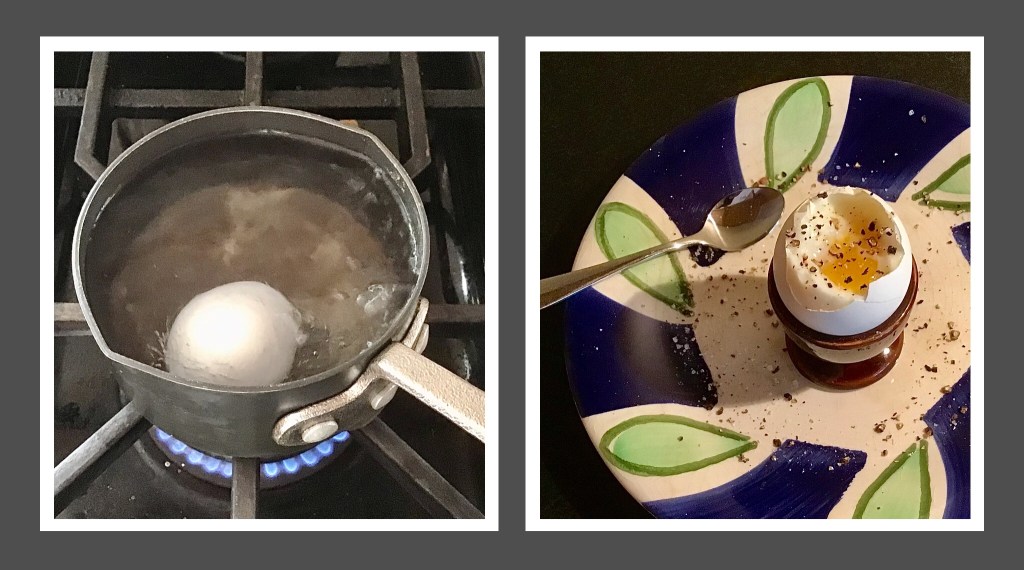
The food made an even bigger impression. They served both pizzas and traditional Italian fare. Two great food memories that stay with me even today were their lasagna, and how good their pizzas were. One of the pizzas came with an over-easy egg in the center of it. Yea, I know it sounds strange, but it was really tasty. I’m not sure about now, but at the time, you always ate pizza with a knife and fork in Europe, so the egg was no problem.

Bruno worked the front of the restaurant, while his wife was the chef in the back. He was quite the host and spoke fluent Italian, English and German. He made everyone feel welcome when they arrived, and Pfeffermühle soon became popular. If you were there on a Friday or Saturday night, the place was always jammed.

We became regulars, and as is often the case, over time, would recognize other regulars. There weren’t really any Americans, but Germans came from several nearby towns, and we became friendly with a few couples we ran into regularly.

One evening it was turning late and only a few tables were still occupied. We recognized a couple sitting at a table near ours, and started talking with them. They invited us to their table for a nightcap, and that’s how we first met Gerhard and Hannah. We shared a drink or two, and everyone agreed we needed to get together some time in the future. With that, we all said good night and didn’t think any more about it.

Except…

We ran into them the next week, and then again two weeks later. That night, I bought the drinks. As the evening was ending, Gerhard invited us to dinner at their home in Osthofen a week later. We readily accepted.

The following Saturday, we drove the three kilometers to Osthofen, where we ate a wonderful meal. I don’t remember what we had, but I do remember he served French red wine with the meal. At the time, we didn’t know any Germans who did that, and it made an impression. The Germans make wonderful white wines, but their reds? There weren’t too many of them, and they weren’t that good at the time. Usually, you drank white wine or beer with dinner, no matter the meal.

Of course we wanted to return the favor, and invited them for dinner a couple of weeks later.

Cath and I stressed a bit about what to cook, as we wanted a nice meal. I don’t remember what we did for an appetizer, but we finally agreed the main course would be “Steak au Poirve” from a cookbook a friend had recently given us. It was a bit elegant. It was also the first time we would ever make it. For dessert, we would make a “Champaign Granita”.

Charollais is a Specific Kind of French Beef

The big night finally arrived and Gerhard and Hannah arrived at our home. We served some drinks and were bringing out appetizers when Hannah said “Dies ist das letzte Abendmahl”. What? Did we hear correctly? “This is the Last Supper”?** Was today some German religious holiday we were unaware of?

Was hast du gesagt?” (“What did you say?”)

Heute ist das letzte Abendmahl. Das letzte Essen.” (“Today is the Last Supper. The last meal.”)

Oh man, we must have screwed something up. Today must be some important holiday of which we were unaware. Either that, or she was going away somewhere and this was her last real meal. What were we going to do? And then she explained…

…The next day, she was starting a diet. Tonight’s dinner was her last meal before going on the diet…

Cathy and I started laughing, and they gave us a look. We then explained our lost in translation problem with “The Last Supper” and the religious connotations, and they started laughing as well.

The dinner went well, and the “Steak au Poirve” served with potatoes turned out to be a fine last meal before starting a diet. I followed Gerhard’s lead from the previous dinner and we drank some kind of red California Cab I’d bought at the military Class 6 store. The dessert wasn’t perfect, but we served it with Sekt (German sparkling wine) and no one seemed to mind. Over dinner, we all made a couple of jokes about the last supper, and whether this was worthy. Eventually, after coffee and schnapps at the end of the meal, they left and drove home.

Steak au Poirve

We saw them occasionally after that at Pfeffermühle and had a late evening drink with them a time or two. Perhaps six months later, we returned to the States and lost track of them. Pre-Internet, there was of course no exchange of email addresses or cell phone numbers.

This story is really about just a bit of nothing, but we still remembered the evening, and chuckled about The Last Supper, although it’s 44 years later. Even small old memories can be good for the soul, especially when they come out of no where.

Addendum:

** – For those who may not be aware, The Last Supper is the final meal that Jesus shared with his apostles before his crucifixion. It became the basis for the holy communion. In the Gospel of Matthew, Jesus prays thanks for bread, divides it, and hands the pieces of bread to his disciples, saying “Take, eat, this is my body.” Later in the meal Jesus takes a cup of wine, offers another prayer, and gives it to those present, saying “Drink from it, all of you; for this is my blood of the covenant, which is poured out for many for the forgiveness of sins.” It is immortalized in DaVinci’s famous painting. Our dinner wasn’t anywhere near Easter, but the Germans have A LOT of religious holidays, which is why we thought we may have been unaware of some other holiday.

Pickerell, The Biltmore, and The Whiskey Tasting

Pickerell, The Biltmore, and The Whiskey Tasting

When Rob Grubbs asked if I would help “host” the whiskey tasting for the West Point Class of ‘78 mini-reunion, I took about a nano-second to respond yes. The evening, if possible, turned out even better than I imagined. It was one of those rare occasions of reality exceeding expectations.

Rob sent the original invitations for the April ‘22 West Point Class of ‘78 mini-reunion, in August of ‘21 in the form of a military Warning Order. The reunion would be at The Biltmore Estate in Asheville,NC, and there was an immediate interest. Ultimately, 129 classmates, significant others, and family members made the trip.

The Original “Warning Order” From Rob Grubbs

The five days of the mini reunion were great fun, with a combination of group events and laid back small get-togethers. Dinners, a picnic, wine tastings, tours, just hanging out… it was nice. For me, a highlight was the Whiskey Tasting on the second night. What originally started as an idea for a bourbon and cigar event, morphed into a bourbon whiskey tasting, and then morphed again into the event it became.

Rob asked Bill Moeller to host and organize the tasting, and they then drafted me to assist Bill. Bill had the brilliant idea of bringing a focus to one of our departed classmates, Dave Pickerell, who later became known as The “Johnny Appleseed” of Craft and Rye Whiskey. The Army, in it’s infinite wisdom, sent Dave to grad school in Chemistry. The rest, as they say, is history.

After a stint teaching back at West Point, Dave later left the Army and eventually went to work for bourbon distiller Makers Mark, where he became the Master Distiller and worked for 14 years. After leaving Makers Mark, he struck out on his own. Almost immediately, he was one of the distillers called to Mount Vernon to recreate George Washington’s original Rye Whiskey. Not only did Dave distill rye whiskey using Washington’s recipe, he would dress in colonial period clothes at Mount Vernon for special whiskey social events. This was around 2005, about the time craft distilleries were beginning. Dave ultimately helped over 50 distilleries get off the ground, and consulted with over 50 others.

Dave in Colonial Attire at the Mount Vernon Still

Dave was particularly known for a couple of events. One was the establishment of WhistlePig, a Vermont distillery dedicated to Rye Whiskey – Some people say they make the best Rye Whiskey in the world. The second event was his collaboration with the band Metallica, when they created their whiskey, Blackened. What makes Blackened unique?

Dave was fascinated with the effects of sound – the way an organ can play a note that shakes an entire building. The thought of what sound could do to whiskey at a molecular level stayed with him. As it happened, Metallica and Dave harnessed the vibrations that make a Metallica concert historic. The convergence of these ideas resulted in a sonic-enhancement method utilizing a variation of the band’s song frequencies to disrupt the whiskey inside the barrel, causing increased wood interaction and increasing the wood-flavor characteristics in the whiskey. Sonic-enhancement does not replace traditional aging methods and Blackened is typically aged an average of 7-8 years. Each batch of Blackened has a unique playlist of Metallica songs used to sonically-enhance the whiskey during finishing.

Picture of Dave Pickerell (Center), and Metallica from a Rolling Stone Article About Blackened

After discussions between Bill, Rob and I, it was decided our tasting would focus on whiskeys connected to Dave, and conclude with a toast to him, and our 71 other departed Classmates.

The list for the tasting was as follows:

  • Makers Mark – where Dave worked so long as the Master Distiller
  • Blackened – His collaboration with Metallica
  • Piggyback – A WhistlePig Rye developed for use in Cocktails. Dave passed away just before the release. As a nod to Dave’s legacy, WhistlePig added the dates 1956-2018 (Dave’s birth and death years) to the neck label of each bottle, The WhistlePig pig logo usually includes a top hat, however for Piggyback, the pig wears a Stetson hat which Dave always wore.
  • WhistlePig 10 year old Rye
  • WhistlePig 15 year old Rye
  • The Boss Hog – WhistlePig’s top whiskey, which included final finishing in Philippine Rum barrels.

On the Monday of the reunion, approximately 100 classmates, spouses and friends gathered at dusk in a glade just below the Biltmore Inn itself. Seventy were there to taste, and another thirty came for the fellowship. As the sun fell, the overhead string lights came on, adding just a touch of magic to the atmosphere.

Dusk was Falling as we Gathered Below The Biltmore

Bill wrote a script for he and I to introduce the whiskies, while also imparting a bit of history about the interaction of whiskey and the United States Army over the course of our Nation’s History. It is perhaps no coincidence that June 14th is Flag Day, the birthdate of the United States Army in 1775, and National Bourbon Day ;-).

Bill and I Sharing a Laugh Just Before the Start of the Whiskey Tasting

A little after 8PM, we started. Bill and I drafted our wives, Cathy and Bridget, as the official whiskey pourers, and several classmates volunteered to deliver the samples to the crowd.

Bridget and Cathy … Whiskey Pourers, Extraordinaire

What followed was a lot of living, learning and laughter, with a bit of drinking and history thrown in. Between tastings, Bill and I talked to the crowd about whiskey rations in the Revolutionary War, the Civil War and WWI. We also shared how whiskey was a part of the history between Lewis and Clark, and Lincoln and Grant. Stories were told of Dave Pickerell’s life and his impact on whiskey. As the night wore on, the crowd grew louder and more rambunctious.

Bond, Brent and Gus Delivering the Whiskey

A little after 9PM we were serving the last of the official tastings, The Boss Hog. The light was gone from the sky now and there were only the overhead lights. As the final glasses were served, we raised them in a toast to Dave, and our 71 other departed classmates. Suddenly, Grant Short led us in an impromptu singing of “The Alma Mater”, with it’s refrain of: “And when our work is done, Our course on earth is run, May it be said, “Well done”, Be thou at peace“. I have to admit to feeling a bit of a shiver as we sang, and it wasn’t from the weather – the words seemed extra special that night. Of course as we finished the song, all responded with a vigorous “BEAT NAVY!”

Seventy two of our classmates are gone. They will never be forgotten.

The formal part of the program was over, but the crowd remained. There was still a fair amount of whiskey left and war stories, both literally and figuratively, to be told. The crowd moved around, circled and shifted. Old friends were given hugs, and as always happens at these reunions, new friends were made. Cigars were lit and more whiskey was shared.

The Proud and Great Class of ‘78 Enjoying Life

Eventually, around 1030PM a soft rain started falling. As the crowd thinned, we packed up the remaining bottles, along with the water and snacks and moved back to the Biltmore. Some folks stayed up for a last drink at the bar, while others drifted off to bed. It was a fine night for the Proud and Great Class of ‘78, and our first group whiskey tasting. I hope it isn’t the last.

.. Feel free to forward this blog …..

Addendum:

– Special thanks to:

  • Rob and Jan Grubbs for organizing the mini reunion overall – what a wonderful event.
  • My wife Cathy and Bill’s wife Bridget who served as pourers for the event. We couldn’t have done it with out them. Also, classmates Brent Holmes, Bond Wells and Gus Hellzen who delivered the whiskey samples (in the dark) to all, without spilling a drop.
  • Rob Grubbs and Marion Seaton who took the photos in this blog.
  • Several classmates donated additional bottles of whiskey for tasting and drinking after the “official” tasting. Hats off to: Rob Grubbs, John Kimmel, Brian Keenan, and Joe Spenneberg among others.

– Huge thanks to Bill Moeller, who provided much of the information for this blog, and provided a wonderful history of the interaction of whiskey and the US Army over the course of history. The event would not have been what it was without him.

– You can read the Rolling Stone article about Dave Pickerell and Metallica here: https://www.rollingstone.com/music/music-features/metallica-whiskey-distilling-process-blackened-723508/ . Dave joked that he never made the cover of Rolling Stone, but he did get on the inside… ;-).

– Some of the history of whiskey allotments for the Army in past wars includes:

  • During the Revolutionary War, each soldier was issued a gill (4 ounces) of whiskey per day. Washington directed field commanders to reward valor on the battlefield with additional whiskey rations.
  • During the Civil War, whiskey was used by medics to treat patients, steady the nerves of soldiers, and heavily consumed during breaks in the chaos.
  • During WWI, soldiers on the front line were issued an ounce of whiskey, two times a day, 7 days a week. Resting soldiers received half that amount.

Submarine Games

Submarine Games

Crazy Ivan* anyone? Another Submarine story from my buddy, Bob Bishop**… It was mid-September, 1970. Our submarine, the USS Finback, had been commissioned way back in February, but we were still doing a number of exercises and independent operations to get additional sea time under our belt. On this particular exercise, we were to provide “services” to anti-submarine warfare (ASW) configured Navy patrol aircraft, to give them an idea of how to use their ASW gear and try to find a real live nuclear submarine. This exercise was to involve every ASW patrol plane on the US east coast, NATO members in western Europe, and one reserve squadron from Chicago (don’t ask me why there is an ASW squadron in Chicago).

The USS Finback (SSN 670)

In the Atlantic Ocean, that meant a complex organizational challenge for a lot of people. For each exercise, using radar and radio communications, we would vector a Navy Lockheed P-2 Neptune or P-3 Orion aircraft on top of our location so they could mark where we were. We would then submerge and maneuver. If they didn’t find us in 50 minutes (marking our location by dropping a transmitting sonar buoy), we would broach or surface, show them where we were, and they would then clear the area for the next plane to arrive at the top of the hour. We did this for 18-20 hours a day most days, for 4½ weeks.

During the exercise, we also did occasional helo transfers of a CO/XO from an aircraft squadron to our ship, so they could get a sense of what it was like to be on a submarine and how we operated during these exercises. I particularly remember one squadron XO, a Commander (I was a lowly Lieutenant, but was pretty comfortable with what I knew and no longer frightened by a senior officer), who came in the Control Room after midnight one night. I was the Officer of the Deck (OOD) – the officer on duty responsible for driving the ship, responding to emergencies and so on, unless the Commanding Officer came on deck to relieve me. I had the 0000 to 0600 watch and we were in the middle of conducting the ASW exercises.

We talked over a number of things he was curious about, and he watched as I/we went through a couple of the exercise cycles. Chatting after the third one, he observed “I think I understand your plan. You alternate going to port or starboard as soon as you submerge.” I responded, “Well, not actually”, and we walked over to the chart table. A piece of paper was taped on top of the glass top of the chart table. A mechanical device under the glass receives inputs of the ship’s speed and direction and moves a little light accordingly. Every minute the quartermaster puts a pencil dot where the “bug” (the light) was. As a result, you could see where the ship had been.

I quickly explained how “the bug” worked and showed him where we started the last run and where we ended up 50 minutes later. I then explained that the Captain gave the OOD the latitude to do whatever he wanted, so I decided to spell the Helmsman’s (the person actually steering the ship) name in cursive each watch. I think the letter I was on for that particular run was a “b.” The Lt Commander looked at me, aghast. “You mean, you don’t have a pattern, a routine?” “Nope,” I said, “It all depends on when I am on watch and who the Helmsman is. Although sometimes I use the name of the Stern Planesman or the Diving Officer.”

He walked quietly away, mumbling to himself.

During the 4 1/2 weeks of the exercise, not a single plane ever found us, even though they knew where we started each time. A discussion about the capabilities of ASW aircraft is a subject for another day, but I’ll leave it at this – ASW aircraft (including helicopters) vs. a US Navy nuclear submarine? Bet on the submarine, every time.

Bob in 1964, and then about 50 years later

Addendum:

– * Crazy Ivan references a maneuver sometimes performed by Russian submarines, and made famous in the movie. The Hunt For Red October.

⁃ ** My friend Bob Bishop graduated from the United States Naval Academy in 1964 and had several tours on Nuclear Submarines during the Cold War. At the time, Admiral Hyman G. Rickover, the founder of the modern nuclear Navy, personally interviewed and approved or denied every prospective officer being considered for a nuclear ship. The selection rate was not very high.

– This story is pretty much all Bob’s. All I did was add some editing assistance and publish it.

⁃ The USS Finback (SSN-670) was a nuclear-powered fast attack submarine. Bob was a “plankowner” – a member of the initial crew. He was the third officer to report on board.

⁃ You can read another of Bob’s submarine adventures here. It’s a compelling Cold War story. The movie, The Hunt for Red October, is child’s play, compared to what these sailors did on a daily basis. …The Comms Officer ran in and handed the CO the decoded message. The CO read the message, took the lanyard from his neck, unlocked the firing key cabinet, and reached in for the firing key. We were about to […] Continue at: https://mnhallblog.wordpress.com/2021/06/23/we-knew-we-were-at-war/

The American Experiment

The American Experiment

I will turn 67 on April 10th. That’s a little more than one quarter of the 246 year American Experiment. In January, 1790, George Washington said, “The establishment of our new government seemed to be the last great experiment for promoting human happiness by a reasonable compact in civil society.“* I’m trying to decide how well Washington’s words have held up.

To me, the Constitution and it’s amendments are still a reasonable compact. After that, things are a bit more dicey. As a country, we don’t act particularly civil, or happy these days.

If you look at history, America and Americans have always been contentious, but we seem well past that these days. Civility has gone by the wayside in government, and often in society. Our Congressmen and Senators routinely insult each other and anyone who disagrees with them. Many also have no problem insulting their constituents if he or she disagrees with them. Hate is a word that often comes to mind.

It carries over to our society as well. If there is disagreement, many folk no longer know how to act civilly, or even worse, choose to act uncivilly. Rather than discuss, or ignore something, the preferred response is often to insult or belittle, often with vulgarity. Anyone attend a school board meeting lately? And it’s not just about politics. We fight about noise pollution, light pollution, how people choose to raise their children, shopping sales and parking spots. Our ultimate “right” appears to be the right to be obnoxious.

Happiness, at a government or society level, is also in short supply. Our politicians at the national level wear a scowl much more often than a smile. How often do we see Ted Cruz or Bernie Sanders smile? As Americans, many of us are pretty much unhappy about everything – immigration, the news, the price of gas, healthcare, our neighbors with different views, Covid, not using Daylight Savings Time all the time, boomers upset with millennials, everyone upset with boomers, sports referees… No issue is too big or small to escape our ire.

What are the odds of smiles under those masks?

Some days, we appear to be Whiny America, forgetting we could be in Ukraine, or any number of troubled spots around the world.

We have had discord and conflict throughout our history, and certainly there were times worse than what we are experiencing today. The Civil War, The Depression, WWII, The McCarthy era, Vietnam and the upheaval of the ‘60s to name a few.

We have also fought over issues throughout our history. State’s Rights, Western Expansion, Slavery, Women and the Right to vote, Labor and unions, Civil Rights, Gay Rights, Individual versus societal rights, the place of Religion in America … the list goes on.

I was born in 1955. Fools long for the mirage of the “good old days” in the ‘50s, forgetting that we were fighting in Korea, the prospect of nuclear holocaust was real, Civil Rights hardly existed, and Joe McCarthy was trying to tear apart the country with outrageous lies in the US Senate. People forget Happy Days was a fictitious TV show, not American reality.

What makes today appear worse? Maybe the internet-connected-world shines a brighter light on the American Experiment, allowing us to see all of the dark holes that have always been there, but were previously hidden. Maybe it’s not worse. Maybe it’s just our time and turn to experience the tumult that is the American Experiment. Or, maybe our lives have become so otherwise comfortable, this is just the next level of angst over the American Experiment – my way, or the highway, with no room for alternatives.

Maybe, instead of looking at society, we can start by looking at ourselves first, and find some civility, some happiness and some sanity.

You would think each of us could control whether we are civil or not. We can try and take our hatred down a notch or two and find ways to engage civilly with those who are “different” from us. And if we can’t find a way to engage civilly, perhaps we shouldn’t engage at all, rather than becoming mime worthy caricatures.

And Happiness? Certainly a tougher question and each of us is somewhere different on the continuum between abject sadness and blazing joy. We all have personal issues affecting our state of happiness over time, but happiness is often found in the eye of the beholder. Indeed, some people who have the right to be upset about health issues, are happy because they have one more day upright. I think a lesson is there for all of us.

Maybe part of the question is whether we can find happiness without making someone else unhappy.

For me, as I’m about to enter my 68th year on this planet and in this country, I have two thoughts. One, I’m going to strive to maintain my civility, no matter the situation. As for happiness, while I know I won’t always be happy, I’m going to look for happiness where I can find it, in events both big and small. Whether an upcoming vacation, a negative test result, or a new flower blooming in the garden, I will seek out happiness, and let it infect me.

I have no doubt The American Experiment will continue for the foreseeable future. We are a resourceful nation and people, and our strength and good fortune have brought us to where we are today. Like many families, we Americans fight with each other. Is it too much to ask for a little more civility in our lives and fights? That might even help with our collective happiness.

Addendum:

⁃ * Washington penned these words in a letter to English historian, Catharine Macaulay, on 9 January 1790. The entire quote in that part of the letter reads: “The establishment of our new Government seemed to be the last great experiment, for promoting human happiness, by reasonable compact, in civil Society. It was to be, in the first instance, in a considerable degree, a government of accomodation as well as a government of Laws. Much was to be done by prudence, much by conciliation, much by firmness.” You can find a link to the entire letter here: https://founders.archives.gov/documents/Washington/05-04-02-0363 .

⁃ Thanks to my friends Tim Stouffer and Mark Dunavan who both provided thoughts and inputs for this blog.

– As always, thank to my friend Colleen for her editorial assistance. I remain a work in progress.

The Palette of Our Life

The Palette of Our Life

Through Cathy, I’ve gained an appreciation for the colors that make up the palette of our life. As an engineer, the journey hasn’t been a simple one. Sometimes though, you can teach an old dog new tricks.

Over the decades, the two of us have seen life through different lenses.

For me, it has usually been about form, and lines and precision. It’s hard for me to say whether I was always this way, or I became this way. Did my childhood background start me on the road to becoming a military officer, an engineer and a business leader? Or was it something that was self-reinforcing over time? Even in my hobbies, whether running, or reading, or photography, there was a certain precision… trying to reduce my times on a run, or capturing greater detail in a photo, there was a linearity to it. The gauziness of color didn’t really register in my brain.

For Cathy, her view is much more about color and the senses. This is most obvious in our gardens. While our gardens are made up hundreds of plants and flowers, and requires much hard work on her part, it is the flow of color over the seasons that defines them. There are constantly changing colors and hues. Only a fool, or an engineer, would miss them and their beauty.

A Redbud in the Garden Last Spring

For years, I didn’t get it, or understand it. Or perhaps even worse, I didn’t think about it.

And then about seven years ago, I retired. There are many great things about retirement, and most retirees will happily enumerate them to you ad nauseam. For me, the greatest gift is the luxury of time. Time to do the things you want, or time to do nothing at all and not feel guilty about it.

One of the things I started doing with my time, was taking care of the morning feeding of the horses. It was easy enough, and made me feel like I was contributing at home. There was also an unintended consequence.

After feeding the horses, while walking back to the house, I would notice little bursts of color in the garden. Why were flowers blooming in February? And then March? And then everywhere by May? Our hillside garden was awash in color, both from the flowers, and the many hues of green from the plants themselves. Now mind you, these colors and flowers were there for years, but it was as if I was seeing them for the first time. Cathy had created all of this, and I was blind to it.

Some Photos of Just a Few of the Flowers in Cathy’s Gardens

Thank God, we all have the ability to grow, even when we appear set in our ways. As spring arrives, I walk through the gardens looking at the new growth and colors peeping out. This year is different than the past. Our hellebores, crocuses and daffodils are blooming at the same time, when typically they would bloom sequentially. The engineer in me wants to understand why, but it’s not stopping me from enjoying this beautiful March we are having.

I see color now, or perhaps a better description is I see more color now. Sure, I always saw the red, yellow and orange leaves of autumn, or the red white and blue fireworks on the Fourth of July, or a multicolored string of Christmas lights. Now, I also see the purple ground cover in a field in the spring, the mixed colors in a neighbor’s garden, the infinite shades of grey in the sky and sea on a cloudy day. I’m a better person for all of it.

On a Recent Drive to the Chesapeake Bay, a Sea of Purple…

I’m still Max and keep spreadsheets, to-do lists, and can be pretty anal about time. Happily, I’ve also gained an appreciation for color. I excitedly show Cathy pictures of her flowers and of the garden and she smiles at me. Even though she has seen those colors and flowers for decades, she’s a good partner and encourages me in my growing understanding of color, and of who she is.

It makes me feel pretty lucky.

The Black Death

The Black Death

The Black Death. That’s what we called it. Among us Plebes at West Point, feelings were strong, and universal. To this day, grown men shudder when they see a picture of The Black Death. How could a single book leave such a strong impression? What devilry was this? What book of spells could cause such consternation?

Yes, Grown Men Still Shudder when they See a Photo of The Black Death

Of course it wasn’t just any book. This book was “Modern Calculus With Analytic Geometry (Volume 1)” by A.W. Goodman. We never called it that though. We called it The Black Death, or sometimes The Black Plague. The book was black, but I suppose our title referred to the entire experience of Plebe (Freshman) math at West Point as much as anything.

The Black Death, in all it’s Glory

After Beast Barracks our first summer at West Point, it was a relief to get to the academic year. Unfortunately, we didn’t quite know was waiting for us. In addition to the normal Plebe challenges, Calculus was a required course for all, and provided our introduction to The Black Death.

This wasn’t just any old math course. There were several “attributes” that put the class  into the category of those things you never forget.  My classmates and I laugh about it now, but it’s still a bit of a nervous laugh.

First off, the class of ‘78 went to Plebe math five days a week, including Saturdays, with 90 minutes for each class. Prior classes attended Calculus class six days a week for 75 minutes per class and thought ‘78 was getting over, since it was only five days a week ;-).

In the class itself, we had normal homework, quizzes and tests. In addition, we suffered a unique form of torture called “The Boards”, also known as “Recitations”. A couple of days a week, the professor would call out “Take Boards.” We cadets stood up and each of us went to one of the blackboards that covered the walls in the classroom. The professor then asked us to work through a calculus problem on the board. It might have been one of the previous night’s homework problems, or it might have been the proof of some theorem. After several minutes, he called “Cease Work!” and then called on one of the students to walk through, or recite, their problem solution. Sometimes it was a cadet who had the solution mapped out perfectly. Other times? Well, other times it might be a cadet whose answer wasn’t correct. It could make for some tense/fumbling moments. Recitations had taken place at the Academy since at least 1869.

Somethings Never Change – Cadets “Taking Boards” in 1900

Of course that sly b@stard Goodman contributed to our pain. While there were often theorems in the book that provided the mathematical proof for the result, it wasn’t always the case. If there was ever a theorem in the book where it said “The proof is intuitively obvious to the casual observer”, you knew it would be a problem for the boards, or a quiz, or a test. For most of us, the solution was never “intuitively obvious”.

At the time, West Point was on a 3.0 grading scale. 3.0 was a perfect score. 2.0 was the lowest passing grade. If you scored a 2.5 on a quiz, you built up five “tenths”. If you scored a 1.7 on a quiz, that was the equivalent of an F and you were down three “tenths”. For those near the bottom of the class in math (or any course), the phrase “2.0 (pronounced “Two OH”) and go” became common. Basically it meant over the course of the semester (and year) you needed to finish with a 2.0 average. Any tenths over that were wasted.

We were quizzed and tested on a regular basis and over time, each of us fell somewhere on the spectrum between 3.0 and less than 2.0. Every few weeks, the math department reordered us cadets by current math class grade ranking. That is, those with the highest grade average, migrated to the “top” sections, while those with the lowest scores would migrate to the “bottom” sections. Each section had about 15 or 17 students. The theory was those in the top sections could cover more material, while those in the lower sections could receive the extra help needed. This reordering of the class on a regular basis was first implemented in the 1820s and was unencumbered by progress for the next 160 years.

The lowest section also earned the nickname “the ejection section” and the guy with the very lowest grade was in the ejection seat. My classmate Rick Steinke, was in the ejection section and ejection seat at various times. At the end of the semester and year, some number of cadets weren’t going to have a grade over 2.0 and one of three things would happen. Rick’s recollection – “That is where I was at the end of first semester, plebe year. Of the bottom 30, as I recall: 1/3 of us did not make it to the next semester (they were booted from the academy); another 1/3 were turned back a year; and another 1/3 went to summer school. I believe I was the only plebe who escaped unscathed, with just a couple of tenths to spare. Thanks to Captain Art Bonifas*, my first semester Professor, and Major Bachman my second semester P, I made it through. Also, Marty Vozzo, my roommate (and several years later, a math professor back at West Point), told me which theorems and equations I needed to memorize. Divine intervention, my brother.”

Rick DID survive the Ejection Section, and the Ejection Seat

Time passed, and we moved on. Obviously lots of Plebes did quite well in Calculus. Many excelled at it.

My classmate Joe Spenneberg, returned to teach math at West Point a decade later, from ‘88-‘91. By the time he returned, Goodman was gone, as were The Boards. The cadets still attended math five days a week, but only for an hour at a time. Also, classes were no longer “reordered” on a regular basis. The course work changed some as well – instruction started with “discrete math”, before migrating to integrals and “continuous math”. In Joe’s words, “The jump between discrete and continuous was key. We told them to imagine that the discrete step is infinitesimally small, which introduces the concept of the limit which is essential to being able to define a derivative …” as Joe was recently explaining this to me, I fogged over about then ;-).

Joe also told me a total of nine or ten of our classmates DID return and teach math at West Point.  To the best of my knowledge, as a class we never ostracized them. 

I’m sure Mr. Adolph Winkler Goodman, who died in 1989, had no idea about his effect on Plebes at West Point. I don’t think it mattered if you were a star man (top 5% of the class) or a goat (bottom of the class), everyone called it The Black Death. Yea, we laugh about it now, but it was pretty serious stuff then. Looking back, it was one of those commonalities that united all of us. You don’t think about a math class uniting people, but I sure think The Black Death did so for us. The only other class with a similar effect was boxing, but that’s another story for another time.

As I was working on this blog last week, I had a dream one night.  I was back at West Point, and you guessed it, in math class.  It was finals and I was in the classroom with several classmates.  Time was passing and for some reason, while I had a copy of the test, I couldn’t find my paper to write my answers down.  I knew the answers, but I couldn’t find the piece of paper to write them on. Classmates started finishing the test and leaving the classroom AND I still hadn’t started.  I was trying to ask the teacher for help, and getting no response…  

I woke up in a sweat.  Looking around, I was in my own bed, with Cathy sound asleep next to me.  I settled back to sleep and chalked it up to one last gift from Mr Goodman and The Black Death. 

Addendum:

⁃ * The name Captain Art Bonifas might sound familiar to you. After leaving West Point, Captain Bonifas was stationed in Korea. In what came to be known as “The Korean Axe Murder incident ”, Bonifas was bludgeoned to death by North Korean soldiers in an international border incident in August of 1976. The world was pretty tense for a couple of weeks after his death. You can learn more about the incident here: https://en.m.wikipedia.org/wiki/Korean_axe_murder_incident

⁃ Special thanks to classmates Rick Steinke, Joe Spenneberg and David Fitzpatrick, who contributed both content and editing to this blog. All three were involved in teaching and Higher Education after their time at West Point. Rick is a former Harvard National Security Fellow, and later served as the Associate Dean at the George C. Marshall European Center for Security Studies. Joe and David both returned to teach at the Academy, and Dave continues to teach History at Washtenaw Community College in Ann Arbor, MI.

– If interested, here’s a blog about my first two hours at West Point: https://mnhallblog.wordpress.com/2017/03/18/first-two-hours-at-west-point/

⁃ For some additional history about West Point and Math, you can try this article – Mathematics Education at West Point: The First Hundred Years: https://www.maa.org/book/export/html/116851. Founded in 1802, West Point was the first engineering school in the United States, and had a uniquely technical curriculum for its time. The first two years of the curriculum was dominated by mathematics. The information in this blog on the history of “Taking Boards”, and the reordering of the class on a regular basis were both documented in this article.

⁃ You can learn more about the restructuring of math instruction at West Point in the late 1980s and early 1990s here: https://www.westpoint.edu/sites/default/files/inline-images/academics/academic_departments/mathematical_sciences/Math/v04_issue1.pdf