Mad Cow and Donating Blood

Mad Cow and Donating Blood

I received an interesting piece of mail from one of our local Blood Donor organizations last week. After a ban of twenty years, I am eligible to donate blood again. Evidently, I am no longer likely to pass on vCJD, better known as Mad Cow Disease”, to others via a blood transfusion.

Starting in 1973 when I turned eighteen, I was always an active blood donor. That changed in 2002.

A little back story…

From 1986-‘89, while stationed in Europe, I spent several months in England. The Army was refurbishing an old WWII era bunker to become the Alternate Support Headquarters (ASH) for the United States European Command (EUCOM). It was where EUCOM would go, if the Cold War turned Hot and they needed to evacuate the headquarters element from Germany. The facility had some grounding and communications issues, and I was flown in to solve the problems. I eventually identified the multiple grounding issues that were plaguing the facility and they were corrected. The work continued, and I spent quite a bit of time there in the late ‘80s consulting on various communications questions and issues. Eventually, we returned home to the States in June of ‘89, and I promptly forgot about the ASH and my time in England … Until the early ‘90s.

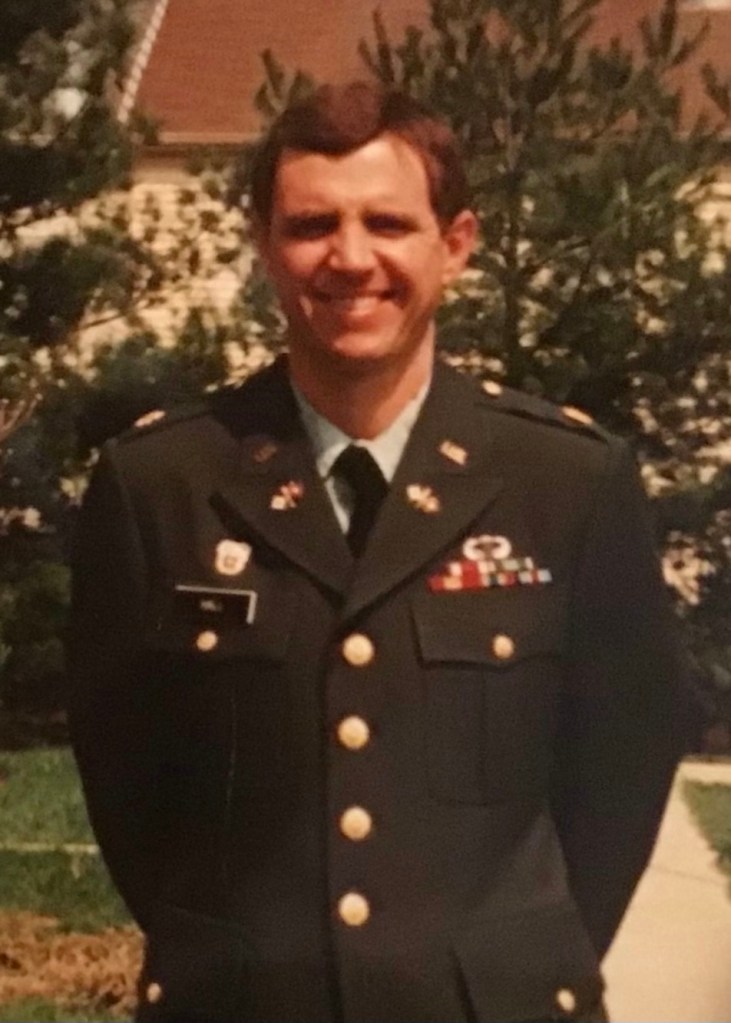
Photo of Me in Europe in the Late ‘80s.

Word started coming out of Europe, and specifically the UK about something called bovine spongiform encephalopathy (BSE), more commonly known as Mad Cow Disease. Initially no one here in the US paid much attention. Some cattle in England were acting strange – sick cattle had trouble walking and getting up, and could also act nervous or violent, hence “Mad Cow Disease.” There were a few jokes on TV, and quarantines on British beef, but, that was it.

Then, things got serious.

It turned out the disease could be transferred to humans by eating contaminated beef. Variant Creutzfeldt-Jakob disease (vCJD), the human version of Mad Cow disease, was first diagnosed in 1996 in the United Kingdom. It was the first man-made health epidemic, and was called the “Frankenstein disease”*. Companies had decided to feed meat and bone meal to cattle (which are herbivores) to increase their protein consumption. This caused what was previously an animal pathogen to enter the human food chain.

Initial human symptoms include psychiatric problems, behavioral changes, and painful sensations. In the later stages of the illness, patients often exhibit poor coordination and dementia. The length of time between exposure and the development of symptoms is thought to be years, but could be decades, and the average life expectancy following the onset of symptoms is 13 months. There is no cure.** YIKES!

Sometime in 2002 or 2003, I went to donate blood at a blood drive our company was hosting. I’d done the same thing for the past decade. This time? I was turned down. There were a couple of questions in the fine print, which excluded me. It turns out, in May of 2002, due to the possibility of Mad Cow Disease, the Food and Drug Administration (FDA) instituted a ban on blood donations from anyone who spent three months or more in the UK between 1980 and 1996. I’d spent about five months in England in the late ‘80s. The kind ladies at the blood drive let me eat my cookies and drink my juice, but “sorry sir, we don’t want, or need, your blood.”

At my next physical, I spoke to the doctor about Mad Cow. He didn’t know much about it, but thought it was highly unlikely I had it. And, oh by the way, there wasn’t really any way to know if you had it. You could only verify a diagnosis of Mad Cow via brain biopsy or autopsy (that remains true to this day).

Over the next few years, when additional company blood drives were held, I tried donating again, but the questions were still on the form, and I was always turned down. Eventually, I quit trying.

In 2008, Mad Cow Disease came to TV prime time on the show Boston Legal. William Shatner’s character, Denny Crane, starts having mental lapses, memory losses, and confusion, probably caused by the onset of Alzheimer’s disease. When questioned by his coworker, Allan (James Spader) about the lapses, Crane preferred to give a self diagnosis of Mad Cow Disease, rather than the reality of Alzheimer’s. It becomes something of a running punch line off and on for the rest of the time Boston Legal was on the air.

“I’m sorry, your honor. I have mad cow disease. I think you do, too.”

But I digress…

Time passed. More time passed. And then, this June I received a piece of mail from INOVA, one of our local health providers. I almost threw it away, but something prompted me to open it. Lo and behold, they changed the rules for donating blood!

Twenty years after my initial ban, I was once again eligible. Why? The FDA updated their guidance in May of 2022 – “We are changing the geographic deferral recommendations for vCJD risk based on new information in risk assessments … These risk assessment models … demonstrate that the current risk of vCJD transmission by blood and blood components would expose transfusion recipients to no or minimal additional risk of vCJD in the future…”***.

The Good New from INOVA Health

So, while I may still have Mad Cow Disease (remember, it can take decades to appear), the risk of my transferring it via blood donation is low… 😉

That’s almost everything. I plan to donate blood once again at the earliest opportunity. In the meantime, I leave you with these two additional tidbits.

First, I’m amazed my blood donor file was still active. For the past two decades, my rejection due to Mad Cow has sat quietly somewhere in a database. All that was needed was guidance from FDA for someone to hit a switch and change my eligibility in the database. Literally one month after the guidance changed, I received my letter. Don’t kid yourself, there is no privacy anymore. Everyone knows everything about us, and we are generally the ones who provided the information.

And lastly, be careful out there kiddos. While doing some research for this blog, I discovered that in 2015, a man from New York developed vCJD after eating squirrel brains. Yep, squirrel brains. You can’t make this stuff up.

Addendum:

  • UPDATE: I have been informed by others that the ban on folks who lived in Germany during that time period was lifted three years ago. This update was just for those in the UK and France.
  • While I joked about it in the blog, I think it is extremely unlikely that I have Mad Cow lurking somewhere in my body. Statistically, the chances are almost nil.

• * Jonathan Quick, of the Harvard Medical School coined the term “Frankenstein disease”.

• ** vCJD information is summarized from Wikipedia at this address: https://en.m.wikipedia.org/wiki/Variant_Creutzfeldt%E2%80%93Jakob_disease

• *** The complete updated 2022 FDA guidance can be found here: https://www.fda.gov/media/124156/download

The Cost of Freedom

The Cost of Freedom

In light of the recent 4th of July mass shooting in Highland Park, Illinois, I’ve been rethinking Stephen Stills classic song, ‘Find the Cost of Freedom’.

Find the cost of freedom
buried in the ground
Mother earth will swallow you

lay your body down

Find the cost of freedom
buried in the ground
Mother earth will swallow you

lay your body down

Written at the height of the Vietnam War, it was released as the B side to ‘Ohio’ which was a direct condemnation of Kent State. ‘Find the Cost of Freedom’ was less explicit. There have been multiple suggestions as to the meaning of the song, including the student deaths at Kent State, the death of our soldiers in Vietnam, or even the cost of war to us as a people. Although simply written, with fewer words, it’s a more complicated song.

CSNY Performing ‘Find the Cost of Freedom’, Back in the Day

The song was rereleased in 1982 as ‘Daylight Again/Find the Cost Of Freedom’, with seeming references to the Civil War. The line “When everyone’s talkin’ and no one is listenin’, how can we decide?” is added right before the famous refrain and it then becomes:

When everyone's talkin’ and no one is listenin’, How can we decide
(Do we) find the cost of freedom

Buried in the ground
Mother Earth will swallow you

Lay your body down

To me, this version seems a perfect summation of the entire gun violence issue. No one listens to anyone on the other side. The result? We see the cost of freedom, and the results of the Second Amendment, dead and buried in the ground. People are going to die, and that is just the price we need to pay for the freedom to own guns. Any kind of guns. All guns. Just lay your body down and accept it.

We here in ‘Murica have deemed that acceptable to protect our Second Amendment freedom. Everyone has the freedom to own their guns, even if it’s at the expense of other people, who just want to celebrate their freedom by watching a parade on the Fourth of July.

God Bless America.

Find the cost of freedom
buried in the ground
Mother earth will swallow you

lay your body down

Find the cost of freedom

buried in the ground
Mother earth will swallow you

lay your body down

… Feel free to share this blog

Addendum:

You can read my previous blogs on gun violence here:

I Don’t Do Funerals

I Don’t Do Funerals

It had been raining for a while when Gary pulled two more beers from the fridge. As he handed me one, he said “I’ll tell you one thing, I don’t do funerals.” I popped my beer and looked up. “I didn’t know you were that particular”.

Gary lived two townhouses down from us. His girlfriend Cindy had moved out a couple weeks before, although I’m not sure why. I didn’t ask, and he didn’t volunteer a reason. We were casual friends – the kind of guy you saw in the neighborhood often enough. We’d drank beers together a couple of times and I think Cathy and I had Cindy and him over for dinner once.

Gary’s Townhouse was Two Doors Down From our Own

When I came home from my running group that day, he was vacuuming out his Limo in the parking lot. He was pretty religious about keeping it clean. I stopped to talk with him and he offered me a beer from the cooler next to the Limo. I readily accepted.

We talked about this and that, and then it started raining. “Damn. Let me go park this and I’ll be right back. The house door is open.”

I waited on his stoop for the couple minutes it took him to return, and then we went in his kitchen, where he popped two more beers and we sat down.

As we were drinking our beers, he talked about his history as a Limo driver. It may not have exactly been sex, drugs and Rock ‘n’ Roll, but it wasn’t far off. There were a couple of B level rock singers who regularly booked him when playing in DC. He did the usual “big dates”, weddings, and business meetings. A few local corporate types used him consistently. He was strict with the kids that rented the limo for prom or graduation. After that? Who was he to judge?

It was then, as he grabbed two more beers from the fridge he uttered “I’ll tell you one thing, I don’t do funerals.”, and I spoke my quick rejoinder “I didn’t know you were that particular”.

“I Don’t do Funerals”

He looked at me and smiled, and then the smile faded away. “I used to do funerals. Quite a few of them. But I learned something about the limo, or I guess more about myself. Afterwards, no matter how hard I cleaned the inside of the car, I couldn’t get the smell out.

I looked at him inquisitively. “The smell?”

He took a swig of beer. “Yea, the smell. The smell of loss, of sadness, of blackness, of death itself. No matter how much I cleaned the inside of the limo, to me, the smell was still there for the next trip or two. I finally gave up and quit doing funerals. It was better for me, or at least better for my soul.

After sitting quietly for a couple of minutes, I raised my beer, and as we clinked cans, said “Your Good Health” and he answered “and yours”.

We finished the beers and I said goodbye. It was still raining as I walked home, thinking about Gary, and death, and how something can linger in the air, even when there is no smell.

When Birds Cry

When Birds Cry

When I went outside to assess the damage after the storm passed, the first thing I thought of was the musician Prince. There were probably no doves, but as I stood on the back porch, I could hear hundreds (thousands?) of birds plaintively crying out, over and over and over. This wasn’t good.

The forecast had called for thunderstorms, and as the afternoon progressed, I started receiving weather alerts on my phone for severe thunderstorms. Then at 4:20PM, my phone started chirping like crazy – it was an alert from the National Weather Service. 80 MPH winds were expected, take shelter immediately.

92 MPH Winds Actually DID hit Fauquier County that Day

A few minutes later, I looked outside. The sky was turning black. Suddenly, daylight was gone and it was a dark twilight. As I continued to look, the rain started and then suddenly, the wind forcefully arrived. Trees were bent over, seemingly almost in half.

Holy hell! I called for our dog, Carmen, (Cathy was out of town), and we went to the lowest part of the house near the wine room. Carmen and I sat on the steps next to each other. I was petting her back as we listened to the wind blow and the rain pour down. She shivered slightly. The lights flickered, and then the power went out. I counted to 8, and right on time, the generator kicked in and the lights came back on.

How long did we sit there? I’m not really sure. Maybe 5 minutes, maybe 10 minutes. It felt like a lifetime.

Eventually, the wind lessened, although the rain continued to fall in buckets. I moved back up to the kitchen and looked out the windows. The rain was still falling so hard, you couldn’t see more than a few feet. I posted to FB to warn people in Warrenton that craziness was on it’s way. The winds were moving so fast, I think my post hit FB about the same time the storm was raging through Warrenton.

View of the Storm Approaching Warrenton (Photo courtesy of the Washington Post)

The rain finally lightened to a drizzle and I put on a jacket. Time to check on the horses, and the farm for damage. As I stepped out the door, I heard the birds crying and immediately thought of Prince. It seemed a strange thing at the time, but he literally popped in my brain. These weren’t caws, tweets, chirps, whistles, trills or croaks, they were cries. I don’t know what crying doves sound like, but I hope I never hear the sound of that many birds crying out again.

I circled the house and it was fine, although a garden trellis was knocked over and a grill cover had vanished. Not so bad, I thought, and then on the way to the barn, I saw the old pine trees on the edge of our property. Four out of five were sheared off. I felt an immediate sadness, as they were beautiful trees.

I’m Trying to Imagine the Speed of the Wind Gusts that did this. Even the Trees Still Standing had Most of Their Branches Stripped Off.

At the barn, the horses were fine, as was Ollie, our cat. By chance, I’d put him in the feed room an hour before the storm arrive to have an early dinner.

I continued my tour and found a tree down by the pond, and two trees down on the fence in the back paddock. I came out on Swains Road, which borders our property and stopped suddenly. At least four trees had fallen, blocking the road. There, I ran into my neighbor Kevin. He had just returned from doing his own tour, and was getting ready to start cutting up a tree blocking his drive and the road. I told him I’d be back in a bit with the tractor.

As I finished my inspection, I found a couple more downed trees, including one near our driveway and one blocking a dirt road on our property. It was time to get to work.

After dropping the bush hog from the tractor, I made my way back to Swains road. Eventually, using chain saws, my tractor, and a Jeep, there were three or four of us clearing a path on the gravel road. We weren’t Republicans, Democrats or Independents, we were just neighbors doing a job that needed to be done. It’s funny how that works sometimes. I wish it worked that way more often.

Just a Couple of the Trees that Fell Across Swains Road

Around 7:30PM, after checking on a next door neighbor that lives alone, I made my way back home. I put the tractor away, went inside, and made myself a drink and fixed dinner.

I learned that over half of Fauquier County lost power and numerous roads were closed due to fallen trees. A few homes and cars had trees fall on them. Miraculously, no one was killed or injured. The Washington Post shared a bit more information about the storm: “The violent winds were the result of straight-line flow called a downburst, which occurs when an exceptionally strong downdraft strikes the surface and the airflow surges outward along the ground, literally as a blast of wind. The strongest winds occur in the direction that the storm is moving.” According to the Post, a peak wind speed of 92MPH was recorded about a mile to the east of where we live.

We Live About a Mile to the West of the Orange Dot (Photo Courtesy of the Washington Post)

Here at the farm, we lost about ten big trees, including the pines by the house, two that fell on fences and others scattered around the property. One of Cathy’s Redbuds has two branches sheared off, and our beautiful magnolia in the front yard has half of its branches broken by a huge falling oak. Overall, we are pretty lucky. Cathy, Carmen, Ollie the Cat, the horses Stella and Katie. and I are all fine. There’s no damage to the house, and no damage to the barn.

The power came back on and the generator finally shut off 30 hours after the storm. I can hear chainsaws in the distance as the clean up continues. It will take some time.

The chainsaw sounds will eventually fade and disappear, but the sound I don’t think I will forget for a long time is all of those birds crying out in unison. In shock, in pain, calling for others, I don’t know. All I know is it was a plaintive and anguished sound.

A Farewell Dinner and a Letter

A Farewell Dinner and a Letter

High School graduation had come and gone, and the month of June was racing by. In just a few days, I would report to West Point. For our last night together, Cathy had the idea for an “adult” farewell dinner at her house. Never mind that we were just kids of 17 and 18.

How she was able to make it all happen, remains a bit of a mystery to me to this day. In addition to planning our dinner she asked her folks if we could have a bottle of wine with the meal. They agreed, and then checked with my folks to make sure they were OK with it. Amazingly, they agreed as well.

It was finally the last night in Ottawa. I arrived at Cathy’s just as her mom and dad were departing, along with her sisters, Cindy and Bonnie. I don’t remember where they went – maybe the movies or a drive in. All I knew is we would have the house to ourselves.

We opened the wine, a straw covered Chianti bottle, and sipped on it as Cathy finished cooking. She was making spaghetti with a meat sauce, a meal of hers I love to this day. As we sat down for dinner, she also brought out a salad.

Dinner was Served, Along With a Nice Chianti

It’s funny, in my minds eye looking back, we were both adults, and also kids playing at being adults. I don’t know if that makes sense, but it’s how I remember the night. It was somber and sad, and fun all at the same time. We finished dinner eventually and continued to sip on the wine until it too was gone. We talked about everything, and nothing. We talked of the future and when we hoped to see each other again. We promised to write… and finally, it was time for me to go home. We said our goodbyes, and then said them again several more times. Finally there was a long hug, a last kiss and I drove off into the night, with a crazy collection of mixed up feelings inside. I didn’t sleep much that night.

The next morning arrived. Normally, Dad would have had us up at oh-dark-thirty to depart, but for whatever reason, he decided to break the trip to New York into two days, so we were leaving around mid morning. We were finishing packing the car when my old buddy Howard showed up. We’d known each other since kindergarten, and he wasn’t going to let me escape without saying goodbye. We too promised we’d write each other when we could.

At this point, mom, dad, my two sisters, Howard and I were all standing in the driveway. As we were getting ready to leave, Cathy came racing up on her bicycle. We all stood there for a bit talking. If you’ve ever seen American Graffiti, it was a little like the final scene at the airport with Richard Dreyfus saying goodbye to family and friends, before he departs on the plane for college.

The Last Few Minutes of my Departure Weren’t Unlike Richard Dreyfus’s Departure at the End of American Graffiti

I hugged my sisters goodbye and shook Howard’s hand. Cathy and I had a final kiss, and as we were hugging, she pressed a letter into my hand. She whispered “Don’t open this ‘til later…” With that, mom, dad and I climbed in the car and with honks and waves, were on our way.

I looked at that envelope for a long time. I believe we were in either Indiana or, maybe, Ohio before I opened it. I probably read the letter about 50 times on the drive east, and another 500 times during my time at West Point. I won’t share the contents here, but know the letter still sits in a drawer on my side of the bed, and I occasionally pull it out and read it.

I Still Occasionally Read that First Letter from Cathy

I think about that dinner, and the letter. We were just kids in so many ways, but we were also adults, or thought we were. The world turned out to not be quite as black and white as we imagined it in those last 24 hours in Ottawa, but here we are, decades later, reminiscing about our past, and still thinking about the future and what it holds for the two of us.

Addendum:

It’s worth noting a couple of things from that pre-Internet era:

  • There are no pictures of that last dinner or the farewell the next day. Why? With no cell phones or iPhones to document the events, we simply lived them. Who’s to say which is better?
  • People actually did write letters to each other back in the day. Particularly that first summer at West Point, the letters that came from Cathy, Howard, mom and dad and others helped sustain me.

Russian Command and Control

Russian Command and Control

Command and Control (C2), along with Command Centers, are phrases you might hear with regard to the Russians in Ukraine these days. In my military career, I worked all levels of C2 from Infantry Brigade to Presidential, and I can see that the Russians are shockingly missing, or ignoring some C2 fundamentals.

There are other reasons for Russia’s initial bad performance in the first 100+ days of this war as well – too broad of an initial attack, poor logistics and poor morale in a conscript army all come to mind. What I keep returning to is their lack of C2 fundamentals, which impacts everything else.

Command and Control is defined by the Defense Department in military speak as “the exercise of authority and direction by a properly designated commander over assigned and attached forces in the accomplishment of the mission.” What does it really mean? In lay-terms – having the necessary leadership, team and systems to successfully manage a battle or war.

I know a thing or two about C2. From 1979 to 1983 as a junior officer, I supported Command Centers and command and control elements for 2nd Brigade 3ID, the 3rd Infantry Division itself, and VII Corps in Germany. When I returned to Germany from 1985-89, I was involved in work supporting the United States Army HQ in Heidelberg, the US European Command Alternate Support Headquarters in England, and NATO Headquarters in Belgium. In the 1990s I was involved in classified Nuclear Command and Control elements and programs at the Pentagon, and for the White House. For twenty years, virtually all of my work was involved in Command Centers, along with Command and Control processes and systems.

A Personal History of Command and Control Related Assignments

There were several truths and common best practices at all of those levels. I’d like to highlight just a few, including mobility, multiple communications links, and independent and inspired leadership at all levels. The Russians have problems with all three of those concepts.

First, they appear to have forgotten that the closer your Command Center is to the front, the more mobile you must be. You can’t allow your Command and Control elements to stay in one place, otherwise they are identified and targeted. This is particularly true today with the availability of satellite imagery. The result of them ignoring this maxim? We have seen multiple Command Centers destroyed, and at least 12 Russian General Officers killed at those Command Centers. As a comparison, the US lost 40 General Officers in all of WWII and 12 GOs in the entire Vietnam war.

A few of the dead Russian General Officers

Next, your command and control centers need multiple communications elements and links, particularly systems which are bi-directional, not Omni-directional. Why is that? Well, for one thing, Omni-directional systems (think HF Radio as an example) are easily detectable by your enemy, and as a result easily targeted. Also, without multiple systems, if one system isn’t working, your messages don’t get through. How did the Russians try and solve this second problem? By using cell phones, which are, guess what? Easily detectable. Combine this problem with their lack of mobility, and the issues for C2 elements are compounded.

I think it is a third issue that is causing the greatest harm for them – their seeming inability to push Command and Control leadership to the lowest levels possible. In the US Army, we try to encourage resourcefulness and independent thinking at all levels of leadership, down to and including individual platoons and squads. It’s not that they act independent of each other, but if there is an issue, individual action, leadership and gumption are expected. With the Russian army, this doesn’t appear to be the case. Putin, or his henchmen, are managing all aspects of the war and they have little ingenuity or original battlefield thinking going on at any level.

In the US, I’ve watched C2 migrate to C3 (add communications), to C3I (add intelligence) to C4I (add computers), to C4ISR (add Surveillance and Reconnaissance), to C5ISR (add Cyber) and today, C6ISR (add Combat Systems). There are two important lessons here: First, The US Military, of course, always loves a growing acronym (kidding … 😉 …); and second, the true lesson is the US Military continues to adapt and improve. All of those additional letters added to the C2 acronym? They are ways we continue to improve and support the fundamentals of Command and Control. We view enhancements to Command and Control as force multipliers.

The Russians continue to press their attack and they are making progress in the East. I will not be surprised to see the Donbas region fall into their hands, and probably sooner rather than later. But it’s coming at a tremendous cost of lives and equipment to them. Currently, the Pentagon reports they have lost in excess of 20% of their fighting forces, including over 1,000 tanks. They have reverted to Russian WWII type tactics of leveling everything in their path as they approach an area. The areas they are “conquering” are reduced to rubble, and remember, these are the areas supposedly “friendly” to the Russians.

Putin, of course, doesn’t care about the loss of Russian manpower, or the destruction of Ukraine. He only wants a victory. When all is said and done, I don’t know that he will regret the lack of Command and Control fundamentals and force multipliers in his military structure, but the families of thousands of dead soldiers back home might.

Addendum:

  • To my West Point classmates and old military buddies, I realize this is an overly simplified version of Command and Control and what is going on in Ukraine. I’m sure there already are, or soon will be many complex studies and reviews of what is happening in Ukraine, and what problems the Russians are having. I also believe simplicity sometimes serves a purpose, and in this case, its relatively accurate.
  • Rick Steinke, a West Point classmate, retired Colonel, and Former Associate Dean at the George C Marshall Center in Garmisch-Partenkirchen, Germany, sent this note to me after I posted the blog: Well said, Max. I would also humbly add that you must exercise and train said C2, across a combined arms environment. This training must be honest in exposing problems and weaknesses. This approach is anathema to the Russian military. After all, generals and colonels might end up looking incompetent. Said another way, with their training approach it has always been better to LOOK competent than BE competent. At our National Training Center (three trips as BN/ BDE S-3)in the Mojave desert, after action reviews, brutal and transparent as they were, always made well-led units – and leaders – better.

Speaking out on Gun Violence

Speaking out on Gun Violence

I was invited by the Brady Organization to speak at the End Gun Violence Rally on the National Mall yesterday. This was in conjunction with the 2022 DC March for our Lives on Saturday, June 11th. Here are my words …

Good Afternoon. My Name is Max Hall and I live in Marshall, Virginia. I am a graduate of West Point and Veteran of the United States Army. I served nearly 9 years overseas in defense of our country. I would also point out that I am a gun owner.

Speaking Out… Something We ALL Must Do.

As a veteran and an American, I am sick of seeing school children murdered. I’m tired of watching people shopping, going to the movies, attending worship services, or just trying to live their lives, being gunned down. Enough!

At West Point and in the military, I was trained on the safe use of both handguns and rifles and how to kill people with those weapons. Having seen the effect of those weapons, I stand here with Brady in support of gun safety. As a country, we MUST do something. Doing nothing is not an option

In today’s environment, where people think everything is black and white, insight and knowledge are often lost. I hope that is not the case here and now. Now is the time to listen to the American people. Now is the time to have courage and act. Now is the time to pass meaningful common sense legislation such as:

  • Universal Background Checks
  • Raising the age to buy firearms to 21
  • Red Flag laws, and
  • Investments in Mental Health

Listen to the American People. The vast majority of Americans, and gun owners, support common sense gun legislation.

At West Point, the Cadet prayer says in part “Make us to choose the harder right, rather than the easier wrong.” I urge members of the Senate to do the same. Do not give in to special interest groups, to pointless platitudes, or the easy route of doing nothing. Choose the harder right, and pass common sense gun legislation now.

Thank you.

My Friend Bruce Shuttleworth (Naval Academy, ‘87) , Senator Chris Murphy (Connecticut) and I were the First Three Speakers.
The Brady team laid out 2,280 schoolbooks and broken pencils around our podium. They represent the 2,280 children that have been killed by gun violence in the past 456 days — or the time that the Senate has refused to bring a vote on background checks.

… Feel free to share this blog …

Addendum:

Thanks to my friends Mike Hammond and Donna Matturro McAleer who helped with some of the wording and theming for this speech.

Eggs and Dichotomies

Eggs and Dichotomies

I recently enjoyed a fun and funny New Yorker article, by Rachel Syme. While reading, I became aware of two dichotomies simultaneously – First, she is a wonderful writer, whose prose blows mine away. Second, I know how to cook a perfect soft boiled egg, while she does not :-).

I subscribe to the New Yorker, which has great writing on a multitude of topics. One of the features of my subscription is that I receive emails a couple of times a week with reading suggestions. Last week, the email shared several food related articles, and one of them immediately caught my eye. Maybe it was the lead in … “The Ridiculous Egg Machine That Changed My Breakfast Game – It breaks all my kitchen rules, and yet, every morning, I make myself a fussy little hotel breakfast.” I’m not a kitchen gadget guy, but this sounded intriguing. I knew I was either going to love it, or hate it.

Both Reads were Good, but Syme’s Article Caught my Eye First

The article WAS good, and interesting. I enjoyed the way she wove the story of the egg machine into her own background and family history, while adding something we all crave – a little pampering while at a hotel. She talked about short getaways, and the enjoyment of coffee in bed, and wonderful little breakfasts, including soft boiled eggs.

It made me think of my own introduction to soft boiled eggs. Growing up, eggs were a family staple, particularly on weekends. Saturday mornings often saw eggs scrambled, over easy or sunny-side up, with toast and bacon on the side. Hard boiled eggs? Sure. Always at Easter, but also occasionally for a snack, and a big dose of them in mom’s potato salad. Soft boiled eggs? I don’t remember mom (or dad) ever fixing them. I believe the first time I ever ate one was while stationed in Germany in the early ‘80s. On one weekend trip, we spent the night in a small village Gasthaus. The next morning we came to the dining room for breakfast, where we were greeted with charcuterie, a cheese board, and thick slices of bread, along with something else – soft boiled eggs in small holders, with a tiny comforter over the top of the eggs to keep them warm. The presentation was funny, practical and magical all at the same time. The eggs themselves? Both simple, and delicious. I was hooked.

Of course, we then had to make them at home, which led to us buying the little egg cups, and the tiny spoons needed to scoop out that golden delight from the center of the egg. We made them for a year or two, usually on the weekend when guests were staying the night. Then, as is often the case, we got out of the habit, and eventually stopped making them. For thirty years.

The Egg Cups Sat Unused for Thirty Years

After retiring about eight years ago, I rediscovered the egg cups, and brought them back into use. I’m usually up earlier than Cathy, so we eat breakfast separately. Once about every week or two, I take the four minutes and fifty seconds needed to make a soft boiled egg. Just. The. Way. I. Like. It. A little bit of memory, delight and tastiness all in one egg.

Four Minutes and Fifty Seconds to a Nice Breakfast

Which brings me back to Rachel Syme and her article. The twin dichotomies we share are perfectly summarized in her breakfast description in the article: “Mornings at home were for English muffins with a scoop of marmalade, or muesli with a splash of almond milk. Low-risk stuff. Foolproof … What I kept fantasizing about was a perfect plate of soft-boiled eggs, with a silky, spreadable yolk the consistency of honey. I knew I wasn’t going to be able to manifest this fantasy on my own. Enter the egg machine.

In a million years, I would never come up with the phrase “…with a silky, spreadable yolk, the consistency of honey.” I mean, that is a perfect description. It makes me hungry just reading that line. And then, she adds the kicker “ I knew I wasn’t going to be able to manifest this fantasy on my own. Enter the egg machine.” I wanted to scream out “Rachel! You too can do this. All it takes is four minutes and fifty seconds! Really!”

So there you have it. We all have our talents, we all have our fantasies, and those of us who are lucky enough, recognize the limits of the former, while trying to reach the latter. If Rachel Syme can achieve breakfast nirvana with a DASH Rapid Egg Cooker, who am I to judge? In the meantime, I look forward to reading more of her wonderful writing, and maybe learning a thing or two along the way.

Addendum:

Playing “Work Up”

Playing “Work Up”

Summer is almost here and schools will soon release their prisoners for the season. I envy the kids and their feelings of anticipation right now. Summertime, and the livin’ will be easy… Of course lots of the summer will be planned out, as seemingly everything is for children these days. Do they ever have the chance to just act like kids?

I was thinking back to summertime during my own youth and growing up in Tomahawk Terrace on the Southside of Ottawa, Illinois – population 18,000. There wasn’t much planning of our time at all, with every day it’s own adventure. Playground at the school? Playing Horse or two-on-two basketball at Schaefer’s or Cavanaugh’s house? Playing army in Varland’s nearby corn field or cow pasture? Hanging out and reading comics? … The possibilities were endless.

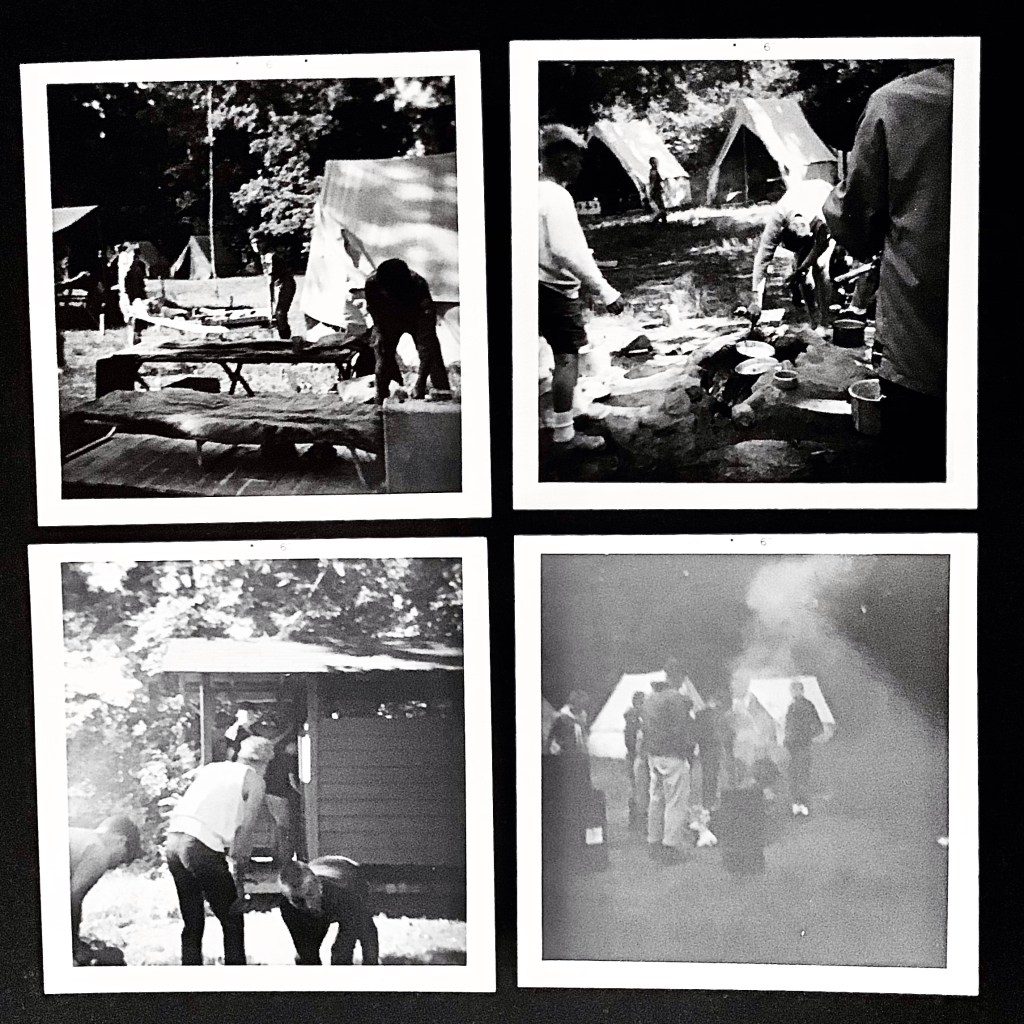
There were some organized activities in my life, such as Little League Baseball, or Boy Scout Camp, but most of the time? It was just us kids hanging out. You had to be home for lunch, and you had to be home for dinner. After that, I don’t really remember any other requirements.

… me in the mid 60s …

I think one of the best memories was playing “Work Up” baseball behind Honer’s house, next to the cemetery.

Work Up? What’s that you say? It’s the baseball game you play when you don’t have enough players for two teams, or maybe even one team. Hell, it’s the game the kids on the movie “Sandlot” would have been playing if the film had really gotten it right (and yes, I do love the movie).

The rules? Well there weren’t really any rules, but there were norms. Typically we’d have 7, 8 or 9 guys show up to play. You’d have 2 or 3 guys up to bat, with the remainder in the field. In our case, that included, in order of importance, a pitcher, 1st baseman, shortstop, 2nd baseman, and right and center fielders. We didn’t have a catcher, it was just whoever was up next to bat. The game was called Work Up because you would bat and run the bases until you made an out. Then the pitcher would go in to join the batters, the first basemen became the pitcher, and everyone else advanced one position. Whoever made the out moved to right field. Oh, and if you hit a fly ball and someone caught it, you did a direct exchange with that player.

The game was really adaptable. As an example, if you didn’t have enough kids, there might be only one outfielder, or maybe no 2nd baseman.

The only rules I really remember concerned Left Field. Our “ball diamond” had a graveyard where much of left field normally was. We never put a player in left field, although the center fielder might shade that way a bit. When you were at bat, if you hit a tombstone on the fly, it was an out – we basically assumed the gravestone “caught” the ball. If you hit a tombstone on the ground, we assumed the gravestone fielded a grounder and it was an automatic double. If you hit a ball and it didn’t touch any of the gravestones (almost impossible to do), then the ball was in play.

There are now trees near where Home plate, and 1st and 3rd Base were. Varland Park was a cow pasture at the time.

I don’t remember us ever having a set time for a game. Word just spread around and some number of guys would show up. We might play pickle, while waiting for enough folk to show. Most everybody was from the ‘Terrace, with the occasional friend or cousin added in. This included the Honer brothers, the Hinsons, Deaks, Hazelwoods, Steve Schaefer, John Levy, Chuck Ogden, Jim Habben, one of the Leach boys, Leonard Mayberry, Howard … other names I have long forgotten. If everyone showed up, we’d actually have enough for two teams and play pick-up, but that rarely happened. Kids ranged in age from a couple years older than me to a couple years younger, and there were lots of younger brothers in attendance. One unwritten rule was you didn’t try and take advantage of the younger kids. I mean, it was OK if one of your hits went towards them, but if you did it every time? Not so cool.

By the way, there was never an adult in sight. We seemed to manage just fine by ourselves, without their oversight or interference.

I don’t recall much about the games themselves, I just remember playing the game on hot summer days until we were tired. It might have been an hour, it might have gone on for three hours. Eventually someone’s mom would call and that player went home and then someone else would have to leave, and the game slowly broke up. We might reconvene again the next day, or maybe not until a week later.

I know it’s a different world today. Things are more complex, more challenging, and perhaps less safe. Kid’s lives, from what I can see as an outside observer and non-parent, are organized to the nth degree. Multiple activities, multiple practices, multiple study activities. I guess they are able to try more things, but I also think some things might get lost in the process, like the ability to entertain yourself, informal group interactions and how to handle them, and perhaps even learning a little about leadership for better or worse…

I dunno, do kids even want to spend time outside these days, or is it all mostly computer and video games? Back in the day, I know mom, or our babysitter, would have kicked us out of the house if we were hanging there too much.

I suppose some of this makes me sound like a grumpy old man after a fashion. I don’t really mean it that way. I just remember how much fun we had hanging out on our own behind Honer’s house, playing ball and trying like hell to not hit a fly ball to left field, where it was sure to be caught by a tombstone…

Addendum:

  • I went online to do a bit of research on “Work Up” baseball as a check on my memory. In a sign of the times, I found plenty of entries, most of them with long lists of rules on how to play Work Up… – sigh –
  • Thanks to Tomahawk Terrace alumni Bob Deak and Leonard Mayberry, for providing input to this blog.
Guns and ‘Murica

Guns and ‘Murica

There was no urgency to write this blog. I knew another mass shooting would happen sooner or later. I didn’t have to tie it to Buffalo or California. The next shooting would come along soon enough. I wasn’t disappointed. Texas happened this past week.
Gee, if they can’t stop mass shootings in Texas, where they have more guns per capital than any other state in the US, what chance does the country have? Where have all the “good guys with a gun” been? Taking the day off? Or, maybe that just doesn’t work. The armed school guard at the school in Texas? Nope, didn’t help. The police response in Texas? A bit slow.

Here in Virginia, there was actually progress made in 2020 and 2021, and several sensible gun laws were passed (and no, no one’s guns were taken away). Things change quickly though. What did our current Lt. Gov. Winsome Sears (R) blame the issue of mass shootings on when she recently spoke at the NRA convention in Texas?

“We took prayer out of our schools … fathers are not present because we have emasculated our men … and mental health is deteriorating, worsened by covid protocols.”

You read that right. Constitutional separation of church and state, emasculated men and covid are the cause of mass shootings. You can’t make this stuff up.

I agree with the Lt. Gov about one thing. Mental health continues to be an issue. By definition, could anyone conducting a mass shooting, NOT have mental health issues?
According to the Gun Violence Archive, there were 213 mass shootings already this year in the US. There have also been 27 shootings at schools causing injuries or deaths.

After Texas, all of our politicians called out the same tired platitudes of thoughts and prayers, while wringing their hands. Someone added the brave thought of “we can’t allow this to become normalized in America”.

Guess what? It already is normalized, commonplace, and pretty much inevitable in America. I have little faith that this will change in my lifetime.

As with many other serious problems in the USA these days, we don’t have the moral courage to address, or even attempt to address this issue. We no longer try to solve tough problems here in America. That skill is apparently no longer in our DNA.

In Texas, the record at the 911 center recorded these calls from a little girl in one of the classrooms that was attacked:

  • At 12:03 p.m., a girl called 911 for a little over a minute and whispered that she was in Room 112, according to Texas Department of Public Safety Director Steven C. McCraw.
  • She called back at 12:10 p.m. reporting multiple people dead, he said, and again a few minutes later, to say there were still a number of students alive.
  • “Please send the police now,” the girl begged the dispatcher at 12:43 p.m., 40 minutes after her first call.

Unfortunately, there were no good guys with guns, no police and no legislators on the call to immediately respond.

I have little faith that this will change in my lifetime, but I’m going to do everything I can to work and effect that change.