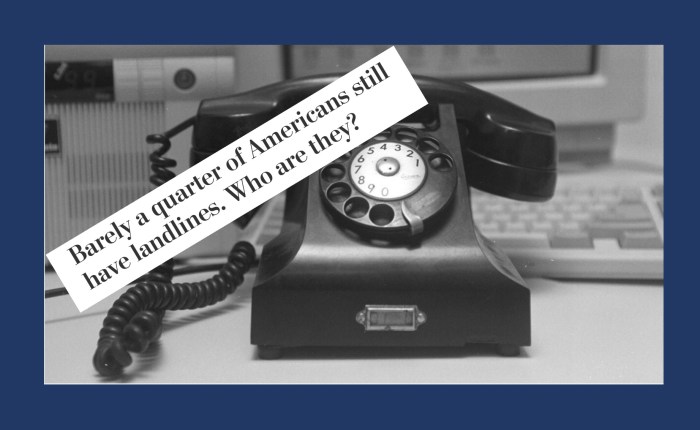
The Washington Post headline screamed out “Barely a quarter of Americans still have landlines. Who are they?” I wanted to shout back, “ME FOR ONE!” Still, I wasn’t really surprised at the numbers. So why haven’t Cath and I taken the plunge? Well, there are one or two downsides to living in the country, which I will get to in a bit.
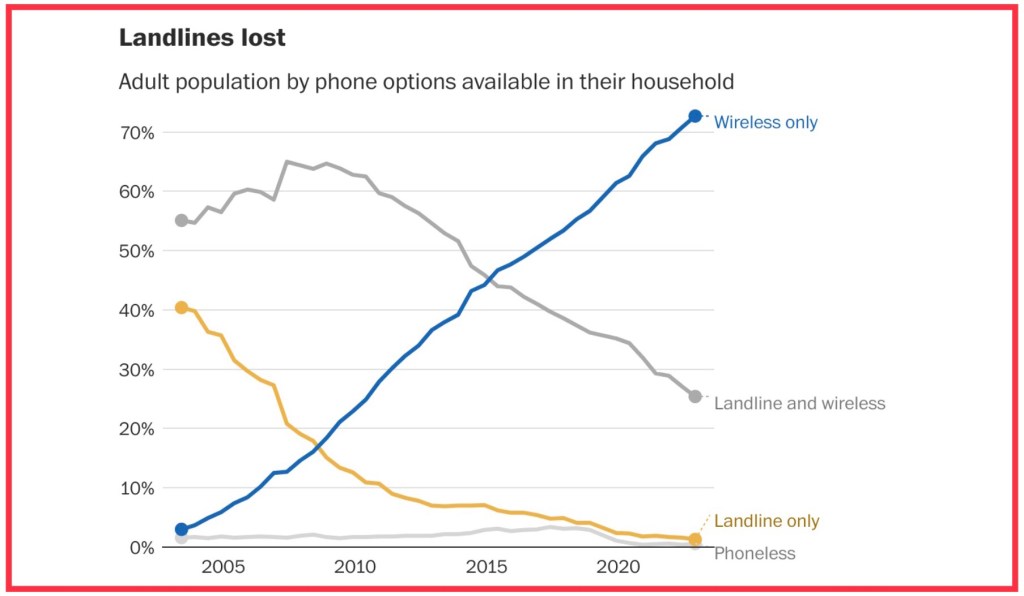
The article was actually quite interesting. It was based on analysis from the National Center for Health Statistics (NCHS) and their National Health Interview Survey (NHIS). The survey takes place on an annual reoccurring basis and covers a wide range of topics, including since 2003, cell phone usage. The change overall is pretty dramatic, as you can see from the chart.
Amazing Changes Since 2003.
Not surprisingly, more older people still maintained their landlines. There were however, a couple of other interesting statistics:
Homeowners are more likely than renters to have home phones.
Hispanics are less likely to have landlines than blacks or whites.
There are minimal differences between men and women on who has pulled the plug on landline service.
There are minimal difference based on education level on who has pulled the plug on landline service.
1% of Americans have no phones at all (cell or landline)
Some Interesting Statistics.
Researchers also found that phone usage is correlated with health and health issues, often in surprising ways. From a WaPo interview with Mr Blumberg, the head of NCHS, people who abandon landlines and rely only on wireless — “are generally more likely to engage in risky behaviors. They’re more likely to binge drink, more likely to smoke and more likely to go without health insurance.” That’s true even when researchers control for age, sex, race, ethnicity and income. Yep, you read correctly. That friend of yours who smokes cigarettes and binge drinks is also more likely to have only a cell phone.
So why do Cathy and I currently still have our landline? It’s simple really. We live in the country and at our home, cell service has occasionally been sketchy in the past. There are many cell towers across the county. Unfortunately, we have lived in a bit of a semi-dead zone. A few years ago, I put in an amplifier to strengthen the signal which helps, but provides no absolute guarantees. We’ve wanted to make sure that if we have to make an emergency call, we could do so.
I should also mention that about half the time when someone calls one of our cell phones, they don’t ring. Of course some would consider that a blessing. 😉
Maybe it’s time to cut our landline service. With much better internet service now, we also do Wifi calling, which helps from a reliability perspective. Currently, we pay $103.25/month for our landline, so over the course of a year, that’s a chunk of change ($1239 to be exact).
It’s interesting. Sometimes catalysts come from the strangest sources. As I’m typing this, Cathy and I have spoken and decided it’s probably time to give the landline the Heave-Ho. We may wait a month or so to allow some transition time for a few key notifications, but that’ll be it. We may be a bit late to the party, but we’re there now. When you see me smoking more cigars and my alcohol intake increasing, you will know we’ve pulled the trigger. I guess it’s a good thing I’m now on Medicare.
This “Digital Answering System” will be Going by the Wayside.
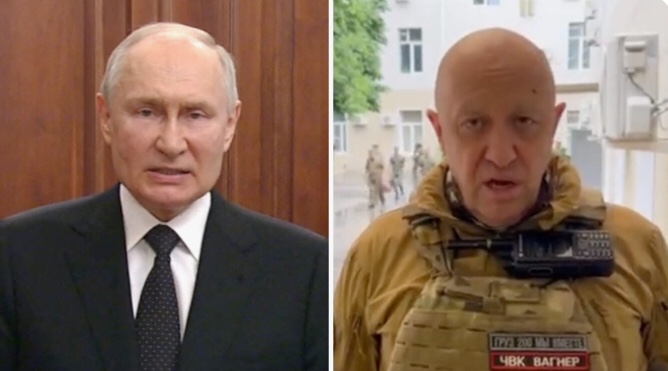
On June 24th, we woke to the news the Wagner Group rebelled against the Russian military and was marching on Moscow. Twelve hours later, it was all over. Peace at hand? More problems to come? Certainly we have ripples of instability, never a good thing in world affairs.
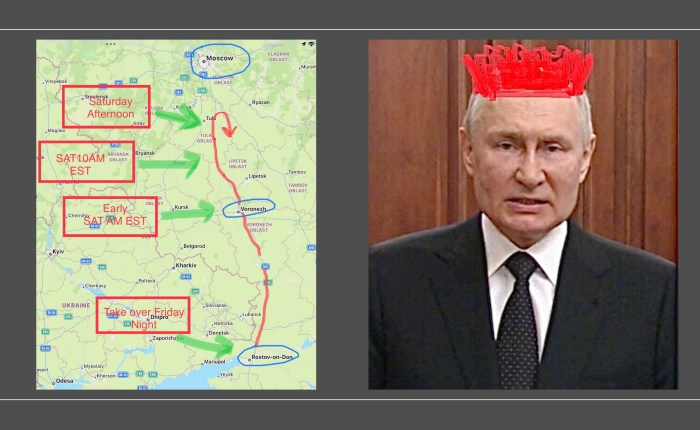
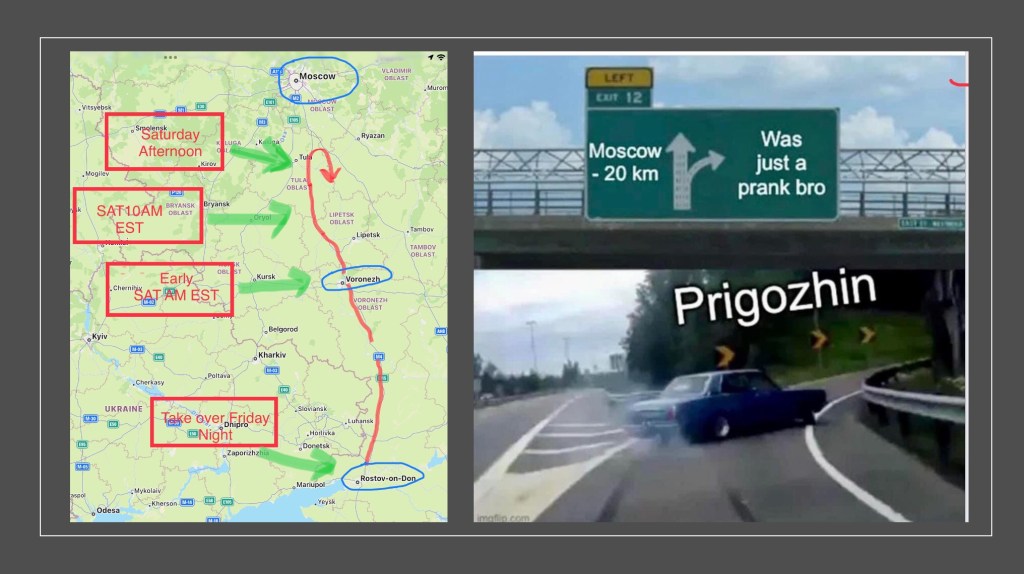
There’s nothing like a coup attempt to grab my attention before I’ve had my morning coffee. On that fateful Saturday, I watched with fascination as Prigozhin’s Wagner Group troops took over the Rostov Russian Military Headquarters and then started their march on Moscow. It appears they were within 120 miles of the capitol before the insurrection ended as suddenly as it began, and Belarus leader Lukashenko worked out a peace between Putin and Prigozhin.
Whoops…I Didn’t Really Mean It
The terms? Maybe, forgiveness for the troops, a safe passage of Prigozhin to Belarus, and no invasion of Moscow itself. Yea, a win-win for everyone – if you believe in fairytales. The “fog of war”, and the cloak around all things “Russia” makes it difficult to assess what is true, what is false, and what is somewhere in between. It will all play out over the next few months. What I know is there is now increased instability in the region, and the world. I’m not a big fan of instability. No sane person should be a fan of instability as we are now experiencing in Russia.
Will The Peace Last?
I am by no means a Russian expert, but I am a student of history. I also spent nearly a decade in the Army in Germany in the ‘80s waiting for them to attack us, and had the opportunity to learn a bit about them then as well. So, while I’m no expert, I do feel confident that I know more than about 95% of the talking heads on TV, and 99% more than all of those spouting off online.
Here are seven questions we don’t have the answers for. I waited this long after the putsch attempt to publish this blog in order for events to develop and perhaps answers become apparent to some of the questions. I don’t believe that has happened. The fog, and the world’s instability will remain until we have a better understanding of the answers. If someone on TV or online says they have the answers right now, you should immediately change your TV channel or go elsewhere online. They are probably lying.
1. Has Putin weakened? Between his failing attacks in Ukraine and this mini-coup, he looks like it, but looks can be deceiving. He is shrewd, and he is ruthless. I wouldn’t count him out just yet.
2. What WAS the agreement between Putin and Prigozhin? Is there wiggle room for both of them? Will they somehow be buddies after all is done? Or are they both out to kill each other?
3. A related question – How hard will Putin try to crush those who rose against him? Putin is not the forgiving type. In addition to settling up with Mr Prigozhin, he will certainly look at how easily the headquarters at Rostov fell. Was there complicity on the part of his generals there, or weakness? In either case, heads are likely to roll.
4. What about the Wagner troops? There are 25,000, give or take, wandering around Southwestern Russia, or in Ukraine with plenty of guns, tanks, and other weapons. They have served as the pointy end of the spear for the Russians in most of their attacks over the past year. If they are now peaceably subsumed into regular Russian units (as the Russian Army is trying to make happen), what happens to their effectiveness? What happens to the effectiveness of the units they are added to? And what happens if they don’t go quietly into the night?
5. What happens to the other Wagner Group troops scattered around the globe providing “security” and other services in places such as Sudan, Mali, Syria, the Central African Republic, Libya, Venezuela and Sri Lanka among others? Does Prigozhin continue to lead them, does someone else, or do they fade away?
6. How will this affect the war in Ukraine? If the Wagner Group is dissolved as a fighting force, what is the impact? Also, the other Russian troops in Ukraine have to know at least some of what has happened. How will they react?
7. How safe are Russia’s nuclear weapons? Are we confident they are managed and controlled in a secure fashion?
As I said, I’m not a big fan of instability, and right now, this situation provides plenty of it. Some people in this country would say ignore it, it’s not our problem. Others (I’m looking at you Majorie Taylor Greene) stupidly question whether the US was somehow behind the coup. Both of those courses are unwise. Any time there is instability in the world the ripples make their way in our direction, arriving sooner or later. The only question is whether the ripples fade away, or due to activities we can’t see below the surface, turn into a tsunami.
And don’t forget China lurking around out there as well. Their commentary was generally muted about these events. I believe they are a bigger longterm threat to us both militarily and economically. Having said that, I’m more concerned about an unstable Russia right now, than I am about a stable China.
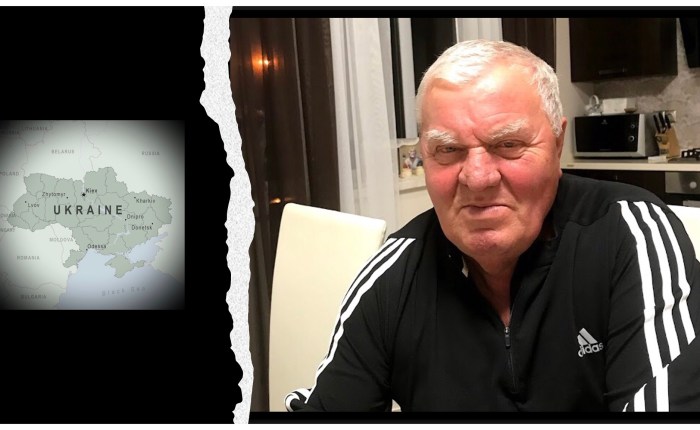
Bob made a comment to Viktor, his father-in-law, about how Ukrainian soil is “so rich and black, it stains my hands like ink!”. Viktor’s retort? “Well Robert, over the centuries, many idiots have tried to capture Ukraine, and we keep having to bury them in the ground here – that is why the soil is so rich.”
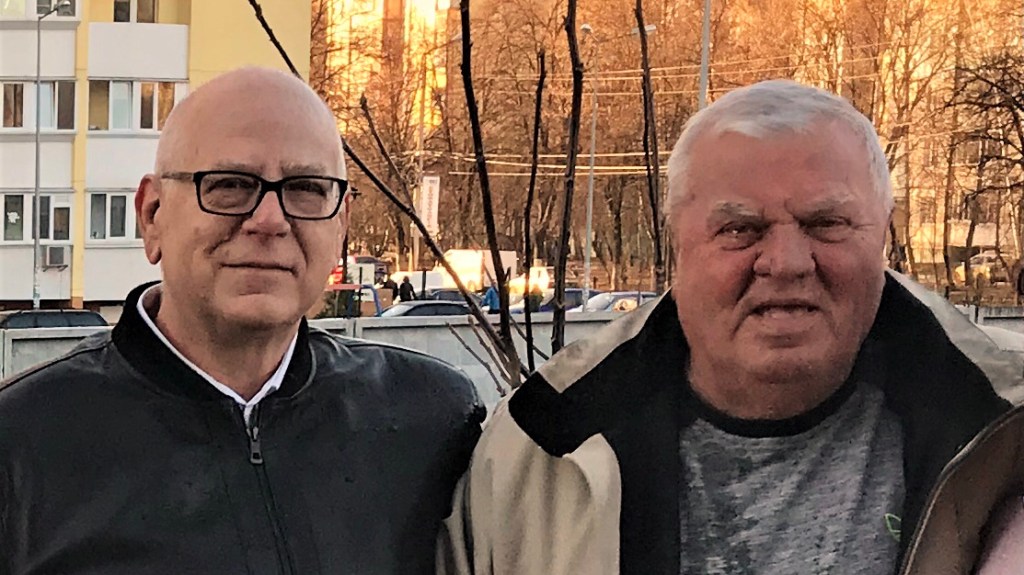
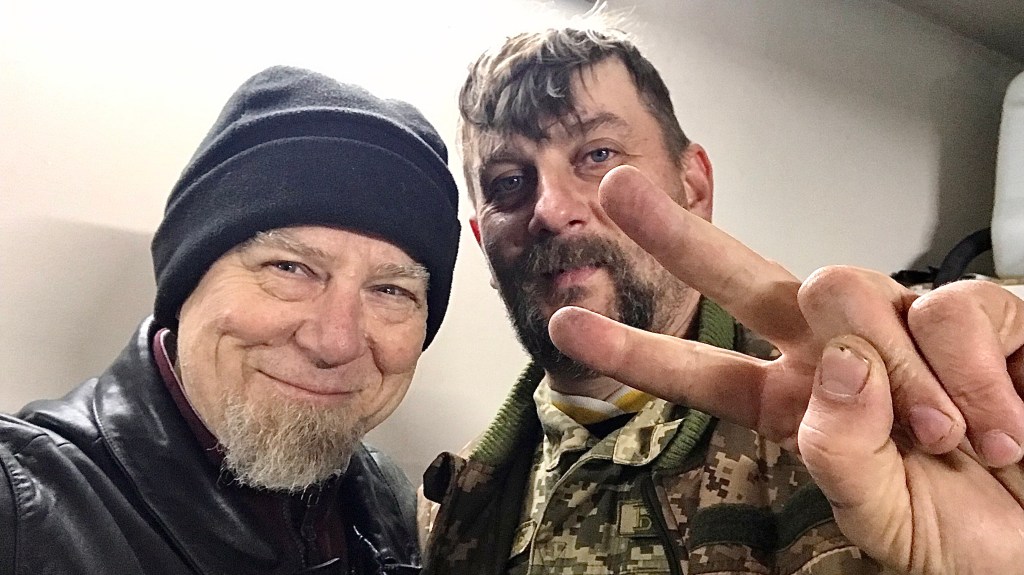
Bob and Viktor
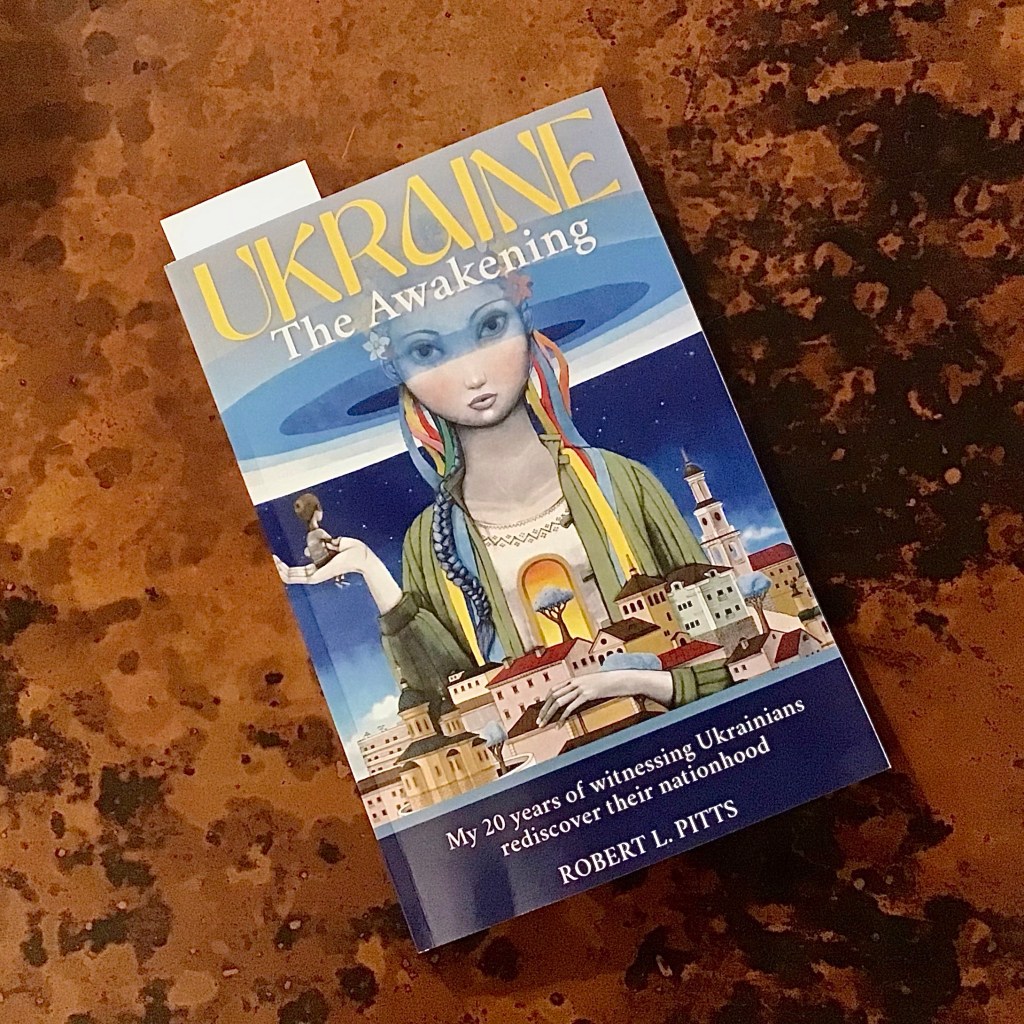
Those lines came from my friend Bob Pitts recently published book, UKRAINE: THE AWAKENING: My 20 years of witnessing Ukrainians rediscover their nationhood. Those of you who are regular readers of this blog know that I’ve recently written a couple of articles about Bob and his current life in Ukraine. You can find links to those blogs in the Addendum. Over the past eighteen years, Bob and his wife Vita have divided their time between the USA and Ukraine, where Vita is originally from. They have lived in Ukraine continually for the last two years, and have seen up close and personal Putin’s unjust attack on, and war with, Ukraine.
When the war began, Bob became concerned about how little westerners, especially Americans, understood about Ukraine, its people, its history and how the relationship with Russia is misinterpreted in Western media coverage. As a result of that concern, he wrote UKRAINE: THE AWAKENING. The book gives readers a view into Ukrainian culture and the beauty of the people. I’ve bought and read the book and recommend it to anyone who has even a remote concern about Ukraine and world events. Here’s my quick review.
Ukraine: The Awakening
Bob is, of course, correct. Most of us Americans know little about Ukraine, or its history. That’s what makes this book so perfect. A scant 135 pages, it gives us the basics. With a combination of current events, a bit of personal and family history, a little Ukrainian and Russian History, interviews with some Ukrainian young adults and thoughts about the future, Bob achieves his goal – it not only talks about Ukraine’s Awakening over the past twenty years, it provides the reader with an awakening as well.
Bob isn’t one of the great writers America has produced like Ernest Hemingway (Fiction), or David McCullough (History/Biography). For the purposes of this book, I think he’s something better – he’s a conversationalist. Reading the book feels a bit like sitting in his family room, or at a local bar with him and he is giving you his thoughts on Ukraine. With a casual, but passionate writing style, Bob pulls you in, and then gives you some things to think about. Eminently readable, it’s an important book at the right time.
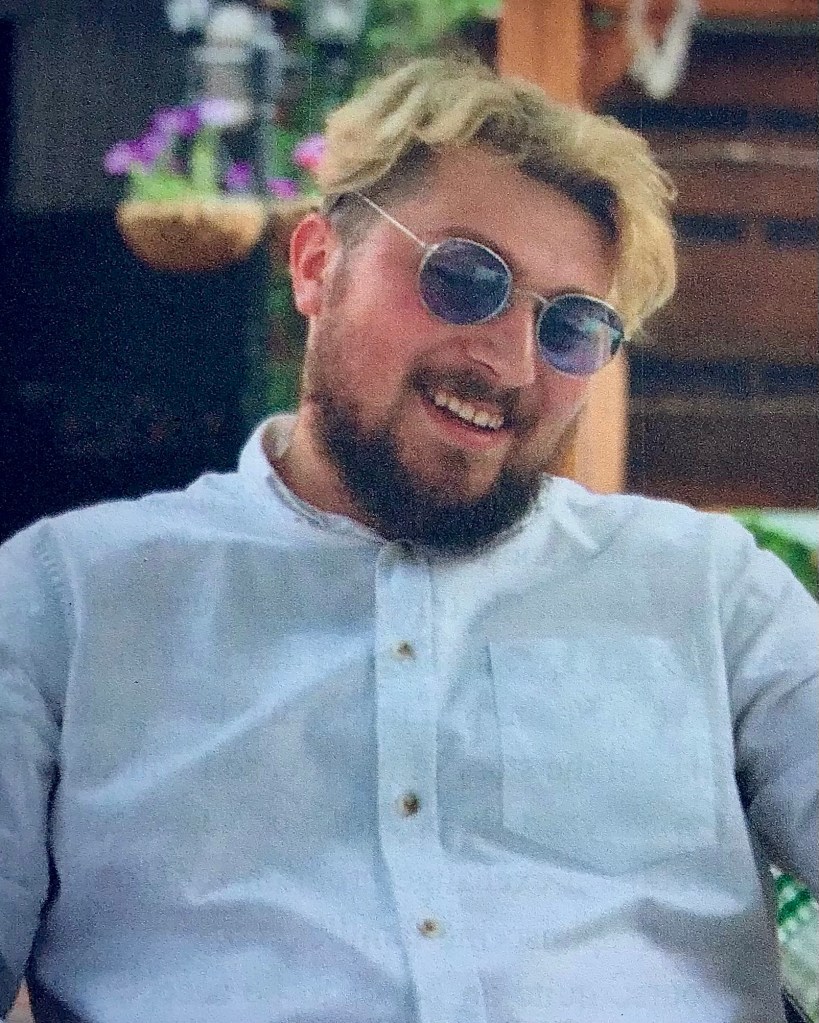
While the entire book is good, my favorite section contains interviews with three young Ukrainians, each telling their own story. These aren’t fairytales, but real stories by real people. These are dynamic, vibrant stories that give you hope for the future, not only for Ukraine, but also for young adults everywhere. As The Who sang, “The Kids Are Alright.”
Artem, One of Those Interviewed by Bob.
The Ukrainian counteroffensive has been going on for a few weeks now and Ukraine will remain in the news. Additionally, the Wagner group takeover of Rostov and attack towards Moscow started and then stopped. Who knows what impact that will have. Some will pay attention. Some will not. If you are a smart and caring person, I recommend you pay attention. I also recommend you buy this book. Ukraine is too important and all of us should learn more about this country. You can find it on Amazon, and the price is right. Go ahead and buy it. What are you afraid of? That you might learn something new?
Addendum:
Here is a link to Bob’s book, UKRAINE: THE AWAKENING: My 20 years of witnessing Ukrainians rediscover their nationhood – this is at Amazon: https://a.co/d/6qUppBU
And… On this Friday June 30th only, you will be able to download a free copy of the eBook version. Here is the link: https://a.co/d/iHZME1U
Detective Sam Sullivan looked at the woman’s body and raised an eyebrow. Something wasn’t quite right. The morgue’s Medical Examiner looked at him. “Did I miss something?” Sullivan shook his head and lowered his eye, which, by the way, was killing him from the punch he took two nights before.
“No, nothing immediately, but something’s not right. Thanks.”
Something Wasn’t Right.
Detective. Who was he kidding? He wasn’t a detective. He wasn’t even a cop anymore. A Private Investigator is what he was now. A PI. A dick. A shamus. Or that bullshit modern term he hated, an Inquiry Agent. Bogie as Sam Spade made it look romantic. In reality, the job was anything but romantic. In reality, all it did for him was pay the mortgage, and it didn’t do a particularly good job at that.
He left the hospital, climbed into his F250 and drove away. The F250, much like its owner, had seen better days. It was rusty and dented, but the engine still worked fine. Actually, better than fine. The truck was from 2002, the last full year Ford put the 7.3 liter V8 diesel engine in the 250 and people were constantly trying to buy it from him. At least no one had tried to steal it. As he left the parking lot, he drove the speed limit. There was lots to think about and he was in no particular hurry to get anywhere.
It was late afternoon by the time he reached home. He pulled out the Elijah Craig, poured himself a small glass and grabbed a Gispert. In the old days, he drank Blanton’s, but ever since bourbon had become a “thing” Blanton’s was impossible to find. Nowadays, all the idiot bourbon collectors bought it up as soon as it hit the shelves and drove the price to stupid levels. That’s OK, he thought. Me and Mr. Craig get along just fine. Eventually bourbon as a fad will fade, and we can all go back to normal. He took a sip and walked towards the door.
Out on the back porch, he took another sip and then lit the Gispert. He only smoked a cigar every couple of weeks, and like the Elijah Craig, the Gispert was decent. If you were going to smoke only an occasional cigar, why overpay for the privilege?
No, something wasn’t right, but he couldn’t figure it out. If he hadn’t taken the punch in the bar parking lot two nights ago, he would have agreed Eve’s death was indeed accidental, as the Medical Examiner had decreed. Still, the punch and something about Eve today made him think otherwise. What the hell was different about Eve?
His glass was empty, but half the cigar was still left, so he poured himself another inch and a half of bourbon. This was going to take some time.
He turned it over in his mind. Eve was laying there on the slab, looking pretty as always, but something was off. Her jewelry was missing, but that was to be expected. He started drifting off to sleep and as a dream began, the answer popped into his brain.
…
His phone rang and brought him out of the light sleep. With that, the answer to Eve’s appearance disappeared like morning mist on a hot day. He looked at the number and answered. “Hello?”
“Mr. Sullivan?”
“Yes.”
“Mr. Robert Samual Sullivan?”
“Yes.”
“Mr. Sullivan, this is Amy with Doctor Frank’s office. I just wanted you to know your test results came in and are positive. I’m so sorry. We’ll definitely need to schedule the procedure soon.”
He didn’t say anything. Of course it came back positive. Only a fool, or someone with regular good luck would expect anything else.
“Mr. Sullivan. Mr Sullivan, are you there?”
“Yea. I’m here. Thanks.” He hung up the phone and went into the kitchen for a drink of water.
A voice called out from the bedroom. “Bob, who was on the phone? Is everything OK?” He shuffled into the bedroom and looked at Holly, his wife. She hadn’t been able to leave the bed under her own power since the accident. He couldn’t tell her. Or at least he couldn’t tell her right now. “Nobody. It was DirectTV trying to sell us expanded service.” Holly’s caregiver, Millie, looked at him with dead eyes but he just stared back until she looked away.
He turned around and walked to the couch where he lay down and tried to go back to sleep. No, he was no detective, and he wasn’t much of a PI. He was just one more semi-retired guy, running out of rope. He hadn’t really smoked in a decade, and under doctors orders, had mostly quit drinking the year before, but it didn’t make a difference. His condition had worsened. He’d have to deal with it at some point, just as he would have to tell Holly everything at some point. What a nightmare it had all become. Thirty years together and this is what it had all come to.
The place he mostly smoked or drank now was in his dreams. Maybe if he got back to sleep quick enough, the dream would start up again and Detective Sam Sullivan could help solve the problem of Eve’s death, while having a bourbon or two. Anything was better than dealing with the problems of real life in the real world. Anything.
Addendum:
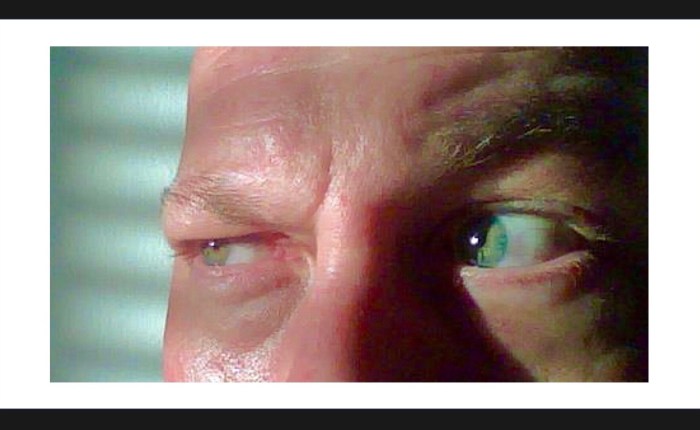
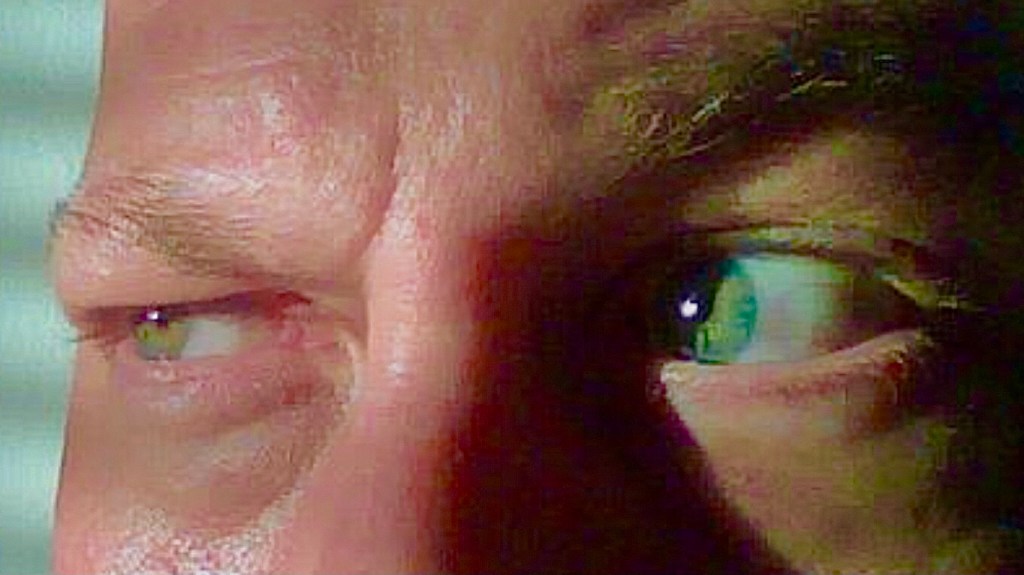
This is the first time I’ve written any fiction for the blog (or at all for that matter). My old friend James Sullivan posted a closeup picture of his eyes and I was enthralled by it. I asked him if I could use it for the basis of a story. He readily agreed. At the time I had no idea what the story would be about, and then after a couple of days, this one popped into my brain. Weirdly, it was all inspired by the eyes.
James and I worked together years ago at a company called SRA. He’s an Army Veteran, a great chef, works in IT and is a smart and generous person. Other than his eyes, he has nothing in common with Robert Samual Sullivan (that I am currently aware of 🙂 ). Thanks so much for use of the photo James!
James Sullivan – Owner of the Eyes
This “short” short story may stop here, or I may continue it. If you have any thoughts either way, leave a comment here, or shoot me an email at: mnhall@gmail.com . If even mildly interested in learning more about Robert, Holly and Eve, let me know. If I were to continue the story, it might happen with an occasional blog, or I may try a different route.
The surgery went well. As far as cancers go, squamous cell carcinoma (a type of skin cancer) is usually pretty minor, but it was still good to have the surgery over and done with. Cancer is one of those words that draws your attention, or at least it draws my attention.
It all started late last winter when I noticed a scaly spot on my forehead. I didn’t think much about it at first. Due to my AFIB, I take Eliquis, a blood thinner. One of the results of blood thinners is scrapes, cuts and wounds sometimes heal a bit weirdly. The blood doesn’t clot quite the same way it does for a normal person and as a result, minor scrapes or cuts can take a while to heal. That’s what I thought was going on with this scrape.
Unfortunately, it didn’t disappear and I mentioned it to Cathy. She looked and recommended I consult a doctor, so I called the Warrenton Dermatology and Skin Therapy Center at the end of April. They were a bit backed up and scheduled an appointment for me on May 9th.
On May 9th, I arrived at the Center and explained why I was there. They examined the spot and thought it looked OK, but there was something right next to the spot that concerned them. After numbing my forehead, they took a biopsy and told me the results would be back in ten days to two weeks and they would call me.
10 days came and went, then 11, then 12, then 13 days and still no word. Finally on Day 14 I called them. The results had just arrived, but hadn’t yet been reviewed by a doctor. And… They couldn’t release the results until a doctor reviewed them.
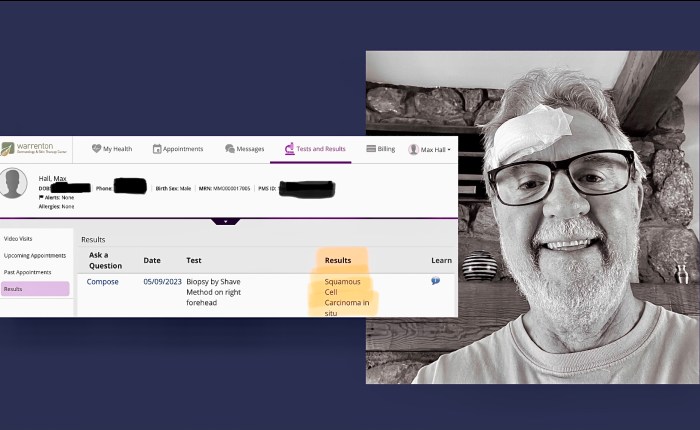
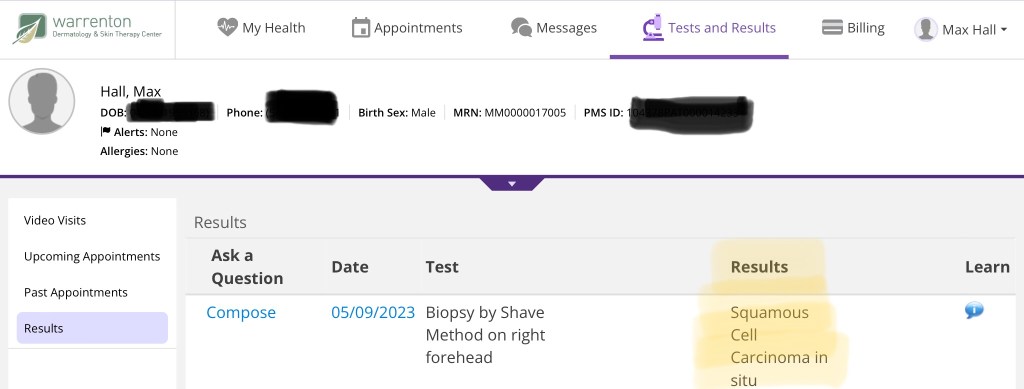
The next day, May 23d, I received a call from Danielle at the center. The biopsy came back positive for squamous cell carcinoma. What? What did you say? Squamous Cell Carcinoma.
A Diagnosis of Squamous Cell Carcinoma
Danelle continued to speak, and after a few seconds, I started listening again. They recommended the removal of the cancer with Mohs Surgery. They could do it there, or if I wanted to go with another dermatologist, I could. Another dermatologist? Until two weeks ago, I didn’t know any dermatologists… I told them their office was fine. After consulting calendars, the first available date was Saturday, June 3rd – 8AM and 12 noon were available. Was there nothing in between? Well, no, Danelle informed me – the surgery could take one to four hours, I should wear comfortable clothes, and bring something to read or pass the time.
What!?!
It turns out the surgery, while relatively simple, can take some time. Here’s how Mohs surgery works (according to the Mayo Clinic):
You are given a local anesthetic. After the anesthetic takes effect, the surgeon uses a scalpel to remove the visible portion of the cancer. The surgeon also takes a thin layer of tissue underneath and around the cancer. A temporary bandage is placed where the skin was removed. This takes only a few minutes.

The tissue is then taken to the lab for analysis. This part of the procedure usually takes the longest time and you'll wait about an hour in a waiting room.

In the lab, the surgeon cuts the tissue sample into sections and looks at them with a microscope. If there is more cancer, your Mohs surgery continues.

The surgeon removes an additional layer of tissue from the affected area. Again, you'll wait while the surgeon looks at the tissue in the lab.

This process continues until the last tissue sample removed is cancer-free. During the procedure, you may receive another shot of local anesthetic if necessary.
I chose the 8AM slot and the appointment was in the book. Of course after that, I did more research, and came to realize I was pretty lucky.
According to the Mayo Clinic, there are three major types of skin cancer – basal cell carcinoma, squamous cell carcinoma and melanoma. While squamous cell is considered relatively “mild”, if left untreated it can destroy nearby healthy tissue, spread to the lymph nodes or other organs, and may be fatal, although this is uncommon.
I also learned skin cancers are caused by many things, but most often are the result of overexposure to the sun. I guess my days of lifeguarding back in the early ‘70s may have had something to do with it. Not only did we not use any type of sunscreen, we used baby oil to tan more quickly. Whoops.
Time passed and I spoke with others. It turns out I’m actually a bit late to the skin cancer party. I learned numerous friends and acquaintances around my age have developed skin cancer. Many had the Mohs procedure, and all said it wasn’t a big deal.
On the 2nd of June, I made a big steak dinner with a salad. I mean, what the hell, if you are having a cancerous growth removed, it seemed a reasonable thing to do. A couple of glasses of wine, and a couple of hours of bad TV later, I went to bed and slept like a rock.
The next morning, after having some coffee and a small breakfast, I drove to the Center in Warrenton. On the way there, Taj Mahal and Keb’ Mo’ were singing “Waiting on the World to Change” on the radio and while I’m not sure why, it seemed to fit somehow.
I arrived at the center just before 8AM that Saturday. Doctor Dolan and his assistant, Amanda started their work just after 8:00. After Amanda put about 5 shots in my forehead to numb it, the Doctor came in. He was retired Navy, which for some strange reason gave me comfort. By 8:20, DR Dolan had taken the first cuttings and Amanda was cauterizing the one-inch wound. I recognized that peculiar smell of burning flesh from a previous surgery, but didn’t feel anything, as the anesthetic was still doing its job. Amanda escorted me to the waiting room where I did some reading while waiting for the results.
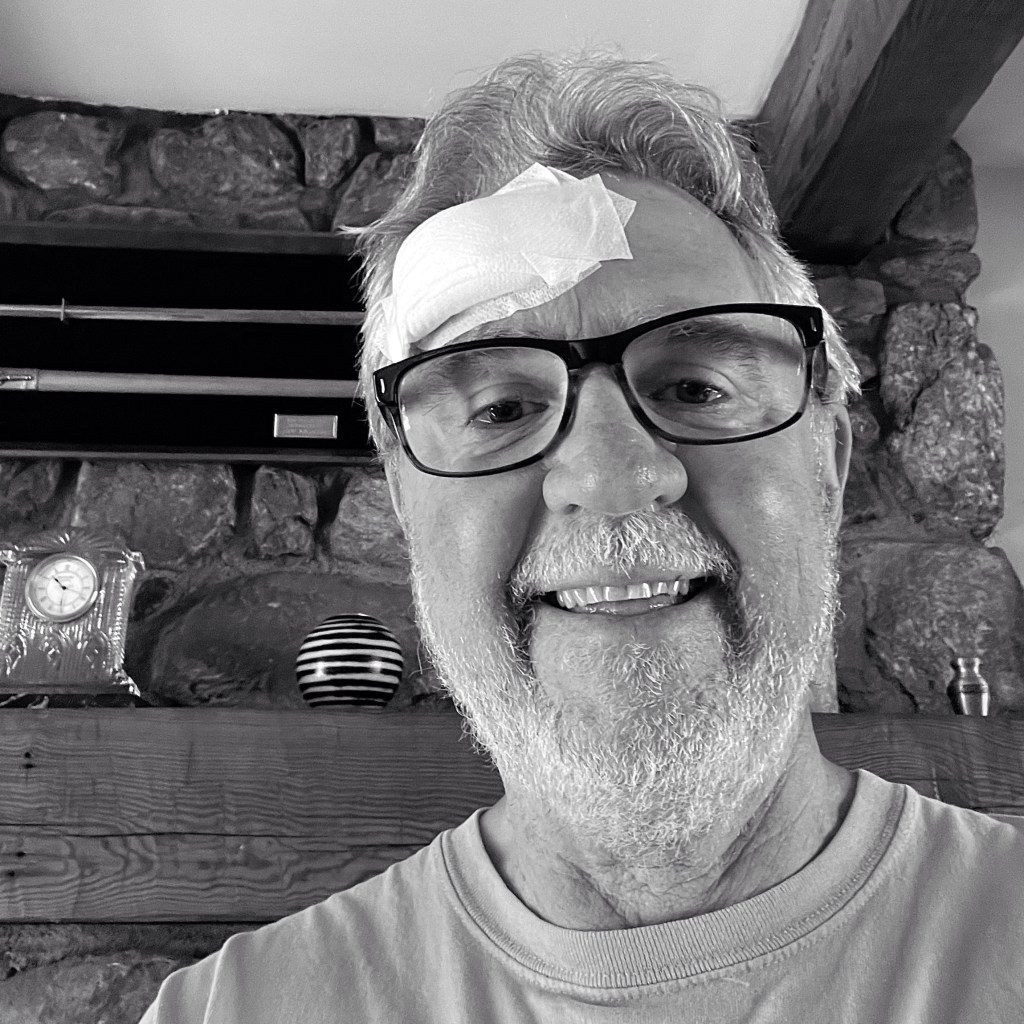
Thirty minutes later, Amanda came and gave me the good news. I was clear after the first pass. She said I was probably the easiest and shortest surgery the doctor would have all day. We went back to one of the rooms where the good doctor stitched me up. Seven or eight stitches I think but if you look at the picture, they’re big stitches. That’s fine with me. Just a little more character added to my forehead, and vitamin E should make it disappear over the course of the next year.
Mohs Surgery in Four Easy Steps.
There was a headache for a day or two, and a slight black eye in my future, but that was alright. Things were OK, at least for now.
In 1964, actor John Wayne was diagnosed with lung cancer. Some people recommended he hide the diagnosis due to concerns about his image – they thought it might make him look weak. At the time, many public figures hid illnesses they had for image reasons. He chose the opposite path. During a press conference after the surgery the Duke said “They told me to withhold my cancer operation from the public because it would hurt my image. Isn’t there a good image in John Wayne beating cancer? Sure, I licked the Big C.”
Squamous Cell Carcinoma isn’t the “Big C”. We have friends and family who are dealing with, or have dealt with breast cancer, lung cancer, pancreatic cancer, brain cancer, prostate cancer, melanomas… there’s a lot of bad stuff falling into the “Big C” category. I know I’m quite lucky and this is fairly minor, so let’s just call it the “little c”.
One of the things for people to remember is that any cancer, even something relatively minor like my “little c” squamous cell carcinoma can kill you if left untreated. If you see something that doesn’t quite look right on your skin, have it checked out. If everything is fine, all you did was lose an hour of time. And if it turns out to be a cancer of some sort, you did the right thing and can have it treated.
No need to be macho. No need to be stoic. Just get the damned thing checked out.
Really. Just Get the Damned Thing Checked Out.
— Feel Free To Share This Blog —
Addendum:
– If you live in the Warrenton/western DC suburbs area, I highly recommend the Warrenton Dermatology and Skin Therapy Center. They are great, and take care of you. You can find more about them here: https://www.warrentondermatology.com/
As my friend and West Point Classmate Bill Moeller noted, it is perhaps no coincidence that the Birthday of the United States Army, Flag Day and National Bourbon Day are all celebrated each year on the same Date: June 14th. It turns out all three of their stories go back to the late 1700s.
I’ve always thought that understanding our nation’s history was important. When I learned June 14th was shared by the Army, our Flag, and Bourbon, it seemed worth doing some historical digging. Here’s what I learned.
Before there was an American Flag, before there was American Bourbon, the United States Army was around to protect both.
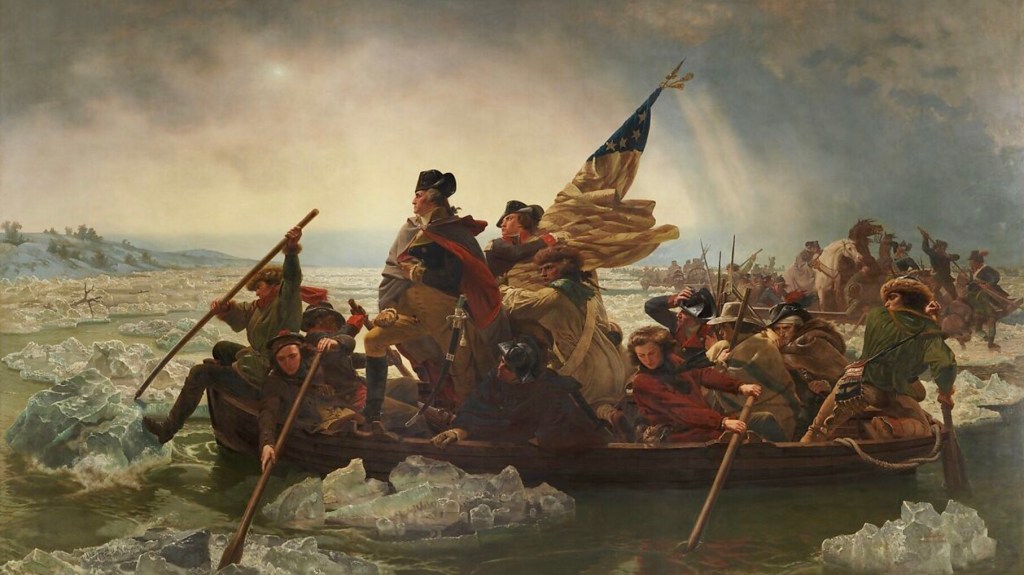
One year prior to declaring our independence from Great Britain, the Continental Congress approved the formation of the Army on 14 June 1775. On that date, they authorized the enlistment of ten companies of riflemen to serve the United Colonies for one year to form the “the American Continental Army.” The next day, Congress issued its first commission by appointing George Washington “General and Commander in chief of the Army of the United Colonies, and of all the forces now raised, or to be raised by them, and of all others who shall voluntarily offer their services, and join the Defense of American liberty, and for repelling every hostile invasion…”
Washington Crossing the Delaware with the Continental Army in December 1776.
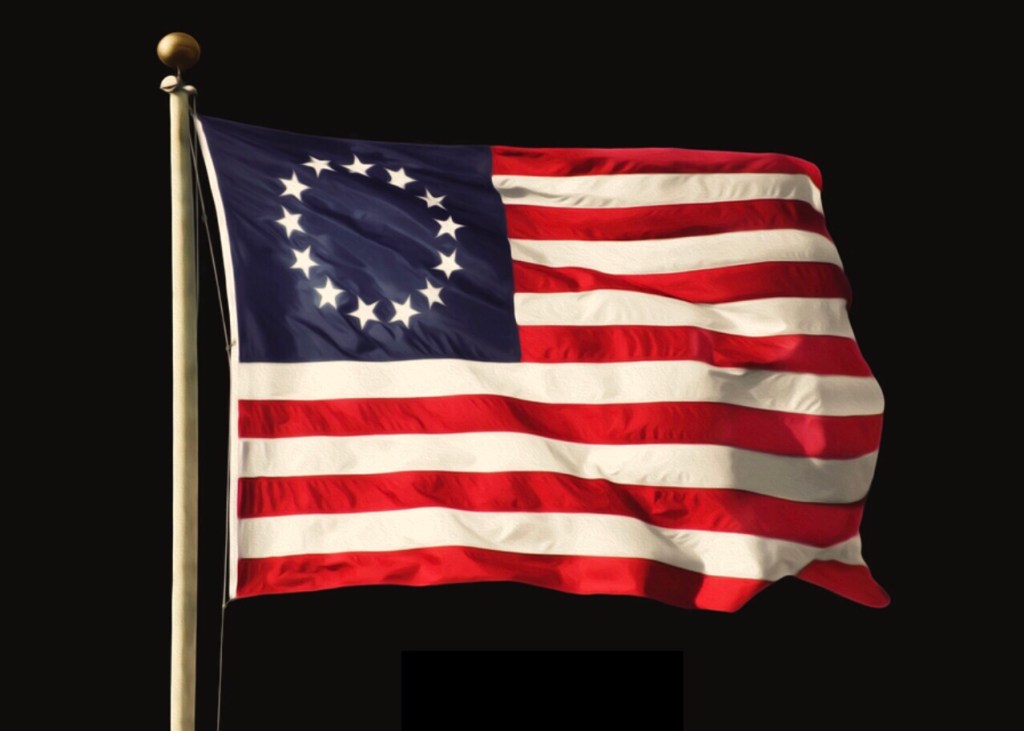
While there are some questions about whether Betsy Ross actually sewed the first American flag, there is no doubt about when Congress recognized our first flag. On June 14, 1777, two years after the formation of the Army, Congress passed the Flag Resolution, which stated, “Resolved: that the flag of the United States be made of thirteen stripes, alternate red and white; that the union be thirteen stars, white in a blue field, representing a new Constellation.” In 1916, President Woodrow Wilson issued a proclamation that officially established June 14 as Flag Day and on August 3, 1949, National Flag Day was established by an Act of Congress.
A New Constellation.
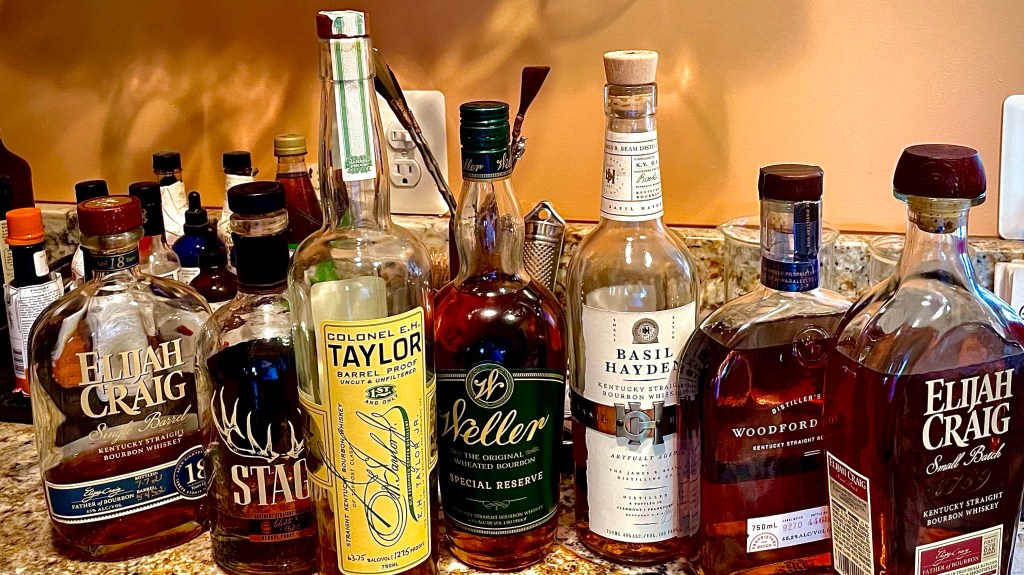
The story of National Bourbon Day is, not surprisingly, a bit murkier. One legend has it that bourbon was first produced by Reverend Elijah Craig on June 14th, 1789. In the late 1780s, Craig was allegedly using old fish barrels to store his spirits. Of course, the fish-flavored wood did not help the taste at all, so Craig started conditioning the barrels by charring the inside. He then stamped the barrels with their county of origin (Bourbon County in what was then Virginia and is now Kentucky) and sent them on a 90-day trip to New Orleans. The charred oak and three-month travel time combined to mellow the whiskey some and folks in New Orleanians requested more of “that whiskey from Bourbon.” Yes, I agree the story, or at least the date of June 14th sounds a bit fishy (pun intended), but who am I to judge? There are enough other competing stories that all trace the origin of “bourbon” to the 1780s and make that time period a credible time of origination. As a side note, in 1964, the United States Congress recognized bourbon as a “distinctive product of the United States of America”.
Bourbon Anyone?
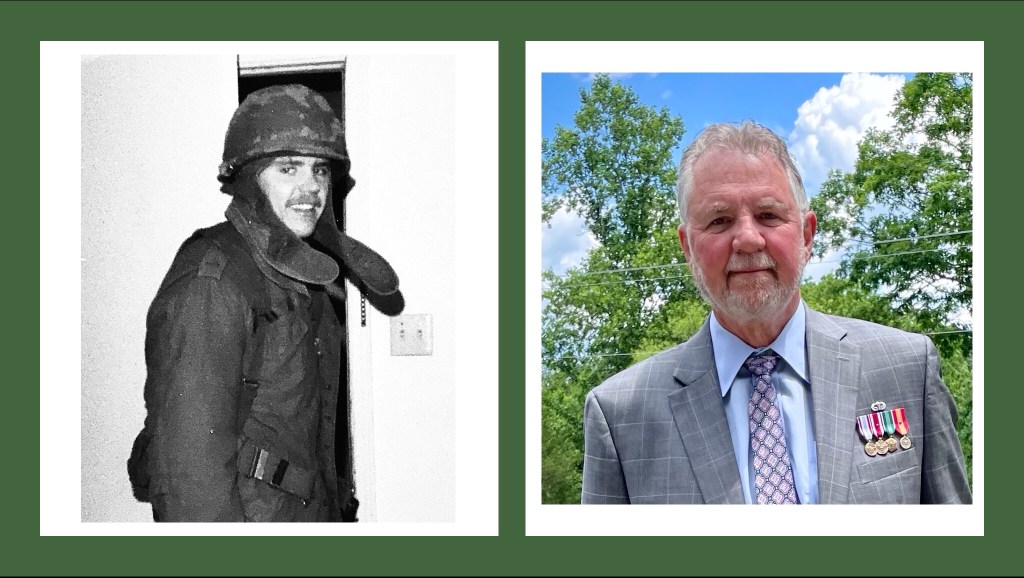
So, there you have it, a bit of distinctly American history. As an Army Vet, I know what I’ll be doing on June 14th. I’ll raise a glass of bourbon in a salute to both our Flag, and all of the Army Veterans who have served our country over the years. I hope you will join me. It seems to me the least we can do.
Cheers to All on June 14th From This Veteran…
Addendum:
– For the record, the United States Army is the senior service. The Continental Navy was established on 13 October 1775, and The Continental Marines on 10 November 1775. The Coast Guard traces it’s beginnings to 4 August 1790. The Air Force was established as an independent service on 18 September 1947, and the Space Force (ughhh) was established on 20 December 2019.
– National Bourbon Day – I searched to find out when the first National Bourbon Day occurred, but could find nothing online.
– Here are a couple of other historical facts about bourbon itself:
The Elijah Craig story is a nice one, but there’s no historical proof of it. There were certainly others who were shipping whiskey in barrels in the 1780s.
The Marker’s Mark distillery, which opened in 1805, is the oldest distillery in the country, and has been declared a National Historic Landmark.
In 1834 Doctor James Crow perfected the sour mash process and made what was probably the first “modern” bourbon. He employed the “Sour Mash Method” on a daily basis to give his whiskey consistency.
In 1840, “Bourbon”, by name, was first advertised in a newspaper.
In 1840 bourbon whiskey officially became known as bourbon. Before then, the product carried the name Bourbon County Whiskey or Old Bourbon County Whiskey.
In 1870 Old Forester became “America’s First Bottled Bourbon” when founder George Brown was the first to put Bourbon in a glass bottle. Prior to that, it was only available in barrels.
I recently received another email from my friend Bob in Ukraine: “Last night the air raid alarms went off about 2:30 am. We were hoping the attack was only another wave of the Iranian Shaheed drones, as the defenses are normally stopping 100% of those. But when the text of the warning came to my wife Vita’s phone, it was a major missile attack. The attack was targeting Kyiv directly.”
This is the second blog I’ve written about my friend Bob Pitts who lives near Kyiv, Ukraine. A link to the first blog is in the Addendum.
Bob’s email continued: “Six Kh-47M2 “Kinzhal” missiles were launched from six MiG-31K aircraft. The Kinzhal is Putin’s hypersonic missile that he has bragged about as being unstoppable. Making statements about it as some secret Russian technology America and the West can’t match.
BUT – Every one of them was shot down in the air, so I imagine there is some serious nervousness in the Kremlin right now. Someone has to go and tell Putin his magic hypersonic missiles are no longer effective – and also tell him he just wasted many millions on this attack. (They don’t have many of these left in stock to begin with). Before last night’s attack -> no one had been able to stop the Kinzhal missiles.
In addition to the Kinzhals, 9 Kalibr cruise missiles were launched from ships in the Black Sea, and three land-based missiles (S-400, “Iskander-M”). All of them were destroyed by the air defense forces of Ukraine.
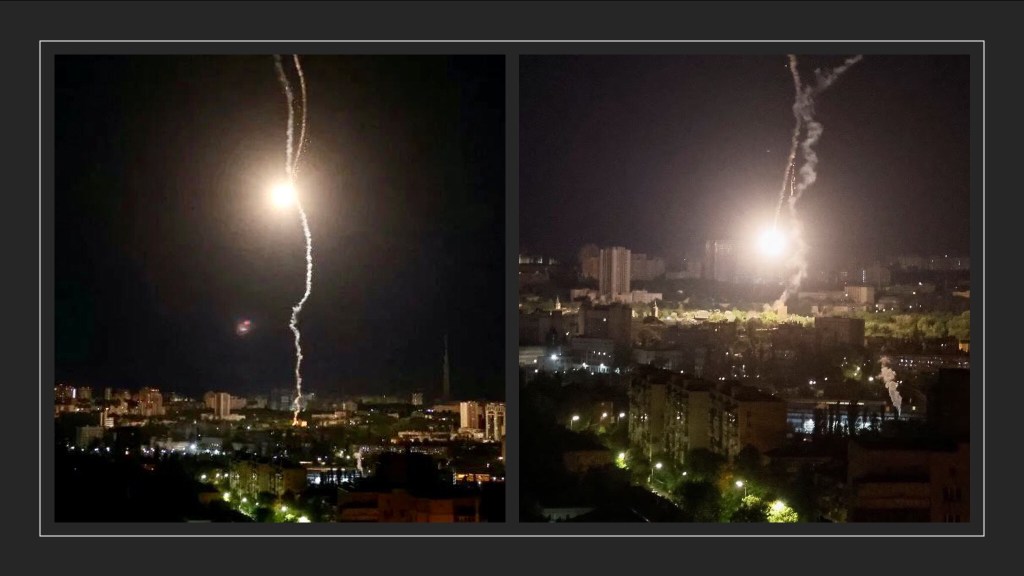
The sound of the missile being hit was deafening- our windows and doors shook. The attack came from the South and so the defenses hit them near our town. Thankfully not directly over us, as there are reports of damage from falling debris.”
Debris Falling During the Recent Missile Attack on Kyiv.
I can’t quite imagine the heart-pounding you must feel going through an attack like that. And of course, some version of this has been happening for over a year now in Ukraine.
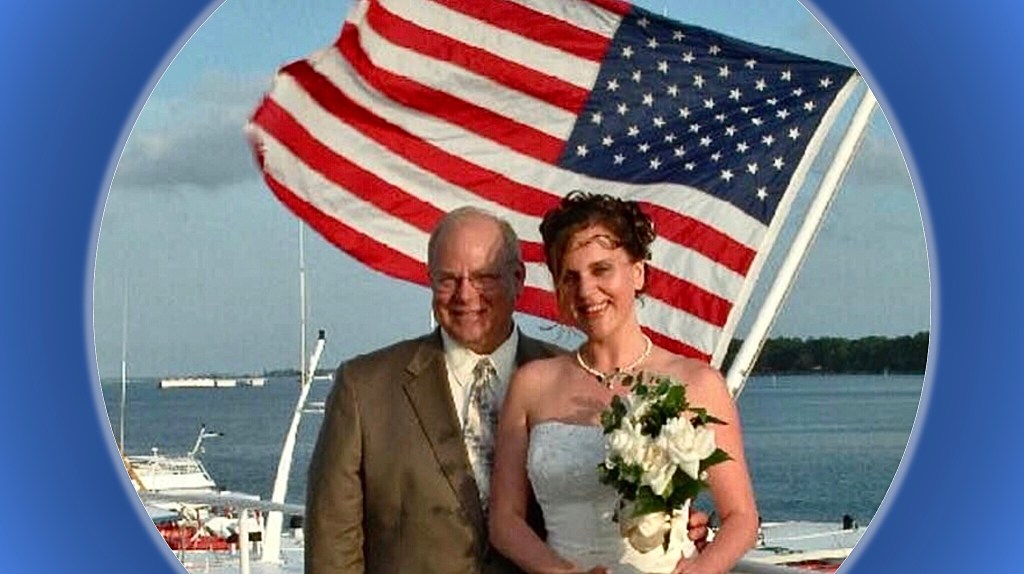
Throughout it all, we need to remember people also live their lives. In Bob and Vita’s case, that included celebrating their eighteenth wedding anniversary about a week after the big attack. They’ve lived in both America and Ukraine during those eighteen years and have been in Ukraine for the past two years.
Bob and Vita on Their Wedding Day, Eighteen Years Ago in Florida.
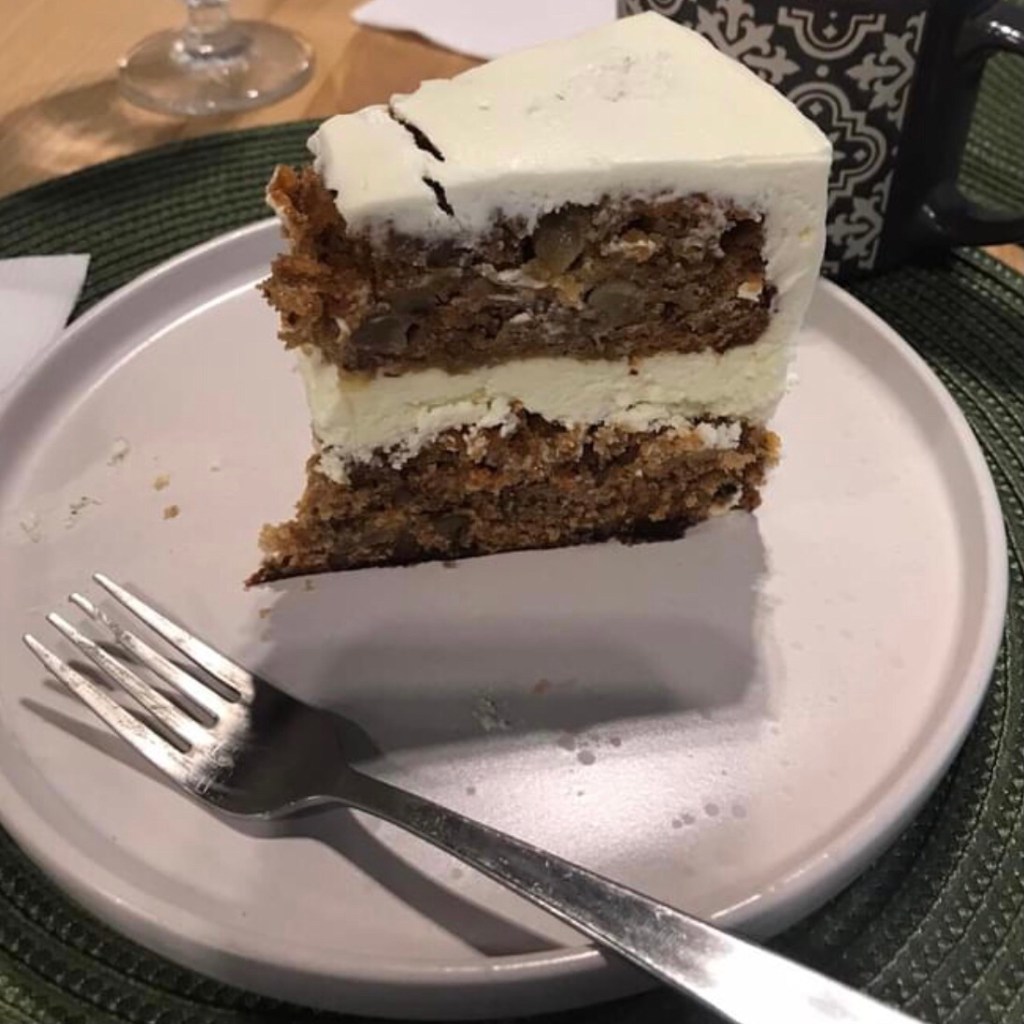
For their anniversary, they celebrated at Cafe’ Mimi in their hometown of Brovary, just outside of Kyiv. Katya, the chef/owner of Cafe’ Mimi made them an American carrot cake using Vita’s recipe – Bob says he has “had carrot cake all over the US and in many other countries and THIS one was the best I have EVER eaten -> better than my grandmother’s.” 😎
Katya’s Carrot Cake – Maybe, Better than Grandma’s?
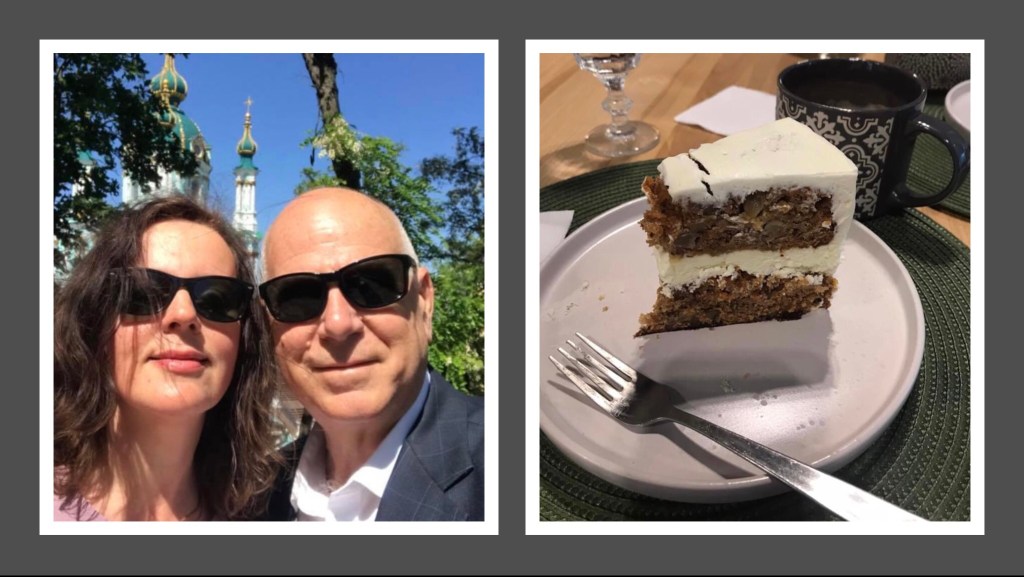
We see stories of sharing life and love during the dangers of war over and over in both the real world and in fiction. The great novels “Doctor Zhivago” (Pasternak), “For Whom the Bell Tolls” (Hemingway), “A Time to Love and a Time to Die” (Remarque), or “From Here to Eternity” (Jones) showed us those love stories in fiction, but I like to think Bob and Vita’s story in real life gives them a good run for the money. Life goes on, even amid the struggles of wartime. Sometimes, all you really need is to be with the love of your life and enjoy a slice of carrot cake.
Sometimes, All You Really Need is The Love of Your Life, and a Slice of Carrot Cake.
We should all celebrate life as lovingly as Bob and Vita and remember to focus on what is truly important.
Addendum:
I received this email update from Bob yesterday after I’d already written this blog and just 12 hours before posting it:“The Russians have stepped up their missile attacks in the past few days. They appear to be in a panic that Ukraine successfully used the new British StormShadow missile to destroy a large troop and munitions hub just at the border (this had been out of range until now). Reports are that a trainload of 500+ new soldiers were destroyed along with all their armor and munitions … Last night was a massive missile attack – many of the missiles were the hypersonic ones we shot down 37 of 40 missiles and 29 of 35 drones. Then again today around noon another attack again with hypersonic / ballistic missiles. We shot down 11 of 11 … There was damage / injuries from falling debris and there were some deaths in rural areas – an elderly couple was killed when debris crushed the roof of their home … I think that the Russians know that they are in deep trouble. They know that we are about to hand them their butts on a platter very soon. That is why they are stepping up the frequency of attacks and making an all out worldwide propaganda and diplomacy push to push for the west to stop helping Ukraine.”
Thanks to my friend Bob for providing the material for this blog and for helping to edit. I’m so happy we have reconnected.
Bob has written a book about Ukraine called UKRAINE: THE AWAKENING: My 20 years of witnessing Ukrainians rediscover their nationhood. When the war began, he became concerned about how little westerners, especially Americans, understand about Ukraine, its people, its history and how the relationship with Russia is misinterpreted in Western media coverage. The book gives readers a view into Ukrainian culture and the beauty of the people. I’ve bought and read the book and recommend it – I’ll publish a short review in a future blog. Here’s a link to the book on Amazon: https://a.co/d/6qUppBU
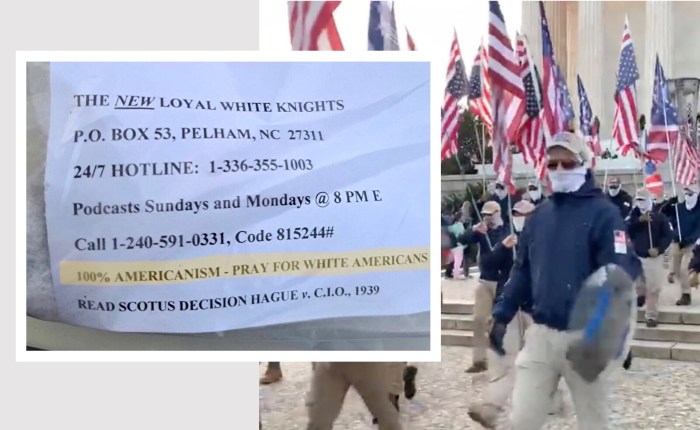
The Ku Klux Klan, the New Loyal White Knights, the Patriot Front. There are lots of names for them, but they all fall under the general title of losers. Last week, some of these wack jobs visited both the Virginia countryside where we live and DC. They are cowardly racists, one and all, and only do their work at night, or behind a mask.
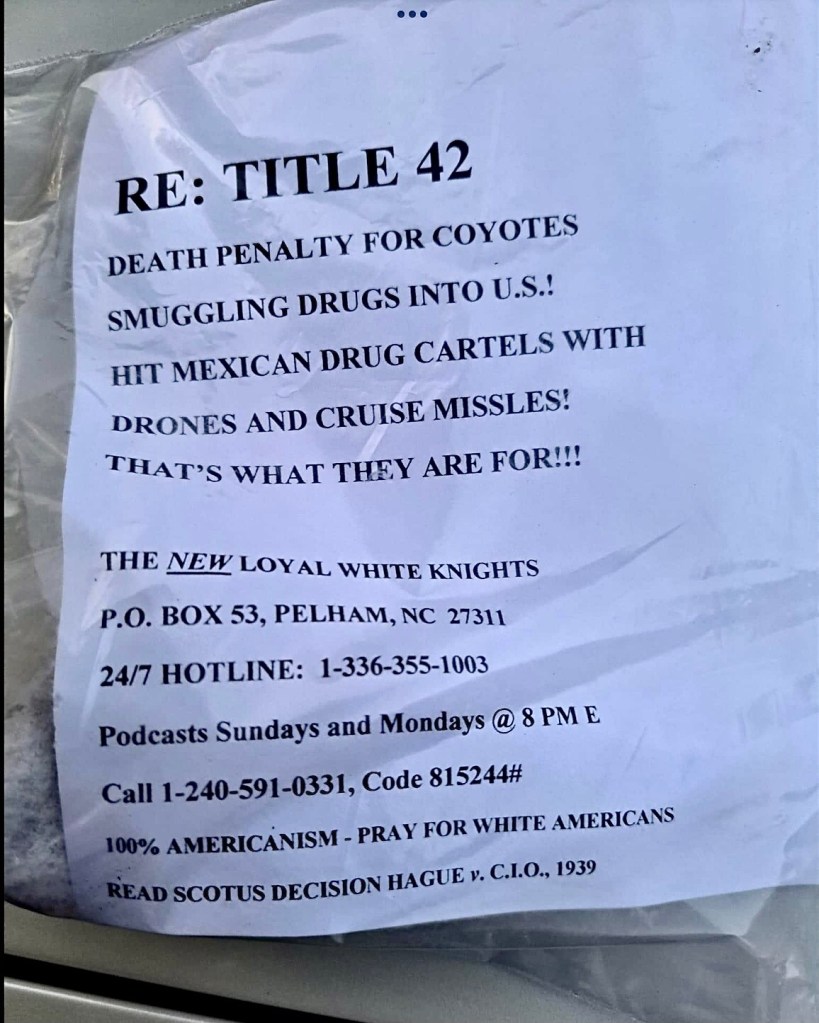
Last week, neighbors near here in the Orlean and Hume area of Fauquier County found little baggies on their driveways. Inside the baggies were typed paper messages and white rocks (to keep the baggies from blowing away). These little bags of litter were left by the New Loyal White Knights, a derivative of the KKK. The general message? “100% Americanism – Pray for White America.” They were left on driveways on Route 688 about four miles from our home, and several friends were recipients.
PRAY FOR WHITE AMERICANS … Indeed.
Yes, as per usual, these cowards did their littering at night, when no one could see them. Were they locals? Were they from elsewhere? We don’t know, but the incidents have been reported to the County Sheriff, who is a good man and runs a good department.
The Loyal White Knights are considered extreme, even by KKK standards. They accept only “native-born white American Citizens of Christian Faith” who “believe in White Supremacy and 100% Americanism.” (Bolding of native-born is mine.)
It’s interesting to note the reference to the SCOTUS decision in the photo. In Hague v. Committee for Industrial Organization, (1939), the Supreme Court ruled that banning a group of citizens from holding political meetings in a public place violated the group’s freedom to assemble under the First Amendment. Of course these losers aren’t holding any political meeting in a public place. They are just littering our beautiful Fauquier countryside with bigoted and racist white supremacist garbage, all masked under the cover of darkness.
We’ve seen this previously here in Virginia in neighboring Prince William and Loudoun Counties. It always takes place at night. These boys don’t seem too keen to do their work in the light of day.
Our current Fauquier County officeholders and candidates need to speak out publicly and forcefully condemning this white supremacist hatred. Silence is not an option, it is the same as coddling.
On the same weekend, about 150 members of the “Patriot Front” held a protest march in DC. They are another group of losers who were marching in white masks so as to be unidentifiable. They were shouting “RECLAIM AMERICA!”
Cowards Wearing Masks
The group formed in 2017 after the ugly “Unite the Right” gathering of neo-Nazis in Charlottesville, Virginia that resulted in three deaths*. Originally called Vanguard America, they rebranded themselves Patriot Front over concerns that Charlottesville might give them a “bad image”. Seriously.
Whether on the National Mall, or the sleepy back roads of Fauquier County, it’s just another week in America, where racism remains alive and well, and extreme racists are here to stay.
Some people say “Oh, just ignore them. They just want attention. They’ll go away.” Those people are wrong. As I wrote in my blog shortly after Charlottesville happened in 2017: “We all need to stand against this type of hatred. Don’t be silent, speak out. Speak out on Facebook, Twitter, Instagram TikTok and other social media. More importantly, speak out in person, and be the right kind of example. These vile people need to know that there is no place for them or their bigotry in our America.”
In the six years since then, it would appear nothing has changed. That should not deter us. Instead, we need to become more determined and more outspoken. We need to continue to shine a light on these cockroaches, expose them and drive them out. We need to make it so even the darkness of night, or white masks won’t protect them.
* Feel Free To Share This Blog *
Addendum:
Update: In a probably unrelated incident, one week after the white rocks and white supremacist messages were placed on the driveways of many of the homes in the Hume and Orlean areas, a Marshall resident ( adult) and 2 juveniles broke into and vandalized a nearby predominantly African American Baptist Church. Fauquier County sheriff’s deputies have charged a young woman related to the church vandalism, and charges against two juveniles are pending.
* Here’s the blog I did right after the events happened in Charlottesville, VA in August of 2017: This is not my America. A blog about my niece and the KKK and Nazi incidents in Charlottesville, Virginia in August, 2017. https://mnhallblog.wordpress.com/2017/08/14/this-is-not-my-america/
Thanks to my friend Irv for input to this blog. He gets it.
It was 6:20PM on May 8th DC time, or 1:20AM on May 9th in Kyiv, Ukraine when Bob called. He was in his study, expecting to have to go to their bomb shelter soon. May 9th is a big celebration in Russia for their victory over Nazi Germany in 1945 and there was sure to be an attack. We talked for perhaps twenty minutes, the first time in a couple of years. Things were OK, but it was still tough in Ukraine.
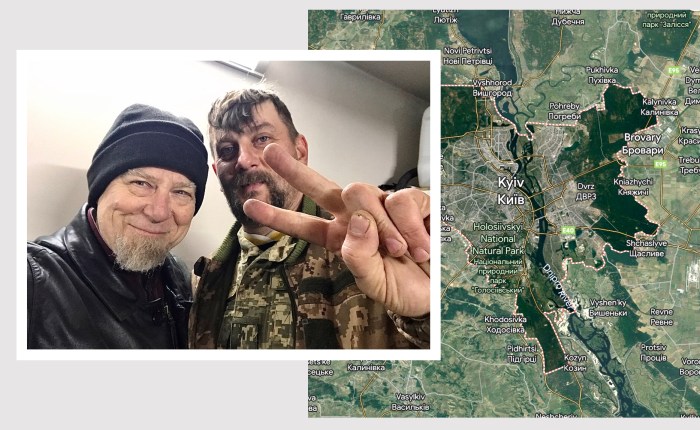
Bob and I worked together at a company called SRA for several years, got along well and were friends. Around twenty years ago, Bob met Vita, the woman who would eventually become his wife. She is Ukrainian by background and still has family there. Over the years, and particularly once Bob retired, they spent time both here in the US and also in Ukraine. They have currently lived in Ukraine for the past two years.
Bob and Vita
He recently sent a text updating me on what has been going on in his life:
“Last year, we decided that we simply couldn’t leave all our family and friends here in Ukraine. So we decided come hell or high water – this was what we needed to do.
We live in a bedroom community of the capital called Brovary. Brovary was in the news a few times at the beginning of the war because they tried to come through here on the major highways to get to Kyiv. We did have some scary times those first few weeks. I never thought I would see the day that I stood in my front yard and could hear (and even feel sometimes) tank and artillery battles. The front came to within about 5 miles of us before the good guys beat them back and they retreated.
These days the front is a couple hundred miles south of us. We continue to have regular missile and drone attacks. These were WAY bad early on, but now the best defense umbrella is over Kyiv and we are in that protected zone. Still, we have a lot of attacks and the air raid sirens go off at 2 and 3 in the morning and we all have to run to the basement/shelter in the barn. That hasn’t been fun and there is a lot of lost sleep that makes everything more difficult. My neighbors and I joke (only partially) that if there is a direct hit on any of our barns, the other neighbors will come and dig us out.
We do all we can to help the army. Donations – we’ve bought uniforms, boots, tents, food and chainsaws, you name it. I even helped my neighbor, Dima, who is a long range mortar specialist to replace the windows in his car that were shot out when he was coming home on leave. The war has gone on so long, they are rotating some of these guys out and giving them a break.
Things are still very bad in some of the smaller towns where the defenses are not as robust. The stories of what has happened to innocent civilians is more than I can say here. There have been real, no bullshit war crimes…”
Bob and Dima, While Dima was on Leave
Bob has written a book about Ukraine called UKRAINE: THE AWAKENING: My 20 years of witnessing Ukrainians rediscover their nationhood. He worked over this past winter in Brovary to capture the points he believes are important for westerners to know. When the war began, he became concerned about how little westerners, especially Americans, understand about Ukraine, its people, its history and how the relationship with Russia is badly misinterpreted in Western news media coverage.
The book is intended to give readers a view into Ukrainian culture and the beauty of the people. There is also a bit of the history of Russian relations that is helpful to understand the conflict and to dispel some of the propaganda narratives the Kremlin has been using.
I’ve posted a link to the book in the Addendum. In the meantime, I’ve purchased a copy myself, and promise to give an update on Bob, and the book after I finish reading it.
Bob’s Book – Ukraine, The Awakening.
I asked Bob about posting this info, and whether he was concerned about retaliation. Here was his comment back to me: “ Max, I would fully support your using the material in your blog. My reasoning on writing the book is to get the word out, so this would help a lot I think. As far as security goes – to hell with Putin and his goons. I think he has bigger fish to fry than me, but I am not running or hiding from that son of a bitch.”
On the morning of the 9th, I woke up, and after feeding the horses, made my coffee as usual. When I opened my iPad, this message was waiting for me from Bob: “It was really good speaking with you last night Max. We are all good here after the attacks – they started around 4am. We destroyed 23 out of 25 cruise missiles in the air”.
—I will continue to report on Bob’s story in a couple of future blogs. —
Addendum:
Here is a link to the book at Amazon if you are interested in purchasing it: https://a.co/d/6qUppBU
And, Here is a recent Zoom interview Bob did with Cortney Evans at WMBB 13 ABC in Panama City, Florida: https://youtu.be/GuJoxO8Qi8s
I’ve written one previous blog about Ukraine. You can read it here: Command and Control (C2), along with Command Centers, are phrases you hear concerning the Russians in Ukraine. In my military career, I worked all levels of C2 from Infantry Brigade to Presidential, and I can see the Russians are shockingly missing, or ignoring some C2 fundamentals. […] Continue here: https://mnhallblog.wordpress.com/2022/06/14/russian-command-and-control/
Euromaidan Press (seen at the end of the blog) is a daily English language summation of Ukrainian news and information. If interested, look online and you can subscribe here: https://euromaidanpress.com
We were on a mission to the WhistlePig Distillery in Vermont. Twelve classmates gathered to taste whiskey from five barrels. We would select two for the West Point Proud and Great, Class of ‘78 45th reunion this coming fall. We didn’t want to let any of our classmates down.
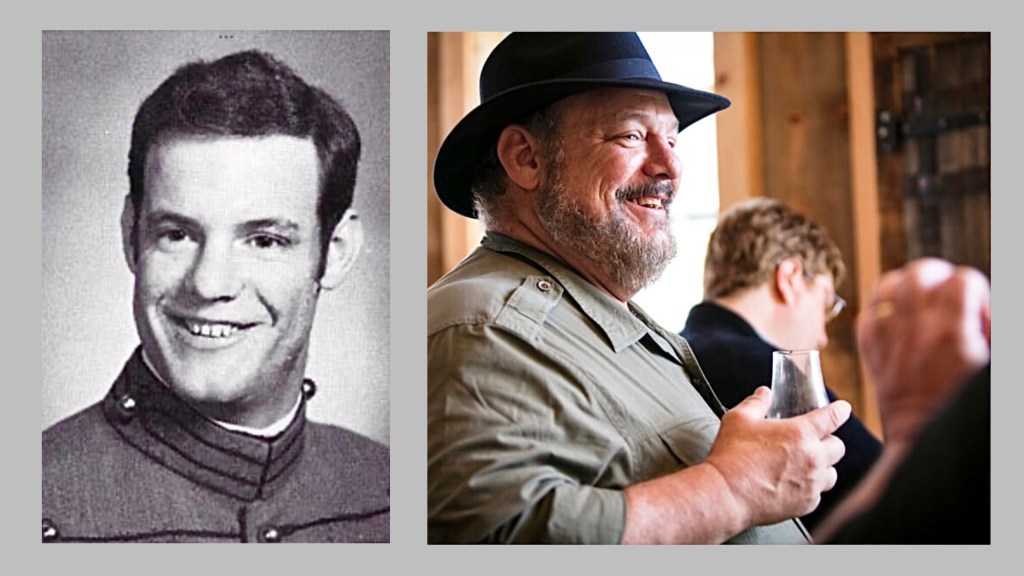
I’ve recounted the history of our classmate Dave Pickerell in a blog before*, but will briefly summarize it here, as it is fundamental to this story. The Army, in its infinite wisdom, sent Dave to grad school for a master’s degree in chemical engineering. Later, after teaching at West Point, Dave left the Army and joined Makers Mark Distillery, where he was the master distiller for 14 years. He then struck out on his own and became known as the “Johnny Appleseed” of craft distilleries, and helped many, many distilleries start-up. Eventually, he also became a founder and the master distiller for WhistlePig Whiskey, which makes some of the best rye whiskeys in the world. Dave passed away a few years ago, but his legacy lives on at nearly 100 distilleries across the country.
Dave Pickerell as a Cadet, and Then Later in Life.
A little over a year ago, our West Point Class held a mini-reunion at the Biltmore in North Carolina. On one of the evenings there, we did a whiskey tasting of several whiskeys Dave had an impact on*. The tasting was to honor Dave, and our other departed classmates. Everyone had such a good time at that event, it became the genesis of Operation WhistlePig.
We originally talked about doing a class tasting for our 45th reunion in the Fall of ‘23, but the logistics at West Point became a bit difficult. Bill Moeller then came up with the idea of purchasing a barrel of WhistlePig for the reunion. Classmate Tony Matos, who lives in New Hampshire not far from the WhistlePig Farm Distillery, became point man and started working with Mark Kanya of WhistlePig to understand the dynamics of a barrel purchase. In the meantime initial funding was lined up through classmate Jeff Manley, and a survey of classmates was completed to gauge interest. 206 classmates responded saying they were interested. A barrel of whiskey holds 156 bottles. We were on.
Of course, you don’t just buy a barrel of whiskey. Each barrel is different depending on multiple factors. WhistlePig invited “around ten of us” to a barrel tasting at the farm. We were to select “our barrel” from three different barrels we would taste from. It would then be bottled in a special release, with a small label honoring our class, and our fallen classmates. The team grew from four to six, then eventually to ten of us. In addition to Tony, Bill, Rob Grubbs and I (Rob, Bill and I organized the Biltmore tasting), José Morales, Al Aycock, Gus Hellzen, Jim Steiner, Jack Cronin and Rusty Roberts were added. Our number was set, as was our date, the 3rd of May. Reservations were made at a nearby Airbnb for May 2-4, and then it was just a matter of waiting for the big day.
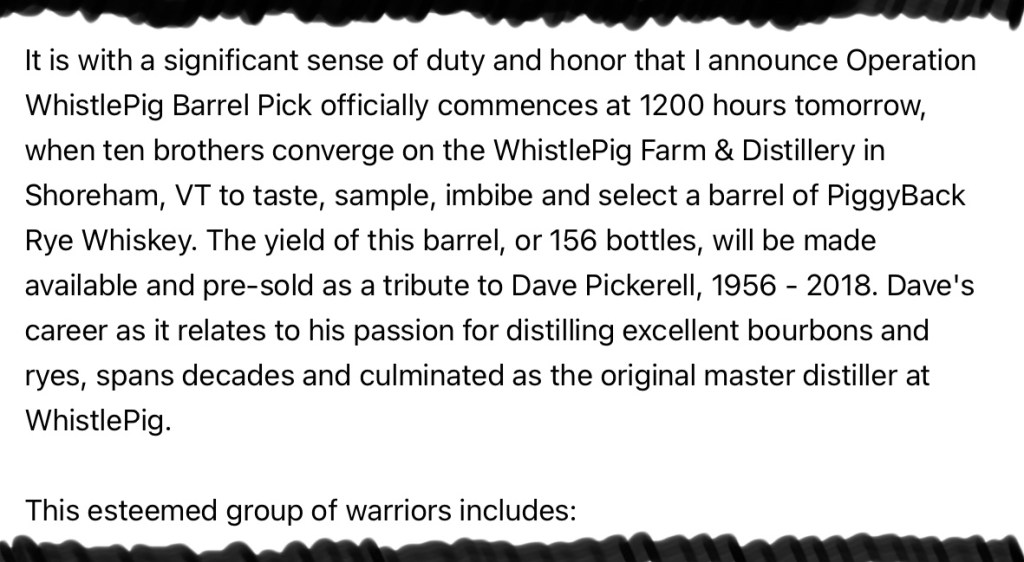
Tony, who did a great job coordinating the event overall, sent an email to the Class on May 1st announcing Operation WhistlePig was about to commence. He was flooded with responses from classmates with good wishes, others wanting to immediately order a bottle, and some wanting to join us and help select the barrel. Tony graciously explained to folk why it wasn’t possible, although after checking with WhistlePig, three folk who were relatively local at the time were added for the tasting itself – Bob Rush and his wife Erica, and Ron Hall. They joined us for the tasting, but not the entire three days.
Tony’s Announcement to the Class About Operation WhistlePig.
On the second of May, we gathered. Classmates flew in or drove from Texas, Virginia, Maryland, North Carolina and Georgia. Others arrived from Vermont, New Hampshire and Maine. We included a retired Two Star, guys who departed the military not long after our initial five-year obligation, and everything in between. There were handshakes and hugs all around. Not all of us knew each other, but we were all brothers and it didn’t matter. This was going to be good.
That first evening passed in a blur, aided by some liquid lubrication. I and a couple of other guys cooked dinner the first night – Steak Tips, a New England specialty. Preparing the meal in the main house, I have to admit I felt a bit like Clemenza in the Movie “The Godfather” cooking away, with guys standing around talking and drinking. Over dinner, we didn’t solve the world’s problems, but we took a stab at a couple of them. José asked a couple of questions for which there were of course no correct answers but made us all think.
We also discussed whether we should consider buying two barrels of whiskey instead of one, in anticipation of additional sales based on Tony’s email from the 1st. Rusty immediately volunteered to lead the financing of the second barrel, and Tony quickly notified WhistlePig we were now looking at purchasing two barrels.
Dinner the First Night.
As is always the case for me at these gatherings, I’m humbled when I listen to many of the stories told – from time in the Army, in government, or in business. Stories from hotspots around the world over the years, and as I’ve said before, war stories both figuratively and literally. Beer, a couple bottles of WhistlePig, several bottles of wine and a few cigars later, most of us made our way to bed.
The next morning, Jim and crew fixed breakfast – bacon, toast and eggs to order. People were feeling surprisingly good, considering the damage we had, perhaps, done the night before. I’m sure the anticipation of the trip to WhistlePig later that morning had something to do with it. We eventually climbed into two vehicles and arrived at the WhistlePig Farm just before 11AM.
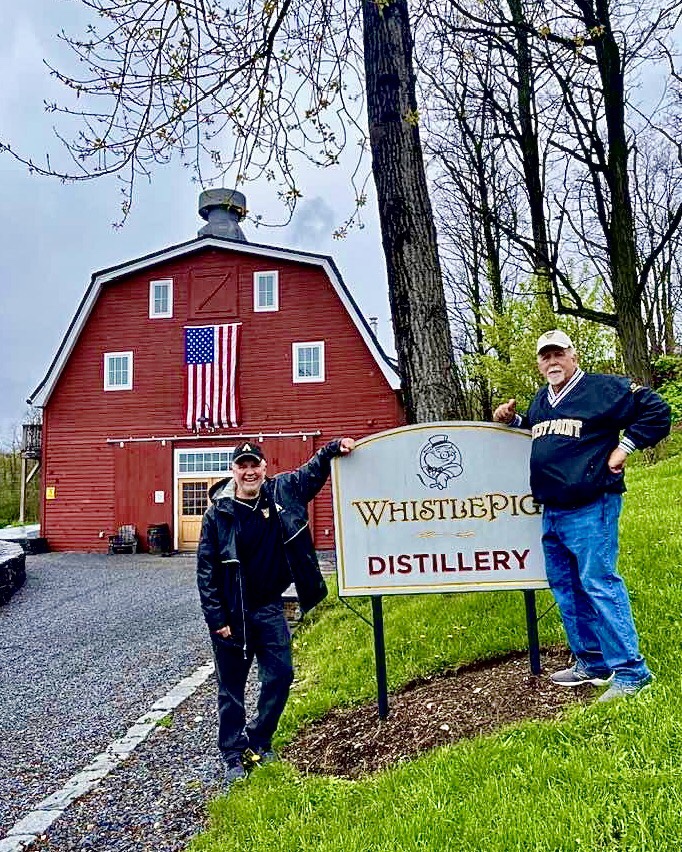
Arriving at WhistlePig.
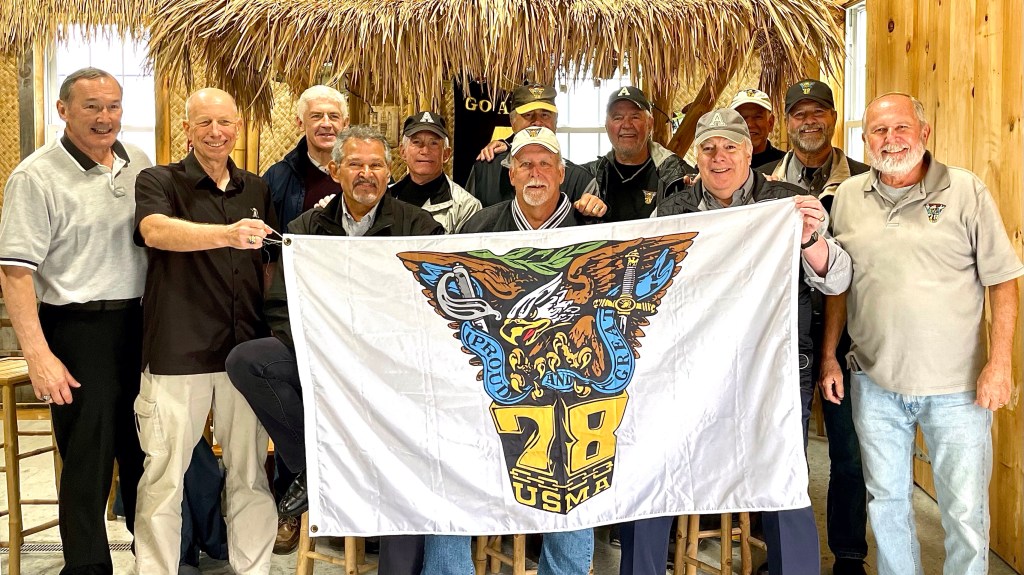
At the farm, we were joined by Ron, Bob and Bob’s wife Erica and began a tour. Jesse Ray, accompanied by our contact Pam Spaulding, showed us key parts of the farm and distillery. Of course there were some tastings involved at various stops, including Maple Spirit (distilled maple syrup – a bit of a rum flavor), Piggyback (the 6 year old Rye that our barrel selections would also come from) and a wonderful WhistlePig 15 year old rye. I noticed that we, as a group, had become a bit louder. We grabbed a picture of us after trying the Maple Spirit – I think you can see we were off to a good start.
Smiling Classmates After the Distilled Maple Syrup Tasting
We returned to the tasting room and a wonderful lunch. The WhistlePig crew told us some great stories about Dave, some of his work, and some of his sayings. My favorite saying from Dave – “One of the great things about working at a distillery is you get to drink your mistakes.”
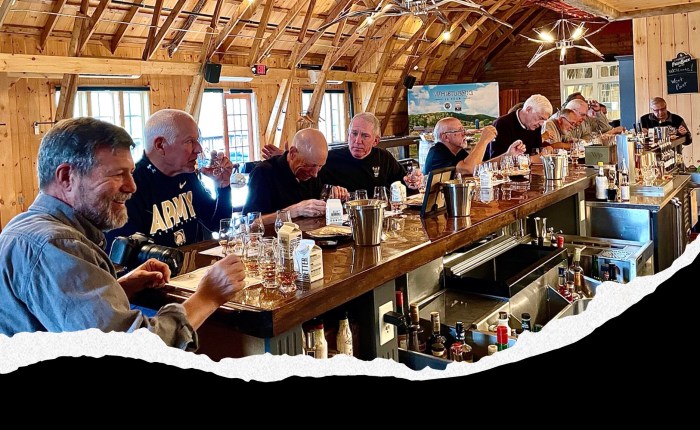
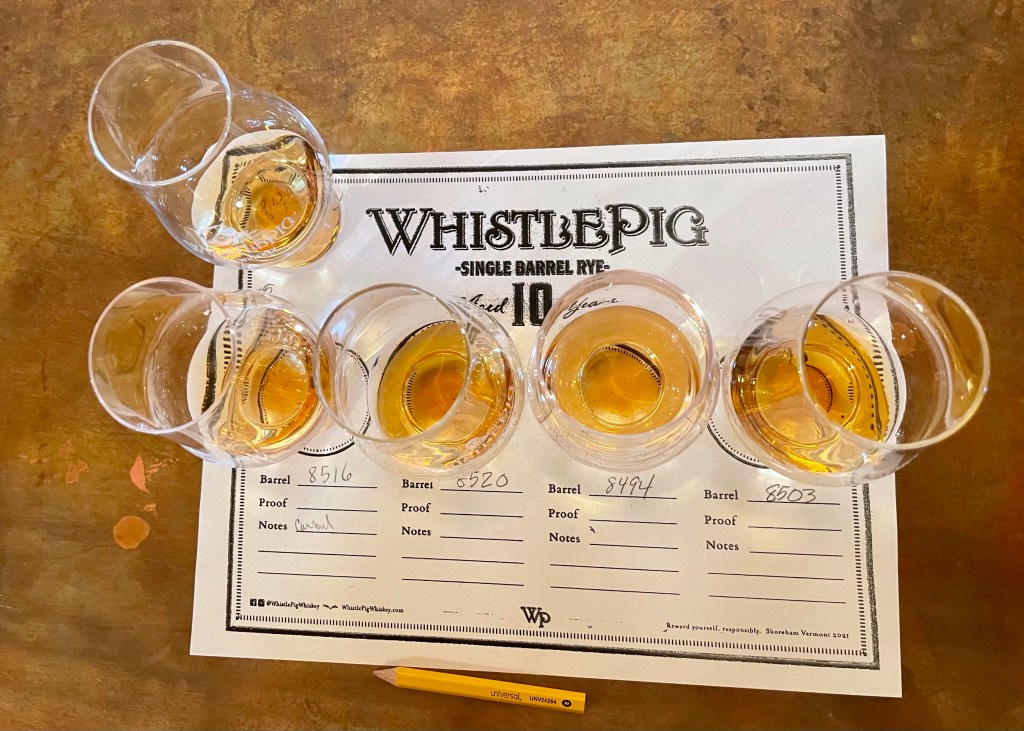
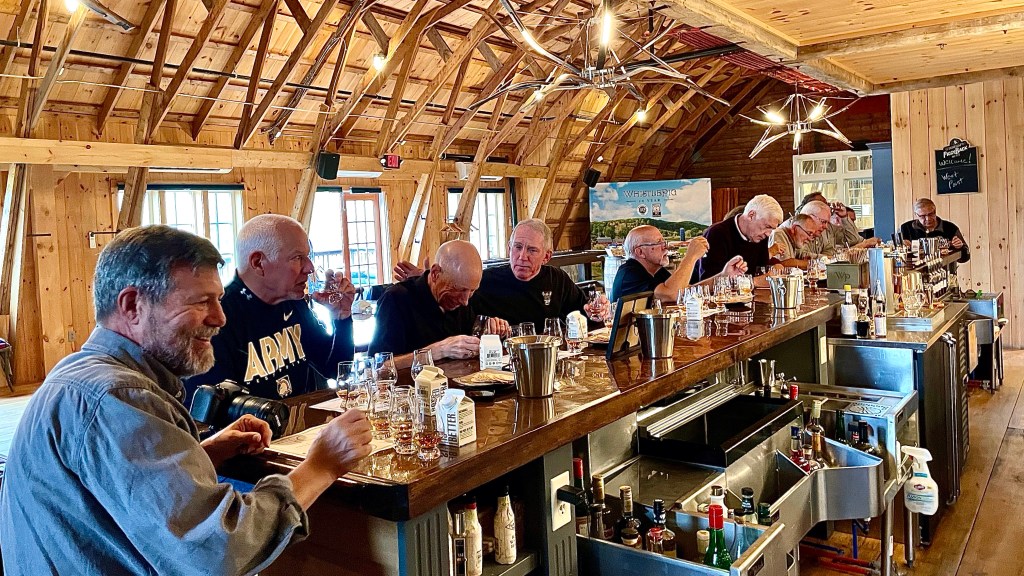
After lunch, we were ready to start the business at hand. First though, WhistlePig revealed a nice surprise. Since we were now considering two barrels instead of one, we would taste five samples instead of three. I believe that elicited a “Hooah!!” from the class. Mark Kanya walked us through the barrels, but didn’t reveal their proof numbers, as he didn’t want to prejudice us. Finally, it was time to taste.
Five Barrels to Taste!
What followed was a minor dose of reverence and a major dose of fun. We tasted, and tasted again. Conversations sprang up and died away. Comparisons were made by those sitting next to each other, sometimes with concurrence and sometimes with “What, are you crazy?!” Now remember there were five barrels. All were 6 years old. All came from the same rick-house. All were 100% rye. All were good. And yet, we had no problem finding differences.
Whiskey Tasting – Maybe Serious Business, or Not…
Finally, it was time to make our selections and Rob Grubbs took charge with a chalk board. Each of us came forward and wrote down our top two choices. We anticipated going a couple of rounds, but it turns out it wasn’t even close. Barrels 8516 and 8494 won, hands down.
Barrels 8516 (2) and 8494 (4) Were the Easy Winners at the Tasting!
After the official tasting, they opened the bar and we tried other WhistlePig products at our leisure. Some of us returned to the winning bottles for another taste and confirmation we’d made the right choices. A few went to the museum, while others of us stayed at the bar. There, Mark’s assistant, Amber Star, who also happens to be an opera singer, entertained us with stories and after some prodding, an amazing a cappella version of Ava Maria – it was beautiful and somehow fit the afternoon.
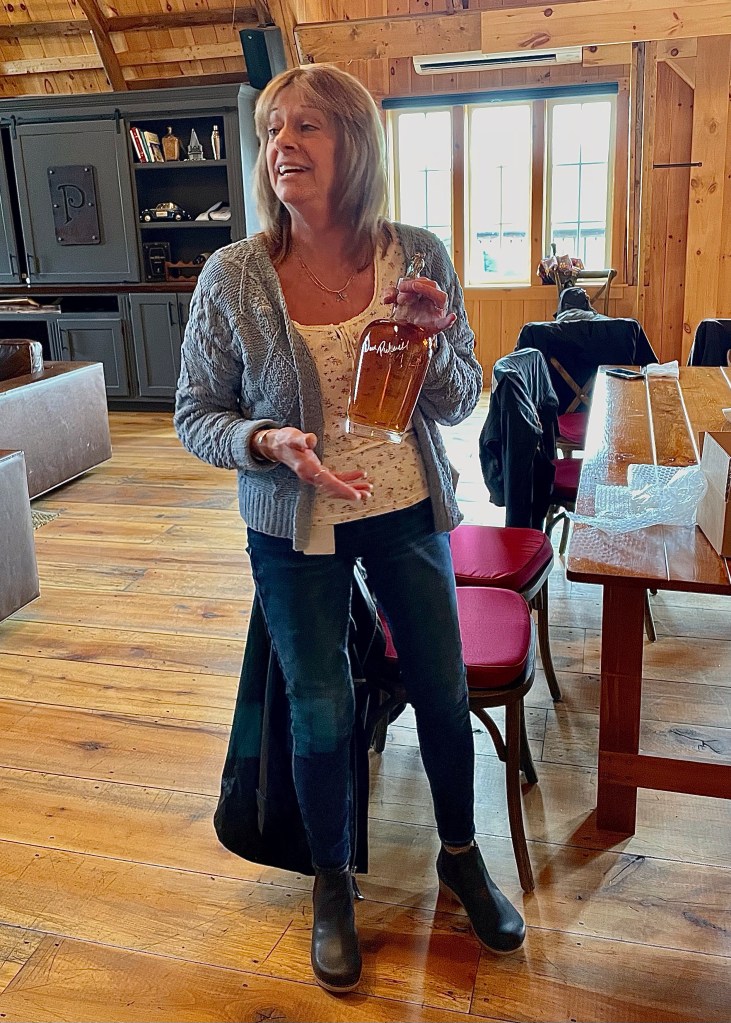
As we gathered together again shortly before departing, Pam read us a tribute to Dave another friend, Savannah Burnett, sent her. It was wonderful of her to share it with us. She also gave us a WhistlePig bottle signed by Dave and filled with a bit of each of the products Dave was associated with over the years. A whiskey, or spirit connoisseur, would call it an “Infinity Bottle” due to the blending of so many different whiskeys – we plan to auction it off at our 45th reunion. It should also be noted that a West Point Coin was presented by José to Mark for his excellent organization of the tasting. As a side note, should he ever be challenged by one of us in the future and he doesn’t have the coin with him, he will be required to buy a round ;-).
Pam Presenting the Class with the Dave Pickerell Signed “Infinity Bottle”.
We finally said our goodbyes to WhistlePig, and to Ron, Bob and Erica and drove back to our Airbnb. Bill cooked a salmon dinner for us and the ten of us again gathered at the table.
We were mellower than the night before but had great conversations. Yes, we told and laughed at old stories again, but we also talked about the present and the future. Over more wine, whiskey and cigars, we discussed our Class and the impact we may have had on the Army and on our country. Eventually we drifted off to our individual rooms and the night ended.
When I woke up the next morning, a couple of guys were already gone. Rob made breakfast for us and then Tony and Jim drove the rest of us to the airport. More hugs and handshakes at the airport and we parted ways. Operation WhistlePig was over … For this year.
I’ve thought about the wonderful times we had at this whiskey tasting, and at other reunions. The camaraderie, the brotherhood, the love for each other. Although we are not yet in our “twilight”, I think General Douglas McArthur summed it up pretty well at the end of his West Point Farewell Address in 1962:
“The shadows are lengthening for me. The twilight is here. My days of old have vanished — tone and tint. They have gone glimmering through the dreams of things that were. Their memory is one of wondrous beauty, watered by tears and coaxed and caressed by the smiles of yesterday. I listen then, but with thirsty ear, for the witching melody of faint bugles blowing reveille, of far drums beating the long roll. In my dreams I hear again the crash of guns, the rattle of musketry, the strange, mournful mutter of the battlefield. But in the evening of my memory always I come back to West Point. Always there echoes and re-echoes: Duty, Honor, Country…”
For this whiskey tasting get-together, maybe the echoes and re-echoes were: Duty, Honor, Country and WhistlePig as well. For my classmates who may be reading this blog, I’ll add this – Standby! A Warning Order is about to come out on how to purchase a bottle.
Addendum:
The staff at WhistlePig was wonderful. Pam Spaulding, Jesse Ray, Mark Kenya and Amber Star took amazing care of us.
* You can read the blog about Dave and the whiskey tasting our class did about a year ago here: When Rob asked if I would help host the whiskey tasting for the West Point Class of ‘78 mini-reunion at The Biltmore, I immediately said yes. We honored classmate Dave Pickerell, later known as The “Johnny Appleseed” of Craft Whiskey, and all of our departed classmates […] Continue at: https://mnhallblog.wordpress.com/2022/04/19/pickerell-the-biltmore-and-the-whiskey-tasting/
“Arriving at WhistlePig” photo courtesy of Gus Hellzen.









 Live Life Exuberantly