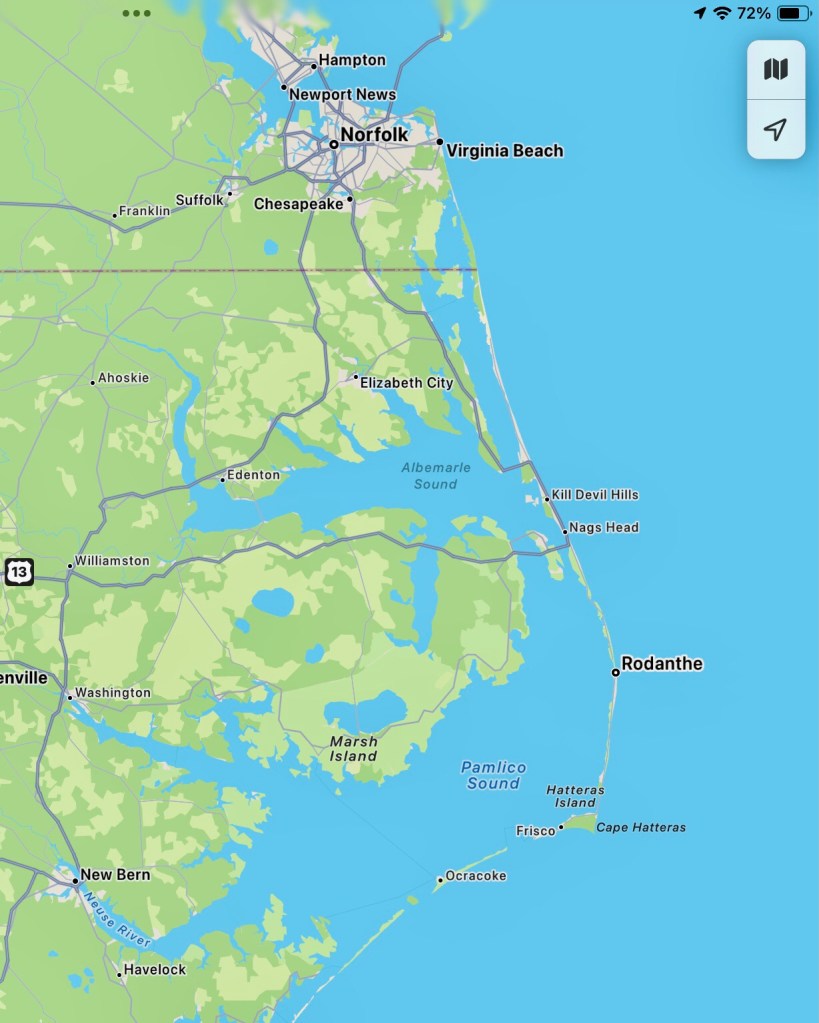
Cathy and I recently spent a wonderful weekend with friends at Rodanthe, NC on the Outer Banks. The area is beautiful and somewhat remote, a perfect getaway. Part of the town also has a small problem – beach houses occasionally wash into the ocean.
Our friend Whitney invited us, along with other friends, to her vacation house in Rodanthe. She and her husband Rory own a beautiful home with ten bedrooms. They rent it out throughout the summer, but use it themselves for much of the rest of the year.

It is about a five or six hour drive from the farm to Rodanthe. After skirting Richmond and Norfolk, you finally arrive on the Outer Banks via Highway 158. Kitty Hawk, Kill Devil Hills, Nags Head, and eventually Rodanthe itself cluster along highway 158, and later highway 12 on a narrow spit of land, with the Atlantic Ocean on one side and either the Albemarle or Pamlico Sound on the other. The Outer Banks are 3 miles wide at their widest. At Rodanthe, there is perhaps a half mile between the Atlantic Ocean and Pamlico Sound. From Nags Head to Rodanthe, it is a particularly pretty drive.
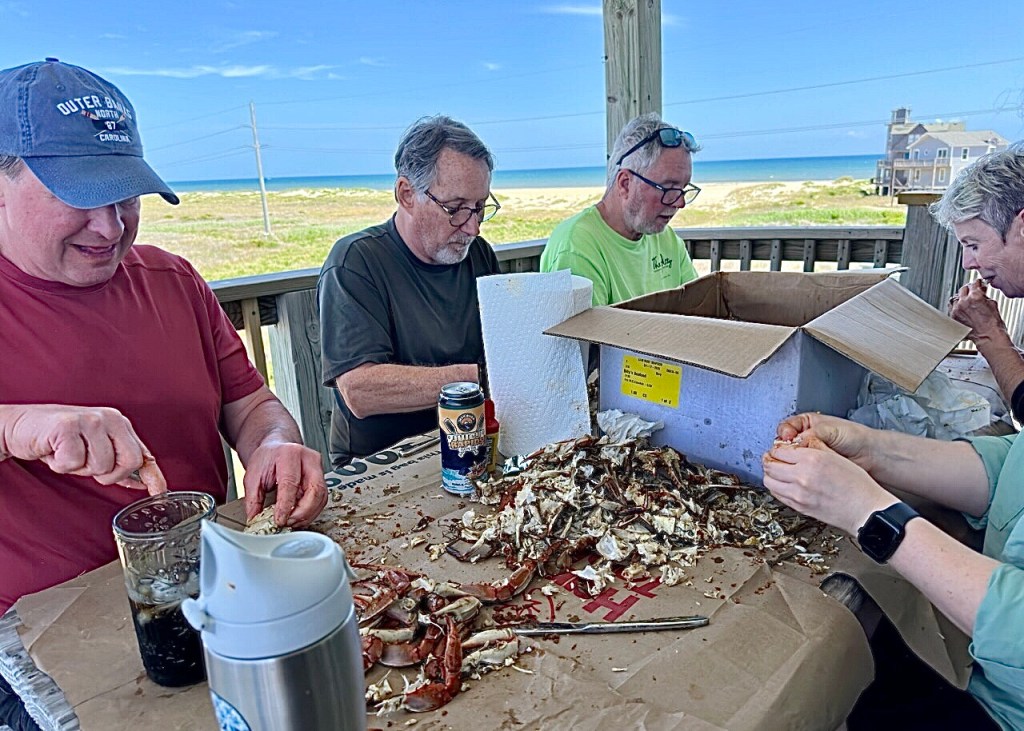
It is always an enjoyable time when we visit there, but this year seemed extra fun. Everyone was in a good mood and the weather was great. There were swims in their pool and the ocean, shrimp dinners, crab lunches and good times in general. With the Kentucky Derby happening that Saturday, we made some half-way-decent mint juleps for those so inclined. For me, the dinners and the wide-ranging conversations that take place during them are always a highlight.
Another highlight on every visit is taking a long walk on the beach. This time of year, it isn’t crowded. Saturday afternoon, my friend Dave and I made a barefoot four-mile round trip along the beach from Whitney’s home to the Rodanthe Pier. We talked about several things, but a great deal of the conversation was on Rodanthe and the houses the ocean has reclaimed.
The beach is beautiful, and many homes are right on the beach, or near it, to take advantage of that beauty. Unfortunately, the sand and the beach are not stable. Storms and erosion continue to take sand away. In fact, the shoreline moves back about 10 to 15 feet every year. Along the 2 miles at the northern end of the village, the dry sand part of the beach is virtually gone — as are the dunes that once protected homes and roads.
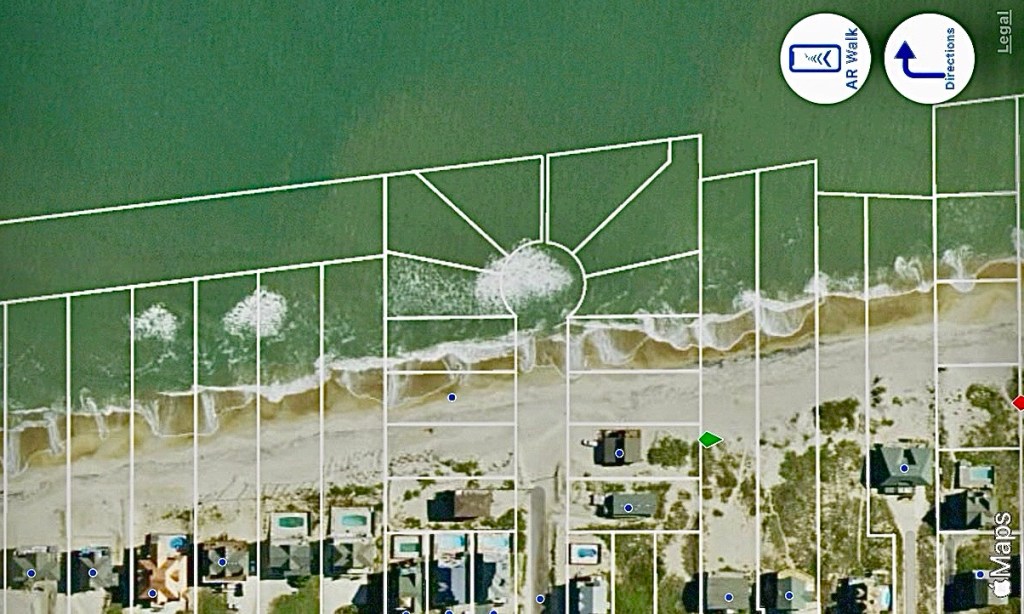
People ask, “Why did they build so close to the ocean? That was foolish.” In fact, when they built the homes 30 or 40 years ago, they were not that close to the ocean. The map in this picture shows the original plot lines for several of the properties. You can see those lots that have disappeared totally, and some where more than half of their property is gone. Note the blue dot in the “middle” of the photo. That shows the location of the home, the “Black Pearl” which is still there but is now abandoned.
The Park Service, the town, and homeowners have tried various strategies to address the issue. They have brought in thousands of tons of sand to reenforce the existing beach. Some owners are putting up fencing, much like the snow fences in our northern states, in an attempt to retain the sand. Beach nourishment (planting of grasses and plants) is also used in places. Some owners with deeper pockets relocate their houses or move them back from the ocean. For about $200K, you can gain several years of time for your home.
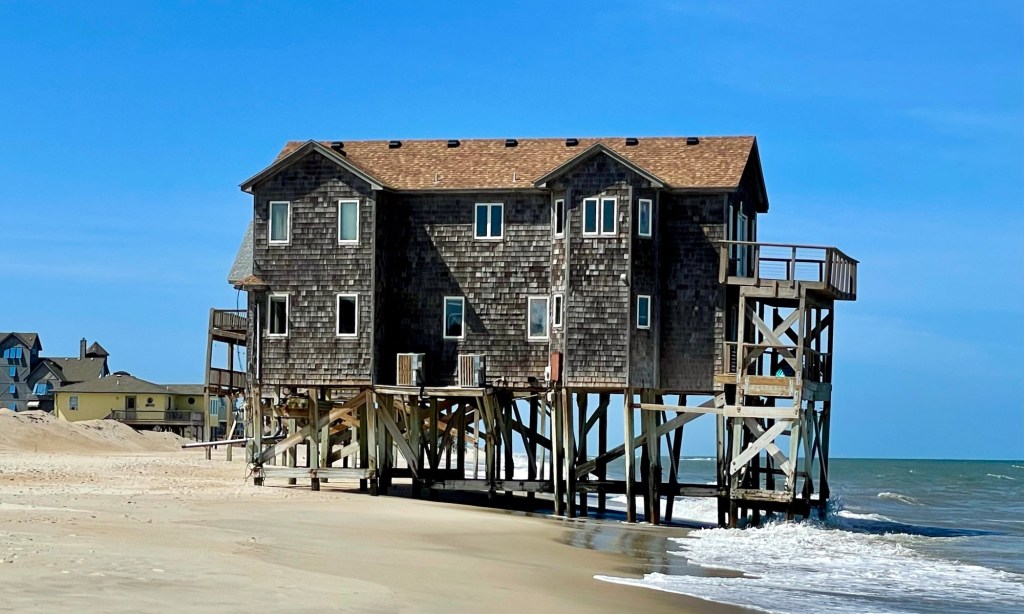
All of those options help to a degree, but the erosion is inevitable. Time, and the sea, march on. Every year, houses at Rodanthe are lost to the ocean – sometimes in a storm, sometimes just from the erosion itself. In fact, eleven homes have disappeared over the last five years, including six in 2024 alone. An additional issue with the homes has to do with insurance**. Current laws generally mean an at risk home cannot be removed ahead of time. If it is, insurance will not pay off. As a result, homes are left in place until they are destroyed by the sea, resulting in debris up and down the beach.
As Dave and I walked along, we saw several homes that are at risk. The previously mentioned “Black Pearl” has been abandoned for several years now. Halfway to the pier, we saw other empty homes. You notice the pipes connecting the houses to what were their septic systems cut, just outside the structure. Usually, the septic tank has been removed, but not always. Farther past the pier, there was a row of homes also directly on the beach. Without a doubt they are in trouble, although maybe not just yet. It’s a strange feeling standing on the beach in the sunshine, while knowing what the inevitable future will bring to the area you are viewing
We eventually finished our walk and ended back at Whitney’s. Her home is on the Pamlico Sound side of the town at a slightly higher elevation and is relatively safe.
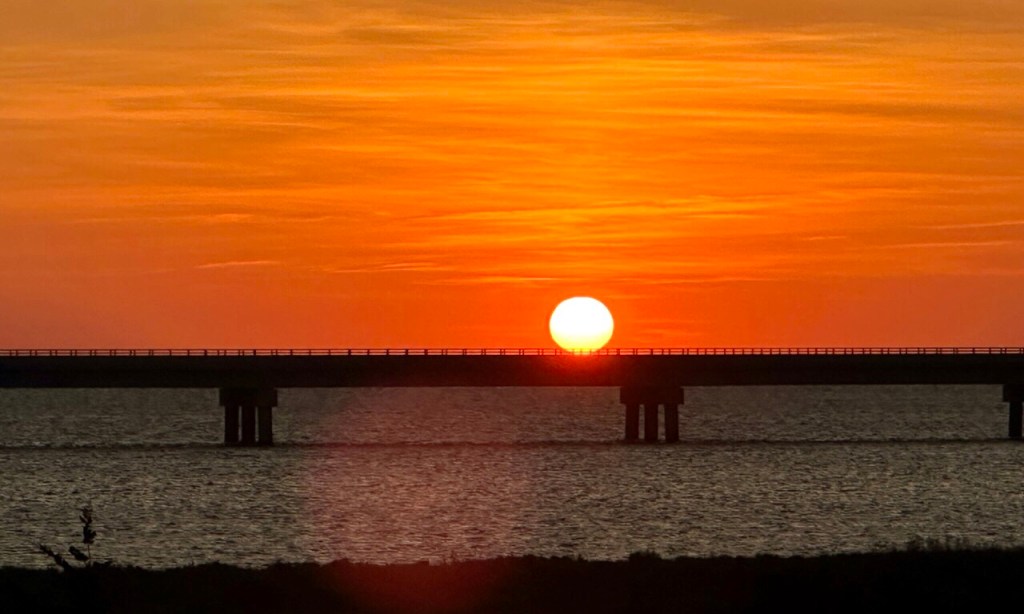
That evening, from Whitney’s balcony we watched a beautiful sunset over the bridge used to reach Rodanthe. All was well with the world.
In 2008, a commercially successful, but mediocre movie called “Nights in Rodanthe,” was released. The film starred Richard Gere and Diane Lane. Much of the story takes place at an Inn on location in Rodanthe. It is a romantic movie at an idyllic location. There are shots of the Inn with the ocean rushing over the beach and under the home.
Melanie D.G. Kaplan authored an article, “On The Brink”* about Rodanthe and its erosion. She had this telling comment about the movie: “At several points, I paused the movie to watch and re-watch waves dancing under the house, which seemed lovely, romantic even. I also now understand that only in Hollywood is water under a house desirable.”
For filming the movie, they used a real house in Rodanthe named Serendipity. About a year after the release of the movie, a storm damaged the house and it was declared a public nuisance. A new owner bought Serendipity, and with a Hollywood ending of its own, the home was relocated away from the ocean to preserve it a while longer.
In real life, there aren’t many Hollywood endings. While Rodanthe is still a beautiful and remote destination, the Atlantic Ocean doesn’t care. Parts of the town will inevitably return to the sea over the coming years and decades. For Whitney’s home there is more of a future and she is aware of that. As she recently said to me, “I wake up every day and wonder how lucky I am to be able to call this place my own.”
Addendum:
- Special thanks to our friend Whitney for the invites to her home over the past several years. It is beautiful there and we enjoy it very much. Also, thanks for the use of several photos in this blog, along with some of the background information on Rodanthe.
- * Melanie D.G. Kaplan’s article, “On The Brink” about Rodanthe and its problems with erosion is found here: https://www.npca.org/articles/3577-on-the-brink
- ** Recent proposed legislation may help with the removal of at risk houses. You can read more here: https://www.wtkr.com/news/in-the-community/outer-banks/legislation-introduced-that-could-help-prevent-house-collapses-in-the-outer-banks
- Crabs and Shrimp both came from Billy’s Seafood in Kill Devil Hills. Highly recommended.
Discover more from Live Life Exuberantly
Subscribe to get the latest posts sent to your email.
 Live Life Exuberantly